

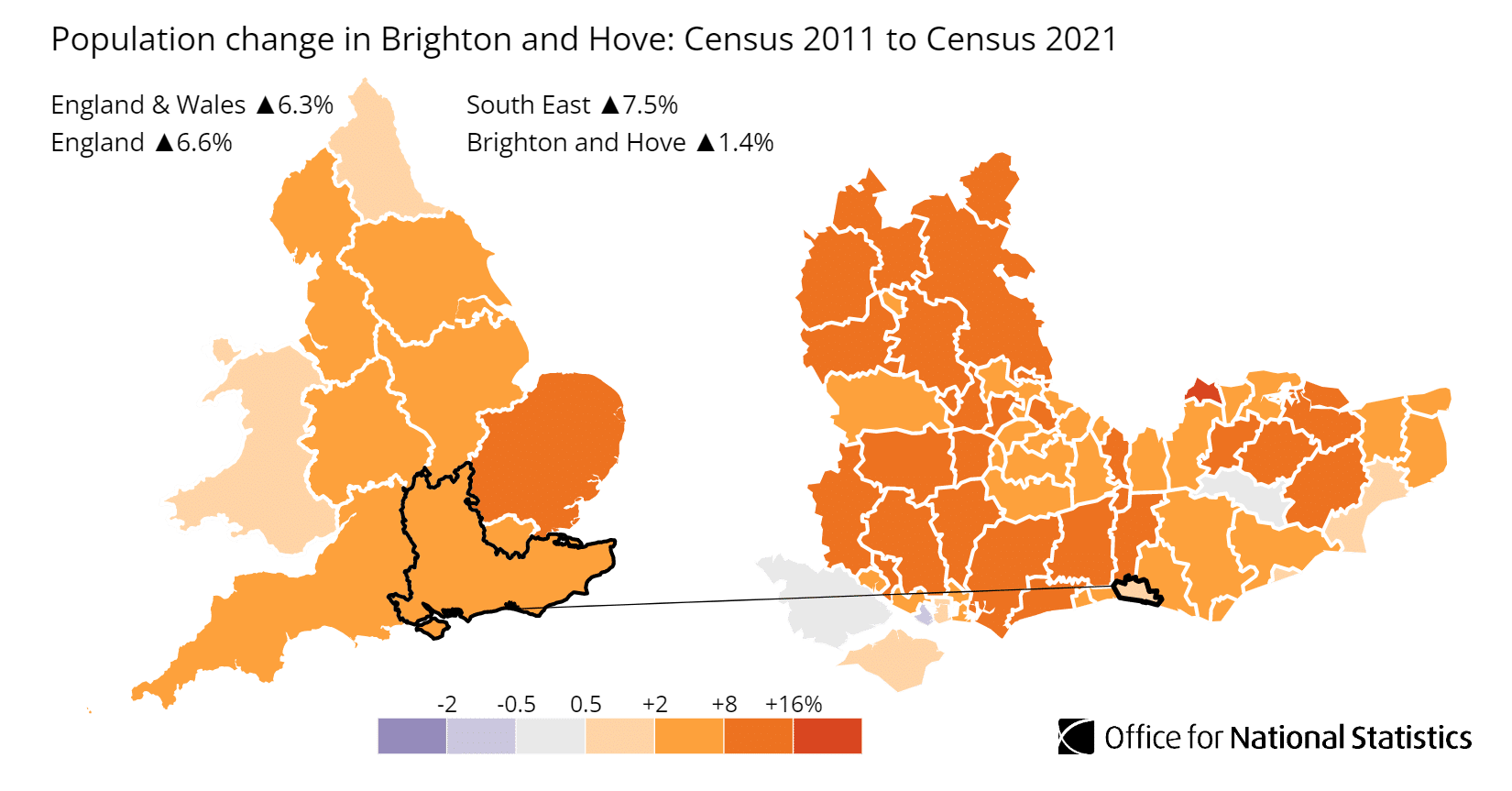
Brighton is a city on the South East coast of England, forming the Brighton and Hove unitary authority with neighbouring Hove. Average sold prices across Brighton and Hove sit at £403,808 on the HM Land Registry House Price Index, 39.3% above the England average of £289,946. That puts Brighton among the dearest markets in our coverage, and it is dear at every level: detached, semi-detached, terraced and flats all sell above the national figure, with terraced houses carrying the widest premium at 92.7%. Brighton and Hove's population reached 277,103 at the 2021 Census, up 1.37% on 273,369 in 2011.
Brighton does not sell on price, it sells on rent. With two universities, a fast line to London Victoria and a coast that pulls renters from across the South East, the demand sits in the rental market rather than the sale price. For investors, the figure that matters is the £2,210 monthly rent in BN2 Kemptown, which turns the highest asking price in the city into its highest yield at 6.0%. Five of Brighton's six postcodes carry asking-price data and four carry rents; the split between the cheapest entry in BN41 at £392,154 and the premium stock further east shapes where the income case is strongest.
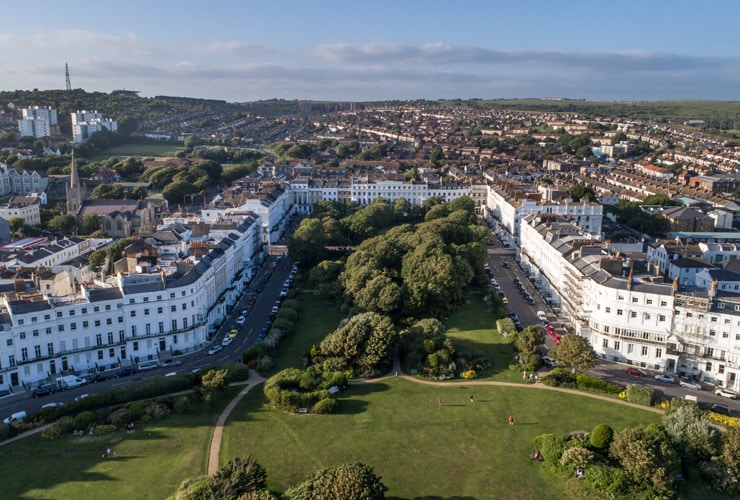
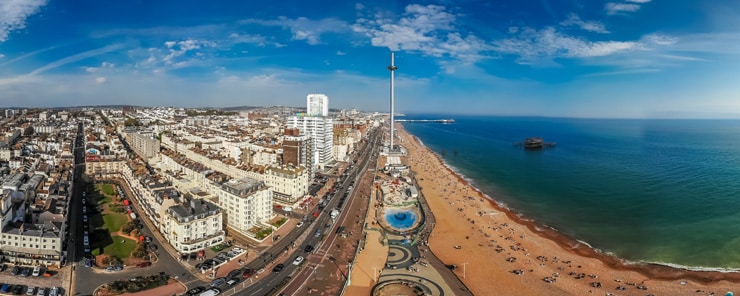
This guide covers the unitary authority of Brighton and Hove (ONS code E06000043) across postcodes BN1, BN2, BN3, BN41, BN42, and BN45. Brighton sits on the South East coast, 50 miles south of London, with Hove to the west and the South Downs at its back. The wider Sussex buy-to-let region also takes in Eastbourne and Crawley further along the coast and inland.
Article updated: July 2026
Why Invest in Brighton?
Brighton and Hove, the unitary authority the city sits within, grew its population 1.37% between the 2011 and 2021 censuses, from 273,369 to 277,103 residents. That is slower than the England and Wales average of 6.3%, which says less about appeal than about supply: Brighton is hemmed in by the sea on one side and the South Downs National Park on the other, so there is very little room to add new housing. A city people want to move to, with almost no space to build, is the backdrop to everything in the price and rent data below.
The University of Brighton and the University of Sussex bring a sizeable student population, and a train to London Victoria in under an hour supports a large commuter workforce alongside it. The local economy has broadened well beyond seaside tourism into digital, creative and tech employment, which is why younger professionals settle here rather than just visit. The employment rate stands at 74.1% with an unemployment rate of 9.5%, the latter above the national picture and a reminder that the headline demand is driven by students and commuters as much as by local payrolls.
Median gross annual earnings across Brighton and Hove are £39,347, marginally above the Great Britain median of £39,125 but below the South East regional median of £41,616. Brighton earns roughly the national average yet pays well above it for property, so on local wages alone the prices look stretched. The rents hold up because a good part of the tenant base, students and London-facing commuters, is not paid on the local median at all.
Brighton Economic Summary
- Population (Brighton and Hove): 277,103 (2021 Census). Growth of 1.37% from 2011.
- Median annual salary: £39,347 (local), £41,616 (South East), £39,125 (Great Britain)
- Employment rate: 74.1% (local)
- Unemployment rate: 9.5% (local)
- Key employment sectors: Digital and creative industries, education, health and social work, tourism and hospitality
Source: ONS Census 2021, Nomis Labour Market Profile (ASHE 2025)
Regeneration and Investment in Brighton
Brighton's largest regeneration scheme is the £200 million Preston Barracks project, delivering 369 homes and 1,300 student bedrooms on the former military site between the two universities. In a city this short of building land, new supply at that scale is rare, so where it lands matters for both rents and sale values nearby.
- Preston Barracks Regeneration (Under construction, £200 million): A mixed-use scheme on the former barracks and University of Brighton land, delivering 369 homes, 1,300 student bedrooms, the Plus X innovation hub, and new academic buildings. The project is at an advanced stage and is expected to create over 1,000 jobs. The 1,300 purpose-built student bedrooms add institutional supply close to the BN1 and BN2 campuses where shared student demand concentrates. Updates at Brighton & Hove City Council.
- King Alfred Leisure Centre Redevelopment (Planning stage, £65 million): Replacement of the ageing seafront leisure centre in Hove with a modern facility including a larger fitness suite, leisure pool, and family entertainment zone. Demolition is expected in spring 2026 with the new centre opening by spring 2028, anchoring the Hove (BN3) seafront. Updates at Brighton & Hove City Council.
- Valley Gardens Phase 3 (Under construction, £7.84 million): The final phase of the Valley Gardens public realm transformation in central Brighton, replacing the Palace Pier roundabout with a new junction and a public space between the Royal Pavilion and the seafront. Construction started in November 2024 with completion due in 2026, improving the central spine through BN1 and BN2. Updates at Brighton & Hove City Council.
Source: Office for National Statistics - Population for Brighton and Hove
Brighton Property Market Analysis
Average property prices in Brighton and Hove have risen 750.7% since January 1995, from £47,469 to £403,808. The sections below trace that path through its peaks and falls, then drill into current postcode-level data for sold prices, price per square foot, asking prices, growth trends, transaction volumes and how long homes take to sell.
When was the last house price crash in Brighton?
Brighton sits within the unitary authority of Brighton and Hove, so all sold property prices from HM Land Registry are recorded at this level. The index tracks average prices from January 1995 to March 2026, covering 31 years of market cycles.
The 1995 to 2007 climb: Brighton and Hove started at £47,469 in January 1995. By December 2000 it had reached £109,637, more than doubling in six years as a seaside city within commuting reach of London drew buyers priced out further north. Growth ran hard through the early 2000s, and the market peaked at £253,366 in September 2007.
2008 to 2009, the financial crisis: Prices fell from the September 2007 peak of £253,366 to a trough of £199,113 in April 2009, a drop of 21.4% over 19 months. The worst year-on-year reading was -19.5% in March 2009. Brighton fell harder than both England, which dropped 18.2% peak to trough, and the South East at around 20.0%. A premium coastal market priced well above local incomes had more room to fall when mortgage credit tightened.
Recovery to the old peak, 2010 to 2012: Prices climbed off the trough faster than many markets. By December 2010 the average was back to £237,425, and Brighton regained its September 2007 peak by September 2012 at £254,893. That recovery took about three and a half years from the bottom, quicker than the eight-year slog seen across much of the North.
The 2013 to 2019 London-overspill run: Demand from buyers leaving an expensive London pushed Brighton steadily higher. Prices rose from £321,261 in December 2015 to £327,803 by March 2016 and on to £356,933 by March 2020. Annual growth was strong in the middle of that run before affordability began to bite towards the end of the decade.
2020 to 2023, the pandemic surge and the all-time high: The race for space and the stamp duty holiday suited a coastal city better than almost anywhere. Prices ran from £356,933 in March 2020 to an all-time high of £443,542 in January 2023, with annual growth touching 11.0% in December 2022. That January 2023 figure remains the highest reading in Brighton's record.
2023 to present, the easing: Higher mortgage rates reversed the surge. Prices fell to £417,288 by December 2023 (-5.0% annual), a sharper correction than most because premium markets carry the most rate-sensitive borrowers. They have drifted lower since: £417,035 in December 2024 (-0.1%), £408,820 in December 2025 (-2.0%), and £403,808 at the latest reading in March 2026 (-3.3%). Brighton now sits 9.0% below its January 2023 high and is into its third year of flat-to-negative readings.
Long-term growth summary:
- 5 years (March 2021 to March 2026): 5.4% growth (£382,968 to £403,808)
- 10 years (March 2016 to March 2026): 23.2% growth (£327,803 to £403,808)
- 15 years (March 2011 to March 2026): 74.9% growth (£230,833 to £403,808)
- 20 years (March 2006 to March 2026): 97.2% growth (£204,779 to £403,808)
- 30 years (January 1995 to March 2026): 750.7% growth (£47,469 to £403,808)
Brighton's 21.4% crash in 2008 was deeper than both the national and regional falls, but the bounce was quicker, with the old peak regained in about three and a half years. The current easing is much milder than that crash, but it has now run longer, and the 2025 rate cuts have not yet turned it. An investor who bought at the September 2007 peak would still be 59.4% ahead on the Land Registry average, while one who bought at the January 2023 high is currently 9.0% down.
- All property types
- Detached
- Semi-detached
- Terraced
- Flats
- All property types
- Detached
- Semi-detached
- Terraced
- Flats
Source: HM Land Registry House Price Index for Brighton and Hove, January 1995 to March 2026.
Sold House Prices in Brighton
The average sold price across all property types in Brighton and Hove is £403,808, which is 39.3% above the England average of £289,946 as of March 2026. The premium holds across every type, but it is not flat. Terraced houses carry the widest gap at 92.7% above England, while flats are closest at 36.6%. That spread tells you about the housing the city is short of: the period houses are scarce and fought over, while the flats that dominate the rental market are the more available stock.
| Property Type | Brighton and Hove Average | England Average | Difference |
|---|---|---|---|
| Detached houses | £843,381 | £470,492 | +79.3% |
| Semi-detached houses | £538,811 | £288,185 | +87.0% |
| Terraced houses | £469,682 | £243,788 | +92.7% |
| Flats and maisonettes | £293,173 | £214,563 | +36.6% |
| All property types | £403,808 | £289,946 | +39.3% |
Detached houses at £843,381 sell for 79.3% more than England's £470,492. There are very few of them in a compact, flat-and-terrace city, and the ones that exist sit in the leafier edges of BN1 and out towards the Downs. Annual change of -1.6% shows the type easing gently with the wider market rather than diverging from it.
Semi-detached houses at £538,811 carry an 87.0% premium over England's £288,185. These are the family homes of Patcham in BN1, Hove in BN3 and the western edge towards Portslade, and they command strong prices from owner-occupiers and family tenants alike. Annual change of -1.2% keeps them broadly in step with the city average.
Terraced houses at £469,682 show the widest premium of all at 92.7% above England's £243,788. Brighton's Victorian and Regency terraces, in Kemptown (BN2) and central Hove especially, are exactly the period character that London buyers chase, which pushes the type to nearly double the national average. Annual change of -1.0% makes this the steadiest house type in the recent softening.
Flats and maisonettes at £293,173 carry the smallest premium at 36.6% above England's £214,563, and they are the most relevant type for buy-to-let. Flats are the largest segment by volume in Brighton, which is why the premium is narrower than for houses, and they offer the lowest entry point into the city. Annual change of -6.0% makes flats the weakest-performing type over the past year, a softening at the most investable end of the stock.
Price Per Square Foot in Brighton
Just £119 per square foot separates Brighton's cheapest postcode from its dearest, with BN42 at £411 and BN3 at £530. Measuring by the square foot takes property size out of the comparison, so it reads location value rather than house size. BN3 (Hove, West Blatchington) tops the table, which fits Hove's standing as Brighton's most established residential quarter, with period streets, independent shops and seafront access.
| Rank | Area | Price Per Sq Ft |
|---|---|---|
| 1 | BN42 (Southwick) | £411 |
| 2 | BN41 (Portslade) | £451 |
| 3 | BN2 (Kemptown, Brighton Marina) | £463 |
| 4 | BN1 (City Centre, Patcham) | £498 |
| 5 | BN3 (Hove, West Blatchington) | £530 |
| - | BN45 (Poynings, Pyecombe) | Not enough data |
BN42 at £411 per square foot is the cheapest space in Brighton, but on only 169 transactions analysed it is the thinnest sample of the five, so the figure carries more noise than the rest. BN41 Portslade at £451 sits just above it on a larger base of 336 transactions, making it the most cost-effective space with a sample worth trusting.
BN3 at £530 per square foot is the most expensive, 28.9% above BN42, drawn from 1,367 transactions. BN2 Kemptown sits mid-table at £463 despite carrying the city's highest yield, which means a BN2 investor buys cheaper floor space than BN1 or BN3 yet earns more rent against it. That gap between what the space costs and what it rents for is the heart of the Kemptown case.
For Sale Asking Prices in Brighton
BN41 at £392,154 and BN3 at £461,320 sit 17.6% apart, a tight band for a city this size. Brighton's asking prices cluster, so the choice between postcodes is less about price and more about what each market does with rent and growth. The mean asking price across the five postcodes with data is £438,933.
| Rank | Area | Asking Price |
|---|---|---|
| 1 | BN41 (Portslade) | £392,154 |
| 2 | BN1 (City Centre, Patcham) | £439,258 |
| 3 | BN2 (Kemptown, Brighton Marina) | £445,201 |
| 4 | BN42 (Southwick) | £456,730 |
| 5 | BN3 (Hove, West Blatchington) | £461,320 |
| - | BN45 (Poynings, Pyecombe) | Not enough data |
BN41 Portslade at £392,154 is the only Brighton postcode below £400,000 and the cheapest way into the city. The step up from BN41 to BN1 is £47,104, the largest gap between any two neighbouring rows in the table, after which the top four sit within £22,000 of each other. For an investor with a fixed budget, BN41 is the clear entry point and everything above it is a close-packed premium tier.
BN3 Hove at £461,320 is the dearest postcode, and it also carries the highest price per square foot, so the premium is buying smaller, better-located space rather than simply larger homes. BN42 Southwick ranks fourth on asking price despite the lowest price per square foot, which points to larger average homes there than in the flat-heavy centre. The narrow overall spread means the discount on offer through off-market routes is smaller here than in cities with a wider price range.
House Price Growth in Brighton
Every Brighton postcode posted positive five-year growth, led by BN42 at 18.0%, but only BN3 stayed positive across all three timeframes at 3.7% (one-year), 0.8% (three-year), and 11.3% (five-year). The pattern is a recent recovery sitting on top of a soft middle: most postcodes dipped over three years before turning up again in the last twelve months.
| Area | 1 Year | 3 Years | 5 Years |
|---|---|---|---|
| BN42 (Southwick) | 5.1% | -1.7% | 18.0% |
| BN41 (Portslade) | 5.3% | -3.4% | 12.4% |
| BN3 (Hove, West Blatchington) | 3.7% | 0.8% | 11.3% |
| BN1 (City Centre, Patcham) | 1.3% | -4.1% | 4.8% |
| BN2 (Kemptown, Brighton Marina) | 5.1% | -3.0% | 4.7% |
| BN45 (Poynings, Pyecombe) | Not enough data | Not enough data | Not enough data |
BN42 at 18.0% over five years leads the city, though it does so on just nine sales a month, so a handful of transactions can move the figure and it should be read with that in mind. The two western postcodes, BN42 and BN41, take the top two five-year readings, suggesting the recent demand has leaned towards the more affordable edge of the city.
BN3 Hove is the only postcode positive across one, three and five years, the most consistent growth record in Brighton, even if its five-year figure of 11.3% sits behind the western pair. BN1 and BN2, the two central postcodes, carry the weakest five-year returns at 4.8% and 4.7%, both with negative three-year readings, which fits a central market that ran hard into 2022 and has been digesting that since. Read these alongside the city-wide cycle above for the longer context.
Monthly Property Sales in Brighton
Brighton's three central postcodes each clear between 61 and 79 sales a month while the western edge is far quieter, with BN41 at 19 and BN42 at 9. The deep central markets carry the most reliable data; the smaller western postcodes trade in low enough volume that individual sales can move their averages.
| Area | Sales Per Month | Turnover | Asking Price |
|---|---|---|---|
| BN2 (Kemptown, Brighton Marina) | 79 | 7% | £445,201 |
| BN3 (Hove, West Blatchington) | 77 | 7% | £461,320 |
| BN1 (City Centre, Patcham) | 61 | 6% | £439,258 |
| BN41 (Portslade) | 19 | 21% | £392,154 |
| BN42 (Southwick) | 9 | 19% | £456,730 |
| BN45 (Poynings, Pyecombe) | Not enough data | Not enough data | Not enough data |
BN41 Portslade has the highest turnover at 21%, roughly one home in five changing hands a year, well above the 6% to 7% of the three central postcodes. A higher turnover means stock moves quickly relative to how many homes there are, which fits BN41's strong recent growth and tighter for-sale supply.
BN2 records the most transactions at 79 a month, but on a 7% turnover, because its housing stock is large, so a high absolute count is still a small share of the total. The three central postcodes share turnover of 6% to 7% on big volumes, which gives the most dependable read on the market, while the western pair trade rarely enough that their growth and price figures need the lighter touch noted above.
How Long Properties Take to Sell in Brighton
The two halves of Brighton sell at opposite speeds: BN41 (Portslade) finds a buyer in about 152 days against five months of unsold stock, while BN1 (City Centre, Patcham) takes roughly 507 days against nearly 17 months of stock. Days on market is the typical time a home is listed before it sells; the months of unsold stock measures how much for-sale supply is queued at the current sales rate. The gap between the two ends of the city is large, and it runs the opposite way to the price.
| Area | Avg Days to Sell | Months of Unsold Stock | Market |
|---|---|---|---|
| BN41 (Portslade) | 152 | 5.0 | Seller's market |
| BN42 (Southwick) | 160 | 5.3 | Seller's market |
| BN2 (Kemptown, Brighton Marina) | 435 | 14.3 | Buyer's market |
| BN3 (Hove, West Blatchington) | 435 | 14.3 | Buyer's market |
| BN1 (City Centre, Patcham) | 507 | 16.7 | Buyer's market |
The dearest, most central postcodes are the slowest to sell. BN1 at nearly 17 months of unsold stock and BN41 at five months are the same city, but they are very different exits. A yield figure says nothing about how long your money is tied up at the end, and in Brighton that holding cost falls hardest on the central stock most investors are drawn to first. The quicker exit sits in Portslade and Southwick, the cheaper western edge where supply is tighter and buyers move faster.
What Type of Property Can You Buy in Brighton?
The housing mix flips across the city: flats make up more than half the stock in BN3 Hove, while houses dominate the western postcodes, with semi-detached homes at 40.6% in BN42 Southwick. That mix shapes which strategies fit where. The figures below are drawn from 2021 Census records for each postcode.
| Area | Detached | Semi-detached | Terraced | Flats |
|---|---|---|---|---|
| BN1 (City Centre, Patcham) | 27.1% | 27.9% | 16.2% | 28.4% |
| BN2 (Kemptown, Brighton Marina) | 31.6% | 30.0% | 15.6% | 22.6% |
| BN3 (Hove, West Blatchington) | 16.9% | 21.4% | 8.2% | 53.4% |
| BN41 (Portslade) | 10.4% | 33.0% | 19.5% | 37.0% |
| BN42 (Southwick) | 15.5% | 40.6% | 24.6% | 19.3% |
BN3 Hove is the flat capital of the city, with 53.4% of its stock in flats once purpose-built and converted units are combined, against just 8.2% terraced. That is the smaller-unit stock that usually drives the rental market, and it lines up with BN3 carrying the most transactions outside BN2 and the city's deepest rental turnover. Hove is where the flat-led buy-to-let case is built.
BN41 Portslade reads as a house market by comparison, with semi-detached homes the largest single category at 33.0% and the lowest detached share at 10.4%. Its flats, at 37.0%, still form a sizeable rental segment, but the centre of gravity is family-sized housing, which fits BN41's role as the cheaper, faster-selling western entry point rather than a flat-investor's postcode.
The flats figure covers both purpose-built blocks and conversions. A small share of mobile and temporary dwellings is excluded, so rows may not total 100%.
Brighton Rental Market Analysis
Monthly rents in Brighton range from £1,570 in BN41 to £2,210 in BN2, with gross rental yields from 4.2% to 6.0% across the postcodes with data. For investors asking is buy to let a good investment in Brighton, the sections below break down rents, yields and tenant affordability postcode by postcode. If you are looking at how to start a property business on the South Coast, Brighton's two universities and deep commuter demand give it a tenant base few coastal markets match. Browse current buy-to-let property for sale across the region.
Average Rent & Gross Rental Yields in Brighton
Gross rental yields in Brighton range from 4.2% in BN3 to 6.0% in BN2. BN2 Kemptown carries both the highest asking price among the central postcodes and the highest rent at £2,210 a month, and the rent is high enough to turn that price into the best yield in the city. Four of Brighton's six postcodes have rental data; BN42 and BN45 do not carry enough rental listings to read.
| Area | Average Monthly Rent | Asking Price | Gross Yield |
|---|---|---|---|
| BN2 (Kemptown, Brighton Marina) | £2,210 | £445,201 | 6.0% |
| BN1 (City Centre, Patcham) | £1,785 | £439,258 | 4.9% |
| BN41 (Portslade) | £1,570 | £392,154 | 4.8% |
| BN3 (Hove, West Blatchington) | £1,603 | £461,320 | 4.2% |
| BN42 (Southwick) | Not enough data | £456,730 | Not enough data |
BN2 at 6.0% is the standout. Its £2,210 monthly rent is £425 clear of the next postcode, BN1 at £1,785, while its asking price is only £5,943 higher, so almost all of that extra rent drops through to the yield. Kemptown and Brighton Marina pull a dense mix of students, young professionals and short-stay tenants against a limited rental stock, and that competition is what produces a 6.0% yield on a £445,201 entry.
BN3 Hove at 4.2% sits at the bottom of the yield table. It charges £1,603 a month, more than BN41, but on the city's highest asking price at £461,320, so the income return is compressed. In BN3 the premium price does more for capital value than for yield, which matches its standing as the steadiest grower in the city.
Gross Rental Yield by Postcode
Is Brighton Rent High?
Monthly rents in Brighton consume between 48.9% and 67.4% of the local median gross monthly salary. The widely cited threshold for rent affordability is 30% of gross income, and every Brighton postcode sits well above it, the highest spread in our South East coverage. That gap is the clearest sign that Brighton's rents are not set by the local median earner.
The median gross weekly salary in Brighton and Hove is £756.70, which equates to £3,279 per month or £39,347 per year. This is below the South East regional median of £800.30 per week but marginally above the Great Britain median of £752.40 per week. Data from the Nomis Labour Market Profile (ASHE 2025).
| Rank | Area | Rent as % of Income |
|---|---|---|
| 1 | BN2 (Kemptown, Brighton Marina) | 67.4% |
| 2 | BN1 (City Centre, Patcham) | 54.4% |
| 3 | BN3 (Hove, West Blatchington) | 48.9% |
| 4 | BN41 (Portslade) | 47.9% |
| - | BN42 (Southwick) | Not enough data |
BN2 at 67.4% looks alarming against the median salary, but the number reflects who actually rents in Kemptown rather than what a local median earner can afford. Students sharing, young professionals doubling up and short-stay tenants all sit outside the single-median-salary measure, which is why the highest-yielding postcode is also the one where rent runs furthest ahead of local pay.
BN41 Portslade at 47.9% and BN3 Hove at 48.9% are the closest Brighton comes to affordable, and both still sit well above the 30% mark. These are the postcodes more likely to draw family and professional households whose joint incomes are closer to or above the median, which makes their tenant demand the most grounded in local earnings of the four.
How Big Is Brighton's Private Rented Sector?
The private rented sector runs from 14.8% of households in BN42 Southwick up to 24.1% in BN41 Portslade, with the three central postcodes clustered between 20% and 23%. The share of homes already let privately is a read on how large and how tested the local tenant pool is. The table below shows household tenure by postcode.
| Area | Owned Outright | Owned with Mortgage | Private Rented | Social Rented |
|---|---|---|---|---|
| BN41 (Portslade) | 28.8% | 31.9% | 24.1% | 14.3% |
| BN3 (Hove, West Blatchington) | 26.2% | 26.1% | 23.4% | 23.2% |
| BN1 (City Centre, Patcham) | 33.7% | 27.9% | 23.0% | 14.6% |
| BN2 (Kemptown, Brighton Marina) | 38.7% | 25.5% | 20.1% | 14.8% |
| BN42 (Southwick) | 36.9% | 33.8% | 14.8% | 13.7% |
BN41, BN3 and BN1 all run a private rented sector above 23% of households, a deep and established base of existing tenants across the western edge and the centre. BN3 Hove pairs that rented share with the city's highest social-rented proportion at 23.2%, so owner-occupation in Hove is lower than the headline rented figure alone suggests, a genuinely tenant-heavy postcode. BN2 Kemptown has the smallest private rented share at 20.1% despite the highest rents, because its high outright-ownership at 38.7% holds a large slice of the stock out of the lettings market, which tightens supply for the tenants who do compete there.
On the rental side the central postcodes are active. Around 578 homes were on the rental market in BN1 and 655 in BN2, letting in roughly 99 and 90 days, while BN3 Hove is tighter still, with about 268 homes letting in around 48 days, the quickest in the city. That speed in Hove points to demand running ahead of rental supply, a useful signal for a landlord even though BN3 sits at the bottom of the yield table.
Local Housing Allowance Rates in Brighton
All six Brighton postcodes fall within the Brighton and Hove Broad Rental Market Area, where Local Housing Allowance runs from £135.00 a week for a shared room to £460.27 a week for a four-bedroom home. Local Housing Allowance is the most a tenant on housing support can claim towards rent, so for that part of the market it acts as an effective rent floor. The rates below apply across the whole of Brighton and Hove. To check the current rate for a specific address, you can use the government's official Local Housing Allowance calculator.
| Property Size | Weekly LHA Rate | Monthly Equivalent |
|---|---|---|
| Shared accommodation | £135.00 | £585 |
| 1 bedroom | £211.73 | £917 |
| 2 bedrooms | £276.16 | £1,197 |
| 3 bedrooms | £333.70 | £1,446 |
| 4 bedrooms | £460.27 | £1,994 |
The two-bedroom LHA rate of £276.16 a week works out at about £1,197 a month, below the £1,570 to £2,210 open-market rents recorded across Brighton's postcodes. A benefit-backed tenancy therefore sits under the open market here, and the gap is narrowest at the cheaper western end where BN41 rents start at £1,570. Brighton's LHA rates are notably higher than most of the country, reflecting how expensive the local rental market is, but they are identical across every Brighton postcode because they are set for the whole Brighton and Hove market area.
Buy-to-Let Considerations
Are House Prices High in Brighton? Price-to-Earnings Ratios
Purchasing a property in Brighton requires between 10.0 and 11.7 times the median annual salary. This is based on the Nomis Labour Market Profile for Brighton and Hove showing the median gross annual income for Brighton residents is £39,347.
The national benchmark for price-to-earnings is 7.4x (England's average sold price of £289,946 divided by the Great Britain median annual salary of £39,125). Every Brighton postcode sits well above that benchmark, with even the cheapest entry point requiring ten times local earnings.
| Rank | Area | Price-to-Earnings Ratio |
|---|---|---|
| 1 | BN41 (Portslade) | 10.0x |
| 2 | BN1 (City Centre, Patcham) | 11.2x |
| 3 | BN2 (Kemptown, Brighton Marina) | 11.3x |
| 4 | BN42 (Southwick) | 11.6x |
| 5 | BN3 (Hove, West Blatchington) | 11.7x |
| - | BN45 (Poynings, Pyecombe) | Not enough data |
BN41 at 10.0x is the most affordable entry relative to local earnings, but it is still 35% above the national benchmark of 7.4x. Brighton is an expensive city to buy in on local wages, and the cheapest postcode being the most affordable is a low bar in this market.
BN2 at 11.3x sits near the top of the table while also carrying the highest yield at 6.0%, which is the reverse of the usual pattern where the dearest postcodes return the least. The explanation is the rent: at £2,210 a month, BN2's income is high enough to overcome the stretched price-to-earnings ratio and still beat every other postcode on yield. The numbers only stack up because the rent does the work the local salary cannot.
Deposit Requirements in Brighton
A 30% deposit on a buy-to-let property in Brighton ranges from £117,646 in BN41 to £138,396 in BN3. The gap between the cheapest and most expensive deposit is £20,750, narrow for a city of this size, and every postcode requires over £117,000 up front. For investors comparing Brighton with the rest of the South Coast, these are deposits at the premium end of the scale.
Beyond the deposit, the stamp duty land tax calculator and other buy to let costs affect the total capital required.
| Rank | Area | 30% Deposit Required |
|---|---|---|
| 1 | BN41 (Portslade) | £117,646 |
| 2 | BN1 (City Centre, Patcham) | £131,777 |
| 3 | BN2 (Kemptown, Brighton Marina) | £133,560 |
| 4 | BN42 (Southwick) | £137,019 |
| 5 | BN3 (Hove, West Blatchington) | £138,396 |
| - | BN45 (Poynings, Pyecombe) | Not enough data |
BN41 is the cheapest way into Brighton at a £117,646 deposit, and the step up to BN1 costs about £14,000 more. That extra outlay buys a very different market: BN41 is the quick-selling western edge on a 4.8% yield, while BN1 is the slow-moving city centre on a 4.9% yield, so the deposit gap buys location rather than income.
The more telling comparison is BN1 and BN2, priced within £1,783 of each other on the deposit yet a long way apart as investments. BN1 rents at £1,785 a month for a 4.9% yield in a buyer's market that takes about 507 days to sell; BN2, for almost the same deposit, rents at £2,210 for a 6.0% yield. Near-identical entry cost, materially different income, which is why BN2 is the postcode the rest of the city is measured against.
What the Brighton Data Tells Buy-to-Let Investors
In Brighton the income case runs through one postcode: BN2 Kemptown. It carries the top yield at 6.0%, the highest rent at £2,210 a month, and it does so on an asking price of £445,201 for buying an investment property that is barely above BN1's. A 30% deposit there is £133,560, near the top of the city's range, but the rent more than carries it.
BN3 Hove is the steadier hold. It is the only postcode positive across one, three and five years, with 11.3% five-year growth, and the rental market there lets fastest at about 48 days. The trade-off is yield: at 4.2% on the city's highest asking price, BN3 is a capital-growth postcode rather than an income one, and at £530 per square foot it is the dearest space in Brighton.
BN41 Portslade is the affordable entry and the quick exit. It needs the lowest deposit in the city at £117,646, it has the highest stock turnover, and it sells in about 152 days against the 507 days of central BN1. The catch is that it is also the western edge with thinner data and a 4.8% yield, so it trades income upside for a faster, cheaper way in. The cheaper entry points in a tight market like this often surface off-market, through off-market property sales channels, before they reach the portals.
Brighton and Hove operates selective licensing in parts of the city, so check the licensing position for any specific street on the council's selective licensing pages before buying. With two universities, deep commuter demand and almost no room to build new homes, Brighton reads differently from the cheaper, higher-yielding markets inland: prices that look stretched on local wages, held up by a rental market that does not depend on them.
How Brighton Compares
Brighton's mean asking price of £438,933 is the second-highest of five South Coast locations compared here, yet its top yield of 6.0% is the highest of the five. The comparison below places Brighton alongside four nearby coastal markets, each with a different investor profile. The mean asking price and mean monthly rent are simple averages across all postcodes with data. Top gross yield is the single highest postcode yield in each location.
| Location | Mean Asking Price | Mean Monthly Rent | Mean Gross Yield | Top Yield (postcode) |
|---|---|---|---|---|
| Eastbourne | £331,156 | £1,349 | 4.9% | 5.8% (BN24) |
| Hastings | £375,731 | £1,155 | 3.7% | 4.7% (TN38) |
| Crawley | £407,518 | £1,492 | 4.4% | 5.0% (RH11) |
| Brighton | £438,933 | £1,792 | 4.9% | 6.0% (BN2) |
| Chichester | £543,257 | £1,496 | 3.3% | 4.3% (PO19) |
Brighton commands the highest mean monthly rent in this group at £1,792, £296 clear of the next location, and the highest top yield at 6.0%. That rent is the engine behind the yield: Brighton sits above all but Chichester on asking price, yet returns more income than any of them because the rents run further ahead of the prices.
For a lower entry point on the same coast, Eastbourne is 25% cheaper than Brighton on asking price and still returns 5.8% at the top. Hastings is cheaper again but carries the lowest rent and yield in the group. Crawley sits closest to Brighton on price but well behind on both rent and yield, while Chichester is the dearest market of the five and returns the least. Further west along the coast, the bigger-volume markets of Portsmouth and Southampton trade lower prices for higher yields again. For a data-driven comparison across all UK locations, see our best buy-to-let areas guide.
Frequently Asked Questions
Is Brighton a good place to live for buy-to-let tenants?
For renters, yes, and that is the point of the place. Two universities and a fast line to London Victoria mean a steady flow of students and commuters who want to be here, and a city hemmed in by the sea and the South Downs cannot build its way out of that demand. For a landlord, tenant demand you can rely on matters more than the local wage figure.
The catch for tenants is cost. Rents take between 48.9% and 67.4% of the local median salary across the four postcodes with data, well above the 30% affordability mark, which works precisely because much of the tenant base is students and commuters not paid on the local median.
What are the best areas in Brighton for property investment?
It depends whether you are buying for income or for growth. BN2 (Kemptown, Brighton Marina) is the income postcode: the highest rent at £2,210 a month turns a £445,201 entry into the city's top yield at 6.0%. BN3 (Hove, West Blatchington) is the growth postcode, the only one positive across one, three and five years and the fastest rental market in the city at about 48 days to let, though its yield is the lowest at 4.2%.
At the cheaper end, BN41 (Portslade) is the lowest entry at £392,154 and the quickest to sell, with the strongest turnover at 21% and a 4.8% yield. So income points to BN2, steady growth to BN3, and the cheapest, fastest-moving way in to BN41.
How does Brighton compare to Eastbourne for buy-to-let?
They sit at opposite ends of the same coast. Eastbourne is the cheaper market, with a mean asking price of £331,156 against Brighton's £438,933, roughly 25% lower, and it still returns a healthy 5.8% at the top. Brighton's pull is rent: its mean monthly rent of £1,792 is well ahead of Eastbourne's £1,349, which is what lifts its top yield to 6.0%.
Brighton trades the higher entry cost for a deeper, more diverse tenant base from its two universities and its commuter market. Eastbourne is the gentler entry on price; Brighton is the stronger rental engine. The split is between Eastbourne's lower capital requirement and Brighton's higher-rent tenant base.
Is there demand for student accommodation in Brighton?
Yes, and it is one of the foundations of the rental market. The University of Brighton and the University of Sussex sit close to the BN1 and BN2 postcodes, and the dense shared-house demand around Kemptown is a big part of why BN2 rents at £2,210 reach across student and professional tenants alike. Student lets do bring summer voids and more hands-on management than a standard tenancy, so factor that in. For the institutional end of the market, see our guide to student accommodation for sale, and note the Preston Barracks scheme is adding 1,300 new student bedrooms near the campuses.
On the HMO side, a sample of current room adverts puts a double with a shared bathroom at around £165 a week in BN1, £166 in BN2 and £173 in BN3, with most BN1 rooms between £141 and £192 (the middle 70% of 105 adverts). That was the room type with enough live adverts to read; ensuite and single rooms had too few to quote reliably. For how the numbers work on a shared house, see our complete guide to investing in HMOs.
Can I find buy-to-let property under £300,000 in Brighton?
Not on average in any postcode. The cheapest is BN41 (Portslade) at £392,154, so the city as a whole sits well above £300,000. The way in below that line is by property type rather than postcode: flats across Brighton and Hove average £293,173 on the Land Registry index, the most accessible type in the city and the one segment that dips under it. If that is the budget, Brighton flats are where to look, or explore below market value.
When will the Preston Barracks development affect Brighton property prices?
The effect is mostly on rental supply rather than sale prices, and it is arriving now rather than years out. Preston Barracks is under construction and delivering 369 homes and 1,300 student bedrooms between the two universities. Those student bedrooms add institutional supply close to the BN1 and BN2 shared-house market, which over time eases some of the pressure that drives Kemptown rents.
For sale prices across the wider city, a single scheme of this size moves the dial slowly in a market of nearly 280,000 people. The clearer read is that, in a city this short of building land, any new supply at all is worth watching.
What are average house prices in Brighton?
The average sold price across Brighton and Hove is £403,808 on the Land Registry index, about 39.3% above the England average of £289,946 as of March 2026. Asking prices by postcode run from £392,154 in BN41 (Portslade) up to £461,320 in BN3 (Hove, West Blatchington), with a five-postcode mean of £438,933. By type, detached homes average £843,381, semi-detached £538,811, terraced £469,682 and flats £293,173.
Through a buy-to-let lens, BN2 is the highest-yielding postcode at 6.0% on the strength of its rents, while BN3 is the dearest space and the lowest-yielding at 4.2%.
What are the Local Housing Allowance rates in Brighton?
All six Brighton postcodes fall in the Brighton and Hove Broad Rental Market Area, so they share one set of rates. As of June 2026, Local Housing Allowance runs at £135.00 a week for a shared room, £211.73 for a one-bed, £276.16 for two beds, £333.70 for three and £460.27 for four. Those rates are high by national standards, which reflects how expensive Brighton's rental market is, and they are the most a tenant on housing support can claim towards rent.
What type of property is most common in Brighton?
It splits by area. In BN3 Hove, flats are the largest category at 53.4% once purpose-built and converted units are combined, which is the smaller-unit stock that usually suits buy-to-let. In the western postcodes the balance tips towards houses, with semi-detached homes the biggest single type in both BN41 Portslade (33.0%) and the wider Southwick area. So the flat-led rental strategy concentrates in central Hove, while the western edge is more of a house market.
How do I buy an investment property in Brighton?
Start by deciding whether you are buying for income or for growth, because in Brighton the two point at different postcodes. BN2 (Kemptown, Brighton Marina) is the income choice at the city's top yield of 6.0% on £2,210 rents. BN3 (Hove) is the growth choice, the steadiest performer with the fastest rental market. Budget for a 30% deposit, which runs from £117,646 in BN41 to £138,396 in BN3.
Beyond what is listed openly, plenty of experienced investors buy below asking through off market property and BMV property. To see what is available now, browse investment properties brighton or buy-to-let homes for sale.
Ready to buy property?
Access off-market investment properties with an average 8%+ annual gross yield (beating the UK's typical 3-5%).
Get property alerts