
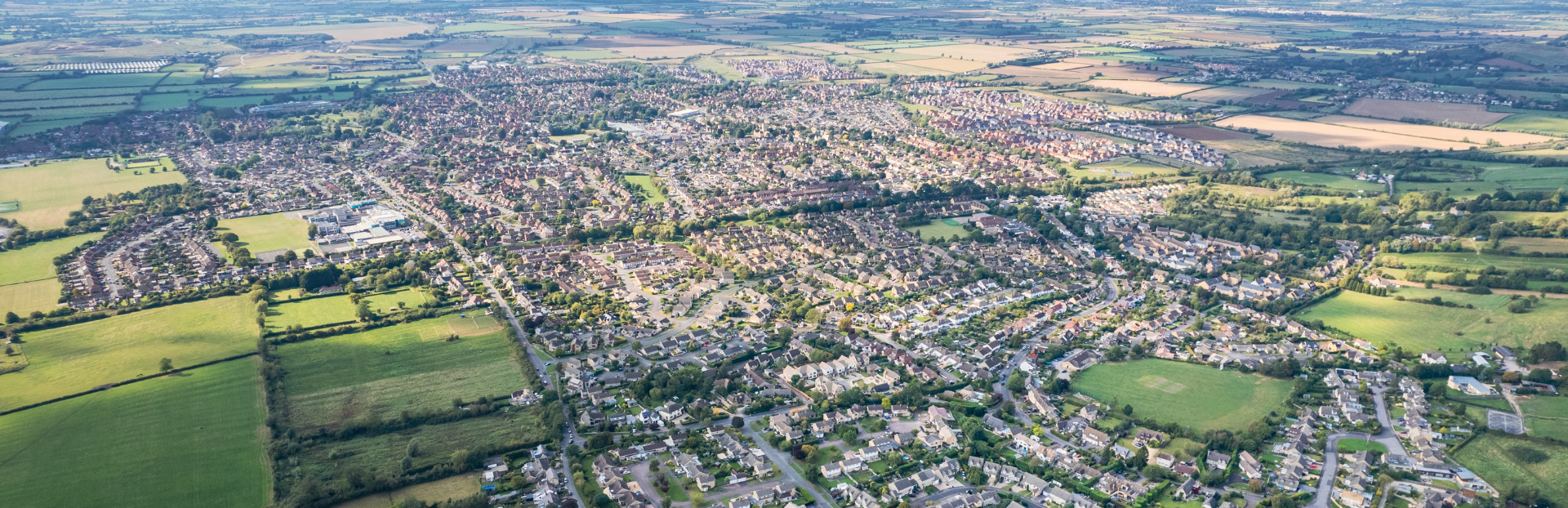
Cheltenham is a spa town in Gloucestershire, in South West England, on the western edge of the Cotswolds. Average sold prices in Cheltenham reached £327,380 in March 2026 on the HM Land Registry House Price Index, 12.9% above the England average of £289,946. Few towns this size sell at a premium to the national figure, and Cheltenham's comes almost entirely from its houses: detached homes sell 34.8% above the England detached average, semis 38.7% above and terraces 34.1% above, while flats sit slightly below. The Regency architecture, the spa-town setting on the edge of the Cotswolds and a genuinely affluent local economy hold house prices up where most of England's mid-sized towns trade below the average.
That premium runs straight into the yield maths. Across the six Cheltenham postcodes, gross yields range from 2.8% in GL53 (Charlton Kings, Leckhampton) to 4.7% in GL50 (Town Centre), and the more you pay for the address the less the rent returns. GL51 (Hesters Way, Up Hatherley) is the cheapest way in at a £338,318 asking price, while GL53 and GL54 both clear £570,000 on the way into the Cotswold fringe. For an investor, Cheltenham is a capital-growth and tenant-quality market first, a yield market second.
This guide covers the local authority of Cheltenham (ONS code E07000078) in Gloucestershire, across postcodes GL20, GL50, GL51, GL52, GL53 and GL54. Cheltenham sits in the South West region, 9 miles north-east of Gloucester and on the western edge of the Cotswolds. The wider Gloucester buy-to-let market sits next door with cheaper asking prices and higher yields.
Article updated: July 2026
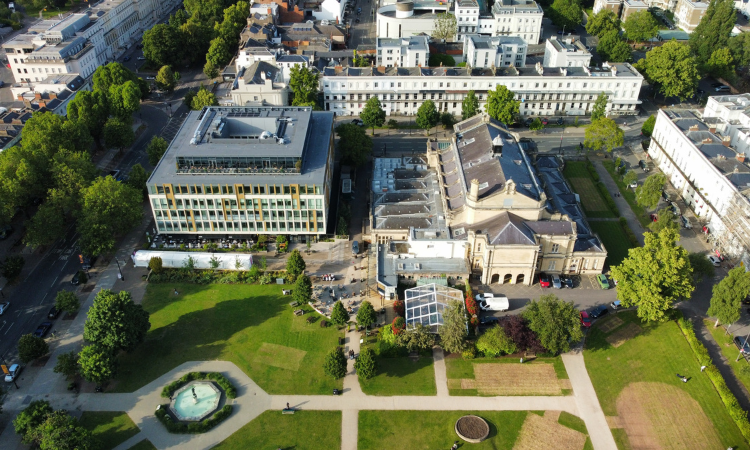
Why Invest in Cheltenham?
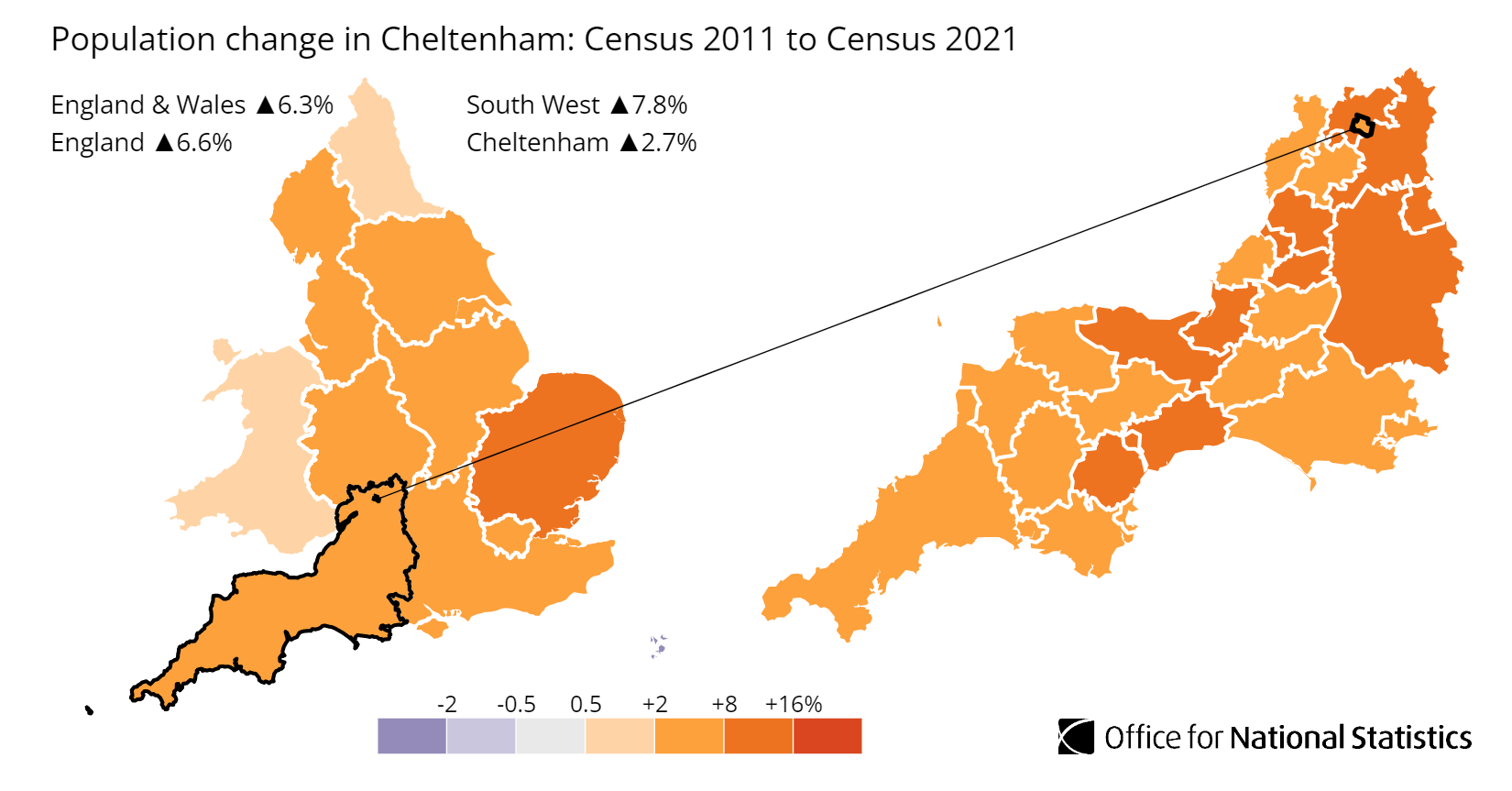
Cheltenham's population grew 2.68% between the 2011 and 2021 censuses, from 115,732 to 118,836 residents, slower than the England and Wales average of 6.3%. This is a settled town rather than a fast-expanding one, and that fits its character. Cheltenham built its name as a Regency spa resort and now trades on heritage, festivals and a service economy that draws professionals into a compact, walkable centre. Steady population, constrained supply of period housing and persistent demand are the ingredients behind its price premium.
The local employment rate of 81.7% sits well above both the South West average and Great Britain's 75.6%, and the jobs base is unusually high-value for a town this size. Cheltenham is home to GCHQ, a cluster of insurance, financial and professional services firms, and a festivals economy spanning racing, jazz, literature and science. The horse racing at Prestbury Park alone pulls hundreds of thousands of visitors a year, which supports a year-round hospitality trade and a genuine market for holiday let stock on the Cotswold fringe.
Median gross annual earnings in Cheltenham are £41,399, which works out at roughly £796.10 a week against £722.00 across the South West and £752.40 for Great Britain. Higher local wages let tenants carry higher rents, and a workforce weighted towards cyber, finance and professional roles is less exposed to the swings that hit lower-wage rental markets. That earnings base is the practical reason Cheltenham's premium prices still let.
Cheltenham Economic Summary
- Population (Cheltenham): 118,836 (2021 Census). Growth of 2.68% from 2011.
- Median annual salary: £41,399 (local), based on £796.10 per week (local), £722.00 (South West), £752.40 (Great Britain)
- Employment rate: 81.7% (local), 75.6% (Great Britain)
- Key employment sectors: Cyber and digital, insurance and financial services, professional and technical services, public administration, accommodation and food
Source: ONS Census 2021, Nomis Labour Market Profile (ASHE 2025)
Regeneration and Investment in Cheltenham
Cheltenham's headline scheme is the £1 billion Golden Valley development, a cyber and tech quarter beside GCHQ that will add over 1,000 new homes alongside more than a million square feet of commercial space. The investment is concentrated on the western edge of town, and its first phase secured Reserved Matters planning approval in April 2026, clearing the way for construction to start on site.
- Golden Valley (Delivery phase, £1 billion GDV): A nationally significant cyber and innovation cluster set 100 metres from GCHQ's Doughnut headquarters, delivering over 1,000 new homes across a range of types and tenures plus more than 1 million square feet of commercial floorspace aimed at cybersecurity and AI businesses. The scheme is forecast to create thousands of jobs. Cheltenham Borough Council bought the land in 2017 to steer it away from volume housebuilding, and appointed HBD, part of Henry Boot, as long-term development partner in 2022. New homes and an enlarged high-wage workforce both feed directly into local rental demand. Updates at Golden Valley Development.
- Golden Valley Phase 1 (Approved April 2026): The first phase won Reserved Matters consent in April 2026, the planning milestone that allows construction to begin, with the opening commercial buildings due to follow. This is the point at which a long-promised scheme becomes a live construction site rather than a masterplan.
- Golden Valley Phase 2 (Plans unveiled, CYBERUK April 2026): Plans for the second phase were presented at the CYBERUK conference in April 2026, extending the residential and commercial mix as the wider quarter builds out. The phased structure means the housing supply arrives in stages over several years rather than all at once.
Source: Office for National Statistics - Population for Cheltenham
Cheltenham Property Market Analysis
Average property prices in Cheltenham have risen 519.9% since January 1995, from £52,814 to £327,380. The sections below trace that path cycle by cycle, then drill into current postcode-level data for sold prices, price per square foot, asking prices, growth trends, and monthly transaction volumes.
When was the last house price crash in Cheltenham?
All sold prices here are recorded at Cheltenham local-authority level by HM Land Registry, which tracks average prices from January 1995 to March 2026, covering 31 years of market cycles.
The 1995 to 2007 climb: Cheltenham started at £52,814 in January 1995. By December 2000 the average had reached £95,163, and the early-2000s boom carried it to £177,173 by December 2005. Prices kept rising into a peak of £203,409 in September 2007. Cheap credit and a buoyant Cotswold-fringe market drove the gains.
2008 to 2009, the financial crisis: Prices fell from the September 2007 peak of £203,409 to a trough of £155,567 in February 2009, a decline of 23.5% in seventeen months. The worst year-on-year reading was -19.8% in February 2009. That is a deeper fall than many markets recorded, reflecting how far Cheltenham had run up in the boom and how exposed a higher-value market is when credit tightens.
2010 to 2013, the slow climb back: The recovery from the trough was gradual. Prices reached £188,560 by December 2010, then drifted in a narrow band, sitting at £197,141 by December 2013. Cheltenham spent four years rebuilding ground lost in the crash without clearing the old peak.
Recovery, 2014: The average passed its pre-crash peak in April 2014, hitting £207,038 against the £203,409 high of September 2007. That recovery took roughly six and a half years. Growth then ran at a steady pace, reaching £238,260 by December 2016.
2017 to 2019, pre-pandemic steadiness: Prices moved up through the late 2010s but not in a straight line, reaching £256,410 by December 2019 after a softer 2019 that recorded -4.2% annual growth at year end. The market was mature rather than booming.
2020 to 2022, the pandemic surge: The stamp duty holiday and a rush for towns with space and character suited Cheltenham well. Prices jumped to £288,544 by December 2020 (12.5% annual growth), eased to £292,001 by December 2021, then surged again to £328,363 by December 2022 (another 12.5% annual reading). The Cotswold-edge appeal was exactly what pandemic-era buyers were chasing.
The 2023 rate shock: Higher mortgage rates cooled the market. Prices slipped to £318,236 by December 2023, recording -3.1% annual growth. The correction was modest against the size of the preceding run.
2024 to present: Prices recovered to an all-time high of £336,911 in October 2024 before easing back to £327,380 by March 2026. The market is 2.8% below that 2024 peak and broadly flat over the past year at 1.5% annual growth. The current price is 60.9% above the September 2007 pre-crash peak.
Long-term growth summary:
- 5 years (March 2021 to March 2026): 14.6% growth (£285,566 to £327,380)
- 10 years (March 2016 to March 2026): 41.2% growth (£231,864 to £327,380)
- 15 years (March 2011 to March 2026): 80.3% growth (£181,530 to £327,380)
- 20 years (March 2006 to March 2026): 77.9% growth (£184,061 to £327,380)
- 30 years (January 1995 to March 2026): 519.9% growth (£52,814 to £327,380)
Cheltenham's 23.5% crash was steeper than England's national fall, but the 30-year return of 519.9% is among the stronger long-run records for a town of its size. An investor who bought at the exact peak in September 2007 would now be sitting on a 60.9% gain on the Land Registry average, and the recent easing off the October 2024 high is a gentle one rather than a fresh correction.
- All property types
- Detached
- Semi-detached
- Terraced
- Flats
- All property types
- Detached
- Semi-detached
- Terraced
- Flats
Sold House Prices in Cheltenham
The average sold price across all property types in Cheltenham is £327,380, which is 12.9% above the England average of £289,946 as of March 2026. That premium is the headline figure for the town, but it does not fall evenly across the housing stock. Houses sell well above the England average while flats sit just below it, so the premium is a house-price premium rather than a market-wide one.
| Property Type | Cheltenham Average | England Average | Difference |
|---|---|---|---|
| Detached houses | £634,398 | £470,492 | +34.8% |
| Semi-detached houses | £399,616 | £288,185 | +38.7% |
| Terraced houses | £326,828 | £243,788 | +34.1% |
| Flats and maisonettes | £204,138 | £214,563 | -4.9% |
| All property types | £327,380 | £289,946 | +12.9% |
Detached houses at £634,398 carry a 34.8% premium over England's £470,492. These are the period and Cotswold-stone homes of Charlton Kings, Leckhampton, Prestbury and the surrounding villages, where buyers compete for the kind of stock the area is known for. Annual growth of 2.5% points to steady demand rather than a froth on top.
Semi-detached houses at £399,616 carry the biggest premium of any type, 38.7% above England's £288,185, and posted the strongest annual growth in the town at 3.3%. The semi is the backbone of Cheltenham's family-letting market, and the figure shows how far a town's premium reaches into its mainstream stock, not just its grand houses.
Terraced houses at £326,828 sit 34.1% above England's £243,788, and a Cheltenham terrace now costs almost exactly what the average English home of any type costs. The town's Regency and Victorian terraces, concentrated towards the centre and Pittville, command the premium, with 2.5% annual growth in line with the houses above them.
Flats and maisonettes at £204,138 are the one type below the England average, by 4.9%, and the only type with prices falling, at -2.2% over the year. Cheltenham is not a high-rise town and its apartment stock is mostly period conversions rather than new blocks, so flat values track local demand without the new-build premium seen in bigger cities. For an investor, flats are where the town's prices come back towards normal.
Price Per Square Foot in Cheltenham
£150 per square foot separates Cheltenham's cheapest postcode from its dearest, with GL20 at £312 and GL53 at £462. Measuring by the square foot strips out how big the homes are and shows what the location itself commands. GL53 (Charlton Kings, Leckhampton) tops the table, which matches its position as the priciest part of town on the way up towards the Cotswold escarpment.
| Rank | Area | Price Per Sq Ft |
|---|---|---|
| 1 | GL20 (Tewkesbury) | £312 |
| 2 | GL51 (Hesters Way, Up Hatherley) | £350 |
| 3 | GL50 (Town Centre) | £365 |
| 4 | GL52 (Pittville, Prestbury) | £376 |
| 5 | GL54 (Winchcombe, Stow-on-the-Wold) | £414 |
| 6 | GL53 (Charlton Kings, Leckhampton) | £462 |
GL20 at £312 per square foot is the cheapest space in the area, reflecting the more affordable stock around Tewkesbury on the northern edge of the GL postcode district. Based on 563 transactions analysed, GL20's per-square-foot rate sits 32% below GL53's, so a buyer's budget stretches noticeably further per room here than in the prime southern suburbs.
GL53 at £462 per square foot tops the table, drawn from 421 transactions. The Charlton Kings and Leckhampton end of town carries the highest land value, set against the green of Leckhampton Hill, and pairs that premium with the lowest gross yield of the six postcodes. When buyers pay this much per square foot they are paying for the address, not the floor area.
For Sale Asking Prices in Cheltenham
GL51 at £338,318 and GL54 at £597,411 sit 76.6% apart, the widest asking-price gap across Cheltenham's six postcodes. The hierarchy follows the move out of town and up into the Cotswolds, where GL54 reaches Winchcombe and Stow-on-the-Wold. The mean asking price across all six postcodes is £448,418.
| Rank | Area | Asking Price |
|---|---|---|
| 1 | GL51 (Hesters Way, Up Hatherley) | £338,318 |
| 2 | GL50 (Town Centre) | £345,587 |
| 3 | GL20 (Tewkesbury) | £375,773 |
| 4 | GL52 (Pittville, Prestbury) | £455,877 |
| 5 | GL53 (Charlton Kings, Leckhampton) | £577,541 |
| 6 | GL54 (Winchcombe, Stow-on-the-Wold) | £597,411 |
GL51 at £338,318 is the lowest asking price in Cheltenham, covering Hesters Way and Up Hatherley on the western side of town. It and GL50 (Town Centre) at £345,587 are the only two postcodes priced above the £327,380 town-wide Land Registry average yet below £350,000, and together they are where an investor on a Cheltenham budget realistically starts.
GL54's £597,411 asking price reflects that this postcode reaches deep into the Cotswolds at Winchcombe and Stow-on-the-Wold, well beyond Cheltenham proper, where stone cottages and village homes carry a tourism-led premium. GL53 at £577,541 is the dearest part of Cheltenham itself. Both are owner-occupier and second-home territory, and the yield figures further down confirm it.

House Price Growth in Cheltenham
GL52 (Pittville, Prestbury) is the only Cheltenham postcode positive across all three timeframes, up 2.8% over one year, 4.6% over three and 11.0% over five. All six postcodes delivered positive five-year returns, but the shorter windows are mixed, and the recent easing off the 2024 high shows up as soft one-year figures in several places.
| Area | 1 Year | 3 Years | 5 Years |
|---|---|---|---|
| GL51 (Hesters Way, Up Hatherley) | -0.6% | 0.0% | 13.6% |
| GL53 (Charlton Kings, Leckhampton) | -3.9% | 1.6% | 13.5% |
| GL52 (Pittville, Prestbury) | 2.8% | 4.6% | 11.0% |
| GL54 (Winchcombe, Stow-on-the-Wold) | 8.2% | 2.0% | 10.7% |
| GL50 (Town Centre) | -5.4% | -7.0% | 2.3% |
| GL20 (Tewkesbury) | -4.9% | -1.6% | 0.8% |
GL52 (Pittville, Prestbury) is the steadiest performer, the only postcode positive in every window at 2.8% over one year, 4.6% over three and 11.0% over five. The Pittville and Prestbury area, with its Regency park and racecourse-side homes, has held buyer demand through the recent cooling. GL51 runs it close on a 13.6% five-year reading, softening only to -0.6% over the past year and flat at 0.0% over three.
GL54 has the strongest one-year figure at 8.2%, with the Cotswold villages in this postcode rebounding hardest over the past year on a 10.7% five-year base. GL50 (Town Centre) sits at the other end, down 5.4% over one year and 7.0% over three, where the town-centre flat market has carried the weakest recent readings even as it keeps the highest yield.
Monthly Property Sales in Cheltenham
Sales volumes vary widely across Cheltenham, from 21 transactions a month in GL53 and GL54 up to 51 in GL52. The busier postcodes are not the priciest ones, and turnover, the share of local stock changing hands each year, runs from 6% in GL20 up to 18% in GL51.
| Area | Sales Per Month | Turnover | Asking Price |
|---|---|---|---|
| GL52 (Pittville, Prestbury) | 51 | 11% | £455,877 |
| GL51 (Hesters Way, Up Hatherley) | 48 | 18% | £338,318 |
| GL50 (Town Centre) | 29 | 8% | £345,587 |
| GL20 (Tewkesbury) | 26 | 6% | £375,773 |
| GL53 (Charlton Kings, Leckhampton) | 21 | 9% | £577,541 |
| GL54 (Winchcombe, Stow-on-the-Wold) | 21 | 7% | £597,411 |
GL51 combines the second-highest sales count with the highest turnover at 18%, well clear of the rest of the town. Hesters Way and Up Hatherley hold a deep pool of mid-priced family homes at the lowest asking price in Cheltenham, so stock moves through quickly. For a buy-to-let investor, a high-turnover postcode means an easier exit when the time comes to sell.
GL52 records the most transactions at 51 a month on an 11% turnover, its larger and more expensive housing base meaning a similar share of homes equals more sales. At the other end, GL53 and GL54 each see just 21 sales a month: the premium and Cotswold-village stock here is held longer and trades less often, which is worth knowing before buying into a postcode you may one day need to sell out of.
How Long Properties Take to Sell in Cheltenham
GL51 (Hesters Way, Up Hatherley) clears fastest at about 179 days, while GL20 (Tewkesbury) is slowest at roughly 507 days, almost a year longer. Days on market is the typical time a home is listed before it sells; months of unsold stock shows how much for-sale supply is queued at the current rate of sales. The two together set how quickly you could realistically get your money back out.
| Area | Avg Days to Sell | Months of Unsold Stock | Market |
|---|---|---|---|
| GL51 (Hesters Way, Up Hatherley) | 179 | 5.9 | Seller's market |
| GL52 (Pittville, Prestbury) | 277 | 9.1 | Balanced market |
| GL53 (Charlton Kings, Leckhampton) | 304 | 10.0 | Balanced market |
| GL50 (Town Centre) | 380 | 12.5 | Buyer's market |
| GL54 (Winchcombe, Stow-on-the-Wold) | 435 | 14.3 | Buyer's market |
| GL20 (Tewkesbury) | 507 | 16.7 | Buyer's market |
The spread here is the widest of any data point in this guide, and it matters more than the headline yield. GL51's 5.9 months of unsold stock means a property that sells; GL20's 16.7 months means one that can sit for the best part of two years before it moves. A postcode that takes 507 days to sell is carrying a long, expensive tail of holding costs at exactly the point an investor is trying to release capital, and that risk does not show up anywhere in a rent figure.
What Type of Property Can You Buy in Cheltenham?
Detached homes are the largest single category in five of Cheltenham's six postcodes, peaking at 57.5% of stock in GL52, while the town-centre GL50 is the exception, where flats are the biggest group at 34.7%. The mix of housing decides which strategy fits where. The figures below are drawn from 2021 Census records for each postcode.
| Area | Detached | Semi-detached | Terraced | Flats |
|---|---|---|---|---|
| GL20 (Tewkesbury) | 57.3% | 24.4% | 10.0% | 3.8% |
| GL50 (Town Centre) | 20.7% | 24.9% | 18.4% | 34.7% |
| GL51 (Hesters Way, Up Hatherley) | 42.9% | 30.5% | 9.4% | 9.3% |
| GL52 (Pittville, Prestbury) | 57.5% | 27.3% | 8.6% | 4.6% |
| GL53 (Charlton Kings, Leckhampton) | 48.4% | 31.7% | 12.1% | 7.5% |
| GL54 (Winchcombe, Stow-on-the-Wold) | 56.1% | 29.3% | 9.9% | 4.1% |
GL50 (Town Centre) holds by far the largest share of flats at 34.7% and the most terraced houses outside the villages at 18.4%. That smaller-unit stock is the natural buy-to-let market, and it lines up with GL50 carrying the highest gross yield in town. Period conversions and town-centre apartments here suit single lets and professional sharers within walking distance of the offices and the festivals.
GL52 (Pittville, Prestbury) is the most detached-dominated postcode at 57.5%, with flats at just 4.6%. Detached and semi-detached houses together make up almost 85% of its stock, which matches its premium prices and its place as family-home rather than rental-unit territory. The same pattern holds across GL20, GL53 and GL54, where houses dominate and the smaller letting stock is scarce.
The flats figure covers both purpose-built blocks and conversions. A small share of mobile and temporary dwellings is not shown, so rows may not total 100%.
Cheltenham Rental Market Analysis
Monthly rents in Cheltenham run from £1,141 in GL20 to £1,961 in GL54, with gross rental yields from 2.8% to 4.7% across the six postcodes. For investors asking is buy to let a good investment in Cheltenham, the sections below break down rents, yields and tenant affordability postcode by postcode. The high asking prices mean Cheltenham works best for those who value tenant quality and capital growth over headline income, and for anyone looking at how to build property portfolio uk the affluent local economy offers a more resilient tenant base than higher-yielding markets nearby. Browse current buy-to-let property for sale across the region.
Average Rent & Gross Rental Yields in Cheltenham
Gross rental yields in Cheltenham range from 2.8% in GL53 to 4.7% in GL50. The pattern is consistent: the cheaper, more central postcodes return more, and the expensive Cotswold-edge addresses return least. GL50 (Town Centre) leads on yield despite charging mid-range rent, because its £345,587 asking price is among the lowest in town.
| Area | Average Monthly Rent | Asking Price | Gross Yield |
|---|---|---|---|
| GL50 (Town Centre) | £1,349 | £345,587 | 4.7% |
| GL51 (Hesters Way, Up Hatherley) | £1,282 | £338,318 | 4.5% |
| GL54 (Winchcombe, Stow-on-the-Wold) | £1,961 | £597,411 | 3.9% |
| GL20 (Tewkesbury) | £1,141 | £375,773 | 3.6% |
| GL52 (Pittville, Prestbury) | £1,306 | £455,877 | 3.4% |
| GL53 (Charlton Kings, Leckhampton) | £1,363 | £577,541 | 2.8% |
GL50 at 4.7% pairs the second-lowest asking price with a £1,349 monthly rent to give the best return in town. A 30% deposit of £103,676 buys into the highest-yielding postcode, set in the heart of Cheltenham where tenant demand is steadiest.
GL53 at 2.8% sits at the bottom of the table. The £1,363 rent is healthy, but against a £577,541 asking price the income return is thin, and Charlton Kings and Leckhampton make their case on capital value and tenant quality rather than yield. GL54's £1,961 rent is the highest in the area, yet its £597,411 Cotswold-village price still pulls the yield down to 3.9%.
Gross Rental Yield by Postcode
Is Cheltenham Rent High?
Monthly rents in Cheltenham take between 33.1% and 56.9% of the local median gross monthly salary. The widely cited affordability threshold is 30% of gross income, and every Cheltenham postcode sits above it. That tells you rents here are stretched against the median wage, which is a function of high prices feeding into high rents in a town where the typical tenant in the dearer postcodes earns well above the local median.
The median gross weekly salary in Cheltenham is £796.10, which equates to £3,450 per month or £41,399 per year. This is above the South West regional median of £722.00 per week and the Great Britain median of £752.40 per week. Data from the Nomis Labour Market Profile (ASHE 2025).
| Rank | Area | Rent as % of Income |
|---|---|---|
| 1 | GL54 (Winchcombe, Stow-on-the-Wold) | 56.9% |
| 2 | GL53 (Charlton Kings, Leckhampton) | 39.5% |
| 3 | GL50 (Town Centre) | 39.1% |
| 4 | GL52 (Pittville, Prestbury) | 37.8% |
| 5 | GL51 (Hesters Way, Up Hatherley) | 37.2% |
| 6 | GL20 (Tewkesbury) | 33.1% |
GL20 at 33.1% is the most affordable for tenants and the closest any Cheltenham postcode comes to the 30% mark. A £1,141 rent against a £3,450 monthly salary leaves more headroom than anywhere else in the area, which tends to mean steadier tenancies and fewer arrears.
GL54 at 56.9% is an outlier, and the reason is that the Cotswold villages in this postcode draw tenants who are not on the local median wage at all. The £1,961 rent reflects second-home-belt demand for stone cottages and village houses, where households are typically professional, dual-income or relocating from higher-cost areas.
How Big Is Cheltenham's Private Rented Sector?
The private rented sector is deepest in GL50 and GL54, where it accounts for 27.9% and 27.6% of households, and shallowest in GL52 at 10.7%. The share of homes already rented privately is a read on the size of the established tenant pool and the local lettings market. The table below shows household tenure by postcode.
| Area | Owned Outright | Owned with Mortgage | Private Rented | Social Rented |
|---|---|---|---|---|
| GL50 (Town Centre) | 37.5% | 26.1% | 27.9% | 7.3% |
| GL54 (Winchcombe, Stow-on-the-Wold) | 40.7% | 23.3% | 27.6% | 7.2% |
| GL53 (Charlton Kings, Leckhampton) | 43.0% | 33.2% | 19.8% | 3.8% |
| GL20 (Tewkesbury) | 49.3% | 27.1% | 17.7% | 5.0% |
| GL51 (Hesters Way, Up Hatherley) | 47.0% | 28.8% | 15.3% | 8.3% |
| GL52 (Pittville, Prestbury) | 46.2% | 34.5% | 10.7% | 5.5% |
GL50 and GL54 have the largest private rented sectors, both close to 28% of households, but they get there from opposite directions. GL50 is the town centre, where flats and smaller units feed a working rental market, and it also carries the top yield. GL54 is the Cotswold-village end, where a high rented share reflects holiday and second-home letting rather than mainstream tenancies. GL52, the family-home suburb of Pittville and Prestbury, has the smallest rented sector at 10.7% and the highest mortgaged ownership, marking it as owner-occupier territory.
Rental listings are deep enough to read the market in GL50, GL51 and GL52, and in all three the balance currently favours landlords. GL50 had around 105 homes on the rental market taking about 47 days to let, GL51 around 41 homes letting in roughly 30 days, and GL52 around 75 homes letting in about 40 days. Quick letting times point to demand running ahead of available supply in central Cheltenham.
Local Housing Allowance Rates in Cheltenham
All six Cheltenham postcodes fall within the Cheltenham Broad Rental Market Area, where Local Housing Allowance runs from £100.45 a week for a shared room to £338.30 a week for a four-bedroom home. Local Housing Allowance is the most a tenant on housing support can claim towards rent, so for that part of the market it sets an effective floor. The rates below apply across the whole of Cheltenham. To check the current rate for a specific address, use the government's official Local Housing Allowance calculator.
| Property Size | Weekly LHA Rate | Monthly Equivalent |
|---|---|---|
| Shared accommodation | £100.45 | £435 |
| 1 bedroom | £143.84 | £623 |
| 2 bedrooms | £184.11 | £798 |
| 3 bedrooms | £230.14 | £997 |
| 4 bedrooms | £338.30 | £1,466 |
The two-bedroom LHA rate of £184.11 a week works out at about £798 a month, well below the £1,141 to £1,961 open-market rents across Cheltenham's postcodes. A benefit-backed tenancy therefore sits a long way under what the open market pays in this town, and the stock that fits within these rates is concentrated in the cheaper GL20 and GL51 ends rather than the premium suburbs. The rate is identical in every Cheltenham postcode because it is set across the whole Cheltenham market area.
Buy-to-Let Considerations
Are House Prices High in Cheltenham? Price-to-Earnings Ratios
Buying in Cheltenham takes between 8.2 and 14.4 times the median annual salary. This is based on the Nomis Labour Market Profile for Cheltenham showing the median gross annual income for residents is £41,399.
The national benchmark for price-to-earnings is 7.4x (England's average sold price of £289,946 divided by the Great Britain median annual salary of £39,125). Every Cheltenham postcode sits above that benchmark, which is the affordability cost of the town's price premium: even the cheapest entry point asks more relative to local earnings than the England average does relative to national earnings.
| Rank | Area | Price-to-Earnings Ratio |
|---|---|---|
| 1 | GL51 (Hesters Way, Up Hatherley) | 8.2x |
| 2 | GL50 (Town Centre) | 8.3x |
| 3 | GL20 (Tewkesbury) | 9.1x |
| 4 | GL52 (Pittville, Prestbury) | 11.0x |
| 5 | GL53 (Charlton Kings, Leckhampton) | 14.0x |
| 6 | GL54 (Winchcombe, Stow-on-the-Wold) | 14.4x |
GL51 at 8.2x is the most affordable entry point in Cheltenham relative to local wages, and GL50 at 8.3x is a fraction behind it. Both still sit above the 7.4x national benchmark, so even the town's value end is dearer against earnings than the typical English home.
GL54 at 14.4x and GL53 at 14.0x are firmly in premium territory, where prices reach more than fourteen times the local median wage. Buyers in these postcodes are typically dual-income households, equity-rich downsizers or those relocating from higher-cost regions. For an investor, ratios this high compress yields and stretch the payback period.
Deposit Requirements in Cheltenham
A 30% deposit on a buy-to-let property in Cheltenham ranges from £101,495 in GL51 to £179,223 in GL54. The gap between the cheapest and most expensive deposit is £77,728, more than three-quarters of a second GL51 deposit. For investors comparing Cheltenham with the rest of the region, even the lowest deposit here sits well above neighbouring Gloucester, where cheaper stock brings the entry cost down.
Beyond the deposit, the additional stamp duty calculator and the costs of buy to let affect the total capital required.
| Rank | Area | 30% Deposit Required |
|---|---|---|
| 1 | GL51 (Hesters Way, Up Hatherley) | £101,495 |
| 2 | GL50 (Town Centre) | £103,676 |
| 3 | GL20 (Tewkesbury) | £112,732 |
| 4 | GL52 (Pittville, Prestbury) | £136,763 |
| 5 | GL53 (Charlton Kings, Leckhampton) | £173,262 |
| 6 | GL54 (Winchcombe, Stow-on-the-Wold) | £179,223 |
GL51 is the cheapest way into Cheltenham at a £101,495 deposit, and GL50 next door costs barely £2,000 more for the town's highest yield. The two value postcodes are within touching distance on the deposit, so the choice between them comes down to GL51's faster-selling, higher-turnover market against GL50's stronger yield and deeper rental pool, not the entry cost.
The step up to the premium end is steep. Moving from GL51 to GL53 adds more than £70,000 to the deposit, and GL54 in the Cotswold villages asks £179,223 down. That extra capital buys prestige stock and strong long-run capital values, but on the yield evidence it does noticeably less for the income return than the cheaper postcodes do.
What the Cheltenham Data Tells Buy-to-Let Investors
In Cheltenham the income and the value sit in different postcodes. GL50 (Town Centre) has the top yield at 4.7%, while the premium addresses in GL53 and GL54 carry the lowest yields at 2.8% and 3.9% on the highest prices. The cheapest entry for buying an investment property is GL51 at £338,318, a 30% deposit of £101,495, for a home renting at £1,282 a month, and GL50 is within a couple of thousand pounds of that for a stronger return.
The growth picture rewards patience over the past year. GL52 (Pittville, Prestbury) is the most consistent, the only postcode up across one, three and five years, while GL51 holds the strongest five-year reading of the value postcodes at 13.6%. GL54's villages have rebounded hardest over the year at 8.2%, while GL50 and GL20 have softened recently even as GL50 holds the best yield. None of this is a town in trouble, just a high-value market taking a breather off its October 2024 high.
Cheltenham's defining number is its 12.9% premium to the England average, carried almost entirely by houses. That premium is the reason yields are modest and deposits are high, but it is also the reason the town holds its value and lets to a wealthier, steadier tenant base than higher-yielding markets nearby. The selling-time data is the warning to read alongside it: GL20 at 507 days to sell shows how slow an exit can be at this end of the market. Buyers who want to come in below asking often work the off market property route.
Cheltenham has no selective licensing for private landlords, though HMOs still need a licence and the current position is set out on Cheltenham Borough Council's property licensing pages. With an 81.7% employment rate, a high-wage cyber and finance economy and the £1 billion Golden Valley scheme set to add homes and jobs, the town reads as a capital-growth and tenant-quality play rather than a yield play: lower headline returns, with unusually strong fundamentals underneath them.
How Cheltenham Compares
Cheltenham's mean asking price of £448,418 is the highest of four Gloucestershire and South West locations compared here, while its top yield of 4.7% is the lowest in the table. The comparison places Cheltenham alongside three nearby markets, each with a different investor profile. The mean asking price and mean monthly rent are simple averages across all postcodes with data. Top gross yield is the single highest postcode yield in each location.
| Location | Mean Asking Price | Mean Monthly Rent | Mean Gross Yield | Top Yield (postcode) |
|---|---|---|---|---|
| Worcester | £295,727 | £953 | 3.9% | 5.0% (WR4) |
| Gloucester | £299,777 | £1,194 | 4.8% | 6.1% (GL1) |
| Swindon | £349,254 | £1,194 | 4.1% | 5.2% (SN2) |
| Cheltenham | £448,418 | £1,400 | 3.7% | 4.7% (GL50) |
Cheltenham is the most expensive location in this group at £448,418 and the lowest-yielding at 4.7%, the classic trade a premium town asks: higher prices, lower income return, and a more affluent tenant base than its neighbours. Its mean rent of £1,400 is the highest in the table, but not by enough to close the yield gap against the cheaper markets.
For investors prioritising income, Gloucester next door at 6.1% delivers the highest top yield in the group on a far lower asking price, and Swindon at 5.2% offers a middle path with strong transport links to London. Worcester is the cheapest to enter at a £295,727 mean asking price. Cheltenham earns its place for buyers who want capital growth, a heritage setting and a high-wage tenant pool rather than the strongest cash flow. For a data-driven comparison across all UK locations, see our best buy-to-let areas guide.
Frequently Asked Questions
Is Cheltenham a good place to live for buy-to-let tenants?
It is one of the stronger towns in the region on the things that keep rent paid. The employment rate is 81.7%, above the 75.6% national figure, and the typical wage is around £796 a week against £722 across the South West. A workforce weighted towards cyber, insurance and professional services tends to be in steadier, better-paid work than a lower-wage rental market.
It is also an easy place to rent in. A compact Regency town with a busy festivals and racing calendar, good schools and quick access to the Cotswolds suits professional renters who tend to settle rather than move on each year.
What are the best areas in Cheltenham for property investment?
It comes down to whether you want income or value, because the two sit in different postcodes. GL50 (Town Centre) is among the cheapest to enter at £345,587 and carries the highest yield at 4.7%, with the deepest pool of flats and central rental stock. GL51 (Hesters Way, Up Hatherley) is the cheapest of all at £338,318, with the fastest-selling market and the strongest five-year growth of the value postcodes at 13.6%. GL52 (Pittville, Prestbury) is the steadier hold, the only postcode up across one, three and five years.
At the other end, GL53 (Charlton Kings, Leckhampton) and GL54 (Winchcombe, Stow-on-the-Wold) are the premium, Cotswold-edge addresses at over £570,000 with the lowest yields at 2.8% and 3.9%. So if income matters most, GL50 and GL51 lead; if you are buying for long-run capital value and tenant quality, the southern suburbs and villages make the case.
How does Cheltenham compare to Gloucester for buy-to-let?
They are near neighbours that pull in opposite directions. Gloucester is the higher-yield, lower-cost option: top gross yields around 6.1% against Cheltenham's 4.7%, on a mean asking price of £299,777, roughly a third cheaper than Cheltenham's £448,418. For an investor chasing cash flow, Gloucester does more per pound.
Cheltenham trades that yield for a price premium, a wealthier tenant base and the heritage setting that holds its value. Historically Gloucester has been the stronger performer on income and Cheltenham on capital growth and tenant stability. Plenty of local investors hold both.
Why are Cheltenham house prices above the England average?
The premium is real and it sits in the houses. Cheltenham's average sold price of £327,380 is 12.9% above the England average, but break it down by type and detached homes sell 34.8% above the England detached figure, semis 38.7% above and terraces 34.1% above, while flats are slightly below. Regency architecture, a constrained supply of period housing, the Cotswold setting and a genuinely high-wage local economy all hold house values up.
For a buyer, that means the value entry point is in flats and in the cheaper GL20 and GL51 postcodes, where prices come back closer to normal, rather than in the family-house market that drives the headline premium.
Can I find buy-to-let property under £350,000 in Cheltenham?
Yes, but only in the two value postcodes on average. GL51 (Hesters Way, Up Hatherley) at £338,318 and GL50 (Town Centre) at £345,587 are the only postcodes whose average asking price sits below £350,000. Everywhere else starts higher, with GL52, GL53 and GL54 all well above it.
Below those averages, the way in is by property type rather than postcode. Flats average £204,138 on the Land Registry index, the one type that sits below the England average, so GL50 flats and terraces are where a sub-£350,000 Cheltenham purchase realistically lives. It is also worth looking at below market value property to come in under asking.
When will the Golden Valley development affect Cheltenham property prices?
Not immediately, but it is now a live scheme rather than a plan. Golden Valley, the £1 billion cyber quarter beside GCHQ, won Reserved Matters approval for its first phase in April 2026, which is the consent that lets construction start. Over 1,000 homes and more than a million square feet of commercial space will arrive in phases over several years.
Any real effect on local prices and rents is a story for the late 2020s and beyond, as the homes and the high-wage jobs land. The point worth noting now is that the scheme is being delivered in stages, so the new housing supply and the new demand both build up gradually rather than hitting the market at once.
What are average house prices in Cheltenham?
The average sold price across Cheltenham is £327,380 on the Land Registry index, about 12.9% above the England average of £289,946 as of March 2026. Asking prices by postcode run from £338,318 in GL51 (Hesters Way, Up Hatherley) up to £597,411 in GL54 (Winchcombe, Stow-on-the-Wold), with a town-wide mean of £448,418. By type, detached homes average £634,398, semi-detached £399,616, terraced £326,828 and flats £204,138.
Through a buy-to-let lens, GL50 (Town Centre) is among the cheapest entry points and the highest-yielding at 4.7%, while GL53 and GL54 are the dearest and lowest-yielding.
What are the Local Housing Allowance rates in Cheltenham?
All six Cheltenham postcodes fall in the Cheltenham Broad Rental Market Area, so they share one set of rates. As of June 2026, Local Housing Allowance runs at £100.45 a week for a shared room, £143.84 for a one-bed, £184.11 for two beds, £230.14 for three and £338.30 for four. That figure is the most a tenant on housing support can claim towards rent, so for that part of the market it effectively sets a floor, and here it sits well below open-market rents.
What type of property is most common in Cheltenham?
Detached houses, in five of the six postcodes, running from 42.9% of stock in GL51 up to 57.5% in GL52. The exception is GL50 (Town Centre), where flats are the largest single group at 34.7%, the one part of town built around apartments and conversions rather than houses. The smaller letting stock of terraces and flats is concentrated in GL50, while the suburbs and villages are dominated by family houses.
How do I buy an investment property in Cheltenham?
Start by deciding whether you are buying for income or for capital growth, because in Cheltenham the two point at different postcodes. GL50 (Town Centre) and GL51 (Hesters Way, Up Hatherley) are the cheapest entries, at £345,587 and £338,318, and carry the best yields at 4.7% and 4.5%. The premium GL53 and GL54 addresses are bought for long-run value rather than income. Budget for a 30% deposit, which runs from £101,495 in GL51 to £179,223 in GL54.
Beyond what is listed openly, experienced investors often buy below asking through off-market properties and below market value. To see what is available now, browse investment properties or buy-to-let homes for sale.
Ready to buy property?
Access off-market investment properties with an average 8%+ annual gross yield (beating the UK's typical 3-5%).
Get property alerts