
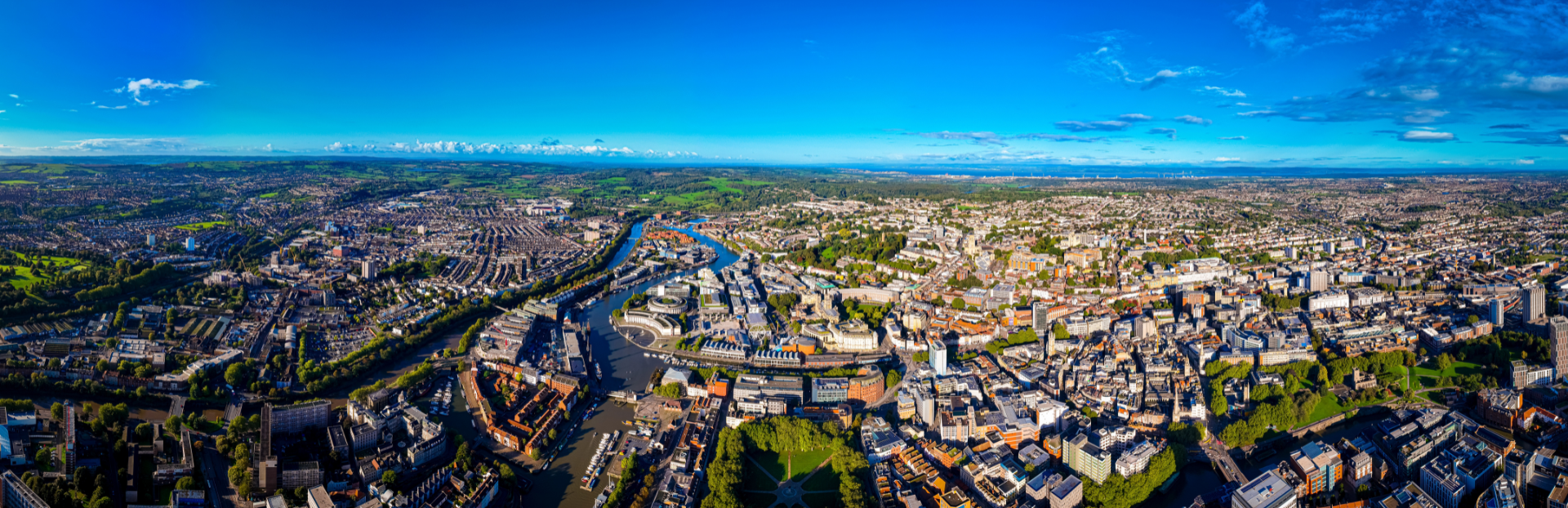
Bristol is a city in South West England, and its unitary authority is known formally as the City of Bristol. The average sold price across the City of Bristol is £347,715 on the HM Land Registry House Price Index, 19.9% above the England average of £289,946, and the premium runs through every property type rather than just the top end. A Bristol terraced house sells for 55.0% more than its England counterpart and a semi for 52.6% more, wider gaps than the 44.9% on detached homes. That tells you the pressure in this market sits on the mid-range stock that buy-to-let usually targets, not the executive end. Across fifteen postcodes the entry point starts at £273,085 in BS2 and runs up to £601,593 in BS9.
Bristol's premium rests on a deep and varied jobs base: aerospace and defence at Filton, financial services in the centre, two large universities, a tech cluster, and the NHS trusts at Southmead and the Royal Infirmary. The median gross annual salary of £39,509 edges above the Great Britain figure of £39,125, which is rare for a South West city and gives tenants more room to absorb rent. For an investor the city splits cleanly: cheaper, higher-yielding stock in the east and south, and a Clifton-and-Stoke-Bishop premium belt where the yield falls away as the price climbs.
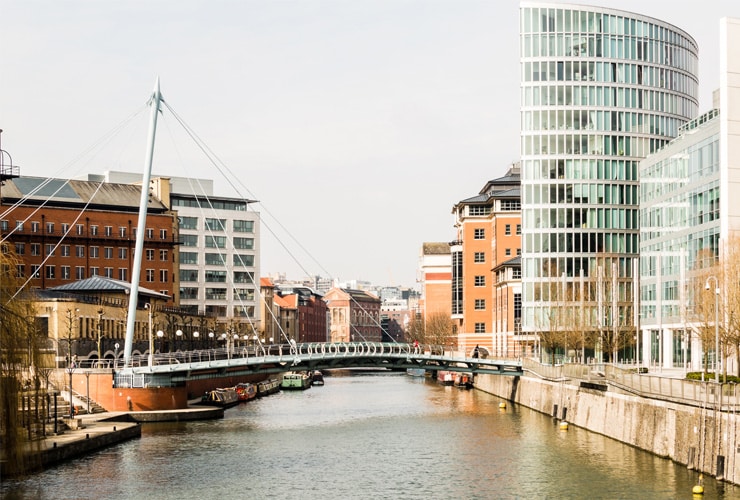
This guide covers the unitary authority of the City of Bristol (ONS code E06000023) across the BS1 to BS16 postcodes that fall inside the city boundary. Bristol sits in the South West, 12 miles north of Bath and roughly 25 miles from Cardiff across the Severn. The figures here are for Bristol itself, not the wider built-up area that runs into South Gloucestershire and North Somerset.
Article updated: July 2026

Why Invest in Bristol?
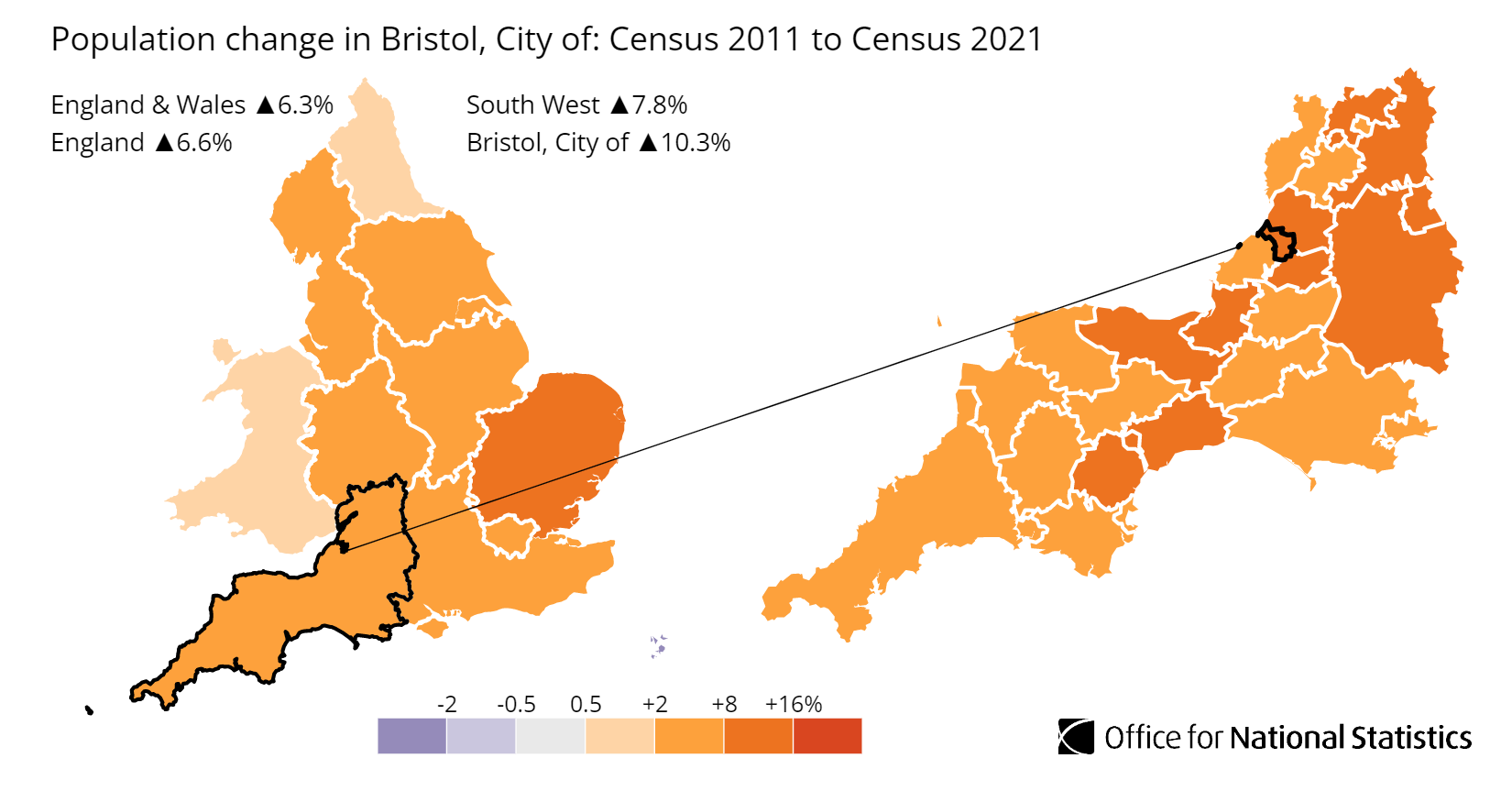
Bristol's population grew 10.3% between the 2011 and 2021 censuses, from 428,234 to 472,465 residents, ahead of the England and Wales average of 6.3%. A city growing that fast adds tenants faster than most of the South West, and Bristol has done it on the back of jobs rather than commuter overspill. The economy carries several distinct layers, which matters because it spreads rental demand across the whole city rather than concentrating it in one quarter.
Aerospace and defence anchor the northern fringe at Filton, where Airbus, Rolls-Royce and BAE Systems employ thousands in engineering and manufacturing. Those are settled, higher-earning roles, and they feed tenant demand into BS7, BS9 and BS10. Financial services run deep in the centre, with Hargreaves Lansdown headquartered in the city alongside the regional offices of major banks and insurers. The tech cluster that earned the nickname Silicon Gorge sits around the central area and Temple Quarter, and the creative sector built around BBC Bristol and Aardman Animations draws media professionals from across the country.
Two universities sit on top of that. The University of Bristol is a Russell Group institution with more than 29,000 students, concentrated in BS2, BS6, BS7 and BS8. UWE Bristol adds another 28,000, with its main campus at Frenchay in BS16. Between them they generate year-round rental demand across a wide spread of the city, which is part of why outer postcodes like BS16 carry as much rental pressure as the centre.
The median gross annual salary in Bristol is £39,509, against £37,544 across the South West and £39,125 for Great Britain. Wages above the national figure are unusual for a South West city, and higher local earnings give tenants more headroom to pay rent. Southmead Hospital and the Bristol Royal Infirmary, the city's two major NHS trusts, add a steady healthcare tenant pool that holds up regardless of the wider economic cycle, concentrated around BS10, BS2 and BS5.
Bristol Economic Summary
- Population: 472,465 (2021 Census). Growth of 10.3% from 2011.
- Median annual salary: £39,509 (Bristol), £37,544 (South West), £39,125 (Great Britain)
- Employment rate: 79.6% (Bristol), 79.3% (South West), 75.6% (Great Britain)
- Unemployment rate: 4.3% (Bristol)
- Key employment sectors: Aerospace and defence, financial services, higher education, technology, healthcare, creative industries
Source: ONS Census 2021, Nomis Labour Market Profile (ASHE 2025, Employment Oct 2024-Sep 2025)
Regeneration and Investment in Bristol
Three major regeneration programmes are reshaping Bristol, led by the Temple Quarter scheme around Temple Meads station with a gross development value of up to £4 billion. The schemes target the city's eastern brownfield land, its western waterfront, and the transport network that ties them together, on timelines that run well into the 2030s.
- Temple Quarter (under construction, up to £4 billion gross development value): The largest regeneration project in Bristol, turning 135 hectares of brownfield land around Temple Meads station into 10,000 new homes and over 22,000 new jobs. The University of Bristol's Enterprise Campus opens in September 2026, and Muse Places Ltd was selected as preferred development partner in January 2026. The scheme sits across BS1 and BS2, the two postcodes carrying the city's lowest asking prices. Updates at Bristol Temple Quarter.
- Western Harbour (masterplan stage, £1 billion+ residential value): A masterplan-led regeneration of Cumberland Basin and Spike Island, replacing ageing road infrastructure with a single spine road and freeing land for 750 to 1,200 new homes. The draft masterplan was published in February 2025 with construction targeted from 2028. Updates at Bristol City Council.
- West of England Mass Transit (planning, £752 million secured): A proposed high-capacity transit network for the Bristol city-region, currently the largest city-region in the UK without one. The Transport Vision was unveiled in February 2026 with construction targeted to begin within four to five years. Updates at West of England Combined Authority.
Source: Office for National Statistics - Population for Bristol
Bristol Property Market Analysis
Average property prices in the City of Bristol have risen 683.5% since January 1995, from £44,377 to £347,715. The sections below trace that climb through each market cycle, then drill into current postcode-level data for sold prices, price per square foot, asking prices, growth, sales volumes and selling times.
When was the last house price crash in Bristol?
All sold prices for Bristol are recorded by HM Land Registry at City of Bristol unitary authority level, which is the same area as the city itself. The House Price Index runs from January 1995 to March 2026, covering 31 years of cycles.
The 1995 to 2007 climb: Bristol started at £44,377 in January 1995. By December 2000 the average had reached £81,429, an 83.5% rise in six years as low rates and easier mortgage lending pulled prices up. Growth carried on through the early 2000s, reaching £156,801 by December 2005, and the market peaked at £195,151 in October 2007.
2008 to 2009, the financial crisis: Prices fell from the October 2007 peak of £195,151 to a trough of £153,612 in April 2009, a drop of 21.3% over 18 months. The worst year-on-year reading came in January 2009 at -19.1%. Bristol's correction was deeper than Chester's 15.3% but in line with the wider England fall, reflecting how far prices had run in the preceding boom.
2010 to 2013, the slow grind back: Prices bounced off the April 2009 trough but then stalled. By December 2010 the average sat at £173,420, and it spent the next two years drifting in a narrow band, reaching £176,773 by December 2012. The recovery only gathered pace from 2013, when prices reached £189,112 by December.
Recovery, 2014: Bristol passed its pre-crash peak in April 2014, when the average of £196,372 edged above the October 2007 high of £195,151. That took six and a half years, shorter than many southern cities, helped by the strength of the local jobs market.
2015 to 2019, sustained growth: Prices ran hard through the middle of the decade, reaching £259,323 by December 2016 on near-10% annual growth, before the pace cooled. By December 2019 the average stood at £284,619, with annual growth back down to 1.5% as the market caught its breath.
2020 to 2022, the pandemic surge: The stamp duty holiday and the move towards cities with space and character pushed Bristol up sharply. Prices rose from £290,054 in June 2020 to £306,048 by December 2020 (7.5% annual), then on to £315,711 by December 2021. The run peaked at £356,675 in November 2022, a 13.9% annual gain.
2023 to present, the plateau: Higher mortgage rates took the heat out of the market. Prices eased to £349,167 by December 2023 (-1.7% annual), then set a fresh all-time high of £357,072 in March 2025 before drifting back. The latest reading is £347,715 in March 2026, down 2.6% on the year. The current price sits 78.2% above the October 2007 pre-crash peak.
Long-term growth summary:
- 5 years (March 2021 to March 2026): 12.7% growth (£308,438 to £347,715)
- 10 years (March 2016 to March 2026): 42.6% growth (£243,793 to £347,715)
- 15 years (March 2011 to March 2026): 104.7% growth (£169,833 to £347,715)
- 20 years (March 2006 to March 2026): 121.9% growth (£156,701 to £347,715)
- 30 years (January 1995 to March 2026): 683.5% growth (£44,377 to £347,715)
Bristol's 21.3% crash was deeper than the North West heritage markets, but the recovery was faster and the long-run return higher: 683.5% over 30 years against Chester's 409.8%. The recent picture is a market that set a record in early 2025 and has since given a little back, rather than one in retreat. An investor who bought at the exact October 2007 peak would now be sitting on a gain of 78.2% on the Land Registry average.
- All property types
- Detached
- Semi-detached
- Terraced
- Flats
- All property types
- Detached
- Semi-detached
- Terraced
- Flats
Sold House Prices in Bristol
Every property type in Bristol sells above its England average, but the widest gap is on terraced houses at 55.0% above, not on the detached stock at the top. That pattern is the opposite of what you see in many cities, where the premium concentrates in the executive end. In Bristol the squeeze is hardest on the mid-market homes that most landlords buy, and it traces back to a tight supply of family stock in a city that keeps adding residents.
| Property Type | Bristol Average | England Average | Difference |
|---|---|---|---|
| Detached houses | £681,612 | £470,492 | +44.9% |
| Semi-detached houses | £439,692 | £288,185 | +52.6% |
| Terraced houses | £377,760 | £243,788 | +55.0% |
| Flats and maisonettes | £239,561 | £214,563 | +11.7% |
| All property types | £347,715 | £289,946 | +19.9% |
Detached houses at £681,612 carry a 44.9% premium over England's £470,492. The detached stock clusters in the western and northern belt, in Stoke Bishop and Westbury-on-Trym in BS9 and Clifton in BS8, where larger period and inter-war homes draw professional buyers and downsizers. Annual change of -1.3% points to a market that has cooled at the top without falling away.
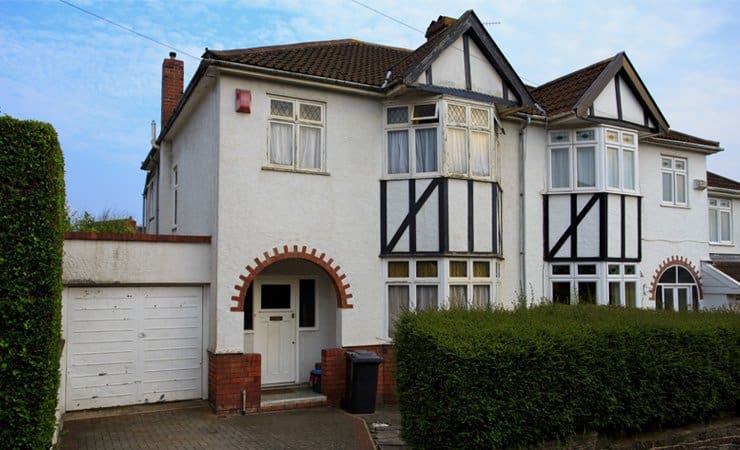
Semi-detached houses at £439,692 sit 52.6% above England's £288,185, a wider gap than the detached stock. This is the backbone of family lettings in the outer postcodes, the inter-war semis of BS9, BS16 and BS14. The -0.7% annual change is the mildest of any type, which fits a steady, owner-occupier-led part of the market.
Terraced houses at £377,760 carry the widest premium of all at 55.0% over England's £243,788. Bristol's Victorian terraces are the engine of its buy-to-let and HMO market, packed into BS3, BS5, BS6 and BS7, and the demand from sharers, students and young professionals has pushed values well clear of the national terraced average. Annual change here is -1.4%.
Flats and maisonettes at £239,561 show the narrowest premium at 11.7% over England's £214,563, and the sharpest recent fall at -5.4% annual change. The flat stock concentrates in BS1 and BS2 around the harbourside and city centre, where new-build and converted apartments make up the bulk of supply. The softer pricing reflects a flat market that ran up fast in the pandemic and has since given back more than the houses.
Price Per Square Foot in Bristol
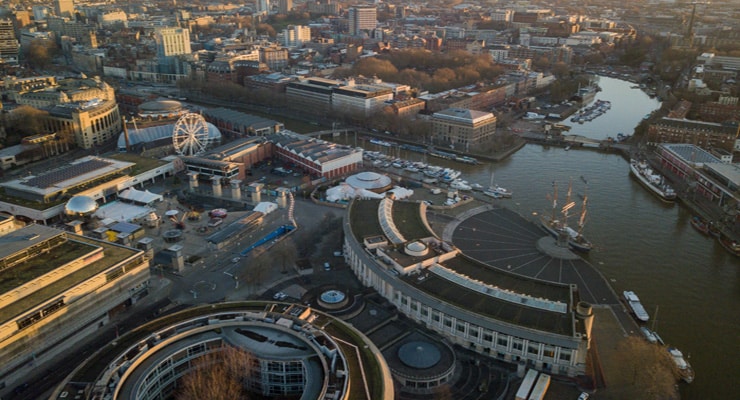
At £504 per square foot, Clifton's BS8 is the dearest space in Bristol, £181 above the cheapest postcode at BS11's £323. Measuring by the square foot takes property size out of the picture, so it compares what a location commands rather than how big the homes happen to be. On that measure Bristol's premium-belt postcodes pull clear of the rest.
| Rank | Area | Price Per Sq Ft |
|---|---|---|
| 1 | BS11 (Avonmouth, Shirehampton) | £323 |
| 2 | BS13 (Hartcliffe, Bishopsworth) | £327 |
| 3 | BS14 (Whitchurch, Hengrove) | £337 |
| 4 | BS15 (Kingswood, Hanham) | £345 |
| 5 | BS10 (Southmead, Henbury) | £367 |
| 6 | BS4 (Brislington, Knowle) | £373 |
| 7 | BS5 (Easton, Eastville) | £375 |
| 8 | BS16 (Fishponds, Downend) | £376 |
| 9 | BS2 (St Philips, Kingsdown) | £407 |
| 10 | BS7 (Bishopston, Horfield) | £425 |
| 11 | BS3 (Bedminster, Southville) | £438 |
| 12 | BS1 (City Centre, Redcliffe) | £468 |
| 13 | BS9 (Stoke Bishop, Westbury-on-Trym) | £470 |
| 14 | BS6 (Cotham, Redland) | £496 |
| 15 | BS8 (Clifton, Hotwells) | £504 |
BS11 at £323 per square foot is the cheapest bricks-and-mortar value in the city, covering Avonmouth and Shirehampton out towards the docks. The space costs less here partly because the area is more industrial and further from the centre, and it sits a long way below the £504 commanded in Clifton. That £181 range across a single city is a measure of how sharply Bristol values location.
BS8 has the highest price per square foot at £504, with BS6 (Cotham, Redland) close behind at £496. Our ranking of the most expensive streets in Bristol follows the market down to individual roads across the wider Bristol postal town, including villages outside the city boundary.
For Sale Asking Prices in Bristol
Asking prices in Bristol run from £273,085 in BS2 to £601,593 in BS9, a 120.3% spread across the city's fifteen postcodes. That range maps the city's two-tier geography: an affordable eastern and southern arc against the Clifton-and-Stoke-Bishop premium belt to the west and north. The mean asking price across all fifteen postcodes is £373,692.
| Rank | Area | Asking Price |
|---|---|---|
| 1 | BS2 (St Philips, Kingsdown) | £273,085 |
| 2 | BS11 (Avonmouth, Shirehampton) | £290,799 |
| 3 | BS13 (Hartcliffe, Bishopsworth) | £294,425 |
| 4 | BS15 (Kingswood, Hanham) | £319,675 |
| 5 | BS1 (City Centre, Redcliffe) | £326,048 |
| 6 | BS5 (Easton, Eastville) | £329,811 |
| 7 | BS14 (Whitchurch, Hengrove) | £334,277 |
| 8 | BS4 (Brislington, Knowle) | £345,416 |
| 9 | BS16 (Fishponds, Downend) | £368,158 |
| 10 | BS3 (Bedminster, Southville) | £375,628 |
| 11 | BS10 (Southmead, Henbury) | £376,879 |
| 12 | BS7 (Bishopston, Horfield) | £404,240 |
| 13 | BS6 (Cotham, Redland) | £438,049 |
| 14 | BS8 (Clifton, Hotwells) | £527,291 |
| 15 | BS9 (Stoke Bishop, Westbury-on-Trym) | £601,593 |
BS2 at £273,085 is the lowest entry point in Bristol, covering St Philips and Kingsdown on the edge of the centre, right next to the Temple Quarter regeneration. It is one of only three postcodes priced below £300,000, alongside Avonmouth's BS11 and Hartcliffe's BS13, and for an investor on a fixed budget it offers the most property for the money in a postcode with city-centre proximity.
BS9 at £601,593 is the most expensive postcode in the city, and the only one above £600,000. Stoke Bishop and Westbury-on-Trym sit at the wealthy north-western edge, with large detached and semi-detached family homes on generous plots. The £74,302 step up from BS8's £527,291 to BS9 is the widest single jump in the table, marking the line between Clifton's apartment-and-townhouse market and the suburban family belt beyond it.
House Price Growth in Bristol
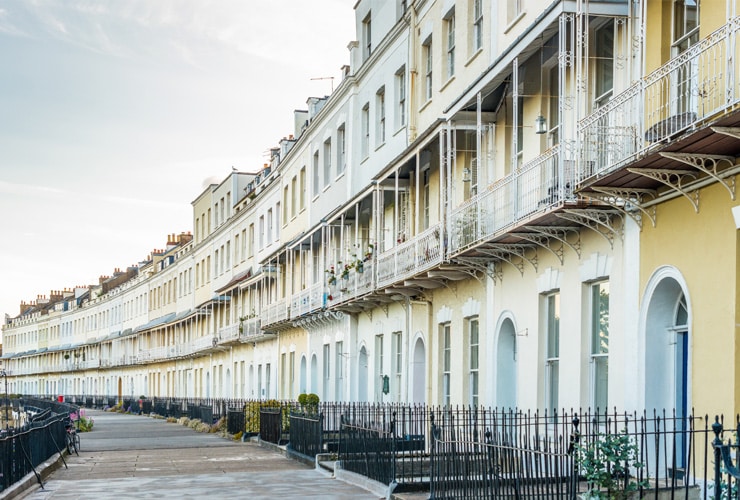
BS9 leads Bristol on recent growth, up 12.4% over one year and 18.2% over five, while the central BS8 postcode is the only one negative across all three timeframes. Most of the city posted solid five-year gains, but the one-year readings split sharply between an outer belt that has kept climbing and a premium centre that has come off the boil.
| Area | 1 Year | 3 Years | 5 Years |
|---|---|---|---|
| BS10 (Southmead, Henbury) | -5.7% | 4.8% | 22.8% |
| BS5 (Easton, Eastville) | -0.1% | 2.8% | 21.3% |
| BS11 (Avonmouth, Shirehampton) | 2.7% | 3.0% | 20.6% |
| BS13 (Hartcliffe, Bishopsworth) | 2.8% | 6.3% | 20.1% |
| BS3 (Bedminster, Southville) | 7.3% | 2.0% | 19.9% |
| BS15 (Kingswood, Hanham) | 3.7% | 6.0% | 19.2% |
| BS9 (Stoke Bishop, Westbury-on-Trym) | 12.4% | 10.4% | 18.2% |
| BS16 (Fishponds, Downend) | 2.1% | 4.1% | 18.0% |
| BS4 (Brislington, Knowle) | 1.4% | 4.6% | 17.9% |
| BS7 (Bishopston, Horfield) | -0.8% | 4.5% | 16.0% |
| BS14 (Whitchurch, Hengrove) | 1.5% | -3.9% | 13.3% |
| BS6 (Cotham, Redland) | 6.3% | 3.3% | 6.9% |
| BS2 (St Philips, Kingsdown) | 4.8% | 7.7% | 5.2% |
| BS8 (Clifton, Hotwells) | -4.4% | -4.7% | -0.8% |
| BS1 (City Centre, Redcliffe) | -10.7% | 4.3% | -9.5% |
BS10 (Southmead, Henbury) has the strongest five-year return in Bristol at 22.8%, ahead of Easton's BS5 at 21.3% and Avonmouth's BS11 at 20.6%, even though BS10 is down 5.7% over the past year. The inner-east terraced stock in BS5 has gentrified hard over the past decade, drawing buyers priced out of the centre. The picture across the affordable east and south is consistent: five-year gains around or above 20%, which is where the bulk of the city's growth has landed.
BS1 (City Centre, Redcliffe) is the weakest postcode, down 10.7% over one year and 9.5% over five. The city-centre flat market it represents ran up fastest in the pandemic and has corrected hardest since, which lines up with the -5.4% annual fall in flat prices city-wide. BS8 (Clifton, Hotwells) is the only postcode negative across all three timeframes, a premium-belt cooling after a long run rather than a market in trouble.
Monthly Property Sales in Bristol
Transaction volumes vary widely across Bristol, from 12 sales a month in BS2 up to 81 in BS16, with turnover running from 10% to 20% of stock. A higher turnover rate means a larger share of homes changing hands each year, which matters to a landlord because it shapes how easily you can buy in and sell out of a postcode.
| Area | Sales Per Month | Turnover | Asking Price |
|---|---|---|---|
| BS16 (Fishponds, Downend) | 81 | 18% | £368,158 |
| BS5 (Easton, Eastville) | 52 | 19% | £329,811 |
| BS15 (Kingswood, Hanham) | 51 | 20% | £319,675 |
| BS3 (Bedminster, Southville) | 47 | 18% | £375,628 |
| BS4 (Brislington, Knowle) | 41 | 14% | £345,416 |
| BS7 (Bishopston, Horfield) | 37 | 19% | £404,240 |
| BS6 (Cotham, Redland) | 29 | 16% | £438,049 |
| BS8 (Clifton, Hotwells) | 28 | 11% | £527,291 |
| BS9 (Stoke Bishop, Westbury-on-Trym) | 27 | 14% | £601,593 |
| BS14 (Whitchurch, Hengrove) | 25 | 12% | £334,277 |
| BS13 (Hartcliffe, Bishopsworth) | 21 | 12% | £294,425 |
| BS10 (Southmead, Henbury) | 18 | 10% | £376,879 |
| BS1 (City Centre, Redcliffe) | 14 | 6% | £326,048 |
| BS11 (Avonmouth, Shirehampton) | 14 | 18% | £290,799 |
| BS2 (St Philips, Kingsdown) | 12 | 11% | £273,085 |
BS15 (Kingswood, Hanham) records the highest turnover at 20%, with 51 sales a month against a mid-range asking price of £319,675. A fifth of the homes in the postcode trading hands each year points to an active, liquid market in affordable family housing, the kind of postcode where a landlord can both find stock and move it on without a long wait.
BS16 (Fishponds, Downend) sees the most transactions of any postcode at 81 a month, a reflection of its size as one of the largest residential areas in the city out towards the UWE campus. At the other end, BS10 (Southmead) and the city-centre BS1 share the lowest turnover at 10% and 6%, where Southmead's tighter stock and Redcliffe's flats both change hands more slowly.
How Long Properties Take to Sell in Bristol
BS15 and BS5 clear fastest in Bristol at roughly 160 days, while the premium BS8 and outer BS10 take about 304 days, almost twice as long. Days on market is the typical time a home is listed before it sells; months of unsold stock shows how much for-sale supply is sitting there at the current pace of sales. The two readings together show how quickly you could expect to get back out of a postcode.
| Area | Avg Days to Sell | Months of Unsold Stock | Market |
|---|---|---|---|
| BS15 (Kingswood, Hanham) | 160 | 5.3 | Seller's market |
| BS5 (Easton, Eastville) | 160 | 5.3 | Seller's market |
| BS3 (Bedminster, Southville) | 169 | 5.6 | Seller's market |
| BS7 (Bishopston, Horfield) | 179 | 5.9 | Seller's market |
| BS11 (Avonmouth, Shirehampton) | 179 | 5.9 | Seller's market |
| BS16 (Fishponds, Downend) | 179 | 5.9 | Seller's market |
| BS6 (Cotham, Redland) | 203 | 6.7 | Balanced market |
| BS9 (Stoke Bishop, Westbury-on-Trym) | 203 | 6.7 | Balanced market |
| BS4 (Brislington, Knowle) | 217 | 7.1 | Balanced market |
| BS13 (Hartcliffe, Bishopsworth) | 234 | 7.7 | Balanced market |
| BS14 (Whitchurch, Hengrove) | 234 | 7.7 | Balanced market |
| BS2 (St Philips, Kingsdown) | 277 | 9.1 | Balanced market |
| BS10 (Southmead, Henbury) | 304 | 10.0 | Balanced market |
| BS8 (Clifton, Hotwells) | 304 | 10.0 | Balanced market |
How fast a postcode sells is a real holding cost that a yield figure never shows. The affordable, high-turnover east and south clear in around 160 to 180 days, while the cheapest postcode of all, BS2, takes 277 days, and Clifton's BS8 sits for about 304. A buyer drawn to BS2 by the low asking price is also taking on the slowest exit outside the premium belt, which is the kind of trade-off the headline yield leaves out.
What Type of Property Can You Buy in Bristol?
Bristol's housing mix swings hard between postcodes, from a city-centre BS1 that is 83.9% flats to a suburban BS8 that is nearly half detached houses. The mix of stock decides which strategies fit where, and Bristol carries more variety than most cities because its postcodes span everything from harbourside apartments to Victorian terraces to inter-war semis. The figures below come from PropertyData's analysis of Census output areas for each postcode.
| Area | Detached | Semi-detached | Terraced | Flats |
|---|---|---|---|---|
| BS1 (City Centre, Redcliffe) | 1.0% | 3.0% | 11.2% | 83.9% |
| BS2 (St Philips, Kingsdown) | 3.2% | 6.5% | 28.8% | 61.5% |
| BS3 (Bedminster, Southville) | 2.7% | 24.6% | 41.0% | 31.3% |
| BS4 (Brislington, Knowle) | 6.4% | 34.9% | 33.7% | 25.1% |
| BS5 (Easton, Eastville) | 5.1% | 17.3% | 42.1% | 35.4% |
| BS6 (Cotham, Redland) | 6.2% | 22.8% | 26.8% | 44.2% |
| BS7 (Bishopston, Horfield) | 7.1% | 35.5% | 37.0% | 20.3% |
| BS8 (Clifton, Hotwells) | 47.5% | 14.5% | 6.2% | 31.8% |
| BS9 (Stoke Bishop, Westbury-on-Trym) | 29.4% | 39.6% | 12.5% | 18.4% |
| BS10 (Southmead, Henbury) | 34.2% | 29.9% | 17.7% | 15.6% |
| BS11 (Avonmouth, Shirehampton) | 6.6% | 24.8% | 15.0% | 48.9% |
| BS13 (Hartcliffe, Bishopsworth) | 6.4% | 42.6% | 27.0% | 23.7% |
| BS14 (Whitchurch, Hengrove) | 17.1% | 43.7% | 24.2% | 13.8% |
| BS15 (Kingswood, Hanham) | 17.8% | 35.6% | 31.9% | 14.6% |
| BS16 (Fishponds, Downend) | 24.7% | 33.3% | 25.6% | 15.5% |
BS1 is almost entirely flats at 83.9%, with barely a house in the postcode. That is the harbourside and Redcliffe apartment market, suited to single lets and city-centre couples rather than family housing, and it lines up with BS1 carrying the softest recent price record as the flat market corrected. BS2 follows the same shape at 61.5% flats, with a growing terraced share around Kingsdown.
The inner-east terraced belt shows up clearly: BS5 (Easton, Eastville) is 42.1% terraced and BS3 (Bedminster, Southville) 41.0%, the highest in the city. That is the classic Bristol HMO and sharer stock. At the opposite end, BS8 (Clifton) is 47.5% detached, the most house-heavy premium postcode, while the outer semis dominate in BS14 at 43.7% and BS13 at 42.6%, the family-letting end of the market.
The flats figure combines purpose-built blocks and converted units, and a small number of non-standard dwellings is left out, so rows may not add to 100%.
Bristol Rental Market Analysis
Monthly rents in Bristol run from £1,168 in BS11 to £2,340 in BS7, with gross rental yields from 3.6% to 6.9% across fourteen postcodes carrying yield data. For investors asking is buy to let worth it in Bristol, the sections below break down rents, yields and tenant affordability postcode by postcode. If you are looking at how to build a property portfolio uk in the South West, Bristol's combination of above-GB wages and a 79.6% employment rate offers a deeper tenant base than most cities in the region. Browse current buy-to-let property for sale across the area.
Average Rent & Gross Rental Yields in Bristol
Gross rental yields in Bristol range from 3.6% in BS9 to 6.9% in BS7, and the top of the table is not where the cheapest stock sits. BS7 leads on yield at £404,240, the city's fourth most expensive postcode, because its £2,340 average rent is the highest in Bristol. The premium belt of BS8 and BS9 sits at the bottom, where high prices outrun the rent.
| Area | Average Monthly Rent | Asking Price | Gross Yield |
|---|---|---|---|
| BS7 (Bishopston, Horfield) | £2,340 | £404,240 | 6.9% |
| BS2 (St Philips, Kingsdown) | £1,543 | £273,085 | 6.8% |
| BS16 (Fishponds, Downend) | £2,033 | £368,158 | 6.6% |
| BS10 (Southmead, Henbury) | £1,920 | £376,879 | 6.1% |
| BS5 (Easton, Eastville) | £1,600 | £329,811 | 5.8% |
| BS1 (City Centre, Redcliffe) | £1,552 | £326,048 | 5.7% |
| BS13 (Hartcliffe, Bishopsworth) | £1,378 | £294,425 | 5.6% |
| BS4 (Brislington, Knowle) | £1,454 | £345,416 | 5.1% |
| BS3 (Bedminster, Southville) | £1,570 | £375,628 | 5.0% |
| BS15 (Kingswood, Hanham) | £1,343 | £319,675 | 5.0% |
| BS11 (Avonmouth, Shirehampton) | £1,168 | £290,799 | 4.8% |
| BS6 (Cotham, Redland) | £1,695 | £438,049 | 4.6% |
| BS8 (Clifton, Hotwells) | £1,769 | £527,291 | 4.0% |
| BS9 (Stoke Bishop, Westbury-on-Trym) | £1,800 | £601,593 | 3.6% |
| BS14 (Whitchurch, Hengrove) | Not enough data | £334,277 | Not enough data |
BS7 at 6.9% combines a high asking price with the city's top rent of £2,340 a month. Bishopston and Horfield are heavy terraced-and-sharer territory close to the universities, and the £2,340 figure reflects the full-property rents on HMO and shared-house listings rather than a single-let flat. A 30% deposit there comes to £121,272.
BS2 at 6.8% sits a fraction behind BS7 on yield but starts from the lowest asking price in the city at £273,085. St Philips and Kingsdown pair city-centre proximity and the Temple Quarter regeneration with the cheapest stock, and a 30% deposit of £81,925 buys into the second-highest yield. BS9 at 3.6% sits at the bottom: Stoke Bishop's £1,800 rent is healthy, but against a £601,593 price the income return is the thinnest in Bristol.
Gross Rental Yield by Postcode
Is Bristol Rent High?
Measured against the city-wide median salary, Bristol rents take from 35.5% of gross monthly income in BS11 up to 71.1% in BS7. The widely cited affordability line is 30% of gross income, and every Bristol postcode sits above it. That is partly real cost pressure and partly a quirk of the data: the median salary is a single city-wide figure, while the higher rent readings in BS7 and BS16 include HMO and shared-house listings priced as whole properties.
The median gross weekly salary in Bristol is £759.80, which equates to £3,292 per month or £39,509 per year. This is above the South West regional median of £722.00 per week and the Great Britain median of £752.40 per week. Data from the Nomis Labour Market Profile (ASHE 2025).
| Rank | Area | Rent as % of Income |
|---|---|---|
| 1 | BS7 (Bishopston, Horfield) | 71.1% |
| 2 | BS16 (Fishponds, Downend) | 61.8% |
| 3 | BS10 (Southmead, Henbury) | 58.3% |
| 4 | BS9 (Stoke Bishop, Westbury-on-Trym) | 54.7% |
| 5 | BS8 (Clifton, Hotwells) | 53.7% |
| 6 | BS6 (Cotham, Redland) | 51.5% |
| 7 | BS5 (Easton, Eastville) | 48.6% |
| 8 | BS3 (Bedminster, Southville) | 47.7% |
| 9 | BS1 (City Centre, Redcliffe) | 47.1% |
| 10 | BS2 (St Philips, Kingsdown) | 46.9% |
| 11 | BS4 (Brislington, Knowle) | 44.2% |
| 12 | BS13 (Hartcliffe, Bishopsworth) | 41.9% |
| 13 | BS15 (Kingswood, Hanham) | 40.8% |
| 14 | BS11 (Avonmouth, Shirehampton) | 35.5% |
| — | BS14 (Whitchurch, Hengrove) | Not enough data |
BS11 at 35.5% is the most affordable postcode for tenants, where Avonmouth's £1,168 average rent sits closest to the city-wide median income. For a landlord, rent that takes a smaller share of a tenant's pay tends to mean fewer arrears and longer tenancies, because the household is not stretched to the limit each month.
BS7 at 71.1% looks extreme on the page, but the figure carries a caveat. The £2,340 average rent reflects whole-house HMO and shared lets near the universities, not a single person paying that out of one median salary. The households renting in Bishopston are typically student groups or sharers splitting the cost, so the real rent-to-income picture per tenant is far gentler than the headline suggests.
How Big Is Bristol's Private Rented Sector?
The private rented sector runs deepest in the central postcodes, peaking at 53.1% of households in BS1, and thins out to 9.2% in suburban BS11. The share of homes already rented privately is a read on how large and well-established the local tenant pool is, and Bristol's spread is unusually wide. The table below shows household tenure by postcode.
| Area | Owned Outright | Owned with Mortgage | Private Rented | Social Rented |
|---|---|---|---|---|
| BS1 (City Centre, Redcliffe) | 13.4% | 15.1% | 53.1% | 16.5% |
| BS2 (St Philips, Kingsdown) | 11.7% | 15.2% | 38.7% | 33.0% |
| BS6 (Cotham, Redland) | 29.8% | 30.1% | 33.6% | 6.0% |
| BS5 (Easton, Eastville) | 21.3% | 30.0% | 29.3% | 18.3% |
| BS7 (Bishopston, Horfield) | 27.7% | 32.2% | 24.8% | 14.3% |
| BS3 (Bedminster, Southville) | 23.1% | 34.5% | 22.7% | 18.6% |
| BS8 (Clifton, Hotwells) | 42.9% | 31.7% | 22.6% | 2.7% |
| BS4 (Brislington, Knowle) | 26.8% | 31.9% | 18.4% | 21.6% |
| BS16 (Fishponds, Downend) | 33.0% | 35.1% | 17.0% | 13.4% |
| BS15 (Kingswood, Hanham) | 36.9% | 35.9% | 15.8% | 10.1% |
| BS13 (Hartcliffe, Bishopsworth) | 27.4% | 27.8% | 15.2% | 28.2% |
| BS10 (Southmead, Henbury) | 37.4% | 30.8% | 13.6% | 17.3% |
| BS14 (Whitchurch, Hengrove) | 35.1% | 33.1% | 13.1% | 16.6% |
| BS9 (Stoke Bishop, Westbury-on-Trym) | 46.5% | 33.3% | 11.1% | 8.6% |
| BS11 (Avonmouth, Shirehampton) | 22.1% | 18.3% | 9.2% | 49.7% |
BS1 has the largest private rented sector in Bristol at 53.1% of households, more than half the postcode. The city-centre flat market is overwhelmingly a renting market, and a sector that deep points to an active lettings scene with a constant pool of tenants moving through. BS6 (Cotham, Redland) at 33.6% pairs a strong rented share with the university catchment, a more established and varied tenant base than the centre.
At the other end, the suburban and premium postcodes are owner-occupier heartland. BS9 (Stoke Bishop) has the highest outright ownership at 46.5% and a private rented sector of only 11.1%, while BS11 (Avonmouth) has the smallest rented sector at 9.2%, sitting alongside a 49.7% social rented share that is by far the highest in the city. These are postcodes where rental stock is scarcer and harder to come by.
On rental supply, the central postcodes hold the most listings: around 267 homes were advertised to rent in BS1 at any one time, taking about 95 days to let, while BS7 had roughly 250 listings but a slower 156-day average. The eastern and southern postcodes turn over faster, with BS3, BS4 and BS15 all letting in under 70 days, which points to tenant demand outstripping the supply of homes coming up.
Local Housing Allowance Rates in Bristol
The whole of Bristol falls within the Bristol Broad Rental Market Area, where Local Housing Allowance runs from £117.68 a week for a shared room to £425.75 a week for a four-bedroom home. Local Housing Allowance is the most a tenant on benefits can claim towards rent, so for the lower end of the market it works as an effective rent floor. Because Bristol sits in a single market area, the rates are identical in every postcode. To check the current figure for a specific address, you can use the government's official Local Housing Allowance calculator.
| Property Size | Weekly LHA Rate | Monthly Equivalent |
|---|---|---|
| Shared accommodation | £117.68 | £510 |
| 1 bedroom | £207.12 | £898 |
| 2 bedrooms | £252.00 | £1,092 |
| 3 bedrooms | £299.18 | £1,296 |
| 4 bedrooms | £425.75 | £1,845 |
The two-bedroom LHA rate of £252.00 a week works out at roughly £1,092 a month, which sits below the open-market rents recorded across most of Bristol's postcodes. A benefit-backed tenancy at the LHA rate therefore comes in under the city's market rents, and the stock that fits within these figures is concentrated in the cheaper postcodes like BS11, BS13 and BS2 where asking prices and rents are lowest. The rates hold steady across the whole city because they are set for the single Bristol market area.
Buy-to-Let Considerations
Are House Prices High in Bristol? Price-to-Earnings Ratios
Buying in Bristol takes between 6.9 and 15.2 times the median annual salary. This is based on the Nomis Labour Market Profile for Bristol showing the median gross annual income for Bristol residents is £39,509.
The national benchmark for price-to-earnings is 7.4x, calculated from England's average sold price of £289,946 against the Great Britain median annual salary of £39,125. One of Bristol's fifteen postcodes sits below that national benchmark, meaning only St Philips and Kingsdown in BS2 are more affordable against local incomes than England is against national ones.
| Rank | Area | Price-to-Earnings Ratio |
|---|---|---|
| 1 | BS2 (St Philips, Kingsdown) | 6.9x |
| 2 | BS11 (Avonmouth, Shirehampton) | 7.4x |
| 3 | BS13 (Hartcliffe, Bishopsworth) | 7.5x |
| 4 | BS15 (Kingswood, Hanham) | 8.1x |
| 5 | BS1 (City Centre, Redcliffe) | 8.3x |
| 6 | BS5 (Easton, Eastville) | 8.3x |
| 7 | BS14 (Whitchurch, Hengrove) | 8.5x |
| 8 | BS4 (Brislington, Knowle) | 8.7x |
| 9 | BS16 (Fishponds, Downend) | 9.3x |
| 10 | BS3 (Bedminster, Southville) | 9.5x |
| 11 | BS10 (Southmead, Henbury) | 9.5x |
| 12 | BS7 (Bishopston, Horfield) | 10.2x |
| 13 | BS6 (Cotham, Redland) | 11.1x |
| 14 | BS8 (Clifton, Hotwells) | 13.3x |
| 15 | BS9 (Stoke Bishop, Westbury-on-Trym) | 15.2x |
BS2 at 6.9x is the only postcode below the national benchmark of 7.4x, the most affordable entry against local earnings. At under seven times the median salary, St Philips and Kingsdown read more like a typical English market than the rest of Bristol, which helps explain why BS2 pairs that low ratio with the city's second-highest yield.
BS9 at 15.2x is more than double the national benchmark and the steepest ratio in the city. Stoke Bishop and Westbury-on-Trym are firmly owner-occupier territory, where buyers are dual-income households or those moving from more expensive parts of the country. For an investor that ratio compresses the yield to the city's lowest at 3.6% and stretches the payback period.
Deposit Requirements in Bristol
A 30% deposit on a Bristol buy-to-let runs from £81,925 in BS2 to £180,478 in BS9. The gap between the cheapest and most expensive deposit is £98,553, more than a full second deposit in BS2. Even the lowest entry point in Bristol asks for a deposit above £80,000, which sets the city apart from the cheaper South West markets and means working capital, not just yield, decides where an investor can play.
Beyond the deposit, the buy to let stamp duty calculator and other buy to let costs add to the total capital required.
| Rank | Area | 30% Deposit Required |
|---|---|---|
| 1 | BS2 (St Philips, Kingsdown) | £81,925 |
| 2 | BS11 (Avonmouth, Shirehampton) | £87,240 |
| 3 | BS13 (Hartcliffe, Bishopsworth) | £88,328 |
| 4 | BS15 (Kingswood, Hanham) | £95,903 |
| 5 | BS1 (City Centre, Redcliffe) | £97,814 |
| 6 | BS5 (Easton, Eastville) | £98,943 |
| 7 | BS14 (Whitchurch, Hengrove) | £100,283 |
| 8 | BS4 (Brislington, Knowle) | £103,625 |
| 9 | BS16 (Fishponds, Downend) | £110,447 |
| 10 | BS3 (Bedminster, Southville) | £112,688 |
| 11 | BS10 (Southmead, Henbury) | £113,064 |
| 12 | BS7 (Bishopston, Horfield) | £121,272 |
| 13 | BS6 (Cotham, Redland) | £131,415 |
| 14 | BS8 (Clifton, Hotwells) | £158,187 |
| 15 | BS9 (Stoke Bishop, Westbury-on-Trym) | £180,478 |
BS2 is the cheapest way into Bristol at an £81,925 deposit, and the money buys into the city's second-highest yield at 6.8%. Stepping up to BS7 costs almost £40,000 more in deposit, but it buys the top yield in the city at 6.9% along with the highest rent. Between those two sit the mid-priced postcodes where the deposit climbs without the yield always keeping pace.
The clearest contrast is at the top. BS9's £180,478 deposit is more than double BS2's, and it buys the lowest yield in the city at 3.6%. The extra £98,553 of capital does not raise the income; on the rent figures it lowers it, because Stoke Bishop's £1,800 rent sits against a £601,593 price. BS7 and BS2, near the bottom of the deposit table, are where the rent goes furthest against the price.
What the Bristol Data Tells Buy-to-Let Investors
In Bristol the strongest yields sit just outside the cheapest stock, not on top of it. BS7 leads on yield at 6.9% from the fourth-dearest asking price in the city, because its £2,340 rent is the highest anywhere in Bristol. The cheapest postcode, BS2 at £273,085, comes second at 6.8% and asks the lowest deposit at £81,925 for buying investment property. The two together mark out the income end of the market.
Growth has landed mostly in the affordable east and south. BS5 (Easton, Eastville) returned 21.3% over five years, BS10 (Southmead) 22.8% and BS11 (Avonmouth) 20.6%, while the premium central postcodes have cooled: BS1 is down 9.5% over five years and BS8 (Clifton) has slipped across all three timeframes. The pandemic-era flat boom in the centre has unwound, and the terraced and semi belt has carried the recent gains.
At the top of the market, BS9 (Stoke Bishop) has grown fastest over the past year at 12.4%, but on a 3.6% yield and a 15.2 times price-to-earnings ratio it earns its keep through capital value rather than income. BS8 (Clifton) holds the city's priciest space at £504 per square foot. Buyers who want to come in below the open-market price often work the off market property channels, where stock moves before it reaches the portals.
With above-GB wages, a 79.6% employment rate and a jobs base spread across aerospace, finance, two universities and the NHS, Bristol reads as a deep, durable rental market rather than a high-yield play. The headline yields are lower than the North West or South Wales, but the tenant demand sitting underneath them is among the most varied in the South West.
How Bristol Compares
Bristol's mean asking price of £373,692 sits in the middle of six South West locations compared here, while its top yield of 6.9% is the second highest of the group. The comparison places Bristol alongside five nearby locations, each with a different investor profile. The mean asking price and mean monthly rent are simple averages across all postcodes with data, and top gross yield is the single highest postcode yield in each location.
| Location | Mean Asking Price | Mean Monthly Rent | Mean Gross Yield | Top Yield (postcode) |
|---|---|---|---|---|
| Gloucester | £299,777 | £1,194 | 4.8% | 6.1% (GL1) |
| Cardiff | £316,904 | £1,202 | 4.6% | 7.3% (CF10) |
| Bristol | £373,692 | £1,655 | 5.3% | 6.9% (BS7) |
| Cheltenham | £448,418 | £1,400 | 3.7% | 4.7% (GL50) |
| Bath | £478,576 | £1,642 | 4.1% | 4.4% (BA2) |
Bristol carries the highest mean rent in the group at £1,655 a month, a reflection of its deep tenant demand and the weight of HMO and shared-house stock near the universities. Its 6.9% top yield is second only to Cardiff at 7.3%, which offers a lower asking price across the Severn. Gloucester at £299,777 is the cheapest way into the wider region, with a 6.1% top yield on a much smaller capital outlay.
At the premium end, Bath and Cheltenham trade yield for prestige: both carry higher prices than Bristol and top yields below 5%, the Cotswold-and-Georgian premium that draws a wealthier, more settled tenant base. Bristol sits between the two camps, with more income on offer than Bath or Cheltenham and a deeper, broader jobs market than Gloucester. For a data-driven comparison across all UK locations, see our best buy-to-let areas guide.
Frequently Asked Questions
Is Bristol a good place to live for buy-to-let tenants?
It is one of the steadier rental cities in the South West, and it comes down to jobs and wages. Bristol's employment rate is 79.6%, ahead of the national 75.6%, and the median wage of £759.80 a week edges above the Great Britain figure, which is unusual for the region. Tenants in stable, better-paid work are generally better placed to keep the rent paid and to stay put.
The demand is also broad rather than narrow. Aerospace and defence at Filton, financial services in the centre, two universities with more than 57,000 students between them, and the NHS trusts at Southmead and the Royal Infirmary each feed a different part of the rental market. That spread means a void in one tenant group is rarely a void across the whole city, which is part of why the private rented sector runs so deep in the central postcodes.
What are the best areas in Bristol for property investment?
It depends what you are chasing, and Bristol splits cleanly between income and growth. If income is the goal, BS7 (Bishopston, Horfield) tops the city on yield at 6.9%, and BS2 (St Philips, Kingsdown) is right behind at 6.8% from the lowest asking price of £273,085, helped by the Temple Quarter regeneration on its doorstep.
If you are after capital growth, the affordable east and south have done the heavy lifting: BS5 (Easton, Eastville) returned 21.3% over five years and Southmead's BS10 22.8%. The premium belt of Clifton and Stoke Bishop reads differently, with lower yields and growth that comes and goes. So income points you east and central, while the strongest recent growth has come from the cheaper terraced postcodes.
How does Bristol compare to Bath for buy-to-let?
They are two ends of the same premium South West market. Bath is the dearer of the two, with a mean asking price of £478,576 against Bristol's £373,692, and its top yield of 4.4% sits well below Bristol's 6.9%. Bath is the Georgian-prestige play, where the return comes from holding a scarce, sought-after asset rather than from rental income.
Bristol offers more yield and a far deeper, more varied jobs market, with aerospace, finance, tech and two large universities behind it. Bath leans on heritage, tourism and a commuter pull towards London. For an investor weighing income against prestige, Bristol gives more of the former and Bath more of the latter.
Is there demand for student accommodation in Bristol?
Yes, and it is one of the strongest drivers of the rental market. The University of Bristol has more than 29,000 students and UWE Bristol another 28,000, spread across a wide arc of the city. The University of Bristol catchment concentrates in BS2, BS6, BS7 and BS8, while UWE's main Frenchay campus pulls demand into BS16.
That feeds directly into the HMO and shared-house market, which is why postcodes like BS7 and BS16 show high average rents: those figures reflect whole-property student lets rather than single tenancies. Student housing comes with summer voids and more hands-on management than a standard let, so it is worth factoring in. For the purpose-built end of the market, see our guide to PBSA, and for shared houses our complete guide to investing in HMOs.
Can I find buy-to-let property in Bristol under £300,000?
On average, in three postcodes. BS2 (St Philips, Kingsdown) at £273,085, BS11 (Avonmouth, Shirehampton) at £290,799 and BS13 (Hartcliffe, Bishopsworth) at £294,425 are the only postcodes with average asking prices below £300,000. BS2 is the pick of the three for an investor, pairing the lowest entry with the city's second-highest yield.
Below those averages, the way in is by property type rather than postcode. Flats across the City of Bristol average £239,561 on the Land Registry index, well under the £300,000 line, and the cheaper terraced stock in the eastern postcodes can be found below the postcode average. To beat the open-market price, it is also worth looking at BMV property.
When will the Temple Quarter regeneration affect Bristol property prices?
It is a long, phased story rather than a single switch. The first concrete milestone is the University of Bristol's Enterprise Campus, which opens in September 2026, with wider construction running from there. Muse Places Ltd was named development partner in January 2026, and the full scheme, delivering 10,000 homes and over 22,000 jobs, runs across the next 15 to 20 years.
The postcodes most exposed are BS1 and BS2, which sit on and around the site. BS2 currently carries the lowest asking prices in the city at £273,085 and one of the top yields, so it is the postcode where any uplift would show up first. That said, a project on this timescale feeds through gradually, so anyone pricing in Temple Quarter today is looking years ahead, not months.
What are average house prices in Bristol?
The average sold price across the City of Bristol is £347,715 on the Land Registry index, about 19.9% above the England average of £289,946 as of March 2026. Asking prices by postcode run from £273,085 in BS2 (St Philips, Kingsdown) up to £601,593 in BS9 (Stoke Bishop, Westbury-on-Trym), with a city-wide mean of £373,692. By type, detached homes average £681,612, semi-detached £439,692, terraced £377,760 and flats £239,561.
Through a buy-to-let lens, BS7 is the highest-yielding at 6.9% and BS2 the cheapest entry at the second-highest yield, while BS9 is the dearest and lowest-yielding.
What are the Local Housing Allowance rates in Bristol?
The whole city sits in the Bristol Broad Rental Market Area, so one set of rates applies everywhere. As of June 2026, Local Housing Allowance runs at £117.68 a week for a shared room, £207.12 for a one-bed, £252.00 for two beds, £299.18 for three and £425.75 for four. That figure is the most a tenant on housing support can claim towards their rent, so for that part of the market it sets an effective floor.
What type of property is most common in Bristol?
It changes completely from one postcode to the next, which is part of what makes Bristol unusual. The city centre in BS1 is 83.9% flats with almost no houses, while suburban Clifton's BS8 is 47.5% detached. The terraced stock that usually suits buy-to-let is concentrated in the inner east, peaking at 42.1% in BS5 (Easton, Eastville) and 41.0% in BS3 (Bedminster, Southville), which is where much of the city's HMO and sharer market sits.
How do I buy an investment property in Bristol?
Start by settling whether you are buying for income or for growth, because in Bristol the two point to different parts of the city. For income, BS7 (Bishopston, Horfield) leads on yield at 6.9% and BS2 (St Philips, Kingsdown) offers nearly the same return from the lowest asking price. For growth, the affordable eastern postcodes like BS5 and BS10 have delivered the strongest five-year gains. Budget for a 30% deposit, which runs from £81,925 in BS2 up to £180,478 in BS9.
Beyond what is listed on the portals, plenty of experienced investors buy below asking through off-market properties and BMV properties. To see what is available now, browse investment property bristol or buy-to-let homes for sale.
Ready to buy property?
Access off-market investment properties with an average 8%+ annual gross yield (beating the UK's typical 3-5%).
Get property alerts