
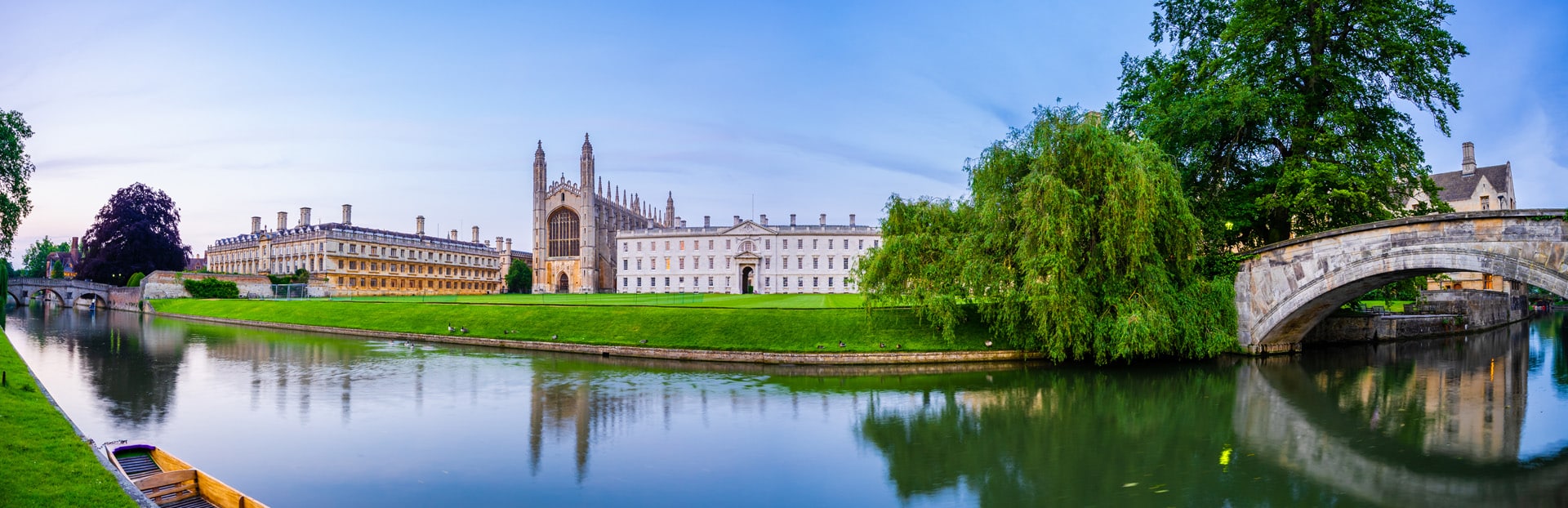
Cambridge is a city in Cambridgeshire, in the East of England. Average sold prices in Cambridge sit at £471,532 on the HM Land Registry House Price Index as of March 2026, which is 62.6% above the England average of £289,946. That is one of the highest premiums of any English city, and it changes what a buy-to-let purchase here looks like. Detached, semi-detached and terraced homes in Cambridge all sell for more than double the England price for their type. The income return follows from that: gross yields run from 3.1% to 4.7% across the ten postcodes, lower than most of the country, because the price is so high.
The premium is built on demand that is unusually hard to copy. Cambridge is a university and life-sciences city, and the homes are squeezed into a tightly drawn local authority with little room to build. Two world-class institutions, the University of Cambridge and the Cambridge Biomedical Campus, anchor a renting population of academics, clinicians, researchers and graduate workers who keep tenant demand steady through the cycle. For an investor, that means the case for Cambridge rests on capital value and rental reliability rather than headline yield, and the postcode spread runs from CB24 at £422,556 to CB3 at £629,378.
This guide covers the city of Cambridge, the Cambridge local authority district (ONS code E07000008), across ten postcodes: CB1, CB2, CB3, CB4, CB5, CB21, CB22, CB23, CB24 and CB25. Cambridge sits in the East of England, about 60 miles north of London. The wider region also takes in nearby market towns, and you can compare it with our guides to Ely buy-to-let to the north and Peterborough buy-to-let further out.
Article updated: July 2026
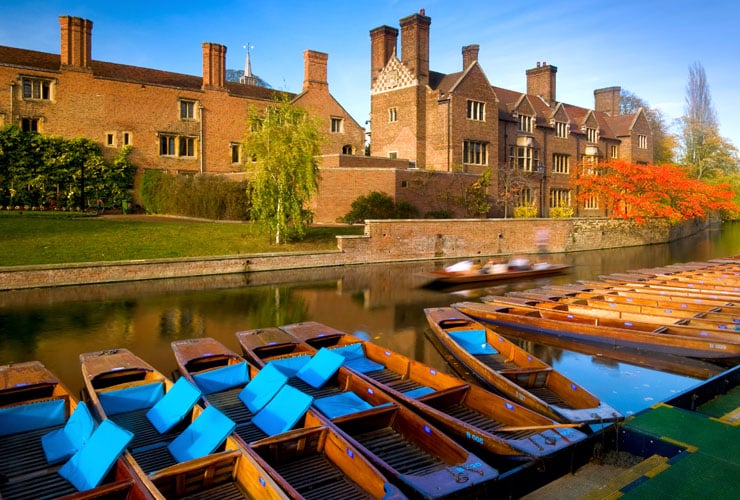
Why Invest in Cambridge?
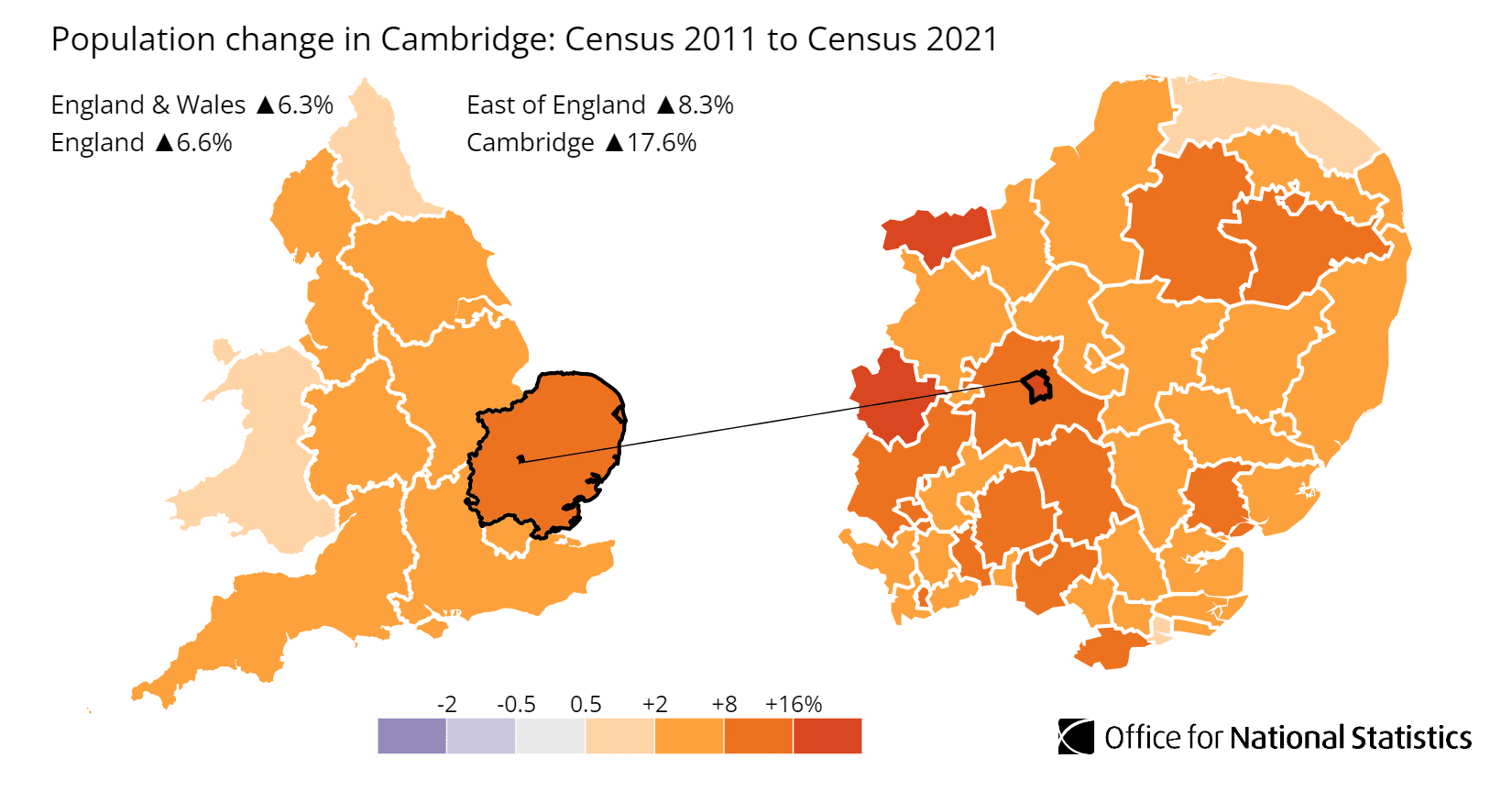
Cambridge grew its population 17.61% between the 2011 and 2021 censuses, from 123,867 to 145,674 residents, almost three times the England and Wales average of 6.3%. That is one of the fastest-growing populations of any English city, and it sits on top of a local authority with strict green-belt limits on where new homes can go. Rising demand against constrained supply is the structural force behind Cambridge's prices, and it is a hard pattern for an investor to find elsewhere.
The local economy is built on knowledge work. Education and human health each account for 20.2% of employee jobs, professional, scientific and technical activities for another 18.5%, and information and communication for 9.2%. The University of Cambridge employs thousands directly and draws tens of thousands of students, while the Cambridge Biomedical Campus, home to Addenbrooke's Hospital, AstraZeneca and a cluster of research institutes, is one of the largest concentrations of life-sciences employment in Europe. That mix produces a renting population weighted towards graduates, clinicians and researchers rather than the lower-wage service base that dominates many rental markets.
Median gross annual earnings in Cambridge are £43,741, which is 11.8% above the Great Britain median of £39,125. The local employment rate of 75.3% sits in line with the Great Britain rate of 75.5%. Higher wages let tenants absorb the higher rents that Cambridge commands, and the deep professional jobs base spreads tenant demand across several sectors rather than leaving it dependent on any one employer.
Cambridge Economic Summary
- Population (Cambridge): 145,674 (2021 Census). Growth of 17.61% from 2011.
- Median annual salary: £43,741 (local), £39,125 (Great Britain)
- Employment rate: 75.3% (local), 75.5% (Great Britain)
- Key employment sectors: Education, human health and social work, professional, scientific and technical services, information and communication, accommodation and food
Source: ONS Census 2021, Nomis Labour Market Profile (ASHE 2025, Employment Jan 2025-Dec 2025)
Regeneration and Investment in Cambridge
Cambridge is the focus of a national growth push, with up to £400 million of government money committed in February 2026 to a new development corporation tasked with unlocking thousands of homes and jobs. That sits alongside a £250 million railway station and an £80 million estate-regeneration programme, all aimed at the same problem: a city where demand has run far ahead of housing supply.
- Greater Cambridge Development Corporation (Announced, up to £400 million): The government confirmed a new statutory development corporation for Greater Cambridge in February 2026, with up to £400 million committed plus £15 million for laboratory space, charged with delivering thousands of homes and jobs alongside new transport and green space. The body is designed to coordinate growth across the city and its fringe, which matters for an investor because it targets the supply shortage that has driven prices. Updates at Ministry of Housing, Communities and Local Government.
- Cambridge South railway station (Opening 2026, £250 million): A new four-platform station on the Cambridge Biomedical Campus, backed by £250 million of government investment, opened to passengers in June 2026 with up to nine trains an hour into central Cambridge and direct services to London. It connects the campus, home to Addenbrooke's Hospital and AstraZeneca, to the rail network for the first time and is expected to handle 1.8 million passengers a year. Updates at Ministry of Housing, Communities and Local Government.
- North Cambridge estate regeneration (Approved, £80 million): Cambridge City Council approved plans in October 2025 to invest more than £80 million regenerating the Arbury Court and Kingsway estates in CB4, replacing ageing council housing with over 200 new council homes and over 200 new private homes, plus a library, shops and public space. Consultation runs through 2026 ahead of a planning application. Updates at Cambridge City Council.
Source: Office for National Statistics - Population for Cambridge
Cambridge Property Market Analysis
Average property prices in Cambridge have risen 509.4% since January 1995, from £77,379 to £471,532. The sections below trace that climb cycle by cycle, including the unusual recent stretch where Cambridge eased back while much of England carried on rising, then drill into postcode-level sold prices, price per square foot, asking prices, growth trends and transaction volumes.
When was the last house price crash in Cambridge?
Cambridge property prices are recorded by HM Land Registry at local authority level for the Cambridge district. The Land Registry House Price Index tracks average prices from January 1995 to the latest reading, covering 31 years of market cycles.
The 1995 to 2007 boom: Cambridge started at £77,379 in January 1995. By December 2000 prices had reached £137,062, a 77.1% rise in six years as low interest rates and a fast-growing tech economy pulled buyers in. Growth carried on through the early 2000s, reaching £225,930 by December 2005, and the market peaked at £291,830 in December 2007.
2008 to 2009, the financial crisis: Prices fell from the December 2007 peak of £291,830 to a trough of £231,276 in March 2009, a decline of 20.8% over fifteen months. The worst year-on-year reading was -18.6% in December 2008. Cambridge's fall was steeper than the England decline of 18.2% over the same crisis, a reminder that higher-value markets can drop harder when credit tightens, even where the long-run trend is strong.
Recovery, 2009 to 2011: Cambridge bounced back quickly. From the March 2009 trough, prices climbed to £283,014 by December 2010 and first passed the pre-crash peak in November 2011 at £298,419. That recovery took about two years and eight months, far faster than many English markets managed, as the city's research and tech employers kept demand firm through the downturn.
The 2013 to 2016 surge: This is where Cambridge separated from the national pattern. Prices ran from £311,239 in December 2012 to £350,471 by December 2013 (12.6% annual growth) and on to £438,359 by December 2015, a year that recorded 16.7% annual growth. The expansion of the Biomedical Campus and the wider tech cluster, combined with a chronic shortage of homes, drove some of the strongest house-price growth in the country.
2017 to 2019, a plateau: After the surge, Cambridge flattened. Prices moved from £445,167 in December 2017 to £462,841 in December 2018, then eased to £444,889 by December 2019, recording -3.9% annual growth that year. The market had run far enough, fast enough, that it paused while incomes caught up.
2020 to 2022, the pandemic peak: The stamp duty holiday and the shift to home working lifted prices again, from £447,778 in June 2020 to £457,700 by December 2020 and on to an all-time high of £521,404 in November 2022 (14.8% annual growth at the peak). That November 2022 reading remains the highest the city has recorded.
2023 to present, a gentle easing: Higher mortgage rates then pulled Cambridge back. Prices slipped to £500,004 by June 2023 and recorded -3.5% annual growth by December 2023. They have since drifted down to £471,532 by the latest reading in March 2026, which is 9.6% below the November 2022 high, a meaningful step back at a time when many cheaper English markets were still edging up.
Long-term growth summary:
- 5 years (March 2021 to March 2026): 6.3% growth (£443,405 to £471,532)
- 10 years (March 2016 to March 2026): 6.4% growth (£443,265 to £471,532)
- 15 years (March 2011 to March 2026): 73.6% growth (£271,628 to £471,532)
- 20 years (March 2006 to March 2026): 97.8% growth (£238,342 to £471,532)
- 30 years (January 1995 to March 2026): 509.4% growth (£77,379 to £471,532)
The growth windows tell Cambridge's recent story plainly. Over fifteen years the average is up 73.6%, but over the last five it has added just 6.3%, and over the last ten only 6.4%. The bulk of the gains came in the 2013 to 2016 surge, and prices have since reached a high in 2022 and eased back. An investor who bought at the November 2022 peak of £521,404 would be down 9.6% on the Land Registry average today, while one who bought through the 2009 to 2013 window has done very well. The cycle here is real, and the entry point matters more than in slower, steadier markets.
- All property types
- Detached
- Semi-detached
- Terraced
- Flats
- All property types
- Detached
- Semi-detached
- Terraced
- Flats
Sold House Prices in Cambridge
The average sold price across all property types in Cambridge is £471,532, which is 62.6% above the England average of £289,946 as of March 2026. The premium is not spread evenly. Houses carry the heaviest mark-up, with detached, semi-detached and terraced homes all selling for more than double the England price for their type, while flats sit a more modest 38.4% above. The gap reflects what Cambridge is short of: land and family houses inside a tightly bounded city.
| Property Type | Cambridge Average | England Average | Difference |
|---|---|---|---|
| Detached houses | £973,838 | £470,492 | +107.0% |
| Semi-detached houses | £596,967 | £288,185 | +107.1% |
| Terraced houses | £489,774 | £243,788 | +100.9% |
| Flats and maisonettes | £296,998 | £214,563 | +38.4% |
| All property types | £471,532 | £289,946 | +62.6% |
Detached houses at £973,838 cost 107.0% more than England's £470,492, putting the typical Cambridge detached home close to the million-pound mark. These are the period homes of the western suburbs and the larger family houses in villages such as Girton, and they trade with owner-occupiers rather than investors. Annual change of -0.2% shows a market that has steadied near its top.
Semi-detached houses at £596,967 carry an almost identical premium of 107.1% over England's £288,185. This is the heart of family Cambridge, the inter-war and post-war semis of Chesterton, Cherry Hinton and the commuter villages, and at close to £600,000 it is well beyond first-time-buyer reach. Annual change of -0.8% mirrors the wider easing.
Terraced houses at £489,774 are 100.9% above England's £243,788, the type most likely to appear in a buy-to-let portfolio. Cambridge's terraces cluster in the inner postcodes, the Victorian streets of Romsey and Petersfield near the centre and the rows around Mill Road, where proximity to the university and station supports steady tenant demand. Annual change of -0.9% keeps them in line with the city.
Flats and maisonettes at £296,998 show the smallest premium at 38.4% above England's £214,563, and at under £300,000 they are the most accessible entry into Cambridge. The flat stock is concentrated in the central and northern postcodes, where purpose-built blocks and conversions serve the single-let and graduate market. Annual change of -5.6% is the softest of any type, a sign that the smaller-unit market has eased fastest from its peak.
Price Per Square Foot in Cambridge
Cambridge's price per square foot runs from £377 in CB23 to £561 in CB1, a £184 gap that maps neatly onto distance from the city centre. Measuring by the square foot strips out how big the homes are and shows what the location itself commands. The central postcodes, where land is scarcest and the walk to the colleges and station shortest, sit at the top; the newer settlements on the fringe sit at the bottom.
| Rank | Area | Price Per Sq Ft |
|---|---|---|
| 1 | CB23 (Cambourne, Bar Hill) | £377 |
| 2 | CB25 (Waterbeach, Burwell) | £380 |
| 3 | CB24 (Histon, Impington) | £393 |
| 4 | CB21 (Fulbourn, Linton) | £404 |
| 5 | CB22 (Sawston, Shelford) | £445 |
| 6 | CB5 (Fen Ditton, Barnwell) | £499 |
| 7 | CB4 (Chesterton, King's Hedges) | £507 |
| 8 | CB2 (City Centre South, Trumpington) | £537 |
| 9 | CB3 (Girton, West Cambridge) | £559 |
| 10 | CB1 (City Centre, Cherry Hinton) | £561 |
CB23 at £377 per square foot is the cheapest space in Cambridge. This is Cambourne and Bar Hill, the new-build settlements west of the city where larger plots and modern housing keep the per-foot cost down. For an investor chasing footprint per pound, the fringe postcodes deliver the most space, though they trade central convenience for it.
CB1 at £561 per square foot tops the table, just ahead of CB3. CB1 covers the city centre and Cherry Hinton, the postcode closest to the colleges, the station and the heart of the rental market. Paying that much per foot is paying for location, and in CB1 that location is the most lettable square footage in the city.
For Sale Asking Prices in Cambridge
Asking prices in Cambridge run from £422,556 in CB24 to £629,378 in CB3, a £206,822 gap, with a mean across all ten postcodes of £501,183. Unlike the price-per-square-foot ranking, the asking-price order is driven as much by house size as by location: the village postcodes with their larger detached stock can out-price the inner postcodes even where the per-foot rate is lower.
| Rank | Area | Asking Price |
|---|---|---|
| 1 | CB24 (Histon, Impington) | £422,556 |
| 2 | CB23 (Cambourne, Bar Hill) | £434,485 |
| 3 | CB4 (Chesterton, King's Hedges) | £434,654 |
| 4 | CB25 (Waterbeach, Burwell) | £443,890 |
| 5 | CB2 (City Centre South, Trumpington) | £483,754 |
| 6 | CB5 (Fen Ditton, Barnwell) | £486,956 |
| 7 | CB1 (City Centre, Cherry Hinton) | £494,172 |
| 8 | CB22 (Sawston, Shelford) | £580,368 |
| 9 | CB21 (Fulbourn, Linton) | £601,611 |
| 10 | CB3 (Girton, West Cambridge) | £629,378 |
CB24 at £422,556 is the cheapest way into Cambridge on asking price. This is Histon and Impington, established villages just north of the city with a mix of family housing and good road links. Even here, the asking price is well above the England average, which is the reality of buying anywhere in this market.
CB3 at £629,378 is the most expensive postcode, 48.9% above CB24. CB3 takes in Girton and the West Cambridge academic quarter, where large detached homes and the proximity to the university research sites push prices to the top. For an income investor the asking-price ladder matters because every step up has to be earned back through rent, and Cambridge's rents do not climb as fast as its prices.
House Price Growth in Cambridge
Every Cambridge postcode but one posted positive five-year growth, led by CB22 at 15.9%, but the one-year readings are mixed, with five postcodes down over the past year. The pattern fits a market that surged, peaked and has been easing: the five-year figures still capture the upswing, while the shorter windows show the recent softening, sharpest in the higher-priced fringe.
| Area | 1 Year | 3 Years | 5 Years |
|---|---|---|---|
| CB22 (Sawston, Shelford) | 2.7% | 1.9% | 15.9% |
| CB2 (City Centre South, Trumpington) | 8.7% | 1.9% | 15.5% |
| CB3 (Girton, West Cambridge) | -13.4% | -0.6% | 15.0% |
| CB23 (Cambourne, Bar Hill) | -3.4% | -0.3% | 13.4% |
| CB24 (Histon, Impington) | 5.5% | -1.2% | 11.7% |
| CB25 (Waterbeach, Burwell) | -2.1% | -5.0% | 7.7% |
| CB4 (Chesterton, King's Hedges) | -2.6% | 0.7% | 6.8% |
| CB1 (City Centre, Cherry Hinton) | -2.0% | 3.2% | 6.0% |
| CB5 (Fen Ditton, Barnwell) | -12.6% | -20.8% | 3.5% |
| CB21 (Fulbourn, Linton) | -14.1% | -15.8% | -7.7% |
CB22 at 15.9% over five years leads the table. Sawston and Shelford sit on the southern rail corridor towards London, and a 2.7% one-year reading shows the area has held its gains while others slipped. CB2 follows closely at 15.5% over five years and pairs that with the firmest one-year figure in the city at 8.7%, so CB22 and CB2 are the two postcodes still rising over both the long and short windows while much of the rest of Cambridge eased.
At the other end, CB21 is the only postcode with negative growth across all three windows, down 7.7% over five years and 14.1% over the past year. Fulbourn and Linton are higher-priced village postcodes, and the figures point to the premium end correcting hardest as the market eased. CB5 shows the same story over three years with a -20.8% reading, though its five-year figure stays just positive at 3.5%.
Monthly Property Sales in Cambridge
Monthly sales in Cambridge range from 6 transactions in CB5 to 35 in CB1, with turnover rates from 6% up to 29% in the fast-moving fringe postcodes. The split is telling: the inner postcodes record the most sales by volume because they hold the most homes, but the new-build fringe sees the highest turnover, with a far larger share of its stock changing hands each year.
| Area | Sales Per Month | Turnover | Asking Price |
|---|---|---|---|
| CB1 (City Centre, Cherry Hinton) | 35 | 9% | £494,172 |
| CB24 (Histon, Impington) | 31 | 29% | £422,556 |
| CB23 (Cambourne, Bar Hill) | 30 | 29% | £434,485 |
| CB4 (Chesterton, King's Hedges) | 24 | 9% | £434,654 |
| CB22 (Sawston, Shelford) | 18 | 12% | £580,368 |
| CB25 (Waterbeach, Burwell) | 15 | 10% | £443,890 |
| CB2 (City Centre South, Trumpington) | 13 | 7% | £483,754 |
| CB21 (Fulbourn, Linton) | 12 | 13% | £601,611 |
| CB3 (Girton, West Cambridge) | 9 | 6% | £629,378 |
| CB5 (Fen Ditton, Barnwell) | 6 | 6% | £486,956 |
CB24 and CB23 both record 29% turnover, the highest in the city. These are the Histon, Impington, Cambourne and Bar Hill settlements, where the modern housing stock and steady stream of buyers and sellers keep homes moving. For a buy-to-let investor that liquidity is worth noting, because it points to an easier exit when the time comes to sell.
CB1 records the most transactions at 35 a month but a 9% turnover rate, the inner-city pattern of a large stock that turns over slowly. CB3 and CB5 sit at the quiet end with 6% turnover and single-figure monthly sales, the premium and period postcodes where homes change hands rarely and sit on the market longest.
How Long Properties Take to Sell in Cambridge
Selling time splits Cambridge sharply, from about 80 days in CB24 to roughly 507 days in CB3, a sixfold gap that the headline yield figures never show. Days on market is the typical time a home is listed before it sells; months of unsold stock measures how much for-sale supply is queued at the current rate of sales. The two together read as a clear divide between the quick-moving fringe and the slow premium core.
| Area | Avg Days to Sell | Months of Unsold Stock | Market |
|---|---|---|---|
| CB24 (Histon, Impington) | 80 | 2.6 | Seller's market |
| CB23 (Cambourne, Bar Hill) | 138 | 4.5 | Seller's market |
| CB21 (Fulbourn, Linton) | 179 | 5.9 | Seller's market |
| CB25 (Waterbeach, Burwell) | 190 | 6.3 | Balanced market |
| CB22 (Sawston, Shelford) | 234 | 7.7 | Balanced market |
| CB1 (City Centre, Cherry Hinton) | 338 | 11.1 | Balanced market |
| CB4 (Chesterton, King's Hedges) | 338 | 11.1 | Balanced market |
| CB2 (City Centre South, Trumpington) | 435 | 14.3 | Buyer's market |
| CB5 (Fen Ditton, Barnwell) | 435 | 14.3 | Buyer's market |
| CB3 (Girton, West Cambridge) | 507 | 16.7 | Buyer's market |
How long your money sits tied up at the end is a cost that no yield figure carries, and in Cambridge it varies more than almost anywhere. CB24 at 2.6 months of unsold stock clears in weeks, while CB3 at 16.7 months can take well over a year to sell. Two postcodes with similar yields can hold very different exit risk, and the higher-priced inner and premium postcodes, where the most capital is committed, are exactly the ones that move slowest.
What Type of Property Can You Buy in Cambridge?
The housing mix flips across Cambridge, from detached-dominated villages like CB25 at 58.1% detached to inner postcodes like CB4 where flats and terraces make up the majority of stock. That divide shapes which strategy fits where: the fringe suits family lets and the inner postcodes suit the smaller units that drive rental income. The figures below are drawn from 2021 Census records for each postcode.
| Area | Detached | Semi-detached | Terraced | Flats |
|---|---|---|---|---|
| CB1 (City Centre, Cherry Hinton) | 28.7% | 24.8% | 18.5% | 26.7% |
| CB2 (City Centre South, Trumpington) | 23.3% | 15.9% | 22.2% | 38.7% |
| CB3 (Girton, West Cambridge) | 36.8% | 29.5% | 10.1% | 23.6% |
| CB4 (Chesterton, King's Hedges) | 9.4% | 29.8% | 29.6% | 30.9% |
| CB5 (Fen Ditton, Barnwell) | 9.5% | 25.9% | 27.0% | 29.0% |
| CB21 (Fulbourn, Linton) | 54.3% | 32.5% | 9.0% | 3.9% |
| CB22 (Sawston, Shelford) | 44.1% | 34.7% | 11.5% | 9.7% |
| CB23 (Cambourne, Bar Hill) | 50.1% | 28.7% | 12.4% | 8.4% |
| CB24 (Histon, Impington) | 46.8% | 27.8% | 13.6% | 7.3% |
| CB25 (Waterbeach, Burwell) | 58.1% | 25.2% | 12.6% | 3.0% |
CB4 and CB2 hold the largest shares of flats, at 30.9% and 38.7%, alongside heavy terraced stock. These are the inner northern and southern postcodes where the smaller-unit market sits, the stock that suits single lets, sharers and the graduate rental demand close to the university and station. CB1 follows the same pattern, with flats and terraces together making up almost half its homes.
CB25 and CB23 sit at the opposite end, where detached and semi-detached houses make up well over three-quarters of the stock and flats are scarce. These village and new-build postcodes are family territory, better suited to a house let aimed at a settled household than to the higher-turnover single-let market of the centre.
The flats figure covers both purpose-built blocks and conversions, and a small share of mobile and temporary dwellings is excluded, so rows may not total 100%.
Cambridge Rental Market Analysis
Monthly rents in Cambridge range from £1,426 in CB23 to £2,126 in CB3, with gross rental yields from 3.1% to 4.7% across the postcodes that carry rental data. For investors asking is buy-to-let worth it in Cambridge, the sections below break down rents, yields and tenant affordability postcode by postcode. If you are looking at starting a property business in the East of England, Cambridge's pull is its tenant base of researchers, clinicians and graduates rather than a high headline yield. Browse current buy-to-let property for sale across the region.
Average Rent & Gross Rental Yields in Cambridge
Gross rental yields in Cambridge top out at 4.7% in CB2 and fall to 3.1% in CB22, a narrow band that reflects how high prices compress the income return everywhere in the city. Unlike many markets, the cheapest postcode is not the highest-yielding here: CB2 leads on yield while carrying a mid-table asking price, because its £1,883 rent is strong relative to its purchase cost.
| Area | Average Monthly Rent | Asking Price | Gross Yield |
|---|---|---|---|
| CB2 (City Centre South, Trumpington) | £1,883 | £483,754 | 4.7% |
| CB4 (Chesterton, King's Hedges) | £1,579 | £434,654 | 4.4% |
| CB5 (Fen Ditton, Barnwell) | £1,794 | £486,956 | 4.4% |
| CB1 (City Centre, Cherry Hinton) | £1,790 | £494,172 | 4.3% |
| CB24 (Histon, Impington) | £1,440 | £422,556 | 4.1% |
| CB3 (Girton, West Cambridge) | £2,126 | £629,378 | 4.1% |
| CB23 (Cambourne, Bar Hill) | £1,426 | £434,485 | 3.9% |
| CB22 (Sawston, Shelford) | £1,479 | £580,368 | 3.1% |
| CB25 (Waterbeach, Burwell) | Not enough data | £443,890 | Not enough data |
| CB21 (Fulbourn, Linton) | Not enough data | £601,611 | Not enough data |
CB2 at 4.7% is the standout for income. Trumpington and the southern city centre pair a strong £1,883 monthly rent, lifted by the new development around the Biomedical Campus and the station, with an asking price that has not run away from the rest of the city. A 30% deposit there is £145,126.
CB3 charges the highest rent in Cambridge at £2,126 a month, yet its yield is just 4.1% because the £629,378 asking price is the steepest in the city. CB22 sits at the bottom at 3.1%, where a £580,368 price against a £1,479 rent compresses the return hardest. In the premium postcodes the high price does more for the rent than for the yield. CB21 and CB25 carry too few rental listings at any one time to read a reliable yield, so they are shown without rent figures.
Gross Rental Yield by Postcode
Is Cambridge Rent High?
Monthly rents in Cambridge take between 39.1% and 58.3% of the local median gross monthly salary, above the 30% affordability threshold in every postcode. The widely cited yardstick for affordable rent is 30% of gross income, and no Cambridge postcode comes close. That tells you Cambridge's renters typically pool incomes, earn above the median, or both, which is what the city's graduate and professional tenant base looks like in practice.
The median gross weekly salary in Cambridge is £841.20, which equates to £3,645 per month or £43,741 per year. This is above the East of England regional median of £785.80 per week and the Great Britain median of £752.40 per week. Data from the Nomis Labour Market Profile (ASHE 2025).
| Rank | Area | Rent as % of Income |
|---|---|---|
| 1 | CB3 (Girton, West Cambridge) | 58.3% |
| 2 | CB2 (City Centre South, Trumpington) | 51.7% |
| 3 | CB5 (Fen Ditton, Barnwell) | 49.2% |
| 4 | CB1 (City Centre, Cherry Hinton) | 49.1% |
| 5 | CB4 (Chesterton, King's Hedges) | 43.3% |
| 6 | CB22 (Sawston, Shelford) | 40.6% |
| 7 | CB24 (Histon, Impington) | 39.5% |
| 8 | CB23 (Cambourne, Bar Hill) | 39.1% |
| - | CB21 (Fulbourn, Linton) | Not enough data |
| - | CB25 (Waterbeach, Burwell) | Not enough data |
CB23 at 39.1% is the most affordable for a tenant on the local median wage, where a £1,426 rent against a £3,645 monthly salary leaves the most headroom. Cambourne's modern family housing and lower rents suit households who want space without the central premium.
CB3 at 58.3% is the least affordable on paper, but the figure needs context. A £2,126 rent in Girton and West Cambridge is paid by academic households, visiting researchers and dual-income professionals tied to the university and research sites, not by single earners on the median salary. Across Cambridge, the high rent-to-income ratios are a signal that the tenant base sits well above the local median, which is part of why letting demand holds up.
How Big Is Cambridge's Private Rented Sector?
The private rented sector is deepest in the inner postcodes, reaching 35.9% of households in CB5 and 31.8% in CB4, and thinnest in the villages, where it drops to around 15%. The share of homes already let privately is a read on how established the local tenant pool is, and in Cambridge the centre is one of the most rented-into markets in the country, well above the England average. The table below shows household tenure by postcode.
| Area | Owned Outright | Owned with Mortgage | Private Rented | Social Rented |
|---|---|---|---|---|
| CB5 (Fen Ditton, Barnwell) | 25.1% | 18.6% | 35.9% | 18.8% |
| CB4 (Chesterton, King's Hedges) | 23.0% | 17.8% | 31.8% | 25.6% |
| CB2 (City Centre South, Trumpington) | 24.8% | 19.3% | 31.5% | 20.9% |
| CB1 (City Centre, Cherry Hinton) | 30.2% | 21.6% | 28.4% | 18.5% |
| CB3 (Girton, West Cambridge) | 37.8% | 20.8% | 26.1% | 14.2% |
| CB25 (Waterbeach, Burwell) | 41.5% | 30.5% | 16.5% | 10.2% |
| CB23 (Cambourne, Bar Hill) | 37.4% | 31.4% | 16.2% | 12.6% |
| CB21 (Fulbourn, Linton) | 42.7% | 29.2% | 15.2% | 11.6% |
| CB22 (Sawston, Shelford) | 37.3% | 29.5% | 14.8% | 16.1% |
| CB24 (Histon, Impington) | 40.2% | 28.5% | 14.7% | 14.9% |
CB5, CB4 and CB2 carry the largest private rented sectors, between 31.5% and 35.9% of households. A rented share that high points to a deep, well-established lettings market with a wide pool of existing tenants, concentrated in the inner postcodes closest to the university, the station and the Biomedical Campus. CB5 pairs the deepest rented sector with one of the higher yields at 4.4%, the kind of overlap an income investor looks for.
The village postcodes such as CB22, CB24 and CB21 sit around 15% private rented, with much higher outright ownership above 37%. These are owner-occupier areas where the rental market is shallower, better suited to a single family let than to the higher-turnover sharer and graduate demand of the centre.
Local Housing Allowance Rates in Cambridge
Every Cambridge postcode falls within the Cambridge Broad Rental Market Area, where Local Housing Allowance runs from £121.13 a week for a shared room to £333.70 a week for a four-bedroom home. Local Housing Allowance is the most a tenant on housing benefit can claim towards rent, so for that part of the market it works as a floor on what a landlord can charge. The rates below apply across the whole of Cambridge. To check the current rate for a specific address, you can use the government's official Local Housing Allowance calculator.
| Property Size | Weekly LHA Rate | Monthly Equivalent |
|---|---|---|
| Shared accommodation | £121.13 | £525 |
| 1 bedroom | £207.12 | £898 |
| 2 bedrooms | £218.63 | £947 |
| 3 bedrooms | £258.90 | £1,122 |
| 4 bedrooms | £333.70 | £1,446 |
The two-bedroom LHA rate of £218.63 a week works out at about £947 a month, far below the £1,426 to £2,126 monthly market rents recorded across Cambridge's postcodes. A benefit-backed tenancy therefore sits well under the open market here, and finding stock that lets within the LHA rate in a city this expensive is genuinely hard. The rates are the same in every Cambridge postcode because they are set across one rental market area.
Buy-to-Let Considerations
Are House Prices High in Cambridge? Price-to-Earnings Ratios
Buying a property in Cambridge takes between 9.7 and 14.4 times the median annual salary, above the national benchmark in every postcode. This is based on the Nomis Labour Market Profile for Cambridge showing the median gross annual income for Cambridge residents is £43,741.
The national benchmark for price-to-earnings is 7.4x (England's average sold price of £289,946 divided by the Great Britain median annual salary of £39,125). No Cambridge postcode sits below that benchmark. Even the most affordable, CB24 at 9.7x, is a third higher than the national figure, which is the clearest single measure of how stretched Cambridge prices are against local pay.
| Rank | Area | Price-to-Earnings Ratio |
|---|---|---|
| 1 | CB24 (Histon, Impington) | 9.7x |
| 2 | CB23 (Cambourne, Bar Hill) | 9.9x |
| 3 | CB4 (Chesterton, King's Hedges) | 9.9x |
| 4 | CB25 (Waterbeach, Burwell) | 10.1x |
| 5 | CB2 (City Centre South, Trumpington) | 11.1x |
| 6 | CB5 (Fen Ditton, Barnwell) | 11.1x |
| 7 | CB1 (City Centre, Cherry Hinton) | 11.3x |
| 8 | CB22 (Sawston, Shelford) | 13.3x |
| 9 | CB21 (Fulbourn, Linton) | 13.8x |
| 10 | CB3 (Girton, West Cambridge) | 14.4x |
CB24 at 9.7x is the most affordable entry relative to local earnings, though still well above the 7.4x national benchmark. Histon and Impington's family stock keeps the ratio at the lower end of the city, but a near-ten-times multiple confirms that Cambridge is out of reach for buyers relying on a single local salary.
CB3 at 14.4x sits at the top, more than fourteen times the median local wage. Girton and West Cambridge are bought by households on incomes far above the median, often tied to the university and research sites, or by buyers moving capital in from London. For an investor, the elevated ratios across the board are what compress yields and lengthen the payback period in this market.
Deposit Requirements in Cambridge
A 30% deposit on a buy-to-let property in Cambridge ranges from £126,767 in CB24 to £188,813 in CB3. The £62,046 gap between the cheapest and most expensive deposit is itself larger than a full 30% deposit in many cheaper UK cities. Against other East of England locations these deposits sit well above the regional norm, with the cheapest Cambridge entry requiring more than £125,000 up front, a reflection of the city's premium price base.
Beyond the deposit, the SDLT calculator and other buy to let costs affect the total capital required.
| Rank | Area | 30% Deposit Required |
|---|---|---|
| 1 | CB24 (Histon, Impington) | £126,767 |
| 2 | CB23 (Cambourne, Bar Hill) | £130,346 |
| 3 | CB4 (Chesterton, King's Hedges) | £130,396 |
| 4 | CB25 (Waterbeach, Burwell) | £133,167 |
| 5 | CB2 (City Centre South, Trumpington) | £145,126 |
| 6 | CB5 (Fen Ditton, Barnwell) | £146,087 |
| 7 | CB1 (City Centre, Cherry Hinton) | £148,252 |
| 8 | CB22 (Sawston, Shelford) | £174,111 |
| 9 | CB21 (Fulbourn, Linton) | £180,483 |
| 10 | CB3 (Girton, West Cambridge) | £188,813 |
CB24 is the cheapest way into Cambridge at a £126,767 deposit. Stepping up to CB2, the city's highest-yielding postcode, costs roughly £18,000 more in deposit but buys into the stronger rental market around Trumpington and the station rather than a village setting. For a fixed budget, that step changes the kind of let on offer as much as the price.
At the top, CB3 demands a £188,813 deposit, more than the full purchase price of a home in many parts of the country. Girton and West Cambridge are premium owner-occupier and academic-household territory, and the deposit alone shows how much capital a Cambridge buy-to-let purchase ties up before any rent comes in.
What the Cambridge Data Tells Buy-to-Let Investors
In Cambridge the best yield and the cheapest entry sit in different places, so the postcode you pick depends on whether you are after income or value. CB2 (City Centre South, Trumpington) tops the yield table at 4.7%, helped by a strong £1,883 rent and an asking price that has not run away from the rest of the city. For investors buying an investment property, that combination is the closest Cambridge comes to a clear yield play.
CB22 and CB2 lead the five-year growth table at 15.9% and 15.5%, and both are still positive over the past year, CB2 firmest at 8.7%. But the wider picture is a market that peaked in November 2022 and has eased 9.6% since, so growth from here is far from guaranteed and the recent figures are mixed. CB21 and CB5, the higher-priced fringe postcodes, have corrected hardest, with CB21 down across all three timeframes.
The cheapest deposit is in CB24 (Histon, Impington) at £126,767, and the fringe postcodes also sell fastest, with CB24 clearing in about 80 days against CB3's 507. CB3 carries the highest rent at £2,126 a month, but on a 4.1% yield and a 14.4 times price-to-earnings ratio the premium price does more for the rent than for the return. Buyers who want to come in below the open market often work through below market value.
Cambridge has no selective licensing for private landlords, though HMOs still need a licence and the current position is set out on Cambridge City Council's property licensing pages. With a deep professional and research jobs base, fast population growth and a chronic shortage of homes, it reads as a low-yield, high-value market where the case rests on tenant reliability and long-run scarcity rather than headline income.
How Cambridge Compares
Cambridge's mean asking price of £501,183 is the second highest of the four locations compared here, and its top yield of 4.7% is among the lowest, the classic premium-market trade-off. The comparison below places Cambridge alongside three nearby locations, each with a different investor profile. The mean asking price and mean monthly rent are simple averages across all postcodes with data. Top gross yield is the single highest postcode yield in each location.
| Location | Mean Asking Price | Mean Monthly Rent | Mean Gross Yield | Top Yield (postcode) |
|---|---|---|---|---|
| Peterborough | £283,870 | £1,084 | 4.6% | 5.5% (PE1, PE4) |
| Ely | £402,111 | £1,305 | 3.9% | 4.1% (CB24, CB6) |
| Cambridge | £501,183 | £1,690 | 4.0% | 4.7% (CB2) |
| Oxford | £535,752 | £1,828 | 4.1% | 4.8% (OX4) |
Cambridge and Oxford are close cousins in this table: two university and research cities with mean asking prices above £500,000 and top yields under 5%, where prices outrun rents and the investment case turns on scarcity and tenant quality. Oxford edges Cambridge on both price and top yield, but the two markets behave alike.
For a lower entry point in the same region, Peterborough at a £283,870 mean asking price and a 5.5% top yield offers far stronger income, roughly 43% cheaper to buy into than Cambridge. Ely sits in between, a smaller cathedral city within commuting distance of Cambridge at a £402,111 mean price. For a data-driven comparison across all UK locations, see our best buy-to-let areas guide.
Frequently Asked Questions
Is Cambridge a good place to invest in buy-to-let?
It is a low-yield, high-value market, so it suits a different investor from a high-income city. Gross yields run from 3.1% to 4.7%, below most of the country, because sold prices average £471,532, some 62.6% above the England average. What you get in return is one of the most reliable tenant bases in the UK: a renting population of academics, clinicians, researchers and graduates tied to the University of Cambridge and the Biomedical Campus, in a city where homes are in chronically short supply.
The trade-off is that prices have eased about 9.6% from their 2022 peak and five-year growth is only 6.3%, so this is not a market to count on for quick capital gains right now. The case for Cambridge is durability of demand and long-run scarcity, not income or a fast rebound.
What are the best areas in Cambridge for property investment?
It depends whether income or budget matters more. For yield, CB2 (City Centre South and Trumpington) leads at 4.7%, helped by a £1,883 rent near the station and Biomedical Campus, with CB4 and CB5 close behind at 4.4%. These inner postcodes also hold the deepest private rented sectors, above 31% of households, so the tenant pool is well established.
For a lower asking price, the village and new-build postcodes on the fringe are cheaper, with CB24 (Histon and Impington) the most affordable at a £422,556 asking price and the quickest to sell at around 80 days. They suit family lets rather than the sharer and graduate demand of the centre. So income points you inward to CB2, while budget and liquidity point you outward to CB24.
How does Cambridge compare to Oxford for buy-to-let?
They are close to mirror images. Both are university and research cities with mean asking prices above £500,000 and top yields under 5%: Cambridge at £501,183 and 4.7%, Oxford at £535,752 and 4.8%. In each, prices have run far ahead of rents, so the investment case rests on scarcity and a high-quality tenant base rather than cash flow.
Oxford is slightly more expensive to buy into and edges Cambridge on top yield, but the difference is marginal and the two behave alike through the cycle. An investor choosing between them is usually deciding on location and personal knowledge of the city rather than on the numbers, which are remarkably similar.
Why are Cambridge house prices so high?
Two forces, and they compound. Demand is exceptional: the population grew 17.61% between 2011 and 2021, almost three times the national rate, pulled by the University of Cambridge and the life-sciences cluster around the Biomedical Campus, where AstraZeneca and dozens of research firms employ tens of thousands. Supply is exceptionally tight: Cambridge is a small, green-belt-bounded local authority with little room to build.
The result shows in the figures. Detached, semi-detached and terraced homes all sell for more than double the England price for their type, and even flats are 38.4% above. The new development corporation and Cambridge South station are aimed squarely at easing that supply pressure, but they will take years to shift the balance.
Can I find buy-to-let property under £400,000 in Cambridge?
Only at the edges. No postcode averages below £400,000, with CB24 (Histon and Impington) the cheapest at a £422,556 asking price, so the city as a whole sits above that mark. The way under £400,000 is by property type rather than postcode: flats and maisonettes average £296,998 across Cambridge on the Land Registry index, and terraced and converted stock in the inner postcodes can fall below the headline averages.
If a sub-£400,000 entry is the target, flats in the central and northern postcodes are where to look, where the smaller-unit stock sits below the headline averages.
Is there demand for student accommodation in Cambridge?
Yes, and it is among the strongest in the country, concentrated in the central postcodes. The University of Cambridge and Anglia Ruskin University together bring a large student population, and the graduate and postgraduate end of that market often rents privately rather than in college rooms. CB1, CB2 and CB4, close to the colleges and the station, carry the flats and terraced stock that suits sharers, alongside professional renters tied to the research economy. For the purpose-built end of the market, see our guide to student accommodation for sale.
On the room-by-room side, a sample of current CB1 adverts puts a double room with a shared bathroom at around £176 a week, with most between £150 and £208, and an ensuite double at about £220. Those were the room types with enough live listings for a reliable figure. For how the numbers work on a shared house, see our complete guide to investing in HMOs.
What are average house prices and rents in Cambridge?
The average sold price across Cambridge is £471,532 on the Land Registry index, about 62.6% above the England average of £289,946 as of March 2026. Asking prices by postcode run from £422,556 in CB24 (Histon, Impington) up to £629,378 in CB3 (Girton, West Cambridge), with a city-wide mean of £501,183. By type, detached homes average £973,838, semi-detached £596,967, terraced £489,774 and flats £296,998.
On the rental side, average monthly rents run from £1,426 in CB23 up to £2,126 in CB3, and gross yields sit between 3.1% and 4.7%. Through a buy-to-let lens, CB2 is the highest-yielding at 4.7% while the premium fringe postcodes return least.
What type of property is most common in Cambridge?
It varies sharply by postcode. Detached houses dominate the village and new-build fringe, making up 58.1% of stock in CB25 (Waterbeach, Burwell) and over half in CB23 (Cambourne, Bar Hill). The inner postcodes flip that: in CB4 (Chesterton, King's Hedges) flats are the single largest category at around 31%, with terraces close behind, and CB2 (City Centre South, Trumpington) is the most flat-heavy at 38.7%.
For a buy-to-let investor, that mix points the smaller-unit strategies, single lets and sharer demand, towards the inner postcodes near the colleges and station, and the family-house lets towards the fringe.
What are the Local Housing Allowance rates in Cambridge?
Every Cambridge postcode falls in the Cambridge Broad Rental Market Area, so they share one set of rates. As of June 2026, Local Housing Allowance runs at £121.13 a week for a shared room, £207.12 for a one-bed, £218.63 for two beds, £258.90 for three and £333.70 for four. That figure is the most a tenant on housing support can claim towards rent, so for that part of the market it effectively sets a floor. Worth noting that even the four-bedroom rate sits well below Cambridge's open-market rents, so benefit-backed stock is hard to find here.
How do I buy an investment property in Cambridge?
Start by deciding whether income or value is the priority, because Cambridge splits the two. For yield, CB2 (City Centre South, Trumpington) leads at 4.7% and sits in the city's deepest rental market. For the lowest entry and the fastest exit, CB24 (Histon, Impington) is the cheapest at a £422,556 asking price and sells in about 80 days. Budget for a 30% deposit, which runs from £126,767 in CB24 to £188,813 in CB3, far higher than in most of the country.
Beyond what is listed openly, many experienced investors buy below asking through off market property and BMV property. To see what is available now, browse cambridge investment property or buy-to-let homes for sale.
Ready to buy property?
Access off-market investment properties with an average 8%+ annual gross yield (beating the UK's typical 3-5%).
Get property alerts