
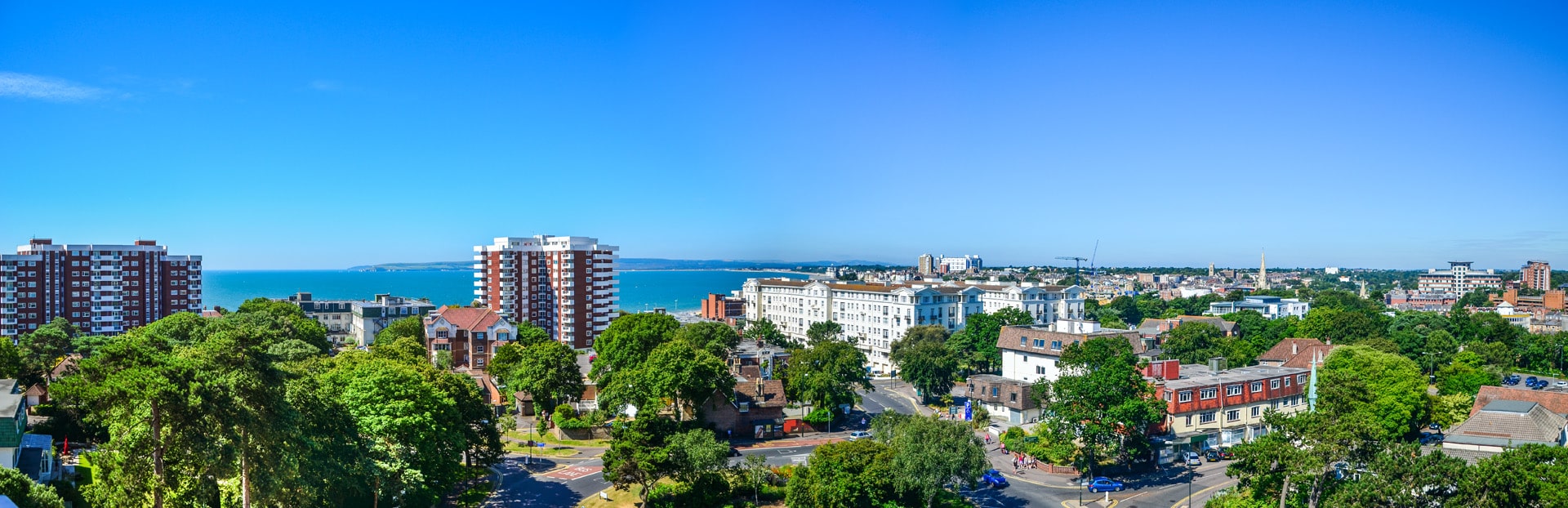
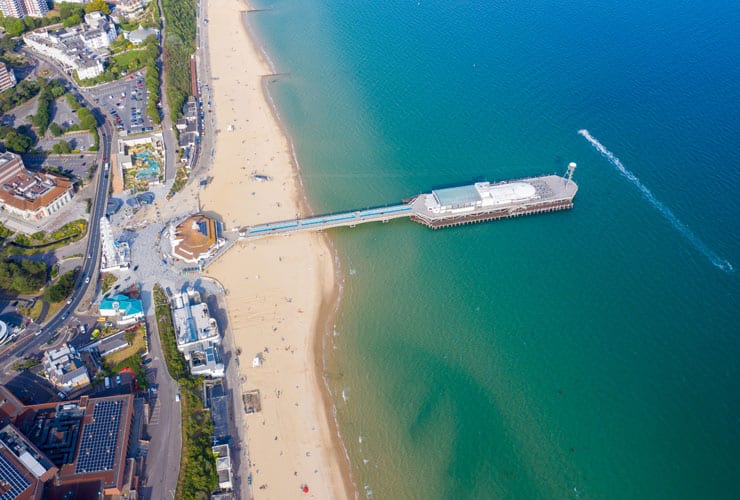
Bournemouth is a coastal town in Dorset, on the south coast of England. Average sold prices across Bournemouth, Christchurch and Poole sit at £308,248 on the HM Land Registry House Price Index, 6.3% above the England average of £289,946 yet built on a split market: houses sell well above the national figure while flats sell below it. A detached home across the area averages £548,436, which is 16.6% above England, but a flat averages £195,372, some 8.9% below. That gap is the single most important thing for an investor to understand here. Bournemouth is two markets sharing one coastline, and the postcode you buy in decides which one you are in. The local authority's population grew 5.6% between the 2011 and 2021 censuses, from 378,900 to 400,200 residents.
The premium on houses reflects a coast that draws retirees, downsizers and holiday buyers competing for the same family stock as local working households. The discount on flats reflects the opposite: a deep supply of seafront and town-centre apartments in BH1 and BH2 that takes a long time to clear. For investors, the yield map follows that divide. The cheapest entry point is BH1 (Bournemouth town centre) at £226,102, while the highest yield sits in BH9 (Charminster, Winton) at 7.4%, and the premium coastal postcodes of BH3, BH6 and BH7 deliver some of the lowest income returns despite the highest prices.
This guide covers the unitary authority of Bournemouth, Christchurch and Poole (ONS code E06000058) across the 13 Bournemouth-area postcodes BH1 to BH12 and BH23. Bournemouth sits in the South West region on the Dorset coast, roughly 30 miles south-west of Southampton. The wider area also takes in Poole buy-to-let to the west and Christchurch to the east.
Article updated: July 2026
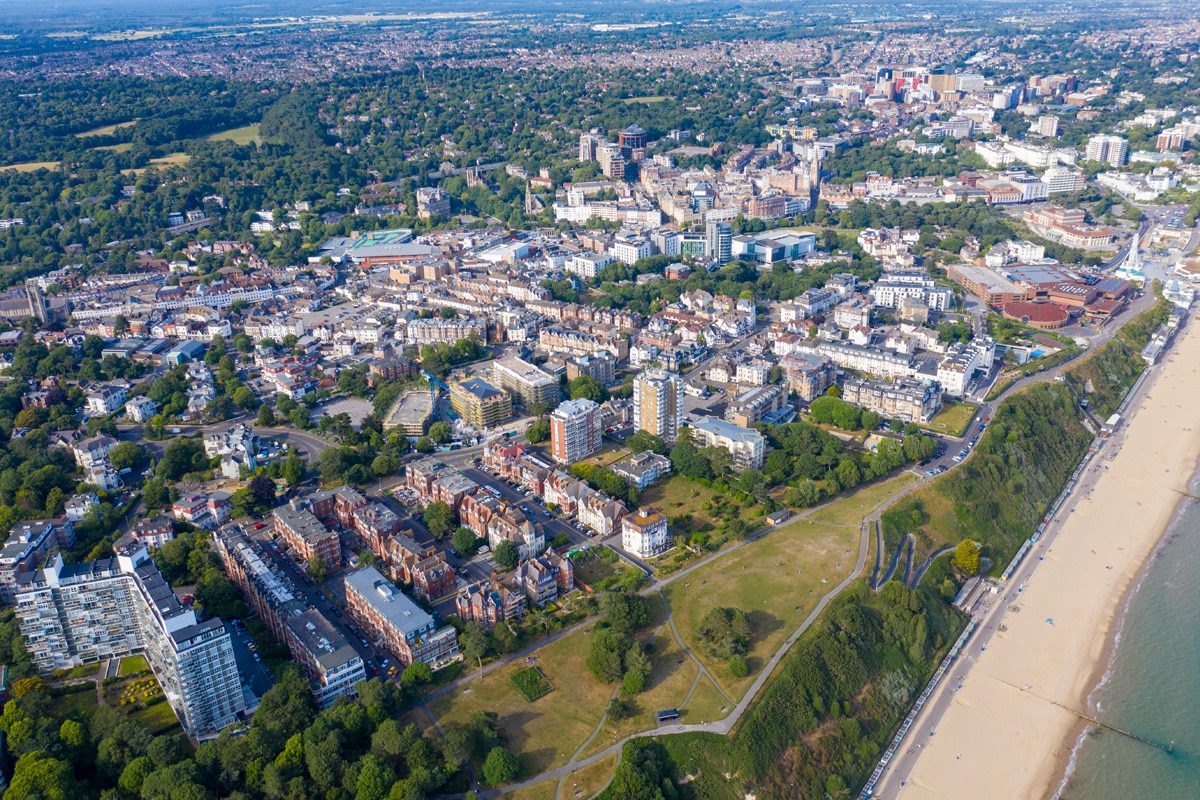
Why Invest in Bournemouth?
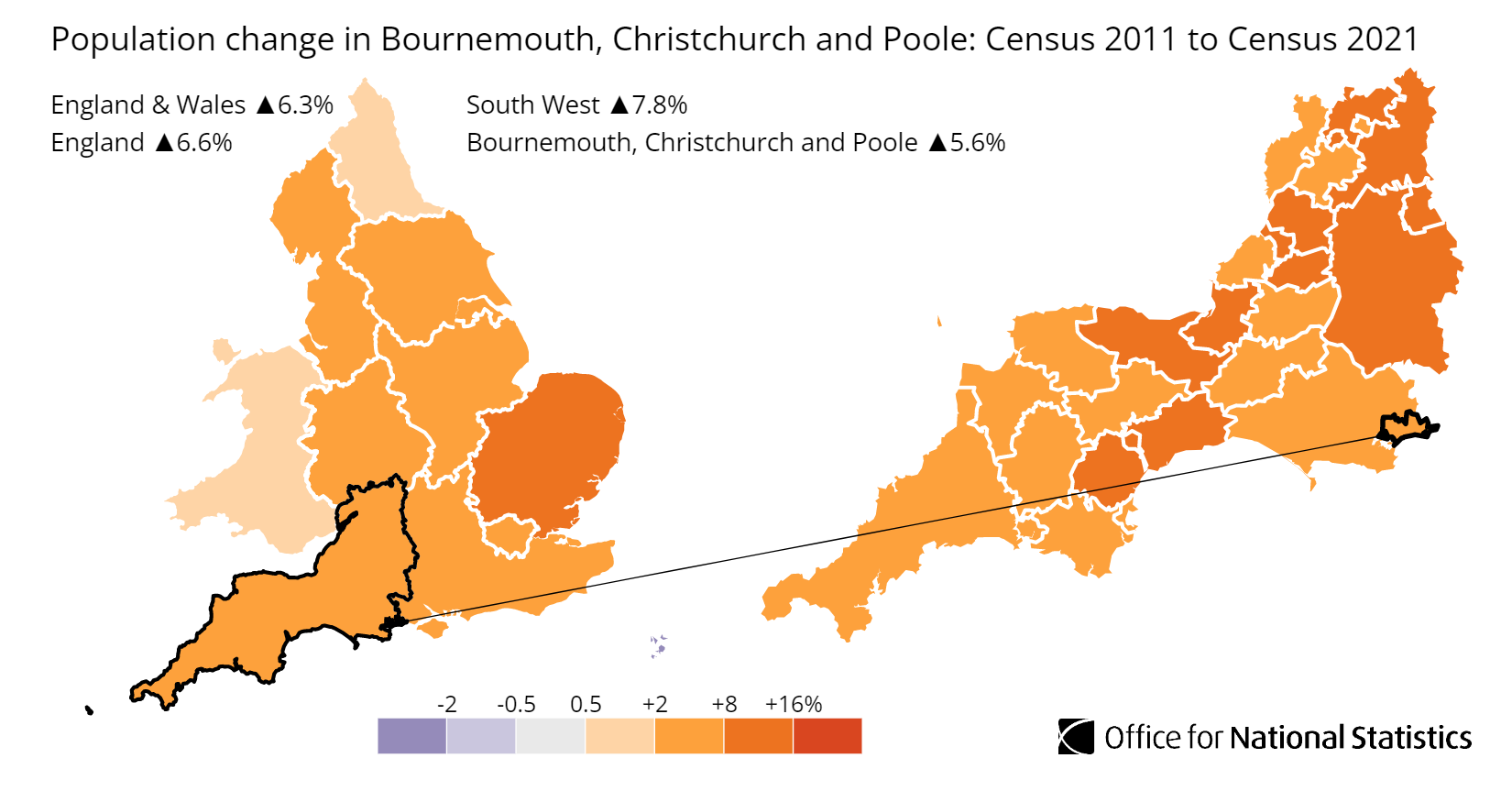
Bournemouth, Christchurch and Poole, the local authority Bournemouth sits within, grew its population 5.6% between the 2011 and 2021 censuses, from 378,900 to 400,200 residents. That is just below the England and Wales average of 6.3%, the steady growth of an established coastal conurbation rather than a boom town. Bournemouth's draw is its seven miles of sandy beach, a year-round tourism economy, two universities, and a town centre that has become one of the South West's larger office and digital-sector employers.
The local employment rate of 77.9% sits above the South West regional figure and Great Britain's 75.6%, though the economy leans on sectors with a seasonal edge. Tourism, hospitality and retail run alongside a growing financial-services and digital cluster in the town centre, and the student populations of Bournemouth University and the Arts University Bournemouth feed a large and active rental market. That mix of holiday demand, student demand and professional demand is what gives the area its unusually deep private rented sector, concentrated in the town-centre postcodes.
Median gross annual earnings across Bournemouth, Christchurch and Poole are £37,493, which is fractionally below the South West regional median and 4.2% below the Great Britain median of £39,125. Local wages are not high relative to local house prices, which is why affordability is stretched in the coastal postcodes and why the rental market depends as much on students, sharers and incomers as on the local salaried base.
Bournemouth Economic Summary
- Population (Bournemouth, Christchurch and Poole): 400,200 (2021 Census). Growth of 5.6% from 2011.
- Median annual salary: £37,493 (local), £37,544 (South West), £39,125 (Great Britain)
- Employment rate: 77.9% (local), 75.6% (Great Britain)
- Unemployment rate: 5.2% (local)
- Key employment sectors: Accommodation and food, wholesale and retail, health and social work, financial and professional services, education
Source: ONS Census 2021, Nomis Labour Market Profile (ASHE 2025)
Regeneration and Investment in Bournemouth
Bournemouth's town-centre regeneration is led by the BCP Council Towns Fund and the long-running redevelopment of the seafront and Lansdowne business district. The investment is aimed at converting tired town-centre and seafront sites into housing, workspace and leisure, with the goal of holding residents and workers in a centre that has historically emptied out of season.
- Bournemouth Development Company programme (Active): A joint venture between BCP Council and Morgan Sindall Investments is bringing forward a pipeline of council-owned town-centre sites for mixed-use redevelopment, combining new homes with commercial and public space. The aim is to add residential density to a centre dominated by retail and leisure. Updates at BCP Council.
- Lansdowne and university quarter (Active): The Lansdowne district, anchored by Bournemouth University's city-centre campus and a cluster of financial-services employers, has seen purpose-built student accommodation and office investment that supports the BH1 and BH8 rental markets. Town-centre housing supply remains constrained relative to demand.
- Bournemouth, Christchurch and Poole Towns Fund (Active): Government Towns Fund allocations to the conurbation are directed at seafront, transport and town-centre improvement projects designed to lift footfall and extend the visitor season. The works support the leisure economy that underpins much of the local rental and holiday-let demand.
Source: Office for National Statistics - Population for Bournemouth, Christchurch and Poole
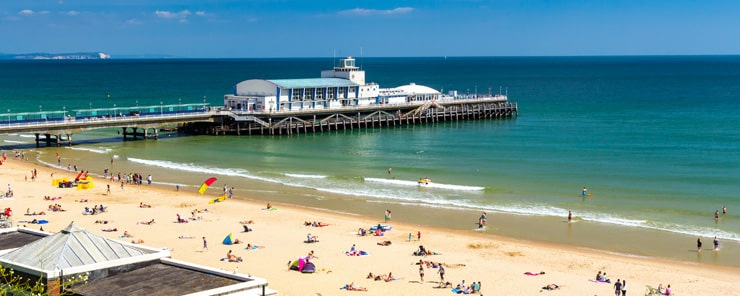
Bournemouth Property Market Analysis
Average property prices in Bournemouth, Christchurch and Poole have risen 455.8% since January 1995, from £55,465 to £308,248. The sections below trace that path through its cycles, then drill into current postcode-level data for sold prices, price per square foot, asking prices, growth trends, and monthly transaction volumes.
When was the last house price crash in Bournemouth?
Bournemouth sits within the unitary authority of Bournemouth, Christchurch and Poole, so all sold property prices from HM Land Registry are recorded at this level. The index tracks average prices from January 1995 to March 2026, covering 31 years of market cycles.
The 1995 to 2007 climb: the area started at £55,465 in January 1995. By December 2000 the average had reached £103,658, almost doubling in six years as low interest rates and easy mortgage credit pulled buyers to the coast. Growth ran hot through the early 2000s, passing £193,211 by December 2005 and peaking at £223,171 in November 2007.
2008 to 2009, the financial crisis: prices fell from the November 2007 peak of £223,171 to a trough of £179,039 in April 2009, a decline of 19.8% over 17 months. The worst year-on-year reading was -17.4% in March 2009. This was a deeper fall than Bournemouth's earlier-2000s strength suggested, because a coastal market with a high share of second homes and discretionary buyers tends to drop hard when credit and confidence vanish at once.
The 2010 to 2013 plateau: prices bounced off the April 2009 trough but then went sideways for years. The average sat at £201,067 in December 2010 and was almost unchanged at £200,918 by December 2012, before edging up to £212,482 by December 2013. The coast spent four years stuck below its pre-crash level.
Recovery, 2014 to 2016: growth returned, with the average rising from £230,165 in December 2014 to £248,453 by April 2016. The first month prices cleared the November 2007 peak of £223,171 was June 2014, at £224,321, which means it took six and a half years to recover the lost ground.
The 2017 to 2019 cooling: growth slowed as affordability bit. Prices moved from £269,533 in December 2017 to £280,403 in December 2018, then slipped to £274,959 by December 2019, a -1.9% annual reading. The coast ran out of road before the pandemic, not because of it.
2020 to 2022, the pandemic surge: the race for space and a stamp duty holiday sent coastal demand soaring. Prices jumped from £275,483 in June 2020 to £291,844 by December 2020, then to £308,509 by December 2021 (5.7% annual), and reached the all-time high of £345,134 in December 2022, an 11.9% annual gain. A seaside conurbation with a finite supply of homes was exactly the kind of market that ran hardest.
2023 to present, the easing: higher mortgage rates then unwound much of that surge. Prices fell back to £318,322 by December 2023 (-7.8% annual), drifted lower through 2024 and 2025, and stood at £308,248 by the latest reading in March 2026. That is 10.7% below the December 2022 high, a sharper give-back than most inland markets, and a reminder that coastal prices move further in both directions. The current average is still 38.1% above the November 2007 pre-crash peak.
Long-term growth summary:
- 5 years (March 2021 to March 2026): 5.9% growth (£290,969 to £308,248)
- 10 years (March 2016 to March 2026): 24.8% growth (£246,904 to £308,248)
- 15 years (March 2011 to March 2026): 54.2% growth (£199,880 to £308,248)
- 20 years (March 2006 to March 2026): 59.8% growth (£192,943 to £308,248)
- 30 years (January 1995 to March 2026): 455.8% growth (£55,465 to £308,248)
Bournemouth's 19.8% crash was deeper than the England fall of 18.2% over the same period, and its recent give-back from the December 2022 high has been steeper than most inland markets. The 30-year return of 455.8% still shows strong long-term capital growth, but the five-year figure of 5.9% reflects a market that surged in the pandemic and has spent the years since handing some of it back. An investor who bought at the exact November 2007 peak would now be sitting on a 38.1% gain on the Land Registry average.
- All property types
- Detached
- Semi-detached
- Terraced
- Flats
- All property types
- Detached
- Semi-detached
- Terraced
- Flats
Sold House Prices in Bournemouth
The average sold price across all property types in Bournemouth, Christchurch and Poole is £308,248, which is 6.3% above the England average of £289,946 as of March 2026. That headline premium hides the split that defines this market. Houses sell at a clear premium to England, while flats sell at a discount, so whether the area looks expensive or cheap depends entirely on what you are buying.
| Property Type | Bournemouth, Christchurch and Poole Average | England Average | Difference |
|---|---|---|---|
| Detached houses | £548,436 | £470,492 | +16.6% |
| Semi-detached houses | £353,952 | £288,185 | +22.8% |
| Terraced houses | £290,752 | £243,788 | +19.3% |
| Flats and maisonettes | £195,372 | £214,563 | -8.9% |
| All property types | £308,248 | £289,946 | +6.3% |
Detached houses at £548,436 carry the largest premium, 16.6% above England's £470,492. These are the family homes in the leafier postcodes such as BH7 (Boscombe Manor, Pokesdown) and the detached-heavy suburbs of BH9 and BH10, where retirees, downsizers and incomers from pricier parts of the South compete for limited stock. Annual growth has flattened to -0.1%, so the premium is about scarcity rather than momentum.
Semi-detached houses at £353,952 sit 22.8% above England's £288,185, the widest premium of any type here. The semi is the conurbation's middle-market family home, and a tight supply against steady demand has pushed it well clear of the national figure. Annual growth of 0.3% is essentially flat, holding the premium without adding to it.
Terraced houses at £290,752 are 19.3% above England's £243,788. Bournemouth's terraced stock clusters in the inner suburbs such as BH11 and BH8, where it serves both family lets and shared housing. Annual change of -0.6% points to a market that has stopped rising but not meaningfully fallen.
Flats and maisonettes at £195,372 are the exception, 8.9% below England's £214,563. This is the deep pool of seafront and town-centre apartments in BH1, BH2 and BH4, where supply is abundant and a flat can sit unsold for a long time. Annual change of -5.0% is the weakest of any type and confirms a soft, oversupplied apartment market that drags on the area's flat values.
Price Per Square Foot in Bournemouth
Bournemouth's space ranges from £282 a square foot in BH2 to £418 in BH23, a £136 spread that tracks proximity to the better stretches of coast rather than distance from the town centre. Measured by the square foot, which controls for how big the homes are and isolates what the location itself commands, the cheapest space is in the town-centre flats and the dearest is along the coastal eastern edge of the conurbation.
| Rank | Area | Price Per Sq Ft |
|---|---|---|
| 1 | BH2 (Town Centre, West Cliff) | £282 |
| 2 | BH1 (Town Centre, East Cliff) | £289 |
| 3 | BH5 (Boscombe, Pokesdown) | £323 |
| 4 | BH4 (Westbourne, Alum Chine) | £335 |
| 5 | BH8 (Charminster, Springbourne) | £348 |
| 6 | BH12 (Branksome, Newtown) | £349 |
| 7 | BH3 (Talbot Woods, Winton) | £353 |
| 8 | BH9 (Charminster, Winton) | £353 |
| 9 | BH11 (Bear Cross, West Howe) | £364 |
| 10 | BH10 (Ensbury Park, Kinson) | £368 |
| 11 | BH7 (Boscombe Manor, Littledown) | £370 |
| 12 | BH6 (Southbourne, Tuckton) | £414 |
| 13 | BH23 (Christchurch, Highcliffe) | £418 |
BH2 at £282 per square foot is the cheapest bricks-and-mortar value in the area, drawn down by its near-total weighting of town-centre flats. Based on 189 transactions analysed, BH2's space costs roughly a third less per square foot than BH23's, a reminder that the lowest asking price comes with the softest underlying market.
BH23 at £418 per square foot tops the table on a deep sample of 1,149 transactions. Christchurch and Highcliffe sit on the coast east of Bournemouth, and that seaside proximity is what buyers pay for by the square foot. BH6 (Southbourne, Tuckton) follows at £414 on 479 transactions, confirming that the coastal eastern edge of the conurbation, not the town centre, holds the premium.
For Sale Asking Prices in Bournemouth
Asking prices run from £226,102 in BH1 to £526,668 in BH3, a 133% gap across the area's 13 postcodes, with a mean asking price of £357,582. The hierarchy is broadly the inverse of the yield map: the cheapest postcodes carry the strongest income returns and the dearest carry the weakest.
| Rank | Area | Asking Price |
|---|---|---|
| 1 | BH1 (Town Centre, East Cliff) | £226,102 |
| 2 | BH2 (Town Centre, West Cliff) | £246,164 |
| 3 | BH5 (Boscombe, Pokesdown) | £275,452 |
| 4 | BH8 (Charminster, Springbourne) | £323,786 |
| 5 | BH12 (Branksome, Newtown) | £324,234 |
| 6 | BH11 (Bear Cross, West Howe) | £339,246 |
| 7 | BH9 (Charminster, Winton) | £341,128 |
| 8 | BH4 (Westbourne, Alum Chine) | £342,113 |
| 9 | BH10 (Ensbury Park, Kinson) | £362,777 |
| 10 | BH7 (Boscombe Manor, Littledown) | £435,903 |
| 11 | BH6 (Southbourne, Tuckton) | £440,520 |
| 12 | BH23 (Christchurch, Highcliffe) | £464,470 |
| 13 | BH3 (Talbot Woods, Winton) | £526,668 |
BH1 at £226,102 is the lowest entry point in the area and the only postcode where the asking price sits well below the city-wide Land Registry average of £308,248. This is the town-centre flat market, and the low price reflects both the smaller unit sizes and the slow pace at which that stock sells. For an investor with a fixed budget, BH1 buys the most square footage and the highest yield, but in the least liquid corner of the market.
BH3's £526,668 asking price tops the table by a wide margin. Talbot Woods is one of the conurbation's most established detached-house enclaves, and its prices are set by owner-occupier demand rather than rental maths. The sample behind that figure is small, at 88 transactions, so BH3 is a thin, high-value market rather than a deep one.
House Price Growth in Bournemouth
BH7 leads on growth in every timeframe, up 11.6% over one year, 15.5% over three and 17.5% over five, while four postcodes are now showing negative five-year returns. The spread is unusually wide, which is what you would expect from a market that surged in the pandemic and has handed back different amounts in different postcodes since.
| Area | 1 Year | 3 Years | 5 Years |
|---|---|---|---|
| BH7 (Boscombe Manor, Littledown) | 11.6% | 15.5% | 17.5% |
| BH12 (Branksome, Newtown) | 0.3% | -3.6% | 14.6% |
| BH10 (Ensbury Park, Kinson) | 5.2% | -3.3% | 14.5% |
| BH11 (Bear Cross, West Howe) | -2.9% | -8.6% | 11.5% |
| BH9 (Charminster, Winton) | 2.6% | 2.3% | 11.2% |
| BH23 (Christchurch, Highcliffe) | -1.4% | -2.6% | 9.1% |
| BH6 (Southbourne, Tuckton) | 1.4% | -3.0% | 5.8% |
| BH1 (Town Centre, East Cliff) | -7.2% | -4.8% | 1.8% |
| BH3 (Talbot Woods, Winton) | 6.5% | -10.7% | 1.2% |
| BH5 (Boscombe, Pokesdown) | 0.4% | 1.1% | -0.4% |
| BH8 (Charminster, Springbourne) | -5.6% | -0.7% | -1.8% |
| BH2 (Town Centre, West Cliff) | 1.7% | -14.0% | -5.1% |
| BH4 (Westbourne, Alum Chine) | -4.9% | -11.0% | -6.5% |
BH7 at 17.5% over five years and 15.5% over three posts the strongest growth in the area. Boscombe Manor and Littledown combine detached stock with proximity to the hospital and business park, and that demand has held through the rate-shock years that pulled other postcodes down. It is the one postcode here growing across all three timeframes.
BH2 and BH4 sit at the other end, both negative over five years (-5.1% and -6.5%) and sharply down over three (-14.0% and -11.0%). These are the flat-heavy town-centre and Westbourne postcodes, and their figures show how hard the apartment market has fallen back since the pandemic peak. The contrast with BH7 is the house-versus-flat divide written into the growth data.
Monthly Property Sales in Bournemouth
BH23 (Christchurch, Highcliffe) is by far the busiest market at 60 sales a month, while the premium BH3 manages just four, and turnover across the area runs low at 3% to 13%. The volume figures track the size of each postcode's housing stock more than its desirability, but the low turnover rates everywhere point to a market where homes change hands slowly.
| Area | Sales Per Month | Turnover | Asking Price |
|---|---|---|---|
| BH23 (Christchurch, Highcliffe) | 60 | 8% | £464,470 |
| BH12 (Branksome, Newtown) | 36 | 13% | £324,234 |
| BH8 (Charminster, Springbourne) | 34 | 11% | £323,786 |
| BH9 (Charminster, Winton) | 30 | 12% | £341,128 |
| BH6 (Southbourne, Tuckton) | 26 | 9% | £440,520 |
| BH1 (Town Centre, East Cliff) | 23 | 5% | £226,102 |
| BH11 (Bear Cross, West Howe) | 19 | 12% | £339,246 |
| BH10 (Ensbury Park, Kinson) | 17 | 8% | £362,777 |
| BH5 (Boscombe, Pokesdown) | 12 | 5% | £275,452 |
| BH4 (Westbourne, Alum Chine) | 11 | 4% | £342,113 |
| BH2 (Town Centre, West Cliff) | 10 | 3% | £246,164 |
| BH7 (Boscombe Manor, Littledown) | 10 | 8% | £435,903 |
| BH3 (Talbot Woods, Winton) | 4 | 6% | £526,668 |
BH12 and BH9 combine reasonable volume with the highest turnover in the area at 13% and 12%, so a fair share of their stock changes hands each year. For an investor, higher turnover signals an easier exit when the time comes to sell, and these two suburban postcodes move more freely than the coast.
BH2 and BH4 record the lowest turnover at 3% and 4%, well below the rest. These are the flat-heavy postcodes where supply is deep and buyers are few, and the thin turnover is the early warning the selling-times data below confirms. Volume alone can mislead: BH23 sells the most homes but still turns over only 8% of its larger stock.
How Long Properties Take to Sell in Bournemouth
Selling speed is the area's biggest hidden cost: a home in BH8 or BH9 takes about 254 days to sell, while in BH2 it sits for roughly 1,014 days, the kind of delay that turns a yield calculation on its head. Days on market measures how long the typical home is listed before it sells; months of unsold stock shows how much for-sale supply is queued at the current rate of sales. On both measures Bournemouth is a slow market, and the flat-heavy town-centre postcodes are slowest of all.
| Area | Avg Days to Sell | Months of Unsold Stock | Market |
|---|---|---|---|
| BH8 (Charminster, Springbourne) | 254 | 8.3 | Balanced market |
| BH9 (Charminster, Winton) | 254 | 8.3 | Balanced market |
| BH11 (Bear Cross, West Howe) | 277 | 9.1 | Balanced market |
| BH12 (Branksome, Newtown) | 277 | 9.1 | Balanced market |
| BH10 (Ensbury Park, Kinson) | 338 | 11.1 | Balanced market |
| BH6 (Southbourne, Tuckton) | 338 | 11.1 | Balanced market |
| BH23 (Christchurch, Highcliffe) | 380 | 12.5 | Buyer's market |
| BH7 (Boscombe Manor, Littledown) | 380 | 12.5 | Buyer's market |
| BH3 (Talbot Woods, Winton) | 507 | 16.7 | Buyer's market |
| BH1 (Town Centre, East Cliff) | 608 | 20.0 | Buyer's market |
| BH5 (Boscombe, Pokesdown) | 608 | 20.0 | Buyer's market |
| BH4 (Westbourne, Alum Chine) | 761 | 25.0 | Buyer's market |
| BH2 (Town Centre, West Cliff) | 1,014 | 33.3 | Buyer's market |
This is where the highest-yielding and cheapest postcodes look very different. BH1 carries the area's lowest asking price and a 5.6% yield, but at 608 days on market and 20 months of unsold stock it is also one of the hardest places to sell. BH2, the cheapest flats after BH1, is harder still at 1,014 days. The suburban house postcodes BH8 and BH9 clear in less than half that time, so a buyer choosing on yield alone could end up holding a property far longer than the rental return ever compensates for.
What Type of Property Can You Buy in Bournemouth?
The housing mix splits the conurbation cleanly: flats make up more than 70% of stock in BH1, BH2, BH4 and BH5, while detached and semi-detached houses dominate the suburbs and the eastern coast. That divide decides which strategies fit where, with the town-centre flats suiting single lets, students and short stays, and the suburban houses suiting family lets and shared housing. The figures below come from 2021 Census records for each postcode.
| Area | Detached | Semi-detached | Terraced | Flats |
|---|---|---|---|---|
| BH1 (Town Centre, East Cliff) | 5.3% | 5.5% | 4.5% | 84.6% |
| BH2 (Town Centre, West Cliff) | 3.8% | 1.5% | 2.4% | 92.3% |
| BH3 (Talbot Woods, Winton) | 56.4% | 2.9% | 1.4% | 39.2% |
| BH4 (Westbourne, Alum Chine) | 19.1% | 3.6% | 4.3% | 73.1% |
| BH5 (Boscombe, Pokesdown) | 15.5% | 6.3% | 3.9% | 74.2% |
| BH6 (Southbourne, Tuckton) | 47.3% | 14.5% | 4.8% | 32.6% |
| BH7 (Boscombe Manor, Littledown) | 62.4% | 13.2% | 2.0% | 22.3% |
| BH8 (Charminster, Springbourne) | 38.8% | 15.2% | 12.2% | 33.3% |
| BH9 (Charminster, Winton) | 52.3% | 16.7% | 6.2% | 24.4% |
| BH10 (Ensbury Park, Kinson) | 49.9% | 21.4% | 6.6% | 15.6% |
| BH11 (Bear Cross, West Howe) | 32.0% | 31.9% | 21.4% | 14.8% |
| BH12 (Branksome, Newtown) | 41.6% | 29.5% | 8.5% | 20.0% |
| BH23 (Christchurch, Highcliffe) | 49.4% | 17.4% | 9.7% | 10.0% |
BH2 is almost entirely flats at 92.3%, with BH1 close behind at 84.6%. This is the apartment heartland of the conurbation, the stock that drives the town-centre rental market and also the stock that sits longest when it comes to sell. It lines up with these two postcodes carrying the lowest asking prices, the deepest private rented sectors, and the slowest selling times in the area.
BH7 is the most house-dominated postcode at 62.4% detached, with the smallest share of terraces at 2.0%. Detached and semi-detached houses together make up more than three-quarters of its stock, which matches its premium prices and its leading growth figures. The housing here is weighted towards owner-occupier family homes rather than the smaller units that drive rental income.
Flats combine purpose-built blocks and converted units; a small share of mobile and temporary dwellings is not shown, so rows may not total 100%.

Bournemouth Rental Market Analysis
Monthly rents across Bournemouth run from £1,058 in BH1 to £2,107 in BH9, with gross rental yields from 3.0% to 7.4% depending on the postcode. For investors asking is buy-to-let worth it on the Dorset coast, the sections below break down rents, yields, and tenant affordability postcode by postcode. If you are looking at how do I build a property portfolio in the South West, Bournemouth's mix of student, professional and holiday demand offers a deeper rental market than its wage base alone would suggest. Browse current buy-to-let property for sale across the region.
Average Rent & Gross Rental Yields in Bournemouth
Gross rental yields in Bournemouth range from 3.0% in BH7 to 7.4% in BH9, the widest yield spread of any South West coastal market in this guide. The suburban postcodes north of the centre lead on income, while the premium coastal postcodes deliver the lowest returns despite charging high rents.
| Area | Average Monthly Rent | Asking Price | Gross Yield |
|---|---|---|---|
| BH9 (Charminster, Winton) | £2,107 | £341,128 | 7.4% |
| BH10 (Ensbury Park, Kinson) | £1,947 | £362,777 | 6.4% |
| BH2 (Town Centre, West Cliff) | £1,181 | £246,164 | 5.8% |
| BH8 (Charminster, Springbourne) | £1,569 | £323,786 | 5.8% |
| BH1 (Town Centre, East Cliff) | £1,058 | £226,102 | 5.6% |
| BH5 (Boscombe, Pokesdown) | £1,228 | £275,452 | 5.4% |
| BH4 (Westbourne, Alum Chine) | £1,282 | £342,113 | 4.5% |
| BH12 (Branksome, Newtown) | £1,196 | £324,234 | 4.4% |
| BH23 (Christchurch, Highcliffe) | £1,356 | £464,470 | 3.5% |
| BH3 (Talbot Woods, Winton) | £1,487 | £526,668 | 3.4% |
| BH6 (Southbourne, Tuckton) | £1,134 | £440,520 | 3.1% |
| BH7 (Boscombe Manor, Littledown) | £1,077 | £435,903 | 3.0% |
| BH11 (Bear Cross, West Howe) | Not enough data | £339,246 | Not enough data |
BH9 at 7.4% posts the highest yield in the area, on a £2,107 average monthly rent against a £341,128 asking price. That rent figure is high for the conurbation and reflects the larger, often multi-let houses in Charminster and Winton that serve students and sharers near the universities. The headline yield is real, but it comes with a slow rental market: lettings here can take a long time to fill, so the gross figure overstates how easily the income arrives.
BH7 at 3.0% sits at the bottom of the table. Boscombe Manor and Littledown command a £1,077 monthly rent, but against a £435,903 asking price the income return is compressed. In the premium coastal and suburban postcodes the high price does far more for the capital value than for the yield.
BH11 (Bear Cross, West Howe) has too few rental listings at any one time to read its rent and yield reliably, so it is shown as not enough data. Its asking price of £339,246 is recorded, but the rental side cannot be quoted with confidence.
Gross Rental Yield by Postcode
Is Bournemouth Rent High?
Measured against local wages, Bournemouth rents are stretched everywhere: even the most affordable postcode takes 33.9% of the median gross monthly salary, and the dearest takes more than two-thirds of it. The widely cited affordability threshold is 30% of gross income, and no postcode in the area falls below it. That gap between local pay and local rents is why the rental market leans so heavily on students, sharers and incomers rather than single local earners.
The median gross weekly salary across Bournemouth, Christchurch and Poole is £721.00, which equates to £3,124 per month or £37,493 per year. That is fractionally below the South West regional median and the Great Britain median of £752.40 per week. Data from the Nomis Labour Market Profile (ASHE 2025).
| Rank | Area | Rent as % of Income |
|---|---|---|
| 1 | BH9 (Charminster, Winton) | 67.4% |
| 2 | BH10 (Ensbury Park, Kinson) | 62.3% |
| 3 | BH8 (Charminster, Springbourne) | 50.2% |
| 4 | BH3 (Talbot Woods, Winton) | 47.6% |
| 5 | BH23 (Christchurch, Highcliffe) | 43.4% |
| 6 | BH4 (Westbourne, Alum Chine) | 41.0% |
| 7 | BH5 (Boscombe, Pokesdown) | 39.3% |
| 8 | BH12 (Branksome, Newtown) | 38.3% |
| 9 | BH2 (Town Centre, West Cliff) | 37.8% |
| 10 | BH6 (Southbourne, Tuckton) | 36.3% |
| 11 | BH7 (Boscombe Manor, Littledown) | 34.5% |
| 12 | BH1 (Town Centre, East Cliff) | 33.9% |
| — | BH11 (Bear Cross, West Howe) | Not enough data |
BH1 at 33.9% is the most affordable postcode for a single local earner, but it still sits above the 30% threshold. A £1,058 monthly rent against a £3,124 median monthly salary leaves little headroom, which is why the town-centre flats lean on student and shared tenancies that pool several incomes rather than one.
BH9 at 67.4% is the least affordable on a single-salary basis, but the figure needs context: its £2,107 average rent reflects larger multi-let houses rather than one-bed flats, so the rent is typically split across several sharers rather than carried by one median earner. Read on a per-room basis, the burden on each tenant is far lower than the headline suggests.
How Big Is Bournemouth's Private Rented Sector?
The private rented sector is exceptionally deep in the town centre, where it houses 56.2% of households in BH2 and 54.2% in BH1, more than double the area's suburban postcodes. The share of homes already let privately is a read on how large and how established the local tenant pool is, and on this measure Bournemouth's town centre is one of the most rental-dominated markets on the South coast. The table below shows household tenure by postcode.
| Area | Owned Outright | Owned with Mortgage | Private Rented | Social Rented |
|---|---|---|---|---|
| BH2 (Town Centre, West Cliff) | 22.8% | 16.1% | 56.2% | 4.2% |
| BH1 (Town Centre, East Cliff) | 18.3% | 17.2% | 54.2% | 9.7% |
| BH5 (Boscombe, Pokesdown) | 25.1% | 21.0% | 45.5% | 7.5% |
| BH4 (Westbourne, Alum Chine) | 36.7% | 23.1% | 36.3% | 3.7% |
| BH3 (Talbot Woods, Winton) | 39.2% | 26.8% | 28.6% | 5.3% |
| BH8 (Charminster, Springbourne) | 29.3% | 31.4% | 26.2% | 12.3% |
| BH9 (Charminster, Winton) | 31.3% | 34.5% | 24.2% | 9.4% |
| BH23 (Christchurch, Highcliffe) | 46.2% | 22.9% | 23.5% | 6.9% |
| BH7 (Boscombe Manor, Littledown) | 37.1% | 33.5% | 22.6% | 6.5% |
| BH6 (Southbourne, Tuckton) | 45.5% | 29.0% | 19.2% | 6.0% |
| BH12 (Branksome, Newtown) | 32.8% | 34.2% | 19.1% | 13.0% |
| BH10 (Ensbury Park, Kinson) | 41.2% | 29.8% | 15.1% | 13.3% |
| BH11 (Bear Cross, West Howe) | 28.8% | 33.9% | 12.9% | 23.6% |
BH1 and BH2 have the largest private rented sectors in the area, with more than half of all households renting from a private landlord. A rented share that high points to a deep, proven lettings market with a wide pool of existing tenants, though it also means a new landlord competes against a lot of standing supply, which the long selling and letting times in these postcodes bear out. BH5 follows at 45.5%, completing a town-centre and Boscombe band where renting is the norm rather than the exception.
At the other end, BH11 has the smallest private rented sector at 12.9% and the largest social rented share at 23.6%, while the suburban and coastal house postcodes such as BH6, BH10 and BH23 sit at the high-ownership end. For an investor, the deep rented sectors of BH1, BH2 and BH5 mean an established tenant market but plenty of competing stock; the shallow ones point to areas where owner-occupiers, not landlords, set the tone.
Of the postcodes with enough rental listings to read, BH1 stands out as a landlord's market, with around 209 homes advertised to rent letting in roughly 56 days on average, while BH9's larger rental supply takes far longer to clear. The contrast underlines that a deep rented sector and a fast-letting one are not the same thing.
Local Housing Allowance Rates in Bournemouth
Every Bournemouth postcode falls within the single Bournemouth Broad Rental Market Area, where Local Housing Allowance runs from £98.11 a week for a shared room to £356.71 a week for a four-bedroom home. Local Housing Allowance is the most a tenant on housing benefit can claim towards rent, so for that part of the market it sets an effective floor on what a let will reliably bring in. Because the whole conurbation shares one rental market area, the rates below apply across all 13 Bournemouth postcodes. To check the current figure for a specific address, use the government's official Local Housing Allowance calculator.
| Property Size | Weekly LHA Rate | Monthly Equivalent |
|---|---|---|
| Shared accommodation | £98.11 | £425 |
| 1 bedroom | £159.95 | £693 |
| 2 bedrooms | £201.37 | £873 |
| 3 bedrooms | £264.66 | £1,147 |
| 4 bedrooms | £356.71 | £1,546 |
The two-bedroom LHA rate of £201.37 a week works out at about £873 a month, which sits below the open-market rents recorded across most Bournemouth postcodes. A benefit-backed tenancy at the LHA rate therefore comes in under the market figure, and the stock that fits within these rates is concentrated in the cheaper town-centre flats of BH1 and BH2. The four-bedroom rate of £356.71 a week, around £1,546 a month, is the figure that matters for the shared houses in BH8 and BH9, where benefit-funded sharers can form part of the tenant mix.
Buy-to-Let Considerations
Are House Prices High in Bournemouth? Price-to-Earnings Ratios
Buying in Bournemouth takes between 6.0 and 14.0 times the median annual salary, depending on the postcode. This is based on the Nomis Labour Market Profile showing the median gross annual income for local residents is £37,493.
The national benchmark for price-to-earnings is 7.4x (England's average sold price of £289,946 divided by the Great Britain median annual salary of £39,125). Three of Bournemouth's 13 postcodes sit at or below that benchmark, meaning they are more affordable relative to local incomes than the England average is relative to national incomes; the rest sit above it, several well above.
| Rank | Area | Price-to-Earnings Ratio |
|---|---|---|
| 1 | BH1 (Town Centre, East Cliff) | 6.0x |
| 2 | BH2 (Town Centre, West Cliff) | 6.6x |
| 3 | BH5 (Boscombe, Pokesdown) | 7.3x |
| 4 | BH8 (Charminster, Springbourne) | 8.6x |
| 5 | BH12 (Branksome, Newtown) | 8.6x |
| 6 | BH11 (Bear Cross, West Howe) | 9.0x |
| 7 | BH9 (Charminster, Winton) | 9.1x |
| 8 | BH4 (Westbourne, Alum Chine) | 9.1x |
| 9 | BH10 (Ensbury Park, Kinson) | 9.7x |
| 10 | BH7 (Boscombe Manor, Littledown) | 11.6x |
| 11 | BH6 (Southbourne, Tuckton) | 11.7x |
| 12 | BH23 (Christchurch, Highcliffe) | 12.4x |
| 13 | BH3 (Talbot Woods, Winton) | 14.0x |
BH1 at 6.0x is the most affordable entry point relative to local earnings, and the only postcode comfortably below the national 7.4x benchmark. That affordability is one reason the town-centre flats clear at all despite their slow market: priced against local wages, they are the realistic option for a local buyer or a yield-focused investor.
BH3 at 14.0x sits at nearly double the national benchmark. At fourteen times the local median salary, Talbot Woods is firmly owner-occupier territory, bought by households whose incomes sit well above the area median or who are trading down from more expensive parts of the South. For an investor, that ratio compresses yields and lengthens the payback period.
Deposit Requirements in Bournemouth
A 30% deposit on a Bournemouth buy-to-let runs from £67,831 in BH1 to £158,001 in BH3. The £90,170 gap between the cheapest and dearest deposit is more than the entire deposit needed for a BH1 flat. For investors comparing Bournemouth with other South West locations, the entry deposits sit above Plymouth and Southampton but below neighbouring Poole.
Beyond the deposit, the stamp duty calculator buy to let and other buy to let costs affect the total capital required.
| Rank | Area | 30% Deposit Required |
|---|---|---|
| 1 | BH1 (Town Centre, East Cliff) | £67,831 |
| 2 | BH2 (Town Centre, West Cliff) | £73,849 |
| 3 | BH5 (Boscombe, Pokesdown) | £82,636 |
| 4 | BH8 (Charminster, Springbourne) | £97,136 |
| 5 | BH12 (Branksome, Newtown) | £97,270 |
| 6 | BH11 (Bear Cross, West Howe) | £101,774 |
| 7 | BH9 (Charminster, Winton) | £102,338 |
| 8 | BH4 (Westbourne, Alum Chine) | £102,634 |
| 9 | BH10 (Ensbury Park, Kinson) | £108,833 |
| 10 | BH7 (Boscombe Manor, Littledown) | £130,771 |
| 11 | BH6 (Southbourne, Tuckton) | £132,156 |
| 12 | BH23 (Christchurch, Highcliffe) | £139,341 |
| 13 | BH3 (Talbot Woods, Winton) | £158,001 |
BH1 is the cheapest way into Bournemouth at a £67,831 deposit, and it buys the area's highest-yielding town-centre flat market at 5.6%. The catch is liquidity: that same flat takes around 608 days to sell, so the low entry cost is paired with the slowest exit.
Stepping up to BH9 for roughly £34,000 more buys a very different proposition: the area's top yield at 7.4%, larger multi-let houses, and a market that clears in about 254 days rather than 608. For an investor focused on income who can manage shared housing, the BH9 deposit buys both a higher return and a faster exit than the cheaper town-centre flats, which is why the lowest deposit does not always mean the lowest holding cost here.
What the Bournemouth Data Tells Buy-to-Let Investors
In Bournemouth the income and the liquidity sit in different postcodes from the prestige and the capital growth. The highest yield is BH9 (Charminster, Winton) at 7.4%, on larger multi-let houses, while the cheapest entry for buying an investment property is BH1 (Town Centre, East Cliff) at £226,102, with the lowest deposit in the area at £67,831 and the most affordable prices against local earnings at 6.0 times income.
The catch with the cheap end is exit speed. BH1 and BH2 carry the lowest prices and the deepest rented sectors, but they are flat-heavy town-centre markets where a sale can take 608 days in BH1 and over 1,000 in BH2. The suburban house postcodes north of the centre, BH8 and BH9, clear in roughly 254 days, so an investor buying for income should weigh yield against how long their money would be tied up at the end.
Capital growth has been strongest where yields are weakest. BH7 (Boscombe Manor, Littledown) has grown 17.5% over five years and 15.5% over three, but yields just 3.0% on a £435,903 asking price. The premium coastal postcodes of BH3, BH6 and BH23 tell the same story: high prices, low yields, and a market driven by owner-occupiers and downsizers rather than rental maths. Buyers who want to come in below those asking prices tend to work the off-market property sales route, which matters more in a slow-selling coastal market than in a fast-moving one.
The area also splits hard by property type. Houses sell 16.6% to 22.8% above the England average, while flats sell 8.9% below it and have fallen 5.0% over the past year. That divide runs through everything here, from prices to yields to selling times, so the single most useful question for a Bournemouth investor is not which postcode, but house or flat. With above-average rental demand from students and incomers but below-average local wages, it reads as a market where the rental pool is deep but the affordability is tight.
How Bournemouth Compares
Bournemouth's mean asking price of £357,582 sits in the middle of five South West coastal markets, but its top yield of 7.4% is bettered only by Southampton's 7.7%. The comparison below places Bournemouth alongside four nearby locations, each with a different investor profile. The mean asking price and mean monthly rent are simple averages across all postcodes with data. Top gross yield is the single highest postcode yield in each location.
| Location | Mean Asking Price | Mean Monthly Rent | Mean Gross Yield | Top Yield (postcode) |
|---|---|---|---|---|
| Southampton | £260,743 | £1,270 | 5.8% | 7.7% (SO17) |
| Plymouth | £286,818 | £941 | 3.9% | 6.2% (PL5) |
| Bournemouth | £357,582 | £1,385 | 4.6% | 7.4% (BH9) |
| Exeter | £398,902 | £1,268 | 3.8% | 5.0% (EX1, EX4) |
| Poole | £464,728 | £1,369 | 3.5% | 4.6% (BH15) |
Bournemouth's £357,582 mean asking price is higher than Southampton's and Plymouth's but lower than Exeter's and neighbouring Poole's. Its top yield of 7.4% is strong for the South West, second only to Southampton at 7.7%, but that headline depends on a single postcode (BH9) of multi-let houses rather than a broad spread of high-yielding stock.
For investors prioritising income at a lower asking price, Poole next door runs the opposite way, with the area's highest prices and a 4.6% top yield aimed at the prestige harbour market. Holiday and second-home demand runs through the whole conurbation, so investors weighing a seasonal-let strategy should read our guide to the best areas to buy a holiday let in the UK and the practical detail in buying a holiday let. For a data-driven comparison across all UK locations, see our best buy-to-let areas guide.
Frequently Asked Questions
Is Bournemouth a good place to live for buy-to-let tenants?
For renting it out, yes, because the demand is broad. Two universities, a sizeable hospitality and digital workforce, and a steady flow of incomers to the coast give Bournemouth a deeper tenant pool than its wage base alone would suggest. More than half the households in the town-centre postcodes BH1 and BH2 already rent privately, which tells you the lettings market is well established.
The flip side is affordability. Local median pay is £721 a week, a little below the national figure, while rents take at least a third of a single salary in every postcode. That is why the market leans on students, sharers and dual-income households rather than lone local earners, and it shapes which kind of let works where.
What are the best areas in Bournemouth for property investment?
It depends whether you are buying for income or for growth. On income, the suburban postcodes north of the centre lead: BH9 (Charminster, Winton) tops the yield table at 7.4% and BH10 follows at 6.4%, both on larger houses that suit shared lets. The cheapest way in is BH1 (Town Centre, East Cliff) at £226,102, yielding 5.6% but in a slow-selling flat market.
On growth, the picture flips to the houses. BH7 (Boscombe Manor, Littledown) has grown 17.5% over five years but yields just 3.0%, and the premium coastal postcodes of BH3, BH6 and BH23 follow the same high-price, low-yield pattern. So income points you to the northern suburbs and growth to the eastern coast and the established house enclaves.
How does Bournemouth compare to Poole for buy-to-let?
They are neighbours with opposite profiles. Poole is the dearer, lower-yielding end, with a mean asking price of £464,728 against Bournemouth's £357,582 and a top yield of 4.6% against Bournemouth's 7.4%. That reflects Poole's harbour and Sandbanks prestige market, where buyers pay for location rather than rental return.
Bournemouth offers a wider spread, from cheap town-centre flats to premium clifftop houses, and a stronger income ceiling thanks to its student and shared-housing demand. If yield matters most, Bournemouth has the edge; if you are buying a prestige coastal asset for capital value, Poole is the more likely fit. The two share the BH12 postcode, so the line between them is not always sharp on the ground.
Is there demand for student accommodation in Bournemouth?
Yes, and it is one of the area's defining rental drivers. Bournemouth University and the Arts University Bournemouth between them bring a large student population, and the demand concentrates in the town centre and the inner suburbs of BH1, BH8 and BH9, close to campuses and transport. The larger houses in BH9 in particular support shared student and professional lets, which is part of why that postcode posts the area's highest rents and yields.
Student lets here come with the usual trade-offs, summer voids and more hands-on management than a single family tenancy, so they suit investors prepared for that. For the purpose-built end of the market, see our guide to PBSA, and for the shared-house route, our complete guide to investing in HMOs.
Can I find buy-to-let property under £250,000 in Bournemouth?
Yes, but only in two postcodes and mainly in flats. BH1 (Town Centre, East Cliff) at £226,102 and BH2 (Town Centre, West Cliff) at £246,164 are the only postcodes with an average asking price below £250,000, and both are dominated by town-centre apartments. Across the area a flat averages £195,372 on the Land Registry index, well under the £308,248 all-property figure, so the sub-£250,000 route is a flat in BH1 or BH2 rather than a house. If that is the budget, weigh the lower asking price against the slow selling times in those postcodes, or explore BMV property.
Why are Bournemouth flats cheaper than the England average when houses are dearer?
Supply and demand pulling in opposite directions. The coast draws retirees, downsizers and incomers who compete for a limited stock of houses, which pushes detached and semi-detached prices 16.6% to 22.8% above the England average. Flats are the reverse: BH1, BH2 and BH4 hold a deep supply of seafront and town-centre apartments, and that abundance, combined with slow selling times, keeps flat prices 8.9% below England and falling 5.0% over the past year.
For an investor, that split is the key fact about Bournemouth. A flat buys the highest yields and the cheapest entry but in a soft, slow-moving market; a house buys capital value and easier resale but a thin income return.
What are average house prices in Bournemouth?
The average sold price across Bournemouth, Christchurch and Poole is £308,248 on the Land Registry index, about 6.3% above the England average of £289,946 as of March 2026. Asking prices by postcode run from £226,102 in BH1 (Town Centre, East Cliff) up to £526,668 in BH3 (Talbot Woods, Winton), with an area-wide mean of £357,582. By type, detached homes average £548,436, semi-detached £353,952, terraced £290,752 and flats £195,372.
Through a buy-to-let lens, the cheapest entries are the town-centre flats of BH1 and BH2, while the strongest income comes from the suburban houses of BH9 and BH10.
What are the Local Housing Allowance rates in Bournemouth?
All 13 Bournemouth postcodes fall in the single Bournemouth Broad Rental Market Area, so they share one set of rates. As of June 2026, Local Housing Allowance runs at £98.11 a week for a shared room, £159.95 for a one-bed, £201.37 for two beds, £264.66 for three and £356.71 for four. That is the most a tenant on housing support can claim towards rent, so for that part of the market it effectively sets a floor.
What type of property is most common in Bournemouth?
It depends entirely on the postcode, which is unusual. In the town centre, flats dominate: 92.3% of stock in BH2 and 84.6% in BH1. In the suburbs and along the eastern coast, detached and semi-detached houses take over, with BH7 at 62.4% detached and BH23, BH9 and BH10 all around half. There is no single common type across the area, which is exactly why the house-versus-flat decision matters so much here.
How do I buy an investment property in Bournemouth?
Decide first whether you are buying for income or for growth, because in Bournemouth that splits cleanly by both postcode and property type. For income, look at the suburban houses of BH9 (7.4% yield) and BH10, or the cheaper town-centre flats of BH1 if you can accept a slow resale. For growth, the established house postcodes such as BH7 have done the work. Budget for a 30% deposit, which runs from £67,831 in BH1 up to £158,001 in BH3.
Beyond what is openly listed, experienced investors often buy below asking through off market property and BMV properties, which is worth more in a slow coastal market. To see what is available now, browse investment properties or buy-to-let homes for sale.
Ready to buy property?
Access off-market investment properties with an average 8%+ annual gross yield (beating the UK's typical 3-5%).
Get property alerts