
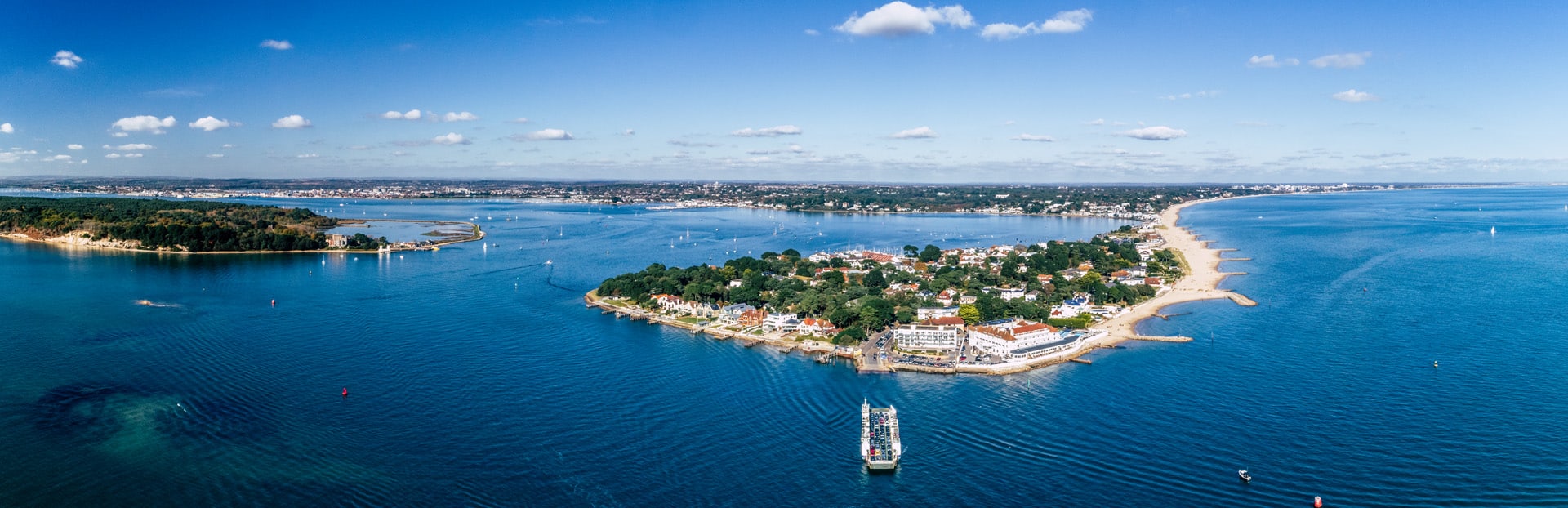
Poole is a coastal town in Dorset, in South West England. Average sold prices across Bournemouth, Christchurch and Poole sit at £308,248 on the HM Land Registry House Price Index, 6.3% above the England average of £289,946 and 2.5% above the South West regional average of £300,849. That puts Poole in the small group of locations in this series where homes change hands for more than the national benchmark, not less. The figure is held up by the harbour: BH13 covers Sandbanks and Canford Cliffs, among the most expensive postcodes in the country, where asking prices average £805,486. The local authority's population grew 5.6% between the 2011 and 2021 censuses, from 378,900 to 400,200 residents.
Poole is a capital-value market before it is a yield market, and the two pull in different directions across its eight postcodes. The premium runs from Sandbanks inland, so the highest yields sit with the cheaper, more workmanlike postcodes rather than the waterfront ones. BH15 (Town Centre, Hamworthy) leads on yield at 4.6% with an asking price of £325,817, while BH12 (Upper Parkstone, Newtown) is the cheapest way in at £324,234. At the other end, BH13's £805,486 buys a 2.7% yield. For an income investor, the question in Poole is not where the prestige is, it is where the rent keeps pace with the price.
This guide covers the unitary authority of Bournemouth, Christchurch and Poole (ONS code E06000058) across the eight Poole postcodes BH12, BH13, BH14, BH15, BH16, BH17, BH18, and BH21. Poole sits on the Dorset coast in South West England, on one of the largest natural harbours in the world. Neighbouring Bournemouth shares the same unitary authority and the same Land Registry data area. The wider region is covered in our top buy-to-let locations ranking.
Article updated: July 2026
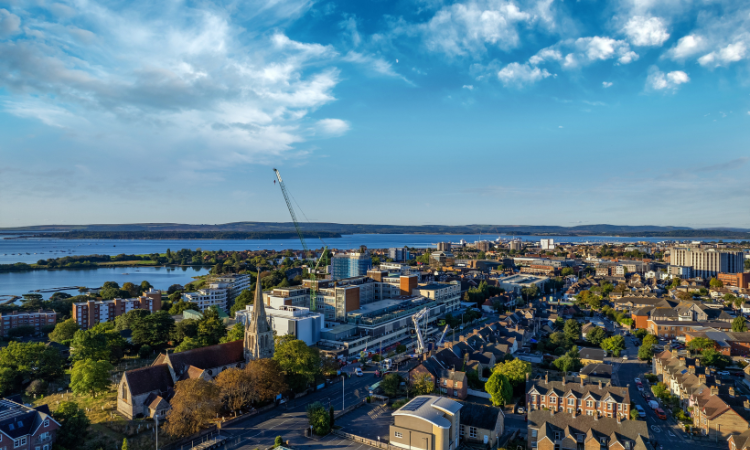
Why Invest in Poole?
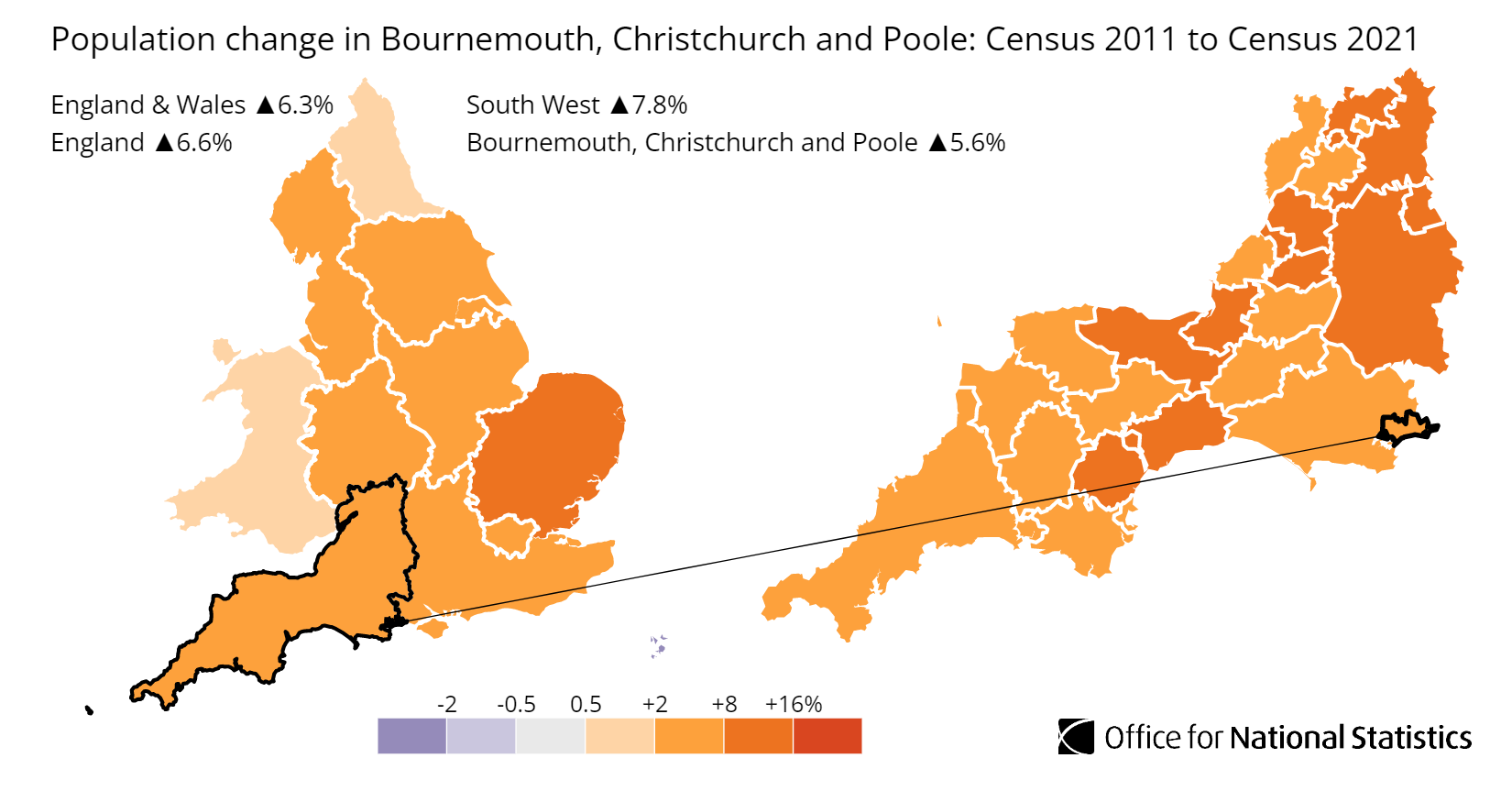
Bournemouth, Christchurch and Poole, the local authority Poole sits within, grew its population 5.6% between the 2011 and 2021 censuses, from 378,900 to 400,200 residents. That is broadly in line with the England and Wales average of 6.3%, the steady growth of an established coastal conurbation rather than a fast-expanding city. Poole's draw is its harbour, its beaches and its position at the eastern end of the Jurassic Coast, which underpins both year-round residents and a tourism economy.
The local economy is built around financial services, marine engineering, advanced manufacturing and tourism, with the marine sector long anchored to the harbour itself. Bournemouth University and Arts University Bournemouth sit within the wider conurbation and feed a student population that supports rental demand across the BH postcodes, though the campuses sit closer to Bournemouth than to central Poole.
Median gross annual earnings across Bournemouth, Christchurch and Poole are £37,493, which is fractionally below the South West regional median of £37,544 and 4.2% below the Great Britain median of £39,125. The employment rate is 77.9%, above both the South West average and Great Britain's. The earnings picture matters for an investor because it sets the gap between local wages and coastal property values, a gap that runs wider in Poole than in most of the markets in this series.
Poole Economic Summary
- Population (Bournemouth, Christchurch and Poole): 400,200 (2021 Census). Growth of 5.6% from 2011.
- Median annual salary: £37,493 (local), £37,544 (South West), £39,125 (Great Britain)
- Employment rate: 77.9% (local), 76.0% (South West), 75.4% (Great Britain)
- Unemployment rate: 5.2% (local)
- Key employment sectors: Financial services, marine engineering, advanced manufacturing, tourism, higher education
Source: ONS Census 2021, Nomis Labour Market Profile (ASHE 2025, Employment Oct 2024-Sep 2025)
Regeneration and Investment in Poole
More than 1,100 confirmed new homes are planned across two major waterfront schemes in Poole, alongside a heritage-led programme to bring the town centre's listed buildings back into use. The investment is concentrated on the harbour edge and the High Street, where former industrial and surface-car-park land is being turned over to housing.
- Holes Bay Regeneration (Funding secured, £5 million Local Growth Fund): A 40-acre brownfield site on Poole Harbour at Hamworthy, the former power station land, bought by BCP Council with a £5 million Local Growth Fund investment from the Dorset Local Enterprise Partnership. The scheme is planned to deliver up to 830 new homes alongside employment and commercial space in BH15. Updates at BCP Council.
- West Quay Marina (Planning approved, £69 million): A waterfront residential scheme at West Quay Road delivering 291 one, two and three-bedroom apartments across five blocks in BH15, backed by a £69 million loan from Octopus Real Estate and Sirius Property Finance and developed by London Land Group. The blocks replace a surface car park on the harbour edge. Updates at London Land Group.
- Poole High Street Heritage Action Zone (In progress): A programme led by BCP Council with Historic England to repair listed buildings, restore shopfronts and improve the public realm along a High Street that sits on Historic England's At Risk register. The work includes restoring the 15th-century Scaplen's Court and lifting footfall in a town centre struggling with vacancy. Updates at BCP Council.
Source: Office for National Statistics - Population for Bournemouth, Christchurch and Poole
Poole Property Market Analysis
Average property prices across Bournemouth, Christchurch and Poole have risen 455.8% since January 1995, from £55,465 to £308,248. The sections below trace that path through the boom, the 2008 crash and the pandemic surge, then drill into postcode-level data for Poole's sold prices, price per square foot, asking prices, growth, transaction volumes and selling times.
When was the last house price crash in Poole?
Poole's sold prices are recorded by HM Land Registry at the level of the Bournemouth, Christchurch and Poole unitary authority, so the cycle below is the whole BCP area, not Poole alone. The index runs from January 1995 to the latest reading in March 2026, covering 31 years of the market.
The 1995 to 2007 boom: BCP started at £55,465 in January 1995. Prices passed £100,000 by July 2000 and £150,000 by December 2002, a period of double-digit annual growth as low rates and strong coastal demand fed the market. The run peaked at £223,171 in November 2007, four times the 1995 level in twelve years.
2008 to 2009, the financial crisis: Prices fell from the November 2007 peak of £223,171 to a trough of £179,039 in April 2009, a decline of 19.8% over 17 months. The worst year-on-year reading was -17.4% in March 2009. That was a steeper fall than England's and the wider South West's, which is the usual pattern for a higher-value coastal market: more of the price sits in discretionary, lifestyle-driven demand that pulls back hardest when credit tightens.
The 2010 to 2013 stagnation: Prices bounced off the trough to £195,201 by January 2010, then went sideways. By January 2013 the average was £198,590, barely moved in three years. BCP spent that stretch unable to push back towards its pre-crash level.
Recovery, 2014: The average first cleared the November 2007 peak in June 2014, reaching £224,321. That recovery took six and a half years from the April 2009 trough, a slow climb shaped by the long stagnation phase. Prices then moved up steadily, reaching £246,749 by January 2016 and £280,099 by January 2019 as coastal lifestyle demand and a shortage of stock did the work.
2020 to 2022, the pandemic surge: Poole was exactly the kind of market the pandemic favoured: coast, space and harbour. After a brief dip to £274,812 in January 2020, prices climbed hard through the stamp duty holiday and the move-to-the-coast trend, reaching £308,509 by December 2021 and an all-time high of £345,134 in December 2022. That is a 25.6% gain in three years.
2023 to present, the rate-shock easing: Higher mortgage rates then took the heat out of the top of the market. From the December 2022 high of £345,134, prices fell to £318,322 by December 2023 and have drifted to £308,248 by March 2026, a 10.7% easing from the peak. The current level is back to where BCP sat in early 2021. The pullback is sharpest in the premium postcodes, where the pandemic gains were largest.
Long-term growth summary:
- 5 years (March 2021 to March 2026): 5.9% growth (£290,969 to £308,248)
- 10 years (March 2016 to March 2026): 24.8% growth (£246,904 to £308,248)
- 15 years (March 2011 to March 2026): 54.2% growth (£199,880 to £308,248)
- 20 years (March 2006 to March 2026): 59.8% growth (£192,943 to £308,248)
- 30 years (January 1995 to March 2026): 455.8% growth (£55,465 to £308,248)
Poole's 19.8% crash was deeper than the national average, and its five-year growth of 5.9% is modest because the index is still working off the December 2022 peak. The longer numbers tell the durable story: a 455.8% return over 31 years, with the recovery from 2008 slower than England's because of the long 2010 to 2013 stall. An investor who bought at the exact November 2007 peak would be sitting on a 38.1% gain on the Land Registry average today.
- All property types
- Detached
- Semi-detached
- Terraced
- Flats
- All property types
- Detached
- Semi-detached
- Terraced
- Flats
Sold House Prices in Poole
The average sold price across all property types in Bournemouth, Christchurch and Poole is £308,248, which is 6.3% above the England average of £289,946 as of March 2026. Three of the four property types carry a premium over England, and only flats sit below it. That split says something about the housing the coast produces: the houses are scarcer and more sought-after than the national stock, while the flat market includes a large share of coastal and retirement blocks that drag the average down.
| Property Type | Bournemouth, Christchurch and Poole Average | England Average | Difference |
|---|---|---|---|
| Detached houses | £548,436 | £470,492 | +16.6% |
| Semi-detached houses | £353,952 | £288,185 | +22.8% |
| Terraced houses | £290,752 | £243,788 | +19.3% |
| Flats and maisonettes | £195,372 | £214,563 | -8.9% |
| All property types | £308,248 | £289,946 | +6.3% |
Detached houses at £548,436 sit 16.6% above England's £470,492. This is the figure the Sandbanks and Canford Cliffs market lifts hardest: BH13's waterfront detached stock is some of the priciest in the country, and it pulls the whole-area average up even though detached homes in BH15 or BH17 transact far lower. Annual change of -0.1% shows the detached market has steadied after the pandemic-era surge.
Semi-detached houses carry the largest premium of any type at 22.8% above England, £353,952 against £288,185. Semi-detached stock is relatively scarce in a coastal market dominated by detached homes and flats, and the 1930s suburban semis around Parkstone and Penn Hill command a premium for their size and location. Annual change of +0.3% makes this the only type still gaining, marginally.
Terraced houses at £290,752 are 19.3% above England's £243,788. The Victorian and Edwardian terraces around Poole town centre and Upper Parkstone make up the bulk of this stock, and it is the type that feeds most directly into the BH15 and BH12 rental market where yields are strongest. Annual change of -0.6% leaves terraced prices broadly flat.
Flats and maisonettes at £195,372 are the only type below England, sitting 8.9% under the national £214,563. Poole's flat stock blends ex-holiday lets, retirement-oriented coastal blocks and town-centre apartments, a mix that prices below the national flat average. Annual change of -5.0% is the steepest fall of any type, the part of the market still adjusting hardest to higher borrowing costs.
Price Per Square Foot in Poole
Just £78 per square foot separates Poole's cheapest postcode from its most expensive, with BH12 at £349 and BH13 at £427. Measuring by the square foot controls for how big the homes are, so it compares the postcodes on location value rather than house size. The surprise is how narrow the spread is: Sandbanks commands a premium on floor space, but a far smaller one than its headline asking prices suggest, because so much of BH13's price is land and waterfront rather than internal space.
| Rank | Area | Price Per Sq Ft |
|---|---|---|
| 1 | BH12 (Upper Parkstone, Newtown) | £349 |
| 2 | BH15 (Town Centre, Hamworthy) | £358 |
| 3 | BH16 (Upton, Turlin Moor) | £377 |
| 4 | BH17 (Canford Heath, Creekmoor) | £394 |
| 5 | BH21 (Wimborne Minster) | £408 |
| 6 | BH14 (Lower Parkstone, Penn Hill) | £414 |
| 7 | BH18 (Broadstone) | £417 |
| 8 | BH13 (Canford Cliffs, Sandbanks) | £427 |
BH12 at £349 per square foot is the cheapest floor space in Poole, based on 614 transactions analysed. Upper Parkstone and Newtown sit inland of the harbour, with terraced and semi-detached stock that gives an investor the most internal space for the money. It is also one of the two top-yielding postcodes, so cheap space and solid rent line up here.
BH13 at £427 per square foot tops the table, but the gap to the cheapest is only 22%, far narrower than the gulf in asking prices. Sandbanks and Canford Cliffs buyers pay for the address, the harbour frontage and the plot far more than for the square footage inside, which is why a £805,486 average asking price translates into a per-foot premium that is real but modest. All 198 transactions analysed in BH13 sit at the top of the per-foot range.
For Sale Asking Prices in Poole
BH12 at £324,234 and BH13 at £805,486 sit 148.4% apart, the widest asking-price gap of any location in this series. That spread is the defining feature of Poole: a cluster of accessible postcodes around £325,000 and a premium tier that runs into seven figures. The mean asking price across all eight postcodes is £464,728, but the mean hides the split. There is very little middle ground.
| Rank | Area | Asking Price |
|---|---|---|
| 1 | BH12 (Upper Parkstone, Newtown) | £324,234 |
| 2 | BH15 (Town Centre, Hamworthy) | £325,817 |
| 3 | BH17 (Canford Heath, Creekmoor) | £330,791 |
| 4 | BH16 (Upton, Turlin Moor) | £369,479 |
| 5 | BH18 (Broadstone) | £491,032 |
| 6 | BH21 (Wimborne Minster) | £502,315 |
| 7 | BH14 (Lower Parkstone, Penn Hill) | £568,670 |
| 8 | BH13 (Canford Cliffs, Sandbanks) | £805,486 |
BH12, BH15 and BH17 cluster within £6,557 of each other at the foot of the table, between £324,234 and £330,791. These three are Poole's accessible entry points, the postcodes where a buy-to-let purchase is within reach of a typical investor budget and where the rental data is strongest. The step up to BH16 at £369,479 is the first real gap, and from there the table climbs steeply.
BH13's £805,486 asking price is the kind of number you rarely see at postcode level. To put it in context, that is more than two and a half times the cost of BH12, in the same town. Sandbanks and Canford Cliffs are premium owner-occupier and second-home territory, where the buyer pool is national and international rather than local, and where the rental yield data later in this guide confirms that the price runs well ahead of the rent.
House Price Growth in Poole
Only one Poole postcode posted positive growth across all three timeframes: BH15 at 2.3% (one-year), 1.6% (three-year) and 7.2% (five-year). Six of the eight postcodes delivered positive five-year returns, but BH13 stands apart with a 20.8% five-year decline. The pattern is the reverse of the usual one: the affordable postcodes have held value while the premium waterfront has corrected hardest.
| Area | 1 Year | 3 Years | 5 Years |
|---|---|---|---|
| BH18 (Broadstone) | 5.8% | -2.7% | 19.0% |
| BH12 (Upper Parkstone, Newtown) | 0.3% | -3.6% | 14.6% |
| BH17 (Canford Heath, Creekmoor) | 0.0% | -6.2% | 13.4% |
| BH16 (Upton, Turlin Moor) | 0.7% | -6.9% | 9.2% |
| BH15 (Town Centre, Hamworthy) | 2.3% | 1.6% | 7.2% |
| BH21 (Wimborne Minster) | -3.4% | -6.3% | 6.3% |
| BH14 (Lower Parkstone, Penn Hill) | 8.1% | -0.5% | 1.5% |
| BH13 (Canford Cliffs, Sandbanks) | -15.5% | -27.1% | -20.8% |
BH18 at 19.0% has the strongest five-year return in Poole, with Broadstone's detached-dominated stock holding up well, though its -2.7% three-year reading shows it gave some of the pandemic gain back. BH15 is the steadier story: it is the only postcode positive across all three timeframes, with the town-centre and Hamworthy market grinding out gains rather than spiking and falling.
BH14 swung to +8.1% over the past year after a flat medium-term run, with Lower Parkstone and Penn Hill rebounding off a softer base. The contrast at the bottom is stark: BH13 fell 15.5% in the last year and 20.8% over five, the clearest example anywhere in this series of a premium postcode unwinding its pandemic surge. That correction is specific to the ultra-prime waterfront and does not read across to Poole's seven other postcodes.
Monthly Property Sales in Poole
Exit liquidity varies sharply across Poole, with monthly sales running from 6 in BH13 to 41 in BH21 and turnover from 2% to 24%. The premium postcodes are the thin ones: BH13 sees just 6 sales a month at a 2% turnover rate, while the affordable core moves far more freely. For a buy-to-let investor, the volume tells you how easily you can sell again when the time comes.
| Area | Sales Per Month | Turnover | Asking Price |
|---|---|---|---|
| BH21 (Wimborne Minster) | 41 | 7% | £502,315 |
| BH12 (Upper Parkstone, Newtown) | 36 | 13% | £324,234 |
| BH15 (Town Centre, Hamworthy) | 33 | 8% | £325,817 |
| BH17 (Canford Heath, Creekmoor) | 28 | 24% | £330,791 |
| BH14 (Lower Parkstone, Penn Hill) | 25 | 4% | £568,670 |
| BH18 (Broadstone) | 15 | 15% | £491,032 |
| BH16 (Upton, Turlin Moor) | 13 | 10% | £369,479 |
| BH13 (Canford Cliffs, Sandbanks) | 6 | 2% | £805,486 |
BH17's 24% turnover rate is the highest in Poole, well clear of the rest, meaning a large share of Canford Heath and Creekmoor homes change hands each year. That is the liquidity signal an income investor wants: a market where stock moves and a resale does not sit indefinitely. BH21 records the most transactions at 41 a month, but on a much larger and more expensive stock, so its turnover rate is only 7%.
BH13 sits at the other extreme, with 6 sales a month and a 2% turnover rate. A Sandbanks property is a slow asset to move: the buyer pool is small, the prices are large, and a sale can take many months to find the right buyer. That illiquidity is part of the trade-off in the premium postcodes, alongside the low yields.
How Long Properties Take to Sell in Poole
Selling speed splits Poole the same way price does: BH17 (Canford Heath, Creekmoor) clears fastest at about 145 days, while BH13 (Canford Cliffs, Sandbanks) sits for roughly 1,521 days. Days on market is the typical time a home is listed before it sells, and months of unsold stock shows how much for-sale supply is queued at the current rate of sales. The affordable postcodes move; the premium ones do not.
| Area | Avg Days to Sell | Months of Unsold Stock | Market |
|---|---|---|---|
| BH17 (Canford Heath, Creekmoor) | 145 | 4.8 | Seller's market |
| BH18 (Broadstone) | 179 | 5.9 | Seller's market |
| BH12 (Upper Parkstone, Newtown) | 277 | 9.1 | Balanced market |
| BH15 (Town Centre, Hamworthy) | 380 | 12.5 | Buyer's market |
| BH16 (Upton, Turlin Moor) | 380 | 12.5 | Buyer's market |
| BH21 (Wimborne Minster) | 435 | 14.3 | Buyer's market |
| BH14 (Lower Parkstone, Penn Hill) | 761 | 25.0 | Buyer's market |
| BH13 (Canford Cliffs, Sandbanks) | 1521 | 50.0 | Buyer's market |
How long your money is tied up at the end is the half of the return a yield figure never shows, and in Poole it ranges from four months to over four years. BH17 at 4.8 months of unsold stock is the quickest exit in the town, which fits its high turnover rate and the steady demand for Canford Heath family homes. The number to weigh carefully is BH13's: at 50 months of unsold stock, a Sandbanks property can take years to sell, so the low yield comes attached to genuine illiquidity. The premium postcodes ask you to hold for capital, not income, and to accept that getting out is slow.
What Type of Property Can You Buy in Poole?
Detached homes are the largest single category in six of Poole's eight postcodes, from 28.4% of stock in BH15 up to 78.6% in BH18, while flats and terraces concentrate in the town-centre and harbour postcodes. The mix shapes which strategy fits where, and Poole's spread is unusually wide. The figures below are drawn from 2021 Census records for each postcode.
| Area | Detached | Semi-detached | Terraced | Flats |
|---|---|---|---|---|
| BH12 (Upper Parkstone, Newtown) | 41.6% | 29.5% | 8.5% | 20.0% |
| BH13 (Canford Cliffs, Sandbanks) | 47.6% | 2.5% | 3.2% | 46.6% |
| BH14 (Lower Parkstone, Penn Hill) | 53.1% | 10.5% | 4.8% | 31.6% |
| BH15 (Town Centre, Hamworthy) | 28.4% | 18.4% | 22.1% | 31.1% |
| BH16 (Upton, Turlin Moor) | 52.5% | 15.8% | 6.8% | 8.1% |
| BH17 (Canford Heath, Creekmoor) | 51.4% | 25.1% | 10.6% | 12.6% |
| BH18 (Broadstone) | 78.6% | 10.3% | 3.2% | 7.9% |
| BH21 (Wimborne Minster) | 59.8% | 26.7% | 7.4% | 4.4% |
BH15 holds the most balanced mix and the most rental-friendly stock, with 22.1% terraced and 31.1% flats, the highest combined share of the smaller-unit housing that typically drives buy-to-let. That lines up with BH15 leading the town on yield: town-centre and Hamworthy flats and terraces suit single lets and sharers, and the price points are the lowest in Poole. BH12 is the next most rental-oriented, with a fifth of its stock in flats.
BH18 is the most detached-dominated postcode at 78.6%, with the smallest share of flats and terraces. Broadstone is owner-occupier family territory, which matches its high asking prices and its low-yield, higher-value profile. BH13's mix is its own story: nearly half detached, nearly half flats, and almost no semis or terraces, the signature of a waterfront market built on large houses and apartment blocks with little in between.
Flats combine purpose-built and converted units, and a small share of mobile and temporary dwellings is not shown, so rows may not total 100%.
Poole Rental Market Analysis
Monthly rents in Poole range from £1,122 in BH16 to £1,830 in BH13, with gross rental yields running from 2.7% to 4.6% across the six postcodes that carry rental data. For investors weighing whether buy to let is worth it in Poole, the sections below break down rents, yields and tenant affordability postcode by postcode. If you are working out how to build a property portfolio on the South Coast, Poole's lesson is that the rent and the price part company in the premium postcodes, so the income sits in the affordable core. Browse current buy-to-let homes for sale across the region.
Average Rent & Gross Rental Yields in Poole
Gross rental yields in Poole top out at 4.6% in BH15 (Town Centre, Hamworthy) and bottom out at 2.7% in BH13 and BH14. The highest yields cluster in the sub-£370,000 postcodes, where rents hold up against modest asking prices. In the premium postcodes the rent is higher in cash terms but a far smaller share of the price, so the return compresses. Two postcodes, BH17 and BH18, do not carry enough rental listings to publish a reliable yield.
| Area | Average Monthly Rent | Asking Price | Gross Yield |
|---|---|---|---|
| BH15 (Town Centre, Hamworthy) | £1,258 | £325,817 | 4.6% |
| BH12 (Upper Parkstone, Newtown) | £1,196 | £324,234 | 4.4% |
| BH21 (Wimborne Minster) | £1,548 | £502,315 | 3.7% |
| BH16 (Upton, Turlin Moor) | £1,122 | £369,479 | 3.6% |
| BH13 (Canford Cliffs, Sandbanks) | £1,830 | £805,486 | 2.7% |
| BH14 (Lower Parkstone, Penn Hill) | £1,259 | £568,670 | 2.7% |
| BH17 (Canford Heath, Creekmoor) | Not enough data | £330,791 | Not enough data |
| BH18 (Broadstone) | Not enough data | £491,032 | Not enough data |
BH15 at 4.6% pairs the second-lowest asking price in Poole with a £1,258 monthly rent to produce the town's top yield. A 30% deposit of £97,745 buys into the postcode with the most rental-friendly stock, the highest sales volume in the affordable tier and the Holes Bay and West Quay regeneration on its doorstep. It is the closest thing Poole has to a balanced income-and-prospects postcode.
BH12 follows at 4.4% on the cheapest asking price in the town, £324,234, and £1,196 a month in rent. BH13 and BH14 share the bottom of the table at 2.7%: BH13 charges the highest rent in Poole at £1,830 a month, but against an £805,486 asking price that rent barely registers as a return, and BH14's Lower Parkstone stock sits in the same low-yield band. In the premium postcodes the price does far more for the prestige than for the income.
Gross Rental Yield by Postcode
Is Poole Rent High?
Monthly rents in Poole consume between 35.9% and 58.6% of the local median gross monthly salary. The widely cited threshold for rent affordability is 30% of gross income, and every Poole postcode with rental data sits above it. That is the structural gap between coastal property values and local wages: the homes price as a national lifestyle market while the tenant base earns a Dorset wage.
The median gross weekly salary across Bournemouth, Christchurch and Poole is £721, which equates to £3,124 per month or £37,493 per year. This sits just below the South West regional median of £722 per week and the Great Britain median of £752.40 per week. Data from the Nomis Labour Market Profile (ASHE 2025).
| Rank | Area | Rent as % of Income |
|---|---|---|
| 1 | BH13 (Canford Cliffs, Sandbanks) | 58.6% |
| 2 | BH21 (Wimborne Minster) | 49.5% |
| 3 | BH14 (Lower Parkstone, Penn Hill) | 40.3% |
| 4 | BH15 (Town Centre, Hamworthy) | 40.3% |
| 5 | BH12 (Upper Parkstone, Newtown) | 38.3% |
| 6 | BH16 (Upton, Turlin Moor) | 35.9% |
| - | BH17 (Canford Heath, Creekmoor) | Not enough data |
| - | BH18 (Broadstone) | Not enough data |
BH16 at 35.9% is the most affordable postcode for tenants relative to local income, with Upton and Turlin Moor's £1,122 rent the lowest in Poole. Lower rent-to-income ratios tend to correlate with steadier tenancies and fewer arrears, because tenants who are not stretched stay put. The affordable core, BH16, BH12 and BH15, all sit between 36% and 41%.
BH13's 58.6% is the least affordable on paper, but the benchmark misreads the postcode. Tenants renting in Sandbanks and Canford Cliffs are not earning the local median salary; they are higher earners or dual-income households for whom the area median is the wrong reference point. The ratio flags the gap, but the tenant base in BH13 is fundamentally different from the rest of Poole.
How Big Is Poole's Private Rented Sector?
The private rented sector is deepest in BH21 and BH15, where it accounts for 27.5% and 27.1% of households, and shallowest in BH18 at 7.2%. The share of homes already let privately is a guide to how established the local tenant market is, and in Poole it tracks the strategy split: the rental-heavy postcodes are the affordable, town-and-suburb ones, not the premium waterfront. The table shows household tenure by postcode.
| Area | Owned Outright | Owned with Mortgage | Private Rented | Social Rented |
|---|---|---|---|---|
| BH21 (Wimborne Minster) | 40.5% | 24.0% | 27.5% | 7.6% |
| BH15 (Town Centre, Hamworthy) | 32.3% | 24.0% | 27.1% | 15.2% |
| BH12 (Upper Parkstone, Newtown) | 32.8% | 34.2% | 19.1% | 13.0% |
| BH14 (Lower Parkstone, Penn Hill) | 44.4% | 32.1% | 19.0% | 4.1% |
| BH13 (Canford Cliffs, Sandbanks) | 55.5% | 23.4% | 18.8% | 2.0% |
| BH16 (Upton, Turlin Moor) | 57.8% | 23.4% | 14.1% | 4.2% |
| BH17 (Canford Heath, Creekmoor) | 40.8% | 35.7% | 13.5% | 9.4% |
| BH18 (Broadstone) | 56.6% | 31.8% | 7.2% | 4.1% |
BH15 and BH21 have the largest private rented sectors in Poole, both above a quarter of households, which points to an active, tested lettings market with a deep pool of existing tenants. BH15 pairs that with the town's top yield and its most rental-friendly stock, the combination an income investor wants. BH18 sits at the other end, with just 7.2% privately rented and 56.6% owned outright, a settled owner-occupier postcode where the lettings market is thin.
Among the postcodes with enough rental listings to read the market directly, the balance currently favours landlords. BH12, BH14 and BH15 each show a landlord's market on the rental-demand measure, with homes letting in roughly 38 to 63 days, which points to steady tenant demand rather than a glut of empty stock. The remaining postcodes carry too few rental listings at any one time to read with confidence.
Local Housing Allowance Rates in Poole
All eight Poole postcodes fall within the Bournemouth Broad Rental Market Area, where Local Housing Allowance runs from £98.11 a week for a shared room to £356.71 a week for a four-bedroom home. The LHA rate caps the housing benefit a tenant can receive, which in practice sets a rent floor for a landlord letting to that part of the market. The rates below apply across the whole of Poole. To check the current rate for a specific address, you can use the government's official Local Housing Allowance calculator.
| Property Size | Weekly LHA Rate | Monthly Equivalent |
|---|---|---|
| Shared accommodation | £98.11 | £425 |
| 1 bedroom | £159.95 | £693 |
| 2 bedrooms | £201.37 | £872 |
| 3 bedrooms | £264.66 | £1,147 |
| 4 bedrooms | £356.71 | £1,546 |
The two-bedroom LHA rate of £201.37 a week works out at about £872 a month, below Poole's £1,122 to £1,830 open-market rents. A benefit-backed tenancy at the LHA rate therefore sits under the open market across every Poole postcode, and the stock that fits within these rates is concentrated in the affordable BH15 and BH12 areas where asking prices and rents are lowest. The rates are identical across all eight postcodes because they are set once for the whole Bournemouth market area.
Buy-to-Let Considerations
Are House Prices High in Poole? Price-to-Earnings Ratios
Purchasing a property in Poole requires between 8.6 and 21.5 times the median annual salary. This is based on the Nomis Labour Market Profile showing the median gross annual income across Bournemouth, Christchurch and Poole is £37,493.
The national benchmark for price-to-earnings is 7.4x (England's average sold price of £289,946 divided by the Great Britain median annual salary of £39,125). Every Poole postcode sits above that benchmark, even the cheapest, which tells you the whole town is expensive relative to local incomes. That is the Dorset coast in a number: property values that run ahead of local wages at every price tier.
| Rank | Area | Price-to-Earnings Ratio |
|---|---|---|
| 1 | BH12 (Upper Parkstone, Newtown) | 8.6x |
| 2 | BH15 (Town Centre, Hamworthy) | 8.7x |
| 3 | BH17 (Canford Heath, Creekmoor) | 8.8x |
| 4 | BH16 (Upton, Turlin Moor) | 9.9x |
| 5 | BH18 (Broadstone) | 13.1x |
| 6 | BH21 (Wimborne Minster) | 13.4x |
| 7 | BH14 (Lower Parkstone, Penn Hill) | 15.2x |
| 8 | BH13 (Canford Cliffs, Sandbanks) | 21.5x |
BH12 at 8.6x is the most affordable entry in Poole relative to local earnings, with Upper Parkstone and Newtown sitting closest to the national benchmark. The four affordable postcodes, BH12, BH15, BH17 and BH16, cluster between 8.6x and 9.9x, around 16% to 34% above the national figure. They are expensive by national standards but reachable.
BH13 at 21.5x sits in a different league, nearly three times the national benchmark. At more than twenty times the local median salary, a Sandbanks home is bought by national and international buyers and second-home owners, not local earners. For an investor, that ratio is the clearest signal that BH13 is a capital play, with the yield and the liquidity data both confirming it.
Deposit Requirements in Poole
A 30% deposit on a buy-to-let property in Poole ranges from £97,270 in BH12 to £241,646 in BH13. Budget 30% down, which is £97,270 to £241,646 across the postcodes depending on which tier you buy into. The gap between the cheapest and most expensive deposit is £144,376, more than the entire deposit on a BH12 home. The two-tier split that runs through every Poole table shows up here in the clearest terms.
Beyond the deposit, the stamp duty calculation and other buy-to-let running costs add to the total capital required.
| Rank | Area | 30% Deposit Required |
|---|---|---|
| 1 | BH12 (Upper Parkstone, Newtown) | £97,270 |
| 2 | BH15 (Town Centre, Hamworthy) | £97,745 |
| 3 | BH17 (Canford Heath, Creekmoor) | £99,237 |
| 4 | BH16 (Upton, Turlin Moor) | £110,844 |
| 5 | BH18 (Broadstone) | £147,310 |
| 6 | BH21 (Wimborne Minster) | £150,695 |
| 7 | BH14 (Lower Parkstone, Penn Hill) | £170,601 |
| 8 | BH13 (Canford Cliffs, Sandbanks) | £241,646 |
The first three postcodes sit within £1,967 of each other: BH12 at £97,270, BH15 at £97,745 and BH17 at £99,237, all under £100,000. For an investor with that capital, the choice between them comes down to what each leads on. BH15 carries the top yield at 4.6% and the regeneration pipeline; BH12 is the cheapest with the lowest cost per square foot; BH17 has the fastest exit and the highest turnover. Near-identical deposit, three different cases.
The step up to the premium tier is steep. BH13's £241,646 deposit is two and a half times BH12's, and it buys into the postcode with the lowest yield and the slowest sale in Poole. The deposit table is the cleanest summary of the town's choice: the income postcodes sit under £100,000, the premium ones run well past £150,000, and there is almost nothing in between.
What the Poole Data Tells Buy-to-Let Investors
In Poole the income sits in the affordable core, not on the waterfront. BH15 (Town Centre, Hamworthy) carries the top yield at 4.6% on a £325,817 asking price, with the most rental-friendly stock in the town and the Holes Bay and West Quay regeneration on its doorstep. A 30% deposit of £97,745 buys a home renting at £1,258 a month, in a postcode where 27.1% of households already rent privately. For buying an investment property for income, this is Poole's lead postcode.
BH12 (Upper Parkstone, Newtown) is the cheapest way in at £324,234 and the second-highest yield at 4.4%, with the lowest cost per square foot at £349 and a 14.6% return over five years, the most balanced entry on the data. BH17 (Canford Heath, Creekmoor) does not carry a published yield, but it offers the fastest exit in Poole at around 145 days and the highest turnover at 24%, the most liquid postcode in the area, and its asking price of £330,791 keeps the entry low.
The premium postcodes ask a different question. BH13 (Canford Cliffs, Sandbanks) has fallen 20.8% over five years, yields 2.7%, and takes years to sell, so it is a capital-and-prestige play rather than an income one. BH14 (Lower Parkstone, Penn Hill) sits at the same 2.7% yield, and BH18 (Broadstone) and BH21 (Wimborne Minster) round out the higher tier. Buyers who want to come in below the asking prices in either tier often work the below market value and off-market property in Poole routes, where the value tends to move before a property is openly listed.
Poole's postcodes fall under BCP Council's licensing framework rather than a single town-wide selective licensing scheme, so an investor should check the current requirements for a specific area on BCP Council's property licensing pages before letting. With an above-average employment rate and a deep coastal lettings market, Poole reads as a steadier, lower-yield market than the high-yield cities inland: the headline returns are modest, but the demand and the long-run capital record sit underneath them.
How Poole Compares
Poole's mean asking price of £464,728 is the highest of five South West locations compared here, while its top yield of 4.6% ties with Salisbury at the bottom of the table. The comparison places Poole alongside four nearby markets, each with a different investor profile. The mean asking price and mean monthly rent are simple averages across all postcodes with data, and the top gross yield is the single highest postcode yield in each location.
| Location | Mean Asking Price | Mean Monthly Rent | Mean Gross Yield | Top Yield (postcode) |
|---|---|---|---|---|
| Bournemouth | £357,582 | £1,385 | 4.6% | 7.4% (BH9) |
| Bristol | £373,692 | £1,655 | 5.3% | 6.9% (BS7) |
| Exeter | £398,902 | £1,268 | 3.8% | 5.0% (EX1, EX4) |
| Salisbury | £437,020 | £1,304 | 3.6% | 4.6% (SP1) |
| Poole | £464,728 | £1,369 | 3.5% | 4.6% (BH15) |
Poole is the most expensive location in this comparison at £464,728 mean asking price, lifted by Sandbanks, and its 4.6% top yield ties with Salisbury at the foot of the table. Neighbouring Bournemouth shares the same BCP unitary authority and the same Land Registry data area, yet produces a very different investment profile: a mean asking price £107,146 lower than Poole's and a top yield of 7.4% that is well clear of it. Bournemouth's higher yields come from its larger stock of purpose-built flats and HMO conversions near the university campuses, the kind of rental-led stock Poole has far less of.
For investors prioritising income, Bristol at 6.9% offers the deepest and most diverse market in the group, with the highest rents at £1,655 a month. Exeter at 5.0% sits between the high-yield and premium ends, with student and professional demand around the university. Salisbury matches Poole on yield at 4.6% but comes in cheaper on price. Poole's case is not the headline yield; it is the coastal capital record and a tenant base concentrated in its affordable core. For a data-led view across every UK location, see our best places to invest in buy-to-let ranking.
Frequently Asked Questions
Is Poole a good place to invest in buy-to-let?
Poole is a capital-value market more than a yield market: average sold prices across Bournemouth, Christchurch and Poole are £308,248, about 6.3% above the England average, and the top yield is a modest 4.6% in BH15. So if income is the priority, the higher-yielding cities inland will beat it; on capital, Poole pairs a long record with steady coastal demand, with prices up 455.8% over 31 years.
The tenant base is real and year-round, helped by an employment rate of 77.9% and the draw of the harbour and beaches. The catch is affordability: rents take 36% to 59% of local median income depending on postcode, so the gap between coastal prices and Dorset wages is wide.
What are the best areas in Poole for property investment?
For income, the affordable core leads, and they sit close together on price. BH15 (Town Centre, Hamworthy) carries the top yield at 4.6% on a £325,817 asking price, with the most rental-friendly stock and the regeneration pipeline. BH12 (Upper Parkstone, Newtown) is the cheapest way in at £324,234, yields 4.4%, and has the lowest cost per square foot. BH17 (Canford Heath, Creekmoor) is the liquidity pick, with the fastest sale and highest turnover, though it does not carry a published yield.
The premium postcodes pull the other way. BH13 (Canford Cliffs, Sandbanks) is the prestige address at £805,486 but yields just 2.7% and takes years to sell, and BH14 (Lower Parkstone, Penn Hill) sits at the same low yield. So if income matters most, look at BH15 and BH12; the waterfront is a capital play, not a cash-flow one.
How does Poole compare to Bournemouth for buy-to-let?
They share the same BCP unitary authority and Land Registry data area, but they are different propositions. Bournemouth is cheaper on average, a mean asking price of £357,582 against Poole's £464,728, and yields more, with a top yield of 7.4% to Poole's 4.6%. Mean monthly rents are close: £1,385 in Bournemouth, £1,369 in Poole.
Bournemouth's yield edge comes from a larger stock of purpose-built flats and HMO conversions near its two universities, the kind of rental-led property Poole has far less of. Poole leans towards harbour-side houses and premium coastal stock, which prices for capital rather than income. For the full postcode breakdown, see our Bournemouth buy-to-let guide.
What type of property is most common in Poole?
Detached houses, in six of the eight postcodes, but the mix is unusually varied. Detached stock runs from 28.4% in BH15 up to 78.6% in BH18 (Broadstone). The smaller homes that usually suit buy-to-let, terraces and flats, concentrate in the town-centre and harbour postcodes: BH15 has the highest combined share at 22.1% terraced and 31.1% flats, which is why it leads the town on yield.
BH13 (Canford Cliffs, Sandbanks) has its own pattern, almost evenly split between detached houses (47.6%) and flats (46.6%), with barely any semis or terraces, the signature of a waterfront market built on big houses and apartment blocks.
Can I find buy-to-let property under £350,000 in Poole?
Yes, in the affordable core. Three postcodes sit under £335,000 on average: BH12 (Upper Parkstone, Newtown) at £324,234, BH15 (Town Centre, Hamworthy) at £325,817 and BH17 (Canford Heath, Creekmoor) at £330,791, with BH16 (Upton, Turlin Moor) a little higher at £369,479. These are where the rental data is strongest and the yields are highest. The other four postcodes all sit above £490,000.
By property type, the way in below the postcode averages is through flats, which sell across the BCP area for an average of £195,372, well under the all-types figure. The off-market and below market value routes are also worth working if you want to come in under the asking prices.
What happened to Poole house prices during the 2008 crash?
Prices fell 19.8% in 17 months. The average across Bournemouth, Christchurch and Poole peaked at £223,171 in November 2007 and hit a trough of £179,039 by April 2009, with the worst annual reading at -17.4% in March 2009. That was a steeper fall than England and the wider South West, the usual pattern for a higher-value coastal market where more of the price sits in discretionary, lifestyle-driven demand.
The recovery was slow. Prices did not clear the pre-crash peak again until June 2014, six and a half years from the trough, held back by a long 2010 to 2013 stagnation. The all-time high came later, at £345,134 in December 2022, before higher rates eased prices back to £308,248 by March 2026.
Are there flats to rent in Poole and what are the yields?
Six of Poole's eight postcodes carry rental data, with average monthly rents from £1,122 in BH16 (Upton, Turlin Moor) to £1,830 in BH13 (Canford Cliffs, Sandbanks). Gross yields run from 2.7% in BH13 and BH14 up to 4.6% in BH15. Flats and maisonettes across the BCP area sell for an average of £195,372, which is 8.9% below the England average, so the flat market is the one property type that prices below the national benchmark. BH17 (Canford Heath, Creekmoor) and BH18 (Broadstone) have too few rental listings to publish a reliable yield.
How do I buy an investment property in Poole?
Start by deciding whether you are buying for income or for capital, because in Poole that points you at opposite ends of the town. For income, the affordable core leads: BH15 (Town Centre, Hamworthy) at a 4.6% yield and £325,817, or BH12 (Upper Parkstone, Newtown) at 4.4% and £324,234. For capital and prestige, the premium waterfront postcodes like BH13 carry the address but a 2.7% yield. Budget for a 30% deposit, which runs from £97,270 in BH12 to £241,646 in BH13.
Beyond what is listed openly, experienced investors often buy below asking through off-market property channels and look for buy-to-let investments for sale before they reach the portals. To see what is available now, browse investment properties.
Ready to buy property?
Access off-market investment properties with an average 8%+ annual gross yield (beating the UK's typical 3-5%).
Get property alerts