
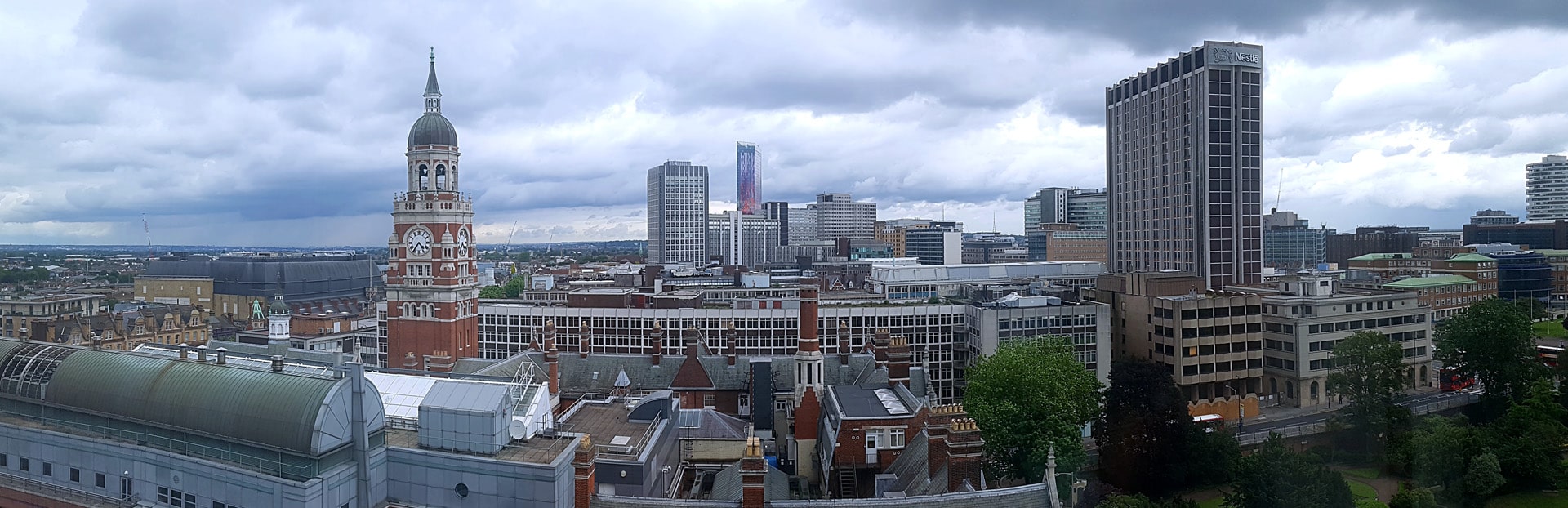
Croydon is a borough of south London. Croydon's cheapest and dearest postcodes are more than £200,000 apart, which is the real story here: the borough average tells you very little until you pick a postcode. Average monthly rents across the 13 postcodes with rental data range from £1,537 in CR3 (Caterham, Whyteleafe) to £2,123 in CR5 (Coulsdon), and asking prices span from £366,716 in CR0 (Croydon Town Centre, New Addington) to £574,310 in CR5 (Coulsdon). The cheaper, flat-heavy inner postcodes lead on yield, while the pricier southern ones trade income for space.
Croydon recorded a Land Registry average sold price of £388,821 in March 2026, which is 34.1% above the England average of £289,946 but 28.3% below the London average of £542,065. Across 13 postcodes, gross yields range from 4.0% in CR3 (Caterham, Whyteleafe) to 5.4% in SE20 (Penge).
Croydon is not one neat South London market. This guide covers all 13 postcodes within the London Borough of Croydon (ONS code: E09000008), London's most populous borough with a Census 2021 population of 390,719, and its postcode edges spill into neighbouring boroughs and into Surrey. BR3 (Beckenham) extends into Bromley, CR4 (Mitcham) crosses into Merton, SE19 (Crystal Palace) and SE20 (Penge) reach into Lewisham and Bromley, SW16 (Norbury, Streatham) extends into Lambeth, and CR3 (Caterham, Whyteleafe), CR5 (Coulsdon), and CR6 (Warlingham) include parts of Surrey. Croydon sits within the South London investment corridor and the wider London buy-to-let market.
Article updated: July 2026
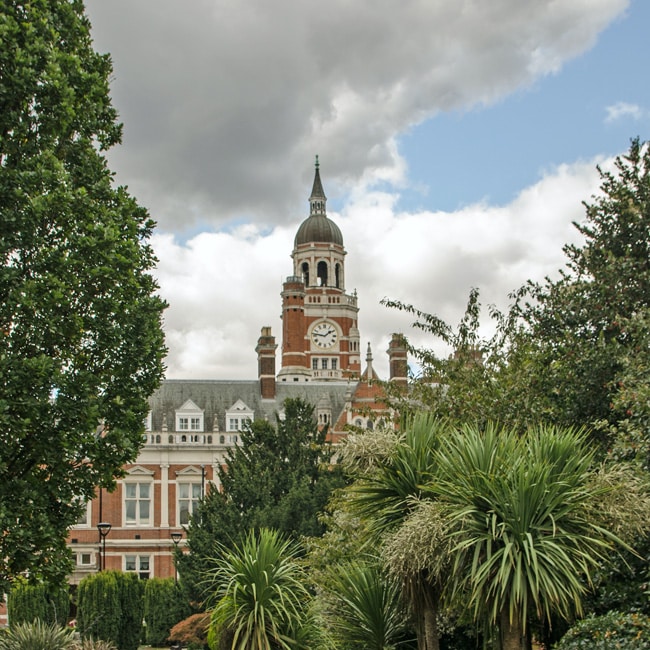
Why Invest in Croydon?
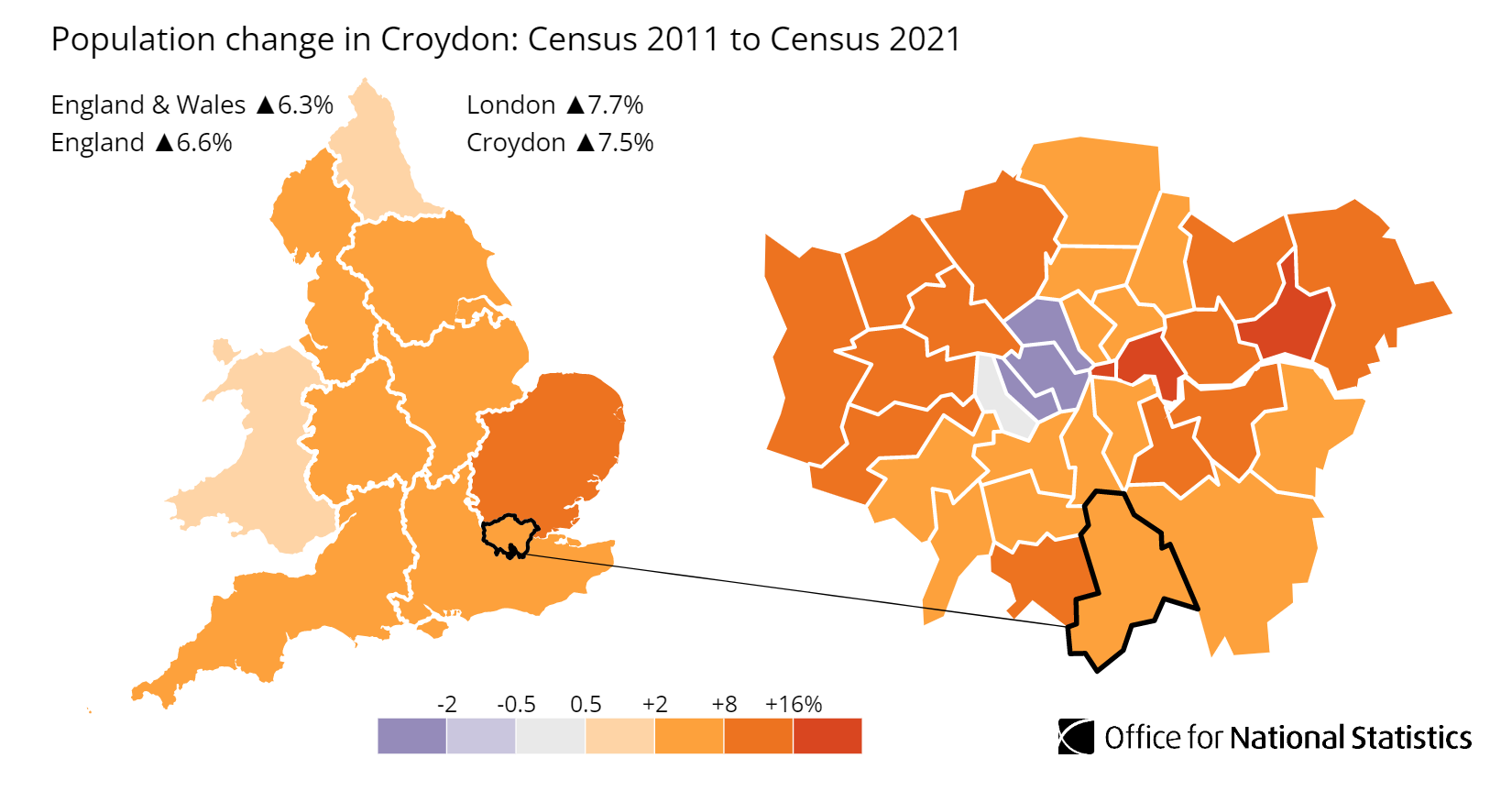
Croydon is the most populous London borough, with a Census 2021 population of 390,719, up 7.5% from 363,378 in 2011. That population base generates sustained rental demand across the borough's 13 postcodes. The borough covers approximately 86 square kilometres and stretches from Crystal Palace in the north to the Surrey border in the south.
The local economy supports a median gross annual salary of £44,326. Croydon's median gross weekly pay of £852.40 sits below the London regional median of £892.60 per week but above the Great Britain median of £752.40 per week. The employment rate stands at 74.8%. Croydon has established itself as a major office centre, described as London's largest business district outside the West End, City and Canary Wharf, with 7.9 million square feet of commercial floor space. Major employers include the Home Office, Superdrug headquarters, HMRC, and Mott MacDonald, which gives the borough a daytime working population and a tenant base that goes beyond commuters renting a bed near the station.
The borough has no London Underground stations. Transport links centre on the Tramlink network, which serves Croydon with three routes (to Wimbledon, Beckenham Junction, and Elmers End/New Addington), and the rail network at East Croydon, which is served by Southern, Thameslink, Gatwick Express and Southeastern services. London South Bank University operates a campus in Croydon, and Croydon College runs the Croydon University Centre for higher education. Croydon Health Services NHS Trust operates Croydon University Hospital.
Croydon Economic Summary
- Population: 390,719 (2021 Census). Growth of 7.5% from 2011.
- Median annual salary: £44,326 (local), London region £46,415, Great Britain £39,125
- Employment rate: 74.8% (local)
- Unemployment rate: Not available (sample size suppressed)
- Key employment sectors: Public administration, professional services, retail, healthcare
Source: ONS Census 2021, Nomis Labour Market Profile (ASHE 2025)
Regeneration and Investment in Croydon
Croydon's town centre is the focus of a £30 million initial investment programme spanning five defined areas, with several large-scale projects now in delivery or approaching planning approval. The point for a landlord is where that money lands: it is concentrated on the town-centre postcodes around CR0, already the borough's busiest sales market at 110 transactions a month, so the regeneration is pointed at the part of Croydon that is easiest to buy into and out of.
- Regina Road Redevelopment (Construction started March 2026): Up to 340 new homes including 215 council homes on a cleared site in central Croydon, with construction beginning in March 2026. The scheme delivers the borough's largest new council housing programme in a generation. Updates at Croydon Council.
- Whitgift/Centrale Masterplan (Planning application expected mid-2026): Unibail-Rodamco-Westfield's masterplan framework for the Whitgift and Centrale shopping centres has been endorsed by the council, with a planning application expected mid-2026 and no demolition before 2028. The project would reshape Croydon's retail core into a mixed-use development. Updates at Croydon Council.
- College Green and Cultural Quarter (Work began spring 2026): A new public space between Fairfield Halls and Croydon College, creating a cultural quarter at the heart of the town centre. The transformation includes improved pedestrian connections and green space. Updates at Croydon Council.
Source: Office for National Statistics - Population for Croydon
Croydon Property Market Analysis
Average sold prices in Croydon have risen 454.5% since January 1995, from £70,118 to £388,821. The sections below break down that journey cycle by cycle, then drill into current postcode-level data for sold prices, price per square foot, asking prices, growth trends, and monthly transaction volumes.
When was the last house price crash in Croydon?
Croydon's Land Registry average sold price dropped 19.6% from a pre-crash peak of £251,446 in January 2008 to a trough of £202,182 in June 2009. That 18-month decline was sharper than both the London-wide fall of 15.1% and the England decline of 14.2% over the same period. The worst annual change reading hit -17.4% in March 2009.
Croydon is a London borough, and all sold property prices from HM Land Registry are recorded at the local authority level under "Croydon."
The full cycle-by-cycle breakdown:
- 1995-2007 (The Boom): Croydon's average sold price rose from £70,118 in January 1995 to £225,781 in January 2007, a 222% increase over 12 years. Prices accelerated through the early 2000s, passing £180,348 by January 2003.
- 2008-2009 (The Financial Crisis): Prices peaked at £251,446 in January 2008 and fell to £202,182 by June 2009, a decline of 19.6%. The steepest annual fall of -17.4% was recorded in March 2009. This exceeded the London-wide decline of 15.1% and the England decline of 14.2% measured between the same dates.
- 2010-2013 (Stagnation): Prices stabilised in a narrow band between £214,837 (January 2010) and £229,888 (December 2012). The market was essentially flat for four years, with no sustained directional movement until mid-2013 when prices began to climb past £237,970 in June 2013.
- 2014-2016 (Recovery and Breakout): Prices surpassed the pre-crash peak for the first time in January 2014, reaching £252,771. Growth then accelerated sharply, with the average reaching £337,430 by January 2016, a 33.5% increase in just two years.
- 2017-2019 (Plateau): Growth slowed to single digits. Prices rose from £368,282 in January 2017 to £377,479 in January 2018, then dipped to £370,162 in January 2019. The post-referendum uncertainty and stamp duty changes weighed on the market.
- 2020-2022 (Pandemic Surge): After a brief pause at £377,674 in January 2020, prices pushed through £400,000 for the first time, reaching £402,804 in January 2022 and £408,845 by June 2022. The stamp duty holiday and the shift to home working supported demand.
- 2023 (Rate Shock): Croydon recorded its all-time high of £430,260 in January 2023 before interest rate rises pulled prices back to £400,241 by June 2023.
- 2024-2026 (Current): Prices settled at £396,690 in January 2024 and stood at £388,821 in March 2026, a year-on-year change of -3.1%. The market sits 9.6% below the January 2023 peak.
Long-term growth summary:
- 5 years (March 2021 to March 2026): -0.7% growth (£391,473 to £388,821)
- 10 years (March 2016 to March 2026): 12.1% growth (£346,784 to £388,821)
- 15 years (March 2011 to March 2026): 79.6% growth (£216,514 to £388,821)
- 20 years (March 2006 to March 2026): 83.8% growth (£211,546 to £388,821)
- 30 years (January 1995 to March 2026): 454.5% growth (£70,118 to £388,821)
Croydon's five-year change of -0.7% leaves prices marginally below where they sat in March 2021, a flat run set against the borough's longer-term climb. Much of the pandemic-era gain has unwound: the average now sits 9.6% below the January 2023 peak of £430,260, closer to mid-2021 levels. Set against a crash history that was shallower and shorter than the national one, that recent softness reads as a return to pre-rate-cycle pricing rather than a deeper correction.
- All property types
- Detached
- Semi-detached
- Terraced
- Flats
- All property types
- Detached
- Semi-detached
- Terraced
- Flats
Source: HM Land Registry House Price Index for Croydon, January 1995 to March 2026.
Sold House Prices in Croydon
Croydon's average sold price across all property types is £388,821, which is 34.1% above the England average of £289,946 as of March 2026. Detached houses average £830,859 compared with England's £470,492, while flats and maisonettes average £252,459 compared with England's £214,563.
| Property Type | Croydon Average | England Average | Difference |
|---|---|---|---|
| Detached houses | £830,859 | £470,492 | +76.6% |
| Semi-detached houses | £532,606 | £288,185 | +84.8% |
| Terraced houses | £397,545 | £243,788 | +63.1% |
| Flats and maisonettes | £252,459 | £214,563 | +17.7% |
| All property types | £388,821 | £289,946 | +34.1% |
Semi-detached houses carry the widest premium over England, at 84.8% above the national average, with detached close behind at 76.6%. A semi in Croydon averages £532,606 against England's £288,185, which prices the borough's house stock as London property rather than commuter belt. For a buy-to-let investor those house types are capital-heavy and yield-light.
Flats and maisonettes are the exception at £252,459, only 17.7% above the England flat average. That is the part of Croydon's market closest to national pricing, and it is where the borough's investable entry stock and its stronger yields concentrate. The gap between a £252,459 flat and an £830,859 detached house is the two-tier market that every postcode table below reflects.
Price Per Square Foot in Croydon
Sold prices per square foot range from £421 in CR7 (Thornton Heath) to £597 in SE19 (Crystal Palace), a spread of £176 per square foot. Price per square foot strips out the effect of property size and gives a cleaner comparison of location value.
| Rank | Area | Price Per Sq Ft |
|---|---|---|
| 1 | CR7 (Thornton Heath) | £421 |
| 2 | CR0 (Croydon Town Centre, New Addington) | £438 |
| 3 | CR3 (Caterham, Whyteleafe) | £454 |
| 4 | CR8 (Purley, Kenley) | £462 |
| 5 | CR2 (South Croydon, Selsdon) | £468 |
| 6 | CR6 (Warlingham) | £480 |
| 7 | CR5 (Coulsdon) | £482 |
| 8 | SE25 (South Norwood) | £485 |
| 9 | CR4 (Mitcham) | £504 |
| 10 | SE20 (Penge) | £552 |
| 11 | BR3 (Beckenham) | £564 |
| 12 | SW16 (Norbury, Streatham) | £571 |
| 13 | SE19 (Crystal Palace) | £597 |
CR7 (Thornton Heath) is the cheapest bricks-and-mortar in the borough at £421 per square foot, with CR0 (Croydon Town Centre, New Addington) just above at £438. Those are the two postcodes where a fixed budget buys the most floor area, and they line up with the lowest asking prices and the strongest yields later in this guide.
SE19 (Crystal Palace) tops the table at £597, 42% above CR7, with SW16 and BR3 close behind. The pricier per-foot postcodes sit on the northern and western fringes closest to inner London, where buyers pay for proximity rather than space. Price per square foot is the cleanest read on that location premium because it strips out how big the homes are.
For Sale Asking Prices in Croydon
The mean asking price across 13 postcodes is £466,187, with a £207,594 gap between the cheapest postcode (CR0 (Croydon Town Centre, New Addington) at £366,716) and the most expensive (CR5 (Coulsdon) at £574,310). Asking prices set the buying budget, and the spread below mirrors the sold-price hierarchy but stretches it wider across the borough's thirteen postcodes.
| Rank | Area | Asking Price |
|---|---|---|
| 1 | CR0 (Croydon Town Centre, New Addington) | £366,716 |
| 2 | SE25 (South Norwood) | £367,015 |
| 3 | SE20 (Penge) | £375,248 |
| 4 | CR7 (Thornton Heath) | £408,857 |
| 5 | CR4 (Mitcham) | £415,949 |
| 6 | SE19 (Crystal Palace) | £445,881 |
| 7 | CR3 (Caterham, Whyteleafe) | £464,519 |
| 8 | CR2 (South Croydon, Selsdon) | £499,232 |
| 9 | SW16 (Norbury, Streatham) | £500,968 |
| 10 | BR3 (Beckenham) | £531,603 |
| 11 | CR8 (Purley, Kenley) | £536,849 |
| 12 | CR6 (Warlingham) | £573,283 |
| 13 | CR5 (Coulsdon) | £574,310 |
CR0 (Croydon Town Centre, New Addington) and SE25 (South Norwood) are the only two postcodes asking under £400,000. That low entry, paired with the highest turnover and the strongest yields in the borough, puts them at the heart of Croydon's buy-to-let case. CR5 (Coulsdon) and CR6 (Warlingham) at the foot of the table, both above £573,000, are the Surrey-fringe postcodes where buyers pay for space and schools rather than rental return.
The £207,594 spread between top and bottom is wider than the sold-price gap, because asking prices track what is currently listed rather than what has completed. For an investor, it is the cheaper end of this table where the income strategies in the rental sections below actually stack up.
House Price Growth in Croydon
CR5 (Coulsdon) has the strongest five-year growth at 10.8%, while SE19 (Crystal Palace) has the weakest five-year reading at -0.8%. Croydon's growth is patchy by postcode, and the one-, three- and five-year columns rarely point the same way.
| Area | 1 Year | 3 Years | 5 Years |
|---|---|---|---|
| CR5 (Coulsdon) | -0.8% | 0.5% | 10.8% |
| CR7 (Thornton Heath) | 6.1% | 4.8% | 9.6% |
| BR3 (Beckenham) | -1.6% | -0.8% | 6.9% |
| CR2 (South Croydon, Selsdon) | 2.2% | 1.8% | 6.4% |
| CR6 (Warlingham) | 4.7% | 2.1% | 5.8% |
| SE25 (South Norwood) | 1.2% | 1.6% | 5.6% |
| SE20 (Penge) | 1.1% | 4.4% | 5.2% |
| CR0 (Croydon Town Centre, New Addington) | 0.9% | 1.9% | 2.5% |
| CR3 (Caterham, Whyteleafe) | 1.6% | 0.8% | 2.0% |
| CR8 (Purley, Kenley) | -1.6% | 7.6% | 2.0% |
| CR4 (Mitcham) | -3.3% | 0.9% | 0.8% |
| SW16 (Norbury, Streatham) | -1.5% | -2.2% | -0.4% |
| SE19 (Crystal Palace) | 1.2% | 7.0% | -0.8% |
CR7 (Thornton Heath) is the most consistent performer, positive across one, three and five years at 6.1%, 4.8% and 9.6%. CR5 (Coulsdon) tops the five-year column at 10.8% but is down 0.8% over the past year, so its gains are older than they look. SW16 (Norbury, Streatham) is the only postcode negative across all three windows, the softest corner of the borough.
For an income buyer the growth column matters less than yield, but it shows where capital has actually moved. The strongest five-year growth sits in the pricier south at CR5's 10.8%, while the cheapest, highest-yielding postcodes like CR0 have grown more slowly at 2.5%. That is the familiar trade-off between income today and capital tomorrow.
Monthly Property Sales in Croydon
CR0 (Croydon Town Centre, New Addington) handles 110 property sales per month, while CR6 (Warlingham) records 6. Turnover measures the percentage of housing stock that changes hands each year.
| Area | Sales Per Month | Turnover | Asking Price |
|---|---|---|---|
| CR0 (Croydon Town Centre, New Addington) | 110 | 10% | £366,716 |
| SW16 (Norbury, Streatham) | 63 | 7% | £500,968 |
| BR3 (Beckenham) | 41 | 11% | £531,603 |
| CR2 (South Croydon, Selsdon) | 41 | 9% | £499,232 |
| CR3 (Caterham, Whyteleafe) | 28 | 9% | £464,519 |
| CR8 (Purley, Kenley) | 28 | 8% | £536,849 |
| CR7 (Thornton Heath) | 26 | 8% | £408,857 |
| CR5 (Coulsdon) | 23 | 11% | £574,310 |
| SE25 (South Norwood) | 22 | 7% | £367,015 |
| SE19 (Crystal Palace) | 21 | 7% | £445,881 |
| CR4 (Mitcham) | 19 | 5% | £415,949 |
| SE20 (Penge) | 18 | 9% | £375,248 |
| CR6 (Warlingham) | 6 | 5% | £573,283 |
CR0 (Croydon Town Centre, New Addington) dominates transaction volume at 110 sales a month, more than the next two postcodes combined, on the back of its large, flat-heavy stock and its place as the borough's centre of gravity. For a landlord that depth of market means an easier entry and exit. CR6 (Warlingham) at six sales a month is the thinnest market, a Surrey-fringe village that changes hands rarely.
Turnover, the share of stock that sells each year, is steadier at 5% to 11% across the borough. BR3 (Beckenham) and CR5 (Coulsdon) turn over fastest at 11%, while CR4 (Mitcham) and CR6 are slowest at 5%. Higher turnover points to a more liquid market when the time comes to sell.
How Long Properties Take to Sell in Croydon
How long a sale takes swings hard across the borough, from about 277 days in BR3 (Beckenham) to roughly 608 days, close to two years, in CR4 (Mitcham) and CR6 (Warlingham). Days on market is the typical number of days a home in a postcode is up for sale before it sells; the months of unsold stock shows how much for-sale supply is sitting there at the current rate of sales.
| Area | Avg Days to Sell | Months of Unsold Stock | Market |
|---|---|---|---|
| BR3 (Beckenham) | 277 | 9.1 | Balanced market |
| CR5 (Coulsdon) | 304 | 10.0 | Balanced market |
| CR2 (South Croydon, Selsdon) | 338 | 11.1 | Balanced market |
| CR3 (Caterham, Whyteleafe) | 338 | 11.1 | Balanced market |
| CR7 (Thornton Heath) | 338 | 11.1 | Balanced market |
| CR8 (Purley, Kenley) | 380 | 12.5 | Buyer's market |
| SE20 (Penge) | 380 | 12.5 | Buyer's market |
| SW16 (Norbury, Streatham) | 435 | 14.3 | Buyer's market |
| SE19 (Crystal Palace) | 507 | 16.7 | Buyer's market |
| SE25 (South Norwood) | 507 | 16.7 | Buyer's market |
| CR4 (Mitcham) | 608 | 20.0 | Buyer's market |
| CR6 (Warlingham) | 608 | 20.0 | Buyer's market |
| CR0 (Croydon Town Centre, New Addington) | Not enough data | Not enough data | Not enough data |
Holding cost on exit is the bit a yield figure never shows. Two postcodes can show a similar yield, but BR3 lets you exit in months while CR4 and CR6 can leave you waiting close to two years. The SE19, SE25, CR4 and CR6 end of the table carries well over a year of unsold stock, so factor a slower sale into any exit plan there.
What Type of Property Can You Buy in Croydon?
CR3 (Caterham, Whyteleafe) has the highest detached-house share at 58.2%, while SE20 (Penge) has the highest flat share. The mix of housing stock shapes which strategies fit each postcode. The figures below are drawn from 2021 Census output areas.
| Area | Detached | Semi-detached | Terraced | Flats |
|---|---|---|---|---|
| BR3 (Beckenham) | 19.6% | 25.2% | 21.9% | 33.2% |
| CR0 (Croydon Town Centre, New Addington) | 17.6% | 31.2% | 22.8% | 28.2% |
| CR2 (South Croydon, Selsdon) | 35.9% | 32.0% | 8.8% | 23.3% |
| CR3 (Caterham, Whyteleafe) | 58.2% | 19.0% | 7.1% | 15.6% |
| CR4 (Mitcham) | 4.4% | 19.5% | 34.5% | 41.5% |
| CR5 (Coulsdon) | 44.7% | 33.6% | 10.0% | 11.8% |
| CR6 (Warlingham) | 48.6% | 28.4% | 9.4% | 12.0% |
| CR7 (Thornton Heath) | 5.5% | 24.0% | 36.0% | 34.4% |
| CR8 (Purley, Kenley) | 52.7% | 22.4% | 5.6% | 19.3% |
| SE19 (Crystal Palace) | 8.4% | 14.7% | 14.3% | 62.6% |
| SE20 (Penge) | 2.2% | 9.6% | 23.2% | 64.9% |
| SE25 (South Norwood) | 3.6% | 17.5% | 30.6% | 48.3% |
| SW16 (Norbury, Streatham) | 8.0% | 23.8% | 25.3% | 42.8% |
Croydon is really two markets in one borough. The south is detached-house country, where people buy to live rather than to let. CR3 (Caterham, Whyteleafe) alone is nearly 60% detached, and CR8 (Purley, Kenley), CR6 (Warlingham) and CR5 (Coulsdon) are all over 44%. That is why those postcodes have the thinnest rental sectors and the lowest yields: you would be letting against the grain of the area.
The flats, and the rental money, sit further in and to the north. SE20 (Penge) and SE19 (Crystal Palace) are roughly two-thirds flats, and SE25 (South Norwood), SW16 (Norbury, Streatham) and CR4 (Mitcham) are all over 40%. That is the smaller, cheaper stock buy-to-let actually runs on. CR0 around the town centre is the mix of the two, about 28% flats and 18% detached, which is a big part of why it is both the busiest market and one of the stronger yields.
Source: PropertyData property types (2021 Census output areas). Flats combine purpose-built, converted and commercial-building flats. A small share of mobile and temporary dwellings is not shown, so rows may not total 100%.
Croydon Rental Market Analysis
Monthly rents in Croydon range from £1,537 in CR3 (Caterham, Whyteleafe) to £2,123 in CR5 (Coulsdon), with gross rental yields from 4.0% to 5.4%. The sections below break down rents, yields, and tenant affordability postcode by postcode. To see what is on the market now, browse buy-to-let property for sale across the region.
Twelve of Croydon's 13 postcodes have sufficient rental data to calculate yields. CR6 (Warlingham) has insufficient rental listings to generate a reliable figure. If you are looking at how to build property portfolio uk in South London, Croydon's combination of sub-London pricing and rental demand from its 390,000+ population makes it a large and active rental market.
Average Rent & Gross Rental Yields in Croydon
Gross rental yields in Croydon range from 4.0% in CR3 (Caterham, Whyteleafe) to 5.4% in SE20 (Penge), with a mean monthly rent of £1,771 across the 13 postcodes that carry rental data. The cheaper inner postcodes lead on yield; the pricier southern ones trail.
| Area | Average Monthly Rent | Asking Price | Gross Yield |
|---|---|---|---|
| SE20 (Penge) | £1,678 | £375,248 | 5.4% |
| CR0 (Croydon Town Centre, New Addington) | £1,616 | £366,716 | 5.3% |
| CR4 (Mitcham) | £1,815 | £415,949 | 5.2% |
| SE25 (South Norwood) | £1,594 | £367,015 | 5.2% |
| CR7 (Thornton Heath) | £1,589 | £408,857 | 4.7% |
| SE19 (Crystal Palace) | £1,710 | £445,881 | 4.6% |
| SW16 (Norbury, Streatham) | £1,893 | £500,968 | 4.5% |
| CR5 (Coulsdon) | £2,123 | £574,310 | 4.4% |
| BR3 (Beckenham) | £1,889 | £531,603 | 4.3% |
| CR8 (Purley, Kenley) | £1,903 | £536,849 | 4.3% |
| CR2 (South Croydon, Selsdon) | £1,708 | £499,232 | 4.1% |
| CR6 (Warlingham) | £1,972 | £573,283 | 4.1% |
| CR3 (Caterham, Whyteleafe) | £1,537 | £464,519 | 4.0% |
Gross Rental Yield by Postcode
SE20 (Penge) leads at 5.4% on a £375,248 asking price and £1,678 rent, with CR0 (Croydon Town Centre, New Addington) a fraction behind at 5.3% and cheaper to buy at £366,716. CR4 (Mitcham) and SE25 (South Norwood) round out the income end at 5.2%. These are the flat-heavy inner postcodes, where lower asking prices do the work.
The southern postcodes sit at the bottom: CR3 (Caterham, Whyteleafe) at 4.0%, with CR6 (Warlingham) and CR2 (South Croydon, Selsdon) at 4.1%, where £500,000-plus asking prices outrun the rents they command. Croydon's yield ceiling of 5.4% is modest against the higher-yielding North and Midlands, the trade-off for a London-borough tenant base and sub-London entry costs.
Is Croydon Rent High?
Monthly rents in Croydon range from 41.6% to 57.5% of the local median gross monthly income, with the area average sitting at 47.9%. The median gross weekly salary in Croydon is £852, which equates to £3,694 per month or £44,326 per year. Data from the Nomis Labour Market Profile (ASHE 2025).
| Rank | Area | Rent as % of Income |
|---|---|---|
| 1 | CR5 (Coulsdon) | 57.5% |
| 2 | CR6 (Warlingham) | 53.4% |
| 3 | CR8 (Purley, Kenley) | 51.5% |
| 4 | SW16 (Norbury, Streatham) | 51.3% |
| 5 | BR3 (Beckenham) | 51.1% |
| 6 | CR4 (Mitcham) | 49.1% |
| 7 | SE19 (Crystal Palace) | 46.3% |
| 8 | CR2 (South Croydon, Selsdon) | 46.2% |
| 9 | SE20 (Penge) | 45.4% |
| 10 | CR0 (Croydon Town Centre, New Addington) | 43.7% |
| 11 | SE25 (South Norwood) | 43.1% |
| 12 | CR7 (Thornton Heath) | 43.0% |
| 13 | CR3 (Caterham, Whyteleafe) | 41.6% |
Every Croydon postcode sits well above the 30% of gross income widely treated as the affordability ceiling, from CR3 (Caterham, Whyteleafe) at 41.6% to CR5 (Coulsdon) at 57.5%. That is the London reality: rents run ahead of local median pay right across the borough, so tenant demand leans on dual incomes, sharers and households treating a high rent share as the cost of staying in the capital. The figure uses gross rent against local median gross pay, so it is a comparison benchmark rather than a household-budget forecast.
How Big Is Croydon's Private Rented Sector?
The private rented sector is deepest in CR7 (Thornton Heath) at 30.2% of households and shallowest in CR5 (Coulsdon) at 9.0%. The share of homes already rented privately is a guide to the size of the established tenant pool and the local lettings market.
| Area | Owned Outright | Owned with Mortgage | Private Rented | Social Rented |
|---|---|---|---|---|
| CR7 (Thornton Heath) | 22.5% | 27.4% | 30.2% | 17.9% |
| SW16 (Norbury, Streatham) | 24.8% | 31.5% | 29.7% | 13.1% |
| SE25 (South Norwood) | 16.2% | 30.2% | 29.3% | 22.4% |
| CR4 (Mitcham) | 20.0% | 25.9% | 28.3% | 24.2% |
| SE20 (Penge) | 14.2% | 27.1% | 27.2% | 29.4% |
| SE19 (Crystal Palace) | 19.1% | 30.7% | 26.2% | 22.2% |
| CR0 (Croydon Town Centre, New Addington) | 28.7% | 30.8% | 20.4% | 18.7% |
| BR3 (Beckenham) | 34.2% | 36.2% | 17.4% | 11.6% |
| CR2 (South Croydon, Selsdon) | 38.4% | 35.7% | 16.5% | 8.5% |
| CR6 (Warlingham) | 40.6% | 36.1% | 14.3% | 7.3% |
| CR3 (Caterham, Whyteleafe) | 42.6% | 40.5% | 12.3% | 4.1% |
| CR8 (Purley, Kenley) | 38.5% | 41.8% | 11.9% | 6.6% |
| CR5 (Coulsdon) | 39.3% | 41.7% | 9.0% | 8.8% |
CR7 (Thornton Heath) has the deepest private rented sector at 30.2% of households, with SW16 (Norbury, Streatham), SE25 (South Norwood) and CR4 (Mitcham) all close to 28-30%. These are the established letting markets: a ready tenant pool, plenty of comparable stock, and the inner postcodes where yields are strongest.
At the other end, CR5 (Coulsdon), CR8 (Purley, Kenley) and CR3 (Caterham, Whyteleafe) sit at 9-12% private rented, with more than 80% of homes owner-occupied. A landlord there is letting against the grain of the area, part of why those southern postcodes pair the highest prices with the borough's lowest yields.
Local Housing Allowance Rates in Croydon
Croydon spans 3 Broad Rental Market Areas, so Local Housing Allowance varies by postcode. Local Housing Allowance sets the maximum housing support a tenant on benefits can receive, so it acts as a rent floor for landlords letting to that part of the market. To check the current rate for a specific address, use the government's official Local Housing Allowance calculator.
| BRMA | Postcodes | Shared | 1 bed | 2 bed | 3 bed | 4 bed |
|---|---|---|---|---|---|---|
| Inner South East London BRMA | SE19, SW16 | £149.59/wk (£648/mo) | £298.15/wk (£1,292/mo) | £356.71/wk (£1,546/mo) | £448.77/wk (£1,945/mo) | £604.11/wk (£2,618/mo) |
| Outer South East London BRMA | BR3, SE20 | £138.08/wk (£598/mo) | £241.64/wk (£1,047/mo) | £299.18/wk (£1,296/mo) | £356.71/wk (£1,546/mo) | £414.25/wk (£1,795/mo) |
| Outer South London BRMA | CR0, CR2, CR3, CR4, CR5, CR6, CR7, CR8, SE25 | £131.02/wk (£568/mo) | £218.63/wk (£947/mo) | £276.16/wk (£1,197/mo) | £345.21/wk (£1,496/mo) | £448.77/wk (£1,945/mo) |
Across the borough the two-bedroom rate runs from £1,197 a month in the Outer South London area up to £1,546 in the inner SE19 and SW16 zone, both well below Croydon's £1,537 to £2,123 open-market rents. A benefit-backed tenancy therefore comes in under the open market here, and the stock that fits within LHA concentrates in the cheaper inner postcodes rather than the Surrey-fringe south.
Buy-to-Let Considerations
Are House Prices High? Price-to-Earnings Ratios
Buying in Croydon takes between 8.3 and 13.0 times the local median salary of £44,326, so every postcode sits above the 7.4x national benchmark. That benchmark is England's average price measured against the Great Britain median wage; Croydon clearing it everywhere is just what London pricing does to the maths. The local income figure is from the Nomis Labour Market Profile for Croydon.
| Rank | Area | Price-to-Earnings Ratio |
|---|---|---|
| 1 | CR0 (Croydon Town Centre, New Addington) | 8.3 |
| 2 | SE25 (South Norwood) | 8.3 |
| 3 | SE20 (Penge) | 8.5 |
| 4 | CR7 (Thornton Heath) | 9.2 |
| 5 | CR4 (Mitcham) | 9.4 |
| 6 | SE19 (Crystal Palace) | 10.1 |
| 7 | CR3 (Caterham, Whyteleafe) | 10.5 |
| 8 | CR2 (South Croydon, Selsdon) | 11.3 |
| 9 | SW16 (Norbury, Streatham) | 11.3 |
| 10 | BR3 (Beckenham) | 12.0 |
| 11 | CR8 (Purley, Kenley) | 12.1 |
| 12 | CR6 (Warlingham) | 12.9 |
| 13 | CR5 (Coulsdon) | 13.0 |
CR0 (Croydon Town Centre, New Addington) and SE25 (South Norwood) are the most affordable against local wages at 8.3x, with SE20 (Penge) close behind at 8.5x. Those are the same low-entry, higher-yield postcodes that keep surfacing, so affordability and the income case point the same way.
CR5 (Coulsdon) at 13.0x and CR6 (Warlingham) at 12.9x are the other extreme: more than thirteen times local earnings, bought for the house and the catchment rather than the rent, which is exactly why their yields sit at the bottom of the borough.
Deposit Requirements in Croydon
A 30% deposit in Croydon runs from £110,015 in CR0 (Croydon Town Centre, New Addington) to £172,293 in CR5 (Coulsdon), a £62,278 spread across the borough. Beyond the deposit, the additional stamp duty calculator and the other buy to let costs add to the capital you need up front.
| Rank | Area | 30% Deposit Required |
|---|---|---|
| 1 | CR0 (Croydon Town Centre, New Addington) | £110,015 |
| 2 | SE25 (South Norwood) | £110,104 |
| 3 | SE20 (Penge) | £112,574 |
| 4 | CR7 (Thornton Heath) | £122,657 |
| 5 | CR4 (Mitcham) | £124,785 |
| 6 | SE19 (Crystal Palace) | £133,764 |
| 7 | CR3 (Caterham, Whyteleafe) | £139,356 |
| 8 | CR2 (South Croydon, Selsdon) | £149,770 |
| 9 | SW16 (Norbury, Streatham) | £150,290 |
| 10 | BR3 (Beckenham) | £159,481 |
| 11 | CR8 (Purley, Kenley) | £161,055 |
| 12 | CR6 (Warlingham) | £171,985 |
| 13 | CR5 (Coulsdon) | £172,293 |
CR0, SE25 and SE20 cluster at the bottom, all within about £2,500 of each other near £110,000. That is the cheapest way in, and it lands you in the inner postcodes that carry the better yields, so the entry cost and the income case line up.
The step south is real money: CR5 (Coulsdon) and CR6 (Warlingham) both need north of £170,000 down, around £60,000 more than CR0, for a postcode that trades income for space and schools. Same borough, very different cheque.
What the Croydon Data Tells Buy-to-Let Investors
SE20 (Penge) leads Croydon on income, with a gross yield of 5.4%. At £375,248 to buy and £1,678 a month in rent, it edges just ahead of CR0 on yield while costing a little more to get into.
CR0 (Croydon Town Centre, New Addington) is the other side of that coin. It is the cheapest way in at £366,716, returns a close 5.3%, and is comfortably the busiest market in the borough, turning over 110 sales a month against six in CR6 (Warlingham). For an income buyer, CR0 and SE20 are the two to weigh up first. Beyond the open market, some investors get in cheaper again through below market value.
Growth has run elsewhere. CR5 (Coulsdon) has the strongest five-year reading at 10.8% and SE19 (Crystal Palace) the weakest at -0.8%, and CR5 is also the priciest postcode at £574,310. A 30% deposit ranges from £110,015 in CR0 to £172,293 in CR5, so the spread in entry cost across the borough is real.
How Croydon Compares
Croydon's mean asking price of £466,187 is the second-lowest of the five South London boroughs compared here, while its top yield of 5.4% sits at the bottom of the range. The comparison below places Croydon alongside four neighbours, each striking a different balance of price, rent and yield.
| Location | Mean Asking Price | Mean Monthly Rent | Mean Gross Yield | Top Yield (postcode) |
|---|---|---|---|---|
| Croydon | £466,187 | £1,771 | 4.6% | 5.4% (SE20) |
| Bromley | £544,449 | £1,830 | 4.0% | 5.4% (SE20) |
| Lewisham | £490,640 | £1,965 | 4.8% | 6.0% (SE8) |
| Lambeth | £587,762 | £2,368 | 4.8% | 5.6% (SE5) |
| Greenwich | £464,537 | £2,045 | 5.3% | 6.3% (SE28) |
Croydon's mean asking price is £1,650 above Greenwich and £121,575 below Lambeth, the highest-priced location in this comparison. Its top gross yield is 5.4%.
For investors prioritising income, Greenwich has the highest top yield at 6.3%, while Lambeth has the highest mean rent at £2,368 a month. For a data-driven comparison across all UK locations, see our best buy-to-let areas guide, or browse investment property for sale croydon available now.
Frequently Asked Questions
Is Croydon up and coming?
Parts of it, but the price data says be specific rather than buy the headline. The borough average is £388,821 on the March 2026 Land Registry reading, still 9.6% below its January 2023 peak of £430,260, so the recovery has not reached every postcode. Five-year growth runs from -0.8% in SE19 (Crystal Palace) to 10.8% in CR5 (Coulsdon). The regeneration is real, but it rewards picking the postcode, not the borough name.
What are house prices and rents in Croydon?
The borough average sold price is £388,821, on the March 2026 Land Registry reading, and that sits 28.3% below London's £542,065. Rents average around £1,771 a month. Both stretch a long way across the borough: asking prices run from £366,716 in CR0 (Croydon Town Centre, New Addington) up to £574,310 in CR5 (Coulsdon), and rents from £1,537 in CR3 (Caterham, Whyteleafe) to £2,123 in CR5. The borough average hides which Croydon you are actually buying in.
Where in Croydon has the highest rental yield?
Top of the table is SE20 (Penge) at 5.4%, on a £375,248 mean asking price and £1,678 average rent. CR0 (Croydon Town Centre, New Addington) is just behind at 5.3% and cheaper to buy, which is why it is the borough's busiest market. The lowest is CR3 (Caterham, Whyteleafe) at 4.0%, where the bigger detached stock sells better than it rents.
What type of property is most common in Croydon?
It changes sharply from one postcode to the next. CR3 (Caterham, Whyteleafe) is the most detached at 58.2% of its stock, which is family-sale territory more than rental. The smaller flats and terraces that usually suit buy-to-let cluster in the inner postcodes, with SE20 (Penge) carrying the highest flat share and CR0 (Croydon Town Centre, New Addington) a typical inner mix at roughly 28% flats and 18% detached. The lesson is to match the stock to the tenant you want.
How do I buy an investment property in Croydon?
Start by deciding whether you want income or growth, because in Croydon they sit in different postcodes. SE20 (Penge) and CR0 (Croydon Town Centre, New Addington) lead on yield at 5.4% and 5.3%, while CR5 (Coulsdon) carries the five-year growth at 10.8% on the lowest yield. Then budget for a 30% deposit, which runs from £110,015 in CR0 to £172,293 in CR5 before stamp duty and the other buy-to-let costs.
How does Croydon compare to Bromley for buy-to-let?
Croydon is the cheaper of the two. Its mean asking price is £78,262 below Bromley's £544,449 and its mean rent £59 lower at £1,771 against £1,830, while the best gross yields in each match at 5.4%. So you buy in cheaper for a similar top yield. CR0 (Croydon Town Centre, New Addington) is the busier market of the pair at 110 sales a month, which matters the day you want to sell again.
Are there new build apartments for sale in Croydon?
Yes, Croydon Town Centre in particular has had sustained flat development. The Land Registry average sold price for flats is £252,459, about 17.7% above the England flats average of £214,563. New build usually carries a premium on top of that, so the figure that matters is the net yield after service charges and ground rent, not the gross. CR0 (Croydon Town Centre, New Addington) records 110 sales a month and a 5.3% gross yield, so it is liquid, but the service charge is what decides whether that yield survives.
What are the Local Housing Allowance rates in Croydon?
It depends where in the borough, because Croydon spans three Broad Rental Market Areas. Most postcodes fall in Outer South London, where the two-bedroom rate is £276.16 a week (about £1,197 a month). SE19 and SW16 sit in the higher Inner South East London area at £356.71 a week (£1,546), and BR3 and SE20 in Outer South East London at £299.18 (£1,296). Those rates are the most a tenant on housing support can claim, so for that part of the market they act as a floor under the rent.
Ready to buy property?
Access off-market investment properties with an average 8%+ annual gross yield (beating the UK's typical 3-5%).
Get property alerts