
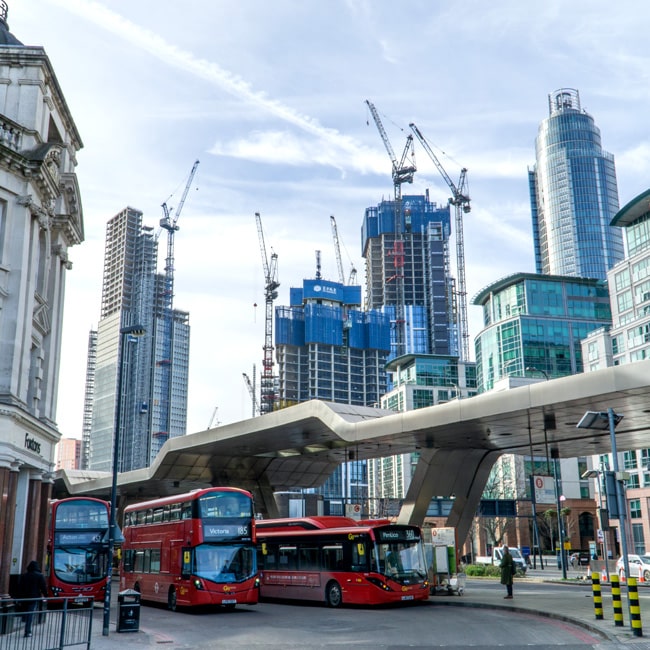
Lambeth is a borough of south London. Average sold prices across Lambeth sit at £554,128 on the HM Land Registry House Price Index, 91.1% above the England average of £289,946 and £12,063 above the London regional average of £542,065. That puts Lambeth firmly in inner-London territory, but the headline figure hides a wide spread. Asking prices run from £445,881 in SE19 (Crystal Palace, Upper Norwood) to £766,900 in SW8 (South Lambeth, Nine Elms), a 72.0% gap inside a single borough.
Lambeth is a flat-dominated borough, and that shapes the numbers. Flats and maisonettes average £454,315 on the Land Registry index, well below the houses, and they make up the bulk of the stock in the postcodes nearest the river. The yield map runs the opposite way to the price map: SE5 (Camberwell, Denmark Hill) tops the table at 5.6% gross while the priciest postcodes return less, so the cheaper end of the borough tends to hold the stronger income figures.
This guide covers the London Borough of Lambeth (ONS code E09000022) across fourteen postcodes: SE1, SE5, SE11, SE19, SE21, SE24, SE26, SE27, SW2, SW4, SW8, SW9, SW12 and SW16. Lambeth runs south from the Thames at Waterloo and Vauxhall down through Brixton, Clapham and Streatham to Crystal Palace. It is part of the wider South London buy-to-let market, sitting between Wandsworth to the west and Southwark to the east.
Article updated: June 2026
Why Invest in Lambeth?
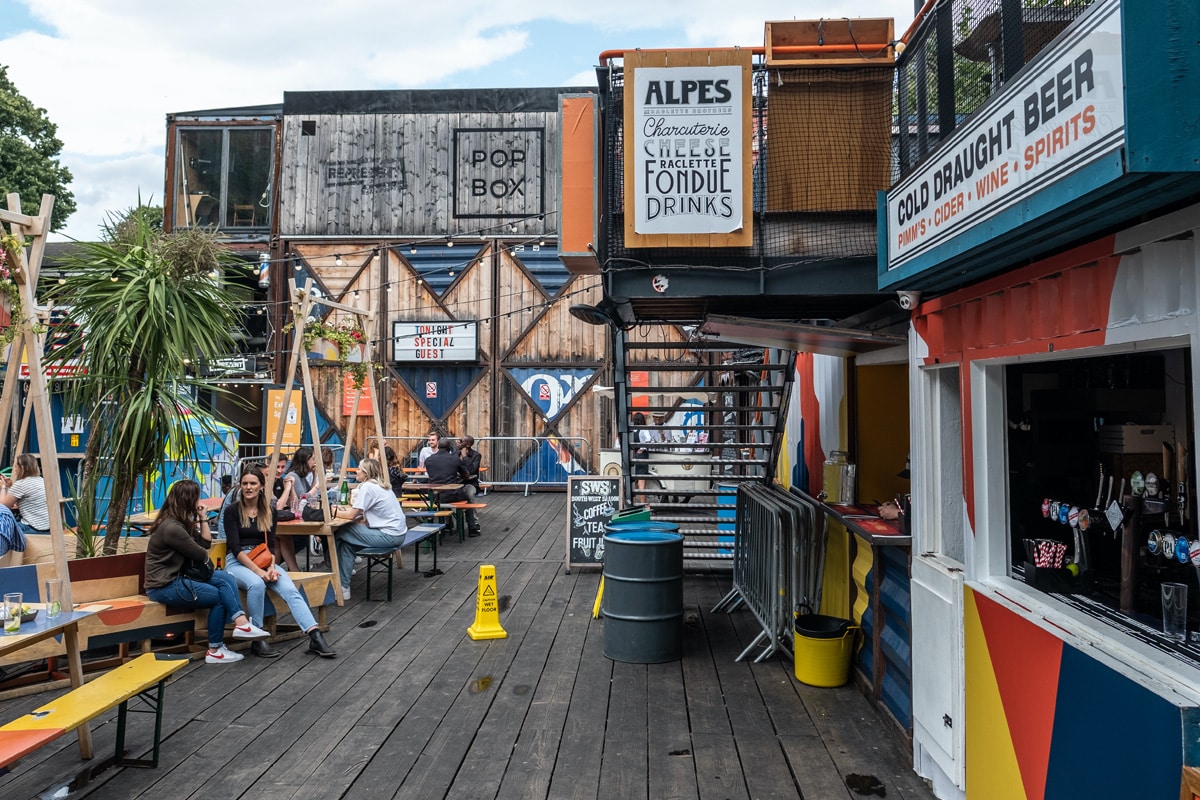
Lambeth's population reached 317,654 at the 2021 Census, up 4.81% on the 303,086 recorded in 2011. That is slower than the 6.3% England and Wales average, which is typical of an inner-London borough where new homes are added in dense pockets rather than across open land. What Lambeth has instead is location: it runs from the South Bank, directly across the Thames from Westminster and the West End, down through Brixton and Clapham to Streatham, with the City a few stops away.
That position underpins tenant demand. North Lambeth holds St Thomas' Hospital on Westminster Bridge Road and King's College London's Waterloo campus on Stamford Street, both large employers and both drawing staff and students who rent locally. The South Bank cultural quarter, the night-time economy around Brixton and Clapham, and the transport spine of Waterloo, Vauxhall and the Victoria line terminus at Brixton all feed a renter base that turns over steadily rather than emptying out.
Median gross weekly pay for Lambeth residents is £943.00, which is 5.6% above the London figure of £892.60 and 25.3% above the Great Britain median of £752.40. Higher local earnings give tenants more headroom to absorb the rents the borough commands, and the employment rate of 77.8% runs ahead of London's 74.9%. The combination of central-London access and an above-average wage base is what keeps Lambeth's rental market deep across all fourteen postcodes.
Lambeth Economic Summary
- Population (Lambeth): 317,654 (2021 Census). Growth of 4.81% from 2011.
- Median annual salary: £49,034 (local), £46,414 (London), £39,125 (Great Britain)
- Median gross weekly pay: £943.00 (local), £892.60 (London), £752.40 (Great Britain)
- Employment rate: 77.8% (local), 74.9% (London)
- Unemployment rate: 7.3% (local)
Source: ONS Census 2021, Nomis Labour Market Profile (ASHE 2025, Employment Oct 2024-Sep 2025)
Regeneration and Investment in Lambeth
Lambeth's northern riverside sits inside Vauxhall Nine Elms Battersea, the largest central London regeneration area, where more than 18,000 new homes are planned and around 3,500 of them fall in the Vauxhall part of the borough. The activity is concentrated in SW8 and SE11, but the scale of investment along the river reaches across North Lambeth, and the rest of the borough is seeing smaller schemes come forward in Brixton and Streatham.
- Vauxhall Nine Elms Battersea (VNEB) regeneration (18,000+ homes, target completion 2030): The area runs from Lambeth Bridge down to Battersea Power Station and is the largest central London regeneration zone, with roughly 3,500 of the new homes in the Vauxhall area. Lambeth Council estimates around 22,000 construction jobs during the build, with around 50 acres of new public space. The £1 billion Northern line extension that serves it, with stations at Nine Elms and Battersea Power Station, opened in 2021, and a further £45 million is going into Vauxhall tube station. Updates at Lambeth Council.
- Brixton, 49 Brixton Station Road and Canterbury Crescent (288 homes): Lambeth Council, working with developer London Square, has brought forward a mixed-use scheme of 288 flats across two council-owned sites, including 98 homes at social rent, alongside new shops, dedicated storage for Brixton's market traders, a community hub and workspace. The blocks range from six to twenty storeys and the plans were due before the council in March 2026. Updates at South London Press.
- Streatham, Leigham Court Road (92 homes): Developer Pocket Living won approval in November 2025 for 92 homes, made up of 15 at social rent, 31 discount-market rent homes and 46 for private sale, with construction starting in early 2026 and completion targeted for 2029. The scheme also refurbishes a former synagogue on the site. Updates at South London Press.
Source: Office for National Statistics - Population for Lambeth
Lambeth Property Market Analysis
Average property prices in Lambeth have risen 663.8% since January 1995, from £72,550 to £554,128. The sections below trace that journey cycle by cycle, then drill into current postcode-level data for sold prices, price per square foot, asking prices, growth trends, and monthly transaction volumes.
When was the last house price crash in Lambeth?
All sold property prices for Lambeth from HM Land Registry are recorded at borough level. The Land Registry House Price Index tracks average prices from January 1995 to the latest reading in March 2026, covering 31 years of market cycles.
The 1995 to 2007 climb: Lambeth started at £72,550 in January 1995. By December 2000 the average had reached £172,066, more than doubling in six years as central-London demand pushed prices up faster than the national average. The run continued through the 2000s and the market peaked at £342,834 in October 2007.
2008 to 2009, the financial crisis: Prices fell from the October 2007 peak of £342,834 to a trough of £264,672 in April 2009, a decline of 22.8% over eighteen months, with the worst year-on-year reading at -19.1% in April 2009. Lambeth's fall was steeper than both England, which dropped 18.2% from its September 2007 peak, and the London region's 17.8%. Inner-London markets that had risen fastest in the boom also had the furthest to fall.
Recovery, 2009 to 2012: Lambeth bounced back quickly. Prices climbed off the April 2009 trough and passed the pre-crash peak by May 2012, when the average reached £346,768. That recovery took four years and seven months, faster than many markets outside the capital managed.
The 2012 to 2016 London boom: This was Lambeth's strongest stretch. Prices ran from £346,768 in May 2012 to £548,167 by December 2016, with annual growth touching 19.0% at the end of 2013. Brixton, Clapham and Herne Hill all saw rapid change through this period, and the borough's average rose by more than half in four years.
The 2016 to 2019 plateau: Higher stamp duty on additional properties and the Brexit-vote uncertainty cooled inner London. Prices moved sideways, from £548,167 in December 2016 to £557,289 in December 2019, with annual growth slowing to 1.9%. Lambeth held its gains rather than extending them.
2020 to 2022, the pandemic peak: A brief surge carried the borough to its all-time high of £607,388 in October 2022. The stamp duty holiday and renewed buyer appetite lifted prices, though the move was less dramatic than in commuter markets where extra space mattered more.
2023 to present: Higher mortgage rates pulled prices back. The average eased to £569,140 by December 2023 and £532,742 by December 2025 before recovering to £554,128 at the latest March 2026 reading, down 1.1% on the year. The current figure sits 8.8% below the October 2022 high and 61.6% above the 2007 pre-crash peak.
Long-term growth summary:
- 5 years (March 2021 to March 2026): -5.4% growth (£585,754 to £554,128)
- 10 years (December 2015 to March 2026): 6.8% growth (£518,704 to £554,128)
- 15 years (December 2010 to March 2026): 77.0% growth (£313,089 to £554,128)
- 20 years (December 2005 to March 2026): 123.2% growth (£248,315 to £554,128)
- 30 years (January 1995 to March 2026): 663.8% growth (£72,550 to £554,128)
Lambeth's 30-year return of 663.8% is among the strongest of any London borough, built on the 2012 to 2016 boom rather than steady year-on-year gains. The recent picture is softer: the borough is down 5.4% over five years, reflecting the post-2022 correction that has run through prime and near-prime inner London. A buyer who took on a property at the October 2007 peak would still be 61.6% ahead on the Land Registry average, while one who bought at the October 2022 high would be 8.8% behind.
- All property types
- Detached
- Semi-detached
- Terraced
- Flats
- All property types
- Detached
- Semi-detached
- Terraced
- Flats
Sold House Prices in Lambeth
The average sold price across all property types in Lambeth is £554,128, which is 91.1% above the England average of £289,946 as of March 2026. Every property type carries a large premium to England, but the gaps widen sharply as you move from flats up to houses, because houses are scarce in a borough where most homes are flats.
| Property Type | Lambeth Average | England Average | Difference |
|---|---|---|---|
| Detached houses | £1,183,081 | £470,492 | +151.5% |
| Semi-detached houses | £1,050,427 | £288,185 | +264.5% |
| Terraced houses | £820,993 | £243,788 | +236.8% |
| Flats and maisonettes | £454,315 | £214,563 | +111.7% |
| All property types | £554,128 | £289,946 | +91.1% |
Detached houses average £1,183,081, which is 151.5% above England's £470,492. These are rare in Lambeth, found mostly in the leafier pockets of SE21 (Dulwich) and the larger villas of SE19, and they trade as scarce family homes rather than typical investment stock. Annual growth of 2.2% reflects steady demand at the top end.
Semi-detached houses average £1,050,427, a 264.5% premium to England's £288,185, the widest gap of any type. The semi-detached stock is concentrated in the southern postcodes such as SW16 (Streatham, Norbury), SE19 and SE21, where Victorian and Edwardian streets meet the suburban edge of the borough. Annual growth of 3.0% is the strongest of any property type in Lambeth.
Terraced houses average £820,993, 236.8% above England's £243,788. These are the period houses of Brixton, Clapham, Herne Hill and Stockwell, prized by owner-occupiers and often the target for conversion into flats. Annual growth of 2.6% keeps terraced houses among the steadier performers.
Flats and maisonettes average £454,315, a 111.7% premium that is large in cash terms but the smallest of the four types relative to England's £214,563. Flats are the workhorse of Lambeth's buy-to-let market and the dominant stock near the river. Annual change of -2.5% is the only negative reading among the types, reflecting the heavy supply of new and resale flats around Vauxhall and Nine Elms.
Price Per Square Foot in Lambeth
£273 per square foot separates Lambeth's cheapest postcode from its dearest, with SW16 (Streatham, Norbury) at £571 and SW12 (Balham) at £844. Measuring by the square foot takes property size out of the comparison, so it reads location value more cleanly than the headline averages. The southern postcodes sit at the cheaper end, while the riverside and the SW12 corner near Clapham command the most.
| Rank | Area | Price Per Sq Ft |
|---|---|---|
| 1 | SW16 (Streatham, Norbury) | £571 |
| 2 | SE26 (Sydenham) | £575 |
| 3 | SE19 (Crystal Palace, Upper Norwood) | £597 |
| 4 | SE27 (West Norwood, Tulse Hill) | £632 |
| 5 | SW2 (Brixton, Tulse Hill) | £650 |
| 6 | SE5 (Camberwell, Denmark Hill) | £663 |
| 7 | SW9 (Stockwell, Brixton) | £715 |
| 8 | SE21 (Dulwich, West Dulwich) | £724 |
| 9 | SE24 (Herne Hill, Tulse Hill) | £782 |
| 10 | SE1 (South Bank, Waterloo) | £815 |
| 11 | SW4 (Clapham) | £818 |
| 12 | SE11 (Kennington, Vauxhall) | £819 |
| 13 | SW8 (South Lambeth, Nine Elms) | £836 |
| 14 | SW12 (Balham) | £844 |
SW16 at £571 per square foot is the cheapest space in Lambeth. Streatham and Norbury sit at the southern edge of the borough, furthest from the river and the central-London jobs, and the larger houses there mean buyers pay less for each square foot than they would closer in. For an investor focused on floor area, SW16 buys the most room for the money.
SW12 at £844 per square foot is the dearest, just ahead of SW8 at £836 and SE11 at £819. Balham's appeal is its Northern line link and its overlap with the Clapham and Wandsworth markets, which pulls its per-square-foot rate to the top of the table. The riverside postcodes of SW8 and SE11 command their premiums through new-build flats around Nine Elms and Vauxhall rather than larger homes.
For Sale Asking Prices in Lambeth
SE19 at £445,881 and SW8 at £766,900 sit 72.0% apart, the widest asking-price gap in the borough. That range mirrors the geography: the southern postcodes around Crystal Palace and Sydenham are the most affordable way in, while the riverside corridor at Nine Elms and Waterloo is the dearest. The mean asking price across all fourteen Lambeth postcodes is £587,762.
| Rank | Area | Asking Price |
|---|---|---|
| 1 | SE19 (Crystal Palace, Upper Norwood) | £445,881 |
| 2 | SE26 (Sydenham) | £476,853 |
| 3 | SE5 (Camberwell, Denmark Hill) | £477,979 |
| 4 | SE27 (West Norwood, Tulse Hill) | £497,364 |
| 5 | SW16 (Streatham, Norbury) | £500,968 |
| 6 | SW9 (Stockwell, Brixton) | £513,453 |
| 7 | SW2 (Brixton, Tulse Hill) | £519,570 |
| 8 | SW4 (Clapham) | £609,116 |
| 9 | SE11 (Kennington, Vauxhall) | £642,627 |
| 10 | SE24 (Herne Hill, Tulse Hill) | £650,118 |
| 11 | SE21 (Dulwich, West Dulwich) | £704,442 |
| 12 | SW12 (Balham) | £709,363 |
| 13 | SE1 (South Bank, Waterloo) | £714,030 |
| 14 | SW8 (South Lambeth, Nine Elms) | £766,900 |
SE19 at £445,881 is the lowest asking price in Lambeth and the cheapest way into the borough. Crystal Palace and Upper Norwood sit on the southern hills, a longer commute from the centre but with period houses and conversions at the most accessible prices on offer here. For a buyer with a fixed budget, this is where the money stretches furthest.
SW8 at £766,900 is the dearest, driven by the wave of new-build flats around Nine Elms and the Battersea Power Station fringe. SE1 follows at £714,030 and SW12 at £709,363. These riverside and Northern-line postcodes carry the new-build premium, and as the rental sections below show, the higher prices compress yields rather than lifting them.
House Price Growth in Lambeth
SE24 (Herne Hill, Tulse Hill) leads Lambeth on five-year growth at 20.7%, while SE1 (South Bank, Waterloo) sits at the bottom at -26.2%. The spread across the borough is unusually wide. Four postcodes (SE24, SE21, SE26 and SE27) posted positive growth across one, three and five years, while the new-build-heavy riverside postcodes have fallen hardest as flat supply has outrun demand.
| Area | 1 Year | 3 Years | 5 Years |
|---|---|---|---|
| SE24 (Herne Hill, Tulse Hill) | 14.7% | 5.7% | 20.7% |
| SE21 (Dulwich, West Dulwich) | 8.2% | 20.2% | 18.7% |
| SE11 (Kennington, Vauxhall) | 8.7% | -4.8% | 12.8% |
| SE26 (Sydenham) | 10.7% | 10.2% | 6.6% |
| SE27 (West Norwood, Tulse Hill) | 4.9% | 10.1% | 5.0% |
| SW8 (South Lambeth, Nine Elms) | 9.4% | -34.4% | 1.1% |
| SW4 (Clapham) | -1.9% | -1.5% | 0.5% |
| SW16 (Streatham, Norbury) | -1.5% | -2.2% | -0.4% |
| SE19 (Crystal Palace, Upper Norwood) | 1.2% | 7.0% | -0.8% |
| SE5 (Camberwell, Denmark Hill) | -2.3% | -2.8% | -1.4% |
| SW12 (Balham) | 0.7% | -5.8% | -2.1% |
| SW2 (Brixton, Tulse Hill) | -2.6% | -2.8% | -4.0% |
| SW9 (Stockwell, Brixton) | -2.2% | 0.4% | -5.5% |
| SE1 (South Bank, Waterloo) | -3.4% | -13.6% | -26.2% |
SE24 has the highest five-year growth at 20.7%, with positive readings over one and three years too. Herne Hill and Tulse Hill pair period houses with the Brixton and Dulwich rental catchments, and that mix of owner-occupier demand and a school-driven family market has held prices up where flat-heavy postcodes have not. SE21 sits just behind at 18.7% over five years and 20.2% over three, the strongest three-year figure in the borough, carried by the Dulwich house market.
SE1 records the weakest five-year reading at -26.2%, alongside -13.6% over three years. The South Bank and Waterloo flat market saw heavy new-build supply and the sharpest repricing as the prime-flat boom unwound. SW8 tells a similar story with -34.4% over three years before a 9.4% one-year bounce, the swing you get when a postcode is dominated by new-build completions around Nine Elms.
Monthly Property Sales in Lambeth
Transaction volumes range from 8 sales a month in SE11 and SE21 up to 63 in SW16 (Streatham, Norbury), with turnover from 3% to 12%. Volume tracks the size and depth of each postcode's housing stock rather than its desirability, and SW16's large residential base puts it well clear of the rest of the borough.
| Area | Sales Per Month | Turnover | Asking Price |
|---|---|---|---|
| SW16 (Streatham, Norbury) | 63 | 7% | £500,968 |
| SW2 (Brixton, Tulse Hill) | 40 | 8% | £519,570 |
| SE1 (South Bank, Waterloo) | 38 | 3% | £714,030 |
| SW12 (Balham) | 27 | 9% | £709,363 |
| SW4 (Clapham) | 24 | 5% | £609,116 |
| SW9 (Stockwell, Brixton) | 22 | 5% | £513,453 |
| SE5 (Camberwell, Denmark Hill) | 21 | 6% | £477,979 |
| SE19 (Crystal Palace, Upper Norwood) | 21 | 7% | £445,881 |
| SE26 (Sydenham) | 20 | 10% | £476,853 |
| SE27 (West Norwood, Tulse Hill) | 18 | 12% | £497,364 |
| SW8 (South Lambeth, Nine Elms) | 18 | 3% | £766,900 |
| SE24 (Herne Hill, Tulse Hill) | 9 | 8% | £650,118 |
| SE11 (Kennington, Vauxhall) | 8 | 4% | £642,627 |
| SE21 (Dulwich, West Dulwich) | 8 | 6% | £704,442 |
SW16 records the most sales at 63 a month, more than the next two postcodes combined. Streatham and Norbury carry a deep stock of houses and flats across a wide area, so a steady share of it is always changing hands. SE27 posts the highest turnover at 12%, meaning a larger slice of its homes trade each year, a useful signal for an investor weighing how easily a property will sell on.
SE1 and SW8 stand out for the opposite reason: high listing numbers but turnover of just 3%. These riverside postcodes hold large stocks of new-build flats that sit on the market longer, so the share trading each year is low even where the raw transaction count looks healthy. The selling-times section below puts numbers on how long that takes.
How Long Properties Take to Sell in Lambeth
Selling times in Lambeth run from about 277 days in SE27 (West Norwood, Tulse Hill) to roughly 1,014 days in the new-build-heavy SE1 and SW8. Days on market is the typical time a home is listed before it sells, and the months of unsold stock shows how much for-sale supply is sitting there at the current rate of sales. Across most of the borough the balance currently favours the buyer.
| Area | Avg Days to Sell | Months of Unsold Stock | Market |
|---|---|---|---|
| SE27 (West Norwood, Tulse Hill) | 277 | 9.1 | Balanced market |
| SE26 (Sydenham) | 304 | 10.0 | Balanced market |
| SE24 (Herne Hill, Tulse Hill) | 338 | 11.1 | Balanced market |
| SW2 (Brixton, Tulse Hill) | 338 | 11.1 | Balanced market |
| SW12 (Balham) | 338 | 11.1 | Balanced market |
| SE5 (Camberwell, Denmark Hill) | 435 | 14.3 | Buyer's market |
| SE21 (Dulwich, West Dulwich) | 435 | 14.3 | Buyer's market |
| SW16 (Streatham, Norbury) | 435 | 14.3 | Buyer's market |
| SE19 (Crystal Palace, Upper Norwood) | 507 | 16.7 | Buyer's market |
| SW4 (Clapham) | 608 | 20.0 | Buyer's market |
| SW9 (Stockwell, Brixton) | 608 | 20.0 | Buyer's market |
| SE11 (Kennington, Vauxhall) | 761 | 25.0 | Buyer's market |
| SE1 (South Bank, Waterloo) | 1014 | 33.3 | Buyer's market |
| SW8 (South Lambeth, Nine Elms) | 1014 | 33.3 | Buyer's market |
How long a property takes to sell is a holding cost that no yield figure shows, and in Lambeth it varies enormously. SE27 clears in about nine months while SE1 and SW8 each carry more than 33 months of unsold stock, so a flat bought in the Waterloo or Nine Elms corridor can take far longer to move on than one in the southern postcodes. For an investor, the faster-selling southern postcodes mean less time tied to a property when the moment comes to exit.
What Type of Property Can You Buy in Lambeth?
Flats dominate Lambeth's housing, from 32.9% of stock in SE21 (Dulwich) up to 88.0% in SE1 (South Bank, Waterloo), and houses are the exception rather than the rule. The mix shapes which strategies fit each postcode, and it explains why the borough's averages lean so heavily on flat values. The figures below are drawn from 2021 Census records for each postcode.
| Area | Detached | Semi-detached | Terraced | Flats |
|---|---|---|---|---|
| SE1 (South Bank, Waterloo) | 0.7% | 2.3% | 8.8% | 88.0% |
| SE5 (Camberwell, Denmark Hill) | 2.6% | 5.9% | 15.8% | 75.7% |
| SE11 (Kennington, Vauxhall) | 0.8% | 2.8% | 13.7% | 82.5% |
| SE19 (Crystal Palace, Upper Norwood) | 8.4% | 14.7% | 14.3% | 62.6% |
| SE21 (Dulwich, West Dulwich) | 20.8% | 25.2% | 21.2% | 32.9% |
| SE24 (Herne Hill, Tulse Hill) | 3.4% | 16.1% | 27.5% | 52.9% |
| SE26 (Sydenham) | 5.2% | 13.9% | 22.7% | 57.8% |
| SE27 (West Norwood, Tulse Hill) | 3.3% | 18.4% | 19.5% | 58.7% |
| SW2 (Brixton, Tulse Hill) | 1.8% | 9.8% | 15.2% | 73.0% |
| SW4 (Clapham) | 1.5% | 6.0% | 17.9% | 74.5% |
| SW8 (South Lambeth, Nine Elms) | 1.4% | 3.8% | 12.0% | 82.7% |
| SW9 (Stockwell, Brixton) | 1.7% | 5.4% | 12.3% | 80.5% |
| SW12 (Balham) | 2.5% | 10.1% | 22.8% | 64.6% |
| SW16 (Streatham, Norbury) | 8.0% | 23.8% | 25.3% | 42.8% |
SE1 is the most flat-heavy postcode at 88.0%, with houses of any kind making up barely a tenth of the stock. The South Bank and Waterloo market is almost entirely flats, from period mansion blocks to the new towers along the river, which is the stock that drives single lets and professional sharers in North Lambeth. SW8 and SW9 sit close behind at 82.7% and 80.5%, the same flat-dominated pattern that runs along the Vauxhall and Stockwell corridor.
SE21 is the outlier at the other end, with flats at just 32.9% and detached and semi-detached houses together accounting for 46.0%. Dulwich is the borough's house market, with the larger family homes and the lowest private-rented share, which fits its premium prices and the school-driven owner-occupier demand. SW16 is the next most house-weighted at 42.8% flats, reflecting the suburban streets of Streatham and Norbury.
Flats combine purpose-built blocks and converted units, and a small share of non-standard dwellings is left out, so rows may not add up to exactly 100%.
Lambeth Rental Market Analysis
Monthly rents in Lambeth run from £1,710 in SE19 to £3,219 in SW8, with gross rental yields from 4.0% to 5.6% across the fourteen postcodes. For investors weighing whether is buy to let worth it in inner London, the sections below break down rents, yields and tenant affordability postcode by postcode. If you are working out how to build a property portfolio in the capital, Lambeth pairs central-London access with a deep, established tenant base. You can also browse available buy-to-let property across the country.
Average Rent & Gross Rental Yields in Lambeth
Gross rental yields in Lambeth range from 4.0% in SE24 to 5.6% in SE5. The pattern runs against the price map: the higher yields sit with the cheaper, flat-heavy postcodes inland, while the premium house markets return the least. SE5 (Camberwell, Denmark Hill) tops the table on a £2,212 monthly rent against a £477,979 asking price.
| Area | Average Monthly Rent | Asking Price | Gross Yield |
|---|---|---|---|
| SE5 (Camberwell, Denmark Hill) | £2,212 | £477,979 | 5.6% |
| SE11 (Kennington, Vauxhall) | £2,895 | £642,627 | 5.4% |
| SW9 (Stockwell, Brixton) | £2,326 | £513,453 | 5.4% |
| SW4 (Clapham) | £2,670 | £609,116 | 5.3% |
| SW2 (Brixton, Tulse Hill) | £2,216 | £519,570 | 5.1% |
| SW8 (South Lambeth, Nine Elms) | £3,219 | £766,900 | 5.0% |
| SE1 (South Bank, Waterloo) | £2,920 | £714,030 | 4.9% |
| SW12 (Balham) | £2,866 | £709,363 | 4.8% |
| SE26 (Sydenham) | £1,872 | £476,853 | 4.7% |
| SE19 (Crystal Palace, Upper Norwood) | £1,710 | £445,881 | 4.6% |
| SW16 (Streatham, Norbury) | £1,893 | £500,968 | 4.5% |
| SE21 (Dulwich, West Dulwich) | £2,450 | £704,442 | 4.2% |
| SE27 (West Norwood, Tulse Hill) | £1,716 | £497,364 | 4.1% |
| SE24 (Herne Hill, Tulse Hill) | £2,180 | £650,118 | 4.0% |
SE5 leads on yield at 5.6%, where a £2,212 rent on a £477,979 asking price gives the strongest income return in the borough. Camberwell and Denmark Hill combine relatively accessible flat prices with the rental pull of King's College Hospital and the medical campus nearby, which keeps demand steady. SE11 and SW9 follow at 5.4%, both Vauxhall and Brixton-edge postcodes where flat rents are high relative to price.
SE24 sits at the bottom on yield at 4.0%, even though its £2,180 rent is healthy, because its £650,118 asking price is among the highest in Lambeth. The Herne Hill house market does more for capital values than for income, the same trade-off that puts SE21 and SE27 in the lower half of the yield table.
Gross Rental Yield by Postcode
Is Lambeth Rent High?
Monthly rents in Lambeth take between 41.8% and 78.8% of the local median gross monthly salary, so every postcode sits above the 30% affordability benchmark. The widely cited threshold for rent affordability is 30% of gross income, and no Lambeth postcode comes close to it on a single median salary. This is the reality of inner-London rents, where most tenancies are shared or supported by dual incomes rather than funded by one earner on the median wage.
The median gross weekly salary in Lambeth is £943.00, which equates to £4,086 per month or £49,034 per year. This is above the London regional median of £892.60 per week and the Great Britain median of £752.40 per week. Data from the Nomis Labour Market Profile (ASHE 2025).
| Rank | Area | Rent as % of Income |
|---|---|---|
| 1 | SW8 (South Lambeth, Nine Elms) | 78.8% |
| 2 | SE1 (South Bank, Waterloo) | 71.5% |
| 3 | SE11 (Kennington, Vauxhall) | 70.9% |
| 4 | SW12 (Balham) | 70.2% |
| 5 | SW4 (Clapham) | 65.3% |
| 6 | SE21 (Dulwich, West Dulwich) | 60.0% |
| 7 | SW9 (Stockwell, Brixton) | 56.9% |
| 8 | SW2 (Brixton, Tulse Hill) | 54.2% |
| 9 | SE5 (Camberwell, Denmark Hill) | 54.1% |
| 10 | SE24 (Herne Hill, Tulse Hill) | 53.4% |
| 11 | SW16 (Streatham, Norbury) | 46.3% |
| 12 | SE26 (Sydenham) | 45.8% |
| 13 | SE27 (West Norwood, Tulse Hill) | 42.0% |
| 14 | SE19 (Crystal Palace, Upper Norwood) | 41.8% |
SW8 is the least affordable on this measure at 78.8%, where a £3,219 rent takes almost four-fifths of a single median monthly salary. The Nine Elms flats are aimed at professional sharers and dual-income households rather than one earner on the median wage, which is how rents at that level get paid. SE1, SE11 and SW12 follow on the same logic, all above 70%.
SE19 is the most affordable at 41.8%, with a £1,710 rent against a £4,086 monthly salary. Crystal Palace and Upper Norwood still sit well above the 30% benchmark, but they are the closest Lambeth gets to it, which matters for void risk: tenants who are less stretched tend to stay longer and fall into arrears less often. The southern postcodes of SE26 and SE27 show the same relatively gentler ratio.
How Big Is Lambeth's Private Rented Sector?
The private rented sector is deepest in SW8 at 37.8% of households and shallowest in SE21 at 17.9%, with most of Lambeth sitting between a quarter and a third. The share of homes already rented privately is a guide to the size of the established tenant pool and the depth of the local lettings market. The table below shows household tenure by postcode.
| Area | Owned Outright | Owned with Mortgage | Private Rented | Social Rented |
|---|---|---|---|---|
| SW8 (South Lambeth, Nine Elms) | 13.6% | 14.7% | 37.8% | 32.2% |
| SE1 (South Bank, Waterloo) | 9.3% | 12.6% | 37.7% | 37.5% |
| SW12 (Balham) | 18.3% | 28.2% | 37.6% | 15.1% |
| SW4 (Clapham) | 13.1% | 21.9% | 37.4% | 26.1% |
| SW2 (Brixton, Tulse Hill) | 12.0% | 23.5% | 30.6% | 31.8% |
| SW16 (Streatham, Norbury) | 24.8% | 31.5% | 29.7% | 13.1% |
| SW9 (Stockwell, Brixton) | 8.3% | 16.2% | 29.5% | 43.7% |
| SE24 (Herne Hill, Tulse Hill) | 18.6% | 27.1% | 28.0% | 25.0% |
| SE27 (West Norwood, Tulse Hill) | 15.8% | 29.7% | 27.3% | 25.9% |
| SE11 (Kennington, Vauxhall) | 10.0% | 14.6% | 27.1% | 45.2% |
| SE5 (Camberwell, Denmark Hill) | 10.6% | 20.2% | 26.2% | 40.6% |
| SE19 (Crystal Palace, Upper Norwood) | 19.1% | 30.7% | 26.2% | 22.2% |
| SE26 (Sydenham) | 19.7% | 31.1% | 21.5% | 26.4% |
| SE21 (Dulwich, West Dulwich) | 36.5% | 31.7% | 17.9% | 13.2% |
SW8, SE1, SW12 and SW4 all carry private rented sectors around 37% to 38%, the deepest in Lambeth. A large rented share points to an active lettings market and a wide pool of existing tenants, and these riverside and Clapham postcodes pair that depth with the borough's higher rents. SE1 and SE11 also show the largest social rented sectors, at 37.5% and 45.2%, a reminder that inner Lambeth has a high share of social housing alongside its private market.
SE21 has the smallest private rented sector at 17.9%, with owner-occupation accounting for more than two-thirds of households. Dulwich is a settled house market with the borough's highest outright ownership at 36.5%, which is consistent with its premium prices and its low gross yield. Across the borough, the depth of the rented sector underpins the lettings market in all fourteen postcodes.
Local Housing Allowance Rates in Lambeth
Lambeth straddles two Broad Rental Market Areas: most of the borough falls in Inner South East London, while SW8 (South Lambeth, Nine Elms) and SW12 (Balham) sit in Inner South West London, where the rates run higher. Local Housing Allowance is the maximum housing support a tenant on benefits can claim, so for that part of the market it sets an effective rent floor. The table below shows the weekly rates for each area as of June 2026. To check the current rate for a specific address, you can use the government's official Local Housing Allowance calculator.
| Property Size | Inner South East London (weekly) | Inner South West London (weekly) |
|---|---|---|
| Shared accommodation | £149.59 | £157.64 |
| 1 bedroom | £298.15 | £326.79 |
| 2 bedrooms | £356.71 | £391.23 |
| 3 bedrooms | £448.77 | £497.10 |
| 4 bedrooms | £604.11 | £667.40 |
For most of Lambeth, the two-bedroom Inner South East London rate of £356.71 a week works out at about £1,546 a month, while the same size in the Inner South West London area covering SW8 and SW12 reaches £391.23 a week, or roughly £1,695 a month. Both sit below the open-market rents recorded across the borough, which run from £1,710 to £3,219, so a benefit-backed tenancy at the LHA rate lands under Lambeth's market rents. The stock that fits within these rates is concentrated in the cheaper southern postcodes, where both prices and rents are lowest.
Buy-to-Let Considerations
Are House Prices High in Lambeth? Price-to-Earnings Ratios
Buying a property in Lambeth takes between 9.1 and 15.6 times the median annual salary. This is based on the Nomis Labour Market Profile for Lambeth showing the median gross annual income for Lambeth residents is £49,034.
The national benchmark for price-to-earnings is 7.4x (England's average sold price of £289,946 divided by the Great Britain median annual salary of £39,125). Every Lambeth postcode sits above that benchmark, which is what you would expect of an inner-London borough where prices reflect central-London demand rather than local pay alone.
| Rank | Area | Price-to-Earnings Ratio |
|---|---|---|
| 1 | SE19 (Crystal Palace, Upper Norwood) | 9.1x |
| 2 | SE26 (Sydenham) | 9.7x |
| 3 | SE5 (Camberwell, Denmark Hill) | 9.7x |
| 4 | SE27 (West Norwood, Tulse Hill) | 10.1x |
| 5 | SW16 (Streatham, Norbury) | 10.2x |
| 6 | SW9 (Stockwell, Brixton) | 10.5x |
| 7 | SW2 (Brixton, Tulse Hill) | 10.6x |
| 8 | SW4 (Clapham) | 12.4x |
| 9 | SE11 (Kennington, Vauxhall) | 13.1x |
| 10 | SE24 (Herne Hill, Tulse Hill) | 13.3x |
| 11 | SE21 (Dulwich, West Dulwich) | 14.4x |
| 12 | SW12 (Balham) | 14.5x |
| 13 | SE1 (South Bank, Waterloo) | 14.6x |
| 14 | SW8 (South Lambeth, Nine Elms) | 15.6x |
SE19 at 9.1x is the most affordable postcode relative to local earnings, the same Crystal Palace and Upper Norwood market that carries the lowest asking price in the borough. It is still well above the 7.4x national benchmark, but for Lambeth it is the lowest barrier on this measure.
SW8 at 15.6x sits at the top of the table. At more than fifteen times the local median salary, the Nine Elms flats are bought by dual-income households, overseas buyers and investors rather than single local earners. The elevated ratio is the price of the new-build riverside, and it sits alongside the borough's longest selling times and weakest medium-term growth.
Deposit Requirements in Lambeth
A 30% deposit on a buy-to-let property in Lambeth ranges from £133,764 in SE19 to £230,070 in SW8. The gap between the cheapest and dearest deposit is £96,306, a reminder that postcode choice in Lambeth is a six-figure decision before the mortgage even starts. These figures sit well above most of England, reflecting the borough's inner-London prices.
Beyond the deposit, the stamp duty calculation and other buy-to-let running costs add to the total capital required.
| Rank | Area | 30% Deposit Required |
|---|---|---|
| 1 | SE19 (Crystal Palace, Upper Norwood) | £133,764 |
| 2 | SE26 (Sydenham) | £143,056 |
| 3 | SE5 (Camberwell, Denmark Hill) | £143,394 |
| 4 | SE27 (West Norwood, Tulse Hill) | £149,209 |
| 5 | SW16 (Streatham, Norbury) | £150,290 |
| 6 | SW9 (Stockwell, Brixton) | £154,036 |
| 7 | SW2 (Brixton, Tulse Hill) | £155,871 |
| 8 | SW4 (Clapham) | £182,735 |
| 9 | SE11 (Kennington, Vauxhall) | £192,788 |
| 10 | SE24 (Herne Hill, Tulse Hill) | £195,036 |
| 11 | SE21 (Dulwich, West Dulwich) | £211,333 |
| 12 | SW12 (Balham) | £212,809 |
| 13 | SE1 (South Bank, Waterloo) | £214,209 |
| 14 | SW8 (South Lambeth, Nine Elms) | £230,070 |
SE19 is the cheapest way into Lambeth, at a £133,764 deposit, and it pairs that with the lowest price-to-earnings ratio and a mid-table 4.6% yield. Stepping up to SE26 or SE5 adds around £10,000 to the deposit and shifts the profile towards either Sydenham's steadier southern market or Camberwell's borough-leading 5.6% yield.
At the top, SW8 needs a £230,070 deposit, the largest in Lambeth, for a 5.0% yield on the Nine Elms new-builds. The extra £96,306 over SE19 buys a riverside postcode with strong rents but the borough's longest selling times and weakest three-year growth, so the higher deposit does not buy an easier hold. Where the deposits sit close together the postcodes can still behave very differently: SE24 and SE21 are within £16,000 of each other, yet SE24 yields 4.0% with strong recent growth while SE21 is the borough's settled house market.
What the Lambeth Data Tells Buy-to-Let Investors
In Lambeth the income and the value sit in different parts of the borough. The strongest yields are inland and flat-led: SE5 (Camberwell, Denmark Hill) tops the table at 5.6%, with SE11 and SW9 at 5.4%, on the more accessible prices around Camberwell, Vauxhall and Stockwell. The cheapest way in is SE19 at a £445,881 asking price, the lowest price-to-earnings ratio at 9.1x and a £133,764 deposit, while investment properties in Lambeth at the riverside end cost far more for a lower return.
The capital-growth picture runs the other way. SE24 leads on five-year growth at 20.7% and SE21 on three-year growth at 20.2%, both house-led southern markets, while the new-build flat corridor of SW8 and SE1 has fallen hardest, with SE1 down 26.2% over five years. The borough as a whole is down 5.4% over five years, so recent performance has rewarded the house markets over the riverside flats. Buyers who want to come in below the asking prices often work the off-market property in Lambeth and below market value properties routes, which matters more in a borough where most postcodes are buyer's markets with long selling times.
One practical point sets Lambeth apart from many buy-to-let markets: the borough runs a selective licensing scheme for private landlords across most wards, rolled out in two phases with Vauxhall and Waterloo & South Bank kept outside it, on top of additional licensing for HMOs. You can check the current wards, fees and how to apply on Lambeth Council's property licensing pages. Our guide to selective licensing rules explains how these schemes work and what they mean for a landlord's costs and compliance. With above-average local wages, an employment rate of 77.8% and central-London access, Lambeth reads as a lower-yield, deep-demand market where the licensing regime is part of the picture from the start.
How Lambeth Compares
Lambeth's mean asking price of £587,762 sits in the middle of five South London locations compared here, and its top yield of 5.6% is second only to Lewisham's 6.0%. The comparison places Lambeth alongside four nearby boroughs, each with a different investor profile. The mean asking price and mean monthly rent are simple averages across all postcodes with data. Top gross yield is the single highest postcode yield in each location.
| Location | Mean Asking Price | Mean Monthly Rent | Mean Gross Yield | Top Yield (postcode) |
|---|---|---|---|---|
| Croydon | £466,187 | £1,771 | 4.6% | 5.4% (SE20) |
| Lewisham | £490,640 | £1,965 | 4.8% | 6.0% (SE8) |
| Lambeth | £587,762 | £2,368 | 4.8% | 5.6% (SE5) |
| Merton | £596,108 | £2,223 | 4.5% | 5.2% (CR4) |
| Wandsworth | £663,635 | £2,770 | 5.0% | 5.3% (SW11, SW4) |
Lambeth is the median-priced location in this comparison at £587,762, dearer than Croydon at £466,187 and Lewisham at £490,640, but cheaper than Wandsworth at £663,635. Its mean monthly rent of £2,368 is the second highest of the five, behind Wandsworth, reflecting the central-London rents the borough commands.
On income, Lewisham leads the group at a 6.0% top yield and Lambeth follows at 5.6%, both ahead of Merton at 5.2% and Wandsworth at 5.3%. For investors chasing the lowest asking price, Croydon and Lewisham are the cheaper South London options, while Lambeth and Wandsworth sit at the more expensive, central end with deeper rental demand. For a data-driven comparison across the country, see our guide to the best places to invest in buy-to-let.
Frequently Asked Questions
Is Lambeth a good place to live for buy-to-let tenants?
For renters who work in central London, it is hard to beat on access. Lambeth runs from the South Bank down through Brixton and Clapham to Streatham, with Waterloo, Vauxhall and the Victoria line terminus at Brixton putting the West End and the City within a short commute. That is the main reason tenants choose it.
The numbers back the demand up. Local pay is £943 a week against roughly £893 across London, the employment rate is 77.8%, and large employers such as St Thomas' Hospital and King's College London's Waterloo campus sit inside the borough. Tenants in steady work with central-London options make for a deep and reliable rental market.
What are the best areas in Lambeth for property investment?
It depends whether you are after income or growth, and Lambeth splits cleanly. For yield, the flat-led inland postcodes lead: SE5 (Camberwell, Denmark Hill) tops the borough at 5.6%, with SE11 and SW9 at 5.4%, all on more accessible prices than the riverside. For capital growth, the southern house markets have done best, with SE24 (Herne Hill) up 20.7% over five years and SE21 (Dulwich) up 20.2% over three.
The riverside corridor of SW8 and SE1 is the opposite case: high prices, long selling times and the weakest medium-term growth as new-build flat supply has outrun demand. So if income matters most, look at Camberwell, Vauxhall and Stockwell; if you want growth that has actually shown up, the Herne Hill and Dulwich side of the borough has carried it.
How does Lambeth compare to Croydon for buy-to-let?
Croydon is the cheaper, higher-volume end. Its mean asking price is £466,187 against Lambeth's £587,762, around 21% lower, and it offers a wider spread of more affordable postcodes further from the centre. Top yields are close, with Croydon at 5.4% and Lambeth at 5.6%.
Lambeth trades that higher buying price for central-London access and deeper rental demand, with rents averaging £2,368 a month against Croydon's £1,771. Which fits depends on whether you are buying for the lower capital outlay or for the inner-London location and tenant base.
Is there demand for student accommodation in Lambeth?
Yes, particularly in North Lambeth. King's College London's Waterloo campus sits on Stamford Street in SE1, with its own Stamford Street Apartments housing more than 500 students, and the medical campus around King's College Hospital in Camberwell draws students and trainees who rent in SE5. The wider pull of central-London universities a short hop across the river adds to it.
Student lets in Lambeth come with the usual trade-offs of summer voids and more hands-on management than a standard tenancy, so factor that in. For the purpose-built end of the market, see our guide to student property investment, and for shared houses our guide to how HMO investment works covers the numbers and the licensing.
Can I find buy-to-let property under £450,000 in Lambeth?
Just about, and it is tight by postcode. SE19 (Crystal Palace, Upper Norwood) is the cheapest at a £445,881 average, so the borough as a whole only slips below £450,000 in its most affordable corner. The realistic route below that line is by property type rather than postcode: flats across Lambeth average £454,315 on the Land Registry index, and the cheaper flats in SE19, SE26 and SE27 fall under it.
If a budget below £450,000 is the target, the southern postcodes and flats are where to look, or explore below market value stock, which can bring the buying price below the open-market figure.
How will the Nine Elms regeneration affect Lambeth property prices?
It already has, in both directions. The Vauxhall Nine Elms Battersea scheme has added thousands of new flats around SW8 and SE11, with more than 18,000 homes planned across the wider area and the Northern line extension opening in 2021. That new supply is part of why the riverside postcodes have seen the weakest recent price growth, with SE1 down 26.2% over five years.
Longer term, the £45 million Vauxhall station upgrade, around 50 acres of new public space and the jobs the scheme brings could support values once the current wave of completions is absorbed. For now, the effect on prices has been to hold the riverside flat market back rather than lift it.
What are average house prices in Lambeth?
The average sold price across Lambeth is £554,128 on the Land Registry index, about 91.1% above the England average of £289,946 as of March 2026. Asking prices by postcode run from £445,881 in SE19 (Crystal Palace, Upper Norwood) up to £766,900 in SW8 (South Lambeth, Nine Elms), with a borough-wide mean of £587,762. By type, detached homes average £1,183,081, semi-detached £1,050,427, terraced £820,993 and flats £454,315.
Through a buy-to-let lens, the cheaper inland postcodes such as SE5 carry the higher yields, while the dearest riverside postcodes return the least.
What are the Local Housing Allowance rates in Lambeth?
Lambeth covers two Broad Rental Market Areas. Most of the borough falls in Inner South East London, where as of June 2026 the rates run at £149.59 a week for a shared room, £298.15 for a one-bed, £356.71 for two beds, £448.77 for three and £604.11 for four. SW8 and SW12 fall in the Inner South West London area, where the rates are higher, from £157.64 for a shared room up to £667.40 for four beds. Those figures are the most a tenant on housing support can claim towards rent.
What type of property is most common in Lambeth?
Flats, by a wide margin and in almost every postcode. They run from 32.9% of the stock in SE21 (Dulwich), the borough's house market, up to 88.0% in SE1 (South Bank, Waterloo). Houses are scarce: detached homes barely register outside SE19 and SE21, and terraced houses are most common in SE24 and SW16. For most of Lambeth, the flat is the unit that defines the buy-to-let market.
How do I buy an investment property in Lambeth?
Start by deciding whether you are buying for income or for growth, because in Lambeth that points you at different parts of the borough. The inland flat postcodes such as SE5 carry the higher yields, while the southern house markets of Herne Hill and Dulwich have delivered the stronger capital growth. Budget for a 30% deposit, which runs from £133,764 in SE19 up to £230,070 in SW8.
Beyond what is listed openly, experienced investors often buy below asking through off-market property channels. To see what is available now, browse investment properties or buy-to-let property for sale.
Ready to buy property?
Access off-market investment properties with an average 8%+ annual gross yield (beating the UK's typical 3-5%).
Get property alerts