
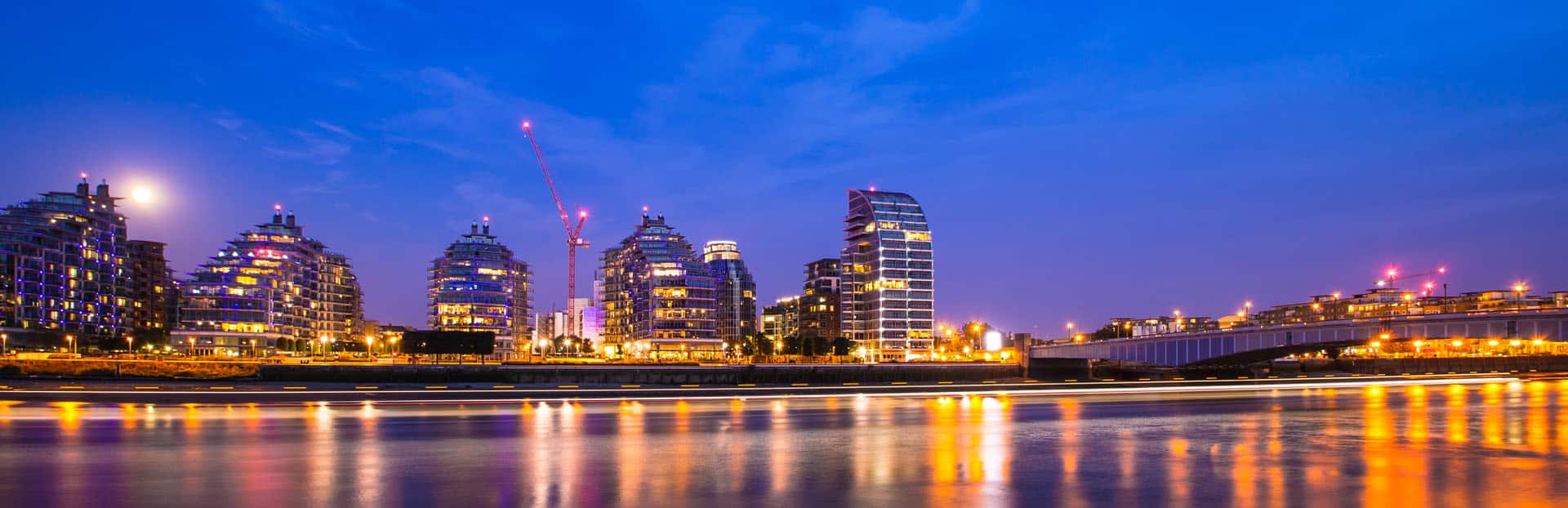
Wandsworth is a borough of south-west London, south of the river. The average sold price in Wandsworth is £672,069 on the HM Land Registry House Price Index, 131.8% above the England average of £289,946 and 21.6% above the wider London figure of £552,655. That puts Wandsworth firmly in prime inner-London territory, where the price of entry is high and gross yields compress into a narrow 4.8% to 5.3% band across the eight postcodes. The borough's population grew 6.68% between the 2011 and 2021 censuses, from 306,995 to 327,506 residents.
What separates Wandsworth from cheaper markets further out is the gap between how the sales market and the rental market behave. Homes take a long time to sell here, from around 338 days in SW12 up to over 1,000 days in the Battersea and Nine Elms postcodes, yet a rental listing lets in 41 to 59 days across every postcode. For an investor, that means capital is slow to move but tenant demand is quick and consistent. The spread between the cheapest postcode, SW17 (Tooting) at a £590,300 asking price, and the dearest, SW11 (Battersea, Clapham Junction) at £787,182, is £196,882, so budget alone steers which part of the borough is in reach.
This guide covers the London Borough of Wandsworth (ONS code E09000032) across postcodes SW4, SW8, SW11, SW12, SW15, SW17, SW18 and SW19. Wandsworth sits in south-west London, south of the river between Lambeth to the east and Richmond upon Thames to the west, taking in Battersea, Clapham, Balham, Putney, Tooting, Earlsfield and Southfields. The neighbouring boroughs of Lambeth and Merton share parts of the same rental market.
Article updated: July 2026
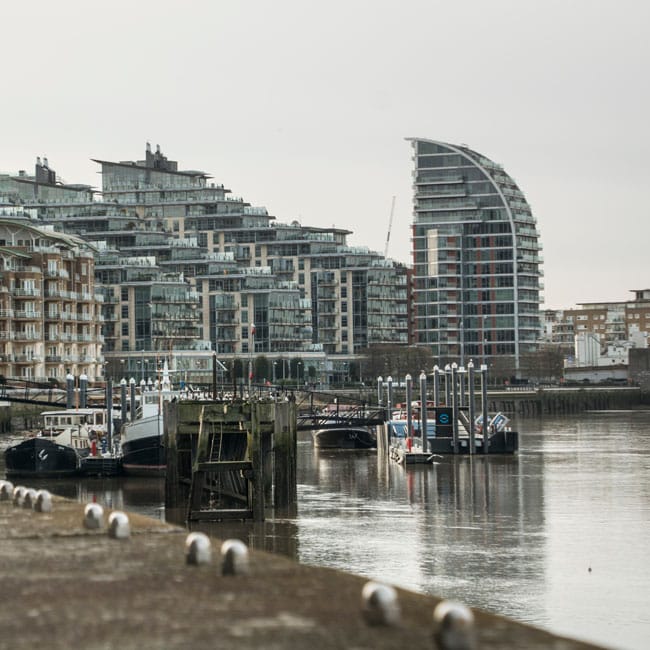
Why Invest in Wandsworth?
Wandsworth added 20,511 residents between the 2011 and 2021 censuses, a 6.68% rise from 306,995 to 327,506, slightly ahead of the 6.3% England and Wales average. The borough runs from Battersea and Nine Elms on the river down through Clapham, Balham and Tooting to Putney and Southfields in the west. It is one of the most connected parts of south London, with the Northern line now extended to Nine Elms and Battersea Power Station, District line stops at Putney and Southfields, and Clapham Junction handling more trains than any other station in Britain.
The local employment rate of 82.9% is well above the Great Britain rate of 75.6%. Wandsworth's tenant base leans towards professionals working across central London and the City, drawn by the fast commute and the run of green space at Battersea Park, Clapham Common, Wandsworth Common and Tooting Bec Common. The University of Roehampton in SW15 adds a student population, though it is a smaller part of the rental market than the professional-renter demand that runs through the whole borough.
Median gross annual earnings in Wandsworth are £54,584, which is 17.6% above the London median of £46,415 and 39.5% above the Great Britain median of £39,125. Higher local wages support the rents landlords can charge, but they do not close the affordability gap: even at those earnings, Wandsworth's rents take more than half of local median income in every postcode, which is part of what pushes so much of the borough into the rental market in the first place.
Wandsworth Economic Summary
- Population: 327,506 (2021 Census). Growth of 6.68% from 2011.
- Median annual salary: £54,584 (local), £46,415 (London), £39,125 (Great Britain)
- Median weekly salary: £1,049.70 (local), £892.60 (London), £752.40 (Great Britain)
- Employment rate: 82.9% (local), 75.6% (Great Britain)
- Key employment sectors: Professional and technical services, information and communication, finance and insurance, health and social work, wholesale and retail
Source: ONS Census 2021, Nomis Labour Market Profile (ASHE 2025)
Regeneration and Investment in Wandsworth
The Nine Elms regeneration along the Wandsworth riverside is one of the largest development zones in central London, with around 20,000 new homes planned across the wider opportunity area centred on SW8 and SW11. The transformation runs from Battersea Power Station east towards Vauxhall, and it is the single biggest reason the SW8 and SW11 flat markets look the way they do today.
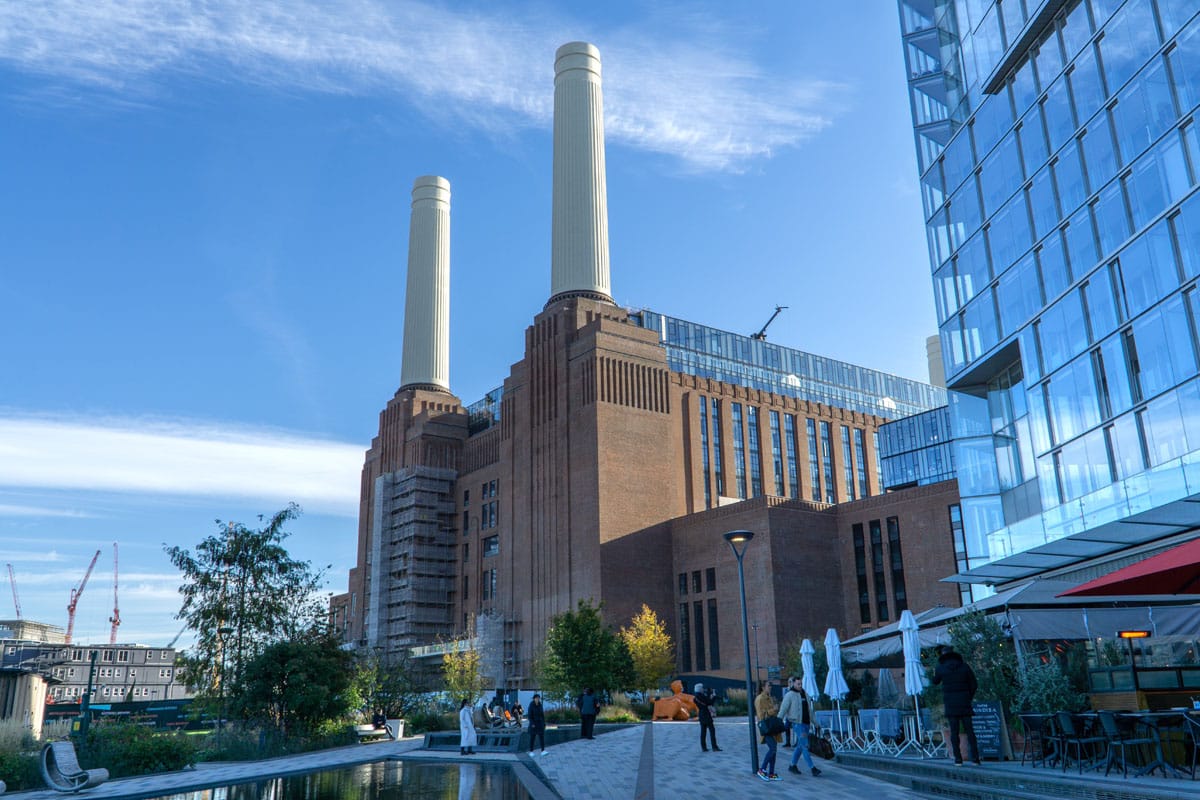
- Battersea Power Station (Phased, ongoing): The Grade II* listed power station reopened in October 2022 as a mixed-use destination with apartments, shops, restaurants and offices, including a large Apple campus. Later residential phases continue to add homes on the surrounding estate. The scheme sits at the western end of the Nine Elms zone and has its own Northern line station. Updates at Battersea Power Station.
- Nine Elms on the South Bank (Active): The wider Nine Elms opportunity area spans the SW8 riverside from Vauxhall to Battersea, with new residential towers, the relocated US Embassy, and the New Covent Garden Market redevelopment. It has added several thousand flats to the SW8 stock over the past decade, which is visible in that postcode's price data. Updates at Nine Elms on the South Bank.
- Clapham Junction and Wandsworth town centre (Active): Wandsworth Council has earmarked sites around Clapham Junction in SW11 and the town centre in SW18 for residential-led renewal, including the Southside centre. These are established, well-connected centres rather than new districts, so the homes added here feed straight into the existing rental market. Updates at Wandsworth Council.
Wandsworth Property Market Analysis
Average property prices in Wandsworth have risen 561.4% since January 1995, from £101,607 to £672,069. The sections below trace that journey cycle by cycle, then drill into current postcode-level data for sold prices, price per square foot, asking prices, growth trends, and monthly transaction volumes.
When was the last house price crash in Wandsworth?
All sold prices for Wandsworth come from the HM Land Registry House Price Index at local-authority level. The index tracks average prices from January 1995 to March 2026, covering 31 years of market cycles.
The 1995 to 2007 boom: Wandsworth started at £101,607 in January 1995. By December 2000 the average had reached £215,290, more than doubling in six years as inner London led the national market. Growth continued through the 2000s, passing £323,066 by December 2005, and the market peaked at £454,115 in October 2007.
2008 to 2009, the financial crisis: Prices fell from the October 2007 peak of £454,115 to a trough of £366,386 in January 2009, a decline of 19.3% over 15 months. The worst year-on-year reading was -16.3% in January 2009. Wandsworth's fall was steeper than many regional markets, which is typical of prime London, where the same forces that drive prices up fastest in a boom pull them down hardest in a downturn.
Recovery, 2009 to 2011: Inner London bounced back faster than the rest of the country. Prices climbed off the January 2009 trough and passed the previous October 2007 peak by August 2011, at £454,405. That recovery took under four years, against the eight-and-a-half years it took many northern markets to regain their pre-crash levels.
The 2012 to 2016 surge: This was Wandsworth's strongest run. Prices moved from £440,044 in March 2011 to £635,886 by December 2014, then peaked at £709,000 in October 2016. Annual growth ran into double digits at points, reaching 14.5% in December 2014. Global capital, a weaker pound after the 2016 referendum, and the extension of the Northern line towards Battersea all pushed prime south-west London prices to record highs.
2016 to 2019, the plateau: After the October 2016 high, the market eased. Higher stamp duty on additional properties, tighter mortgage rules and Brexit uncertainty cooled the top end. Prices drifted from £709,000 down to £657,013 by March 2019 before steadying around £693,507 by December 2019.
2020 to 2022, the pandemic peak: The stamp duty holiday and renewed demand for homes with outdoor space lifted the market again. Prices rose from £679,701 in June 2020 to an all-time high of £767,904 in October 2022, with annual growth of 9.4% at that point.
2023 to present: Higher mortgage rates then unwound part of that gain. Prices eased to £728,527 by December 2023 (-2.8% annual), £705,690 by December 2024 (-3.1% annual) and £691,849 by December 2025 (-2.0% annual), reaching £672,069 at the latest reading in March 2026. That leaves the current average 12.5% below the October 2022 high and 2.7% below where it stood a decade ago in March 2016.
Long-term growth summary:
- 5 years (March 2021 to March 2026): 0.8% growth (£667,042 to £672,069)
- 10 years (March 2016 to March 2026): -2.7% change (£690,859 to £672,069)
- 15 years (March 2011 to March 2026): 52.7% growth (£440,044 to £672,069)
- 20 years (March 2006 to March 2026): 98.9% growth (£337,932 to £672,069)
- 30 years (January 1995 to March 2026): 561.4% growth (£101,607 to £672,069)
Wandsworth's 30-year return of 561.4% is among the strongest of any English local authority, and the recovery after 2009 was quick, back above the pre-crash peak within four years. The data since 2016 reads differently. Prices reached £709,000 in October 2016, then set a fresh high of £767,904 in October 2022, and have since come back to £672,069. An investor who bought at the October 2022 peak would be 12.5% down on the Land Registry average today. The long-run figures are strong; the last decade has been flat to slightly negative.
- All property types
- Detached
- Semi-detached
- Terraced
- Flats
- All property types
- Detached
- Semi-detached
- Terraced
- Flats
Sold House Prices in Wandsworth
The average sold price across all property types in Wandsworth is £672,069, which is 131.8% above the England average of £289,946 as of March 2026. The premium is wide across every property type, but the market a buy-to-let investor actually buys into is the flat market, and flats carry the smallest premium of the four types. That single fact shapes most of what follows on this page.
| Property Type | Wandsworth Average | England Average | Difference |
|---|---|---|---|
| Detached houses | £2,333,195 | £470,492 | +395.9% |
| Semi-detached houses | £1,293,760 | £288,185 | +348.9% |
| Terraced houses | £952,204 | £243,788 | +290.6% |
| Flats and maisonettes | £516,555 | £214,563 | +140.7% |
| All property types | £672,069 | £289,946 | +131.8% |
Detached houses at £2,333,195 sit almost 400% above England's £470,492, but the figure covers a tiny slice of the borough. Detached homes make up under 4% of stock in most Wandsworth postcodes and just 1.4% in SW8, so this average reflects a small number of very large houses on Putney Heath and around the commons rather than a market an investor can buy at scale. Annual change of -1.8% over the past year.
Semi-detached houses at £1,293,760 are 348.9% above England's £288,185. Like detached stock, semis are thin on the ground in the denser northern postcodes and more common in Putney and Southfields. The -0.7% annual change is the mildest of the four types, so this end of the market has held up better than the flats that dominate the borough.
Terraced houses at £952,204 carry a 290.6% premium over England's £243,788. The Victorian terraces of Balham, Tooting and Earlsfield are the family-home backbone of Wandsworth, and they command far more than a terrace almost anywhere else in the country. Annual change of -1.2%.
Flats and maisonettes at £516,555 show the smallest premium at 140.7% above England's £214,563, and this is the market most buy-to-let purchases sit in. It is also the type that has softened most, with a -6.3% annual change. The Nine Elms and Battersea new-build boom added a large volume of flats to SW8 and SW11, and that extra supply is part of why flat values have come off hardest across the borough.
Price Per Square Foot in Wandsworth
Just £147 per square foot separates Wandsworth's cheapest postcode from its dearest, with SW15 (Putney, Roehampton) at £724 and SW11 (Battersea, Clapham Junction) at £871. Measuring by the square foot takes property size out of the comparison, so it shows what a location itself commands rather than how big the homes are. SW11's river frontage, the Battersea Power Station estate and the pull of Clapham Junction put it at the top of the table.
| Rank | Area | Price Per Sq Ft |
|---|---|---|
| 1 | SW15 (Putney, Roehampton) | £724 |
| 2 | SW17 (Tooting) | £730 |
| 3 | SW19 (Southfields, Wimbledon) | £745 |
| 4 | SW18 (Wandsworth Town, Earlsfield) | £800 |
| 5 | SW4 (Clapham) | £818 |
| 6 | SW8 (Nine Elms, South Lambeth) | £836 |
| 7 | SW12 (Balham) | £844 |
| 8 | SW11 (Battersea, Clapham Junction) | £871 |
SW15 at £724 per square foot is the cheapest space in the borough, based on 902 transactions analysed. Putney and Roehampton stretch from riverside apartments down to the large estates around Richmond Park, and that wider mix of stock pulls the per-square-foot figure below the northern postcodes.
SW11 at £871 per square foot tops the table, drawn from 1,107 transactions. The premium reflects Battersea's riverside position, the completed Power Station estate and Clapham Junction's transport pull. When buyers pay the most per square foot, they are paying for location rather than floor area, and in SW11 that means the river and the fastest routes into the City and the West End.
For Sale Asking Prices in Wandsworth
SW17 (Tooting) at £590,300 and SW11 (Battersea, Clapham Junction) at £787,182 sit 33.4% apart, the full range of asking prices across the eight postcodes. The mean asking price across the borough is £663,635. Unlike many cities, Wandsworth has no genuinely cheap corner: even the lowest postcode asks close to £600,000.
| Rank | Area | Asking Price |
|---|---|---|
| 1 | SW17 (Tooting) | £590,300 |
| 2 | SW19 (Southfields, Wimbledon) | £609,057 |
| 3 | SW4 (Clapham) | £609,116 |
| 4 | SW18 (Wandsworth Town, Earlsfield) | £615,050 |
| 5 | SW15 (Putney, Roehampton) | £622,115 |
| 6 | SW12 (Balham) | £709,363 |
| 7 | SW8 (Nine Elms, South Lambeth) | £766,900 |
| 8 | SW11 (Battersea, Clapham Junction) | £787,182 |
SW17 at £590,300 is the lowest asking price in the borough, and it sits below the borough-wide sold-price average of £672,069. Tooting has become one of the busier residential centres in south London, with Northern line stops and a lively high street, and its asking prices still trail Balham next door. For a budget-led buyer, SW17 is where the entry cost is lowest.
SW11 at £787,182 is the most expensive, £196,882 above SW17. Battersea and Clapham Junction pull together the borough's dearest ingredients: the river, the Power Station estate and the busiest rail interchange in the country. SW8 (Nine Elms, South Lambeth) is close behind at £766,900, its asking prices carried by the new-build riverside towers that fill much of that postcode.
House Price Growth in Wandsworth
Two Wandsworth postcodes posted positive growth across all three timeframes: SW18 at 5.8% (one-year), 4.1% (three-year) and 6.3% (five-year), and SW17 at 2.8%, 3.1% and 1.8%. The rest of the borough is mixed, and SW8 (Nine Elms) shows the widest swings of any postcode.
| Area | 1 Year | 3 Years | 5 Years |
|---|---|---|---|
| SW18 (Wandsworth Town, Earlsfield) | 5.8% | 4.1% | 6.3% |
| SW17 (Tooting) | 2.8% | 3.1% | 1.8% |
| SW11 (Battersea, Clapham Junction) | -4.3% | -16.6% | 1.3% |
| SW8 (Nine Elms, South Lambeth) | 9.4% | -34.4% | 1.1% |
| SW4 (Clapham) | -1.9% | -1.5% | 0.5% |
| SW19 (Southfields, Wimbledon) | -1.6% | -3.1% | -1.9% |
| SW12 (Balham) | 0.7% | -5.8% | -2.1% |
| SW15 (Putney, Roehampton) | -4.5% | -11.6% | -9.0% |
SW18 at 6.3% over five years posted the strongest and steadiest set of readings, positive across one, three and five years. Wandsworth Town and Earlsfield are mid-market family territory, with Victorian terraces, direct trains to Waterloo and the Southside centre at the heart of the town. That combination has held demand more consistently than the pricier flat-heavy postcodes.
SW8's -34.4% over three years is the sharpest fall in the borough, sitting oddly next to a +9.4% one-year reading. The Nine Elms building programme delivered a large wave of new flats, and a market absorbing that much new supply produces volatile averages as the mix of what sells shifts. SW15 (Putney, Roehampton) is the weakest over the longer run at -9.0% over five years, the only postcode down across all three windows.
Monthly Property Sales in Wandsworth
Monthly sales run from 18 transactions in SW8 to 57 in SW18, with turnover rates from 3% in SW8 and SW11 up to 9% in SW12. The busiest postcode by volume, SW18, is also the one with the strongest and steadiest growth, while the two Nine Elms and Battersea postcodes turn over the smallest share of their stock.
| Area | Sales Per Month | Turnover | Asking Price |
|---|---|---|---|
| SW18 (Wandsworth Town, Earlsfield) | 57 | 7% | £615,050 |
| SW11 (Battersea, Clapham Junction) | 52 | 3% | £787,182 |
| SW19 (Southfields, Wimbledon) | 48 | 5% | £609,057 |
| SW17 (Tooting) | 44 | 6% | £590,300 |
| SW15 (Putney, Roehampton) | 41 | 6% | £622,115 |
| SW12 (Balham) | 27 | 9% | £709,363 |
| SW4 (Clapham) | 24 | 5% | £609,116 |
| SW8 (Nine Elms, South Lambeth) | 18 | 3% | £766,900 |
SW12 (Balham) has the highest turnover at 9% despite one of the lower monthly sales counts, because its housing stock is smaller so a similar number of sales represents a bigger share of homes changing hands. Higher turnover points to an easier exit when the time comes to sell.
SW8 and SW11 share the lowest turnover at 3%. Both hold large volumes of new-build flats where owners tend to hold longer, and where a big block completing all at once inflates the count of homes without a matching rise in resales. The result is a lot of stock but a small proportion of it trading in any given month.
How Long Properties Take to Sell in Wandsworth
The Wandsworth sales market is slow: SW12 (Balham) is the quickest to clear at around 11 months of unsold stock, while SW11 (Battersea) and SW8 (Nine Elms) sit at over 33 months at the current rate of sale. Months of unsold stock shows how much for-sale supply is sitting there measured against how fast homes are selling. In a market this size, days-on-market readings become unreliable, so months of supply is the cleaner measure of exit speed here.
| Area | Months of Unsold Stock | Sales Per Month | Market |
|---|---|---|---|
| SW12 (Balham) | 11.1 | 28 | Balanced market |
| SW18 (Wandsworth Town, Earlsfield) | 14.3 | 60 | Buyer's market |
| SW15 (Putney, Roehampton) | 16.7 | 41 | Buyer's market |
| SW17 (Tooting) | 16.7 | 44 | Buyer's market |
| SW19 (Southfields, Wimbledon) | 16.7 | 51 | Buyer's market |
| SW4 (Clapham) | 20.0 | 26 | Buyer's market |
| SW11 (Battersea, Clapham Junction) | 33.3 | 54 | Buyer's market |
| SW8 (Nine Elms, South Lambeth) | 33.3 | 19 | Buyer's market |
How long your money is tied up at the end is the cost a yield figure never shows. SW11 and SW8 hold around 33 months of unsold stock, three times SW12's 11.1, so an owner in the Battersea and Nine Elms flat market should plan for a long sale. The heavy new-build supply that gives those postcodes their scale is the same thing that slows the resale market down. SW12 and SW18 clear fastest, which for a buy-to-let investor means a more predictable exit whenever the time comes to sell.
What Type of Property Can You Buy in Wandsworth?
Flats are the largest category in every Wandsworth postcode, from 45.4% of stock in SW15 (Putney, Roehampton) up to 82.7% in SW8 (Nine Elms). This is a flat borough, and the mix of stock is what pushes buy-to-let towards apartments rather than houses. The figures below are drawn from 2021 Census records for each postcode.
| Area | Detached | Semi-detached | Terraced | Flats |
|---|---|---|---|---|
| SW4 (Clapham) | 1.5% | 6.0% | 17.9% | 74.5% |
| SW8 (Nine Elms, South Lambeth) | 1.4% | 3.8% | 12.0% | 82.7% |
| SW11 (Battersea, Clapham Junction) | 1.5% | 5.0% | 17.8% | 75.4% |
| SW12 (Balham) | 2.5% | 10.1% | 22.8% | 64.6% |
| SW15 (Putney, Roehampton) | 16.4% | 14.8% | 23.3% | 45.4% |
| SW17 (Tooting) | 2.4% | 13.2% | 34.6% | 49.8% |
| SW18 (Wandsworth Town, Earlsfield) | 3.4% | 13.6% | 27.1% | 55.8% |
| SW19 (Southfields, Wimbledon) | 7.2% | 12.8% | 25.1% | 54.7% |
SW8 (Nine Elms) is the most flat-dominated postcode at 82.7%, with just 1.4% detached and 12.0% terraced. That is the imprint of the riverside towers, and it lines up with SW8's high asking prices and its slow, low-turnover resale market. City-fringe flats here suit professional single lets and sharers working across central London.
SW15 (Putney, Roehampton) has the most balanced mix, with 16.4% detached and the smallest flat share at 45.4%. Roehampton's larger estates and Putney's family houses give this postcode more variety than the dense northern postcodes, which is part of why its per-square-foot cost is the lowest in the borough. SW17 (Tooting) holds the most terraces at 34.6%, the Victorian family stock that underpins its steadier growth.
Flats combine purpose-built and converted units. A small share of mobile and temporary dwellings is not shown, so rows may not total 100%.
Wandsworth Rental Market Analysis
Monthly rents in Wandsworth range from £2,352 in SW17 to £3,504 in SW11, with gross rental yields from 4.8% to 5.3% across all eight postcodes. Where the sales market is slow, the rental market is not: every postcode reads as a landlord's market, with homes letting in 41 to 59 days. For investors asking is buy to let worth it in Wandsworth, the sections below break down rents, yields and tenant affordability postcode by postcode. If you are working out how to build a property portfolio in London, Wandsworth pairs a deep, fast-letting tenant market with a high cost of entry. Browse current buy-to-let homes for sale across the region.
Average Rent & Gross Rental Yields in Wandsworth
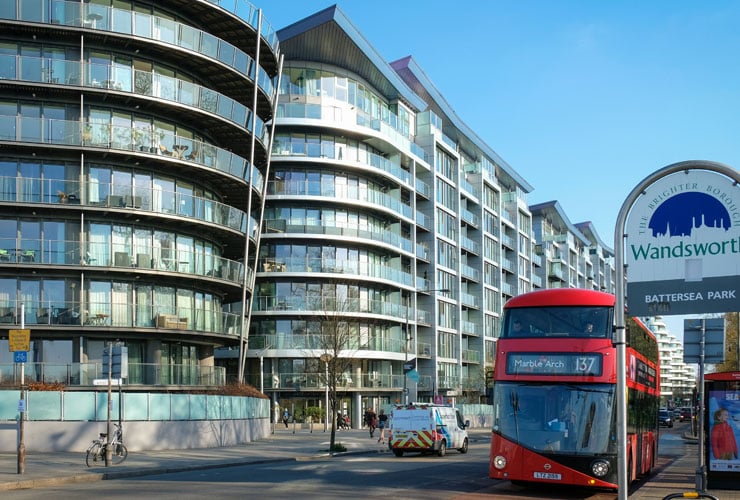
Gross rental yields in Wandsworth range from 4.8% in SW12, SW17 and SW19 to 5.3% in SW11 and SW4. The band is tight, and the top yield does not sit with the cheapest postcode as it does in most markets. SW11 charges the highest rent in the borough at £3,504 a month and reaches 5.3% despite its £787,182 asking price, while SW4 (Clapham) reaches the same 5.3% on a much lower £609,116 asking price.
| Area | Average Monthly Rent | Asking Price | Gross Yield |
|---|---|---|---|
| SW11 (Battersea, Clapham Junction) | £3,504 | £787,182 | 5.3% |
| SW4 (Clapham) | £2,670 | £609,116 | 5.3% |
| SW18 (Wandsworth Town, Earlsfield) | £2,593 | £615,050 | 5.1% |
| SW8 (Nine Elms, South Lambeth) | £3,219 | £766,900 | 5.0% |
| SW15 (Putney, Roehampton) | £2,535 | £622,115 | 4.9% |
| SW12 (Balham) | £2,866 | £709,363 | 4.8% |
| SW17 (Tooting) | £2,352 | £590,300 | 4.8% |
| SW19 (Southfields, Wimbledon) | £2,416 | £609,057 | 4.8% |
SW4 at 5.3% reaches the top of the yield table on a mid-range £609,116 asking price and a £2,670 rent. Clapham's tenant base is heavily weighted towards young professionals sharing flats around the common and the tube, and that steady demand supports the rent against a price well below Battersea's.
SW11 at 5.3% gets there differently, on the borough's highest rent of £3,504 against its highest asking price of £787,182. The two ends of the yield table meet at the same figure from opposite directions, which is unusual and worth understanding before choosing where to buy. At the bottom, SW17, SW19 and SW12 all sit at 4.8%, still a narrow gap from the top.
Gross Rental Yield by Postcode
Is Wandsworth Rent High?
Monthly rents in Wandsworth take between 51.7% and 77.0% of the local median gross monthly salary. The widely cited affordability threshold is 30% of gross income, and every Wandsworth postcode sits well above it. That gap is the clearest read on why the borough has such a deep rental market: on a single median salary, buying and even renting solo is a stretch, so households share, and demand for rented flats stays high.
The median gross weekly salary in Wandsworth is £1,049.70, which works out at £4,549 per month or £54,584 per year. This is above the London median of £892.60 a week and the Great Britain median of £752.40 a week. Data from the Nomis Labour Market Profile (ASHE 2025).
| Rank | Area | Rent as % of Income |
|---|---|---|
| 1 | SW11 (Battersea, Clapham Junction) | 77.0% |
| 2 | SW8 (Nine Elms, South Lambeth) | 70.8% |
| 3 | SW12 (Balham) | 63.0% |
| 4 | SW4 (Clapham) | 58.7% |
| 5 | SW18 (Wandsworth Town, Earlsfield) | 57.0% |
| 6 | SW15 (Putney, Roehampton) | 55.7% |
| 7 | SW19 (Southfields, Wimbledon) | 53.1% |
| 8 | SW17 (Tooting) | 51.7% |
SW17 at 51.7% is the most affordable postcode for a tenant, and it is still well beyond the 30% mark. A single median earner cannot comfortably rent alone anywhere in the borough, which is why the typical Wandsworth tenancy is a professional sharer or a dual-income household rather than one person on the median wage.
SW11 at 77.0% is the least affordable, driven by the £3,504 rent in Battersea. Tenants at that level are typically higher-earning professionals or groups pooling incomes, well above the median. The figures here compare a whole flat's rent against one median salary, which is why they run so high across a sharing market like this.
How Big Is Wandsworth's Private Rented Sector?
The private rented sector is deepest in SW11 at 41.6% of households and SW8 at 37.8%, and shallowest in SW15 (Putney, Roehampton) at 27.7%. The share of homes already rented privately shows how established the local tenant market is, and in Wandsworth it is one of the largest of any London borough. The table below shows household tenure by postcode.
| Area | Owned Outright | Owned with Mortgage | Private Rented | Social Rented |
|---|---|---|---|---|
| SW11 (Battersea, Clapham Junction) | 16.7% | 20.8% | 41.6% | 19.4% |
| SW8 (Nine Elms, South Lambeth) | 13.6% | 14.7% | 37.8% | 32.2% |
| SW12 (Balham) | 18.3% | 28.2% | 37.6% | 15.1% |
| SW4 (Clapham) | 13.1% | 21.9% | 37.4% | 26.1% |
| SW17 (Tooting) | 20.0% | 27.3% | 35.9% | 15.6% |
| SW19 (Southfields, Wimbledon) | 24.2% | 26.8% | 34.4% | 12.9% |
| SW18 (Wandsworth Town, Earlsfield) | 20.6% | 32.4% | 32.4% | 13.0% |
| SW15 (Putney, Roehampton) | 30.4% | 28.1% | 27.7% | 13.1% |
SW11 (Battersea) has the largest private rented sector at 41.6%, with more homes rented privately than owned outright and with a mortgage combined. That depth of existing tenants is a different signal from yield, and it is why Battersea lets so quickly despite the high rents. SW15 (Putney, Roehampton) sits at the other end with 27.7% private renting and the borough's highest outright ownership at 30.4%, a more owner-occupied feel that matches its steadier, house-heavy stock.
Every postcode reads as a landlord's market on current listing volumes. Across the borough a rental home takes roughly 41 to 59 days to let, from 41 days in SW15 to 59 days in SW8, with SW11 the busiest at around 428 lettings a month against only 725 homes on the market at any one time. That is a fast-moving rental market sitting on top of a slow sales one.
Local Housing Allowance Rates in Wandsworth
Wandsworth spans three Broad Rental Market Areas, so Local Housing Allowance rates vary by postcode: the Inner South West London area covers most of the borough, with SW19 in Outer South West London and SW4 in Inner South East London. Local Housing Allowance sets the maximum housing support a tenant on benefits can receive, so it acts as a rent floor for landlords letting to that part of the market. Because Wandsworth straddles three areas, the rate for a given size of home is not the same across the whole borough. To check the current rate for a specific address, you can use the government's official Local Housing Allowance calculator.
| Property Size | Inner South West London (weekly) | Outer South West London (SW19) | Inner South East London (SW4) |
|---|---|---|---|
| Shared accommodation | £157.64 | £136.13 | £149.59 |
| 1 bedroom | £326.79 | £276.16 | £298.15 |
| 2 bedrooms | £391.23 | £344.05 | £356.71 |
| 3 bedrooms | £497.10 | £414.25 | £448.77 |
| 4 bedrooms | £667.40 | £586.85 | £604.11 |
Most of Wandsworth, including SW8, SW11, SW12, SW15, SW17 and SW18, falls in the Inner South West London area, where the two-bedroom rate of £391.23 a week works out at about £1,695 a month. That is well below the £2,352 to £3,504 open-market rents recorded across the borough, so a benefit-backed tenancy sits far under Wandsworth's market rents, and the stock that fits within these rates is scarce in a borough priced this high. SW19 (Southfields, Wimbledon) uses the lower Outer South West London rates, and SW4 (Clapham) the Inner South East London rates, so a landlord letting to that part of the market needs to check which area an address falls in rather than assume one borough-wide figure.
Buy-to-Let Considerations
Are House Prices High in Wandsworth? Price-to-Earnings Ratios
Buying a property in Wandsworth costs between 10.8 and 14.4 times the local median annual salary. This is based on the Nomis Labour Market Profile for Wandsworth, which puts the median gross annual income for residents at £54,584.
The national benchmark for price-to-earnings is 7.4x (England's average sold price of £289,946 divided by the Great Britain median annual salary of £39,125). Every Wandsworth postcode sits above that benchmark, which is the expected picture for prime inner London: prices are high relative to income even against strong local earnings.
| Rank | Area | Price-to-Earnings Ratio |
|---|---|---|
| 1 | SW17 (Tooting) | 10.8x |
| 2 | SW19 (Southfields, Wimbledon) | 11.2x |
| 3 | SW4 (Clapham) | 11.2x |
| 4 | SW18 (Wandsworth Town, Earlsfield) | 11.3x |
| 5 | SW15 (Putney, Roehampton) | 11.4x |
| 6 | SW12 (Balham) | 13.0x |
| 7 | SW8 (Nine Elms, South Lambeth) | 14.0x |
| 8 | SW11 (Battersea, Clapham Junction) | 14.4x |
SW17 at 10.8x is the most affordable postcode against local earnings, and it is the same postcode with the lowest asking price and one of the steadier growth records. Even so, at nearly eleven times income it is a long way above the 7.4x national benchmark, so an investor here is buying into a high-price, high-wage market rather than a cheap one.
SW11 at 14.4x sits at the top of the borough. At more than fourteen times local income, Battersea's prices reflect the river, the Power Station estate and the transport pull rather than affordability. Buyers at this end are typically dual-income households or cash-rich purchasers, and the elevated ratio is why the yield still lands at 5.3% only because the rent is the highest in the borough.
Deposit Requirements in Wandsworth
A 30% deposit on a buy-to-let property in Wandsworth runs from £177,090 in SW17 to £236,154 in SW11. The £59,064 gap between the cheapest and dearest deposit is itself larger than a full 30% deposit in many northern cities. For an investor comparing Wandsworth with other parts of London, these are among the highest deposit requirements of any south London borough.
Beyond the deposit, the stamp duty calculation and other buy-to-let running costs add materially to the capital required, and stamp duty in particular is heavy at these price points.
| Rank | Area | 30% Deposit Required |
|---|---|---|
| 1 | SW17 (Tooting) | £177,090 |
| 2 | SW19 (Southfields, Wimbledon) | £182,717 |
| 3 | SW4 (Clapham) | £182,735 |
| 4 | SW18 (Wandsworth Town, Earlsfield) | £184,515 |
| 5 | SW15 (Putney, Roehampton) | £186,635 |
| 6 | SW12 (Balham) | £212,809 |
| 7 | SW8 (Nine Elms, South Lambeth) | £230,070 |
| 8 | SW11 (Battersea, Clapham Junction) | £236,154 |
SW17 is the lowest way into the borough at a £177,090 deposit, and it comes with the top yield tier at 4.8%, one of the steadier growth records and the most affordable rents. SW4 sits just above at £182,735 and reaches the borough's top yield of 5.3%, so the two cheapest deposits after SW17 and SW19 also carry among the highest returns. That is a different pattern from the more expensive SW11 and SW8, where the larger deposits buy into the slow-selling Battersea and Nine Elms flat market.
The five cheapest postcodes, from SW17 to SW15, all cluster within about £10,000 of each other on the deposit, yet they behave differently. SW4 and SW18 pair those low deposits with the higher yields and steadier growth, while SW15 and SW19 sit at the softer end of the growth table. Similar deposit, different profile.
What the Wandsworth Data Tells Buy-to-Let Investors
In Wandsworth the top yield does not sit with the cheapest postcode. SW4 (Clapham) reaches the borough's top yield of 5.3% on a mid-range £609,116 asking price for buying an investment property, a £2,670 rent and one of the lower deposits at £182,735. SW11 (Battersea) matches that 5.3% from the other direction, on the highest rent of £3,504 against the highest asking price of £787,182.
SW18 (Wandsworth Town, Earlsfield) is the one postcode positive across every timeframe, up 5.8% over a year, 4.1% over three years and 6.3% over five, on a 5.1% yield and a £184,515 deposit. SW17 (Tooting) is the second postcode positive across all three windows and the cheapest way in, with the lowest asking price at £590,300, the lowest deposit at £177,090 and the most affordable rents in the borough.
At the pricier end, SW8 (Nine Elms) shows the widest swings, down 34.4% over three years but up 9.4% over the past year as the Nine Elms new-build market works through its supply. SW11 and SW8 also hold the most for-sale stock and the slowest sales, around 33 months of unsold supply, so an owner there should plan for a long exit. Buyers who want to come in below asking often look through off-market property in Wandsworth before homes reach the portals.
What runs through the whole borough is the rental market. Every postcode reads as a landlord's market, letting in 41 to 59 days, sitting on top of a sales market that can take years to clear. With an 82.9% employment rate, earnings well above the London median and a private rented sector reaching 41.6% in Battersea, Wandsworth's strength for an investor is tenant demand rather than headline yield or recent capital growth.
How Wandsworth Compares
Wandsworth's mean asking price of £663,635 is the second highest of five south-west London boroughs compared here, yet its top yield of 5.3% is among the strongest in the group. The comparison below places Wandsworth alongside four neighbouring boroughs. The mean asking price and mean monthly rent are simple averages across all postcodes with data. Top gross yield is the single highest postcode yield in each borough.
| Location | Mean Asking Price | Mean Monthly Rent | Mean Gross Yield | Top Yield (postcode) |
|---|---|---|---|---|
| Lambeth | £587,762 | £2,368 | 4.8% | 5.6% (SE5) |
| Kingston upon Thames | £590,531 | £1,931 | 3.9% | 4.2% (KT1, KT6) |
| Merton | £596,108 | £2,223 | 4.5% | 5.2% (CR4) |
| Wandsworth | £663,635 | £2,770 | 5.0% | 5.3% (SW11, SW4) |
| Richmond upon Thames | £880,115 | £2,622 | 3.6% | 4.9% (TW9) |
Wandsworth is the second most expensive borough in this comparison at £663,635 mean asking price, behind only Richmond, and it carries the highest mean monthly rent in the group at £2,770. Its top yield of 5.3% is just ahead of Merton's 5.2% and behind Lambeth's 5.6%, so on income Wandsworth sits in the upper half of the group despite its higher prices.
For investors focused on the lowest entry cost, Lambeth at £587,762 and Kingston upon Thames at £590,531 ask the least, though Kingston's 4.2% is the lowest top yield here. Merton next door offers a similar yield to Wandsworth on a lower average price, while Richmond upon Thames is the priciest at £880,115 with a 4.9% top yield. For a data-driven comparison across the whole country, see our guide to the highest-yielding areas.
Frequently Asked Questions
Is Wandsworth a good place to live for buy-to-let tenants?
It is one of the most rentable boroughs in south London, and it comes down to jobs, transport and green space. The employment rate is 82.9%, well above the 75.6% national figure, and the typical wage is £1,049.70 a week against roughly £892 across London. Tenants here are mostly professionals working across central London and the City, drawn by fast routes in from Clapham Junction, the Northern line and the District line.
It is also an easy place to let. Every postcode reads as a landlord's market, with homes letting in 41 to 59 days, and the run of commons at Battersea, Clapham, Wandsworth and Tooting Bec adds the outdoor space that keeps professional renters in the area rather than moving further out.
What are the best areas in Wandsworth for property investment?
The eight postcodes split by what you are after. SW4 (Clapham) and SW11 (Battersea, Clapham Junction) both reach the top yield of 5.3%, but from opposite ends: SW4 on a mid-range £609,116 asking price and a lower deposit, SW11 on the borough's highest rent of £3,504 against its highest asking price of £787,182.
For growth that has actually shown up, SW18 (Wandsworth Town, Earlsfield) is the one postcode positive across one, three and five years, at 5.8%, 4.1% and 6.3%, and SW17 (Tooting) is positive across all three too while being the cheapest way in at a £590,300 asking price. So if income matters most, SW4 leads on yield against a lower entry cost; if steady recent growth matters, SW18 and SW17 are the two that have held up.
How does Wandsworth compare to Lambeth for buy-to-let?
They are close neighbours with a similar tenant base, and the numbers are not far apart. Lambeth's mean asking price is £587,762 against Wandsworth's £663,635, so Lambeth is the cheaper entry, and its top yield of 5.6% edges Wandsworth's 5.3%. Wandsworth carries the higher mean rent at £2,770 a month against Lambeth's £2,368.
Both share the professional-renter demand that runs across inner south London, and both let quickly. The main trade-off is cost of entry against yield: Lambeth asks less and returns a touch more on the top postcode, Wandsworth commands higher rents and has the run of commons and river frontage that supports them.
Is there demand for student accommodation in Wandsworth?
Some, though it is concentrated in the west of the borough. The University of Roehampton sits in Putney and Roehampton in SW15, and the area's flats and shared houses support student lets, though students are a smaller part of Wandsworth's rental market than the professional-renter demand that drives the whole borough. Student lets come with summer voids and more hands-on management, so factor that in. For the purpose-built end of the market, see our guide to student property investment.
On the shared-house side, a sample of current SW15 room adverts puts a double with a shared bathroom at around £191 a week, with most between £165 and £254. SW17 (Tooting) and SW19 (Southfields, Wimbledon) also carry enough live adverts to read, at roughly £222 and £204 a week for the same room type. For how the numbers work on a shared house, see our HMO investment guide.
Can I find buy-to-let property under £600,000 in Wandsworth?
Only in one postcode on average. The cheapest is SW17 (Tooting) at a £590,300 asking price, so it is the single postcode sitting below £600,000, with SW19 and SW4 just above at around £609,000. The way in below the postcode average is by property type: flats across the borough average £516,555 on the Land Registry index, well under the house prices, and the terraces and flats of Tooting and Earlsfield are where the lower price points sit. If sub-£600,000 is the target, SW17 flats and the cheaper end of SW18 and SW19 are where to look, or explore below market value property.
What are average house prices in Wandsworth?
High, and well above the national picture. The average sold price in Wandsworth is £672,069 on the Land Registry index, about 131.8% above the England average of £289,946 as of March 2026. Asking prices by postcode run from £590,300 in SW17 (Tooting) up to £787,182 in SW11 (Battersea, Clapham Junction), with a borough-wide mean of £663,635. By type, detached homes average £2,333,195, semi-detached £1,293,760, terraced £952,204 and flats £516,555, though detached and semi-detached houses make up only a small share of a flat-dominated borough.
Through a buy-to-let lens, the flat market is where most purchases sit, and flats carry the smallest premium over England at 140.7% while showing the softest recent change at -6.3% over the past year.
What are the Local Housing Allowance rates in Wandsworth?
They vary by postcode, because Wandsworth spans three Broad Rental Market Areas. Most of the borough falls in Inner South West London, where the June 2026 rates run at £157.64 a week for a shared room, £326.79 for a one-bed, £391.23 for two beds, £497.10 for three and £667.40 for four. SW19 (Southfields, Wimbledon) uses the lower Outer South West London rates and SW4 (Clapham) the Inner South East London rates. Those figures are the most a tenant on housing support can claim towards rent, so for that part of the market they set a floor, and all sit well below Wandsworth's open-market rents.
What type of property is most common in Wandsworth?
Flats, in every single postcode, by a wide margin. They run from 45.4% of the stock in SW15 (Putney, Roehampton) up to 82.7% in SW8 (Nine Elms), where the riverside towers dominate. Terraced houses are the next most common, most concentrated in SW17 (Tooting) at 34.6%. Detached and semi-detached houses are scarce across the borough, together making up under 10% of stock in most postcodes, which is why buy-to-let here is overwhelmingly a flat market.
How do I buy an investment property in Wandsworth?
Start by deciding whether yield or steadier recent growth matters more, because that points you at a different postcode. SW4 (Clapham) reaches the top yield of 5.3% on a mid-range £609,116 asking price, while SW18 (Wandsworth Town, Earlsfield) pairs a 5.1% yield with growth positive across one, three and five years. Budget for a 30% deposit, which runs from £177,090 in SW17 up to £236,154 in SW11, plus a heavy stamp duty bill at these price points.
Beyond what is listed openly, experienced investors often buy below asking through off-market property and BMV property. To see what is available now, browse investment properties or buy-to-let homes for sale.
Ready to buy property?
Browse investment properties with prices and gross yields shown for each opportunity.
Get property alerts