
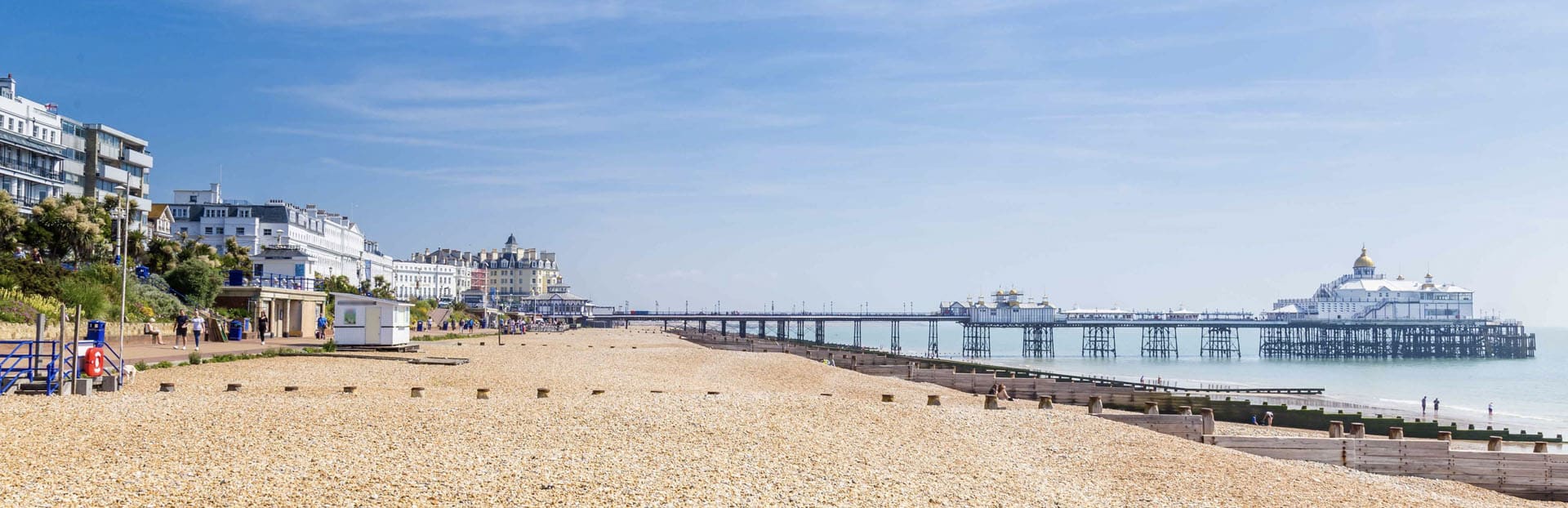
Eastbourne is a coastal town in East Sussex, in the South East of England. Houses in Eastbourne sell above the England average while flats sell well below it, which is why the town's all-property average of £255,473 reads as 11.9% under England's £289,946 on the HM Land Registry House Price Index. Detached homes here average £520,399, some 10.6% above England, and semi-detached houses £355,324, a 23.3% premium. The discount sits entirely in the flat market, where the £176,031 average is 18.0% below England. For a buyer, the headline figure understates what a house costs in Eastbourne and overstates the size of the bargain.
That split runs through the whole guide. Eastbourne is a South Coast resort and retirement town where the seafront and the older parts of the town carry a clear house premium, and the cheaper, flat-led postcodes do the work on rental yield. The five postcodes span from BN21 at a £267,486 average asking price to BN20 at £428,429, a 60.2% gap inside one town, and the higher yields sit with the cheaper end rather than the premium seafront.
This guide covers the local authority of Eastbourne (ONS code E07000061) across postcodes BN20, BN21, BN22, BN23, and BN24. Eastbourne sits on the East Sussex coast in the South East region, 20 miles east of Brighton and about 90 minutes by rail from London Victoria. The wider Sussex buy-to-let market also takes in Brighton to the west and Hastings to the east.
Article updated: July 2026
Why Invest in Eastbourne?
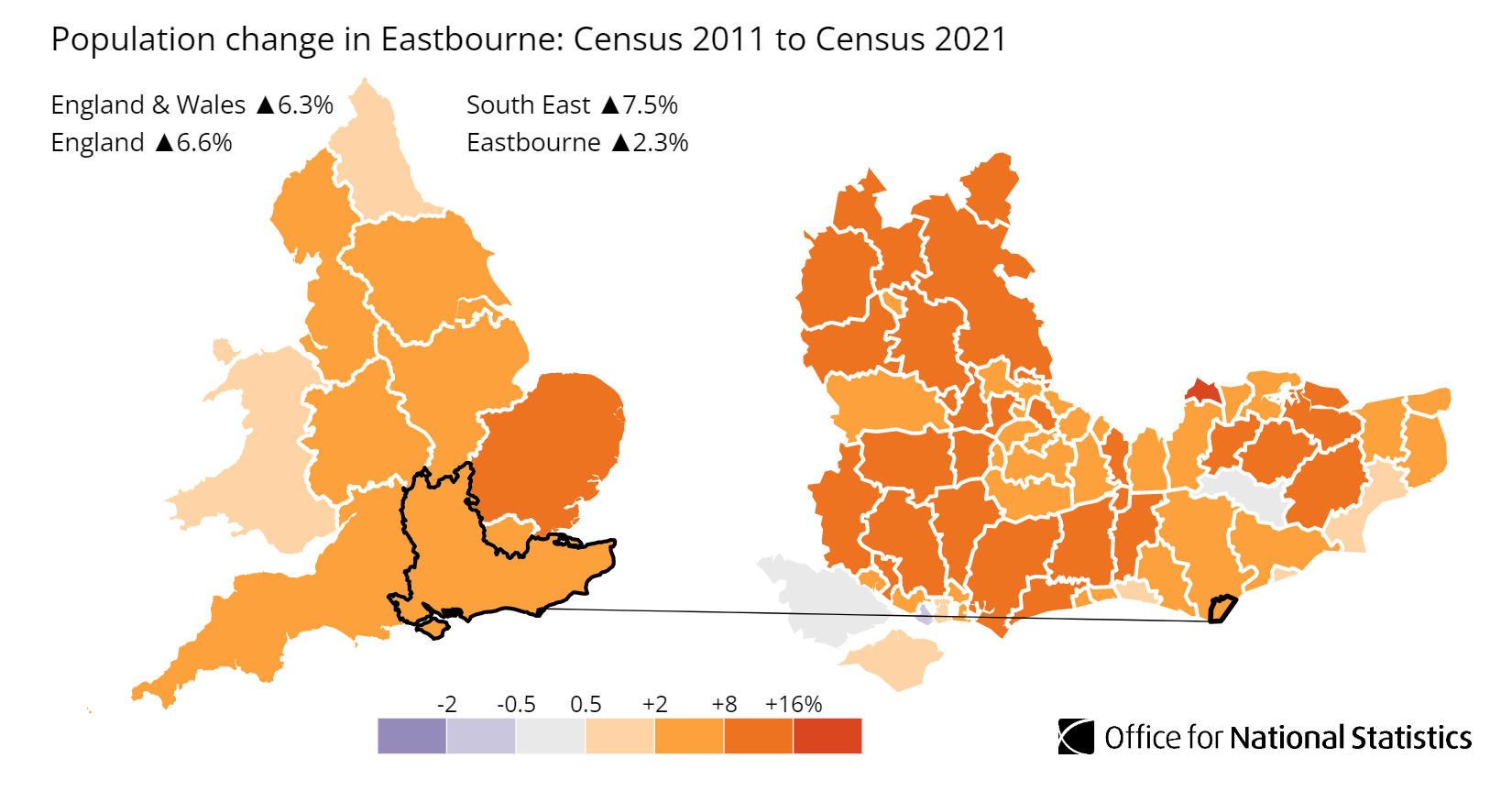
Eastbourne's population reached 101,686 at the 2021 Census, a 2.3% rise from 99,412 in 2011. That is slower growth than the 6.3% recorded across England and Wales, which fits a settled coastal town rather than a fast-expanding city. Eastbourne draws a mix of retirees, professionals priced out of Brighton, and families, and its position 90 minutes from London Victoria gives it a commuter pull alongside the seasonal tourism that defines the seafront.
The median gross weekly salary in Eastbourne is £716.10, which works out at £3,103 a month or £37,236 a year. That is below the South East regional median of £800.30 a week and the Great Britain median of £752.40. The local employment rate of 69.2% also sits under the South East's 80.3% and Great Britain's 75.4%. A coastal town built on healthcare, retail, and tourism carries a lower-wage, more service-led workforce than the South East average, which feeds straight into the rental market: tenant affordability is tighter here than the regional figures suggest.
Eastbourne's economy centres on healthcare, education, retail, and tourism. Eastbourne District General Hospital is one of the town's largest employers, alongside local schools and the University of Brighton's Eastbourne campus. The visitor economy, anchored by the seafront, the pier, and the Towner gallery, generates year-round hospitality work and a steady stream of demand for short-term and holiday let stock alongside the standard buy-to-let market.
Eastbourne Economic Summary
- Population: 101,686 (2021 Census). Growth of 2.3% from 2011.
- Median annual salary: £37,236 (local), £41,616 (South East), £39,125 (Great Britain)
- Employment rate: 69.2% (local), 80.3% (South East), 75.4% (Great Britain)
- Key employment sectors: Healthcare, education, retail, tourism and hospitality
Source: ONS Census 2021, Nomis Labour Market Profile (ASHE 2025, Employment Oct 2024-Sep 2025)
Regeneration and Investment in Eastbourne
Eastbourne has secured up to £20 million in government regeneration funding alongside private seafront redevelopment and town centre infrastructure works. The money is split between long-term community investment and the visible work changing the town centre and the seafront.
- Plan for Neighbourhoods (Confirmed, up to £20 million): Eastbourne is one of 75 areas selected by the UK Government to receive up to £20 million over 10 years through the Plan for Neighbourhoods programme. The funding covers community infrastructure, public space improvements, and capacity building across the town's wards. Details at GOV.UK Plan for Neighbourhoods prospectus.
- Claremont Hotel Seafront Redevelopment (Planning): The former Claremont Hotel site on Grand Parade is being redeveloped into residential apartments, with first occupants expected in early 2028. The scheme replaces a fire-damaged seafront building that has stood vacant since 2019, returning a prominent Grand Parade plot to use. Updates at Bournefree.
- Town Centre Movement and Access Package (In progress): Phase 2 of the Eastbourne Town Centre improvement scheme is pedestrianising sections of Terminus Road, converting Bolton Road and Langney Road to two-way traffic, and adding trees, seating, and cycle parking. Work started in September 2025 with completion expected in spring 2026. Updates at East Sussex Highways.
Source: Office for National Statistics - Population for Eastbourne
Eastbourne Property Market Analysis
Average property prices in Eastbourne have risen 464.8% since January 1995, from £45,231 to £255,473. The sections below trace that journey cycle by cycle, then drill into current postcode-level data for sold prices, price per square foot, asking prices, growth trends, and how long property takes to sell.
When was the last house price crash in Eastbourne?
Eastbourne is its own local authority, so all sold prices from HM Land Registry are recorded at town level. The Land Registry House Price Index tracks average prices from January 1995 to the latest reading, covering 31 years of market cycles.
The 1995 to 2007 boom: Eastbourne started at £45,231 in January 1995. By December 2000 the average had reached £78,677, and the early-2000s coastal boom then ran hard, lifting prices to £151,242 by December 2005. The market peaked at £176,134 in November 2007 after more than a decade of almost uninterrupted gains.
2008 to 2009, the financial crisis: Prices fell from the November 2007 peak of £176,134 to a trough of £139,999 in May 2009, a decline of 20.5% over 18 months. The worst year-on-year reading was -17.4% in May 2009. Eastbourne's fall was steeper than the average correction seen across many southern towns, in part because its boom had been so strong and its flat-heavy stock was more exposed when credit dried up.
The 2010 to 2013 stagnation: Prices bounced off the May 2009 trough but then went sideways. By December 2010 the average stood at £158,453, only to drift back to £152,049 by December 2012. Eastbourne spent close to four years stuck in a narrow band, unable to clear the pre-crash high.
Recovery, 2013 to 2014: Growth returned, with prices rising from £164,612 in December 2013 to £177,201 by December 2014. The September 2014 reading of £176,794 was the first to edge past the November 2007 pre-crash peak of £176,134. The full recovery took just under seven years.
The 2015 to 2019 growth run: Prices climbed steadily, from £189,249 in December 2015 to £207,725 in December 2016 and £221,998 by December 2017. A softer patch followed, with the average easing to £216,908 by December 2018 before recovering to £222,734 by December 2019.
2020 to 2022, the pandemic surge: The stamp duty holiday and a rush towards coastal and space-rich locations turbocharged Eastbourne. Prices jumped from £214,295 in June 2020 to £232,443 by December 2020, then to £257,209 by December 2021 (10.7% annual growth) and £287,593 by December 2022 (11.8% annual). The all-time high came mid-run, at £292,660 in August 2022.
The 2023 rate shock and the easing since: Higher mortgage rates cooled the market hard. Prices slid from the 2022 high to £270,822 by December 2023 (-5.8% annual), £260,777 by December 2024 (-3.7% annual), and £253,200 by December 2025. The latest reading of £255,473 in March 2026 sits 12.7% below the August 2022 peak, a genuine and recent correction rather than a story from the distant past.
Long-term growth summary:
- 5 years (March 2021 to March 2026): 6.0% growth (£241,017 to £255,473)
- 10 years (March 2016 to March 2026): 30.4% growth (£195,852 to £255,473)
- 15 years (March 2011 to March 2026): 67.4% growth (£152,585 to £255,473)
- 20 years (March 2006 to March 2026): 75.6% growth (£145,527 to £255,473)
- 30 years (January 1995 to March 2026): 464.8% growth (£45,231 to £255,473)
Eastbourne's 20.5% crash was deeper than the national average, and its five-year return of 6.0% is modest because the window opens near the pandemic peak and closes after the rate-shock correction. The 30-year return of 464.8% still shows strong long-run capital growth. An investor who bought at the exact top in August 2022 would now be 12.7% down on the Land Registry average, which frames the current market as a softer entry point than the headline run since 1995 implies.
- All property types
- Detached
- Semi-detached
- Terraced
- Flats
- All property types
- Detached
- Semi-detached
- Terraced
- Flats
Sold House Prices in Eastbourne
The average sold price across all property types in Eastbourne is £255,473, which is 11.9% below the England average of £289,946 as of March 2026. That discount is misleading on its own, because it is not spread across the housing stock. Houses sell at a premium to England here, while flats sell at a steep discount, and the all-property figure simply reflects how many flats Eastbourne has.
| Property Type | Eastbourne Average | England Average | Difference |
|---|---|---|---|
| Detached houses | £520,399 | £470,492 | +10.6% |
| Semi-detached houses | £355,324 | £288,185 | +23.3% |
| Terraced houses | £282,921 | £243,788 | +16.1% |
| Flats and maisonettes | £176,031 | £214,563 | -18.0% |
| All property types | £255,473 | £289,946 | -11.9% |
Detached houses at £520,399 carry a 10.6% premium over England's £470,492. This is the seafront-and-Meads end of Eastbourne, where period villas and larger family homes draw retirees and downsizers selling out of London and the wider South East. Annual growth of 1.0% points to a stable, demand-led market rather than a speculative one.
Semi-detached houses at £355,324 show the largest premium of all, 23.3% above England's £288,185. These are the workhorse family homes of BN22 and BN23, where steady owner-occupier demand and a tight supply of mid-sized stock keep prices firm. Annual growth of 2.0% is the strongest of any property type in the town.
Terraced houses at £282,921 sit 16.1% above England's £243,788. The terraced stock concentrates in the older central streets around BN21 and BN22, the type most often bought for single lets and small shares. Annual growth of 1.0% keeps pace with the detached market.
Flats and maisonettes at £176,031 are the one type below England, by 18.0% against £214,563. Eastbourne is unusually flat-heavy for a town its size, with large stocks of seafront conversions and purpose-built blocks aimed at retirees and the rental market. That depth of supply, plus annual change of -3.6%, holds flat values down and is exactly what drags the all-property average below the England line.
Price Per Square Foot in Eastbourne
Just £71 per square foot separates Eastbourne's cheapest postcode from its dearest, with BN21 at £298 and BN24 at £369. Measuring by the square foot strips out how big the homes are, so it compares the value of the location itself rather than the size of the house. BN24 (Pevensey, Stone Cross) and BN20 (Meads, Old Town) command the top rates, reflecting newer coastal stock at Sovereign Harbour's edge and the established villas of Meads.
| Rank | Area | Price Per Sq Ft |
|---|---|---|
| 1 | BN21 (Town Centre) | £298 |
| 2 | BN22 (Hampden Park) | £319 |
| 3 | BN23 (Langney, Sovereign Harbour) | £334 |
| 4 | BN20 (Meads, Old Town) | £364 |
| 5 | BN24 (Pevensey, Stone Cross) | £369 |
BN21 at £298 per square foot is the cheapest space in Eastbourne. This is the town centre, where the high share of flats and converted period stock pulls the per-foot rate down even though the area is central and walkable. Based on 551 transactions analysed, BN21's rate sits 19% below BN24's, which is a wide gap for a single town.
BN24 at £369 per square foot tops the table on 238 transactions analysed. Pevensey and Stone Cross sit at the eastern edge towards Sovereign Harbour, where newer detached and semi-detached houses make up the bulk of the stock. Paying more per square foot here buys newer build and a quieter, more suburban setting than the central postcodes.
For Sale Asking Prices in Eastbourne
BN21 at £267,486 and BN20 at £428,429 sit 60.2% apart, the widest asking-price gap among Eastbourne's five postcodes. That hierarchy broadly mirrors sold prices, with the central, flat-led postcode at the bottom and the premium Meads end at the top. The mean asking price across all five postcodes is £331,156.
| Rank | Area | Asking Price |
|---|---|---|
| 1 | BN21 (Town Centre) | £267,486 |
| 2 | BN23 (Langney, Sovereign Harbour) | £294,079 |
| 3 | BN22 (Hampden Park) | £299,870 |
| 4 | BN24 (Pevensey, Stone Cross) | £365,915 |
| 5 | BN20 (Meads, Old Town) | £428,429 |
BN21 at £267,486 is the lowest entry point in the town, the only postcode where the average asking price sits close to the town-wide Land Registry sold average of £255,473. The town centre's deep stock of flats and smaller period homes keeps the average asking price down, which is why this is where the higher yields cluster despite it being the most central location.
BN20 at £428,429 is the premium postcode by a clear margin, 60.2% above BN21. Meads and Old Town carry the town's larger detached villas, the seafront's most sought-after addresses, and the slowest-moving, lowest-yielding stock. This is owner-occupier and downsizer territory, where buyers pay for setting rather than rental return, a pattern the yield table later confirms.
House Price Growth in Eastbourne
Every Eastbourne postcode is down over one and three years, so the five-year figures are where the real differences show: BN22 leads at 8.7%, while BN21 is the only postcode negative across all three windows. The recent softness is town-wide, in line with the post-2022 correction in the Land Registry series, but the longer view separates the postcodes that have held value from the one that has not.
| Area | 1 Year | 3 Years | 5 Years |
|---|---|---|---|
| BN22 (Hampden Park) | -0.9% | -8.2% | 8.7% |
| BN24 (Pevensey, Stone Cross) | -4.0% | -4.7% | 6.9% |
| BN20 (Meads, Old Town) | -3.2% | -3.8% | 6.0% |
| BN23 (Langney, Sovereign Harbour) | -5.1% | -11.1% | 3.9% |
| BN21 (Town Centre) | -7.1% | -4.4% | -3.2% |
BN22 at 8.7% has the strongest five-year return in Eastbourne, even with a -8.2% three-year reading. Hampden Park's mix of semi-detached family homes and its position on the railway line into the town and beyond has supported demand across the cycle, and the five-year figure captures the pandemic uplift that the three-year window misses.
BN24 and BN20 sit close behind on five-year growth, at 6.9% and 6.0%, with the milder one-year falls of -4.0% and -3.2%. These are the newer-build and premium ends of the town, where supply is tighter and prices have given back less.
BN21 is the weakest, the only postcode negative over one, three, and five years (-7.1%, -4.4% and -3.2%). The town centre's flat-heavy stock has been the most exposed to the post-2022 cooling, the same dynamic that holds Eastbourne's flat sold prices below England.
Monthly Property Sales in Eastbourne
Sales volumes range from 9 a month in BN24 to 32 in BN23, with turnover from 5% to 11% across the five postcodes. The busier central and harbour postcodes change hands more often than the premium and edge-of-town ones, which matters for how easily an investor can buy in or sell out.
| Area | Sales Per Month | Turnover | Asking Price |
|---|---|---|---|
| BN23 (Langney, Sovereign Harbour) | 32 | 10% | £294,079 |
| BN21 (Town Centre) | 30 | 6% | £267,486 |
| BN22 (Hampden Park) | 29 | 11% | £299,870 |
| BN20 (Meads, Old Town) | 21 | 5% | £428,429 |
| BN24 (Pevensey, Stone Cross) | 9 | 5% | £365,915 |
BN22 records the highest turnover at 11%, just ahead of BN23 at 10%. Hampden Park's deep pool of mid-priced family homes keeps stock moving, and a higher turnover rate points to an easier exit when an investor comes to sell. BN23 sees the most transactions in raw terms at 32 a month, helped by the volume of newer flats and houses around Langney and Sovereign Harbour.
BN24 sits at the other end, with just 9 sales a month and 5% turnover. Pevensey and Stone Cross have a smaller, newer housing stock at the town's eastern edge, so fewer homes come to market and those that do can sit longer. BN20 shares the 5% turnover, where the premium Meads villas change hands slowly.
How Long Properties Take to Sell in Eastbourne
BN22 (Hampden Park) clears fastest at about 277 days, while BN20 (Meads, Old Town) and BN24 (Pevensey, Stone Cross) are slowest at roughly 608, a gap of nearly eleven months between Eastbourne's quickest and slowest postcodes. Days on market is the typical time a home is listed before it sells, and the months of unsold stock shows how much for-sale supply is sitting there at the current rate of sales.
| Area | Avg Days to Sell | Months of Unsold Stock | Market |
|---|---|---|---|
| BN22 (Hampden Park) | 277 | 9.1 | Balanced market |
| BN23 (Langney, Sovereign Harbour) | 304 | 10.0 | Balanced market |
| BN21 (Town Centre) | 507 | 16.7 | Buyer's market |
| BN20 (Meads, Old Town) | 608 | 20.0 | Buyer's market |
| BN24 (Pevensey, Stone Cross) | 608 | 20.0 | Buyer's market |
How long it takes to get back out is the cost that the yield figure never shows. BN22's 9.1 months of unsold stock means a far quicker exit than BN20 or BN24, each sitting on 20 months of supply. For an investor, a postcode that takes the best part of two years to clear its stock is one to plan a longer hold around, because trying to sell into that backlog can mean carrying the property well past the point you wanted to move on.
What Type of Property Can You Buy in Eastbourne?
Detached homes lead in the suburban postcodes, from 42.5% of stock in BN20 to 49.2% in BN24, while flats dominate the central BN21 at 51.4%. The mix of housing stock shapes which strategy fits each postcode. The figures below are drawn from 2021 Census records for each postcode.
| Area | Detached | Semi-detached | Terraced | Flats |
|---|---|---|---|---|
| BN20 (Meads, Old Town) | 42.5% | 23.7% | 9.1% | 24.5% |
| BN21 (Town Centre) | 20.4% | 13.7% | 14.5% | 51.4% |
| BN22 (Hampden Park) | 24.1% | 26.2% | 24.9% | 24.8% |
| BN23 (Langney, Sovereign Harbour) | 23.4% | 34.9% | 22.8% | 18.8% |
| BN24 (Pevensey, Stone Cross) | 49.2% | 27.3% | 7.6% | 9.8% |
BN21 holds the largest share of flats by a wide margin at 51.4%, with terraced houses adding a further 14.5%. That is the smaller-unit stock that typically forms the rental market, and it lines up with BN21 carrying the lowest asking price and some of the higher yields in the town. Central flats suit single professionals and downsizers, while the period terraces work for sharers and small families.
BN24 is the most house-dominated postcode, with detached and semi-detached homes together making up 76.5% of the stock and flats down at just 9.8%. The newer estates around Pevensey and Stone Cross are built for owner-occupier families rather than the rental trade, which fits the slower sales and the premium per-foot rate seen earlier.
Flats here cover both purpose-built blocks and converted houses. A small share of non-standard dwellings is left out, so the rows may not total 100%.
Eastbourne Rental Market Analysis
Monthly rents in Eastbourne range from £1,105 in BN21 to £1,754 in BN24, with gross rental yields from 3.9% to 5.8% across the five postcodes. For investors asking is buy-to-let worth it in Eastbourne, the sections below break down rents, yields, and tenant affordability postcode by postcode. If you are looking at how do I build a property portfolio on the South Coast, Eastbourne's mix of coastal demand and tighter local wages rewards picking the right postcode rather than buying the town as a whole. Browse current buy-to-let property for sale across the region.
Average Rent & Gross Rental Yields in Eastbourne
Gross rental yields in Eastbourne range from 3.9% in BN20 to 5.8% in BN24. The premium Meads postcode delivers the lowest yield, while the harbour-edge BN24 tops the table. Unusually, BN24 also charges the highest rent at £1,754, so here the strongest yield and the dearest rent sit in the same postcode rather than at opposite ends.
| Area | Average Monthly Rent | Asking Price | Gross Yield |
|---|---|---|---|
| BN24 (Pevensey, Stone Cross) | £1,754 | £365,915 | 5.8% |
| BN23 (Langney, Sovereign Harbour) | £1,301 | £294,079 | 5.3% |
| BN21 (Town Centre) | £1,105 | £267,486 | 5.0% |
| BN22 (Hampden Park) | £1,183 | £299,870 | 4.7% |
| BN20 (Meads, Old Town) | £1,402 | £428,429 | 3.9% |
BN24 at 5.8% leads on yield, with a £1,754 monthly rent against a £365,915 asking price. The newer family houses around Pevensey and Stone Cross let well to households wanting modern space near the coast, and the rent they command lifts the return above the cheaper central postcodes.
BN21 at 5.0% pairs the town's lowest asking price of £267,486 with its lowest rent of £1,105, yet still lands a solid yield. A 30% deposit of £80,246 gets an investor into the most central, most rentable postcode, where the deep flat stock keeps the cash requirement low.
BN20 at 3.9% sits at the bottom of the yield table. The £1,402 rent is healthy, but against the town's highest asking price of £428,429 the income return is compressed. In Meads the premium price does far more for prestige and capital value than for yield.
Gross Rental Yield by Postcode
Is Eastbourne Rent High?
Monthly rents in Eastbourne consume between 35.6% and 56.5% of the local median gross monthly salary. The widely cited threshold for rent affordability is 30% of gross income, and every Eastbourne postcode sits above it. That is a wider stretch than many places carry, and it is the direct result of the town's below-average local wages meeting South Coast rents.
The median gross weekly salary in Eastbourne is £716.10, which equates to £3,103 per month or £37,236 per year. This is below the South East regional median of £800.30 per week and the Great Britain median of £752.40 per week. Data from the Nomis Labour Market Profile (ASHE 2025).
| Rank | Area | Rent as % of Income |
|---|---|---|
| 1 | BN24 (Pevensey, Stone Cross) | 56.5% |
| 2 | BN20 (Meads, Old Town) | 45.2% |
| 3 | BN23 (Langney, Sovereign Harbour) | 41.9% |
| 4 | BN22 (Hampden Park) | 38.1% |
| 5 | BN21 (Town Centre) | 35.6% |
BN21 at 35.6% is the most affordable for tenants on the local median wage, which fits its lower rents and its deep stock of smaller flats. For a landlord, rents that sit closer to local affordability tend to come with fewer arrears and longer tenancies, because the tenant is not stretched from day one.
BN24 at 56.5% is the least affordable against the local median, but the context matters. The £1,754 rents in Pevensey and Stone Cross are paid by dual-income or commuter households rather than single earners on the town median, and a fair share of Eastbourne's renters draw incomes from outside the immediate local economy.
How Big Is Eastbourne's Private Rented Sector?
The private rented sector is deepest in the central BN21 at 31.0% of households and shallowest in the suburban BN24 at 13.5%. The share of homes already rented privately is a guide to how large and how established the local tenant pool is. The table below shows household tenure by postcode.
| Area | Owned Outright | Owned with Mortgage | Private Rented | Social Rented |
|---|---|---|---|---|
| BN21 (Town Centre) | 36.9% | 21.8% | 31.0% | 8.9% |
| BN22 (Hampden Park) | 35.8% | 27.6% | 20.6% | 14.8% |
| BN23 (Langney, Sovereign Harbour) | 38.3% | 27.0% | 18.5% | 15.0% |
| BN20 (Meads, Old Town) | 52.6% | 24.9% | 17.6% | 4.3% |
| BN24 (Pevensey, Stone Cross) | 54.3% | 25.8% | 13.5% | 5.2% |
BN21 has by far the largest private rented sector in Eastbourne, at almost a third of all households. A deep rented share points to an active lettings market and a wide pool of existing tenants, a different signal from yield. It is the town centre's flat-led stock that drives this, and it explains why BN21 lets readily despite its softer recent capital growth. BN22 and BN23 follow with around a fifth of households privately rented, alongside the town's largest social-rented shares.
BN20 and BN24 sit at the other end, where outright ownership runs above half of all households, the highest in the town at 52.6% and 54.3%. These are settled, owner-occupier areas where rental stock is thinner on the ground, so a landlord buying here is competing for a smaller pool of tenants than in the central postcodes.
Rental demand data is reliable for only one postcode. In BN21, around 71 homes were advertised to rent and lettings were turning over in about 43 days on average, which points to a market where tenants move through quickly rather than stock sitting empty. The other four postcodes have too few rental listings at any one time to read with confidence.
Local Housing Allowance Rates in Eastbourne
All five Eastbourne postcodes fall within the Eastbourne Broad Rental Market Area, where Local Housing Allowance runs from £97.23 a week for a shared room to £322.19 a week for a four-bedroom home. Local Housing Allowance is the most a tenant on benefits can claim towards rent, so for that part of the market it works as an effective rent floor. The rates below apply across the whole of Eastbourne. To check the current rate for a specific address, you can use the government's official Local Housing Allowance calculator.
| Property Size | Weekly LHA Rate | Monthly Equivalent |
|---|---|---|
| Shared accommodation | £97.23 | £421 |
| 1 bedroom | £165.70 | £718 |
| 2 bedrooms | £207.12 | £897 |
| 3 bedrooms | £249.24 | £1,080 |
| 4 bedrooms | £322.19 | £1,396 |
The two-bedroom LHA rate of £207.12 a week works out at about £897 a month, which sits below the £1,105 to £1,754 open-market rents recorded across Eastbourne's postcodes. A benefit-backed two-bed therefore comes in under the town's market rents, and the stock that fits within these rates is concentrated in BN21 and BN22, where both asking prices and rents are lowest. Because the rates are set once for the whole Eastbourne market area, they are identical in every postcode.
Buy-to-Let Considerations
Are House Prices High in Eastbourne? Price-to-Earnings Ratios
Buying a property in Eastbourne takes between 7.2 and 11.5 times the median annual salary. This is based on the Nomis Labour Market Profile for Eastbourne, which puts the median gross annual income for Eastbourne residents at £37,236.
The national benchmark for price-to-earnings is 7.4x (England's average sold price of £289,946 divided by the Great Britain median annual salary of £39,125). One of Eastbourne's five postcodes (BN21) sits just below that benchmark, meaning it is broadly as affordable against local incomes as England is against national ones.
| Rank | Area | Price-to-Earnings Ratio |
|---|---|---|
| 1 | BN21 (Town Centre) | 7.2x |
| 2 | BN23 (Langney, Sovereign Harbour) | 7.9x |
| 3 | BN22 (Hampden Park) | 8.1x |
| 4 | BN24 (Pevensey, Stone Cross) | 9.8x |
| 5 | BN20 (Meads, Old Town) | 11.5x |
BN21 at 7.2x is the most affordable entry in Eastbourne and the only postcode under the 7.4x national benchmark. For tenants and first-time landlords alike, the central flat stock keeps the cost in reach of local earnings in a way the rest of the town does not.
BN20 at 11.5x sits well above the benchmark. At more than eleven times the local median salary, Meads is firmly premium territory, bought by downsizers and equity-rich households rather than priced against local wages. For an investor, that ratio compresses yield and lengthens the payback period, which is exactly what the 3.9% yield in BN20 reflects.
Deposit Requirements in Eastbourne
A 30% deposit on a buy-to-let property in Eastbourne ranges from £80,246 in BN21 to £128,529 in BN20. The gap between the cheapest and dearest deposit is £48,283. For investors comparing Eastbourne with other South Coast locations, these deposits sit below Brighton and Chichester but above the lower-priced parts of Hastings.
Beyond the deposit, the stamp duty calculator buy to let and other buy to let costs affect the total capital required.
| Rank | Area | 30% Deposit Required |
|---|---|---|
| 1 | BN21 (Town Centre) | £80,246 |
| 2 | BN23 (Langney, Sovereign Harbour) | £88,224 |
| 3 | BN22 (Hampden Park) | £89,961 |
| 4 | BN24 (Pevensey, Stone Cross) | £109,774 |
| 5 | BN20 (Meads, Old Town) | £128,529 |
BN21 is the cheapest way into Eastbourne, at an £80,246 deposit, and it buys the most central, most rentable stock with a 5.0% yield. The next step up to BN23 costs roughly £8,000 more and moves the money towards Langney and Sovereign Harbour, where a 5.3% yield and newer flats and houses come with a longer time to sell.
At the top, the £128,529 deposit for BN20 is some £48,000 more than BN21's, and it buys a different proposition rather than just a bigger number. Meads brings the prestige seafront address, the largest detached stock and the strongest defensive capital value, but a 3.9% yield and a market that takes the best part of two years to clear. BN21 keeps the entry cost down and the yield up; BN20 trades both for setting and resilience.

What the Eastbourne Data Tells Buy-to-Let Investors
In Eastbourne the cheapest way in is also one of the strongest for yield and the easiest to let. BN21 (Town Centre) has the lowest asking price for buying an investment property at £267,486 and still returns a 5.0% yield. It also runs the deepest private rented sector at 31.0% and the only price-to-earnings ratio under the national benchmark, at 7.2x. A 30% deposit there is £80,246, the lowest in the town, for a home renting at £1,105 a month.
BN24 (Pevensey, Stone Cross) carries the top yield at 5.8% on the highest rent in the town, £1,754, but it is also one of the slowest to sell, with 20 months of unsold stock. It rewards income but asks for patience on exit. BN23 sits in the middle, a 5.3% yield with the busiest sales market at 32 transactions a month, so it pairs a healthy return with an easier route in and out.
BN20 (Meads, Old Town) is the premium and defensive end: the dearest entry at £428,429, the lowest yield at 3.9%, but the largest detached stock and the most resilient capital value through the recent correction. The pattern across the town is consistent, in that the seafront and Meads sell as houses at a premium to England, while the central flat stock holds the yields and the rentability. Buyers who want to come in below the asking prices above tend to work the off-market property sales routes, where the discounts in a slow-selling market like Eastbourne are easier to find.
Eastbourne has no selective licensing for private landlords, though HMOs still need a licence and the current position is set out on Eastbourne Borough Council's property licensing pages. With below-average local wages, a flat-heavy central stock, and a recent correction off the 2022 peak, it reads differently from the higher-growth markets further along the coast: lower entry costs and respectable yields, set against softer recent price movement and slow-moving premium stock.
How Eastbourne Compares
Eastbourne's mean asking price of £331,156 is the lowest of four South Coast locations compared here, yet its top yield of 5.8% is second only to Brighton's. The comparison below places Eastbourne alongside three nearby markets, each with a different investor profile. The mean asking price and mean monthly rent are simple averages across all postcodes with data, and the top gross yield is the single highest postcode yield in each location.
| Location | Mean Asking Price | Mean Monthly Rent | Mean Gross Yield | Top Yield (postcode) |
|---|---|---|---|---|
| Eastbourne | £331,156 | £1,349 | 4.9% | 5.8% (BN24) |
| Hastings | £375,731 | £1,155 | 3.7% | 4.7% (TN38) |
| Brighton | £438,933 | £1,792 | 4.9% | 6.0% (BN2) |
| Chichester | £543,257 | £1,496 | 3.3% | 4.3% (PO19) |
Eastbourne is the cheapest of the four to buy into at £331,156. Its 5.8% top yield is within touching distance of Brighton at 6.0%, even though Brighton's mean asking price runs a third higher. That combination of a lower entry cost and a strong top yield is what marks Eastbourne out among the East Sussex coastal towns.
Hastings sits between the two on price but trails on yield at 4.7%, while Chichester is the premium of the group, the most expensive to buy at £543,257 and the lowest-yielding at 4.3%, a West Sussex cathedral-city market aimed squarely at capital value over income. For investors who want South Coast exposure with the lowest cash-in and a respectable return, Eastbourne and Hastings compete for the same buyer; for those chasing yield, Eastbourne and Brighton lead the table. For a data-driven comparison across all UK locations, see our best buy-to-let areas guide.
Frequently Asked Questions
Is Eastbourne a good place to live for buy-to-let tenants?
It is a steady place to rent, with a couple of things for a landlord to weigh. Eastbourne is a compact coastal town with fast trains to Brighton and around 90 minutes to London Victoria, which suits commuters and retirees who tend to settle rather than move on every year. The catch is affordability: local wages are below the South East average at £716.10 a week, so rents take a bigger bite of income here than the regional figures suggest, and that is worth keeping in mind when you set the rent.
The tenant base is broad, spanning hospital and education staff, hospitality workers, downsizers, and renters priced out of Brighton. That spread helps keep void risk down across the town.
What are the best areas in Eastbourne for property investment?
It comes down to whether you want yield or you want resilience, and the five postcodes split fairly cleanly. BN21 (Town Centre) is the cheapest way in at £267,486 and pairs a 5.0% yield with the deepest rental market in the town, so it leans towards income and easy letting. BN24 (Pevensey, Stone Cross) tops the yield table at 5.8% on the highest rents, but is slow to sell. At the other end, BN20 (Meads, Old Town) is the premium, defensive postcode, with the largest detached stock but the lowest yield at 3.9%. If income matters most, BN24 and BN21 lead; if you want capital resilience and prestige, BN20 is the one.
How does Eastbourne compare to Brighton for buy-to-let?
They sit at different ends of the same coast. Brighton is the bigger, pricier market, with a mean asking price of £438,933 against Eastbourne's £331,156, and higher rents at £1,792 a month. Its top yield of 6.0% just edges Eastbourne's 5.8%, but you pay a third more to get in.
Eastbourne trades that scale for a lower cash requirement and a calmer, more retirement-led market. Brighton has the deeper student and young-professional demand and stronger long-run growth; Eastbourne has the cheaper entry and a yield that holds up well against it. Which fits depends on how much capital you want to commit up front.
Why are flats so much cheaper than houses in Eastbourne?
Because Eastbourne has a lot of them. Flats average £176,031, some 18.0% below the England average, while detached houses sell at £520,399, a 10.6% premium, and semi-detached homes at £355,324, a 23.3% premium. The town's large stock of seafront conversions and purpose-built blocks, much of it built for retirees and the rental market, means flat supply is deep and prices stay keen. That is also why the town's all-property average reads 11.9% below England even though its houses sell above it: the average is weighted down by all those flats.
What are average house prices and rents in Eastbourne?
The average sold price across Eastbourne is £255,473 on the Land Registry index, about 11.9% below the England average of £289,946 as of March 2026, though that figure is held down by flats: by type, detached homes average £520,399, semi-detached £355,324, terraced £282,921 and flats £176,031, so the town's houses sell above England while only flats sell below. Asking prices by postcode run from £267,486 in BN21 (Town Centre) up to £428,429 in BN20 (Meads, Old Town), with a town-wide mean of £331,156.
Average monthly rents range from £1,105 in BN21 to £1,754 in BN24, giving gross yields of 3.9% to 5.8%. BN24 is the highest-yielding postcode and BN20 the lowest.
Can I find buy-to-let property under £250,000 in Eastbourne?
Yes, mainly by property type rather than postcode. The cheapest postcode by average asking price is BN21 (Town Centre) at £267,486, so the town as a whole sits just above £250,000. The way in below that line is flats: Eastbourne flats average £176,031 on the Land Registry index, well under £250,000, and they cluster in BN21 and the central seafront stock. If sub-£250,000 is the target, central flats are where to look, or explore below market value.
How long do properties take to sell in Eastbourne?
It varies a lot by postcode, and it is slower than many places. BN22 (Hampden Park) moves quickest at around 277 days, with BN23 close behind at 304, both balanced markets. The premium and edge-of-town postcodes are far slower: BN20 (Meads) and BN24 (Pevensey, Stone Cross) each carry about 608 days on market and 20 months of unsold stock, which puts them firmly in buyer's-market territory. For an investor, the practical upshot is that buying is rarely rushed here, but selling needs planning, especially at the premium end.
What are the Local Housing Allowance rates in Eastbourne?
All five postcodes fall in the Eastbourne Broad Rental Market Area, so they share one set of rates. As of June 2026, Local Housing Allowance runs at £97.23 a week for a shared room, £165.70 for a one-bed, £207.12 for two beds, £249.24 for three and £322.19 for four. That figure is the most a tenant on housing support can claim towards rent, so for that part of the market it effectively sets a floor. The two-bed rate works out at about £897 a month, below the town's open-market rents.
How do I buy an investment property in Eastbourne?
Start by deciding whether you are buying for income or for resilience, because that points you at a different postcode. BN21 (Town Centre) is the cheapest entry at £267,486 and the most rentable, with a 5.0% yield; BN24 (Pevensey, Stone Cross) pushes the yield to 5.8% on higher rents but sells slowly; BN20 (Meads) is the premium, defensive end at a 3.9% yield. Budget for a 30% deposit, which runs from £80,246 in BN21 to £128,529 in BN20.
Beyond what is listed openly, plenty of experienced investors buy below asking through off market property, which is especially worth it in a slow-selling market like Eastbourne. To see what is available now, browse investment properties or buy-to-let homes for sale.
Ready to buy property?
Access off-market investment properties with an average 8%+ annual gross yield (beating the UK's typical 3-5%).
Get property alerts