
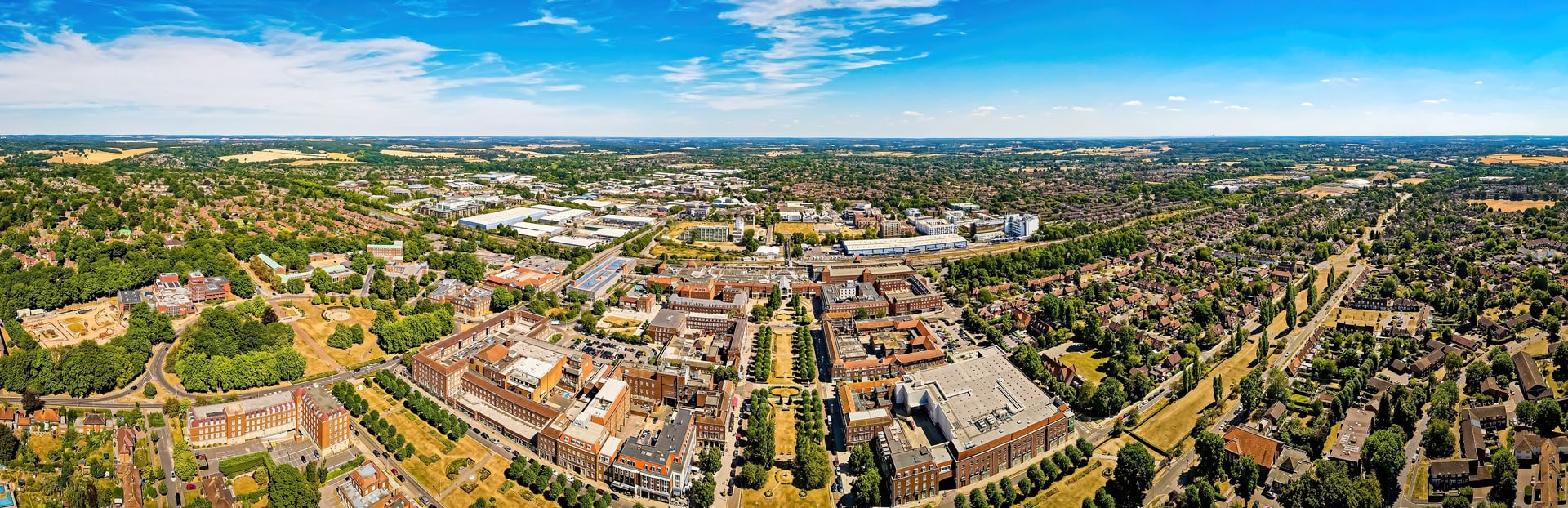
Welwyn Garden City is a garden city in the borough of Welwyn Hatfield, Hertfordshire. Average sold prices across Welwyn Hatfield sit at £457,823 on the HM Land Registry House Price Index, 57.9% above the England average of £289,946 and 35.8% above the £337,182 recorded across the East of England. That places Welwyn Garden City firmly in the commuter-belt price band, dearer than most of the country but below the top of the Hertfordshire market at St Albans. The local authority's population grew 8.41% between the 2011 and 2021 censuses, from 110,535 to 119,836 residents.
The premium is anchored by earnings and by 30-minute trains to London. The median gross weekly salary across Welwyn Hatfield is £868.20, which is 10.5% above the East of England figure and 15.4% above the Great Britain median. For investors, the three postcodes split into a clear two-tier market: AL7 at a £360,992 asking price sits well below the town's own sold-price average, while AL6 runs to £858,938. The higher yields have stayed with the cheaper postcode, not the premium one.
This guide covers Welwyn Hatfield borough (ONS code E07000241) across the AL6, AL7, and AL8 postcodes. Welwyn Garden City sits in the East of England, around 20 miles north of London on the A1(M) and the East Coast Main Line. The wider Hertfordshire buy-to-let market also takes in St Albans, Stevenage, and Watford.
Article updated: July 2026
Why Invest in Welwyn Garden City?
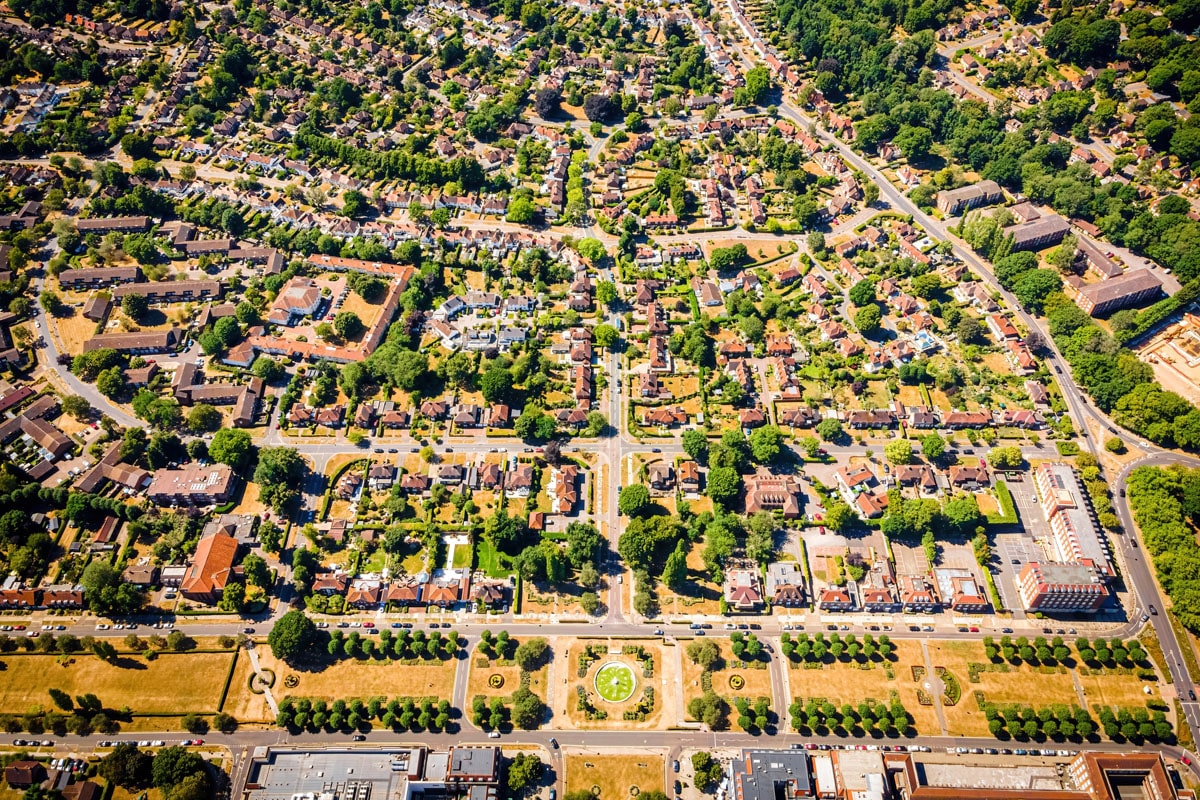
Welwyn Hatfield, the borough Welwyn Garden City sits within, grew its population 8.41% between the 2011 and 2021 censuses, from 110,535 to 119,836 residents. That is above the England and Wales average of 6.3%, and much of the growth is commuter-driven. Welwyn Garden City itself is the smaller of the borough's two towns, a 1920s garden city laid out around tree-lined boulevards, with Hatfield making up the rest of the local authority.
The local employment rate of 77.4% is above the Great Britain figure of 75.6%. The economy leans on services and light manufacturing, and two large employers keep their headquarters in the town: the supermarket group Tesco and Hertfordshire Constabulary. The town's real economic function, though, is as a commuter base. London King's Cross and Moorgate are reachable in around 30 minutes on Great Northern and Thameslink services, which pulls in tenants who want London salaries without London rents.
Median gross annual earnings across Welwyn Hatfield are £45,145, which is 10.5% above the East of England regional median and 15.4% above the Great Britain median of £39,125. Higher local wages let tenants absorb the higher rents that a commuter market commands. The combination of strong earnings and a steady employment base gives the town a tenant pool that is less benefit-reliant than many lower-priced markets further north.
Welwyn Garden City Economic Summary
- Population (Welwyn Hatfield): 119,836 (2021 Census). Growth of 8.41% from 2011.
- Median annual salary: £45,145 (local), £40,862 (East of England), £39,125 (Great Britain)
- Employment rate: 77.4% (local), 75.6% (Great Britain)
- Key employment sectors: Wholesale and retail, professional and technical services, health and social work, light manufacturing, public administration
Source: ONS Census 2021, Nomis Labour Market Profile (ASHE 2025)
Regeneration and Investment in Welwyn Garden City
The largest scheme in the town is The Wheat Quarter, a phased redevelopment of the former Shredded Wheat factory that is planned to deliver around 1,000 new homes. The site sits beside the railway station on the eastern edge of the town centre, and its 1920s art-deco factory buildings are listed, so the development pairs new apartments with restored heritage frontages.
- The Wheat Quarter (Under development, around 1,000 homes): A mixed-use regeneration of the former Shredded Wheat factory site next to Welwyn Garden City station, adding apartments, workspace, and public realm around the listed art-deco silo buildings. The scheme concentrates new residential supply right at the commuter gateway, the part of the town most in demand from London renters. Updates at The Wheat Quarter.
Source: Office for National Statistics - Population for Welwyn Hatfield
Welwyn Garden City Property Market Analysis
Average property prices across Welwyn Hatfield have risen 516.4% since January 1995, from £74,269 to £457,823. The sections below trace that path cycle by cycle, then drill into postcode-level data for sold prices, price per square foot, asking prices, growth, and monthly transaction volumes.
When was the last house price crash in Welwyn Garden City?
Welwyn Garden City sits within Welwyn Hatfield borough, so all sold prices from HM Land Registry are recorded at that level. The Land Registry House Price Index tracks average prices from January 1995 to March 2026, covering 31 years of market cycles.
The 1995 to 2007 boom: Welwyn Hatfield started at £74,269 in January 1995. By December 2000, prices had reached £140,047, and the run continued through the early 2000s to £229,003 by December 2005. The market peaked at £262,415 in October 2007, driven by low interest rates and easy mortgage lending across the commuter belt.
2008 to 2009, the financial crisis: Prices fell from the October 2007 peak of £262,415 to a trough of £222,972 in May 2009, a decline of 15.0% over 19 months. As a higher-value commuter market, Welwyn Hatfield fell more steeply in cash terms than lower-priced regions further north, though the percentage fall was broadly in line with the England-wide correction.
Recovery, 2010 to 2015: Prices climbed back through the early 2010s, reaching £258,681 by December 2010 and £280,119 by December 2013. The proximity to London pulled the commuter belt back faster than much of the country, and by the mid-2010s prices had cleared the pre-crash peak with room to spare.
2016 to 2019, the London ripple: The strongest phase came as London buyers priced out of the capital pushed demand up the East Coast line. Prices reached £393,663 by December 2016 and £399,428 by December 2019, near-doubling the 2009 trough in a decade.
2020 to 2022, the pandemic surge: The stamp duty holiday and the shift towards more space turbocharged commuter towns. Prices moved from £397,468 in June 2020 to £418,977 by December 2020, £437,620 by December 2021, and an all-time high of £462,678 in August 2022.
2023 to present: Higher mortgage rates eased the market back from that peak. Prices settled to £429,539 by December 2023 and have since recovered to £457,823 by the latest reading in March 2026. The current price is 74.5% above the pre-crash peak of £262,415, and sits just below the August 2022 high.
Long-term growth summary:
- 5 years (March 2021 to March 2026): 11.4% growth (£410,842 to £457,823)
- 10 years (March 2016 to March 2026): 27.9% growth (£358,033 to £457,823)
- 15 years (March 2011 to March 2026): 78.6% growth (£256,348 to £457,823)
- 20 years (March 2006 to March 2026): 99.0% growth (£230,019 to £457,823)
- 30 years (January 1995 to March 2026): 516.4% growth (£74,269 to £457,823)
The 15.0% crash was in line with the wider national correction, and the 30-year return of 516.4% reflects a commuter market that has tracked London's own long climb. The five-year figure of 11.4% is more muted, because prices had already run hard through the 2016 to 2022 window and then gave some of that back as rates rose. An investor who bought at the exact peak in October 2007 would be sitting on gains of 74.5% on the Land Registry average.
- All property types
- Detached
- Semi-detached
- Terraced
- Flats
- All property types
- Detached
- Semi-detached
- Terraced
- Flats
Sold House Prices in Welwyn Hatfield
The average sold price across all property types in Welwyn Hatfield is £457,823, which is 57.9% above the England average of £289,946 as of March 2026. The premium runs across every property type, but it is widest at the top of the market. Detached houses sell for more than double the England figure, while flats carry a far slimmer premium of 17.2%. The gap says a lot about the market: this is a commuter town where family houses command the biggest markup and smaller units track closer to the national norm.
| Property Type | Welwyn Hatfield Average | England Average | Difference |
|---|---|---|---|
| Detached houses | £969,844 | £470,492 | +106.1% |
| Semi-detached houses | £541,323 | £288,185 | +87.8% |
| Terraced houses | £415,707 | £243,788 | +70.5% |
| Flats and maisonettes | £251,399 | £214,563 | +17.2% |
| All property types | £457,823 | £289,946 | +57.9% |
Detached houses at £969,844 carry the largest premium at 106.1% above England's £470,492. These are the large period and neo-Georgian homes of the West Side and the surrounding villages such as Digswell and Welwyn, and the AL6 postcode north of the town. Annual growth of 3.9% points to steady demand at the top of the market rather than a sharp move.
Semi-detached houses at £541,323 sit 87.8% above England's £288,185. The three-bed semi is the backbone of a commuter town, the family home a London worker upsizes into, and it recorded the strongest annual growth of any type here at 4.9%. Much of this stock sits in AL7 and AL8 across the residential estates that ring the town centre.
Terraced houses at £415,707 are 70.5% above England's £243,788. The terraced stock concentrates in AL7 on the eastern side of the town, where the original garden-city cottages and later estate housing offer the closest thing to an affordable entry point. Annual growth of 3.4% keeps terraces broadly in step with the wider market.
Flats and maisonettes at £251,399 show much the slimmest premium at 17.2% above England's £214,563. Purpose-built flats cluster in AL7 near the station and town centre, the segment most exposed to first-time-buyer and investor demand rather than the family-home premium. Annual change of -0.9% is the one negative reading among the property types, a market taking a breather at the smaller-unit end.
Price Per Square Foot in Welwyn Garden City
Just £72 per square foot separates Welwyn Garden City's postcodes, with AL7 at £453 and AL8 at £525. Measuring by the square foot strips out how big the homes are and gives a cleaner read on what each location itself commands. AL8, the West Side, tops the table, which fits its reputation as the more sought-after residential half of the town.
| Rank | Area | Price Per Sq Ft |
|---|---|---|
| 1 | AL7 (Welwyn Garden City East) | £453 |
| 2 | AL6 (Welwyn, Codicote) | £495 |
| 3 | AL8 (Welwyn Garden City West) | £525 |
AL7 at £453 per square foot is the cheapest space in the town. This is the eastern side of Welwyn Garden City, weighted towards terraced and flatted stock around Panshanger, Haldens, and Woodhall, and it lines up with AL7 also carrying the lowest asking price and the highest yield. Based on 504 transactions analysed, AL7's rate sits 14% below AL8's.
AL8 at £525 per square foot tops the table. This is the West Side, taking in Handside and Sherrardspark, where the larger period houses and the leafier streets command the highest rate. Across 208 transactions analysed, the premium over AL7 is consistent, and it is location quality, not just house size, that buyers are paying for.
For Sale Asking Prices in Welwyn Garden City
AL7 at £360,992 and AL6 at £858,938 sit 138% apart, the widest asking-price gap across the town's three postcodes. That spread mirrors sold prices but stretches further, because AL6 reaches out into the higher-value villages north of the town. The mean asking price across the three postcodes is £599,684.
| Rank | Area | Asking Price |
|---|---|---|
| 1 | AL7 (Welwyn Garden City East) | £360,992 |
| 2 | AL8 (Welwyn Garden City West) | £579,123 |
| 3 | AL6 (Welwyn, Codicote) | £858,938 |
AL7 at £360,992 is the only postcode where the asking price falls below the town's own sold-price average of £457,823. The step up to AL8 is £218,131, and the further step to AL6 is another £279,815. For an investor working to a fixed budget, AL7 offers the most property for the money and the lowest barrier to entry in the town.
AL6's £858,938 asking price reflects that the postcode reaches well beyond the town itself, taking in Welwyn village and Codicote, where detached houses and rural plots dominate. That is owner-occupier and country-house territory rather than a buy-to-let hunting ground, and the yield data in the sections below bears that out.
House Price Growth in Welwyn Garden City
All three postcodes posted positive five-year growth, from 5.6% in AL8 to 8.7% in AL7, but the shorter windows are more mixed. AL8 recorded the strongest one-year figure at 6.2% while AL7 was down 5.6% over the year, and AL8's three-year reading turned negative even as its one-year rebounded. The pattern points to a market that ran hard, gave some back, and is finding its level at different speeds by postcode.
| Area | 1 Year | 3 Years | 5 Years |
|---|---|---|---|
| AL7 (Welwyn Garden City East) | -5.6% | 0.7% | 8.7% |
| AL6 (Welwyn, Codicote) | 1.6% | -1.2% | 7.1% |
| AL8 (Welwyn Garden City West) | 6.2% | -6.8% | 5.6% |
AL7 at 8.7% has the highest five-year return in the town, even though its one-year reading is the weakest at -5.6%. The eastern side saw the sharpest recent easing after a strong run, but its five-year figure still leads. This is the postcode with the cheapest entry and the highest yield, so the recent softness is worth reading alongside the income return rather than on its own.
AL8 shows +6.2% over one year but -6.8% over three, the widest swing in the table. The West Side's premium stock moves in bigger cash steps, so its percentage figures are more volatile from year to year, though the five-year return of 5.6% remains positive. AL6 sits in between, up 1.6% over the year and 7.1% over five, with the three-year reading a shade negative.
Monthly Property Sales in Welwyn Garden City
Monthly sales range from 6 transactions in AL6 to 30 in AL7, with the eastern side of the town by far the busiest market. AL7 alone turns over five times as many homes each month as AL6, and its 15% turnover rate is the strongest sign of a liquid market in the town.
| Area | Sales Per Month | Turnover | Asking Price |
|---|---|---|---|
| AL7 (Welwyn Garden City East) | 30 | 15% | £360,992 |
| AL8 (Welwyn Garden City West) | 12 | 16% | £579,123 |
| AL6 (Welwyn, Codicote) | 6 | 5% | £858,938 |
AL7 records the most transactions at 30 a month, more than AL8 and AL6 combined. The eastern side has the deepest pool of mid-priced terraced and flatted stock, so homes change hands often. For a buy-to-let investor, that frequency signals an easier route back out when the time comes to sell.
AL6 sits at the other end with 6 sales a month and a 5% turnover rate. The village and country stock is expensive, held for longer, and traded rarely, so a small number of monthly sales is a normal reading for the area rather than a sign of a stalled market. AL8's turnover of 16% is the highest, though on a much smaller monthly volume than AL7.
How Long Properties Take to Sell in Welwyn Garden City
Selling speed splits the town sharply: AL7 clears in about 190 days while AL6 sits for roughly 608 days, more than three times as long. Days on market is the typical time a home is listed before it sells; months of unsold stock shows how much for-sale supply is queued at the current rate of sales.
| Area | Avg Days to Sell | Months of Unsold Stock | Market |
|---|---|---|---|
| AL7 (Welwyn Garden City East) | 190 | 6.3 | Balanced market |
| AL8 (Welwyn Garden City West) | 203 | 6.7 | Balanced market |
| AL6 (Welwyn, Codicote) | 608 | 20.0 | Buyer's market |
AL6's 20 months of unsold stock is the figure that never reaches a yield table, and it is a real holding cost. The village and country homes there take far longer to shift than the town-centre stock, so exit liquidity is thin at the top of the market. AL7 and AL8 both clear in around six to seven months of supply, so an investor buying on the eastern or western side of the town has a far quicker route back out than one buying into the AL6 villages.
What Type of Property Can You Buy in Welwyn Garden City?
The housing mix flips sharply across the town: AL6 is 56.6% detached, while AL7 is dominated by terraces and flats at 41.5% and 24.5% combined. The mix shapes which strategy fits each postcode. The figures below are drawn from 2021 Census records for each postcode.
| Area | Detached | Semi-detached | Terraced | Flats |
|---|---|---|---|---|
| AL6 (Welwyn, Codicote) | 56.6% | 19.4% | 15.8% | 6.9% |
| AL7 (Welwyn Garden City East) | 10.3% | 23.6% | 41.5% | 24.5% |
| AL8 (Welwyn Garden City West) | 32.8% | 26.9% | 22.1% | 18.2% |
AL7 holds the largest share of terraced houses at 41.5% and flats at 24.5%, giving it two-thirds of its stock in the smaller-unit categories that usually form the buy-to-let market. That lines up with AL7 carrying the lowest asking price and the highest yield in the town. Terraces suit family lets and flats near the station suit commuting professionals and sharers.
AL6 is the most detached-dominated postcode at 56.6%, with terraces and flats making up under a quarter of the stock between them. This is village and country housing weighted towards owner-occupier family homes, which matches its high asking prices and thin sales volume. AL8 sits in the middle, with a fuller spread across all four types and a healthy flat share of 18.2% on the West Side.
The flats figure covers both purpose-built blocks and conversions, and a small share of mobile and temporary dwellings is not shown, so rows may not total 100%.
Welwyn Garden City Rental Market Analysis
Monthly rents in Welwyn Garden City run from £1,366 in AL7 to £1,417 in AL8, with gross rental yields of 4.5% and 2.9%. For investors asking is buy to let worth it in the town, the sections below break down rents, yields, and tenant affordability postcode by postcode. If you are working out how to build a property portfolio in the commuter belt, Welwyn Garden City pairs above-average wages with fast London trains and a settled tenant base. Browse current buy-to-let homes for sale across the region.
Average Rent & Gross Rental Yields in Welwyn Garden City
Gross rental yields in Welwyn Garden City reach 4.5% in AL7 and 2.9% in AL8. AL7 pairs the lowest asking price with the higher yield, the pattern that holds across most commuter towns. AL8 charges a slightly higher rent at £1,417 but its £579,123 asking price pulls the yield down to 2.9%. AL6 has too few rental listings to read a reliable yield.
| Area | Average Monthly Rent | Asking Price | Gross Yield |
|---|---|---|---|
| AL7 (Welwyn Garden City East) | £1,366 | £360,992 | 4.5% |
| AL8 (Welwyn Garden City West) | £1,417 | £579,123 | 2.9% |
| AL6 (Welwyn, Codicote) | Not enough data | £858,938 | Not enough data |
AL7 at 4.5% combines the lowest asking price in the town with a £1,366 monthly rent to deliver the best yield. A 30% deposit of £108,297 gets an investor into the highest-yielding postcode, and the eastern side's deep terraced and flatted stock is where the lettable homes sit.
AL8 at 2.9% sits well below AL7. The West Side's £1,417 rent is only marginally higher, but the £579,123 asking price means the income return is compressed. In AL8 the premium price does far more for the value of the asset than for the rental yield. AL6 is not shown for yield because the villages carry too few rental listings to produce a dependable figure, and at an £858,938 asking price the numbers point to owner-occupier demand rather than letting.
Gross Rental Yield by Postcode
Is Welwyn Garden City Rent High?
Monthly rents in Welwyn Garden City take between 36.3% and 37.7% of the local median gross monthly salary. The widely cited threshold for rent affordability is 30% of gross income, and both readable postcodes sit above it. That reflects a commuter market where rents track London demand more than local wages, even though local wages are themselves above the national figure.
The median gross weekly salary in Welwyn Hatfield is £868.20, which works out at £3,762 per month or £45,145 per year. That is above the East of England median of £785.80 a week and the Great Britain median of £752.40 a week. Data from the Nomis Labour Market Profile (ASHE 2025).
| Rank | Area | Rent as % of Income |
|---|---|---|
| 1 | AL8 (Welwyn Garden City West) | 37.7% |
| 2 | AL7 (Welwyn Garden City East) | 36.3% |
| 3 | AL6 (Welwyn, Codicote) | Not enough data |
AL7 at 36.3% is the more affordable of the two on the local median wage, though both sit above the 30% mark. In practice, a chunk of tenant demand here comes from London commuters earning capital salaries rather than the local median, which is what lets a commuter town sustain rents above the local-wage affordability line. AL8 at 37.7% is the least affordable, and its tenant base skews further towards higher earners on the West Side.
How Big Is Welwyn Garden City's Private Rented Sector?
The private rented sector is largest in AL7 at 13.2% of households and smallest in AL8 at 9.1%, with AL6 in between at 11.3%. The share of homes already rented privately is a guide to how established the local tenant pool is. AL7 also carries by far the largest social-rented share in the town, a legacy of the garden-city estate housing on the eastern side.
| Area | Owned Outright | Owned with Mortgage | Private Rented | Social Rented |
|---|---|---|---|---|
| AL7 (Welwyn Garden City East) | 23.8% | 30.0% | 13.2% | 30.3% |
| AL6 (Welwyn, Codicote) | 47.0% | 34.1% | 11.3% | 7.0% |
| AL8 (Welwyn Garden City West) | 41.2% | 32.4% | 9.1% | 15.8% |
AL7 has the deepest private rented sector at 13.2%, alongside a 30.3% social-rented share that is the highest in the town. The eastern side holds most of the original garden-city estate housing, which gives it a mixed tenure profile and a real working rental market. AL6 pairs the lowest social-rented share with the highest outright ownership at 47.0%, the mark of a settled village-and-country postcode. AL8 sits in between, with more owner-occupation and the thinnest private rented sector at 9.1%.
Local Housing Allowance Rates in Welwyn Garden City
All three Welwyn Garden City postcodes fall within the South East Herts Broad Rental Market Area, where Local Housing Allowance runs from £109.32 a week for a shared room to £391.23 a week for a four-bedroom home. Local Housing Allowance is the most housing support a tenant on benefits can claim, so for a landlord letting to that part of the market it sets an effective rent floor. The rates below apply across the whole town. To check the current rate for a specific address, you can use the government's official Local Housing Allowance calculator.
| Property Size | Weekly LHA Rate | Monthly Equivalent |
|---|---|---|
| Shared accommodation | £109.32 | £474 |
| 1 bedroom | £192.16 | £833 |
| 2 bedrooms | £241.64 | £1,047 |
| 3 bedrooms | £315.29 | £1,366 |
| 4 bedrooms | £391.23 | £1,696 |
The two-bedroom LHA rate of £241.64 a week works out at about £1,047 a month, below the £1,366 to £1,417 open-market rents recorded across the town's postcodes. A benefit-backed tenancy therefore sits under Welwyn Garden City's market rents, and the stock that fits within these rates is concentrated in AL7, where both asking prices and rents are lowest. The rates are identical across all three postcodes because they are set for the whole South East Herts market area.
Buy-to-Let Considerations
Are House Prices High in Welwyn Garden City? Price-to-Earnings Ratios
Buying a property in Welwyn Garden City takes between 8.0 and 19.0 times the local median annual salary. This is based on the Nomis Labour Market Profile for Welwyn Hatfield, which puts the median gross annual income for local residents at £45,145.
As a national yardstick, England's £289,946 average sold price works out at 7.4 times the £39,125 Great Britain median salary. Every Welwyn Garden City postcode clears that yardstick comfortably, which is what a commuter town looks like when London demand, not local pay, sets the asking price.
| Rank | Area | Price-to-Earnings Ratio |
|---|---|---|
| 1 | AL7 (Welwyn Garden City East) | 8.0x |
| 2 | AL8 (Welwyn Garden City West) | 12.8x |
| 3 | AL6 (Welwyn, Codicote) | 19.0x |
AL7 at 8.0x is the most affordable postcode against local earnings, just above the national benchmark of 7.4x. It is the closest thing the town has to an accessible entry point, and it pairs that with the highest yield. AL6 at 19.0x is the least affordable by a wide margin. At nineteen times the local median salary, the villages north of the town are owner-occupier and country-house territory, where the elevated ratio compresses any rental return and stretches the payback period.
Deposit Requirements in Welwyn Garden City
A 30% deposit on a buy-to-let property in Welwyn Garden City ranges from £108,297 in AL7 to £257,681 in AL6. The gap between the cheapest and dearest deposit is £149,384, which is more than a whole second deposit in AL7. These are commuter-belt sums, well above most of the country and reflecting the town's London-adjacent prices.
Beyond the deposit, the stamp duty calculation and other buy-to-let running costs affect the total capital required.
| Rank | Area | 30% Deposit Required |
|---|---|---|
| 1 | AL7 (Welwyn Garden City East) | £108,297 |
| 2 | AL8 (Welwyn Garden City West) | £173,737 |
| 3 | AL6 (Welwyn, Codicote) | £257,681 |
AL7 is the cheapest way into the town at a £108,297 deposit, and it buys the highest yield and the most active market. Stepping up to AL8 costs another £65,440, and that money buys the West Side's premium residential streets rather than a bigger rental return, since AL8's yield is 2.9% against AL7's 4.5%. AL6 asks a £257,681 deposit for the villages north of the town, where the value is in the property and the setting rather than the income.
What the Welwyn Garden City Data Tells Buy-to-Let Investors
In Welwyn Garden City the cheapest way in is also the highest-yielding, and it is the most active market. AL7 holds the top yield at 4.5% on the lowest asking price for buying an investment property at £360,992. It also led the town on five-year growth at 8.7% and turns over 30 homes a month. A 30% deposit there is £108,297, the lowest in the town, for a home renting at £1,366 a month. Its stock is two-thirds terraces and flats, the lettable end of the market.
AL8 on the West Side charges a marginally higher rent at £1,417 but its £579,123 asking price cuts the yield to 2.9%. The West Side is premium residential territory where the money goes into the asset rather than the income, and its one-year growth of 6.2% leads the town even as its three-year figure sits at -6.8%. AL6, the villages of Welwyn and Codicote, runs to an £858,938 asking price. With homes sitting around 608 days on the market and a 19.0x price-to-earnings ratio, it reads as owner-occupier territory rather than a buy-to-let market.
Welwyn Hatfield Borough Council runs mandatory HMO licensing for larger shared houses but has no selective licensing scheme, so a standard single let needs no borough licence. With above-average wages, 30-minute London trains, and a settled commuter tenant base, the town reads as a lower-yield, higher-value market where the return leans on the asset as much as the rent. Buyers who want to come in below asking often work the off-market property in Welwyn Garden City route.
How Welwyn Garden City Compares
Welwyn Garden City's mean asking price of £599,684 is the second-highest of six Hertfordshire locations compared here, behind only St Albans, while its top yield of 4.5% is the lowest of the group. The comparison below places the town alongside five nearby Hertfordshire markets, each with a different investor profile. The mean asking price and mean monthly rent are simple averages across all postcodes with data. Top gross yield is the single highest postcode yield in each location.
| Location | Mean Asking Price | Mean Monthly Rent | Mean Gross Yield | Top Yield (postcode) |
|---|---|---|---|---|
| Luton | £404,481 | £1,457 | 4.3% | 5.1% (LU3) |
| Watford | £450,831 | £1,675 | 4.5% | 5.5% (WD18) |
| Stevenage | £459,009 | £1,459 | 3.8% | 4.8% (SG1) |
| Hemel Hempstead | £538,635 | £1,579 | 3.5% | 4.4% (HP2) |
| Welwyn Garden City | £599,684 | £1,391 | 2.8% | 4.5% (AL7) |
| St Albans | £719,692 | £2,220 | 3.7% | 4.7% (AL2) |
Welwyn Garden City sits near the top of this Hertfordshire group at £599,684 mean asking price, with only St Albans dearer at £719,692. Its top yield of 4.5% is the lowest of the six, a shade under Hemel Hempstead's 4.4% once you factor in that Welwyn Garden City's mean asking price is pulled up by the AL6 villages. This is the commuter-belt trade-off: high prices, modest yields, and a tenant base drawn from London earners.
For investors prioritising income, Watford at 5.5% and Luton at 5.1% deliver the higher top-line yields in the group, and Luton offers the lowest mean asking price. Stevenage at 4.8% and Hemel Hempstead at 4.4% sit close to Welwyn Garden City on both price and return. For a data-driven comparison across the whole country, see our guide to the best places to invest in buy-to-let.
Frequently Asked Questions
Is Welwyn Garden City a good place to live?
It was designed to be. Welwyn Garden City was laid out in the 1920s as one of England's original garden cities, built around tree-lined boulevards, generous green space, and a walkable centre. Stanborough Park, Sherrardspark Wood, and the John Lewis department store in the town centre are all part of the appeal, and the town keeps a quieter, greener feel than most places this close to London.
For tenants, the draw is the combination of that setting with a 30-minute train to King's Cross. It suits professional renters who want London access without London density, which tends to mean longer, more settled tenancies.
What are the best areas in Welwyn Garden City for property investment?
The three postcodes split cleanly by what they offer an investor. The eastern side, AL7, is the cheapest way in at £360,992 and carries the highest yield at 4.5%, with two-thirds of its stock in the terraces and flats that suit letting, so it leans towards income. The West Side, AL8, is the premium residential half at £579,123, where the yield drops to 2.9% and the money goes into the asset rather than the rent.
AL6 (Welwyn and Codicote) reaches out into the villages north of the town, with an £858,938 average asking price and homes that sit on the market for around 608 days. That is owner-occupier and country-house territory rather than a buy-to-let hunting ground. If income is the priority, AL7 leads on both yield and entry cost.
What are average house prices in Welwyn Garden City?
The average sold price across Welwyn Hatfield is £457,823 on the Land Registry index, about 57.9% above the England average of £289,946 as of March 2026. Asking prices by postcode run from £360,992 in AL7 up to £858,938 in AL6, with a town-wide mean of £599,684. By type, detached homes across the borough average £969,844, semi-detached £541,323, terraced £415,707, and flats £251,399.
Through a buy-to-let lens, AL7 is the cheapest entry and the highest-yielding at 4.5%, while AL6 is the dearest and least liquid.
What type of property is most common in Welwyn Garden City?
It depends which side of the town you look at, and the split is sharp. AL6 (Welwyn and Codicote) is 56.6% detached, the village and country stock north of the town. AL7 (the eastern side) is the opposite, at 41.5% terraced and 24.5% flats, which is why it holds most of the lettable buy-to-let stock. AL8 (the West Side) sits in between, with a fuller spread across all four types and an 18.2% flat share. The smaller homes that usually suit letting, terraces and flats, concentrate in AL7.
What is the population of Welwyn Garden City?
The town itself is home to roughly 48,000 people, but the figures in this guide are for Welwyn Hatfield, the borough it sits within, because that is the level HM Land Registry, the ONS, and Nomis publish house-price, population, and earnings data. Welwyn Hatfield had a population of 119,836 at the 2021 Census, up 8.41% from 110,535 in 2011, growth driven largely by its commuter appeal.
Can I find buy-to-let property under £400,000 in Welwyn Garden City?
Yes, and the place to look is the eastern side of the town. AL7 has the town's lowest average asking price at £360,992, so it is the postcode where sub-£400,000 stock is realistic. The way in below that is by property type: terraced houses across the borough average £415,707 and flats £251,399, so a flat or a smaller terrace in AL7 is where the accessible end of the market sits. If you want to come in below asking, explore below market value properties.
Is there a landlord licensing scheme in Welwyn Garden City?
Only the mandatory national one. Welwyn Hatfield Borough Council requires a licence for larger houses in multiple occupation, generally those let to five or more people from more than one household. Details are on the council's HMO licence page. The council does not run a selective licensing scheme, so a standard single-family let does not need a borough landlord licence. Always check the council page for the current position before you buy.
What are the Local Housing Allowance rates in Welwyn Garden City?
All three postcodes fall in the South East Herts Broad Rental Market Area, so they share one set of rates. As of June 2026, Local Housing Allowance runs at £109.32 a week for a shared room, £192.16 for a one-bed, £241.64 for two beds, £315.29 for three, and £391.23 for four. That figure is the most a tenant on housing support can claim towards rent, so for that part of the market it effectively sets a floor.
How do I buy an investment property in Welwyn Garden City?
Decide first whether you are buying for income or for the asset, because the two point at different postcodes. AL7 is the cheapest entry at £360,992 and the highest-yielding at 4.5%, with the busiest market and the most lettable stock. AL8 and AL6 are dearer, lower-yielding, and weighted towards owner-occupier demand. Budget for a 30% deposit, which runs from £108,297 in AL7 to £257,681 in AL6.
Beyond what is listed openly, plenty of experienced investors buy below asking through off-market property and BMV property. To see what is available now, browse investment properties or buy-to-let homes for sale.
Ready to buy property?
Access off-market investment properties with an average 8%+ annual gross yield (beating the UK's typical 3-5%).
Get property alerts