
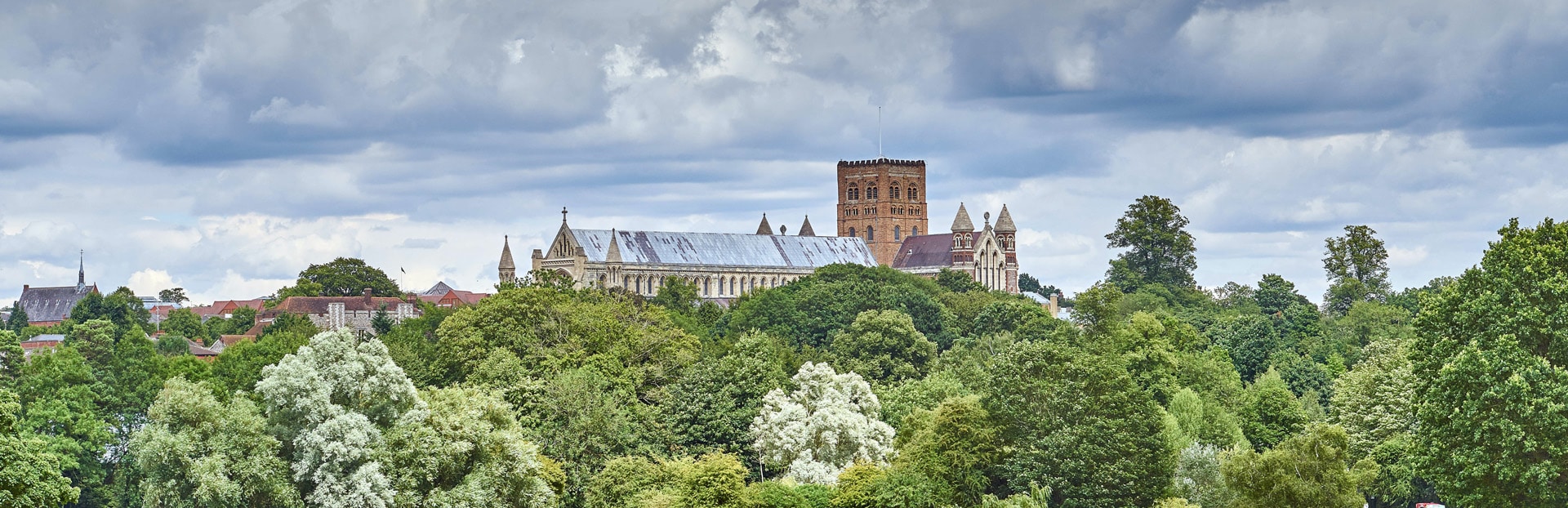
St Albans is a cathedral city in Hertfordshire, in the East of England. Average sold prices across St Albans sit at £633,319 on the HM Land Registry House Price Index, 87.8% above the East of England regional average of £337,182 and 118.4% above England's £289,946. That is commuter-belt pricing at the top of the Hertfordshire scale, where a 20-minute train into St Pancras is priced straight into the bricks. The distinctive twist for an income investor is that the cheapest postcode is not the highest-yielding one: AL1 (the city centre and Fleetville) is the lowest entry at a £490,803 asking price, but the best gross yield, 4.7%, sits in AL2 out towards Bricket Wood and Chiswell Green.
The premium tracks what tenants here earn. Median gross earnings across the St Albans district are £57,396 a year, 40.5% above the East of England and 46.7% above the Great Britain figure, and the employment rate of 76.7% runs a little ahead of the national average. That wage base carries rents from £1,738 a month in AL1 up to £2,862 in WD7 (Radlett). For investors, the spread between AL1 at £490,803 and WD7 at £1,043,777 opens a wide gap across the six postcodes, where the yield and the asking price move against each other.
This guide covers the district of St Albans (ONS code E07000240) across postcodes AL1, AL2, AL3, AL4, AL5 and WD7. St Albans sits in Hertfordshire, about 20 miles north of central London on the Midland Main Line. The wider Hertfordshire buy-to-let region also takes in Hemel Hempstead to the west and Watford to the south.
Article updated: July 2026
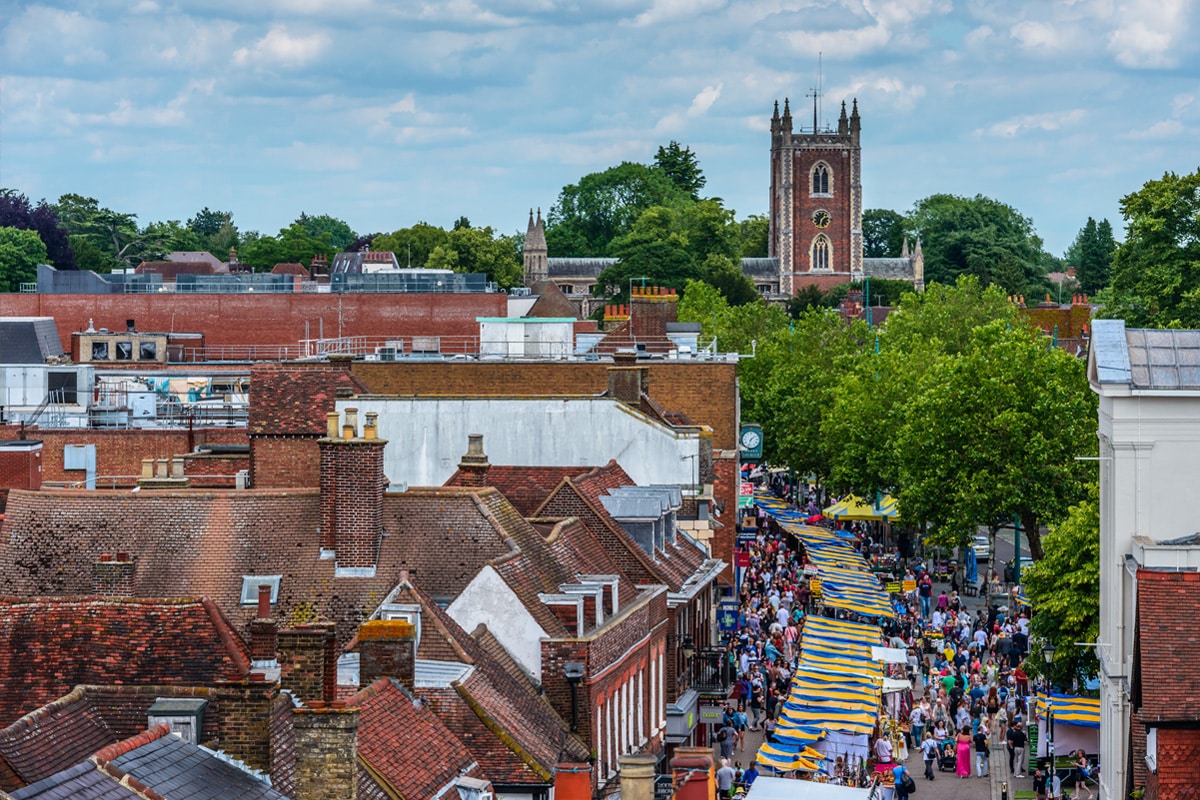
Why Invest in St Albans?
The St Albans district grew its population 5.33% between the 2011 and 2021 censuses, from 140,664 to 148,167 residents. That is a touch below the England and Wales average of 6.3%, the steady growth of a settled commuter city rather than a boom town. Tight green-belt boundaries and a conservation-heavy centre limit how fast St Albans can build, and that scarcity is a large part of why the prices sit where they do.
The local employment rate of 76.7% is a little above the Great Britain figure of 75.6%. St Albans has a working economy of its own in professional services, business services and logistics, with employers including Deloitte, AECOM, Aon and Premier Foods, alongside St Albans City Hospital. But the defining feature is the commute: two stations, St Albans City on the fast line to St Pancras in about 20 minutes and St Albans Abbey on the branch to Watford, keep a deep pool of London-earning tenants in the city.
Median gross annual earnings across the district are £57,396, which is 40.5% above the East of England regional median and 46.7% above the Great Britain median of £39,125. Those are some of the highest local earnings of any Hertfordshire market, and they are what let tenants carry the rents that come with St Albans prices. A well-paid resident base and a fast line into the capital give the rental market two sturdy legs to stand on.
St Albans Economic Summary
- Population (St Albans district): 148,167 (2021 Census). Growth of 5.33% from 2011.
- Median annual salary: £57,396 (local), £40,862 (East of England), £39,125 (Great Britain)
- Employment rate: 76.7% (local), 75.6% (Great Britain)
- Key employment sectors: Professional and business services, logistics, health and social work, wholesale and retail
Source: ONS Census 2021, Nomis Labour Market Profile for St Albans (ASHE 2025)
St Albans Property Market Analysis
Average property prices across St Albans have risen 553.2% since January 1995, from £96,959 to £633,319. The sections below trace that journey cycle by cycle, then drill into current postcode-level data for sold prices, price per square foot, asking prices, growth trends, and monthly transaction volumes.
When was the last house price crash in St Albans?
St Albans property prices from HM Land Registry are recorded at district level, taking in the city itself plus Harpenden, Redbourn, Wheathampstead, London Colney and the villages around them. The Land Registry House Price Index tracks average prices from January 1995 to March 2026, covering 31 years of market cycles.
The 1995 to 2008 boom: St Albans started at £96,959 in January 1995. By December 2000, prices had reached £185,223, a 91.0% rise in six years as the London commuter belt hardened along the Midland Main Line. Growth ran hard through the early 2000s, reaching £299,124 by December 2005, and the market kept climbing into 2008. Unlike much of the country, which topped out in 2007, St Albans peaked later, at £364,805 in March 2008, a sign of how deep the commuter demand ran even as the wider market wobbled.
2008 to 2009, the financial crisis: Prices fell from the March 2008 peak of £364,805 to a trough of £298,282 in April 2009, a decline of 18.2% over 13 months. The worst year-on-year reading was -18.0% in March 2009. As a higher-value market, St Albans fell more steeply than lower-priced regions in cash terms, but the correction was fast and shallow in time, and the recovery that followed was quicker than almost anywhere in the north.
Recovery, 2010: Prices first surpassed the March 2008 peak of £364,805 in September 2010, reaching £365,566. That is a recovery in about two and a half years, roughly a third of the time it took many northern markets to claw back their pre-crash highs. London's affordability squeeze pushed commuters out along the line, and St Albans, first stop on the fast train, caught that demand early.
2011 to 2016, the commuter surge: After a brief plateau around the pre-crash level in 2011 to 2013, prices took off. The average climbed from £399,232 in December 2013 to £530,405 by April 2016, a gain of roughly a third in under three years, as the post-crash recovery in the south east concentrated demand on the most accessible commuter cities. Annual growth touched 14.0% in early 2016.
2017 to 2019, the cooling: Growth steadied and then flattened. Prices moved from around £530,000 to £547,364 by December 2019, low single-digit annual gains as stamp duty changes on higher-value homes and political uncertainty cooled the top of the market. St Albans, priced well above the England average, felt that ceiling more than cheaper towns did.
2020 to 2022, the pandemic surge: The race for space favoured cities with gardens, character housing and a fast line into London. Prices ran up from £549,009 in June 2020 to £585,832 by December 2021 and £620,348 by December 2022, annual growth reaching 5.9%.
2023 onwards, the rate shock and easing: Higher mortgage rates cooled the market. Prices dipped to £602,788 by December 2023, a -2.8% annual reading, before recovering to an all-time high of £643,627 in December 2024. Since then the market has eased gently to £633,319 by the latest reading in March 2026, about 1.6% off the peak. That is a mild cooling rather than a correction, and the current price is 73.6% above the March 2008 pre-crash high.
Long-term growth summary:
- 5 years (March 2021 to March 2026): 12.9% growth (£560,948 to £633,319)
- 10 years (March 2016 to March 2026): 20.5% growth (£525,470 to £633,319)
- 15 years (March 2011 to March 2026): 75.2% growth (£361,540 to £633,319)
- 20 years (March 2006 to March 2026): 110.7% growth (£300,610 to £633,319)
- 30 years (January 1995 to March 2026): 553.2% growth (£96,959 to £633,319)
St Albans' 18.2% crash was in line with the wider south east, but the recovery was among the fastest in the country, back to its pre-crash peak in about two and a half years. The 30-year return of 553.2% is the headline for a long-hold investor: a market that has more than six-folded over three decades on the back of London's pull. An investor who bought at the exact peak in March 2008 would now be sitting on gains of 73.6% on the Land Registry average.
- All property types
- Detached
- Semi-detached
- Terraced
- Flats
- All property types
- Detached
- Semi-detached
- Terraced
- Flats
Sold House Prices in St Albans
The average sold price across all property types in St Albans is £633,319, which is 118.4% above the England average of £289,946 as of March 2026. That premium is the defining feature of this market, and it widens sharply with the size of the home. Detached houses sell for well over double the England figure, while flats carry a far smaller premium. The gap shows where the commuter money lands: in family houses with gardens, the stock that London leavers want and that St Albans holds plenty of.
| Property Type | St Albans Average | England Average | Difference |
|---|---|---|---|
| Detached houses | £1,215,764 | £470,492 | +158.4% |
| Semi-detached houses | £751,040 | £288,185 | +160.6% |
| Terraced houses | £567,505 | £243,788 | +132.8% |
| Flats and maisonettes | £321,860 | £214,563 | +50.0% |
| All property types | £633,319 | £289,946 | +118.4% |
Detached houses at £1,215,764 sit 158.4% above England's £470,492, comfortably past double. This is the premium end of the district, the larger period and family homes concentrated around Harpenden in AL5 and out at Radlett in WD7. Annual growth of 1.4% points to steady demand at the top of the market rather than a runaway one.
Semi-detached houses at £751,040 carry the widest premium of any type at 160.6% over England's £288,185. This is the heart of St Albans' family-let market, the three-bed home that suits a commuting household, and it is well represented across AL1, AL3 and AL4. Its 2.5% annual growth is among the firmer readings in the district.
Terraced houses at £567,505 are 132.8% above England's £243,788. The terraced stock concentrates in the central AL1 postcode, in Fleetville and the older streets around the city centre and the station, where Victorian and Edwardian houses are the classic young-professional let. Annual growth of 2.7% is the strongest of any property type in St Albans.
Flats and maisonettes at £321,860 carry much the smallest premium at 50.0% above England's £214,563. St Albans is not a flat-heavy city, and the apartment stock that exists is concentrated in central AL1 close to the two stations. Annual change of -2.2% confirms a softer market for flats than for houses, the usual pattern in a commuter market where the family house is the prize.
Price Per Square Foot in St Albans
£147 per square foot separates St Albans' cheapest postcode from its dearest, with AL2 (Bricket Wood, Chiswell Green) at £509 and AL5 (Harpenden) at £656. Price per square foot takes the size of the home out of the picture, so a small city-centre flat and a large Harpenden house can be compared on the same footing. AL5 tops the table on Harpenden's own premium market, while AL2 sits at the bottom, the cheapest space in the district and, no coincidence, the postcode with the highest yield.
| Rank | Area | Price Per Sq Ft |
|---|---|---|
| 1 | AL2 (Bricket Wood, Chiswell Green) | £509 |
| 2 | AL3 (St Albans west, Redbourn) | £592 |
| 3 | AL4 (Marshalswick, Wheathampstead) | £609 |
| 4 | AL1 (St Albans city centre, Fleetville) | £630 |
| 5 | WD7 (Radlett, Shenley) | £637 |
| 6 | AL5 (Harpenden) | £656 |
AL2 at £509 per square foot is the cheapest bricks-and-mortar value in the district. Bricket Wood, Chiswell Green and Park Street form the southern edge of the district towards Watford, with more post-war and estate housing and less of the period premium the city centre carries, and that lower cost is what gives AL2 the highest gross yield in St Albans.
AL5 at £656 per square foot sits 29% above AL2. The premium buys Harpenden, effectively a market town in its own right with its own fast trains to St Pancras and a strong school catchment that pulls owner-occupier demand. Paying more per square foot here is paying for location quality, and the yield data later in this guide shows the trade-off that comes with it.
For Sale Asking Prices in St Albans
AL1 at £490,803 and WD7 at £1,043,777 sit 112.7% apart, the widest asking-price gap across the six postcodes. That hierarchy follows the sold-price and per-square-foot order closely, with the city centre cheapest and the Radlett belt dearest. The mean asking price across all six St Albans postcodes is £719,692.
| Rank | Area | Asking Price |
|---|---|---|
| 1 | AL1 (St Albans city centre, Fleetville) | £490,803 |
| 2 | AL2 (Bricket Wood, Chiswell Green) | £636,019 |
| 3 | AL4 (Marshalswick, Wheathampstead) | £673,851 |
| 4 | AL3 (St Albans west, Redbourn) | £699,023 |
| 5 | AL5 (Harpenden) | £774,678 |
| 6 | WD7 (Radlett, Shenley) | £1,043,777 |
AL1 at £490,803 is the only postcode where the asking price falls below the district-wide Land Registry sold average of £633,319. The step up to AL2 is £145,216, the biggest jump between any two adjacent postcodes in the table. For an investor working to a budget, AL1 is the lowest barrier to entry in St Albans and the postcode where the city centre and the two stations are closest to hand.
WD7 at £1,043,777 is the only postcode past the million mark, marking the premium edge of the district. Radlett and Shenley compete with the wider north London commuter market rather than with the rest of St Albans, and both are firmly owner-occupier territory. The rental yield data below confirms it.
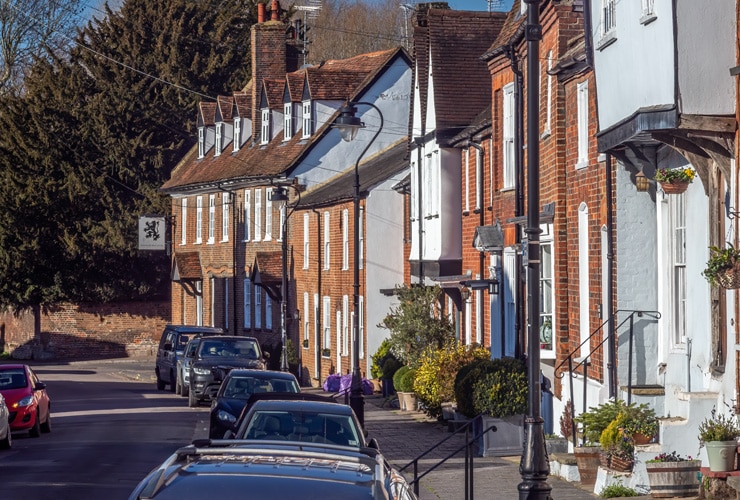
House Price Growth in St Albans
AL5 (Harpenden) leads five-year growth at 11.8%, and every one of the six postcodes is positive over five years. The recent picture is softer: only AL3 and AL5 posted positive one-year readings, with the rest giving back some of the pandemic-era gains. The spread over five years is wide, from 11.8% down to 3.1%.
| Area | 1 Year | 3 Years | 5 Years |
|---|---|---|---|
| AL5 (Harpenden) | 0.6% | -0.9% | 11.8% |
| AL3 (St Albans west, Redbourn) | 1.0% | -1.2% | 11.3% |
| AL4 (Marshalswick, Wheathampstead) | -7.9% | -7.3% | 10.2% |
| AL1 (St Albans city centre, Fleetville) | -2.3% | -0.5% | 4.9% |
| AL2 (Bricket Wood, Chiswell Green) | -1.5% | -7.4% | 4.8% |
| WD7 (Radlett, Shenley) | -9.1% | -13.0% | 3.1% |
AL5 (Harpenden) and AL3 lead the five-year table at 11.8% and 11.3% and are the only two postcodes positive over the past year as well, at 0.6% and 1.0%. Harpenden's own commuter demand and Redbourn's village appeal have held these two areas up better than the rest of the district through the recent rate cycle.
WD7 (Radlett) is the weakest reading across every timeframe, down 9.1% over a year and 13.0% over three years, with a 3.1% five-year figure. Radlett and Shenley form a small, thinly traded and very high-value postcode, where a handful of million-pound-plus sales can swing the average, so these figures carry more noise than the larger postcodes. AL4 (Marshalswick) shows a similar recent dip, down 7.9% over a year, sitting on top of a healthy 10.2% five-year gain.
Monthly Property Sales in St Albans
Transaction volumes range from 11 sales a month in WD7 to 29 in AL1, with the city-centre postcode by far the busiest. Turnover rates run from 7% in AL1 and WD7 up to 10% in AL5, a measure of how much of each postcode's stock changes hands in a year.
| Area | Sales Per Month | Turnover | Asking Price |
|---|---|---|---|
| AL1 (St Albans city centre, Fleetville) | 29 | 7% | £490,803 |
| AL5 (Harpenden) | 24 | 10% | £774,678 |
| AL2 (Bricket Wood, Chiswell Green) | 23 | 8% | £636,019 |
| AL3 (St Albans west, Redbourn) | 23 | 9% | £699,023 |
| AL4 (Marshalswick, Wheathampstead) | 19 | 9% | £673,851 |
| WD7 (Radlett, Shenley) | 11 | 7% | £1,043,777 |
AL1 records the most transactions at 29 a month, the busiest postcode in the district and the one with the lowest asking price. A deep pool of city-centre flats, terraces and semis around Fleetville and the stations means homes come up and sell regularly, which matters to an investor thinking ahead to the day they want to sell.
WD7 at 11 sales a month is the quietest market in St Albans by a clear margin. Radlett and Shenley are small, high-value areas with a limited supply of homes, so both the volume and the 7% turnover sit below the rest of the district. AL5 (Harpenden) carries the highest turnover at 10%, its larger and more active market changing hands more often despite the premium prices.
How Long Properties Take to Sell in St Albans
AL5 (Harpenden) clears fastest at about 277 days, while WD7 (Radlett) is the slowest at roughly 507 days, well over a year on the market. The days-to-sell figure is how long the average home is listed before a sale completes, and the months-of-unsold-stock figure counts how much supply is waiting at the current rate of sales. In a market priced this high the for-sale side is slow throughout, and the dearest postcodes take the longest to shift.
| Area | Avg Days to Sell | Months of Unsold Stock | Market |
|---|---|---|---|
| AL5 (Harpenden) | 277 | 9.1 | Balanced market |
| AL3 (St Albans west, Redbourn) | 338 | 11.1 | Balanced market |
| AL4 (Marshalswick, Wheathampstead) | 338 | 11.1 | Balanced market |
| AL2 (Bricket Wood, Chiswell Green) | 380 | 12.5 | Buyer's market |
| AL1 (St Albans city centre, Fleetville) | 435 | 14.3 | Buyer's market |
| WD7 (Radlett, Shenley) | 507 | 16.7 | Buyer's market |
The exit rarely makes it onto the yield spreadsheet, but in St Albans it swings more widely than the yield does. AL5 at 9.1 months of unsold stock offers the quickest way out of the district, while AL1 at 14.3 months and WD7 at 16.7 leave a seller queuing behind a long line of stock. A million-pound home in Radlett waits for the one buyer who wants it, so the slower postcodes need a longer runway built in from the day you buy.
What Type of Property Can You Buy in St Albans?
Detached homes are the largest single category in the outer postcodes, peaking at 52.3% of stock in AL5 (Harpenden), while flats and terraces are concentrated in the central AL1. What is on the ground in each postcode decides what you can realistically buy and let there. These shares come from the 2021 Census for each postcode.
| Area | Detached | Semi-detached | Terraced | Flats |
|---|---|---|---|---|
| AL1 (St Albans city centre, Fleetville) | 22.1% | 29.2% | 21.2% | 27.4% |
| AL2 (Bricket Wood, Chiswell Green) | 27.5% | 27.1% | 19.8% | 19.6% |
| AL3 (St Albans west, Redbourn) | 51.4% | 25.8% | 13.1% | 8.9% |
| AL4 (Marshalswick, Wheathampstead) | 51.0% | 26.1% | 12.0% | 10.7% |
| AL5 (Harpenden) | 52.3% | 25.2% | 12.1% | 10.2% |
| WD7 (Radlett, Shenley) | 49.7% | 35.5% | 9.4% | 4.7% |
AL1 holds the largest share of flats at 27.4% and a high terraced share at 21.2%. That is the smaller-unit stock that typically forms the buy-to-let market, and it lines up with AL1 carrying the lowest asking price and the busiest sales market in the city. The city-centre flats and Fleetville terraces suit single professionals and sharers commuting into London from the two stations on the doorstep.
AL5 (Harpenden) is the most detached-dominated postcode at 52.3%, with flats down at 10.2% and terraces at 12.1%. Detached and semi-detached houses together make up more than three-quarters of AL5's stock, which matches its premium prices and lowest-but-one yield. WD7 (Radlett) is similar, with the fewest flats in the district at 4.7%. The housing in these outer postcodes is weighted towards owner-occupier family homes rather than the smaller units that drive rental income.
The flats figure covers purpose-built blocks, conversions and flats in commercial buildings. A small share of mobile and temporary dwellings is excluded, so rows may not total 100%.
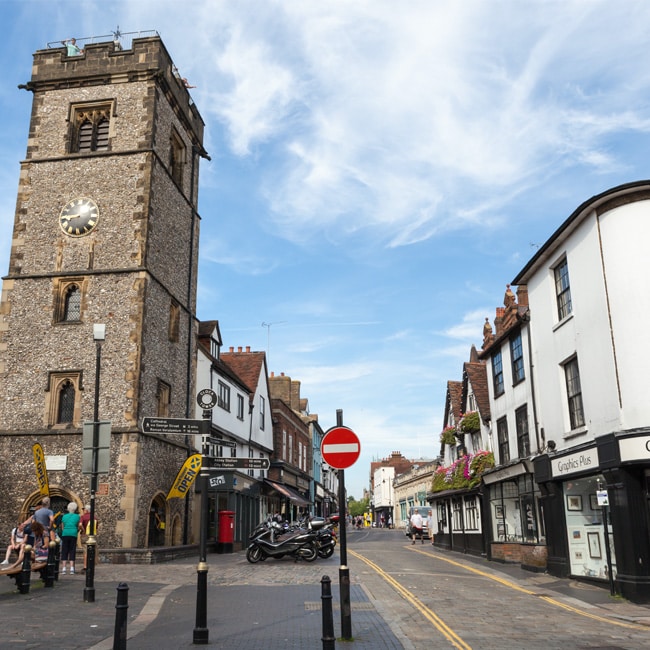
St Albans Rental Market Analysis
Monthly rents in St Albans range from £1,738 in AL1 to £2,862 in WD7, with gross rental yields from 3.3% to 4.7% across the six postcodes. The sections below take rents, yields and tenant affordability postcode by postcode, which is the detail that decides whether buy to let is worth it in a market priced this high. Anyone weighing how to build a property portfolio in the south east is buying St Albans for its wage base and its 20-minute line to St Pancras rather than for a chart-topping yield. Browse current buy-to-let homes for sale across the region.
Average Rent & Gross Rental Yields in St Albans
Gross rental yields in St Albans range from 3.3% in AL5 and WD7 to 4.7% in AL2. Unusually for a commuter market, the top yield is not in the cheapest postcode: AL2 pairs a mid-table £636,019 asking price with a high £2,507 monthly rent to lead on yield, while the cheapest postcode, AL1, comes second at 4.2%. WD7 (Radlett) charges the highest rent at £2,862 a month but ranks joint-last for yield at 3.3%, because its £1,043,777 asking price is more than double AL1's.
| Area | Average Monthly Rent | Asking Price | Gross Yield |
|---|---|---|---|
| AL2 (Bricket Wood, Chiswell Green) | £2,507 | £636,019 | 4.7% |
| AL1 (St Albans city centre, Fleetville) | £1,738 | £490,803 | 4.2% |
| AL3 (St Albans west, Redbourn) | £2,130 | £699,023 | 3.7% |
| AL4 (Marshalswick, Wheathampstead) | £1,985 | £673,851 | 3.5% |
| AL5 (Harpenden) | £2,100 | £774,678 | 3.3% |
| WD7 (Radlett, Shenley) | £2,862 | £1,043,777 | 3.3% |
AL2 at 4.7% leads the district on yield, a mid-priced postcode where a strong £2,507 monthly rent does the work rather than a low price. Bricket Wood and Chiswell Green sit on the southern edge towards Watford, close enough to the M25 and the rail network to command a full commuter rent without carrying the city-centre or Harpenden price tag. AL1 follows at 4.2%, where the lowest asking price in the district, £490,803, keeps the income figures competitive despite lower headline rents.
AL5 (Harpenden) and WD7 (Radlett) sit at the bottom of the yield table at 3.3%. Both charge high rents, £2,100 and £2,862, but against asking prices of £774,678 and £1,043,777 the income return is the thinnest in St Albans. These are capital-value and lifestyle postcodes rather than income ones, and WD7's thin transaction volumes underline that.
Gross Rental Yield by Postcode
Is St Albans Rent High?
Monthly rents in St Albans consume between 36.3% and 59.8% of the local median gross monthly salary. Rent is usually called affordable when it takes under 30% of gross income, and no St Albans postcode manages that on the local median salary. These are some of the highest commuter rents in Hertfordshire measured against one local wage, when in reality many tenants here are dual-income households or London commuters earning well above the district median.
The median gross weekly salary across St Albans is £1,103.80, which equates to £4,783 per month or £57,396 per year. This is well above the East of England regional median and the Great Britain median of £752.40 per week. Data from the Nomis Labour Market Profile (ASHE 2025).
| Rank | Area | Rent as % of Income |
|---|---|---|
| 1 | WD7 (Radlett, Shenley) | 59.8% |
| 2 | AL2 (Bricket Wood, Chiswell Green) | 52.4% |
| 3 | AL3 (St Albans west, Redbourn) | 44.5% |
| 4 | AL5 (Harpenden) | 43.9% |
| 5 | AL4 (Marshalswick, Wheathampstead) | 41.5% |
| 6 | AL1 (St Albans city centre, Fleetville) | 36.3% |
AL1 at 36.3% is the most affordable for tenants on the local median wage, which fits its position as the lowest-rent postcode at £1,738 a month. Affordable rents tend to correlate with lower void periods and fewer arrears, because tenants who are not stretched stay longer, and AL1's city-centre position keeps a steady flow of tenants who want to live close to the stations and the shops.
WD7 at 59.8% is the least affordable on a single local salary, but context matters. A £2,862 rent in Radlett is typically paid by a professional or dual-income household, often one commuting into London on a city wage rather than earning the district median. The 30% affordability rule is a blunt tool in a commuter market where the tenant's income often comes from elsewhere.
How Big Is St Albans' Private Rented Sector?
The private rented sector is deepest in AL1 at 18.6% of households and shallowest in AL5 (Harpenden) at 13.5%. How much of each postcode is already let privately tells you how established the local tenant pool is, and how the city splits between renting and owning. Household tenure across the six postcodes runs as follows.
| Area | Owned Outright | Owned with Mortgage | Private Rented | Social Rented |
|---|---|---|---|---|
| AL1 (St Albans city centre, Fleetville) | 32.4% | 35.5% | 18.6% | 13.0% |
| AL3 (St Albans west, Redbourn) | 39.5% | 36.3% | 18.2% | 5.6% |
| AL2 (Bricket Wood, Chiswell Green) | 36.4% | 36.2% | 16.3% | 9.8% |
| AL4 (Marshalswick, Wheathampstead) | 39.8% | 37.6% | 15.8% | 6.2% |
| WD7 (Radlett, Shenley) | 40.1% | 38.0% | 13.6% | 8.0% |
| AL5 (Harpenden) | 39.5% | 43.0% | 13.5% | 3.9% |
AL1 has the largest private rented sector in the district at 18.6%, with AL3 close behind at 18.2%. Nearly one home in five let privately in the city centre means a busy lettings market and a ready pool of tenants, which fits AL1 also holding the lowest asking price and the most sales activity. The outer postcodes run between 13.5% and 16.3% private rented and tilt towards ownership, with AL5 the most owner-occupied of all at 43.0% on a mortgage.
Where the rental listings are thick enough to read, in the central postcodes, the pace favours the landlord. In AL1 around 72 homes were on the rental market and lettings completed in about 32 days, and AL3 shows the same shape at roughly 45 days. Homes that let that quickly on a thin standing supply signal real tenant demand rather than a glut, though the outer postcodes list too few rentals at any one time to draw a firm conclusion.
Local Housing Allowance Rates in St Albans
All six St Albans postcodes fall within the South West Herts Broad Rental Market Area, where Local Housing Allowance runs from £115.37 a week for a shared room to £460.27 a week for a four-bedroom home. The allowance caps the housing support a tenant on benefits can claim, so for a landlord letting to that part of the market it acts as a practical rent ceiling. One market area covers the whole district, so the same rates hold from AL1 in the city centre out to WD7 in Radlett. To check the current rate for a specific address, you can use the government's official Local Housing Allowance calculator.
| Property Size | Weekly LHA Rate (South West Herts) |
|---|---|
| Shared accommodation | £115.37 |
| 1 bedroom | £218.63 |
| 2 bedrooms | £287.67 |
| 3 bedrooms | £345.21 |
| 4 bedrooms | £460.27 |
The two-bedroom South West Herts rate of £287.67 a week works out at about £1,247 a month, well below the £1,738 to £2,862 open-market rents recorded across the district. A benefit-backed tenancy at the LHA rate therefore sits a long way under St Albans' market rents, which is a common gap in high-value commuter areas: the housing that fits within these rates is scarce, and where it exists it concentrates in the cheaper central stock in AL1 rather than the outer postcodes. As of June 2026 these are the current rates, and they are reviewed each April.
Buy-to-Let Considerations
Are House Prices High in St Albans? Price-to-Earnings Ratios
Purchasing a property in St Albans requires between 8.6 and 18.2 times the median annual salary. This is based on the Nomis Labour Market Profile for St Albans showing the median gross annual income for local residents is £57,396.
A useful yardstick is 7.4x, which is England's £289,946 average sold price measured against the £39,125 Great Britain median salary. St Albans clears that bar in every postcode, the cost of a city 20 minutes from St Pancras. Even AL1, the cheapest, needs 8.6 times local earnings, and those local earnings are already among the highest in Hertfordshire.
| Rank | Area | Price-to-Earnings Ratio |
|---|---|---|
| 1 | AL1 (St Albans city centre, Fleetville) | 8.6x |
| 2 | AL2 (Bricket Wood, Chiswell Green) | 11.1x |
| 3 | AL4 (Marshalswick, Wheathampstead) | 11.7x |
| 4 | AL3 (St Albans west, Redbourn) | 12.2x |
| 5 | AL5 (Harpenden) | 13.5x |
| 6 | WD7 (Radlett, Shenley) | 18.2x |
AL1 at 8.6x is the most affordable entry point in the district, though it still sits above the national 7.4x benchmark. At well under nine times local earnings, AL1 is the postcode where a St Albans salary stretches furthest, and where the yield and affordability figures line up best for an income investor.
WD7 at 18.2x sits at nearly two and a half times the national benchmark. At over eighteen times the local median salary, Radlett is firmly premium territory bought by London-wage commuters and trade-down buyers from more expensive areas. For an investor, the elevated ratio compresses the yield and stretches the payback period, the trade-off for the joint-lowest income return in the district.
Deposit Requirements in St Albans
A 30% deposit on a buy-to-let property in St Albans ranges from £147,241 in AL1 to £313,133 in WD7. The gap between the cheapest and most expensive deposit is £165,892, more than the whole deposit needed in AL1. These are among the largest deposits of any Hertfordshire market, reflecting the London-proximity premium baked into the prices.
Beyond the deposit, the stamp duty calculation and other buy to let running costs affect the total capital required.
| Rank | Area | 30% Deposit Required |
|---|---|---|
| 1 | AL1 (St Albans city centre, Fleetville) | £147,241 |
| 2 | AL2 (Bricket Wood, Chiswell Green) | £190,806 |
| 3 | AL4 (Marshalswick, Wheathampstead) | £202,155 |
| 4 | AL3 (St Albans west, Redbourn) | £209,707 |
| 5 | AL5 (Harpenden) | £232,403 |
| 6 | WD7 (Radlett, Shenley) | £313,133 |
AL1 is the cheapest way into St Albans at a £147,241 deposit, and it buys the second-highest yield and the most affordable rents in the district. Stepping up to AL2 costs roughly £43,500 more, and that money buys the highest-yielding postcode in St Albans, so the step up here comes with a genuine income return attached rather than only a bigger number on the table.
At the top end, WD7 needs a £313,133 deposit, more than twice AL1's, for a 3.3% yield in a thin, slow-moving market. That is the widest commitment-to-return gap in the district: the largest cheque buys the lowest income return, with the case for Radlett resting on the quality of the location rather than the rent it earns.
What the St Albans Data Tells Buy-to-Let Investors
In St Albans the cheapest way in and the highest-yielding postcode are two different places. AL1 (city centre, Fleetville) is the lowest entry for an investment property in St Albans at a £490,803 asking price, the most affordable rents against local earnings at 8.6 times income, and the second-best yield at 4.2%. A 30% deposit there is £147,241, the lowest in the district, for a home renting at £1,738 a month next to the two stations. The top yield, though, sits one step up in AL2 (Bricket Wood, Chiswell Green) at 4.7%, where a £2,507 rent on a mid-priced £636,019 home does the work.
AL3 (Redbourn) posted the strongest recent momentum, up 11.3% over five years and the only postcode positive across the past year at 1.0%, on a 3.7% yield. AL5 (Harpenden) matched it on five-year growth at 11.8% but sits at a 3.3% yield. At the premium end, WD7 (Radlett) charges the highest rent in the district at £2,862 a month, yet on a £1,043,777 asking price it returns the joint-lowest yield at 3.3%. Buyers who want to come in below asking often look through off-market property in St Albans channels.
St Albans City and District Council runs mandatory HMO licensing only, with no council licensing scheme for smaller private lets, so a standard single-family let needs no licence. With local earnings more than 40% above the regional median, a 76.7% employment rate and a 20-minute train to St Pancras, St Albans reads differently from the higher-yielding markets further north: lower headline yields, sitting on top of a deep and well-paid tenant base.
How St Albans Compares
St Albans' mean asking price of £719,692 is the highest of five Hertfordshire commuter markets compared here, and its top yield of 4.7% sits mid-table. The comparison below places St Albans alongside four nearby commuter markets, each with a different balance of price and yield. The mean asking price and mean monthly rent are simple averages across all postcodes with data. Top gross yield is the single highest postcode yield in each location.
| Location | Mean Asking Price | Mean Monthly Rent | Mean Gross Yield | Top Yield (postcode) |
|---|---|---|---|---|
| Luton | £404,481 | £1,457 | 4.3% | 5.1% (LU3) |
| Watford | £450,831 | £1,675 | 4.5% | 5.5% (WD18) |
| Hemel Hempstead | £538,635 | £1,579 | 3.5% | 4.4% (HP2) |
| Welwyn Garden City | £599,684 | £1,391 | 2.8% | 4.5% (AL7) |
| St Albans | £719,692 | £2,220 | 3.7% | 4.7% (AL2) |
St Albans is the most expensive location in this comparison at £719,692 mean asking price, ahead of every other Hertfordshire market shown, and it also charges the highest mean rent at £2,220 a month. Its top yield of 4.7% is the second-highest in the group, held up by AL2 rather than dragged down by the premium prices, which is the surprise in the numbers.
For investors prioritising income, Watford at 5.5% and Luton at 5.1% deliver the higher top-line yields, with Luton also the cheapest entry in the table. Hemel Hempstead at 4.4% and Welwyn Garden City at 4.5% sit between the two ends on both price and yield. St Albans is the premium corner of the county, dearest and highest-renting, yet its best postcode still edges most of the group on yield. For a data-driven comparison across all UK locations, see our best places to invest in buy-to-let guide.
Frequently Asked Questions
Is St Albans a good place to live for buy-to-let tenants?
For a commuter city, the fundamentals are strong. The employment rate across the district is 76.7%, a little above the Great Britain figure of 75.6%, and the typical wage is £1,103.80 a week against a national £752.40, one of the highest local wage bases in Hertfordshire. Tenants in steady, well-paid work tend to keep the rent paid and stay put.
What anchors demand is the commute. St Albans City station runs fast trains into St Pancras in about 20 minutes, and St Albans Abbey adds a branch line to Watford. That pulls a deep pool of London-earning tenants who want the city's character and green space without central London prices, and the local professional-services economy adds a second, home-grown layer of tenants on top.
What are the best areas in St Albans for property investment?
The six postcodes split fairly cleanly. AL1 (city centre, Fleetville) is the cheapest way in at £490,803 and the second-highest yield at 4.2%, next to the two stations, so it leans towards income and liquidity. AL2 (Bricket Wood, Chiswell Green) carries the top yield in the district at 4.7% on a mid-range price, the one postcode where a strong rent beats a low price.
At the top end, AL5 (Harpenden) and AL3 (Redbourn) lead on five-year growth at 11.8% and 11.3%, while WD7 (Radlett) is the premium spot at over a million pounds but the joint-lowest yield at 3.3%. So if income is the priority, AL2 leads on yield and AL1 on price; if you are weighting recent capital growth, AL5 and AL3 have held up best.
What are average house prices in St Albans?
The average sold price across the district is £633,319 on the Land Registry index, about 118.4% above the England average of £289,946 as of March 2026. Asking prices by postcode run from £490,803 in AL1 (city centre) up to £1,043,777 in WD7 (Radlett), with a district-wide mean of £719,692. By type, detached homes average £1,215,764, semi-detached £751,040, terraced £567,505 and flats £321,860.
Through a buy-to-let lens, AL2 is the highest-yielding at 4.7% and AL1 the cheapest entry, while AL5 (Harpenden) and WD7 (Radlett) are the joint-lowest-yielding at 3.3%.
Can I find buy-to-let property under £500,000 in St Albans?
Just about, in the right postcode and property type. The cheapest postcode is AL1 (city centre, Fleetville) at a £490,803 average asking price, so AL1 as a whole sits below £500,000. Beyond that, the way under the figure is by property type: flats across the district average £321,860 on the Land Registry index, and terraced houses in AL1 come in below their postcode average. If a sub-£500,000 entry is the target, AL1 flats and central terraces are where to look, or explore below market value properties.
Is there demand for flats and smaller units in St Albans?
Yes, mostly in the central AL1. AL1 holds the largest flat share at 27.4% and the largest private rented sector at 18.6%, and it carries the second-highest yield in the city. The city-centre and Fleetville flats and terraces suit single professionals and commuters who want to be near the two stations, and the rents stay the most affordable in the district relative to local wages.
On the shared-house side, a sample of current AL1 room adverts puts a double with a shared bathroom at around £186 a week, with most between £150 and £219 (the middle 80% of 20 adverts). That was the only room type with enough live adverts for a reliable figure, so ensuite and single-room rents elsewhere in St Albans are harder to pin down. For how the numbers work on a shared house, see our complete guide to investing in HMOs.
Does St Albans have a selective licensing scheme for landlords?
No. St Albans City and District Council operates mandatory HMO licensing only, which applies to houses in multiple occupation let to five or more people forming more than one household. There is no selective or additional licensing scheme covering standard single-family lets, so a normal buy-to-let tenancy in St Albans does not need a licence.
If you are letting a larger shared house, the mandatory HMO rules do apply, and running a licensable HMO without a licence carries a civil penalty of up to £30,000. It is worth checking the council's current guidance before committing to an HMO strategy, as the definitions and conditions can change.
What are the Local Housing Allowance rates in St Albans?
The whole district falls in the South West Herts Broad Rental Market Area, where, as of June 2026, Local Housing Allowance runs at £115.37 a week for a shared room, £218.63 for a one-bed, £287.67 for two beds, £345.21 for three and £460.27 for four. That figure is the most a tenant on housing support can claim towards rent, so for that part of the market it effectively sets a floor. Because St Albans market rents sit well above these rates, benefit-backed lets tend to concentrate in the cheaper central stock in AL1.
What type of property is most common in St Albans?
Detached houses in the outer postcodes, smaller stock in the centre. Detached homes run from 22.1% of the stock in AL1 up to 52.3% in AL5 (Harpenden). The smaller homes that usually suit buy-to-let, terraces and flats, are most concentrated in central AL1, where flats reach 27.4% and terraces 21.2%. WD7 (Radlett) sits at the other end, weighted towards detached and semi-detached family houses with the fewest flats in the district at 4.7%.
How do I buy an investment property in St Albans?
Start by deciding whether you are buying for income or for growth, because that points you at a different postcode. AL1 (city centre, Fleetville) is the cheapest entry at £490,803 and second on yield at 4.2%, while AL2 (Bricket Wood, Chiswell Green) tops the yield table at 4.7%. Budget for a 30% deposit, which runs from £147,241 in AL1 to £313,133 in WD7 (Radlett).
Beyond what is listed openly, plenty of experienced investors buy below asking through off market property and BMV property. To see what is available now, browse investment properties or buy-to-let property for sale.
Ready to buy property?
Access off-market investment properties with an average 8%+ annual gross yield (beating the UK's typical 3-5%).
Get property alerts