
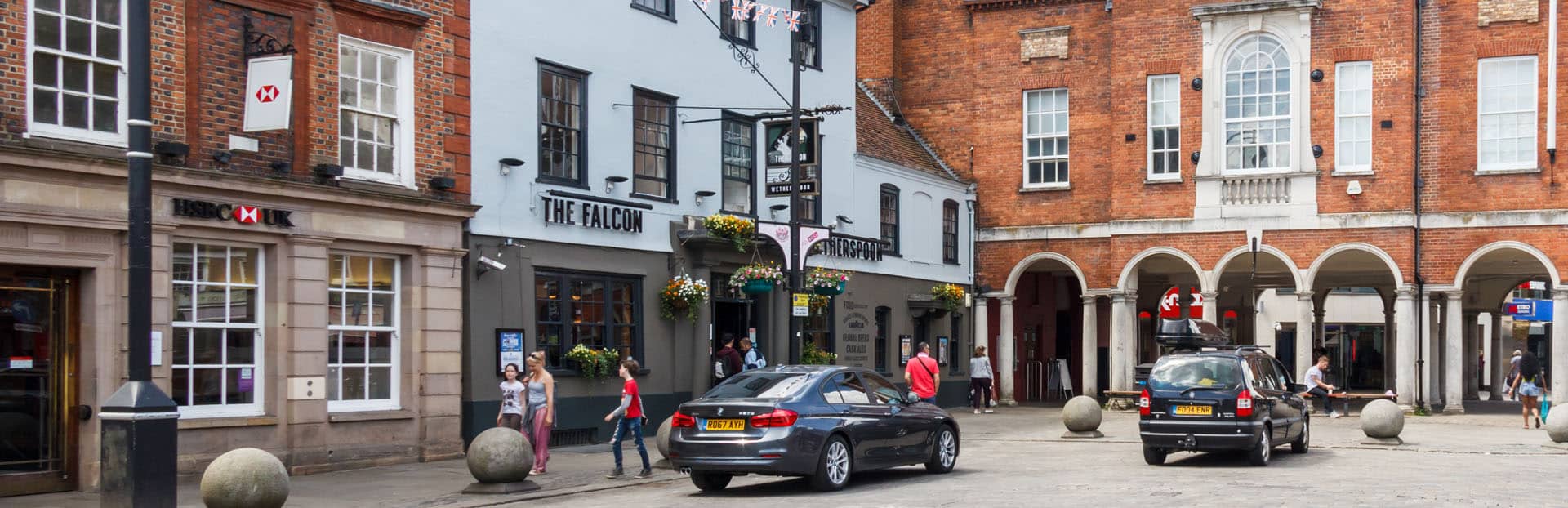
High Wycombe is a town in Buckinghamshire, in south-east England. HP11, the town centre itself, is the only High Wycombe postcode that asks under £350,000, at £332,491, and it carries the highest yield in the area at 4.8%. Step out to the surrounding Chilterns market towns and the numbers change shape entirely: Marlow (SL7) asks £782,280 and Bourne End (SL8) £896,652, both well into commuter-belt territory. That is the shape of High Wycombe as a buy-to-let market. One affordable, higher-yielding town centre wrapped in a ring of expensive villages, all sitting under the Buckinghamshire unitary authority.
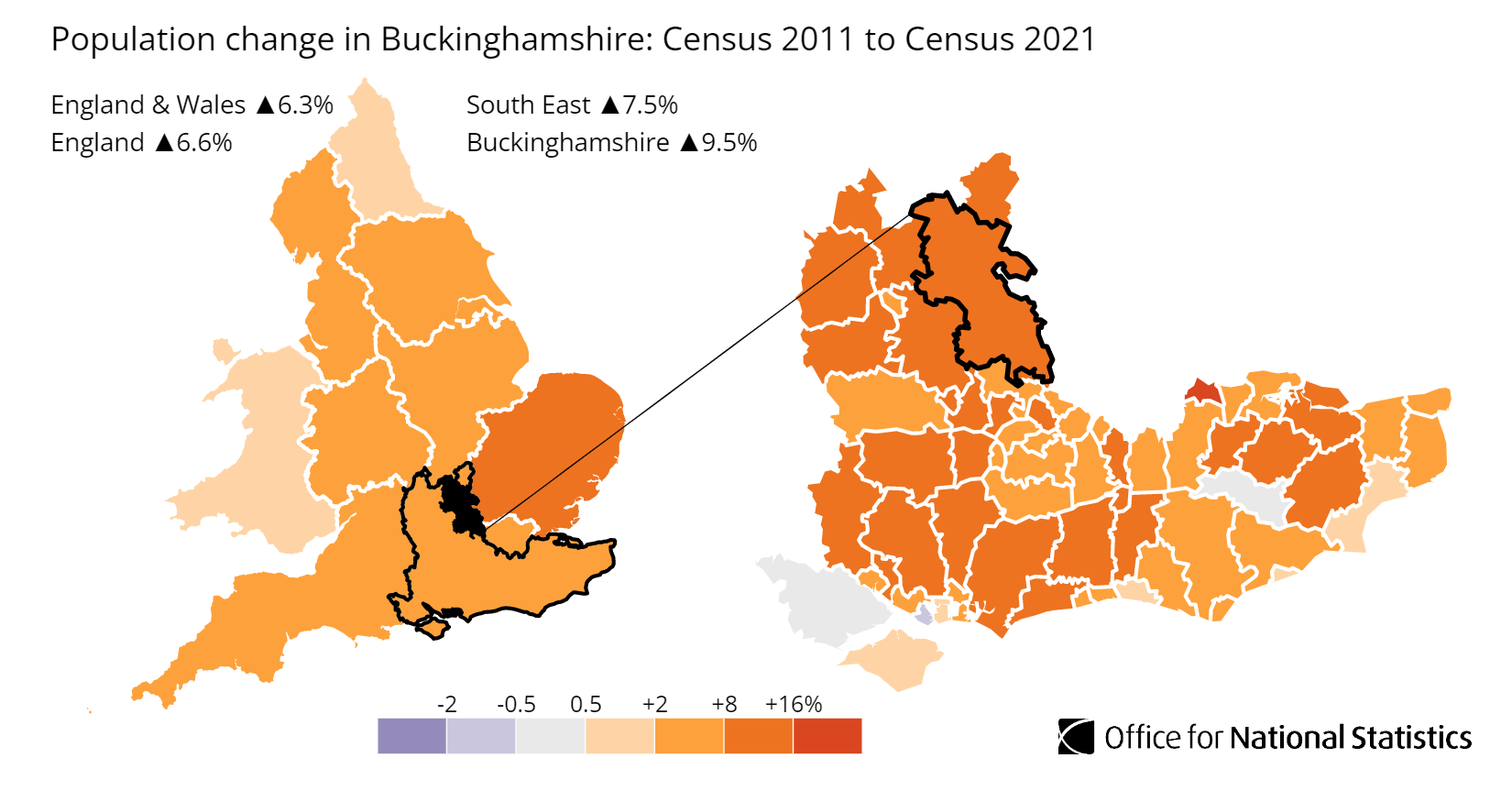
The wider area data leans towards those villages more than the town. Average sold prices across Buckinghamshire are £478,219 on the HM Land Registry House Price Index, 64.9% above the England average of £289,946 and 26.3% above the South East regional figure of £378,515. That number covers the whole unitary, taking in affluent towns such as Beaconsfield, Amersham and Gerrards Cross, so it sits well ahead of what a flat or terrace in central High Wycombe actually changes hands for. Buckinghamshire's population grew 9.5% between the 2011 and 2021 censuses, from 505,300 to 553,100 residents.
This guide covers eight postcodes under the Buckinghamshire unitary authority (ONS code E06000060): HP10, HP11, HP12, HP13, HP14 and HP15 in and around High Wycombe, plus SL7 (Marlow) and SL8 (Bourne End) to the south. High Wycombe sits in the Chilterns, roughly 30 miles north-west of London, with direct Chiltern Railways trains from High Wycombe station to London Marylebone.
Article updated: July 2026
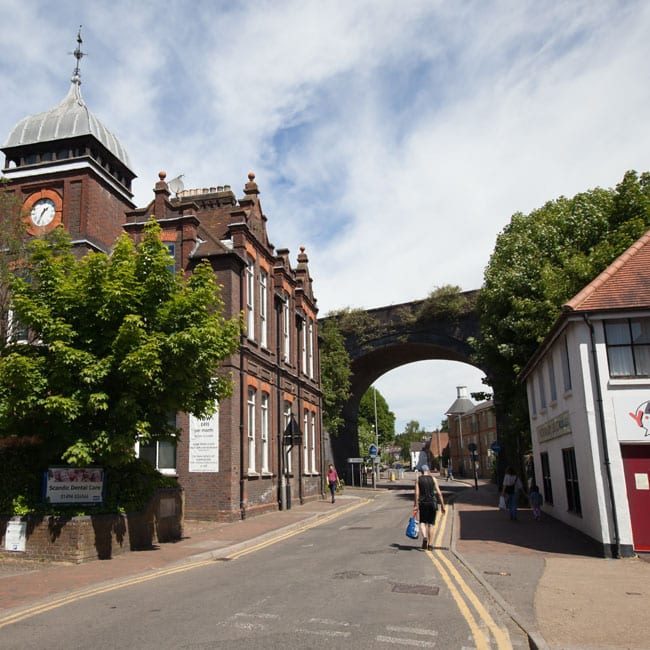
Why Invest in High Wycombe?
High Wycombe earns its place as a buy-to-let market on jobs and commuting, not headline yields. Buckinghamshire, the unitary authority the town sits within, grew its population 9.5% between the 2011 and 2021 censuses, from 505,300 to 553,100 residents. That is faster than the England and Wales average of 6.3%, and it reflects steady demand from households priced out of London but still wanting a Marylebone train and Chiltern countryside.
The Buckinghamshire employment rate is 82.4%, above the South East's 78.9% and Great Britain's 75.5%, with local unemployment at 3.0% against 4.5% nationally. The economy leans on wholesale and retail (18.9% of employee jobs), human health and social work (13.0%), education (9.2%) and professional, scientific and technical work (9.2%). High Wycombe itself adds a furniture-making heritage, a hospital, Buckinghamshire New University and a retail core, while the M40 and the Chiltern line put London commuting within reach for tenants who work in town one day and the capital the next.
Median gross annual earnings across Buckinghamshire are £43,290, which is 10.6% above the Great Britain median of £39,125 and 4.0% above the South East regional figure. Higher local wages give tenants more headroom to absorb the rents that this part of the Chilterns commands. The combination of strong employment and above-average earnings supports a tenant base that leans professional and commuter rather than benefit-reliant, particularly in the villages.
High Wycombe Economic Summary
- Population (Buckinghamshire): 553,100 (2021 Census). Growth of 9.5% from 2011.
- Median annual salary: £43,290 (Buckinghamshire), £39,125 (Great Britain)
- Employment rate: 82.4% (Buckinghamshire), 78.9% (South East), 75.5% (Great Britain)
- Unemployment rate: 3.0% (Buckinghamshire)
- Key employment sectors: Wholesale and retail, health and social work, education, professional and technical services, manufacturing
Source: ONS Census 2021, Nomis Labour Market Profile (ASHE 2025, Employment Jan-Dec 2025)
Regeneration and Investment in High Wycombe
High Wycombe town centre is in the middle of a regeneration programme worth more than £15 million, with new homes coming forward at the Chilterns Shopping Centre and on the edge of town at Gomm Valley. The work is concentrated where the buy-to-let stock is cheapest, around HP11 and HP13, which is the part of the area an income-focused investor pays most attention to.
- High Wycombe Town Centre Regeneration (Active, £15 million-plus): Buckinghamshire Council is reshaping the town centre under its Estates Strategy, including £3.1 million already spent on the White Hart Street area and new council offices above a reopened Tesco, with the offices due to open in spring 2027. The aim is to lift footfall and bring civic functions back into the centre. Updates at Buckinghamshire Council.
- Chilterns Shopping Centre redevelopment (Planning approved, 300-plus homes): Dandara Living secured planning permission in February 2025 for more than 300 build-to-rent homes on the Chilterns Shopping Centre site in HP13, across two buildings rising to ten storeys with a new pedestrian street. A purpose-built rental block of this size adds professional lettings supply directly in the town centre. Updates at Construction Enquirer.
- Gomm Valley (Planning approved, 544 homes): Taylor Wimpey received planning permission in December 2025 for 544 homes at Gomm Valley on the eastern edge of High Wycombe, of which 48% are designated affordable, with construction targeted to start in spring 2026 and first completions in autumn 2027. The scheme also includes land for a primary school and community space. Updates at UK Property Forums.
Source: Office for National Statistics - Population for Buckinghamshire
High Wycombe Property Market Analysis
Average property prices across Buckinghamshire have risen 452.3% since January 1995, from £86,586 to £478,219. Land Registry sold prices are published at unitary-authority level, so the price history below covers the whole of Buckinghamshire rather than High Wycombe alone. The current postcode tables that follow do drill down to HP and SL level for sold prices, asking prices, yields, growth and transaction volumes.
When was the last house price crash in High Wycombe?
Because sold-price data is recorded across the Buckinghamshire unitary authority, the cycle below tracks the wider county. The Land Registry House Price Index runs from January 1995 to March 2026, giving 31 years of Buckinghamshire market history to read against.
The 1995 to 2007 climb: Buckinghamshire started 1995 at £86,586. Prices roughly doubled by December 2000 to £162,671, then climbed through the early-2000s boom to £252,605 by December 2005. The pre-crash high came in December 2007 at £304,777, by which point a Buckinghamshire home had more than tripled in value in twelve years.
2008 to 2009, the financial crisis: From the December 2007 high of £304,777, prices fell to a trough of £245,118 in March 2009, a drop of 19.6% over 15 months. The worst annual reading was -16.0% in February 2009. As a higher-priced market with more mortgage exposure, Buckinghamshire fell roughly in line with England's correction rather than escaping it, and the recovery took longer than the headlines suggested.
The 2010 to 2013 plateau: Prices bounced off the March 2009 trough but then stalled. The average sat at £280,982 in December 2010, drifted to £293,062 by December 2012, and only reached £297,437 by June 2013. Buckinghamshire spent four years grinding sideways, unable to clear its pre-crash high.
Recovery, 2013 to 2014: Prices finally passed the December 2007 high of £304,777 in September 2013, at £306,101, a recovery that took close to six years. Growth then accelerated through 2014, with the average reaching £341,763 by December 2014 on annual growth of 12.0%.
The 2015 to 2019 plateau at a new level: After a strong mid-decade run that took the average to £405,891 by December 2016, the market cooled. Prices eased to £418,105 by December 2018 and £410,384 by December 2019, with mildly negative annual readings in 2018 and 2019 as the top of the South East market ran out of road.
2020 to 2022, the pandemic surge: The stamp duty holiday and the race for space lifted Buckinghamshire from £410,504 in June 2020 to £428,809 by December 2020, then £443,531 by December 2021 and £477,011 by December 2022 on 7.5% annual growth. Chiltern villages with gardens and a fast London train were exactly what pandemic buyers were chasing.
The 2023 rate shock: Higher mortgage rates cooled the top of the market. Prices slipped to £462,339 by June 2023 and £470,858 by December 2023, recording -1.3% annual growth. A premium county with larger loans felt the rate rise more than cheaper markets did.
2024 to present: Prices reached £476,891 by December 2024 and an all-time high of £486,843 in November 2025, before easing to £478,219 by the latest reading in March 2026. The current average sits 56.9% above the pre-crash high of £304,777.
Long-term growth summary:
- 5 years (March 2021 to March 2026): 13.0% growth (£423,028 to £478,219)
- 10 years (March 2016 to March 2026): 24.1% growth (£385,196 to £478,219)
- 15 years (March 2011 to March 2026): 71.2% growth (£279,255 to £478,219)
- 20 years (March 2006 to March 2026): 88.4% growth (£253,892 to £478,219)
- 30 years (January 1995 to March 2026): 452.3% growth (£86,586 to £478,219)
Buckinghamshire's 19.6% crash was close to the national fall, and the near-six-year recovery was longer than England's, a reminder that higher-priced markets do not always cushion better. The 30-year return of 452.3% reflects the county's strong long-run capital growth, but the slower five-year figure of 13.0% shows how much the recent rate cycle has weighed on premium South East prices. Someone who bought at the December 2007 high would now be 56.9% ahead on the Land Registry average.
- All property types
- Detached
- Semi-detached
- Terraced
- Flats
- All property types
- Detached
- Semi-detached
- Terraced
- Flats
Sold House Prices in High Wycombe
The average sold price across all property types in Buckinghamshire is £478,219, which is 64.9% above the England average of £289,946 as of March 2026. The premium is heavily skewed by house type. Detached homes sit 81.3% above England, while flats are only 9.4% above. The closer to the flat market you stay, the closer Buckinghamshire prices sit to the national picture, which matters because flats and terraces are where most of the buy-to-let stock around High Wycombe town centre lives.
| Property Type | Buckinghamshire Average | England Average | Difference |
|---|---|---|---|
| Detached houses | £852,839 | £470,492 | +81.3% |
| Semi-detached houses | £470,904 | £288,185 | +63.4% |
| Terraced houses | £378,184 | £243,788 | +55.1% |
| Flats and maisonettes | £234,777 | £214,563 | +9.4% |
| All property types | £478,219 | £289,946 | +64.9% |
Detached houses across Buckinghamshire average £852,839, a full 81.3% above England's £470,492. This is the figure the villages drive, with detached stock dominating SL7 (Marlow), HP14 (Stokenchurch) and HP15 (Hazlemere), where more than half of all homes are detached. Detached prices eased 1.2% over the latest year, a gentle slowing rather than a fall, but at this level the lot sizes price out most buy-to-let income strategies.
Semi-detached houses average £470,904, 63.4% above England's £288,185. Semis are the bridge between the affordable town centre and the premium villages, well represented across HP12 (Sands) and HP15 (Hazlemere). Prices were broadly flat over the year at -0.3%, the steadiest of the four types, which fits the family-let demand that underpins this part of the stock.
Terraced houses average £378,184, 55.1% above England's £243,788. Terraced stock concentrates in and around the town centre, particularly HP11 and HP13, where Victorian and inter-war terraces make up much of the rental supply. Terraced prices softened 1.4% over the year, and at well below the detached average this is the house type where an income buyer can still make the numbers work near the station.
Flats and maisonettes average £234,777, only 9.4% above England's £214,563 and by far the closest type to the national figure. The flat market clusters in HP11, where purpose-built blocks make up more than a quarter of the stock, and that is where asking prices and yields are most workable for a buy-to-let purchase. Flats did fall 5.3% over the latest year, the weakest of the four types, so this is a softer corner of an otherwise expensive county.
Price Per Square Foot in High Wycombe
Price per square foot across the eight postcodes runs from £401 in HP12 to £595 in SL7, a £194 gap that maps the climb from the town centre out to the riverside villages. Measuring by the square foot takes house size out of the comparison, so it isolates what each location commands on its own. SL7 (Marlow) tops the table, which fits its position as the most sought-after of the Chilterns towns covered here.
| Rank | Area | Price Per Sq Ft |
|---|---|---|
| 1 | HP12 (High Wycombe, Sands) | £401 |
| 2 | HP13 (High Wycombe, Downley) | £425 |
| 3 | HP11 (High Wycombe) | £426 |
| 4 | HP14 (Stokenchurch, Lane End) | £461 |
| 5 | HP15 (Hazlemere, Holmer Green) | £480 |
| 6 | HP10 (Wooburn Green, Flackwell Heath) | £511 |
| 7 | SL8 (Bourne End) | £555 |
| 8 | SL7 (Marlow) | £595 |
HP12 at £401 per square foot is the cheapest bricks-and-mortar in the area, with HP13 (£425) and HP11 (£426) close behind. These three town-centre postcodes hold the bulk of the smaller, lettable stock, and the figures come from a deep transaction base, 303 sales analysed in HP12 and 674 in HP13, so the read is reliable. Buying space at £401 in HP12 versus £595 in SL7 is a 33% difference in what each square foot costs.
SL7 at £595 per square foot tops the table, with Bourne End (SL8) at £555 just behind. In Marlow that premium buys riverside setting, a strong high street and good schools, the things that pull professional buyers and renters out of London and into the SL postcodes. Both figures rest on solid samples, 313 transactions in SL7 and 150 in SL8.
For Sale Asking Prices in High Wycombe
Asking prices run from £332,491 in HP11 to £896,652 in SL8, a 169.7% spread across eight postcodes. That hierarchy follows the geography exactly, from the town centre out to the riverside villages. The mean asking price across all eight High Wycombe postcodes is £576,463.
| Rank | Area | Asking Price |
|---|---|---|
| 1 | HP11 (High Wycombe) | £332,491 |
| 2 | HP12 (High Wycombe, Sands) | £365,833 |
| 3 | HP13 (High Wycombe, Downley) | £380,251 |
| 4 | HP15 (Hazlemere, Holmer Green) | £580,006 |
| 5 | HP14 (Stokenchurch, Lane End) | £604,212 |
| 6 | HP10 (Wooburn Green, Flackwell Heath) | £669,981 |
| 7 | SL7 (Marlow) | £782,280 |
| 8 | SL8 (Bourne End) | £896,652 |
HP11 at £332,491 is the only postcode under £350,000 and the clear entry point into the area. The three town-centre postcodes, HP11, HP12 and HP13, all sit between £332,000 and £381,000, then there is a £200,000 jump to HP15 at £580,006. That step is the dividing line between the town and the villages, and for an investor on a fixed budget it is where the choice between income and prestige is made.
SL8's £896,652 asking price is the top of the table and reads as owner-occupier territory rather than an income play. To set it in context, the mean asking price across High Wycombe's eight postcodes is £576,463, so Bourne End sits 55% above the local average and almost three times the HP11 asking price. The yield figures in the sections below confirm where the income actually sits.
House Price Growth in High Wycombe
HP14 leads the area on five-year growth at 23.5%, while HP11 is the outlier with a five-year reading of -11.6%. Seven of the eight postcodes posted positive five-year growth, but the spread is wide and the recent year is mixed. HP12 stands out for grinding higher across all three timeframes: 6.8% over one year, 15.0% over three and 16.3% over five.
| Area | 1 Year | 3 Years | 5 Years |
|---|---|---|---|
| HP14 (Stokenchurch, Lane End) | 5.3% | 0.6% | 23.5% |
| HP13 (High Wycombe, Downley) | 3.8% | 10.0% | 16.7% |
| HP12 (High Wycombe, Sands) | 6.8% | 15.0% | 16.3% |
| HP15 (Hazlemere, Holmer Green) | 3.2% | 2.3% | 11.0% |
| HP10 (Wooburn Green, Flackwell Heath) | -2.7% | 2.4% | 10.7% |
| SL8 (Bourne End) | 4.1% | -11.5% | 6.7% |
| SL7 (Marlow) | -9.6% | -7.3% | 2.5% |
| HP11 (High Wycombe) | -15.7% | 9.3% | -11.6% |
HP14 at 23.5% over five years has the strongest medium-term record in the area, with Stokenchurch and Lane End benefiting from detached Chiltern stock and easy M40 access. The one-year reading of 5.3% shows that demand has held up where the three-year figure of 0.6% had flattened.
HP12 is the most consistent climber, positive across one, three and five years. Sands and the western edge of the town centre have seen steady demand from buyers who want a town postcode without the HP10 or SL price tag. HP13 sits close behind on similar town-centre fundamentals.
HP11's -15.7% one-year and -11.6% five-year readings are the weakest in the area and need reading with care. The town-centre postcode carries the most flats, and the flat market was the softest property type across Buckinghamshire over the latest year at -5.3%, so the cheapest, most flat-heavy postcode shows the sharpest recent price weakness even as it still offers the highest yield.
Monthly Property Sales in High Wycombe
Transaction volumes range from 10 sales a month in Bourne End to 35 in HP13, with turnover from 7% to 10% across the eight postcodes. HP13 is comfortably the busiest market, helped by its deeper, lower-priced stock. Turnover, the share of homes changing hands each year, is tightest in the village postcodes and loosest in the town.
| Area | Sales Per Month | Turnover | Asking Price |
|---|---|---|---|
| HP13 (High Wycombe, Downley) | 35 | 10% | £380,251 |
| SL7 (Marlow) | 19 | 7% | £782,280 |
| HP11 (High Wycombe) | 17 | 10% | £332,491 |
| HP10 (Wooburn Green, Flackwell Heath) | 16 | 7% | £669,981 |
| HP14 (Stokenchurch, Lane End) | 16 | 10% | £604,212 |
| HP15 (Hazlemere, Holmer Green) | 13 | 7% | £580,006 |
| HP12 (High Wycombe, Sands) | 12 | 8% | £365,833 |
| SL8 (Bourne End) | 10 | 10% | £896,652 |
HP13 records 35 sales a month, more than double any village postcode and a sign of a market with depth. For a buy-to-let investor, more transactions mean more comparable evidence at purchase and more chance of a clean exit later, which matters most where the town-centre flats and terraces sit.
The SL postcodes sit at opposite ends of the volume table despite both being premium. Marlow turns over 19 sales a month while Bourne End manages 10, the thinnest market of the eight, so a seller in SL8 has fewer recent comparables and a narrower buyer pool to work with.
How Long Properties Take to Sell in High Wycombe
HP11 clears fastest in the area at about 277 days, while Marlow (SL7) is slowest at roughly 507 days, a gap of more than seven months between the cheapest postcode and the dearest. Days on market is the typical time a home is listed before it sells, and months of unsold stock shows how much for-sale supply is queued at the current sales rate. In an expensive area, that exit time is a real holding cost most yield tables never show.
| Area | Avg Days to Sell | Months of Unsold Stock | Market |
|---|---|---|---|
| HP11 (High Wycombe) | 277 | 9.1 | Balanced market |
| HP13 (High Wycombe, Downley) | 304 | 10.0 | Balanced market |
| HP14 (Stokenchurch, Lane End) | 338 | 11.1 | Balanced market |
| HP12 (High Wycombe, Sands) | 380 | 12.5 | Buyer's market |
| HP15 (Hazlemere, Holmer Green) | 380 | 12.5 | Buyer's market |
| SL8 (Bourne End) | 380 | 12.5 | Buyer's market |
| HP10 (Wooburn Green, Flackwell Heath) | 435 | 14.3 | Buyer's market |
| SL7 (Marlow) | 507 | 16.7 | Buyer's market |
HP11 at 277 days and 9.1 months of unsold stock is the most liquid postcode here, which lines up with its low asking price and the depth of its town-centre stock. The town moves quicker than the villages, and for an income buyer that quicker exit is worth as much as the headline yield when the time comes to sell.
Marlow at 507 days and 16.7 months of supply sits at the other end. SL7 commands the second-highest prices in the area, but a higher price tag and a narrower buyer pool mean homes there sit far longer before they sell, so capital tied up in Marlow is capital you may wait a long time to release.
What Type of Property Can You Buy in High Wycombe?
Detached homes are the largest single category in the villages, peaking at 57.2% of stock in Marlow, while flats and terraces cluster in the town centre, where flats reach 31.7% in HP11. The mix of housing decides which strategies fit each postcode. The figures below come from 2021 Census records for each postcode.
| Area | Detached | Semi-detached | Terraced | Flats |
|---|---|---|---|---|
| HP10 (Wooburn Green, Flackwell Heath) | 45.7% | 28.3% | 10.9% | 13.6% |
| HP11 (High Wycombe) | 31.9% | 26.6% | 9.9% | 31.7% |
| HP12 (High Wycombe, Sands) | 26.3% | 38.5% | 13.9% | 21.4% |
| HP13 (High Wycombe, Downley) | 29.9% | 29.9% | 14.1% | 26.0% |
| HP14 (Stokenchurch, Lane End) | 51.4% | 27.4% | 10.5% | 9.2% |
| HP15 (Hazlemere, Holmer Green) | 54.5% | 26.8% | 10.1% | 8.5% |
| SL7 (Marlow) | 57.2% | 22.5% | 9.5% | 5.2% |
| SL8 (Bourne End) | 44.4% | 27.0% | 15.3% | 13.2% |
HP11 holds the largest share of flats at 31.7%, the highest of any postcode in the area and almost a third of its stock. That is the small-unit supply that usually drives buy-to-let, and it lines up with HP11 carrying the lowest asking price and the highest yield. Town-centre flats suit single professional lets and sharers within walking distance of the station, while HP12 and HP13 add semi-detached and terraced family stock.
Marlow (SL7) is the most detached-dominated postcode at 57.2%, with flats at just 5.2%. Detached and semi-detached homes together account for almost 80% of SL7's stock, which matches its premium prices and the lowest yields in the area. The housing here is built for owner-occupier families, not the smaller units that drive rental income.
Flats include purpose-built blocks and converted units, and a small share of mobile and temporary dwellings is left out, so the rows do not always add to 100%.
High Wycombe Rental Market Analysis
Monthly rents across the six postcodes with rental data run from £1,316 in HP13 to £2,115 in HP10, with gross yields from 3.2% to 4.8%. For investors asking is buy to let worth it in a high-cost area like this, the sections below break down rents, yields and tenant affordability postcode by postcode. If you are weighing how to build a property portfolio in the commuter South East, High Wycombe trades headline yield for a wealthier, employment-backed tenant base. Browse current buy-to-let property for sale across the region.
Average Rent & Gross Rental Yields in High Wycombe
Gross yields range from 4.8% in HP11 to 3.2% in SL7, and the cheapest postcode again returns the most. HP11 pairs the lowest asking price with a modest £1,322 rent yet still tops the yield table, while Marlow charges the second-highest rent at £2,108 and lands at the bottom on yield because its £782,280 asking price is more than double HP11's. Rental figures are available for six of the eight postcodes; HP15 and SL8 have too few current listings to read.
| Area | Average Monthly Rent | Asking Price | Gross Yield |
|---|---|---|---|
| HP11 (High Wycombe) | £1,322 | £332,491 | 4.8% |
| HP12 (High Wycombe, Sands) | £1,333 | £365,833 | 4.4% |
| HP13 (High Wycombe, Downley) | £1,316 | £380,251 | 4.2% |
| HP10 (Wooburn Green, Flackwell Heath) | £2,115 | £669,981 | 3.8% |
| HP14 (Stokenchurch, Lane End) | £1,692 | £604,212 | 3.4% |
| SL7 (Marlow) | £2,108 | £782,280 | 3.2% |
| HP15 (Hazlemere, Holmer Green) | Not enough data | £580,006 | Not enough data |
| SL8 (Bourne End) | Not enough data | £896,652 | Not enough data |
HP11 at 4.8% combines the lowest asking price in the area with a £1,322 rent to deliver the best income return. A 30% deposit of £99,747 buys into the highest-yielding postcode, and the town-centre flats and terraces that fill HP11 are exactly the stock that lets to the professional and student tenants working in town or commuting to London.
SL7 at 3.2% sits at the foot of the yield table. The £2,108 monthly rent is among the highest in the area, but the £782,280 asking price compresses the return well below the town-centre postcodes. In Marlow the premium price does far more for capital value than for income.
Gross Rental Yield by Postcode
Is High Wycombe Rent High?
Rents in High Wycombe take between 36.5% and 58.6% of the local median gross monthly salary, so every postcode sits above the 30% affordability mark. The widely cited threshold for rent affordability is 30% of gross income, and nothing here falls below it. That is the cost of an expensive county: even the town-centre postcodes, which are the cheapest in the area, ask more than a third of the median wage in rent.
The median gross weekly salary across Buckinghamshire is £832.50, which works out at £3,608 per month or £43,290 per year. That is above both the South East regional median of £800.30 a week and the Great Britain median of £752.40 a week. Data from the Nomis Labour Market Profile (ASHE 2025).
| Rank | Area | Rent as % of Income |
|---|---|---|
| 1 | HP10 (Wooburn Green, Flackwell Heath) | 58.6% |
| 2 | SL7 (Marlow) | 58.4% |
| 3 | HP14 (Stokenchurch, Lane End) | 46.9% |
| 4 | HP12 (High Wycombe, Sands) | 37.0% |
| 5 | HP11 (High Wycombe) | 36.6% |
| 6 | HP13 (High Wycombe, Downley) | 36.5% |
| — | HP15 (Hazlemere, Holmer Green) | Not enough data |
| — | SL8 (Bourne End) | Not enough data |
HP13 at 36.5% is the most affordable for tenants, just ahead of HP11 and HP12. At £1,316 a month against a £3,608 monthly salary, the town-centre postcodes leave a tenant more room than the villages do, and rents that take a smaller bite of income tend to come with lower arrears and longer tenancies.
HP10 at 58.6% and SL7 at 58.4% are the least affordable, but the context is the median wage. Renters paying £2,115 a month in Flackwell Heath or £2,108 in Marlow are typically dual-income professional households rather than single earners on the county median, so the headline ratio overstates the strain for the people actually renting there.
How Big Is High Wycombe's Private Rented Sector?
The private rented sector is deepest in the town centre, reaching 24.1% of households in HP11 and 20.4% in HP13, and thinnest in the villages, at 9.7% in HP15. The share of homes already let privately is a guide to how established the local tenant pool is. The table below shows household tenure by postcode.
| Area | Owned Outright | Owned with Mortgage | Private Rented | Social Rented |
|---|---|---|---|---|
| HP11 (High Wycombe) | 29.0% | 37.6% | 24.1% | 8.6% |
| HP13 (High Wycombe, Downley) | 29.8% | 36.0% | 20.4% | 12.4% |
| HP12 (High Wycombe, Sands) | 29.7% | 39.1% | 18.7% | 11.2% |
| HP14 (Stokenchurch, Lane End) | 42.0% | 33.8% | 17.2% | 6.3% |
| HP10 (Wooburn Green, Flackwell Heath) | 39.5% | 36.0% | 17.0% | 7.0% |
| SL7 (Marlow) | 46.5% | 29.9% | 16.9% | 6.5% |
| SL8 (Bourne End) | 46.5% | 33.6% | 14.5% | 4.9% |
| HP15 (Hazlemere, Holmer Green) | 48.7% | 37.3% | 9.7% | 3.8% |
HP11 and HP13 carry the largest private rented sectors in the area, at 24.1% and 20.4% of households. A deeper rented share points to an active lettings market and a wider pool of existing tenants, which is a different signal from yield, and here the two line up: the town-centre postcodes that rent most also offer the highest returns. The town-centre rental market is also the most active, with HP11, HP12 and HP13 all reading as landlords' markets where homes let quickly once advertised, HP11 in roughly 51 days.
The villages tell the opposite story. HP15 (Hazlemere, Holmer Green) has the smallest rented sector at 9.7% and the highest outright ownership at 48.7%, level with Marlow. These are owner-occupier postcodes where lettings stock is scarce, so a landlord there competes for a thinner pool of tenants even though the homes are larger and pricier.
Local Housing Allowance Rates in High Wycombe
All eight postcodes fall within the Chilterns Broad Rental Market Area, where Local Housing Allowance runs from £120.82 a week for a shared room to £460.27 a week for a four-bedroom home. Local Housing Allowance is the most a tenant on housing benefit can claim towards rent, which makes it an effective floor for landlords letting to that part of the market. The rates below apply across the whole of the High Wycombe area. To check the current rate for a specific address, use the government's official Local Housing Allowance calculator.
| Property Size | Weekly LHA Rate | Monthly Equivalent |
|---|---|---|
| Shared accommodation | £120.82 | £524 |
| 1 bedroom | £195.62 | £848 |
| 2 bedrooms | £253.15 | £1,097 |
| 3 bedrooms | £333.70 | £1,446 |
| 4 bedrooms | £460.27 | £1,994 |
The two-bedroom Chilterns rate of £253.15 a week comes to about £1,097 a month, which sits below the £1,316 to £2,115 open-market rents recorded across the area's postcodes. A benefit-backed tenancy therefore comes in under what the open market pays here, and the stock that fits within these rates is concentrated in the town-centre postcodes where asking prices and rents are lowest. The rates are the same in every High Wycombe postcode because the whole area sits in one Chilterns market area.
Buy-to-Let Considerations
Are House Prices High in High Wycombe? Price-to-Earnings Ratios
Buying in High Wycombe takes between 7.7 and 20.7 times the median annual salary, depending on the postcode. This uses the Nomis Labour Market Profile figure of £43,290 for median gross annual earnings across Buckinghamshire.
The national benchmark for price-to-earnings is 7.4x, which is England's average sold price of £289,946 divided by the Great Britain median annual salary of £39,125. Only HP11, at 7.7x, comes anywhere near that benchmark, and even it sits just above. Everywhere else in the area runs well ahead of the national affordability line.
| Rank | Area | Price-to-Earnings Ratio |
|---|---|---|
| 1 | HP11 (High Wycombe) | 7.7x |
| 2 | HP12 (High Wycombe, Sands) | 8.5x |
| 3 | HP13 (High Wycombe, Downley) | 8.8x |
| 4 | HP15 (Hazlemere, Holmer Green) | 13.4x |
| 5 | HP14 (Stokenchurch, Lane End) | 14.0x |
| 6 | HP10 (Wooburn Green, Flackwell Heath) | 15.5x |
| 7 | SL7 (Marlow) | 18.1x |
| 8 | SL8 (Bourne End) | 20.7x |
HP11 at 7.7x is the closest thing to affordable that the area offers, just above the 7.4x national benchmark. A property at less than eight times local earnings, in a county with above-average wages and an 82.4% employment rate, is the entry point most income buyers will start from.
SL8 at 20.7x sits at the far end of the table. At more than twenty times the median Buckinghamshire salary, Bourne End is firmly owner-occupier territory bought by households with capital or equity rather than on a multiple of local wages. For a buy-to-let investor, that ratio compresses the yield and stretches the payback period well beyond what the town-centre postcodes ask.
Deposit Requirements in High Wycombe
A 30% deposit ranges from £99,747 in HP11 to £268,995 in Bourne End. The gap between the cheapest and dearest deposit is £169,248, which is enough to fund a second HP11 purchase outright with change to spare. These are large numbers by national standards, and they are the practical barrier that keeps most buy-to-let activity in the area pointed at the town-centre postcodes.
Beyond the deposit, the stamp duty calculation and other buy to let costs add to the total capital required.
| Rank | Area | 30% Deposit Required |
|---|---|---|
| 1 | HP11 (High Wycombe) | £99,747 |
| 2 | HP12 (High Wycombe, Sands) | £109,750 |
| 3 | HP13 (High Wycombe, Downley) | £114,075 |
| 4 | HP15 (Hazlemere, Holmer Green) | £174,002 |
| 5 | HP14 (Stokenchurch, Lane End) | £181,264 |
| 6 | HP10 (Wooburn Green, Flackwell Heath) | £200,994 |
| 7 | SL7 (Marlow) | £234,684 |
| 8 | SL8 (Bourne End) | £268,995 |
HP11 is the cheapest way in at a £99,747 deposit, and the three town-centre postcodes all cluster within £15,000 of each other. Stepping up from HP11 to HP12 costs about £10,000 more and buys the steadiest growth record in the area, positive across one, three and five years. The town-centre band keeps the entry cost down while leaving room to choose between HP11's higher yield and HP12's more consistent capital growth.
The jump to the villages is where the deposit changes character. HP15 at £174,002 needs roughly £60,000 more than HP13, and that money buys a detached-led postcode with a thin rental market rather than simply a bigger house. By the time you reach SL8 at £268,995, the deposit alone would have covered a whole flat purchase in HP11. Same area, very different commitments.
What the High Wycombe Data Tells Buy-to-Let Investors
In High Wycombe the cheapest way in is also the highest-yielding, and it is the only postcode that comes close to national affordability. HP11 has the top yield at 4.8%, the lowest asking price for buying an investment property at £332,491, and a price-to-earnings ratio of 7.7x, just above the 7.4x national benchmark. A 30% deposit there is £99,747, the lowest in the area, for a home renting at £1,322 a month, and it is the most liquid postcode at about 277 days to sell.
HP12 and HP13 round out the town-centre band, with HP12 the most consistent grower, positive over one, three and five years, and HP13 the busiest market at 35 sales a month with the second-deepest rented sector. The three town postcodes between them hold the area's flats and terraces, the highest yields, the largest private rented sectors and the fastest sales, which is where the income case for High Wycombe genuinely sits.
The villages run on different numbers. HP14 has grown fastest over five years at 23.5%, and Marlow and Bourne End carry the highest rents and prices in the area. But their yields run from 3.2% to 3.8%, against price-to-earnings ratios that reach 20.7x and a Marlow selling time stretching past 500 days, so the SL postcodes work for capital value and setting rather than rental income. Buyers who want to come in below the asking prices these villages command tend to work the off-market property routes.
High Wycombe has no selective licence for private landlords. With Buckinghamshire's above-average wages, an 82.4% employment rate and a fast Chiltern line into London, the area reads as a steady, commuter-backed market: lower yields than the cheaper towns elsewhere in the South East, on a tenant base with more earning power behind it.
How High Wycombe Compares
High Wycombe's mean asking price of £576,463 is the highest of five South East commuter markets compared here, and its top yield of 4.8% ranks behind every one of them except Hemel Hempstead. The comparison below sets High Wycombe against four nearby commuter locations, each with a different balance of price and income. Mean asking price and mean monthly rent are simple averages across all postcodes with data, and top gross yield is the single highest postcode yield in each location.
| Location | Mean Asking Price | Mean Monthly Rent | Mean Gross Yield | Top Yield (postcode) |
|---|---|---|---|---|
| Milton Keynes | £392,949 | £1,393 | 4.3% | 7.0% (MK9) |
| Reading | £419,047 | £1,536 | 4.4% | 6.2% (RG1) |
| Slough | £444,990 | £1,504 | 4.1% | 4.8% (SL1) |
| Hemel Hempstead | £538,635 | £1,579 | 3.5% | 4.4% (HP2) |
| High Wycombe | £576,463 | £1,648 | 3.4% | 4.8% (HP11) |
High Wycombe is the most expensive location in this group at £576,463, and its 4.8% top yield matches Slough's while trailing Milton Keynes and Reading. Its mean monthly rent of £1,648 is the highest here, but the high asking prices, lifted by the Marlow and Bourne End villages, keep the income return modest. High Wycombe and Hemel Hempstead represent the pricier, lower-yielding end of the Chilterns and Thames Valley commuter belt.
For investors prioritising income, Milton Keynes at 7.0% and Reading at 6.2% deliver markedly higher top-line yields on lower asking prices. Slough matches High Wycombe on top yield at 4.8% but starts £130,000 cheaper on the mean asking price. High Wycombe's pitch is a wealthier, employment-backed tenant base and Chiltern countryside rather than yield, and the choice between these markets comes down to whether income or setting matters more. For a data-driven comparison across all UK locations, see our best buy-to-let areas guide.
Frequently Asked Questions
Is High Wycombe a good place to live for buy-to-let tenants?
For commuter tenants, it works well, and it comes down to the train and the jobs. High Wycombe station runs direct Chiltern Railways services to London Marylebone, and Buckinghamshire's employment rate is 82.4%, above the South East's 78.9% and Great Britain's 75.5%, with the typical wage at £832.50 a week against £752.40 nationally. Tenants in steady work, earning a little more, can carry the rents this part of the Chilterns asks.
It suits renters who want a London salary without London prices, and who value Chiltern countryside and good schools over city-centre life. That profile tends to stay put rather than move every year, which is what a landlord wants.
What are the best areas in High Wycombe for property investment?
The area splits cleanly between town and villages. The three town-centre postcodes are where the income sits: HP11 (High Wycombe) is the cheapest way in at £332,491 and the highest-yielding at 4.8%, HP13 (Downley) is the busiest market at 35 sales a month, and HP12 (Sands) has grown across one, three and five years. They hold the area's flats and terraces and the deepest rented sectors.
The villages, HP10, HP14, HP15, and the SL postcodes of Marlow and Bourne End, are detached-led, more expensive and lower-yielding, with returns of 3.2% to 3.8% where there is rental data at all. So if income matters most, the HP11 to HP13 town band leads on yield, price and liquidity; the villages are capital-value and lifestyle markets.
Where is High Wycombe and how far is it from London?
High Wycombe sits in the Chilterns in Buckinghamshire, roughly 30 miles north-west of central London, between the M40 and the Chiltern Hills. The town is the largest in the county and the anchor for the HP10 to HP15 postcodes, with Marlow and Bourne End a few miles south towards the Thames.
For commuters, High Wycombe station runs direct Chiltern Railways trains to London Marylebone, and the M40 gives road access to London and Oxford. That London connection is the main reason tenant demand holds up across the area, and the main reason prices sit so far above the national average.
Can I find rental property to let in High Wycombe?
Yes, and the rental market is busiest in the town centre. HP11, HP12 and HP13 all read as landlords' markets, where homes let quickly once advertised, HP11 in around 51 days, and these postcodes carry the area's largest private rented sectors at 24.1%, 18.7% and 20.4% of households. Flats make up almost a third of the stock in HP11, which is the supply that fills most single and sharer lets near the station.
Out in the villages the picture thins fast. HP15 and SL8 have too few current rental listings to read a reliable rent, and HP15's private rented sector is just 9.7% of households, so a landlord there competes for a much smaller pool of tenants. The reliable lettings demand is concentrated in the HP11 to HP13 town band.
Is there demand for student accommodation in High Wycombe?
There is some, centred on the town. Buckinghamshire New University has its main campus in High Wycombe, in and around HP11 and HP13, and the lower town-centre rents (£1,316 to £1,333 a month) plus a high flat share in HP11 make those postcodes workable for shared student lets. As with any student let, factor in summer voids and more hands-on management than a standard tenancy.
On the HMO side, a sample of current HP13 room adverts puts a double with an en-suite at around £182 a week and a double with a shared bathroom at about £155, with most en-suite rooms between £138 and £208. Those were the only room types with enough live adverts for a reliable figure, so single-room rents in the area are harder to pin down. For how the numbers work on a shared house, see our complete guide to investing in HMOs.
Will the town centre regeneration affect High Wycombe property prices?
Not quickly. The biggest residential piece, Dandara Living's 300-plus build-to-rent homes at the Chilterns Shopping Centre, won planning permission in February 2025 but does not yet have a confirmed construction timetable. The 544-home Gomm Valley scheme by Taylor Wimpey was approved in December 2025, with building targeted to start in spring 2026 and first completions in autumn 2027, so its effect on supply lands from 2027 onwards.
The council's wider £15 million town-centre programme, including new offices above the reopened Tesco due in spring 2027, is more about footfall and civic confidence than house prices directly. The honest read is that anyone pricing in High Wycombe's regeneration today is looking at a multi-year horizon before it shows up in values.
What are average house prices in High Wycombe?
Sold prices are recorded across Buckinghamshire, where the average is £478,219 on the Land Registry index, about 64.9% above the England average of £289,946 as of March 2026. That figure is pulled up by the county's affluent villages, so it overstates the town itself. Asking prices by postcode run from £332,491 in HP11 up to £896,652 in SL8 (Bourne End), with an area-wide mean of £576,463. By type across Buckinghamshire, detached homes average £852,839, semi-detached £470,904, terraced £378,184 and flats £234,777.
Through a buy-to-let lens, HP11 is the cheapest entry and the highest-yielding at 4.8%, while the SL villages are the dearest and lowest-yielding.
What are the Local Housing Allowance rates in High Wycombe?
All eight High Wycombe postcodes sit in the Chilterns Broad Rental Market Area, so they share one set of rates. As of June 2026, Local Housing Allowance runs at £120.82 a week for a shared room, £195.62 for a one-bed, £253.15 for two beds, £333.70 for three and £460.27 for four. That figure is the most a tenant on housing support can claim towards rent, so for that part of the market it sets an effective floor.
What type of property is most common in High Wycombe?
It depends which part of the area you mean. In the villages, detached houses dominate, peaking at 57.2% of stock in Marlow and 54.5% in Hazlemere. In the town centre the mix shifts towards smaller units: flats reach 31.7% of stock in HP11, the highest of any postcode, with terraced and converted homes filling much of the rest. That town-versus-village split is the single most important thing to understand before buying here.
How do I buy an investment property in High Wycombe?
Decide first whether you are buying for income or for capital growth, because in High Wycombe that points you at completely different postcodes. For income, HP11 (High Wycombe) is the cheapest entry at £332,491 and the highest-yielding at 4.8%, with HP12 and HP13 close behind. For growth and prestige, the villages and SL postcodes cost far more and yield far less. Budget for a 30% deposit, which runs from £99,747 in HP11 to £268,995 in Bourne End.
Beyond what is listed openly, experienced investors often buy below asking through off market properties and below market value channels. To see what is available now, browse buy-to-let homes for sale.
Ready to buy property?
Access off-market investment properties with an average 8%+ annual gross yield (beating the UK's typical 3-5%).
Get property alerts