
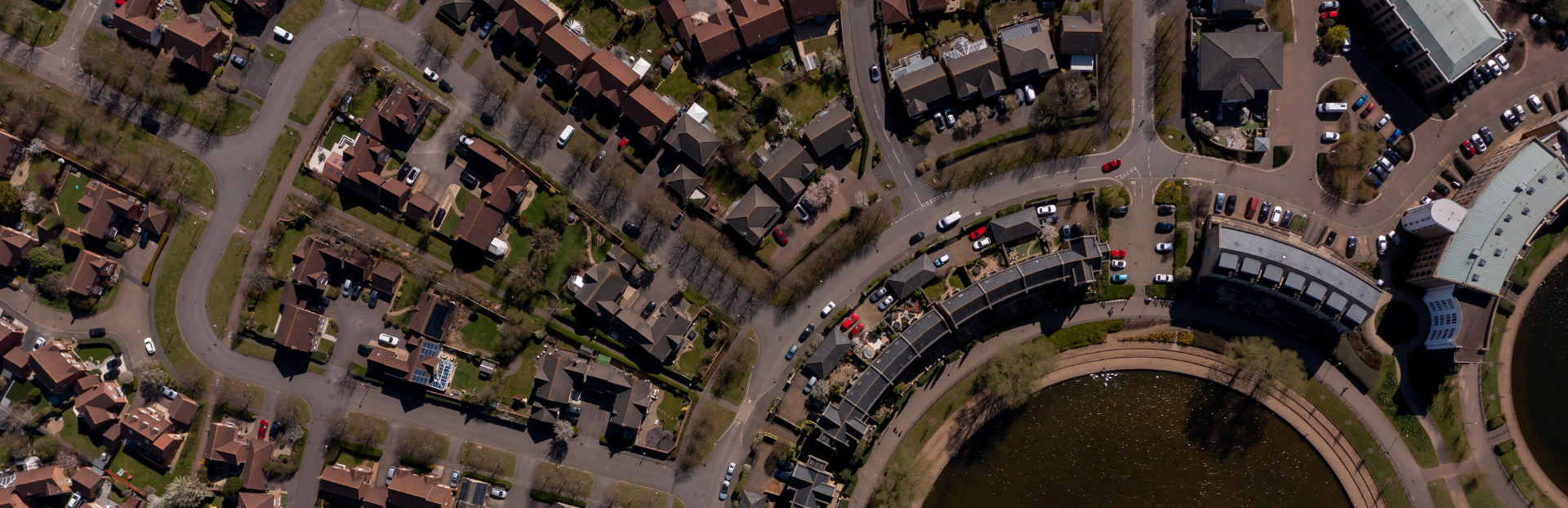
Milton Keynes is a city in Buckinghamshire, in the South East of England. Average sold prices in Milton Keynes sit at £323,611 on the HM Land Registry House Price Index, 11.6% above the England average of £289,946, with every house type above the national figure while flats trade 23.4% below it. That split is the signature of a planned new city. Milton Keynes was designated in 1967 and built around family housing, grid roads and green space, so its detached and semi-detached stock commands a premium, while it never accumulated the dense flat market that props up apartment prices in older cities. The population grew 15.4% between the 2011 and 2021 censuses, from 248,821 to 287,060 residents, one of the fastest rates of any local authority in England.
Milton Keynes earns its price premium on jobs and connectivity. It sits on the West Coast Main Line with trains to London Euston in around 35 minutes, anchors a large distribution and logistics economy off the M1, and hosts the Santander UK head office alongside a growing technology and business-services base. Median gross weekly pay across Milton Keynes is £795.90, just under the South East regional figure and well above the Great Britain median of £752.40. For investors, the spread runs from MK9 (Central Milton Keynes) at a £231,450 asking price up to MK17 (Woburn Sands) at £546,317, and the highest yields sit with the cheapest, most central postcodes rather than the premium rural fringe.
This guide covers the unitary authority of Milton Keynes (ONS code E06000042) across twenty postcodes with active market data, from MK2 through to MK46. Milton Keynes sits in the South East region, around 50 miles north-west of London and 15 miles south of Northampton. MK1 and MK77 are not covered here, as neither carries enough recorded market activity to report reliable figures.
Article updated: July 2026
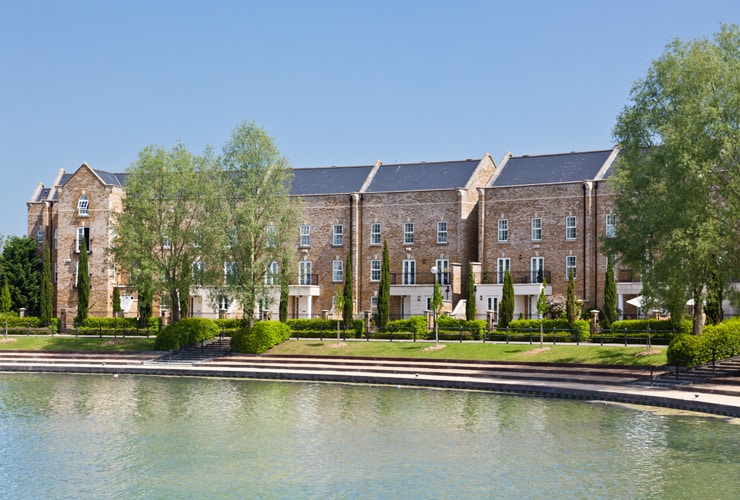
Why Invest in Milton Keynes?
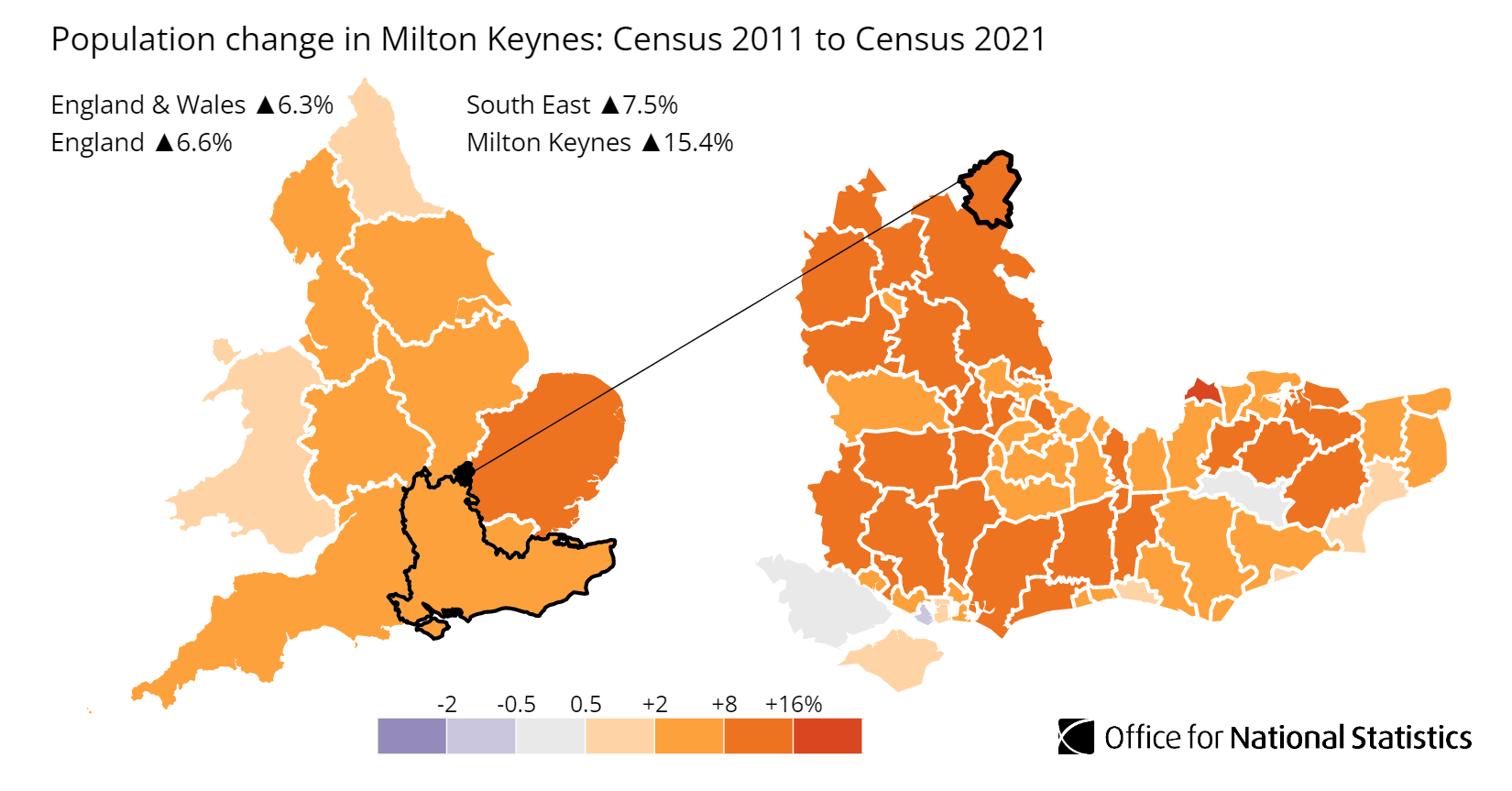
Milton Keynes grew its population 15.4% between the 2011 and 2021 censuses, from 248,821 to 287,060 residents, more than double the England and Wales average of 6.3%. That makes it one of the fastest-growing local authorities in the country, and the growth is structural rather than speculative. The city was designated in 1967 to absorb housing demand from London, and it has kept absorbing it, with new grid squares, estate expansions and town extensions adding homes decade after decade. For a landlord, a population that keeps rising is a tenant base that keeps deepening.
The local employment rate is 78.9%, above the Great Britain average of 75.6%. Milton Keynes runs a broad economy: distribution and logistics off the M1, financial and business services anchored by the Santander UK head office, retail around the centre:mk shopping district, and a growing cluster of technology firms. The Open University has its headquarters and campus here, and the city is a national testbed for autonomous-vehicle and smart-city schemes. That mix spreads tenant demand across logistics workers, office professionals, students and public-sector staff rather than leaning on one employer.
Median gross annual earnings in Milton Keynes are £41,389, just under the South East and 5.7% above the Great Britain median of £39,125. Higher local pay means tenants can carry higher rents without being stretched. The combination of strong, rising employment and above-average wages gives Milton Keynes a tenant base that leans on earned income rather than housing support, which tends to mean steadier rent and lower arrears.
Milton Keynes Economic Summary
- Population (Milton Keynes): 287,060 (2021 Census). Growth of 15.4% from 2011.
- Median annual salary: £41,389 (local), £752.40 weekly (Great Britain)
- Employment rate: 78.9% (local), 75.6% (Great Britain)
- Unemployment rate: 5.2% (local)
- Key employment sectors: Distribution and logistics, financial and business services, retail, higher education, technology
Source: ONS Census 2021, Nomis Labour Market Profile (ASHE 2025)
Regeneration and Investment in Milton Keynes
Milton Keynes is coordinating land for around 40,000 new homes through a new development partnership, with city-centre schemes alone running past £1.6 billion. Most of the activity is concentrated around the central grid squares and Station Square, where the council and major housebuilders are unlocking residential, commercial and leisure space close to the railway station.
- Milton Keynes New Town Partnership (Memorandum of Understanding, c. 40,000 homes): The city council signed a Memorandum of Understanding on 3 February 2026 with Berkeley, the Bristol Society of Merchant Venturers, Gallagher, Hallam Land, Milton Keynes Development Partnership, Taylor Wimpey and Urban&Civic to coordinate land for roughly 40,000 new homes alongside infrastructure, jobs and city-centre regeneration. Coordinating delivery across several landowners is what turns a long pipeline into actual completions, and it points to sustained housing supply over the years ahead. Updates at Milton Keynes City Council.
- City-centre and Station Square schemes (Pipeline, £1.6 billion-plus Lower Westside, £240 million MK Gateway): The investment prospectus showcased at the UKREiiF national property forum on 28 May 2026 set out major mixed-use developments around the central grid and Station Square, including the £1.6 billion-plus Lower Westside and the £240 million MK Gateway, adding homes, offices and leisure to the heart of the city. These central schemes sit in and around MK9, the lowest-priced and highest-yielding postcode in this guide.
- The Lakes Estate regeneration, Bletchley (Almost 200 homes completed, March 2026): The council, with developer GRAHAM, completed almost 200 new homes on The Lakes Estate in Bletchley, backed by around £70 million of council funding and £15 million from Homes England, with new roads, the new Warren Park and four children's play parks. Bletchley sits within MK2 and MK3, two of the more affordable and higher-yielding postcodes in this guide, so the estate renewal lands directly in buy-to-let territory.
Source: Office for National Statistics - Population for Milton Keynes
Milton Keynes Property Market Analysis
Average property prices in Milton Keynes have risen 534.0% since January 1995, from £51,039 to £323,611. The sections below trace that journey cycle by cycle, then drill into current postcode-level data for sold prices, price per square foot, asking prices, growth trends and monthly transaction volumes.
When was the last house price crash in Milton Keynes?
All sold property prices for Milton Keynes are recorded by HM Land Registry at unitary-authority level. The Land Registry House Price Index tracks the average from January 1995 to March 2026, covering 31 years of market cycles.
The 1995 to 2007 boom: Milton Keynes started at £51,039 in January 1995. By December 2000 the average had reached £88,406, a 73.2% rise in six years as the new city filled out its estates and the M1 corridor became a genuine commuter belt. Growth ran hot through the early 2000s, passing £161,584 by December 2005, and the market peaked at £198,275 in October 2007.
2008 to 2009, the financial crisis: Prices fell from the October 2007 peak of £198,275 to a trough of £150,567 in April 2009, a decline of 24.1% over 18 months. The worst year-on-year reading was -22.4% in March 2009. Milton Keynes fell harder than England as a whole, which dropped 18.2% from its 2007 peak. A new city carrying a high share of recently-built stock and stretched affordability went into the downturn with less of a cushion than older, lower-priced markets.
The 2010 to 2013 recovery grind: Prices bounced off the April 2009 trough but took years to climb back. By December 2010 the average stood at £169,449, and it was still only £183,855 by December 2013, below where it had been six years earlier. Milton Keynes spent the early 2010s grinding sideways as the wider South East waited for London demand to spill back out.
Recovery, 2014 to 2016: Growth returned sharply as the London affordability squeeze pushed buyers north along the M1. The average passed the October 2007 pre-crash peak in June 2014 at £201,825, a recovery that took six years and eight months. By June 2016 prices had reached £253,738.
The 2017 to 2019 plateau: Growth slowed after the catch-up. Prices moved up gently through this period, and the 2016 stamp duty surcharge took some heat out of investor demand while new-build supply absorbed part of the excess.
2020 to 2022, the pandemic surge: The stamp duty holiday and the shift to more space turbocharged Milton Keynes. The average climbed from £258,595 in June 2020 to £270,540 by December 2020, then ran to £293,580 by December 2021 and £326,376 by December 2022 (11.2% annual growth). The same lifestyle relocation that lifted M1 corridor towns lifted Milton Keynes hard.
The 2023 rate shock: Higher mortgage rates cooled the market. Prices eased from £326,376 in December 2022 to £310,590 by December 2023, a fall of 4.8%. The correction was sharper than the national average but brief.
2024 to present: The market stabilised and edged up again, reaching an all-time high of £328,369 in December 2025 before easing slightly to £323,611 by the latest reading in March 2026. The current price is 63.2% above the October 2007 pre-crash peak.
Long-term growth summary:
- 5 years (March 2021 to March 2026): 15.7% growth (£279,648 to £323,611)
- 10 years (March 2016 to March 2026): 28.8% growth (£251,169 to £323,611)
- 15 years (March 2011 to March 2026): 99.1% growth (£162,522 to £323,611)
- 20 years (March 2006 to March 2026): 98.0% growth (£163,417 to £323,611)
- 30 years (January 1995 to March 2026): 534.0% growth (£51,039 to £323,611)
Milton Keynes fell 24.1% in the 2008 crash, deeper than England's 18.2%, and took nearly seven years to recover. The 30-year return of 534.0% still shows strong long-term capital growth, but the steeper fall and longer recovery are the downside record an investor should weigh. An investor who bought at the exact peak in October 2007 would now be sitting on gains of 63.2% on the Land Registry average.
- All property types
- Detached
- Semi-detached
- Terraced
- Flats
- All property types
- Detached
- Semi-detached
- Terraced
- Flats
Sold House Prices in Milton Keynes
The average sold price across all property types in Milton Keynes is £323,611, which is 11.6% above the England average of £289,946 as of March 2026. Milton Keynes is the rare PIUK location that prices above the national figure, and the reason is its housing mix. Detached, semi-detached and terraced homes all sit above England, while flats run 23.4% below. The premium is in the houses, the value is in the flats, and that is the planned-city profile playing out in the numbers.
| Property Type | Milton Keynes Average | England Average | Difference |
|---|---|---|---|
| Detached houses | £548,938 | £470,492 | +16.7% |
| Semi-detached houses | £327,232 | £288,185 | +13.5% |
| Terraced houses | £270,742 | £243,788 | +11.1% |
| Flats and maisonettes | £164,379 | £214,563 | -23.4% |
| All property types | £323,611 | £289,946 | +11.6% |
Detached houses at £548,938 carry the widest premium, 16.7% above England's £470,492. Milton Keynes has a deep detached market in its outer postcodes, where village and small-town stock in places like Woburn Sands (MK17), Olney (MK46) and Newport Pagnell (MK16) draws lifestyle demand from London commuters. With detached prices down a slight 0.6% over the year, this is steady commuter-belt demand rather than speculative heat.
Semi-detached houses at £327,232 sit 13.5% above England's £288,185. The semi is the core family home of the Milton Keynes grid-square estates, built in volume from the 1970s onward, and it is the workhorse of the local rental market. Annual growth of 0.3% makes it the only house type to edge up over the year, which fits its role as the steady middle of the market.
Terraced houses at £270,742 carry the narrowest house-type premium at 11.1% above England's £243,788. Milton Keynes terraces are mostly modern planned-estate rows rather than the Victorian terraces of older cities, concentrated in the central and southern grid squares such as Wolverton (MK12), Fishermead (MK6) and Bletchley (MK2). Annual change of -0.7% points to a market that has cooled slightly from its pandemic-era highs.
Flats and maisonettes at £164,379 are the one type below the national line, 23.4% under England's £214,563, and the most relevant to a yield-focused investor. Milton Keynes never built the dense apartment market that holds up flat values in Manchester or Reading, and without that institutional-investor premium, flat prices reflect local demand alone. The central flat stock around MK9 is exactly where the highest yields in this guide sit. Annual change of -5.0% confirms a softer flat market, which keeps asking prices low.
Price Per Square Foot in Milton Keynes
Across Milton Keynes, MK6 (Fishermead, Oldbrook) is the cheapest space at £291 per square foot while MK9 (Central Milton Keynes) is the dearest at £435, a £144 spread. Measuring by the square foot controls for how big the homes are, so it compares the locations rather than the house types. MK9 tops the table despite carrying the lowest total asking price, because its stock is dominated by smaller central flats, where you pay more per foot but less overall.
| Rank | Area | Price Per Sq Ft |
|---|---|---|
| 1 | MK6 (Fishermead, Oldbrook) | £291 |
| 2 | MK12 (Wolverton) | £302 |
| 3 | MK2 (Bletchley) | £306 |
| 4 | MK14 (Great Linford, Conniburrow) | £337 |
| 5 | MK3 (Bletchley West) | £343 |
| 6 | MK13 (Bradwell, New Bradwell) | £349 |
| 7 | MK10 (Monkston, Middleton) | £360 |
| 8 | MK11 (Stony Stratford) | £367 |
| 9 | MK43 (Cranfield) | £367 |
| 10 | MK19 (Hanslope, Deanshanger) | £371 |
| 11 | MK16 (Newport Pagnell) | £378 |
| 12 | MK18 (Buckingham) | £382 |
| 13 | MK15 (Willen, Woolstone) | £384 |
| 14 | MK4 (Westcroft, Emerson Valley) | £385 |
| 15 | MK8 (Grange Farm, Crownhill) | £385 |
| 16 | MK46 (Olney) | £393 |
| 17 | MK5 (Shenley Brook End) | £400 |
| 18 | MK7 (Kents Hill, Walnut Tree) | £402 |
| 19 | MK17 (Woburn Sands) | £406 |
| 20 | MK9 (Central Milton Keynes) | £435 |
| - | MK1 (Bletchley, Denbigh) | Not enough data |
| - | MK77 (Milton Keynes Large User) | Not enough data |
MK6 at £291 per square foot is the best-value space in Milton Keynes. Fishermead and Oldbrook sit in the original new town grid, close to the central shopping district, with a high share of terraced and flat stock from the city's first build phase. Based on 277 transactions analysed, MK6's per-foot rate sits a third below MK9's, and it pairs that cheap space with one of the higher yields in the guide.
MK9 at £435 per square foot tops the table despite the lowest total asking price in the city. That is the flat effect: Central Milton Keynes stock is smaller and more central, so it costs more per foot but less in total. From 150 transactions analysed, MK9's premium per foot is what lets a £231,450 asking price buy a high-yielding rental, since the same money buys a smaller, central, more lettable unit rather than a sprawling house on the edge of the boundary.
For Sale Asking Prices in Milton Keynes
MK9 (Central Milton Keynes) has the lowest asking price in the city at £231,450, while MK17 (Woburn Sands) tops the table at £546,317, a 2.4-fold spread across twenty postcodes. The mean asking price across all twenty Milton Keynes postcodes with data is £392,949. The gap reflects the sheer geographic range inside the boundary, from central flats to detached homes in the surrounding villages.
| Rank | Area | Asking Price |
|---|---|---|
| 1 | MK9 (Central Milton Keynes) | £231,450 |
| 2 | MK2 (Bletchley) | £282,686 |
| 3 | MK6 (Fishermead, Oldbrook) | £297,307 |
| 4 | MK13 (Bradwell, New Bradwell) | £330,993 |
| 5 | MK12 (Wolverton) | £332,633 |
| 6 | MK3 (Bletchley West) | £333,849 |
| 7 | MK11 (Stony Stratford) | £335,446 |
| 8 | MK14 (Great Linford, Conniburrow) | £338,117 |
| 9 | MK10 (Monkston, Middleton) | £373,742 |
| 10 | MK7 (Kents Hill, Walnut Tree) | £376,362 |
| 11 | MK4 (Westcroft, Emerson Valley) | £394,894 |
| 12 | MK16 (Newport Pagnell) | £411,104 |
| 13 | MK46 (Olney) | £447,353 |
| 14 | MK18 (Buckingham) | £450,160 |
| 15 | MK8 (Grange Farm, Crownhill) | £457,758 |
| 16 | MK43 (Cranfield) | £459,567 |
| 17 | MK19 (Hanslope, Deanshanger) | £462,759 |
| 18 | MK15 (Willen, Woolstone) | £486,896 |
| 19 | MK5 (Shenley Brook End) | £509,594 |
| 20 | MK17 (Woburn Sands) | £546,317 |
| - | MK1 (Bletchley, Denbigh) | Not enough data |
| - | MK77 (Milton Keynes Large User) | Not enough data |
MK9 at £231,450 is the lowest asking price in the city, and the step up to MK2 is £51,236, the biggest jump between any two adjacent postcodes in the table. Three postcodes carry asking prices below the city-wide sold-price average of £323,611: MK9, MK2 and MK6. For an investor with a fixed budget, MK9 buys the lowest barrier to entry and, as the yield data below shows, the highest gross return, because its central flat stock pairs a low price with strong rent.
MK17 at £546,317 is the most expensive postcode, 49.7% detached, with the lowest yield in the city at 3.5%. Woburn Sands and the surrounding villages on the southern edge of the boundary are commuter-belt territory where buyers pay for green space and catchment rather than rental return, which is owner-occupier ground rather than buy-to-let.
House Price Growth in Milton Keynes
Three Milton Keynes postcodes posted positive growth across all three timeframes, and MK6 (Fishermead, Oldbrook) leads them at 7.0% (one-year), 8.3% (three-year) and 16.4% (five-year). Fifteen of the twenty postcodes with data delivered positive five-year returns, but the spread is wide. At the other end, MK46 (Olney) is down 8.9% over five years, and a cluster of higher-priced and outer postcodes sits in negative three-year and five-year territory.
| Area | 1 Year | 3 Years | 5 Years |
|---|---|---|---|
| MK6 (Fishermead, Oldbrook) | 7.0% | 8.3% | 16.4% |
| MK7 (Kents Hill, Walnut Tree) | -1.3% | 6.1% | 15.9% |
| MK12 (Wolverton) | -4.3% | 1.5% | 14.0% |
| MK14 (Great Linford, Conniburrow) | -1.2% | 3.0% | 13.8% |
| MK2 (Bletchley) | 9.3% | -4.4% | 12.5% |
| MK13 (Bradwell, New Bradwell) | 0.3% | -1.0% | 12.4% |
| MK10 (Monkston, Middleton) | 5.7% | 5.9% | 12.1% |
| MK17 (Woburn Sands) | -2.3% | -0.9% | 10.6% |
| MK3 (Bletchley West) | 3.1% | 1.8% | 9.7% |
| MK15 (Willen, Woolstone) | -11.4% | -10.6% | 8.3% |
| MK43 (Cranfield) | -1.0% | -6.0% | 7.7% |
| MK18 (Buckingham) | -6.5% | -3.9% | 6.7% |
| MK9 (Central Milton Keynes) | -6.3% | 6.3% | 5.9% |
| MK5 (Shenley Brook End) | -5.2% | -6.0% | 4.3% |
| MK16 (Newport Pagnell) | -5.7% | 1.0% | 2.6% |
| MK4 (Westcroft, Emerson Valley) | -12.7% | -12.6% | -1.0% |
| MK19 (Hanslope, Deanshanger) | -1.8% | -6.8% | -2.1% |
| MK8 (Grange Farm, Crownhill) | -14.0% | -15.7% | -4.5% |
| MK11 (Stony Stratford) | 6.2% | 2.1% | -5.0% |
| MK46 (Olney) | -9.7% | -21.5% | -8.9% |
| MK1 (Bletchley, Denbigh) | Not enough data | Not enough data | Not enough data |
| MK77 (Milton Keynes Large User) | Not enough data | Not enough data | Not enough data |
MK6 at 16.4% five-year growth has the strongest five-year return in the city, and it is one of just three postcodes that grew across all three windows, alongside MK3 and MK10. Fishermead and Oldbrook sit in the original new town grid, a short walk from the centre:mk shopping district and the station, and that central, affordable position has kept buyer demand steady where pricier outer postcodes have wobbled. MK10 (Monkston) is up 5.7%, 5.9% and 12.1% across the same windows, reflecting demand for the newer eastern-expansion estates.
MK2 (Bletchley) shows the sharpest one-year jump at 9.3%, though its three-year reading is negative at -4.4%, so that recent rebound sits on top of a softer medium-term record. The likely driver is connectivity: Bletchley is the southern gateway, and the new East West Rail line runs through Bletchley station, which markets tend to price in before services are fully running.
MK46 (Olney) at -8.9% over five years is the weakest in the table, with MK8 (Grange Farm) close behind at -4.5%. Both are higher-value postcodes where the 2023 rate shock bit hardest. Properties in the £450,000-plus bracket are more exposed to mortgage-rate moves than the cheaper central stock, and the correction reads as a return towards fair value rather than a structural decline.
Monthly Property Sales in Milton Keynes
Monthly sales range from 2 transactions in MK15 (Willen, Woolstone) to 33 in MK18 (Buckingham), with 303 sales a month across the city. The outer market towns move the most stock in absolute terms, while turnover, the share of homes changing hands each year, runs from 3% in MK9 up to 18% in MK19.
| Area | Sales Per Month | Turnover | Asking Price |
|---|---|---|---|
| MK18 (Buckingham) | 33 | 8% | £450,160 |
| MK43 (Cranfield) | 31 | 12% | £459,567 |
| MK3 (Bletchley West) | 26 | 14% | £333,849 |
| MK17 (Woburn Sands) | 23 | 7% | £546,317 |
| MK4 (Westcroft, Emerson Valley) | 17 | 10% | £394,894 |
| MK16 (Newport Pagnell) | 16 | 7% | £411,104 |
| MK19 (Hanslope, Deanshanger) | 16 | 18% | £462,759 |
| MK13 (Bradwell, New Bradwell) | 15 | 15% | £330,993 |
| MK14 (Great Linford, Conniburrow) | 15 | 12% | £338,117 |
| MK5 (Shenley Brook End) | 14 | 13% | £509,594 |
| MK6 (Fishermead, Oldbrook) | 14 | 15% | £297,307 |
| MK10 (Monkston, Middleton) | 14 | 6% | £373,742 |
| MK7 (Kents Hill, Walnut Tree) | 12 | 11% | £376,362 |
| MK2 (Bletchley) | 11 | 13% | £282,686 |
| MK8 (Grange Farm, Crownhill) | 11 | 7% | £457,758 |
| MK11 (Stony Stratford) | 10 | 12% | £335,446 |
| MK46 (Olney) | 10 | 14% | £447,353 |
| MK12 (Wolverton) | 9 | 15% | £332,633 |
| MK9 (Central Milton Keynes) | 4 | 3% | £231,450 |
| MK15 (Willen, Woolstone) | 2 | 5% | £486,896 |
| MK1 (Bletchley, Denbigh) | Not enough data | Not enough data | Not enough data |
| MK77 (Milton Keynes Large User) | Not enough data | Not enough data | Not enough data |
MK18 (Buckingham) records the most sales at 33 a month, but on a low 8% turnover, because it is a large, expensive market town with a big stock base, so a high absolute count is still a small share of the total. MK43 (Cranfield) is similar at 31 sales and 12% turnover. The outer towns trade the most homes by number, but not the fastest as a proportion of what is there.
MK9 (Central Milton Keynes) sits at the other extreme, just 4 sales a month on 3% turnover, the thinnest market in the table. Central flats tend to be held by investors and landlords rather than owner-occupiers who trade up, so they change hands rarely. For a buy-to-let investor that low turnover is the trade-off behind MK9's top yield, and it points to a longer hold and a slower exit, covered in the next section.
How Long Properties Take to Sell in Milton Keynes
Selling speed varies enormously across Milton Keynes, from about 145 days in MK19 (Hanslope, Deanshanger) to roughly 1,014 days in MK9 (Central Milton Keynes). The days-on-market figure is the typical time a home is listed before it sells, and the months of unsold stock shows how much for-sale supply is sitting there at the current rate of sales. MK9's figure is exceptional because its central-flat market is so thin that a handful of slow listings drag the average up sharply.
| Area | Avg Days to Sell | Months of Unsold Stock | Market |
|---|---|---|---|
| MK19 (Hanslope, Deanshanger) | 145 | 4.8 | Seller's market |
| MK46 (Olney) | 179 | 5.9 | Seller's market |
| MK6 (Fishermead, Oldbrook) | 203 | 6.7 | Balanced market |
| MK12 (Wolverton) | 203 | 6.7 | Balanced market |
| MK3 (Bletchley West) | 217 | 7.1 | Balanced market |
| MK2 (Bletchley) | 234 | 7.7 | Balanced market |
| MK13 (Bradwell, New Bradwell) | 234 | 7.7 | Balanced market |
| MK11 (Stony Stratford) | 254 | 8.3 | Balanced market |
| MK14 (Great Linford, Conniburrow) | 254 | 8.3 | Balanced market |
| MK5 (Shenley Brook End) | 277 | 9.1 | Balanced market |
| MK7 (Kents Hill, Walnut Tree) | 277 | 9.1 | Balanced market |
| MK43 (Cranfield) | 277 | 9.1 | Balanced market |
| MK4 (Westcroft, Emerson Valley) | 304 | 10.0 | Balanced market |
| MK18 (Buckingham) | 380 | 12.5 | Buyer's market |
| MK8 (Grange Farm, Crownhill) | 435 | 14.3 | Buyer's market |
| MK10 (Monkston, Middleton) | 435 | 14.3 | Buyer's market |
| MK16 (Newport Pagnell) | 435 | 14.3 | Buyer's market |
| MK17 (Woburn Sands) | 435 | 14.3 | Buyer's market |
| MK15 (Willen, Woolstone) | 507 | 16.7 | Buyer's market |
| MK9 (Central Milton Keynes) | 1014 | 33.3 | Buyer's market |
A headline yield says nothing about how long your money is tied up at the end. MK19 and MK46 clear in under six months, where MK9's 33 months of unsold stock means an investor in the highest-yielding postcode should expect the slowest exit in the city. That is the hidden cost behind MK9's 7.0% return: the income is strong, but the central-flat market is the one place where getting back out takes the longest, so the yield has to earn its keep over a long hold rather than a quick flip.
What Type of Property Can You Buy in Milton Keynes?
Detached homes dominate the outer postcodes, from 56.6% of stock in MK18 (Buckingham) down to 13.0% in MK12 (Wolverton), while flats concentrate heavily in central MK9 at 44.4%. The mix of housing stock shapes which strategy fits each postcode. The figures below are drawn from 2021 Census records for each postcode.
| Area | Detached | Semi-detached | Terraced | Flats |
|---|---|---|---|---|
| MK2 (Bletchley) | 15.0% | 30.0% | 31.2% | 22.8% |
| MK3 (Bletchley West) | 24.4% | 38.5% | 20.5% | 16.4% |
| MK4 (Westcroft, Emerson Valley) | 37.4% | 30.3% | 17.0% | 15.1% |
| MK5 (Shenley Brook End) | 45.9% | 22.5% | 11.9% | 19.7% |
| MK6 (Fishermead, Oldbrook) | 31.4% | 24.0% | 26.0% | 18.4% |
| MK7 (Kents Hill, Walnut Tree) | 49.9% | 22.0% | 12.6% | 15.5% |
| MK8 (Grange Farm, Crownhill) | 45.2% | 19.0% | 13.1% | 22.8% |
| MK9 (Central Milton Keynes) | 25.1% | 14.8% | 15.6% | 44.4% |
| MK10 (Monkston, Middleton) | 28.6% | 20.6% | 22.2% | 27.4% |
| MK11 (Stony Stratford) | 21.1% | 30.0% | 27.1% | 21.7% |
| MK12 (Wolverton) | 13.0% | 33.6% | 36.7% | 16.6% |
| MK13 (Bradwell, New Bradwell) | 24.3% | 26.6% | 28.5% | 20.6% |
| MK14 (Great Linford, Conniburrow) | 40.0% | 22.3% | 19.9% | 17.7% |
| MK15 (Willen, Woolstone) | 35.9% | 21.6% | 16.6% | 24.5% |
| MK16 (Newport Pagnell) | 51.1% | 28.4% | 17.1% | 3.2% |
| MK17 (Woburn Sands) | 49.7% | 27.0% | 14.3% | 8.2% |
| MK18 (Buckingham) | 56.6% | 27.8% | 11.5% | 3.3% |
| MK19 (Hanslope, Deanshanger) | 43.9% | 32.8% | 13.3% | 8.5% |
| MK43 (Cranfield) | 46.0% | 30.2% | 17.9% | 5.1% |
| MK46 (Olney) | 50.3% | 24.1% | 22.2% | 3.3% |
MK9 (Central Milton Keynes) is the only flat-led postcode, with 44.4% of its stock in apartments and just 25.1% detached. That is the smaller-unit stock that typically forms the buy-to-let market, and it lines up with MK9 carrying the lowest asking price and the highest gross yield in the city. Central flats suit single lets and professional sharers close to the station and the centre:mk offices.
The outer market towns sit at the other extreme. MK18 (Buckingham) is 56.6% detached with only 3.0% flats, and MK16 (Newport Pagnell), MK46 (Olney) and MK43 (Cranfield) all carry detached shares around half their stock. Detached and semi-detached houses together account for more than 80% of these postcodes, which matches their premium asking prices and lower yields. The housing here is weighted towards owner-occupier family homes rather than the smaller units that drive rental income.
The flats figure covers both purpose-built blocks and conversions. A small share of mobile and temporary dwellings is not shown, so rows may not total 100%.
Milton Keynes Rental Market Analysis
Monthly rents in Milton Keynes range from £1,218 in MK14 to £1,754 in MK5, with gross rental yields from 3.5% to 7.0% across the seventeen postcodes carrying rental data. For investors asking is buy to let worth it in Milton Keynes, the sections below break down rents, yields and tenant affordability postcode by postcode. If you are weighing how to build a property portfolio in the South East, the city pairs above-national wages with a 78.9% employment rate and a tenant base that keeps deepening as the population grows. Browse current buy-to-let investments for sale across the region.
Average Rent & Gross Rental Yields in Milton Keynes
Gross rental yields in Milton Keynes run from 7.0% in MK9 down to 3.5% in MK17, MK18 and MK43. The cheapest postcode delivers the highest yield by a wide margin: MK9's £231,450 asking price against a £1,345 rent produces a return well clear of the rest of the city. Three postcodes lack enough current rental listings for a reliable figure (MK11, MK15 and MK19), and their asking prices are shown for context.
| Area | Average Monthly Rent | Asking Price | Gross Yield |
|---|---|---|---|
| MK9 (Central Milton Keynes) | £1,345 | £231,450 | 7.0% |
| MK2 (Bletchley) | £1,278 | £282,686 | 5.4% |
| MK6 (Fishermead, Oldbrook) | £1,250 | £297,307 | 5.0% |
| MK10 (Monkston, Middleton) | £1,551 | £373,742 | 5.0% |
| MK13 (Bradwell, New Bradwell) | £1,340 | £330,993 | 4.9% |
| MK3 (Bletchley West) | £1,335 | £333,849 | 4.8% |
| MK4 (Westcroft, Emerson Valley) | £1,554 | £394,894 | 4.7% |
| MK8 (Grange Farm, Crownhill) | £1,724 | £457,758 | 4.5% |
| MK12 (Wolverton) | £1,260 | £332,633 | 4.5% |
| MK14 (Great Linford, Conniburrow) | £1,218 | £338,117 | 4.3% |
| MK5 (Shenley Brook End) | £1,754 | £509,594 | 4.1% |
| MK7 (Kents Hill, Walnut Tree) | £1,222 | £376,362 | 3.9% |
| MK16 (Newport Pagnell) | £1,236 | £411,104 | 3.6% |
| MK46 (Olney) | £1,348 | £447,353 | 3.6% |
| MK17 (Woburn Sands) | £1,608 | £546,317 | 3.5% |
| MK18 (Buckingham) | £1,317 | £450,160 | 3.5% |
| MK43 (Cranfield) | £1,346 | £459,567 | 3.5% |
| MK11 (Stony Stratford) | Not enough data | £335,446 | Not enough data |
| MK15 (Willen, Woolstone) | Not enough data | £486,896 | Not enough data |
| MK19 (Hanslope, Deanshanger) | Not enough data | £462,759 | Not enough data |
| MK1 (Bletchley, Denbigh) | Not enough data | Not enough data | Not enough data |
| MK77 (Milton Keynes Large User) | Not enough data | Not enough data | Not enough data |
MK9 at 7.0% combines the lowest asking price with a £1,345 rent to deliver the best yield in the city by some distance. A 30% deposit of £69,435 gets an investor into the highest-yielding postcode, where central flats let to professionals working in the centre:mk offices and to commuters using the station. The trade-off, as the selling-speed section showed, is a slow exit market.
MK2 (Bletchley) at 5.4% and MK6 (Fishermead) at 5.0% round out the trio above 5%. Both are affordable central or southern postcodes where lower asking prices carry rents that hold up well. At the bottom, MK17 (Woburn Sands), MK18 (Buckingham) and MK43 (Cranfield) all sit at 3.5%, where high rural and market-town asking prices absorb even strong absolute rents. MK5 (Shenley Brook End) charges the highest rent in the city at £1,754 a month, but its £509,594 asking price pulls the yield down to 4.1%, so the premium price does more for the rent than for the return.
Gross Rental Yield by Postcode
Is Milton Keynes Rent High?
Monthly rents in Milton Keynes take between 35.3% and 50.8% of the local median gross monthly salary. The widely cited threshold for rent affordability is 30% of gross income, and every rent-bearing postcode in Milton Keynes sits above it. That is the South East cost base showing through rather than unusually high local rents, and it is a wider spread than many places because the city mixes affordable central flats with premium family stock on the edges.
The median gross weekly salary in Milton Keynes is £795.90, which equates to £3,449 per month or £41,389 per year. This sits just below the South East regional median of £800.30 per week and above the Great Britain median of £752.40 per week. Data from the Nomis Labour Market Profile (ASHE 2025).
| Rank | Area | Rent as % of Income |
|---|---|---|
| 1 | MK5 (Shenley Brook End) | 50.8% |
| 2 | MK8 (Grange Farm, Crownhill) | 50.0% |
| 3 | MK17 (Woburn Sands) | 46.6% |
| 4 | MK4 (Westcroft, Emerson Valley) | 45.1% |
| 5 | MK10 (Monkston, Middleton) | 45.0% |
| 6 | MK46 (Olney) | 39.1% |
| 7 | MK43 (Cranfield) | 39.0% |
| 8 | MK9 (Central Milton Keynes) | 39.0% |
| 9 | MK13 (Bradwell, New Bradwell) | 38.9% |
| 10 | MK3 (Bletchley West) | 38.7% |
| 11 | MK18 (Buckingham) | 38.2% |
| 12 | MK2 (Bletchley) | 37.0% |
| 13 | MK12 (Wolverton) | 36.5% |
| 14 | MK6 (Fishermead, Oldbrook) | 36.2% |
| 15 | MK16 (Newport Pagnell) | 35.8% |
| 16 | MK7 (Kents Hill, Walnut Tree) | 35.4% |
| 17 | MK14 (Great Linford, Conniburrow) | 35.3% |
| - | MK11 (Stony Stratford) | Not enough data |
| - | MK15 (Willen, Woolstone) | Not enough data |
| - | MK19 (Hanslope, Deanshanger) | Not enough data |
MK14 (Great Linford) at 35.3% is the most affordable postcode for tenants relative to local earnings, with MK7 (Kents Hill) just behind at 35.4%. A £1,218 rent against a £3,449 monthly salary leaves more headroom than anywhere else in the city. This matters for landlords because rents that take a smaller share of income tend to come with fewer arrears and longer tenancies.
MK5 (Shenley Brook End) at 50.8% and MK8 (Grange Farm) at 50.0% are the most stretched against the median, but context matters: these are the high-rent western estates, and a £1,754 rent in MK5 is not being paid by someone on the borough-wide median. The tenants there are typically dual-income professional households earning well above £41,389, so the median understates what they actually take home.
How Big Is Milton Keynes' Private Rented Sector?
The private rented sector is deepest in central MK9, where it accounts for 36.9% of households, and shallowest in the outer postcodes, falling to 13.6% in MK19. The share of homes already let privately is a guide to how big and how established the local tenant pool is. The table below shows household tenure by postcode.
| Area | Owned Outright | Owned with Mortgage | Private Rented | Social Rented |
|---|---|---|---|---|
| MK9 (Central Milton Keynes) | 18.7% | 21.0% | 36.9% | 17.9% |
| MK2 (Bletchley) | 25.9% | 25.9% | 24.4% | 21.0% |
| MK13 (Bradwell, New Bradwell) | 23.8% | 24.6% | 23.3% | 21.9% |
| MK10 (Monkston, Middleton) | 16.7% | 34.5% | 22.3% | 14.0% |
| MK6 (Fishermead, Oldbrook) | 23.0% | 23.4% | 21.3% | 28.9% |
| MK15 (Willen, Woolstone) | 25.6% | 32.1% | 19.9% | 12.4% |
| MK14 (Great Linford, Conniburrow) | 25.5% | 31.9% | 19.8% | 18.8% |
| MK8 (Grange Farm, Crownhill) | 23.0% | 38.3% | 19.7% | 6.5% |
| MK7 (Kents Hill, Walnut Tree) | 25.3% | 33.2% | 19.0% | 14.2% |
| MK46 (Olney) | 40.8% | 34.8% | 18.9% | 4.8% |
| MK12 (Wolverton) | 22.1% | 31.0% | 18.8% | 23.4% |
| MK17 (Woburn Sands) | 36.5% | 34.5% | 17.7% | 9.4% |
| MK4 (Westcroft, Emerson Valley) | 21.6% | 35.4% | 17.4% | 20.1% |
| MK5 (Shenley Brook End) | 27.1% | 31.1% | 17.0% | 19.0% |
| MK18 (Buckingham) | 40.6% | 33.6% | 16.8% | 8.0% |
| MK11 (Stony Stratford) | 33.0% | 33.5% | 16.0% | 13.6% |
| MK43 (Cranfield) | 35.2% | 37.3% | 15.5% | 9.8% |
| MK16 (Newport Pagnell) | 38.9% | 33.3% | 15.2% | 11.7% |
| MK3 (Bletchley West) | 26.0% | 35.9% | 14.9% | 19.5% |
| MK19 (Hanslope, Deanshanger) | 34.6% | 40.7% | 13.6% | 8.3% |
MK9 has by far the deepest private rented sector at 36.9%, more than a third of all households, which is what a flat-led central postcode looks like and why it carries the city's top yield. MK2 (Bletchley) and MK13 (Bradwell) follow at 24.4% and 23.3%, both affordable central postcodes with a proven base of existing tenants. A deep rented sector points to an active local lettings market, a different signal from yield, and the highest-yielding postcodes here happen to be the ones with the largest established tenant pools.
The outer market towns and villages sit at the other end. MK19 (Hanslope), MK3 (Bletchley West) and MK16 (Newport Pagnell) all run private rented shares under 16%, paired with high outright ownership, the mark of settled owner-occupier communities rather than active lettings markets. For a landlord, a thinner rented sector means fewer comparable lets to price against and a smaller pool of ready tenants.
Local Housing Allowance Rates in Milton Keynes
Most of Milton Keynes falls within the Milton Keynes Broad Rental Market Area, where Local Housing Allowance runs from £115.37 a week for a shared room to £344.05 a week for a four-bedroom home, while MK43 (Cranfield) sits in the lower-rated Bedford BRMA. Local Housing Allowance sets the maximum housing support a tenant on benefits can receive, so for a landlord letting to that part of the market it reads as an effective rent floor. To check the current rate for a specific address, you can use the government's official Local Housing Allowance calculator.
| Property Size | Milton Keynes BRMA (Weekly) | Milton Keynes BRMA (Monthly) | Bedford BRMA (Monthly) |
|---|---|---|---|
| Shared accommodation | £115.37 | £500 | £449 |
| 1 bedroom | £178.36 | £773 | £648 |
| 2 bedrooms | £212.88 | £922 | £823 |
| 3 bedrooms | £275.01 | £1,192 | £997 |
| 4 bedrooms | £344.05 | £1,491 | £1,296 |
In the Milton Keynes BRMA, which covers nineteen of the twenty postcodes here, the two-bedroom rate of £212.88 a week works out at about £922 a month, below the £1,218 to £1,754 open-market rents recorded across the city. A benefit-backed tenancy at the LHA rate therefore sits under Milton Keynes' open-market rents, and the stock that fits within these rates is concentrated in the cheaper central postcodes like MK9 and MK2 where both asking prices and rents are lowest. MK43 (Cranfield) is the exception: it falls in the Bedford BRMA, where every rate is lower (£823 a month for a two-bed against £922 in the Milton Keynes area), so a Cranfield let to a benefit-funded tenant carries a lower ceiling than the rest of the guide.
Buy-to-Let Considerations
Are House Prices High in Milton Keynes? Price-to-Earnings Ratios
Buying a property in Milton Keynes costs between 5.6 and 13.2 times the median annual salary. This is based on the Nomis Labour Market Profile for Milton Keynes showing the median gross annual income for Milton Keynes residents is £41,389.
The national benchmark for price-to-earnings is 7.4x (England's average sold price of £289,946 divided by the Great Britain median annual salary of £39,125). Three of Milton Keynes' twenty postcodes (MK9, MK2 and MK6) sit at or below that national benchmark, meaning they are more affordable relative to local incomes than the England average is relative to national incomes.
| Rank | Area | Price-to-Earnings Ratio |
|---|---|---|
| 1 | MK9 (Central Milton Keynes) | 5.6x |
| 2 | MK2 (Bletchley) | 6.8x |
| 3 | MK6 (Fishermead, Oldbrook) | 7.2x |
| 4 | MK13 (Bradwell, New Bradwell) | 8.0x |
| 5 | MK12 (Wolverton) | 8.0x |
| 6 | MK3 (Bletchley West) | 8.1x |
| 7 | MK11 (Stony Stratford) | 8.1x |
| 8 | MK14 (Great Linford, Conniburrow) | 8.2x |
| 9 | MK10 (Monkston, Middleton) | 9.0x |
| 10 | MK7 (Kents Hill, Walnut Tree) | 9.1x |
| 11 | MK4 (Westcroft, Emerson Valley) | 9.5x |
| 12 | MK16 (Newport Pagnell) | 9.9x |
| 13 | MK46 (Olney) | 10.8x |
| 14 | MK18 (Buckingham) | 10.9x |
| 15 | MK8 (Grange Farm, Crownhill) | 11.1x |
| 16 | MK43 (Cranfield) | 11.1x |
| 17 | MK19 (Hanslope, Deanshanger) | 11.2x |
| 18 | MK15 (Willen, Woolstone) | 11.8x |
| 19 | MK5 (Shenley Brook End) | 12.3x |
| 20 | MK17 (Woburn Sands) | 13.2x |
MK9 at 5.6x is the most affordable entry in Milton Keynes relative to local earnings, comfortably below the national 7.4x benchmark. At under six times local pay, it buys into the highest-yielding postcode in the city for a capital outlay that compares well with much cheaper markets elsewhere, but in a city with above-national wages and a deep tenant pool behind it.
MK17 (Woburn Sands) at 13.2x sits at the far end. At more than thirteen times the local median salary, it is firmly premium owner-occupier territory, bought by dual-income households or those moving out from pricier parts of the South East. For an investor the high ratio compresses the yield to 3.5% and stretches the payback period.
Deposit Requirements in Milton Keynes
A 30% deposit on a buy-to-let property in Milton Keynes ranges from £69,435 in MK9 to £163,895 in MK17. The gap between the cheapest and most expensive deposit is £94,460, more than enough to fund a second deposit in MK9. For investors comparing Milton Keynes with other South East locations, these deposits sit below the region's pricier towns but above the affordable Midlands and North.
Beyond the deposit, the stamp duty calculation and other buy-to-let running costs affect the total capital required.
| Rank | Area | 30% Deposit Required |
|---|---|---|
| 1 | MK9 (Central Milton Keynes) | £69,435 |
| 2 | MK2 (Bletchley) | £84,806 |
| 3 | MK6 (Fishermead, Oldbrook) | £89,192 |
| 4 | MK13 (Bradwell, New Bradwell) | £99,298 |
| 5 | MK12 (Wolverton) | £99,790 |
| 6 | MK3 (Bletchley West) | £100,155 |
| 7 | MK11 (Stony Stratford) | £100,634 |
| 8 | MK14 (Great Linford, Conniburrow) | £101,435 |
| 9 | MK10 (Monkston, Middleton) | £112,123 |
| 10 | MK7 (Kents Hill, Walnut Tree) | £112,909 |
| 11 | MK4 (Westcroft, Emerson Valley) | £118,468 |
| 12 | MK16 (Newport Pagnell) | £123,331 |
| 13 | MK46 (Olney) | £134,206 |
| 14 | MK18 (Buckingham) | £135,048 |
| 15 | MK8 (Grange Farm, Crownhill) | £137,327 |
| 16 | MK43 (Cranfield) | £137,870 |
| 17 | MK19 (Hanslope, Deanshanger) | £138,828 |
| 18 | MK15 (Willen, Woolstone) | £146,069 |
| 19 | MK5 (Shenley Brook End) | £152,878 |
| 20 | MK17 (Woburn Sands) | £163,895 |
MK9 is the cheapest way into Milton Keynes at a £69,435 deposit, and it buys the top yield as well as the lowest price, an unusually clean combination. Stepping up to MK2 costs about £15,000 more and moves you to Bletchley, where the southern transport corridor and the East West Rail junction sit, on a still-strong 5.4% yield. The first three rungs of the ladder, MK9, MK2 and MK6, are all under a £90,000 deposit and all yield 5.0% or better.
At the top, MK5 (Shenley Brook End) and MK17 (Woburn Sands) need deposits above £150,000, roughly double the MK9 figure, and both yield under 4.1%. They are not the same investment as the central postcodes: more capital, lower income return, and a market driven by owner-occupier demand for space rather than rental returns. The deposit ladder in Milton Keynes is really a choice between central income and edge-of-city capital.

What the Milton Keynes Data Tells Buy-to-Let Investors
In Milton Keynes the cheapest way in is also the highest-yielding postcode. MK9 (Central Milton Keynes) has the top yield at 7.0%, the lowest asking price for buying an investment property at £231,450, and the most affordable prices against local earnings at 5.6 times income. A 30% deposit there is £69,435, the lowest in the city, for a central flat renting at £1,345 a month, in the postcode with the deepest private rented sector at 36.9%.
MK2 (Bletchley) and MK6 (Fishermead) are the next two rungs, both under a £90,000 deposit and both yielding 5.0% or better. MK6 is one of only three postcodes that grew across one, three and five years (7.0%, 8.3% and 16.4%, alongside MK3 and MK10), so it pairs steady growth with a strong 5.0% yield. MK2 sits on the East West Rail junction and posted the sharpest one-year price jump in the city at 9.3%, which is the market starting to price in the new line.
The premium and rural postcodes earn their keep differently. MK17 (Woburn Sands) at £546,317 and MK5 (Shenley Brook End) at £509,594 carry the highest rents but the lowest yields at 3.5% and 4.1%, because their detached, owner-occupier stock is bought for space and catchment rather than rental return. Buyers who want to come in below asking often look through below market value properties.
Milton Keynes has no selective licensing scheme for private landlords, though larger shared houses fall under mandatory HMO licensing through the council's property licensing pages. With a £41,389 median salary, a 78.9% employment rate and 15.4% population growth over the decade, the city reads differently from the cheaper, higher-yielding markets of the Midlands and North: family-stock yields of 3.5% to 5.0%, but a fast-growing tenant base and a central MK9 postcode where the £231,450 lowest price also carries the 7.0% best yield.
How Milton Keynes Compares
Milton Keynes' mean asking price of £392,949 is the second-lowest of five South East commuter locations compared here, yet its top yield of 7.0% is the highest in the group. The comparison below places Milton Keynes alongside four nearby locations, each with a different investor profile. The mean asking price and mean monthly rent are simple averages across all postcodes with data. Top gross yield is the single highest postcode yield in each location.
| Location | Mean Asking Price | Mean Monthly Rent | Mean Gross Yield | Top Yield (postcode) |
|---|---|---|---|---|
| Northampton | £342,830 | £1,211 | 4.2% | 5.7% (NN1) |
| Milton Keynes | £392,949 | £1,393 | 4.3% | 7.0% (MK9) |
| Luton | £404,481 | £1,457 | 4.3% | 5.1% (LU3) |
| Reading | £419,047 | £1,536 | 4.4% | 6.2% (RG1) |
| Stevenage | £459,009 | £1,459 | 3.8% | 4.8% (SG1) |
Milton Keynes sits second on price in this group, only Northampton at £342,830 is cheaper, but it leads every one of these locations on top yield at 7.0%. That 7.0% comes from its one outlier central postcode, MK9, where flat-led stock pairs a low price with a strong rent. On the more typical family stock, Milton Keynes yields sit closer to the rest of the group.
For investors prioritising a lower asking price, Northampton at a £342,830 mean and a 5.7% top yield offers the cheapest way into this commuter belt. Reading at 6.2% is the strongest all-round yield outside Milton Keynes, on the back of its Crossrail connectivity and a deep professional rental market, though at a higher £419,047 mean asking price. Luton and Stevenage sit in the middle on price but trail on yield, at 5.1% and 4.8%. Milton Keynes is the pick where a central, affordable, high-yielding postcode matters most. For a data-driven comparison across all UK locations, see our best places to invest in buy-to-let guide.
Frequently Asked Questions
What are the best areas in Milton Keynes for property investment?
The postcodes split fairly cleanly. MK9 (Central Milton Keynes) is the cheapest way in at £231,450 and carries the highest yield at 7.0%, so it leans towards income, with the deepest rental market in the city behind it. MK6 (Fishermead, Oldbrook) is one of just three postcodes that grew across one, three and five years (7.0%, 8.3% and 16.4%) while still yielding 5.0%, so it leans towards steady growth.
At the top end, MK17 (Woburn Sands) is the premium spot at £546,317 with the lowest yield at 3.5%, while MK2 (Bletchley) at £282,686 pairs a 5.4% yield with the sharpest recent price jump in the city. So if income matters most, MK9 leads on yield and price; if you want growth that has actually shown up across every timeframe, MK6 and MK10 are the two that delivered it.
What is the average rent in Milton Keynes?
Across the seventeen postcodes with rental data, the mean monthly rent is £1,393, but the spread is wide. The cheapest rents sit in the central and northern grid squares: £1,218 in MK14 (Great Linford), £1,222 in MK7 (Kents Hill) and £1,236 in MK16 (Newport Pagnell). The highest are in the western and rural-edge postcodes, peaking at £1,754 in MK5 (Shenley Brook End) and £1,724 in MK8 (Grange Farm).
For a landlord the rent on its own is only half the picture. MK8's £1,724 looks strong, but against a £457,758 asking price it yields just 4.5%, while MK9's lower £1,345 rent on a £231,450 price yields 7.0%. The best income comes from the cheaper central stock, not the highest absolute rents.
What is a good return on investment in Milton Keynes?
On gross rental yield, the realistic range across Milton Keynes is 3.5% to 7.0%. The top of that range, MK9 at 7.0%, is an outlier driven by central flats; most of the city's family-house postcodes sit between 4.0% and 5.0%, which is typical for the South East. For a sense of scale, the three postcodes above 5% (MK9, MK2 and MK6) are all the cheaper, more central ones.
Return is not just rent, though. Over five years, fifteen of the twenty postcodes with data also delivered positive capital growth, led by MK6 at 16.4% and MK7 at 15.9%. The strongest all-round returns have come from the central grid postcodes that combine a decent yield with steady price growth, rather than the premium edge-of-city stock that scores high on neither.
Is Milton Keynes a good place to live for buy-to-let tenants?
For a working tenant, yes, and it comes down to jobs and getting around. Milton Keynes runs a 78.9% employment rate, above the national 75.6%, on a broad base of logistics, financial and business services, retail and technology employers, so demand is not tied to one industry. Trains to London Euston in around 35 minutes and the M1 on the doorstep make it an easy base for commuters as well as people working locally.
It is also a city built for renting at scale. The grid layout, green space and large stock of modern flats and family homes suit professionals and families who want space without London prices, and the 15.4% population growth over the last decade shows people keep choosing it. For a landlord, a steadily growing, well-employed tenant base is the foundation the yields rest on.
Can I find buy-to-let property under £250,000 in Milton Keynes?
On average, only in one postcode. MK9 (Central Milton Keynes) is the sole postcode with an average asking price below £250,000, at £231,450, and it happens to be the highest-yielding one too. Everywhere else in the city averages above £280,000, so the obvious entry point under £250,000 is a central MK9 flat.
Below the postcode averages, the way in is by property type. Flats across Milton Keynes average £164,379 on the Land Registry index, well under £250,000, and terraced houses in the cheaper central grid squares like MK2 (Bletchley) and MK6 (Fishermead) can come in below their postcode averages. If sub-£250,000 is the target, central flats and terraces are where to look, or explore below market value stock.
How will East West Rail affect Milton Keynes property prices?
The early effect is already showing in MK2. East West Rail runs through Bletchley station, linking Milton Keynes westward towards Oxford, and MK2 (Bletchley) posted the sharpest one-year price growth in the city at 9.3%, even though its three-year reading is still negative. Markets tend to price in a new rail connection before services are fully running, and Bletchley looks like it is doing exactly that.
For the wider city, better connectivity strengthens the long-term case: an extra commuting axis on top of the existing London line widens the catchment of people who can live in Milton Keynes and work elsewhere. As with any infrastructure scheme, the lasting effect plays out over years, not months, so it supports the hold rather than guaranteeing a quick uplift.
What type of property is best to buy in Milton Keynes?
It tracks the yield, and that points to flats and smaller central stock. MK9 (Central Milton Keynes) is the only flat-led postcode, with 44.4% of its homes in apartments, and it carries the city's top yield at 7.0% on the lowest asking price in the city. Central flats and the terraced stock in the older grid squares like MK2 (Bletchley) and MK6 (Fishermead) are the units that let most easily and price most keenly, which is why the strongest returns cluster there.
The detached and semi-detached houses that dominate the outer postcodes are a different play. They make up more than 80% of the stock in places like MK18 (Buckingham) and MK16 (Newport Pagnell), they sit above the England average on price, and they yield 3.5% to 4.0%. That stock suits a capital-growth or family-let strategy rather than income. If yield is the goal, the smaller central units do the work; if it is space and owner-occupier demand, the outer houses fit.
How do I buy a buy-to-let property in Milton Keynes?
Start by deciding whether you are buying for income or for growth, because the two goals point you at different parts of the city. Income leads you to the central postcodes, MK9, MK2 and MK6, where yields run 5.0% to 7.0% and a 30% deposit runs from £69,435 to £89,192. Growth and space lead you to the family stock further out, where deposits climb past £150,000 in MK5 and MK17 but yields drop below 4.1%.
On the numbers, budget a 30% deposit, which across the city ranges from £69,435 in MK9 to £163,895 in MK17, plus the stamp duty and the other buy-to-let running costs on top. For investors who want to come in below the asking prices in the tables above, the cheaper entry points often sit off-market, before a property is openly listed, so it is worth working the off-market property in Milton Keynes channels alongside the portals.
What are average house prices in Milton Keynes?
The average sold price across Milton Keynes is £323,611 on the Land Registry index, about 11.6% above the England average of £289,946 as of March 2026. Asking prices by postcode run from £231,450 in MK9 (Central Milton Keynes) up to £546,317 in MK17 (Woburn Sands), with a city-wide mean of £392,949. By type, detached homes average £548,938, semi-detached £327,232, terraced £270,742 and flats £164,379. The flat figure is the only one below the national average, which is where the value sits for yield-focused investors.
Ready to buy property?
Access off-market investment properties with an average 8%+ annual gross yield (beating the UK's typical 3-5%).
Get property alerts