
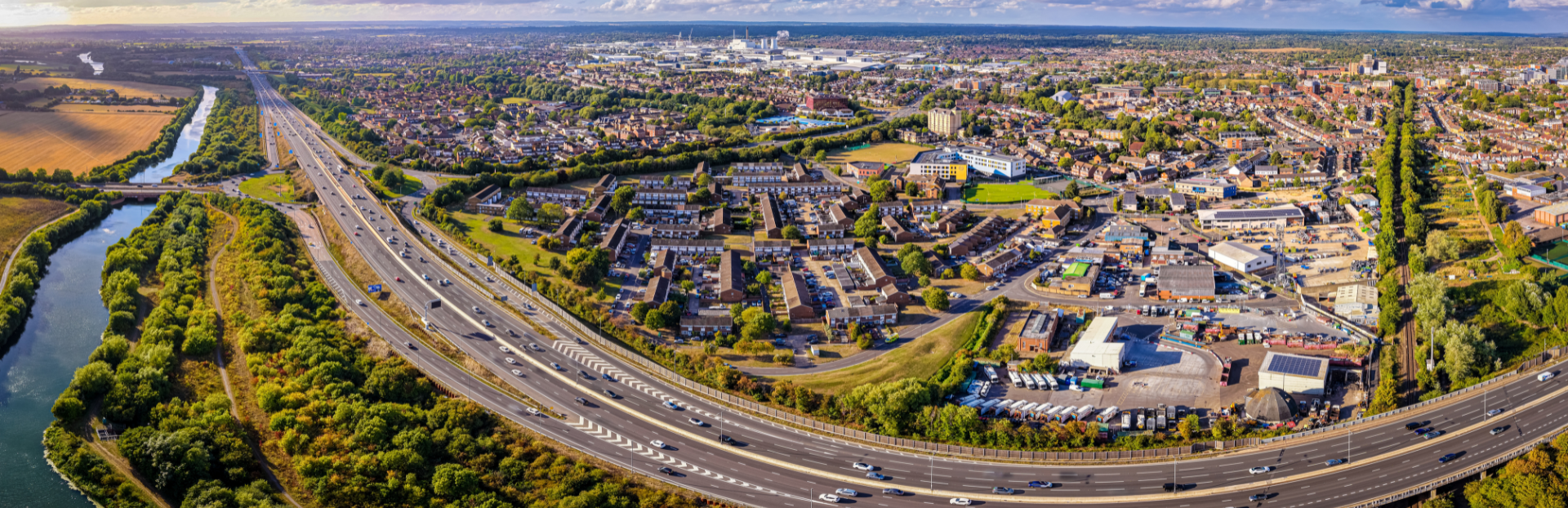
Slough is a town in Berkshire, in the South East of England. Average sold prices in Slough sit at £343,618 on the HM Land Registry House Price Index, 18.5% above the England average of £289,946 but 9.2% below the South East regional figure of £378,515. That gap between national and regional positioning is the defining feature of Slough's data. It is a South East town priced above England but at a discount to its own region, and it comes with a transport link that most towns at this price cannot match. The borough's population grew 13.1% to 158,500 between the 2011 and 2021 censuses, one of the faster rates in the South East.
What separates Slough from other towns at this price is the Elizabeth Line. Direct trains reach London Paddington in around 20 minutes, and the line runs on through the centre of the city. Gross rental yields run from 3.7% to 4.8% across the borough's three active postcodes, with SL1 delivering the highest return on the lowest asking price of £354,353. Flats are the one property type that sits close to the England average, which makes them the most affordable way into a borough where every other type carries a 45% or higher premium.
This guide covers the unitary authority of Slough (ONS code E06000039) across postcodes SL1, SL2, and SL3. SL95 is a Royal Mail large user postcode with no residential property data. Slough sits on the M4 corridor immediately west of the Greater London boundary, with the London Borough of Hillingdon on the far side. Investors comparing the wider area may also look at buy-to-let in Berkshire around Reading, or the guides to Bracknell and High Wycombe.
Article updated: July 2026
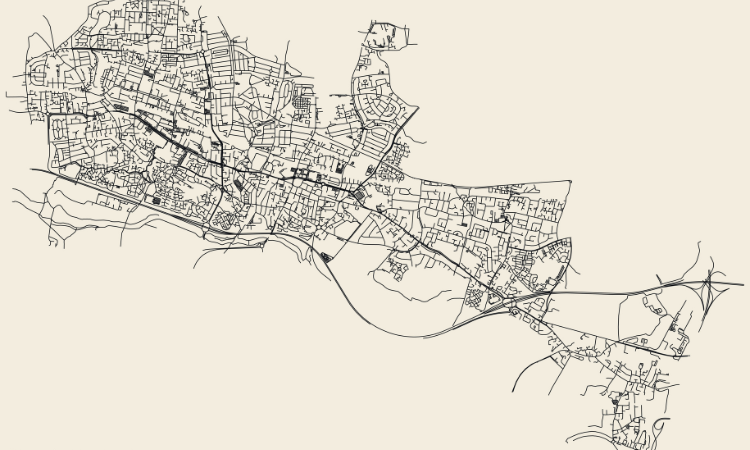
Why Invest in Slough?
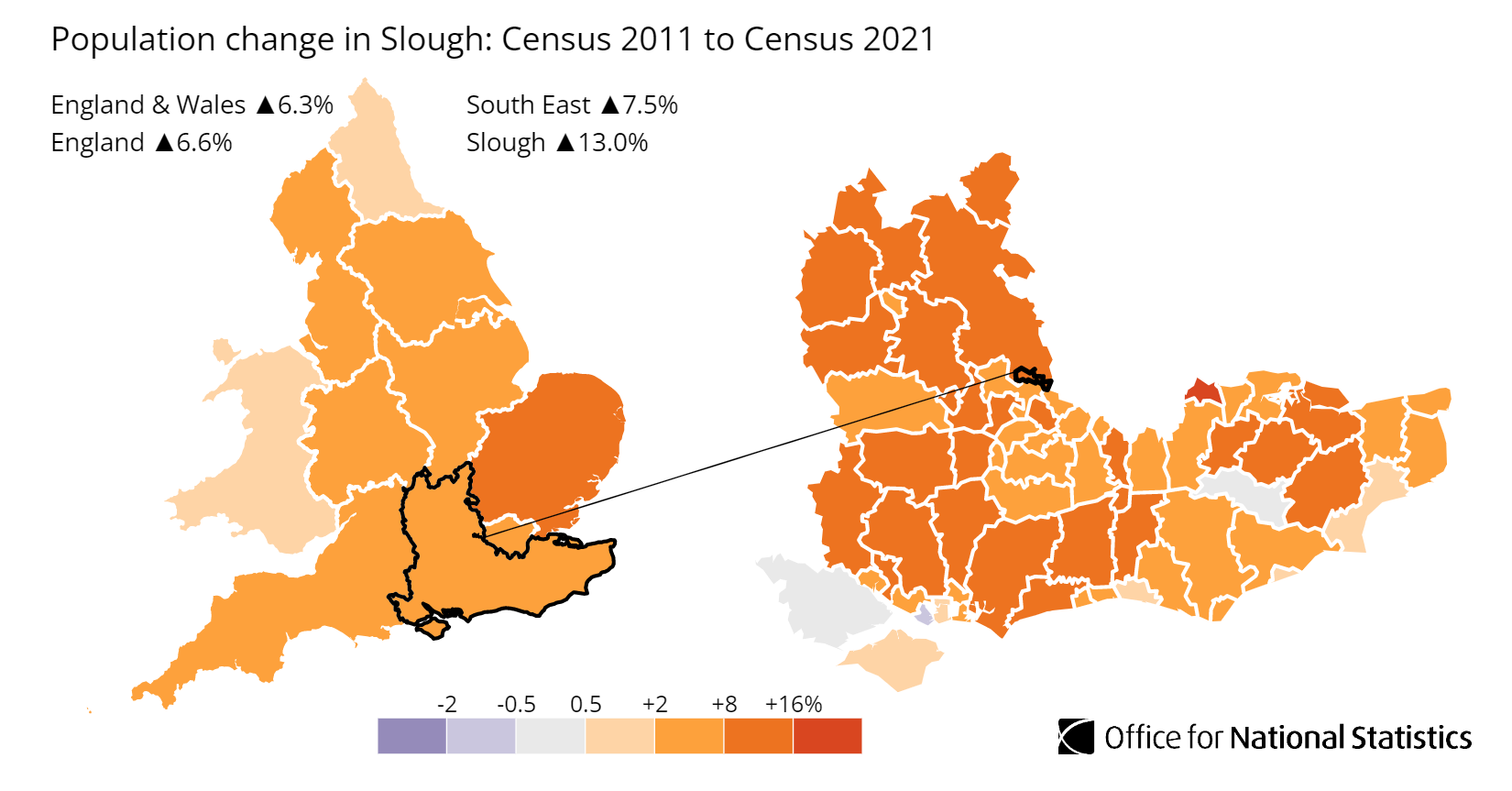
Slough's population grew from 140,205 to 158,500 between the 2011 and 2021 censuses, a rise of 13.1%. That is one of the faster growth rates in the South East, and it happened in a geographically small borough where new housing supply has not kept pace. A rising population pressed into a constrained footprint is what sits underneath the rental demand here.
The town runs on two things: its trading estate and its transport. Slough Trading Estate is the largest commercial estate in single private ownership in Europe, home to more than 500 businesses employing over 20,000 people, with Mars, O2, and other major names based on it. The estate sits under three miles from Heathrow Airport, which directly employs over 75,000 people and supports around 100,000 jobs across the surrounding area. That combination anchors Slough to aviation, logistics, and technology employment along the M4.
The Elizabeth Line reset Slough's place in the commuter market when it opened in stages from 2022. Direct trains to Paddington take around 20 minutes, and the line continues through Bond Street, Liverpool Street, and out to Canary Wharf. Before Crossrail, Slough was a Great Western Railway stop into Paddington and no further. Now it sits on a route that threads through London's main business districts, and that is the single biggest structural change to the town's housing market in a generation.
Earnings tell the other half of the story. The median gross weekly salary in Slough is £740.10, which works out at £38,483 a year. That is below the South East median of £800.30 a week and below the Great Britain median of £752.40. Lower local wages in a higher-cost region produce a market where many residents can afford to rent but struggle to buy, and that is the demographic that keeps tenant demand steady.
Slough Economic Summary
- Population: 158,500 (2021 Census). Growth of 13.1% from 2011.
- Median annual salary: £38,483 (Slough), £41,616 (South East), £39,125 (Great Britain)
- Employment rate: 75.4% (Slough), 78.7% (South East), 75.6% (Great Britain)
- Unemployment rate: 5.1% (Slough), 3.5% (South East), 4.3% (Great Britain)
- Key employment sectors: Technology, logistics, aviation, pharmaceuticals, financial services
Source: ONS Census 2021, Nomis Labour Market Profile (ASHE 2025, Employment Oct 2024-Sep 2025)
Slough's employment rate of 75.4% sits below the South East's 78.7% but in line with the Great Britain figure of 75.6%. Unemployment at 5.1% runs above both the regional 3.5% and national 4.3%. The picture is a large working population in a compact urban area, with rental demand driven more by transport connectivity and estate-based employment than by high local wages.
Regeneration and Investment in Slough
Slough's regeneration is built around a wholesale rebuild of its town centre alongside continued investment near the upgraded station. After years of stalled plans, the shopping centres at the heart of the town closed in January 2026 with demolition set to follow, and construction activity around the transport links is now underway.
- Slough Central, the Queensmere and Observatory redevelopment (Berkeley Group, 1,600 homes): Berkeley Group acquired the Queensmere and Observatory shopping centres and is delivering a long-term transformation of the town centre with around 1,600 new homes, retail, and public space. The existing centres closed in January 2026 with demolition beginning that winter. This is the scheme that most directly adds new residential supply to the postcode nearest the Elizabeth Line station. Updates via Slough Central.
- Horlicks Quarter (Berkeley Group, residential conversion): The former Horlicks factory has been converted into apartments, duplexes, and townhouses, with a nursery, co-working space, and rooftop terrace, sitting around 0.2 miles from Slough station. The development is in its final phases. Updates at Berkeley Group.
- Slough Urban Renewal (Slough Borough Council and Morgan Sindall, multi-project programme): A partnership delivering housing, schools, leisure facilities, and community space across the borough. Completed projects include The Curve cultural centre, Arbour Park stadium, and a series of residential schemes. Updates at Slough Borough Council.
Source: Office for National Statistics - Population for Slough
Slough Property Market Analysis
A home in Slough that sold for £55,729 in January 1995 was worth £343,618 by March 2026, a rise of 516.6% over 31 years. The sections that follow walk through that climb cycle by cycle, then drop down to postcode level for sold prices, price per square foot, asking prices, growth, and transaction volumes.
When Was the Last House Price Crash in Slough?
Slough's prices fell 18.7% from a peak of £203,057 in December 2007 to a trough of £165,156 in March 2009, and took until December 2013 to recover. All sold prices come from the HM Land Registry House Price Index at borough level. The series runs from January 1995 to March 2026 and shows one deep crash, a slow recovery, and a Crossrail-driven surge that sets Slough apart from most UK markets.
- 1995 to 2000, early growth: Slough started at £55,729 in January 1995 and passed £88,000 by early 2000. Steady gains from a low base, tracking the wider South East as low interest rates and rising mortgage availability took hold along the M4 corridor.
- 2000 to 2007, the boom: Prices climbed to a peak of £203,057 by December 2007, more than doubling over the period. The sharpest growth came in the early 2000s as cheap credit pushed South East prices beyond what local wages could support. Slough's proximity to London and Heathrow made it a target for buy-to-let investors entering during this stretch.
- 2007 to 2009, the financial crisis: From the £203,057 peak to the £165,156 trough in March 2009, Slough lost 18.7% of its value in 15 months. The worst annual reading was -16.8% in February 2009. Every property type fell together: detached -16.1%, semi-detached -16.3%, terraced -16.5%, and flats hardest at -17.5%. Slough's fall sat between England's 18.2% and the South East's steeper regional decline.
- 2009 to 2013, stagnation and recovery: Prices bounced off the trough but the recovery was slow and uneven. It took until December 2013, at £203,613, for Slough to edge back above its December 2007 peak. That is a six-year round trip for anyone who bought at the top.
- 2014 to 2016, the Crossrail surge: This is where Slough breaks from the national pattern. With Crossrail confirmed and under construction, prices ran from £203,613 in December 2013 to £305,306 by December 2016, a rise of exactly 50%. Buyers priced in the coming Elizabeth Line connectivity years before the trains ran. No other factor explains that pace of growth in a town where wages stayed below the regional median.
- 2017 to 2019, the plateau: Once the Crossrail anticipation had been absorbed, prices stalled and drifted back. From £300,192 in January 2017 to £295,257 by December 2019, Slough gave up ground. Repeated Crossrail delays, Brexit uncertainty, and a wider South East slowdown all fed into a flat three years.
- 2020 to 2022, pandemic recovery: The stamp duty holiday and remote-working demand lifted prices from £298,437 in March 2020 to £341,849 by December 2022. The Elizabeth Line finally opened in stages from May 2022, though much of the connectivity premium had already been paid in the 2014 to 2016 surge.
- 2023 to 2026, softening from a new high: Prices reached an all-time high of £350,447 in March 2025 before easing to £343,618 by March 2026, an annual change of -1.9%. Slough is among a handful of South East locations posting a negative annual reading while England as a whole is roughly flat. The connectivity premium looks fully priced in, and the town centre rebuild is the next factor the market is watching.
The 2008 crash is the reference point for anyone weighing Slough's downside: an 18.7% fall that took six years to recover. What followed was not typical, though. The Crossrail-era surge lifted prices 50% in three years, and the current -1.9% softening comes off an all-time high rather than a crash. The Elizabeth Line opened in 2022, the town centre shopping centres closed in January 2026 ahead of demolition, and the borough's population rose 13.1% over the last census decade.
Long-Term Property Value Growth in Slough
Over the past 30 years Slough prices have risen 516.6%, and over the past five years they are up 10.4%.
- 5 years (March 2021 to March 2026): +10.4% (£311,278 to £343,618)
- 10 years (March 2016 to March 2026): +20.7% (£284,713 to £343,618)
- 15 years (March 2011 to March 2026): +88.2% (£182,627 to £343,618)
- 20 years (March 2006 to March 2026): +93.2% (£177,847 to £343,618)
- 30 years (January 1995 to March 2026): +516.6% (£55,729 to £343,618)
- All property types
- Detached
- Semi-detached
- Terraced
- Flats
- All property types
- Detached
- Semi-detached
- Terraced
- Flats
Source: HM Land Registry House Price Index for Slough, January 1995 to March 2026.
Sold House Prices in Slough
Slough's average sold price of £343,618 is 18.5% above England's £289,946, yet 9.2% below the South East average of £378,515. Most towns and cities we cover sit below the England line. Slough sits above it, but at a discount to its own region, and that split between national and regional positioning is the number that defines the borough.
Flats break the pattern. Slough's average flat price of £223,158 is only 4.0% above England's £214,563. In a borough where houses carry premiums of 45% and higher over the national figure, flats come in close to national parity, which makes them the nearest-to-average entry point in this part of the South East. The four property types below run in table order.
| Property Type | Slough Average | England Average | Difference |
|---|---|---|---|
| Detached houses | £687,257 | £470,492 | +46.1% |
| Semi-detached houses | £467,693 | £288,185 | +62.3% |
| Terraced houses | £364,022 | £243,788 | +49.3% |
| Flats and maisonettes | £223,158 | £214,563 | +4.0% |
| All property types | £343,618 | £289,946 | +18.5% |
Detached houses at £687,257 carry a 46.1% premium over England, and sit almost exactly on the South East detached average of £682,213, just 0.7% above it. There are relatively few detached homes in Slough, and the ones that exist are concentrated towards Farnham Common in SL2. This end of the market tracks the wider South East rather than anything specific to Slough, which is why it lines up so closely with the regional figure.
Semi-detached houses at £467,693 carry the largest premium in the borough at 62.3% above England. Slough's housing stock leans heavily towards semis and terraces, and this is the segment where London commuter demand bites hardest. Owner-occupiers moving out from the capital compete directly with investors for family semis near the station, and that competition is what pushes the premium above every other type.
Terraced houses at £364,022 sit 49.3% above England. Terraces are the core buy-to-let stock in SL1 and SL3, particularly the Victorian and Edwardian rows around the town centre and Langley. The premium reflects that these are South East family homes, not the sub-£200,000 terraces common in the north. In Slough a terrace still commands a South East price.
Flats and maisonettes average £223,158, just 4.0% above the England figure. Where every house type in Slough runs 45% or more above national pricing, flats offer a way in at close to par. The stock is a mix of purpose-built apartments near the town centre and conversions in older residential streets. Slough has not seen the wave of premium new-build flat development that lifts flat prices in neighbouring Reading, which is part of why its flats stay close to national parity.
Price Per Square Foot in Slough
Price per square foot in Slough runs from £448 in SL1 to £490 in SL3, a spread of just £42. Asking prices can mislead, because a postcode can look dear simply for holding larger homes. Price per square foot strips out that size effect and shows what a buyer actually pays for space, and here the three postcodes are unusually close together.
| Rank | Area | Price Per Sq Ft |
|---|---|---|
| 1 | SL1 (Town Centre, Burnham) | £448 |
| 2 | SL2 (Britwell, Farnham Common) | £473 |
| 3 | SL3 (Langley, Colnbrook) | £490 |
| - | SL95 (Slough Large User) | Not enough data |
SL1 at £448 per square foot is the cheapest space in Slough. This postcode covers the town centre and Burnham, where a mix of terraces, older flats, and conversions keeps the per-foot cost down. SL1 also carries the lowest asking price and the highest yield of the three active postcodes, so the cheaper space comes with the better income return.
SL3 at £490 is only 9.4% more expensive per square foot than SL1, yet its asking prices sit 38.8% higher. That gap means SL3 homes are simply larger on average, not that the location commands a dramatically higher premium for space. Langley and Colnbrook hold more family houses and larger terraces than the town-centre stock in SL1.
Figures reflect averages across all property types and ages. Individual values depend on condition, location within the postcode, and building age.
Houses for Sale in Slough: Asking Prices by Postcode
Asking prices for homes currently listed in Slough run from £354,353 in SL1 to £491,937 in SL3, a spread of £137,584. These are averages across all property types on the market now. Asking prices are not sold prices, which capture what buyers actually paid, and in a market softening at -1.9% a year, asking prices can sit above where sales eventually complete.
The borough-wide mean asking price across the three active postcodes is £444,990.
| Rank | Area | Asking Price |
|---|---|---|
| 1 | SL1 (Town Centre, Burnham) | £354,353 |
| 2 | SL2 (Britwell, Farnham Common) | £488,680 |
| 3 | SL3 (Langley, Colnbrook) | £491,937 |
| - | SL95 (Slough Large User) | Not enough data |
SL1 at £354,353 is £134,327 cheaper than SL2, a 27.5% gap between the cheapest and second-cheapest postcode. SL2 and SL3 then sit within £3,257 of each other, at £488,680 and £491,937. So the real choice for an investor is between the markedly cheaper SL1 and the near-identical SL2 and SL3 tier above it.
SL2 and SL3 target different tenant profiles at similar prices. SL2 covers Britwell and Farnham Common, and the Farnham Common end pulls in some of Slough's more expensive housing, which lifts the average. SL3 covers Langley and Colnbrook, closer to Heathrow, drawing tenants who work in aviation and logistics.
House Price Growth in Slough
Five-year growth across Slough's postcodes runs from 5.8% in SL3 to 23.7% in SL2, a spread of nearly 18 percentage points. SL1 sits in the middle over five years at 10.0% but leads the short term, with the strongest one-year and three-year figures. One-year growth can swing on a handful of sales; the five-year column shows which areas have genuinely appreciated.
| Area | 1 Year | 3 Years | 5 Years |
|---|---|---|---|
| SL2 (Britwell, Farnham Common) | 10.2% | 8.9% | 23.7% |
| SL1 (Town Centre, Burnham) | 6.3% | 12.3% | 10.0% |
| SL3 (Langley, Colnbrook) | -1.2% | -1.9% | 5.8% |
| SL95 (Slough Large User) | Not enough data | Not enough data | Not enough data |
SL2 leads on both one-year growth at 10.2% and five-year growth at 23.7%. Britwell and Farnham Common have appreciated fastest over the longer window, and the strong recent reading shows that momentum has not faded. The Farnham Common end brings more affluent housing into the postcode, which has carried the average up.
SL1 shows the strongest three-year figure at 12.3%, ahead of its 6.3% one-year and 10.0% five-year readings. That pattern points to steady, sustained growth concentrated in the town centre and Burnham, the area closest to the Elizabeth Line station and the town centre rebuild.
SL3 is the one postcode losing ground in the short term, down 1.2% over a year and 1.9% over three years. The five-year figure of 5.8% is still positive but the weakest of the three. Langley and Colnbrook sit at the western edge of the borough near Heathrow's flight paths, and the negative short-term readings show the borough-wide softening landing hardest here.
Monthly Property Sales in Slough
Around 90 properties sell each month across Slough's three active postcodes, with turnover of 6% to 7%. Turnover measures the share of a postcode's homes that change hands in a year, and these are modest figures. Slough's stock is fairly tightly held. Transaction volume matters because it tells you how deep the buyer pool is when the time comes to sell.
| Area | Sales Per Month | Turnover | Asking Price |
|---|---|---|---|
| SL1 (Town Centre, Burnham) | 38 | 6% | £354,353 |
| SL3 (Langley, Colnbrook) | 28 | 7% | £491,937 |
| SL2 (Britwell, Farnham Common) | 24 | 7% | £488,680 |
| SL95 (Slough Large User) | Not enough data | Not enough data | Not enough data |
SL1 records the most sales at 38 a month while showing the lowest turnover at 6%. High volume with low turnover means SL1 holds a large housing stock relative to the number of homes that trade, much of it in the hands of long-term owners and landlords. When stock does reach the market in SL1, there are buyers for it, and 38 sales a month is a healthy figure for a single postcode.
SL2 and SL3 both run at 7% turnover, with 24 and 28 sales a month. These are smaller markets than SL1, though the marginally higher turnover points to slightly more stock movement. For an investor thinking about the exit, SL1 offers the deepest buyer pool; SL2 and SL3 are workable but thinner.
How Long Properties Take to Sell in Slough
Homes across Slough are taking a long time to sell right now, from about 435 days in SL2 and SL3 to roughly 507 in SL1, with more than a year of unsold stock sitting on the market. Days on market is the typical time a home is listed before it sells; months of unsold stock shows how much for-sale supply is waiting at the current pace of sales. Both readings point to a buyer's market across the borough, which lines up with the -1.9% annual price softening.
| Area | Avg Days to Sell | Months of Unsold Stock | Market |
|---|---|---|---|
| SL2 (Britwell, Farnham Common) | 435 | 14.3 | Buyer's market |
| SL3 (Langley, Colnbrook) | 435 | 14.3 | Buyer's market |
| SL1 (Town Centre, Burnham) | 507 | 16.7 | Buyer's market |
A yield number tells you nothing about how quickly you can get back out. SL1 carries the deepest for-sale supply at 16.7 months of unsold stock, so despite being the busiest postcode by volume it is also the slowest to clear an individual sale. For an investor, a market this slow to sell is a reason to buy for a hold rather than a quick turnaround, and to price realistically on the way out.
What Type of Property Can You Buy in Slough?
Detached and semi-detached houses together make up more than half the stock in every Slough postcode, while flats are most concentrated in SL1 at 26.3% once purpose-built, converted, and commercial units are combined. The mix of housing shapes which strategies fit each postcode. The figures below come from 2021 Census records for each postcode.
| Area | Detached | Semi-detached | Terraced | Flats |
|---|---|---|---|---|
| SL1 (Town Centre, Burnham) | 31.1% | 23.6% | 15.5% | 26.3% |
| SL2 (Britwell, Farnham Common) | 44.4% | 23.0% | 13.6% | 18.6% |
| SL3 (Langley, Colnbrook) | 33.4% | 28.2% | 16.7% | 16.8% |
SL1 holds the largest share of flats at 26.3% once purpose-built, converted, and commercial units are counted together, and the highest terraced share at 15.5%. That smaller-unit stock is the classic buy-to-let base, and it lines up with SL1 carrying the lowest asking price and the highest yield in the borough. Town-centre flats near the station suit single lets and sharers, while the terraces around the centre offer lower-cost family lets.
SL2 is the most detached-heavy postcode at 44.4%, with the smallest terraced share at 13.6%. The weighting towards larger houses matches its higher asking prices and its position as a family-housing postcode running out towards Farnham Common. SL3 sits between the two, with the highest semi-detached share at 28.2%.
Flats combine purpose-built and converted units. A small share of mobile and temporary dwellings is not shown, so rows may not total 100%.
Slough Rental Market Analysis
Monthly rents in Slough run from £1,403 in SL1 to £1,619 in SL3, with gross rental yields between 3.7% and 4.8% across the three active postcodes. For investors weighing whether buy-to-let is worth it in Slough, the sections below break down rents, yields, and tenant affordability postcode by postcode. If you are looking at how to build a property portfolio in the South East, Slough pairs sub-5% yields with a transport link most towns at this price cannot offer. Browse current buy-to-let homes for sale across the region.
Average Rent & Gross Rental Yields in Slough
SL1 delivers Slough's highest gross yield at 4.8%, where rents of £1,403 a month meet the lowest asking price of £354,353. SL2 and SL3 sit lower at 3.7% and 3.9%, on asking prices near £490,000 and rents around £1,491 to £1,619. With only three postcodes and a yield spread of just over one point, the asking price is the main thing separating them.
| Area | Average Monthly Rent | Asking Price | Gross Yield |
|---|---|---|---|
| SL1 (Town Centre, Burnham) | £1,403 | £354,353 | 4.8% |
| SL3 (Langley, Colnbrook) | £1,619 | £491,937 | 3.9% |
| SL2 (Britwell, Farnham Common) | £1,491 | £488,680 | 3.7% |
| SL95 (Slough Large User) | Not enough data | Not enough data | Not enough data |
SL1's yield edge comes entirely from its lower asking price, not from higher rent. At £1,403 a month, SL1's rent is actually the lowest of the three. But at £354,353, the asking price is around £135,000 below SL2 and SL3, and that price gap more than offsets the lower rent, lifting the yield to 4.8%. An investor buying in SL1 pays less up front and earns more income per pound invested.
SL3 at 3.9% and SL2 at 3.7% sit close together but serve different tenant pools. SL3 in Langley draws aviation and logistics workers off the back of Heathrow proximity and charges the highest rent in the borough at £1,619. SL2 around Farnham Common pulls families priced out of South Buckinghamshire. Both let at over £1,490 a month, which is strong in absolute terms for the South East outside London, but the near-£490,000 asking prices hold the yields down.
Gross yield here is the average asking price against the average monthly rent for each postcode. It does not account for void periods, maintenance, management, or mortgage costs. It is a starting point for comparison, not a profit forecast.
Gross Rental Yield by Postcode
Is Slough Rent High?
Rents across Slough take between 43.7% and 50.5% of the local median gross monthly salary, from SL1 at the low end to SL3 at the high end. The commonly cited benchmark is that rent gets stretched above 30% of gross income. All three Slough postcodes sit well beyond that line.
The median gross weekly salary in Slough is £740.10, which equates to £3,207 a month or £38,483 a year, below the South East median of £800.30 a week and the Great Britain median of £752.40. Data from the Nomis Labour Market Profile (ASHE 2025). Below-median local wages against South East rents are what produce those elevated ratios.
| Rank | Area | Rent as % of Income |
|---|---|---|
| 1 | SL3 (Langley, Colnbrook) | 50.5% |
| 2 | SL2 (Britwell, Farnham Common) | 46.5% |
| 3 | SL1 (Town Centre, Burnham) | 43.7% |
| - | SL95 (Slough Large User) | Not enough data |
SL3 at 50.5% and SL2 at 46.5% are among the more stretched rental affordability ratios in any PIUK guide. Half of the median gross salary going on rent is a striking figure taken at face value. It reads that high partly because the borough median understates what many Slough tenants earn. A share of the rental pool here are dual-income households or commuters on London wages who choose to rent locally, and the borough-wide median salary does not capture them.
SL1 at 43.7% is the least stretched of the three, though still well above the 30% mark. Lower asking prices and lower rents in the town centre produce a slightly gentler ratio. For a landlord, the softer affordability pressure in SL1 relative to SL2 and SL3 can translate into more sustainable tenancies, even though all three postcodes look stretched on paper.
How Big Is Slough's Private Rented Sector?
The private rented sector runs at 21.5% to 24.1% of households across Slough, deepest in SL1 and SL3 at 24.1% each and slightly lower in SL2 at 21.5%. The share of homes already let privately is a guide to the size of the established tenant pool and the local lettings market. Set against the ownership and social-rented figures below, it shows how each postcode's households split.
| Area | Owned Outright | Owned with Mortgage | Private Rented | Social Rented |
|---|---|---|---|---|
| SL1 (Town Centre, Burnham) | 35.7% | 28.4% | 24.1% | 10.7% |
| SL3 (Langley, Colnbrook) | 31.2% | 33.6% | 24.1% | 10.4% |
| SL2 (Britwell, Farnham Common) | 32.5% | 34.0% | 21.5% | 11.0% |
SL1 and SL3 carry the largest private rented sectors in Slough, close to a quarter of all households each. A rented share that size points to an active lettings market and a broad pool of existing tenants, a different signal from yield. SL1 pairs its deep rented sector with the highest yield in the borough at 4.8%, while SL3 pairs a similar rented share with the Heathrow-driven rents that make it the highest-charging postcode. SL2 has the smallest rented sector and the highest social rented share at 11.0%.
The rental market itself is moving quickly by national standards. Across the three postcodes, homes are letting in around 46 to 50 days on average, which for a landlord points to steady tenant demand rather than a struggle to fill a property. SL1 has the largest number of homes advertised to rent at any one time, which fits its position as the town-centre postcode with the deepest rental stock.
Local Housing Allowance Rates in Slough
All three Slough postcodes fall within the East Thames Valley Broad Rental Market Area, where Local Housing Allowance runs from £136.13 a week for a shared room to £437.26 a week for a four-bedroom home. Local Housing Allowance sets the maximum housing support a tenant on benefits can receive, so it acts as a rent floor for landlords letting to that part of the market. The rates below apply across the whole of Slough. To check the current rate for a specific address, use the government's official Local Housing Allowance calculator.
| Property Size | Weekly LHA Rate | Monthly Equivalent |
|---|---|---|
| Shared accommodation | £136.13 | £590 |
| 1 bedroom | £207.12 | £898 |
| 2 bedrooms | £276.16 | £1,197 |
| 3 bedrooms | £333.70 | £1,446 |
| 4 bedrooms | £437.26 | £1,895 |
The two-bedroom LHA rate of £276.16 a week works out at about £1,197 a month, below the £1,403 to £1,619 open-market rents recorded across Slough's postcodes. A benefit-backed tenancy at the LHA rate therefore sits under market rent, and the stock that fits within these rates concentrates in SL1, where both asking prices and rents are lowest. The East Thames Valley rates are the same in every Slough postcode because they are set across the whole market area, which also stretches into neighbouring parts of Berkshire.
Buy-to-Let Considerations
Are Slough House Prices High? Price-to-Earnings Ratios
Buying in Slough takes between 9.2 and 12.8 times the local median annual salary of £38,483. This uses the Nomis Labour Market Profile for Slough median income figure. The national benchmark is 7.4x, from England's average sold price of £289,946 against the Great Britain median salary of £39,125. All three Slough postcodes sit above it.
| Rank | Area | Price-to-Earnings Ratio |
|---|---|---|
| 1 | SL1 (Town Centre, Burnham) | 9.2x |
| 2 | SL2 (Britwell, Farnham Common) | 12.7x |
| 3 | SL3 (Langley, Colnbrook) | 12.8x |
| - | SL95 (Slough Large User) | Not enough data |
SL1 at 9.2x is the closest to the national benchmark. At £354,353 it needs 9.2 times the local median salary, above the 7.4x national figure but far more attainable than SL2 and SL3. The 3.6x gap between SL1 at 9.2x and SL3 at 12.8x is one of the widest within-borough spreads in any three-postcode PIUK guide.
The elevated ratios across Slough reflect the commuter premium. Prices here are set by buyers earning London and wider South East salaries, not by what locally employed residents earn. The £38,483 local median understates the purchasing power of many people actually buying in this market, and the high ratios mean most local residents cannot easily buy, which keeps rental demand firm.
Deposit Requirements in Slough
A 30% buy-to-let deposit in Slough runs from £106,306 in SL1 to £147,581 in SL3. No Slough postcode offers a sub-£100,000 way in. The table uses a 30% deposit rather than the lender minimum, because the better mortgage rates tend to sit at that loan-to-value, and the rate matters for cash flow in a borough where yields sit below 5%.
Investors looking for below market value property may find individual listings under the postcode averages shown here.
| Rank | Area | 30% Deposit Required |
|---|---|---|
| 1 | SL1 (Town Centre, Burnham) | £106,306 |
| 2 | SL2 (Britwell, Farnham Common) | £146,604 |
| 3 | SL3 (Langley, Colnbrook) | £147,581 |
| - | SL95 (Slough Large User) | Not enough data |
SL1's deposit of £106,306 is the smallest in the borough, a £40,298 saving against SL2. What makes that unusual is that the cheaper way in also carries the highest yield at 4.8%. In many markets the lower deposit buys the weaker postcode, but in Slough the SL1 discount does not come with a quality trade-off on the income side.
SL2 and SL3 need near-identical deposits at £146,604 and £147,581. The £977 difference is negligible, so the choice between them comes down to tenant profile and growth. SL2 has the stronger five-year growth at 23.7% against SL3's 5.8%, while SL3 charges marginally higher rent at £1,619 against £1,491.
Deposit is only part of the upfront cost. Budget for stamp duty (our stamp duty calculator gives an accurate figure), legal fees, and survey costs. For a full breakdown, see our guide to what a buy-to-let costs to run. We also cover repossessed properties and low-deposit strategies.
What the Slough Data Tells Buy-to-Let Investors
In Slough the cheapest way in is also the highest-yielding postcode. SL1 has the top yield at 4.8%, the lowest asking price for an investment property in Slough at £354,353, and the most affordable prices against local earnings at 9.2 times income. A 30% deposit there is £106,306, the lowest in the borough, for a home letting at £1,403 a month. It also runs the busiest market at 38 sales a month, though the whole borough is slow to sell right now.
SL2 has grown fastest over five years at 23.7% and held that momentum with a 10.2% one-year reading, but its 3.7% yield is the lowest of the three, sitting on a near-£489,000 asking price. It is the detached-heavy family postcode running out towards Farnham Common. SL3 in Langley charges the highest rent at £1,619 on the back of Heathrow demand, but with prices down 1.2% over a year and 1.9% over three, the falling values compress the return. Buyers who want to come in below asking often look through off-market property in Slough.
Slough no longer runs a selective licensing scheme for private landlords. Its selective and additional HMO licensing designations ceased on 30 June 2024, and only mandatory HMO licensing now applies, though any unexpired licences stay in force until they run out; the current position is set out on the Slough Borough Council property licensing page. Set against a 13.1% population rise, Elizabeth Line connectivity, and a confirmed town centre rebuild, the borough reads as a lower-yield, connectivity-led market rather than a high-income one.
How Slough Compares
Slough's mean asking price of £444,990 is the second-lowest in a group of five western commuter locations, behind Reading at £419,047, and its top yield of 4.8% sits at the bottom of the group. The comparison below places Slough alongside four nearby locations using the same method: mean asking price across all postcodes with data, mean monthly rent across those postcodes, and the single highest postcode gross yield.
| Location | Mean Asking Price | Mean Monthly Rent | Mean Gross Yield | Top Yield (postcode) |
|---|---|---|---|---|
| Reading | £419,047 | £1,536 | 4.4% | 6.2% (RG1) |
| Slough | £444,990 | £1,504 | 4.1% | 4.8% (SL1) |
| Ealing | £541,582 | £2,164 | 4.8% | 5.7% (UB2) |
| Bracknell | £560,934 | £1,931 | 4.1% | 4.8% (RG12) |
| High Wycombe | £576,463 | £1,648 | 3.4% | 4.8% (HP11) |
Reading's mean asking price of £419,047 is £25,943 below Slough's, with a top yield of 6.2% that leads the group. Reading covers more postcodes and a larger dataset, which produces wider internal variation and a higher-yielding top postcode. The clearest difference between the two towns is transport. Slough sits on the Elizabeth Line with direct services through central London; Reading runs on Great Western Railway into Paddington. Both are M4 corridor towns, but the through-London route is a different kind of commuter connection.
Ealing at £541,582 is inside the Greater London boundary and lets at much higher rents (£2,164) on a 5.7% top yield, while Bracknell and High Wycombe are both more expensive than Slough at £560,934 and £576,463, each with a 4.8% top yield matching Slough's. Slough's top yield is capped by its three-postcode concentration. With only three data points, the best it can show is SL1's 4.8%, where Reading, Ealing, and High Wycombe each have more postcodes and more chances at a higher-yielding outlier. On price, Slough's SL1 at £354,353 is cheaper than the entry point in Ealing, Bracknell, or High Wycombe. For a comparison across the whole country, see the best buy-to-let areas guide.
Frequently Asked Questions
Is Slough a good place to live for buy-to-let tenants?
The draw for tenants is the commute. Direct Elizabeth Line trains reach Paddington in around 20 minutes and run on through Bond Street, Liverpool Street, and Canary Wharf, so a Slough address puts London's main employment centres within easy reach without London rents. Heathrow is under three miles away and supports around 100,000 jobs, and the Slough Trading Estate adds over 20,000 more on the doorstep.
On the numbers, rent takes a large share of the local median wage, from 43.7% in SL1 to 50.5% in SL3, against a local median salary of £38,483. That ratio reads high partly because the borough median understates what many Slough tenants earn, since a share of the rental pool commute out on London wages. For a landlord, the steady demand comes from that commuter pull rather than from high local pay.
How does Slough compare to Reading for buy-to-let?
Reading comes in cheaper on the mean asking price, £419,047 against Slough's £444,990, and shows a higher top yield at 6.2% against 4.8%. That mostly reflects postcode count: Reading has more areas with data, so it throws up a higher-yielding outlier than Slough's three postcodes can. Slough's SL1 at £354,353 is still cheaper than Reading's entry point.
The real split is transport. Slough sits on the Elizabeth Line with direct trains through central London; Reading runs on Great Western into Paddington and no further. The two towns are about seven miles apart and share overlapping tenant pools, so the numbers differ more on stock and postcode spread than on any deep difference in how the two markets work.
What areas in Slough have buy-to-let rental data?
Three of the four postcodes: SL1 (Town Centre, Burnham), SL2 (Britwell, Farnham Common), and SL3 (Langley, Colnbrook). SL95 is a Royal Mail large user postcode with no residential property, so it carries no data. SL1 sits closest to the station and town centre, SL2 runs south towards Farnham Common, and SL3 covers Langley and Colnbrook to the east, nearer Heathrow.
How has the Elizabeth Line affected Slough's property market?
Most of the effect landed before the trains ran. Prices rose 50% between December 2013 and December 2016, during Crossrail's confirmation and construction, as buyers priced in the coming connectivity. By the time the Elizabeth Line opened in stages from 2022, Slough prices were already around £341,000. They reached an all-time high of £350,447 in March 2025 and have since eased to £343,618, an annual change of -1.9%. The pattern points to a connectivity premium that was largely paid during the anticipation phase rather than after opening.
Is Slough part of London?
No. Slough is a unitary authority in Berkshire (ONS code E06000039), run by Slough Borough Council. The Greater London boundary runs along its eastern edge, with the London Borough of Hillingdon on the far side. Slough sits around 20 miles west of central London, and the Elizabeth Line reaches Paddington in about 20 minutes. That proximity drives commuter and rental demand, but Slough is governed, taxed, and administered separately from London.
Does Slough have a selective licensing scheme for landlords?
Not any longer. Slough Borough Council's selective and additional HMO licensing designations ceased on 30 June 2024. Mandatory HMO licensing still applies to larger shared houses, and any unexpired selective or additional licences stay in force until they expire. The council has said it is reviewing the schemes and may consult on future designations, so it is worth checking the current position on the Slough Borough Council property licensing page before you buy.
Which Slough postcode has the highest rental yield?
SL1 (Town Centre, Burnham) at 4.8%. It gets there on price rather than rent, its £1,403 monthly rent is actually the lowest in the borough, but at a £354,353 asking price the entry cost is around £135,000 below SL2 and SL3, which lifts the yield. SL3 (Langley, Colnbrook) charges the highest rent at £1,619 a month on Heathrow demand but yields 3.9% off its higher price, and SL2 (Britwell, Farnham Common) sits at 3.7%.
What type of property is most common in Slough?
Detached and semi-detached houses together, in every postcode. Detached stock runs from 31.1% in SL1 up to 44.4% in SL2, and semis add another 23% to 28% on top. The smaller units that usually suit buy-to-let, terraces and flats, are most concentrated in SL1, where flats reach 26.3% once purpose-built, converted, and commercial units are counted and terraces add 15.5%. SL2 sits at the other end, the most detached-heavy postcode with the smallest terraced share.
How do I buy an investment property in Slough?
Start by deciding whether you are buying for income or for growth, because that points you at a different postcode. SL1 (Town Centre, Burnham) is the cheapest entry at £354,353 and the highest-yielding at 4.8%. SL2 (Britwell, Farnham Common) pairs a 3.7% yield with the strongest five-year growth at 23.7%. Budget for a 30% deposit, which runs from £106,306 in SL1 to £147,581 in SL3, and factor in a market that is currently slow to sell.
Beyond what is listed openly, plenty of experienced investors buy below asking through off-market property in Slough and below market value listings. To see what is available now, browse investment properties or buy-to-let homes for sale.
Are there property investment companies operating in Slough?
Several firms market buy-to-let property in Slough, particularly new-build apartments near the Elizabeth Line station. Anything sold through an investment company can be checked against the figures in this guide, but those are average values, not guaranteed prices. The postcode tables above are the benchmark to hold any marketed deal against, especially the SL1 asking price of £354,353 and its 4.8% yield.
Ready to buy property?
Access off-market investment properties with an average 8%+ annual gross yield (beating the UK's typical 3-5%).
Get property alerts