
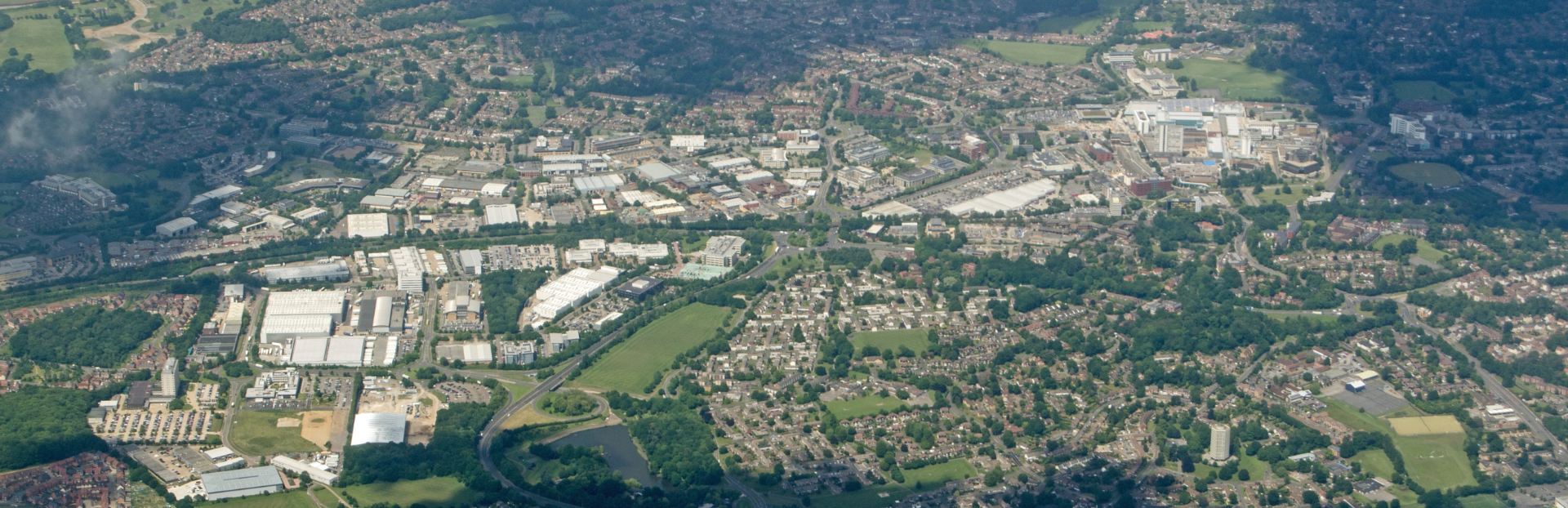
Bracknell is a new town in Berkshire, in the South East of England. Average sold prices across Bracknell Forest sit at £390,219 on the HM Land Registry House Price Index, 34.6% above the England average of £289,946 and 3.1% above the wider South East at £378,515. That places Bracknell Forest firmly in commuter-belt pricing territory, where the return comes more from holding a Berkshire postcode close to the M4 than from headline rental yield. The one figure that breaks the pattern is flats, which average £212,087 across the borough, almost exactly level with the England flat average of £214,563.
The premium is carried by houses, not the smaller stock that usually fills a buy-to-let. Detached homes here average £728,708, a 54.9% step above England, while terraced houses run 42.6% higher and flats sit a touch below the national figure. For an investor working to a fixed budget, that split matters: the entry point that behaves most like the rest of England is the flat market in the town-centre postcodes, while the borough's headline number is set by family houses most landlords will not be buying. Across the seven postcodes covered here, RG12 at £354,858 is the cheapest way in and SL5 around Ascot the dearest at £928,721.
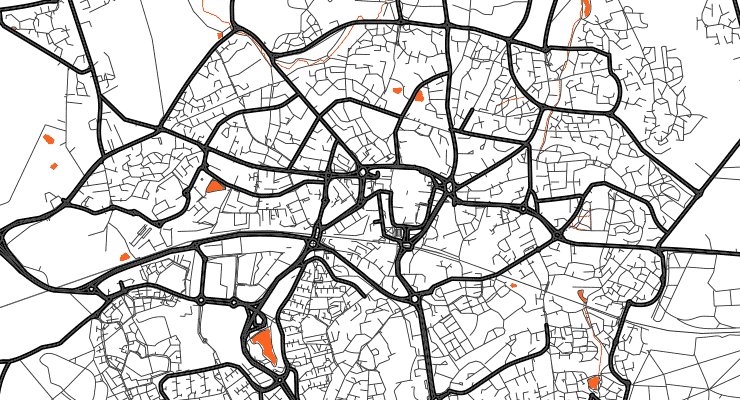
This guide covers the unitary authority of Bracknell Forest (ONS code E06000036) in Berkshire, South East England, plus fringe postcodes that spill into neighbouring areas. The seven postcodes run from Bracknell town centre and Warfield through Wokingham, Crowthorne and Sandhurst, out to Windsor and Ascot. Bracknell sits in the Thames Valley technology corridor, with Reading 10 miles west along the M4. Investors weighing the wider region can compare it with Reading buy-to-let a short drive away.
Article updated: July 2026
Why Invest in Bracknell?
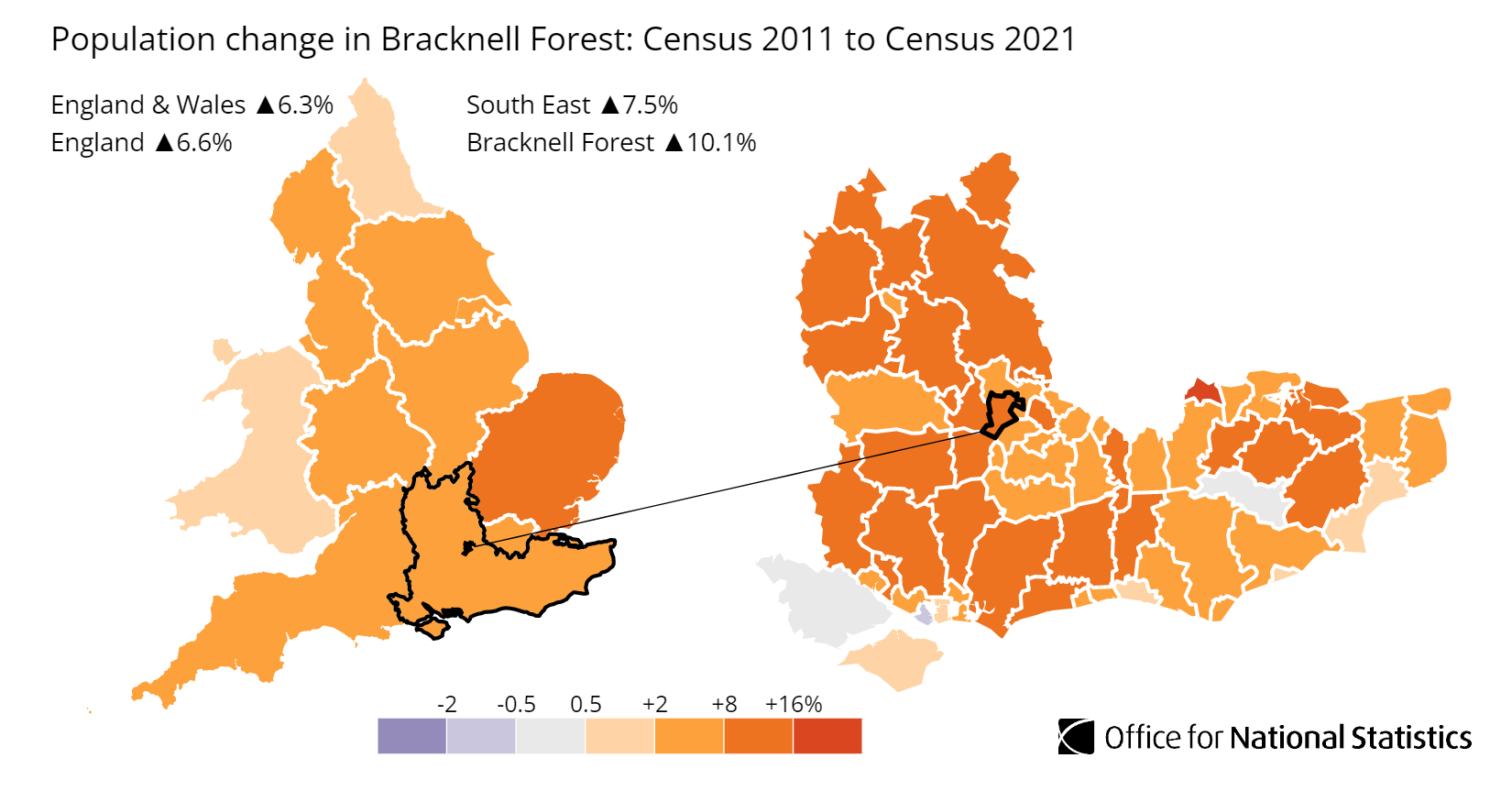
Bracknell Forest's population reached 124,607 at the 2021 Census, up 10.07% from 113,205 in 2011, well ahead of the 6.3% England and Wales average. That growth was fed by a sustained programme of new housing across a borough that began life as a post-war new town and has spent the past decade rebuilding its centre. Bracknell's pull is its position rather than its history: it sits inside the Thames Valley technology corridor, with fast road and rail links to Reading, Wokingham and London Waterloo.
The local employment rate is 82.4%, above both the South East at 78.8% and Great Britain at 75.7%, with unemployment at 3.0%. The economy leans on technology, telecommunications, financial services and defence, with several large employers along the Western Corridor. A tenant base in steady, better-paid work is one of the quieter reasons a lower-yield market like this still holds up: rent gets paid, and tenants on professional incomes tend to stay put.
Median gross annual earnings across Bracknell Forest are £43,206, which is 3.8% above the South East median of £41,616 and 10.4% above the Great Britain median of £39,125. Higher local wages let tenants absorb the higher rents that come with South East prices. The combination of strong employment and above-average pay supports genuine local demand in the cheaper postcodes, even where headline yields are modest.
Bracknell Economic Summary
- Population (Bracknell Forest): 124,607 (2021 Census). Growth of 10.07% from 2011.
- Median annual salary: £43,206 (local), £41,616 (South East), £39,125 (Great Britain)
- Employment rate: 82.4% (local), 78.8% (South East), 75.7% (Great Britain)
- Unemployment rate: 3.0% (local)
- Key employment sectors: Technology, telecommunications, financial services, defence
Source: ONS Census 2021, Nomis Labour Market Profile (ASHE 2025)
Regeneration and Investment in Bracknell
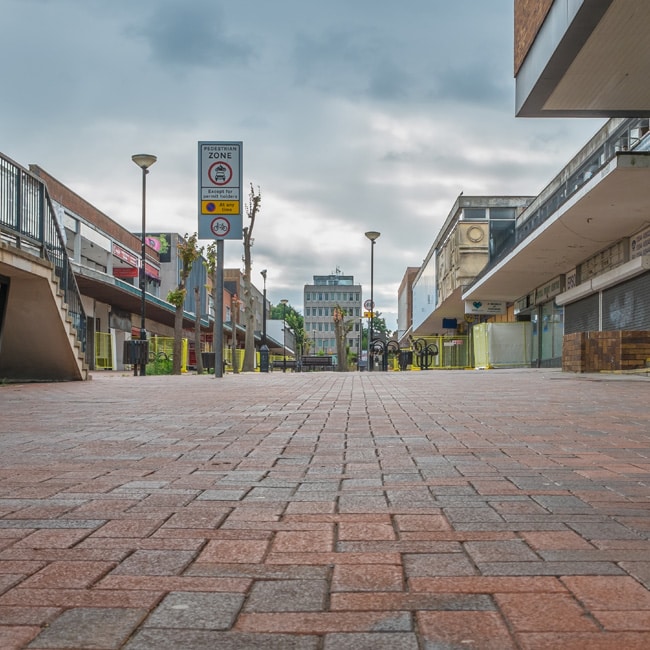
More than £770 million of public and private investment has reshaped Bracknell town centre, with two housing schemes adding 221 homes and a third already complete. The work is concentrated in RG12, where the Cambium Partnership between Bracknell Forest Council and Countryside Partnerships is steadily replacing the 1960s centre with new homes and public realm.
- Market Street, Brickmark Place (Under construction, completion end of 2026): 169 new homes, of which 81 are affordable (52 social rent, 29 shared ownership), plus 848 sq m of commercial space, delivered through the Cambium Partnership and managed by housing association Abri. As the largest active scheme in the town centre, its 48% affordable share strengthens key-worker rental demand directly within RG12. Updates at Abri.
- Coopers Hill (Completed November 2025): 52 new homes on a brownfield site, including 13 affordable, with public open space, cycle routes, 122 cycle bays and EV charging. It is the first completed project of the £131 million Cambium Partnership, and sets the delivery template for the remaining council-owned sites in walkable RG12. Updates at Bracknell Forest Council.
- Borough-wide regeneration programme (Ongoing, £770 million+): The wider programme spans The Lexicon retail and leisure district (£240 million, opened 2017), £112 million in education, £250 million in healthcare and £30 million in transport, with the Cambium Partnership targeting around 400 homes across council-owned sites. The Lexicon alone created roughly 3,500 jobs and lifted town-centre footfall. Updates at Bracknell Forest Council.
Source: Office for National Statistics - Population for Bracknell Forest
Bracknell Property Market Analysis
Average property prices in Bracknell Forest have grown 432.3% since January 1995, from £73,309 to £390,219. The sections below trace that path cycle by cycle, then drill into postcode-level data for sold prices, price per square foot, asking prices, growth, transaction volumes and how long homes take to sell.
When was the last house price crash in Bracknell?
Bracknell sits within the unitary authority of Bracknell Forest, so all sold prices from HM Land Registry are recorded at this level. The index runs from January 1995 to the latest reading in March 2026, covering 31 years of market cycles.
The 1995 to 2007 boom: Bracknell Forest started at £73,309 in January 1995. By December 2000 the average had reached £144,734, and the Thames Valley technology boom carried it past £208,357 by December 2005. The market peaked at £252,900 in August 2007.
2008 to 2009, the financial crisis: Prices fell from the August 2007 peak of £252,900 to a trough of £196,525 in February 2009, a decline of 22.3% over 18 months. The worst year-on-year reading was -20.2% in February 2009. That fall was steeper than England's 18.2% and the South East's roughly 20%, a reminder that higher-value commuter markets do not always cushion a downturn better than cheaper ones. Buyers who had paid near the top carried a large absolute loss.
The 2010 to 2013 recovery: Prices climbed off the trough but took time to clear the old high. The average held in the £225,000 to £235,000 range through 2010 to 2012, then reached £252,990 in July 2013, just edging past the August 2007 peak. Recovery to the pre-crash level took close to six years.
The 2014 to 2016 acceleration: Growth then ran hard. Prices rose from £256,827 in March 2014 to £329,283 by January 2016 and a local high of £360,925 in October 2016, helped by stamp duty changes and a shortage of family housing.
The 2017 to 2019 plateau: The pace stalled. After the October 2016 high, prices drifted sideways and closed December 2019 at £342,611, a year-on-year fall of 0.9%. The Lexicon opened in 2017 and lifted footfall, but it did not immediately feed into prices.
2020 to 2022, the pandemic surge: The stamp duty holiday and a rush for space pushed prices from £337,757 in March 2020 to an all-time high of £406,621 in November 2022, with annual growth above 9% through mid-2022.
2023 onwards, the rate shock and easing: Higher mortgage rates cooled the market. Prices slipped to £393,522 by December 2023 (-2.4% annual), then settled at £394,140 in December 2024 before easing to £390,219 by March 2026, a year-on-year reading of -0.7%. The current price is 54.3% above the August 2007 pre-crash peak.
Long-term growth summary:
- 5 years (March 2021 to March 2026): 10.8% growth (£352,071 to £390,219)
- 10 years (March 2016 to March 2026): 14.3% growth (£341,280 to £390,219)
- 15 years (March 2011 to March 2026): 70.2% growth (£229,228 to £390,219)
- 20 years (March 2006 to March 2026): 86.4% growth (£209,310 to £390,219)
- 30 years (January 1995 to March 2026): 432.3% growth (£73,309 to £390,219)
Bracknell Forest's 22.3% crash was deeper than the national average, and the recovery to the old peak took about six years. The longer record is more reassuring: a 432.3% return over 30 years, against a five-year reading of just 10.8% that reflects how much of the post-2007 gain was banked before the pandemic surge ran out of road. An investor who bought at the exact August 2007 peak would now be 54.3% ahead on the Land Registry average.
- All property types
- Detached
- Semi-detached
- Terraced
- Flats
- All property types
- Detached
- Semi-detached
- Terraced
- Flats
Sold House Prices in Bracknell
The average sold price across all property types in Bracknell Forest is £390,219, which is 34.6% above the England average of £289,946 as of March 2026. That premium is far from even. Detached and semi-detached houses run more than 50% above England, terraced homes 42.6% higher, while flats land just below the national figure. The split tells you where Bracknell's price comes from: family houses on Berkshire plots, not the smaller stock that fills most rental portfolios.
| Property Type | Bracknell Forest Average | England Average | Difference |
|---|---|---|---|
| Detached houses | £728,708 | £470,492 | +54.9% |
| Semi-detached houses | £441,451 | £288,185 | +53.2% |
| Terraced houses | £347,610 | £243,788 | +42.6% |
| Flats and maisonettes | £212,087 | £214,563 | -1.2% |
| All property types | £390,219 | £289,946 | +34.6% |
Detached houses at £728,708 carry the largest premium, 54.9% above England's £470,492. This is the large-plot family stock concentrated in postcodes like RG40 and SL5, drawing buyers who want a Berkshire address within reach of the M4 and the Thames Valley employers. Annual growth was a flat 0.2%, in line with a market that has been steady rather than rising over the past year.
Semi-detached houses at £441,451 sit 53.2% above England's £288,185, a premium almost as wide as the detached gap. These are the workhorse family homes across Warfield, Wokingham and Sandhurst, and they posted the strongest annual growth of any type at 1.4%, a sign that mid-market family demand has held up better than the top end.
Terraced houses at £347,610 are 42.6% above England's £243,788. The terraced stock dates mostly from the new-town era and clusters in the town-centre postcodes RG12 and RG42, where it forms the most investable end of the house market. Annual growth was 0.4%, close to flat.
Flats and maisonettes at £212,087 are the outlier, 1.2% below England's £214,563. In a borough where houses run 42% to 55% over the national figure, the flat market is priced level with the rest of the country. Bracknell never built the large city-centre apartment blocks that inflate flat values in Reading or Manchester, so its flats reflect local demand alone. Annual change was -4.3%, the only type to fall over the year, but the entry point is the lowest in the borough.
Price Per Square Foot in Bracknell
Just £100 per square foot separates Bracknell's cheapest postcode from its most expensive, with RG12 at £421 and SL4 at £521. Measuring by the square foot takes property size out of the comparison and shows what the location itself commands. The tight spread is the surprise: across seven postcodes that range from town-centre terraces to Ascot estates, the per-foot gap is narrower than most cities with this many areas, which means the premium in places like SL4 and SL5 is driven more by larger plots and bigger houses than by fundamentally dearer land.
| Rank | Area | Price Per Sq Ft |
|---|---|---|
| 1 | RG12 (Bracknell South, Easthampstead) | £421 |
| 2 | GU47 (Sandhurst, College Town) | £457 |
| 3 | RG45 (Crowthorne) | £461 |
| 4 | RG40 (Wokingham) | £479 |
| 5 | RG42 (Bracknell North, Warfield) | £496 |
| 6 | SL5 (Ascot, Sunninghill) | £519 |
| 7 | SL4 (Windsor, Ascot) | £521 |
RG12 at £421 per square foot is the cheapest space in the borough, drawn from 998 transactions, the deepest sample of any postcode here. It covers Bracknell South and Easthampstead, the town-centre core where the new homes are being built and where the terraced and flat stock sits. RG12 pairs that lowest per-foot cost with the highest yield and the strongest five-year growth in the borough, an alignment the later sections set out in full.
SL4 at £521 per square foot tops the table, just ahead of SL5 at £519. Both cover the Windsor and Ascot side of the borough, where the land itself is the asset. The £100 gap to RG12 is real but modest for a borough that stretches from a former new town to one of the most expensive postcodes in the country, which is why the headline price differences between these areas come mostly from house size, not the ground beneath them.
For Sale Asking Prices in Bracknell
RG12 at £354,858 and SL5 at £928,721 sit 162% apart, the widest asking-price gap of any location on this site. That spread reflects a single local-authority boundary that holds both a town-centre new-build market and the Ascot estates. The mean asking price across all seven postcodes is £560,934, but that figure is dragged up by SL5; strip it out and the mean falls to £499,637.
| Rank | Area | Asking Price |
|---|---|---|
| 1 | RG12 (Bracknell South, Easthampstead) | £354,858 |
| 2 | GU47 (Sandhurst, College Town) | £476,176 |
| 3 | RG45 (Crowthorne) | £481,234 |
| 4 | RG42 (Bracknell North, Warfield) | £514,112 |
| 5 | RG40 (Wokingham) | £572,539 |
| 6 | SL4 (Windsor, Ascot) | £598,899 |
| 7 | SL5 (Ascot, Sunninghill) | £928,721 |
RG12 at £354,858 is the only postcode where a purchase falls below the borough's all-property Land Registry average of £390,219, and it is more than £120,000 cheaper than the next postcode up, GU47. For an investor with a set budget, RG12 is where the most property comes for the money and where the rental sums actually work; the rest of the table is owner-occupier territory before it is buy-to-let territory.
SL5's £928,721 asking price is in a different market altogether, 162% above RG12 and well over the borough mean. Ascot and Sunninghill are prime residential addresses, and the rental, growth and liquidity figures in the sections below all confirm that the money here is in the land and the lifestyle rather than the income return. To come in below asking anywhere in the borough, the cheaper routes tend to be off-market, before a property is openly listed.
House Price Growth in Bracknell
RG12 leads five-year growth at 27.3%, more than double any other Bracknell postcode, while SL5 around Ascot has fallen 0.5% over the same five years. The cheapest postcode grew fastest and the dearest went backwards, a reversal of the usual assumption that the premium areas carry the growth. Every postcode except SL5 posted a positive five-year return, but the gap between top and bottom is wide.
| Area | 1 Year | 3 Years | 5 Years |
|---|---|---|---|
| RG12 (Bracknell South, Easthampstead) | 0.6% | 6.3% | 27.3% |
| RG40 (Wokingham) | 0.9% | 3.2% | 11.4% |
| GU47 (Sandhurst, College Town) | 1.0% | 10.2% | 10.3% |
| RG42 (Bracknell North, Warfield) | -0.6% | -2.1% | 7.8% |
| RG45 (Crowthorne) | -6.3% | -2.7% | 3.8% |
| SL4 (Windsor, Ascot) | 3.0% | -0.2% | 2.0% |
| SL5 (Ascot, Sunninghill) | -2.3% | -17.9% | -0.5% |
RG12's 27.3% over five years is the clear leader, and it sits on top of a positive three-year reading of 6.3% rather than a single recent jump. The town-centre regeneration and the steady delivery of new homes have run alongside that growth rather than diluting it, and the postcode that started cheapest has done the most for capital over the period.
SL5's three-year fall of 17.9% is the sharpest correction in the dataset. Ascot and Sunninghill have given back value since the 2022 peak, and with a 4% turnover rate the premium end is both expensive and slow to move. SL4 next door tells a milder version of the same story, up just 2.0% over five years. GU47 stands out at the cheaper end, with the strongest three-year reading at 10.2% off a low base.
Monthly Property Sales in Bracknell
RG12 records 53 sales a month, more than triple the slowest postcode, and turns over 17% of its stock a year. Sales volume shows how active a market is, while turnover, the share of homes that change hands each year, shows how readily an investor can buy in and sell out. Across the borough the contrast is stark, from RG12's busy town-centre market to SL5's 15 sales a month on a much larger, slower housing stock.
| Area | Sales Per Month | Turnover | Asking Price |
|---|---|---|---|
| RG12 (Bracknell South, Easthampstead) | 53 | 17% | £354,858 |
| SL4 (Windsor, Ascot) | 33 | 7% | £598,899 |
| RG40 (Wokingham) | 28 | 7% | £572,539 |
| RG42 (Bracknell North, Warfield) | 25 | 10% | £514,112 |
| GU47 (Sandhurst, College Town) | 18 | 22% | £476,176 |
| RG45 (Crowthorne) | 16 | 15% | £481,234 |
| SL5 (Ascot, Sunninghill) | 15 | 4% | £928,721 |
GU47's 22% turnover is the highest in the borough, edging RG12's 17% even though Sandhurst sees fewer monthly sales. A high turnover from a smaller, mid-priced housing stock points to a market where homes change hands often, which gives an investor a clearer set of comparables and an easier exit. RG12 pairs the most sales with a healthy turnover, so it offers both depth and movement.
SL5's 4% turnover is the lowest here. Fifteen sales a month from a large, expensive housing stock means most homes stay put, and a property put up for sale can sit for a long time before it finds a buyer. Low turnover at this price point is a liquidity cost an investor carries on the way out, not just on the way in.
How Long Properties Take to Sell in Bracknell
Bracknell's exit times stretch from about 138 days in GU47 to roughly 761 days in SL5, the widest selling-speed gap in the borough. Days on market is the typical time a home is listed before it sells, and months of unsold stock measures how much for-sale supply is queued at the current rate of sales. That spread is the figure a yield table never shows: at the cheaper, busier end a property moves in months, while at the Ascot end it can take more than two years.
| Area | Avg Days to Sell | Months of Unsold Stock | Market |
|---|---|---|---|
| GU47 (Sandhurst, College Town) | 138 | 4.5 | Seller's market |
| RG12 (Bracknell South, Easthampstead) | 179 | 5.9 | Seller's market |
| RG45 (Crowthorne) | 203 | 6.7 | Balanced market |
| RG42 (Bracknell North, Warfield) | 304 | 10.0 | Balanced market |
| RG40 (Wokingham) | 435 | 14.3 | Buyer's market |
| SL4 (Windsor, Ascot) | 435 | 14.3 | Buyer's market |
| SL5 (Ascot, Sunninghill) | 761 | 25.0 | Buyer's market |
GU47 and RG12 are the two seller's markets, clearing in 138 and 179 days, and they are also the two postcodes a buy-to-let investor is most likely to be working in. A faster-moving postcode is less capital tied up when the time comes to sell, and the contrast with the rest of the borough is large: SL5's 25 months of unsold stock means a sale there is measured in years, not months, which is part of why the premium tier reads as an owner-occupier market rather than an investment one.
What Type of Property Can You Buy in Bracknell?
RG12 is the one postcode where smaller stock dominates: terraced houses make up 34.2% and flats 22.1%, while every other postcode is led by detached homes, peaking at 57.9% in RG40. The mix of housing in each postcode shapes which strategies fit where. The figures below come from 2021 Census records for each postcode.
| Area | Detached | Semi-detached | Terraced | Flats |
|---|---|---|---|---|
| RG12 (Bracknell South, Easthampstead) | 19.8% | 21.3% | 34.2% | 24.6% |
| GU47 (Sandhurst, College Town) | 46.9% | 28.2% | 17.1% | 7.3% |
| RG40 (Wokingham) | 57.9% | 17.8% | 8.8% | 10.8% |
| RG42 (Bracknell North, Warfield) | 48.6% | 23.6% | 10.7% | 12.1% |
| RG45 (Crowthorne) | 43.5% | 19.9% | 15.4% | 13.2% |
| SL4 (Windsor, Ascot) | 36.0% | 31.1% | 15.3% | 14.5% |
| SL5 (Ascot, Sunninghill) | 53.2% | 19.2% | 7.1% | 20.0% |
RG12 holds far more terraced houses and flats than anywhere else in the borough, at 34.2% and 24.6%. That is the smaller-unit stock that usually carries a buy-to-let, and it matches RG12's position as the lowest asking price and highest yield in the borough. The flats and town-centre terraces suit single lets and sharers drawn to the regeneration and the transport links, while the new homes coming through add modern stock to the same market.
RG40 is the most detached-heavy postcode at 57.9%, with SL5 close behind at 53.2%. In both, detached and semi-detached houses together are the bulk of the stock, which fits their higher prices and the lower yields the rental section sets out. The housing here is built for owner-occupier families rather than the smaller units that generate rental income.
Across the borough, flats run from 7.3% in GU47 to 24.6% in RG12, with the share of purpose-built and converted units combined; a small number of mobile and temporary dwellings is left out, so the rows may not add to 100%.
Bracknell Rental Market Analysis
Monthly rents in Bracknell run from £1,416 in RG12 to £3,227 in SL5, with gross rental yields from 3.5% to 4.8% across the postcodes that carry rental data. For investors asking is buy to let a good investment in Bracknell, the sections below break down rents, yields and tenant affordability postcode by postcode. If you are looking at how to build property portfolio uk in the South East, Bracknell pairs above-average tenant earnings with town-centre regeneration in its most active postcode. Six of the seven postcodes carry yield data; GU47 has too little rental-listing activity for a reliable rent and yield, and RG45 sits among the thinner rental markets too. Browse current buy-to-let property for sale across the region.
Average Rent & Gross Rental Yields in Bracknell
Gross rental yields in Bracknell range from 3.5% in RG40 to 4.8% in RG12. The cheapest postcode delivers the highest yield, which is unusual for the South East, where high asking prices usually push yields below 4%. SL5 charges the highest rent in the borough at £3,227 a month but still yields 4.2%, because its £928,721 asking price soaks up the rental premium.
| Area | Average Monthly Rent | Asking Price | Gross Yield |
|---|---|---|---|
| RG12 (Bracknell South, Easthampstead) | £1,416 | £354,858 | 4.8% |
| SL4 (Windsor, Ascot) | £2,192 | £598,899 | 4.4% |
| SL5 (Ascot, Sunninghill) | £3,227 | £928,721 | 4.2% |
| RG42 (Bracknell North, Warfield) | £1,618 | £514,112 | 3.8% |
| RG45 (Crowthorne) | £1,486 | £481,234 | 3.7% |
| RG40 (Wokingham) | £1,648 | £572,539 | 3.5% |
| GU47 (Sandhurst, College Town) | Not enough data | £476,176 | Not enough data |
RG12 at 4.8% combines the lowest asking price with the lowest rent, £1,416 a month, yet still tops the yield table. A 30% deposit of £106,457 buys into the highest-yielding postcode, the busiest sales market and the strongest five-year growth in the borough at once, which is a rare alignment in a South East market.
SL5 at 4.2% sits at the bottom of the yield table despite charging the highest rent at £3,227. The £928,721 asking price means even a strong rent leaves the income return compressed. The same yield can be reached in RG12 from less than 40% of the capital, so SL5's case rests on the land and the address rather than the rent line.
Gross Rental Yield by Postcode
Is Bracknell Rent High?
Monthly rents in Bracknell consume between 39.3% and 89.6% of the local median gross monthly salary. The widely cited affordability threshold is 30% of gross income, and no Bracknell postcode falls below it. RG12 comes closest at 39.3%, while the premium postcodes sit far above, a spread that reflects how detached the Ascot rental market is from local median pay.
The median gross weekly salary in Bracknell is £830.90, which equates to £3,601 per month or £43,206 per year. This is above the South East regional median of £800.30 per week and the Great Britain median of £752.40 per week. Data from the Nomis Labour Market Profile (ASHE 2025).
| Rank | Area | Rent as % of Income |
|---|---|---|
| 1 | SL5 (Ascot, Sunninghill) | 89.6% |
| 2 | SL4 (Windsor, Ascot) | 60.9% |
| 3 | RG40 (Wokingham) | 45.8% |
| 4 | RG42 (Bracknell North, Warfield) | 45.0% |
| 5 | RG45 (Crowthorne) | 41.3% |
| 6 | RG12 (Bracknell South, Easthampstead) | 39.3% |
| - | GU47 (Sandhurst, College Town) | Not enough data |
RG12 at 39.3% is the most affordable for tenants, with a £1,416 rent against a £3,601 monthly median salary. Lower rent-to-income ratios tend to go with lower arrears and longer tenancies, because tenants who are not stretched stay put. RG12 is also the postcode where local median earners can realistically rent, which keeps its tenant pool deep.
SL5 at 89.6% shows how far Ascot rents run ahead of local median pay. Tenants paying £3,227 a month are not on the Bracknell median; they are London commuters, relocators or high earners in specialist roles. That makes the SL5 tenant pool smaller and more volatile, which lines up with the postcode's low turnover and long selling times seen earlier.
How Big Is Bracknell's Private Rented Sector?
The private rented sector is deepest in SL4 at 38.3% of households and shallowest in GU47 at 10.8%, a wider spread than most boroughs show. The share of homes already rented privately is a read on how established and how large the local tenant base is. The table below shows household tenure by postcode.
| Area | Owned Outright | Owned with Mortgage | Private Rented | Social Rented |
|---|---|---|---|---|
| SL4 (Windsor, Ascot) | 30.5% | 25.0% | 38.3% | 5.7% |
| SL5 (Ascot, Sunninghill) | 40.8% | 33.3% | 21.9% | 3.9% |
| RG42 (Bracknell North, Warfield) | 36.6% | 36.4% | 19.6% | 6.0% |
| RG45 (Crowthorne) | 33.3% | 37.1% | 18.7% | 8.1% |
| RG12 (Bracknell South, Easthampstead) | 25.0% | 36.3% | 17.9% | 18.8% |
| RG40 (Wokingham) | 38.6% | 38.7% | 14.9% | 6.0% |
| GU47 (Sandhurst, College Town) | 40.6% | 41.4% | 10.8% | 6.9% |
SL4 has by far the largest private rented sector at 38.3% of households, well clear of the rest of the borough, a sign of an established lettings market around Windsor and Ascot driven by relocators and commuters rather than yield. RG12 sits mid-table at 17.9% privately rented, but it also carries the highest social-rented share in the borough at 18.8%, which reflects its town-centre stock and the affordable homes coming through the regeneration. The yield leader and the largest rented sector are not the same postcode here, a useful reminder that depth of tenant demand and rental return are separate signals.
On rental liquidity, RG12 stands out among the postcodes with enough listings to read: around 94 homes were advertised to rent, letting in about 36 days, the fastest in the borough and a clear landlord's market. SL4 shows a similar picture with about 116 homes letting in roughly 52 days. The slower, thinner postcodes carry too few rental listings at any one time to read with confidence.
Local Housing Allowance Rates in Bracknell
Bracknell straddles three Broad Rental Market Areas, so its Local Housing Allowance is not a single set of rates: the four Reading-BRMA postcodes run from £90.10 a week for a shared room to £380.65 for a four-bedroom home, with Windsor, Ascot and Sandhurst on higher or lower rates. Local Housing Allowance sets the maximum housing support a tenant on benefits can claim, so for that part of the market it acts as a rent floor. Because the borough spans three market areas, the rate that applies depends on the postcode, which is unusual for a single local authority. To check the exact rate for a specific address, use the government's official Local Housing Allowance calculator.
| Property Size | Reading BRMA (RG12, RG40, RG42, RG45) | East Thames Valley BRMA (SL4, SL5) | Blackwater Valley BRMA (GU47) |
|---|---|---|---|
| Shared accommodation | £90.10 | £136.13 | £110.00 |
| 1 bedroom | £195.62 | £207.12 | £184.11 |
| 2 bedrooms | £252.00 | £276.16 | £230.14 |
| 3 bedrooms | £299.18 | £333.70 | £298.03 |
| 4 bedrooms | £380.65 | £437.26 | £391.23 |
For the town-centre postcodes most relevant to buy-to-let, the Reading-BRMA two-bedroom rate of £252.00 a week works out at about £1,092 a month, below RG12's open-market rent of £1,416. A benefit-backed tenancy in RG12 therefore sits under the open-market rent, and the stock that fits within these rates is concentrated in the cheaper town-centre flats and terraces. The Windsor and Ascot postcodes draw on the higher East Thames Valley rates, but their open-market rents run so far ahead that LHA is a minor factor there. Note that these figures are reviewed each April, so the calculator above is the place to confirm the current rate.
Buy-to-Let Considerations
Are House Prices High in Bracknell? Price-to-Earnings Ratios
Purchasing a property in Bracknell requires between 8.2 and 21.5 times the median annual salary. This is based on the Nomis Labour Market Profile for Bracknell showing the median gross annual income for Bracknell residents is £43,206.
The national benchmark for price-to-earnings is 7.4x (England's average sold price of £289,946 divided by the Great Britain median annual salary of £39,125). Every Bracknell postcode sits above that benchmark, so the borough is expensive by national standards even at its most affordable. The useful question for an investor is not whether prices are high in absolute terms, but how they line up with the rents the market produces.
| Rank | Area | Price-to-Earnings Ratio |
|---|---|---|
| 1 | RG12 (Bracknell South, Easthampstead) | 8.2x |
| 2 | GU47 (Sandhurst, College Town) | 11.0x |
| 3 | RG45 (Crowthorne) | 11.1x |
| 4 | RG42 (Bracknell North, Warfield) | 11.9x |
| 5 | RG40 (Wokingham) | 13.3x |
| 6 | SL4 (Windsor, Ascot) | 13.9x |
| 7 | SL5 (Ascot, Sunninghill) | 21.5x |
RG12 at 8.2x is the only postcode below 10x and the closest to the national benchmark. At 8.2 times local earnings it is expensive nationally but competitive within the South East, where ratios above 10x are common. Read alongside the yield data, RG12's 4.8% gross yield on an 8.2x ratio is the tightest fit between tenant earnings and rental cost in the borough.
SL5 at 21.5x means an Ascot property costs more than 21 years of median Bracknell income. That ratio puts SL5 in a separate market segment, and it lines up with the negative three-year growth, the 4% turnover and the 89.6% rent-to-income figure seen in the earlier sections. For an investor focused on the income return, the high ratio stretches the payback period considerably.
Deposit Requirements in Bracknell
A 30% deposit on a buy-to-let property in Bracknell ranges from £106,457 in RG12 to £278,616 in SL5. The gap between the cheapest and most expensive deposit is £172,159, enough to fund a second RG12 deposit with room to spare. For investors comparing Bracknell with the rest of the South East, even the entry-level deposit here sits well above lower-cost regions, which is the capital barrier that defines the market.
Beyond the deposit, the additional stamp duty calculator and other buy to let fees add to the total capital required.
| Rank | Area | 30% Deposit Required |
|---|---|---|
| 1 | RG12 (Bracknell South, Easthampstead) | £106,457 |
| 2 | GU47 (Sandhurst, College Town) | £142,853 |
| 3 | RG45 (Crowthorne) | £144,370 |
| 4 | RG42 (Bracknell North, Warfield) | £154,234 |
| 5 | RG40 (Wokingham) | £171,762 |
| 6 | SL4 (Windsor, Ascot) | £179,670 |
| 7 | SL5 (Ascot, Sunninghill) | £278,616 |
RG12 is the cheapest way into Bracknell at a £106,457 deposit, and the step up to GU47 costs roughly £36,000 more. That extra outlay does not buy a higher yield: RG12 leads on yield, growth and liquidity at the lowest entry point, so the case for paying up has to rest on something other than the income return. Most investors building a buy-to-let position in the borough will be working at this end of the table.
At the top, SL5's £278,616 deposit is more than two and a half times RG12's, and it buys into the postcode with the weakest growth, the slowest sales and the highest rent-to-income ratio in the borough. The capital does more work in the cheaper postcodes here, which is the opposite of what the prestige of the Ascot postcode might suggest. Investors looking to reduce the upfront capital may also consider houses for renovation that sit below the postcode average.
What the Bracknell Data Tells Buy-to-Let Investors
In Bracknell the cheapest way in is also the strongest postcode on almost every measure. RG12 has the top yield at 4.8%, the lowest asking price for buying an investment property at £354,858, the strongest five-year growth at 27.3%, the most monthly sales at 53, and the most affordable rent-to-income ratio at 39.3%. A 30% deposit there is £106,457, the lowest in the borough, for a home renting at £1,416 a month.
The growth data splits the borough into two tiers. The town-centre and mid-range postcodes (RG12, RG40, GU47, RG42) all posted positive five-year growth between 7.8% and 27.3%, while the premium postcodes around Windsor and Ascot have stalled or gone backwards, with SL4 up just 2.0% and SL5 down 0.5%. Capital deployed at the top of the market has done little over five years, which is the reverse of the assumption that prestige postcodes carry the growth.
GU47 sits a little apart, with the strongest three-year reading at 10.2% and the highest turnover at 22%, though it carries too little rental-listing activity to publish a reliable yield. SL5 is the clear outlier the other way: a 17.9% three-year fall, a 4% turnover and a 21.5x price-to-earnings ratio mark it out as the most expensive and least liquid postcode in the borough. Buyers who want to come in below asking tend to work the off market property route, which matters more in slow-moving premium postcodes than in the busy town centre.
Bracknell Forest has no selective licensing for private landlords, though HMO landlords should still check the council's rented homes and licensing pages. With above-average wages, an 82.4% employment rate and a Thames Valley employment base, the borough reads as a steadier-fundamentals, lower-yield market than the higher-yielding regions further north: the income return is modest, but the tenant base in the cheaper postcodes is deep and well paid.
How Bracknell Compares
Bracknell's mean asking price of £560,934 is the highest of five South East locations compared here, while its top yield of 4.8% is the lowest. The comparison sets Bracknell alongside four nearby locations, each with a different investor profile. The mean asking price and mean monthly rent are simple averages across all postcodes with data, and the top gross yield is the single highest postcode yield in each location.
| Location | Mean Asking Price | Mean Monthly Rent | Mean Gross Yield | Top Yield (postcode) |
|---|---|---|---|---|
| Reading | £415,265 | £1,603 | 4.6% | 6.1% (RG1) |
| Slough | £421,952 | £1,544 | 4.4% | 4.9% (SL1) |
| Basingstoke | £489,238 | £1,472 | 3.6% | 5.7% (RG21) |
| Guildford | £639,106 | £2,259 | 4.2% | 6.3% (GU2) |
| Bracknell | £560,934 | £1,931 | 4.1% | 4.8% (RG12) |
Bracknell is the most expensive location in this comparison at £560,934 mean asking price, and its 4.8% top yield is the lowest of the five. The mean is lifted by the Ascot postcodes inside the borough boundary; strip SL5 out and the comparison looks closer to its neighbours. Bracknell's case is not the headline yield but RG12's 27.3% five-year growth from the cheapest entry point, which outpaced most South East postcodes over the period.
For investors prioritising income, Reading at 6.1% and Guildford at 6.3% deliver higher top-line yields, with Guildford's university-driven rental market behind its figure. Slough at £421,952 and Basingstoke at £489,238 offer lower entry points and higher yields than Bracknell. For a data-driven comparison across all UK locations, see our best buy-to-let areas guide.
Frequently Asked Questions
Is Bracknell a good place to live for buy-to-let tenants?
For the right postcode, yes, and it comes down to jobs and wages. Bracknell Forest's employment rate is 82.4%, above the South East at 78.8% and Great Britain at 75.7%, and the typical wage is £830.90 a week against £800.30 across the South East. Tenants in steady, better-paid work tend to keep the rent paid and stay longer.
The catch is affordability. RG12 comes closest to the 30% of income mark at 39.3%, the lowest rent-to-income ratio in the borough, so it is the postcode where local median earners can realistically rent. The premium areas around Windsor and Ascot ask rents that run well ahead of local pay, which makes their tenant pools smaller and more reliant on commuters and relocators.
What are the best areas in Bracknell for property investment?
RG12 (Bracknell South and Easthampstead) is the standout on the buy-to-let numbers. It is the cheapest entry at £354,858, the highest-yielding at 4.8%, the strongest five-year growth at 27.3% and the busiest sales market with 53 a month. It also holds the borough's largest share of the flats and terraces that suit a let.
Beyond RG12, GU47 (Sandhurst) is the next most affordable at £476,176 and turns over the most stock, though its rental data is too thin to publish a yield. RG40 and RG42 sit in the middle on price and yield, while SL4 and SL5 around Windsor and Ascot are higher-rent, higher-price postcodes with weaker recent growth.
How does Bracknell compare to Reading for buy-to-let?
They suit different aims. Reading is the higher-yield, lower-cost option: a top yield around 6.1% against Bracknell's 4.8%, and a mean asking price of £415,265, about 26% below Bracknell's £560,934. Reading also gives more choice, with yield data across more postcodes and a deeper student market 10 miles west along the M4.
Bracknell's pitch is RG12's growth rather than its yield. The town-centre postcode grew 27.3% over five years from the lowest asking price in the borough, supported by the regeneration. Both towns draw tenants from the same Thames Valley professional base, so the choice rests on whether you want stronger cash flow in Reading or RG12's faster price growth in Bracknell.
Can I find buy-to-let property under £300,000 in Bracknell?
Not on a postcode average, but yes by property type. RG12 is the cheapest postcode at £354,858, so even the most affordable area sits above £300,000 on average. The way under that line is the smaller stock: flats across Bracknell Forest average £212,087 on the Land Registry index, level with the England flat average, and individual flats and smaller terraces in RG12 transact below £300,000. With 53 sales a month, RG12 has the volume to find that stock, and BMV properties are another route in below the average.
Is there demand for HMO and room lets in Bracknell?
There is, mostly in RG12, but the evidence is thinner than in a student city. A sample of current RG12 room adverts puts a double room with a shared bathroom at around £153 a week, with most between £133 and £196 (the middle 80% of 42 adverts). That was the only RG12 room type with enough live adverts for a reliable figure, so single and ensuite rents are harder to pin down. Over in SL4 a similar double-with-shared-bath sits at about £184 a week, off a much smaller sample. For how the numbers work on a shared house, see our complete guide to investing in HMOs.
What are average house prices in Bracknell?
The average sold price across Bracknell Forest is £390,219 on the Land Registry index, about 34.6% above the England average of £289,946 as of March 2026. Asking prices by postcode run from £354,858 in RG12 (Bracknell South, Easthampstead) up to £928,721 in SL5 (Ascot, Sunninghill), with a borough mean of £560,934. By type, detached homes average £728,708, semi-detached £441,451, terraced £347,610 and flats £212,087.
The standout is that flats sit a fraction below the England flat average while every house type runs 42% to 55% above it. Through a buy-to-let lens, RG12 is the cheapest entry and the highest-yielding at 4.8%, while SL5 is the dearest and one of the lowest-yielding.
What type of property is most common in Bracknell?
It depends on the postcode, which is unusual for one borough. Detached houses dominate most of Bracknell Forest, peaking at 57.9% of the stock in RG40 (Wokingham). RG12 is the exception: terraced houses are the largest category there at 34.2%, with flats close behind at 24.6%. That smaller-unit mix is exactly why RG12 carries the buy-to-let market while the detached-heavy postcodes lean owner-occupier.
How do I buy an investment property in Bracknell?
Work out first whether you are buying for income or for capital, because in Bracknell both point to the same place. RG12 (Bracknell South, Easthampstead) is the cheapest entry at £354,858, the highest-yielding at 4.8% and the strongest five-year grower at 27.3%, so it is the obvious starting point rather than a trade-off between the two. Budget for a 30% deposit, which runs from £106,457 in RG12 to £278,616 in SL5.
Beyond what is listed openly, many experienced investors buy below asking through off-market properties and BMV properties for sale. To see what is available now, browse bracknell investment property or buy-to-let homes for sale.
Ready to buy property?
Access off-market investment properties with an average 8%+ annual gross yield (beating the UK's typical 3-5%).
Get property alerts