

The City of Westminster is an inner London borough covering much of central London, from Mayfair and Belgravia to Soho and St James's. The average sold price across the City of Westminster is £814,679 on the HM Land Registry House Price Index, 181.0% above England's £289,946 and the highest of any local authority covered on this site. That figure is dragged towards the middle by the borough's flat-heavy stock; the detached sold average is £3,471,133 and the semi-detached £2,452,558. Westminster is the prime end of central London, where Mayfair, Belgravia, Marylebone, Soho and St James's sit inside a single local authority, and where price is set by global wealth rather than local wages.
This is also a market in correction. Westminster's average sold price peaked at £1,224,972 in January 2023 and has since fallen 33.5% to £814,679 by April 2026. Five-year capital growth is negative across most of the borough, and the population fell 6.9% between the 2011 and 2021 censuses, from 219,396 to 204,236 residents. For an income investor, the headline is that the cheapest postcode also carries one of the higher yields: W2 (Bayswater, Paddington) leads at 5.4%, while W1 (Mayfair, Marylebone) sits at the bottom at 2.5% despite a £2,006,996 average asking price.
This guide covers the City of Westminster (ONS code E09000033) across postcodes NW1, NW8, SW1, W1, W2, WC1, and WC2. Westminster sits at the heart of the London buy-to-let market, bordered by the City to the east, Camden to the north, and Kensington and Chelsea to the west.
Article updated: July 2026
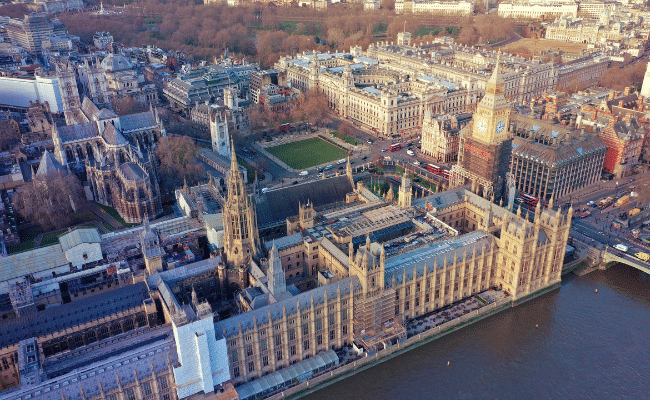
Why Invest in the City of Westminster?
Westminster's resident population fell 6.9% between the 2011 and 2021 censuses, from 219,396 to 204,236, the only borough on this site to lose residents over the decade. That makes it an outlier among London buy-to-let locations, where most boroughs grew. The decline reflects a central London where second homes, international ownership and a shift towards short-let and corporate use leave fewer people on the electoral roll, even as housing demand stays intense.
Westminster's economy runs on knowledge work and visitors rather than on local manufacturing or a single anchor employer. The borough holds roughly 5.5 jobs per working-age resident, one of the highest ratios in the country, which marks it out as a destination workplace that pulls commuters in every weekday. Professional, scientific and technical activities account for 15.7% of employee jobs, information and communication 12.4%, and accommodation and food 11.8%, reflecting both the West End office economy and the tourist trade around Soho, Covent Garden and the parks.
Resident median gross earnings sit at £52,610 a year, or £1,011.70 a week, well above the London median of £892.60 and the Great Britain median of £752.40. Those wages still fall a long way short of Westminster's open-market rents, which is the structural feature that defines the borough: the tenant base for prime stock is drawn from international professionals, corporate lets and high-earning households rather than the local median earner. The employment rate is 78.5%, above the Great Britain figure of 75.6%, with unemployment at 4.0%.
City of Westminster Economic Summary
- Population (City of Westminster): 204,236 (2021 Census). A decline of 6.9% from 2011.
- Median annual salary: £52,610 (local), £46,415 (London), £39,125 (Great Britain)
- Employment rate: 78.5% (local), 75.6% (Great Britain)
- Unemployment rate: 4.0% (local)
- Key employment sectors: Professional, scientific and technical activities, information and communication, accommodation and food, wholesale and retail, financial and insurance activities
Source: ONS Census 2021, Nomis Labour Market Profile (ASHE 2025, Employment 16-64)
Regeneration and Investment in the City of Westminster
Westminster's investment story is one of West End renewal and transport upgrades rather than the large brownfield housing schemes that drive outer London boroughs. The borough is already built out, so new supply is limited and the value uplift comes from public-realm work, retail repositioning and the Elizabeth line rather than thousands of new homes.
- Elizabeth line (Operational): The Elizabeth line opened through Bond Street and Paddington in 2022, cutting journey times across central London and into Heathrow and the eastern suburbs. Bond Street and Paddington both sit inside Westminster, and the line has reinforced the West End's pull as an office and retail destination. Updates at Transport for London.
- Oxford Street programme (Active): Westminster City Council and the Mayor of London are progressing a long-term programme to upgrade Oxford Street and its surrounding district, aiming to revive the West End's flagship retail spine and improve the pedestrian environment. The scheme matters to nearby residential stock in W1 and W2 because footfall and street quality feed directly into rental appeal. Updates at Westminster City Council.
- Paddington and Bayswater renewal (Active): The area around Paddington Basin and Bayswater in W2 has seen sustained mixed-use investment in offices, public space and the canal-side, supported by the Elizabeth line interchange at Paddington. W2 carries the highest gross yield in the borough, and continued investment around the station underpins tenant demand there. Updates at Westminster City Council.
Source: Office for National Statistics - City of Westminster
City of Westminster Property Market Analysis
Average property prices in the City of Westminster have risen 476.1% since January 1995, from £141,417 to £814,679, but the recent path has been down, not up. The sections below trace that journey cycle by cycle, then drill into current postcode-level data for sold prices, price per square foot, asking prices, growth trends, and monthly transaction volumes.
When was the last house price crash in the City of Westminster?
All sold property prices for the City of Westminster are recorded by HM Land Registry at local-authority level. The Land Registry House Price Index tracks average prices from January 1995 to April 2026, covering 31 years of market cycles. Westminster's most important downturn is not the 2008 financial crisis but the correction now under way from a January 2023 peak.
The 1995 to 2007 climb: Westminster started at £141,417 in January 1995. Prices roughly doubled by December 2000 to £285,770, then climbed steadily through the early 2000s to £421,453 by December 2005. By December 2007 the average reached £598,241 as cheap credit and international demand pushed prime central London higher.
2008 to 2009, the financial crisis: Prices fell from £598,241 in December 2007 to a trough of £534,080 in March 2009, a decline of 10.7% over 15 months. That was a far shallower fall than the England drop of 18.2% over the same crisis. Westminster recovered the loss quickly: by October 2009 the average had already passed its pre-crisis level at £598,398. Prime central London behaved differently from the wider market because cash buyers and overseas money returned first.
2010 to 2017, the long boom: This was Westminster's strongest run. The average climbed from £649,230 in December 2010 to £911,758 by December 2013 and £1,037,434 by December 2014, breaking the million-pound mark. Growth continued to £1,165,218 by December 2017 as global capital treated London property as a store of value through the post-crisis years.
2018 to 2020, the stamp duty and Brexit drag: Higher stamp duty on additional and high-value homes, combined with Brexit uncertainty, cooled the prime market. The average slipped to £1,025,142 by December 2018 and fell further to £952,777 by December 2020 as the pandemic emptied the centre of international buyers and short-let demand.
2021 to 2023, the rebound and the peak: Prices rebounded sharply to £1,194,527 by December 2021 and reached an all-time high of £1,224,972 in January 2023. That peak was the high-water mark for the borough on the Land Registry index.
2023 to present, the correction: From the January 2023 peak, Westminster has fallen steadily. The average dropped to £1,131,406 by March 2024, £951,206 by March 2025, and £814,679 by the latest reading in April 2026. That is a 33.5% decline from the peak over three years, the steepest sustained fall of any market on this site, driven by higher interest rates, tax changes affecting non-domiciled owners, and thinner international demand.
Long-term growth summary:
- 5 years (March 2021 to April 2026): -20.4% (£1,060,165 to £814,679)
- 10 years (March 2016 to April 2026): -18.3% (£1,032,552 to £814,679)
- 15 years (March 2011 to April 2026): 26.1% growth (£669,250 to £814,679)
- 20 years (March 2006 to April 2026): 88.0% growth (£448,956 to £814,679)
- 30 years (January 1995 to April 2026): 476.1% growth (£141,417 to £814,679)
Westminster's 30-year return of 476.1% is the strongest long-run record of any location on this site, but the last five and ten years have gone backwards. An investor who bought at the January 2023 peak would be down 33.5% on the Land Registry average today. The borough rewards a very long hold and a tolerance for cyclical drawdowns that smaller, cheaper markets rarely see.
- All property types
- Detached
- Semi-detached
- Terraced
- Flats
- All property types
- Detached
- Semi-detached
- Terraced
- Flats
Sold House Prices in the City of Westminster
The average sold price across all property types in the City of Westminster is £814,679, which is 181.0% above the England average of £289,946 as of April 2026. That all-property figure understates the top of the market because flats make up the bulk of Westminster's stock and pull the average down. Every property type carries a large premium to England, but the gap widens sharply as you move from flats to houses.
| Property Type | City of Westminster Average | England Average | Difference |
|---|---|---|---|
| Detached houses | £3,471,133 | £470,492 | +637.8% |
| Semi-detached houses | £2,452,558 | £288,185 | +751.0% |
| Terraced houses | £1,474,352 | £243,788 | +504.8% |
| Flats and maisonettes | £723,125 | £214,563 | +237.0% |
| All property types | £814,679 | £289,946 | +181.0% |
Detached houses at £3,471,133 carry a 637.8% premium to England's £470,492. There are very few of them in Westminster, mostly in St John's Wood (NW8) and the leafier fringes, so the average reflects a tiny, high-value sample of villa-style homes rather than a market an ordinary buyer would shop in. Annual change here is -16.2%, in line with the wider correction.
Semi-detached houses at £2,452,558 sit 751.1% above England's £288,185, the widest premium of any type. As with detached stock, semi-detached houses are scarce in central London, concentrated in NW8 and the northern edge of the borough, and the figure carries the same small-sample caveat. Annual change is -17.4%.
Terraced houses at £1,474,352 are 504.7% above England's £243,788. These are the period townhouses of Belgravia, Pimlico, Marylebone and Bayswater, and they form the prestige owner-occupier end of the market. At -16.8% annual change, terraced stock has softened with the rest of the borough.
Flats and maisonettes at £723,125 carry the smallest premium at 237.0% above England's £214,563, and they are the type that actually matters for buy-to-let here. The overwhelming majority of Westminster's homes are flats, so this is the price point most landlords will transact at. Annual change of -20.0% means flats have fallen hardest of all the types, which is where the borough's recent correction is most visible.
Price Per Square Foot in the City of Westminster
Price per square foot in Westminster runs from £911 in NW1 to £1,451 in W1, a spread of £540 across the borough's seven postcodes. Price per square foot strips out the effect of property size and gives a cleaner read on location value. W1 (Mayfair, Marylebone) tops the table, reflecting the address premium of the West End's most exclusive streets.
| Rank | Area | Price Per Sq Ft |
|---|---|---|
| 1 | NW1 (Camden Town, Regent's Park) | £911 |
| 2 | WC1 (Bloomsbury, Holborn) | £1,044 |
| 3 | NW8 (St John's Wood) | £1,055 |
| 4 | W2 (Bayswater, Paddington) | £1,099 |
| 5 | SW1 (Belgravia, Pimlico) | £1,106 |
| 6 | WC2 (Covent Garden, Strand) | £1,419 |
| 7 | W1 (Mayfair, Marylebone) | £1,451 |
NW1 at £911 per square foot is the most affordable in Westminster for bricks-and-mortar value, sitting at the borough's northern edge around Regent's Park and the Westminster side of Camden Town. It is the only postcode under £1,000 per square foot, based on 417 transactions analysed, and it pairs that lower rate with the borough's cheapest average asking price.
W1 at £1,451 per square foot is 59% above NW1. Across 324 transactions, Mayfair and Marylebone command the steepest rate in the borough, where buyers pay for a globally recognised address as much as for floor space. WC2 follows close behind at £1,419, where the small, high-value Covent Garden and Strand market keeps per-foot prices well above the borough median.
For Sale Asking Prices in the City of Westminster
Asking prices in Westminster run from £813,235 in NW1 to £2,006,996 in W1, a gap of 146.8% across the borough. That hierarchy broadly tracks price per square foot, but the spread is wider because W1's larger prime flats and houses carry both a per-foot premium and more floor area. The mean asking price across all seven postcodes is £1,260,026.
| Rank | Area | Asking Price |
|---|---|---|
| 1 | NW1 (Camden Town, Regent's Park) | £813,235 |
| 2 | WC1 (Bloomsbury, Holborn) | £864,025 |
| 3 | W2 (Bayswater, Paddington) | £1,019,074 |
| 4 | NW8 (St John's Wood) | £1,177,105 |
| 5 | WC2 (Covent Garden, Strand) | £1,383,330 |
| 6 | SW1 (Belgravia, Pimlico) | £1,556,417 |
| 7 | W1 (Mayfair, Marylebone) | £2,006,996 |
NW1 at £813,235 is the lowest entry point in Westminster and the only postcode under £850,000. It sits alongside WC1 (Bloomsbury, Holborn) at £864,025 as the two postcodes where a Westminster purchase comes closest to the rest of prime London rather than its peak. For an investor with a fixed budget, these two are where the borough is most accessible.
W1's £2,006,996 asking price is more than double NW1's. Mayfair and Marylebone are the most expensive squares in the borough and among the dearest in the country. The yield data below shows the trade-off: W1 carries the lowest gross yield in Westminster despite, or rather because of, that asking price.
House Price Growth in the City of Westminster
Only NW8 (St John's Wood) posted positive five-year growth at 3.7%, while every other Westminster postcode is down over five years. The growth table reads almost entirely in red, which is the clearest single sign of the correction running through prime central London. W1 (Mayfair, Marylebone) sits at the bottom with a -40.6% five-year reading.
| Area | 1 Year | 3 Years | 5 Years |
|---|---|---|---|
| NW8 (St John's Wood) | 0.4% | -16.2% | 3.7% |
| NW1 (Camden Town, Regent's Park) | -0.7% | -13.8% | -4.4% |
| W2 (Bayswater, Paddington) | -16.5% | -23.0% | -18.9% |
| SW1 (Belgravia, Pimlico) | -22.8% | -40.0% | -23.4% |
| WC1 (Bloomsbury, Holborn) | -14.4% | -27.9% | -31.9% |
| WC2 (Covent Garden, Strand) | -13.5% | -27.9% | -31.9% |
| W1 (Mayfair, Marylebone) | -15.3% | -23.1% | -40.6% |
NW8 at 3.7% five-year growth is the only positive reading in the borough, and its 0.4% one-year figure is the steadiest of the seven. St John's Wood has a deeper pool of family houses than the central postcodes, and that more conventional housing stock has held value better than the prime-flat market around it.
W1 at -40.6% over five years has fallen furthest, with SW1 down 23.4% and WC1 and WC2 both down 31.9%. The pattern is consistent: the postcodes most exposed to international flat-buyers and the highest price points have corrected hardest, while the borough's edges around Regent's Park and St John's Wood have been more resilient.
Monthly Property Sales in the City of Westminster
Transaction volumes are thin across Westminster, from 27 sales a month in W2 down to just 2 in WC2, with turnover never above 3%. Even the busiest postcode sees modest activity for an area this size, and the low turnover rates show how rarely Westminster homes change hands. This is a market where a large share of stock is held long-term rather than actively traded.
| Area | Sales Per Month | Turnover | Asking Price |
|---|---|---|---|
| W2 (Bayswater, Paddington) | 27 | 2% | £1,019,074 |
| SW1 (Belgravia, Pimlico) | 24 | 2% | £1,556,417 |
| NW1 (Camden Town, Regent's Park) | 20 | 3% | £813,235 |
| W1 (Mayfair, Marylebone) | 13 | 1% | £2,006,996 |
| NW8 (St John's Wood) | 12 | 2% | £1,177,105 |
| WC1 (Bloomsbury, Holborn) | 8 | 3% | £864,025 |
| WC2 (Covent Garden, Strand) | 2 | 1% | £1,383,330 |
W2 records the most sales at 27 a month, helped by Bayswater and Paddington having more mid-priced flats and a larger overall stock than the prime central squares. NW1 follows on 20, with the borough's highest turnover at 3% reflecting its more conventional, owner-occupier housing.
WC2 sits at the bottom with 2 sales a month and 1% turnover. Covent Garden and the Strand hold very little residential stock relative to their commercial footprint, so the residential market there is correspondingly small. For an investor, thin volumes in postcodes like WC2 and W1 mean longer search times and a narrower choice of stock.
How Long Properties Take to Sell in the City of Westminster
Every Westminster postcode reads as a buyer's market on sales liquidity, with months of unsold stock running from 33 in NW1 and WC1 up to 100 in W1 and WC2. The months-of-stock figure shows how much for-sale supply is sitting on the market at the current rate of sales; a higher number means a slower, more buyer-favourable market. Across the borough, supply heavily outweighs the pace of sales.
| Area | Months of Unsold Stock | Homes For Sale | Market |
|---|---|---|---|
| NW1 (Camden Town, Regent's Park) | 33.3 | 726 | Buyer's market |
| WC1 (Bloomsbury, Holborn) | 33.3 | 302 | Buyer's market |
| NW8 (St John's Wood) | 50.0 | 726 | Buyer's market |
| SW1 (Belgravia, Pimlico) | 50.0 | 1,437 | Buyer's market |
| W2 (Bayswater, Paddington) | 50.0 | 1,170 | Buyer's market |
| WC2 (Covent Garden, Strand) | 100.0 | 268 | Buyer's market |
| W1 (Mayfair, Marylebone) | 100.0 | 1,049 | Buyer's market |
NW1 and WC1 clear fastest in relative terms, with about 33 months of unsold stock each, while W1 and WC2 carry around 100 months. A market this slow to sell into is the flip side of the buying opportunity: a patient buyer holds the negotiating power, but an owner who needs to exit quickly may have to accept a discount. For a long-term investor that matters less than for a trader, but it is the practical reality of how this borough transacts.
What Type of Property Can You Buy in the City of Westminster?
Flats dominate every Westminster postcode, from 80.8% of stock in W2 to 97.2% in WC2, with houses a rare exception across the borough. This is the most flat-heavy market on the site, and it shapes every buy-to-let decision here: the question is rarely which house type to buy, but which postcode and which tier of flat. The figures below are drawn from 2021 Census records for each postcode.
| Area | Detached | Semi-detached | Terraced | Flats |
|---|---|---|---|---|
| NW1 (Camden Town, Regent's Park) | 1.8% | 2.7% | 11.1% | 84.1% |
| NW8 (St John's Wood) | 6.6% | 6.4% | 5.9% | 81.0% |
| SW1 (Belgravia, Pimlico) | 1.4% | 1.8% | 12.6% | 84.0% |
| W1 (Mayfair, Marylebone) | 0.9% | 1.1% | 5.3% | 92.8% |
| W2 (Bayswater, Paddington) | 1.3% | 3.5% | 14.0% | 80.8% |
| WC1 (Bloomsbury, Holborn) | 0.6% | 0.8% | 3.9% | 94.6% |
| WC2 (Covent Garden, Strand) | 0.5% | 0.3% | 1.8% | 97.2% |
WC2 is the most flat-dominated postcode at 97.2%, with WC1 close behind at 94.6% and W1 at 92.8%. The central squares are almost entirely apartments, from mansion blocks to period conversions, with houses a tiny minority. For most investors these postcodes mean buying a flat or nothing.
NW8 has the most varied stock, with 6.6% detached and 6.4% semi-detached houses alongside its 81.0% flats. St John's Wood is the one part of Westminster with a recognisable supply of family houses, which is also where the borough's only positive five-year growth sits. W2 carries the highest terraced share at 14.0%, reflecting the Bayswater townhouse stock.
Flats combine purpose-built and converted units. A small share of mobile and temporary dwellings is not shown, so rows may not total 100%.
City of Westminster Rental Market Analysis
Monthly rents in Westminster run from £3,087 in NW1 to £4,867 in NW8, with gross rental yields from 2.5% to 5.4% across the seven postcodes. For investors asking is buy to let worth it, the sections below break down rents, yields, and the rental market postcode by postcode. The rental side of Westminster is far healthier than the sales side: while capital values have corrected, tenant demand for prime central flats has stayed firm, and most postcodes read as a landlord's market on letting speed. Browse current buy-to-let property for sale across the capital.
Average Rent & Gross Rental Yields in the City of Westminster
Gross rental yields in Westminster range from 2.5% in W1 to 5.4% in W2. The pattern that holds across most of London holds here too: the cheaper postcodes return more. W2 (Bayswater, Paddington) pairs the borough's third-lowest asking price with a strong £4,552 monthly rent to lead on yield, while W1 charges £4,186 a month but returns just 2.5% because its £2,006,996 asking price swamps the income.
| Area | Average Monthly Rent | Asking Price | Gross Yield |
|---|---|---|---|
| W2 (Bayswater, Paddington) | £4,552 | £1,019,074 | 5.4% |
| NW8 (St John's Wood) | £4,867 | £1,177,105 | 5.0% |
| NW1 (Camden Town, Regent's Park) | £3,087 | £813,235 | 4.6% |
| WC1 (Bloomsbury, Holborn) | £3,113 | £864,025 | 4.3% |
| WC2 (Covent Garden, Strand) | £4,304 | £1,383,330 | 3.7% |
| SW1 (Belgravia, Pimlico) | £4,640 | £1,556,417 | 3.6% |
| W1 (Mayfair, Marylebone) | £4,186 | £2,006,996 | 2.5% |
W2 at 5.4% is the standout for income. Bayswater and Paddington carry genuine rental depth from professionals and the Paddington office and transport cluster, and the £4,552 monthly rent against a £1,019,074 price gives the best return in the borough. NW8 at 5.0% charges the highest rent of all at £4,867 a month, helped by the family houses and mansion flats of St John's Wood.
W1 at 2.5% sits at the bottom. Mayfair and Marylebone command a high rent in absolute terms, but the asking price is so far ahead of the rent that the yield compresses to the lowest in the borough. In W1 the price is doing far more for prestige and long-term capital exposure than for income.
Gross Rental Yield by Postcode
Is City of Westminster Rent High?
Westminster's open-market rents run well beyond what the local median salary could cover, with monthly rents from £3,087 to £4,867 against a local median monthly income of £4,384. The standard rule of thumb is that rent should take no more than about 30% of gross income. In Westminster that benchmark is academic for the prime stock: a single earner on the local median salary could not rent most of the borough, because the tenant base is drawn from dual-income professional households, corporate lets and international renters rather than the local median worker.
The median gross weekly salary in Westminster is £1,011.70, which equates to £4,384 per month or £52,610 per year. This is above the London median of £892.60 per week and the Great Britain median of £752.40 per week. Data from the Nomis Labour Market Profile (ASHE 2025).
| Rank | Area | Rent as % of Income |
|---|---|---|
| 1 | NW8 (St John's Wood) | 111.0% |
| 2 | SW1 (Belgravia, Pimlico) | 105.8% |
| 3 | W2 (Bayswater, Paddington) | 103.8% |
| 4 | WC2 (Covent Garden, Strand) | 98.2% |
| 5 | W1 (Mayfair, Marylebone) | 95.5% |
| 6 | WC1 (Bloomsbury, Holborn) | 71.0% |
| 7 | NW1 (Camden Town, Regent's Park) | 70.4% |
NW1 and WC1 are the closest to within reach of a local single earner, at around 70% of the median monthly salary, which is still well above the 30% affordability line. These are the postcodes where rents come down towards the rest of inner London. For a landlord, the practical read is that void risk in Westminster is managed not by local affordability but by the depth of the professional and international tenant pool, which the letting-speed data below confirms is strong.
At the top, NW8, SW1 and W2 record rents above the local median monthly income outright. That does not mean the homes sit empty; it means the tenants are not local median earners. This is the defining feature of a prime central market and the reason yield, not local affordability, is the metric that matters most here.
How Big Is the City of Westminster's Private Rented Sector?
The private rented sector is deepest in W1 and WC2, where it accounts for 54.5% and 53.7% of households, and shallowest in NW1 at 36.9%. The share of homes already rented privately is a guide to the size of the established tenant pool and the depth of the lettings market. Westminster's private rented sector is the largest on the site, with every postcode above a third of households.
| Area | Owned Outright | Owned with Mortgage | Private Rented | Social Rented |
|---|---|---|---|---|
| W1 (Mayfair, Marylebone) | 16.2% | 9.2% | 54.5% | 19.2% |
| WC2 (Covent Garden, Strand) | 14.4% | 7.9% | 53.7% | 23.2% |
| SW1 (Belgravia, Pimlico) | 21.2% | 11.7% | 50.8% | 15.5% |
| WC1 (Bloomsbury, Holborn) | 12.1% | 7.3% | 41.3% | 37.9% |
| NW8 (St John's Wood) | 21.0% | 13.5% | 40.4% | 24.2% |
| W2 (Bayswater, Paddington) | 17.6% | 13.8% | 39.5% | 27.1% |
| NW1 (Camden Town, Regent's Park) | 18.8% | 13.2% | 36.9% | 30.0% |
W1 and WC2 have the largest private rented sectors in the borough, with more than half of all households renting privately. A rented sector that size points to a deep, liquid lettings market where finding a tenant is rarely the constraint. It sits alongside the lowest yields in those same postcodes, a reminder that a busy rental market and a high return are not the same thing.
NW1 has the smallest private rented sector at 36.9% but the highest social rented share at 30.0%, reflecting its more mixed, residential character on the Westminster fringe. Across the borough, the private rented sector is consistently large, which is why letting speed in Westminster is fast: most postcodes read as a landlord's market, with homes taking between 55 and 85 days to let.
Local Housing Allowance Rates in the City of Westminster
Westminster spans two Broad Rental Market Areas, with the Central London area covering NW8 and W2 and the Inner North London area covering NW1, where Local Housing Allowance for a four-bedroom home reaches £704.22 a week. Local Housing Allowance sets the maximum housing support a tenant on benefits can receive, so it acts as a rent floor for landlords letting to that part of the market. The rates below are for the postcodes where Broad Rental Market Area data is available; the central prime postcodes let almost entirely above benefit levels.
| BRMA | Postcodes | Shared | 1 bed | 2 bed | 3 bed | 4 bed |
|---|---|---|---|---|---|---|
| Central London BRMA | NW8, W2 | £190.97/wk (£828/mo) | £331.39/wk (£1,436/mo) | £412.86/wk (£1,789/mo) | £497.10/wk (£2,154/mo) | £704.22/wk (£3,052/mo) |
| Inner North London BRMA | NW1 | £163.00/wk (£706/mo) | £331.39/wk (£1,436/mo) | £412.86/wk (£1,789/mo) | £497.10/wk (£2,154/mo) | £704.22/wk (£3,052/mo) |
The two-bedroom rate of £412.86 a week works out at about £1,789 a month, far below Westminster's open-market rents of £3,087 to £4,867. A benefit-backed tenancy therefore sits well under what the same flat would fetch on the open market, which is why the prime central postcodes let almost entirely outside the LHA market. The shared-accommodation rate differs between the two areas, at £190.97 in Central London and £163.00 in Inner North London, while the one-to-four-bedroom rates are the same across both. To check the current rate for a specific address, you can use the government's official Local Housing Allowance calculator.
Buy-to-Let Considerations
Are House Prices High in the City of Westminster? Price-to-Earnings Ratios
Buying in Westminster takes between 15.5 and 38.1 times the local median annual salary, several times the national benchmark. This is based on the Nomis Labour Market Profile for the City of Westminster, which shows a median gross annual income of £52,610.
The national benchmark for price-to-earnings is 7.4x (England's average sold price of £289,946 divided by the Great Britain median annual salary of £39,125). Every Westminster postcode sits far above that line, which is the clearest single statement of how detached this market is from local incomes. These ratios are a measure of prestige and global demand, not of a market a local buyer could enter on a normal salary.
| Rank | Area | Price-to-Earnings Ratio |
|---|---|---|
| 1 | NW1 (Camden Town, Regent's Park) | 15.5x |
| 2 | WC1 (Bloomsbury, Holborn) | 16.4x |
| 3 | W2 (Bayswater, Paddington) | 19.4x |
| 4 | NW8 (St John's Wood) | 22.4x |
| 5 | WC2 (Covent Garden, Strand) | 26.3x |
| 6 | SW1 (Belgravia, Pimlico) | 29.6x |
| 7 | W1 (Mayfair, Marylebone) | 38.1x |
NW1 at 15.5x is the most affordable in Westminster relative to local earnings, though it is still more than double the national benchmark of 7.4x. It is the postcode where the borough comes closest to the rest of inner London. W1 at 38.1x sits at the other extreme, where the asking price runs to nearly forty times the local median salary, a ratio that only makes sense in a market funded by global capital rather than local wages.
Deposit Requirements in the City of Westminster
A 30% deposit on a buy-to-let property in Westminster ranges from £243,970 in NW1 to £602,099 in W1. The gap between the cheapest and most expensive deposit is £358,129, more than the entire purchase price of an average home in many parts of England. These are deposits sized for institutional and high-net-worth buyers, not for a first buy-to-let.
Beyond the deposit, the stamp duty calculation and the costs of buy to let affect the total capital required, and at Westminster price points the higher-rate and additional-property stamp duty bands are a substantial extra outlay.
| Rank | Area | 30% Deposit Required |
|---|---|---|
| 1 | NW1 (Camden Town, Regent's Park) | £243,970 |
| 2 | WC1 (Bloomsbury, Holborn) | £259,207 |
| 3 | W2 (Bayswater, Paddington) | £305,722 |
| 4 | NW8 (St John's Wood) | £353,132 |
| 5 | WC2 (Covent Garden, Strand) | £414,999 |
| 6 | SW1 (Belgravia, Pimlico) | £466,925 |
| 7 | W1 (Mayfair, Marylebone) | £602,099 |
NW1 is the cheapest way into Westminster at a £243,970 deposit, with WC1 close behind at £259,207. Those two postcodes also happen to carry the borough's lowest price-to-earnings ratios, so they line up as the most accessible entry points for an investor set on a Westminster address rather than a higher yield elsewhere. W2 sits just above them at £305,722 and pairs that with the top yield of 5.4%, which makes it the natural choice for an income-focused buyer in the borough.
At the top, W1's £602,099 deposit is nearly two and a half times NW1's. That capital buys the Mayfair and Marylebone address and the lowest yield in the borough, so the case for the prime postcodes rests on long-term capital exposure and prestige rather than income or affordability.
What the City of Westminster Data Tells Buy-to-Let Investors
In Westminster the income choice and the prestige choice point at different postcodes. W2 (Bayswater, Paddington) leads on yield at 5.4%, on the back of a £4,552 monthly rent against a £1,019,074 asking price, and a 30% deposit there is £305,722. For an investor whose first question is the return, W2 is where Westminster works hardest, with NW8 close behind at 5.0% on the borough's highest rent.
NW1 (Camden Town, Regent's Park) is the cheapest entry at £813,235 for an investment properties in UK and the lowest price-to-earnings ratio at 15.5x, with a £243,970 deposit. It pairs that with a 4.6% yield and the steadiest recent capital record outside NW8. For a buyer who wants a Westminster postcode at the lowest possible cost, NW1 and WC1 are the way in.
The prime central postcodes tell the opposite story on income. W1 (Mayfair, Marylebone) returns just 2.5% on a £2,006,996 asking price and has fallen 40.6% over five years, while SW1, WC1 and WC2 are all down more than 23% over the same period. The case for these postcodes rests entirely on a very long hold and the expectation that prime central London recovers from its current correction, not on near-term income or growth. Buyers who want to come in below asking in a buyer's market like this often look through off-market property sales and below market value property channels.
The whole-borough picture is unusual: a 33.5% fall from the January 2023 peak, negative five-year growth nearly everywhere, and yet a deep, fast-letting rental market underneath. Westminster reads as a capital-correction story with a resilient income floor, the reverse of the higher-yielding, steadier-priced markets elsewhere in London.
How the City of Westminster Compares
Westminster's mean asking price of £1,260,026 is more than double any of the four London boroughs compared here, while its top yield of 5.4% sits in the middle of the group. The comparison below places Westminster alongside four nearby boroughs, each with a different investor profile. The mean asking price and mean monthly rent are simple averages across all postcodes with data. Top gross yield is the single highest postcode yield in each location.
| Location | Mean Asking Price | Mean Monthly Rent | Mean Gross Yield | Top Yield (postcode) |
|---|---|---|---|---|
| Brent | £554,541 | £2,103 | 4.6% | 5.6% (NW9) |
| Lambeth | £587,762 | £2,368 | 4.8% | 5.6% (SE5) |
| Wandsworth | £663,635 | £2,770 | 5.0% | 5.3% (SW11, SW4) |
| Camden | £1,020,119 | £3,414 | 4.0% | 5.2% (EC1) |
| City of Westminster | £1,260,026 | £4,107 | 3.9% | 5.4% (W2) |
Westminster is the most expensive location in this comparison by a wide margin at £1,260,026 mean asking price, yet its top yield of 5.4% trails both Brent and Lambeth at 5.6%. That is the prime-central paradox: the highest prices and rents in London do not produce the highest yields, because the income cannot keep pace with the capital value. Neighbouring Camden sits one tier down at £1,020,119 mean asking with a 5.2% top yield.
For investors prioritising income at a lower entry point, Lambeth and Wandsworth offer London exposure for roughly half Westminster's capital outlay, with top yields of 5.6% and 5.3%. Inner-London neighbour Islington sits in the same band on a 5.3% top yield. Westminster competes for a different buyer entirely: one seeking a globally recognised address and long-term capital exposure rather than the strongest cash flow. For a data-driven comparison across all UK locations, see our best buy-to-let areas guide. Our wider UK property investment coverage is what puts Westminster's prime-central numbers in context.
Frequently Asked Questions
What are buy-to-let prices, yields and growth in the City of Westminster?
Westminster's postcode gross yields run from 2.5% in W1 up to 5.4% in W2, and a 30% deposit starts at £243,970 in NW1. In the comparison table, Brent, Lambeth and Wandsworth have lower mean asking prices and higher mean gross yields than Westminster; the table does not establish their property-level net returns.
Where Westminster earns its place is as a very long-term capital and prestige play. The 30-year return on the Land Registry index is 476.1%, the strongest of any location we cover, even though prices have fallen 33.5% from their January 2023 peak. Buyers here are typically looking at a decade-plus hold and a globally recognised address, not next year's cash flow.
What are the best areas in the City of Westminster for property investment?
If income is the priority, Bayswater and Paddington in W2 are the clear pick, with a top yield of 5.4% from a £4,552 monthly rent against an asking price of £1,019,074, one of the lower entry points in the borough. St John's Wood in NW8 follows on a 5.0% yield from the highest rent of all at £4,867 a month. NW8 is also the only postcode that has grown over five years, up 3.7%.
For the lowest entry cost, NW1 (Camden Town, Regent's Park) at £813,235 and WC1 (Bloomsbury, Holborn) at £864,025 are the two most affordable postcodes. The prime central squares of W1 (Mayfair, Marylebone) and SW1 (Belgravia, Pimlico) carry the highest prices and the lowest yields, so they suit a prestige or long-hold buyer rather than an income investor.
What are average house prices in the City of Westminster?
On the Land Registry index, the average sold price across Westminster is £814,679, roughly 181% above the England average of £289,946 as of April 2026. That all-property figure is held down by flats, which dominate the borough; by type, detached homes average £3,471,133, semi-detached £2,452,558, terraced £1,474,352 and flats £723,125.
Asking prices by postcode run from £813,235 in NW1 up to £2,006,996 in W1, with a borough-wide mean of £1,260,026. Prices have been falling since the January 2023 peak of £1,224,972, so the current level is well below where the borough sat two and three years ago.
Why have Westminster house prices fallen so much?
The borough has seen its average sold price fall by 33.5% from the January 2023 peak, the steepest sustained drop of any market we track. The drivers are specific to prime central London: higher interest rates that hit highly geared, high-value purchases hardest; tax changes affecting non-domiciled and overseas owners; and thinner international demand after the pandemic. The growth table shows it clearly, with W1 down 40.6% over five years and only NW8 in positive territory.
The flat market has taken the brunt of it, down 12.0% in the last year alone, because that is where the international flat-buyer money concentrated on the way up. For a buyer, a falling market and a borough-wide buyer's market mean more negotiating room than Westminster usually offers.
What type of property can you buy in the City of Westminster?
Flats, overwhelmingly. They run from a low of roughly four-fifths of stock in W2 to nearly all of it in WC2, so for most investors the choice is which flat in which postcode rather than which house type. Houses are rare across the borough, with detached and semi-detached together under 4% in most central postcodes. In numbers, flats are 80.8% of stock in W2 and 97.2% in WC2.
The one exception is NW8 (St John's Wood), which has the most varied stock with 6.6% detached and 6.4% semi-detached houses alongside its flats. If a house rather than an apartment is the goal, NW8 and the Bayswater terraces of W2, at 14.0% terraced, are the realistic places to look.
Is there a market for student or HMO lets in Westminster?
There is a student presence, mainly around WC1 (Bloomsbury, Holborn), which sits next to the University of London and several colleges, though prime central rents and prices make conventional buy-to-let economics difficult. The shared-room market is thin: a sample of current NW1 adverts puts a double room with a shared bathroom at around £274 a week, with most between £226 and £336, and that was the only room type with enough live adverts to read reliably.
For most of the borough, the realistic tenant is a professional or corporate let rather than a student sharer. For how the numbers work on a shared house, see our complete guide to investing in HMOs, and for the purpose-built end, our guide to PBSA investment.
What are the Local Housing Allowance rates in the City of Westminster?
The borough spans two Broad Rental Market Areas. NW8 and W2 fall in the Central London area and NW1 in the Inner North London area. As of June 2026 the one-to-four-bedroom rates are the same across both, at £331.39 a week for a one-bed, £412.86 for two beds, £497.10 for three and £704.22 for four. The shared-accommodation rate differs, at £190.97 in Central London and £163.00 in Inner North London.
Those figures sit far below Westminster's open-market rents of £3,087 to £4,867 a month, so the prime central stock lets almost entirely outside the benefit market. You can check the rate for any specific address with the government's Local Housing Allowance calculator.
How do I buy an investment property in the City of Westminster?
Start by being honest about whether you are buying for income or for capital and prestige, because Westminster pulls those two goals in opposite directions. If income matters most, W2 and NW8 lead on yield at 5.4% and 5.0%; if entry cost matters most, NW1 and WC1 are the cheapest way in, with a 30% deposit from £243,970. Budget for substantial stamp duty on top, since Westminster prices sit firmly in the higher bands.
Because the borough is in a buyer's market with lots of unsold stock, there is more room to negotiate than usual, and experienced buyers often come in below asking through off market property and below market value. To see what is available now, browse investment properties or buy-to-let homes for sale.
Ready to buy property?
Browse investment properties with prices and gross yields shown for each opportunity.
Get property alerts