
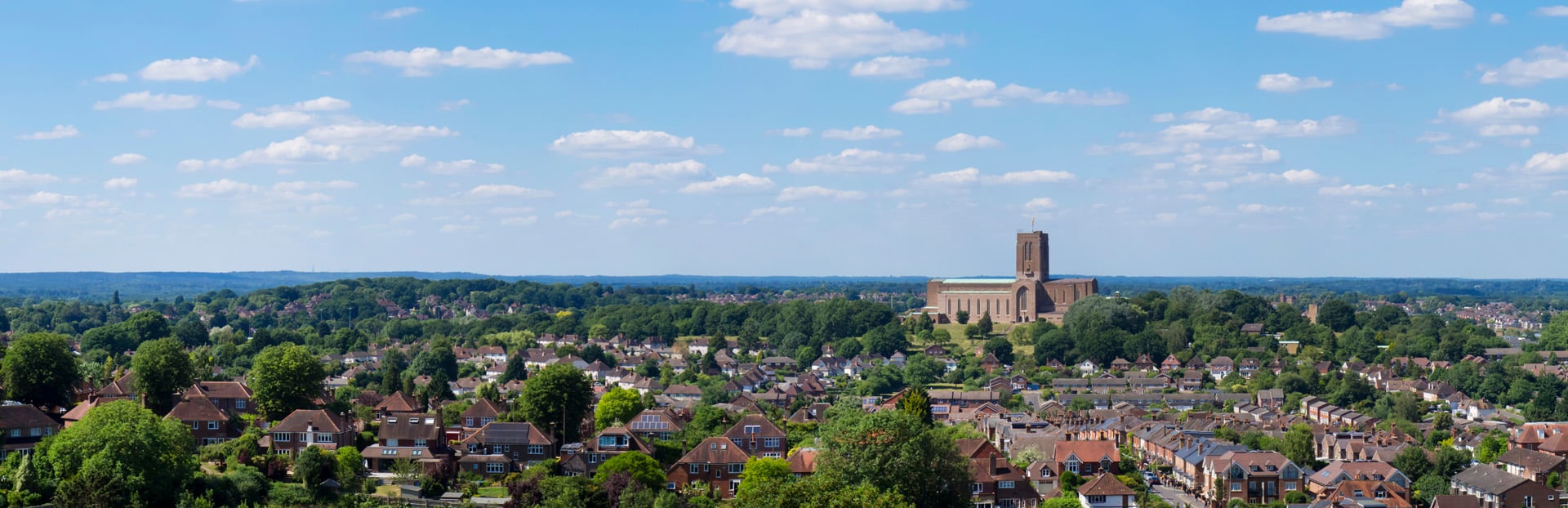
Surrey is a county in the South East of England, wedged between the southern edge of Greater London and the North Downs, running from the commuter belt around Woking and Guildford out to the wooded ridges of the Surrey Hills. For a property investor it is one of the more expensive counties in the country to buy into. The average Surrey home sold for £522,247 in March 2026 on Land Registry figures, which is around 80% above the £289,946 England average.
Price and yield pull in opposite directions here, and that is the whole story of the Surrey market. Asking prices are high enough that a 30% deposit on the county average works out at £156,674, before any stamp duty. Yet the top gross yield recorded across the county still reaches 7.1%, which tells you the spread between the cheapest rental corners and the most expensive commuter addresses is unusually wide. A county this varied rewards looking at the individual towns rather than the headline average.
The two Surrey town guides below break the numbers down locally. Guildford carries the higher yield of the pair at 5.3% on a mean asking price of £703,240, while Woking sits at 4.3% on £587,833. Compare them first, then read on for the county-wide market history, the best areas by yield, the commuter sub-market, the student picture around Guildford, what a deposit actually costs by property type, and how to buy.
Article updated: July 2026
Explore Surrey town guides
Compare local yields and sold prices across Surrey's town guides before the county market analysis.

The Surrey property market
Surrey's price history over the last thirty years is a steep climb with two clear setbacks. In January 1995 the average home in the county sold for £89,692. By March 2026 that figure was £522,247, a rise of about 482% across the series. That is the long arc, but the ride was not smooth.
The pre-crash peak came in December 2007 at £323,423. When the financial crisis hit, Surrey prices fell to a trough of £258,983 by April 2009, a drop of 19.9% from that peak. The recovery took years rather than months, but it kept running well past the old high. The all-time high in the county series landed at £537,257 in October 2022, since when the average has eased back a little to today's £522,247. Over the last five years alone, from £472,339 in March 2021, prices are up 10.6%.
The county average hides a very wide gap between property types. A detached home in Surrey averaged £976,034 in March 2026, while a flat averaged £274,721. That is a spread of just over £701,000 between the top and bottom of the market, one of the widest of any English county. Semi-detached homes sat at £542,730 and terraced at £439,673. For an income investor that flat figure matters more than the detached headline, because the sold price of a flat is closer to the national average than the county's reputation suggests. The two charts below track how each property type has moved since 1995.
- All property types
- Detached
- Semi-detached
- Terraced
- Flats
- All property types
- Detached
- Semi-detached
- Terraced
- Flats

Best areas to invest in Surrey
Ranking Surrey by yield rather than by price flips the usual picture of the county. The two towns with dedicated guides come out as follows, ordered by top gross yield, with the 30% deposit shown on each mean asking price.
| Area | Mean Asking Price | 30% Deposit | Top Gross Yield |
|---|---|---|---|
| Guildford | £703,240 | £210,972 | 5.3% |
| Woking | £587,833 | £176,350 | 4.3% |
Across the wider county, the top gross yield reaches 7.1%, higher than either headline town figure. That top reading sits in the cheaper rental pockets rather than the prime commuter addresses, which is where the price-versus-yield tension shows up most clearly. We do not hold a single postcode-level table for that peak, so treat 7.1% as the county ceiling rather than a claim about one street.
Surrey also ranks for several towns that do not yet have their own guide but come up often in local property searches, including Cobham, Farnham, Haslemere, Esher and Oxted. These are worth a look as areas to consider, though we do not publish postcode-level rent and yield tables for them, so any numbers you find elsewhere should be checked against current listings before you rely on them.
Surrey's commuter market
Surrey's genuine sub-market story is the London commuter belt, and it is written into the prices. The towns that sit within a fast train of Waterloo carry the highest values in the county, because a buyer is paying for the commute as much as the house. Woking is the clearest example among our guides. Its trains reach London Waterloo in around twenty-five minutes, and its mean asking price of £587,833 reflects that access even though its recorded yield of 4.3% is the lower of the two towns. High demand for commuter homes tends to push prices up faster than rents, which compresses the yield.
Guildford sits a little further out on the same line and combines the commute with its own employment base, which is part of why its mean asking price of £703,240 is the higher of the pair. Road access reinforces the pattern. The A3 runs through the middle of the county towards London, and the M25 clips the northern edge, so the parts of Surrey closest to those routes command the strongest commuter premiums. For an investor the trade-off is consistent across the county: the better the London access, the higher the asking price and the tighter the yield. The cheaper yields tend to sit further from the fast lines.
Surrey's student and HMO market
Surrey has one notable university market, centred on Guildford. The University of Surrey is based in the town, which creates a steady tenant pool for shared houses and student lets within Guildford itself rather than across the county as a whole. That local student demand is one of the factors behind Guildford holding the higher yield of the two guide towns at 5.3%, since HMO and shared-house rents in a university town can lift the gross figure above what a standard family let would return. Woking, without a university of its own, runs more on commuter demand than student demand, which shows in its lower 4.3% yield. Among the two guide towns, the student and HMO demand sits in Guildford rather than across the wider county.
What a Surrey buy-to-let deposit costs
Because Surrey prices swing so far by property type, the deposit you need swings with them. The table below shows a 30% deposit on the average Surrey price for each property type, using the March 2026 Land Registry figures.
| Property type | Average Surrey price | 30% deposit |
|---|---|---|
| Detached | £976,034 | £292,810 |
| Semi-detached | £542,730 | £162,819 |
| Terraced | £439,673 | £131,902 |
| Flat | £274,721 | £82,416 |
On the county average of £522,247, a 30% deposit comes to £156,674. The gap between the top and bottom of that table is the number to sit with. A deposit on a Surrey flat is £82,416, while a deposit on a Surrey detached home is £292,810, a difference of more than £210,000 in cash before you have paid a penny of stamp duty. The property type you choose changes the size of the cheque far more in Surrey than in a flatter market.
How to invest in Surrey
Two costs shape the entry maths in a high-value county like Surrey: the deposit and the stamp duty. Buy-to-let and second-home purchases carry the additional stamp duty surcharge on top of the standard rates, and on Surrey prices that adds up quickly. Our stamp duty calculator works out the full bill for a given purchase price so you can add it to the deposit figures above.
When you are ready to look at actual stock, we introduce buyers to investment properties across the country, including the South East. You can browse current buy-to-let investments we have available, see the rental homes currently for sale, or look specifically at discounted and below-market-value stock, which is often where the stronger yields in an expensive county are found. If you want to compare Surrey against the wider picture first, our guide to the best buy-to-let areas across the UK sets it in context, and neighbouring Kent offers a lower-priced South East alternative on the other side of London.
Frequently Asked Questions
Where is Surrey?
Surrey is a county in the South East of England, directly south and south-west of Greater London. It runs from the London commuter suburbs in the north down to the North Downs and the Surrey Hills, bordering Greater London, Kent, West Sussex, Hampshire and Berkshire. That position on London's doorstep is the single biggest driver of its property prices.
Is Surrey expensive for property investors?
Yes, on the headline numbers. The average Surrey home sold for £522,247 in March 2026, about 80% above the £289,946 England average, and a 30% deposit on that works out at £156,674. The type of property changes the figure a lot though. A flat averaged £274,721, so the sold price of a flat is far closer to the national average than the county's reputation suggests.
Which Surrey towns have the strongest yields?
Of the two towns we cover in detail, Guildford records the higher gross yield at 5.3% on a mean asking price of £703,240, ahead of Woking at 4.3% on £587,833. Across the whole county the top gross yield reaches 7.1%, and those higher readings tend to sit in the cheaper rental pockets rather than the prime commuter addresses.
What are the main towns in Surrey?
The larger towns include Guildford, Woking, Woking's neighbour Camberley, plus Farnham, Esher, Cobham, Haslemere and Oxted. Guildford is generally treated as the county town. We publish full investment guides for Guildford and Woking, and the others come up regularly in local property searches even though we do not yet hold postcode-level data for them.
Why are Surrey house prices so high?
Two reasons show up in the data. First, London access: the fastest commuter towns reach Waterloo in around twenty-five minutes, and buyers pay a premium for that. Second, supply is tight because over a fifth of the county is woodland and much of the rest sits under Green Belt and Surrey Hills protections, which limits where new housing can go. Together those keep prices well above the England average and push yields down in the most sought-after spots.
How much deposit do I need to buy in Surrey?
On a 30% deposit, the county average of £522,247 needs £156,674. It ranges widely by property type: £82,416 on the average flat, £131,902 on a terraced home, £162,819 on a semi-detached, and £292,810 on a detached house. Buy-to-let purchases also carry the stamp duty surcharge on top, which our stamp duty calculator will work out for a given price.
Ready to buy property?
Access off-market investment properties with an average 8%+ annual gross yield (beating the UK's typical 3-5%).
Get property alerts