
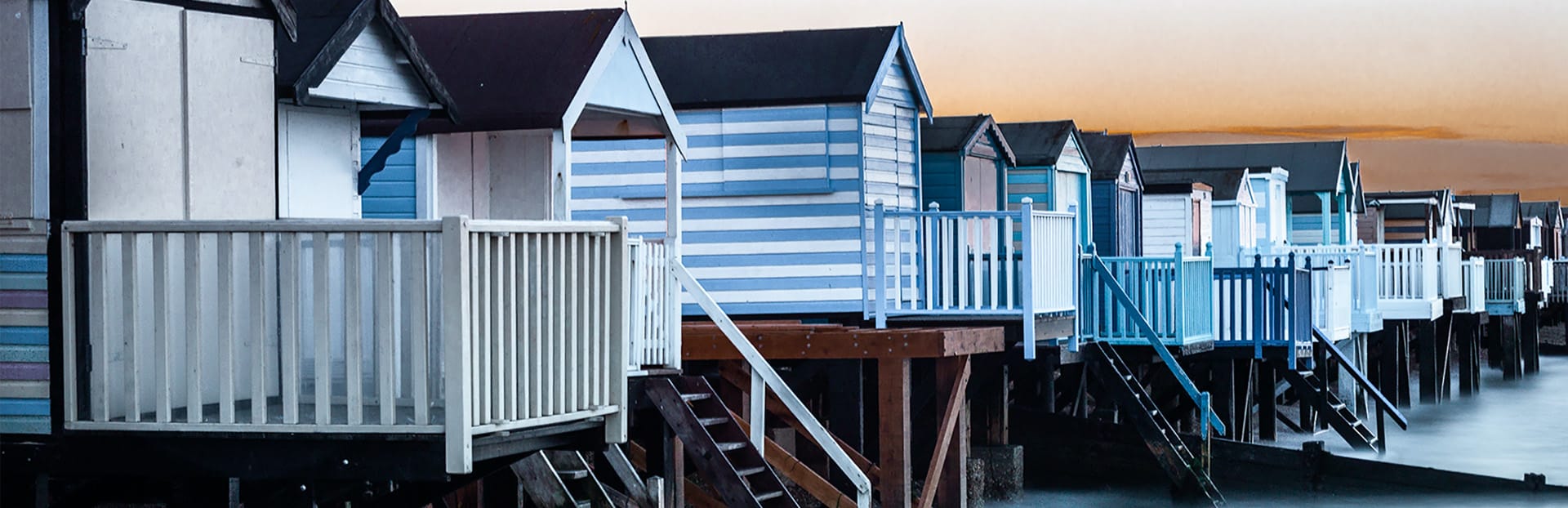
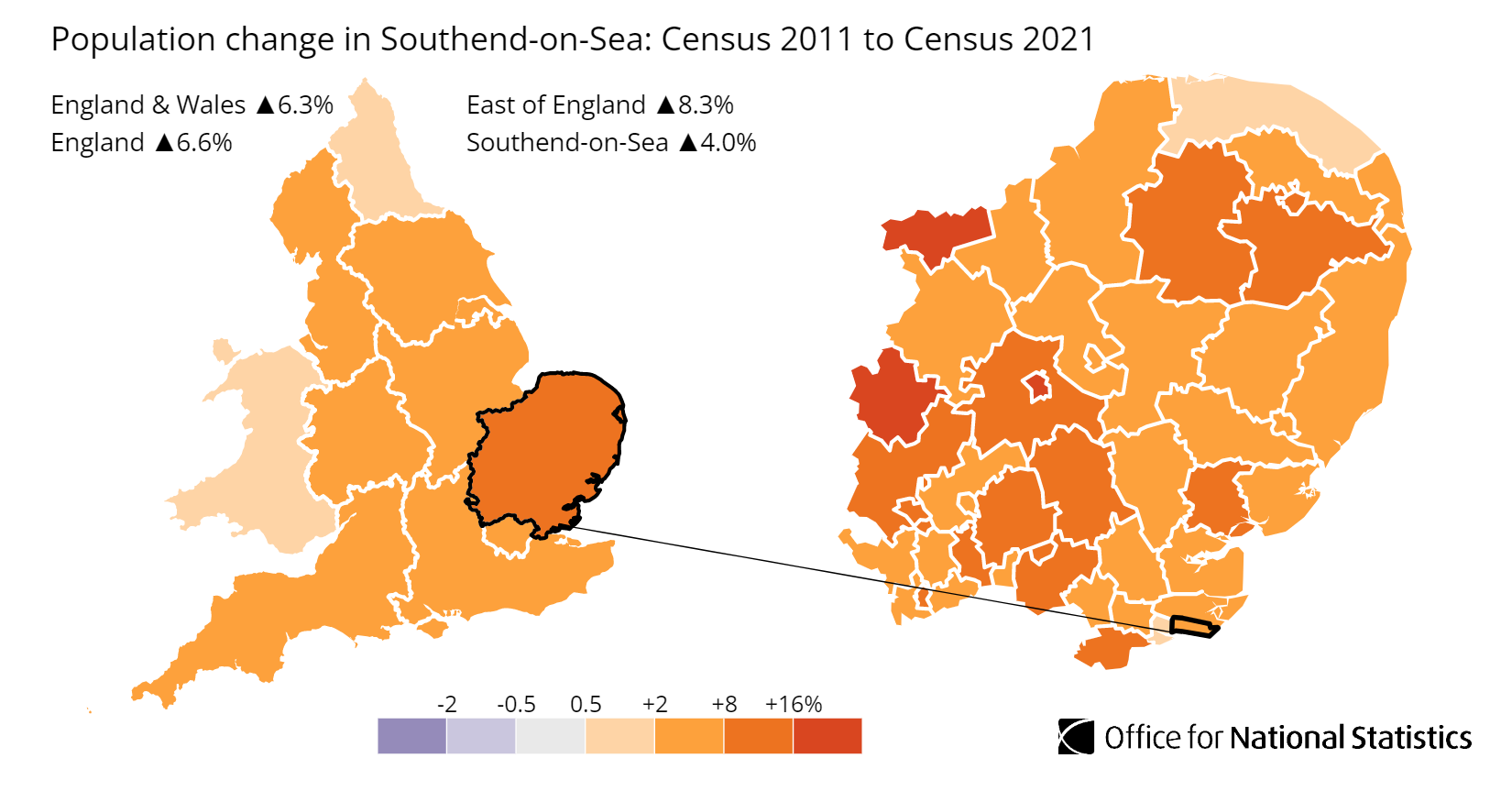
Southend-on-Sea is a seaside city on the Essex coast, in the East of England. Average sold prices across Southend-on-Sea sit at £328,502 on the HM Land Registry House Price Index, 13.3% above the England average of £289,946 but 2.6% below the East of England average of £337,182. That places Southend among the more affordable ways into the Essex commuter belt: coastal, with fast trains to Fenchurch Street, but priced below Chelmsford and Brentwood inland. The population of the unitary authority grew 4.05% between the 2011 and 2021 censuses, from 173,658 to 180,686 residents.
Southend's pricing reflects a two-tier seaside market. The seafront and central postcodes SS0, SS1 and SS2 sit below the town average, while Leigh-on-Sea in the west (SS9) and Shoeburyness in the east (SS3) carry the premium. For investors, the higher yields have followed the cheaper postcodes: SS2 (Prittlewell, Southchurch) tops the town at a 4.9% gross yield on a £315,360 asking price, while SS9 at £451,220 returns 3.8%. The five postcodes cover a spread of nearly £136,000 in asking price within a single town.
This guide covers the unitary authority of Southend-on-Sea (ONS code E06000033) across postcodes SS0, SS1, SS2, SS3, and SS9. Southend sits on the north bank of the Thames Estuary in the East of England, about 40 miles east of central London, with c2c rail links from Fenchurch Street and Greater Anglia services from Liverpool Street. The wider Essex buy-to-let market inland includes Basildon and Chelmsford.
Article updated: July 2026
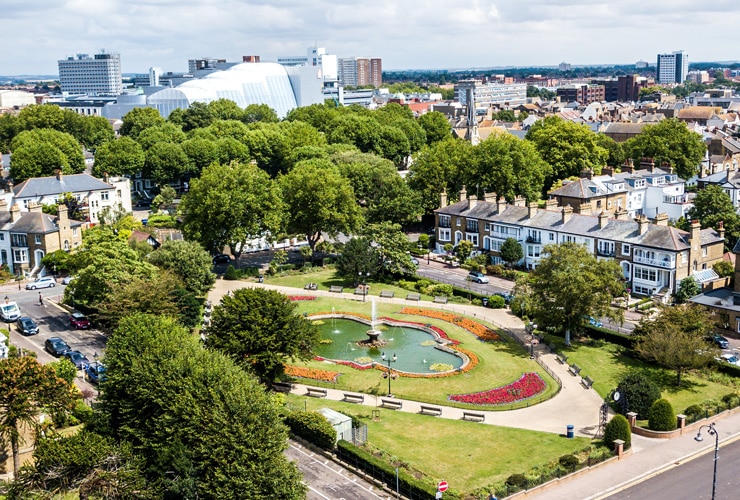
Why Invest in Southend-on-Sea?
Southend-on-Sea grew its population 4.05% between the 2011 and 2021 censuses, from 173,658 to 180,686 residents, and gained city status in 2022. That growth is slower than the England and Wales average of 6.3%, the shape of an established coastal town rather than a fast-expanding new-build zone. The draw is the mix: a seafront and the longest pleasure pier in the world at one end, and a commuter link that puts Fenchurch Street inside an hour at the other.
The local employment rate of 80.2% sits above both the East of England average and Great Britain's 75.6%, and unemployment is low at 3.7%. The economy leans on health and social work, anchored by Southend University Hospital, alongside a large HMRC regional office, education, and the businesses clustered around London Southend Airport. That base gives the rental market a working tenant pool rather than a purely seasonal one. The full breakdown is in the Nomis Labour Market Profile for Southend-on-Sea.
Median gross weekly earnings in Southend are £799.10, which is 1.7% above the East of England median of £785.80 and 6.2% above the Great Britain median of £752.40. That works out at about £41,554 a year. Local wages a little above the regional benchmark, paired with a coastal lifestyle at a discount to inland Essex, is what keeps tenant demand steady across the five postcodes.
Southend-on-Sea Economic Summary
- Population (Southend-on-Sea): 180,686 (2021 Census). Growth of 4.05% from 2011.
- Median annual salary: £41,554 (local), based on a £799.10 median gross weekly wage
- Employment rate: 80.2% (local), 75.6% (Great Britain)
- Unemployment rate: 3.7% (local)
- Key employment sectors: Health and social work, public administration, education, retail, accommodation and food services
Source: ONS Census 2021, Nomis Labour Market Profile (ASHE 2025)
Regeneration and Investment in Southend-on-Sea
Two long-stalled housing schemes worth well over 2,000 homes between them are finally moving, while the confirmed closure of the University of Essex campus in summer 2026 is reshaping the rental market away from students and towards professional and family lets. The council has also started forcing movement on derelict sites across the town.
- Fossetts Farm (around 805 homes, houses-led): In March 2025, Southend City Council and developer Thames Plaza signed conditional contracts to deliver around 805 homes on the former Southend United training ground, weighted towards single-family houses rather than apartment blocks, with roughly 485 market-rent and 155 affordable-rent homes across the first phases. The deal also triggers phased payments of up to £12 million towards refurbishing Roots Hall stadium. It still has to pass the usual planning process. Updates at Southend City Council.
- Better Queensway (around 1,600 homes): The estate regeneration that reshapes the central Queensway corridor is set to deliver around 1,600 new homes. The council has taken full ownership of the delivery vehicle after its previous housing partner departed, and is weighing whether to develop directly or bring in a new partner. Infrastructure works are the near-term visible progress. Details at Better Queensway Project.
- University of Essex campus closure (August 2026): The University of Essex is closing its Southend campus in summer 2026, relocating students to Colchester after a sharp fall in enrolment at the site. For anyone holding student HMOs in the central SS1 postcode, that removes a chunk of guaranteed term-time demand from September 2026 onwards, and points the strategy towards professional and family lets served by the London commute rather than towards student sharers.
Source: Office for National Statistics - Population for Southend-on-Sea
Southend-on-Sea Property Market Analysis
The Southend average has climbed from £45,939 in January 1995 to £328,502 today, a 615.1% rise across three decades of estuary-commuter demand. The sections below walk that climb cycle by cycle, then break out current postcode-level data for sold prices, price per square foot, asking prices, growth trends, and monthly transaction volumes.
When was the last house price crash in Southend-on-Sea?
Southend-on-Sea is its own unitary authority, so all sold property prices from HM Land Registry are recorded at this level. The Land Registry House Price Index tracks average prices from January 1995 to March 2026, covering 31 years of market cycles.
The 1995 to 2007 boom: Southend started at £45,939 in January 1995. By December 2000, prices had reached £81,231, and the early-2000s acceleration carried the average to £164,309 by December 2005 as commuters priced out of London pushed east along the c2c line. The market peaked at £192,309 in October 2007.
2008 to 2009, the financial crisis: Prices fell from the October 2007 peak of £192,309 to a trough of £154,171 in May 2009, a decline of 19.8% over nineteen months. The worst year-on-year reading was -18.0% in May 2009. Southend's coastal, London-facing stock fell more steeply than the shallower national correction, the pattern of a market that had run up hard on commuter demand in the boom.
The 2010 to 2013 stagnation: Prices bounced off the May 2009 trough but then drifted. By December 2010 the average stood at £175,012, and it moved sideways in a narrow band for the next three years, unable to reclaim the pre-crash peak while post-crash caution held buyers back.
Recovery, 2014 to 2016: Growth returned as London's affordability squeeze pushed commuters further out. Prices passed the October 2007 pre-crash peak of £192,309 in June 2014, reaching £194,089 that month, six and a half years after the peak. By December 2015 the average had climbed to £229,201.
The 2017 to 2019 plateau: Stamp duty changes and Brexit uncertainty cooled demand. Prices drifted around the £280,000 mark, reaching £286,233 by December 2019, with growth flattening after the mid-decade surge.
2020 to 2022, the pandemic surge: The stamp duty holiday and the shift towards coastal space turbocharged Southend. Prices climbed from £288,540 in June 2020 to £293,385 by December 2020, then ran to £312,788 by December 2021 (6.6% annual growth) and £340,054 by December 2022 (8.7% annual growth). The all-time high was £340,088 in November 2022.
2023 to present: Higher mortgage rates eased the market back from the November 2022 high. Prices settled to £327,234 by December 2023 and £324,568 by December 2024, before edging up to £331,564 in December 2025 and £328,502 at the latest reading in March 2026, up 0.3% year-on-year. The current price sits 70.8% above the pre-crash peak of £192,309.
Long-term growth summary:
- 5 years (March 2021 to March 2026): 11.5% growth (£294,746 to £328,502)
- 10 years (March 2016 to March 2026): 38.4% growth (£237,282 to £328,502)
- 15 years (March 2011 to March 2026): 91.8% growth (£171,282 to £328,502)
- 20 years (March 2006 to March 2026): 95.6% growth (£167,954 to £328,502)
- 30 years (January 1995 to March 2026): 615.1% growth (£45,939 to £328,502)
Southend's 19.8% crash was deeper than the shallower national fall, and its recovery to the pre-crash peak took six and a half years, but the 30-year return of 615.1% is among the stronger records in the East of England. An investor who bought at the exact peak in October 2007 would be sitting on gains of 70.8% on the Land Registry average, though the ride from the November 2022 high has been flat rather than upward.
- All property types
- Detached
- Semi-detached
- Terraced
- Flats
- All property types
- Detached
- Semi-detached
- Terraced
- Flats
Sold House Prices in Southend-on-Sea
The average sold price across all property types in Southend-on-Sea is £328,502, which is 13.3% above the England average of £289,946 as of March 2026. That premium holds across the house types but flips for flats. Detached, semi-detached and terraced homes all sell for more than the England benchmark, while flats sit 7.2% below it. The pattern reflects a town where family houses carry the coastal-commuter premium but the apartment stock, much of it older seafront conversions, competes on price.
| Property Type | Southend-on-Sea Average | England Average | Difference |
|---|---|---|---|
| Detached houses | £644,352 | £470,492 | +37.0% |
| Semi-detached houses | £430,221 | £288,185 | +49.3% |
| Terraced houses | £334,390 | £243,788 | +37.2% |
| Flats and maisonettes | £199,078 | £214,563 | -7.2% |
| All property types | £328,502 | £289,946 | +13.3% |
Detached houses at £644,352 carry a 37.0% premium over England's £470,492, with the highest concentration of that stock in Shoeburyness (SS3) and Leigh-on-Sea (SS9). Annual growth of 1.7% points to steady rather than heated demand at the top of the market, where prices already run well above the town average.
Semi-detached houses at £430,221 sit 49.3% above England's £288,185, the widest premium of any type here. Semi-detached stock dominates the northern suburbs in SS2 (Prittlewell, Southchurch), where it makes up nearly half the housing, and annual growth of 2.6% is the strongest of the four types. This is the workhorse of Southend's family-let market.
Terraced houses at £334,390 are 37.2% above England's £243,788. The terraced stock runs through the central and Westcliff postcodes and forms much of the mid-priced buy-to-let supply, with annual growth of 1.4%.
Flats and maisonettes at £199,078 are the only type below the England benchmark, at 7.2% under £214,563. The apartment stock is weighted towards older seafront blocks and conversions in Westcliff (SS0) and central Southend (SS1) rather than new-build towers, and annual change of -3.3% confirms a softer flat market than the houses around it.
Price Per Square Foot in Southend-on-Sea
Just £103 per square foot separates Southend's cheapest postcode from its most expensive, with SS0 at £338 and SS9 at £441. Price per square foot strips out the effect of property size and gives a cleaner read on location value. SS9 (Leigh-on-Sea) commands the highest rate, reflecting the sought-after Old Leigh waterfront and the larger period homes that give the postcode its premium reputation.
| Rank | Area | Price Per Sq Ft |
|---|---|---|
| 1 | SS0 (Westcliff-on-Sea) | £338 |
| 2 | SS2 (Prittlewell, Southchurch) | £343 |
| 3 | SS1 (City Centre, Thorpe Bay) | £352 |
| 4 | SS3 (Shoeburyness) | £375 |
| 5 | SS9 (Leigh-on-Sea) | £441 |
SS0 at £338 per square foot is the cheapest for bricks-and-mortar value. Westcliff-on-Sea mixes seafront flats and Edwardian terraces, and that flat-heavy stock keeps the per-square-foot rate down. Based on 791 transactions analysed, SS0 sits 23% below SS9's rate.
SS9 at £441 per square foot tops the table and also carries the highest asking price. When investors pay more per square foot, they are paying for location quality, and in SS9 that means the Old Leigh cockle sheds, the Broadway shopping streets and the c2c station that makes Leigh a favourite among London commuters. All 1,009 transactions analysed show a consistent premium over the rest of the town.
For Sale Asking Prices in Southend-on-Sea
SS2 at £315,360 and SS9 at £451,220 sit 43.1% apart, the widest asking-price gap across Southend's five postcodes. That hierarchy tracks the sold-price picture: the central and northern districts come in below the town-wide mean, while Leigh-on-Sea and Shoeburyness carry the premium. The mean asking price across all five postcodes is £375,500.
| Rank | Area | Asking Price |
|---|---|---|
| 1 | SS2 (Prittlewell, Southchurch) | £315,360 |
| 2 | SS0 (Westcliff-on-Sea) | £336,199 |
| 3 | SS1 (City Centre, Thorpe Bay) | £363,913 |
| 4 | SS3 (Shoeburyness) | £410,809 |
| 5 | SS9 (Leigh-on-Sea) | £451,220 |
SS2 at £315,360 is the cheapest way into Southend and the only postcode below the town-wide Land Registry average of £328,502. Prittlewell and Southchurch sit just north and east of the centre, close enough to the station to serve commuters but away from the seafront premium. For an investor with a fixed budget, SS2 offers the lowest barrier to entry and, as the yield data below shows, the highest gross return.
SS9's £451,220 asking price is £135,860 above SS2, a full step up in a town where the whole range spans a single unitary authority. Leigh-on-Sea is premium owner-occupier territory, its waterfront and schools drawing family buyers rather than yield-focused investors. The rental data in the sections below confirms it: the highest price in Southend pairs with the lowest yield.

House Price Growth in Southend-on-Sea
Two Southend postcodes posted positive growth across all three timeframes: SS2 at 5.3%, 9.2% and 20.8%, and SS3 at 2.9%, 0.9% and 7.9%. All five postcodes delivered positive five-year returns, but the spread is wide. SS0 (Westcliff-on-Sea) sits at the other end, with negative one-year and three-year readings despite a 3.6% five-year return.
| Area | 1 Year | 3 Years | 5 Years |
|---|---|---|---|
| SS2 (Prittlewell, Southchurch) | 5.3% | 9.2% | 20.8% |
| SS1 (City Centre, Thorpe Bay) | -0.9% | 3.4% | 10.8% |
| SS9 (Leigh-on-Sea) | 0.1% | -0.2% | 8.0% |
| SS3 (Shoeburyness) | 2.9% | 0.9% | 7.9% |
| SS0 (Westcliff-on-Sea) | -1.9% | -2.7% | 3.6% |
SS2 at 20.8% five-year growth has the strongest return in Southend, and it is one of only two postcodes positive across all three timeframes. Prittlewell and Southchurch pair the town's lowest asking price with its highest growth and highest yield, a combination that puts the cheapest district ahead on every income and growth measure at once.
SS1 posted 10.8% over five years and 3.4% over three despite a slightly negative one-year reading, while SS9 shows 8.0% over five years but a flat -0.2% over three, so Leigh-on-Sea's longer-run gains have levelled off more recently. SS3 is the other postcode positive in every window, at 2.9%, 0.9% and 7.9%.
SS0's -1.9% one-year and -2.7% three-year readings are the weakest in Southend. Westcliff's flat-heavy stock, which also carries the lowest price per square foot, saw the softest recent record, though the five-year return of 3.6% stays positive.
Monthly Property Sales in Southend-on-Sea
Monthly transaction volumes across Southend range from 23 sales in SS1 to 57 in SS9, with 182 across the town each month. Even the quietest postcode sees steady turnover. The turnover rate, the share of the housing stock changing hands each month, varies more, from 6% in SS1 to 15% in SS2.
| Area | Sales Per Month | Turnover | Asking Price |
|---|---|---|---|
| SS9 (Leigh-on-Sea) | 57 | 12% | £451,220 |
| SS2 (Prittlewell, Southchurch) | 40 | 15% | £315,360 |
| SS0 (Westcliff-on-Sea) | 38 | 8% | £336,199 |
| SS3 (Shoeburyness) | 24 | 11% | £410,809 |
| SS1 (City Centre, Thorpe Bay) | 23 | 6% | £363,913 |
SS2's 15% turnover rate is the highest in Southend, ahead of SS9's 12% despite SS9 recording more sales in absolute terms. Prittlewell and Southchurch combine steady demand with a deep pool of mid-priced family stock, so a larger share of homes changes hands each year. For a landlord, higher turnover signals an easier exit when the time comes to sell.
SS9 records the most transactions at 57 a month, but on a larger and more expensive housing base, so its 12% turnover sits below SS2's. SS1 has both the fewest sales at 23 and the lowest turnover at 6%, where the mix of central flats and premium Thorpe Bay homes both sit longer before selling.
How Long Properties Take to Sell in Southend-on-Sea
Selling speed splits Southend sharply: SS2 (Prittlewell, Southchurch) clears fastest at about 203 days, while SS1 (City Centre, Thorpe Bay) is slowest at roughly 435 days. Days on market is the typical number of days a home is up for sale before it sells; months of unsold stock shows how much for-sale supply is sitting there at the current rate of sales.
| Area | Avg Days to Sell | Months of Unsold Stock | Market |
|---|---|---|---|
| SS2 (Prittlewell, Southchurch) | 203 | 6.7 | Balanced market |
| SS9 (Leigh-on-Sea) | 254 | 8.3 | Balanced market |
| SS3 (Shoeburyness) | 277 | 9.1 | Balanced market |
| SS0 (Westcliff-on-Sea) | 380 | 12.5 | Buyer's market |
| SS1 (City Centre, Thorpe Bay) | 435 | 14.3 | Buyer's market |
A yield number says nothing about how quickly you can get back out. SS2 at 6.7 months of unsold stock offers a far faster exit than SS1's 14.3, where central flats sit on the market longest. For a landlord weighing where to buy, SS2 pairs the town's quickest sale with its highest yield, while SS0 and SS1 sit in buyer's-market territory where a sale takes patience.
What Type of Property Can You Buy in Southend-on-Sea?
The housing mix swings hard by postcode: detached houses make up 44.9% of stock in SS3 but only 12.4% in SS2, while flats reach 40.2% of homes in SS0. The mix shapes which strategies fit each district. The figures below are drawn from 2021 Census records for each postcode.
| Area | Detached | Semi-detached | Terraced | Flats |
|---|---|---|---|---|
| SS0 (Westcliff-on-Sea) | 16.0% | 30.6% | 13.2% | 40.2% |
| SS1 (City Centre, Thorpe Bay) | 28.2% | 20.5% | 13.0% | 38.3% |
| SS2 (Prittlewell, Southchurch) | 12.4% | 46.3% | 15.5% | 25.8% |
| SS3 (Shoeburyness) | 44.9% | 33.9% | 11.8% | 8.3% |
| SS9 (Leigh-on-Sea) | 21.9% | 38.5% | 16.5% | 23.2% |
SS0 holds the largest share of flats at 40.2%, the seafront-conversion stock that typically forms the entry-level buy-to-let market. That lines up with SS0 carrying the lowest price per square foot in the town, so Westcliff suits single lets and smaller units where SS3, at just 8.3% flats, does not.
SS2 is the most semi-detached-dominated postcode at 46.3%, matching its role as the family-let workhorse, while SS3 (Shoeburyness) is the most house-heavy district: detached and semi-detached houses together account for nearly four-fifths of its stock, which fits its premium asking prices and family-buyer profile rather than the smaller units that drive rental income.
Flats combine purpose-built and converted units. A small share of mobile and temporary dwellings is not shown, so rows may not total 100%.
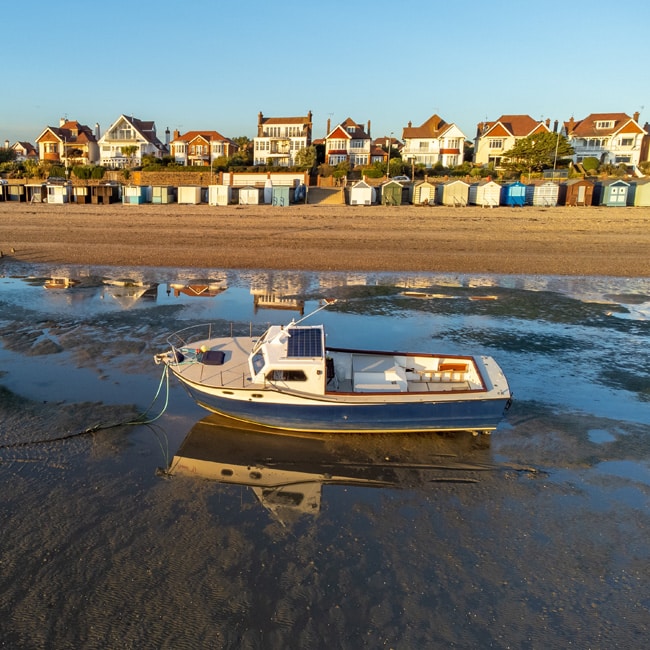
Southend-on-Sea Rental Market Analysis
Monthly rents in Southend range from £1,222 in SS1 to £1,435 in SS9, with gross rental yields from 3.8% to 4.9% across the five postcodes. For investors asking is buy to let worth it in Southend, the sections below break down rents, yields, and tenant affordability postcode by postcode. If you are working out how to start a property business along the Essex coast, Southend's mix of London-commuter demand and a working local economy gives a broader tenant base than a purely seasonal seaside town. Browse current buy-to-let investments for sale across the region.
Average Rent & Gross Rental Yields in Southend-on-Sea
Gross rental yields in Southend range from 3.8% in SS9 to 4.9% in SS2. The cheapest postcode delivers the highest yield and the most expensive delivers the lowest. SS9 charges the highest monthly rent at £1,435 but ranks last for yield at 3.8%, because its £451,220 asking price is 43.1% higher than SS2's.
| Area | Average Monthly Rent | Asking Price | Gross Yield |
|---|---|---|---|
| SS2 (Prittlewell, Southchurch) | £1,278 | £315,360 | 4.9% |
| SS0 (Westcliff-on-Sea) | £1,237 | £336,199 | 4.4% |
| SS3 (Shoeburyness) | £1,394 | £410,809 | 4.1% |
| SS1 (City Centre, Thorpe Bay) | £1,222 | £363,913 | 4.0% |
| SS9 (Leigh-on-Sea) | £1,435 | £451,220 | 3.8% |
SS2 at 4.9% pairs the lowest asking price with a solid £1,278 monthly rent to top the town on yield. A 30% deposit of £94,608 gets an investor into the highest-yielding postcode, and one that also posted the strongest five-year growth.
The tenant profile in SS2 leans towards families and commuters, with Prittlewell and Southchurch offering semi-detached stock within reach of the station. That spread of demand across working households helps smooth void risk.
SS9 at 3.8% sits at the bottom of the yield table. The £1,435 monthly rent is the highest in Southend, but the £451,220 asking price means the income return is compressed. In Leigh-on-Sea the premium price does more for the rent than for the yield.
Gross Rental Yield by Postcode
Is Southend Rent High?
Monthly rents in Southend consume between 35.3% and 41.4% of the local median gross monthly salary. The widely cited threshold for rent affordability is 30% of gross income, and every Southend postcode sits above it. That is a tighter picture than many East of England towns, reflecting rents that have held firm on London-commuter demand while local wages sit only a little above the regional benchmark.
The median gross weekly salary in Southend is £799.10, which equates to £3,463 per month or £41,554 per year. This is above both the East of England median of £785.80 per week and the Great Britain median of £752.40 per week. Data from the Nomis Labour Market Profile (ASHE 2025).
| Rank | Area | Rent as % of Income |
|---|---|---|
| 1 | SS9 (Leigh-on-Sea) | 41.4% |
| 2 | SS3 (Shoeburyness) | 40.3% |
| 3 | SS2 (Prittlewell, Southchurch) | 36.9% |
| 4 | SS0 (Westcliff-on-Sea) | 35.7% |
| 5 | SS1 (City Centre, Thorpe Bay) | 35.3% |
SS1 at 35.3% is the most affordable for tenants relative to the local median wage, with SS0 close behind. Even so, both sit above the 30% mark, so rent takes a meaningful share of a single median income across the whole town. For landlords, that points to a tenant base weighted towards dual-income households and London commuters earning above the local median rather than single earners on it.
SS9 at 41.4% is the least affordable against the local wage, but context matters. Leigh-on-Sea's £1,435 rents are paid largely by professional and commuting households on incomes above the Southend median, which is why the premium postcode sustains the highest rents in the town.
How Big Is Southend's Private Rented Sector?
The private rented sector is deepest in SS0 and SS1, where it houses 29.5% and 28.3% of households, and shallowest in SS3 at 14.8%. The share of homes already rented privately is a guide to how deep the established tenant pool runs in each district. Tenure across the five postcodes breaks down as follows.
| Area | Owned Outright | Owned with Mortgage | Private Rented | Social Rented |
|---|---|---|---|---|
| SS0 (Westcliff-on-Sea) | 30.0% | 30.9% | 29.5% | 8.9% |
| SS1 (City Centre, Thorpe Bay) | 35.9% | 26.0% | 28.3% | 9.1% |
| SS2 (Prittlewell, Southchurch) | 31.6% | 30.9% | 21.5% | 14.8% |
| SS9 (Leigh-on-Sea) | 39.6% | 35.3% | 19.4% | 5.2% |
| SS3 (Shoeburyness) | 41.4% | 34.8% | 14.8% | 8.6% |
SS0 and SS1 have the deepest private rented sectors in Southend, close to three in ten households in the seafront and central postcodes. A larger rented sector points to an active lettings market and a wider pool of existing tenants, a different signal from yield. SS0 pairs its deep rented sector with the second-highest yield at 4.4%, while SS1 pairs a similar rented share with the second-lowest yield at 4.0%. SS3 (Shoeburyness) sits at the other end, with the highest outright ownership at 41.4% and the smallest rented sector, matching its house-heavy, family-buyer profile.
Across the postcodes, rental listings turn over quickly. In SS0 around 107 homes were on the rental market against roughly 65 lets a month, taking about 50 days to let on average, and the other central postcodes read similarly. That points to firm tenant demand rather than a glut of empty stock waiting to fill.
Local Housing Allowance Rates in Southend-on-Sea
All five Southend postcodes fall within the Southend Broad Rental Market Area, where Local Housing Allowance runs from £93.51 a week for a shared room to £310.68 a week for a four-bedroom home. Local Housing Allowance sets the maximum housing support a tenant on benefits can receive, so it acts as a rent floor for landlords letting to that part of the market. The rates below apply across the whole of Southend. To check the current rate for a specific address, use the government's official Local Housing Allowance calculator.
| Property Size | Weekly LHA Rate | Monthly Equivalent |
|---|---|---|
| Shared accommodation | £93.51 | £405 |
| 1 bedroom | £156.49 | £678 |
| 2 bedrooms | £201.37 | £873 |
| 3 bedrooms | £253.15 | £1,097 |
| 4 bedrooms | £310.68 | £1,346 |
The two-bedroom LHA rate of £201.37 a week works out at about £873 a month, below the £1,222 to £1,435 open-market rents recorded across Southend's postcodes. A benefit-backed tenancy at the LHA rate therefore sits under the town's market rents, and the stock that fits within these rates is concentrated in the flat-heavy SS0 and SS1 districts. The rates are identical in every Southend postcode because they are set across the single Southend market area.
Buy-to-Let Considerations
Are House Prices High in Southend-on-Sea? Price-to-Earnings Ratios
Purchasing a property in Southend requires between 7.6 and 10.9 times the median annual salary. This is based on the Nomis Labour Market Profile for Southend-on-Sea showing the median gross annual income for Southend residents is £41,554.
For a yardstick, England's average sold price of £289,946 set against the Great Britain median salary of £39,125 gives a national ratio of 7.4x. Every Southend postcode sits above that line, so property here is dearer against local wages than the England average is against national ones.
| Rank | Area | Price-to-Earnings Ratio |
|---|---|---|
| 1 | SS2 (Prittlewell, Southchurch) | 7.6x |
| 2 | SS0 (Westcliff-on-Sea) | 8.1x |
| 3 | SS1 (City Centre, Thorpe Bay) | 8.8x |
| 4 | SS3 (Shoeburyness) | 9.9x |
| 5 | SS9 (Leigh-on-Sea) | 10.9x |
SS2 at 7.6x is the most affordable entry in Southend relative to local earnings, though it still sits just above the 7.4x national benchmark. Prittlewell and Southchurch offer the lowest price against local wages, which is part of why the postcode also carries the highest yield.
SS9 at 10.9x sits well above the benchmark. At nearly eleven times the local median salary, Leigh-on-Sea is firmly premium territory, bought largely by dual-income and London-commuting households rather than local median earners. For an investor, the elevated ratio compresses yields and lengthens the payback period.
Deposit Requirements in Southend-on-Sea
A 30% deposit on a buy-to-let property in Southend ranges from £94,608 in SS2 to £135,366 in SS9. The gap between the cheapest and most expensive deposit is £40,758. For investors comparing Southend with other Essex locations, these deposit requirements sit above Basildon and Colchester at the entry end but below the priciest Chelmsford and Romford postcodes.
Beyond the deposit, the stamp duty calculation and other ongoing rental costs affect the total capital required.
| Rank | Area | 30% Deposit Required |
|---|---|---|
| 1 | SS2 (Prittlewell, Southchurch) | £94,608 |
| 2 | SS0 (Westcliff-on-Sea) | £100,860 |
| 3 | SS1 (City Centre, Thorpe Bay) | £109,174 |
| 4 | SS3 (Shoeburyness) | £123,243 |
| 5 | SS9 (Leigh-on-Sea) | £135,366 |
SS2 is the cheapest way into Southend at a £94,608 deposit, and it buys the postcode with the highest yield and the strongest five-year growth at the same time. Stepping up to SS0 costs roughly £6,000 more and moves the strategy towards Westcliff's flat-heavy stock and deeper rented sector.
At the top, SS9's £135,366 deposit is £40,758 more than SS2's, and that outlay buys a very different investment: Leigh-on-Sea's waterfront premium, the highest rent in Southend at £1,435 a month, but the lowest yield at 3.8%. The deposit gap between the two ends of the town is enough to fund a large share of a second entry-level purchase in SS2.
What the Southend-on-Sea Data Tells Buy-to-Let Investors
In Southend the cheapest way in is also the highest-yielding and fastest-growing postcode. SS2 (Prittlewell, Southchurch) has the top yield at 4.9% on the lowest asking price for buying an investment property in Southend at £315,360. It also posted the strongest five-year growth at 20.8% and clears the market fastest at about 203 days. A 30% deposit there is £94,608, the lowest in the town, for a home renting at £1,278 a month.
SS0 (Westcliff-on-Sea) offers the second-highest yield at 4.4% and the deepest private rented sector at 29.5%, though its recent price record has been the softest in the town. SS1 (City Centre, Thorpe Bay) posted 10.8% five-year growth but sits in buyer's-market territory, taking about 435 days to sell. SS3 (Shoeburyness) is the house-heavy family district with a 4.1% yield.
At the premium end, SS9 (Leigh-on-Sea) carries the highest rent at £1,435 a month, but with a 3.8% yield and a 10.9x price-to-earnings ratio, the premium price does more for the rent than the return. Buyers who want to come in below asking often look through off-market property in Southend channels.
Southend operates a selective licensing scheme covering privately rented homes in the Milton, Kursaal, Victoria and Chalkwell wards, alongside mandatory HMO licensing across the town, so a licence is required before letting a property in the designated central and seafront areas. With London-commuter demand, an 80.2% employment rate and low unemployment, Southend reads as a coastal market with a working tenant base underneath the seaside surface: moderate yields, with steadier fundamentals than a purely seasonal resort.
How Southend-on-Sea Compares
Southend's mean asking price of £375,500 is the second-lowest of five Essex locations compared here, while its top yield of 4.9% sits mid-table. The comparison below places Southend alongside four nearby Essex markets, each with a different investor profile. The mean asking price and mean monthly rent are simple averages across all postcodes with data. Top gross yield is the single highest postcode yield in each location.
| Location | Mean Asking Price | Mean Monthly Rent | Mean Gross Yield | Top Yield (postcode) |
|---|---|---|---|---|
| Colchester | £367,298 | £1,299 | 4.2% | 5.4% (CO1, CO2) |
| Southend-on-Sea | £375,500 | £1,313 | 4.2% | 4.9% (SS2) |
| Basildon | £417,382 | £1,501 | 4.3% | 6.1% (SS13, SS14) |
| Harlow | £431,182 | £1,516 | 4.2% | 5.6% (CM20) |
| Romford | £534,469 | £1,780 | 4.0% | 6.1% (RM3) |
Southend is the second-cheapest location in this comparison at £375,500 mean asking price, just above Colchester at £367,298, but its top yield of 4.9% is the lowest of the five. The coastal premium shows up here: Southend charges Essex-commuter prices while its top yield trails the inland towns.
For investors prioritising income, Basildon at 6.1% and Romford at 6.1% deliver higher top-line yields, and Harlow at 5.6% sits between them. Colchester at 5.4% offers the lowest asking price in the table alongside a university-driven rental market. Southend competes on lifestyle and London-commuter demand rather than headline yield. For a data-driven view across all UK markets, see our guide to the highest-yielding areas.
Frequently Asked Questions
Is Southend-on-Sea a good place to live for buy-to-let tenants?
It works for tenants on two counts: jobs and the London link. Southend's employment rate is 80.2%, above the Great Britain figure of 75.6%, and unemployment is low at 3.7%, so the tenant base is a working one rather than purely seasonal. Health and social work, a large HMRC office and the airport cluster give steady employment behind the seaside economy.
The commute is the other draw. Fast c2c trains reach Fenchurch Street inside an hour, which suits London workers who want coastal space at a discount to inland Essex. That mix of local jobs and commuter access tends to keep tenants in place rather than moving on each year.
What are the best areas in Southend for property investment?
The five postcodes split fairly cleanly. SS2 (Prittlewell, Southchurch) is the cheapest way in at £315,360 and carries the highest yield at 4.9%, plus the strongest five-year growth at 20.8%, so it leads on both income and growth. SS0 (Westcliff-on-Sea) is next on yield at 4.4% with the deepest rented sector, though its recent price record is softer.
At the premium end, SS9 (Leigh-on-Sea) is the dearest at £451,220 and lowest-yielding at 3.8%, while SS3 (Shoeburyness) is the house-heavy family district on a 4.1% yield. So if income is the priority, SS2 leads on yield, deposit and growth at once; the premium postcodes trade yield for waterfront and family-buyer demand.
How does Southend compare to Basildon for buy-to-let?
They are different propositions on price and yield. Basildon runs cheaper on yield terms: a top gross yield around 6.1% against Southend's 4.9%, though its mean asking price of £417,382 is higher than Southend's £375,500. Basildon is an inland new-town commuter market, while Southend is the coastal option with the seafront and the pier.
Southend trades that lower headline yield for coastal lifestyle demand and a Fenchurch Street commute. Which matters more depends on whether you are buying for cash flow, where Basildon leads, or for a market with a broader owner-occupier and commuter draw underpinning resale.
Is there still demand for student accommodation in Southend?
Less than there was. The University of Essex is closing its Southend campus in summer 2026 and moving students to Colchester, which removes a large slice of guaranteed term-time demand from the central SS1 postcode. Anyone holding student HMOs there is looking at a demand drop from September 2026 onwards.
The workable pivot is towards professional and family lets served by the London commute rather than student sharers. For the purpose-built student market elsewhere, see our guide to purpose-built student accommodation, and for how shared-house numbers work, our guide to HMO property.
Can I find buy-to-let property under £320,000 in Southend?
On average, only in SS2. Prittlewell and Southchurch at £315,360 is the one postcode with a mean asking price below £320,000, and it also happens to carry the highest yield. Below that, the way in is by property type rather than postcode: flats across Southend average £199,078 on the Land Registry index, well under the town-wide figure, and the flat-heavy SS0 and SS1 districts are where that stock concentrates. If a sub-£320,000 entry is the target, SS2 houses or seafront flats in Westcliff are where to look, or explore below market value properties.
Does Southend have a landlord licensing scheme?
Yes, two of them. Southend operates a selective licensing scheme covering privately rented homes in the Milton, Kursaal, Victoria and Chalkwell wards, so a licence is needed to let a standard property in those central and seafront areas. On top of that, mandatory HMO licensing applies across the whole town to houses in multiple occupation let to five or more people from two or more households.
A property already licensed as an HMO does not also need a selective licence, since each home falls under only one scheme. Before letting in Southend, it is worth checking the council's map to see whether an address sits inside the selective area, because the penalties for letting an unlicensed property are steep.
What are average house prices in Southend-on-Sea?
The average sold price across Southend-on-Sea is £328,502 on the Land Registry index, about 13.3% above the England average of £289,946 as of March 2026. Asking prices by postcode run from £315,360 in SS2 (Prittlewell, Southchurch) up to £451,220 in SS9 (Leigh-on-Sea), with a town-wide mean of £375,500. By type, detached homes average £644,352, semi-detached £430,221, terraced £334,390 and flats £199,078.
Through a buy-to-let lens, SS2 is the cheapest entry and the highest-yielding at 4.9%, while SS9 is the dearest and lowest-yielding at 3.8%.
What are the Local Housing Allowance rates in Southend?
All five Southend postcodes fall in the Southend Broad Rental Market Area, so they share one set of rates. As of June 2026, Local Housing Allowance runs at £93.51 a week for a shared room, £156.49 for a one-bed, £201.37 for two beds, £253.15 for three and £310.68 for four. That figure is the most a tenant on housing support can claim towards rent, so for that part of the market it effectively sets a floor.
What type of property is most common in Southend?
It depends heavily on the postcode. Semi-detached and detached houses dominate the outer districts: SS3 (Shoeburyness) is 44.9% detached, and SS2 (Prittlewell, Southchurch) is 46.3% semi-detached. Flats are concentrated in the seafront and central postcodes, reaching 40.2% of stock in SS0 (Westcliff-on-Sea) and 38.3% in SS1. That split is why the flat-heavy central postcodes carry the lower price per square foot while the house-heavy outer ones carry the premium.
How do I buy an investment property in Southend?
Start by deciding whether you are buying for income or for a premium coastal location, because that points you at a different postcode. SS2 (Prittlewell, Southchurch) is the cheapest entry at £315,360 and the highest-yielding at 4.9%, with the strongest five-year growth. SS9 (Leigh-on-Sea) is the premium waterfront postcode at £451,220 and the lowest yield at 3.8%. Budget for a 30% deposit, which runs from £94,608 in SS2 to £135,366 in SS9.
Beyond what is listed openly, plenty of experienced investors buy below asking through off-market property in Southend and BMV property. To see what is available now, browse investment properties or available buy-to-let property.
Ready to buy property?
Access off-market investment properties with an average 8%+ annual gross yield (beating the UK's typical 3-5%).
Get property alerts