
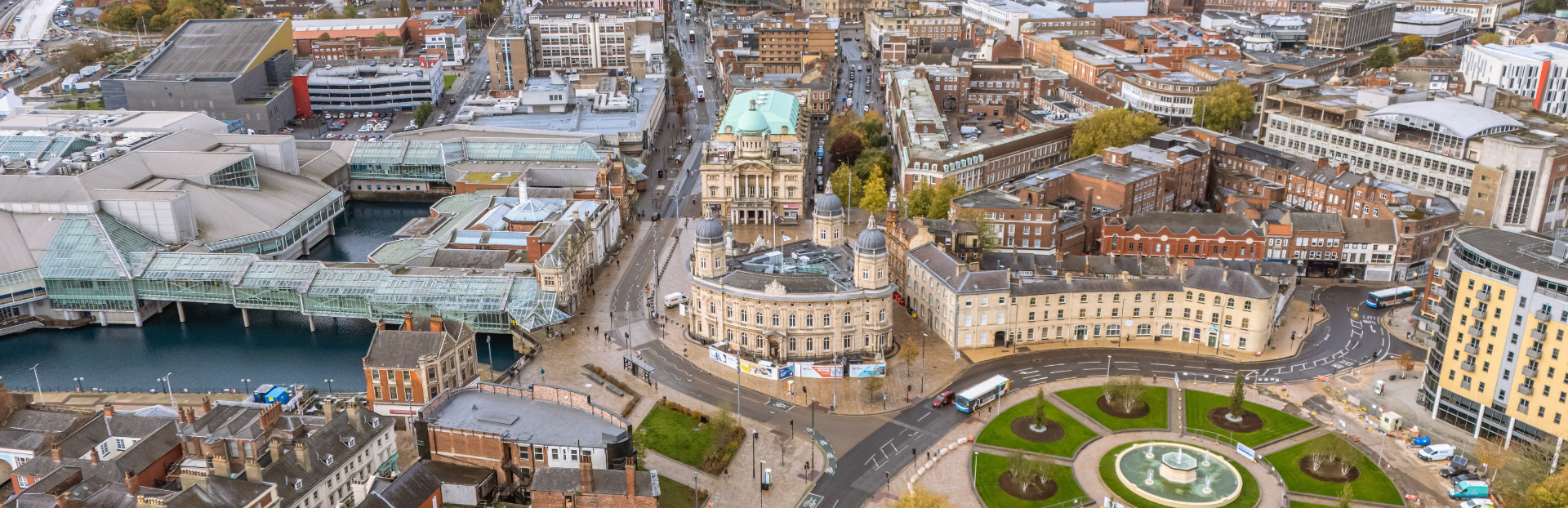
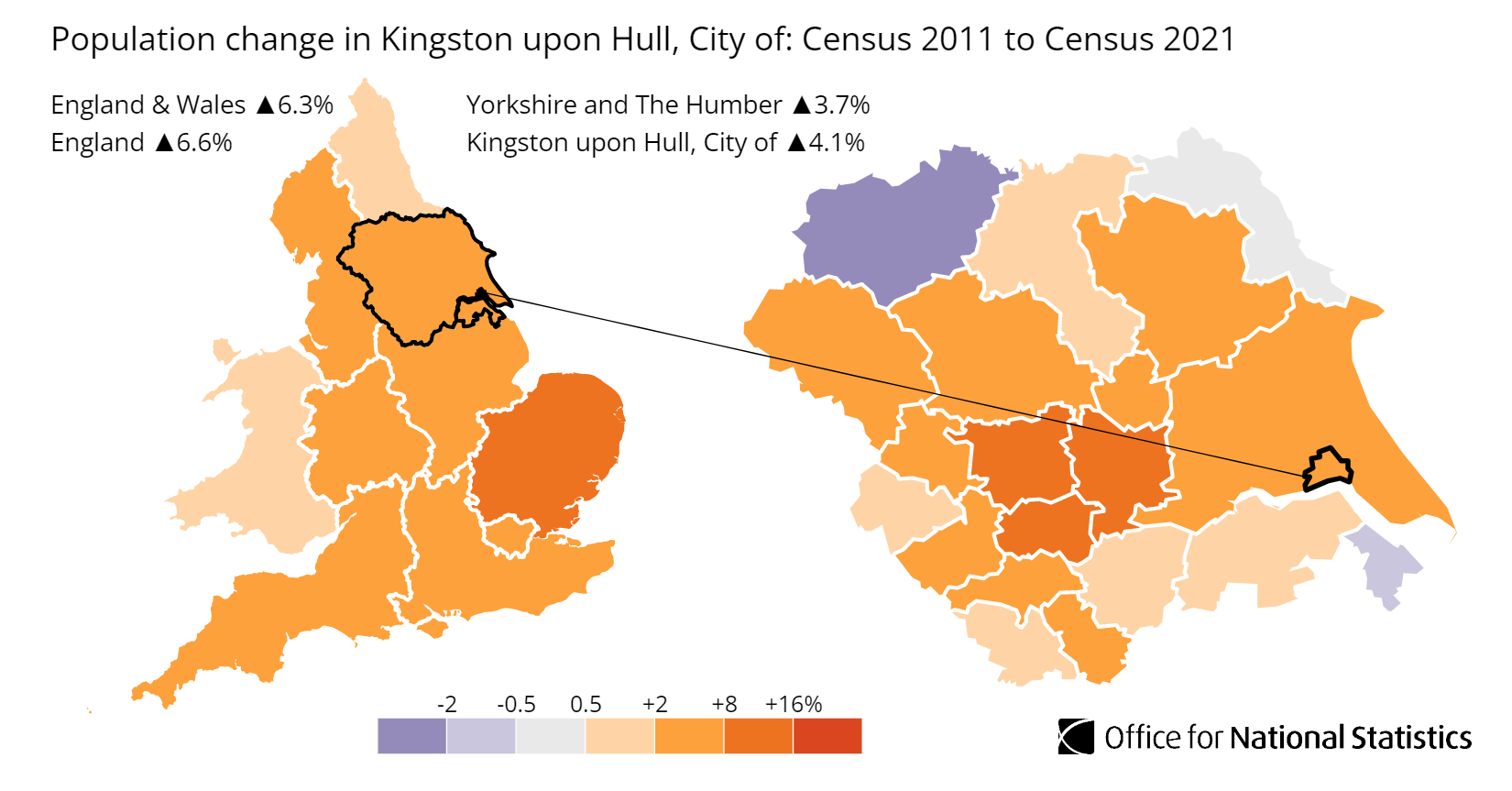
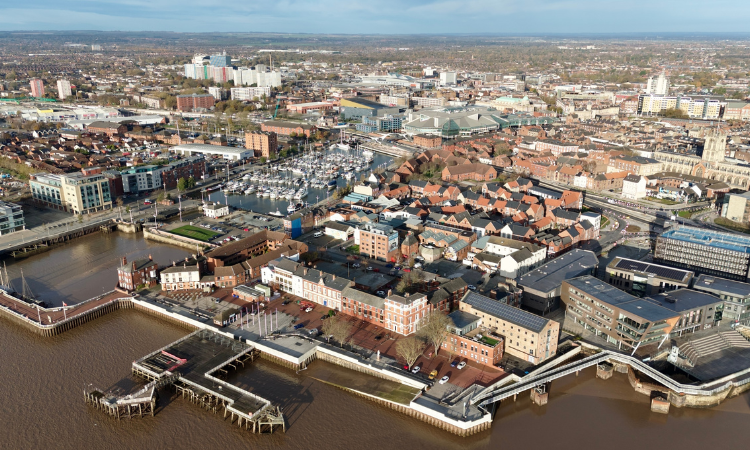
Hull is a city on the Humber Estuary in East Yorkshire. Average sold prices across Kingston upon Hull sit at £134,719 on the HM Land Registry House Price Index, 53.5% below England's £289,946 and 35.2% below the £207,750 Yorkshire and the Humber regional average. That places Hull among the most affordable cities in England, cheaper by sold price than every other Yorkshire city in this guide. Kingston upon Hull's population reached 267,014 in the 2021 Census, up 4.14% from 256,406 in 2011.
Hull's affordability runs from a low wage base. The median gross annual salary across Kingston upon Hull is £31,419, which is 9.8% below the Yorkshire and the Humber median of £34,835 and 19.7% below the Great Britain figure of £39,125. Lower local earnings keep asking prices down, and on the cheapest stock that produces some of the highest gross yields of any large city in England. The spread runs from HU2 at a £90,714 asking price to HU10 at £317,534, splitting the city into an affordable inner core and a suburban ring.
This guide covers the unitary authority of Kingston upon Hull (ONS code E06000010) across postcodes HU1, HU2, HU3, HU4, HU5, HU6, HU7, HU8, HU9, HU10, HU13, and HU16. Hull sits on the north bank of the Humber Estuary in Yorkshire and the Humber, 60 miles east of Leeds. The wider region also includes York to the north-west and the East Riding towns of Beverley and Cottingham on the city's edge.
Article updated: June 2026
Why Invest in Hull?
Kingston upon Hull grew its population 4.14% between the 2011 and 2021 censuses, from 256,406 to 267,014 residents. That is below the England and Wales average of 6.3%, a slower-growing market than the booming southern cities but one with a settled, working-age tenant base rather than a transient one. Hull's appeal to investors is straightforward: it is one of the cheapest places in England to buy, and the rents have held up well enough to produce yields the more expensive Yorkshire cities cannot match.
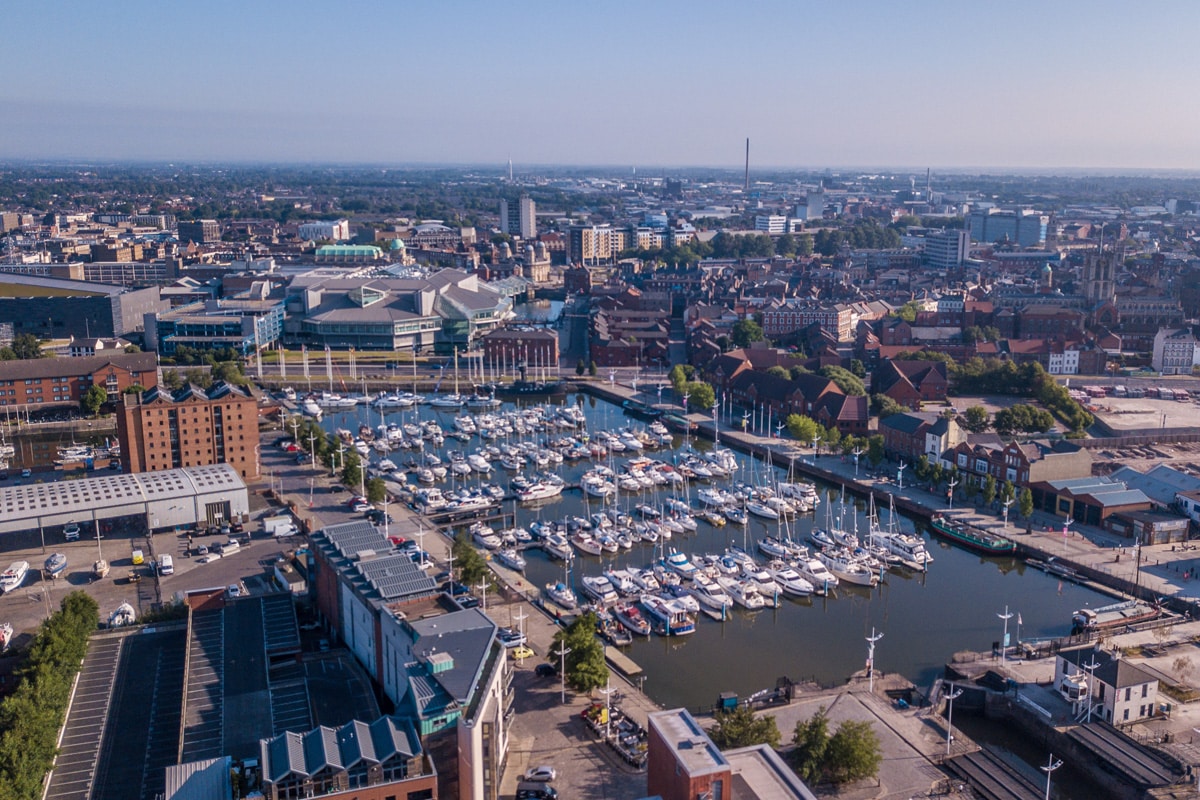
The city's economy has reshaped itself over the past decade. Siemens Gamesa's wind turbine blade factory on Alexandra Dock made Hull a centre for offshore wind manufacturing, and the renewables supply chain along the Humber continues to draw investment. The Port of Hull remains one of the busiest on the east coast for cargo and passenger traffic. The University of Hull supports a student population of around 16,000 that feeds directly into the rental market in the inner postcodes, and the C4DI digital hub on the waterfront anchors a growing technology and creative sector. Healthcare, through the Hull University Teaching Hospitals NHS Trust, is the city's largest single employer.
The median gross annual salary for Hull residents is £31,419, below both the Yorkshire and the Humber figure of £34,835 and the Great Britain median of £39,125. The local employment rate stands at 65.0%, with unemployment at 6.9%, both weaker than the regional and national averages. That softer labour market is the other side of Hull's affordability: prices are low because incomes are, and an investor buying here is letting to a tenant base where rent has to stay within reach of local wages.
Hull Economic Summary
- Population (Kingston upon Hull): 267,014 (2021 Census). Growth of 4.14% from 2011.
- Median annual salary: £31,419 (local), £34,835 (Yorkshire and the Humber), £39,125 (Great Britain)
- Employment rate: 65.0% (local), 74.1% (Yorkshire and the Humber), 75.4% (Great Britain)
- Unemployment rate: 6.9% (local)
- Key employment sectors: Healthcare, renewable energy manufacturing, port and logistics, higher education, digital and creative industries
Source: ONS Census 2021, Nomis Labour Market Profile (ASHE 2025)
Regeneration and Investment in Hull
More than £370 million of confirmed investment is reshaping Hull's city centre, port access and healthcare provision. The schemes below sit closest to the inner postcodes where the buy-to-let market concentrates, and each adds jobs or housing to areas already carrying the city's highest yields.
- A63 Castle Street Improvement (In progress, £355 million): National Highways is lowering the A63 into an underpass beneath Ferensway at Mytongate, creating a grade-separated junction due to complete in spring 2026. The scheme improves freight access to the Port of Hull and reconnects the city centre to its waterfront and marina quarter, removing the dual carriageway that has long cut the two apart. Updates at National Highways.
- East Bank Urban Village (Planning, around 850 homes): A residential-led mixed-use scheme on a 9.5-hectare site east of the city centre, delivering roughly 850 new homes through a joint venture between ECF, Homes England and Legal & General. The project secured £9.8 million in Levelling Up funding, with a planning application expected in 2026. It would add a significant new housing supply within walking distance of the marina and the inner postcodes. Updates at Muse Places.
- Hull Community Diagnostic Centre (Complete, £18 million): An NHS diagnostic facility at Albion Square offering MRI, CT, X-ray and ultrasound, with capacity for around 150,000 additional tests a year. The centre opened in September 2025, bringing over 100 jobs and acting as an anchor for the wider Albion Square regeneration in the heart of the city. Updates at Humber and North Yorkshire Health and Care Partnership.
Source: Office for National Statistics - Population for Kingston upon Hull
Hull Property Market Analysis
Average property prices in Kingston upon Hull have risen 317.3% since January 1995, from £32,280 to £134,719. The sections below trace that journey cycle by cycle, then drill into current postcode-level data for sold prices, price per square foot, asking prices, growth trends and monthly transaction volumes.
When was the last house price crash in Hull?
Hull's sold prices are recorded by HM Land Registry at the level of the Kingston upon Hull unitary authority, with the index running monthly from January 1995 to March 2026. Across those 31 years the local market moved through one full crash and a long, slow recovery.
The 1995 to 2007 boom, with a soft start: Kingston upon Hull began at £32,280 in January 1995 and, unusually, drifted slightly lower through the late 1990s, slipping as far as £29,452 in November 1998, the weakest reading anywhere in the series, before the national upturn took hold. From there prices climbed steeply, passing £64,104 by December 2004 and reaching the pre-crash peak of £92,333 in June 2007. The market nearly tripled over the boom, driven by cheap credit and the same nationwide inflation that lifted every English city.
2008 to 2009, the financial crisis: Prices fell from the June 2007 peak of £92,333 to a trough of £76,174 in April 2009, a decline of 17.5% over 22 months. The worst year-on-year reading was -15.6% in April 2009. Hull's fall was marginally shallower than both the England decline of 18.2% (from £183,883 in September 2007 to £150,438 in March 2009) and the Yorkshire and the Humber decline of 17.6% (from £141,405 in October 2007 to £116,556 in March 2009). With a low price base to start from, Hull had less inflated value to give back than the pricier markets.
2010 to 2013, stagnation: Prices bounced off the April 2009 trough but then went sideways for years. The average stood at £84,049 in December 2010 and £82,214 in December 2013, recording -0.5% annual growth. Hull spent four years drifting roughly 10% below its pre-crash peak, with no sustained recovery while the wider northern market stayed flat.
Recovery, 2014 to 2016: Growth returned slowly. Prices rose from £84,758 in December 2014 to £92,581 in May 2016, the first month they surpassed the June 2007 pre-crash peak of £92,333. That recovery took almost nine years, the longest of any cycle in these data and longer than England's. By December 2016 the average reached £98,110.
2017 to 2019, pre-pandemic growth: Steady single-digit growth continued. Prices moved from £100,424 in December 2017 to £103,579 in December 2018 and £103,653 in December 2019. Momentum slowed sharply by the end of 2019, with annual growth falling to 0.1% as the national market cooled.
2020 to 2022, the pandemic surge: The stamp duty holiday and a shift towards more space lifted Hull along with the rest of the country. Prices rose from £106,341 in June 2020 to £117,321 by December 2021 (8.6% annual) and £126,338 by December 2022 (7.7% annual). The two-year run added almost a fifth to the average.
The 2023 rate shock: Higher mortgage rates cooled the market. Prices eased to £123,684 by June 2023, recording -1.8% annual growth. Hull's correction was modest, in keeping with a low-debt, low-price market.
2024 to present: Growth resumed. Prices reached £129,029 by December 2024 (3.3% annual) and £134,719 by the latest reading in March 2026, the all-time high for the city. The current average sits 45.9% above the June 2007 pre-crash peak of £92,333.
Long-term growth summary:
- 5 years (March 2021 to March 2026): 20.1% growth (£112,169 to £134,719)
- 10 years (March 2016 to March 2026): 52.9% growth (£88,081 to £134,719)
- 15 years (March 2011 to March 2026): 67.1% growth (£80,618 to £134,719)
- 20 years (March 2006 to March 2026): 80.3% growth (£74,708 to £134,719)
- 30 years (January 1995 to March 2026): 317.3% growth (£32,280 to £134,719)
Hull's 17.5% crash was shallower than both the regional and national falls, and the 30-year return of 317.3% shows steady long-term capital growth off a very low base. The near-nine-year recovery was the slowest part of that journey, a reminder that affordability and liquidity are not the same thing: cheap markets can be slow to re-rate. An investor who bought at the exact June 2007 peak would now be sitting on a gain of 45.9% on the Land Registry average, and Hull remains one of the cheapest places to buy a house in England, with an average sold price less than half the national figure.
- All property types
- Detached
- Semi-detached
- Terraced
- Flats
- All property types
- Detached
- Semi-detached
- Terraced
- Flats
Source: HM Land Registry House Price Index for Kingston upon Hull, January 1995 to March 2026.
Sold House Prices in Hull
Kingston upon Hull's average sold price of £134,719 is 53.5% below the England average of £289,946 (March 2026, HM Land Registry). Every property type sits at a deep discount to the national figure, and the gap is widest on flats, where Hull's £78,300 average is 63.5% below England's £214,563. Terraced houses are 49.0% below, detached 48.1% below and semi-detached 44.9% below. These are sold prices from completed transactions, distinct from the asking prices on current listings further down the page.
| Property Type | Kingston upon Hull Average | England Average | Difference |
|---|---|---|---|
| Detached houses | £244,377 | £470,492 | -£226,115 (-48.1%) |
| Semi-detached houses | £158,824 | £288,185 | -£129,361 (-44.9%) |
| Terraced houses | £124,226 | £243,788 | -£119,562 (-49.0%) |
| Flats and maisonettes | £78,300 | £214,563 | -£136,263 (-63.5%) |
| All property types | £134,719 | £289,946 | -£155,227 (-53.5%) |
Detached houses average £244,377 in sold-price terms, a £226,115 saving on the England average. The detached stock concentrates in the western suburbs of Anlaby and Kirk Ella (HU10), Hessle (HU13) and Cottingham (HU16), where asking prices run from £260,499 to £317,534. These owner-occupier areas form the top tier of Hull's market and have grown 3.7% over the past year.
Semi-detached houses at £158,824 form the mid-market. Semis are common across HU4 (Anlaby Park), HU7 (Kingswood) and HU8 (Holderness Road), the established family-housing belt around the inner city. This is the most resilient type in a downturn: in the 2008 crash, semi-detached prices fell 16.7%, less than terraced houses or flats, and they have grown 4.4% over the past year, the strongest of any type.
Terraced houses at £124,226 are where most of Hull's buy-to-let activity sits. The inner postcodes, HU1, HU2, HU3, HU5 and HU9, are dominated by terraced streets, and their sub-£130,000 asking prices are what produce the city's highest yields. Terraced stock fell hardest in the crash at 18.1%, but has added 3.7% over the past year.
Flats at £78,300 carry the deepest discount, 63.5% below England. Hull's flat market is small relative to its terraced stock, concentrated in city centre conversions and a handful of purpose-built blocks in HU1 and HU2. Flats are the only type to have fallen over the past year, down 1.8%, reflecting thin demand for apartments outside the larger Yorkshire cities.
Price Per Square Foot in Hull
HU3 (Spring Bank, Hessle Road) is the cheapest space in Hull at £117 per square foot, while HU10 (Anlaby, Kirk Ella) is the dearest at £240. Measuring by the square foot strips out how big the homes are, so it compares what a postcode's space actually costs rather than what a typical house there sells for. All 12 postcodes carry price-per-square-foot data.
| Rank | Area | Price Per Sq Ft |
|---|---|---|
| 1 | HU3 (Spring Bank, Hessle Road) | £117 |
| 2 | HU2 (City Centre, New Town) | £129 |
| 3 | HU9 (Drypool, Marfleet) | £143 |
| 4 | HU5 (The Avenues, Newland Park) | £157 |
| 5 | HU6 (University, Orchard Park) | £157 |
| 6 | HU8 (Holderness Road, Longhill) | £159 |
| 7 | HU4 (Anlaby Park, Gypsyville) | £183 |
| 8 | HU7 (Kingswood, Sutton-on-Hull) | £190 |
| 9 | HU1 (City Centre) | £204 |
| 10 | HU13 (Hessle) | £217 |
| 11 | HU16 (Cottingham) | £237 |
| 12 | HU10 (Anlaby, Kirk Ella) | £240 |
The cheapest space lines up with the highest yields. HU3 at £117 and HU2 at £129 are the two lowest per-square-foot postcodes, and both sit in the terraced inner city. HU9 at £143 is third cheapest and pairs that with a 7.2% gross yield. The pattern holds across the city: the postcodes that give the most floor area per pound are also the ones that produce the strongest rental returns.
HU1 (City Centre) breaks the pattern at £204 despite its low asking prices. The difference is the housing mix. HU1 is flat-heavy, and flats cost more per square foot than terraced houses because the units themselves are smaller, which lifts the per-unit-area figure even where total purchase prices stay low.
For Sale Asking Prices in Hull
£226,820 separates Hull's cheapest and dearest postcodes on the for-sale market. The mean asking price across all 12 postcodes is £175,684, running from £90,714 in HU2 (City Centre, New Town) to £317,534 in HU10 (Anlaby, Kirk Ella). That two-tier split is the defining feature of Hull: an affordable inner core below £160,000 and a suburban ring above £260,000.
| Rank | Area | Asking Price |
|---|---|---|
| 1 | HU2 (City Centre, New Town) | £90,714 |
| 2 | HU1 (City Centre) | £117,653 |
| 3 | HU3 (Spring Bank, Hessle Road) | £122,361 |
| 4 | HU9 (Drypool, Marfleet) | £129,567 |
| 5 | HU5 (The Avenues, Newland Park) | £140,908 |
| 6 | HU6 (University, Orchard Park) | £151,192 |
| 7 | HU8 (Holderness Road, Longhill) | £157,690 |
| 8 | HU7 (Kingswood, Sutton-on-Hull) | £176,296 |
| 9 | HU4 (Anlaby Park, Gypsyville) | £180,128 |
| 10 | HU13 (Hessle) | £260,499 |
| 11 | HU16 (Cottingham) | £263,665 |
| 12 | HU10 (Anlaby, Kirk Ella) | £317,534 |
Four postcodes sit below £130,000: HU2, HU1, HU3 and HU9. These inner-city areas are dominated by terraced housing and are the most accessible entry points in the city. They are also where the cheaper stock tends to come through below market value channels, since the lowest asking prices in a market like Hull rarely reach the open portals first. The same streets produce a steady flow of refurbishment opportunities at sub-£100,000 prices.
The suburban ring is a different market. HU13 (Hessle) at £260,499, HU16 (Cottingham) at £263,665 and HU10 (Anlaby, Kirk Ella) at £317,534 are each above £260,000. These are owner-occupier areas of larger detached and semi-detached homes, and none of the three has enough rental data to calculate a yield, which limits the buy-to-let case for the top of the market.
House Price Growth in Hull
HU6 (University, Orchard Park) leads five-year growth at 20.9%, while HU1 (City Centre) and HU10 (Anlaby, Kirk Ella) sit at the bottom on -4.2%. Across the city the inner and mid-market postcodes have outgrown both the cheapest city centre stock and the dearest suburbs, though the very low transaction counts in HU1 and HU2 make their figures the most volatile.
| Area | 1 Year | 3 Years | 5 Years |
|---|---|---|---|
| HU6 (University, Orchard Park) | 3.6% | -0.5% | 20.9% |
| HU2 (City Centre, New Town) | 2.0% | -9.0% | 17.6% |
| HU4 (Anlaby Park, Gypsyville) | 2.3% | 10.4% | 17.3% |
| HU9 (Drypool, Marfleet) | 2.1% | -1.4% | 16.3% |
| HU16 (Cottingham) | 2.2% | 7.2% | 16.2% |
| HU13 (Hessle) | 3.6% | 5.9% | 16.1% |
| HU3 (Spring Bank, Hessle Road) | -0.4% | 0.8% | 14.9% |
| HU5 (The Avenues, Newland Park) | -4.1% | 1.1% | 10.7% |
| HU8 (Holderness Road, Longhill) | -2.0% | 4.3% | 10.2% |
| HU7 (Kingswood, Sutton-on-Hull) | 1.5% | -0.8% | 8.8% |
| HU1 (City Centre) | -4.0% | -15.5% | -4.2% |
| HU10 (Anlaby, Kirk Ella) | -2.5% | -7.1% | -4.2% |
HU6 (University, Orchard Park) tops the five-year table at 20.9% and held positive over the past year at 3.6%. At a £151,192 asking price and a 6.1% gross yield, it is one of the postcodes where rental demand from the University of Hull and the hospital sits alongside steady capital growth. HU4 is the standout on the three-year measure at 10.4%, the only inner postcode to have grown materially since 2023.
HU1's -15.5% three-year reading needs the volume caveat. With just 2 sales per month, HU1 is the city's thinnest market, and a small number of unusual transactions can swing the average sharply. The same applies to HU2 at 3 sales a month. The figures for these two postcodes are real but carry far more variability than the higher-volume suburban areas.
HU10 at -4.2% over five years is the weakest suburban performer. Kirk Ella and Anlaby are the city's most expensive postcode at £317,534, and the premium owner-occupier market here has barely moved, operating on a slower cycle than the inner streets in both directions.
Monthly Property Sales in Hull
HU5 (The Avenues, Newland Park) is Hull's most active market at 59 sales per month, while HU4 (Anlaby Park, Gypsyville) records the highest turnover at 31%. Sales volume and turnover show which postcodes have the deepest, most liquid markets, a practical concern for any investor who will eventually need to sell.
| Area | Sales Per Month | Turnover | Asking Price |
|---|---|---|---|
| HU5 (The Avenues, Newland Park) | 59 | 29% | £140,908 |
| HU7 (Kingswood, Sutton-on-Hull) | 40 | 19% | £176,296 |
| HU8 (Holderness Road, Longhill) | 33 | 23% | £157,690 |
| HU9 (Drypool, Marfleet) | 31 | 20% | £129,567 |
| HU6 (University, Orchard Park) | 24 | 26% | £151,192 |
| HU3 (Spring Bank, Hessle Road) | 21 | 20% | £122,361 |
| HU4 (Anlaby Park, Gypsyville) | 20 | 31% | £180,128 |
| HU13 (Hessle) | 18 | 15% | £260,499 |
| HU10 (Anlaby, Kirk Ella) | 15 | 7% | £317,534 |
| HU16 (Cottingham) | 15 | 12% | £263,665 |
| HU2 (City Centre, New Town) | 3 | 14% | £90,714 |
| HU1 (City Centre) | 2 | 1% | £117,653 |
HU5 and HU7 between them handle around a third of Hull's monthly transactions. HU5 covers The Avenues and Newland Park near the university, where modern and Victorian stock turns over quickly, and HU7 covers the Kingswood estate of newer family housing on the city's northern edge. Both are deep, liquid markets where a seller can expect to find a buyer.
HU1 and HU2 at 2 and 3 sales per month are the thinnest markets in the city. Both are city centre postcodes with small housing stocks, and HU1's 1% turnover is the lowest of the 12. Yields, growth and asking-price averages for these two are built on very small samples and should be read with that in mind, however attractive the headline returns look.
How Long Properties Take to Sell in Hull
HU6 (University, Orchard Park) clears fastest at about 92 days, while HU1 (City Centre) sits for years on the thinnest volume in the city. How long a sale takes is the holding cost a yield figure never shows, and in Hull the gap is stark: the suburban and university postcodes move in three to four months, while the city centre flats can take far longer to shift. Days on market is the typical time a home is listed before it sells; months of unsold stock measures how much for-sale supply is queued at the current rate of sales.
| Area | Avg Days to Sell | Months of Unsold Stock | Market |
|---|---|---|---|
| HU6 (University, Orchard Park) | 92 | 3.0 | Seller's market |
| HU4 (Anlaby Park, Gypsyville) | 109 | 3.6 | Seller's market |
| HU5 (The Avenues, Newland Park) | 113 | 3.7 | Seller's market |
| HU8 (Holderness Road, Longhill) | 127 | 4.2 | Seller's market |
| HU3 (Spring Bank, Hessle Road) | 145 | 4.8 | Seller's market |
| HU7 (Kingswood, Sutton-on-Hull) | 145 | 4.8 | Seller's market |
| HU13 (Hessle) | 179 | 5.9 | Seller's market |
| HU9 (Drypool, Marfleet) | 190 | 6.3 | Balanced market |
| HU2 (City Centre, New Town) | 234 | 7.7 | Balanced market |
| HU16 (Cottingham) | 277 | 9.1 | Balanced market |
| HU10 (Anlaby, Kirk Ella) | 435 | 14.3 | Buyer's market |
| HU1 (City Centre) | 3,042 | 100.0 | Buyer's market |
Seven of the 12 postcodes read as sellers' markets with under six months of unsold stock, led by HU6's three months. HU1's 3,042-day figure is a function of its tiny sales volume rather than a frozen market: with only 2 sales a month, a couple of long-listed flats are enough to stretch the average to an extreme. The practical reading is that Hull's family and university postcodes are liquid, while the city centre flat market is where an investor should expect a slow exit and price accordingly.
What Type of Property Can You Buy in Hull?
Terraced houses are the backbone of Hull's inner postcodes, peaking at 48.8% of stock in HU9, while flats dominate the city centre and detached homes fill the western suburbs. The housing mix decides which strategy fits where, and Hull's stock is unusually skewed towards terraces and city centre flats. The figures below come from 2021 Census records for each postcode.
| Area | Detached | Semi-detached | Terraced | Flats |
|---|---|---|---|---|
| HU1 (City Centre) | 2.2% | 12.1% | 16.2% | 68.6% |
| HU2 (City Centre, New Town) | 2.9% | 5.5% | 21.5% | 70.0% |
| HU3 (Spring Bank, Hessle Road) | 4.3% | 12.5% | 38.7% | 44.1% |
| HU4 (Anlaby Park, Gypsyville) | 8.2% | 44.5% | 38.1% | 9.0% |
| HU5 (The Avenues, Newland Park) | 8.4% | 21.1% | 46.6% | 23.3% |
| HU6 (University, Orchard Park) | 19.6% | 37.2% | 36.1% | 6.5% |
| HU7 (Kingswood, Sutton-on-Hull) | 14.8% | 33.2% | 45.9% | 6.1% |
| HU8 (Holderness Road, Longhill) | 15.6% | 35.7% | 41.8% | 5.8% |
| HU9 (Drypool, Marfleet) | 9.9% | 28.0% | 48.8% | 13.3% |
| HU10 (Anlaby, Kirk Ella) | 42.3% | 39.1% | 13.7% | 4.8% |
| HU13 (Hessle) | 34.9% | 27.6% | 23.3% | 14.1% |
| HU16 (Cottingham) | 42.9% | 28.0% | 6.5% | 9.2% |
HU9 has the highest terraced share in the city at 48.8%, with HU5 and HU7 close behind in the mid-40s. That terraced stock is the classic buy-to-let unit, and it lines up with HU9's 7.2% yield and the strong returns across the inner postcodes. HU1 and HU2 are flat-led at 68.6% and 70.0%, the city centre conversions and blocks that suit single lets but carry the slow-exit risk shown above.
The western suburbs run the other way. HU10 and HU16 are the most detached-heavy at 42.3% and 42.9%, with detached and semi-detached homes together making up more than four-fifths of HU10's stock. These are large family houses for owner-occupiers rather than the smaller units that drive rental income, which is why the rental data thins out at the top of the price ladder.
The flats figure combines purpose-built blocks and conversions. A small number of non-standard dwellings is not shown, so rows may not total 100%.
Hull Rental Market Analysis
Monthly rents in Hull run from £653 in HU3 to £812 in HU7, with gross yields from 4.7% to 9.7% across the nine postcodes that carry rental data. For investors asking is buy to let worth it in Hull, the sections below break down rents, yields and tenant affordability postcode by postcode. If you are weighing how to build a property portfolio in Yorkshire, Hull offers the highest gross yields of any large city in the region, set against a softer local labour market. Browse the available buy-to-let homes for sale across the city.
Average Rent & Gross Rental Yields in Hull
Gross rental yields in Hull range from 4.7% in HU4 (Anlaby Park, Gypsyville) to 9.7% in HU2 (City Centre, New Town). The cheapest postcode delivers the highest yield: HU2's £733 rent is below the city average, but against a £90,714 asking price it produces the strongest return of any large city in Yorkshire. The pattern is consistent: yield falls as you climb the price ladder, because rents move within a narrow band while asking prices more than treble from the inner city to the suburbs.
| Area | Average Monthly Rent | Asking Price | Gross Yield |
|---|---|---|---|
| HU2 (City Centre, New Town) | £733 | £90,714 | 9.7% |
| HU1 (City Centre) | £773 | £117,653 | 7.9% |
| HU9 (Drypool, Marfleet) | £781 | £129,567 | 7.2% |
| HU3 (Spring Bank, Hessle Road) | £653 | £122,361 | 6.4% |
| HU5 (The Avenues, Newland Park) | £753 | £140,908 | 6.4% |
| HU6 (University, Orchard Park) | £773 | £151,192 | 6.1% |
| HU7 (Kingswood, Sutton-on-Hull) | £812 | £176,296 | 5.5% |
| HU8 (Holderness Road, Longhill) | £697 | £157,690 | 5.3% |
| HU4 (Anlaby Park, Gypsyville) | £699 | £180,128 | 4.7% |
| HU13 (Hessle) | Not enough data | £260,499 | Not enough data |
| HU16 (Cottingham) | Not enough data | £263,665 | Not enough data |
| HU10 (Anlaby, Kirk Ella) | Not enough data | £317,534 | Not enough data |
HU2 at 9.7% and HU1 at 7.9% top the yield table. Both are city centre postcodes with asking prices under £120,000, and in both cases the high yield is a function of the low asking price rather than exceptional rents. The trade-off is liquidity: both transact at very low volumes and the city centre flat market is the slowest to sell in Hull, so these returns come with a longer exit than the suburban postcodes. For investors who want to understand how the figure is built, see our rental yield guide.
HU9 (Drypool, Marfleet) at 7.2% is the strongest blend of yield, volume and growth. Its £781 rent is among the highest in the inner city, it has the best five-year capital growth outside the university postcode at 16.3%, and it transacts 31 times a month, a far deeper market than HU1 or HU2. At the other end, HU4 and HU8 anchor the table at 4.7% and 5.3%, where higher asking prices in established suburban streets compress the return.
Gross Rental Yield by Postcode
Is Hull Rent High?
Monthly rents in Hull take between 24.9% and 31.0% of the local median gross salary. The widely cited affordability threshold is 30% of gross income, and most of Hull's postcodes sit at or below it, which is part of why tenant demand here is steady even on a low wage base.
The median gross weekly salary in Hull is £604.20, which works out at £2,618 per month or £31,419 per year. That is below both the Yorkshire and the Humber median of £669.90 a week and the Great Britain median of £752.40. Data from the Nomis Labour Market Profile (ASHE 2025).
| Rank | Area | Rent as % of Income |
|---|---|---|
| 1 | HU7 (Kingswood, Sutton-on-Hull) | 31.0% |
| 2 | HU9 (Drypool, Marfleet) | 29.8% |
| 3 | HU1 (City Centre) | 29.5% |
| 4 | HU6 (University, Orchard Park) | 29.5% |
| 5 | HU5 (The Avenues, Newland Park) | 28.8% |
| 6 | HU2 (City Centre, New Town) | 28.0% |
| 7 | HU4 (Anlaby Park, Gypsyville) | 26.7% |
| 8 | HU8 (Holderness Road, Longhill) | 26.6% |
| 9 | HU3 (Spring Bank, Hessle Road) | 24.9% |
| - | HU13 (Hessle) | Not enough data |
| - | HU16 (Cottingham) | Not enough data |
| - | HU10 (Anlaby, Kirk Ella) | Not enough data |
HU7 at 31.0% is the only postcode above the 30% line. Its £812 rent is the highest in the city, set against a suburban tenant base in Kingswood, and the ratio is on the median Hull wage rather than the higher earnings of the commuters who often take those newer family homes. HU3 at 24.9% is the most affordable, with the cheapest rent in the city at £653, the kind of headroom that tends to mean fewer arrears and longer tenancies.
How Big Is Hull's Private Rented Sector?
The private rented sector is deepest in the inner city, reaching 49.8% of households in HU1, and shallowest in the western suburbs at 8.5% in HU10. How much of the local stock is already rented privately is a read on how established and how tested the lettings market is, and Hull's inner postcodes have some of the largest private rented sectors of any city in this guide. The table below shows household tenure by postcode.
| Area | Owned Outright | Owned with Mortgage | Private Rented | Social Rented |
|---|---|---|---|---|
| HU1 (City Centre) | 14.1% | 16.0% | 49.8% | 19.9% |
| HU3 (Spring Bank, Hessle Road) | 14.4% | 11.8% | 44.9% | 28.3% |
| HU2 (City Centre, New Town) | 8.8% | 8.9% | 44.4% | 37.4% |
| HU5 (The Avenues, Newland Park) | 24.9% | 24.1% | 31.3% | 19.2% |
| HU9 (Drypool, Marfleet) | 21.9% | 24.2% | 28.0% | 25.4% |
| HU13 (Hessle) | 35.1% | 38.7% | 19.1% | 6.5% |
| HU8 (Holderness Road, Longhill) | 32.2% | 33.2% | 18.9% | 14.6% |
| HU6 (University, Orchard Park) | 32.0% | 27.3% | 18.8% | 21.5% |
| HU4 (Anlaby Park, Gypsyville) | 29.5% | 28.0% | 17.7% | 23.7% |
| HU7 (Kingswood, Sutton-on-Hull) | 25.1% | 33.2% | 15.0% | 26.3% |
| HU16 (Cottingham) | 47.4% | 27.3% | 13.4% | 11.6% |
| HU10 (Anlaby, Kirk Ella) | 49.8% | 36.6% | 8.5% | 4.7% |
HU1 has the largest private rented sector in the city at 49.8%, with HU3 and HU2 close behind in the mid-40s. These are the three inner postcodes that also carry the highest yields and the most flats, a deep and proven tenant pool rather than an untested one. The flip side is the high social-rented share alongside it, 37.4% in HU2, which shapes the character of the local letting market.
At the other end, HU10 and HU16 have the smallest private rented sectors, at 8.5% and 13.4%, with owner-occupation dominant. A thinner rented sector does not rule out letting, but it means a smaller base of proven local tenant demand, and it is one more reason the buy-to-let case weakens in the western suburbs. On the lettings side, HU2 and HU1 are the only postcodes with enough live rental listings to read the market with confidence, and both currently sit firmly with landlords, with homes letting in under two months.
Local Housing Allowance Rates in Hull
All 12 of Hull's postcodes fall within a single Broad Rental Market Area, the Hull & East Riding BRMA, so Local Housing Allowance is uniform across the city. Local Housing Allowance sets the maximum housing support a tenant on benefits can claim, so for that part of the market it acts as a rent floor. A single BRMA makes Hull simpler than cities that straddle several. To check the current rate for a specific address, use the government's official Local Housing Allowance calculator.
| Property Size | Hull & East Riding BRMA (weekly) | Approx. Monthly |
|---|---|---|
| Shared accommodation | £77.29 | £335 |
| 1 bedroom | £87.45 | £379 |
| 2 bedrooms | £109.32 | £474 |
| 3 bedrooms | £126.58 | £549 |
| 4 bedrooms | £161.10 | £698 |
The two-bedroom rate of £109.32 a week works out at roughly £474 a month, well below the £653 to £812 open-market rents recorded across the city. A benefit-backed tenancy therefore underpins the lower end of Hull's market rather than competing with it, and the stock that fits within these rates is concentrated in the cheapest inner postcodes where prices and rents are lowest. As of June 2026, the rates apply across the whole city within the single Hull & East Riding market area.
Buy-to-Let Considerations
Are House Prices High in Hull? Price-to-Earnings Ratios
Buying in Hull takes between 2.9 and 10.1 times the median annual salary, depending on the postcode. This is based on the Nomis Labour Market Profile for Kingston upon Hull, which puts the median gross annual income for Hull residents at £31,419.
The national benchmark for price-to-earnings is 7.4 (England's average sold price of £289,946 divided by the Great Britain median annual salary of £39,125). Nine of Hull's 12 postcodes sit below that benchmark, meaning they are more affordable against local incomes than the England average is against national ones.
| Rank | Area | Price-to-Earnings Ratio |
|---|---|---|
| 1 | HU2 (City Centre, New Town) | 2.9 |
| 2 | HU1 (City Centre) | 3.7 |
| 3 | HU3 (Spring Bank, Hessle Road) | 3.9 |
| 4 | HU9 (Drypool, Marfleet) | 4.1 |
| 5 | HU5 (The Avenues, Newland Park) | 4.5 |
| 6 | HU6 (University, Orchard Park) | 4.8 |
| 7 | HU8 (Holderness Road, Longhill) | 5.0 |
| 8 | HU7 (Kingswood, Sutton-on-Hull) | 5.6 |
| 9 | HU4 (Anlaby Park, Gypsyville) | 5.7 |
| 10 | HU13 (Hessle) | 8.3 |
| 11 | HU16 (Cottingham) | 8.4 |
| 12 | HU10 (Anlaby, Kirk Ella) | 10.1 |
Hull's inner postcodes are among the most affordable in England by this measure. HU2 at 2.9 times earnings, HU1 at 3.7 and HU3 at 3.9 sit well below almost any national benchmark, and seven postcodes fall under a ratio of 5.0. Only the three western suburbs exceed the England benchmark of 7.4: HU13 at 8.3, HU16 at 8.4 and HU10 at 10.1, where prices outstrip local earning power because the buyers there typically commute to higher-paid roles outside the immediate Hull economy.
Deposit Requirements in Hull
The table below sets out a 30% deposit for each Hull postcode at current asking prices. At 30% down you need between £27,214 in HU2 (City Centre, New Town) and £95,260 in HU10 (Anlaby, Kirk Ella). Eight of the 12 postcodes require a deposit under £50,000. For a full breakdown of the costs beyond the deposit, see our guide to buy-to-let running costs and the stamp duty calculator.
| Rank | Area | 30% Deposit Required |
|---|---|---|
| 1 | HU2 (City Centre, New Town) | £27,214 |
| 2 | HU1 (City Centre) | £35,296 |
| 3 | HU3 (Spring Bank, Hessle Road) | £36,708 |
| 4 | HU9 (Drypool, Marfleet) | £38,870 |
| 5 | HU5 (The Avenues, Newland Park) | £42,272 |
| 6 | HU6 (University, Orchard Park) | £45,358 |
| 7 | HU8 (Holderness Road, Longhill) | £47,307 |
| 8 | HU7 (Kingswood, Sutton-on-Hull) | £52,889 |
| 9 | HU4 (Anlaby Park, Gypsyville) | £54,038 |
| 10 | HU13 (Hessle) | £78,150 |
| 11 | HU16 (Cottingham) | £79,100 |
| 12 | HU10 (Anlaby, Kirk Ella) | £95,260 |
£68,046 separates Hull's cheapest and most expensive deposit. An investor entering HU2 commits less than a third of what HU10 requires, and the four cheapest deposits all sit under £39,000 for postcodes yielding between 6.4% and 9.7%. For routes that reduce the upfront capital, our guide to buy-to-let with no deposit covers the alternatives.
What the Hull Data Tells Buy-to-Let Investors
Hull's highest yields sit in the inner city: HU2 at 9.7%, HU1 at 7.9% and HU9 at 7.2%. All three have asking prices below £130,000 and 30% deposits under £39,000, the lowest entry points of any large city in Yorkshire. For an income-led investor weighing investment property in Hull, these postcodes produce returns the pricier cities cannot match, with HU2's 9.7% the strongest big-city yield in the region.
HU9 (Drypool, Marfleet) is the most complete buy-to-let case in the data. It pairs a 7.2% yield with the best five-year growth outside the university postcode at 16.3%, a £781 rent, and 31 sales a month, a far deeper market than the two thinly-traded city centre postcodes. HU6 (University, Orchard Park) is the other inner-city anchor, with the highest five-year growth in the city at 20.9% and rental demand from the University of Hull. The cheaper inner streets are also where most of Hull's below market value stock surfaces, since the lowest prices in a market like this move off-market before they reach the open portals.
The trade-off across the inner city is liquidity. HU1 and HU2 carry the headline yields but transact only 2 and 3 times a month, and the city centre flat market is the slowest to sell in Hull, so those returns come with a long exit. Four suburban postcodes, HU4, HU10, HU13 and HU16, lack the rental data to calculate a yield at all, with asking prices from £180,128 to £317,534 and a buy-to-let case that weakens as the prices climb. HU10 at £317,534 is more than three times the cheapest postcode and recorded -4.2% five-year growth.
Hull City Council licenses larger shared houses under the mandatory HMO rules, and licensing designations can change, so a privately let home in the inner postcodes may carry a licence requirement. Check the current position for a specific address on Hull City Council's property licensing pages before committing, and see our guide to selective licensing for how these schemes work.
How Hull Compares
Hull's mean asking price of £175,684 is the lowest of the five Yorkshire cities below, and its 9.7% top yield is beaten only by Bradford's thin single-postcode 12.0%. The next cheapest is Doncaster at £219,679, around 20% dearer, followed by Bradford at £226,164. Leeds at £291,071 and York at £368,508 sit well above. The table uses mean asking prices, mean monthly rent and the top single-postcode gross yield in each city.
| Location | Mean Asking Price | Mean Monthly Rent | Mean Gross Yield | Top Yield (postcode) |
|---|---|---|---|---|
| Hull | £175,684 | £742 | 5.1% | 9.7% (HU2) |
| Doncaster | £219,679 | £831 | 4.5% | 5.9% (DN12) |
| Bradford | £226,164 | £849 | 4.5% | 12.0% (BD1) |
| Leeds | £291,071 | £1,147 | 4.7% | 8.9% (LS2) |
| York | £368,508 | £1,313 | 4.3% | 5.3% (YO10) |
Hull is the affordability leader of the group on price, and no city here beats its yield on comparable breadth. Its mean asking price is 20% below Doncaster, 22% below Bradford, 40% below Leeds and 52% below York, and its £742 mean rent is the lowest of the five, in line with the lower wage base. Leeds is the closest on yield at 8.9% but costs two-thirds more to enter, while York pairs the highest prices with the lowest top yield at 5.3%. To see how every location ranks nationally, visit our guide to the highest-yielding buy-to-let areas.
Frequently Asked Questions
Is Hull a good place to invest in property?
Hull's average sold price of £134,719 is 53.5% below the England figure, with gross yields reaching 9.7% and 30% deposits starting from £27,214. The low prices follow a low wage base: the median salary of £31,419 sits below both the regional £34,835 and the national £39,125, and the employment rate of 65.0% is weaker than average. That is the trade-off in Hull. The yields are the highest of any large Yorkshire city, but they come off a softer local economy, so the case rests on the inner postcodes where prices, rents and tenant demand line up. Five-year growth across the city runs from -4.2% to 20.9%, and regeneration including the £355 million A63 scheme and the planned 850-home East Bank Urban Village is concentrated near the centre.
What are the best areas in Hull for buy-to-let?
For yield, the inner city leads: HU2 (City Centre, New Town) at 9.7%, HU1 (City Centre) at 7.9% and HU9 (Drypool, Marfleet) at 7.2%. HU2 and HU1 carry the highest returns but trade at very low volumes, so HU9 is often the more practical pick, pairing its 7.2% yield with 16.3% five-year growth and 31 sales a month. HU6 (University, Orchard Park) has the strongest five-year growth in the city at 20.9% and rental demand from the University of Hull. The western suburbs, HU10, HU13 and HU16, are owner-occupier areas above £260,000 with no rental data, so they sit outside the core buy-to-let map.
What is the average rent and yield in Hull?
Monthly rents across the nine postcodes with rental data run from £653 in HU3 to £812 in HU7, with a mean of £742, and gross yields range from 4.7% to 9.7%. The highest rents sit in the suburban and university postcodes, while the highest yields sit in the cheapest inner streets, because rents move within a narrow band while asking prices treble from the city centre to the western suburbs. City centre postcodes HU1 and HU2 record rents of £773 and £733 against asking prices under £120,000, which is what produces their high yields.
What type of property can you buy in Hull?
Terraced houses dominate the inner and mid-market postcodes, with flats filling the city centre. Terraces peak at 48.8% of stock in HU9 and sit in the mid-40s across HU5 and HU7, the classic buy-to-let unit and the stock behind the city's yields. HU1 and HU2 are flat-led at 68.6% and 70.0%, the city centre conversions and blocks that suit single lets but are the slowest to sell. The western suburbs, HU10 and HU16, are detached-heavy at around 43%, large family homes for owner-occupiers rather than rental stock.
How do I buy an investment property in Hull?
Start by deciding whether you are buying for income or for capital growth, because in Hull the two point to different postcodes. Income pushes you to the cheap inner streets, HU2, HU1 and HU9, where yields run from 7.2% to 9.7%; growth and liquidity push you towards HU9 and HU6, where the data is deeper. Budget a 30% deposit, which here runs from £27,214 in HU2 to £95,260 in HU10 depending on the postcode. The cheapest stock often moves through off-market channels in Hull before it reaches the portals, and our guide to building a property portfolio covers the wider process. Hull's affordability also makes it a common starting point for first-time investors who want a low asking price.
Does the University of Hull affect the rental market?
HU5 and HU6, the postcodes closest to the University of Hull, anchor the student and young-professional end of the market. HU5 (The Avenues, Newland Park) borders the university and is the busiest sales market in the city at 59 transactions a month, while HU6 (University, Orchard Park) carries the highest five-year growth at 20.9% and a 6.1% yield. Both have large private rented sectors, and the student demand spills into HU3 nearby. Investors looking at shared housing will find these postcodes suit HMO investment in Hull, while the wider student market is covered in our guide to student property investment.
How does Hull compare to Leeds and York for buy-to-let?
On price, Hull undercuts both: its mean asking price of £175,684 is 40% below Leeds (£291,071) and 52% below York (£368,508), and its 9.7% top yield beats them too. Leeds is the closest on yield at 8.9% but costs two-thirds more to enter, while York pairs the highest prices in the region with the lowest top yield at 5.3%. Mean rents tell the same story: £742 in Hull against £1,147 in Leeds and £1,313 in York. The three cities suit different investors. Hull offers the lowest entry and the highest income return, Leeds adds scale and a stronger economy, and York is a capital-value market bought for the prices rather than the yield.
What has happened to Hull house prices over the past decade?
Over the past decade the average sold price rose 52.9%, from £88,081 in March 2016 to £134,719 in March 2026. Those ten years included the pandemic surge of 2020 to 2022, when annual growth reached 8.6%, a brief correction in 2023 at -1.8%, and a recovery through 2024 and 2025 to the current all-time high. Hull took almost nine years to recover its pre-2008 crash peak, finally passing £92,333 in May 2016, the slowest recovery of any cycle in the data. Over 30 years, from January 1995, prices have grown 317.3% from £32,280.
Ready to buy property?
Access off-market investment properties with an average 8%+ annual gross yield (beating the UK's typical 3-5%).
Get property alerts