
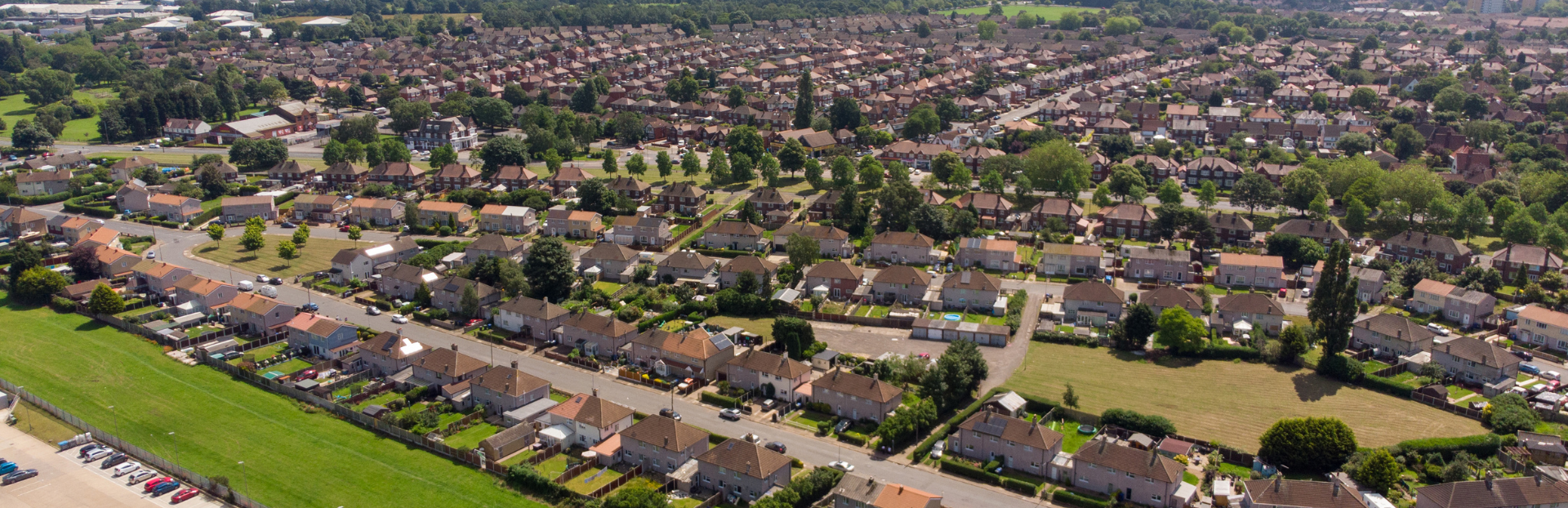
Doncaster is a city in South Yorkshire, in the north of England. Average sold prices across Doncaster sit at £174,216 on the HM Land Registry House Price Index, 39.9% below the England average of £289,946 and 16.1% below the Yorkshire and The Humber regional average of £207,750. That makes Doncaster one of the more affordable property markets in the north of England, and the low price is the headline for an investor. Two postcodes, DN12 (Conisbrough, Edlington) and DN1 (Town Centre, Bennetthorpe), open near £160,000, where a 30% deposit is around £48,000 rather than the £75,000-plus a Chester or Leeds equivalent demands.
What sets Doncaster apart in South Yorkshire is geography, not price alone. The borough sits on the East Coast Main Line and at the meeting point of the A1(M), M18, and M180, which has turned it into one of the largest logistics and distribution centres in the north. The iPort inland port handles occupiers including Amazon, IKEA, and Lidl. That jobs base, paired with sold prices roughly 40% under the England average, is why the borough's eleven yield-bearing postcodes still return between 4.1% and 5.9% gross even after the recent run-up in prices.
This guide covers the City of Doncaster metropolitan borough (ONS code E08000017), a large South Yorkshire authority that stretches from the town centre out to the market town of Bawtry, the former mining communities of Thorne and Stainforth, and the riverside villages of Conisbrough and Sprotbrough. Doncaster sits east of Sheffield, with Leeds and Wakefield to the north. All postcode data below breaks across DN1, DN2, DN3, DN4, DN5, DN6, DN7, DN8, DN10, DN11, DN12, and S64.
Article updated: July 2026
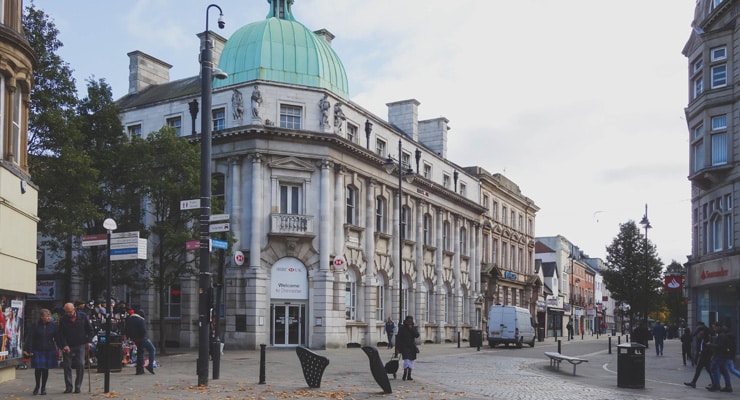
Why Invest in Doncaster?
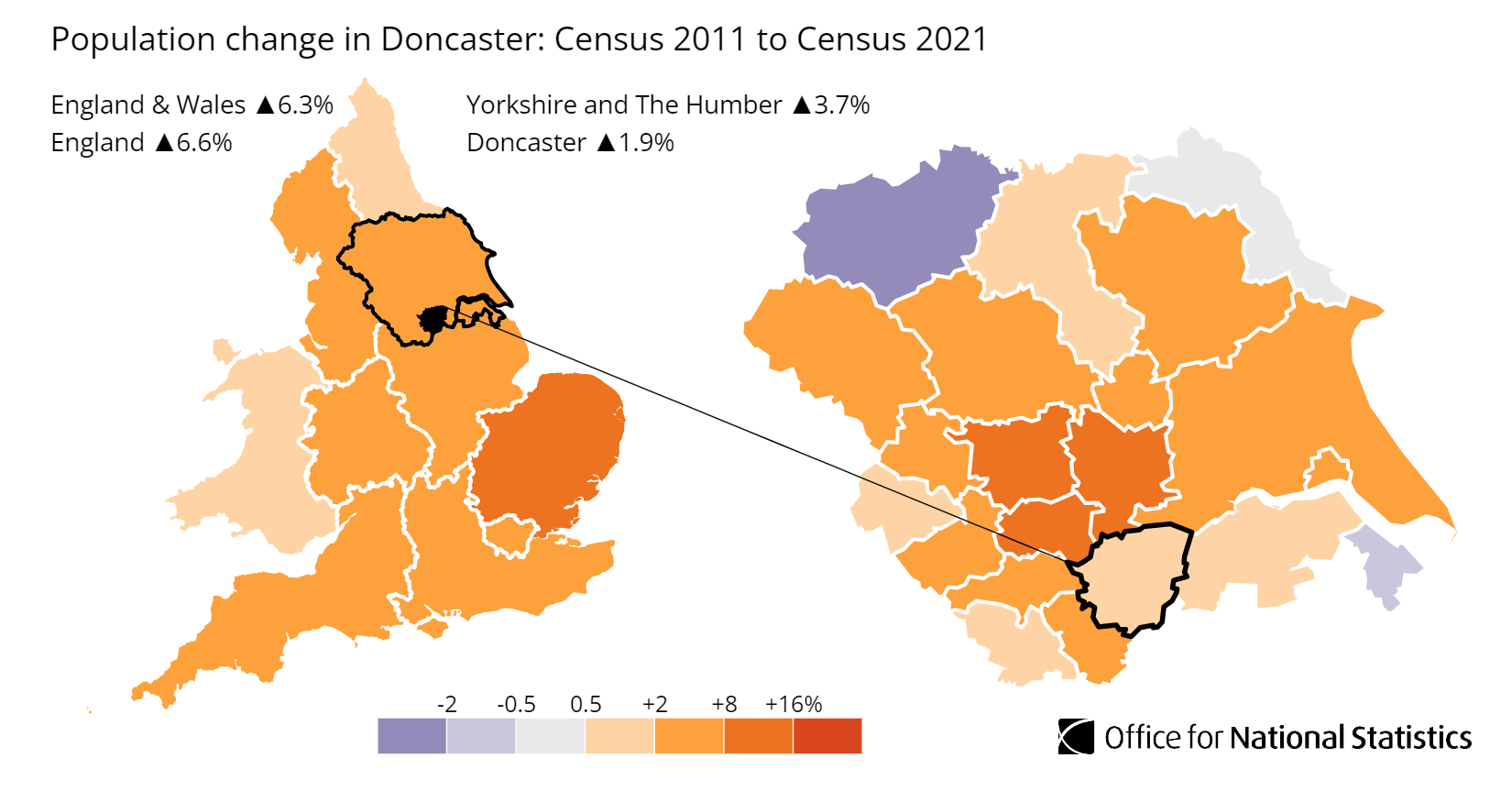
Doncaster's population reached 308,106 at the 2021 Census, up 1.89% from 302,402 in 2011. That is slower growth than the England and Wales average of 6.3%, which fits a large industrial borough rather than a fast-expanding commuter town. What carries the market here is not population pressure but jobs, and specifically the kind of jobs that come with a major freight and distribution hub. Doncaster railway station is a principal stop on the East Coast Main Line with direct trains to London King's Cross in about one hour forty minutes, which keeps the borough on the map for employers and commuters alike.
The borough's employment is weighted towards logistics, distribution, healthcare, public services, and retail. The iPort site off the M18 is one of the larger inland ports in the country, and the warehousing economy it anchors underpins a steady base of working tenants across the cheaper postcodes. Doncaster also runs its own higher-education provision through University Campus Doncaster at The Hub in the town centre, which adds a smaller renting student cohort to the DN1 and DN4 markets.
The median gross weekly salary in Doncaster is £672.40, which works out at £34,967 a year. That is marginally above the Yorkshire and The Humber regional median of £669.90 a week but 12.3% below the Great Britain median of £766.60. Wages here are regional-average rather than high, so the affordability of the market for an investor comes from low prices, not from tenants who can absorb premium rents. The local employment rate is 75.3% with unemployment at 4.9%.
Doncaster Economic Summary
- Population: 308,106 (2021 Census). Growth of 1.89% from 2011.
- Median annual salary: £34,967 (Doncaster), £34,835 (Yorkshire and The Humber), £39,863 (Great Britain)
- Employment rate: 75.3% (Doncaster)
- Unemployment rate: 4.9% (Doncaster)
- Key employment sectors: logistics and distribution, healthcare, public services, retail and wholesale, advanced manufacturing
Source: ONS Census 2021, Nomis Labour Market Profile (ASHE 2025, Employment Oct 2024-Sep 2025)
Regeneration and Investment in Doncaster
The reopening of Doncaster Sheffield Airport anchors a regeneration push backed by a funding package worth almost £160 million, alongside a 250-hectare housing-and-jobs scheme and a town-centre tech hub. The airport closed in 2022, but the City of Doncaster Council has since taken control through its FlyDoncaster company and a partnership with Munich Airport International to bring it back. The work matters to property because each project lands in a specific postcode the data below already tracks.
- Doncaster Sheffield Airport and Gateway East (Reopening, ~£160m package): The South Yorkshire Mayoral Combined Authority and City of Doncaster Council approved a funding package of almost £160 million to reopen the airport, with freight flights targeted for summer 2026 and passenger services expected between 2027 and 2028. The airport sits at the centre of the wider Gateway East employment site near DN11 (Rossington, Tickhill), and the council's own case puts the long-run potential at several thousand direct jobs. Updates at City of Doncaster Council.
- Unity Yorkshire (Under Construction): The former Hatfield Colliery site spans 250 hectares and is expected to deliver over 3,000 homes and 7,000 jobs in a mixed-use development. It falls within DN7 (Dunscroft, Hatfield, Stainforth) and DN8 (Thorne, Moorends), two of the stronger five-year-growth postcodes in the borough at 16.0% and 26.4%. Updates at Business Doncaster.
- Gateway One Digital Tech Hub (Completion 2027, £32m): A 52,000 sq ft technology hub beside Doncaster railway station, built to draw tech and creative employers into a town centre where the cheapest stock in the borough sits. The scheme adds professional employment to the DN1 market, where asking prices are the lowest of all twelve postcodes. Updates at Willmott Dixon.
Source: Office for National Statistics - Population for Doncaster
Doncaster Property Market Analysis
Average property prices across Doncaster have risen 415.2% since January 1995, from £33,818 to £174,216. The headline return is strong, but the path it took is unusual, and it is the part of Doncaster's record that an investor needs to understand. The sections below trace that cycle, then drill into current postcode-level sold prices, price per square foot, asking prices, growth, transaction volumes, and selling times.
When was the last house price crash in Doncaster?
Doncaster's sold prices are recorded by HM Land Registry at the level of the metropolitan borough, ONS code E08000017. The House Price Index runs from January 1995 to March 2026, which is 31 years of cycle data for a single market.
The 1995 to 2007 climb: Doncaster started at £33,818 in January 1995. By December 2000 prices had reached only £39,526, a slow first six years. The real acceleration came in the early 2000s as cheap credit and the buy-to-let boom reached northern markets, lifting the average to £108,494 by December 2005. Prices peaked at £120,655 in October 2007.
The 2008 to 2009 crash: From the October 2007 peak of £120,655, prices fell to £102,308 by February 2009, a drop of 15.2% in sixteen months. The worst year-on-year reading was -13.3% in February 2009. The fall was in line with the wider picture, where England declined 18.2% (£183,883 in September 2007 to £150,438 in March 2009) and Yorkshire and The Humber fell on a similar scale, but Doncaster's story did not end at this trough.
The 2010 to 2013 double dip: This is what sets Doncaster apart. Prices bounced briefly off the 2009 low, reaching £105,763 by December 2009, then slid again as the recovery stalled across the former coalfield economy. By March 2013 the average had fallen to £97,759, a fresh low that undercut the 2009 trough and sat 19.0% below the October 2007 peak. Markets like Sheffield and Leeds found their floor in 2009; Doncaster found a deeper one four years later.
Recovery, 2014 to 2019: From £106,879 in December 2014 the market climbed slowly, reaching £115,189 by December 2016 and £118,020 by December 2018. Prices first passed the October 2007 peak of £120,655 in April 2019, at £120,842. That recovery took roughly eleven and a half years, far longer than most of the North.
2020 to 2022, the pandemic surge: The stamp duty holiday and a shift towards space and affordability suited Doncaster well. Prices rose from £124,153 in June 2020 to £130,304 by December 2020, then ran to £144,513 by December 2021 and £161,369 by December 2022, a 23.8% gain across those two years.
The 2023 rate shock: Higher mortgage rates cooled the market. Prices eased to £156,126 by December 2023, a -3.2% annual reading, before steadying.
2024 to present: Growth resumed through 2024 and 2025, lifting the average to £166,214 by December 2024 and on to an all-time high of £175,308 in January 2026. It has eased very slightly to £174,216 by the latest reading in March 2026, which is 44.4% above the October 2007 pre-crash peak.
Long-term growth summary:
- 5 years (March 2021 to March 2026): 25.0% growth (£139,354 to £174,216)
- 10 years (March 2016 to March 2026): 60.3% growth (£108,655 to £174,216)
- 15 years (March 2011 to March 2026): 72.6% growth (£100,911 to £174,216)
- 20 years (March 2006 to March 2026): 60.2% growth (£108,778 to £174,216)
- 30 years (January 1995 to March 2026): 415.2% growth (£33,818 to £174,216)
The 20-year return of 60.2% is lower than the 15-year return of 72.6%, which looks odd until you remember the double dip. The March 2006 starting point of £108,778 was already inflated by the boom, while the March 2011 figure of £100,911 was caught inside the long slump. Doncaster's deep, late trough is the reason an investor who bought at the wrong point in the cycle waited so long to break even, and the reason the long-run figure rewards a buyer who held through it.
- All property types
- Detached
- Semi-detached
- Terraced
- Flats
- All property types
- Detached
- Semi-detached
- Terraced
- Flats
Sold House Prices in Doncaster
The average sold price across all property types in Doncaster is £174,216, which is 39.9% below the England average of £289,946 as of March 2026. That discount runs deep across the board, from 43.5% on detached houses to 57.6% on flats. The borough is, in effect, a market where every type of home costs roughly two-thirds of its England equivalent, and that is the single fact that defines Doncaster for an investor weighing price against yield.
| Property Type | Doncaster Average | England Average | Difference |
|---|---|---|---|
| Detached houses | £265,605 | £470,492 | -43.5% |
| Semi-detached houses | £171,248 | £288,185 | -40.6% |
| Terraced houses | £136,065 | £243,788 | -44.2% |
| Flats and maisonettes | £91,050 | £214,563 | -57.6% |
| All property types | £174,216 | £289,946 | -39.9% |
Detached houses at £265,605 are 43.5% below England's £470,492, which puts a family home with land in Doncaster at a price that would buy a terrace in much of the South. The detached stock concentrates in the village and market-town postcodes, DN10 (Bawtry), DN11 (Tickhill), and the rural fringe of DN5 (Sprotbrough). Annual growth of 3.2% points to steady owner-occupier demand rather than speculative heat.
Semi-detached houses at £171,248 sit 40.6% below England's £288,185 and track the borough-wide average almost exactly. This is the core of Doncaster's lettable stock, spread across the suburban postcodes of DN2 (Intake, Wheatley), DN12 (Conisbrough, Edlington), and S64 (Mexborough, Swinton). Annual growth of 3.9% is the strongest of the four house types here.
Terraced houses at £136,065 carry a 44.2% discount to England's £243,788. The terraced stock clusters in the town and the former mining communities, DN1 (Town Centre), DN4 (Balby, Hexthorpe), and parts of DN5 (Bentley). At this price a terrace can be bought for less than a flat in most southern cities, and annual growth of 3.5% keeps it broadly in step with the houses above it.
Flats and maisonettes at £91,050 show the deepest discount of all, 57.6% below England's £214,563. Doncaster has very little purpose-built apartment stock outside the town centre, so flat prices reflect a thin local market with no institutional-investor premium to lift them. The annual change of -1.8% is the only negative reading of the four types and confirms a soft, low-volume flat market.
Price Per Square Foot in Doncaster
At £105 per square foot, DN1 (Town Centre) is the cheapest space in Doncaster, while DN10 (Bawtry) is more than twice as dear at £238. Measuring by the square foot strips out how big the homes are, so it compares what a location commands rather than what size of house you happen to be buying. The £133 gap between DN1 and DN10 is the clearest read on how far Doncaster's market stretches, from a discounted town centre to a premium market town.
| Rank | Area | Price Per Sq Ft |
|---|---|---|
| 1 | DN1 (Town Centre, Bennetthorpe) | £105 |
| 2 | DN12 (Conisbrough, Edlington) | £158 |
| 3 | DN6 (Adwick le Street, Askern) | £168 |
| 4 | DN8 (Thorne, Moorends) | £171 |
| 5 | S64 (Mexborough, Swinton) | £173 |
| 6 | DN2 (Intake, Wheatley) | £179 |
| 7 | DN7 (Dunscroft, Hatfield, Stainforth) | £188 |
| 8 | DN4 (Balby, Hexthorpe) | £189 |
| 9 | DN5 (Bentley, Sprotbrough) | £198 |
| 10 | DN11 (Rossington, Tickhill) | £216 |
| 11 | DN3 (Armthorpe, Barnby Dun) | £219 |
| 12 | DN10 (Bawtry, Misson) | £238 |
DN1 at £105 a square foot is well clear of everywhere else, on 143 transactions analysed. The figure reflects the flatted and terraced town-centre stock, where small units pull the per-foot rate down, and it lines up with DN1 carrying the lowest asking price in the borough. For an investor buying on a budget, this is the most bricks and mortar per pound in Doncaster.
DN10 at £238 tops the table, on 226 transactions. Bawtry is a Georgian market town on the Nottinghamshire border with a separate, more affluent housing market, and that premium per foot pairs with the highest asking prices and the lowest yield in the borough. When a buyer pays this rate in Doncaster, they are paying for Bawtry specifically rather than for the wider area.
For Sale Asking Prices in Doncaster
DN1 at £160,405 and DN10 at £349,269 sit 117.7% apart, the full span of a borough with twelve very different postcodes. The mean asking price across all twelve is £219,679. Below DN10, the rest of the borough is tightly bunched: ten postcodes fall between £160,000 and £237,000.
| Rank | Area | Asking Price |
|---|---|---|
| 1 | DN1 (Town Centre, Bennetthorpe) | £160,405 |
| 2 | DN12 (Conisbrough, Edlington) | £160,839 |
| 3 | DN8 (Thorne, Moorends) | £189,356 |
| 4 | DN2 (Intake, Wheatley) | £204,912 |
| 5 | S64 (Mexborough, Swinton) | £206,549 |
| 6 | DN7 (Dunscroft, Hatfield, Stainforth) | £218,550 |
| 7 | DN6 (Adwick le Street, Askern) | £221,549 |
| 8 | DN3 (Armthorpe, Barnby Dun) | £226,417 |
| 9 | DN5 (Bentley, Sprotbrough) | £227,763 |
| 10 | DN4 (Balby, Hexthorpe) | £234,360 |
| 11 | DN11 (Rossington, Tickhill) | £236,179 |
| 12 | DN10 (Bawtry, Misson) | £349,269 |
DN1 at £160,405 and DN12 at £160,839 are within £434 of each other at the bottom of the table, but they are not the same buy. DN1 is the flatted, terraced town centre; DN12 is the riverside semis of Conisbrough and Edlington. Both sit well under the borough mean and offer the lowest barrier to entry in Doncaster.
DN10 at £349,269 is the clear outlier, 47.9% above the next postcode and more than double DN1. Bawtry's market-town character and Nottinghamshire-border setting put it in a different bracket entirely, closer to a commuter village than to the rest of Doncaster. The yield data in the sections below shows what that premium does to an income return.
House Price Growth in Doncaster
Eleven of Doncaster's twelve postcodes posted positive five-year growth, led by DN8 (Thorne, Moorends) at 26.4%, with only DN1 (Town Centre) in negative territory at -2.4%. The five-year column is broadly strong across the borough, but the one-year and three-year readings split it into recovering and softening pockets. DN8's run sits alongside the Unity Yorkshire development on its doorstep.
| Area | 1 Year | 3 Years | 5 Years |
|---|---|---|---|
| DN8 (Thorne, Moorends) | 4.7% | 12.9% | 26.4% |
| DN3 (Armthorpe, Barnby Dun) | -0.2% | 8.1% | 25.2% |
| S64 (Mexborough, Swinton) | 2.2% | 8.8% | 24.6% |
| DN12 (Conisbrough, Edlington) | 0.9% | 18.2% | 24.2% |
| DN5 (Bentley, Sprotbrough) | -0.3% | 17.6% | 23.5% |
| DN10 (Bawtry, Misson) | 9.1% | 15.1% | 21.8% |
| DN2 (Intake, Wheatley) | 0.9% | 0.3% | 20.2% |
| DN6 (Adwick le Street, Askern) | 6.4% | 2.7% | 19.3% |
| DN7 (Dunscroft, Hatfield, Stainforth) | 1.0% | -0.6% | 16.0% |
| DN11 (Rossington, Tickhill) | 2.7% | 5.7% | 12.6% |
| DN4 (Balby, Hexthorpe) | -2.8% | 2.4% | 7.3% |
| DN1 (Town Centre, Bennetthorpe) | -16.1% | -19.7% | -2.4% |
DN8 at 26.4% over five years tops the table, and DN12 at 18.2% leads on the three-year reading. Both are former-coalfield postcodes that started the period cheap, and both sit near the Unity Yorkshire site, so a low base and a regeneration story have pushed them up together. These are the postcodes where the five-year capital figure has actually worked for owners.
DN1 at -16.1% over one year and -19.7% over three is the standout weakness, the only postcode falling across every window. The town-centre flat and terrace stock, which is thin and low-volume, has corrected hard while the houses around the borough held firm. A negative growth figure on the cheapest postcode is a reminder that Doncaster's entry-level value sits in the suburban semis, not the town-centre flats.
Monthly Property Sales in Doncaster
Transaction volumes range from 7 sales a month in DN1 up to 57 in DN4 (Balby, Hexthorpe), with turnover rates from 7% in DN10 to 23% in S64. Volume tells you how active a postcode is; turnover tells you what share of the local stock changes hands each year. The busy, mid-priced suburban postcodes dominate the sales count.
| Area | Sales Per Month | Turnover | Asking Price |
|---|---|---|---|
| DN4 (Balby, Hexthorpe) | 57 | 11% | £234,360 |
| DN5 (Bentley, Sprotbrough) | 41 | 20% | £227,763 |
| DN11 (Rossington, Tickhill) | 33 | 13% | £236,179 |
| DN3 (Armthorpe, Barnby Dun) | 32 | 13% | £226,417 |
| DN6 (Adwick le Street, Askern) | 28 | 14% | £221,549 |
| S64 (Mexborough, Swinton) | 27 | 23% | £206,549 |
| DN7 (Dunscroft, Hatfield, Stainforth) | 21 | 14% | £218,550 |
| DN2 (Intake, Wheatley) | 17 | 12% | £204,912 |
| DN12 (Conisbrough, Edlington) | 17 | 16% | £160,839 |
| DN8 (Thorne, Moorends) | 15 | 15% | £189,356 |
| DN10 (Bawtry, Misson) | 11 | 7% | £349,269 |
| DN1 (Town Centre, Bennetthorpe) | 7 | 14% | £160,405 |
DN4 records the most sales at 57 a month, the highest in the borough, though its 11% turnover is modest because the postcode holds a large stock of Balby and Hexthorpe housing. S64 has the highest turnover at 23%, with Mexborough and Swinton trading hands often on lower prices. For an investor, a high turnover postcode signals an easier exit when the time comes to sell.
DN10 sits at the other end with 11 sales a month and a 7% turnover, the lowest in Doncaster. Bawtry is a small, expensive market that simply does not trade often, which an income buyer should note alongside its 3.2% yield. DN1's 7 sales a month reflects the thin town-centre stock, where the volume is low even though the asking price is the cheapest in the borough.
How Long Properties Take to Sell in Doncaster
S64 (Mexborough, Swinton) finds a buyer fastest at roughly 138 days, while DN10 (Bawtry) is the slowest by a long way at about 507 days, more than three times longer. The number of days a home spends on the market, and the months of unsold stock waiting behind it, are the exit costs a yield figure never shows. That gap between S64 and DN10 is a real holding cost for whoever owns the slower property.
| Area | Avg Days to Sell | Months of Unsold Stock | Market |
|---|---|---|---|
| S64 (Mexborough, Swinton) | 138 | 4.5 | Seller's market |
| DN5 (Bentley, Sprotbrough) | 152 | 5.0 | Seller's market |
| DN12 (Conisbrough, Edlington) | 190 | 6.3 | Balanced market |
| DN6 (Adwick le Street, Askern) | 217 | 7.1 | Balanced market |
| DN7 (Dunscroft, Hatfield, Stainforth) | 217 | 7.1 | Balanced market |
| DN11 (Rossington, Tickhill) | 234 | 7.7 | Balanced market |
| DN1 (Town Centre, Bennetthorpe) | 254 | 8.3 | Balanced market |
| DN2 (Intake, Wheatley) | 277 | 9.1 | Balanced market |
| DN3 (Armthorpe, Barnby Dun) | 277 | 9.1 | Balanced market |
| DN4 (Balby, Hexthorpe) | 277 | 9.1 | Balanced market |
| DN8 (Thorne, Moorends) | 277 | 9.1 | Balanced market |
| DN10 (Bawtry, Misson) | 507 | 16.7 | Buyer's market |
S64 and DN5 are the only two postcodes the data reads as seller's markets, clearing in 138 and 152 days on 4.5 and 5.0 months of stock. Most of the borough sits balanced around the seven-to-nine-month mark. DN10 is the lone buyer's market, with 16.7 months of unsold Bawtry stock translating into the longest waits in Doncaster, so the premium postcode that pays the lowest yield also takes the longest to sell back out.
What Type of Property Can You Buy in Doncaster?
The housing mix splits the borough sharply: DN1 (Town Centre) is 45.1% flats and 34.5% terraces, while DN10 (Bawtry) is 64.7% detached and almost no flats. Which strategy fits a postcode depends on what is actually built there, and Doncaster runs the full range from a flatted town centre to detached market towns. The figures below come from 2021 Census records for each postcode.
| Area | Detached | Semi-detached | Terraced | Flats |
|---|---|---|---|---|
| DN1 (Town Centre, Bennetthorpe) | 5.4% | 14.7% | 34.5% | 45.1% |
| DN2 (Intake, Wheatley) | 9.8% | 58.9% | 14.2% | 14.6% |
| DN3 (Armthorpe, Barnby Dun) | 39.2% | 39.6% | 13.4% | 6.5% |
| DN4 (Balby, Hexthorpe) | 25.7% | 41.6% | 22.2% | 10.0% |
| DN5 (Bentley, Sprotbrough) | 35.9% | 39.6% | 18.6% | 5.3% |
| DN6 (Adwick le Street, Askern) | 52.6% | 31.0% | 12.3% | 3.5% |
| DN7 (Dunscroft, Hatfield, Stainforth) | 53.3% | 26.6% | 6.1% | 1.4% |
| DN8 (Thorne, Moorends) | 54.6% | 27.9% | 9.5% | 1.8% |
| DN10 (Bawtry, Misson) | 64.7% | 23.2% | 9.9% | 1.6% |
| DN11 (Rossington, Tickhill) | 53.3% | 31.2% | 9.5% | 5.4% |
| DN12 (Conisbrough, Edlington) | 35.2% | 45.1% | 12.5% | 3.5% |
| S64 (Mexborough, Swinton) | 34.9% | 39.5% | 13.2% | 11.3% |
DN1 is the only postcode where flats and terraces dominate, at 45.1% and 34.5% between them, with detached houses making up just 5.4%. That smaller-unit stock is what usually drives the buy-to-let market, and it lines up with DN1 holding the lowest asking price in the borough. The town-centre flats suit single lets and the smaller student cohort, while the terraces offer low-cost family lets.
DN10 sits at the opposite end, 64.7% detached and only 1.6% flats. Bawtry's housing is weighted firmly towards owner-occupier family homes, which matches its premium asking prices and the borough's lowest yield. The semi-detached middle ground is widest in DN2 at 58.9%, the workhorse stock for a steady single let.
Flats cover both purpose-built blocks and conversions; a few non-standard dwellings are excluded, so rows may not total 100%.
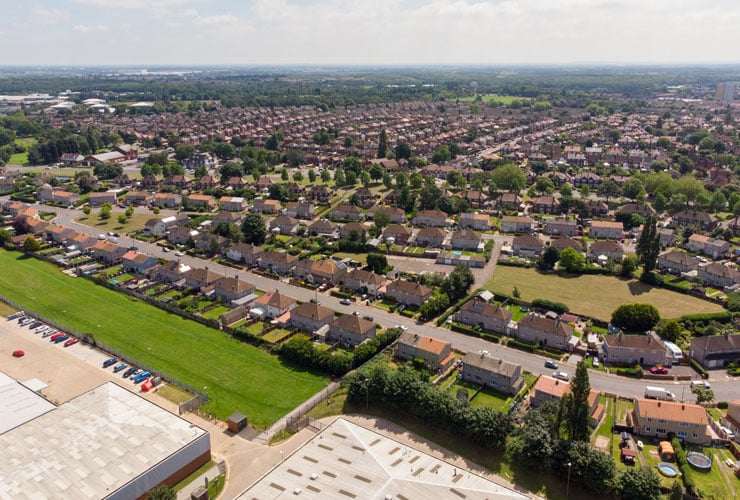
Doncaster Rental Market Analysis
Monthly rents in Doncaster run from £720 in DN1 to £1,001 in DN3, with gross yields between 3.2% and 5.9% across the borough's twelve postcodes. If you are asking is buy-to-let worth it in Doncaster, the sections below break down rents, yields, and tenant affordability postcode by postcode. The low asking prices mean Doncaster can carry a respectable yield on modest rents, which is the opposite of the premium-rent, low-yield pattern further south. Investors looking at starting a property business in Yorkshire will find the borough's cheaper postcodes do most of the income work. Browse current buy-to-let property for sale across the region.
Average Rent & Gross Rental Yields in Doncaster
Gross rental yields in Doncaster range from 3.2% in DN10 (Bawtry) to 5.9% in DN12 (Conisbrough, Edlington). The cheapest postcodes deliver the strongest yields, and the most expensive delivers the weakest, the familiar inverse relationship between price and income return. DN12 pairs a £790 monthly rent with a £160,839 asking price to top the table, while DN10's £349,269 price drags its yield to the bottom despite a £923 rent.
| Area | Average Monthly Rent | Asking Price | Gross Yield |
|---|---|---|---|
| DN12 (Conisbrough, Edlington) | £790 | £160,839 | 5.9% |
| DN1 (Town Centre, Bennetthorpe) | £721 | £160,405 | 5.4% |
| DN3 (Armthorpe, Barnby Dun) | £1,001 | £226,417 | 5.3% |
| DN2 (Intake, Wheatley) | £832 | £204,912 | 4.9% |
| DN11 (Rossington, Tickhill) | £936 | £236,179 | 4.8% |
| DN7 (Dunscroft, Hatfield, Stainforth) | £870 | £218,550 | 4.8% |
| DN8 (Thorne, Moorends) | £746 | £189,356 | 4.7% |
| DN5 (Bentley, Sprotbrough) | £835 | £227,763 | 4.4% |
| S64 (Mexborough, Swinton) | £734 | £206,549 | 4.3% |
| DN4 (Balby, Hexthorpe) | £819 | £234,360 | 4.2% |
| DN6 (Adwick le Street, Askern) | £764 | £221,549 | 4.1% |
| DN10 (Bawtry, Misson) | £923 | £349,269 | 3.2% |
DN12 at 5.9% combines a sub-£161,000 entry with a £790 rent to give the best income return in Doncaster. A 30% deposit there is £48,252, the cheapest house-led entry in the borough, into Conisbrough and Edlington where the riverside semis underpin demand. DN1 follows at 5.4% on a near-identical price, though its town-centre flat stock and -16.1% recent growth make it the higher-risk version of the same low entry.
DN10 at 3.2% sits at the foot of the table. Bawtry's £923 rent is healthy in isolation, but against a £349,269 asking price the income return is compressed, and the postcode's slow market makes it an owner-occupier and capital play rather than a yield one.
Gross Rental Yield by Postcode
Is Doncaster Rent High?
Monthly rents in Doncaster take between 24.7% and 34.4% of the local median gross monthly salary. The widely used affordability marker is 30% of gross income. Nine of the twelve postcodes fall under that line, which is a comfortable spread by national standards and reflects rents that have stayed in step with local wages rather than running ahead of them.
The median gross weekly salary in Doncaster is £672.40, which equates to £2,914 per month or £34,967 per year. That is marginally above the Yorkshire and The Humber median of £669.90 a week and below the Great Britain median of £766.60 a week. Data from the Nomis Labour Market Profile (ASHE 2025).
| Rank | Area | Rent as % of Income |
|---|---|---|
| 1 | DN3 (Armthorpe, Barnby Dun) | 34.4% |
| 2 | DN11 (Rossington, Tickhill) | 32.1% |
| 3 | DN10 (Bawtry, Misson) | 31.7% |
| 4 | DN7 (Dunscroft, Hatfield, Stainforth) | 29.8% |
| 5 | DN2 (Intake, Wheatley) | 28.6% |
| 6 | DN5 (Bentley, Sprotbrough) | 28.6% |
| 7 | DN4 (Balby, Hexthorpe) | 28.1% |
| 8 | DN12 (Conisbrough, Edlington) | 27.1% |
| 9 | DN6 (Adwick le Street, Askern) | 26.2% |
| 10 | DN8 (Thorne, Moorends) | 25.6% |
| 11 | S64 (Mexborough, Swinton) | 25.2% |
| 12 | DN1 (Town Centre, Bennetthorpe) | 24.7% |
DN1 at 24.7% is the most affordable for tenants, with a £721 rent leaving real headroom against a £2,914 monthly salary. Affordable rents tend to mean fewer voids and fewer arrears, because tenants who are not stretched stay put. S64 at 25.2% and DN6 at 26.2% sit close behind, the same low-rent, low-price profile that runs through Doncaster's cheaper postcodes.
DN3 at 34.4% is the only postcode that crosses comfortably above the 30% line, where Armthorpe's £1,001 rent is the highest in the borough. Tenants paying that level are typically dual-income households in the newer family stock near the M18 rather than single earners on the median wage.
How Big Is Doncaster's Private Rented Sector?
The private rented sector is deepest in DN1 at 56.8% of households, far ahead of anywhere else, while most of the borough sits between 13% and 22%. The share of homes already let privately is a guide to how large and how tested the local tenant pool is. DN1's figure marks it out as a genuine renting town centre; the rest of Doncaster is predominantly owner-occupied.
| Area | Owned Outright | Owned with Mortgage | Private Rented | Social Rented |
|---|---|---|---|---|
| DN1 (Town Centre, Bennetthorpe) | 14.1% | 12.5% | 56.8% | 16.3% |
| DN4 (Balby, Hexthorpe) | 30.4% | 33.2% | 22.4% | 13.2% |
| DN5 (Bentley, Sprotbrough) | 40.3% | 27.7% | 20.7% | 10.3% |
| DN8 (Thorne, Moorends) | 49.0% | 26.3% | 19.9% | 4.2% |
| DN2 (Intake, Wheatley) | 24.7% | 28.5% | 17.8% | 28.2% |
| DN11 (Rossington, Tickhill) | 45.4% | 29.6% | 17.5% | 7.2% |
| DN3 (Armthorpe, Barnby Dun) | 36.8% | 33.4% | 16.6% | 12.8% |
| S64 (Mexborough, Swinton) | 40.2% | 29.7% | 15.6% | 14.0% |
| DN7 (Dunscroft, Hatfield, Stainforth) | 51.1% | 28.8% | 14.6% | 5.0% |
| DN6 (Adwick le Street, Askern) | 44.5% | 32.6% | 13.6% | 8.9% |
| DN12 (Conisbrough, Edlington) | 41.0% | 27.2% | 13.1% | 16.2% |
| DN10 (Bawtry, Misson) | 49.9% | 31.7% | 12.7% | 5.3% |
DN1 stands alone with 56.8% of households privately rented, a depth of tenant demand no other Doncaster postcode comes close to. The town centre is, in effect, a rental market first and an ownership market second, which fits its flat-heavy stock, lowest asking price, and strongest rental-listing activity. For a landlord, that is the deepest established tenant pool in the borough, set against the weakest recent capital growth.
DN4 and DN5 follow at 22.4% and 20.7%, the next tier of established rental demand in Balby and Bentley. At the other end, the village and market-town postcodes, DN10, DN12, and DN6, all sit near 13%, where owner-occupation dominates and the rental market is thinner. DN2 is the outlier on social housing at 28.2%, which narrows its private-rented base despite a central location.
Only DN1 and DN4 carry enough homes advertised to let to read the rental market with confidence, and in both the balance currently favours landlords. Around 42 homes were on the rental market in DN1, letting in roughly 59 days on average, and DN4 was tighter still at about 40 days, which points to live tenant demand rather than a glut. The other postcodes have too few rental listings at any one time to read reliably.
Local Housing Allowance Rates in Doncaster
Doncaster's postcodes span three Broad Rental Market Areas, so the housing-benefit ceiling depends on which part of the borough a property sits in. Most of Doncaster falls in the Doncaster BRMA, where Local Housing Allowance runs from £70.00 a week for a shared room to £166.85 a week for a four-bedroom home. Two postcodes break away: DN10 (Bawtry) sits in the North Nottingham BRMA and S64 (Mexborough) in the Rotherham BRMA, both with slightly higher rates at the larger end. LHA sets the most a tenant on housing support can receive towards rent, so for that part of the market it acts as a floor. The rates below are the June 2026 figures; to check the live rate for a specific address, use the government's official Local Housing Allowance calculator.
| Property Size | Doncaster BRMA (Weekly) | North Nottingham BRMA (Weekly) | Rotherham BRMA (Weekly) |
|---|---|---|---|
| Shared accommodation | £70.00 | £78.00 | £80.85 |
| 1 bedroom | £97.81 | £102.41 | £98.96 |
| 2 bedrooms | £115.07 | £126.58 | £115.07 |
| 3 bedrooms | £126.58 | £134.63 | £126.58 |
| 4 bedrooms | £166.85 | £186.41 | £188.14 |
In the Doncaster BRMA, the two-bedroom rate of £115.07 a week works out at about £499 a month, which sits below the £720 to £1,001 open-market rents recorded across the borough. A benefit-backed tenancy therefore lets at a discount to the open market, and the stock that fits within these rates concentrates in the cheaper postcodes, DN1, DN12, and S64, where asking prices and rents are lowest. The North Nottingham and Rotherham areas pay a little more on a four-bed, which is worth knowing for a larger let in Bawtry or Mexborough, but for most of Doncaster the single Doncaster BRMA rate applies.
Buy-to-Let Considerations
Are House Prices High in Doncaster? Price-to-Earnings Ratios
Buying in Doncaster costs between 4.6 and 10.0 times the local median annual salary. This uses the Nomis Labour Market Profile for Doncaster, which puts the median gross annual income for Doncaster residents at £34,967.
The national benchmark for price-to-earnings is 7.3x (England's average sold price of £289,946 divided by the Great Britain median annual salary of £39,863). Eleven of Doncaster's twelve postcodes sit below that benchmark, meaning the borough is materially more affordable against local incomes than England is against national ones.
| Rank | Area | Price-to-Earnings Ratio |
|---|---|---|
| 1 | DN1 (Town Centre, Bennetthorpe) | 4.6x |
| 2 | DN12 (Conisbrough, Edlington) | 4.6x |
| 3 | DN8 (Thorne, Moorends) | 5.4x |
| 4 | DN2 (Intake, Wheatley) | 5.9x |
| 5 | S64 (Mexborough, Swinton) | 5.9x |
| 6 | DN7 (Dunscroft, Hatfield, Stainforth) | 6.3x |
| 7 | DN6 (Adwick le Street, Askern) | 6.3x |
| 8 | DN3 (Armthorpe, Barnby Dun) | 6.5x |
| 9 | DN5 (Bentley, Sprotbrough) | 6.5x |
| 10 | DN4 (Balby, Hexthorpe) | 6.7x |
| 11 | DN11 (Rossington, Tickhill) | 6.8x |
| 12 | DN10 (Bawtry, Misson) | 10.0x |
DN1 and DN12 at 4.6x are the most affordable entry points in Doncaster, well under the national 7.6x benchmark. A property at four and a half times local earnings is among the most accessible of any northern market, and it is what gives the borough its low-deposit, decent-yield character. DN8 at 5.4x and DN2 at 5.9x extend that affordable band into the suburban semis.
DN10 at 10.0x stands clear above everywhere else and above the national benchmark. At ten times the local median salary, Bawtry is firmly premium territory bought by dual-income households or buyers trading in from elsewhere. The elevated ratio is the same story the yield, growth, and selling-time data all tell about DN10: a capital and lifestyle market, not an income one.
Deposit Requirements in Doncaster
A 30% deposit on a Doncaster buy-to-let runs from £48,122 in DN1 to £104,781 in DN10. The gap between the cheapest and most expensive deposit is £56,659. For investors comparing Doncaster with the rest of South Yorkshire, the borough's entry deposits sit below Sheffield and well below Leeds, where the cheapest postcodes start materially higher.
Beyond the deposit, the SDLT calculator and other buy to let fees affect the total capital required.
| Rank | Area | 30% Deposit Required |
|---|---|---|
| 1 | DN1 (Town Centre, Bennetthorpe) | £48,122 |
| 2 | DN12 (Conisbrough, Edlington) | £48,252 |
| 3 | DN8 (Thorne, Moorends) | £56,807 |
| 4 | DN2 (Intake, Wheatley) | £61,474 |
| 5 | S64 (Mexborough, Swinton) | £61,965 |
| 6 | DN7 (Dunscroft, Hatfield, Stainforth) | £65,565 |
| 7 | DN6 (Adwick le Street, Askern) | £66,465 |
| 8 | DN3 (Armthorpe, Barnby Dun) | £67,925 |
| 9 | DN5 (Bentley, Sprotbrough) | £68,329 |
| 10 | DN4 (Balby, Hexthorpe) | £70,308 |
| 11 | DN11 (Rossington, Tickhill) | £70,854 |
| 12 | DN10 (Bawtry, Misson) | £104,781 |
DN1 and DN12 are the cheapest way into Doncaster at around £48,000, but the two deposits buy opposite risk profiles. DN12 puts the money into Conisbrough and Edlington semis on the borough's best yield at 5.9% and a solid 24.2% five-year capital record. DN1 buys town-centre flats at a near-identical price, on a higher 5.4% yield but with the weakest recent growth in Doncaster at -16.1% over the year. Same outlay, very different bet.
At the top, DN10 needs £104,781, more than double DN1's deposit, and that step does not buy more income. It buys Bawtry: a premium market town with the lowest yield, the longest selling times, and a capital-growth profile aimed at owner-occupiers. For an income investor, the deposit ladder in Doncaster runs the wrong way past about £70,000.

What the Doncaster Data Tells Buy-to-Let Investors
Doncaster's case is affordability: sold prices roughly 40% below England, with the cheapest postcodes still paying a workable yield. DN12 (Conisbrough, Edlington) is the clearest income buy, a 5.9% gross yield on a £160,839 asking price, where a 30% deposit of £48,252 is the lowest house-led entry in the borough. It pairs that yield with 24.2% five-year capital growth, so the cheap entry has not come at the cost of recent performance. For investment properties UK on a budget in Yorkshire, this is the postcode the numbers point to first.
DN1 (Town Centre) offers a near-identical asking price and the deepest tenant pool in the borough, 56.8% privately rented, but it comes with a warning the rest of Doncaster does not. Its town-centre flats have fallen 16.1% over the past year and 19.7% over three, the only postcode negative across every window. DN1 is for an investor who wants the rental depth and is buying on yield rather than capital, with the recent price weakness understood going in.
The suburban band, DN8 (Thorne, Moorends) at 26.4% five-year growth, DN3 (Armthorpe) at 25.2%, and S64 (Mexborough) at 24.6%, is where Doncaster's capital story has played out, helped by low starting prices and the Unity Yorkshire scheme on DN7 and DN8's doorstep. At the top, DN10 (Bawtry) is the borough's premium outlier: a 3.2% yield, 16.7 months of unsold stock, and a 10.0x price-to-earnings ratio mark it as an owner-occupier market rather than an income one. Buyers who want to come in below asking often work the off market property channels before stock reaches the portals.
Doncaster has no selective licensing covering private landlords borough-wide, though a designated-area scheme applies in Hexthorpe and HMOs need a licence, both set out on the City of Doncaster Council's property licensing pages. With regional-average wages, a logistics-led jobs base, and an airport reopening on the horizon, it reads as a low-cost, decent-yield market where the value sits in the cheaper suburban semis rather than the town-centre flats or the premium market town.
How Doncaster Compares
Doncaster's mean asking price of £219,679 is the lowest of four South and West Yorkshire locations compared here, and its top yield of 5.9% beats Wakefield's at the other end of the table. The comparison places Doncaster alongside three nearby markets, each with a different investor profile. The mean asking price and mean monthly rent are simple averages across all postcodes with data. Top gross yield is the single highest postcode yield in each location.
| Location | Mean Asking Price | Mean Monthly Rent | Mean Gross Yield | Top Yield (postcode) |
|---|---|---|---|---|
| Doncaster | £219,679 | £831 | 4.5% | 5.9% (DN12) |
| Sheffield | £240,169 | £935 | 4.7% | 8.5% (S3) |
| Wakefield | £255,177 | £865 | 4.1% | 4.8% (WF10) |
| Leeds | £291,071 | £1,147 | 4.7% | 8.9% (LS2) |
Doncaster is the cheapest entry in this group at £219,679 mean asking price, around 8% below Sheffield and 25% below Leeds. Its top yield of 5.9% sits ahead of Wakefield's 4.8%, so a buyer chasing income on a tight budget has a real case for Doncaster over its western neighbour.
For investors prioritising the highest headline yields, Sheffield at 8.5% and Leeds at 8.9% pull well clear, driven by their student and city-centre flat markets, though both carry higher asking prices and a different tenant mix. Doncaster's pitch is not the top yield in Yorkshire; it is the lowest entry cost paired with a solid mid-table return and a regeneration story still to play out. For a data-driven comparison across every UK location, see our best buy-to-let areas guide.
Frequently Asked Questions
Is Doncaster a good place to live for buy-to-let tenants?
It works on jobs more than on wages. Doncaster's employment rate is 75.3% and the borough is one of the larger logistics and distribution centres in the north, with the iPort site and major warehousing along the M18 keeping a steady base of working tenants in the cheaper postcodes. The median wage of £672.40 a week is only regional-average, so this is not a market where tenants stretch to premium rents.
It is also well connected for the price. Doncaster station puts London King's Cross within about one hour forty minutes on the East Coast Main Line, and the A1(M), M18, and M180 all meet here, which suits commuters and the freight economy alike.
What are the best areas in Doncaster for property investment?
For income, DN12 (Conisbrough and Edlington) leads, with the borough's top yield at 5.9% on a £160,839 asking price and a 24.2% five-year capital record behind it. DN1 (Town Centre) matches the low entry and has the deepest rental market at 56.8% privately rented, but its flats have fallen 16.1% over the past year, so it suits a yield buyer rather than a capital one.
For capital growth, the suburban band has done the work: DN8 (Thorne, Moorends) is up 26.4% over five years, DN3 (Armthorpe) 25.2%, and S64 (Mexborough) 24.6%. DN10 (Bawtry) is the premium exception at the top, with the highest prices and lowest 3.2% yield, better suited to owner-occupiers than to investors.
How does Doncaster compare to Sheffield for buy-to-let?
They aim at different things. Doncaster is the cheaper entry at a £219,679 mean asking price against Sheffield's £240,169, and its low prices give a respectable 5.9% top yield. Sheffield runs a much higher top yield at 8.5%, driven by its large student and city-centre flat market, but on higher prices and a different tenant base.
If the priority is the highest income return in South Yorkshire, Sheffield's headline yields are stronger. If it is the lowest capital outlay with a solid mid-table yield and a regeneration story still to come, Doncaster makes the case.
Can I find buy-to-let property under £170,000 in Doncaster?
Yes, more easily here than in most of Yorkshire. Two whole postcodes average below that figure: DN1 (Town Centre) at £160,405 and DN12 (Conisbrough, Edlington) at £160,839. Below the postcode averages, the cheaper property types open up further, with terraced houses across the borough averaging £136,065 and flats just £91,050 on the Land Registry index. If sub-£170,000 is the target, DN1 and DN12 are the places to start, or explore BMV properties.
When will Doncaster Sheffield Airport reopen and does it affect property prices?
Not immediately. The City of Doncaster Council has approved a funding package of almost £160 million to reopen the airport, with freight flights targeted for summer 2026 and passenger services expected between 2027 and 2028. It anchors the wider Gateway East employment site near DN11 (Rossington, Tickhill).
Any effect on house prices is a medium-term story tied to the jobs it brings rather than the flights themselves. The postcodes nearest the site, DN11 and the eastern band, are the ones to watch, but a buyer pricing in the airport today is looking several years ahead.
What are average house prices in Doncaster?
The average sold price across Doncaster is £174,216 on the Land Registry index, about 39.9% below the England average of £289,946 as of March 2026. Asking prices by postcode run from £160,405 in DN1 (Town Centre) up to £349,269 in DN10 (Bawtry), with a borough-wide mean of £219,679. By type, detached homes average £265,605, semi-detached £171,248, terraced £136,065, and flats £91,050.
Through a buy-to-let lens, DN12 is the top-yielding postcode at 5.9% and among the cheapest, while DN10 is the dearest and lowest-yielding at 3.2%.
What are the Local Housing Allowance rates in Doncaster?
Doncaster spans three Broad Rental Market Areas, so the rate depends on the postcode. Most of the borough is in the Doncaster BRMA, where June 2026 rates run at £70.00 a week for a shared room, £97.81 for a one-bed, £115.07 for two beds, £126.58 for three, and £166.85 for four. DN10 (Bawtry) falls in the North Nottingham BRMA and S64 (Mexborough) in the Rotherham BRMA, both a little higher on a four-bed. That figure is the most a tenant on housing support can claim toward rent, so for that part of the market it sets a floor.
What type of property is most common in Doncaster?
It varies sharply by postcode, which is unusual for one borough. DN1 (Town Centre) is 45.1% flats and 34.5% terraces, the only flat-led postcode in Doncaster. The village and former-coalfield postcodes are the opposite: DN10 (Bawtry) is 64.7% detached, with DN8, DN7, and DN11 all above 53%. The semi-detached middle ground is widest in DN2 at 58.9%, which is the typical workhorse stock for a single let.
How do I buy an investment property in Doncaster?
Decide first whether the goal is income or capital, because in Doncaster they point to different postcodes. DN12 (Conisbrough, Edlington) leads on yield at 5.9% and is among the cheapest at £160,839, while the suburban band of DN8, DN3, and S64 has delivered the strongest five-year growth. Budget for a 30% deposit, which runs from £48,122 in DN1 up to £104,781 in DN10.
Beyond what is listed openly, plenty of experienced investors buy under asking through off-market properties and BMV properties for sale. To see what is available now, browse investment property for sale in doncaster or buy-to-let homes for sale.
Ready to buy property?
Access off-market investment properties with an average 8%+ annual gross yield (beating the UK's typical 3-5%).
Get property alerts