
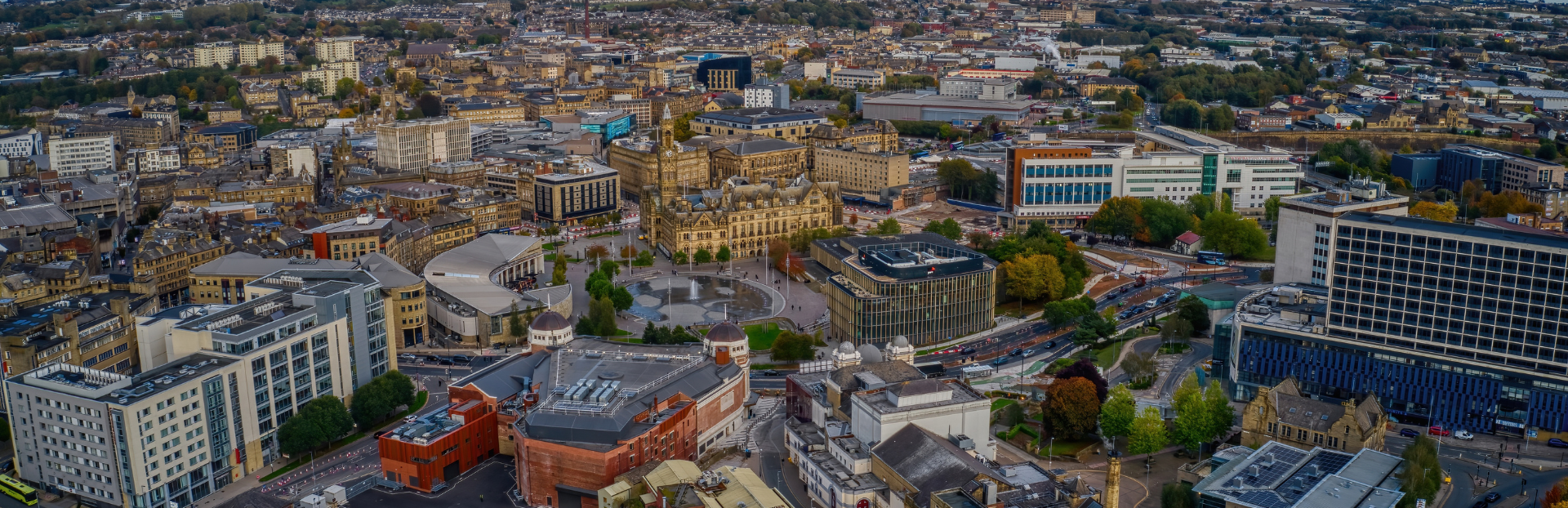
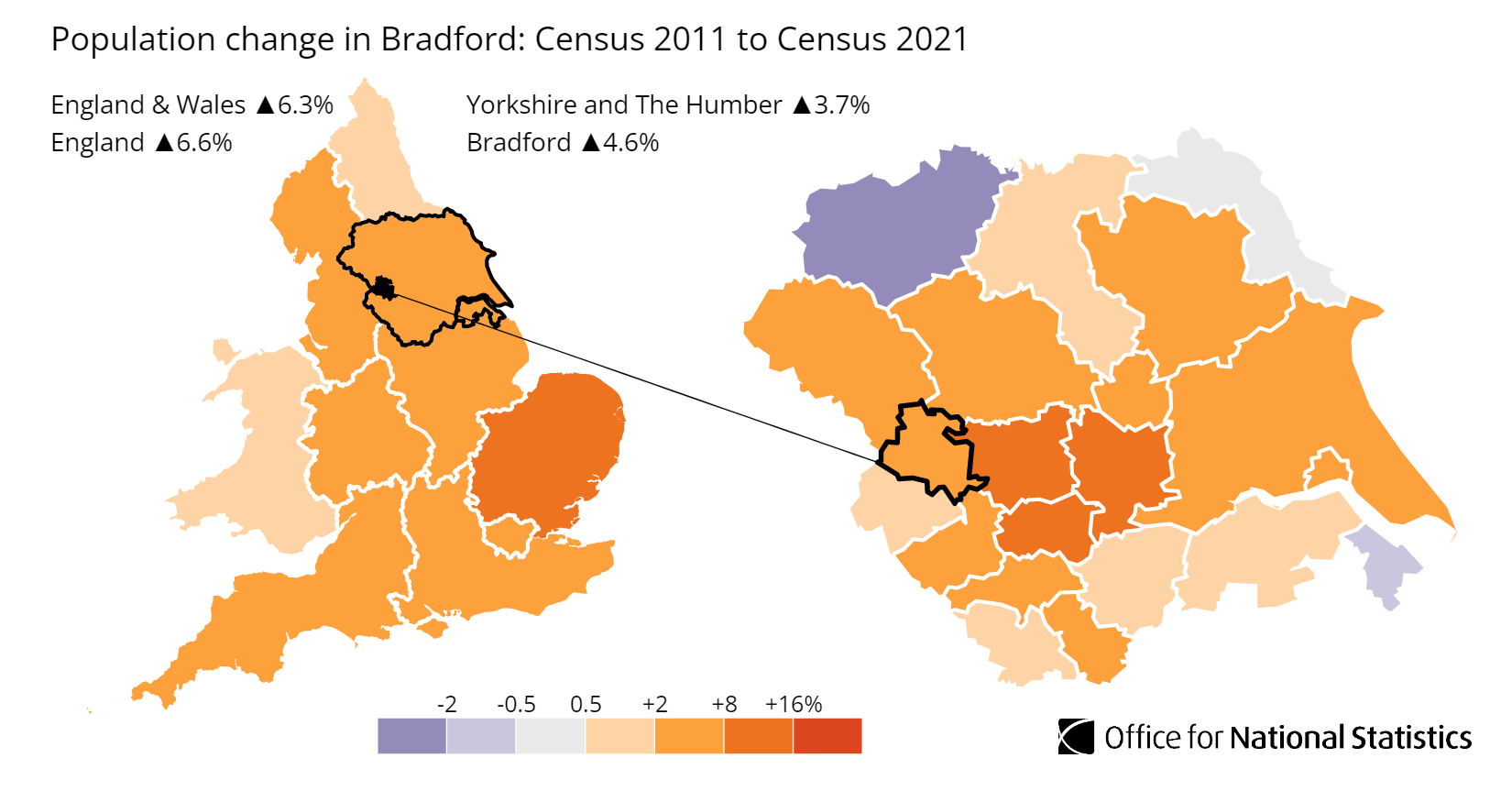
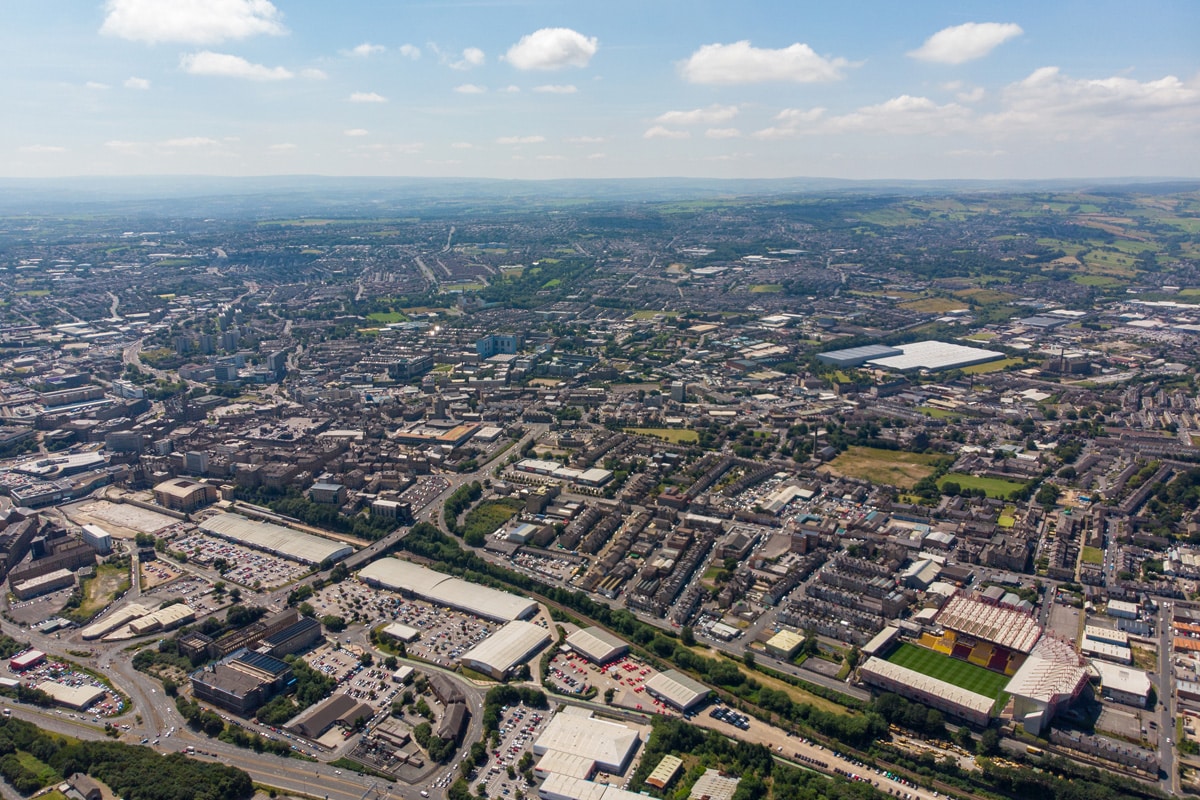
Bradford is a city in West Yorkshire, in the north of England, and this guide covers the wider City of Bradford district around it. Average sold prices across the City of Bradford district sit at £186,734 on the HM Land Registry House Price Index, 35.6% below England's £289,946 and 10.1% under the Yorkshire and the Humber regional average of £207,750. That makes Bradford one of the most affordable large districts in England, and it shows up most sharply in BD1, where a city-centre flat market prices in at £62,156 and returns a 12.0% gross yield. The district's population grew 4.6% between the 2011 and 2021 censuses, from 522,452 to 546,412 residents.
Bradford's low asking price is the whole story for an income investor. The median gross annual salary across the district is £33,526, below the Yorkshire and the Humber figure of £34,835 and the Great Britain median of £39,125, yet prices are low enough that most postcodes still buy below seven times local earnings. The spread runs from BD1 at £62,156 up to Ilkley (LS29) at £449,543, so the City of Bradford district holds an inner-city investment market and a Wharfedale commuter market inside one local authority, with the higher yields sitting firmly at the cheaper end.
This guide covers the City of Bradford metropolitan district (ONS code E08000032) across 22 postcodes, from BD1 through to BD22 plus LS29 (Ilkley). Bradford sits in West Yorkshire, nine miles west of Leeds, within the Yorkshire and the Humber region. Investors comparing options nearby can also look at Leeds buy-to-let next door.
Article updated: July 2026
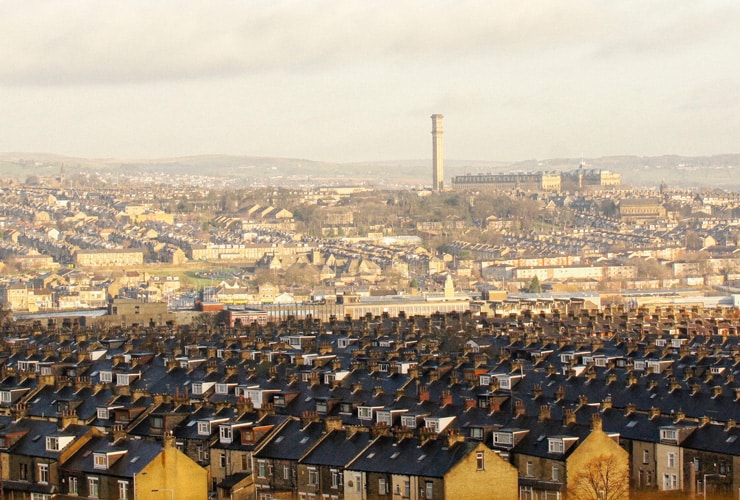
Why Invest in Bradford?
The City of Bradford district added 23,960 residents between the 2011 and 2021 censuses, a 4.6% rise to 546,412, making it one of the largest local authorities in England by population. That growth ran below the England and Wales average of 6.3%, but it came from a young and settled resident base rather than from speculative new-build. Bradford has one of the youngest populations of any major English city, which feeds steady, long-run housing demand at the affordable end of the market.
The local employment rate of 69.7% sits below both the Yorkshire and the Humber average of 74.6% and the Great Britain figure of 75.6%, and unemployment at 7.2% runs above both. The economy leans on health and social work, higher education, manufacturing and a growing digital and creative base. The University of Bradford and Bradford College together hold a student population that underpins rental demand in the city centre and the inner postcodes, while Bradford Royal Infirmary and the wider NHS trust are among the district's largest employers. Bradford's year as UK City of Culture in 2025 pulled in national attention and public money for the centre.
Median gross annual earnings across the district are £33,526, which is 3.8% below the Yorkshire and the Humber median of £34,835 and 14.3% under the Great Britain median of £39,125. Lower wages would squeeze yields in a dearer market, but Bradford's house prices are low enough that the rent-to-price maths still works. A modest rent on a cheap property produces a stronger gross return than a higher rent on an expensive one, which is why the district's yields hold up across most postcodes.
Bradford Economic Summary
- Population (City of Bradford district): 546,412 (2021 Census). Growth of 4.6% from 2011.
- Median annual salary: £33,526 (local), £34,835 (Yorkshire and the Humber), £39,125 (Great Britain)
- Employment rate: 69.7% (local), 74.6% (Yorkshire and the Humber), 75.6% (Great Britain)
- Unemployment rate: 7.2% (local)
- Key employment sectors: Health and social work, higher education, manufacturing, financial and business services, digital and creative industries
Source: ONS Census 2021, Nomis Labour Market Profile (ASHE 2025, Employment Oct 2024-Sep 2025)
Regeneration and Investment in Bradford
More than £100 million across three city-centre schemes is reshaping the heart of Bradford, with the largest of them targeting up to 1,000 new homes. The 2025 City of Culture programme brought the spending forward, and the pipeline now mixes housing, a new market hall and the first Grade A offices the centre has seen in a generation.
- Bradford City Village (planning approved Feb 2026, up to 1,000 homes): A residential-led regeneration of the former retail core in the Top of Town and Darley Street areas, delivered by Bradford Council with English Cities Fund. The hybrid planning application was approved in February 2026, with early phases focused on new homes around Chain Street and the Oastler site. This is the biggest city-centre housing programme in the district and lands directly in BD1 and the surrounding postcodes. Updates at Bradford City Village.
- Darley Street Market (now open): A 4,000-square-metre indoor market hall with integrated low-energy heating and a strong events and food-and-drink offer, anchoring footfall and the evening economy in the city centre. The new venue replaces Bradford's older market provision and signals sustained council commitment to the centre, which supports rental demand from workers and visitors. Updates at Bradford Markets.
- One City Park (completed): Bradford's first new Grade A office building in more than 20 years, a BREEAM Excellent workspace next to City Park delivered on time and on budget, with professional-services tenants anchoring it. Commercial demand in the centre had been thin for years, and a fully-let Grade A scheme is the kind of signal that tends to precede residential confidence. Updates at Constructing Excellence.
Source: Office for National Statistics - Population for Bradford
Bradford Property Market Analysis
Average property prices across the City of Bradford district have risen 374.9% since January 1995, from £39,320 to £186,734. The sections below trace that path cycle by cycle, then drill into postcode-level data for sold prices, price per square foot, asking prices, growth and monthly transactions.
When was the last house price crash in Bradford?
The City of Bradford district records all sold prices at local-authority level on the HM Land Registry House Price Index, which runs from January 1995 to the latest reading in March 2026. Bradford's downturn after 2007 was both deeper and longer than the national one, which makes its cycle worth reading carefully before pricing in downside risk.
The 1995 to 2007 climb: Bradford opened 1995 at £39,320 and barely moved for five years, sitting at £43,472 by January 2000 while southern England ran ahead. The boom then arrived hard. Annual growth peaked at 36.5% in September 2004, and the average reached £131,900 in November 2007. Cheap credit had pushed prices well past what local wages could carry.
2008 to 2013, a long decline: Prices fell from the November 2007 peak of £131,900, with the worst year-on-year reading at -15.5% in January 2009. Unlike many markets that found their floor in 2009, Bradford kept sliding. After a brief lift to £117,135 by December 2009, it drifted down again to a trough of £104,950 in February 2013. That is a peak-to-trough fall of 20.4% spread over more than five years, steeper than England's drop and longer in the tail.
Recovery, 2013 to 2018: The climb back was slow. Values rebuilt at low single-digit annual growth, reaching £119,299 by December 2015, still short of the old peak. Bradford finally cleared its November 2007 high in September 2018 at £132,339. Recovering the peak took close to 11 years, one of the longest waits among English cities.
2019 to 2022, the pandemic upswing: Growth stalled at £130,040 by December 2019, then the stamp duty holiday and the shift to remote working turned Bradford's affordability into a magnet. Prices climbed from £126,466 in June 2020 to £166,662 by December 2022, an 11.3% annual reading at the end of that run. Buyers priced out elsewhere found the district's low base attractive.
2023 to present: Higher mortgage rates cooled things to 0.9% annual growth by December 2023, but there was no real correction. Prices then resumed climbing, reaching £176,450 by December 2024 and £186,734 by the latest reading in March 2026. The current average is 41.6% above the November 2007 peak and stands at an all-time high.
Long-term growth summary:
- 5 years (March 2021 to March 2026): 27.6% growth (£146,303 to £186,734)
- 10 years (March 2016 to March 2026): 58.0% growth (£118,150 to £186,734)
- 15 years (March 2011 to March 2026): 70.6% growth (£109,444 to £186,734)
- 20 years (March 2006 to March 2026): 71.9% growth (£108,605 to £186,734)
- 30 years (January 1995 to March 2026): 374.9% growth (£39,320 to £186,734)
Bradford's 20.4% crash was deeper than the national fall, and the near-11-year wait to recover the peak was one of the slowest in England. But the base it fell to was low, and the recovery since has been sustained rather than spiky. An investor who bought at the exact November 2007 peak would now be ahead by 41.6% on the Land Registry average, and the 374.9% gain over 30 years is the long-run case for a low-cost market.
- All property types
- Detached
- Semi-detached
- Terraced
- Flats
- All property types
- Detached
- Semi-detached
- Terraced
- Flats
Sold House Prices in Bradford
The average sold price across all property types in the City of Bradford district is £186,734, which is 35.6% below the England average of £289,946 as of March 2026. The discount widens as you go down the property ladder. Detached houses sit 29.0% below England, while flats are 48.5% cheaper. The gap reflects what Bradford's market is built on: a deep stock of terraced and semi-detached homes priced for local incomes, rather than the premium detached and new-build flat markets that lift averages elsewhere.
| Property Type | Bradford Average | England Average | Difference |
|---|---|---|---|
| Detached houses | £334,113 | £470,492 | -29.0% |
| Semi-detached houses | £207,798 | £288,185 | -27.9% |
| Terraced houses | £157,104 | £243,788 | -35.6% |
| Flats and maisonettes | £110,921 | £214,563 | -48.5% |
| All property types | £186,734 | £289,946 | -35.6% |
Detached houses average £334,113, a 29.0% discount to England's £470,492 and the smallest gap of any type here. The detached stock concentrates in the district's edges, in Ilkley, Baildon and the Wharfedale villages, where commuter demand from Leeds keeps prices firm. Annual growth of 4.2% points to steady demand rather than froth.
Semi-detached houses average £207,798, 27.9% below England's £288,185. This is the backbone of Bradford's family-letting market, found right across the inner and middle postcodes, and at 5.0% annual growth it is the fastest-moving type in the district.
Terraced houses average £157,104, a 35.6% discount to England's £243,788. Terraces dominate inner Bradford, from BD3 and BD5 to BD8, and they are the natural entry point for a lower-cost let. Annual growth of 4.0% keeps them in step with the wider market.
Flats and maisonettes average £110,921, the deepest discount at 48.5% below England's £214,563. The flat market is concentrated in BD1, where city-centre stock is plentiful and prices reflect purely local demand without the institutional premium seen in Leeds or Manchester. Annual change of -1.2% confirms a softer market for this type.
Price Per Square Foot in Bradford
BD3 is the cheapest space in the district at £113 per square foot, while Ilkley (LS29) tops the table at £365, more than three times the rate. Measuring by the square foot takes property size out of the comparison, so it reads location value rather than house type. The inner terraced postcodes cluster at the bottom; the detached commuter belt and the spa-town stock sit at the top.
| Rank | Area | Price Per Sq Ft |
|---|---|---|
| 1 | BD3 (Barkerend, Bradford Moor) | £113 |
| 2 | BD1 (City Centre) | £124 |
| 3 | BD5 (West Bowling, Bankfoot) | £133 |
| 4 | BD21 (Keighley) | £139 |
| 5 | BD8 (Manningham, Girlington) | £141 |
| 6 | BD7 (Great Horton, Lidget Green) | £155 |
| 7 | BD4 (Bierley, Tong) | £164 |
| 8 | BD9 (Heaton, Frizinghall) | £167 |
| 9 | BD12 (Wyke, Low Moor) | £193 |
| 10 | BD6 (Wibsey, Buttershaw) | £197 |
| 11 | BD2 (Undercliffe, Fagley) | £204 |
| 12 | BD14 (Clayton) | £205 |
| 13 | BD13 (Queensbury, Thornton) | £211 |
| 14 | BD22 (Oakworth, Haworth) | £213 |
| 15 | BD15 (Allerton, Wilsden) | £219 |
| 16 | BD18 (Saltaire, Shipley) | £229 |
| 17 | BD10 (Eccleshill, Idle) | £236 |
| 18 | BD16 (Bingley) | £242 |
| 19 | BD20 (Keighley, Silsden) | £256 |
| 20 | BD11 (Drighlington, Birkenshaw) | £267 |
| 21 | BD17 (Shipley, Baildon) | £270 |
| 22 | LS29 (Ilkley) | £365 |
BD3 at £113 per square foot is the lowest rate in the district, drawn from 232 transactions across the terraced streets of Barkerend and Bradford Moor. This is bricks-and-mortar at close to its cheapest anywhere in the city, which is what makes the inner postcodes work for a low-cost income strategy.
LS29 at £365 per square foot sits in a different market entirely. Ilkley's period stock, its schools and its direct rail line into Leeds and Bradford put it 64% above the next-dearest postcode. Across 732 transactions the premium is consistent, and it explains why the same district holds both a 12.0% yield and a 3.6% one.
For Sale Asking Prices in Bradford
BD1 at £62,156 and Ilkley (LS29) at £449,543 sit more than seven times apart, the widest asking-price range in any of our location guides. That gap is the defining feature of the City of Bradford market: a sub-£65,000 city-centre flat market at one end and a Wharfedale commuter town at the other, under a single local authority. The mean asking price across all 22 postcodes is £226,164.
| Rank | Area | Asking Price |
|---|---|---|
| 1 | BD1 (City Centre) | £62,156 |
| 2 | BD3 (Barkerend, Bradford Moor) | £138,348 |
| 3 | BD5 (West Bowling, Bankfoot) | £154,879 |
| 4 | BD21 (Keighley) | £166,463 |
| 5 | BD4 (Bierley, Tong) | £171,909 |
| 6 | BD7 (Great Horton, Lidget Green) | £180,172 |
| 7 | BD6 (Wibsey, Buttershaw) | £192,039 |
| 8 | BD8 (Manningham, Girlington) | £198,875 |
| 9 | BD2 (Undercliffe, Fagley) | £206,080 |
| 10 | BD12 (Wyke, Low Moor) | £218,739 |
| 11 | BD14 (Clayton) | £221,267 |
| 12 | BD18 (Saltaire, Shipley) | £230,065 |
| 13 | BD9 (Heaton, Frizinghall) | £230,645 |
| 14 | BD10 (Eccleshill, Idle) | £243,892 |
| 15 | BD13 (Queensbury, Thornton) | £248,281 |
| 16 | BD22 (Oakworth, Haworth) | £248,725 |
| 17 | BD15 (Allerton, Wilsden) | £251,357 |
| 18 | BD16 (Bingley) | £275,248 |
| 19 | BD20 (Keighley, Silsden) | £276,776 |
| 20 | BD17 (Shipley, Baildon) | £300,645 |
| 21 | BD11 (Drighlington, Birkenshaw) | £309,497 |
| 22 | LS29 (Ilkley) | £449,543 |
BD1 at £62,156 is the cheapest entry in the district by a wide margin, around 55% below the next postcode, BD3. That is the lowest asking price across our location guides, and it reflects a city-centre market made up almost entirely of flats. For an investor with a fixed budget, BD1 buys in for less than a deposit would cost in much of the South.
LS29 at £449,543 is the outlier at the top. Ilkley is a Wharfedale spa town with a commuter rail line, strong schools and large period homes, and it has more in common with the Harrogate commuter belt than with inner Bradford. The 12 postcodes in the middle, from BD4 to BD17, give a more typical metropolitan spread between £171,909 and £300,645.
House Price Growth in Bradford
Over five years every Bradford postcode with data is in positive territory, led by BD1 at 62.9% and BD8 at 48.3%, while the one-year column is far more mixed and several outer postcodes have slipped. The table ranks by five-year change. The cheaper inner postcodes have generally carried the district's growth, while the more recent one-year picture splits between rising inner areas and softening outer ones.
| Area | 1 Year | 3 Years | 5 Years |
|---|---|---|---|
| BD1 (City Centre) | 18.0% | 24.5% | 62.9% |
| BD8 (Manningham, Girlington) | 5.0% | 29.2% | 48.3% |
| BD6 (Wibsey, Buttershaw) | 6.3% | 19.7% | 37.7% |
| BD3 (Barkerend, Bradford Moor) | 3.6% | 18.3% | 37.1% |
| BD7 (Great Horton, Lidget Green) | 1.6% | 11.3% | 35.6% |
| BD5 (West Bowling, Bankfoot) | -2.0% | 17.6% | 33.3% |
| BD12 (Wyke, Low Moor) | 4.9% | 11.4% | 26.4% |
| BD21 (Keighley) | 6.2% | 9.7% | 26.0% |
| BD2 (Undercliffe, Fagley) | -3.4% | 4.2% | 25.9% |
| BD13 (Queensbury, Thornton) | 4.2% | 18.9% | 25.0% |
| BD14 (Clayton) | 4.1% | 21.8% | 24.8% |
| BD4 (Bierley, Tong) | 4.1% | 12.7% | 23.1% |
| BD22 (Oakworth, Haworth) | 7.2% | 14.6% | 22.5% |
| BD18 (Saltaire, Shipley) | 0.6% | 9.0% | 22.4% |
| BD15 (Allerton, Wilsden) | 7.3% | 7.6% | 18.6% |
| BD17 (Shipley, Baildon) | 4.4% | 10.3% | 17.5% |
| BD11 (Drighlington, Birkenshaw) | -1.9% | 9.1% | 16.5% |
| BD10 (Eccleshill, Idle) | -5.4% | 2.0% | 14.0% |
| BD20 (Keighley, Silsden) | 0.0% | 2.2% | 13.2% |
| BD16 (Bingley) | 4.7% | 3.3% | 11.0% |
| BD9 (Heaton, Frizinghall) | -4.2% | 10.3% | 9.2% |
| LS29 (Ilkley) | -5.1% | -5.3% | 4.9% |
BD1 at 62.9% over five years is the strongest performer in the district, but it needs context: that growth runs off the very low city-centre flat base, where a swing in a small, thin market moves the percentage a long way. BD8 (Manningham, Girlington) is a steadier high performer, up 48.3% over five years and 29.2% over three, on a deeper inner-city terraced market.
At the other end, BD10 (Eccleshill, Idle) is down 5.4% over the past year, and Ilkley (LS29) is the only postcode soft across both one and three years, with the weakest five-year reading at 4.9%. The recent softness sits mainly in the mid-priced outer and commuter postcodes, while the cheaper inner areas have carried the district's growth.
Monthly Property Sales in Bradford
Transaction volumes run from 6 sales a month in BD1 up to 39 in BD20, with turnover rates between 8% and 52% across the district. The busier markets are the mid-priced family postcodes; the slowest is the BD1 city-centre flat market, where a small stock and few sales sit alongside the highest yield. The table ranks by monthly sales.
| Area | Sales Per Month | Turnover | Asking Price |
|---|---|---|---|
| BD20 (Keighley, Silsden) | 39 | 15% | £276,776 |
| BD22 (Oakworth, Haworth) | 37 | 24% | £248,725 |
| LS29 (Ilkley) | 37 | 18% | £449,543 |
| BD2 (Undercliffe, Fagley) | 35 | 41% | £206,080 |
| BD13 (Queensbury, Thornton) | 31 | 18% | £248,281 |
| BD10 (Eccleshill, Idle) | 29 | 26% | £243,892 |
| BD6 (Wibsey, Buttershaw) | 28 | 28% | £192,039 |
| BD16 (Bingley) | 26 | 18% | £275,248 |
| BD18 (Saltaire, Shipley) | 25 | 32% | £230,065 |
| BD17 (Shipley, Baildon) | 23 | 18% | £300,645 |
| BD4 (Bierley, Tong) | 22 | 29% | £171,909 |
| BD12 (Wyke, Low Moor) | 19 | 22% | £218,739 |
| BD7 (Great Horton, Lidget Green) | 16 | 30% | £180,172 |
| BD21 (Keighley) | 16 | 31% | £166,463 |
| BD15 (Allerton, Wilsden) | 14 | 19% | £251,357 |
| BD8 (Manningham, Girlington) | 12 | 52% | £198,875 |
| BD9 (Heaton, Frizinghall) | 12 | 24% | £230,645 |
| BD11 (Drighlington, Birkenshaw) | 11 | 12% | £309,497 |
| BD5 (West Bowling, Bankfoot) | 11 | 44% | £154,879 |
| BD14 (Clayton) | 10 | 20% | £221,267 |
| BD3 (Barkerend, Bradford Moor) | 9 | 35% | £138,348 |
| BD1 (City Centre) | 6 | 8% | £62,156 |
BD8 (Manningham, Girlington) shows the highest turnover at 52%, meaning a large share of its housing changes hands each year even though its monthly sale count is modest. A deep, affordable terraced stock with active landlord and owner-occupier demand keeps that market moving. BD5 at 44% and BD2 at 41% are the next most active, again in the cheaper inner ring.
BD1 sits at the other extreme, with just 6 sales a month and 8% turnover, the quietest market in the district. The city-centre flat stock both sells slowly and trades rarely, which matters for an income buyer: the 12.0% yield comes with a thin, slow-moving resale market underneath it.
How Long Properties Take to Sell in Bradford
Most of inner Bradford is a seller's market, with BD5 (West Bowling, Bankfoot) clearing in about 72 days, while BD1 (City Centre) sits for roughly 380 days as a buyer's market. Days on market is the typical time a home is listed before it sells; months of unsold stock measures how much for-sale supply is queued at the current sales rate. The spread here is unusually wide for one district.
| Area | Avg Days to Sell | Months of Unsold Stock | Market |
|---|---|---|---|
| BD5 (West Bowling, Bankfoot) | 72 | 2.4 | Seller's market |
| BD2 (Undercliffe, Fagley) | 74 | 2.4 | Seller's market |
| BD8 (Manningham, Girlington) | 78 | 2.6 | Seller's market |
| BD3 (Barkerend, Bradford Moor) | 80 | 2.6 | Seller's market |
| BD7 (Great Horton, Lidget Green) | 92 | 3.0 | Seller's market |
| BD21 (Keighley) | 101 | 3.3 | Seller's market |
| BD18 (Saltaire, Shipley) | 109 | 3.6 | Seller's market |
| BD6 (Wibsey, Buttershaw) | 113 | 3.7 | Seller's market |
| BD10 (Eccleshill, Idle) | 113 | 3.7 | Seller's market |
| BD4 (Bierley, Tong) | 122 | 4.0 | Seller's market |
| BD14 (Clayton) | 138 | 4.5 | Seller's market |
| BD9 (Heaton, Frizinghall) | 145 | 4.8 | Seller's market |
| BD22 (Oakworth, Haworth) | 152 | 5.0 | Seller's market |
| BD17 (Shipley, Baildon) | 169 | 5.6 | Seller's market |
| BD16 (Bingley) | 179 | 5.9 | Seller's market |
| BD13 (Queensbury, Thornton) | 190 | 6.3 | Balanced market |
| LS29 (Ilkley) | 203 | 6.7 | Balanced market |
| BD20 (Keighley, Silsden) | 217 | 7.1 | Balanced market |
| BD11 (Drighlington, Birkenshaw) | 234 | 7.7 | Balanced market |
| BD1 (City Centre) | 380 | 12.5 | Buyer's market |
How quickly you can sell rarely shows up next to a yield figure, but it is a real holding cost. BD5's 2.4 months of unsold stock means a property there can be moved on inside a quarter, whereas BD1's 12.5 months is the slowest exit in the district by a wide margin. The same postcode that offers the headline 12.0% yield also takes more than a year to sell, so the income on a BD1 flat is bought at the price of a slow way out.
What Type of Property Can You Buy in Bradford?
Terraced housing is the largest single category right across inner Bradford, peaking at 45.3% of stock in BD3, while BD1 is a flat market at 65.9% and the outer postcodes tip toward detached and semi-detached homes. The mix of housing shapes which strategy fits where, and Bradford's deep terraced stock is the foundation of its low-cost income market. The figures come from 2021 Census records for each postcode.
| Area | Detached | Semi-detached | Terraced | Flats |
|---|---|---|---|---|
| BD3 (Barkerend, Bradford Moor) | 4.6% | 27.1% | 45.3% | 22.8% |
| BD5 (West Bowling, Bankfoot) | 5.6% | 35.9% | 41.4% | 17.1% |
| BD21 (Keighley) | 14.8% | 33.3% | 39.6% | 10.8% |
| BD8 (Manningham, Girlington) | 7.3% | 29.5% | 38.3% | 24.9% |
| BD7 (Great Horton, Lidget Green) | 14.0% | 33.5% | 38.1% | 14.3% |
| BD22 (Oakworth, Haworth) | 35.0% | 27.2% | 32.6% | 3.6% |
| BD14 (Clayton) | 21.2% | 40.7% | 31.0% | 6.8% |
| BD13 (Queensbury, Thornton) | 28.3% | 33.9% | 30.7% | 6.3% |
| BD18 (Saltaire, Shipley) | 11.2% | 35.2% | 29.0% | 24.6% |
| BD12 (Wyke, Low Moor) | 19.3% | 45.0% | 27.9% | 7.8% |
| BD2 (Undercliffe, Fagley) | 10.4% | 52.2% | 26.8% | 10.6% |
| BD11 (Drighlington, Birkenshaw) | 31.3% | 35.2% | 26.3% | 6.9% |
| BD4 (Bierley, Tong) | 30.4% | 34.2% | 25.5% | 9.1% |
| BD6 (Wibsey, Buttershaw) | 11.2% | 56.9% | 24.9% | 7.1% |
| BD9 (Heaton, Frizinghall) | 22.3% | 35.9% | 24.5% | 17.3% |
| BD20 (Keighley, Silsden) | 38.5% | 30.1% | 24.5% | 3.0% |
| BD1 (City Centre) | 2.2% | 8.6% | 23.2% | 65.9% |
| BD10 (Eccleshill, Idle) | 24.3% | 39.5% | 19.8% | 16.4% |
| BD16 (Bingley) | 30.1% | 29.4% | 19.6% | 10.1% |
| BD15 (Allerton, Wilsden) | 36.3% | 38.7% | 18.3% | 3.3% |
| BD17 (Shipley, Baildon) | 19.6% | 29.0% | 15.9% | 14.8% |
| LS29 (Ilkley) | 45.2% | 21.8% | 14.3% | 15.4% |
BD3 leads the district for terraced stock at 45.3%, with BD5 (41.4%) and BD21 (39.6%) close behind. That dense terraced housing in the inner ring is exactly what suits a lower-cost let, which is why those postcodes carry the strongest repeatable yields. Semi-detached homes are the dominant type further out, peaking at 56.9% in BD6 and 52.2% in BD2.
BD1 is the outlier, with flats making up 65.9% of its stock against a district where most postcodes sit in single figures. At the green edge, Ilkley (LS29) is 45.2% detached and BD20 around Silsden 38.5%, the family-house markets that pair lower yields with steadier owner-occupier demand. Flats here combine purpose-built blocks and converted homes, and a small share of non-standard dwellings is left out, so the rows do not always reach 100%.

Bradford Rental Market Analysis
Monthly rents across the City of Bradford district run from £637 in BD1 to £1,346 in Ilkley (LS29), with gross yields from 3.4% to 12.0%. For investors asking is buy to let worth it in Bradford, the sections below break down rents, yields and tenant affordability postcode by postcode. The district's low asking prices are what let modest rents still produce strong yields, which is the core of the case for anyone looking at how to build a property portfolio here. Browse current buy-to-let property for sale across the region.
Average Rent & Gross Rental Yields in Bradford
Gross rental yields in Bradford range from 3.4% in BD17 to 12.0% in BD1, with the cheaper inner postcodes delivering by far the strongest returns. The pattern is consistent: the lower the asking price, the higher the yield. BD1 leads on a £62,156 entry, and a band of inner-city terraced postcodes (BD3, BD5, BD4, BD6, BD2) clears 5.6% or better.
| Area | Average Monthly Rent | Asking Price | Gross Yield |
|---|---|---|---|
| BD1 (City Centre) | £637 | £62,156 | 12.0% |
| BD3 (Barkerend, Bradford Moor) | £764 | £138,348 | 6.6% |
| BD5 (West Bowling, Bankfoot) | £797 | £154,879 | 6.2% |
| BD4 (Bierley, Tong) | £849 | £171,909 | 5.9% |
| BD6 (Wibsey, Buttershaw) | £917 | £192,039 | 5.7% |
| BD2 (Undercliffe, Fagley) | £969 | £206,080 | 5.6% |
| BD7 (Great Horton, Lidget Green) | £779 | £180,172 | 5.2% |
| BD8 (Manningham, Girlington) | £797 | £198,875 | 4.8% |
| BD10 (Eccleshill, Idle) | £938 | £243,892 | 4.6% |
| BD21 (Keighley) | £644 | £166,463 | 4.6% |
| BD18 (Saltaire, Shipley) | £854 | £230,065 | 4.5% |
| BD22 (Oakworth, Haworth) | £857 | £248,725 | 4.1% |
| BD9 (Heaton, Frizinghall) | £779 | £230,645 | 4.1% |
| BD20 (Keighley, Silsden) | £922 | £276,776 | 4.0% |
| BD15 (Allerton, Wilsden) | £820 | £251,357 | 3.9% |
| BD16 (Bingley) | £852 | £275,248 | 3.7% |
| BD13 (Queensbury, Thornton) | £754 | £248,281 | 3.6% |
| LS29 (Ilkley) | £1,346 | £449,543 | 3.6% |
| BD17 (Shipley, Baildon) | £861 | £300,645 | 3.4% |
| BD11 (Drighlington, Birkenshaw) | Not enough data | £309,497 | Not enough data |
| BD12 (Wyke, Low Moor) | Not enough data | £218,739 | Not enough data |
| BD14 (Clayton) | Not enough data | £221,267 | Not enough data |
BD1 at 12.0% pairs the lowest rent in the district, £637 a month, with the lowest asking price, and the small price denominator is what lifts the yield so far above everywhere else. A 30% deposit of £18,647 gets an investor into the highest-yielding postcode in the city, though the thin, slow-selling flat market behind it (covered above) is the trade-off for that headline return.
BD3 at 6.6% and BD5 at 6.2% are the more repeatable inner-city returns, built on terraced family stock with deep tenant demand rather than a thin flat market. At the bottom of the table, BD17 (Shipley, Baildon) at 3.4% and Ilkley at 3.6% are the commuter-belt postcodes, where higher prices compress the yield even though the rents are the highest in the district.
Gross Rental Yield by Postcode
Is Bradford Rent High?
Monthly rents in Bradford take between 22.8% and 48.2% of the local median gross monthly salary. The widely cited line for rent affordability is 30% of gross income. Most inner postcodes sit comfortably below it, with only the dearer outer areas and Ilkley above. That headroom matters for landlords, because tenants who are not stretched tend to stay longer and fall behind less.
The median gross weekly salary in the district is £644.70, which works out at £2,794 per month or £33,526 per year. That is below the Yorkshire and the Humber median of £669.90 a week and the Great Britain median of £752.40. Data from the Nomis Labour Market Profile (ASHE 2025).
| Rank | Area | Rent as % of Income |
|---|---|---|
| 1 | LS29 (Ilkley) | 48.2% |
| 2 | BD2 (Undercliffe, Fagley) | 34.7% |
| 3 | BD10 (Eccleshill, Idle) | 33.6% |
| 4 | BD20 (Keighley, Silsden) | 33.0% |
| 5 | BD6 (Wibsey, Buttershaw) | 32.8% |
| 6 | BD17 (Shipley, Baildon) | 30.8% |
| 7 | BD22 (Oakworth, Haworth) | 30.7% |
| 8 | BD18 (Saltaire, Shipley) | 30.6% |
| 9 | BD16 (Bingley) | 30.5% |
| 10 | BD4 (Bierley, Tong) | 30.4% |
| 11 | BD15 (Allerton, Wilsden) | 29.4% |
| 12 | BD8 (Manningham, Girlington) | 28.5% |
| 13 | BD5 (West Bowling, Bankfoot) | 28.5% |
| 14 | BD7 (Great Horton, Lidget Green) | 27.9% |
| 15 | BD9 (Heaton, Frizinghall) | 27.9% |
| 16 | BD3 (Barkerend, Bradford Moor) | 27.3% |
| 17 | BD13 (Queensbury, Thornton) | 27.0% |
| 18 | BD21 (Keighley) | 23.1% |
| 19 | BD1 (City Centre) | 22.8% |
| — | BD11 (Drighlington, Birkenshaw) | Not enough data |
| — | BD12 (Wyke, Low Moor) | Not enough data |
| — | BD14 (Clayton) | Not enough data |
BD1 at 22.8% is the most affordable for tenants, with a £637 rent against a £2,794 monthly salary leaving real headroom. The inner terraced postcodes, BD3, BD13 and BD21 among them, all sit comfortably under the 30% line, which fits a market where rents are pitched to local wages rather than to commuter incomes.
Ilkley at 48.2% is the least affordable against the district's median wage, but the comparison is misleading there. Tenants renting at £1,346 a month in LS29 are typically commuting professionals on Leeds salaries, not households earning the City of Bradford median, so the local-wage ratio overstates the strain in that one postcode.
How Big Is Bradford's Private Rented Sector?
The private rented sector is deepest in BD1, where it accounts for 56.5% of households, and thinnest in BD20 (Keighley, Silsden) at 11.8%. How much of a postcode's stock is already let privately shows how established its tenant market is. The table below sets out household tenure across the district, ranked by private rented share.
| Area | Owned Outright | Owned with Mortgage | Private Rented | Social Rented |
|---|---|---|---|---|
| BD1 (City Centre) | 10.3% | 7.9% | 56.5% | 24.9% |
| BD7 (Great Horton, Lidget Green) | 29.4% | 27.0% | 33.2% | 9.8% |
| BD3 (Barkerend, Bradford Moor) | 22.5% | 21.1% | 33.1% | 23.1% |
| BD8 (Manningham, Girlington) | 24.6% | 21.6% | 30.4% | 22.9% |
| BD5 (West Bowling, Bankfoot) | 24.0% | 21.3% | 29.1% | 24.6% |
| BD9 (Heaton, Frizinghall) | 31.0% | 31.4% | 26.9% | 9.1% |
| BD21 (Keighley) | 33.9% | 28.0% | 25.6% | 12.2% |
| BD18 (Saltaire, Shipley) | 28.4% | 29.9% | 24.9% | 15.8% |
| BD2 (Undercliffe, Fagley) | 29.4% | 33.1% | 23.4% | 13.3% |
| BD4 (Bierley, Tong) | 35.8% | 32.2% | 21.1% | 10.6% |
| BD6 (Wibsey, Buttershaw) | 29.7% | 36.3% | 20.9% | 12.5% |
| BD13 (Queensbury, Thornton) | 38.8% | 35.2% | 18.3% | 7.5% |
| BD10 (Eccleshill, Idle) | 30.2% | 36.4% | 17.9% | 14.5% |
| BD17 (Shipley, Baildon) | 45.1% | 27.1% | 17.9% | 9.1% |
| BD14 (Clayton) | 40.9% | 33.6% | 17.8% | 7.1% |
| BD12 (Wyke, Low Moor) | 33.7% | 34.0% | 17.6% | 14.4% |
| BD16 (Bingley) | 47.8% | 30.1% | 15.8% | 5.7% |
| BD22 (Oakworth, Haworth) | 47.0% | 34.7% | 15.2% | 2.5% |
| BD11 (Drighlington, Birkenshaw) | 37.0% | 39.4% | 14.8% | 7.7% |
| BD15 (Allerton, Wilsden) | 44.4% | 36.3% | 14.3% | 4.7% |
| LS29 (Ilkley) | 55.0% | 28.4% | 13.0% | 3.0% |
| BD20 (Keighley, Silsden) | 45.1% | 36.3% | 11.8% | 5.8% |
BD1 has the largest private rented sector in the district by a long way, with more than half of all households renting privately and another quarter in social housing, so owner-occupiers are a small minority. That is a deep, proven tenant base, which is the reassuring side of the BD1 story even with its slow resale market. The inner terraced postcodes, BD7, BD3, BD8 and BD5, all sit around 30%, a settled lettings market built on student and working-household demand.
At the other end, Ilkley's 13.0% private rented share and 55.0% outright ownership mark it out as owner-occupier territory, where lettings stock is scarce. BD17 (Shipley, Baildon) is similar at 17.9%. These are the postcodes a growth-minded buyer looks at, not an income one, and the tenure split says as much.
On the rental-demand side, the few postcodes with enough live listings to read, BD1 and BD9 among them, currently sit as landlord's markets, with homes letting quickly. Most other postcodes have too few rental listings at any one time to read reliably, so this is a signal worth checking locally rather than assuming district-wide.
Local Housing Allowance Rates in Bradford
Most of the City of Bradford district falls within the Bradford and South Dales Broad Rental Market Area, where Local Housing Allowance runs from £75.10 a week for a shared room to £172.60 for a four-bedroom home, but two postcodes sit in the higher-paying Leeds area. Local Housing Allowance is the most a tenant on housing support can claim toward rent, so for that part of the market it sets an effective floor. The rates below cover the main Bradford and South Dales area; BD11 (Drighlington, Birkenshaw) and Ilkley (LS29) fall under the Leeds Broad Rental Market Area, where rates are notably higher. To check the rate for a specific address, use the government's official Local Housing Allowance calculator.
| Property Size | Weekly LHA Rate | Monthly Equivalent |
|---|---|---|
| Shared accommodation | £75.10 | £325 |
| 1 bedroom | £103.56 | £449 |
| 2 bedrooms | £120.82 | £523 |
| 3 bedrooms | £146.14 | £633 |
| 4 bedrooms | £172.60 | £748 |
The two-bedroom Bradford and South Dales rate of £120.82 a week is about £523 a month, which sits below the £637 to £969 open-market rents across the inner postcodes but is closer to the gap than in dearer cities. In BD1 and the lower-rent inner areas, a benefit-backed two-bed let lands within touching distance of the bottom of the open market, which is part of why those postcodes carry such deep private rented sectors. The Leeds-area rates that apply in BD11 and Ilkley are higher across every size, so a let in those two postcodes should be checked against the Leeds figures, not the Bradford ones.
Buy-to-Let Considerations
Are House Prices High in Bradford? Price-to-Earnings Ratios
Buying in Bradford takes between 1.9 and 13.4 times the local median annual salary, and most postcodes come in below the national benchmark. This is based on the Nomis Labour Market Profile for Bradford showing the median gross annual income for district residents is £33,526.
The national benchmark for price-to-earnings is 7.4x (England's average sold price of £289,946 divided by the Great Britain median annual salary of £39,125). Fourteen of Bradford's 22 postcodes sit below that line, with two more sitting exactly on it, meaning most of the district is more affordable against local incomes than the England average is against national ones.
| Rank | Area | Price-to-Earnings Ratio |
|---|---|---|
| 1 | BD1 (City Centre) | 1.9x |
| 2 | BD3 (Barkerend, Bradford Moor) | 4.1x |
| 3 | BD5 (West Bowling, Bankfoot) | 4.6x |
| 4 | BD21 (Keighley) | 5.0x |
| 5 | BD4 (Bierley, Tong) | 5.1x |
| 6 | BD7 (Great Horton, Lidget Green) | 5.4x |
| 7 | BD6 (Wibsey, Buttershaw) | 5.7x |
| 8 | BD8 (Manningham, Girlington) | 5.9x |
| 9 | BD2 (Undercliffe, Fagley) | 6.1x |
| 10 | BD12 (Wyke, Low Moor) | 6.5x |
| 11 | BD14 (Clayton) | 6.6x |
| 12 | BD9 (Heaton, Frizinghall) | 6.9x |
| 13 | BD18 (Saltaire, Shipley) | 6.9x |
| 14 | BD10 (Eccleshill, Idle) | 7.3x |
| 15 | BD13 (Queensbury, Thornton) | 7.4x |
| 16 | BD22 (Oakworth, Haworth) | 7.4x |
| 17 | BD15 (Allerton, Wilsden) | 7.5x |
| 18 | BD16 (Bingley) | 8.2x |
| 19 | BD20 (Keighley, Silsden) | 8.3x |
| 20 | BD17 (Shipley, Baildon) | 9.0x |
| 21 | BD11 (Drighlington, Birkenshaw) | 9.2x |
| 22 | LS29 (Ilkley) | 13.4x |
BD1 at 1.9x is the cheapest entry against local earnings anywhere in our guides. A property at under twice the local median salary is the kind of ratio that all but disappeared from English cities after the 2000s boom, and it is the clearest single number behind Bradford's income case.
Ilkley at 13.4x sits at the far end, well above the national benchmark and reflecting commuter rather than local demand. The middle of the district, BD16 and BD17, runs from around 8x to 9x, similar to many ordinary English towns, while the inner postcodes all clear comfortably below the 7.4x line.
Deposit Requirements in Bradford
A 30% deposit on a buy-to-let property in Bradford ranges from £18,647 in BD1 to £134,863 in Ilkley (LS29). The gap between the cheapest and dearest deposit is £116,216, which is enough to fund a full BD1 purchase outright with change to spare. That range is the practical version of the district's two-tier market: an inner-city entry point most investors can reach, and a commuter-town ceiling that sits in a different bracket entirely.
Beyond the deposit, the stamp duty calculation and other buy to let expenses affect the total capital required.
| Rank | Area | 30% Deposit Required |
|---|---|---|
| 1 | BD1 (City Centre) | £18,647 |
| 2 | BD3 (Barkerend, Bradford Moor) | £41,504 |
| 3 | BD5 (West Bowling, Bankfoot) | £46,464 |
| 4 | BD21 (Keighley) | £49,939 |
| 5 | BD4 (Bierley, Tong) | £51,573 |
| 6 | BD7 (Great Horton, Lidget Green) | £54,052 |
| 7 | BD6 (Wibsey, Buttershaw) | £57,612 |
| 8 | BD8 (Manningham, Girlington) | £59,662 |
| 9 | BD2 (Undercliffe, Fagley) | £61,824 |
| 10 | BD12 (Wyke, Low Moor) | £65,622 |
| 11 | BD14 (Clayton) | £66,380 |
| 12 | BD18 (Saltaire, Shipley) | £69,020 |
| 13 | BD9 (Heaton, Frizinghall) | £69,194 |
| 14 | BD10 (Eccleshill, Idle) | £73,168 |
| 15 | BD13 (Queensbury, Thornton) | £74,484 |
| 16 | BD22 (Oakworth, Haworth) | £74,618 |
| 17 | BD15 (Allerton, Wilsden) | £75,407 |
| 18 | BD16 (Bingley) | £82,574 |
| 19 | BD20 (Keighley, Silsden) | £83,033 |
| 20 | BD17 (Shipley, Baildon) | £90,194 |
| 21 | BD11 (Drighlington, Birkenshaw) | £92,849 |
| 22 | LS29 (Ilkley) | £134,863 |
BD1 is the cheapest way into the district, at an £18,647 deposit, which is less than a quarter of what the same percentage costs in Ilkley. Stepping up to BD3 roughly doubles the deposit but buys into a deep terraced market with a 6.6% yield and far faster resale, which is the more repeatable inner-city trade.
Higher up, BD16 (Bingley) and BD17 (Shipley, Baildon) cluster around £80,000 to £90,000 at 30%, and they buy a different kind of postcode: outer, greener, owner-occupier-led, with lower yields but stronger long-run growth fundamentals. Ilkley at £134,863 is a separate proposition again, a commuter-town deposit attached to a 3.6% yield.
What the Bradford Data Tells Buy-to-Let Investors
In Bradford the cheapest way in is also the highest-yielding, and the gap between the two ends of the district is unusually wide. BD1 has the top yield at 12.0%, the lowest asking price for buying an investment property at £62,156, and the most affordable prices against local earnings at 1.9 times income. A 30% deposit there is £18,647, for a flat renting at £637 a month with a private rented sector that already houses more than half the postcode.
The catch with BD1 sits in the resale market, not the rent. It is the slowest-selling postcode in the district at around 380 days, with the thinnest transaction volume and an 8% turnover rate, so the headline yield comes with a long, uncertain exit. For an income buyer holding for the long term that may matter little; for anyone who might need to sell quickly it matters a lot.
The more repeatable income play is the inner terraced ring, BD3, BD5, BD4 and BD2, where yields of 5.6% to 6.6% sit on deeper, faster-moving markets that clear in two to four months. BD8 (Manningham, Girlington) pairs a 4.8% yield with the district's strongest medium-term growth, up 29.2% over three years and 48.3% over five. For growth over income, the outer postcodes, BD16, BD17 and Ilkley, trade yield for owner-occupier stability and stronger long-run fundamentals. Buyers who want to come in below the asking prices here often work the off-market properties route.
The City of Bradford district has no district-wide selective licensing of the kind some councils run, though landlords should check the position on the council's property licensing pages before buying, as schemes can be local. With one of the lowest price bases of any major English district, a young population and more than £100 million of city-centre regeneration underway, Bradford reads as a low-cost, high-yield market: stronger headline returns than most of the North, paired with weaker local wages and a slower top-end resale market underneath them.
How Bradford Compares
Bradford's mean asking price of £226,164 is the lowest of five West Yorkshire locations compared here, and its top yield of 12.0% is the highest of the group. The comparison below places Bradford alongside four nearby markets, each with a different investor profile. Mean asking price and mean monthly rent are simple averages across all postcodes with data; top gross yield is the single highest postcode yield in each location.
| Location | Mean Asking Price | Mean Monthly Rent | Mean Gross Yield | Top Yield (postcode) |
|---|---|---|---|---|
| Bradford | £226,164 | £849 | 4.5% | 12.0% (BD1) |
| Halifax | £249,999 | £789 | 3.8% | 6.2% (HX1) |
| Wakefield | £255,177 | £865 | 4.1% | 4.8% (WF10) |
| Huddersfield | £269,690 | £845 | 3.8% | 5.3% (HD1) |
| Leeds | £291,071 | £1,147 | 4.7% | 8.9% (LS2) |
Bradford is the cheapest entry point in this group at £226,164 mean asking price, and its 12.0% top yield is the highest on the table, though that peak rests on the thin BD1 flat market rather than a deep one. Strip BD1 out and Bradford's strongest repeatable inner yields, around 6%, still compare well against Halifax at 6.2% and Huddersfield at 5.3%, two neighbours with a similar Pennine-town profile.
Leeds next door offers a deeper, more diverse market with higher rents (£1,147 against Bradford's £849) and a stronger economy, but at a higher asking price and with a more competitive market. Wakefield sits in the middle on price with the lowest top yield of the group at 4.8%. For an investor whose priority is the lowest possible entry cost and the highest gross income in West Yorkshire, Bradford leads the table; for depth of market and tenant earning power, Leeds does. For a data-driven comparison across all UK locations, see our best buy-to-let areas guide.
Frequently Asked Questions
Is Bradford a good place to live for buy-to-let tenants?
It works for tenants who want low rents and proximity to work and study. Rents are among the most affordable of any English city, with the inner postcodes taking under 30% of the local median wage, and the University of Bradford, the college and the NHS trust keep a steady flow of renters in the centre and the inner ring. The flip side is the local economy: employment at 69.7% is below the regional and national averages, so tenant demand leans more on necessity than on choice, which tends to support occupancy but keeps rents modest.
Practically, it is an easy place to let. The dense terraced stock and the deep existing private rented sector, more than half of all homes in BD1, mean there is a proven tenant base rather than an untested one. For a landlord, that usually shows up as steady demand at the lower-cost end rather than premium rents.
What are the best areas in Bradford for property investment?
It splits cleanly by what you want the money to do. For income, the inner ring leads: BD1 (City Centre) carries the headline 12.0% yield on a £62,156 entry, and the terraced postcodes around it, BD3, BD5, BD4 and BD2, run from 5.6% to 6.6% on deeper, faster-selling markets. For growth, the outer areas read better: BD8 (Manningham, Girlington) is up 48.3% over five years, and BD16, BD17 and Ilkley trade yield for owner-occupier stability.
So if the return is the priority, the cheap inner postcodes lead, with BD3 and BD5 the more repeatable picks than the thin BD1 flat market. If you want a settled area that holds its value, the outer commuter postcodes are the ones to look at, accepting yields nearer 3.5% to 4%.
Why is BD1's yield so much higher than everywhere else in Bradford?
It comes down to the price, not the rent. BD1 is a city-centre market made up almost entirely of flats, with an average asking price of just £62,156, the lowest in the district by a wide margin. The rent of £637 a month is also the lowest in the city, but because the purchase price is so small, that modest rent still produces a 12.0% gross yield.
The figure is real, but it carries a caveat. BD1 has the slowest resale market in the district, around 380 days to sell and only 6 transactions a month, so the income comes with a thin, slow-moving market underneath it. It is a long-term income postcode rather than one you would want to sell out of in a hurry.
Are house prices in Bradford really among the lowest in England?
Yes, on the data. The City of Bradford district average sold price is £186,734, which is 35.6% below the England average of £289,946 and 10.1% under the Yorkshire and the Humber regional figure of £207,750. Within the district the spread is huge, from £62,156 in BD1 to £449,543 in Ilkley, but the typical inner postcode buys in well under £200,000.
Against local wages the affordability is sharper still. Fifteen of the 22 postcodes sit below the 7.4x national price-to-earnings benchmark, and BD1 comes in at just 1.9 times the local median salary, a ratio that has largely vanished from English cities since the 2000s.
Is there demand for student accommodation in Bradford?
Yes, concentrated in the city centre and inner postcodes. The University of Bradford's campus sits close to the centre, and together with Bradford College it brings a student population that feeds rental demand in BD1, BD7 and the surrounding terraced streets, where rents are low and the private rented sector is already deep. BD1's 56.5% private rented share and BD7's 33.2% reflect that established tenant base.
Student lets bring summer voids and more hands-on management than a standard family tenancy, so factor that in. For the purpose-built end of the market, see our guide to purpose built student accommodation, and for shared-house numbers, our complete guide to investing in HMOs.
What type of property is most common in Bradford?
It depends where you look, which is part of what makes the district interesting. The inner postcodes are dominated by terraced housing: BD3 is 45.3% terraced, BD5 41.4% and BD8 38.3%, the classic Yorkshire stone terrace that suits a lower-cost let. BD1 is the exception, at 65.9% flats, reflecting its city-centre apartment market.
Move outward and the mix shifts to houses. Ilkley (LS29) is 45.2% detached, BD20 around Silsden 38.5%, and the middle postcodes carry a heavier semi-detached share, with BD6 at 56.9% and BD2 at 52.2%. The smaller, cheaper stock that usually drives buy-to-let income sits firmly in the inner ring.
Can I find buy-to-let property under £150,000 in Bradford?
Yes, more easily than in almost any other major English city. BD1 (City Centre) averages £62,156 and BD3 (Barkerend, Bradford Moor) £138,348, so two whole postcodes sit under £150,000 on average, before you even look at cheaper individual properties within the dearer areas. The inner terraced postcodes, BD5 and BD21 included, are where the sub-£150,000 stock concentrates.
At that level the terraced and flat stock does most of the work. If a low asking price is the goal, the inner ring is where to look, or you can explore BMV properties for sale to come in under asking anywhere in the district.
What are average house prices in Bradford?
The average sold price across the City of Bradford district is £186,734 on the Land Registry index, about 35.6% below the England average of £289,946 as of March 2026. Asking prices by postcode run from £62,156 in BD1 (City Centre) up to £449,543 in Ilkley (LS29), with a district-wide mean of £226,164. By type, detached homes average £334,113, semi-detached £207,798, terraced £157,104 and flats £110,921.
Through a buy-to-let lens, BD1 is the cheapest entry and the highest-yielding at 12.0%, while the outer commuter postcodes such as BD17 and Ilkley are the dearest and lowest-yielding.
What are the Local Housing Allowance rates in Bradford?
Most of the district falls in the Bradford and South Dales Broad Rental Market Area. As of June 2026, Local Housing Allowance there runs at £75.10 a week for a shared room, £103.56 for a one-bed, £120.82 for two beds, £146.14 for three and £172.60 for four. That figure is the most a tenant on housing support can claim toward rent, so for that part of the market it effectively sets a floor.
Two postcodes are the exception: BD11 (Drighlington, Birkenshaw) and Ilkley (LS29) fall under the Leeds Broad Rental Market Area, where the rates are higher across every property size. A let in either of those two should be checked against the Leeds figures rather than the Bradford ones.
How do I buy an investment property in Bradford?
Start by deciding whether you are buying for income or for growth, because in Bradford the two goals point at opposite ends of the district. For yield, the inner postcodes lead: BD1 (City Centre) at 12.0% on a £62,156 entry, or the steadier BD3 and BD5 at 6.6% and 6.2%. For growth, the outer commuter postcodes such as BD17 and Ilkley trade a lower yield for stronger long-run fundamentals. Budget for a 30% deposit, which runs from £18,647 in BD1 to £134,863 in Ilkley.
Beyond what is listed openly, plenty of experienced investors buy below asking through off market properties and below market value property. To see what is available now, browse investment property bradford or buy-to-let homes for sale.
Ready to buy property?
Access off-market investment properties with an average 8%+ annual gross yield (beating the UK's typical 3-5%).
Get property alerts