
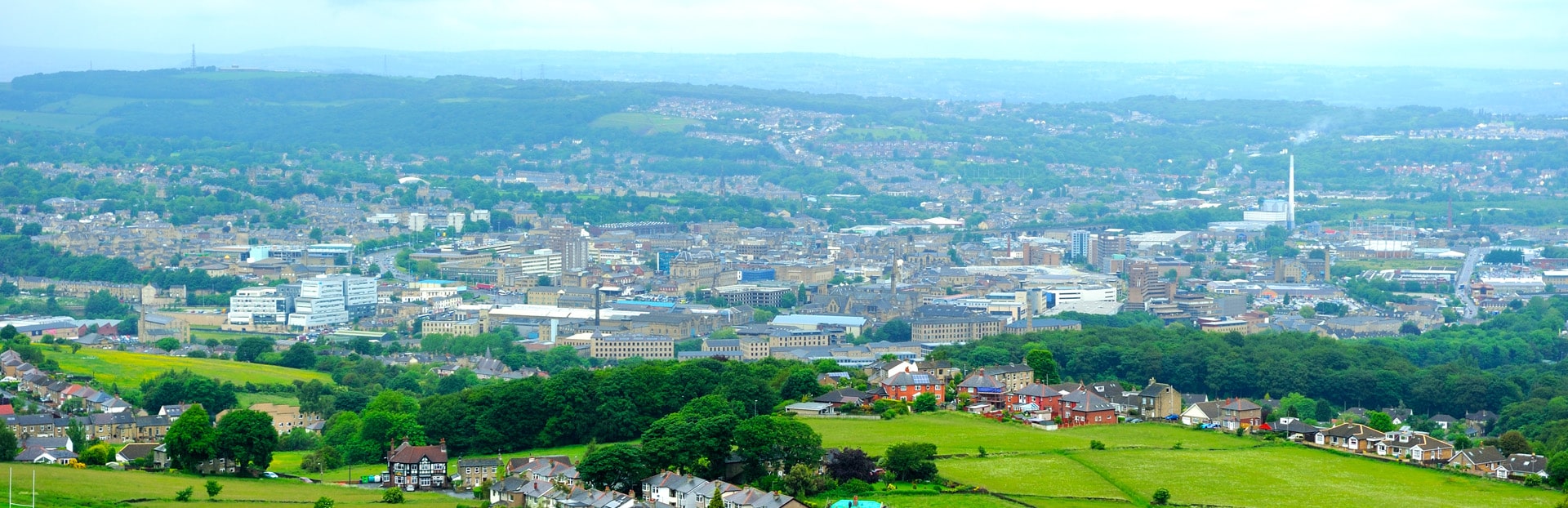
Huddersfield is a town in the metropolitan borough of Kirklees, West Yorkshire. HD1, the Town Centre postcode, is the only part of Huddersfield where a buy-to-let purchase costs under £200,000, and it pairs that £154,938 entry with the borough's highest gross yield at 5.3%. That is the unusual line in the Huddersfield data: the cheapest postcode is also the highest-yielding one, the reverse of the trade-off most markets force on you. Across the wider Kirklees borough, the average sold price on the HM Land Registry House Price Index is £204,191, which is 29.6% below the England average of £289,946 and a touch under the £207,750 Yorkshire and the Humber regional figure.
Asking prices run from £154,938 in HD1 up to £375,828 in HD8, a spread of £220,890 across just 11 postcodes. The split is geographic and it is sharp. The town centre and the inner ring sit at the bottom on price and the top on yield; the Pennine fringe villages of Holmfirth and Kirkburton command the highest prices and return yields below 3.6%. For an investor the question is which side of that divide matches the plan, income or capital. The data across all 11 postcodes covers asking prices, rents, yields, growth, sales volume and deposits for buy-to-let property in the area.
Huddersfield is the largest town in the metropolitan borough of Kirklees (ONS code E08000034), which also takes in Dewsbury, Batley and the surrounding Pennine valleys. This guide covers postcodes HD1 to HD9 plus WF14 (Mirfield) and WF15 (Liversedge). All Land Registry sold-price data is recorded at Kirklees level, so it describes the borough rather than the town alone. The town sits on the M62 between Leeds and Manchester. Nearby Yorkshire locations with their own guides include Bradford, Halifax, Leeds and Wakefield.
Article updated: July 2026
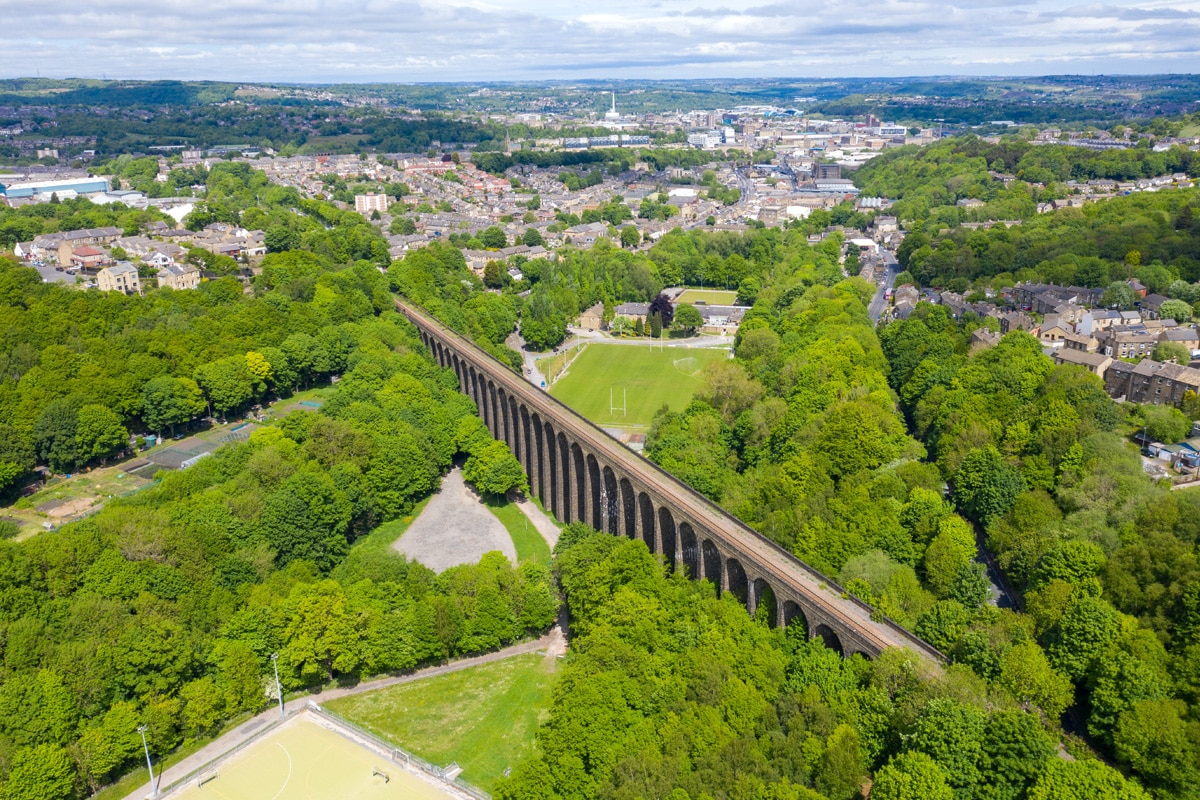
Why Invest in Huddersfield?
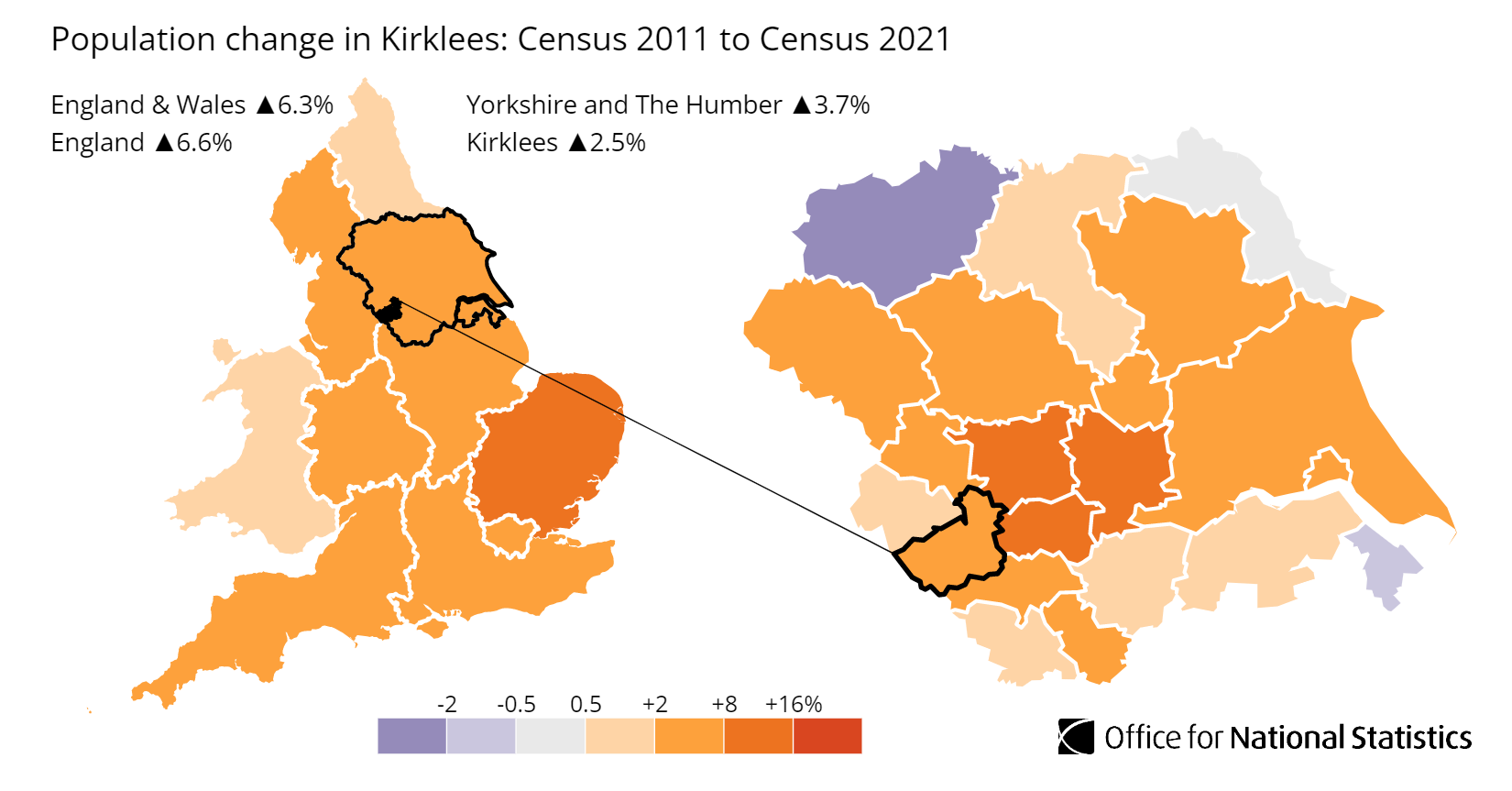
Kirklees, the borough Huddersfield sits within, grew its population 2.55% between the 2011 and 2021 censuses, from 422,458 to 433,216 residents. That is below the England and Wales average of 6.3%, the picture of a settled borough rather than a fast-expanding one. Huddersfield's pull is its position. It sits on the M62 and the TransPennine rail corridor halfway between Leeds and Manchester, which keeps it within commuting reach of two major job markets while its own house prices stay well under either.
The local employment rate of 72.7% sits just under the Yorkshire and the Humber average of 74.1% and the Great Britain figure of 75.6%. Huddersfield's economy grew out of textiles and engineering, and manufacturing is still a significant local employer alongside health and social care, education and retail. The University of Huddersfield adds a student population in the town centre, and its work on a new health innovation campus is bringing healthcare research and training employment into HD1 and HD2.
Median gross annual earnings across Kirklees are £35,867, which is 3.0% above the Yorkshire and the Humber regional median of £34,835 but 8.3% below the Great Britain median of £39,125. Local wages above the regional line but under the national one is the honest read here: it tells you tenant affordability holds up against the immediate Yorkshire competition, while the sub-national earnings keep a ceiling on what open-market rents can stretch to. That combination is what produces Huddersfield's yields, strongest where prices are lowest.
Huddersfield Economic Summary
- Population (Kirklees): 433,216 (2021 Census). Growth of 2.55% from 2011.
- Median annual salary: £35,867 (local), £34,835 (Yorkshire and the Humber), £39,125 (Great Britain)
- Employment rate: 72.7% (local), 74.1% (Yorkshire and the Humber), 75.6% (Great Britain)
- Unemployment rate: 5.5% (local)
- Key employment sectors: Manufacturing, health and social care, education, retail, engineering
Source: ONS Census 2021, Nomis Labour Market Profile (ASHE 2025, Employment Oct 2024-Sep 2025)
Regeneration and Investment in Huddersfield
More than £1 billion of public and private investment is currently pointed at Huddersfield town centre and the wider Kirklees borough, led by the £240 million Our Cultural Heart scheme whose first phase is due to open in summer 2026. The spending is concentrated in HD1, the same town-centre postcode that already carries the lowest asking price and the highest yield in the borough.
- Our Cultural Heart (Phase 1 opening summer 2026, £240 million): A five-phase town-centre regeneration delivering a food hall, library, public events space, museum, art gallery, urban park and a multi-use events venue. The opening phases are built to extend footfall into the evening, which is the kind of activity that underpins rental demand in the central HD1 streets. The full programme runs to 2031. Updates at Huddersfield Hub.
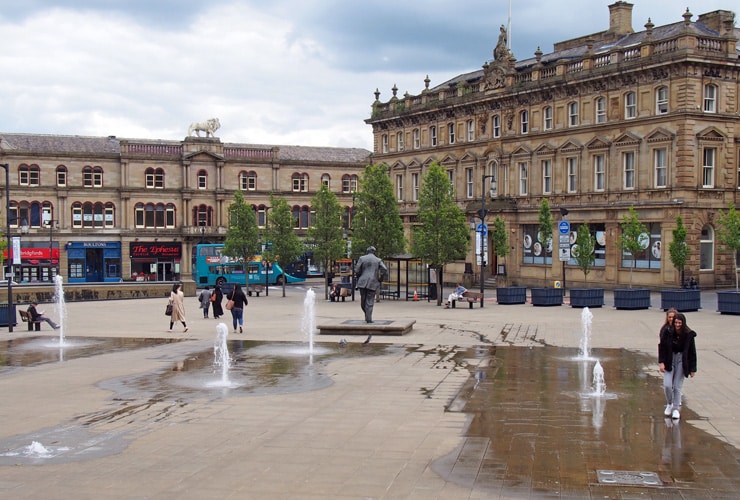
- Station Gateway (Approved January 2026): A regeneration of the area around Huddersfield train station, including a new west-side entrance, a mobility hub and public-realm work to St George's Square. It dovetails with the George Hotel's £30 million conversion into a Radisson RED, bringing a refurbished landmark back into use beside the station. Updates at Kirklees Together.
- National Health Innovation Campus (Multi-phase, underway, £250 million): A University of Huddersfield development of six buildings for healthcare training and research, anchoring the corridor between the station and the John Smith's Stadium. It brings sustained employment and student demand into HD1 and HD2. Updates at Huddersfield Hub.
Source: Office for National Statistics - Population for Kirklees
Huddersfield Property Market Analysis
Average property prices across Kirklees have risen 368.9% since January 1995, from £43,661 to £204,191. The sections below trace that path cycle by cycle, then drop into the current postcode-level data for sold prices, price per square foot, asking prices, growth, transaction volumes and selling times.
When was the last house price crash in Huddersfield?
Huddersfield sits inside the metropolitan borough of Kirklees, so HM Land Registry records all sold property prices at borough level. The index runs from January 1995 to March 2026, covering 31 years of the market and every cycle in between.
The 1995 to 2007 boom: Kirklees started at £43,661 in January 1995. Prices crept through the late 1990s, reaching £50,940 by December 2000, then accelerated sharply through the early 2000s as cheap credit reached northern markets. By December 2005 the average had climbed to £122,896, and the cycle peaked at £141,599 in December 2007.
2008 to 2009, the financial crisis: Prices fell from the December 2007 peak of £141,599 to £117,292 by May 2009, a drop of 17.2% in 18 months. The worst annual reading was -14.8% in May 2009. Lower-priced northern stock had been stretched further than the fundamentals could hold during the boom, and the correction took it back hard.
The 2010 to 2013 stagnation: This is where Kirklees parts company with the national story. Most English markets found a floor within 18 months of the crash and began climbing. Kirklees drifted lower for nearly four more years, the average sliding to its true trough of £114,020 in February 2013. That is more than five years between the peak and the bottom, one of the slower northern markets to settle.
Recovery, 2014 to 2017: Growth returned gradually as mortgage availability improved. Prices moved from £126,612 in December 2014 to £135,248 by December 2016, and finally cleared the old pre-crash peak in November 2017 at £141,835. The round trip from the December 2007 high took just shy of ten years, noticeably longer than most of England.
The 2017 to 2019 pre-pandemic growth: Steady single-digit gains followed. The average moved from £142,461 in December 2017 to £144,250 a year later and £147,253 by December 2019, a calm stretch with annual growth running in the low single figures.
2020 to 2022, the pandemic surge: The stamp duty holiday and the shift to remote working lit up affordable commuter markets like Kirklees. Prices jumped from £144,158 in June 2020 to £159,234 by December 2020, then ran on to £171,672 by December 2021 and £189,985 by December 2022. The compressed decade of growth that the long stagnation had delayed largely arrived in this window.
The 2023 rate shock: Higher mortgage rates cooled the market. The average eased to £183,028 by June 2023 before recovering to £188,214 by December 2023, a shallow dip rather than a reversal.
2024 to present: Growth resumed through 2024 and into 2025, the average reaching £195,315 by December 2024 and an all-time high of £205,249 in December 2025. The latest reading of £204,191 in March 2026 sits just below that high, a gentle easing of about £1,000 off the top rather than a turn. The current price is 44.2% above the December 2007 pre-crash peak.
Long-term growth summary:
- 5 years (March 2021 to March 2026): 24.8% growth (£163,554 to £204,191)
- 10 years (March 2016 to March 2026): 56.1% growth (£130,818 to £204,191)
- 15 years (March 2011 to March 2026): 70.3% growth (£119,903 to £204,191)
- 20 years (March 2006 to March 2026): 65.8% growth (£123,131 to £204,191)
- 30 years (January 1995 to March 2026): 368.9% growth (£43,661 to £204,191)
The defining feature of the Kirklees record is that extended stagnation from 2010 to 2013. Holding the floor lower for four extra years pushed most of the market's growth into the 2014 to 2025 stretch, which is why the five-year return of 24.8% reads strongly against a 20-year figure of 65.8%. Someone who bought at the exact December 2007 peak waited almost a decade just to get back to par, then saw the real gains arrive in the years since.
- All property types
- Detached
- Semi-detached
- Terraced
- Flats
- All property types
- Detached
- Semi-detached
- Terraced
- Flats
Sold House Prices in Huddersfield
The average sold price across all property types in Kirklees is £204,191, which is 29.6% below the England average of £289,946 as of March 2026. The discount runs through every property type but widens as the homes get smaller. Detached houses are 26.4% under England; flats are 46.4% under. That tells you where Kirklees keeps its value: in the larger family stock of the Pennine villages, not in an apartment market that barely competes with Leeds next door.
| Property Type | Kirklees Average | England Average | Difference |
|---|---|---|---|
| Detached houses | £346,275 | £470,492 | -26.4% |
| Semi-detached houses | £217,453 | £288,185 | -24.5% |
| Terraced houses | £164,336 | £243,788 | -32.6% |
| Flats and maisonettes | £115,050 | £214,563 | -46.4% |
| All property types | £204,191 | £289,946 | -29.6% |
Detached houses at £346,275 carry a 26.4% discount to England's £470,492, the narrowest gap of the four types. The detached stock concentrates in the rural and semi-rural postcodes of HD8 (Kirkburton) and HD9 (Holmfirth), where larger Pennine homes hold their value. Annual growth of 1.7% points to steady rather than heated demand.
Semi-detached houses at £217,453 sit 24.5% below England's £288,185 and run closest to the borough-wide average. This is the workhorse of the Huddersfield rental market, the stock that fills the mid-range postcodes of HD3, HD5 and HD6. Annual growth of 2.7% is the strongest of any property type in the borough.
Terraced houses at £164,336 are 32.6% below England's £243,788. The terraced stock is concentrated in HD1 and HD5, the inner postcodes, where Victorian streets close to the town centre form a large share of the lower-cost rental supply. Annual growth of 1.8% keeps terraces broadly in step with detached houses.
Flats and maisonettes at £115,050 show the deepest discount at 46.4% below England's £214,563. Huddersfield is not a flat-heavy town. Purpose-built apartment schemes are recent and limited, and the conversion market has been slower to develop than in neighbouring Leeds. Annual change of -3.2% confirms a thin, soft segment that the wider borough growth has not reached.
Price Per Square Foot in Huddersfield
HD1 (Town Centre) is the cheapest space in Huddersfield at £160 per square foot, while HD9 (Holmfirth, Honley) is the dearest at £278, a gap of £118 or 74% more for the same floor area. Measuring by the square foot strips out how big the homes are and shows what the location itself commands. HD9 and HD8 (Kirkburton) top the table because their Pennine village stock is both larger and more sought-after.
| Rank | Area | Price Per Sq Ft |
|---|---|---|
| 1 | HD1 (Town Centre) | £160 |
| 2 | HD2 (Birkby, Fartown) | £208 |
| 3 | HD5 (Dalton, Moldgreen) | £213 |
| 4 | HD4 (Newsome, Berry Brow) | £215 |
| 5 | HD3 (Lindley, Marsh, Salendine Nook) | £226 |
| 6 | HD6 (Brighouse, Rastrick) | £227 |
| 7 | WF15 (Liversedge) | £233 |
| 8 | HD7 (Slaithwaite, Marsden) | £244 |
| 9 | WF14 (Mirfield) | £250 |
| 10 | HD8 (Kirkburton, Skelmanthorpe) | £276 |
| 11 | HD9 (Holmfirth, Honley) | £278 |
HD1 at £160 per square foot is the clear value floor, with the town-centre terraces and the borough's main concentration of flat stock pulling the average down. Based on 242 transactions analysed, HD1's space costs 42% less per square foot than HD9's. For an investor buying for income rather than a family home, that is the cheapest bricks and mortar in the borough.
A clean break separates the inner postcodes from the Pennine fringe. HD1, HD2, HD5 and HD4 all sit at or below £215 per square foot; HD8, HD9 and WF14 all sit above £250. HD3 (Lindley) and HD6 (Brighouse) hold the middle ground around £226, the established residential suburbs that are neither town-centre nor village.
For Sale Asking Prices in Huddersfield
HD1 at £154,938 and HD8 at £375,828 sit £220,890 apart, the asking price stepping up by more than 140% from the cheapest postcode to the dearest. The mean asking price across all 11 Huddersfield postcodes is £269,690. HD1 is the only postcode under £200,000; the rest cluster in a £200,000 to £300,000 band before the two Pennine postcodes jump clear above £365,000.
| Rank | Area | Asking Price |
|---|---|---|
| 1 | HD1 (Town Centre) | £154,938 |
| 2 | HD5 (Dalton, Moldgreen) | £207,902 |
| 3 | HD3 (Lindley, Marsh, Salendine Nook) | £232,636 |
| 4 | HD4 (Newsome, Berry Brow) | £249,344 |
| 5 | WF15 (Liversedge) | £255,333 |
| 6 | HD6 (Brighouse, Rastrick) | £267,001 |
| 7 | WF14 (Mirfield) | £276,719 |
| 8 | HD7 (Slaithwaite, Marsden) | £280,510 |
| 9 | HD2 (Birkby, Fartown) | £300,940 |
| 10 | HD9 (Holmfirth, Honley) | £365,440 |
| 11 | HD8 (Kirkburton, Skelmanthorpe) | £375,828 |
HD1 at £154,938 is the only postcode below the £204,191 borough-wide Land Registry average, and the £52,964 step up to HD5 is the largest gap between any two adjacent postcodes at the bottom of the table. For an investor on a fixed budget, HD1 buys the most property for the money and the lowest barrier to entry in the borough.
At the top, the £74,500 jump from HD2 at £300,940 to HD9 at £365,440 marks the shift from suburban housing into the larger village stock of the Pennine fringe. HD8 and HD9 are owner-occupier territory priced for families, not the smaller units that carry rental income, and the yield data below bears that out. Investors hunting for value below the asking line tend to work the off-market and below-market-value routes, where the widest choice sits in the mid-range HD3 to HD7 postcodes.
House Price Growth in Huddersfield
WF15 (Liversedge) leads the borough on five-year growth at 30.5%, and every one of the 11 postcodes is positive over five years. The one-year picture is choppier: seven postcodes are down over the past twelve months, with HD2 (Birkby, Fartown) the weakest at -8.9%. The strongest five-year performers sit at the cheaper end, while the premium Pennine postcodes have lagged.
| Area | 1 Year | 3 Years | 5 Years |
|---|---|---|---|
| WF15 (Liversedge) | 0.8% | 13.4% | 30.5% |
| HD7 (Slaithwaite, Marsden) | 6.8% | 15.4% | 28.1% |
| HD4 (Newsome, Berry Brow) | -3.4% | 0.5% | 27.6% |
| HD5 (Dalton, Moldgreen) | 6.3% | 8.0% | 25.3% |
| WF14 (Mirfield) | -3.1% | 5.1% | 20.8% |
| HD6 (Brighouse, Rastrick) | 2.9% | 8.6% | 17.6% |
| HD1 (Town Centre) | -2.9% | 10.0% | 17.5% |
| HD2 (Birkby, Fartown) | -8.9% | 7.7% | 10.2% |
| HD9 (Holmfirth, Honley) | -6.6% | -1.5% | 8.9% |
| HD3 (Lindley, Marsh, Salendine Nook) | -4.2% | 4.9% | 7.7% |
| HD8 (Kirkburton, Skelmanthorpe) | -3.0% | -5.0% | 5.7% |
WF15 at 30.5% over five years has grown fastest in the borough, and unlike several of its peers it has held that ground recently, up 0.8% over the past year and 13.4% over three. HD7 (Slaithwaite, Marsden) is close behind at 28.1% over five years and is the strongest one-year mover at 6.8%, a rare postcode where the medium and short term point the same way.
The two most expensive postcodes have delivered the weakest five-year returns. HD8 (5.7%) and HD9 (8.9%) sit at the bottom of the table despite carrying the highest asking prices, and HD9 has fallen 6.6% over the past year. The Pennine premium postcodes move with the wider economic cycle more than with local rental demand, which shows up as soft growth when rates are high. HD4 stands out for an unusual profile: 27.6% over five years but only 0.5% over three and -3.4% over one, a sign that almost all its gain landed during the pandemic surge and has flattened since.
Monthly Property Sales in Huddersfield
Monthly sales run from 12 transactions in HD1 up to 43 in HD9, with turnover rates between 9% in HD4 and 22% in HD7. The town-centre postcode is the quietest market in the borough, while the Pennine postcodes of HD8 and HD9 see the most homes change hands. Turnover, the share of local stock trading each year, tells you how easily a postcode lets you back out.
| Area | Sales Per Month | Turnover | Asking Price |
|---|---|---|---|
| HD9 (Holmfirth, Honley) | 43 | 14% | £365,440 |
| HD8 (Kirkburton, Skelmanthorpe) | 36 | 13% | £375,828 |
| HD3 (Lindley, Marsh, Salendine Nook) | 30 | 15% | £232,636 |
| HD6 (Brighouse, Rastrick) | 30 | 17% | £267,001 |
| HD5 (Dalton, Moldgreen) | 27 | 17% | £207,902 |
| HD7 (Slaithwaite, Marsden) | 27 | 22% | £280,510 |
| HD2 (Birkby, Fartown) | 22 | 13% | £300,940 |
| HD4 (Newsome, Berry Brow) | 20 | 9% | £249,344 |
| WF14 (Mirfield) | 19 | 13% | £276,719 |
| WF15 (Liversedge) | 15 | 19% | £255,333 |
| HD1 (Town Centre) | 12 | 13% | £154,938 |
HD7 (Slaithwaite, Marsden) has the highest turnover in the borough at 22%, well ahead of the 13% to 17% that most postcodes record. A fast-moving market like that is an easier place to sell when the time comes. HD1 records the lowest volume at 12 sales a month, so the postcode with the cheapest entry and the highest yield also has the thinnest pool of available stock. An investor targeting HD1 should expect more competition for fewer properties than in the busier suburban postcodes.
HD9 leads on raw volume at 43 sales a month, but its 14% turnover is mid-table, because a large and expensive village housing stock means those sales are a smaller share of the total. HD4 sits at the other end on turnover at 9%, the slowest-circulating postcode in the borough, which fits its flat recent price record.
How Long Properties Take to Sell in Huddersfield
Selling time splits the borough almost in half: HD7 (Slaithwaite, Marsden) clears fastest at around 145 days, while HD4 (Newsome, Berry Brow) takes roughly 338 days, more than twice as long. Days on market is the typical time a home is listed before it sells; months of unsold stock measures how much for-sale supply is queued at the current rate of sales. Two postcodes can show a similar yield and a very different exit, and that holding cost on the way out rarely reaches the rent column.
| Area | Avg Days to Sell | Months of Unsold Stock | Market |
|---|---|---|---|
| HD7 (Slaithwaite, Marsden) | 145 | 4.8 | Seller's market |
| WF15 (Liversedge) | 160 | 5.3 | Seller's market |
| HD6 (Brighouse, Rastrick) | 169 | 5.6 | Seller's market |
| HD3 (Lindley, Marsh, Salendine Nook) | 190 | 6.3 | Balanced market |
| HD5 (Dalton, Moldgreen) | 190 | 6.3 | Balanced market |
| HD1 (Town Centre) | 203 | 6.7 | Balanced market |
| HD2 (Birkby, Fartown) | 234 | 7.7 | Balanced market |
| HD8 (Kirkburton, Skelmanthorpe) | 234 | 7.7 | Balanced market |
| HD9 (Holmfirth, Honley) | 234 | 7.7 | Balanced market |
| WF14 (Mirfield) | 234 | 7.7 | Balanced market |
| HD4 (Newsome, Berry Brow) | 338 | 11.1 | Balanced market |
The three quickest postcodes, HD7, WF15 and HD6, all clear in under six months and read as seller's markets, where buyers move and stock does not sit. HD4 is the outlier at the other end: at 338 days and 11.1 months of unsold supply, a property there can take close to a year to move, and that extra time is real money for a landlord trying to exit. For a buy-to-let investor, the speed of the door out belongs in the maths alongside the rent coming in.
What Type of Property Can You Buy in Huddersfield?
HD1 (Town Centre) is the one postcode where smaller units dominate, with terraced houses at 39.6% and flats at 35.5% of stock, while detached houses lead every other postcode, peaking at 48.9% in HD7. The mix of housing decides which strategies fit where. The figures below are drawn from 2021 Census records for each postcode.
| Area | Detached | Semi-detached | Terraced | Flats |
|---|---|---|---|---|
| HD1 (Town Centre) | 8.2% | 16.2% | 39.6% | 35.5% |
| HD2 (Birkby, Fartown) | 39.9% | 26.1% | 24.8% | 9.2% |
| HD3 (Lindley, Marsh, Salendine Nook) | 35.8% | 26.6% | 32.2% | 5.3% |
| HD4 (Newsome, Berry Brow) | 39.0% | 25.5% | 26.4% | 6.1% |
| HD5 (Dalton, Moldgreen) | 23.2% | 35.1% | 31.3% | 10.1% |
| HD6 (Brighouse, Rastrick) | 31.3% | 28.4% | 25.8% | 13.8% |
| HD7 (Slaithwaite, Marsden) | 48.9% | 24.4% | 23.2% | 3.3% |
| HD8 (Kirkburton, Skelmanthorpe) | 43.1% | 26.6% | 25.9% | 3.5% |
| HD9 (Holmfirth, Honley) | 45.5% | 25.9% | 24.8% | 3.5% |
| WF14 (Mirfield) | 29.0% | 35.2% | 25.4% | 10.3% |
| WF15 (Liversedge) | 25.6% | 35.9% | 29.9% | 8.5% |
HD1 is built for buy-to-let in a way no other Huddersfield postcode is. With terraces at 39.6% and flats at 35.5%, three-quarters of its stock is the smaller-unit type that drives rental income, and that lines up exactly with HD1 carrying the lowest asking price and the highest yield in the borough. The town-centre flats suit single lets and student sharers; the terraces give lower-cost family lets.
The Pennine postcodes sit at the opposite end. HD7, HD8 and HD9 are all over 43% detached with flats below 4%, weighted firmly towards owner-occupier family homes rather than the units that produce yield. That stock mix is why those postcodes carry the highest asking prices and the lowest rental returns in the borough.
The flats figure covers both purpose-built blocks and conversions; a few non-standard dwellings are excluded, so rows may not total 100%.
Huddersfield Rental Market Analysis
Monthly rents in Huddersfield range from £680 in HD1 to £1,103 in HD9, with gross rental yields from 2.8% to 5.3% across the postcodes that carry rental data. For investors asking is buy to let worth it in Huddersfield, the sections below break down rents, yields and tenant affordability postcode by postcode. If you are working out how to build a property portfolio in Yorkshire, Huddersfield's sub-£155,000 entry in the town centre and yields above 5% there give a different starting point from Leeds or Bradford. Browse current buy-to-let property for sale across the region.
Average Rent & Gross Rental Yields in Huddersfield
Gross rental yields in Huddersfield run from 2.8% in HD8 to 5.3% in HD1. The relationship is consistent: the cheapest postcode returns the most and the dearest returns the least. HD9 charges the highest monthly rent in the borough at £1,103 yet yields only 3.6%, because its £365,440 asking price more than swallows the extra rent.
| Area | Average Monthly Rent | Asking Price | Gross Yield |
|---|---|---|---|
| HD1 (Town Centre) | £680 | £154,938 | 5.3% |
| HD5 (Dalton, Moldgreen) | £830 | £207,902 | 4.8% |
| HD3 (Lindley, Marsh, Salendine Nook) | £828 | £232,636 | 4.3% |
| WF14 (Mirfield) | £941 | £276,719 | 4.1% |
| HD4 (Newsome, Berry Brow) | £816 | £249,344 | 3.9% |
| HD6 (Brighouse, Rastrick) | £799 | £267,001 | 3.6% |
| HD9 (Holmfirth, Honley) | £1,103 | £365,440 | 3.6% |
| HD7 (Slaithwaite, Marsden) | £779 | £280,510 | 3.3% |
| HD2 (Birkby, Fartown) | £804 | £300,940 | 3.2% |
| HD8 (Kirkburton, Skelmanthorpe) | £866 | £375,828 | 2.8% |
| WF15 (Liversedge) | Not enough data | £255,333 | Not enough data |
Three postcodes clear a 4.3% yield: HD1 (5.3%), HD5 (4.8%) and HD3 (4.3%), all inner-ring postcodes with asking prices below £233,000. HD5 (Dalton, Moldgreen) is the rounded performer of the group, pairing the second-highest yield with 25.3% five-year growth and 27 sales a month. HD1 carries the top yield but the thinnest stock at 12 sales a month, so acquiring there takes patience.
HD2 (Birkby, Fartown) shows the trap at the other end. Its £804 rent is only £124 more than HD1's, but its asking price is £146,000 higher, so the yield drops to 3.2% despite HD2 sitting in the inner ring. The premium Pennine postcodes of HD8 (2.8%) and HD9 (3.6%) close out the table, where high prices and modest rents leave the slimmest income return in the borough. WF15 (Liversedge) has too few rental listings to read a reliable rent or yield, so it sits outside the income comparison even though it leads the borough on capital growth.
Gross Rental Yield by Postcode
Is Huddersfield Rent High?
Monthly rents in Huddersfield take between 22.8% and 36.9% of the local median gross monthly salary. The 30% mark is the widely cited line for affordable rent. Eight of the ten postcodes with rental data sit below it, and only HD9 and WF14 run above, both driven by higher absolute rents in the more expensive villages rather than by stretched local earnings.
The median gross weekly salary across Kirklees is £689.80, which works out at £2,989 per month or £35,867 per year. That is above the Yorkshire and the Humber regional median of £669.90 a week and below the Great Britain median of £752.40 a week. Data from the Nomis Labour Market Profile (ASHE 2025).
| Rank | Area | Rent as % of Income |
|---|---|---|
| 1 | HD9 (Holmfirth, Honley) | 36.9% |
| 2 | WF14 (Mirfield) | 31.5% |
| 3 | HD8 (Kirkburton, Skelmanthorpe) | 29.0% |
| 4 | HD5 (Dalton, Moldgreen) | 27.8% |
| 5 | HD3 (Lindley, Marsh, Salendine Nook) | 27.7% |
| 6 | HD4 (Newsome, Berry Brow) | 27.3% |
| 7 | HD2 (Birkby, Fartown) | 26.9% |
| 8 | HD6 (Brighouse, Rastrick) | 26.7% |
| 9 | HD7 (Slaithwaite, Marsden) | 26.1% |
| 10 | HD1 (Town Centre) | 22.8% |
| - | WF15 (Liversedge) | Not enough data |
HD1 at 22.8% is the most affordable postcode for tenants. A £680 rent against a £2,989 monthly salary leaves plenty of headroom, and rents that sit well inside a tenant's budget tend to come with fewer arrears and longer tenancies. For a landlord that means steadier income and lower void risk, which matters more in HD1 than the headline yield alone suggests.
HD9 at 36.9% is the only postcode where rent eats more than a third of the median local wage, the result of £1,103 rents in Holmfirth and Honley rather than weak earnings. Tenants paying at that level in the premium villages are usually dual-income or higher-earning households rather than someone on the borough median, so the affordability figure overstates the strain on the typical renter there.
How Big Is Huddersfield's Private Rented Sector?
The private rented sector is by far deepest in HD1, where 43.2% of households rent privately, more than double the next postcode and over three times the share in the Pennine fringe. The proportion of homes already let privately is a read on how large and how tested the local tenant pool is. The table below shows household tenure by postcode.
| Area | Owned Outright | Owned with Mortgage | Private Rented | Social Rented |
|---|---|---|---|---|
| HD1 (Town Centre) | 19.7% | 14.3% | 43.2% | 22.1% |
| HD6 (Brighouse, Rastrick) | 38.1% | 32.1% | 21.0% | 8.6% |
| HD2 (Birkby, Fartown) | 37.8% | 28.3% | 19.7% | 13.6% |
| HD5 (Dalton, Moldgreen) | 38.2% | 28.1% | 19.7% | 13.6% |
| WF15 (Liversedge) | 36.6% | 33.2% | 18.6% | 11.2% |
| WF14 (Mirfield) | 40.3% | 34.0% | 17.4% | 8.0% |
| HD8 (Kirkburton, Skelmanthorpe) | 45.0% | 35.2% | 16.0% | 3.5% |
| HD3 (Lindley, Marsh, Salendine Nook) | 43.0% | 38.0% | 14.4% | 4.1% |
| HD9 (Holmfirth, Honley) | 46.7% | 36.9% | 12.6% | 3.2% |
| HD4 (Newsome, Berry Brow) | 48.1% | 28.9% | 12.5% | 10.3% |
| HD7 (Slaithwaite, Marsden) | 47.0% | 40.4% | 10.9% | 1.6% |
HD1's 43.2% private rented share ties directly to the data above. It is the cheapest postcode, the highest-yielding, the one most weighted towards terraces and flats, and the home of the University of Huddersfield. Add the 22.1% social-rented share and only a third of HD1 households own their home, a town-centre tenure profile no other postcode in the borough comes close to. For a landlord, a tenant pool that deep and that proven gives a wider base to let into than a postcode where most homes are owner-occupied.
The Pennine and outer postcodes sit at the other end. HD7, HD4 and HD9 all keep private renting below 13%, with owner-occupation above 80% once outright and mortgaged owners are combined. Those are family-home markets where rental supply is thin and tenant demand is shallower, which is consistent with the lower yields they record.
Among the postcodes with enough listings to read, HD3 lets fastest, with rental properties taking around 48 days to find a tenant, while HD1 has by far the deepest supply at roughly 126 homes advertised at once and about 124 days to let. The other postcodes carry too few rental listings at any one time to read with confidence.
Local Housing Allowance Rates in Huddersfield
Most of Huddersfield falls within the Kirklees Broad Rental Market Area, where Local Housing Allowance runs from £72.80 a week for a shared room to £189.86 a week for a four-bedroom home, but HD6 (Brighouse, Rastrick) sits in the neighbouring Halifax BRMA on a different set of rates. Local Housing Allowance is the most a tenant on housing support can claim towards rent, so for that part of the market it acts as a floor. Because Huddersfield straddles two market areas, the rate a benefit-backed let can command depends on which one the property is in.
| Property Size | Kirklees BRMA (Weekly) | Halifax BRMA / HD6 (Weekly) |
|---|---|---|
| Shared accommodation | £72.80 | £82.00 |
| 1 bedroom | £103.56 | £101.26 |
| 2 bedrooms | £120.82 | £120.82 |
| 3 bedrooms | £149.59 | £143.84 |
| 4 bedrooms | £189.86 | £172.60 |
The two-bedroom rate is identical across both areas at £120.82 a week, about £524 a month, well below the £680 to £1,103 open-market rents recorded across the borough. A benefit-backed tenancy at the LHA rate therefore sits under Huddersfield's market rents, and the stock that fits within these rates concentrates in HD1, where asking prices and rents are both lowest. The one quirk worth knowing is the split: a shared-accommodation let in HD6 attracts the higher Halifax rate of £82.00 against Kirklees's £72.80, while the larger homes are worth more on the Kirklees side. To check the current rate for a specific address in either market area, you can use the government's official Local Housing Allowance calculator.
Buy-to-Let Considerations
Are House Prices High in Huddersfield? Price-to-Earnings Ratios
Buying in Huddersfield takes between 4.3 and 10.5 times the median annual salary. This is based on the Nomis Labour Market Profile for Kirklees, which puts the median gross annual income for Kirklees residents at £35,867.
The national benchmark for price-to-earnings is 7.4x, England's average sold price of £289,946 divided by the Great Britain median annual salary of £39,125. Five of Huddersfield's 11 postcodes sit below that benchmark, meaning they are more affordable against local incomes than the England average is against national ones.
| Rank | Area | Price-to-Earnings Ratio |
|---|---|---|
| 1 | HD1 (Town Centre) | 4.3x |
| 2 | HD5 (Dalton, Moldgreen) | 5.8x |
| 3 | HD3 (Lindley, Marsh, Salendine Nook) | 6.5x |
| 4 | HD4 (Newsome, Berry Brow) | 7.0x |
| 5 | WF15 (Liversedge) | 7.1x |
| 6 | HD6 (Brighouse, Rastrick) | 7.4x |
| 7 | WF14 (Mirfield) | 7.7x |
| 8 | HD7 (Slaithwaite, Marsden) | 7.8x |
| 9 | HD2 (Birkby, Fartown) | 8.4x |
| 10 | HD9 (Holmfirth, Honley) | 10.2x |
| 11 | HD8 (Kirkburton, Skelmanthorpe) | 10.5x |
HD1 at 4.3x is the most affordable postcode in the borough against local earnings, and one of the lowest ratios across our Yorkshire guides. A property at a little over four times the median local wage is a low barrier to entry, and it sits in the postcode that also carries the highest yield and the deepest tenant base.
HD8 at 10.5x and HD9 at 10.2x are the only postcodes above ten times local earnings, firmly in premium owner-occupier territory. Buyers in Kirkburton and Holmfirth are typically families or households trading in from more expensive parts of the region, not the rental market, and the elevated ratio is what compresses the yields those postcodes return.
Deposit Requirements in Huddersfield
A 30% deposit on a buy-to-let in Huddersfield runs from £46,482 in HD1 to £112,748 in HD8. The £66,266 spread between the cheapest and dearest deposit is enough to fund the HD1 deposit plus a sizeable chunk of a second. For investors comparing Huddersfield with the rest of West Yorkshire, these deposits sit below Leeds but in line with Wakefield and above Bradford's cheapest postcodes.
Beyond the deposit, the stamp duty calculation and other buy to let costs shape the total capital needed.
| Rank | Area | 30% Deposit Required |
|---|---|---|
| 1 | HD1 (Town Centre) | £46,482 |
| 2 | HD5 (Dalton, Moldgreen) | £62,371 |
| 3 | HD3 (Lindley, Marsh, Salendine Nook) | £69,791 |
| 4 | HD4 (Newsome, Berry Brow) | £74,803 |
| 5 | WF15 (Liversedge) | £76,600 |
| 6 | HD6 (Brighouse, Rastrick) | £80,100 |
| 7 | WF14 (Mirfield) | £83,016 |
| 8 | HD7 (Slaithwaite, Marsden) | £84,153 |
| 9 | HD2 (Birkby, Fartown) | £90,282 |
| 10 | HD9 (Holmfirth, Honley) | £109,632 |
| 11 | HD8 (Kirkburton, Skelmanthorpe) | £112,748 |
HD1 is the cheapest way into the borough at a £46,482 deposit, and the £15,889 step up to HD5 buys a genuinely different postcode rather than just a bigger number. HD5 (Dalton, Moldgreen) trades that extra outlay for £150 more rent a month, a near-identical 4.8% yield, far higher sales volume at 27 a month against HD1's 12, and 25.3% five-year growth. HD1 keeps the entry cost and the void risk down; HD5 gives a deeper market and stronger recent growth on a similar return.
At the top, the two Pennine postcodes demand more than double HD1's deposit. HD8 and HD9 sit within £3,116 of each other at around £110,000, but the homes those deposits buy are family houses returning 2.8% and 3.6% respectively. For an income investor, the capital tied up at that end of the table works harder lower down. Lower-deposit routes are covered in our guide to buy-to-let with no deposit.
What the Huddersfield Data Tells Buy-to-Let Investors
In Huddersfield the cheapest way in is also the highest-yielding one. HD1 (Town Centre) carries the top yield at 5.3% and the lowest asking price for an investment property in Huddersfield at £154,938. It is the only postcode under £200,000, the most affordable against local earnings at 4.3 times income, and home to the deepest tenant base in the borough, where 43.2% of households rent privately and the University of Huddersfield sits on the doorstep. The catch is supply: at 12 sales a month, HD1 is the thinnest market in the borough to buy into.
HD5 (Dalton, Moldgreen) is the rounded all-rounder. It pairs a 4.8% yield with 25.3% five-year growth, 27 sales a month and a £62,371 deposit, ranking near the top on yield, growth and volume at once without leading any single column. HD3 (Lindley) completes the higher-yield inner ring at 4.3% on £828 rents. These three sub-£70,000-deposit postcodes hold the borough's three best yields and its busier inner-ring markets.
Growth and income point the same way here, towards the lower-priced postcodes. WF15 (Liversedge) has grown 30.5% over five years and HD7 (Slaithwaite, Marsden) 28.1%, both ahead of the premium Pennine postcodes of HD8 (5.7%) and HD9 (8.9%). The catch on WF15 is that it carries no reliable rental data, so its strong capital record sits without a yield to read against it. Buyers who want to come in below the asking line often work the off-market property in Huddersfield, where the value tends to surface before a listing reaches the portals.
Kirklees does not currently operate a selective licensing scheme for private rented properties, though a shared house can still need an HMO licence, so check the current position on Kirklees Council's HMO licensing pages before buying. With a settled population, a position between Leeds and Manchester, and £1 billion of regeneration concentrated in the town centre, Huddersfield reads as an affordability-and-income market: lower headline yields than Bradford, but a wider price ladder and a clear high-yield core in HD1 and the inner ring.
How Huddersfield Compares
Huddersfield's mean asking price of £269,690 is the second highest of five West Yorkshire locations compared here, behind only Leeds, while its top yield of 5.3% sits in the middle of the group. The comparison below places Huddersfield alongside four nearby locations, each with its own guide and a different investor profile. Mean asking price and mean monthly rent are simple averages across all postcodes with data; top gross yield is the single highest postcode yield in each location.
| Location | Mean Asking Price | Mean Monthly Rent | Mean Gross Yield | Top Yield (postcode) |
|---|---|---|---|---|
| Bradford | £226,164 | £849 | 4.5% | 12.0% (BD1) |
| Halifax | £249,999 | £789 | 3.8% | 6.2% (HX1) |
| Wakefield | £255,177 | £865 | 4.1% | 4.8% (WF10) |
| Huddersfield | £269,690 | £845 | 3.8% | 5.3% (HD1) |
| Leeds | £291,071 | £1,147 | 4.7% | 8.9% (LS2) |
Huddersfield is the second most expensive location in this group at a £269,690 mean asking price, with only Leeds dearer at £291,071. Its top yield of 5.3% lands ahead of Wakefield's 4.8% but behind Bradford, Halifax and Leeds. The shape of Huddersfield's market is a wide price ladder with a concentrated high-yield core, rather than a borough-wide yield that competes with its neighbours.
For investors prioritising income, Bradford at a thin-market 12.0% and Leeds at 8.9% offer the highest top-line yields in the group, Leeds on a much larger and more expensive rental base. Halifax at 6.2% pairs a higher top yield with a lower mean asking price than Huddersfield, the closest direct rival on the map. Wakefield sits just below Huddersfield on price with a lower top yield. Huddersfield earns its place for the depth of its price range and the strength of its HD1 core rather than a headline yield. For a data-driven comparison across the country, see our guide to the best buy to let areas in the UK.
Frequently Asked Questions
What are the best areas to live in Huddersfield?
It splits along clear lines, and what counts as best depends on whether you are a tenant or an investor. For renters, the inner postcodes around the town centre, HD1, HD2 and HD5, put you closest to the university, the station and the jobs, while the Pennine villages of Holmfirth (HD9) and Kirkburton (HD8) are the pricier, greener, family end.
For an investor the picture flips. The most desirable places to own a home are the priciest and the lowest-yielding: HD8 and HD9 return 2.8% and 3.6%. The numbers point the other way, to HD1 at 5.3%, HD5 at 4.8% and HD3 at 4.3%, the inner-ring postcodes where the rental demand and the yields actually sit.
What are the best areas in Huddersfield for property investment?
It comes down to income versus growth, and the postcodes divide fairly cleanly. HD1 (Town Centre) is the cheapest way in at £154,938 and the highest-yielding at 5.3%, with the deepest tenant base in the borough, so it leans towards income. HD5 (Dalton, Moldgreen) pairs a 4.8% yield with 25.3% five-year growth and a busier market at 27 sales a month, so it is the closest thing to a balance of the two.
If capital growth is the goal, WF15 (Liversedge) leads the borough at 30.5% over five years and HD7 (Slaithwaite, Marsden) follows at 28.1%, though WF15 has no rental data to read a yield against. At the premium end, HD8 and HD9 carry the highest prices and the lowest yields, so the profile is Pennine family-home demand more than rental return.
How does Huddersfield compare to Bradford for buy-to-let?
Bradford is the higher-yield, lower-cost option of the two. Its mean asking price of £226,164 is about 16% below Huddersfield's £269,690, and its top postcode yield of 6.6% beats Huddersfield's 5.3%. Bradford's headline figure leans on a handful of very cheap inner postcodes where asking prices are low and yields run high.
Huddersfield trades some of that yield for a wider price ladder, from £154,938 in HD1 up to £375,828 in HD8, and a town-centre core with a 43.2% private-rented share and the university behind it. Both sit inside the West Yorkshire Combined Authority, so the choice is less about the area and more about whether you want Bradford's cheaper entry and higher yield or Huddersfield's broader range and stronger HD1 rental depth.
Is Huddersfield a good place for student property investment?
It can be, and it is concentrated in HD1. The University of Huddersfield's main campus sits in the town centre, in the postcode that already carries the highest yield in the borough at 5.3% on the lowest asking price at £154,938. HD1 also has far and away the deepest private-rented sector, at 43.2% of households, and the university's £250 million National Health Innovation Campus is adding both jobs and student numbers to the same postcode.
HMO room data for Huddersfield is thin, but a sample of current HD1 adverts puts a double room with a shared bathroom at around £93 a week, with most between £73 and £115 across 23 listings. That was the only room type with enough live adverts to read, so ensuite and single-room rents are harder to pin down. Student lets bring summer voids and more hands-on management than a standard tenancy, so factor that in. For the purpose-built end, see our guide to student accommodation for sale.
Can I find buy-to-let property under £200,000 in Huddersfield?
On average, only in HD1. The Town Centre postcode is the one place where the average asking price, £154,938, sits below £200,000; every other postcode starts at £207,902 or higher. So the cleanest route to a sub-£200,000 buy-to-let is HD1, which also happens to carry the highest yield in the borough.
Below that, the way in is by property type rather than postcode. Terraced houses across Kirklees average £164,336 on the Land Registry index and flats just £115,050, so terraces and flats in the inner postcodes can come in well under the postcode averages. If sub-£200,000 is the target, HD1 stock and the cheaper property types are where to look, or explore below market value property.
How will the Our Cultural Heart regeneration affect Huddersfield property prices?
Not quickly. Our Cultural Heart is a £240 million, five-phase town-centre regeneration with the first phase due to open in summer 2026 and the full programme running to 2031. The early phases deliver a food hall, library and events space designed to pull footfall into the evening, which is the kind of activity that supports rental demand in the surrounding HD1 streets over time.
Kirklees already shows steady borough-wide growth, with the Land Registry average up to £204,191 by March 2026, though that reflects the whole borough rather than the town centre alone. Large town-centre schemes elsewhere in the north have generally taken several years to show up in nearby prices, so anyone pricing in the full effect today is looking at a multi-year wait rather than an immediate lift.
What are average house prices in Huddersfield?
The average sold price across Kirklees is £204,191 on the Land Registry index, about 29.6% below the England average of £289,946 as of March 2026. Asking prices by postcode run from £154,938 in HD1 (Town Centre) up to £375,828 in HD8 (Kirkburton), with a borough-wide mean of £269,690. By type, detached homes average £346,275, semi-detached £217,453, terraced £164,336 and flats £115,050.
Through a buy-to-let lens, HD1 is the cheapest entry and the highest-yielding at 5.3%, while the Pennine postcodes of HD8 and HD9 are the dearest and lowest-yielding.
What are the Local Housing Allowance rates in Huddersfield?
Most of Huddersfield sits in the Kirklees Broad Rental Market Area, where the June 2026 rates run at £72.80 a week for a shared room, £103.56 for a one-bed, £120.82 for two beds, £149.59 for three and £189.86 for four. HD6 (Brighouse, Rastrick) is the exception, falling in the neighbouring Halifax BRMA, where the shared-room rate is higher at £82.00 but the larger homes are worth slightly less. The rate is the most a tenant on housing support can claim towards rent, so for that part of the market it sets a floor.
What type of property is most common in Huddersfield?
It depends entirely on the postcode, which is unusual. In the town centre, HD1 is dominated by terraces (39.6%) and flats (35.5%), the smaller-unit stock that suits buy-to-let. Everywhere else, detached houses lead, peaking at 48.9% in HD7 (Slaithwaite, Marsden) and staying above 43% across the Pennine postcodes. So the borough is detached-heavy as a whole, but the rental-friendly terraces and flats cluster tightly in HD1.
How do I buy an investment property in Huddersfield?
Decide first whether you are buying for income or for growth, because in Huddersfield that sends you to different postcodes. For income, HD1 (Town Centre) is the cheapest entry at £154,938 and the highest-yielding at 5.3%, with HD5 and HD3 close behind. For growth, WF15 and HD7 have led the borough over five years at 30.5% and 28.1%. A 30% deposit here runs from £46,482 in HD1 to £112,748 in HD8, so the postcode you pick sets the capital you need.
Beyond what is listed openly, a lot of experienced investors buy below asking through off market property and BMV property. To see what is available now, browse investment property or buy-to-let homes for sale.
Ready to buy property?
Access off-market investment properties with an average 8%+ annual gross yield (beating the UK's typical 3-5%).
Get property alerts