
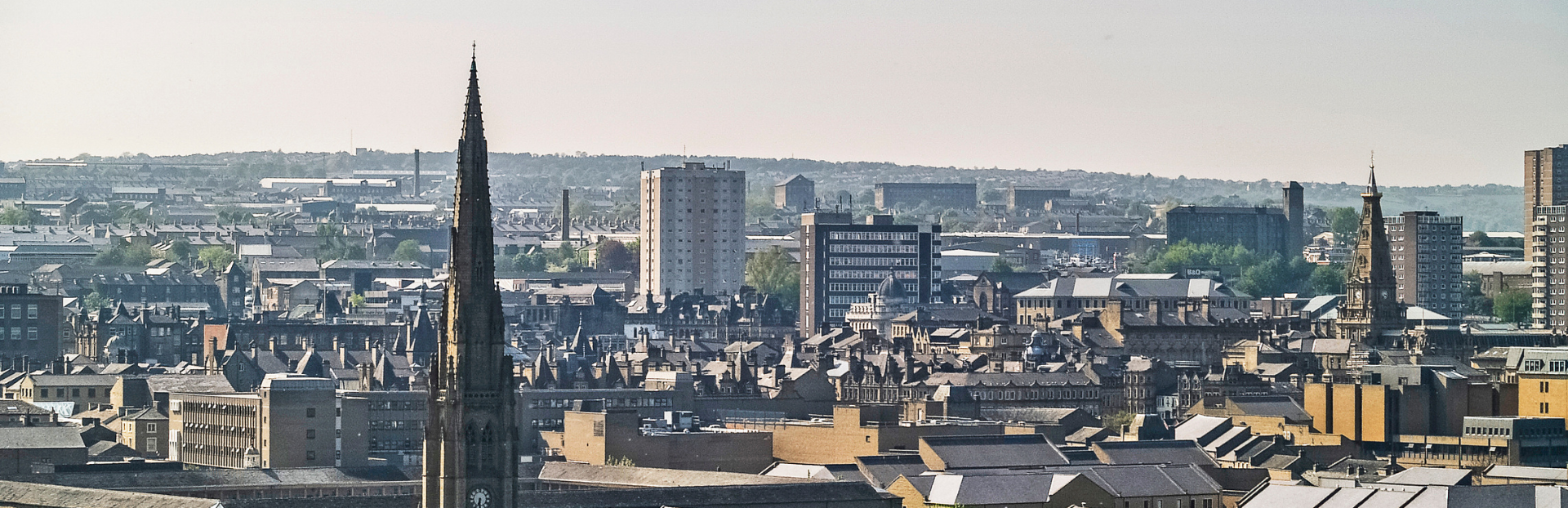
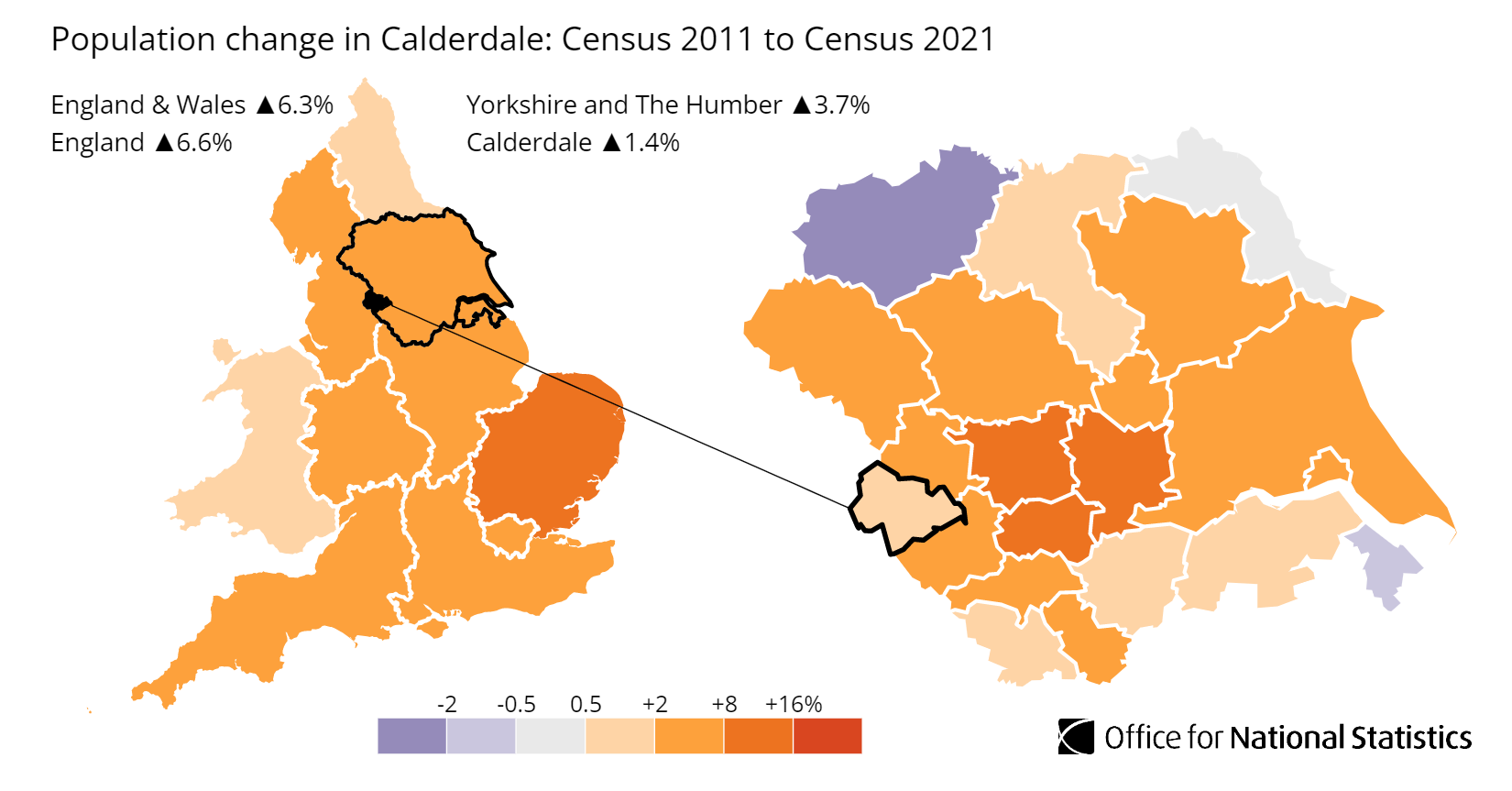
Halifax is a town in Calderdale, West Yorkshire. Average sold prices across Calderdale sit at £191,696 on the HM Land Registry House Price Index, 33.9% below the England average of £289,946 and 7.7% below the Yorkshire and The Humber regional figure of £207,750. That puts Halifax firmly in the most affordable third of the English market. The local authority's population grew 1.4% between the 2011 and 2021 censuses, from 203,826 to 206,631 residents.
The cheaper a postcode is in Halifax, the more it tends to earn. HX1, the town centre, has the lowest asking price at £134,932 and the highest gross yield at 6.2%. The premium sits at the rural Calder Valley end, where Hebden Bridge in HX7 commands £357,731 but returns too little rental data to read a yield at all. For an investor, that spread between a sub-£135,000 town-centre buy and a £357,000 valley home is the whole shape of the Halifax market in two numbers.
This guide covers the metropolitan borough of Calderdale (ONS code E08000033) across ten postcode districts: HX1 to HX7 around Halifax itself, plus BD13 (Queensbury), HD6 (Brighouse) and OL14 (Todmorden) on the borough's fringes. Halifax sits in West Yorkshire, with Bradford bordering to the north and Huddersfield to the south. Six of the ten postcodes return rental data; the other four are too thin to read a reliable yield.
Article updated: July 2026
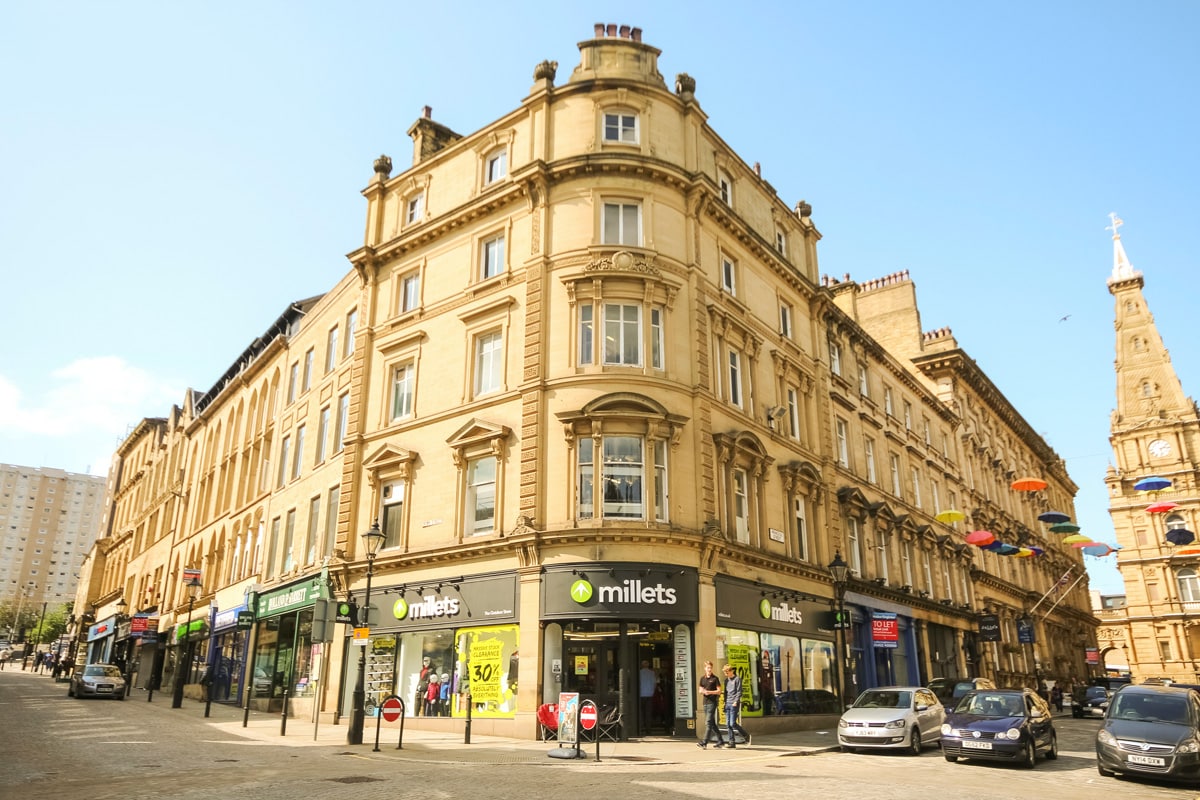
Why Invest in Halifax?
Calderdale, the borough Halifax sits within, added 2,805 residents between the 2011 and 2021 censuses, a 1.4% increase from 203,826 to 206,631. That is slower than the England and Wales average of 6.3%, which fits a borough that grows steadily rather than fast. Halifax is the administrative centre, with the Calder Valley towns of Hebden Bridge, Todmorden, Sowerby Bridge and Elland strung along the river to the west, and Brighouse and Queensbury on the eastern and northern edges.
The local employment rate is 70.1%, below the Great Britain figure of 75.6%, and unemployment runs at 8.3%. The economy carries its industrial past forward into financial services, advanced manufacturing and public-sector work. Halifax is the home of the Halifax bank, now part of Lloyds Banking Group, and the restored 18th-century Piece Hall has turned the old cloth-trading hall into one of Yorkshire's busiest cultural venues, pulling footfall back into the town centre.
Median gross annual earnings across Calderdale are £35,989, which is 3.3% above the Yorkshire and The Humber median of £34,835 but 8.0% below the Great Britain median of £39,125. Lower local wages keep asking prices and rents at a level that genuinely fits the tenant base, which is part of why the cheaper Halifax postcodes hold their yields. The wider West Yorkshire economy, planned jointly through the Combined Authority alongside Leeds, Bradford and Wakefield, gives Calderdale tenants access to a far bigger jobs market than the borough alone.
Halifax Economic Summary
- Population (Calderdale): 206,631 (2021 Census). Growth of 1.4% from 2011.
- Median annual salary: £35,989 (local), £34,835 (Yorkshire and The Humber), £39,125 (Great Britain)
- Employment rate: 70.1% (local)
- Unemployment rate: 8.3% (local)
- Key employment sectors: Financial services, advanced manufacturing, health and social work, retail, education
Source: ONS Census 2021, Nomis Labour Market Profile (ASHE 2025, Employment Oct 2024-Sep 2025)
Regeneration and Investment in Halifax
More than £220 million of confirmed investment is flowing into Halifax across transport, healthcare and community programmes. Three schemes with secured funding are reshaping the town and its surrounding neighbourhoods.
- A629 Phase 2 Halifax Town Centre (Under construction, part of the £1bn Leeds City Region Growth Deal): This transport and public-realm scheme is rebuilding the heart of Halifax with new cycle routes, a pedestrianised Market Street, and safer walking connections between Halifax railway station and The Piece Hall, Central Library and Square Chapel. It is funded through the West Yorkshire Combined Authority's Transport Fund and delivered in three consecutive phases (western, eastern and central) to limit disruption, with the first phase underway. Updates at Calderdale Council News.
- Calderdale Royal Hospital Clinical Building (Approved, part of £200m hospital investment): Laing O'Rourke has planning approval for a major new clinical building at Calderdale Royal Hospital, with separate emergency departments for adults and children plus eight new wards. Construction starts in summer 2026 and targets completion in 2029. Updates at Construction Enquirer.
- North Halifax Pride in Place (Funded, £20m over 10 years): The UK Government confirmed £20 million of long-term community investment for Mixenden and Illingworth in September 2025. A local Neighbourhood Board decides how the money is spent, funding improvements to public spaces, community hubs, high streets and heritage across north Halifax. Updates at Calderdale Council News.
Source: Office for National Statistics - Population for Calderdale
Halifax Property Market Analysis
Average property prices across Calderdale have risen 375.0% since January 1995, from £40,361 to £191,696. The sections below walk through that cycle by cycle, then drill into current postcode-level data for sold prices, price per square foot, asking prices, growth, transaction volumes and the type of stock you can actually buy.
When was the last house price crash in Halifax?
Halifax sits within the metropolitan borough of Calderdale, so all sold prices from HM Land Registry are recorded at borough level. The index runs from January 1995 to March 2026, covering 31 years of market cycles.
The 1995 to 2007 boom: Calderdale started at £40,361 in January 1995. By December 2000 prices had reached £55,839, and the early-2000s acceleration carried the average to £108,189 by March 2006. The market peaked at £126,079 in December 2007, more than tripling from its 1995 base over thirteen years.
2008 to 2009, the financial crisis: Prices fell hard from the December 2007 peak, dropping to £102,547 by February 2009, an 18.7% fall in fourteen months. The worst year-on-year reading was -17.0% in February 2009. That was steeper than England's fall and reflected how exposed a lower-priced market is when buyers and lenders pull back at once.
The double dip, 2010 to 2013: This is where Calderdale's story diverges from most of England. Prices bounced off the 2009 low and recovered towards £112,000 in 2010, then turned and slid again. The true floor did not arrive until March 2013, at £102,056, fractionally below the 2009 trough. Where England and the wider region bottomed out once in early 2009 and climbed, Calderdale spent four more years grinding lower before it found a base. Peak to trough, the decline was 19.1%.
Recovery, 2014 to 2016: Growth returned but slowly. Prices first passed the December 2007 pre-crash peak of £126,079 in September 2016, at £126,135. That recovery took close to nine years, longer than most of the country, a direct consequence of the second dip.
2017 to 2019, steady growth: Single-digit annual gains carried the average from the high-£120,000s towards £140,000 by the end of the decade, supported by improving connectivity and the early regeneration investment.
2020 to 2022, the pandemic surge: The stamp duty holiday and the move towards space and value pushed Calderdale up sharply, from £133,886 in June 2020 to £172,125 by December 2022. Annual growth peaked at 9.6% in that final month, a stronger run than the borough had seen in years.
The 2023 rate shock: Higher mortgage rates cooled the market. Prices eased to £168,611 by June 2023 before recovering to £173,780 by December, with annual growth slowing to 1.0%.
2024 to present: Growth resumed at a measured pace, reaching £179,937 by December 2024 and £191,696 by March 2026, the highest reading on record. The current price sits 52.0% above the December 2007 pre-crash peak, and the borough is at an all-time high rather than easing back from one.
Long-term growth summary:
- 5 years (March 2021 to March 2026): 28.8% growth (£148,885 to £191,696)
- 10 years (March 2016 to March 2026): 59.8% growth (£119,960 to £191,696)
- 15 years (March 2011 to March 2026): 77.8% growth (£107,791 to £191,696)
- 20 years (March 2006 to March 2026): 77.2% growth (£108,189 to £191,696)
- 30 years (January 1995 to March 2026): 375.0% growth (£40,361 to £191,696)
The defining feature of Calderdale's crash was the double dip: a second slide that pushed the floor out to 2013 and stretched the recovery to nearly nine years. An investor who bought at the exact December 2007 peak would have waited until late 2016 just to break even on the borough average, but would now be sitting 52.0% ahead. The 30-year return of 375.0% shows the long-term capital story is solid; the lesson the timeline carries is that recoveries in cheaper markets can take longer to arrive than the headlines suggest.
- All property types
- Detached
- Semi-detached
- Terraced
- Flats
- All property types
- Detached
- Semi-detached
- Terraced
- Flats
Sold House Prices in Halifax
The average sold price across all property types in Calderdale is £191,696, which is 33.9% below the England average of £289,946 as of March 2026. That discount runs through every property type, but it is widest at the cheaper end. Flats sit 44.1% below the England figure, while detached houses are 21.8% below. The pattern says something about the stock: Calderdale's terraced and flat market is genuinely low-cost, while its detached homes, many of them stone-built valley properties, carry more value.
| Property Type | Calderdale Average | England Average | Difference |
|---|---|---|---|
| Detached houses | £367,974 | £470,492 | -21.8% |
| Semi-detached houses | £229,215 | £288,185 | -20.5% |
| Terraced houses | £167,650 | £243,788 | -31.2% |
| Flats and maisonettes | £119,866 | £214,563 | -44.1% |
| All property types | £191,696 | £289,946 | -33.9% |
Detached houses at £367,974 carry the smallest discount to England at 21.8% below £470,492. The detached stock concentrates in the rural west, where Hebden Bridge, Sowerby Bridge and the Greetland and Barkisland hills hold larger stone properties that draw buyers out of Leeds and Bradford. Annual growth of 2.8% points to steady demand rather than any rush.
Semi-detached houses at £229,215 sit 20.5% below England's £288,185 and grew 3.8% over the year, the strongest of the four types. This is the broad middle of Calderdale's market, the family stock that runs through Illingworth, Ovenden, Brighouse and the residential streets between the valley towns. The combination of the lowest discount on growth and a mid-market price makes the semi the workhorse of the borough.
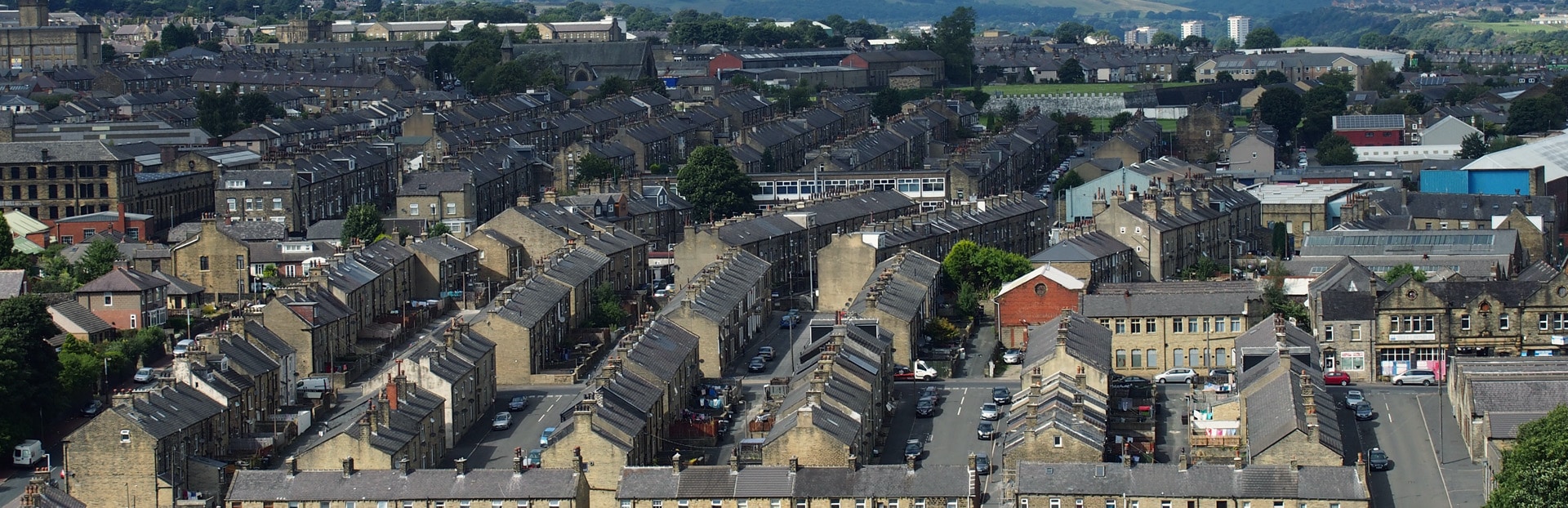
Terraced houses at £167,650 offer a 31.2% discount to England's £243,788, with 3.2% annual growth. The terraced stock is dense in HX1 around the town centre and threaded through every valley town, much of it the stone two-up two-down that defines West Yorkshire. It is the entry point for most buy-to-let in Halifax, and the type that underpins the highest yields.
Flats and maisonettes at £119,866 show the deepest discount at 44.1% below England's £214,563, and were the only type to fall over the year at -1.8%. Halifax is not a flat city. What apartment stock exists is mostly converted period buildings and a thin layer of purpose-built units around the town centre, so flat values track local demand alone with none of the investor premium that lifts flats in Leeds or Manchester.
Price Per Square Foot in Halifax
£147 per square foot separates Halifax's cheapest postcode from its most expensive, with HX1 at £123 and HX7 at £270. Price per square foot strips out property size and gives a cleaner read on location value. HX7 (Hebden Bridge), the Calder Valley's most sought-after town, commands more than double HX1's rate.
| Rank | Area | Price Per Sq Ft |
|---|---|---|
| 1 | HX1 (Town Centre) | £123 |
| 2 | OL14 (Todmorden) | £197 |
| 3 | HX5 (Elland) | £205 |
| 4 | HX2 (Illingworth, Ovenden) | £210 |
| 5 | BD13 (Queensbury) | £211 |
| 6 | HX6 (Sowerby Bridge) | £212 |
| 7 | HX3 (Northowram, Hipperholme) | £216 |
| 8 | HD6 (Brighouse) | £227 |
| 9 | HX4 (Greetland, Barkisland) | £242 |
| 10 | HX7 (Hebden Bridge) | £270 |
HX1 at £123 per square foot is the cheapest bricks-and-mortar value in the borough by a clear margin, and it is the only outcode under £200. The town-centre stock is terraced and flat-heavy, and that is the value end of Halifax. Drawn from 305 sold prices, HX1's rate sits 54% below HX7's, a wider gap than most West Yorkshire boroughs show between their cheapest and dearest postcodes.
HX7 at £270 per square foot tops the table. When buyers pay more per square foot they are paying for location, and in HX7 that means Hebden Bridge, the independent-minded former mill town that draws commuters and second-home interest out of Leeds and Manchester. All 307 transactions analysed there show a consistent premium over the rest of Calderdale, and it is the one part of the borough where the data behaves more like a desirable rural market than a value one.
For Sale Asking Prices in Halifax
HX1 at £134,932 and HX7 at £357,731 sit 165.1% apart, a wide asking-price spread for a single borough. The hierarchy mirrors price per square foot: the town centre is cheapest, the Calder Valley is dearest. The mean asking price across all ten Halifax postcodes is £249,999.
| Rank | Area | Asking Price |
|---|---|---|
| 1 | HX1 (Town Centre) | £134,932 |
| 2 | HX5 (Elland) | £192,720 |
| 3 | HX2 (Illingworth, Ovenden) | £232,403 |
| 4 | OL14 (Todmorden) | £244,247 |
| 5 | BD13 (Queensbury) | £248,281 |
| 6 | HX6 (Sowerby Bridge) | £254,124 |
| 7 | HD6 (Brighouse) | £267,001 |
| 8 | HX3 (Northowram, Hipperholme) | £271,599 |
| 9 | HX4 (Greetland, Barkisland) | £296,954 |
| 10 | HX7 (Hebden Bridge) | £357,731 |
HX1 at £134,932 is the cheapest way into Halifax by a wide margin, almost £58,000 below the next postcode, HX5 at £192,720. That gap is the largest step between any two adjacent outcodes in the table, and it marks where the town-centre value end stops and the suburban and valley market begins. For an investor on a fixed budget, HX1 buys the most property and the lowest barrier to entry, and it pairs that with the borough's top yield.
HX7's £357,731 asking price is an outlier for West Yorkshire. To put it in context, the mean asking price across all ten Halifax postcodes is £249,999, so Hebden Bridge runs 43% above its own borough average. This is owner-occupier and lifestyle-buyer territory rather than a yield play, which the rental data below confirms by returning too few listings to read a figure at all.
House Price Growth in Halifax
Every Halifax postcode posted positive five-year growth, ranging from 15.0% in HX6 to 28.5% in HX2, but the one and three-year readings are far more mixed. HX5 (Elland) leads the recent run with 15.9% over the year, while OL14 (Todmorden) and HX3 (Northowram, Hipperholme) are the only two postcodes showing a one-year fall.
| Area | 1 Year | 3 Years | 5 Years |
|---|---|---|---|
| HX2 (Illingworth, Ovenden) | -1.7% | 8.9% | 28.5% |
| HX1 (Town Centre) | 5.4% | 14.4% | 28.0% |
| HX5 (Elland) | 15.9% | 11.1% | 27.7% |
| BD13 (Queensbury) | 4.2% | 18.9% | 25.0% |
| OL14 (Todmorden) | -3.4% | 8.1% | 17.8% |
| HD6 (Brighouse) | 2.9% | 8.6% | 17.6% |
| HX7 (Hebden Bridge) | -0.4% | 12.9% | 17.1% |
| HX4 (Greetland, Barkisland) | -0.6% | 7.7% | 16.1% |
| HX3 (Northowram, Hipperholme) | -2.0% | 14.4% | 15.4% |
| HX6 (Sowerby Bridge) | 4.3% | 12.1% | 15.0% |
HX2 at 28.5% has the strongest five-year growth in Halifax, just ahead of HX1 at 28.0%. Illingworth and Ovenden are residential north-Halifax neighbourhoods, and they have ridden the pandemic-era value shift well, though the -1.7% one-year reading shows the recent pace has cooled. The borough's two top growers over five years are both at the affordable end, which is the same pattern as the yields.
BD13 at 18.9% has the strongest three-year growth, a Queensbury market that has done well as buyers priced out of Bradford looked across the boundary. At the other end, OL14 (Todmorden) and HX3 (Northowram, Hipperholme) are the only two postcodes that fell over the past year, at -3.4% and -2.0%, although both still hold double-digit three and five-year gains. Recent direction varies postcode by postcode in Halifax; the longer five-year view is uniformly positive.
Monthly Property Sales in Halifax
Monthly sales across Halifax range from 10 transactions in HX5 to 49 in HX3, with turnover rates between 16% and 20%. Even the quietest postcodes see steady activity, and the turnover spread is tight, which points to a market where homes change hands at a fairly even pace across the borough.
| Area | Sales Per Month | Turnover | Asking Price |
|---|---|---|---|
| HX3 (Northowram, Hipperholme) | 49 | 16% | £271,599 |
| HX2 (Illingworth, Ovenden) | 35 | 17% | £232,403 |
| BD13 (Queensbury) | 31 | 18% | £248,281 |
| HD6 (Brighouse) | 30 | 17% | £267,001 |
| HX6 (Sowerby Bridge) | 26 | 16% | £254,124 |
| OL14 (Todmorden) | 18 | 20% | £244,247 |
| HX7 (Hebden Bridge) | 18 | 18% | £357,731 |
| HX1 (Town Centre) | 17 | 19% | £134,932 |
| HX4 (Greetland, Barkisland) | 14 | 18% | £296,954 |
| HX5 (Elland) | 10 | 18% | £192,720 |
OL14 (Todmorden) records the highest turnover at 20%, with HX1 close behind at 19%. A higher turnover rate means a larger share of the local stock changes hands each year, which for a buy-to-let investor signals an easier exit when the time comes to sell. Both are at the more affordable end of the table, where smaller homes tend to move more readily.
HX3 (Northowram, Hipperholme) sees the most transactions at 49 a month, well clear of the rest, but on a 16% turnover rate. It is simply a large, busy market with plenty of stock, so a high volume of monthly sales still represents a modest share of the total. HX5 (Elland) sits at the other end on volume at 10 a month, the thinnest market in the borough, which is part of why its rental data does not read.
How Long Properties Take to Sell in Halifax
Most of Halifax is a seller's market, with the Calder Valley fringes selling fastest at around 160 days and Sowerby Bridge the slowest at 217. Days on market is the typical number of days a home is up for sale before it sells; the months of unsold stock shows how much supply is sitting there at the current rate of sales.
| Area | Avg Days to Sell | Months of Unsold Stock | Market |
|---|---|---|---|
| HX7 (Hebden Bridge) | 160 | 5.3 | Seller's market |
| OL14 (Todmorden) | 160 | 5.3 | Seller's market |
| HD6 (Brighouse) | 169 | 5.6 | Seller's market |
| HX1 (Town Centre) | 169 | 5.6 | Seller's market |
| HX2 (Illingworth, Ovenden) | 169 | 5.6 | Seller's market |
| HX5 (Elland) | 169 | 5.6 | Seller's market |
| HX4 (Greetland, Barkisland) | 179 | 5.9 | Seller's market |
| BD13 (Queensbury) | 190 | 6.3 | Balanced market |
| HX3 (Northowram, Hipperholme) | 190 | 6.3 | Balanced market |
| HX6 (Sowerby Bridge) | 217 | 7.1 | Balanced market |
A yield number tells you nothing about how quickly you can get back out. Seven of Halifax's ten postcodes carry under six months of unsold stock, which is the seller's-market end and points to a reasonably quick exit. HX6 (Sowerby Bridge) is the slowest at 7.1 months, so a property there is likely to take longer to move on when the time comes. For a buy-to-let investor the selling-speed picture is broadly favourable across the borough, with the valley fringes of Hebden Bridge and Todmorden clearing fastest.
What Type of Property Can You Buy in Halifax?
Terraced houses are the largest or joint-largest category in most Halifax postcodes, and in HX1 they make up 46.6% of all stock alongside the borough's biggest concentration of flats. The mix of housing shapes which strategy fits where. The figures below come from 2021 Census records for each postcode.
| Area | Detached | Semi-detached | Terraced | Flats |
|---|---|---|---|---|
| HX1 (Town Centre) | 6.4% | 10.1% | 46.6% | 36.7% |
| HX2 (Illingworth, Ovenden) | 23.7% | 25.6% | 35.1% | 15.3% |
| HX3 (Northowram, Hipperholme) | 24.9% | 26.2% | 35.6% | 13.0% |
| HX4 (Greetland, Barkisland) | 34.4% | 21.8% | 35.7% | 7.1% |
| HX5 (Elland) | 13.8% | 33.0% | 34.1% | 18.0% |
| HX6 (Sowerby Bridge) | 38.2% | 24.5% | 29.4% | 7.0% |
| HX7 (Hebden Bridge) | 37.5% | 24.0% | 33.0% | 4.9% |
| BD13 (Queensbury) | 28.3% | 33.9% | 30.7% | 6.3% |
| HD6 (Brighouse) | 31.3% | 28.4% | 25.8% | 13.8% |
| OL14 (Todmorden) | 38.6% | 18.8% | 37.7% | 4.2% |
HX1 is unlike anywhere else in the borough, with terraced houses at 46.6% and flats at 36.7%, while detached homes account for just 6.4%. That is the smaller-unit stock that typically forms the buy-to-let market, and it lines up exactly with HX1 carrying the lowest asking price and the highest gross yield in Halifax. Town-centre flats and terraces suit single lets, sharers and the lower-cost family rental that drives the area's income return.
At the other end, HX6 (Sowerby Bridge) and HX7 (Hebden Bridge) are the most detached-weighted postcodes, at 38.2% and 37.5%, with the fewest flats. The Calder Valley housing here leans towards owner-occupier family homes, which matches the premium asking prices and the thinner rental market. Queensbury in BD13 is the most semi-detached postcode at 33.9%, a suburban profile that fits its position on the Bradford fringe.
Flats combine purpose-built, converted and commercial-conversion units. A small share of mobile and temporary dwellings is not shown, so rows may not total 100%.
Halifax Rental Market Analysis
Monthly rents in Halifax run from £700 in HX1 to £841 in HX3, with gross yields from 3.6% to 6.2% across the six postcodes that return rental data. For investors asking is buy to let worth it in Halifax, the sections below break down rents, yields and tenant affordability postcode by postcode. If you are working out how to build a property portfolio in West Yorkshire, Halifax pairs some of the region's lowest asking prices with yields that hold up at the affordable end. Browse current buy-to-let property in Halifax across the region.
Average Rent & Gross Rental Yields in Halifax
Gross yields in Halifax range from 3.6% in HD6 and BD13 to 6.2% in HX1. The town centre delivers the standout income return because its £134,932 asking price is so far below the rest of the borough, even on the lowest rent of £700 a month. Four of the ten postcodes return no rental figure, so the yield table reads across the six that do.
| Area | Average Monthly Rent | Asking Price | Gross Yield |
|---|---|---|---|
| HX1 (Town Centre) | £700 | £134,932 | 6.2% |
| HX2 (Illingworth, Ovenden) | £805 | £232,403 | 4.2% |
| HX6 (Sowerby Bridge) | £838 | £254,124 | 4.0% |
| HX3 (Northowram, Hipperholme) | £841 | £271,599 | 3.7% |
| BD13 (Queensbury) | £754 | £248,281 | 3.6% |
| HD6 (Brighouse) | £799 | £267,001 | 3.6% |
| HX5 (Elland) | Not enough data | £192,720 | Not enough data |
| OL14 (Todmorden) | Not enough data | £244,247 | Not enough data |
| HX4 (Greetland, Barkisland) | Not enough data | £296,954 | Not enough data |
| HX7 (Hebden Bridge) | Not enough data | £357,731 | Not enough data |
HX1 at 6.2% combines the lowest asking price with the lowest rent yet still returns by far the best yield, because the £134,932 price is doing the heavy lifting. A 30% deposit of £40,479 gets an investor into the highest-yielding postcode in the borough, one of the lowest entry deposits anywhere in West Yorkshire.
The tenant base in HX1 is a town-centre mix, drawing on the terraced and flat stock around the railway station, the Piece Hall and the working neighbourhoods that ring the centre. HD6 (Brighouse) and BD13 (Queensbury) sit at the bottom of the yield table at 3.6%, where higher asking prices on solid suburban stock compress the income return even though the rents are healthy.
Gross Rental Yield by Postcode
Is Halifax Rent High?
Rents in Halifax take between 23.4% and 28.0% of the local median gross monthly salary, so every postcode with data sits below the 30% affordability mark. The widely cited threshold for rent affordability is 30% of gross income, and unlike higher-priced markets, none of Halifax's lettable postcodes cross it. That headroom is part of what keeps the borough's tenant base stable.
The median gross weekly salary in Calderdale is £692.10, which equates to £2,999 per month or £35,989 per year. This is above the Yorkshire and The Humber median of £669.90 per week but below the Great Britain median of £752.40 per week. Data from the Nomis Labour Market Profile (ASHE 2025).
| Rank | Area | Rent as % of Income |
|---|---|---|
| 1 | HX3 (Northowram, Hipperholme) | 28.0% |
| 2 | HX6 (Sowerby Bridge) | 27.9% |
| 3 | HX2 (Illingworth, Ovenden) | 26.8% |
| 4 | HD6 (Brighouse) | 26.6% |
| 5 | BD13 (Queensbury) | 25.1% |
| 6 | HX1 (Town Centre) | 23.4% |
| — | HX4 (Greetland, Barkisland) | Not enough data |
| — | HX5 (Elland) | Not enough data |
| — | HX7 (Hebden Bridge) | Not enough data |
| — | OL14 (Todmorden) | Not enough data |
HX1 at 23.4% is the most affordable for tenants. A £700 monthly rent against a £2,999 monthly salary leaves real headroom, and that matters for landlords because tenants who are not stretched tend to stay longer and fall into arrears less often. It is the same town-centre postcode that carries the highest yield, so in HX1 the income return and the affordability work in the same direction rather than against each other.
HX3 (Northowram, Hipperholme) is the least affordable at 28.0%, but it is still comfortably inside the 30% mark. The whole point about Halifax rents is that they sit within reach of local wages everywhere data exists, which gives a wider margin of safety on void and arrears than higher-priced West Yorkshire markets offer.
How Big Is Halifax's Private Rented Sector?
The private rented sector is deepest by far in HX1, where it accounts for 40.6% of households, against 12.3% to 22.9% across the rest of the borough. The share of homes already rented privately is a guide to the size of the established tenant pool and the local lettings market. The table below shows household tenure by postcode.
| Area | Owned Outright | Owned with Mortgage | Private Rented | Social Rented |
|---|---|---|---|---|
| HX1 (Town Centre) | 24.4% | 18.4% | 40.6% | 16.2% |
| HX5 (Elland) | 33.6% | 32.6% | 22.9% | 10.7% |
| HD6 (Brighouse) | 38.1% | 32.1% | 21.0% | 8.6% |
| HX3 (Northowram, Hipperholme) | 38.4% | 32.6% | 20.4% | 8.4% |
| HX2 (Illingworth, Ovenden) | 39.8% | 32.0% | 19.5% | 8.5% |
| BD13 (Queensbury) | 38.8% | 35.2% | 18.3% | 7.5% |
| HX7 (Hebden Bridge) | 48.2% | 31.6% | 17.2% | 2.2% |
| HX4 (Greetland, Barkisland) | 43.2% | 36.4% | 15.5% | 4.6% |
| HX6 (Sowerby Bridge) | 40.8% | 39.1% | 15.4% | 4.4% |
| OL14 (Todmorden) | 44.9% | 38.9% | 12.3% | 3.6% |
HX1 stands alone with 40.6% of households privately rented, roughly double the next postcode. A rented sector that size signals an active, deep lettings market and a wide pool of existing tenants, and it pairs neatly with HX1's top yield and lowest asking price. It is the one part of Halifax that genuinely behaves like a rental district rather than an owner-occupier one.
At the other end, Hebden Bridge in HX7 has the highest outright ownership at 48.2% and one of the smallest rented sectors at 17.2%, the valley owner-occupier profile that fits its premium prices and absent yield data. Across the rest of the borough the private rented share sits in a fairly tight 12.3% to 22.9% band, with the only postcode reading a live rental market on PropertyData being HX1, where around 43 homes were on the rental market and letting fast at about 45 days, pointing to demand running ahead of supply in the town centre.
Local Housing Allowance Rates in Halifax
Most of Halifax falls within the Halifax Broad Rental Market Area, where Local Housing Allowance runs from £82.00 a week for a shared room to £172.60 a week for a four-bedroom home, while Queensbury in BD13 sits in the separate Bradford and South Dales area. Local Housing Allowance sets the maximum housing support a tenant on benefits can receive, so it acts as a rent floor for landlords letting to that part of the market. To check the current rate for a specific address, you can use the government's official Local Housing Allowance calculator.
| Property Size | Weekly LHA Rate | Monthly Equivalent |
|---|---|---|
| Shared accommodation | £82.00 | £355 |
| 1 bedroom | £101.26 | £439 |
| 2 bedrooms | £120.82 | £524 |
| 3 bedrooms | £143.84 | £623 |
| 4 bedrooms | £172.60 | £748 |
The two-bedroom Halifax rate of £120.82 a week works out at about £524 a month, below the £700 to £841 open-market rents recorded across the borough's lettable postcodes. A benefit-backed tenancy at the LHA rate therefore sits under Halifax's market rents, and the stock that fits within these rates is concentrated in HX1, where both asking prices and rents are lowest. The figures above apply across nine of the ten postcodes; Queensbury in BD13 falls in the Bradford and South Dales market area, where the shared-room rate is £75.10 and the one-bedroom rate £103.56, with the two, three and four-bedroom rates matching Halifax's. Always check the live rate for a specific postcode against the official calculator, since LHA is reset each April.
Buy-to-Let Considerations
Are House Prices High in Halifax? Price-to-Earnings Ratios
Buying in Halifax takes between 3.7 and 9.9 times the local median annual salary, a wide affordability range across a single borough. This is based on the Nomis Labour Market Profile for Calderdale, which puts the median gross annual income for residents at £35,989.
The national benchmark for price-to-earnings is 7.4x (England's average sold price of £289,946 divided by the Great Britain median annual salary of £39,125). Five of Halifax's ten postcodes sit below that national benchmark, meaning they are more affordable relative to local incomes than the England average is relative to national incomes.
| Rank | Area | Price-to-Earnings Ratio |
|---|---|---|
| 1 | HX1 (Town Centre) | 3.7x |
| 2 | HX5 (Elland) | 5.4x |
| 3 | HX2 (Illingworth, Ovenden) | 6.5x |
| 4 | OL14 (Todmorden) | 6.8x |
| 5 | BD13 (Queensbury) | 6.9x |
| 6 | HX6 (Sowerby Bridge) | 7.1x |
| 7 | HD6 (Brighouse) | 7.4x |
| 8 | HX3 (Northowram, Hipperholme) | 7.5x |
| 9 | HX4 (Greetland, Barkisland) | 8.3x |
| 10 | HX7 (Hebden Bridge) | 9.9x |
HX1 at 3.7x is the most affordable entry in Halifax by a clear distance, and one of the lowest price-to-earnings ratios in West Yorkshire. A property at under four times local earnings is genuinely accessible, and it is the same postcode that carries the top yield, so the cheapest way in is also the highest-earning. That alignment is unusual and it sits at the heart of the Halifax story.
HX7 (Hebden Bridge) at 9.9x sits well above the national benchmark, the only Halifax postcode approaching ten times local earnings. At that level the Calder Valley's premium town is priced for owner-occupiers and lifestyle buyers rather than yield, which the absent rental figure confirms. The ratio stretches the payback period and explains why the income case lives at the other end of the borough.
Deposit Requirements in Halifax
A 30% deposit on a Halifax buy-to-let runs from £40,479 in HX1 to £107,319 in HX7. The gap between the cheapest and most expensive deposit is £66,840, more than a full HX1 deposit on its own. For investors comparing Halifax with the rest of West Yorkshire, the HX1 figure is one of the lowest entry deposits in the region, sitting below most of Leeds and the dearer parts of Huddersfield.
Beyond the deposit, the stamp duty calculation and other buy to let costs affect the total capital required.
| Rank | Area | 30% Deposit Required |
|---|---|---|
| 1 | HX1 (Town Centre) | £40,479 |
| 2 | HX5 (Elland) | £57,816 |
| 3 | HX2 (Illingworth, Ovenden) | £69,721 |
| 4 | OL14 (Todmorden) | £73,274 |
| 5 | BD13 (Queensbury) | £74,484 |
| 6 | HX6 (Sowerby Bridge) | £76,237 |
| 7 | HD6 (Brighouse) | £80,100 |
| 8 | HX3 (Northowram, Hipperholme) | £81,480 |
| 9 | HX4 (Greetland, Barkisland) | £89,086 |
| 10 | HX7 (Hebden Bridge) | £107,319 |
HX1 is the cheapest way into Halifax at a £40,479 deposit, and it buys the highest-yielding postcode with it, so the lowest capital outlay also brings the strongest income return. Stepping up to HX5 (Elland) costs roughly £17,000 more for a suburban market that does not currently return a rental figure, so the jump buys a different kind of postcode rather than a better yield.
At the top end, HX4 (Greetland, Barkisland) and HX7 (Hebden Bridge) need £89,086 and £107,319, and neither reads a yield. The deposits there are buying capital and lifestyle stock in the rural west of the borough rather than rental income. The clear pattern in Halifax is that the income case and the lowest deposit live in the same place, HX1, while the larger deposits buy growth potential and valley character without a measurable rental return.

What the Halifax Data Tells Buy-to-Let Investors
In Halifax the cheapest postcode is also the highest-yielding by a wide margin. HX1 (Town Centre) has the top yield at 6.2%, the lowest asking price for buying an investment property in Halifax at £134,932, and the most affordable prices against local earnings at 3.7 times income. A 30% deposit there is £40,479, the lowest in the borough, for a home renting at £700 a month, and it sits in the one postcode with a genuinely deep rented sector at 40.6% of households.
Every Halifax postcode grew over five years, from 15.0% in HX6 up to 28.5% in HX2, with the affordable end leading. The recent year is more mixed: HX5 (Elland) jumped 15.9% while OL14 (Todmorden) and HX3 (Northowram, Hipperholme) both slipped. BD13 (Queensbury) carries the strongest three-year growth at 18.9%, a market lifted by buyers crossing the boundary from Bradford. The longer view across the borough has been steadily positive, even where individual years have wobbled.
The premium and the income case live at opposite ends of the borough. Hebden Bridge in HX7 commands £357,731 and 9.9 times local earnings, but returns too few rental listings to read a yield, so it reads as a capital and lifestyle market rather than a cash-flow one. Buyers who want to come in below asking on the value end often look through off-market property in Halifax channels. Across the borough, rents sit below 30% of local income in every lettable postcode, which gives a wider margin against voids and arrears than higher-priced West Yorkshire markets, with the deep value and high yield concentrated firmly in the town centre.
How Halifax Compares
Halifax's mean asking price of £249,999 sits mid-table among five West Yorkshire locations, cheaper than Wakefield, Huddersfield and Leeds but above Bradford, with a top yield of 6.2% that beats Wakefield and Huddersfield, behind Bradford's thin-market 12.0% and Leeds's 8.9%. The comparison below places Halifax alongside four nearby markets, each with a different investor profile. The mean asking price and mean monthly rent are simple averages across all postcodes with data; the top gross yield is the single highest postcode yield in each location.
| Location | Mean Asking Price | Mean Monthly Rent | Mean Gross Yield | Top Yield (postcode) |
|---|---|---|---|---|
| Bradford | £226,164 | £849 | 4.5% | 12.0% (BD1) |
| Halifax | £249,999 | £789 | 3.8% | 6.2% (HX1) |
| Wakefield | £255,177 | £865 | 4.1% | 4.8% (WF10) |
| Huddersfield | £269,690 | £845 | 3.8% | 5.3% (HD1) |
| Leeds | £291,071 | £1,147 | 4.7% | 8.9% (LS2) |
Halifax is the second cheapest location in this comparison at £249,999, ahead of only Bradford at £226,164, and its top yield of 6.2% is second only to Bradford's thin-market 12.0% among the West Yorkshire-affordable markets. Both represent the value end of the region: lower asking prices and higher headline yields than the larger cities, on a stone-built terraced stock that suits the lower-deposit investor.
For investors prioritising income at the very top, Leeds reaches 8.9% on its best postcode, though on a far higher £291,071 mean asking price and a much deeper, more complex market. Bradford at 12.0% offers the lowest asking price in the table alongside the top yield. Wakefield and Huddersfield sit close to Halifax on price but return lower top yields of 4.8% and 5.3%. For a data-driven comparison across all UK locations, see our best buy-to-let areas guide.
Frequently Asked Questions
Is Halifax a good place to live for buy-to-let tenants?
It is an affordable one, which is the main thing for a steady tenancy. Rents take between 23% and 28% of the local median wage across the postcodes that have data, so nowhere in Halifax with a rental market crosses the 30% affordability line. Tenants who are not stretched on rent tend to stay put and fall behind less often.
The trade-off is the local jobs picture. The employment rate is 70.1%, below the national 75.6%, and unemployment runs at 8.3%. The wider West Yorkshire economy, with Leeds and Bradford a short train ride away, gives Halifax renters access to a much bigger jobs market than the borough alone, which softens that.
What are the best areas in Halifax for property investment?
The borough splits cleanly by price. HX1, the town centre, is the cheapest way in at £134,932 and carries the highest yield at 6.2%, with the deepest rented sector at 40.6% of households, so it leans hard towards income. If cash flow is the goal, that is where the numbers are.
For growth, the affordable end has led: HX2 (Illingworth, Ovenden) grew 28.5% over five years and HX1 28.0%, while BD13 (Queensbury) tops the three-year table at 18.9%. The Calder Valley end, Hebden Bridge in HX7 and Sowerby Bridge in HX6, carries the premium prices and the character, but returns thin or no rental data, so it reads as a capital play rather than a yield one.
How does Halifax compare to Bradford for buy-to-let?
They are close cousins at the value end of West Yorkshire. Bradford is a touch cheaper, with a mean asking price of £226,164 against Halifax's £249,999, and a slightly higher top yield at 6.6% versus 6.2%. It also has far more postcodes to choose from, 22 carrying price data against Halifax's ten, and a deeper, more varied market.
Halifax counters with the Calder Valley premium stock that Bradford does not really have, and the borough's affordability is genuine across the board. For a town-centre income play the two are neck and neck; Halifax's HX1 at 6.2% and a £40,479 deposit is one of the lowest-cost high-yield entries anywhere in the region.
Can I find buy-to-let property under £150,000 in Halifax?
Yes, in HX1. The town-centre postcode has a mean asking price of £134,932, the only Halifax outcode below £150,000, and it pairs that with the borough's top yield at 6.2%. The stock there is terraced and flat-heavy, which is exactly the smaller-unit type that suits buy-to-let.
Beyond HX1, the way under £150,000 is by property type rather than postcode. Terraced houses across Calderdale average £167,650 and flats £119,866 on the Land Registry index, so a terrace or flat in the cheaper neighbourhoods can come in below the postcode average. If sub-£150,000 is the target, HX1 and the lower-cost stock are where to look, or explore below market value property in Halifax.
When will the regeneration affect Halifax property prices?
The town-centre works are the nearest-term. The A629 scheme rebuilding the streets between the station and The Piece Hall is funded and underway in phases, and it is already changing how the centre feels rather than being a distant promise. That kind of public-realm investment tends to support values gradually rather than spike them.
The bigger numbers are further out. The £200 million Calderdale Royal Hospital clinical building starts construction in summer 2026 and targets 2029, and the £20 million North Halifax Pride in Place programme runs over ten years. Anyone pricing those in today is looking at the back half of the decade before they show up in the market.
What are average house prices in Halifax?
The average sold price across Calderdale is £191,696 on the Land Registry index, about 33.9% below the England average of £289,946 as of March 2026. Asking prices by postcode run from £134,932 in HX1 (Town Centre) up to £357,731 in HX7 (Hebden Bridge), with a borough-wide mean of £249,999. By type, detached homes average £367,974, semi-detached £229,215, terraced £167,650 and flats £119,866.
Through a buy-to-let lens, HX1 is the cheapest entry and the highest-yielding at 6.2%, while the Calder Valley postcodes are the dearest and return too little rental data to read a yield.
What are the Local Housing Allowance rates in Halifax?
Most of the borough falls in the Halifax Broad Rental Market Area, so nine of the ten postcodes share one set of rates. As of June 2026 they run at £82.00 a week for a shared room, £101.26 for a one-bed, £120.82 for two beds, £143.84 for three and £172.60 for four. Queensbury in BD13 sits in the separate Bradford and South Dales area, with a lower £75.10 shared-room rate but matching two, three and four-bed figures.
That allowance is the most a tenant on housing support can claim towards rent, so for that part of the market it effectively sets a floor. It is reset each April, so check the live figure for a specific address against the official calculator.
What type of property is most common in Halifax?
Terraced houses, across most of the borough, and overwhelmingly so in the town centre. In HX1 terraces make up 46.6% of the stock and flats another 36.7%, the smaller-unit profile that usually suits buy-to-let. That is a very different mix from the rest of Halifax.
Out in the Calder Valley, Sowerby Bridge (HX6) and Hebden Bridge (HX7) are the most detached-weighted at 38.2% and 37.5%, with the fewest flats. Queensbury in BD13 is the most semi-detached at 33.9%. The stock gets larger and more owner-occupied the further west and the higher up the valley you go.
How do I buy an investment property in Halifax?
Start by deciding whether you are buying for income or for growth, because in Halifax that points you at a different end of the borough. HX1 (Town Centre) is the cheapest entry at £134,932 and the highest-yielding at 6.2%, with the deepest rented sector. The Calder Valley postcodes cost more and lean towards capital and character rather than yield. Budget for a 30% deposit, which runs from £40,479 in HX1 to £107,319 in HX7.
Beyond what is listed openly, plenty of experienced investors buy below asking through off market property in Halifax and BMV property. To see what is available now, browse investment properties or buy-to-let homes for sale.
Ready to buy property?
Access off-market investment properties with an average 8%+ annual gross yield (beating the UK's typical 3-5%).
Get property alerts