
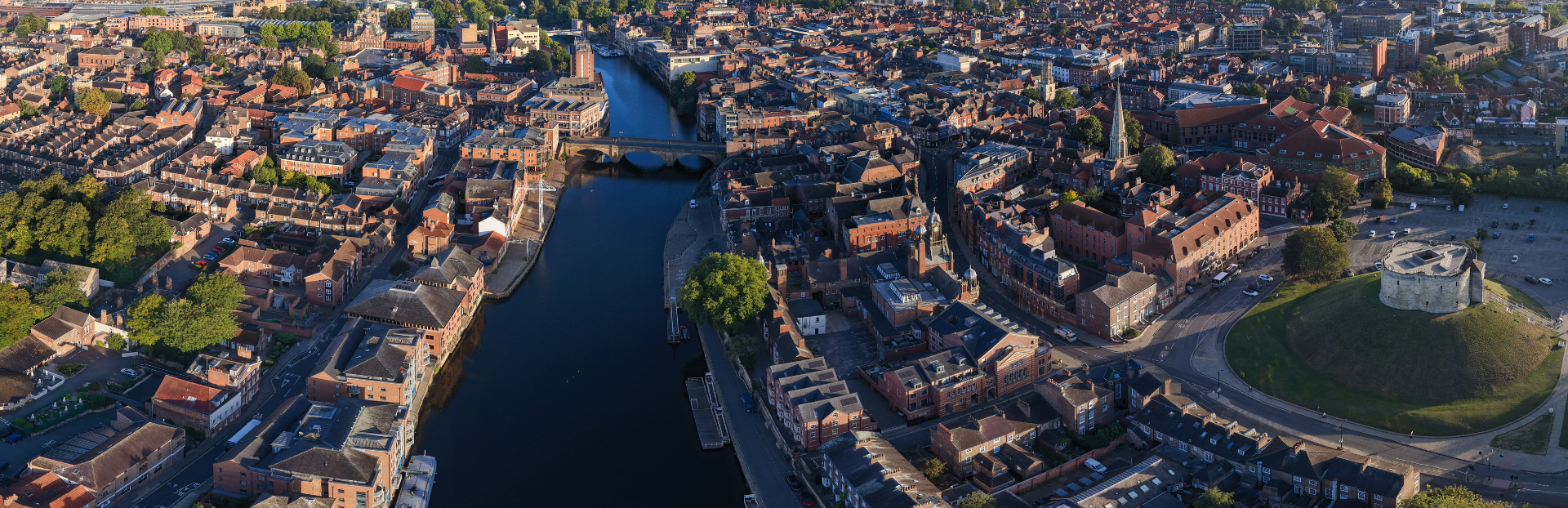
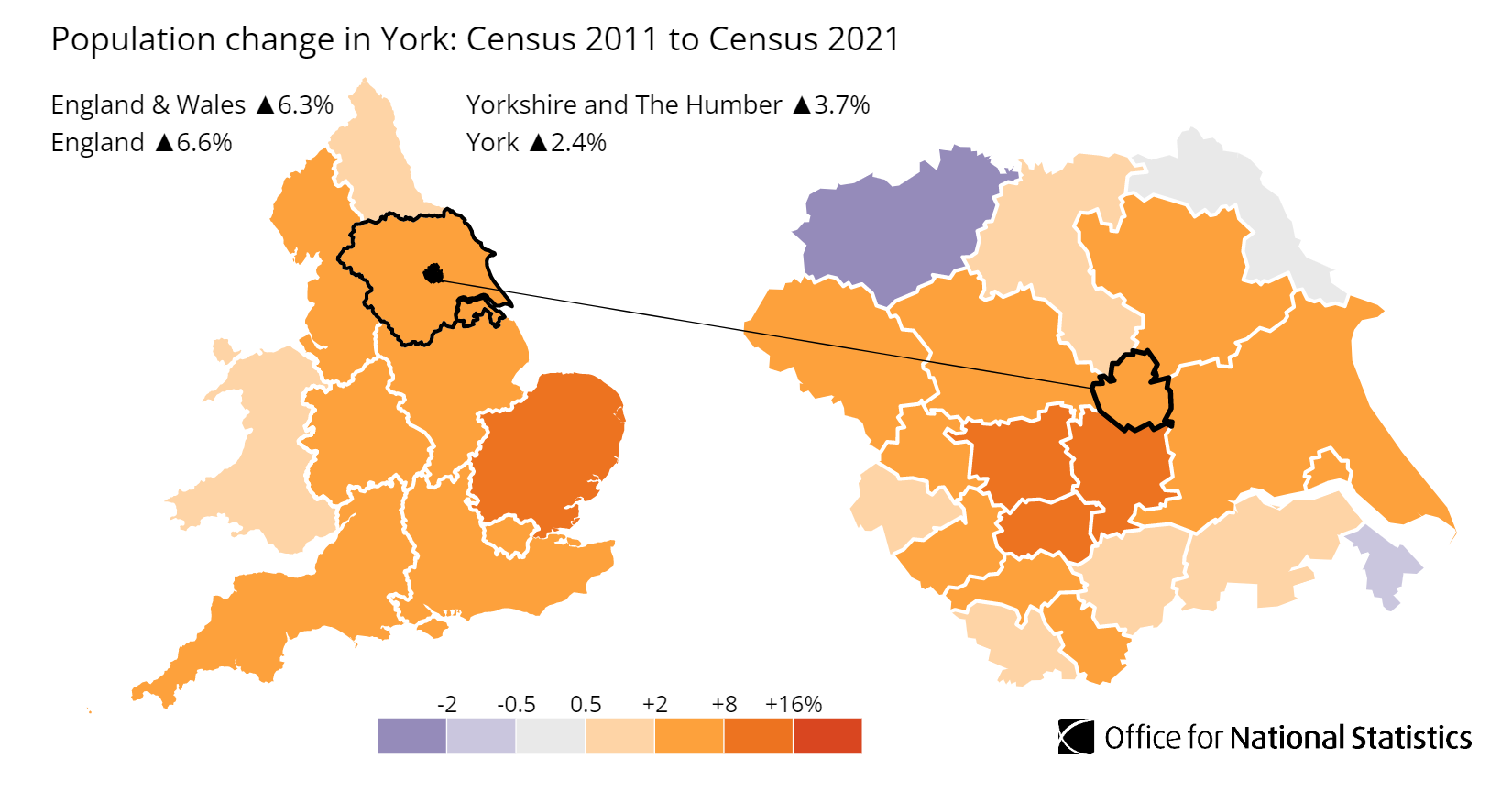
York is a cathedral city in North Yorkshire, in the north of England. York's average sold price of £311,177 on the HM Land Registry House Price Index runs 7.3% above the England average of £289,946 and 49.8% above the Yorkshire and the Humber regional average of £207,750. That makes York the one Yorkshire city where sold prices sit above the national figure rather than below it, a premium built on a tight historic core, two universities and a deep tourism economy. The local authority's population grew 2.4% between the 2011 and 2021 censuses, from 198,051 to 202,821 residents.
For investors the question is where the income sits inside that premium. The pattern across York's nine postcodes is the familiar one where the cheapest postcode carries the highest yield: YO10 (Heslington, University, Fulford) is both the lowest asking price at £300,950 and the top gross yield at 5.3%, while the village postcodes east and south of the city push past £440,000 with yields nearer 4%. The spread between YO10 and YO19 (Dunnington, Wheldrake) at £452,475 is £151,525, a 50.3% gap inside a single city.
This guide covers the unitary authority of York (ONS code E06000014) across postcodes YO1, YO10, YO19, YO23, YO24, YO26, YO30, YO31, and YO32. York sits in the Yorkshire and the Humber region, 25 miles north-east of Leeds and 22 miles south of Thirsk. The wider Yorkshire market also includes Leeds buy-to-let to the south-west.
Article updated: June 2026
Why Invest in York?
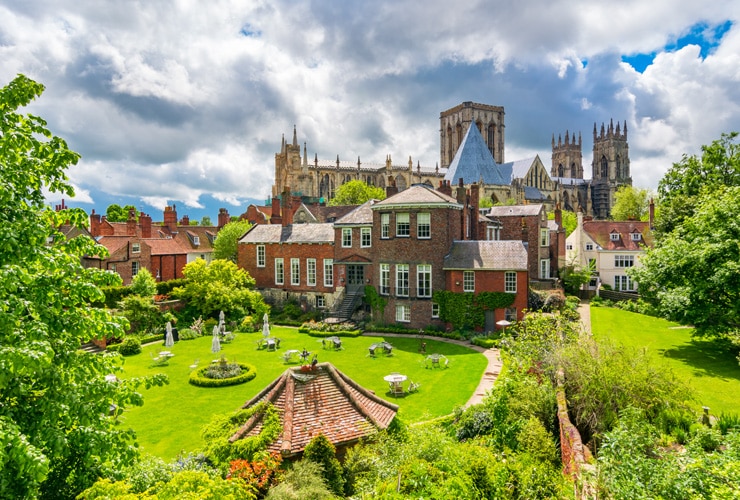
York's population grew 2.4% between the 2011 and 2021 censuses, from 198,051 to 202,821 residents. That is slower than the England and Wales average of 6.3%, which fits a compact city hemmed in by green belt and conservation rules rather than one sprawling outward. York's draw is its Roman and medieval core, its walkable centre inside the city walls, and a tourism economy that runs all year. New housing land is genuinely scarce here, and that scarcity is part of why prices have held a premium over the rest of Yorkshire.
The local employment rate of 78.7% is above both the Yorkshire and the Humber regional average and Great Britain's 75.6%. York's economy leans on human health and social work, wholesale and retail, and education, with the University of York and York St John University together employing thousands and feeding a large student population into the private rented market. Rail and bioscience employers and a heritage visitor economy round out a broad jobs base.
Median gross weekly earnings for York residents are £766.60, which is 7.7% above the Yorkshire and the Humber regional median of £711.60. That works out at £39,863 a year. Higher local wages mean tenants can carry the higher rents that York's premium prices demand, and the student and professional mix spreads demand across the year rather than leaning on one tenant type.
York Economic Summary
- Population (York): 202,821 (2021 Census). Growth of 2.4% from 2011.
- Median annual salary: £39,863 (local), regional median £711.60 per week
- Employment rate: 78.7% (local), 75.6% (Great Britain)
- Unemployment rate: 1.8% (local)
- Key employment sectors: Human health and social work, wholesale and retail, education, higher education, tourism and hospitality
Source: ONS Census 2021, Nomis Labour Market Profile (ASHE 2025, Employment Oct 2024-Sep 2025)
Regeneration and Investment in York
York's biggest regeneration play is York Central, a £2 billion scheme on a 45-hectare site next to the railway station, with 999 homes in Phase 1 alone. In a city where developable land is rare, a brownfield site of that scale beside the station is unusual, and the council expects it to lift York's economy by around 20%.
- York Central (In progress, £2 billion): A 45-hectare brownfield site next to York Railway Station, set to deliver 999 homes in Phase 1 alongside an innovation district, commercial and cultural space, a hotel, and a new western entrance to the station. The scheme has secured government infrastructure funding and is forecast to support thousands of jobs and grow the city's economy by about 20%. As one of the largest regeneration sites in the country and sitting right beside the station, it adds residential supply in the exact spot where York has had almost none. Updates at York Central Partnership.
- Castle and Eye of York (Planning approved December 2025): The Castle car park and the riverside around Clifford's Tower are being reworked into public gardens and heritage space, with planning approved by City of York Council's planning committee on 11 December 2025. The scheme reshapes one of the most visited corners of the city centre and removes surface parking from a prime riverside setting. Updates at City of York Council.
- York Outer Ring Road Dualling (Phased approach approved July 2025, £163.5 million): Phase 1 duals the A1237 northern ring road from the A19 to Little Hopgrove and enlarges five roundabouts at Clifton Moor, Haxby Road, Monks Cross, Strensall Road, and Wigginton Road. The phased delivery was approved by the council's executive on 15 July 2025, improving access to the northern suburbs in YO30, YO31, and YO32 and unlocking development land. Updates at City of York Council.
Source: Office for National Statistics - Population for York
York Property Market Analysis
Average property prices in York have risen 466.1% since January 1995, from £54,967 to £311,177. The sections below trace that climb through its cycles, then drill into current postcode-level data for sold prices, price per square foot, asking prices, growth trends, and monthly transaction volumes.
When was the last house price crash in York?
York's sold prices are recorded by HM Land Registry at unitary authority level, covering the whole City of York council area. The House Price Index tracks average prices from January 1995 to March 2026, so it captures more than three decades of York's cycles.
The 1995 to 2007 boom: York started at £54,967 in January 1995. By December 2000 the average had reached £79,259, and the early 2000s saw a sharp acceleration, hitting £139,830 by December 2003 and £169,553 by December 2005. The market peaked at £197,790 in July 2007, just under four times the 1995 level in twelve years.
2008 to 2009, the financial crisis: Prices fell from the July 2007 peak of £197,790 to a trough of £160,556 in February 2009, a decline of 18.8% over nineteen months. The worst year-on-year reading was -16.2% in February 2009. York's fall was a touch deeper than England's 18.2% drop (from £183,883 in September 2007 to £150,438 in March 2009) and broadly in line with the Yorkshire and the Humber regional fall of 17.6%.
The 2010 to 2013 recovery and plateau: Prices bounced off the February 2009 trough but climbed slowly. The average stood at £178,011 by December 2010 and £185,454 by December 2012, then £193,244 by December 2013. York spent four years grinding back towards its old peak without quite reaching it.
Recovery, 2014: The average passed the July 2007 pre-crash peak of £197,790 in July 2014, reaching £198,739. It took just under seven years to recover the lost ground, a slightly shorter haul than many northern markets managed.
The 2015 to 2019 steady climb: Growth ran at a steady single-digit pace. Prices moved from £232,704 in December 2016 to £246,332 by December 2019, with annual growth easing towards the end of the decade.
2020 to 2022, the pandemic surge: The stamp duty holiday and a rush towards cities with space and heritage appeal pushed York hard. Prices climbed from £252,689 in June 2020 to £263,472 by December 2020 (7.0% annual), then £290,648 by December 2021 (10.3% annual), reaching £309,080 by December 2022.
The 2023 rate shock: Higher mortgage rates cooled the market. Prices eased from £306,925 in June 2023 to £297,837 by December 2023, a -3.6% annual reading. York's pullback was modest against the size of the pandemic gains.
2024 to present: The average reached an all-time high of £316,955 in September 2024, then eased gently to £311,177 by the latest reading in March 2026, 1.8% below that peak. The current price is 57.3% above the July 2007 pre-crash peak.
Long-term growth summary:
- 5 years (March 2021 to March 2026): 15.5% growth (£269,355 to £311,177)
- 10 years (March 2016 to March 2026): 38.2% growth (£225,120 to £311,177)
- 15 years (March 2011 to March 2026): 76.2% growth (£176,603 to £311,177)
- 20 years (March 2006 to March 2026): 79.3% growth (£173,582 to £311,177)
- 30 years (January 1995 to March 2026): 466.1% growth (£54,967 to £311,177)
York's 18.8% crash was a fraction deeper than the national fall, and the seven-year recovery sat in the middle of the northern pack. The 30-year return of 466.1% reflects a market that has held a premium throughout, helped by a scarcity of land and steady demand from buyers, students and tourists. An investor who bought at the exact peak in July 2007 would be sitting on a 57.3% gain on the Land Registry average today.
- All property types
- Detached
- Semi-detached
- Terraced
- Flats
- All property types
- Detached
- Semi-detached
- Terraced
- Flats
Sold House Prices in York
The average sold price across all property types in York is £311,177, which is 7.3% above the England average of £289,946 as of March 2026. York is the rare northern city that trades at a premium to the national figure rather than a discount. That premium runs through every house type but flips for flats, which sit 15.7% below the England average, a sign of how thin and central York's apartment stock is.
| Property Type | York Average | England Average | Difference |
|---|---|---|---|
| Detached houses | £512,243 | £470,492 | +8.9% |
| Semi-detached houses | £333,368 | £288,185 | +15.7% |
| Terraced houses | £289,408 | £243,788 | +18.7% |
| Flats and maisonettes | £180,876 | £214,563 | -15.7% |
| All property types | £311,177 | £289,946 | +7.3% |
Detached houses at £512,243 sit 8.9% above England's £470,492. York's detached stock is concentrated in the village postcodes, YO19 (Dunnington, Wheldrake) and YO23 (South Bank, Bishopthorpe), where larger plots and conservation-area settings command a premium. Annual growth of 2.9% points to firm rather than frantic demand at the top of the market.
Semi-detached houses at £333,368 are 15.7% above England's £288,185, a wider premium than the detached gap. The semi-detached belt across Clifton, Acomb and Haxby is the workhorse of York's family-letting market, and 3.5% annual growth is the strongest of the four house types.
Terraced houses at £289,408 carry the biggest premium of all, 18.7% above England's £243,788. York's terraced stock is older and tightly held, much of it inside or close to the city walls, where supply is capped by heritage protection. That scarcity is why a York terrace costs nearly as much as the city-wide average for all homes. Annual growth of 3.2% keeps terraces firmly in demand.
Flats and maisonettes at £180,876 are the one type that breaks the pattern, 15.7% below England's £214,563. York never built the volume of city-centre apartment blocks that lifted flat values in Leeds or Manchester, so its flat prices reflect a small, mostly converted stock and local demand alone. Annual change of -1.4% confirms a flat market that is soft compared with the city's houses.
Price Per Square Foot in York
Just £59 per square foot separates York's cheapest postcode from its dearest, with YO19 at £334 and YO1 at £393, a 17.7% spread across nine postcodes. Measuring by the square foot strips out how big the homes are and shows what the location itself is worth. York's range is unusually tight, a sign that the premium is spread across the whole city rather than piled into one or two streets.
| Rank | Area | Price Per Sq Ft |
|---|---|---|
| 1 | YO19 (Dunnington, Wheldrake) | £334 |
| 2 | YO26 (Acomb, Poppleton) | £338 |
| 3 | YO24 (Acomb, Dringhouses) | £342 |
| 4 | YO31 (Heworth, Tang Hall) | £342 |
| 5 | YO30 (Clifton, Bootham) | £347 |
| 6 | YO10 (Heslington, University, Fulford) | £352 |
| 7 | YO32 (Haxby, Wigginton) | £353 |
| 8 | YO23 (South Bank, Bishopthorpe) | £383 |
| 9 | YO1 (City Centre) | £393 |
YO1 at £393 per square foot is York's dearest space, and that is the city centre doing what city centres do: charging for period buildings and riverside conversions inside the walls. The figure is based on 122 transactions, the smallest sample of any postcode, because so little changes hands in the historic core.
YO19 at £334 per square foot is the cheapest space, but that is not a discount story. The villages east of York, Dunnington and Wheldrake, are made up of larger detached homes with bigger footprints, so the total price is spread across more square footage. YO19 has the highest average asking price in the city at £452,475 while costing the least per square foot, which tells you it simply buys more space rather than a cheaper postcode.
For Sale Asking Prices in York
YO10 at £300,950 and YO19 at £452,475 sit 50.3% apart, the widest asking-price gap in the city. The cheapest postcode for a buy-to-let purchase is the one wrapped around the University of York, while the priciest are the villages on York's rural edge. The mean asking price across all nine postcodes is £368,508.
| Rank | Area | Asking Price |
|---|---|---|
| 1 | YO10 (Heslington, University, Fulford) | £300,950 |
| 2 | YO1 (City Centre) | £330,359 |
| 3 | YO31 (Heworth, Tang Hall) | £333,844 |
| 4 | YO30 (Clifton, Bootham) | £339,649 |
| 5 | YO24 (Acomb, Dringhouses) | £343,662 |
| 6 | YO26 (Acomb, Poppleton) | £378,526 |
| 7 | YO32 (Haxby, Wigginton) | £396,470 |
| 8 | YO23 (South Bank, Bishopthorpe) | £440,639 |
| 9 | YO19 (Dunnington, Wheldrake) | £452,475 |
YO10 at £300,950 is the only York postcode where the asking price drops below £310,000. It covers Heslington, the University of York campus and Fulford, where a stock of student-let flats and smaller terraces pulls the average down. For an investor with a fixed budget, YO10 offers the lowest barrier to entry and the city's deepest student tenant pool in one postcode.
YO19 at £452,475 tops the table by a clear margin. Dunnington and Wheldrake are commuter villages east of the city, where detached family homes on larger plots set the tone. The £151,525 gap up from YO10 is the difference between buying near the campus and buying into village York, and the yield numbers below show how that choice plays out for income.
House Price Growth in York
Three York postcodes are positive across all three timeframes, YO10, YO30 and YO31, with YO31 (Heworth, Tang Hall) the strongest over one year at 3.7%. Every postcode delivered positive five-year growth, but the short-term picture is mixed. YO1 (City Centre) sits at the opposite end, down 11.2% over one year and 20.2% over three despite squeaking out a roughly flat five-year reading.
| Area | 1 Year | 3 Years | 5 Years |
|---|---|---|---|
| YO10 (Heslington, University, Fulford) | 2.6% | 2.8% | 16.7% |
| YO24 (Acomb, Dringhouses) | -2.4% | 1.3% | 16.0% |
| YO30 (Clifton, Bootham) | 0.2% | 2.2% | 14.1% |
| YO31 (Heworth, Tang Hall) | 3.7% | 2.1% | 11.4% |
| YO23 (South Bank, Bishopthorpe) | -2.3% | 0.0% | 10.9% |
| YO19 (Dunnington, Wheldrake) | -0.6% | -0.7% | 10.2% |
| YO26 (Acomb, Poppleton) | -5.6% | -7.3% | 9.3% |
| YO32 (Haxby, Wigginton) | -2.1% | -1.4% | 5.7% |
| YO1 (City Centre) | -11.2% | -20.2% | -0.2% |
YO10 at 16.7% over five years has York's strongest five-year return, and unlike most postcodes it has stayed positive over one and three years too. The University of York campus and the Fulford corridor have drawn steady buyer and tenant demand through the cycle, which is why YO10 pairs that growth with the city's top yield.
YO31 is green in all three columns, up 3.7% over a year, 2.1% over three and 11.4% over five, and posts the city's strongest one-year reading. Heworth and Tang Hall sit just outside the walls to the north-east, close enough to the centre to hold demand without the historic core's volatility. YO10 and YO30 are the other two postcodes positive across every window.
YO1's -11.2% one-year and -20.2% three-year readings are the weakest in York by a distance. The city-centre stock is dominated by flats and period conversions, the exact segment that has corrected hardest since the pandemic peak, and the five-year reading of -0.2% leaves it the only postcode that has gone nowhere over the medium term.
Monthly Property Sales in York
Exit liquidity is thin in York's core and steady in its suburbs, with monthly sales running from 8 in YO1 up to 27 in YO30. Even the busier postcodes turn over a modest share of their stock each year, and the turnover rates tell you where homes change hands more freely, from 5% in YO1 to 13% in YO32.
| Area | Sales Per Month | Turnover | Asking Price |
|---|---|---|---|
| YO30 (Clifton, Bootham) | 27 | 12% | £339,649 |
| YO31 (Heworth, Tang Hall) | 25 | 8% | £333,844 |
| YO26 (Acomb, Poppleton) | 24 | 9% | £378,526 |
| YO23 (South Bank, Bishopthorpe) | 24 | 10% | £440,639 |
| YO24 (Acomb, Dringhouses) | 22 | 11% | £343,662 |
| YO32 (Haxby, Wigginton) | 22 | 13% | £396,470 |
| YO10 (Heslington, University, Fulford) | 16 | 10% | £300,950 |
| YO19 (Dunnington, Wheldrake) | 13 | 8% | £452,475 |
| YO1 (City Centre) | 8 | 5% | £330,359 |
YO30 records the most transactions at 27 a month, with Clifton and Bootham combining a deep pool of family stock just north of the centre with steady demand. A 12% turnover rate sits towards the top of the city, which for a landlord means a reasonable run of buyers when the time comes to sell.
YO1 sits bottom at 8 sales a month and a 5% turnover rate, the lowest on both counts. The city-centre stock is small and tightly held, so even strong demand produces few transactions. That thinness is worth weighing for any investor buying centrally: the headline location is appealing, but the resale market behind it is shallow.
How Long Properties Take to Sell in York
YO30 (Clifton, Bootham) clears fastest at roughly 254 days, while YO1 (City Centre) drags at about 608 days, the slowest in the city by a wide margin. Days on market is the typical time a home sits listed before it sells, and the months of unsold stock shows how much supply is queued at the current sales rate.
| Area | Avg Days to Sell | Months of Unsold Stock | Market |
|---|---|---|---|
| YO30 (Clifton, Bootham) | 254 | 8.3 | Balanced market |
| YO24 (Acomb, Dringhouses) | 277 | 9.1 | Balanced market |
| YO32 (Haxby, Wigginton) | 277 | 9.1 | Balanced market |
| YO10 (Heslington, University, Fulford) | 304 | 10.0 | Balanced market |
| YO23 (South Bank, Bishopthorpe) | 338 | 11.1 | Balanced market |
| YO26 (Acomb, Poppleton) | 338 | 11.1 | Balanced market |
| YO19 (Dunnington, Wheldrake) | 380 | 12.5 | Buyer's market |
| YO31 (Heworth, Tang Hall) | 380 | 12.5 | Buyer's market |
| YO1 (City Centre) | 608 | 20.0 | Buyer's market |
YO30 at 8.3 months of unsold stock is the quickest route back out, while YO1 at 20.0 months sits at the far end, where a central flat can stay on the market for the best part of two years. Those months are a real holding cost that a yield figure never shows. Two York postcodes can carry a similar yield, but if one takes more than twice as long to sell, that is a long stretch of extra cost on a property you are trying to move on.
What Type of Property Can You Buy in York?
Detached homes dominate York's village postcodes, peaking at 62.4% of stock in YO19, while flats and terraces cluster heavily in YO1, where flats alone make up more than three-quarters of the housing. The mix of stock decides which strategies fit where. The figures below come from 2021 Census records for each postcode.
| Area | Detached | Semi-detached | Terraced | Flats |
|---|---|---|---|---|
| YO1 (City Centre) | 2.5% | 3.6% | 17.1% | 76.8% |
| YO10 (Heslington, University, Fulford) | 25.0% | 28.7% | 14.4% | 31.5% |
| YO19 (Dunnington, Wheldrake) | 62.4% | 24.9% | 9.0% | 3.0% |
| YO23 (South Bank, Bishopthorpe) | 56.5% | 24.9% | 13.6% | 3.4% |
| YO24 (Acomb, Dringhouses) | 22.9% | 40.9% | 20.4% | 15.7% |
| YO26 (Acomb, Poppleton) | 59.1% | 26.4% | 10.9% | 2.3% |
| YO30 (Clifton, Bootham) | 45.9% | 31.3% | 16.7% | 5.8% |
| YO31 (Heworth, Tang Hall) | 13.4% | 40.0% | 23.0% | 23.0% |
| YO32 (Haxby, Wigginton) | 59.0% | 25.5% | 7.9% | 6.2% |
YO1 is overwhelmingly flats, at 76.8% of stock, with almost no detached or semi-detached housing. That is the smaller-unit market that usually drives buy-to-let, and it lines up with YO1's lower asking price and student-and-professional tenant base, though the thin resale market and weak recent growth temper the appeal. YO10 and YO31 also carry a meaningful flat share, at 31.5% and 23.0%, the other two postcodes where apartment-style lets are realistic.
YO19 is the most detached-heavy postcode at 62.4%, with flats almost absent at 3.0%. Detached and semi-detached houses together make up more than 87% of YO19's stock, which fits its top-of-table asking price and points to owner-occupier family homes rather than the smaller units that drive rental income. The village postcodes south and west, YO23, YO26 and YO32, follow the same house-heavy pattern.
The flats figure covers both purpose-built blocks and conversions, and a small share of non-standard dwellings is left out, so rows may not total 100%.

York Rental Market Analysis
Monthly rents in York run from £1,215 in YO24 to £1,464 in YO23, with gross rental yields from 4.0% to 5.3% across the seven postcodes that carry rental data. For investors asking is buy to let worth it in York, the sections below break down rents, yields and tenant affordability postcode by postcode. If you are weighing how to build a property portfolio in Yorkshire, York's mix of student and professional demand on above-regional wages gives a steadier tenant base than the higher-yielding cities nearby. Browse current buy-to-let homes for sale across the region.
Average Rent & Gross Rental Yields in York
Gross rental yields in York range from 4.0% in YO23 and YO26 to 5.3% in YO10. The cheapest postcode delivers the highest yield, the same inversion seen across most of the city. YO23 (South Bank, Bishopthorpe) charges the highest rent at £1,464 a month yet sits joint-bottom for yield, because its £440,639 asking price is 46.4% above YO10's.
| Area | Average Monthly Rent | Asking Price | Gross Yield |
|---|---|---|---|
| YO10 (Heslington, University, Fulford) | £1,317 | £300,950 | 5.3% |
| YO31 (Heworth, Tang Hall) | £1,336 | £333,844 | 4.8% |
| YO1 (City Centre) | £1,301 | £330,359 | 4.7% |
| YO30 (Clifton, Bootham) | £1,296 | £339,649 | 4.6% |
| YO24 (Acomb, Dringhouses) | £1,215 | £343,662 | 4.2% |
| YO26 (Acomb, Poppleton) | £1,259 | £378,526 | 4.0% |
| YO23 (South Bank, Bishopthorpe) | £1,464 | £440,639 | 4.0% |
| YO32 (Haxby, Wigginton) | Not enough data | £396,470 | Not enough data |
| YO19 (Dunnington, Wheldrake) | Not enough data | £452,475 | Not enough data |
YO10 at 5.3% pairs the lowest asking price with a healthy £1,317 monthly rent to top the yield table. A 30% deposit of £90,285 gets an investor into the highest-yielding postcode, and one with the city's deepest student tenant demand wrapped around the University of York.
The tenant profile in YO10 is split between students and university staff at the Heslington end and families in Fulford. That mix spreads void risk: the student lets fill in the autumn while the family stock holds longer tenancies, so the postcode is not riding on one type of renter.
YO23 at 4.0% sits joint-bottom of York's yield table. Its £1,464 rent is the highest in the city, but the £440,639 asking price means the income return is still compressed. In the village postcodes the premium price does far more for the capital value than for the yield.
Gross Rental Yield by Postcode
Is York Rent High?
Monthly rents in York take between 36.6% and 44.1% of the local median gross monthly salary. The widely used rule of thumb for affordability is 30% of gross income, and every York postcode sits above it. That reflects a city where prices and rents have climbed faster than local wages, leaving renters stretched wherever they look.
The median gross weekly salary for York residents is £766.60, which works out at £3,322 per month or £39,863 per year. That is above the Yorkshire and the Humber regional median of £711.60 a week. Data from the Nomis Labour Market Profile (ASHE 2025).
| Rank | Area | Rent as % of Income |
|---|---|---|
| 1 | YO23 (South Bank, Bishopthorpe) | 44.1% |
| 2 | YO31 (Heworth, Tang Hall) | 40.2% |
| 3 | YO10 (Heslington, University, Fulford) | 39.6% |
| 4 | YO1 (City Centre) | 39.2% |
| 5 | YO30 (Clifton, Bootham) | 39.0% |
| 6 | YO26 (Acomb, Poppleton) | 37.9% |
| 7 | YO24 (Acomb, Dringhouses) | 36.6% |
| — | YO19 (Dunnington, Wheldrake) | Not enough data |
| — | YO32 (Haxby, Wigginton) | Not enough data |
YO24 at 36.6% is the most affordable for tenants on the median wage, with a £1,215 rent against a £3,322 monthly salary. Affordable rents matter to a landlord because they correlate with fewer arrears and longer tenancies, and Acomb and Dringhouses draw the kind of working-family renter who tends to stay put.
YO23 at 44.1% is the most stretched, but context matters. South Bank and Bishopthorpe command York's top rent at £1,464, and tenants at that level are typically dual-income or professional households rather than single earners on the median salary. Much student demand in YO10 also sits outside this single-salary measure, with rents shared across a household.
How Big Is York's Private Rented Sector?
The private rented sector is deepest in YO1 at 52.1% of households and YO10 at 31.3%, and shallowest in the village postcodes such as YO23 and YO19 at around 14%. The share of homes already let privately is a guide to how big and how established the local tenant pool is. The table below shows household tenure by postcode.
| Area | Owned Outright | Owned with Mortgage | Private Rented | Social Rented |
|---|---|---|---|---|
| YO1 (City Centre) | 19.2% | 10.1% | 52.1% | 17.4% |
| YO10 (Heslington, University, Fulford) | 33.4% | 17.4% | 31.3% | 12.7% |
| YO31 (Heworth, Tang Hall) | 35.3% | 26.1% | 21.4% | 16.1% |
| YO26 (Acomb, Poppleton) | 43.9% | 31.8% | 16.1% | 7.3% |
| YO30 (Clifton, Bootham) | 44.7% | 31.1% | 15.7% | 7.7% |
| YO32 (Haxby, Wigginton) | 47.5% | 30.2% | 15.3% | 5.9% |
| YO19 (Dunnington, Wheldrake) | 46.7% | 31.9% | 14.9% | 5.4% |
| YO24 (Acomb, Dringhouses) | 41.1% | 31.2% | 14.2% | 13.0% |
| YO23 (South Bank, Bishopthorpe) | 47.9% | 32.3% | 13.6% | 5.6% |
YO1 and YO10 have the largest private rented sectors in York, at 52.1% and 31.3% of households. A deep rented share points to an active lettings market and a wide pool of existing tenants, which is a different signal from yield: YO1 pairs the city's biggest rented sector with weak recent growth and a thin resale market, while YO10 backs its rented depth with the top yield and steady growth. The village postcodes sit at the other end, around 14% to 15% privately rented, with owner-occupation dominant.
York's rental market is unusually active where the students are. YO10 and YO1 both read as landlord's markets on current listings, with homes letting in roughly 40 to 45 days, and YO31 follows the same pattern. That speed reflects the pull of the University of York and the city-centre jobs base rather than a shortage, and it is concentrated in the postcodes where rented households are already the norm.
Local Housing Allowance Rates in York
All nine York postcodes fall within the York Broad Rental Market Area, where Local Housing Allowance runs from £96.12 a week for a shared room to £276.16 a week for a four-bedroom home. Local Housing Allowance is the most housing support a tenant on benefits can claim, so for that part of the market it sets an effective rent floor. The rates below apply right across York. To check the current figure for a specific address, use the government's official Local Housing Allowance calculator.
| Property Size | Weekly LHA Rate | Monthly Equivalent |
|---|---|---|
| Shared accommodation | £96.12 | £416 |
| 1 bedroom | £155.34 | £673 |
| 2 bedrooms | £178.36 | £773 |
| 3 bedrooms | £189.86 | £823 |
| 4 bedrooms | £276.16 | £1,197 |
The two-bedroom LHA rate of £178.36 a week comes to about £773 a month, well below the £1,215 to £1,464 open-market rents recorded across York. A benefit-backed tenancy at the LHA rate therefore sits a long way under York's market rents, and the stock that fits within those rates is hardest to find in this premium-priced city. Because the rates are set once for the whole York market area, they are identical in every postcode from the city centre to the villages.
Buy-to-Let Considerations
Are House Prices High in York? Price-to-Earnings Ratios
Buying in York takes between 7.5 and 11.4 times the local median annual salary. This is based on the Nomis Labour Market Profile for York, which puts the median gross annual income for York residents at £39,863.
The national benchmark for price-to-earnings is 7.4x (England's average sold price of £289,946 divided by the Great Britain median annual salary of £39,125). Every one of York's nine postcodes sits at or above that benchmark, which confirms in income terms what the prices already show: York is a stretched market relative to local wages.
| Rank | Area | Price-to-Earnings Ratio |
|---|---|---|
| 1 | YO10 (Heslington, University, Fulford) | 7.5x |
| 2 | YO1 (City Centre) | 8.3x |
| 3 | YO31 (Heworth, Tang Hall) | 8.4x |
| 4 | YO30 (Clifton, Bootham) | 8.5x |
| 5 | YO24 (Acomb, Dringhouses) | 8.6x |
| 6 | YO26 (Acomb, Poppleton) | 9.5x |
| 7 | YO32 (Haxby, Wigginton) | 9.9x |
| 8 | YO23 (South Bank, Bishopthorpe) | 11.1x |
| 9 | YO19 (Dunnington, Wheldrake) | 11.4x |
YO10 at 7.5x is the most affordable postcode against local earnings, just above the national benchmark of 7.4x. That makes the university corridor the closest York gets to in-line-with-wages pricing, and it is no coincidence that the same postcode carries the city's top yield.
YO19 at 11.4x sits well above the benchmark. At more than eleven times the local median salary, the eastern villages are firmly owner-occupier territory, bought by families and downsizers rather than by income-led investors. The elevated ratio is the flip side of the strong capital values and compressed yields seen in those postcodes.
Deposit Requirements in York
A 30% deposit on a York buy-to-let runs from £90,285 in YO10 to £135,743 in YO19. The £45,458 gap between the cheapest and dearest deposit is the cost of choosing a village postcode over the university corridor. For investors comparing York with the rest of Yorkshire, these deposits sit well above Leeds, Sheffield or Bradford, where a 30% stake starts far lower.
Beyond the deposit, the stamp duty calculation and other buy-to-let running costs shape the total capital required.
| Rank | Area | 30% Deposit Required |
|---|---|---|
| 1 | YO10 (Heslington, University, Fulford) | £90,285 |
| 2 | YO1 (City Centre) | £99,108 |
| 3 | YO31 (Heworth, Tang Hall) | £100,153 |
| 4 | YO30 (Clifton, Bootham) | £101,895 |
| 5 | YO24 (Acomb, Dringhouses) | £103,098 |
| 6 | YO26 (Acomb, Poppleton) | £113,558 |
| 7 | YO32 (Haxby, Wigginton) | £118,941 |
| 8 | YO23 (South Bank, Bishopthorpe) | £132,192 |
| 9 | YO19 (Dunnington, Wheldrake) | £135,743 |
YO10 is the cheapest way into York at a £90,285 deposit, and it buys the top yield and the city's deepest student demand. Stepping up to YO31 costs about £10,000 more in deposit, and that money buys Heworth and Tang Hall, one of three postcodes positive across all three growth timeframes and the strongest of them over one year, on a 4.8% yield. YO10 keeps the entry cost down and leans on income; YO31 trades a touch of yield for the steadiest one-year growth in the city.
At the top of the table, YO23 and YO19 sit within £3,551 of each other on the deposit but are not the same buy. YO23 is South Bank and Bishopthorpe, close in to the racecourse and river, letting at £1,464 a month, the highest rent in York. YO19 is the Dunnington and Wheldrake villages further out, where the deposit buys space and capital value rather than rental income. Near-identical outlay, very different profiles.
What the York Data Tells Buy-to-Let Investors
In York the cheapest way in is also the highest-yielding postcode, and it happens to wrap around the university. YO10 (Heslington, University, Fulford) has the top yield at 5.3%, the lowest asking price for an investment property in York at £300,950, and the most affordable prices against local earnings at 7.5 times income. A 30% deposit there is £90,285, the lowest in the city, for a home renting at £1,317 a month, with the deepest student tenant pool in York behind it.
YO31 (Heworth, Tang Hall) grew in every period we looked at, up 3.7% over a year, 2.1% over three years and 11.4% over five, with the city's strongest one-year reading. On a 4.8% yield and a £100,153 deposit, it is where income and a steady growth record meet, just outside the walls to the north-east, rather than where either one peaks. YO10 and YO30 are the only other postcodes positive across every window.
At the premium end, YO23 and YO19 carry the highest prices and the lowest yields, around 4.0%, with the eastern and southern villages bought largely for space and capital value. YO1 (City Centre) is the cautionary case: the biggest rented sector in York and a central location, but the thinnest resale market, the slowest sales at roughly 608 days, and the weakest recent growth in the city. Buyers chasing value below asking often work the off-market property in York channels, where the village stock in particular trades before it reaches the portals.
York has no selective licensing scheme for private landlords, though larger HMOs still need a licence from City of York Council. With above-regional wages, a 78.7% employment rate, two universities and a year-round visitor economy, it reads differently from the higher-yielding Yorkshire cities: lower headline yields, paid for by a premium price, but a broader and steadier tenant base underneath.
How York Compares
York's mean asking price of £368,508 is the highest of five Yorkshire locations compared here, while its top yield of 5.3% is the lowest in the group, a clean trade of income for a premium market. The comparison below places York alongside four nearby Yorkshire locations, each with a different investor profile. Mean asking price and mean monthly rent are simple averages across all postcodes with data; top gross yield is the single highest postcode yield in each location.
| Location | Mean Asking Price | Mean Monthly Rent | Mean Gross Yield | Top Yield (postcode) |
|---|---|---|---|---|
| Hull | £175,684 | £742 | 5.1% | 9.7% (HU2) |
| Bradford | £226,164 | £849 | 4.5% | 12.0% (BD1) |
| Sheffield | £240,169 | £935 | 4.7% | 8.5% (S3) |
| Leeds | £291,071 | £1,147 | 4.7% | 8.9% (LS2) |
| York | £368,508 | £1,313 | 4.3% | 5.3% (YO10) |
York is the most expensive location in this comparison at £368,508 mean asking price, more than double the £175,684 of Hull at the bottom of the table. It also pays the highest mean rent at £1,313 a month, but the gap between price and rent is what compresses its yield: at 5.3%, York's top reading is the lowest of the five.
For investors who put income first, Bradford's thin single-postcode 12.0% reads highest, while Hull at 9.7% and Leeds at 8.9% sit far ahead on broad-market yield, with Sheffield at 8.5% close behind and Bradford offering the second-lowest mean asking price in the group. York is the choice for capital value, tenant stability and a premium heritage-city setting rather than for the strongest cash flow. For a data-driven comparison across the whole country, see our guide to the highest-yielding areas for buy-to-let.
Frequently Asked Questions
Is York a good place to live for buy-to-let tenants?
It is, and the reasons go beyond the obvious tourist appeal. York's employment rate is 78.7%, above both the Yorkshire and the Humber average and Great Britain's 75.6%, and the typical resident wage of £766.60 a week runs 7.7% ahead of the regional median. Tenants in steadier work, earning a little more, tend to keep the rent paid and stay put.
It is also an easy place to rent in. A compact, walkable city inside its medieval walls, with two universities and fast trains to Leeds in under half an hour, suits students and professional renters alike. The mix means demand does not lean on one type of tenant, which spreads void risk across the year.
What are the best areas in York for property investment?
It depends whether you are buying for income or for growth, and York's postcodes split fairly cleanly. YO10 (Heslington, University, Fulford) is the cheapest way in at £300,950 and carries the top yield at 5.3%, with the deepest student demand in the city, so it leans towards income. YO31 (Heworth, Tang Hall) is one of three postcodes positive across one, three and five years (3.7%, 2.1% and 11.4%) and the strongest of them over a year, so it leans towards steady growth on a still-solid 4.8% yield.
At the top end, the village postcodes YO19 (Dunnington, Wheldrake) and YO23 (South Bank, Bishopthorpe) are the priciest at £452,475 and £440,639 with the lowest yields at 4.0%. So if income matters most, YO10 leads on yield and price; if you want growth that has actually shown up across every timeframe, YO31 is the one.
Is there demand for student accommodation in York?
Yes, and it is one of York's strongest tenant stories. The University of York's main campus is at Heslington in YO10, and York St John University sits closer to the centre, so student demand concentrates in YO10 and the city-centre postcodes. YO10 pairs that demand with the city's lowest asking price and top yield, which is why it reads as a landlord's market on current rental listings, letting in roughly 40 days. Student lets come with summer voids and more hands-on management than a standard tenancy, so factor that in. For the purpose-built end of the market, see our guide to student property investment.
On the HMO side, a sample of current room adverts in YO10 puts a double with a shared bathroom at around £178 a week, with most between £135 and £203 across 37 adverts, and YO31 reads almost identically. Those were the only room types with enough live adverts to quote, so ensuite and single-room rents across York are harder to pin down. For how the numbers work on a shared house, see our guide to HMO property.
How does York compare to Leeds for buy-to-let?
They are close geographically but a long way apart as investments. Leeds is the higher-yield, lower-cost option: a top gross yield of 8.9% against York's 5.3%, and a mean asking price of £291,071, around 21% cheaper than York's £368,508. It also gives you a much larger, more liquid market with a deeper student and young-professional tenant base.
York trades that yield for scarcity and stability. It is the one Yorkshire city trading above the England sold-price average, with a tightly capped supply of homes, two universities and a year-round tourism economy. Historically Leeds has been the stronger performer on cash flow and York on holding its value. Which matters more comes down to what you want the money to do.
What are average house prices in York?
The average sold price across York is £311,177 on the Land Registry index, about 7.3% above the England average of £289,946 as of March 2026. Asking prices by postcode run from £300,950 in YO10 (Heslington, University, Fulford) up to £452,475 in YO19 (Dunnington, Wheldrake), with a city-wide mean of £368,508. By type, detached homes average £512,243, semi-detached £333,368, terraced £289,408 and flats £180,876.
Through a buy-to-let lens, YO10 is the cheapest entry and the highest-yielding at 5.3%, while the village postcodes are the dearest and lowest-yielding.
What type of property is most common in York?
It depends entirely on the postcode, which is unusual. In the eastern and southern villages, detached houses dominate, running up to 62.4% of stock in YO19 (Dunnington, Wheldrake). In the city centre it is the opposite extreme: flats make up 76.8% of YO1's housing, with almost no detached or semi-detached homes. The smaller units that usually suit buy-to-let, flats and terraces, cluster in YO1, YO10 and YO31, while the family-house stock sits in the outer postcodes.
Can I find buy-to-let property under £300,000 in York?
It is tight, because York is the one Yorkshire city where prices sit above the national average. The cheapest postcode, YO10 (Heslington, University, Fulford), averages £300,950, so the city as a whole sits just above £300,000. The way in below that is by property type rather than postcode: flats across York average £180,876 on the Land Registry index, and YO1 and YO10 hold the bulk of the flat and smaller-terrace stock. If sub-£300,000 is the target, those postcodes and the flat market are where to look, or explore below market value properties for sale.
What are the Local Housing Allowance rates in York?
All nine York postcodes fall in the York Broad Rental Market Area, so they share one set of rates. As of June 2026, Local Housing Allowance runs at £96.12 a week for a shared room, £155.34 for a one-bed, £178.36 for two beds, £189.86 for three and £276.16 for four. That figure is the most a tenant on housing support can claim towards rent, so for that part of the market it sets an effective floor, and in a premium-priced city like York it sits some way below open-market rents.
When will York Central affect property prices?
Not for several years, and the effect will build slowly. York Central is a £2 billion scheme delivering 999 homes in Phase 1 on a 45-hectare site next to the railway station, so it adds supply in a city that has had almost none to add. New homes coming through over the rest of the decade are more likely to ease the supply squeeze gradually than to move prices sharply in either direction. The bigger near-term effect is on jobs and the local economy, which the council expects to grow by around 20% as the scheme matures.
How do I buy an investment property in York?
Start by deciding whether you are buying for income or for growth, because in York that points you at very different postcodes. YO10 (Heslington, University, Fulford) is the cheapest entry at £300,950 and the highest-yielding at 5.3%, backed by student demand. YO31 (Heworth, Tang Hall) pairs a 4.8% yield with the steadiest growth record in the city. Budget for a 30% deposit, which runs from £90,285 in YO10 to £135,743 in YO19.
Beyond what is listed openly, plenty of experienced investors buy below asking through off-market property and below market value properties. To see what is available now, browse investment property in York or buy-to-let homes for sale.
Ready to buy property?
Access off-market investment properties with an average 8%+ annual gross yield (beating the UK's typical 3-5%).
Get property alerts