
Canterbury is a cathedral city in east Kent, in South East England, and this guide covers the wider City of Canterbury district around it. Sold prices across the City of Canterbury district average £341,331 on the HM Land Registry House Price Index, 17.7% above the England average of £289,946 as of March 2026. That district average hides a sharp split: detached, semi-detached and terraced homes all carry a double-digit premium to the national figure, while flats sit 13.6% below it. For investors, that flat discount is where the income case starts.
The district's price story is driven by what sits inside it. The cathedral city pulls a heritage and university premium, while CT5 (Whitstable) and CT6 (Herne Bay) add a coastal lifestyle market on the same north Kent coastline. The result is a single local authority running from city-centre terraces at one end to half-million-pound villages at the other, with the cheapest postcode, CT1, also carrying the highest yield.
This guide covers the City of Canterbury district (ONS code E07000106) across postcodes CT1, CT2, CT3, CT4, CT5 and CT6. CT5 is Whitstable and CT6 is Herne Bay, two distinct coastal towns that share the district but not the cathedral city. Canterbury sits in east Kent, 61 miles south-east of London, with high-speed rail from Canterbury West to St Pancras in under an hour. The wider Kent buy-to-let region also takes in Maidstone and the Medway Towns.
Article updated: July 2026
Why Invest in Canterbury?
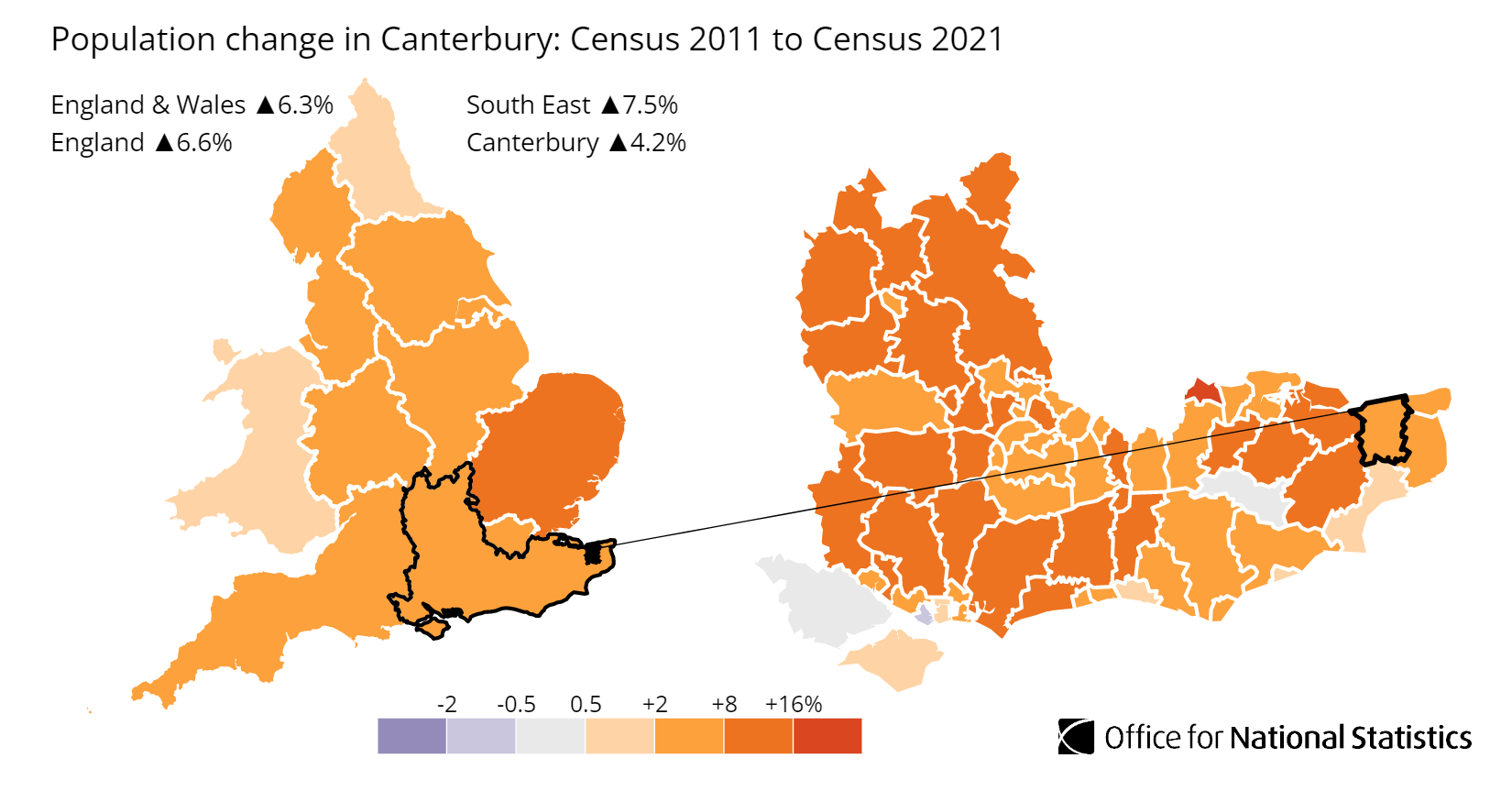
The City of Canterbury district added 6,287 residents between the 2011 and 2021 censuses, growing 4.16% from 151,145 to 157,432. That is below the England and Wales average of 6.3%, and the reason is partly physical: the Kent Downs National Landscape and green belt around the city cap how far new housing can spread. For investors, a district that cannot easily build outwards is one where existing stock holds its scarcity value.
Rental demand here leans on two universities and a hospital rather than a single dominant employer. The University of Kent and Canterbury Christ Church University between them bring tens of thousands of students into the district each academic year, concentrated in CT1 (City Centre) and CT2 (St Dunstans, Hales Place) near both campuses. Canterbury Christ Church also trains healthcare staff tied to the East Kent Hospitals University NHS Foundation Trust, which adds a salaried professional tenant pipeline on top of the student base.
Local earnings are the part that does not flatter the headline prices. The median gross annual salary in the district is £37,682, below the Great Britain median of £39,125 and well under what a £341,331 home costs. That gap matters less than it looks, because Canterbury's tenant pool is not paid out of local wages alone: students funded through loans, hospital staff on national pay scales, and London commuters using the high-speed line all rent here. The coastal towns of Whitstable and Herne Bay add lifestyle tenants on top of that mix.
Canterbury Economic Summary
- Population (City of Canterbury district): 157,432 (2021 Census). Growth of 4.16% from 2011.
- Median annual salary: £37,682 (Canterbury), £41,616 (South East, £815.20/week), £39,125 (Great Britain, £766.60/week)
- Employment rate: 68.5% (local)
- Unemployment rate: Suppressed by Nomis on sample size (typically a sign of low local unemployment)
- Key employment sectors: Higher education, healthcare, tourism and heritage, public sector, retail and hospitality
Source: ONS Census 2021, Nomis Labour Market Profile (ASHE 2025)
The 68.5% employment rate reads low on paper, but a large student population that counts as economically inactive in the labour figures pulls it down. The suppressed unemployment rate usually points to genuinely low joblessness rather than a data gap. The practical read for a landlord is that two universities, a hospital trust and a fast line to London give the district a tenant base wider than the local salary figure alone suggests.
Regeneration and Investment in Canterbury
Canterbury has £22.6m of Levelling Up money under construction in the city centre and a Local Plan mapping out tens of thousands of new homes across the district. The pipeline runs from active building work through to long-range strategic planning.
- Canterbury Levelling Up Fund (under construction, £22.6m): Government-funded work on the city centre covering public realm, cultural facilities and better pedestrian routes through the historic core. The aim is to lift footfall and commercial activity, which supports rental demand in CT1. Updates at KentOnline.
- Canterbury Local Plan (pre-submission, around 23,000 homes): The emerging Local Plan earmarks sites for roughly 23,000 new homes across the district along with roads, schools and community infrastructure. For investors it signals long-term population and rental-demand growth across all six postcodes, though delivery runs over many years. Updates at KentOnline.
- Canterbury District Town Centre Strategies (planning stage): Canterbury City Council has commissioned regeneration visions for the Canterbury, Whitstable and Herne Bay town centres, aimed at drawing private investment and reviving high-street activity through retail diversification and mixed-use development. Updates at KentOnline.
Canterbury Property Market Analysis
Sold prices across the City of Canterbury district have risen 541.6% since January 1995, from £53,204 to £341,331. The sections below walk that journey cycle by cycle, then drill into current postcode-level data for sold prices, price per square foot, asking prices, growth, transaction volumes and how long homes take to sell.
When was the last house price crash in Canterbury?
The district lost 17.2% from its November 2007 peak of £215,740 to its June 2009 trough of £178,626, a shallower fall than England's 18.2% but one that took nearly six years to recover. All sold prices come from the HM Land Registry House Price Index at City of Canterbury district level, running from January 1995 to the latest reading. The series shows one deep crash, a long recovery, a pandemic surge to an all-time high in 2023, and a step back from that high that is still working through.
- 1995 to 2000 (building from a low base): The district opened 1995 at £53,204. In December 1999 prices were 18.7% higher than a year earlier, and by January 2000 the average had reached £84,574.
- 2000 to 2007 (the boom): Prices more than doubled, from £84,574 in January 2000 to the cycle peak of £215,740 in November 2007. Cheap credit, commuter demand and tight supply in a constrained district drove the run well past what local wages could carry.
- 2007 to 2009 (the financial crisis): From the November 2007 peak of £215,740 the district fell to £178,626 by June 2009, a 17.2% decline over 19 months, with the worst annual reading of -16.1% landing that same month. All four property types fell almost in step: detached -16.0%, semi-detached -16.1%, terraced -16.0% and flats -16.3%.
- 2009 to 2013 (recovery to peak): The district climbed off the trough but stalled in the early 2010s before grinding back. It first passed the old peak in August 2013 at £215,993, five years and nine months after November 2007.
- 2014 to 2016 (strong growth): Growth then ran hot, with annual readings above 11% in late 2014 and again in late 2016. By December 2016 the average had reached £287,879, as high-speed rail and AONB-limited supply pulled the district up fast.
- 2017 to 2019 (pre-pandemic plateau): Growth cooled to low single digits. Prices edged from £285,978 in January 2017 to £306,110 by December 2019, with annual change flat at 0.0% as 2019 closed.
- 2020 to 2022 (pandemic surge): The stamp duty holiday and the shift to space and coast sent prices from £300,362 in March 2020 to £355,264 by December 2022, with Whitstable and Herne Bay drawing particular demand from London leavers.
- 2023 (the all-time high and the turn): The district hit its highest-ever reading of £370,486 in March 2023, then reversed as mortgage rates bit, falling to £333,570 by December 2023, a -6.1% annual change.
- 2024 to 2026 (settling below the high): The decline bottomed early, with annual change at -8.6% in January 2024, then steadied. The latest reading is £341,331, which is 58.2% above the 2007 peak but 7.9% below the March 2023 all-time high.
Long-term growth summary:
- 5 years (March 2021 to March 2026): +8.7% (£313,930 to £341,331)
- 10 years (March 2016 to March 2026): +28.4% (£265,779 to £341,331)
- 15 years (March 2011 to March 2026): +69.9% (£200,956 to £341,331)
- 20 years (March 2006 to March 2026): +86.3% (£183,176 to £341,331)
- 30 years (January 1995 to March 2026): +541.6% (£53,204 to £341,331)
For an investor weighing downside, the 2008 crash is the reference event: a 17.2% fall that needed nearly six years to come back. The current step down from the 2023 high is gentler at 7.9% and has settled rather than deepened, with annual change at -0.2% in the latest month. What is different from 2007 is that the commuter and university demand underpinning the district is now established rather than emerging. The open question is whether the pandemic-era jump fully justified itself, or whether prices spend longer near here before the next leg up.
- All property types
- Detached
- Semi-detached
- Terraced
- Flats
Source: HM Land Registry House Price Index
| Year | All property types | Detached | Semi-detached | Terraced | Flats |
|---|---|---|---|---|---|
| 1995-01 | £53,204 | £86,514 | £52,386 | £43,408 | £35,268 |
| 1995-02 | £55,613 | £89,786 | £55,021 | £45,466 | £36,873 |
| 1995-03 | £55,786 | £89,811 | £55,225 | £45,734 | £36,963 |
| 1995-04 | £56,893 | £91,216 | £56,412 | £46,726 | £37,770 |
| 1995-05 | £56,821 | £91,041 | £56,335 | £46,727 | £37,685 |
| 1995-06 | £57,095 | £91,516 | £56,619 | £46,864 | £37,965 |
| 1995-07 | £57,464 | £92,399 | £56,938 | £47,170 | £37,985 |
| 1995-08 | £57,719 | £93,210 | £57,103 | £47,348 | £37,957 |
| 1995-09 | £58,022 | £93,864 | £57,365 | £47,641 | £37,974 |
| 1995-10 | £57,636 | £93,293 | £57,070 | £47,132 | £37,843 |
| 1995-11 | £57,116 | £92,422 | £56,617 | £46,528 | £37,732 |
| 1995-12 | £56,910 | £92,049 | £56,487 | £46,288 | £37,626 |
| 1996-01 | £56,486 | £91,376 | £56,070 | £46,034 | £37,159 |
| 1996-02 | £56,560 | £91,282 | £56,246 | £46,200 | £37,052 |
| 1996-03 | £55,808 | £90,180 | £55,588 | £45,513 | £36,398 |
| 1996-04 | £56,014 | £90,347 | £55,754 | £45,768 | £36,634 |
| 1996-05 | £56,114 | £90,488 | £55,776 | £45,960 | £36,675 |
| 1996-06 | £57,423 | £92,372 | £56,986 | £47,148 | £37,759 |
| 1996-07 | £59,013 | £95,061 | £58,598 | £48,453 | £38,590 |
| 1996-08 | £59,485 | £96,189 | £59,014 | £48,804 | £38,670 |
| 1996-09 | £59,068 | £96,022 | £58,515 | £48,440 | £38,044 |
| 1996-10 | £58,742 | £95,760 | £58,208 | £48,065 | £37,706 |
| 1996-11 | £59,196 | £96,292 | £58,694 | £48,452 | £38,127 |
| 1996-12 | £59,444 | £96,428 | £59,086 | £48,651 | £38,294 |
| 1997-01 | £59,537 | £96,492 | £59,143 | £48,855 | £38,287 |
| 1997-02 | £58,453 | £94,953 | £58,056 | £47,879 | £37,523 |
| 1997-03 | £59,757 | £97,133 | £59,197 | £49,015 | £38,462 |
| 1997-04 | £60,752 | £98,473 | £60,254 | £49,846 | £39,192 |
| 1997-05 | £62,772 | £101,541 | £62,349 | £51,628 | £40,281 |
| 1997-06 | £63,517 | £103,009 | £63,170 | £52,216 | £40,367 |
| 1997-07 | £63,899 | £103,941 | £63,535 | £52,580 | £40,255 |
| 1997-08 | £65,484 | £106,945 | £65,052 | £53,814 | £41,090 |
| 1997-09 | £66,186 | £108,097 | £65,763 | £54,403 | £41,473 |
| 1997-10 | £67,500 | £110,395 | £67,096 | £55,341 | £42,341 |
| 1997-11 | £66,857 | £109,463 | £66,508 | £54,667 | £41,973 |
| 1997-12 | £66,012 | £108,107 | £65,754 | £53,841 | £41,467 |
| 1998-01 | £65,379 | £107,235 | £65,018 | £53,371 | £41,061 |
| 1998-02 | £64,676 | £105,741 | £64,266 | £52,910 | £40,847 |
| 1998-03 | £66,016 | £107,811 | £65,566 | £54,176 | £41,621 |
| 1998-04 | £67,122 | £109,341 | £66,841 | £55,083 | £42,243 |
| 1998-05 | £69,528 | £113,194 | £69,282 | £57,210 | £43,517 |
| 1998-06 | £70,356 | £114,597 | £70,027 | £57,851 | £44,189 |
| 1998-07 | £70,872 | £115,596 | £70,465 | £58,318 | £44,447 |
| 1998-08 | £70,415 | £115,312 | £69,921 | £57,864 | £44,019 |
| 1998-09 | £68,907 | £113,139 | £68,449 | £56,561 | £42,855 |
| 1998-10 | £68,170 | £111,999 | £67,690 | £55,828 | £42,571 |
| 1998-11 | £68,799 | £113,178 | £68,376 | £56,069 | £43,123 |
| 1998-12 | £70,432 | £115,503 | £70,046 | £57,382 | £44,409 |
| 1999-01 | £71,267 | £116,750 | £70,929 | £58,092 | £44,909 |
| 1999-02 | £71,608 | £116,917 | £71,282 | £58,527 | £45,241 |
| 1999-03 | £72,330 | £118,106 | £71,979 | £59,110 | £45,775 |
| 1999-04 | £73,201 | £119,154 | £72,850 | £60,026 | £46,368 |
| 1999-05 | £72,484 | £117,808 | £72,121 | £59,621 | £45,812 |
| 1999-06 | £72,486 | £117,824 | £72,071 | £59,749 | £45,672 |
| 1999-07 | £73,172 | £119,439 | £72,612 | £60,233 | £45,957 |
| 1999-08 | £75,849 | £124,071 | £75,163 | £62,439 | £47,535 |
| 1999-09 | £77,625 | £127,342 | £76,796 | £63,824 | £48,612 |
| 1999-10 | £79,626 | £130,717 | £78,835 | £65,212 | £50,114 |
| 1999-11 | £80,461 | £132,034 | £79,732 | £65,734 | £50,854 |
| 1999-12 | £83,620 | £136,693 | £82,884 | £68,437 | £53,168 |
| 2000-01 | £84,574 | £138,439 | £83,830 | £69,273 | £53,477 |
| 2000-02 | £86,695 | £141,986 | £85,792 | £71,079 | £54,720 |
| 2000-03 | £86,934 | £142,572 | £86,120 | £71,196 | £54,514 |
| 2000-04 | £88,492 | £144,404 | £87,576 | £72,646 | £55,896 |
| 2000-05 | £90,345 | £147,205 | £89,540 | £74,100 | £57,164 |
| 2000-06 | £91,729 | £149,212 | £90,925 | £75,164 | £58,291 |
| 2000-07 | £93,875 | £153,650 | £93,101 | £76,672 | £59,226 |
| 2000-08 | £94,119 | £154,522 | £93,296 | £76,589 | £59,441 |
| 2000-09 | £93,875 | £155,059 | £92,817 | £76,142 | £59,186 |
| 2000-10 | £94,928 | £156,624 | £93,999 | £76,760 | £60,102 |
| 2000-11 | £96,188 | £158,965 | £95,155 | £77,628 | £61,007 |
| 2000-12 | £98,053 | £161,379 | £97,092 | £79,081 | £62,635 |
| 2001-01 | £97,377 | £160,124 | £96,138 | £78,717 | £62,402 |
| 2001-02 | £98,669 | £161,691 | £97,408 | £80,050 | £63,282 |
| 2001-03 | £99,251 | £162,686 | £98,026 | £80,642 | £63,433 |
| 2001-04 | £100,162 | £164,064 | £98,817 | £81,537 | £64,026 |
| 2001-05 | £99,560 | £162,705 | £98,246 | £81,235 | £63,655 |
| 2001-06 | £101,506 | £165,338 | £100,012 | £82,992 | £65,271 |
| 2001-07 | £103,406 | £168,393 | £101,978 | £84,590 | £66,359 |
| 2001-08 | £107,521 | £175,504 | £105,863 | £87,837 | £69,042 |
| 2001-09 | £108,723 | £178,287 | £106,837 | £88,649 | £69,651 |
| 2001-10 | £110,804 | £181,562 | £108,901 | £90,114 | £71,364 |
| 2001-11 | £110,705 | £181,401 | £108,931 | £89,714 | £71,566 |
| 2001-12 | £111,402 | £181,627 | £109,770 | £90,181 | £72,668 |
| 2002-01 | £112,933 | £184,044 | £111,290 | £91,349 | £73,808 |
| 2002-02 | £113,747 | £184,982 | £111,822 | £92,337 | £74,519 |
| 2002-03 | £114,508 | £185,971 | £112,729 | £93,118 | £74,805 |
| 2002-04 | £113,803 | £184,152 | £111,873 | £92,702 | £74,845 |
| 2002-05 | £113,969 | £183,674 | £112,327 | £92,862 | £75,162 |
| 2002-06 | £116,629 | £187,723 | £114,621 | £95,258 | £77,190 |
| 2002-07 | £120,429 | £193,898 | £118,419 | £98,622 | £79,244 |
| 2002-08 | £123,905 | £199,751 | £121,697 | £101,528 | £81,416 |
| 2002-09 | £128,327 | £207,174 | £126,396 | £104,969 | £83,915 |
| 2002-10 | £131,797 | £212,775 | £130,102 | £107,325 | £86,480 |
| 2002-11 | £135,747 | £219,162 | £134,037 | £110,347 | £89,279 |
| 2002-12 | £136,961 | £220,142 | £135,368 | £111,294 | £90,748 |
| 2003-01 | £139,315 | £223,455 | £137,360 | £113,625 | £92,517 |
| 2003-02 | £141,144 | £225,490 | £139,476 | £115,187 | £93,979 |
| 2003-03 | £141,448 | £226,321 | £139,605 | £115,494 | £94,029 |
| 2003-04 | £142,307 | £227,116 | £140,798 | £116,081 | £94,807 |
| 2003-05 | £143,969 | £229,305 | £142,487 | £117,852 | £95,682 |
| 2003-06 | £145,570 | £230,918 | £144,104 | £119,388 | £97,160 |
| 2003-07 | £149,886 | £237,315 | £148,530 | £123,301 | £99,729 |
| 2003-08 | £153,895 | £243,509 | £152,464 | £126,697 | £102,437 |
| 2003-09 | £157,763 | £249,679 | £156,501 | £130,158 | £104,363 |
| 2003-10 | £156,328 | £247,107 | £154,977 | £129,085 | £103,628 |
| 2003-11 | £155,159 | £245,038 | £153,973 | £128,052 | £102,937 |
| 2003-12 | £158,111 | £248,263 | £156,929 | £130,735 | £105,714 |
| 2004-01 | £162,634 | £255,347 | £161,400 | £134,441 | £108,817 |
| 2004-02 | £167,486 | £262,166 | £166,135 | £138,767 | £112,387 |
| 2004-03 | £168,324 | £263,650 | £166,796 | £139,715 | £112,713 |
| 2004-04 | £165,880 | £257,617 | £164,655 | £138,609 | £111,359 |
| 2004-05 | £169,959 | £262,010 | £168,745 | £142,838 | £114,615 |
| 2004-06 | £171,910 | £263,374 | £170,903 | £144,975 | £116,377 |
| 2004-07 | £177,584 | £271,947 | £176,729 | £149,737 | £120,111 |
| 2004-08 | £174,710 | £267,865 | £173,918 | £147,200 | £117,984 |
| 2004-09 | £176,308 | £271,132 | £175,476 | £148,239 | £118,810 |
| 2004-10 | £178,057 | £273,789 | £176,805 | £149,631 | £120,622 |
| 2004-11 | £178,913 | £274,944 | £177,481 | £150,313 | £121,594 |
| 2004-12 | £176,311 | £269,846 | £174,714 | £148,531 | £120,471 |
| 2005-01 | £175,214 | £268,079 | £173,445 | £147,971 | £119,591 |
| 2005-02 | £173,742 | £265,402 | £172,178 | £146,918 | £118,468 |
| 2005-03 | £174,760 | £267,261 | £173,345 | £147,736 | £118,760 |
| 2005-04 | £175,235 | £267,116 | £174,196 | £148,242 | £119,176 |
| 2005-05 | £178,014 | £271,589 | £176,700 | £150,670 | £121,093 |
| 2005-06 | £180,930 | £274,880 | £179,612 | £153,660 | £123,301 |
| 2005-07 | £180,481 | £274,544 | £179,218 | £153,282 | £122,673 |
| 2005-08 | £180,697 | £275,015 | £179,347 | £153,632 | £122,612 |
| 2005-09 | £181,274 | £276,714 | £179,808 | £153,981 | £122,679 |
| 2005-10 | £180,099 | £274,751 | £178,251 | £153,030 | £122,404 |
| 2005-11 | £182,538 | £278,156 | £180,761 | £155,022 | £124,287 |
| 2005-12 | £180,656 | £274,342 | £178,670 | £153,543 | £123,845 |
| 2006-01 | £181,315 | £275,392 | £179,297 | £154,458 | £123,862 |
| 2006-02 | £180,801 | £273,633 | £178,624 | £154,337 | £124,036 |
| 2006-03 | £183,176 | £278,118 | £181,128 | £156,272 | £124,910 |
| 2006-04 | £184,759 | £279,941 | £182,893 | £157,624 | £126,174 |
| 2006-05 | £186,231 | £282,400 | £184,506 | £158,806 | £126,923 |
| 2006-06 | £187,337 | £283,080 | £185,768 | £160,055 | £127,837 |
| 2006-07 | £189,118 | £285,842 | £187,480 | £162,027 | £128,534 |
| 2006-08 | £190,276 | £287,991 | £188,666 | £163,461 | £128,464 |
| 2006-09 | £192,452 | £292,283 | £190,868 | £165,308 | £129,191 |
| 2006-10 | £192,609 | £292,802 | £190,878 | £165,143 | £129,613 |
| 2006-11 | £192,323 | £292,495 | £190,686 | £164,770 | £129,378 |
| 2006-12 | £190,651 | £288,797 | £188,896 | £163,651 | £128,862 |
| 2007-01 | £193,651 | £293,306 | £191,946 | £166,311 | £130,729 |
| 2007-02 | £197,026 | £297,865 | £195,132 | £169,102 | £133,576 |
| 2007-03 | £200,068 | £302,934 | £198,216 | £171,811 | £135,125 |
| 2007-04 | £202,714 | £306,245 | £200,874 | £174,597 | £136,817 |
| 2007-05 | £205,439 | £309,583 | £203,501 | £177,375 | £138,780 |
| 2007-06 | £208,173 | £313,448 | £206,007 | £179,856 | £140,844 |
| 2007-07 | £210,540 | £317,703 | £208,271 | £181,800 | £142,217 |
| 2007-08 | £210,110 | £318,759 | £208,048 | £181,635 | £140,604 |
| 2007-09 | £214,193 | £325,847 | £212,098 | £184,867 | £143,088 |
| 2007-10 | £215,476 | £328,181 | £213,076 | £185,731 | £144,207 |
| 2007-11 | £215,740 | £328,771 | £213,069 | £185,310 | £145,089 |
| 2007-12 | £214,841 | £327,214 | £211,958 | £184,505 | £144,818 |
| 2008-01 | £213,226 | £325,248 | £210,253 | £182,836 | £143,803 |
| 2008-02 | £210,961 | £321,579 | £207,973 | £181,089 | £142,252 |
| 2008-03 | £209,260 | £319,453 | £206,628 | £179,829 | £140,366 |
| 2008-04 | £207,857 | £317,329 | £205,370 | £179,084 | £138,920 |
| 2008-05 | £212,795 | £324,191 | £210,559 | £183,719 | £141,963 |
| 2008-06 | £212,850 | £323,802 | £210,602 | £183,893 | £142,138 |
| 2008-07 | £214,818 | £326,478 | £212,931 | £185,541 | £143,318 |
| 2008-08 | £209,820 | £319,726 | £207,835 | £181,039 | £139,847 |
| 2008-09 | £204,585 | £313,713 | £202,306 | £176,052 | £136,088 |
| 2008-10 | £199,850 | £307,139 | £197,249 | £171,759 | £133,112 |
| 2008-11 | £190,906 | £293,468 | £188,455 | £163,929 | £127,210 |
| 2008-12 | £190,293 | £291,597 | £188,132 | £163,741 | £126,724 |
| 2009-01 | £184,937 | £284,101 | £182,675 | £158,697 | £123,318 |
| 2009-02 | £188,435 | £289,509 | £186,043 | £161,448 | £125,998 |
| 2009-03 | £182,930 | £280,900 | £180,242 | £156,435 | £123,060 |
| 2009-04 | £182,145 | £278,196 | £179,820 | £156,388 | £122,450 |
| 2009-05 | £178,774 | £272,379 | £176,630 | £154,153 | £119,760 |
| 2009-06 | £178,626 | £272,065 | £176,741 | £154,482 | £118,935 |
| 2009-07 | £181,523 | £277,224 | £179,740 | £157,244 | £119,953 |
| 2009-08 | £187,279 | £286,828 | £185,418 | £162,490 | £122,971 |
| 2009-09 | £191,901 | £294,428 | £190,144 | £166,517 | £125,480 |
| 2009-10 | £193,459 | £297,119 | £191,932 | £167,824 | £126,087 |
| 2009-11 | £191,706 | £295,265 | £190,112 | £166,263 | £124,536 |
| 2009-12 | £193,406 | £296,925 | £192,185 | £168,161 | £125,398 |
| 2010-01 | £197,269 | £304,384 | £196,007 | £171,627 | £126,847 |
| 2010-02 | £199,272 | £307,713 | £198,541 | £173,312 | £127,528 |
| 2010-03 | £198,940 | £308,862 | £197,822 | £172,632 | £127,167 |
| 2010-04 | £195,988 | £303,284 | £195,025 | £170,063 | £125,850 |
| 2010-05 | £196,711 | £304,513 | £195,465 | £170,606 | £126,625 |
| 2010-06 | £198,017 | £306,169 | £197,033 | £172,137 | £127,023 |
| 2010-07 | £201,950 | £313,449 | £200,828 | £175,641 | £128,733 |
| 2010-08 | £207,171 | £322,162 | £206,454 | £180,104 | £131,240 |
| 2010-09 | £211,842 | £330,804 | £211,003 | £183,840 | £133,659 |
| 2010-10 | £213,308 | £333,072 | £212,534 | £184,812 | £134,827 |
| 2010-11 | £208,740 | £326,683 | £207,620 | £180,438 | £132,230 |
| 2010-12 | £205,629 | £321,238 | £204,699 | £177,610 | £130,627 |
| 2011-01 | £202,471 | £316,672 | £201,287 | £174,745 | £128,791 |
| 2011-02 | £204,199 | £319,151 | £202,688 | £176,552 | £130,109 |
| 2011-03 | £200,956 | £315,542 | £199,071 | £173,451 | £127,743 |
| 2011-04 | £199,600 | £313,319 | £197,709 | £172,333 | £126,919 |
| 2011-05 | £199,340 | £312,010 | £197,673 | £172,136 | £127,204 |
| 2011-06 | £203,474 | £316,719 | £202,196 | £176,268 | £130,092 |
| 2011-07 | £203,414 | £315,788 | £202,210 | £176,501 | £130,317 |
| 2011-08 | £202,599 | £315,313 | £201,816 | £175,828 | £128,528 |
| 2011-09 | £201,987 | £315,508 | £201,089 | £175,143 | £127,504 |
| 2011-10 | £201,910 | £316,612 | £201,266 | £174,608 | £126,657 |
| 2011-11 | £202,181 | £316,641 | £201,277 | £174,757 | £127,610 |
| 2011-12 | £201,290 | £314,863 | £200,605 | £173,787 | £127,331 |
| 2012-01 | £198,776 | £310,239 | £198,344 | £172,016 | £125,517 |
| 2012-02 | £195,237 | £304,759 | £194,850 | £169,396 | £122,590 |
| 2012-03 | £194,621 | £302,551 | £194,278 | £169,457 | £122,429 |
| 2012-04 | £200,558 | £311,673 | £199,785 | £174,543 | £126,779 |
| 2012-05 | £204,866 | £318,040 | £204,181 | £178,177 | £129,780 |
| 2012-06 | £207,293 | £322,022 | £206,463 | £180,741 | £130,798 |
| 2012-07 | £206,405 | £320,536 | £205,631 | £180,453 | £129,743 |
| 2012-08 | £206,771 | £321,227 | £206,102 | £181,272 | £129,225 |
| 2012-09 | £207,018 | £322,428 | £206,194 | £181,326 | £129,060 |
| 2012-10 | £207,502 | £322,914 | £206,789 | £181,691 | £129,521 |
| 2012-11 | £207,384 | £322,724 | £206,524 | £181,431 | £129,776 |
| 2012-12 | £206,793 | £321,931 | £206,020 | £180,715 | £129,427 |
| 2013-01 | £204,465 | £318,624 | £204,107 | £178,553 | £127,432 |
| 2013-02 | £204,714 | £319,168 | £204,399 | £178,790 | £127,388 |
| 2013-03 | £204,805 | £319,511 | £204,570 | £178,454 | £127,590 |
| 2013-04 | £207,783 | £323,916 | £207,239 | £181,319 | £129,652 |
| 2013-05 | £209,669 | £326,260 | £209,159 | £183,003 | £131,166 |
| 2013-06 | £211,540 | £328,306 | £211,170 | £185,310 | £132,184 |
| 2013-07 | £213,957 | £331,813 | £213,630 | £187,679 | £133,592 |
| 2013-08 | £215,993 | £335,320 | £215,887 | £189,678 | £134,223 |
| 2013-09 | £215,963 | £336,397 | £215,687 | £189,232 | £133,969 |
| 2013-10 | £216,216 | £338,019 | £215,937 | £188,822 | £133,864 |
| 2013-11 | £213,849 | £334,693 | £213,709 | £186,283 | £132,445 |
| 2013-12 | £216,789 | £338,059 | £217,016 | £188,899 | £134,718 |
| 2014-01 | £218,074 | £339,898 | £218,267 | £189,991 | £135,685 |
| 2014-02 | £223,279 | £348,583 | £223,267 | £194,385 | £138,881 |
| 2014-03 | £222,211 | £347,442 | £222,281 | £193,359 | £137,786 |
| 2014-04 | £226,268 | £353,011 | £226,462 | £197,295 | £140,284 |
| 2014-05 | £228,865 | £355,932 | £229,084 | £200,054 | £142,069 |
| 2014-06 | £236,890 | £368,501 | £237,199 | £207,072 | £146,939 |
| 2014-07 | £238,767 | £371,834 | £239,156 | £208,816 | £147,748 |
| 2014-08 | £241,943 | £377,852 | £242,456 | £211,469 | £149,167 |
| 2014-09 | £242,022 | £378,325 | £242,330 | £211,682 | £149,080 |
| 2014-10 | £243,242 | £380,536 | £243,504 | £212,296 | £150,068 |
| 2014-11 | £242,249 | £379,119 | £242,520 | £211,072 | £149,659 |
| 2014-12 | £241,452 | £378,121 | £241,702 | £210,034 | £149,328 |
| 2015-01 | £240,828 | £376,980 | £241,222 | £209,446 | £148,948 |
| 2015-02 | £243,555 | £380,868 | £243,663 | £211,803 | £151,076 |
| 2015-03 | £245,198 | £383,751 | £245,388 | £212,932 | £152,081 |
| 2015-04 | £248,182 | £388,735 | £248,250 | £215,642 | £153,745 |
| 2015-05 | £248,087 | £388,645 | £248,553 | £215,425 | £153,441 |
| 2015-06 | £248,275 | £388,806 | £249,108 | £216,218 | £152,858 |
| 2015-07 | £250,269 | £391,790 | £251,357 | £217,989 | £153,947 |
| 2015-08 | £252,138 | £395,140 | £253,302 | £219,989 | £154,495 |
| 2015-09 | £254,993 | £400,739 | £255,784 | £221,907 | £156,306 |
| 2015-10 | £254,462 | £400,775 | £255,266 | £221,236 | £155,604 |
| 2015-11 | £253,971 | £400,488 | £254,871 | £220,458 | £155,205 |
| 2015-12 | £257,595 | £406,267 | £258,774 | £223,409 | £157,324 |
| 2016-01 | £256,936 | £404,801 | £258,520 | £222,604 | £157,043 |
| 2016-02 | £262,393 | £413,373 | £264,109 | £227,273 | £160,362 |
| 2016-03 | £265,779 | £418,539 | £267,245 | £230,332 | £162,647 |
| 2016-04 | £268,902 | £423,532 | £270,075 | £233,078 | £164,723 |
| 2016-05 | £267,781 | £420,105 | £268,537 | £232,355 | £165,190 |
| 2016-06 | £265,275 | £416,074 | £265,986 | £230,064 | £163,825 |
| 2016-07 | £271,458 | £425,373 | £272,098 | £235,851 | £167,625 |
| 2016-08 | £276,110 | £433,812 | £276,818 | £239,721 | £169,873 |
| 2016-09 | £280,293 | £440,354 | £281,347 | £243,219 | £172,307 |
| 2016-10 | £283,081 | £445,736 | £284,030 | £244,348 | £174,517 |
| 2016-11 | £287,333 | £453,911 | £288,179 | £246,937 | £177,180 |
| 2016-12 | £287,879 | £455,113 | £288,153 | £247,085 | £178,015 |
| 2017-01 | £285,978 | £451,950 | £286,158 | £245,904 | £176,652 |
| 2017-02 | £282,726 | £445,617 | £282,338 | £243,271 | £175,732 |
| 2017-03 | £284,463 | £448,238 | £284,228 | £244,450 | £177,043 |
| 2017-04 | £288,603 | £454,458 | £287,962 | £247,838 | £180,274 |
| 2017-05 | £291,875 | £458,638 | £291,803 | £250,557 | £182,473 |
| 2017-06 | £292,841 | £458,952 | £292,606 | £251,914 | £183,481 |
| 2017-07 | £292,631 | £457,927 | £292,768 | £251,641 | £183,513 |
| 2017-08 | £293,945 | £460,342 | £293,927 | £253,360 | £183,770 |
| 2017-09 | £297,509 | £466,790 | £297,684 | £256,367 | £185,382 |
| 2017-10 | £296,369 | £465,901 | £296,864 | £255,335 | £183,916 |
| 2017-11 | £294,736 | £464,160 | £295,675 | £253,255 | £182,596 |
| 2017-12 | £293,219 | £461,913 | £294,569 | £251,619 | £181,499 |
| 2018-01 | £298,168 | £469,481 | £299,673 | £255,957 | £184,505 |
| 2018-02 | £301,763 | £475,204 | £303,166 | £259,616 | £186,338 |
| 2018-03 | £300,504 | £473,251 | £302,081 | £258,983 | £185,013 |
| 2018-04 | £301,979 | £475,570 | £303,938 | £260,728 | £185,180 |
| 2018-05 | £297,248 | £468,447 | £299,785 | £256,694 | £181,505 |
| 2018-06 | £304,555 | £479,574 | £307,606 | £262,772 | £185,974 |
| 2018-07 | £302,035 | £476,418 | £304,869 | £260,507 | £184,238 |
| 2018-08 | £304,199 | £479,570 | £307,039 | £262,690 | £185,445 |
| 2018-09 | £301,455 | £475,884 | £304,288 | £260,670 | £183,106 |
| 2018-10 | £302,475 | £477,458 | £305,588 | £261,206 | £183,798 |
| 2018-11 | £304,672 | £482,118 | £307,999 | £262,654 | £184,700 |
| 2018-12 | £305,989 | £484,117 | £309,364 | £263,192 | £186,024 |
| 2019-01 | £307,481 | £487,540 | £310,909 | £264,253 | £186,512 |
| 2019-02 | £307,089 | £487,028 | £310,350 | £263,706 | £186,593 |
| 2019-03 | £307,156 | £488,005 | £310,569 | £263,987 | £185,877 |
| 2019-04 | £304,225 | £482,438 | £307,865 | £262,226 | £183,807 |
| 2019-05 | £307,442 | £486,513 | £311,546 | £265,723 | £185,404 |
| 2019-06 | £303,233 | £479,351 | £307,286 | £262,306 | £183,012 |
| 2019-07 | £302,574 | £477,734 | £306,492 | £262,051 | £182,863 |
| 2019-08 | £299,731 | £473,711 | £303,421 | £259,960 | £180,678 |
| 2019-09 | £301,751 | £476,617 | £305,096 | £262,349 | £181,890 |
| 2019-10 | £301,601 | £476,687 | £305,556 | £261,644 | £181,497 |
| 2019-11 | £304,080 | £481,054 | £308,621 | £262,930 | £182,906 |
| 2019-12 | £306,110 | £485,060 | £311,177 | £263,946 | £183,741 |
| 2020-01 | £306,270 | £485,701 | £311,303 | £264,444 | £183,284 |
| 2020-02 | £302,337 | £479,440 | £307,116 | £261,755 | £180,487 |
| 2020-03 | £300,362 | £476,041 | £305,214 | £260,510 | £178,970 |
| 2020-04 | £302,553 | £480,465 | £307,512 | £262,695 | £179,279 |
| 2020-05 | £310,711 | £493,493 | £316,214 | £269,098 | £184,279 |
| 2020-06 | £313,499 | £497,449 | £319,430 | £272,070 | £185,425 |
| 2020-07 | £314,370 | £497,759 | £320,166 | £273,058 | £186,640 |
| 2020-08 | £309,837 | £490,913 | £315,727 | £270,170 | £182,632 |
| 2020-09 | £312,521 | £496,325 | £318,374 | £272,543 | £183,441 |
| 2020-10 | £313,101 | £498,728 | £318,957 | £273,133 | £182,669 |
| 2020-11 | £321,158 | £511,948 | £326,590 | £280,307 | £187,499 |
| 2020-12 | £323,873 | £516,413 | £329,013 | £283,096 | £188,941 |
| 2021-01 | £323,671 | £513,398 | £328,572 | £283,490 | £190,466 |
| 2021-02 | £315,135 | £496,773 | £319,642 | £276,888 | £187,201 |
| 2021-03 | £313,930 | £491,480 | £318,011 | £276,683 | £188,757 |
| 2021-04 | £317,682 | £497,151 | £321,498 | £280,314 | £191,230 |
| 2021-05 | £321,787 | £504,226 | £325,609 | £283,714 | £193,400 |
| 2021-06 | £325,023 | £508,824 | £328,550 | £287,537 | £195,114 |
| 2021-07 | £326,108 | £510,612 | £330,455 | £287,797 | £195,462 |
| 2021-08 | £327,275 | £513,897 | £332,125 | £288,159 | £194,964 |
| 2021-09 | £328,843 | £517,519 | £334,392 | £288,631 | £194,974 |
| 2021-10 | £323,962 | £513,650 | £328,759 | £283,436 | £190,478 |
| 2021-11 | £328,825 | £522,267 | £333,703 | £287,376 | £192,861 |
| 2021-12 | £325,178 | £519,376 | £329,845 | £283,202 | £189,374 |
| 2022-01 | £333,397 | £530,785 | £338,838 | £291,267 | £193,873 |
| 2022-02 | £338,005 | £537,245 | £343,571 | £295,589 | £196,949 |
| 2022-03 | £343,669 | £546,122 | £349,945 | £300,253 | £199,937 |
| 2022-04 | £348,219 | £552,768 | £354,288 | £304,976 | £202,601 |
| 2022-05 | £347,857 | £551,993 | £354,206 | £305,260 | £201,511 |
| 2022-06 | £346,895 | £549,131 | £353,048 | £305,311 | £201,332 |
| 2022-07 | £351,945 | £556,340 | £358,901 | £310,246 | £203,515 |
| 2022-08 | £355,991 | £562,546 | £363,007 | £314,635 | £205,113 |
| 2022-09 | £356,540 | £563,895 | £363,853 | £315,445 | £204,272 |
| 2022-10 | £354,622 | £562,211 | £361,534 | £313,165 | £203,093 |
| 2022-11 | £354,021 | £562,139 | £360,888 | £312,063 | £202,662 |
| 2022-12 | £355,264 | £563,902 | £362,093 | £312,946 | £203,880 |
| 2023-01 | £358,553 | £569,063 | £365,941 | £315,779 | £205,284 |
| 2023-02 | £364,815 | £580,045 | £372,019 | £320,902 | £208,756 |
| 2023-03 | £370,486 | £591,039 | £378,040 | £324,629 | £211,314 |
| 2023-04 | £360,686 | £576,438 | £367,788 | £315,360 | £205,883 |
| 2023-05 | £347,675 | £553,986 | £354,916 | £304,025 | £198,984 |
| 2023-06 | £334,259 | £530,895 | £341,234 | £293,523 | £191,290 |
| 2023-07 | £339,531 | £538,021 | £346,977 | £299,041 | £194,024 |
| 2023-08 | £345,118 | £547,543 | £352,851 | £304,727 | £196,180 |
| 2023-09 | £353,857 | £561,547 | £361,977 | £312,711 | £200,730 |
| 2023-10 | £347,304 | £550,414 | £355,078 | £307,010 | £197,486 |
| 2023-11 | £341,178 | £541,718 | £349,068 | £300,159 | £194,321 |
| 2023-12 | £333,570 | £529,594 | £341,299 | £292,708 | £190,550 |
| 2024-01 | £327,838 | £521,165 | £335,274 | £287,801 | £186,961 |
| 2024-02 | £324,515 | £513,876 | £331,917 | £285,985 | £185,273 |
| 2024-03 | £321,235 | £508,196 | £327,963 | £283,295 | £184,044 |
| 2024-04 | £325,361 | £512,921 | £332,109 | £287,118 | £187,317 |
| 2024-05 | £330,621 | £520,394 | £337,189 | £292,106 | £190,776 |
| 2024-06 | £337,153 | £529,485 | £344,062 | £298,802 | £194,311 |
| 2024-07 | £339,055 | £532,623 | £346,307 | £301,406 | £194,366 |
| 2024-08 | £339,743 | £534,148 | £347,034 | £302,779 | £193,919 |
| 2024-09 | £341,046 | £538,063 | £348,962 | £303,709 | £193,306 |
| 2024-10 | £344,481 | £544,537 | £352,196 | £305,869 | £195,595 |
| 2024-11 | £338,016 | £535,101 | £346,352 | £299,387 | £191,411 |
| 2024-12 | £338,427 | £537,036 | £346,651 | £299,494 | £191,250 |
| 2025-01 | £336,880 | £535,815 | £345,765 | £298,328 | £188,968 |
| 2025-02 | £342,329 | £544,521 | £350,796 | £303,959 | £192,011 |
| 2025-03 | £341,866 | £539,562 | £350,032 | £305,001 | £193,670 |
| 2025-04 | £339,761 | £538,147 | £348,122 | £302,404 | £191,600 |
| 2025-05 | £331,177 | £525,574 | £339,694 | £294,642 | £185,832 |
| 2025-06 | £328,781 | £524,822 | £337,971 | £291,876 | £182,240 |
| 2025-07 | £328,493 | £521,875 | £337,798 | £293,298 | £182,202 |
| 2025-08 | £339,008 | £537,949 | £349,291 | £302,980 | £187,493 |
| 2025-09 | £338,426 | £537,521 | £349,015 | £302,943 | £186,164 |
| 2025-10 | £341,115 | £542,126 | £352,121 | £305,079 | £187,295 |
| 2025-11 | £335,188 | £532,720 | £345,836 | £300,076 | £183,984 |
| 2025-12 | £337,816 | £536,130 | £348,808 | £302,440 | £185,615 |
| 2026-01 | £338,145 | £535,964 | £349,486 | £303,297 | £185,450 |
| 2026-02 | £339,109 | £538,015 | £351,201 | £303,347 | £185,450 |
| 2026-03 | £341,331 | £541,940 | £354,139 | £305,774 | £185,421 |
- All property types
- Detached
- Semi-detached
- Terraced
- Flats
Source: HM Land Registry House Price Index
| Year | All property types | Detached | Semi-detached | Terraced | Flats |
|---|---|---|---|---|---|
| 1996-01 | +6.2% | +5.6% | +7.0% | +6.1% | +5.4% |
| 1996-02 | +1.7% | +1.7% | +2.2% | +1.6% | +0.5% |
| 1996-03 | 0.0% | +0.4% | +0.7% | -0.5% | -1.5% |
| 1996-04 | -1.5% | -1.0% | -1.2% | -2.1% | -3.0% |
| 1996-05 | -1.2% | -0.6% | -1.0% | -1.6% | -2.7% |
| 1996-06 | +0.6% | +0.9% | +0.6% | +0.6% | -0.5% |
| 1996-07 | +2.7% | +2.9% | +2.9% | +2.7% | +1.6% |
| 1996-08 | +3.1% | +3.2% | +3.3% | +3.1% | +1.9% |
| 1996-09 | +1.8% | +2.3% | +2.0% | +1.7% | +0.2% |
| 1996-10 | +1.9% | +2.6% | +2.0% | +2.0% | -0.4% |
| 1996-11 | +3.6% | +4.2% | +3.7% | +4.1% | +1.0% |
| 1996-12 | +4.5% | +4.8% | +4.6% | +5.1% | +1.8% |
| 1997-01 | +5.4% | +5.6% | +5.5% | +6.1% | +3.0% |
| 1997-02 | +3.3% | +4.0% | +3.2% | +3.6% | +1.3% |
| 1997-03 | +7.1% | +7.7% | +6.5% | +7.7% | +5.7% |
| 1997-04 | +8.5% | +9.0% | +8.1% | +8.9% | +7.0% |
| 1997-05 | +11.9% | +12.2% | +11.8% | +12.3% | +9.8% |
| 1997-06 | +10.6% | +11.5% | +10.9% | +10.7% | +6.9% |
| 1997-07 | +8.3% | +9.3% | +8.4% | +8.5% | +4.3% |
| 1997-08 | +10.1% | +11.2% | +10.2% | +10.3% | +6.3% |
| 1997-09 | +12.1% | +12.6% | +12.4% | +12.3% | +9.0% |
| 1997-10 | +14.9% | +15.3% | +15.3% | +15.1% | +12.3% |
| 1997-11 | +12.9% | +13.7% | +13.3% | +12.8% | +10.1% |
| 1997-12 | +11.0% | +12.1% | +11.3% | +10.7% | +8.3% |
| 1998-01 | +9.8% | +11.1% | +9.9% | +9.2% | +7.2% |
| 1998-02 | +10.6% | +11.4% | +10.7% | +10.5% | +8.9% |
| 1998-03 | +10.5% | +11.0% | +10.8% | +10.5% | +8.2% |
| 1998-04 | +10.5% | +11.0% | +10.9% | +10.5% | +7.8% |
| 1998-05 | +10.8% | +11.5% | +11.1% | +10.8% | +8.0% |
| 1998-06 | +10.8% | +11.2% | +10.9% | +10.8% | +9.5% |
| 1998-07 | +10.9% | +11.2% | +10.9% | +10.9% | +10.4% |
| 1998-08 | +7.5% | +7.8% | +7.5% | +7.5% | +7.1% |
| 1998-09 | +4.1% | +4.7% | +4.1% | +4.0% | +3.3% |
| 1998-10 | +1.0% | +1.5% | +0.9% | +0.9% | +0.5% |
| 1998-11 | +2.9% | +3.4% | +2.8% | +2.6% | +2.7% |
| 1998-12 | +6.7% | +6.8% | +6.5% | +6.6% | +7.1% |
| 1999-01 | +9.0% | +8.9% | +9.1% | +8.8% | +9.4% |
| 1999-02 | +10.7% | +10.6% | +10.9% | +10.6% | +10.8% |
| 1999-03 | +9.6% | +9.5% | +9.8% | +9.1% | +10.0% |
| 1999-04 | +9.1% | +9.0% | +9.0% | +9.0% | +9.8% |
| 1999-05 | +4.3% | +4.1% | +4.1% | +4.2% | +5.3% |
| 1999-06 | +3.0% | +2.8% | +2.9% | +3.3% | +3.4% |
| 1999-07 | +3.2% | +3.3% | +3.0% | +3.3% | +3.4% |
| 1999-08 | +7.7% | +7.6% | +7.5% | +7.9% | +8.0% |
| 1999-09 | +12.7% | +12.6% | +12.2% | +12.8% | +13.4% |
| 1999-10 | +16.8% | +16.7% | +16.5% | +16.8% | +17.7% |
| 1999-11 | +17.0% | +16.7% | +16.6% | +17.2% | +17.9% |
| 1999-12 | +18.7% | +18.3% | +18.3% | +19.3% | +19.7% |
| 2000-01 | +18.7% | +18.6% | +18.2% | +19.2% | +19.1% |
| 2000-02 | +21.1% | +21.4% | +20.4% | +21.4% | +21.0% |
| 2000-03 | +20.2% | +20.7% | +19.6% | +20.4% | +19.1% |
| 2000-04 | +20.9% | +21.2% | +20.2% | +21.0% | +20.6% |
| 2000-05 | +24.6% | +25.0% | +24.2% | +24.3% | +24.8% |
| 2000-06 | +26.5% | +26.6% | +26.2% | +25.8% | +27.6% |
| 2000-07 | +28.3% | +28.6% | +28.2% | +27.3% | +28.9% |
| 2000-08 | +24.1% | +24.5% | +24.1% | +22.7% | +25.0% |
| 2000-09 | +20.9% | +21.8% | +20.9% | +19.3% | +21.8% |
| 2000-10 | +19.2% | +19.8% | +19.2% | +17.7% | +19.9% |
| 2000-11 | +19.5% | +20.4% | +19.3% | +18.1% | +20.0% |
| 2000-12 | +17.3% | +18.1% | +17.1% | +15.6% | +17.8% |
| 2001-01 | +15.1% | +15.7% | +14.7% | +13.6% | +16.7% |
| 2001-02 | +13.8% | +13.9% | +13.5% | +12.6% | +15.6% |
| 2001-03 | +14.2% | +14.1% | +13.8% | +13.3% | +16.4% |
| 2001-04 | +13.2% | +13.6% | +12.8% | +12.2% | +14.5% |
| 2001-05 | +10.2% | +10.5% | +9.7% | +9.6% | +11.4% |
| 2001-06 | +10.7% | +10.8% | +10.0% | +10.4% | +12.0% |
| 2001-07 | +10.2% | +9.6% | +9.5% | +10.3% | +12.0% |
| 2001-08 | +14.2% | +13.6% | +13.5% | +14.7% | +16.2% |
| 2001-09 | +15.8% | +15.0% | +15.1% | +16.4% | +17.7% |
| 2001-10 | +16.7% | +15.9% | +15.9% | +17.4% | +18.7% |
| 2001-11 | +15.1% | +14.1% | +14.5% | +15.6% | +17.3% |
| 2001-12 | +13.6% | +12.5% | +13.1% | +14.0% | +16.0% |
| 2002-01 | +16.0% | +14.9% | +15.8% | +16.0% | +18.3% |
| 2002-02 | +15.3% | +14.4% | +14.8% | +15.3% | +17.8% |
| 2002-03 | +15.4% | +14.3% | +15.0% | +15.5% | +17.9% |
| 2002-04 | +13.6% | +12.2% | +13.2% | +13.7% | +16.9% |
| 2002-05 | +14.5% | +12.9% | +14.3% | +14.3% | +18.1% |
| 2002-06 | +14.9% | +13.5% | +14.6% | +14.8% | +18.3% |
| 2002-07 | +16.5% | +15.1% | +16.1% | +16.6% | +19.4% |
| 2002-08 | +15.2% | +13.8% | +15.0% | +15.6% | +17.9% |
| 2002-09 | +18.0% | +16.2% | +18.3% | +18.4% | +20.5% |
| 2002-10 | +18.9% | +17.2% | +19.5% | +19.1% | +21.2% |
| 2002-11 | +22.6% | +20.8% | +23.0% | +23.0% | +24.8% |
| 2002-12 | +22.9% | +21.2% | +23.3% | +23.4% | +24.9% |
| 2003-01 | +23.4% | +21.4% | +23.4% | +24.4% | +25.3% |
| 2003-02 | +24.1% | +21.9% | +24.7% | +24.7% | +26.1% |
| 2003-03 | +23.5% | +21.7% | +23.8% | +24.0% | +25.7% |
| 2003-04 | +25.0% | +23.3% | +25.9% | +25.2% | +26.7% |
| 2003-05 | +26.3% | +24.8% | +26.9% | +26.9% | +27.3% |
| 2003-06 | +24.8% | +23.0% | +25.7% | +25.3% | +25.9% |
| 2003-07 | +24.5% | +22.4% | +25.4% | +25.0% | +25.9% |
| 2003-08 | +24.2% | +21.9% | +25.3% | +24.8% | +25.8% |
| 2003-09 | +22.9% | +20.5% | +23.8% | +24.0% | +24.4% |
| 2003-10 | +18.6% | +16.1% | +19.1% | +20.3% | +19.8% |
| 2003-11 | +14.3% | +11.8% | +14.9% | +16.0% | +15.3% |
| 2003-12 | +15.4% | +12.8% | +15.9% | +17.5% | +16.5% |
| 2004-01 | +16.7% | +14.3% | +17.5% | +18.3% | +17.6% |
| 2004-02 | +18.7% | +16.3% | +19.1% | +20.5% | +19.6% |
| 2004-03 | +19.0% | +16.5% | +19.5% | +21.0% | +19.9% |
| 2004-04 | +16.6% | +13.4% | +16.9% | +19.4% | +17.5% |
| 2004-05 | +18.1% | +14.3% | +18.4% | +21.2% | +19.8% |
| 2004-06 | +18.1% | +14.1% | +18.6% | +21.4% | +19.8% |
| 2004-07 | +18.5% | +14.6% | +19.0% | +21.4% | +20.4% |
| 2004-08 | +13.5% | +10.0% | +14.1% | +16.2% | +15.2% |
| 2004-09 | +11.8% | +8.6% | +12.1% | +13.9% | +13.8% |
| 2004-10 | +13.9% | +10.8% | +14.1% | +15.9% | +16.4% |
| 2004-11 | +15.3% | +12.2% | +15.3% | +17.4% | +18.1% |
| 2004-12 | +11.5% | +8.7% | +11.3% | +13.6% | +14.0% |
| 2005-01 | +7.7% | +5.0% | +7.5% | +10.1% | +9.9% |
| 2005-02 | +3.7% | +1.2% | +3.6% | +5.9% | +5.4% |
| 2005-03 | +3.8% | +1.4% | +3.9% | +5.7% | +5.4% |
| 2005-04 | +5.6% | +3.7% | +5.8% | +6.9% | +7.0% |
| 2005-05 | +4.7% | +3.7% | +4.7% | +5.5% | +5.7% |
| 2005-06 | +5.2% | +4.4% | +5.1% | +6.0% | +5.9% |
| 2005-07 | +1.6% | +1.0% | +1.4% | +2.4% | +2.1% |
| 2005-08 | +3.4% | +2.7% | +3.1% | +4.4% | +3.9% |
| 2005-09 | +2.8% | +2.1% | +2.5% | +3.9% | +3.3% |
| 2005-10 | +1.1% | +0.4% | +0.8% | +2.3% | +1.5% |
| 2005-11 | +2.0% | +1.2% | +1.8% | +3.1% | +2.2% |
| 2005-12 | +2.5% | +1.7% | +2.3% | +3.4% | +2.8% |
| 2006-01 | +3.5% | +2.7% | +3.4% | +4.4% | +3.6% |
| 2006-02 | +4.1% | +3.1% | +3.7% | +5.0% | +4.7% |
| 2006-03 | +4.8% | +4.1% | +4.5% | +5.8% | +5.2% |
| 2006-04 | +5.4% | +4.8% | +5.0% | +6.3% | +5.9% |
| 2006-05 | +4.6% | +4.0% | +4.4% | +5.4% | +4.8% |
| 2006-06 | +3.5% | +3.0% | +3.4% | +4.2% | +3.7% |
| 2006-07 | +4.8% | +4.1% | +4.6% | +5.7% | +4.8% |
| 2006-08 | +5.3% | +4.7% | +5.2% | +6.4% | +4.8% |
| 2006-09 | +6.2% | +5.6% | +6.2% | +7.4% | +5.3% |
| 2006-10 | +6.9% | +6.6% | +7.1% | +7.9% | +5.9% |
| 2006-11 | +5.4% | +5.2% | +5.5% | +6.3% | +4.1% |
| 2006-12 | +5.5% | +5.3% | +5.7% | +6.6% | +4.1% |
| 2007-01 | +6.8% | +6.5% | +7.1% | +7.7% | +5.5% |
| 2007-02 | +9.0% | +8.9% | +9.2% | +9.6% | +7.7% |
| 2007-03 | +9.2% | +8.9% | +9.4% | +9.9% | +8.2% |
| 2007-04 | +9.7% | +9.4% | +9.8% | +10.8% | +8.4% |
| 2007-05 | +10.3% | +9.6% | +10.3% | +11.7% | +9.3% |
| 2007-06 | +11.1% | +10.7% | +10.9% | +12.4% | +10.2% |
| 2007-07 | +11.3% | +11.1% | +11.1% | +12.2% | +10.6% |
| 2007-08 | +10.4% | +10.7% | +10.3% | +11.1% | +9.5% |
| 2007-09 | +11.3% | +11.5% | +11.1% | +11.8% | +10.8% |
| 2007-10 | +11.9% | +12.1% | +11.6% | +12.5% | +11.3% |
| 2007-11 | +12.2% | +12.4% | +11.7% | +12.5% | +12.1% |
| 2007-12 | +12.7% | +13.3% | +12.2% | +12.7% | +12.4% |
| 2008-01 | +10.1% | +10.9% | +9.5% | +9.9% | +10.0% |
| 2008-02 | +7.1% | +8.0% | +6.6% | +7.1% | +6.5% |
| 2008-03 | +4.6% | +5.5% | +4.2% | +4.7% | +3.9% |
| 2008-04 | +2.5% | +3.6% | +2.2% | +2.6% | +1.5% |
| 2008-05 | +3.6% | +4.7% | +3.5% | +3.6% | +2.3% |
| 2008-06 | +2.2% | +3.3% | +2.2% | +2.2% | +0.9% |
| 2008-07 | +2.0% | +2.8% | +2.2% | +2.1% | +0.8% |
| 2008-08 | -0.1% | +0.3% | -0.1% | -0.3% | -0.5% |
| 2008-09 | -4.5% | -3.7% | -4.6% | -4.8% | -4.9% |
| 2008-10 | -7.3% | -6.4% | -7.4% | -7.5% | -7.7% |
| 2008-11 | -11.5% | -10.7% | -11.6% | -11.5% | -12.3% |
| 2008-12 | -11.4% | -10.9% | -11.2% | -11.3% | -12.5% |
| 2009-01 | -13.3% | -12.7% | -13.1% | -13.2% | -14.2% |
| 2009-02 | -10.7% | -10.0% | -10.5% | -10.8% | -11.4% |
| 2009-03 | -12.6% | -12.1% | -12.8% | -13.0% | -12.3% |
| 2009-04 | -12.4% | -12.3% | -12.4% | -12.7% | -11.9% |
| 2009-05 | -16.0% | -16.0% | -16.1% | -16.1% | -15.6% |
| 2009-06 | -16.1% | -16.0% | -16.1% | -16.0% | -16.3% |
| 2009-07 | -15.5% | -15.1% | -15.6% | -15.3% | -16.3% |
| 2009-08 | -10.7% | -10.3% | -10.8% | -10.2% | -12.1% |
| 2009-09 | -6.2% | -6.1% | -6.0% | -5.4% | -7.8% |
| 2009-10 | -3.2% | -3.3% | -2.7% | -2.3% | -5.3% |
| 2009-11 | +0.4% | +0.6% | +0.9% | +1.4% | -2.1% |
| 2009-12 | +1.6% | +1.8% | +2.2% | +2.7% | -1.0% |
| 2010-01 | +6.7% | +7.1% | +7.3% | +8.1% | +2.9% |
| 2010-02 | +5.8% | +6.3% | +6.7% | +7.3% | +1.2% |
| 2010-03 | +8.8% | +10.0% | +9.8% | +10.4% | +3.3% |
| 2010-04 | +7.6% | +9.0% | +8.5% | +8.7% | +2.8% |
| 2010-05 | +10.0% | +11.8% | +10.7% | +10.7% | +5.7% |
| 2010-06 | +10.9% | +12.5% | +11.5% | +11.4% | +6.8% |
| 2010-07 | +11.3% | +13.1% | +11.7% | +11.7% | +7.3% |
| 2010-08 | +10.6% | +12.3% | +11.3% | +10.8% | +6.7% |
| 2010-09 | +10.4% | +12.4% | +11.0% | +10.4% | +6.5% |
| 2010-10 | +10.3% | +12.1% | +10.7% | +10.1% | +6.9% |
| 2010-11 | +8.9% | +10.6% | +9.2% | +8.5% | +6.2% |
| 2010-12 | +6.3% | +8.2% | +6.5% | +5.6% | +4.2% |
| 2011-01 | +2.6% | +4.0% | +2.7% | +1.8% | +1.5% |
| 2011-02 | +2.5% | +3.7% | +2.1% | +1.9% | +2.0% |
| 2011-03 | +1.0% | +2.2% | +0.6% | +0.5% | +0.5% |
| 2011-04 | +1.8% | +3.3% | +1.4% | +1.3% | +0.8% |
| 2011-05 | +1.3% | +2.5% | +1.1% | +0.9% | +0.5% |
| 2011-06 | +2.8% | +3.4% | +2.6% | +2.4% | +2.4% |
| 2011-07 | +0.7% | +0.7% | +0.7% | +0.5% | +1.2% |
| 2011-08 | -2.2% | -2.1% | -2.2% | -2.4% | -2.1% |
| 2011-09 | -4.7% | -4.6% | -4.7% | -4.7% | -4.6% |
| 2011-10 | -5.3% | -4.9% | -5.3% | -5.5% | -6.1% |
| 2011-11 | -3.1% | -3.1% | -3.1% | -3.1% | -3.5% |
| 2011-12 | -2.1% | -2.0% | -2.0% | -2.2% | -2.5% |
| 2012-01 | -1.8% | -2.0% | -1.5% | -1.6% | -2.5% |
| 2012-02 | -4.4% | -4.5% | -3.9% | -4.1% | -5.8% |
| 2012-03 | -3.2% | -4.1% | -2.4% | -2.3% | -4.2% |
| 2012-04 | +0.5% | -0.5% | +1.1% | +1.3% | -0.1% |
| 2012-05 | +2.8% | +1.9% | +3.3% | +3.5% | +2.0% |
| 2012-06 | +1.9% | +1.7% | +2.1% | +2.5% | +0.5% |
| 2012-07 | +1.5% | +1.5% | +1.7% | +2.2% | -0.4% |
| 2012-08 | +2.1% | +1.9% | +2.1% | +3.1% | +0.5% |
| 2012-09 | +2.5% | +2.2% | +2.5% | +3.5% | +1.2% |
| 2012-10 | +2.8% | +2.0% | +2.7% | +4.1% | +2.3% |
| 2012-11 | +2.6% | +1.9% | +2.6% | +3.8% | +1.7% |
| 2012-12 | +2.7% | +2.2% | +2.7% | +4.0% | +1.6% |
| 2013-01 | +2.9% | +2.7% | +2.9% | +3.8% | +1.5% |
| 2013-02 | +4.9% | +4.7% | +4.9% | +5.5% | +3.9% |
| 2013-03 | +5.2% | +5.6% | +5.3% | +5.3% | +4.2% |
| 2013-04 | +3.6% | +3.9% | +3.7% | +3.9% | +2.3% |
| 2013-05 | +2.3% | +2.6% | +2.4% | +2.7% | +1.1% |
| 2013-06 | +2.0% | +2.0% | +2.3% | +2.5% | +1.1% |
| 2013-07 | +3.7% | +3.5% | +3.9% | +4.0% | +3.0% |
| 2013-08 | +4.5% | +4.4% | +4.7% | +4.6% | +3.9% |
| 2013-09 | +4.3% | +4.3% | +4.6% | +4.4% | +3.8% |
| 2013-10 | +4.2% | +4.7% | +4.4% | +3.9% | +3.4% |
| 2013-11 | +3.1% | +3.7% | +3.5% | +2.7% | +2.1% |
| 2013-12 | +4.8% | +5.0% | +5.3% | +4.5% | +4.1% |
| 2014-01 | +6.7% | +6.7% | +6.9% | +6.4% | +6.5% |
| 2014-02 | +9.1% | +9.2% | +9.2% | +8.7% | +9.0% |
| 2014-03 | +8.5% | +8.7% | +8.7% | +8.4% | +8.0% |
| 2014-04 | +8.9% | +9.0% | +9.3% | +8.8% | +8.2% |
| 2014-05 | +9.2% | +9.1% | +9.5% | +9.3% | +8.3% |
| 2014-06 | +12.0% | +12.2% | +12.3% | +11.7% | +11.2% |
| 2014-07 | +11.6% | +12.1% | +11.9% | +11.3% | +10.6% |
| 2014-08 | +12.0% | +12.7% | +12.3% | +11.5% | +11.1% |
| 2014-09 | +12.1% | +12.5% | +12.4% | +11.9% | +11.3% |
| 2014-10 | +12.5% | +12.6% | +12.8% | +12.4% | +12.1% |
| 2014-11 | +13.3% | +13.3% | +13.5% | +13.3% | +13.0% |
| 2014-12 | +11.4% | +11.9% | +11.4% | +11.2% | +10.8% |
| 2015-01 | +10.4% | +10.9% | +10.5% | +10.2% | +9.8% |
| 2015-02 | +9.1% | +9.3% | +9.1% | +9.0% | +8.8% |
| 2015-03 | +10.3% | +10.5% | +10.4% | +10.1% | +10.4% |
| 2015-04 | +9.7% | +10.1% | +9.6% | +9.3% | +9.6% |
| 2015-05 | +8.4% | +9.2% | +8.5% | +7.7% | +8.0% |
| 2015-06 | +4.8% | +5.5% | +5.0% | +4.4% | +4.0% |
| 2015-07 | +4.8% | +5.4% | +5.1% | +4.4% | +4.2% |
| 2015-08 | +4.2% | +4.6% | +4.5% | +4.0% | +3.6% |
| 2015-09 | +5.4% | +5.9% | +5.6% | +4.8% | +4.8% |
| 2015-10 | +4.6% | +5.3% | +4.8% | +4.2% | +3.7% |
| 2015-11 | +4.8% | +5.6% | +5.1% | +4.4% | +3.7% |
| 2015-12 | +6.7% | +7.4% | +7.1% | +6.4% | +5.4% |
| 2016-01 | +6.7% | +7.4% | +7.2% | +6.3% | +5.4% |
| 2016-02 | +7.7% | +8.5% | +8.4% | +7.3% | +6.1% |
| 2016-03 | +8.4% | +9.1% | +8.9% | +8.2% | +6.9% |
| 2016-04 | +8.3% | +9.0% | +8.8% | +8.1% | +7.1% |
| 2016-05 | +7.9% | +8.1% | +8.0% | +7.9% | +7.7% |
| 2016-06 | +6.8% | +7.0% | +6.8% | +6.4% | +7.2% |
| 2016-07 | +8.5% | +8.6% | +8.3% | +8.2% | +8.9% |
| 2016-08 | +9.5% | +9.8% | +9.3% | +9.0% | +10.0% |
| 2016-09 | +9.9% | +9.9% | +10.0% | +9.6% | +10.2% |
| 2016-10 | +11.2% | +11.2% | +11.3% | +10.4% | +12.2% |
| 2016-11 | +13.1% | +13.3% | +13.1% | +12.0% | +14.2% |
| 2016-12 | +11.8% | +12.0% | +11.4% | +10.6% | +13.2% |
| 2017-01 | +11.3% | +11.6% | +10.7% | +10.5% | +12.5% |
| 2017-02 | +7.7% | +7.8% | +6.9% | +7.0% | +9.6% |
| 2017-03 | +7.0% | +7.1% | +6.4% | +6.1% | +8.9% |
| 2017-04 | +7.3% | +7.3% | +6.6% | +6.3% | +9.4% |
| 2017-05 | +9.0% | +9.2% | +8.7% | +7.8% | +10.5% |
| 2017-06 | +10.4% | +10.3% | +10.0% | +9.5% | +12.0% |
| 2017-07 | +7.8% | +7.7% | +7.6% | +6.7% | +9.5% |
| 2017-08 | +6.5% | +6.1% | +6.2% | +5.7% | +8.2% |
| 2017-09 | +6.1% | +6.0% | +5.8% | +5.4% | +7.6% |
| 2017-10 | +4.7% | +4.5% | +4.5% | +4.5% | +5.4% |
| 2017-11 | +2.6% | +2.3% | +2.6% | +2.6% | +3.1% |
| 2017-12 | +1.9% | +1.5% | +2.2% | +1.8% | +2.0% |
| 2018-01 | +4.3% | +3.9% | +4.7% | +4.1% | +4.4% |
| 2018-02 | +6.7% | +6.6% | +7.4% | +6.7% | +6.0% |
| 2018-03 | +5.6% | +5.6% | +6.3% | +5.9% | +4.5% |
| 2018-04 | +4.6% | +4.6% | +5.5% | +5.2% | +2.7% |
| 2018-05 | +1.8% | +2.1% | +2.7% | +2.4% | -0.5% |
| 2018-06 | +4.0% | +4.5% | +5.1% | +4.3% | +1.4% |
| 2018-07 | +3.2% | +4.0% | +4.1% | +3.5% | +0.4% |
| 2018-08 | +3.5% | +4.2% | +4.5% | +3.7% | +0.9% |
| 2018-09 | +1.3% | +1.9% | +2.2% | +1.7% | -1.2% |
| 2018-10 | +2.1% | +2.5% | +2.9% | +2.3% | -0.1% |
| 2018-11 | +3.4% | +3.9% | +4.2% | +3.7% | +1.2% |
| 2018-12 | +4.4% | +4.8% | +5.0% | +4.6% | +2.5% |
| 2019-01 | +3.1% | +3.8% | +3.7% | +3.2% | +1.1% |
| 2019-02 | +1.8% | +2.5% | +2.4% | +1.6% | +0.1% |
| 2019-03 | +2.2% | +3.1% | +2.8% | +1.9% | +0.5% |
| 2019-04 | +0.7% | +1.4% | +1.3% | +0.6% | -0.7% |
| 2019-05 | +3.4% | +3.9% | +3.9% | +3.5% | +2.1% |
| 2019-06 | -0.4% | 0.0% | -0.1% | -0.2% | -1.6% |
| 2019-07 | +0.2% | +0.3% | +0.5% | +0.6% | -0.7% |
| 2019-08 | -1.5% | -1.2% | -1.2% | -1.0% | -2.6% |
| 2019-09 | +0.1% | +0.2% | +0.3% | +0.6% | -0.7% |
| 2019-10 | -0.3% | -0.2% | 0.0% | +0.2% | -1.3% |
| 2019-11 | -0.2% | -0.2% | +0.2% | +0.1% | -1.0% |
| 2019-12 | 0.0% | +0.2% | +0.6% | +0.3% | -1.2% |
| 2020-01 | -0.4% | -0.4% | +0.1% | +0.1% | -1.7% |
| 2020-02 | -1.5% | -1.6% | -1.0% | -0.7% | -3.3% |
| 2020-03 | -2.2% | -2.5% | -1.7% | -1.3% | -3.7% |
| 2020-04 | -0.5% | -0.4% | -0.1% | +0.2% | -2.5% |
| 2020-05 | +1.1% | +1.4% | +1.5% | +1.3% | -0.6% |
| 2020-06 | +3.4% | +3.8% | +4.0% | +3.7% | +1.3% |
| 2020-07 | +3.9% | +4.2% | +4.5% | +4.2% | +2.1% |
| 2020-08 | +3.4% | +3.6% | +4.1% | +3.9% | +1.1% |
| 2020-09 | +3.6% | +4.1% | +4.4% | +3.9% | +0.9% |
| 2020-10 | +3.8% | +4.6% | +4.4% | +4.4% | +0.6% |
| 2020-11 | +5.6% | +6.4% | +5.8% | +6.6% | +2.5% |
| 2020-12 | +5.8% | +6.5% | +5.7% | +7.3% | +2.8% |
| 2021-01 | +5.7% | +5.7% | +5.5% | +7.2% | +3.9% |
| 2021-02 | +4.2% | +3.6% | +4.1% | +5.8% | +3.7% |
| 2021-03 | +4.5% | +3.2% | +4.2% | +6.2% | +5.5% |
| 2021-04 | +5.0% | +3.5% | +4.5% | +6.7% | +6.7% |
| 2021-05 | +3.6% | +2.2% | +3.0% | +5.4% | +4.9% |
| 2021-06 | +3.7% | +2.3% | +2.9% | +5.7% | +5.2% |
| 2021-07 | +3.7% | +2.6% | +3.2% | +5.4% | +4.7% |
| 2021-08 | +5.6% | +4.7% | +5.2% | +6.7% | +6.8% |
| 2021-09 | +5.2% | +4.3% | +5.0% | +5.9% | +6.3% |
| 2021-10 | +3.5% | +3.0% | +3.1% | +3.8% | +4.3% |
| 2021-11 | +2.4% | +2.0% | +2.2% | +2.5% | +2.9% |
| 2021-12 | +0.4% | +0.6% | +0.3% | 0.0% | +0.2% |
| 2022-01 | +3.0% | +3.4% | +3.1% | +2.7% | +1.8% |
| 2022-02 | +7.3% | +8.1% | +7.5% | +6.8% | +5.2% |
| 2022-03 | +9.5% | +11.1% | +10.0% | +8.5% | +5.9% |
| 2022-04 | +9.6% | +11.2% | +10.2% | +8.8% | +5.9% |
| 2022-05 | +8.1% | +9.5% | +8.8% | +7.6% | +4.2% |
| 2022-06 | +6.7% | +7.9% | +7.5% | +6.2% | +3.2% |
| 2022-07 | +7.9% | +9.0% | +8.6% | +7.8% | +4.1% |
| 2022-08 | +8.8% | +9.5% | +9.3% | +9.2% | +5.2% |
| 2022-09 | +8.4% | +9.0% | +8.8% | +9.3% | +4.8% |
| 2022-10 | +9.5% | +9.5% | +10.0% | +10.5% | +6.6% |
| 2022-11 | +7.7% | +7.6% | +8.1% | +8.6% | +5.1% |
| 2022-12 | +9.3% | +8.6% | +9.8% | +10.5% | +7.7% |
| 2023-01 | +7.5% | +7.2% | +8.0% | +8.4% | +5.9% |
| 2023-02 | +7.9% | +8.0% | +8.3% | +8.6% | +6.0% |
| 2023-03 | +7.8% | +8.2% | +8.0% | +8.1% | +5.7% |
| 2023-04 | +3.6% | +4.3% | +3.8% | +3.4% | +1.6% |
| 2023-05 | -0.1% | +0.4% | +0.2% | -0.4% | -1.3% |
| 2023-06 | -3.6% | -3.3% | -3.3% | -3.9% | -5.0% |
| 2023-07 | -3.5% | -3.3% | -3.3% | -3.6% | -4.7% |
| 2023-08 | -3.1% | -2.7% | -2.8% | -3.1% | -4.4% |
| 2023-09 | -0.8% | -0.4% | -0.5% | -0.9% | -1.7% |
| 2023-10 | -2.1% | -2.1% | -1.8% | -2.0% | -2.8% |
| 2023-11 | -3.6% | -3.6% | -3.3% | -3.8% | -4.1% |
| 2023-12 | -6.1% | -6.1% | -5.7% | -6.5% | -6.5% |
| 2024-01 | -8.6% | -8.4% | -8.4% | -8.9% | -8.9% |
| 2024-02 | -11.0% | -11.4% | -10.8% | -10.9% | -11.2% |
| 2024-03 | -13.3% | -14.0% | -13.2% | -12.7% | -12.9% |
| 2024-04 | -9.8% | -11.0% | -9.7% | -9.0% | -9.0% |
| 2024-05 | -4.9% | -6.1% | -5.0% | -3.9% | -4.1% |
| 2024-06 | +0.9% | -0.3% | +0.8% | +1.8% | +1.6% |
| 2024-07 | -0.1% | -1.0% | -0.2% | +0.8% | +0.2% |
| 2024-08 | -1.6% | -2.4% | -1.6% | -0.6% | -1.2% |
| 2024-09 | -3.6% | -4.2% | -3.6% | -2.9% | -3.7% |
| 2024-10 | -0.8% | -1.1% | -0.8% | -0.4% | -1.0% |
| 2024-11 | -0.9% | -1.2% | -0.8% | -0.3% | -1.5% |
| 2024-12 | +1.5% | +1.4% | +1.6% | +2.3% | +0.4% |
| 2025-01 | +2.8% | +2.8% | +3.1% | +3.7% | +1.1% |
| 2025-02 | +5.5% | +6.0% | +5.7% | +6.3% | +3.6% |
| 2025-03 | +6.4% | +6.2% | +6.7% | +7.7% | +5.2% |
| 2025-04 | +4.4% | +4.9% | +4.8% | +5.3% | +2.3% |
| 2025-05 | +0.2% | +1.0% | +0.7% | +0.9% | -2.6% |
| 2025-06 | -2.5% | -0.9% | -1.8% | -2.3% | -6.2% |
| 2025-07 | -3.1% | -2.0% | -2.5% | -2.7% | -6.3% |
| 2025-08 | -0.2% | +0.7% | +0.7% | +0.1% | -3.3% |
| 2025-09 | -0.8% | -0.1% | 0.0% | -0.3% | -3.7% |
| 2025-10 | -1.0% | -0.4% | 0.0% | -0.3% | -4.2% |
| 2025-11 | -0.8% | -0.4% | -0.1% | +0.2% | -3.9% |
| 2025-12 | -0.2% | -0.2% | +0.6% | +1.0% | -2.9% |
| 2026-01 | +0.4% | 0.0% | +1.1% | +1.7% | -1.9% |
| 2026-02 | -0.9% | -1.2% | +0.1% | -0.2% | -3.4% |
| 2026-03 | -0.2% | +0.4% | +1.2% | +0.3% | -4.3% |
Source: HM Land Registry House Price Index for the City of Canterbury district, January 1995 to March 2026.
Sold House Prices in Canterbury
The district's average sold price of £341,331 is 17.7% above the England average of £289,946 as of March 2026, but the premium is uneven across property types. Houses of every kind carry a double-digit uplift to England, while flats trade at a discount. That single contrast, expensive houses against cheaper flats, shapes where the income case in Canterbury actually sits.
| Property Type | Canterbury Average | England Average | Difference |
|---|---|---|---|
| Detached houses | £541,940 | £470,492 | +15.2% |
| Semi-detached houses | £354,139 | £288,185 | +22.9% |
| Terraced houses | £305,774 | £243,788 | +25.4% |
| Flats and maisonettes | £185,421 | £214,563 | -13.6% |
| All property types | £341,331 | £289,946 | +17.7% |
Detached houses at £541,940 sit 15.2% above England's £470,492, the smallest premium of the three house types. The district's detached stock concentrates in the village postcodes CT3 (Wingham, Littlebourne) and CT4 (Chartham, Bridge), where it competes for lifestyle buyers against the wider Kent countryside rather than scarce city-centre land. Annual growth of 0.4% points to a market that has steadied rather than fallen back.
Semi-detached houses at £354,139 carry a 22.9% premium over England's £288,185. This is the family stock that high-speed commuter demand bids up, and with two universities and a hospital widening the professional renter pool, semi-detached supply is fought over by owner-occupiers and landlords alike. Annual growth of 1.2% is the strongest of the four types.
Terraced houses at £305,774 show the widest premium at 25.4% over England's £243,788. The terraced stock near the city centre and the campuses has been reshaped by the student lettings market, where house-shares and HMO conversions push the value of a terrace above what it would fetch as a single family home. Annual growth of 0.3% sits broadly flat.
Flats are the exception. At £185,421 they sit 13.6% below England's £214,563, the only type trading under the national figure. Canterbury has none of the large new-build apartment schemes that inflate flat values in cities like Brighton, so its flats are older conversions and smaller blocks. The annual change of -4.3% is the weakest reading of any type, and that softness is exactly why the cheapest entry into Canterbury runs through its flats.
Price Per Square Foot in Canterbury
Space in the district runs from £335 per square foot in CT3 (Wingham, Littlebourne) to £419 in CT5 (Whitstable), an £84 spread that puts the coast, not the cathedral, at the top. Measuring by the square foot strips out how big the homes are, so it compares what each location's space actually costs rather than how large its houses happen to be.
| Rank | Area | Price Per Sq Ft |
|---|---|---|
| 1 | CT3 (Wingham, Littlebourne) | £335 |
| 2 | CT1 (City Centre) | £341 |
| 3 | CT2 (St Dunstans, Hales Place) | £351 |
| 4 | CT6 (Herne Bay) | £353 |
| 5 | CT4 (Chartham, Bridge) | £361 |
| 6 | CT5 (Whitstable) | £419 |
CT3 at £335 per square foot is the cheapest space in the district, with CT1 (City Centre) just behind at £341, where smaller, older terraces and flats sit near the city centre and the university quarter. That low per-foot cost for CT1 lines up with it carrying the lowest asking price and the highest gross yield at 5.2%, a combination no other Canterbury postcode matches.
CT5 (Whitstable) at £419 is the clear outlier, 25% above CT3 on a per-foot basis. The harbour town's pull on London leavers and second-home buyers prices its space above everywhere else in the district, and that desirability shows up in the yield too: at 3.8%, Whitstable is the lowest income postcode here. The four postcodes between £335 and £353, CT3, CT1, CT2 and CT6, sit within £18 of each other once size is taken out, which says their underlying land values are closer than their headline asking prices suggest.
Figures reflect averages across all property types and ages. Individual values depend on condition, location within the postcode, and building age.
For Sale Asking Prices in Canterbury
Asking prices run from £297,360 in CT1 (City Centre) to £555,637 in CT4 (Chartham, Bridge), a £258,000 span inside a single district. Strip out the CT4 village premium and the other five postcodes fall within a £156,000 band, which is the realistic range most investors will be choosing between. Asking prices are what sellers and agents expect, not completed deals from the Land Registry, so in a market where the district's annual sold change is -0.2% they may sit a little above where homes actually transact.
| Rank | Area | Asking Price |
|---|---|---|
| 1 | CT1 (City Centre) | £297,360 |
| 2 | CT6 (Herne Bay) | £368,023 |
| 3 | CT2 (St Dunstans, Hales Place) | £368,343 |
| 4 | CT5 (Whitstable) | £433,989 |
| 5 | CT3 (Wingham, Littlebourne) | £453,624 |
| 6 | CT4 (Chartham, Bridge) | £555,637 |
CT1 at £297,360 is the only postcode under £300,000, and it pairs that lowest entry with the district's top yield at 5.2%. CT6 (Herne Bay) and CT2 (St Dunstans) sit almost level at around £368,000, forming a natural second tier where a coastal town and a university-adjacent suburb cost the same to enter for very different reasons.
CT4 (Chartham, Bridge) at £555,637 is a different market, 87% above CT1, built on period village homes and larger plots that draw lifestyle buyers and London commuters rather than yield-led investors. The mean asking price across all six postcodes is £412,829, a figure that appears again in the comparison section where the district is measured against Maidstone, Medway, Eastbourne and Hastings. Buyers who want to come in below these averages tend to work the BMV properties route, where older CT1 and CT6 stock occasionally surfaces under the postcode average.

House Price Growth in Canterbury
Five of the district's six postcodes are positive over five years, CT1 (City Centre) is the steadiest with gains across both one and three years, and CT4 (Chartham, Bridge) is negative on every horizon. The five-year column is the one that matters most for buy-to-let, because it spans a full cycle and smooths out the handful of transactions that can swing a single year in low-volume village postcodes.
| Area | 1 Year | 3 Years | 5 Years |
|---|---|---|---|
| CT3 (Wingham, Littlebourne) | 4.6% | -17.6% | 9.5% |
| CT2 (St Dunstans, Hales Place) | -0.3% | -5.7% | 4.6% |
| CT6 (Herne Bay) | -1.0% | -5.2% | 2.7% |
| CT1 (City Centre) | 1.3% | 10.1% | 1.6% |
| CT5 (Whitstable) | -6.2% | -7.5% | 1.0% |
| CT4 (Chartham, Bridge) | -6.6% | -7.7% | -1.1% |
CT3 tops the five-year table at 9.5% but shows -17.6% over three years, a swing that says the village postcode surged early in the window and gave a chunk back since. Low monthly volumes, just 22 sales, mean one or two large transactions move CT3's average more than they would in a busier urban postcode, so its readings are the most volatile in the district.
CT1 (City Centre) is the steadier story: 1.3% over a year, 10.1% over three and 1.6% over five, the only postcode positive across the one-year and three-year horizons together. Over five years it ranks fourth of six. Over three years it is the only postcode that rose, while the other five all fell.
CT4 (Chartham, Bridge) is negative at every horizon: -6.6% over a year, -7.7% over three and -1.1% over five. The premium village market has been correcting since the pandemic peak, and at a £555,637 asking price it is the postcode where that adjustment has bitten hardest. CT5 (Whitstable) shows the same shape, less severe, with negative one and three-year figures and a marginal 1.0% five-year gain as its lifestyle premium unwinds.
Monthly Property Sales in Canterbury
The coast carries the district's deepest markets, with CT6 (Herne Bay) at 34 sales a month and CT5 (Whitstable) at 32, against just 11 in CT4 (Chartham, Bridge). Volume matters at exit: a busier postcode means a wider pool of buyers when the time comes to sell, and the two coastal towns dwarf the villages here.
| Area | Sales Per Month | Turnover | Asking Price |
|---|---|---|---|
| CT6 (Herne Bay) | 34 | 7% | £368,023 |
| CT5 (Whitstable) | 32 | 7% | £433,989 |
| CT1 (City Centre) | 24 | 7% | £297,360 |
| CT3 (Wingham, Littlebourne) | 22 | 8% | £453,624 |
| CT2 (St Dunstans, Hales Place) | 18 | 7% | £368,343 |
| CT4 (Chartham, Bridge) | 11 | 5% | £555,637 |
CT6 and CT5 between them account for the bulk of the district's transactions, the by-product of two coastal towns with large housing stocks and steady year-round demand. For a landlord planning an eventual sale, that depth is the practical advantage of the coast over the villages, even though neither town leads on yield.
CT4 at 11 sales a month and a 5% turnover rate is the thinnest market in the district. Few homes sell and those sales are a small share of what is advertised, which fits its premium asking price and its negative growth. CT3 has the highest turnover at 8% despite only 22 monthly sales, so its sales are a larger share of the homes on the market than anywhere else in the district.
How Long Properties Take to Sell in Canterbury
Every Canterbury postcode is currently a buyer's market, with homes in CT3 (Wingham, Littlebourne) clearing in about 380 days while CT2 (St Dunstans) and CT4 (Chartham, Bridge) sit for roughly 507. Days on market is the typical time a home is listed before it sells; the months of unsold stock shows how much for-sale supply is queued at the current rate of sales. A yield figure says nothing about either, yet they are real holding costs at the point you want out.
| Area | Avg Days to Sell | Months of Unsold Stock | Market |
|---|---|---|---|
| CT3 (Wingham, Littlebourne) | 380 | 12.5 | Buyer's market |
| CT1 (City Centre) | 435 | 14.3 | Buyer's market |
| CT5 (Whitstable) | 435 | 14.3 | Buyer's market |
| CT6 (Herne Bay) | 435 | 14.3 | Buyer's market |
| CT2 (St Dunstans, Hales Place) | 507 | 16.7 | Buyer's market |
| CT4 (Chartham, Bridge) | 507 | 16.7 | Buyer's market |
None of these postcodes sells quickly right now, which fits a district that stepped back from its 2023 high and is still settling. CT4's 16.7 months of unsold stock is the slowest exit in Canterbury, and paired with its negative growth it underlines why the premium village market is one to buy into for the long hold rather than a quick turn. CT3's 380 days is the fastest here, but in absolute terms it is still over a year, so an investor in any Canterbury postcode should price patience into the exit.
What Type of Property Can You Buy in Canterbury?
The villages and coast are detached-dominated, with CT4 (Chartham, Bridge) and CT5 (Whitstable) both around 57% detached, while the smaller buy-to-let stock of terraces and flats sits squarely in CT1 (City Centre). The mix of stock decides which strategy fits each postcode. The shares quoted here and in the table are the housing-type breakdown a commercial property-data provider reports for each postcode, which it describes as Census-based. The Census release and the areas behind each figure are not specified in the data we hold, so read the percentages as the provider's reported figures rather than verified proportions of all the homes in the postcode.
| Area | Detached | Semi-detached | Terraced | Flats |
|---|---|---|---|---|
| CT1 (City Centre) | 20.3% | 30.0% | 21.5% | 27.6% |
| CT2 (St Dunstans, Hales Place) | 44.9% | 29.6% | 16.0% | 6.1% |
| CT3 (Wingham, Littlebourne) | 49.0% | 31.5% | 14.1% | 3.8% |
| CT4 (Chartham, Bridge) | 57.5% | 25.7% | 10.3% | 4.9% |
| CT5 (Whitstable) | 57.3% | 26.7% | 7.5% | 6.9% |
| CT6 (Herne Bay) | 42.9% | 29.7% | 15.9% | 6.5% |
CT1 is the obvious outlier: at just 20.3% detached and 27.6% flats, it holds by far the largest share of the smaller, lower-cost units that the buy-to-let market runs on. That mix lines up with CT1's lowest asking price and top yield, since city-centre flats suit single lets and student sharers while its terraces carry lower-cost family lets near the campuses.
At the other end, CT4 and CT5 are over half detached, with flats down at 4.9% and 6.9%. That weighting towards larger owner-occupier homes matches their premium asking prices and their position at the bottom of the yield table. CT2, CT3 and CT6 sit in between, where semi-detached houses make up roughly three in ten homes and form the family-let stock.
Flats here cover both purpose-built blocks and converted units; a small share of mobile and temporary dwellings is left out, so rows may not add to 100%.
Canterbury Rental Market Analysis
Monthly rents across the district run from £1,205 in CT6 (Herne Bay) to £1,476 in CT3 (Wingham, Littlebourne), with gross yields from 3.8% to 5.2% across the five postcodes that carry rental data. For investors asking whether rental property is a worthwhile investment in Canterbury, the sections below break down rents, yields and tenant affordability postcode by postcode. If you are looking at how to build a property portfolio uk in the South East, the district's two-university demand and the gap below regional prices give it a steadier tenant base than its headline yields suggest. Browse current buy-to-let property for sale across the region.
Average Rent & Gross Rental Yields in Canterbury
CT1 (City Centre) leads the district on yield at 5.2%, where £1,286 of monthly rent meets the lowest asking price of £297,360. Gross yield is the year's rent set against the asking price; it ignores voids, maintenance, management and mortgage costs, so it is a comparison starting point rather than a profit forecast. The spread here is narrow, 1.4 percentage points from top to bottom, but on a £300,000-plus property that gap still moves real cash flow.
| Area | Average Monthly Rent | Asking Price | Gross Yield |
|---|---|---|---|
| CT1 (City Centre) | £1,286 | £297,360 | 5.2% |
| CT2 (St Dunstans, Hales Place) | £1,462 | £368,343 | 4.8% |
| CT3 (Wingham, Littlebourne) | £1,476 | £453,624 | 3.9% |
| CT6 (Herne Bay) | £1,205 | £368,023 | 3.9% |
| CT5 (Whitstable) | £1,374 | £433,989 | 3.8% |
| CT4 (Chartham, Bridge) | Not enough data | £555,637 | Not enough data |
CT1 and CT2, the two university-adjacent postcodes, sit at the top of the yield table at 5.2% and 4.8%. CT1 delivers the higher yield from the lower price; stepping up to CT2 adds about £71,000 to the entry cost for £176 more rent a month, which trims the yield by 0.4 points. For income-led buyers, the city-centre postcode is where the rent and the price line up best, and student demand concentrates in exactly these two areas.
The coast underperforms on yield despite respectable rents. CT5 (Whitstable) at 3.8% and CT6 (Herne Bay) at 3.9% sit at the bottom because their asking prices reflect lifestyle demand from owner-occupiers rather than what the rent can support. CT3 (Wingham, Littlebourne) charges the highest rent in the district at £1,476 but still yields only 3.9%, because its £453,624 asking price absorbs that income. CT4 (Chartham, Bridge) has too few rental listings to publish a reliable yield, which itself tells you the premium village market is thin on lettings stock.
Is Canterbury Rent High?
Rent takes between 38.4% and 47.0% of the local median monthly wage across the five postcodes with data, so every one of them clears the 30% mark at which rent is usually called stretched. That is a function of South East prices meeting a below-average local salary, not of any one postcode being unusually dear.
The median gross weekly salary in the district is £735.00, and the median annual salary is £37,682, about £3,140 a month. That sits below the South East regional median of £815.20 a week and the Great Britain median of £766.60 a week. Data from the Nomis Labour Market Profile (ASHE 2025).
| Rank | Area | Rent as % of Income |
|---|---|---|
| 1 | CT3 (Wingham, Littlebourne) | 47.0% |
| 2 | CT2 (St Dunstans, Hales Place) | 46.5% |
| 3 | CT5 (Whitstable) | 43.8% |
| 4 | CT1 (City Centre) | 40.9% |
| 5 | CT6 (Herne Bay) | 38.4% |
| 6 | CT4 (Chartham, Bridge) | Not enough data |
CT3 at 47.0% looks the most stretched, but rents of £1,476 in Wingham and Littlebourne target professional tenants who earn well above the district median; the village let is not priced for someone on the local average wage. The district-wide salary understates what tenants in CT3 and CT2 actually bring home, since university staff, hospital consultants and London commuters sit in that pool.
CT6 (Herne Bay) at 38.4% is the most affordable postcode against local wages, with its £1,205 rent the lowest in the district and its market the busiest at 34 sales a month. A lower rent-to-income ratio generally points to tenants with more headroom and less arrears risk. CT1 at 40.9% reads stretched on the single-let figure, but its student tenant base is funded through loans, family support and sharing, so the per-room economics in a house-share run differently from the headline number.
How Big Is Canterbury's Private Rented Sector?
CT1 (City Centre) has by far the deepest private rented sector in the district at 30.9% of households, more than double the 13.0% in CT5 (Whitstable). The share of homes already let privately is a read on how established and how large the local tenant pool is, and CT1's lead matches its role as the university and city-centre rental hub. The table shows household tenure by postcode.
| Area | Owned Outright | Owned with Mortgage | Private Rented | Social Rented |
|---|---|---|---|---|
| CT1 (City Centre) | 28.1% | 20.3% | 30.9% | 19.5% |
| CT6 (Herne Bay) | 40.3% | 34.8% | 19.0% | 4.6% |
| CT4 (Chartham, Bridge) | 45.4% | 31.0% | 18.8% | 4.1% |
| CT3 (Wingham, Littlebourne) | 43.2% | 31.2% | 17.2% | 7.4% |
| CT2 (St Dunstans, Hales Place) | 43.1% | 31.9% | 15.3% | 8.4% |
| CT5 (Whitstable) | 52.0% | 30.4% | 13.0% | 4.1% |
CT1 is the one postcode where renting, not owning, is the largest tenure: nearly a third of homes are privately let and another fifth socially rented, leaving owner-occupation a minority. That is the deepest, most tested rental market in the district, and it sits alongside CT1's top yield and lowest asking price, three signals pointing the same way. The catch is that CT1 also carries the highest social-rented share at 19.5%, so the privately-let pool, while large, shares the postcode with a sizeable social housing base.
Whitstable in CT5 is the opposite: at 52.0% owned outright and just 13.0% privately rented, it is an owner-occupier town where the lettings market is the thinnest in the district. The coast and villages all show private-rented shares in the teens, so demand there is real but shallower than CT1's. Only CT1 and CT2 carry enough homes advertised to rent to read the rental market with confidence, and in both the balance currently sits with tenants rather than landlords.
Local Housing Allowance Rates in Canterbury
All six Canterbury postcodes fall within the Canterbury Broad Rental Market Area, where Local Housing Allowance runs from £97.81 a week for a shared room to £302.63 a week for a four-bedroom home. Local Housing Allowance is the most a tenant on housing benefit can claim towards rent, so the benefit meets rent up to that level and the tenant funds anything beyond it. The rates below apply across the whole district. To check the live rate for a specific address, use the government's official Local Housing Allowance calculator.
| Property Size | Weekly LHA Rate | Monthly Equivalent |
|---|---|---|
| Shared accommodation | £97.81 | £424 |
| 1 bedroom | £155.34 | £673 |
| 2 bedrooms | £205.97 | £893 |
| 3 bedrooms | £253.15 | £1,097 |
| 4 bedrooms | £302.63 | £1,311 |
The two-bedroom rate of £205.97 a week works out at about £893 a month, well below the £1,205 to £1,476 of open-market rents recorded across the district's postcodes. A benefit-backed tenancy therefore lets at a clear discount to market, and the stock that fits within these rates is concentrated in CT1, where both asking prices and rents are lowest. Because the rates are set across the whole Canterbury market area, they are identical in every postcode and update each April.
Buy-to-Let Considerations
Are Canterbury House Prices High? Price-to-Earnings Ratios
Purchasing in the district takes between 7.9 and 14.7 times the local median annual salary, with CT1 (City Centre) the only postcode close to the national benchmark. The ratio sets each postcode's average asking price against the district's median annual salary of £37,682. The national benchmark is 7.4x, England's average sold price of £289,946 divided by the Great Britain median annual salary of £39,125.
That salary comes from the ASHE 2025 earnings survey, which the Nomis Labour Market Profile for Canterbury reports.
| Rank | Area | Price-to-Earnings Ratio |
|---|---|---|
| 1 | CT1 (City Centre) | 7.9x |
| 2 | CT6 (Herne Bay) | 9.8x |
| 3 | CT2 (St Dunstans, Hales Place) | 9.8x |
| 4 | CT5 (Whitstable) | 11.5x |
| 5 | CT3 (Wingham, Littlebourne) | 12.0x |
| 6 | CT4 (Chartham, Bridge) | 14.7x |
CT1 at 7.9x is the most affordable postcode against local wages and sits just above the 7.4x national benchmark, the closest Canterbury gets to it. It is also the yield leader and the cheapest entry, so the same postcode that prices best against local earnings is the one that returns most on income, an alignment that does not always hold in the South East.
CT4 at 14.7x is almost double the national benchmark. Village homes in Chartham and Bridge are priced for lifestyle buyers and London commuters rather than local incomes, in the same way prime Surrey or Oxfordshire villages are. CT6 and CT2 both sit at 9.8x, but CT2 delivers the higher yield (4.8% against 3.9%) off a similar affordability ratio, because university-adjacent demand pushes its rent above what Herne Bay's coastal market generates.
Deposit Requirements in Canterbury
A 30% deposit runs from £89,208 in CT1 (City Centre) up to £166,691 in CT4 (Chartham, Bridge), so even the cheapest way into the district needs close to £90,000. The table uses a 30% deposit throughout, the level that opens up the better-priced buy-to-let mortgage products rather than the higher loan-to-value rates.
| Rank | Area | 30% Deposit Required |
|---|---|---|
| 1 | CT1 (City Centre) | £89,208 |
| 2 | CT6 (Herne Bay) | £110,407 |
| 3 | CT2 (St Dunstans, Hales Place) | £110,503 |
| 4 | CT5 (Whitstable) | £130,197 |
| 5 | CT3 (Wingham, Littlebourne) | £136,087 |
| 6 | CT4 (Chartham, Bridge) | £166,691 |
CT1 at £89,208 is the clear entry point, around £21,000 below the next tier of CT6 and CT2 at roughly £110,000. That £21,000 saving buys access to the postcode that also leads on yield, holds the steadiest growth and prices best against local earnings, so for a capital-constrained investor it is where the numbers converge rather than fight each other.
From there the deposits step up sharply. CT4 at £166,691 is £77,483 more than CT1, and that extra capital buys the premium village postcode with the lowest yield and negative growth at every horizon. Deposit is only part of the upfront cost, so budget for stamp duty (our buy to let stamp duty calculator gives an accurate figure), legal fees and surveys; the full picture is in our buy to let fees.

What the Canterbury Data Tells Buy-to-Let Investors
In Canterbury the cheapest entry, CT1 (City Centre), is also the highest-yielding, most affordable and deepest rental postcode in the district. It carries the top gross yield at 5.2% off the lowest price for buying an investment property, at £297,360. It also prices best against local earnings at 7.9 times income and holds the largest private rented sector at 30.9% of households. A 30% deposit there is £89,208, for a home renting at £1,286 a month, with the smaller flat and terrace stock that suits both single and student lets.
CT2 (St Dunstans) is the second university postcode, pairing a 4.8% yield with a 4.6% five-year growth figure. That is ahead of CT1 over five years, but CT2 is down 5.7% over three. CT3 (Wingham, Littlebourne) tops the five-year growth table at 9.5% but gave back 17.6% over three years, so its long-run number sits on a volatile village market rather than a smooth climb.
The coast and the premium villages read differently. CT5 (Whitstable) and CT6 (Herne Bay) carry the district's lowest yields at 3.8% and 3.9% on prices set by owner-occupier lifestyle demand, though both offer the deepest sales markets for an eventual exit. CT4 (Chartham, Bridge) is negative on growth at every horizon, has the thinnest sales market at 11 a month, and is too sparse on lettings to publish a yield. Buyers who want to come in below these asking prices often work the BMV properties for sale route, where older district stock occasionally surfaces under the postcode average.
Canterbury has no selective licence for private landlords. Standard national HMO rules apply: a property housing five or more tenants forming two or more households needs an HMO licence from Canterbury City Council, which matters most for the student house-shares concentrated in CT1 and CT2.
How Canterbury Compares
Canterbury's mean asking price of £412,829 sits in the upper-middle of this Kent and Sussex group, between Hastings and Maidstone, with a top yield of 5.2% that is competitive without leading. The comparison places the district alongside four nearby locations, each with a different investor profile. Mean asking price and mean monthly rent are simple averages across all postcodes with data; top gross yield is the single highest postcode yield in each location.
| Location | Mean Asking Price | Mean Monthly Rent | Mean Gross Yield | Top Yield (postcode) |
|---|---|---|---|---|
| Eastbourne | £331,156 | £1,349 | 4.9% | 5.8% (BN24) |
| Medway | £339,902 | £1,333 | 4.7% | 6.3% (ME4) |
| Hastings | £375,731 | £1,155 | 3.7% | 4.7% (TN38) |
| Canterbury | £412,829 | £1,360 | 4.0% | 5.2% (CT1) |
| Maidstone | £491,082 | £1,520 | 3.7% | 4.8% (ME20) |
For pure income, the Medway Towns lead this group with a 6.3% top yield off a mean asking price £73,000 below Canterbury's, so the cash-flow case there is stronger on the numbers. What the Medway Towns do not have is Canterbury's two-university tenant base and the heritage and coastal demand that runs alongside it, which gives the district a depth of demand the Medway estuary towns do not replicate.
Maidstone is the most expensive here at £491,082 yet yields a lower 4.8%, so Canterbury comes in around £78,000 cheaper on entry for a higher top yield. Eastbourne offers the cheapest entry and the highest yield at 5.8%, but it is a coastal retirement market without Canterbury's student and commuter pull. Hastings has the lowest mean rent at £1,155 and the lowest top yield at 4.7%, where Canterbury's higher rents reflect its stronger university and commuter demand. The district lands as a middle option where yield and tenant quality both sit above the regional average. For a wider view, see our guide to the best buy-to-let locations.
Frequently Asked Questions
How do buy-to-let prices and yields compare across Canterbury?
CT1 (City Centre) has the district's lowest mean asking price at £297,360 and highest published gross yield at 5.2%. On the coast, CT5 (Whitstable) and CT6 (Herne Bay) record gross yields of 3.8% and 3.9%. CT4 (Chartham, Bridge) does not have enough current rental listings for a publishable yield. The district's average sold price is 17.7% above the England average.
What are the best areas in Canterbury for property investment?
For income, CT1 (City Centre) and CT2 (St Dunstans) lead, with yields of 5.2% and 4.8% and the student demand from both universities concentrated there. For sales depth at exit, the coastal towns of CT6 (Herne Bay) at 34 sales a month and CT5 (Whitstable) at 32 have the busiest markets. The premium villages of CT3 and CT4 carry the highest asking prices but the lowest yields and the most volatile growth, so they suit capital-led buyers over income-led ones. The data points most consistently at CT1, which leads on yield, affordability and rental depth at once.
What are average house prices, rents and yields in Canterbury?
The average sold price across the City of Canterbury district is £341,331 on the Land Registry index, about 17.7% above the England average of £289,946 as of March 2026. By type, detached homes average £541,940, semi-detached £354,139, terraced £305,774 and flats £185,421, so houses carry a double-digit premium to England while flats sit 13.6% below it. Asking prices by postcode run from £297,360 in CT1 (City Centre) to £555,637 in CT4 (Chartham, Bridge), with a district mean of £412,829. Monthly rents range from £1,205 in CT6 (Herne Bay) to £1,476 in CT3 (Wingham, Littlebourne), and gross yields run from 3.8% in CT5 (Whitstable) up to 5.2% in CT1, where the cheapest entry meets the strongest rent.
How does Canterbury compare to Maidstone for buy-to-let?
Canterbury is the cheaper entry of the two and yields slightly more. Its mean asking price of £412,829 is around £78,000 below Maidstone's £491,082, while its top yield of 5.2% edges Maidstone's 4.8%. That price gap means smaller deposits for a comparable, slightly better yield. Maidstone brings stronger London commuter connectivity and a larger commercial economy; Canterbury brings the two-university student base and a broader tenant mix of healthcare workers and coastal renters. The trade is connectivity and scale in Maidstone against lower entry costs and tenant variety in Canterbury.
How do student accommodation demand, costs and returns compare in Canterbury?
The University of Kent and Canterbury Christ Church University provide student-demand context for CT1 and CT2, where the postcode gross yields are 5.2% and 4.8%. This guide does not contain room-by-room occupancy, operating-cost or net-return data, so it cannot establish that an HMO outperforms a single let. Seasonal voids, management, licensing and property-level costs are separate variables. For the wider sector, see our guide to UK student accommodation investment, and for the room-by-room variables, our complete guide to investing in HMOs.
What do buy-to-let flats cost in Canterbury?
Flats are the one property type in the district with an average sold price below the England comparison. They average £185,421 against England's £214,563, a 13.6% difference, and flats make up 27.6% of the housing stock in CT1 (City Centre). These are sold-price and housing-stock figures, not evidence that a current listing is available below £200,000. A property-level comparison also needs the asking price, lease length, ground rent and service charge.
Can I find buy-to-let property in Canterbury under £300,000?
Yes, mainly through CT1 (City Centre) and through flats. The cheapest postcode average is CT1 at £297,360, already under £300,000, and the district's flat average of £185,421 means individual flats and smaller terraces list well below that across CT1 and CT6 (Herne Bay). The asking prices in this guide are postcode averages across all property types, so the sub-£300,000 stock is the smaller-unit end of those postcodes. At that level a 30% deposit is under £90,000, and the lease terms, service charges and condition of the specific property all need checking before committing.
What are the Local Housing Allowance rates in Canterbury?
All six postcodes fall in the Canterbury Broad Rental Market Area, so they share one set of rates. As of June 2026, Local Housing Allowance runs at £97.81 a week for a shared room, £155.34 for a one-bed, £205.97 for two beds, £253.15 for three and £302.63 for four. That is the most a tenant on housing support can claim towards rent, so it caps the support itself, while the rent a tenant actually pays can run higher with a top-up from their own income. The two-bed rate of about £893 a month sits below the district's open-market rents, and the figures update each April; you can check a specific address with the official Local Housing Allowance calculator.
How do I buy an investment property in Canterbury?
Start by deciding whether you are buying for income or for capital, because the two goals point at different postcodes. CT1 (City Centre) is the cheapest entry at £297,360 and the highest-yielding at 5.2%, so it suits income. The villages and coast carry higher prices and lower yields but a different growth and lifestyle profile. Budget for a 30% deposit, which runs from £89,208 in CT1 to £166,691 in CT4 (Chartham, Bridge), plus stamp duty and fees on top. Beyond the open portals, experienced investors also buy below asking through off market properties channels; to see what is listed now, browse investment property canterbury or buy-to-let property for sale.
Ready to buy property?
Browse investment properties with prices and gross yields shown for each opportunity.
See the latest deals