
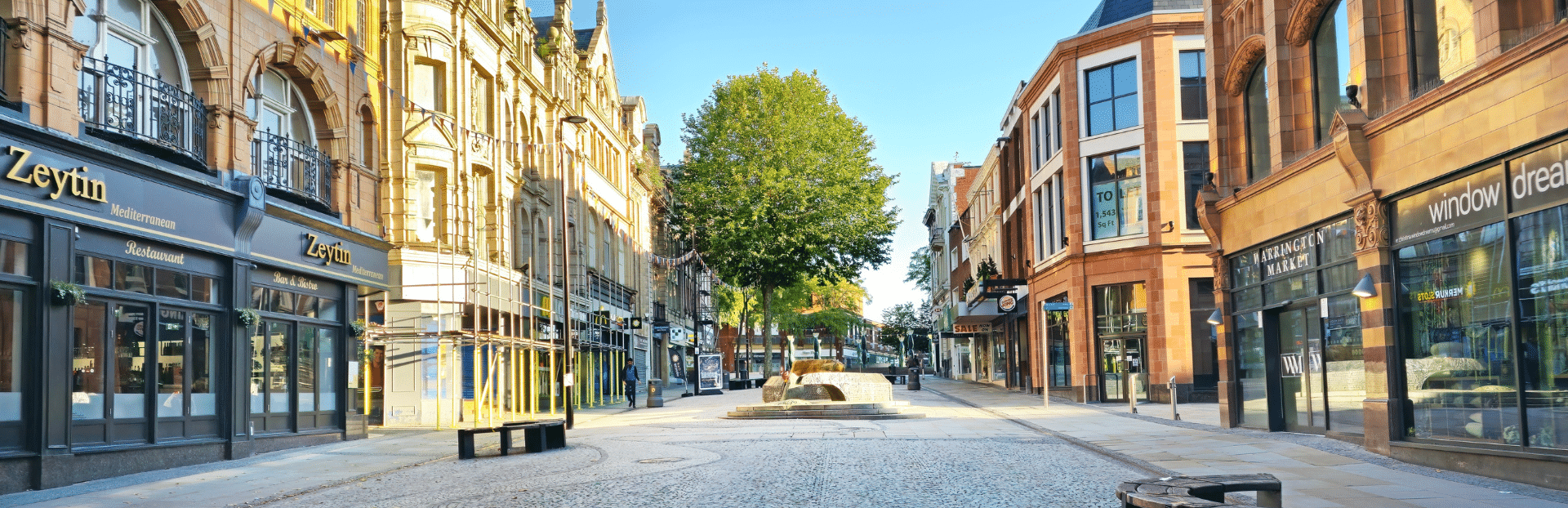
Warrington is a town in Cheshire, north-west England. Warrington's average sold price is £252,610 on the HM Land Registry House Price Index, 12.9% below the England average of £289,946 and £37,932 above the North West regional average of £214,678. That places Warrington in the middle band of the North West: priced above Liverpool and Manchester on the Land Registry index, but well short of the premium Cheshire commuter belt. Warrington is its own unitary authority (ONS code E06000007), so those sold-price figures cover the whole borough rather than a slice of a larger county.
What makes Warrington unusual is where the yield sits. The two highest-yielding postcodes, WA1 and WA5, both return 4.8%, but WA1 does it on the cheapest asking price in the borough at £233,722. So the cheapest way in is also joint-top for income, a pattern that does not hold in most markets, where the best yields hide in the priciest or the thinnest postcodes. Across the six postcodes covered here, asking prices run from £233,722 in WA1 to £424,998 in WA13, and a 30% deposit starts at £70,117.
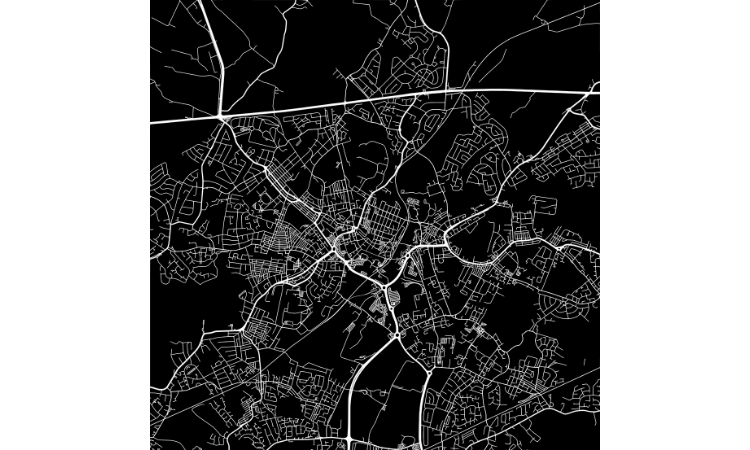
This guide covers postcodes WA1 (Town Centre, Latchford), WA2 (Orford, Padgate), WA3 (Birchwood, Culcheth), WA4 (Stockton Heath, Appleton), WA5 (Great Sankey, Penketh), and WA13 (Lymm). Warrington sits at the junction of the M6, M56, and M62, roughly halfway between Manchester and Liverpool with direct trains to both. The wider Cheshire buy-to-let region runs south and east of the town.
Article updated: July 2026
Why Invest in Warrington?
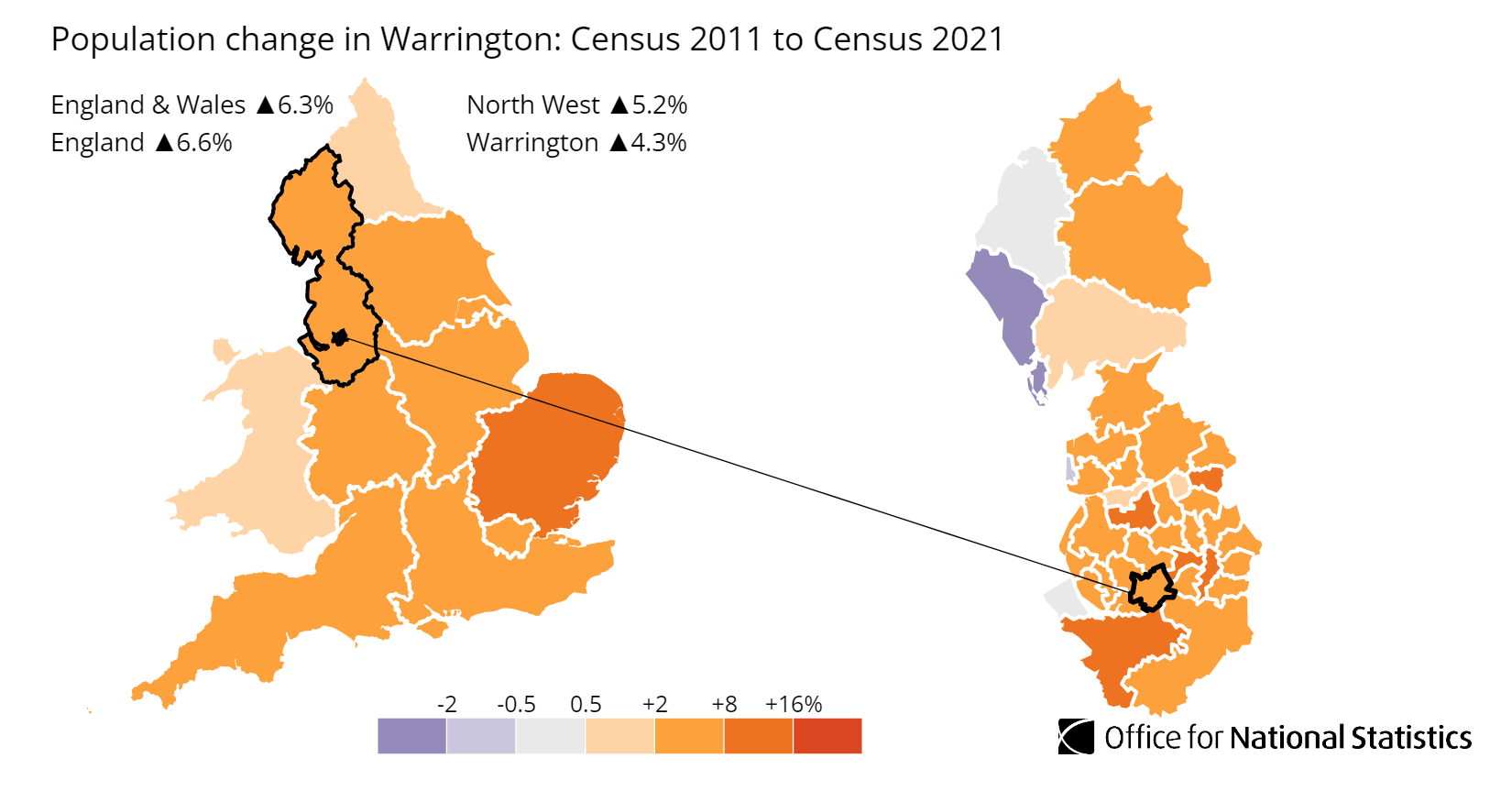
Warrington's population reached 210,974 at the 2021 Census, up 4.3% from 202,228 in 2011. The borough has grown steadily since it was designated a New Town in 1968, with large residential expansions across Great Sankey, Birchwood, and Westbrook adding housing over the decades. That is slower than the fastest-growing urban centres but consistent, the kind of gradual demand base that keeps a rental market ticking rather than spiking.
Median gross annual earnings for Warrington residents are £40,380, above both the North West median of £37,445 and the Great Britain median of £39,125. The higher wage base reflects a local economy weighted towards financial and professional services, nuclear energy, and logistics. Birchwood Park is a large office and technology campus, and the town's motorway junctions make it one of the North West's main distribution hubs. Higher local earnings matter for a landlord because tenants who earn more can absorb rent more comfortably, which tends to mean fewer arrears and longer tenancies.
The employment rate stands at 75.2%, close to the Great Britain figure. For investors weighing up different property investment strategies, the data below shows how the six postcodes split between cheaper, higher-yielding inner areas and the premium southern villages.
Warrington Economic Summary
- Population: 210,974 (2021 Census). Growth of 4.3% from 2011.
- Median annual salary: £40,380 (Warrington), £37,445 (North West), £39,125 (Great Britain)
- Employment rate: 75.2% (Warrington)
- Unemployment rate: 4.2% (Warrington)
- Key employment sectors: Financial and professional services, nuclear energy, logistics and distribution, advanced manufacturing
Source: ONS Census 2021, Nomis Labour Market Profile (ASHE 2025)
Regeneration and Investment in Warrington
Three programmes are reshaping Warrington, from a single 820-acre brownfield site down to neighbourhood-level renewal in the inner postcodes.
- Fiddler's Ferry Power Station (Phase 1 site preparation underway, part of a multi-billion pound long-term programme): Peel NRE's 10-15 year masterplan for the 820-acre former power station site between Warrington and Halton covers 1,760+ homes, 1.5 million sq ft of employment floorspace, and parkland. Phase 1 is four industrial and distribution buildings supporting 845 jobs, with cooling tower demolition running from late 2025 to 2027. The homes arrive in later phases, so the nearer-term effect on WA5 and western Warrington is employment rather than housing supply. Updates at Fiddler's Ferry.
- Warrington Town Centre (Under construction, £190 million): The 90-acre town centre programme delivered the 359-home Steelworks apartment complex next to the central train station in October 2024, with 900 further homes approved at Cockhedge under a wider Town Deal investment. The Station Quarter location has direct rail to Manchester and Liverpool, and the completed and occupied Steelworks apartments give a read on town-centre rental demand. Updates at Warrington Borough Council.
- Central 6 Regeneration Masterplan (In delivery, £22 million Town Deal aligned funding): A 2020-2040 programme improving six inner Warrington neighbourhoods, including Orford, Latchford, and Fairfield and Howley, through community hubs, sports and youth facilities, cycling infrastructure, and housing renewal. The completed work so far includes the £4.3 million Kingsway House refurbishment. Neighbourhood investment of this kind supports tenant retention in WA1, WA2, and WA5 over the long run. Updates at Warrington Borough Council.
Source: Office for National Statistics - Population for Warrington
Warrington Property Market Analysis
Warrington's average property price has risen 400.1% since January 1995, from £50,509 to £252,610. The sections below walk through that price history cycle by cycle, then break the current market down postcode by postcode for sold prices, price per square foot, asking prices, growth, and transaction volumes.
When was the last house price crash in Warrington?
Warrington is a unitary authority, so all sold property prices from HM Land Registry are recorded at borough level. The index tracks average prices from January 1995 to March 2026, covering 31 years of market cycles.
The 1995 to 2007 climb: Warrington opened at £50,509 in January 1995 and more than tripled over the next twelve years, reaching a pre-crash peak of £163,419 in November 2007. The sharpest gains came in the early 2000s, when annual growth ran above 20% for stretches, before affordability slowed the pace from 2006.
The 2008 to 2009 crash: The financial crisis hit Warrington harder than the national average. Prices fell 20.9% from the November 2007 peak of £163,419 to a trough of £129,198 in February 2009, and the worst annual reading was -18.8% in February 2009. England fell 18.2% peak to trough, from £183,883 in September 2007 to £150,438 in March 2009. The North West fell from £141,847 in December 2007 to £115,931 in January 2013. Warrington's steeper drop reflects a lower-priced market with less of the wage cushion that carried the premium Cheshire belt through the downturn.
The 2010 to 2013 drift: Prices bounced off the February 2009 trough but then went sideways for years. By March 2011 the average was £136,282, and it was still only £138,680 by early 2013, more than 15% below the pre-crash peak. The recovery stalled while wages and lending stayed tight.
Recovery, 2014 to 2016: Growth returned with annual gains above 4%, and the average crossed its pre-crash peak in June 2016 at £163,801. That is a recovery of 8 years and 7 months from the November 2007 top, longer than England's, which regained its peak by May 2014.
The 2017 to 2019 run: Steady 3-5% annual growth carried the average to around £183,000 by early 2020. The M62 corridor's expanding logistics and office economy underpinned demand through this period.
2020 to 2022, the pandemic surge: This was the sharpest acceleration in Warrington's price history. Annual gains hit 11.9% in June 2021 and 11.7% in June 2022, and the average jumped from roughly £183,000 in early 2020 to £232,784 by June 2022, a 27% rise in two and a half years. The stamp duty holiday and the search for suburban space drove it.
The 2023 rate shock: Higher mortgage rates cooled the market. The average slipped to £237,744 by January 2024, recording -1.6% annual growth, one of the few negative readings since the last crash.
2024 to present: Prices recovered through 2024 and 2025, reaching an all-time high of £254,905 in February 2026 before easing slightly to £252,610 by the latest reading in March 2026. That is 54.6% above the pre-crash peak of £163,419.
Long-term growth summary:
- 5 years (March 2021 to March 2026): +24.2% (£203,368 to £252,610)
- 10 years (March 2016 to March 2026): +61.8% (£156,101 to £252,610)
- 15 years (March 2011 to March 2026): +85.4% (£136,282 to £252,610)
- 20 years (March 2006 to March 2026): +80.0% (£140,372 to £252,610)
- 30 years (January 1995 to March 2026): +400.1% (£50,509 to £252,610)
The 20-year return of 80.0% is lower than the 15-year return of 85.4% because March 2006 prices (£140,372) were higher than March 2011 (£136,282). The crash dragged values below their 2006 level, so the 15-year window starts from a lower base. Across the full run Warrington tracks the wider 18-year property cycle with a deeper crash and a slower recovery than the national average.
- All property types
- Detached
- Semi-detached
- Terraced
- Flats
- All property types
- Detached
- Semi-detached
- Terraced
- Flats
Source: HM Land Registry House Price Index for Warrington, January 1995 to March 2026.
Sold House Prices in Warrington
Warrington's average sold price is £252,610, sitting 12.9% below the England average of £289,946 (HM Land Registry, March 2026). The discount is not even across property types. It is narrowest for detached houses, at 7.6% below England, and widest for flats and maisonettes, at 38.3% below. Warrington sits £37,932 above the North West regional average of £214,678.
| Property Type | Warrington Average | England Average | Difference |
|---|---|---|---|
| Detached houses | £434,518 | £470,492 | -7.6% |
| Semi-detached houses | £262,028 | £288,185 | -9.1% |
| Terraced houses | £201,554 | £243,788 | -17.3% |
| Flats and maisonettes | £132,398 | £214,563 | -38.3% |
| All property types | £252,610 | £289,946 | -12.9% |
Detached houses average £434,518, only 7.6% below the England figure of £470,492. That narrow gap is Warrington's premium southern postcodes doing the work. WA4 (Stockton Heath, Appleton) and WA13 (Lymm) carry the bulk of detached sales, at prices closer to wider Cheshire levels than to the borough's inner areas. Detached homes grew 2.6% over the past year against England's 1.4%.
Semi-detached houses average £262,028, 9.1% below England's £288,185, and posted the strongest annual growth of any type at 3.5%. Semis are the backbone of Warrington's housing stock, spread across WA1, WA2, WA3, and WA5. England's equivalent semi-detached growth was 1.2%, so Warrington's mainstream stock outpaced the national figure.
Terraced houses average £201,554, 17.3% below the England average of £243,788, with 2.9% annual growth. The terraced market concentrates in inner Warrington around WA1 and WA2, where prices are lowest and the smaller-unit stock that suits letting is most common. England's terraced homes fell 0.3% over the same year.
Flats and maisonettes show the widest discount at 38.3% below England, £132,398 against £214,563. Warrington has limited apartment stock next to a city-centre market, and flats eased 2.1% over the year. England's flats fell further, down 6.7%, so Warrington's flats held their value better than the national flat market even as both softened.
Price Per Square Foot in Warrington
Price per square foot runs from £219 in WA2 to £365 in WA13, a spread of 67%. Measuring by the square foot strips out the effect of property size, so it shows what buyers actually pay for space rather than for a bigger house. The ranking follows the asking-price order closely, with the southern villages charging the most per foot.
| Rank | Area | Price Per Sq Ft |
|---|---|---|
| 1 | WA2 (Orford, Padgate) | £219 |
| 2 | WA1 (Town Centre, Latchford) | £252 |
| 3 | WA5 (Great Sankey, Penketh) | £272 |
| 4 | WA3 (Birchwood, Culcheth) | £276 |
| 5 | WA4 (Stockton Heath, Appleton) | £303 |
| 6 | WA13 (Lymm) | £365 |
WA13 (Lymm) charges £365 per square foot, 67% more than WA2's £219. Lymm is a canal-side village of period houses and larger detached homes, which pushes the rate per foot to the top of the borough. WA2 (Orford, Padgate) offers the cheapest space in Warrington, so an investor chasing maximum floor area per pound starts there.
For Sale Asking Prices in Warrington
Asking prices in Warrington run from £233,722 in WA1 (Town Centre, Latchford) to £424,998 in WA13 (Lymm), with a mean of £307,783 across the six postcodes. The two cheapest, WA1 and WA2, both sit below £250,000, the natural hunting ground for investors after below market value properties or renovation properties in settled residential streets.
| Rank | Area | Asking Price |
|---|---|---|
| 1 | WA1 (Town Centre, Latchford) | £233,722 |
| 2 | WA2 (Orford, Padgate) | £240,010 |
| 3 | WA5 (Great Sankey, Penketh) | £280,654 |
| 4 | WA3 (Birchwood, Culcheth) | £309,256 |
| 5 | WA4 (Stockton Heath, Appleton) | £358,059 |
| 6 | WA13 (Lymm) | £424,998 |
The postcodes fall into three pricing tiers. WA1 and WA2 form the entry level at £233,722 to £240,010. WA5 and WA3 hold the middle at £280,654 to £309,256. WA4 and WA13 are the premium end at £358,059 to £424,998. The £191,276 gap between the cheapest and dearest postcode is the span from inner-Warrington terraces to Lymm village detached homes inside a single town.
House Price Growth in Warrington
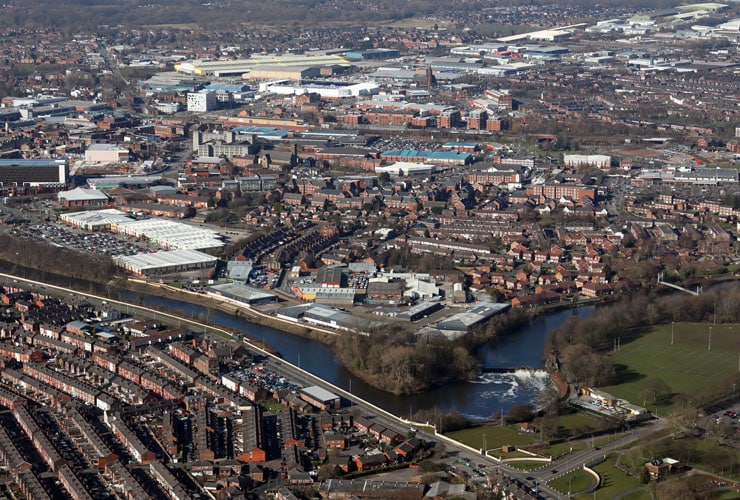
Five-year price growth ranges from 15.4% in WA13 (Lymm) to 31.0% in WA1 (Town Centre, Latchford). The cheaper postcodes have grown faster: WA1 and WA2, the two lowest-priced areas, sit at the top of the five-year table, while the premium southern villages grew more slowly in percentage terms. Warrington features among the fastest growing cities in the North West for property values over this window.
| Area | 1 Year | 3 Years | 5 Years |
|---|---|---|---|
| WA1 (Town Centre, Latchford) | +9.4% | +2.2% | +31.0% |
| WA2 (Orford, Padgate) | +2.5% | -3.1% | +25.0% |
| WA3 (Birchwood, Culcheth) | +6.2% | +6.9% | +20.8% |
| WA5 (Great Sankey, Penketh) | +0.8% | -0.5% | +17.2% |
| WA4 (Stockton Heath, Appleton) | +2.4% | +3.2% | +16.8% |
| WA13 (Lymm) | +4.4% | +5.7% | +15.4% |
WA1's 31.0% five-year growth is worth roughly £55,300 on its £233,722 asking price, on top of it being the cheapest postcode and joint-highest on yield. WA3 (Birchwood, Culcheth) shows the steadiest medium-term record, up 6.9% over three years and 6.2% over one, without the negative three-year readings that WA2 and WA5 carry. WA13 (Lymm) has the softest five-year figure at 15.4%, with most of that gain landing in the last three years, a common pattern where the priciest village stock moves later in a cycle.
Monthly Property Sales in Warrington
Warrington records about 213 property sales a month across its six postcodes. WA5 (Great Sankey, Penketh) is the busiest market at 56 sales a month, while WA13 (Lymm) is the quietest at 10, a small village stock where fewer homes come up but they still sell.
| Area | Sales Per Month | Turnover | Asking Price |
|---|---|---|---|
| WA5 (Great Sankey, Penketh) | 56 | 18% | £280,654 |
| WA4 (Stockton Heath, Appleton) | 43 | 12% | £358,059 |
| WA3 (Birchwood, Culcheth) | 43 | 17% | £309,256 |
| WA2 (Orford, Padgate) | 38 | 22% | £240,010 |
| WA1 (Town Centre, Latchford) | 22 | 16% | £233,722 |
| WA13 (Lymm) | 10 | 12% | £424,998 |
WA2's 22% turnover is the highest in the borough, meaning more than a fifth of its housing stock changes hands in a year. That matters for an investor because a postcode where homes move quickly is easier to sell back into when the time comes. WA5, WA4, and WA3 each clear more than 40 sales a month, giving a landlord in the higher-volume postcodes more room to exit without waiting for a buyer, while WA13's 10 sales a month is thin trading in a small village market.
What Type of Property Can You Buy in Warrington?
Detached homes are the largest single category in the southern postcodes, at 50.6% of stock in WA3 and 49.3% in WA4, while WA1 and WA2 hold the most terraces and flats. The mix of housing stock shapes which strategy fits where, and the figures below come from 2021 Census records for each postcode.
| Area | Detached | Semi-detached | Terraced | Flats |
|---|---|---|---|---|
| WA1 (Town Centre, Latchford) | 25.4% | 38.2% | 21.0% | 15.4% |
| WA2 (Orford, Padgate) | 32.7% | 35.7% | 21.8% | 9.8% |
| WA3 (Birchwood, Culcheth) | 50.6% | 33.2% | 12.3% | 3.5% |
| WA4 (Stockton Heath, Appleton) | 49.3% | 27.2% | 12.7% | 6.0% |
| WA5 (Great Sankey, Penketh) | 43.1% | 31.1% | 20.4% | 4.9% |
| WA13 (Lymm) | 42.8% | 31.2% | 15.9% | 7.4% |
WA1 holds the smallest share of detached homes at 25.4% and the largest share of flats at 15.4%, along with the highest terraced share at 21.0%. That is the smaller-unit stock that usually forms the buy-to-let market, and it lines up with WA1 carrying the lowest asking price and a joint-top yield. Town-centre flats suit single lets, while Latchford's terraces make lower-cost family homes.
WA3 is the most detached-heavy postcode at 50.6%, with the fewest flats at 3.5%. Detached and semi-detached houses together make up more than 80% of its stock, which fits its premium prices and lower yields. The housing here leans towards owner-occupier family homes rather than the smaller units that drive rental income. WA13 (Lymm) sits at the same end, with detached houses at 42.8% and only 15.9% terraced, which is part of why its rental stock is too thin to read a reliable yield.
Flats combine purpose-built and converted units. A small share of mobile and temporary dwellings is not shown, so rows may not total 100%.
Warrington Rental Market Analysis
Monthly rents in Warrington run from £882 in WA2 to £1,128 in WA5, with gross yields from 3.7% to 4.8% across the five postcodes that carry rental data. For investors asking whether buy to let is worth it in Warrington, the sections below break rents, yields, and tenant affordability down postcode by postcode. If you are working out how to build a property portfolio in the North West, Warrington pairs above-average local wages with established commuter demand, and you can browse current buy-to-let homes for sale across the region.
Average Rent and Gross Rental Yields in Warrington
WA1 (Town Centre, Latchford) and WA5 (Great Sankey, Penketh) share Warrington's top gross yield at 4.8%, but they get there differently. WA1 does it on the cheapest asking price and the lowest rent, while WA5 pairs a higher rent of £1,128 with a mid-range price. WA13 (Lymm) has too few rental listings to read a reliable rent, so it shows no yield below. If you want to sanity-check these numbers, our guide to how to work out rental yield shows the calculation.
| Area | Average Monthly Rent | Asking Price | Gross Yield |
|---|---|---|---|
| WA1 (Town Centre, Latchford) | £932 | £233,722 | 4.8% |
| WA5 (Great Sankey, Penketh) | £1,128 | £280,654 | 4.8% |
| WA2 (Orford, Padgate) | £882 | £240,010 | 4.4% |
| WA3 (Birchwood, Culcheth) | £954 | £309,256 | 3.7% |
| WA4 (Stockton Heath, Appleton) | £1,110 | £358,059 | 3.7% |
| WA13 (Lymm) | Not enough data | £424,998 | Not enough data |
The yield spread between the top postcodes at 4.8% and the bottom at 3.7% is 1.1 percentage points, a narrow band. Warrington's yields cluster tightly, which fits its character as a mid-market commuter town rather than a city with sharp postcode-level swings. WA4 carries the highest rent among the yield-bearing postcodes at £1,110 a month, but its £358,059 asking price pulls the return down to 3.7%. WA1 works the other way, turning the lowest rent into a joint-top yield because the asking price is so low.
Gross Rental Yield by Postcode
Is Warrington Rent High?
Monthly rents in Warrington take between 26.2% and 33.5% of the local median gross monthly salary. The widely used affordability line is 30% of gross income. Three postcodes sit below it and two just above, a tight range that reflects Warrington's mix of above-average wages and moderate rents.
The median gross weekly salary in Warrington is £776.50, which works out at £3,365 per month or £40,380 per year. That is above the North West median of £720.10 a week and the Great Britain median of £752.40 a week. Data from the Nomis Labour Market Profile (ASHE 2025).
| Rank | Area | Rent as % of Income |
|---|---|---|
| 1 | WA5 (Great Sankey, Penketh) | 33.5% |
| 2 | WA4 (Stockton Heath, Appleton) | 33.0% |
| 3 | WA3 (Birchwood, Culcheth) | 28.4% |
| 4 | WA1 (Town Centre, Latchford) | 27.7% |
| 5 | WA2 (Orford, Padgate) | 26.2% |
| - | WA13 (Lymm) | Not enough data |
No Warrington postcode with rental data gets far past the 30% affordability line, and the highest, WA5 at 33.5%, is only modestly above it. The three inner and mid-market postcodes (WA3, WA1, WA2) all sit below 30%, so tenants there keep meaningful disposable income after rent. Affordable rents relative to local wages tend to mean fewer arrears and longer tenancies, which is why the gap between rent and income is worth reading alongside the headline yield.
How Long Does It Take to Sell in Warrington?
Homes in WA2 sell fastest, with about 4.8 months of unsold stock, while WA4 is the slowest at 8.3 months. Months of unsold stock measures how long it would take to clear everything currently for sale at the recent sales rate, so a lower figure means a faster-moving market. It is worth reading next to the yield, because a high income return counts for less if you cannot get back out when you need to.
| Area | Avg Days to Sell | Months of Unsold Stock | Market |
|---|---|---|---|
| WA2 (Orford, Padgate) | 145 | 4.8 | Seller's market |
| WA5 (Great Sankey, Penketh) | 169 | 5.6 | Seller's market |
| WA1 (Town Centre, Latchford) | 179 | 5.9 | Seller's market |
| WA3 (Birchwood, Culcheth) | 179 | 5.9 | Seller's market |
| WA13 (Lymm) | 234 | 7.7 | Balanced market |
| WA4 (Stockton Heath, Appleton) | 254 | 8.3 | Balanced market |
The inner and western postcodes clear quickest. WA2, WA5, WA1, and WA3 all read as seller's markets, with homes finding a buyer in five to six months' worth of stock, which points to steady demand for the mid-priced family housing that dominates them. The premium southern postcodes are slower: WA4 and WA13 sit above seven months, so the higher-value stock in Stockton Heath and Lymm takes longer to shift. On the rental side, the one postcode with enough listings to read, WA4, currently favours landlords, with homes taking about 61 days to let, though the other postcodes have too few rental listings at any one time to judge reliably.
How Big Is Warrington's Private Rented Sector?
The private rented sector is deepest in WA1 at 21.5% of households and shallowest in WA3 at 10.3%. The share of homes already let privately is a guide to the size of the established tenant pool, and the table below shows household tenure by postcode from the 2021 Census.
| Area | Owned Outright | Owned with Mortgage | Private Rented | Social Rented |
|---|---|---|---|---|
| WA1 (Town Centre, Latchford) | 38.3% | 28.7% | 21.5% | 11.0% |
| WA2 (Orford, Padgate) | 35.6% | 32.3% | 15.0% | 16.3% |
| WA13 (Lymm) | 43.2% | 32.4% | 13.3% | 10.0% |
| WA5 (Great Sankey, Penketh) | 38.3% | 41.4% | 11.5% | 7.3% |
| WA4 (Stockton Heath, Appleton) | 47.0% | 38.0% | 10.7% | 4.1% |
| WA3 (Birchwood, Culcheth) | 45.3% | 37.7% | 10.3% | 6.3% |
WA1 has the largest private rented sector in Warrington at 21.5%, well ahead of the rest, and it pairs that with the lowest asking price and a joint-top yield. A deeper rented sector points to an active local lettings market and a wider pool of existing tenants, a different signal from yield. WA2 comes next at 15.0%, but it also carries the highest social-rented share at 16.3%, so its private lettings market is smaller than its overall rented share suggests. The remaining postcodes (WA13, WA5, WA4, WA3) all sit between 10.3% and 13.3% private rented, weighted instead towards owner-occupation, with WA4 showing the highest outright ownership at 47.0%.
Local Housing Allowance Rates in Warrington
Warrington's postcodes straddle two Broad Rental Market Areas, so Local Housing Allowance is not the same across the whole borough. Most of Warrington (WA1, WA2, WA4, WA5, and WA13) falls in the North Cheshire BRMA, while WA3 (Birchwood, Culcheth) sits in the Wigan BRMA, where the rates are lower. Local Housing Allowance sets the maximum housing support a tenant on benefits can receive, so it acts as a rent floor for landlords letting to that part of the market. To check the current rate for a specific address, you can use the government's official Local Housing Allowance calculator.
| Property Size | North Cheshire BRMA (weekly) | Wigan BRMA (weekly) |
|---|---|---|
| Shared accommodation | £78.59 | £78.21 |
| 1 bedroom | £109.32 | £92.05 |
| 2 bedrooms | £135.78 | £115.07 |
| 3 bedrooms | £159.95 | £136.93 |
| 4 bedrooms | £230.14 | £178.36 |
The two-bedroom rate is £135.78 a week (about £588 a month) in the North Cheshire area and £115.07 a week (about £499 a month) in the Wigan area covering WA3. Both sit below Warrington's open-market rents of £882 to £1,128 a month, so a benefit-backed tenancy at the LHA rate falls under what the wider market pays, and the stock that fits within these rates concentrates in the cheaper inner postcodes. The split matters if you are letting to the benefits market: the same size of home supports a higher LHA rent in WA1 or WA5 than in WA3.
Buy-to-Let Considerations
Are House Prices High in Warrington? Price-to-Earnings Ratios
Buying in Warrington takes between 5.8 and 10.5 times the median annual salary. This uses the Nomis Labour Market Profile for Warrington, which puts the median gross annual income for residents at £40,380.
The national benchmark for price-to-earnings is 7.4 (England's average sold price of £289,946 divided by the Great Britain median annual salary of £39,125). Three of Warrington's six postcodes sit below that benchmark, meaning they are more affordable against local incomes than the England average is against national incomes.
| Rank | Area | Price-to-Earnings Ratio |
|---|---|---|
| 1 | WA1 (Town Centre, Latchford) | 5.8 |
| 2 | WA2 (Orford, Padgate) | 5.9 |
| 3 | WA5 (Great Sankey, Penketh) | 7.0 |
| 4 | WA3 (Birchwood, Culcheth) | 7.7 |
| 5 | WA4 (Stockton Heath, Appleton) | 8.9 |
| 6 | WA13 (Lymm) | 10.5 |
WA1 at 5.8 and WA2 at 5.9 both sit well below the national benchmark of 7.4, the most affordable postcodes against local earnings. WA13's ratio of 10.5 reflects Lymm's village pricing measured against a salary figure that covers the whole borough. The middle three postcodes (WA5, WA3, WA4) run from 7.0 to 8.9, sitting either side of the national average.
Deposit Requirements in Warrington
A 30% deposit on a buy-to-let property in Warrington runs from £70,117 in WA1 to £127,500 in WA13. The table below shows the 30% deposit for each postcode. Use our stamp duty calculator and guide to buy-to-let running costs to factor in the rest of the acquisition cost.
| Rank | Area | 30% Deposit Required |
|---|---|---|
| 1 | WA1 (Town Centre, Latchford) | £70,117 |
| 2 | WA2 (Orford, Padgate) | £72,003 |
| 3 | WA5 (Great Sankey, Penketh) | £84,196 |
| 4 | WA3 (Birchwood, Culcheth) | £92,777 |
| 5 | WA4 (Stockton Heath, Appleton) | £107,418 |
| 6 | WA13 (Lymm) | £127,500 |
The £1,886 gap between WA1 (£70,117) and WA2 (£72,003) is small, but WA1 carries the higher yield of the two at 4.8% against WA2's 4.4%. Stepping up to WA5 at £84,196 buys the borough's other 4.8% yield on a higher rent, so an investor weighing deposit size against income has two routes to the top yield: the cheapest entry in WA1, or a larger outlay in WA5 for a bigger monthly rent.
What the Warrington Data Tells Buy-to-Let Investors
In Warrington the cheapest way in is also joint-highest on yield. WA1 (Town Centre, Latchford) carries a 4.8% yield, the lowest asking price at £233,722 for buying an investment property, the lowest deposit at £70,117, and the most affordable price against local earnings at 5.8 times income. It also has the deepest private rented sector in the borough at 21.5%. WA5 (Great Sankey, Penketh) matches the 4.8% yield but on a higher rent of £1,128 and a larger £84,196 deposit, so the top yield comes at two very different price points.
WA1 and WA2 have delivered the strongest five-year growth at 31.0% and 25.0%, and they are the two cheapest postcodes. WA3 (Birchwood, Culcheth) is the steadier medium-term performer, up 6.9% over three years and 6.2% over one, without the negative three-year readings the two cheap postcodes carry. The growth data and the yield data do not point to one postcode: WA1 leads on both, but WA5 shares the yield and WA3 offers the more consistent growth record.
WA4 (Stockton Heath, Appleton) and WA13 (Lymm) are the premium end, with the highest asking prices and the slowest sales. WA4 returns 3.7% on a £1,110 rent, WA13 is too thin on rental stock to show a yield at all, and both take more than seven months of stock to clear. Their price-to-earnings ratios of 8.9 and 10.5 measure village-level values against a borough-wide salary, which is why the returns compress at that end.
Warrington does not run a selective licensing scheme, and the council has said it has no plans to introduce one. Shared houses still need an HMO licence, and Warrington Borough Council's HMO licence application page sets out when one applies. Investors reviewing off-market property in Warrington should confirm the current licensing position before completing.
How Warrington Compares
Warrington's mean asking price of £307,783 is the second highest of five North West locations compared here, and its top yield of 4.8% is second lowest, ahead of only Chester's 4.7%. The table places Warrington alongside four nearby markets. Mean asking price and mean monthly rent are simple averages across the postcodes with data, and top gross yield is the single highest postcode yield in each location.
| Location | Mean Asking Price | Mean Monthly Rent | Mean Gross Yield | Top Yield (postcode) |
|---|---|---|---|---|
| Liverpool | £210,314 | £904 | 5.2% | 8.0% (L2) |
| Wigan | £233,131 | £892 | 4.6% | 5.4% (M46) |
| Manchester | £268,032 | £1,312 | 5.9% | 8.1% (M14) |
| Warrington | £307,783 | £1,001 | 3.9% | 4.8% (WA1, WA5) |
| Chester | £339,728 | £1,204 | 4.3% | 4.7% (CH1) |
Warrington's top yield of 4.8% sits near the bottom of this group, with Liverpool (8.0%), Manchester (8.1%), and Wigan (5.4%) all posting higher headline figures. Manchester's yield reflects its dense city-centre apartment market, and Liverpool's the depth of its lower-priced stock. Wigan offers the cheapest entry of the higher-yielders at £233,131. Chester is the only location in the table pricier than Warrington, and its 4.7% top yield is within a whisker of Warrington's 4.8%, marking both out as the Cheshire premium end: higher prices, lower yields, wealthier tenants.
Warrington's median salary of £40,380 is the second highest in the group, behind Chester at £41,486 and ahead of Liverpool, Wigan, and Manchester. That is the trade-off the borough offers: it pairs one of the highest asking prices and one of the lowest top yields in this comparison with one of the strongest local wage bases, which underpins tenant affordability. For a wider view, see our guide to the best buy-to-let areas in the UK.
Frequently Asked Questions
Is Warrington a good place to invest in buy-to-let property?
The data shows a mid-market commuter town with moderate yields of 3.7% to 4.8%, sold prices 12.9% below the England average, and local earnings of £40,380 that sit above both the regional and national medians. Five-year growth runs from 15.4% to 31.0% across the postcodes, with the cheapest areas growing fastest, and the borough clears around 213 sales a month. Three regeneration programmes, led by the 820-acre Fiddler's Ferry site, are set to add employment and, in later phases, more than 1,760 homes over the next decade.
What are the best areas to invest in Warrington?
The six postcodes split into three tiers. WA1 (Town Centre, Latchford) and WA2 (Orford, Padgate) are the cheapest way in, below £240,000, with WA1 on a 4.8% yield and 31.0% five-year growth. WA5 (Great Sankey, Penketh) matches WA1's 4.8% yield on a higher rent, and it is the busiest sales market at 56 a month. WA3 (Birchwood, Culcheth) sits near Birchwood Park's employment base with the steadiest three-year growth. WA4 (Stockton Heath, Appleton) and WA13 (Lymm) are the premium villages, with higher prices, slower sales, and lower or unrecorded yields. If income is the priority, WA1 and WA5 lead; if consistent growth matters more, WA3 has the more even record.
How does Warrington compare to Manchester for property investment?
They pull in different directions on income. Manchester's top yield of 8.1% is well ahead of Warrington's 4.8%, driven by its dense city-centre apartment market, and its mean rent of £1,312 is higher than Warrington's £1,001. But Manchester's mean asking price is lower, at £268,032 against Warrington's £307,783. Warrington's median salary of £40,380 is above Manchester's, so tenants there put a smaller share of income towards rent. The two markets suit different aims: Manchester leans towards rental income density, Warrington towards tenant affordability and settled suburban demand.
When will Fiddler's Ferry affect Warrington house prices?
Fiddler's Ferry is a 10-15 year programme, so any effect on prices is a long game. Phase 1 is site preparation and employment, with cooling tower demolition running from late 2025 to 2027 and 1.5 million sq ft of floorspace supporting 845 jobs. The 1,760-plus homes arrive in later phases, so the nearer-term impact on WA5 and western Warrington is jobs and tenant demand rather than new housing supply. Peel NRE has delivered large North West schemes before, including MediaCity in Salford and Liverpool Waters, which gives the masterplan a track record behind it.
Can I find buy-to-let property in Warrington for under £250,000?
Yes, in two postcodes on average. WA1 (Town Centre, Latchford) has an average asking price of £233,722 and WA2 (Orford, Padgate) £240,010, and WA1 carries the higher yield at 4.8% and the stronger five-year growth at 31.0%. Individual homes vary around those averages, so terraced houses and flats in these postcodes will often sit below the £200,000 mark, since Warrington flats average £132,398 on the Land Registry index. Routes like rent to buy or repossessed properties can open up further below-average pricing.
What are the Local Housing Allowance rates in Warrington?
Warrington sits across two Broad Rental Market Areas, so the rates differ by postcode. Most of the borough (WA1, WA2, WA4, WA5, WA13) is in the North Cheshire BRMA, where as of June 2026 Local Housing Allowance runs at £78.59 a week for a shared room, £109.32 for one bed, £135.78 for two beds, £159.95 for three, and £230.14 for four. WA3 (Birchwood, Culcheth) falls in the lower Wigan BRMA, at £78.21 shared, £92.05 for one bed, £115.07 for two, £136.93 for three, and £178.36 for four. The figure is the most a tenant on housing support can claim towards rent, so for that part of the market it sets a floor.
What type of property is most common in Warrington?
It depends on the postcode. The southern areas are detached-heavy, from 49.3% of stock in WA4 up to 50.6% in WA3, while the inner postcodes hold more of the smaller homes that suit letting. WA1 (Town Centre, Latchford) has the most flats at 15.4% and the most terraces at 21.0%, and WA2 (Orford, Padgate) is similar. That inner-versus-southern split is why the highest yields and the buy-to-let stock concentrate in WA1, WA2, and WA5.
What are average house prices, rents and yields in Warrington?
The average sold price across Warrington is £252,610 on the Land Registry index, 12.9% below the England average of £289,946 as of March 2026. Asking prices by postcode run from £233,722 in WA1 (Town Centre, Latchford) to £424,998 in WA13 (Lymm), with a borough mean of £307,783. By type, detached homes average £434,518, semi-detached £262,028, terraced £201,554, and flats £132,398. Monthly rents run from £882 in WA2 to £1,128 in WA5, and gross yields sit between 3.7% and 4.8%, with WA1 and WA5 sharing the top figure.
How do I buy an investment property in Warrington?
Start by deciding whether you are buying for income or for growth, because that points you at a different postcode. WA1 (Town Centre, Latchford) is the cheapest entry at £233,722 and joint-highest on yield at 4.8%. WA5 (Great Sankey, Penketh) shares that 4.8% yield on a higher rent, and WA3 (Birchwood, Culcheth) offers the steadiest growth record. Budget for a 30% deposit, which runs from £70,117 in WA1 to £127,500 in WA13. Beyond the open listings, many investors buy below asking through off-market property and below market value properties, or you can browse current buy-to-let homes for sale.
Ready to buy property?
Access off-market investment properties with an average 8%+ annual gross yield (beating the UK's typical 3-5%).
Get property alerts