
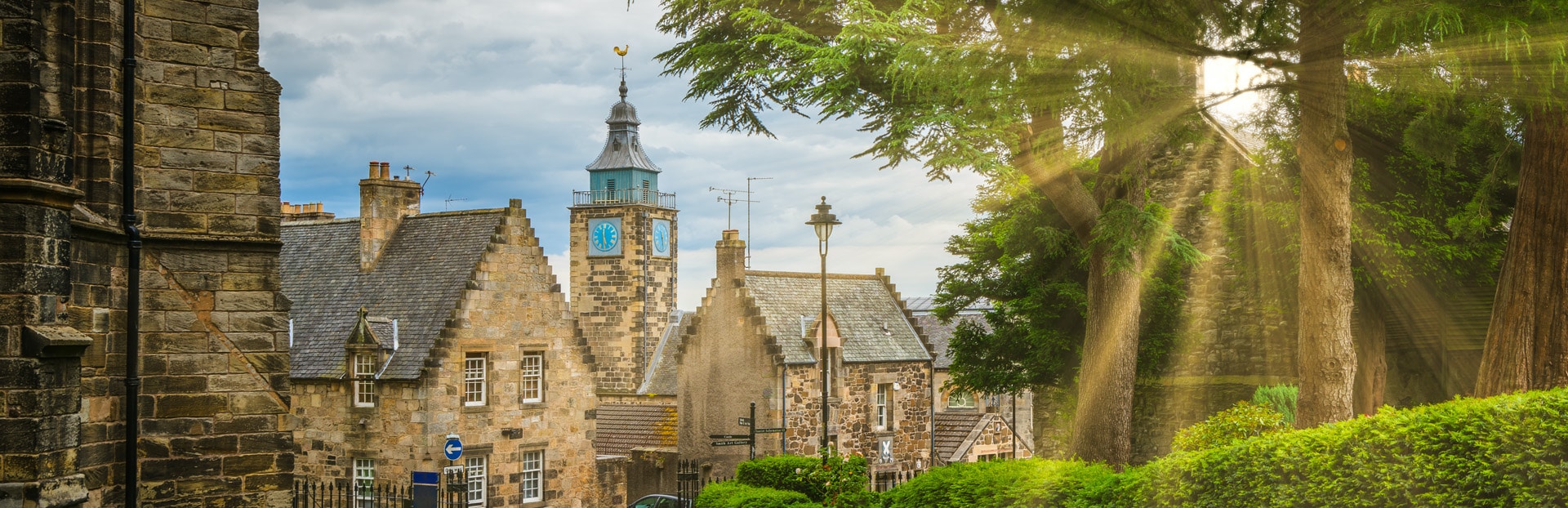
Stirling is a city in central Scotland. The average sold price across the Stirling council area is £225,892 on the UK House Price Index, 21.1% above the Scotland average of £186,582, with the premium concentrated in the houses rather than the flats. A detached house in Stirling sells for £421,111, some 24.3% above Scotland's £338,748, while semi-detached and terraced homes carry premiums of 14.6% and 17.3%. Flats run to £138,636, only 6.2% above the national figure. Stirling is a houses-and-commuter-towns market sitting on top of an affordable urban core, which is where the rental case lives.
For an investor, the core is three postcodes around the city. FK7 (Bannockburn) is the cheapest way in, with an average asking price of £229,943, and it also returns the highest gross yield in the area at 5.2%, so the lowest entry and the best income sit in the same place. The premium villages tell a different story: G63 (Balfron, Drymen) asks £468,793 and carries no usable rental data. Across the council area the population reached 92,604 at the 2022 census, up 2.6% on 2011, and the median local salary of £43,559 runs 9.2% above the Scotland figure.
This guide covers the Stirling council area (ONS code S12000030) across 12 postcodes from FK7 to FK21 and G63, stretching from the city north through Dunblane and Callander to the edge of the Highlands. Buying here works differently from England: purchase tax is Land and Buildings Transaction Tax rather than stamp duty, and the legal process runs on the Home Report and the conclusion of missives. Investors weighing up Scotland may also look at Edinburgh buy-to-let for a deeper, capital-city market.
Article updated: July 2026
Why Invest in Stirling?
The Stirling council area grew its population 2.6% between the 2011 and 2022 censuses, from 90,247 to 92,604, and the median local salary of £43,559 sits 9.2% above the Scotland figure. Stirling sits at the geographical centre of Scotland, roughly equidistant between Edinburgh and Glasgow, with a mainline rail service that reaches Edinburgh in under fifty minutes and Glasgow in under forty. That position has made it an administrative, education and commuter hub rather than a place that grew on speculative housebuilding, and the tenant base reflects that.
The University of Stirling is the single largest employer and brings around 17,000 students to a campus in FK9 (Bridge of Allan), feeding rental demand into both FK9 and FK8 (City Centre). Forth Valley Royal Hospital, public administration and a long-standing financial-services presence anchor the rest of the jobs base, while Stirling Castle and the Trossachs carry a sizeable tourism economy. The median gross weekly wage of £837.70 runs ahead of both the Scotland figure of £767.40 and the Great Britain figure of £752.40, which matters for a landlord because higher local pay is what lets tenants carry the rents the core postcodes command.
Stirling Economic Summary
- Population (Stirling council area): 92,604 (2022 Census). Growth of 2.6% from 2011.
- Median annual salary: £43,559 (local), £39,905 (Scotland), £39,125 (Great Britain)
- Employment rate: 72.9% (local), 75.6% (Great Britain)
- Key employment sectors: Higher education, public administration, healthcare, financial services, tourism
Source: ONS Explore Local Statistics, Nomis Labour Market Profile (ASHE 2025)
Stirling's employment rate of 72.9% sits a little below the Great Britain figure of 75.6%, partly because the large student population pulls down the headline activity rate in survey data. The wage figure carries the more useful signal: those in work earn meaningfully more than the Scotland median, so the rental income the core postcodes generate is supported by what local residents actually take home rather than by stretched affordability.
Regeneration and Investment in Stirling
Stirling's largest scheme, the Durieshill New Village, broke ground in February 2026 and will deliver over 3,000 homes on a 593-acre site south of the city. The three projects below are the ones with confirmed funding or construction underway and the clearest bearing on where jobs and new stock will land.
- Durieshill New Village (over 3,000 homes, under construction): Scotland's largest single housing development, a 593-acre site between Bannockburn and Plean in the FK7 postcode, of which 25% will be affordable. Barratt Homes and David Wilson Homes broke ground in February 2026, with Phase 1 of 543 homes expected by summer 2027 and full build-out spanning around 30 years, alongside new schools, shops and a business park. Source: Invest in Stirling.
- Stirling and Clackmannanshire City Region Deal (£214 million, ongoing): A ten-year partnership between the Scottish Government, UK Government, Stirling Council, Clackmannanshire Council and the University of Stirling, organised around six themes spanning innovation, digital infrastructure, transport, skills and culture. It is the largest single investment programme in the area's recent history. Source: Stirling and Clackmannanshire City Region Deal.
- Stirling Studios, Forthside (£24 million, in development): A film and high-end TV production campus on former Ministry of Defence land at Forthside in central Stirling, with around 100,000 sq ft of studio space and a further 110,000 sq ft for production, logistics and offices. An independent assessment estimates over 4,000 jobs across 25 years, and the project reuses existing buildings rather than demolishing them. Source: Screen Scotland.

Stirling Property Market Analysis
Average property prices across the Stirling council area have risen 113.7% since January 2004, from £105,714 to £225,892. The Registers of Scotland series that feeds the UK House Price Index begins in January 2004 for Scottish council areas, so the cycle below runs from 2004 onward rather than the 1995 start used for English markets. The sections after it drill into current postcode-level data for sold prices, price per square foot, asking prices, growth and transaction volumes.
When was the last house price crash in Stirling?
Stirling is recorded as the Stirling council area in the UK House Price Index, and the monthly series starts in January 2004. That window captures the tail of the 2000s boom, the financial crisis, an unusually long recovery and the pandemic surge, which is the full picture a buyer needs to read this market.
The 2004 to 2008 boom: Stirling opened the series at £105,714 in January 2004 and climbed steadily on cheap credit and central-belt demand. By December 2005 the average was £126,023, and prices peaked at £160,185 in February 2008, a rise of 51.5% in just over four years. Annual growth ran at 19.1% at that peak, the sharpest reading in the available data.
2008 to 2009, the financial crisis: From the February 2008 peak of £160,185, prices fell to £140,632 by January 2009, down 12.2% in under a year, with the worst annual reading at -11.1%. The fall was real but shallower than many English cities saw, where double-digit drops were common.
2009 to 2013, the long grind down: Unlike markets that bottomed in 2009 and bounced, Stirling kept drifting. Prices steadied near £140,000 through 2010 before slipping again, reaching a trough of £130,695 in May 2013. Measured from the 2008 peak that is an 18.4% decline spread over five years and three months. The market did not crash and recover so much as quietly deflate for half a decade.
Recovery, 2013 to 2018: Growth returned at a modest pace, with annual changes mostly between 0% and 5%. Prices finally cleared the February 2008 peak in July 2018 at £161,130, a recovery that took ten years and five months, slower than Edinburgh or Glasgow, where pre-crash levels were regained by 2015 to 2016.
2018 to 2022, steady growth then the pandemic surge: Prices rose through the late 2010s, and Scotland's LBTT holiday and the move toward more space pushed Stirling sharply higher into 2022, helped by its mix of city, commuter town and countryside. By December 2022 the average had reached £217,078.
2023 to present: Higher mortgage rates cooled the market, with the annual reading turning negative through 2023 to £214,567 by December. Prices then recovered to an all-time high of £233,303 in July 2025 before easing back to £225,892 by the latest reading in March 2026, an annual change of 1.8%. That recent dip from the summer high reads as seasonal cooling rather than a fresh correction.
Long-term growth summary:
- 5 years (March 2021 to March 2026): 20.2% growth (£187,986 to £225,892)
- 10 years (March 2016 to March 2026): 55.1% growth (£145,684 to £225,892)
- 15 years (March 2011 to March 2026): 68.1% growth (£134,352 to £225,892)
- 20 years (March 2006 to March 2026): 79.8% growth (£125,622 to £225,892)
- Full series (January 2004 to March 2026): 113.7% growth (£105,714 to £225,892)
Stirling's defining feature on the long view is how slowly the crash worked through. The 18.4% fall was modest, but it took until July 2018 to clear the 2008 peak, so an investor who bought near the top waited a decade to be whole again on the Land Registry average. The compounding since 2018 has been steadier, and the post-2020 surge added most of the five-year gain.
- All property types
- Detached
- Semi-detached
- Terraced
- Flats
- All property types
- Detached
- Semi-detached
- Terraced
- Flats
Sold House Prices in Stirling
Stirling's average sold price of £225,892 sits 21.1% above Scotland's £186,582, but the premium is uneven across property types. The houses do the heavy lifting: detached homes are 24.3% above the national figure, while flats are only 6.2% above it. That spread is the data version of the local geography, where large family houses in the commuter villages price well clear of the smaller flats around the city centre.
| Property Type | Stirling Average | Scotland Average | Difference |
|---|---|---|---|
| Detached houses | £421,111 | £338,748 | +24.3% |
| Semi-detached houses | £246,021 | £214,637 | +14.6% |
| Terraced houses | £205,753 | £175,465 | +17.3% |
| Flats and maisonettes | £138,636 | £130,560 | +6.2% |
| All property types | £225,892 | £186,582 | +21.1% |
Detached houses average £421,111, the widest premium in the table at 24.3% above Scotland. This stock concentrates in FK15 (Dunblane), FK9 (Bridge of Allan) and G63 (Balfron, Drymen), the established commuter villages that draw buyers earning Edinburgh and Glasgow salaries. Detached values grew 1.5% over the year to March 2026, the steadiest of the four types, which fits a segment that is already fully priced.
Semi-detached houses average £246,021, a 14.6% premium and the narrowest of the three house types. Semis are the core family stock across FK7 (Bannockburn) and FK10 (Alloa), where pricing tracks local incomes more closely than commuter demand. They also posted the strongest annual growth of the four types at 4.2%, a sign that the affordable middle of the market is where the recent movement has been.
Terraced houses average £205,753, a 17.3% premium. Terraced stock spans traditional stone-built rows in the city centre and newer estates in FK7 and FK10, and the type grew 3.3% over the year. It is the most accessible house type for a buy-to-let buyer who wants a house rather than a flat without stepping up to detached money.
Flats average £138,636, just 6.2% above Scotland and the only type that fell over the year, by 0.2%. Stirling has no large apartment-development market, so the flat stock is mostly smaller units in and around the centre serving students and first-time buyers. That keeps flat prices close to the national average and makes them the lowest-capital route into the city for a landlord.
Price Per Square Foot in Stirling
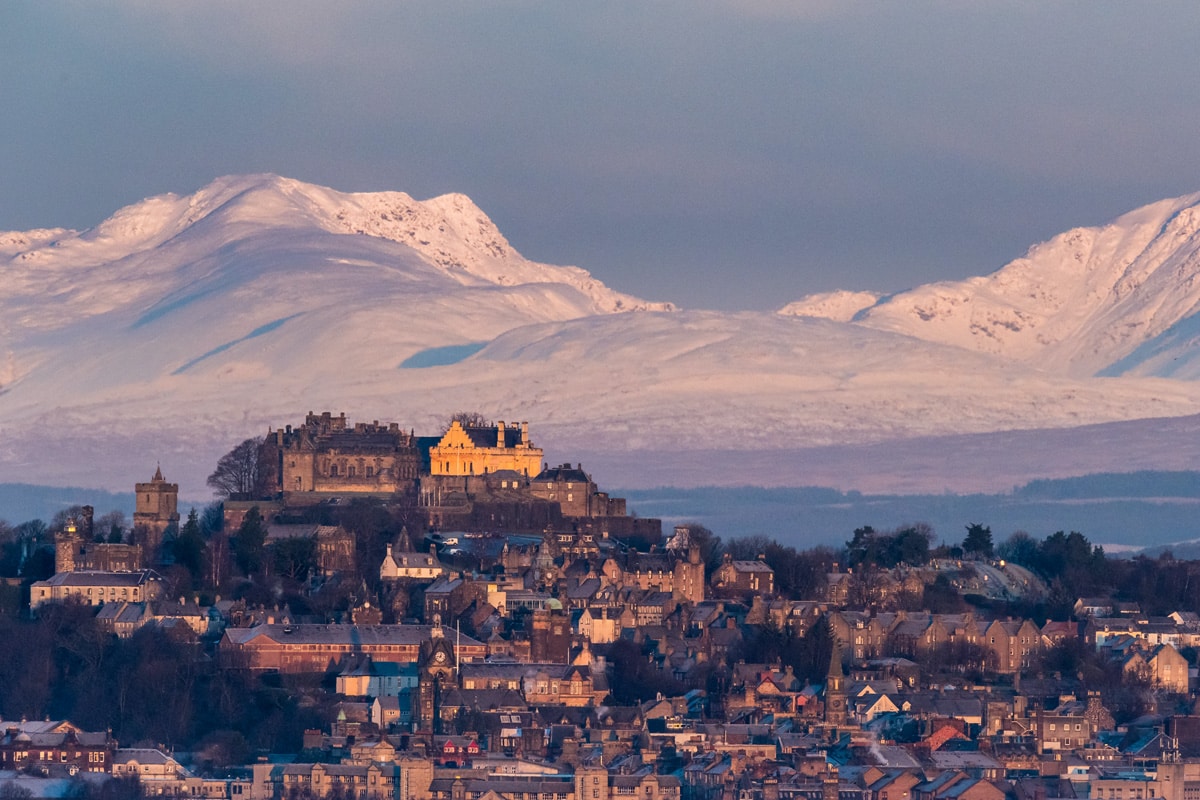
Across eight postcodes with data, price per square foot runs from £180 in FK10 (Alloa) to £275 in FK15 (Dunblane), a spread of just over 1.5 times. Price per square foot strips out the size of the home and shows what a buyer pays for the space itself, which is useful when the same council area holds both city flats and large village houses. The four rural postcodes in the north and west have too few transactions to produce a reliable figure.
| Rank | Area | Price Per Sq Ft |
|---|---|---|
| 1 | FK10 (Alloa) | £180 |
| 2 | FK7 (Bannockburn) | £214 |
| 3 | FK16 (Doune) | £219 |
| 4 | FK17 (Callander) | £232 |
| 5 | FK8 (City Centre) | £237 |
| 6 | G63 (Balfron, Drymen) | £249 |
| 7 | FK9 (Bridge of Allan, University) | £269 |
| 8 | FK15 (Dunblane) | £275 |
| - | FK18 (Aberfoyle) | Not enough data |
| - | FK19 (Lochearnhead) | Not enough data |
| - | FK20 (Crianlarich) | Not enough data |
| - | FK21 (Killin) | Not enough data |
FK10 (Alloa) at £180 per square foot is the cheapest space in the area. Alloa sits just east of the city and skews toward more affordable terraces and ex-council stock, so the low per-foot figure lines up with its position as one of the two cheapest postcodes for asking prices and deposits. It is the most space-for-money entry in Stirling.
FK9 (Bridge of Allan) and FK15 (Dunblane) form the premium tier at £269 to £275 per square foot. These are the desirable commuter villages with period villas and modern family homes, where buyers pay up for school catchments and village character. The 53% per-foot premium over FK10 reflects two genuinely different housing markets inside one council area.
The middle band of FK7, FK16, FK17 and FK8, between £214 and £237, is the working core of the market. FK8 (City Centre) at £237 is worth noting because it pairs a mid-range per-foot cost with the city-centre rents that make a flat let work, while FK7 at £214 sits just above the cheapest tier and still carries the area's top yield.
Figures reflect averages across all property types and ages. Individual values depend on condition, location within the postcode, and building age.
For Sale Asking Prices in Stirling
Stirling's asking prices run from £229,943 in FK7 (Bannockburn) to £468,793 in G63 (Balfron, Drymen), with seven of the twelve postcodes carrying enough listing data to produce a figure. Scotland's offers-over system means many homes sell above the marketed price, so the relationship between asking and final price works differently from England. The five rural postcodes have too few current listings to average.
| Rank | Area | Asking Price |
|---|---|---|
| 1 | FK7 (Bannockburn) | £229,943 |
| 2 | FK10 (Alloa) | £232,780 |
| 3 | FK8 (City Centre) | £280,420 |
| 4 | FK9 (Bridge of Allan, University) | £303,524 |
| 5 | FK17 (Callander) | £325,714 |
| 6 | FK15 (Dunblane) | £374,548 |
| 7 | G63 (Balfron, Drymen) | £468,793 |
| - | FK16 (Doune) | Not enough data |
| - | FK18 (Aberfoyle) | Not enough data |
| - | FK19 (Lochearnhead) | Not enough data |
| - | FK20 (Crianlarich) | Not enough data |
| - | FK21 (Killin) | Not enough data |
A clear gap separates the affordable core from the premium villages. FK7, FK10 and FK8 cluster between £229,943 and £280,420, which is Stirling's investable core, while FK9, FK17, FK15 and G63 run from £303,524 to £468,793 on owner-occupier and commuter demand rather than rental fundamentals. The cheapest and most expensive postcode sit more than £238,000 apart.
FK7 (Bannockburn) at £229,943 is the most affordable way in, and it also has the deepest market. FK7 records 39 sales a month, second only to neighbouring FK10, so a landlord buying there is in the busiest part of the area rather than a thin one. That combination of the lowest asking price and high turnover is what makes FK7 the natural starting point for a yield-focused buyer.
The mean asking price across the seven postcodes with data is £316,532, a figure pulled upward by the three village postcodes above £300,000. The mean of the three core postcodes (FK7, FK10, FK8) is closer to £248,000, which is a truer reflection of where a buy-to-let purchase in Stirling actually starts.
House Price Growth in Stirling
FK17 (Callander) leads Stirling's five-year growth at 64.9%, well ahead of FK7 (Bannockburn) at 30.6% and FK10 (Alloa) at 26.7%. Five-year figures matter most for buy-to-let because they smooth out the noise that a handful of transactions can create in a small postcode over a single year. FK17 is a thin market, so its headline figure should be read with that in mind, while FK7 and FK10 are the deep, investable postcodes where the growth is also liquid.
| Area | 1 Year | 3 Years | 5 Years |
|---|---|---|---|
| FK17 (Callander) | 26.8% | 20.0% | 64.9% |
| FK7 (Bannockburn) | 7.0% | 16.8% | 30.6% |
| FK10 (Alloa) | 5.2% | 19.4% | 26.7% |
| G63 (Balfron, Drymen) | 11.4% | 7.6% | 19.9% |
| FK8 (City Centre) | 5.4% | 21.5% | 17.7% |
| FK9 (Bridge of Allan, University) | -4.0% | 14.4% | 8.2% |
| FK15 (Dunblane) | -2.7% | 12.1% | 3.8% |
| FK16 (Doune) | Not enough data | Not enough data | Not enough data |
| FK18 (Aberfoyle) | Not enough data | Not enough data | Not enough data |
| FK19 (Lochearnhead) | Not enough data | Not enough data | Not enough data |
| FK20 (Crianlarich) | Not enough data | Not enough data | Not enough data |
| FK21 (Killin) | Not enough data | Not enough data | Not enough data |
Among the deep postcodes, the affordable ones grew fastest. FK7 (30.6%) and FK10 (26.7%) delivered the strongest five-year appreciation outside the thin FK17 market, and they are also the two cheapest postcodes by asking price. That pattern of growth from a low base is the catch-up dynamic, where investors and first-time buyers priced out of the villages move into the affordable core.
FK8 (City Centre) shows a front-loaded pattern: 21.5% over three years but 17.7% over five. Most of FK8's recent gain happened in a concentrated burst around 2022 to 2024, with the city centre benefiting from the university returning to full capacity, and the 5.4% one-year reading shows that burst settling into steadier growth.
FK15 (Dunblane) at 3.8% over five years has barely moved, and FK9 (Bridge of Allan) at 8.2% is not far ahead. Both premium villages are already fully priced, and both posted small one-year falls of -2.7% and -4.0%, a sign that the top end of the Stirling market is the part that has cooled most.
Monthly Property Sales in Stirling
Between 2 and 41 properties sell each month across the seven Stirling postcodes with transaction data, and FK10 (Alloa) and FK7 (Bannockburn) together account for the bulk of it. Transaction volume is the question of whether you can sell when you need to, and in Stirling the answer depends heavily on the postcode. The affordable core trades actively; the rural postcodes barely trade at all.
| Area | Sales Per Month | Turnover | Asking Price |
|---|---|---|---|
| FK10 (Alloa) | 41 | 62% | £232,780 |
| FK7 (Bannockburn) | 39 | 63% | £229,943 |
| FK8 (City Centre) | 27 | 61% | £280,420 |
| FK9 (Bridge of Allan, University) | 17 | 119% | £303,524 |
| G63 (Balfron, Drymen) | 12 | 24% | £468,793 |
| FK15 (Dunblane) | 11 | 58% | £374,548 |
| FK17 (Callander) | 8 | 64% | £325,714 |
| FK16 (Doune) | Not enough data | Not enough data | Not enough data |
| FK18 (Aberfoyle) | Not enough data | Not enough data | Not enough data |
| FK19 (Lochearnhead) | Not enough data | Not enough data | Not enough data |
| FK20 (Crianlarich) | Not enough data | Not enough data | Not enough data |
| FK21 (Killin) | Not enough data | Not enough data | Not enough data |
FK10 (Alloa) and FK7 (Bannockburn) are the deepest markets at 41 and 39 sales a month. Both turn over around 62% to 63% of listed stock, which means properties move at a healthy pace rather than sitting. For an investor planning an eventual exit, these two postcodes offer the strongest liquidity in the area, and they happen to be the two cheapest to buy into.
G63 (Balfron, Drymen) at 12 sales a month and 24% turnover is the thinnest market among the priced postcodes. Low volume in a £468,793 postcode means few buyers competing for stock and a slower sale if you need one. FK17 (Callander) at 8 sales a month is effectively a micro-market, which is worth holding against its eye-catching growth figure.
FK9 (Bridge of Allan) shows a 119% turnover rate on just 17 sales a month. With so few homes listed in a sought-after university village, the handful that do come up sell quickly, which pushes the turnover figure above 100% without the market actually being large. For a landlord that means buying in FK9 can take patience, and selling later may too, where FK10 and FK7 at 41 and 39 sales a month give you a steady stream of buyers either way.
Stirling Rental Market Analysis
For investors weighing up whether rental property is a worthwhile investment in Stirling, the figures below set out average monthly rents and gross yields across the postcodes where the rental market is deep enough to measure.
Rental data covers four of the twelve postcodes: FK7 (Bannockburn), FK8 (City Centre), FK9 (Bridge of Allan) and FK10 (Alloa). Monthly rents run from £807 in FK10 to £1,137 in FK9, and gross yields from 4.2% to 5.2%. The other eight postcodes do not have enough current rental listings to average, which tells you most of Stirling's lettings activity is concentrated in the city and its immediate edge. If you are building a property portfolio in Scotland, this is a compact rental market rather than a sprawling one.
Average Rent & Gross Rental Yields in Stirling
FK7 (Bannockburn) delivers Stirling's highest gross yield at 5.2%, where rents of £987 a month meet the area's lowest asking price of £229,943. Gross yield is calculated from the average asking price and average monthly rent for each postcode, before void periods, maintenance, management or mortgage costs. The spread across the four postcodes with data is a single percentage point, a narrow band that reflects how tightly Stirling's rental market sits around the city.
| Area | Average Monthly Rent | Asking Price | Gross Yield |
|---|---|---|---|
| FK7 (Bannockburn) | £987 | £229,943 | 5.2% |
| FK8 (City Centre) | £1,085 | £280,420 | 4.6% |
| FK9 (Bridge of Allan, University) | £1,137 | £303,524 | 4.5% |
| FK10 (Alloa) | £807 | £232,780 | 4.2% |
| FK15 (Dunblane) | Not enough data | £374,548 | Not enough data |
| FK16 (Doune) | Not enough data | Not enough data | Not enough data |
| FK17 (Callander) | Not enough data | £325,714 | Not enough data |
| FK18 (Aberfoyle) | Not enough data | Not enough data | Not enough data |
| FK19 (Lochearnhead) | Not enough data | Not enough data | Not enough data |
| FK20 (Crianlarich) | Not enough data | Not enough data | Not enough data |
| FK21 (Killin) | Not enough data | Not enough data | Not enough data |
| G63 (Balfron, Drymen) | Not enough data | £468,793 | Not enough data |
FK7 (Bannockburn) at 5.2% is the one postcode where the lowest asking price and the best income line up. Rents of £987 a month on a £229,943 asking price give the top yield in the area. FK7 has also grown faster over five years than any of the other deep postcodes, so an investor there is not trading income for a flat market. That pairing of top yield and strong liquid growth is unusual, since the two normally pull against each other.
FK8 (City Centre) at 4.6% earns the highest non-village rent at £1,085 a month. The city centre is where student, young-professional and short-let demand overlap, and the rent reflects that, though the higher £280,420 asking price trims the yield below FK7's. FK9 (Bridge of Allan) tops the rent table at £1,137 on the back of the university, but its £303,524 price pulls the yield down to 4.5%.
FK10 (Alloa) at 4.2% is the lowest yield but the smallest cheque to write up front. Rents of £807 a month are modest, yet the £232,780 asking price and a 30% deposit of £69,834 keep the gross return above the four-per-cent mark. For a buyer who values a low purchase price and a deep, active market over headline yield, FK10 is the practical place to start.
Gross Rental Yield by Postcode
Is Stirling Rent High?
Across the four Stirling postcodes with rental data, rent takes between 22.2% and 31.3% of the local median gross monthly salary of £3,630. Only FK9 (Bridge of Allan) edges past the 30% mark that is usually treated as the point where rent starts to stretch a household, and that postcode is driven by university demand. Stirling's above-average wages keep the rest of the market comfortably below it.
The median gross weekly salary in Stirling is £837.70, which works out at £3,630 a month or £43,559 a year. That runs ahead of the Scotland median of £767.40 a week and the Great Britain median of £752.40. The figures come from the Nomis Labour Market Profile (ASHE 2025).
| Rank | Area | Rent as % of Income |
|---|---|---|
| 1 | FK9 (Bridge of Allan, University) | 31.3% |
| 2 | FK8 (City Centre) | 29.9% |
| 3 | FK7 (Bannockburn) | 27.2% |
| 4 | FK10 (Alloa) | 22.2% |
| - | FK15 (Dunblane) | Not enough data |
| - | FK16 (Doune) | Not enough data |
| - | FK17 (Callander) | Not enough data |
| - | FK18 (Aberfoyle) | Not enough data |
| - | FK19 (Lochearnhead) | Not enough data |
| - | FK20 (Crianlarich) | Not enough data |
| - | FK21 (Killin) | Not enough data |
| - | G63 (Balfron, Drymen) | Not enough data |
FK9 (Bridge of Allan) at 31.3% is the only postcode above the affordability threshold. City and university rents of £1,137 a month are the highest in the area, but the tenant pool there leans heavily on students, who are often funded outside a single local salary, so the headline ratio overstates the pressure on the typical renter.
FK10 (Alloa) at 22.2% is the most affordable rental market in the area. That is a low ratio for any Scottish town and it carries a practical benefit for a landlord, since tenants paying just over a fifth of gross income on rent have real headroom before arrears become a risk.
FK7 (Bannockburn) at 27.2% sits in the comfortable middle. The ratio is below the 30% mark while still generating the area's top yield, so FK7's 5.2% return is being earned without leaning on tenants who are already stretched. That balance is what makes the income there look durable rather than borrowed from future affordability.
How Long Properties Take to Sell in Stirling
The deep Stirling postcodes turn over roughly 60% of their listed stock, so an investor in FK7, FK8 or FK10 is buying into a market that keeps moving rather than one that stalls. Turnover, the share of listed homes that change hands, is the cleanest read on selling speed in a market where days-on-market data is thin, and in Stirling it splits along the same line as everything else.
FK10 (Alloa) at 62%, FK7 (Bannockburn) at 63% and FK8 (City Centre) at 61% all sit in a healthy band, and together with their high monthly sale counts they make up the part of the area where a landlord can buy and later sell without waiting on a thin pool of buyers. The village postcodes are slower, with G63 (Balfron, Drymen) turning over just 24% of stock on 12 sales a month, the sign of a small market where a sale can take longer to find a buyer. For a buy-to-let investor, the exit is as much a part of the case as the yield, and on that measure the affordable core is the easier place to be.
Buy-to-Let Considerations
Are Stirling House Prices High? Price-to-Earnings Ratios
A property in Stirling costs between 5.3 and 10.8 times the local median annual salary of £43,559, and the two cheapest postcodes both come in below the UK benchmark of 6.9x. The price-to-earnings ratio sets a postcode's average asking price against the local median salary. The UK benchmark is 6.9x (the UK average sold price of £268,132 against Great Britain's £39,125 median salary), and Scotland's is lower at 4.7x. The figures come from the Nomis Labour Market Profile for Stirling.
| Rank | Area | Price-to-Earnings Ratio |
|---|---|---|
| 1 | FK7 (Bannockburn) | 5.3x |
| 2 | FK10 (Alloa) | 5.3x |
| 3 | FK8 (City Centre) | 6.4x |
| 4 | FK9 (Bridge of Allan, University) | 7.0x |
| 5 | FK17 (Callander) | 7.5x |
| 6 | FK15 (Dunblane) | 8.6x |
| 7 | G63 (Balfron, Drymen) | 10.8x |
| - | FK16 (Doune) | Not enough data |
| - | FK18 (Aberfoyle) | Not enough data |
| - | FK19 (Lochearnhead) | Not enough data |
| - | FK20 (Crianlarich) | Not enough data |
| - | FK21 (Killin) | Not enough data |
FK7 and FK10 both sit at 5.3x, below the UK benchmark and only just above Scotland's 4.7x. Stirling's prices look high by Scottish standards, but the area's wages do the heavy lifting on affordability. A £229,943 home in FK7 against a £43,559 median salary is a good deal more accessible than the same price would be in a lower-wage town, which is part of why the core postcodes sustain steady tenant demand.
FK9, FK17, FK15 and G63 run from 7.0x to 10.8x, firmly in premium territory. These ratios are set by commuter and lifestyle buyers earning Edinburgh and Glasgow salaries rather than Stirling's local median, so the headline figure overstates how stretched the actual buyers are. For a yield-focused investor, though, the ratios confirm what the rest of the data shows: the villages are owner-occupier markets, not rental ones.
For investors comparing across Scotland, Stirling's core postcodes land between Aberdeen, which pairs lower prices with lower wages, and the capital, where prices climb faster than incomes. The mix of moderate prices and above-average earnings is the affordability story that sets Stirling apart from the higher-yielding cities.
Deposit Requirements in Stirling
A 30% deposit on a buy-to-let in Stirling ranges from £68,983 in FK7 (Bannockburn) to £140,638 in G63 (Balfron, Drymen). The £71,655 gap between the cheapest and most expensive postcode is more than a whole second deposit in FK7. The table uses a 30% deposit to reflect the products and rates available to buy-to-let buyers at higher loan-to-value ratios.
On top of the deposit, Scottish buyers pay Land and Buildings Transaction Tax rather than stamp duty, plus the Additional Dwelling Supplement on a second property, both of which add to the running costs of buy-to-let. The tax detail is set out below the table.
| Rank | Area | 30% Deposit Required |
|---|---|---|
| 1 | FK7 (Bannockburn) | £68,983 |
| 2 | FK10 (Alloa) | £69,834 |
| 3 | FK8 (City Centre) | £84,126 |
| 4 | FK9 (Bridge of Allan, University) | £91,057 |
| 5 | FK17 (Callander) | £97,714 |
| 6 | FK15 (Dunblane) | £112,364 |
| 7 | G63 (Balfron, Drymen) | £140,638 |
| - | FK16 (Doune) | Not enough data |
| - | FK18 (Aberfoyle) | Not enough data |
| - | FK19 (Lochearnhead) | Not enough data |
| - | FK20 (Crianlarich) | Not enough data |
| - | FK21 (Killin) | Not enough data |
FK7 (Bannockburn) is the cheapest way into Stirling at a £68,983 deposit, and it is also the highest-yielding postcode, so the lowest up-front cost and the best income land in the same place. FK10 (Alloa) is barely £851 more at £69,834, which for most budgets is a coin-toss between the two on capital alone. Stepping up to FK8 (City Centre) adds around £14,000 for the higher city-centre rents, while the four village postcodes from FK9 upward run from £91,057 to £140,638.
On the tax side, Land and Buildings Transaction Tax (Revenue Scotland's replacement for stamp duty since 2015) is charged in bands: nothing up to £145,000, 2% to £250,000, 5% to £325,000, 10% to £750,000 and 12% above that. A buy-to-let or second home also pays the Additional Dwelling Supplement, currently 8% of the whole price, on top. On an FK7 home at £229,943 that supplement alone is over £18,000, so it is a material part of the capital you need beyond the deposit. Estimate your bill with our Scotland LBTT calculator, then check the current rates with Revenue Scotland before you budget, as the bands and the supplement change. Our guide to investment property with no deposit covers low-deposit structures across the UK.
What the Stirling Data Tells Buy-to-Let Investors
In Stirling the cheapest postcode is also the highest-yielding, and it is a houses-and-edge-of-city market rather than a flat one. FK7 (Bannockburn) has the top yield at 5.2% and the lowest asking price for an investment property in Stirling at £229,943, where a 30% deposit is £68,983 and rents run at £987 a month. Its price-to-earnings ratio of 5.3x sits below the UK benchmark, and the five-year growth there has been the strongest of the deep postcodes, so the income and the capital case point the same way.
FK10 (Alloa) sits right alongside it: a £69,834 deposit, the same 5.3x affordability and the deepest market in the area at 41 sales a month, though its 4.2% yield is the lowest of the four. FK8 (City Centre) is the third core postcode, with the highest non-village rent at £1,085 a month and a 4.6% yield, and it is where the student and young-professional demand concentrates. These three are where the income, the affordability and the liquidity all sit.
At the premium end, FK9 (Bridge of Allan), FK15 (Dunblane) and G63 (Balfron, Drymen) ask £303,524 to £468,793 and carry little or no usable rental data. They are commuter and lifestyle markets where the case is capital and tenant quality rather than yield, and buyers chasing a below-asking entry into them often work through off-market property in Stirling rather than the open listings.
Stirling reads differently from the higher-yielding Scottish cities. Glasgow and Aberdeen offer top yields near 9% on far lower prices, but Stirling trades that for above-average wages, a university tenant base and rent-to-income ratios that stay below a third of local pay across the core. For a Scotland investor it is the affordability-and-stability case in a smaller market, not the yield case.
How Stirling Compares
Stirling's mean asking price of £316,532 is the second-highest of six Scottish cities compared here, behind only Edinburgh, while its 5.2% top yield is the lowest in the group. The table places Stirling alongside five other Scottish locations, each with a different investor profile. The mean asking price and mean monthly rent are simple averages across all postcodes with data; the top gross yield is the single highest postcode yield in each location.
| Location | Mean Asking Price | Mean Monthly Rent | Mean Gross Yield | Top Yield (postcode) |
|---|---|---|---|---|
| Aberdeen | £165,622 | £782 | 5.7% | 9.3% (AB11) |
| Glasgow | £183,315 | £1,078 | 7.1% | 10.8% (G2) |
| Dundee | £205,224 | £891 | 5.2% | 7.2% (DD1) |
| Perth | £246,979 | £777 | 3.8% | 5.0% (PH1) |
| Stirling | £316,532 | £1,004 | 3.8% | 5.2% (FK7) |
| Edinburgh | £337,923 | £1,394 | 5.0% | 6.9% (EH11) |
Stirling's £316,532 mean asking price is pulled upward by the three village postcodes above £300,000; the core of FK7, FK10 and FK8 sits closer to £248,000, much nearer Dundee and Perth. The wider story is that the two highest-priced markets, Stirling and Edinburgh, sit at the bottom of the yield table, while the budget cities carry the income. Stirling's case is not the headline yield but the affordability ratios its wages produce and the steadiness of the core.
For investors prioritising income, Glasgow at 10.8% and Aberdeen at 9.3% deliver the highest top-line yields in Scotland on the lowest prices, with Dundee at 7.2% in between. Stirling competes on a different basis: above-average local pay, a university tenant base and a compact core where the cheapest postcode is also the highest-yielding. For a data-driven view across the whole country, see our guide to the highest-yielding areas.
Frequently Asked Questions
What are the best areas in Stirling for property investment?
It comes down to whether you want income or capital, and in Stirling the income case is unusually clean. FK7 (Bannockburn) has the lowest asking price at £229,943 and the highest yield at 5.2%, and it has grown faster over five years than any of the other deep postcodes, so the price, the yield and the growth all point the same way.
FK10 (Alloa) is the lowest-capital partner to it, with the deepest market in the area at 41 sales a month, while FK8 (City Centre) earns the highest non-village rent at £1,085 a month on a 4.6% yield. The four village postcodes from FK9 upward are owner-occupier markets with little rental data, better suited to a buyer chasing capital growth than rental income.
What is the average house price in Stirling?
The average sold price across the Stirling council area is £225,892 on the UK House Price Index, 21.1% above the Scotland average of £186,582 as of March 2026. By type, detached homes average £421,111, semi-detached £246,021, terraced £205,753 and flats £138,636, so the houses run 14.6% to 24.3% above the Scotland figure while flats are only 6.2% higher. Asking prices by postcode range from £229,943 in FK7 (Bannockburn) up to £468,793 in G63 (Balfron, Drymen), with a mean across the seven priced postcodes of £316,532.
Prices have risen 113.7% since the series began in January 2004, and the most recent annual change is 1.8% after a dip from the July 2025 high of £233,303.
How does Stirling compare to Edinburgh and Glasgow for buy-to-let?
They sit at different ends of the Scottish market. Glasgow is the high-yield, low-price end, with a top gross yield near 8.9% and a mean asking price of £183,315, roughly 42% below Stirling's £316,532, so an income investor has far more to work with on a smaller budget. Edinburgh is closer to Stirling on price but stronger on income, with a 6.9% top yield and rents averaging £1,394 a month against Stirling's £1,004.
Stirling's argument is affordability against local wages: its £43,559 median salary holds price-to-earnings ratios at 5.3x in the two cheapest postcodes, and the cheapest postcode is also the highest-yielding, which is not true in either city. The trade-off is depth, since Edinburgh and Glasgow have more postcodes, more transactions and more rental data points to choose from.
Is Stirling a good place to invest in buy-to-let?
Stirling's case is built on affordability rather than a high headline yield. The local median salary of £43,559 runs 9.2% above the Scotland figure, which holds price-to-earnings ratios at 5.3x in the cheapest postcodes and keeps rent below a third of local income across the core. A rent-to-income ratio under a third reflects demand resting on local wages rather than affordability being stretched to reach it.
Top-line yield is not where Stirling competes: FK7's 5.2% sits well below the near-9% on offer in Glasgow or Aberdeen. The other features of the market are a university tenant base of around 17,000 students, an investment pipeline led by the 3,000-home Durieshill village, and a deep, liquid core in FK7 and FK10 where homes keep changing hands. For a wider view, browse our guide to the best places to invest in buy-to-let.
What type of property is most common in Stirling, and can I buy a flat to rent out?
Stirling is a houses market more than a flats one, the opposite of Edinburgh or Glasgow. Detached and semi-detached houses dominate the council area, averaging £421,111 and £246,021, and that house-heavy mix is why the average sold price sits 21.1% above Scotland even though flats are cheap. Flats average just £138,636, only 6.2% above the Scotland figure and the narrowest premium of any type.
That makes flats the lowest-capital route in for a landlord, though there are fewer of them than in the bigger cities. The stock concentrates in and around the FK8 city centre, where student and young-professional demand keeps lettings active and FK8 earns £1,085 a month in rent, with little large-scale apartment stock beyond it. If a below-asking entry is the goal, it is worth looking through below market value properties alongside the open listings.
Does the University of Stirling affect rental demand?
Yes, and it is the single biggest driver of lettings demand in the area. Around 17,000 students attend the campus in FK9 (Bridge of Allan), and that demand spreads into both FK9 and FK8 (City Centre), which together hold most of Stirling's rental market. FK9 charges the highest rent in the area at £1,137 a month, though its higher purchase price keeps the yield at 4.5%, while FK8 pairs strong rents with a slightly better 4.6% yield.
Student lets come with summer voids and more hands-on management than a standard tenancy, and Scotland's Private Residential Tenancy rules apply to most private lets near the university. For the purpose-built end of the market, see our guide to student property investment.
How do property purchase taxes work in Stirling?
Scotland does not use stamp duty. The purchase tax is Land and Buildings Transaction Tax, run by Revenue Scotland, charged in bands: 0% up to £145,000, 2% to £250,000, 5% to £325,000, 10% to £750,000 and 12% above. A buy-to-let or any additional home also pays the Additional Dwelling Supplement, currently 8% of the full purchase price, on top of the banded tax. On an FK7 home at £229,943 the supplement alone is over £18,000.
The buying process differs too: the seller provides a Home Report up front, properties are often marketed at "offers over", and the deal becomes binding at the conclusion of missives through a solicitor rather than an English-style exchange. Estimate the bill with our Scotland LBTT calculator and check the current rates with Revenue Scotland before budgeting.
How do I buy an investment property in Stirling?
Start by deciding whether you are buying for income or growth, because that points you at a different part of the area. FK7 (Bannockburn) has the lowest asking price at £229,943 and the highest yield at 5.2%, with FK10 (Alloa) close behind on capital and FK8 (City Centre) carrying the strongest city-centre rents. Budget for a 30% deposit, which runs from £68,983 in FK7 to £140,638 in G63, plus Land and Buildings Transaction Tax and the 8% Additional Dwelling Supplement on top.
Beyond what is listed openly, experienced investors often buy below asking through off-market property in Stirling and BMV property. To see what is available now, browse investment property in Stirling or buy-to-let investments for sale.
Ready to buy property?
Access off-market investment properties with an average 8%+ annual gross yield (beating the UK's typical 3-5%).
Get property alerts