
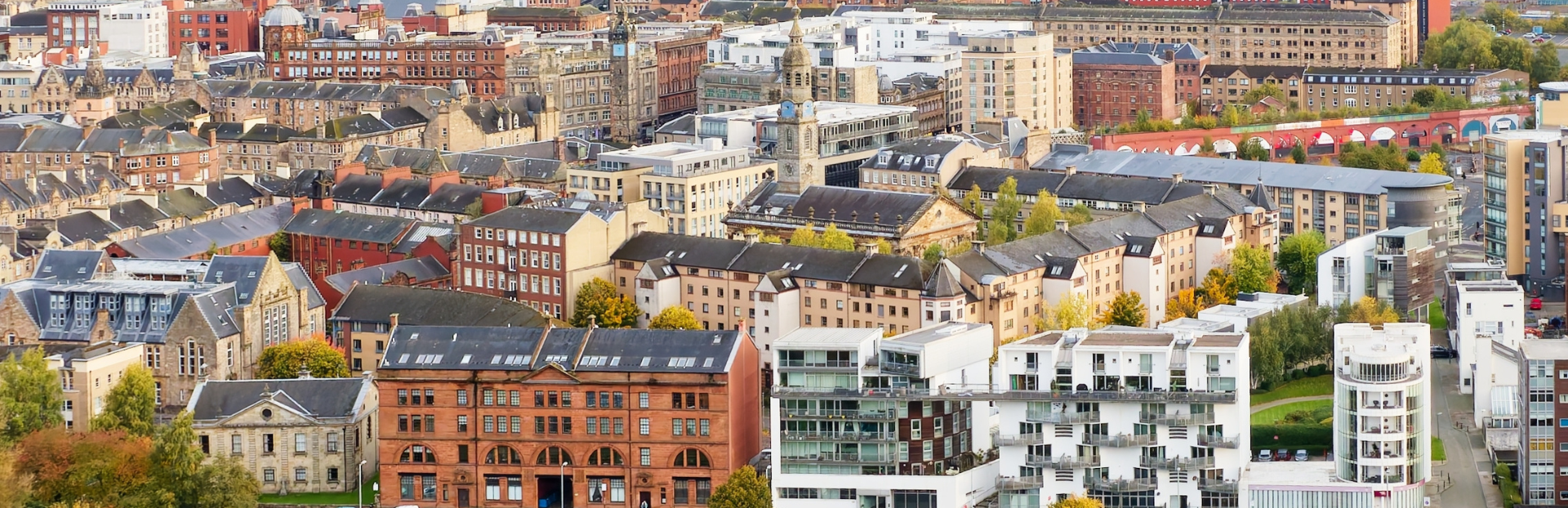
Glasgow is Scotland's largest city. The average sold price across the City of Glasgow is £184,281 on the UK House Price Index, 1.2% below the Scotland average of £186,582, yet every individual house type sells well above the national figure. A detached house in Glasgow sells for £471,683, which is 39.2% above Scotland's £338,748, and semi-detached and terraced homes carry premiums above 30%. The reason the headline still lands below the national average is the mix: Glasgow sells far more flats than houses, and at £155,243 the city's flats are the cheapest type. That single fact, a city of house-priced houses wrapped around a flat-led market, is what makes Glasgow read as Scotland's value city even though its individual houses cost more than the country average.
For an investor, the income case sits in those flats. The cheapest way into the city is G21 (Springburn, Balornock) at an average asking price of £104,611, the lowest of the 30 Glasgow postcodes with price data, and the inner-city flat postcodes around the centre pair low asking prices with the highest yields anywhere in our Scottish coverage. G2 (City Centre, Blythswood) tops the city at a 10.8% gross yield, and a cluster of inner postcodes hold 7.6% to 8.9%. The most expensive postcode, G12 (West End, Hillhead), asks £309,476 and returns 5.7%. Across the council area the population reached 620,700 at the 2022 census, up 4.6% on 2011, and the median local salary of £38,125 sits a little below the Scotland and Great Britain figures.
This guide covers the City of Glasgow council area (ONS code S12000049) across 32 postcodes from G1 to PA4. Glasgow is Scotland's largest city and its commercial capital, home to four universities and a tenant base spread across financial services, healthcare and the creative industries. Buying here works differently from England: purchase tax is Land and Buildings Transaction Tax rather than stamp duty, and the legal process runs on the Home Report and the conclusion of missives. Investors weighing up Scotland may also look at Edinburgh buy-to-let for a higher-price, lower-yield alternative.
Article updated: July 2026
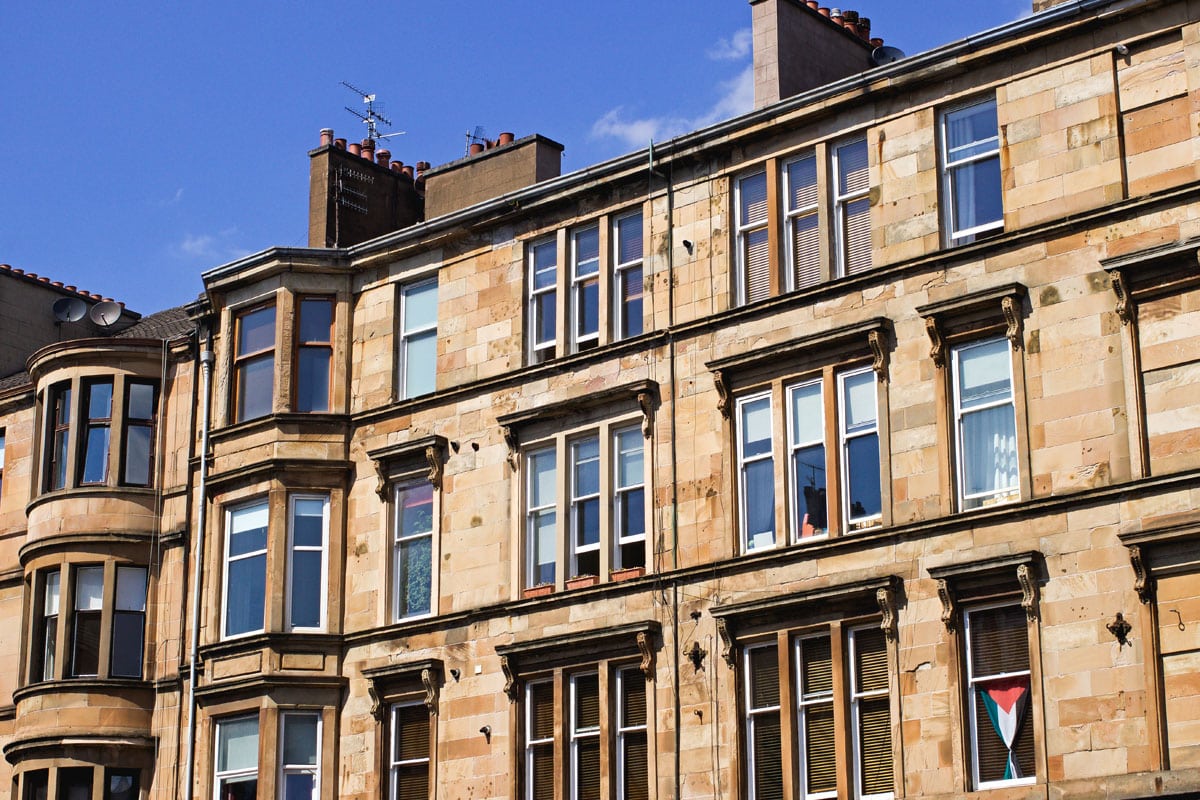
Why Invest in Glasgow?
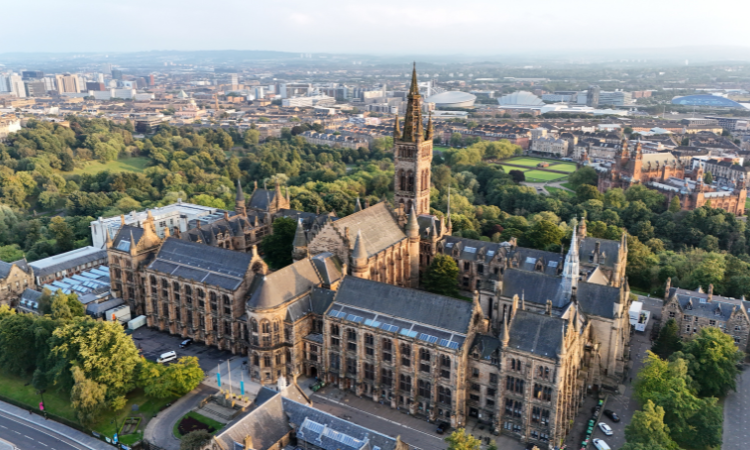
The City of Glasgow grew its population 4.6% between the 2011 and 2022 censuses, from 593,245 to 620,700 residents, around 27,000 more people in eleven years. As Scotland's largest city and commercial capital, Glasgow draws workers across financial services, healthcare, higher education and a digital and creative sector that has grown on the back of the city's media and tech base. Four universities sit inside or on the edge of the council area, led by the University of Glasgow, a Russell Group institution, and the University of Strathclyde in the city centre. That student and graduate population feeds a steady flow of renters into the central postcodes year after year.
The median gross annual salary across the City of Glasgow is £38,125, which sits a touch below the Scotland median of £39,905 and the Great Britain median of £39,125. The local employment rate is 67.4%, below the Great Britain average, and the unemployment rate of 6.9% reflects the wider profile of a large post-industrial city. For an investor the read is straightforward: Glasgow is not a high-wage market like Edinburgh, but its scale, its student numbers and its sheer volume of affordable flats give it the deepest pool of tenants in Scotland, which is what carries the income case in the inner postcodes.
Glasgow Economic Summary
- Population (City of Glasgow): 620,700 (2022 Census). Growth of 4.6% from 2011.
- Median annual salary: £38,125 (local), £39,905 (Scotland), £39,125 (Great Britain)
- Employment rate: 67.4% (local)
- Unemployment rate: 6.9% (local)
- Key employment sectors: Financial services, healthcare, higher education, digital and creative industries, retail
Source: ONS Explore Local Statistics, Nomis Labour Market Profile (ASHE 2025)
Regeneration and Investment in Glasgow
More than £1 billion of public funding is flowing into Glasgow through the Glasgow City Region City Deal, with the largest residential scheme, the £250 million Sighthill regeneration, delivering close to 1,000 homes north of the centre. The three schemes below are the ones with confirmed funding and the most direct bearing on where new rental stock and tenant demand will land.
- Sighthill Transformational Regeneration Area (under construction, £250 million): The largest project of its kind in the UK outside London, delivering close to 1,000 new homes in the G21 postcode directly north of the city centre, alongside a completed schools campus, new parkland, and road and pedestrian bridges reconnecting the area across the M8 to the centre. The scheme adds density and rental supply on the edge of Springburn, one of the cheapest postcodes in the city. Updates at Scottish Housing News.
- Avenues Programme (under construction, £123 million plus £21 million Avenues Plus): The biggest change to Glasgow's city centre streets in fifty years, widening pavements and adding segregated cycle routes, trees and rain gardens along streets including Sauchiehall Street, Argyle Street and George Square. Several avenues are complete, more are under construction, and work on Argyle Street East and Stockwell Street begins in early 2026 with George Square completing that August. The programme makes the central G1 and G2 postcodes more liveable, which feeds the city-centre rental market. Updates at Glasgow Chamber of Commerce.
- Clyde Waterfront and West End Innovation Quarter (under construction, £113.9 million): A City Deal project regenerating the river corridor between Govan and Partick, anchored by the Govan-Partick pedestrian and cycle bridge that opened in 2024 and a Health Innovation Hub at Linthouse that opened in 2025. The infrastructure ties together the university, hospital and residential assets along the Clyde in the G51 and G11 postcodes. Updates at Glasgow City Region.
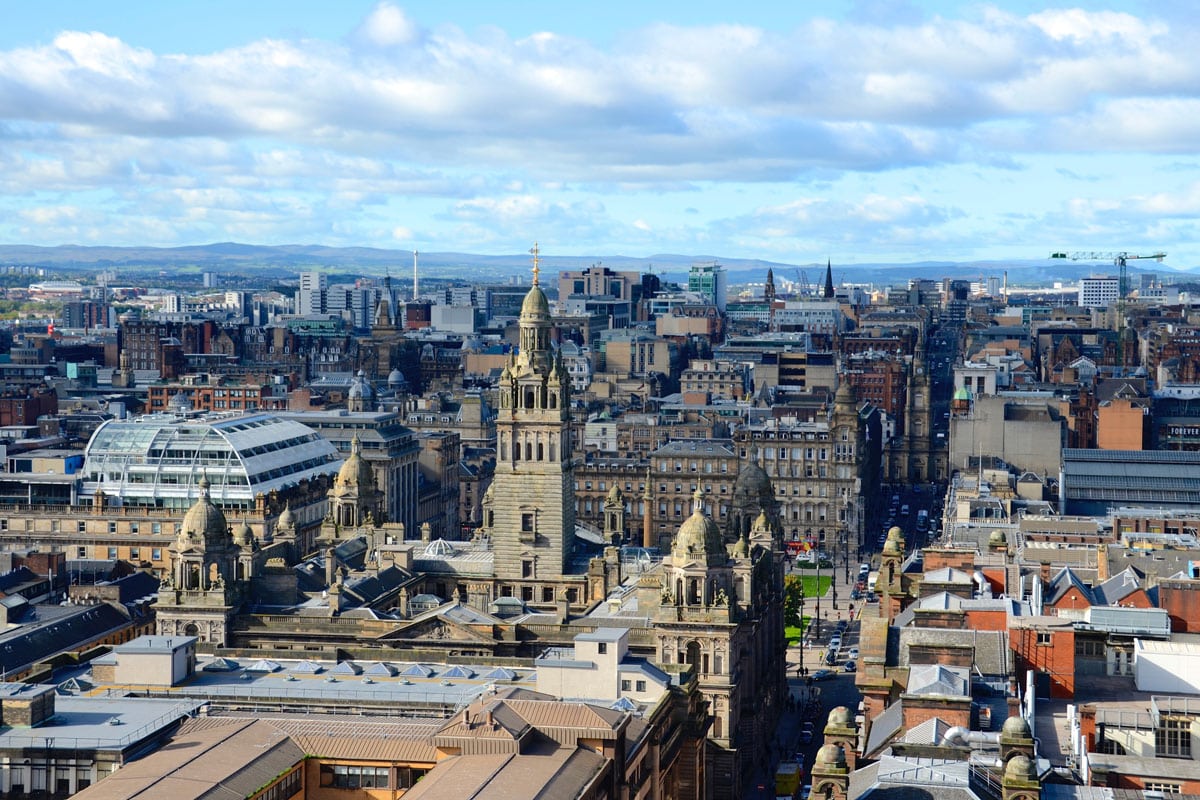
Glasgow Property Market Analysis
Average property prices across the City of Glasgow have risen 130.9% since January 2004, from £79,820 to £184,281. The Registers of Scotland series that feeds the UK House Price Index begins in January 2004 for Scottish council areas, so the cycle below runs from 2004 onward rather than the 1995 start used for English markets. The sections after it drill into current postcode-level data for sold prices, price per square foot, asking prices, growth and transaction volumes.
When was the last house price crash in Glasgow?
Glasgow appears in the UK House Price Index as the City of Glasgow council area, on a monthly series that begins in January 2004. The defining feature of Glasgow's chart is not the crash itself but how long the city took to climb back: an eleven-year round trip to its pre-crash peak, far slower than most of the UK, and the single most important thing a buyer should understand about how this market behaves.
The 2004 to 2007 boom: Glasgow opened the series at £79,820 in January 2004 and climbed fast. By December 2005 the average was £102,849, and by December 2006 it had reached £116,009, a year of 12.8% growth. Prices peaked at £129,076 in July 2007, a rise of 61.7% in three and a half years on the back of cheap credit and rising transaction volumes.
2008 to 2009, the financial crisis: From the July 2007 peak of £129,076, prices turned down hard as mortgage lending tightened. The worst year-on-year reading was -16.9% in February 2009. Glasgow's fall was steeper than Scotland's national low and broadly in line with the UK, with the city's lower-value stock offering little shelter once credit dried up.
2009 to 2013, the long stagnation: This is where Glasgow's story splits from most English cities. Rather than bottoming out in 2009, prices kept drifting lower for four more years. The true trough came in March 2013 at £95,109, a 26.3% fall from the 2007 peak, and the market spent the best part of four years stuck between £95,000 and £110,000. Capital was slow to come back to the city.
2014 to 2017, the slow recovery: Growth returned gently. Prices moved from £100,492 in January 2014 to £115,545 by December 2016, but Glasgow did not reclaim its 2007 peak in this window. The recovery here lagged the rest of the country by years.
2018 to 2019, back to the peak: The pre-crash peak of £129,076 was finally cleared in July 2018 at £130,679, a recovery that took roughly eleven years, one of the longest in the UK dataset. Prices reached £134,597 by December 2019 as the market settled into steady gains.
2020 to 2022, the pandemic surge: Scotland's LBTT holiday, low interest rates and a shift towards more space pushed prices from £134,426 in January 2020 to £170,319 by December 2022, a gain of 26.7% in three years. Glasgow rode the same wave as the rest of the UK, with its affordable flats in heavy demand.
The 2023 rate shock: Higher mortgage rates slowed the market to a near-standstill, but Glasgow gave back almost nothing. The city ended 2023 at £171,613, effectively flat on the year. The correction that hit more leveraged markets barely registered here.
2024 to present: Growth resumed through 2024 and 2025. Prices reached £180,387 by December 2024 and hit an all-time high of £193,357 in November 2025, before easing back to £184,281 by the latest reading in March 2026. That puts the current average 42.8% above the July 2007 pre-crash peak of £129,076, with the dip from the November high a normal seasonal cooling rather than a fresh correction.
Long-term growth summary:
- 5 years (March 2021 to March 2026): 21.8% growth (£151,315 to £184,281)
- 10 years (March 2016 to March 2026): 71.1% growth (£107,681 to £184,281)
- 15 years (March 2011 to March 2026): 79.6% growth (£102,587 to £184,281)
- 20 years (March 2006 to March 2026): 75.6% growth (£104,941 to £184,281)
- Full series (January 2004 to March 2026): 130.9% growth (£79,820 to £184,281)
Glasgow's eleven-year round trip from the 2007 peak back to it is the standout feature of the chart. The four-year stagnation between 2009 and 2013, when the trough arrived long after the initial crash, shows a market that was slow to draw capital back rather than one that simply fell and recovered. An investor who bought at the exact July 2007 top would now be 42.8% ahead on the Land Registry average, but they would have waited until 2018 to see nominal prices break even.
- All property types
- Detached
- Semi-detached
- Terraced
- Flats
- All property types
- Detached
- Semi-detached
- Terraced
- Flats
Sold House Prices in Glasgow
The average sold price across all property types in the City of Glasgow is £184,281, which is 1.2% below the Scotland average of £186,582 as of March 2026. Glasgow sits just under the national figure at the headline level, but that is the property mix talking, not weak values. Glasgow sells a high proportion of flats, the cheapest type, which drags the city-wide average down. Look at it type by type and the picture flips: every house category in Glasgow sells well above the Scotland equivalent.
| Property Type | Glasgow Average | Scotland Average | Difference |
|---|---|---|---|
| Detached houses | £471,683 | £338,748 | +39.2% |
| Semi-detached houses | £287,072 | £214,637 | +33.7% |
| Terraced houses | £236,881 | £175,465 | +35.0% |
| Flats and maisonettes | £155,243 | £130,560 | +18.9% |
| All property types | £184,281 | £186,582 | -1.2% |
Detached houses at £471,683 carry the largest premium, 39.2% above Scotland's £338,748. Glasgow has few detached homes inside the council boundary, and the ones that exist sit in pockets such as Giffnock in G46, Stepps in G33 and the West End villa streets in G12. Scarcity in a large city pushes those values well clear of the national figure, and annual growth of 2.6% points to steady demand at the top of the market.
Semi-detached houses at £287,072 sit 33.7% above Scotland's £214,637. These are the inter-war and post-war family homes of the outer suburbs, in Baillieston (G69), Uddingston (G71) and the Southside around Cathcart (G44). They are the step most family buyers aspire to in the city, and annual growth of 3.8% is the strongest of the four types.
Terraced houses at £236,881 are 35.0% above Scotland's £175,465. In Glasgow the terraced label covers a lot of the city's traditional stone-built rows and newer-build terraces in the suburbs, much of it in steady demand from families who want a garden without the detached price tag. Annual growth of 3.5% keeps terraces moving roughly in step with semis.
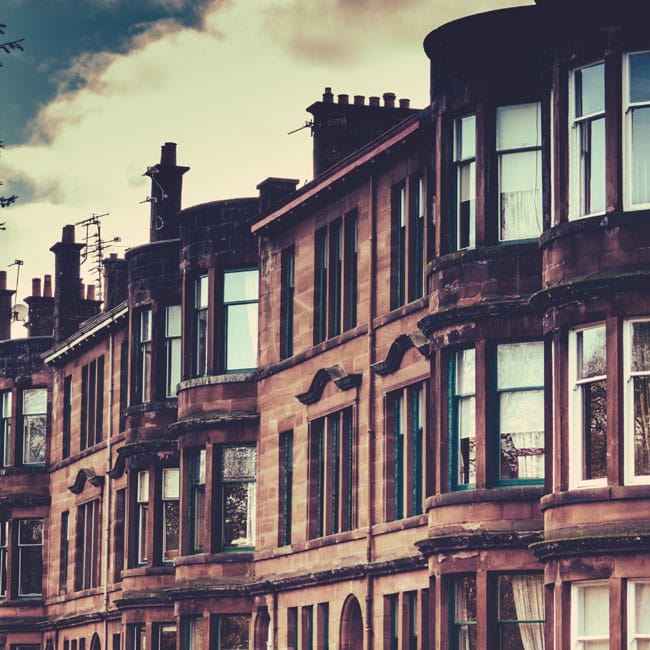
Flats and maisonettes at £155,243 carry the smallest premium at 18.9% above Scotland's £130,560, and this is the engine of Glasgow's buy-to-let market. Sandstone tenement flats dominate the inner suburbs across Govanhill (G42), Dennistoun (G31) and Partick (G11), which is why this is the cheapest type a buyer can target and the type that pulls the city-wide average below the national figure. Annual change of 0.3% shows flats essentially flat while the houses edged up.
Price Per Square Foot in Glasgow
Glasgow's price per square foot runs from £108 in G34 (Easterhouse) to £349 in G12 (West End, Hillhead), a £241 spread across the 32 postcodes with enough transactions to measure. Price per square foot strips out the effect of property size and gives a cleaner read on where built space is most expensive. The West End tops the table on the strength of its preserved Victorian and Edwardian tenements, while the peripheral estates in the north and east sit at the bottom.
| Rank | Area | Price Per Sq Ft |
|---|---|---|
| 1 | G34 (Easterhouse) | £108 |
| 2 | G22 (Possilpark, Milton) | £141 |
| 3 | G21 (Springburn, Balornock) | £147 |
| 4 | G45 (Castlemilk) | £167 |
| 5 | G52 (Cardonald, Hillington) | £174 |
| 6 | G23 (Summerston) | £182 |
| 7 | G32 (Shettleston, Tollcross) | £185 |
| 8 | G51 (Govan, Ibrox, Braehead) | £192 |
| 9 | G15 (Drumchapel) | £202 |
| 10 | G40 (Bridgeton) | £211 |
| 11 | G73 (Rutherglen) | £211 |
| 12 | PA4 (Renfrew) | £213 |
| 13 | G31 (Dennistoun) | £223 |
| 14 | G33 (Stepps, Riddrie) | £228 |
| 15 | G53 (Pollok) | £229 |
| 16 | G13 (Knightswood, Anniesland) | £230 |
| 17 | G69 (Baillieston) | £235 |
| 18 | G71 (Uddingston) | £236 |
| 19 | G44 (Cathcart, Muirend) | £242 |
| 20 | G14 (Scotstoun, Yoker) | £247 |
| 21 | G5 (Gorbals) | £247 |
| 22 | G43 (Pollokshaws, Newlands) | £248 |
| 23 | G20 (Maryhill) | £260 |
| 24 | G42 (Govanhill, Mount Florida) | £261 |
| 25 | G2 (City Centre, Blythswood) | £264 |
| 26 | G1 (City Centre, Merchant City) | £266 |
| 27 | G4 (Cowcaddens, Townhead) | £266 |
| 28 | G41 (Shawlands, Pollokshields) | £289 |
| 29 | G46 (Giffnock, Thornliebank) | £305 |
| 30 | G3 (Finnieston, Kelvingrove) | £313 |
| 31 | G11 (Partick) | £321 |
| 32 | G12 (West End, Hillhead) | £349 |
G34 (Easterhouse) at £108 per square foot is the cheapest place to buy built space in the guide, drawn from a thin run of 25 transactions on the city's eastern edge. G22 (Possilpark) at £141 and G21 (Springburn) at £147 follow close behind, so the lowest per-foot rates all sit on the peripheral estates in the north and east rather than in the city itself.
G12 (West End, Hillhead) at £349 per square foot tops the table, more than three times Easterhouse. The West End's preserved tenements and villa streets around the University command the highest rate in the city, and G11 (Partick) at £321 and G3 (Finnieston, Kelvingrove) at £313 keep it company. When a buyer pays this much per foot in Glasgow they are paying for the address and the architecture, not the size of the home.
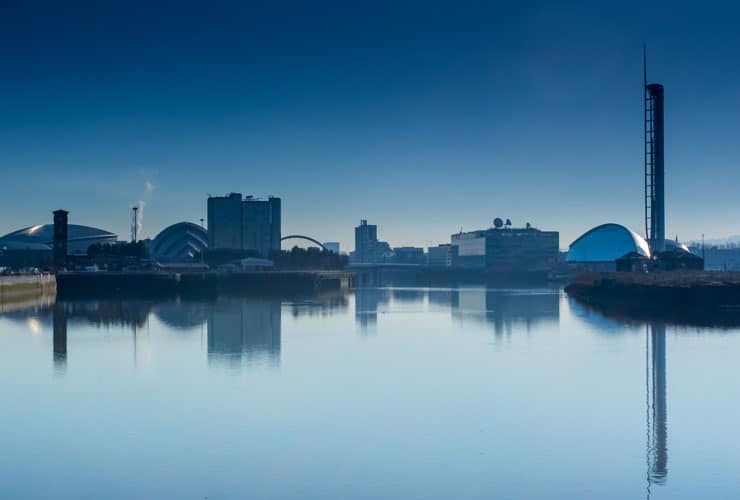
For Sale Asking Prices in Glasgow
Asking prices in Glasgow run from £104,611 in G21 (Springburn, Balornock) to £309,476 in G12 (West End, Hillhead), a gap of 195.8% across the 30 postcodes with data. The mean asking price across those postcodes is £183,315. The table below ranks them from the cheapest entry to the most expensive, with G34 (Easterhouse) and G45 (Castlemilk) carrying too few current listings to publish a reliable figure.
| Rank | Area | Asking Price |
|---|---|---|
| 1 | G21 (Springburn, Balornock) | £104,611 |
| 2 | G22 (Possilpark, Milton) | £109,995 |
| 3 | G23 (Summerston) | £114,000 |
| 4 | G14 (Scotstoun, Yoker) | £122,091 |
| 5 | G52 (Cardonald, Hillington) | £135,337 |
| 6 | G32 (Shettleston, Tollcross) | £136,021 |
| 7 | PA4 (Renfrew) | £142,193 |
| 8 | G2 (City Centre, Blythswood) | £144,322 |
| 9 | G15 (Drumchapel) | £152,000 |
| 10 | G40 (Bridgeton) | £154,109 |
| 11 | G31 (Dennistoun) | £162,125 |
| 12 | G44 (Cathcart, Muirend) | £162,804 |
| 13 | G51 (Govan, Ibrox, Braehead) | £163,000 |
| 14 | G42 (Govanhill, Mount Florida) | £164,568 |
| 15 | G13 (Knightswood, Anniesland) | £167,549 |
| 16 | G73 (Rutherglen) | £169,035 |
| 17 | G5 (Gorbals) | £179,190 |
| 18 | G1 (City Centre, Merchant City) | £180,134 |
| 19 | G20 (Maryhill) | £192,060 |
| 20 | G11 (Partick) | £200,158 |
| 21 | G41 (Shawlands, Pollokshields) | £211,981 |
| 22 | G4 (Cowcaddens, Townhead) | £217,672 |
| 23 | G69 (Baillieston) | £224,298 |
| 24 | G3 (Finnieston, Kelvingrove) | £226,098 |
| 25 | G53 (Pollok) | £226,272 |
| 26 | G43 (Pollokshaws, Newlands) | £228,588 |
| 27 | G71 (Uddingston) | £237,029 |
| 28 | G46 (Giffnock, Thornliebank) | £273,895 |
| 29 | G33 (Stepps, Riddrie) | £288,832 |
| 30 | G12 (West End, Hillhead) | £309,476 |
| — | G34 (Easterhouse) | Not enough data |
| — | G45 (Castlemilk) | Not enough data |
G21 (Springburn, Balornock) at £104,611 is the cheapest way into Glasgow, the only postcode where the average asking price sits below £110,000. Springburn is a dense, tenement-and-ex-council neighbourhood north of the centre, on the edge of the Sighthill regeneration, exactly the kind of stock that suits a first buy-to-let on a small budget. G22 (Possilpark) at £109,995 and G23 (Summerston) at £114,000 keep it company, so the entry-level options cluster tightly in the north of the city.
At the top end, G12 (West End, Hillhead) at £309,476 asks 195.8% more than G21. The West End is prized for its sandstone tenements and proximity to the University of Glasgow, and G33 (Stepps, Riddrie) at £288,832 and G46 (Giffnock, Thornliebank) at £273,895 keep it company at the premium, family-housing end. Between the two extremes sits a thick middle band of Southside and inner-suburb postcodes from £160,000 to £230,000, which is where most of the city's buy-to-let stock trades.
House Price Growth in Glasgow
G15 (Drumchapel) leads Glasgow on five-year growth at 46.9%, with G42 (Govanhill, Mount Florida) close behind at 40.3% and G51 (Govan) at 38.0%. The table below shows growth over one, three and five years for every postcode with data, sorted by the five-year figure. Every measured postcode is positive over five years; the shorter windows are more mixed.
| Area | 1 Year | 3 Years | 5 Years |
|---|---|---|---|
| G15 (Drumchapel) | 8.8% | 26.2% | 46.9% |
| G42 (Govanhill, Mount Florida) | 5.7% | 24.9% | 40.3% |
| G51 (Govan, Ibrox, Braehead) | -1.9% | 15.9% | 38.0% |
| PA4 (Renfrew) | 8.3% | 20.4% | 36.3% |
| G52 (Cardonald, Hillington) | 13.2% | 20.6% | 36.0% |
| G14 (Scotstoun, Yoker) | 3.4% | 17.2% | 34.4% |
| G13 (Knightswood, Anniesland) | 7.8% | 12.6% | 33.9% |
| G44 (Cathcart, Muirend) | 2.5% | 12.4% | 31.6% |
| G46 (Giffnock, Thornliebank) | 15.4% | 42.0% | 31.1% |
| G73 (Rutherglen) | 7.7% | 12.2% | 30.2% |
| G22 (Possilpark, Milton) | 6.1% | 5.8% | 30.2% |
| G32 (Shettleston, Tollcross) | 5.4% | 17.3% | 27.8% |
| G23 (Summerston) | 1.4% | 31.3% | 27.8% |
| G41 (Shawlands, Pollokshields) | 4.2% | 12.8% | 27.0% |
| G20 (Maryhill) | 3.8% | 13.0% | 26.7% |
| G69 (Baillieston) | 4.7% | 26.9% | 26.7% |
| G5 (Gorbals) | 4.4% | 14.8% | 25.2% |
| G31 (Dennistoun) | 0.9% | 7.1% | 25.0% |
| G40 (Bridgeton) | 1.0% | 2.8% | 20.6% |
| G21 (Springburn, Balornock) | -0.3% | 8.0% | 20.5% |
| G11 (Partick) | 1.0% | 7.6% | 20.5% |
| G33 (Stepps, Riddrie) | -3.3% | 18.6% | 20.2% |
| G53 (Pollok) | 4.1% | 18.0% | 18.4% |
| G12 (West End, Hillhead) | 0.9% | 3.6% | 15.4% |
| G71 (Uddingston) | 5.6% | 6.9% | 15.1% |
| G45 (Castlemilk) | 10.5% | 14.2% | 11.1% |
| G2 (City Centre, Blythswood) | 14.3% | 9.9% | 11.0% |
| G3 (Finnieston, Kelvingrove) | 0.1% | 2.3% | 10.3% |
| G43 (Pollokshaws, Newlands) | 2.5% | 12.1% | 9.4% |
| G1 (City Centre, Merchant City) | 0.8% | 6.7% | 9.4% |
| G4 (Cowcaddens, Townhead) | -12.5% | 1.2% | 4.7% |
| G34 (Easterhouse) | Not enough data | Not enough data | Not enough data |
Glasgow's growth table inverts the price hierarchy. The strongest five-year gains belong to the cheaper postcodes: G15 (Drumchapel) at 46.9%, G42 (Govanhill) at 40.3% and G51 (Govan) at 38.0% all sit at the lower end of the asking-price table. These are the areas where regeneration, new transport links and a low base have left the most headroom for percentage gains. G42 in particular pairs that growth with a 7.0% yield, one of the few postcodes strong on both counts.
At the other end, the premium and city-centre postcodes show the weakest long-term growth: G4 (Cowcaddens) at 4.7% over five years, G1 (Merchant City) at 9.4% and G3 (Finnieston) at 10.3% all sit in the bottom group, with G4 also showing the sharpest one-year fall at -12.5%. G46 (Giffnock) is the table's anomaly, posting 42.0% over three years but only 31.1% over five, which points to a recent surge in a desirable suburb rather than steady appreciation. The mature, high-demand areas have grown more slowly than the lower-priced postcodes that are catching up.
Monthly Property Sales in Glasgow
G41 (Shawlands, Pollokshields) records 54 sales a month, the busiest postcode in the city, while G2 (City Centre, Blythswood) sees just 6. Monthly sales show the depth of the market in each postcode, and turnover shows how often the existing stock changes hands. The Southside and inner-suburban postcodes trade fastest; the city centre, with its smaller residential stock, trades least.
| Area | Sales Per Month | Turnover | Asking Price |
|---|---|---|---|
| G41 (Shawlands, Pollokshields) | 54 | 84% | £211,981 |
| G13 (Knightswood, Anniesland) | 46 | 80% | £167,549 |
| G20 (Maryhill) | 46 | 86% | £192,060 |
| G44 (Cathcart, Muirend) | 46 | 240% | £162,804 |
| G69 (Baillieston) | 46 | 100% | £224,298 |
| G32 (Shettleston, Tollcross) | 45 | 93% | £136,021 |
| PA4 (Renfrew) | 45 | 144% | £142,193 |
| G42 (Govanhill, Mount Florida) | 44 | 104% | £164,568 |
| G12 (West End, Hillhead) | 44 | 85% | £309,476 |
| G33 (Stepps, Riddrie) | 41 | 45% | £288,832 |
| G73 (Rutherglen) | 37 | 115% | £169,035 |
| G71 (Uddingston) | 35 | 85% | £237,029 |
| G31 (Dennistoun) | 35 | 71% | £162,125 |
| G11 (Partick) | 34 | 58% | £200,158 |
| G53 (Pollok) | 32 | 108% | £226,272 |
| G52 (Cardonald, Hillington) | 31 | 136% | £135,337 |
| G3 (Finnieston, Kelvingrove) | 24 | 41% | £226,098 |
| G46 (Giffnock, Thornliebank) | 23 | 103% | £273,895 |
| G43 (Pollokshaws, Newlands) | 23 | 51% | £228,588 |
| G5 (Gorbals) | 21 | 32% | £179,190 |
| G51 (Govan, Ibrox, Braehead) | 20 | 68% | £163,000 |
| G4 (Cowcaddens, Townhead) | 19 | 38% | £217,672 |
| G21 (Springburn, Balornock) | 18 | 129% | £104,611 |
| G14 (Scotstoun, Yoker) | 18 | 82% | £122,091 |
| G1 (City Centre, Merchant City) | 15 | 22% | £180,134 |
| G40 (Bridgeton) | 13 | 67% | £154,109 |
| G22 (Possilpark, Milton) | 9 | 144% | £109,995 |
| G23 (Summerston) | 9 | 75% | £114,000 |
| G15 (Drumchapel) | 8 | 110% | £152,000 |
| G2 (City Centre, Blythswood) | 6 | 23% | £144,322 |
| G45 (Castlemilk) | 5 | 178% | Not enough data |
| G34 (Easterhouse) | Not enough data | Not enough data | Not enough data |
G41 (Shawlands, Pollokshields) at 54 sales a month is the deepest market in the city, with G13 (Knightswood), G20 (Maryhill), G44 (Cathcart) and G69 (Baillieston) all turning over 46 a month close behind. These are the Southside and west-suburban postcodes where a landlord can buy and, later, sell without waiting for a thin market to throw up a buyer. The flat-heavy inner postcodes such as G32 (Shettleston) and G42 (Govanhill) trade nearly as often.
At the quiet end, G2 (City Centre, Blythswood) sees just 6 sales a month and G15 (Drumchapel) 8, while G34 (Easterhouse) trades too thinly to report at all. The high turnover figures in some cheaper postcodes, G44 at 240% and G45 at 178%, reflect a small total stock changing hands often rather than a flood of new listings. For an investor the practical point is liquidity: the busy Southside and suburban postcodes are far easier to exit than the small, slow city-centre market.
How Long Properties Take to Sell in Glasgow
Glasgow sells fast almost everywhere: 31 of the 32 measured postcodes are seller's markets, with G34 (Easterhouse) clearing quickest at around 11 days and only G1 (Merchant City) reading as balanced. Days on market is the typical time a home is listed before it sells, and months of unsold stock shows how much supply is sitting there at the current rate of sales. A short figure on both points to a market tilted firmly towards sellers, which matters when you buy and, later, when you sell.
| Area | Avg Days to Sell | Months of Unsold Stock | Market |
|---|---|---|---|
| G34 (Easterhouse) | 11 | 0.4 | Seller's market |
| G44 (Cathcart, Muirend) | 21 | 0.7 | Seller's market |
| G52 (Cardonald, Hillington) | 21 | 0.7 | Seller's market |
| G15 (Drumchapel) | 24 | 0.8 | Seller's market |
| PA4 (Renfrew) | 24 | 0.8 | Seller's market |
| G73 (Rutherglen) | 26 | 0.9 | Seller's market |
| G21 (Springburn, Balornock) | 27 | 0.9 | Seller's market |
| G22 (Possilpark, Milton) | 28 | 0.9 | Seller's market |
| G42 (Govanhill, Mount Florida) | 28 | 0.9 | Seller's market |
| G23 (Summerston) | 30 | 1.0 | Seller's market |
| G13 (Knightswood, Anniesland) | 31 | 1.0 | Seller's market |
| G53 (Pollok) | 32 | 1.1 | Seller's market |
| G41 (Shawlands, Pollokshields) | 33 | 1.1 | Seller's market |
| G69 (Baillieston) | 33 | 1.1 | Seller's market |
| G71 (Uddingston) | 33 | 1.1 | Seller's market |
| G32 (Shettleston, Tollcross) | 34 | 1.1 | Seller's market |
| G11 (Partick) | 35 | 1.2 | Seller's market |
| G51 (Govan, Ibrox, Braehead) | 35 | 1.1 | Seller's market |
| G46 (Giffnock, Thornliebank) | 38 | 1.2 | Seller's market |
| G12 (West End, Hillhead) | 49 | 1.6 | Seller's market |
| G14 (Scotstoun, Yoker) | 49 | 1.6 | Seller's market |
| G43 (Pollokshaws, Newlands) | 50 | 1.6 | Seller's market |
| G31 (Dennistoun) | 52 | 1.7 | Seller's market |
| G45 (Castlemilk) | 52 | 1.7 | Seller's market |
| G20 (Maryhill) | 54 | 1.8 | Seller's market |
| G40 (Bridgeton) | 57 | 1.9 | Seller's market |
| G3 (Finnieston, Kelvingrove) | 85 | 2.8 | Seller's market |
| G33 (Stepps, Riddrie) | 89 | 2.9 | Seller's market |
| G5 (Gorbals) | 89 | 2.9 | Seller's market |
| G4 (Cowcaddens, Townhead) | 105 | 3.4 | Seller's market |
| G2 (City Centre, Blythswood) | 109 | 3.6 | Seller's market |
| G1 (City Centre, Merchant City) | 190 | 6.3 | Balanced market |
G34 (Easterhouse) clears in about 11 days with only 0.4 months of unsold stock, the tightest market in the city, though on a thin run of sales. The cheaper Southside and west postcodes are right behind it, with G44 (Cathcart) and G52 (Cardonald) at 21 days and PA4 (Renfrew) at 24, so the lower-priced family stock moves quickest. The flat-led inner postcodes such as G42 (Govanhill) at 28 days and G32 (Shettleston) at 34 are not far off.
A yield figure says nothing about how easily you can get back out, and that is the point of this table. The high-yield city-centre postcodes are the slowest sellers: G2 (Blythswood) takes 109 days and G1 (Merchant City) 190 days, the one postcode here reading as balanced rather than tilted to sellers. The smaller residential stock and higher share of investor-held flats mean the centre moves slowly. For a landlord chasing the 10.8% yield in G2, that slower exit is part of the trade.
Glasgow Rental Market Analysis
Monthly rents in Glasgow run from £844 in PA4 (Renfrew) to £1,472 in G12 (West End, Hillhead), with gross yields from 5.1% to 10.8% across the 21 postcodes with rental data. For investors asking is buy to let worth it in Glasgow, the sections below break down rents, yields and tenant affordability postcode by postcode. The city's scale and its four universities give it the deepest tenant pool in Scotland, which is why a landlord building a property portfolio here can lean on volume and yield rather than the premium rents that Edinburgh commands. Browse current buy-to-let investments for sale across Scotland.
Average Rent & Gross Rental Yields in Glasgow
Gross rental yields in Glasgow range from 5.1% in G71 (Uddingston) to 10.8% in G2 (City Centre, Blythswood). The pattern is the familiar one, with the cheaper inner-city flats delivering the strongest income. G12 (West End, Hillhead) charges the highest rent at £1,472 a month but ranks near the bottom for yield at 5.7%, because its £309,476 asking price more than doubles G2's.
| Area | Average Monthly Rent | Asking Price | Gross Yield |
|---|---|---|---|
| G2 (City Centre, Blythswood) | £1,297 | £144,322 | 10.8% |
| G14 (Scotstoun, Yoker) | £907 | £122,091 | 8.9% |
| G52 (Cardonald, Hillington) | £917 | £135,337 | 8.1% |
| G1 (City Centre, Merchant City) | £1,200 | £180,134 | 8.0% |
| G31 (Dennistoun) | £1,041 | £162,125 | 7.7% |
| G32 (Shettleston, Tollcross) | £876 | £136,021 | 7.7% |
| G5 (Gorbals) | £1,138 | £179,190 | 7.6% |
| G44 (Cathcart, Muirend) | £1,007 | £162,804 | 7.4% |
| G42 (Govanhill, Mount Florida) | £1,009 | £164,568 | 7.4% |
| G13 (Knightswood, Anniesland) | £1,017 | £167,549 | 7.3% |
| G11 (Partick) | £1,203 | £200,158 | 7.2% |
| G40 (Bridgeton) | £922 | £154,109 | 7.2% |
| PA4 (Renfrew) | £844 | £142,193 | 7.1% |
| G20 (Maryhill) | £1,121 | £192,060 | 7.0% |
| G3 (Finnieston, Kelvingrove) | £1,257 | £226,098 | 6.7% |
| G51 (Govan, Ibrox, Braehead) | £903 | £163,000 | 6.6% |
| G4 (Cowcaddens, Townhead) | £1,193 | £217,672 | 6.6% |
| G41 (Shawlands, Pollokshields) | £1,124 | £211,981 | 6.4% |
| G43 (Pollokshaws, Newlands) | £1,188 | £228,588 | 6.2% |
| G12 (West End, Hillhead) | £1,472 | £309,476 | 5.7% |
| G71 (Uddingston) | £1,014 | £237,029 | 5.1% |
| G33 (Stepps, Riddrie) | Not enough data | £288,832 | Not enough data |
| G15 (Drumchapel) | Not enough data | £152,000 | Not enough data |
| G21 (Springburn, Balornock) | Not enough data | £104,611 | Not enough data |
| G22 (Possilpark, Milton) | Not enough data | £109,995 | Not enough data |
| G23 (Summerston) | Not enough data | £114,000 | Not enough data |
| G34 (Easterhouse) | Not enough data | Not enough data | Not enough data |
| G45 (Castlemilk) | Not enough data | Not enough data | Not enough data |
| G46 (Giffnock, Thornliebank) | Not enough data | £273,895 | Not enough data |
| G53 (Pollok) | Not enough data | £226,272 | Not enough data |
| G69 (Baillieston) | Not enough data | £224,298 | Not enough data |
| G73 (Rutherglen) | Not enough data | £169,035 | Not enough data |
G2 (City Centre, Blythswood) at 10.8% is in a class of its own, pairing a £144,322 asking price with a £1,297 rent to give the highest yield in all our Scottish coverage. A 30% deposit of £43,297 buys into a small, flat-led city-centre market where the tenants are young professionals and students within walking distance of work and the universities. The slow resale market in G2 is the counterweight to that headline income.
Below the G2 outlier, the income case is broad rather than spiky. G14 (Scotstoun) at 8.9%, G52 (Cardonald) at 8.1% and G1 (Merchant City) at 8.0% lead a band of inner and west postcodes all yielding 7.0% or more on asking prices under £200,000. At the other end, the premium West End and family-suburb postcodes such as G12 at 5.7% and G71 (Uddingston) at 5.1% show those areas working harder for capital growth than for rent.
Gross Rental Yield by Postcode
Rental demand backs the yield picture in the busier postcodes. Across the inner and Southside areas where listing volumes are deep enough to read, lettings turn over quickly and good tenement stock rarely sits empty for long. The eleven postcodes without a yield figure are mostly the peripheral estates and outer suburbs, G21, G22, G45, G69 and the like, where the private rental market is thinner and PropertyData cannot calculate a reliable average, not where tenants are absent.
Is Glasgow Rent High?
Glasgow rents take between 26.6% and 46.3% of the local median gross monthly salary, depending on the postcode. The widely used affordability threshold is 30% of gross income. Seven of the measured postcodes sit at or below that line, more than in most capital-city markets, which reflects Glasgow's lower rents relative to the deeper, more mixed tenant base.
The median gross weekly salary in Glasgow is £733.20, which works out at about £3,177 per month or £38,125 per year. That sits a little below the Scotland median of £767.40 a week and the Great Britain median of £752.40. Data from the Nomis Labour Market Profile (ASHE 2025).
| Rank | Area | Rent as % of Income |
|---|---|---|
| 1 | G12 (West End, Hillhead) | 46.3% |
| 2 | G2 (City Centre, Blythswood) | 40.8% |
| 3 | G3 (Finnieston, Kelvingrove) | 39.6% |
| 4 | G11 (Partick) | 37.9% |
| 5 | G1 (City Centre, Merchant City) | 37.8% |
| 6 | G4 (Cowcaddens, Townhead) | 37.6% |
| 7 | G43 (Pollokshaws, Newlands) | 37.4% |
| 8 | G5 (Gorbals) | 35.8% |
| 9 | G41 (Shawlands, Pollokshields) | 35.4% |
| 10 | G20 (Maryhill) | 35.3% |
| 11 | G46 (Giffnock, Thornliebank) | 33.6% |
| 12 | G31 (Dennistoun) | 32.8% |
| 13 | G13 (Knightswood, Anniesland) | 32.0% |
| 14 | G71 (Uddingston) | 31.9% |
| 15 | G42 (Govanhill, Mount Florida) | 31.8% |
| 16 | G44 (Cathcart, Muirend) | 31.7% |
| 17 | G40 (Bridgeton) | 29.0% |
| 18 | G52 (Cardonald, Hillington) | 28.9% |
| 19 | G14 (Scotstoun, Yoker) | 28.6% |
| 20 | G51 (Govan, Ibrox, Braehead) | 28.4% |
| 21 | G32 (Shettleston, Tollcross) | 27.6% |
| 22 | PA4 (Renfrew) | 26.6% |
| — | G15 (Drumchapel) | Not enough data |
| — | G21 (Springburn, Balornock) | Not enough data |
| — | G22 (Possilpark, Milton) | Not enough data |
| — | G23 (Summerston) | Not enough data |
| — | G33 (Stepps, Riddrie) | Not enough data |
| — | G53 (Pollok) | Not enough data |
| — | G69 (Baillieston) | Not enough data |
| — | G73 (Rutherglen) | Not enough data |
PA4 (Renfrew) at 26.6% is the most affordable for tenants, sitting comfortably below the standard threshold. An £844 rent against a £3,177 monthly salary leaves room to spare, which tends to mean fewer arrears and longer tenancies. The inner flat postcodes that yield best, G32 (Shettleston) at 27.6% and G14 (Scotstoun) at 28.6%, also sit below the line, so in Glasgow the strong-yield areas and the affordable-rent areas largely overlap.
G12 (West End, Hillhead) at 46.3% is the least affordable on the median salary, but the figure flatters the picture: tenants paying £1,472 a month in the West End are typically postgraduate or dual-income professional households earning well above the city median, not single earners on the average wage. The same caveat applies to G2 and G3 at the top of the table.
Buy-to-Let Considerations
Are House Prices High in Glasgow? Price-to-Earnings Ratios
Buying a property in Glasgow takes between 2.7 and 8.1 times the local median annual salary. This is based on the Nomis Labour Market Profile for Glasgow, which puts the median gross annual income for Glasgow residents at £38,125.
The Scotland benchmark for price-to-earnings is 4.8x (Scotland's average sold price of £186,582 divided by the Great Britain median annual salary of £39,125). Ten Glasgow postcodes sit at or below that ratio against local earnings, far more than in Edinburgh, and the cheapest, G21 (Springburn) at 2.7x, is among the most affordable postcodes in any city we cover. The lower-priced flat postcodes where the yields are highest are also the most affordable on this measure.
| Rank | Area | Price-to-Earnings Ratio |
|---|---|---|
| 1 | G21 (Springburn, Balornock) | 2.7x |
| 2 | G22 (Possilpark, Milton) | 2.9x |
| 3 | G23 (Summerston) | 3.0x |
| 4 | G14 (Scotstoun, Yoker) | 3.2x |
| 5 | G52 (Cardonald, Hillington) | 3.5x |
| 6 | G32 (Shettleston, Tollcross) | 3.6x |
| 7 | PA4 (Renfrew) | 3.7x |
| 8 | G2 (City Centre, Blythswood) | 3.8x |
| 9 | G15 (Drumchapel) | 4.0x |
| 10 | G40 (Bridgeton) | 4.0x |
| 11 | G31 (Dennistoun) | 4.3x |
| 12 | G44 (Cathcart, Muirend) | 4.3x |
| 13 | G51 (Govan, Ibrox, Braehead) | 4.3x |
| 14 | G42 (Govanhill, Mount Florida) | 4.3x |
| 15 | G13 (Knightswood, Anniesland) | 4.4x |
| 16 | G73 (Rutherglen) | 4.4x |
| 17 | G5 (Gorbals) | 4.7x |
| 18 | G1 (City Centre, Merchant City) | 4.7x |
| 19 | G20 (Maryhill) | 5.0x |
| 20 | G11 (Partick) | 5.3x |
| 21 | G41 (Shawlands, Pollokshields) | 5.6x |
| 22 | G4 (Cowcaddens, Townhead) | 5.7x |
| 23 | G69 (Baillieston) | 5.9x |
| 24 | G3 (Finnieston, Kelvingrove) | 5.9x |
| 25 | G53 (Pollok) | 5.9x |
| 26 | G43 (Pollokshaws, Newlands) | 6.0x |
| 27 | G71 (Uddingston) | 6.2x |
| 28 | G46 (Giffnock, Thornliebank) | 7.2x |
| 29 | G33 (Stepps, Riddrie) | 7.6x |
| 30 | G12 (West End, Hillhead) | 8.1x |
G21 (Springburn, Balornock) at 2.7x is the most affordable postcode against local wages, well below the 4.8x Scotland benchmark. A flat at under three times Glasgow's median salary is the kind of ratio that has all but disappeared from English cities. The northern and eastern postcodes of G22, G23 and G14 sit only a little higher at 2.9x to 3.2x, so the cheapest entry points cluster in the same part of the city.
G12 (West End, Hillhead) at 8.1x is the most stretched, with G33 (Stepps) at 7.6x and G46 (Giffnock) at 7.2x close behind. At more than seven times local earnings these are premium owner-occupier postcodes bought by families and dual-income households trading space and address for affordability. For an investor the high ratio compresses the yield, which is why all three sit near the bottom of the yield table.
Deposit Requirements in Glasgow
A 30% deposit on a buy-to-let in Glasgow ranges from £31,383 in G21 (Springburn, Balornock) to £92,843 in G12 (West End, Hillhead). The gap between the cheapest and most expensive deposit is £61,460, but the striking figure is the floor: a sub-£32,000 deposit buys a tenanted flat in a major UK city, which is among the lowest entry points anywhere in our coverage. For investors weighing Glasgow against other Scottish cities, these are lower up-front figures than Edinburgh, where the cheapest postcodes need over £60,000 at 30%.
On top of the deposit, Scottish buyers pay Land and Buildings Transaction Tax rather than stamp duty, plus the Additional Dwelling Supplement on a second property, which both add to the running costs of buy-to-let. The tax detail is set out below the table.
| Rank | Area | 30% Deposit Required |
|---|---|---|
| 1 | G21 (Springburn, Balornock) | £31,383 |
| 2 | G22 (Possilpark, Milton) | £32,999 |
| 3 | G23 (Summerston) | £34,200 |
| 4 | G14 (Scotstoun, Yoker) | £36,627 |
| 5 | G52 (Cardonald, Hillington) | £40,601 |
| 6 | G32 (Shettleston, Tollcross) | £40,806 |
| 7 | PA4 (Renfrew) | £42,658 |
| 8 | G2 (City Centre, Blythswood) | £43,297 |
| 9 | G15 (Drumchapel) | £45,600 |
| 10 | G40 (Bridgeton) | £46,233 |
| 11 | G31 (Dennistoun) | £48,637 |
| 12 | G44 (Cathcart, Muirend) | £48,841 |
| 13 | G51 (Govan, Ibrox, Braehead) | £48,900 |
| 14 | G42 (Govanhill, Mount Florida) | £49,371 |
| 15 | G13 (Knightswood, Anniesland) | £50,265 |
| 16 | G73 (Rutherglen) | £50,710 |
| 17 | G5 (Gorbals) | £53,757 |
| 18 | G1 (City Centre, Merchant City) | £54,040 |
| 19 | G20 (Maryhill) | £57,618 |
| 20 | G11 (Partick) | £60,047 |
| 21 | G41 (Shawlands, Pollokshields) | £63,594 |
| 22 | G4 (Cowcaddens, Townhead) | £65,302 |
| 23 | G69 (Baillieston) | £67,289 |
| 24 | G3 (Finnieston, Kelvingrove) | £67,829 |
| 25 | G53 (Pollok) | £67,882 |
| 26 | G43 (Pollokshaws, Newlands) | £68,576 |
| 27 | G71 (Uddingston) | £71,109 |
| 28 | G46 (Giffnock, Thornliebank) | £82,168 |
| 29 | G33 (Stepps, Riddrie) | £86,649 |
| 30 | G12 (West End, Hillhead) | £92,843 |
G21 (Springburn, Balornock) is the cheapest way into Glasgow at a £31,383 deposit, and the next cheapest, G22 (Possilpark) and G23 (Summerston), sit only a little above it at £32,999 and £34,200. These north-of-the-centre flats are where the lowest up-front cost in the city sits, though they are also the postcodes thin on published rental data, so the income side needs checking property by property. G2 (Blythswood), the top-yielding postcode, needs £43,297, a moderate deposit for the highest return in the guide.
The tax sits on top of that deposit. Land and Buildings Transaction Tax, which replaced stamp duty in Scotland in 2015, is banded from nothing up to £145,000 through to 12% above £750,000, but for most Glasgow flats the bigger number is the Additional Dwelling Supplement: 8% of the whole price on any second property of £40,000 or more. On the G21 flat at £104,611 that supplement alone is over £8,000, a third again on the deposit before the banded tax even starts. It is the line most first-time investors underestimate, so build it into the budget from the outset and, after a run through our Scotland LBTT calculator, check the live figures with Revenue Scotland, as the bands and supplement change.
What the Glasgow Data Tells Buy-to-Let Investors
In Glasgow the highest yields and the lowest asking prices both sit in the inner-city flats, and they are not always the same postcodes. G2 (City Centre, Blythswood) has the top yield at 10.8% on a £144,322 asking price and a £43,297 deposit, but its market is small and slow to resell. The cheapest entry of all, G21 (Springburn) at £104,611 and a £31,383 deposit, has too little rental data to publish a yield, so the cheapest flat and the best-yielding flat are different bets. Reading both tables together is the job here.
The dependable middle of the city is the inner and west flat ring. G14 (Scotstoun) at 8.9%, G52 (Cardonald) at 8.1%, G1 (Merchant City) at 8.0% and a band around G31 (Dennistoun), G32 (Shettleston) and G5 (Gorbals) at 7.6% to 7.7% all pair yields above 7% with asking prices under £200,000 and fast-selling markets. These are the postcodes where the income and the liquidity line up, and where a landlord can run the numbers on an investment property in Glasgow with the most confidence in the data.
At the premium end, G12 (West End, Hillhead), G3 (Finnieston, Kelvingrove) and G46 (Giffnock, Thornliebank) ask £273,000 to £309,000 and return 5.7% to 6.7%. They charge the highest rents in the city, up to £1,472 a month, but the price tag does more for capital growth and tenant quality than for the yield. Buyers chasing a below-asking entry into these areas often work through off-market property in Glasgow rather than the open listings.
The way to hold Glasgow in your head is as a volume-and-yield market. Its edge is the sheer quantity of sub-£200,000 flats, the deepest tenant pool in Scotland behind four universities, and a top yield in the centre that no other Scottish city matches outside Aberdeen. The costs of that edge show up as lower local wages, a long historic recovery, and a city-centre that resells slowly. Buy here for the cash the flats throw off month to month, not for the capital story; the growth has tended to come from the cheaper regenerating postcodes catching up rather than the prime areas pulling away.
How Glasgow Compares
Glasgow's mean asking price of £183,315 is the second-lowest of six Scottish cities compared here, while its top yield of 10.8%, set by the thin G2 city-centre flat market, is the highest of the group. The table places Glasgow alongside five other Scottish locations, each with a different investor profile. The mean asking price and mean monthly rent are simple averages across all postcodes with data; the top gross yield is the single highest postcode yield in each location.
| Location | Mean Asking Price | Mean Monthly Rent | Mean Gross Yield | Top Yield (postcode) |
|---|---|---|---|---|
| Aberdeen | £165,622 | £782 | 5.7% | 9.3% (AB11) |
| Glasgow | £183,315 | £1,078 | 7.1% | 10.8% (G2) |
| Dundee | £205,224 | £891 | 5.2% | 7.2% (DD1) |
| Perth | £246,979 | £777 | 3.8% | 5.0% (PH1) |
| Stirling | £316,532 | £1,004 | 3.8% | 5.2% (FK7) |
| Edinburgh | £337,923 | £1,394 | 5.0% | 6.9% (EH11) |
Glasgow sits near the bottom of this comparison on price at £183,315 mean asking, with only Aberdeen cheaper at £165,622, yet it carries the second-highest mean rent at £1,078, behind only Edinburgh. That combination of low prices and solid rents is what drives Glasgow's headline returns: the thin G2 market tops this comparison at 10.8%, with the broader inner-west band at 8.0% to 8.9% and Aberdeen next on 9.3%. Glasgow's scale and tenant depth set it apart from Aberdeen, which is more exposed to the energy sector.
For investors prioritising income, Glasgow and Aberdeen deliver the highest yields in Scotland on the lowest prices, while Dundee at 7.2% sits a step behind. At the premium end, Edinburgh, Stirling and Perth cost far more per home and yield 5.0% to 6.9%, trading income for capital-city wages, commuter-belt addresses and lower-supply markets. For a data-driven comparison across the whole country, see our highest-yielding areas guide.
Frequently Asked Questions
Is Glasgow a good place to live for buy-to-let tenants?
For tenants, Glasgow's pull is size and affordability rather than top wages. With 620,700 residents it is the biggest city in Scotland, and four universities plus a large hospital and public-sector workforce keep a constant churn of renters moving through the inner postcodes. The £733.20 median weekly wage and 67.4% employment rate both sit below the Great Britain average, which means tenants here are more sensitive to the rent than they would be in the capital, and the flats that let best are the cheaper ones.
From a landlord's seat that is mostly a positive. Lower rents come paired with much lower purchase prices, the demand for tenement flats near the centre and the universities holds up through the year, and in the busy Southside and west postcodes a well-presented flat tends to let inside a few weeks rather than standing empty.
What are the best areas in Glasgow for property investment?
It depends whether you want income or growth. For income, the inner-city and west flat postcodes lead: G2 (City Centre, Blythswood) is the highest-yielding at 10.8%, with G14 (Scotstoun) at 8.9%, G52 (Cardonald) at 8.1% and G1 (Merchant City) at 8.0% close behind, all on asking prices under £200,000.
For growth, the cheaper regenerating postcodes have run hardest. G15 (Drumchapel) leads on five-year growth at 46.9%, while G42 (Govanhill, Mount Florida) at 40.3% pairs strong growth with a healthy yield, and G51 (Govan) sits on the Clyde Waterfront regeneration. So if yield matters most, look to the centre and Scotstoun; if you want the strongest recent capital growth, Drumchapel and Govanhill are where it has shown up.
How does Glasgow compare to Edinburgh for buy-to-let?
On the numbers they sit at opposite ends of the same country. Glasgow's mean asking price of £183,315 is roughly 46% below Edinburgh's £337,923, and its top yield of 10.8% clears Edinburgh's 6.9%. The deposit gap is just as stark: a Glasgow flat in G21 needs £31,383 at 30%, where Edinburgh's cheapest postcode runs past £60,000. For the same capital, Glasgow puts more rent in your pocket each month.
Edinburgh earns its premium through higher wages and a faster resale market across almost every postcode. Glasgow's counterweight is volume: more affordable stock, more tenants, and yields the capital cannot reach, set against a slower centre and a market that took longer to recover after 2008. The choice comes down to whether you are buying for monthly income or for the steadier capital story.
Can I buy a flat in Glasgow under £150,000?
Yes, and flats are where most buy-to-let buying happens here. The city runs on sandstone tenement flats, which average £155,243 on the Land Registry index, and several postcodes sit well below that. G21 (Springburn, Balornock) at an average asking price of £104,611, G22 (Possilpark) at £109,995 and G23 (Summerston) at £114,000 all clear comfortably under £150,000, with G14 (Scotstoun) at £122,091 and G52 (Cardonald) at £135,337 not far behind. The cheapest entry points cluster in the north and west of the city.
If a below-asking entry is the goal, it is worth looking through below market value properties as well as the open listings.
What type of property is most common in Glasgow?
Flats, and by a wide margin. Glasgow's housing stock is dominated by sandstone tenement flats, which is why flats account for the bulk of sales and why the city-wide average sold price of £184,281 sits just below the Scotland average despite the city's houses costing well above it. Flats average £155,243 on the Land Registry index, 18.9% above the Scotland average, while detached houses run to £471,683, a 39.2% premium, and semi-detached and terraced homes both sit more than 30% above the national figure.
For a buy-to-let buyer that mix matters: the flats that make up most of the market are the cheapest type in the city and concentrate in the higher-yielding inner postcodes such as G2 (City Centre, Blythswood), G31 (Dennistoun) and G42 (Govanhill, Mount Florida).
Is there demand for student accommodation in Glasgow?
Yes, and it is one of the larger student markets in the UK. The University of Glasgow in the West End, the University of Strathclyde in the city centre, Glasgow Caledonian University near G4 and the University of the West of Scotland between them concentrate demand around G12 (West End, Hillhead), the central G1 and G2 postcodes, and G31 (Dennistoun) within reach of the city-centre campuses. Shared student lets come with summer voids and more hands-on management than a standard tenancy, so factor that in.
On the HMO side, a sample of current room adverts puts a double room with a shared bathroom at around £148 a week in G12 and £157 in G3, with the middle 80% of G12 adverts between £133 and £196. For the purpose-built end of the market, see our guide to student property investment, and for how the numbers work on a shared house, our guide to HMO property.
How do property purchase taxes work in Glasgow?
There is no stamp duty in Scotland. A Glasgow purchase pays Land and Buildings Transaction Tax to Revenue Scotland, banded at 0% to £145,000, 2% to £250,000, 5% to £325,000, 10% to £750,000 and 12% beyond. On top of that an investor or second-home buyer pays the Additional Dwelling Supplement at 8% of the whole price once it reaches £40,000. Because so much Glasgow stock sits in the £100,000 to £180,000 band, the supplement is often the larger of the two taxes, and it is paid in full from the first pound rather than in bands.
The mechanics of the purchase are Scottish too. A Home Report comes with the property before you offer, the asking price is frequently a "offers over" figure, and a Glasgow solicitor concludes missives rather than exchanging contracts the English way. Every private landlord in the city also has to be on the Scottish Landlord Register held by the council. Confirm the live rates with Revenue Scotland before you commit a budget.
What are average house prices in Glasgow?
The average sold price across the City of Glasgow is £184,281 on the UK House Price Index, 1.2% below the Scotland average of £186,582 as of March 2026. By type, detached homes average £471,683, semi-detached £287,072, terraced £236,881 and flats £155,243, so the houses cost 33% to 39% more than the Scotland equivalent while flats are 18.9% higher. Asking prices by postcode run from £104,611 in G21 (Springburn, Balornock) up to £309,476 in G12 (West End, Hillhead), with a city-wide mean of £183,315.
Through a buy-to-let lens, the inner-city flats are the cheapest entry and the highest-yielding, with G2 (City Centre, Blythswood) at 10.8%, while the premium G12 and G33 postcodes sit at the bottom of the yield table.
How do I buy an investment property in Glasgow?
Start by deciding whether you are buying for income or growth, because that points you at a different postcode. G2 (City Centre, Blythswood) is the highest-yielding at 10.8%, while G42 (Govanhill, Mount Florida) pairs a 7.4% yield with 40.3% five-year growth. Budget for a 30% deposit, which runs from £31,383 in G21 to £92,843 in G12, plus Land and Buildings Transaction Tax and the 8% Additional Dwelling Supplement on top.
Beyond what is listed openly, experienced investors often buy below asking through off-market property in Glasgow and BMV property. To see what is available now, browse investment property in Glasgow or buy-to-let investments for sale.
Ready to buy property?
Access off-market investment properties with an average 8%+ annual gross yield (beating the UK's typical 3-5%).
Get property alerts