
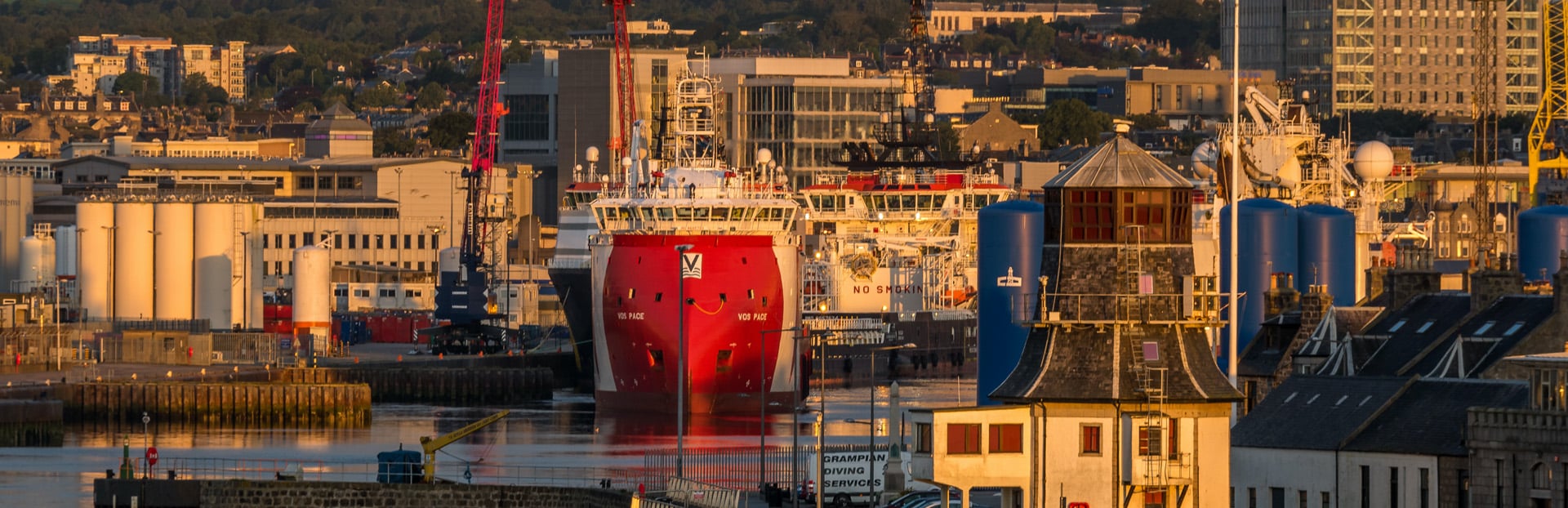
Aberdeen is a city on the north-east coast of Scotland. The average sold price across the City of Aberdeen is £133,906 on the UK House Price Index, 28.2% below the Scotland average of £186,582, and every property type sits below the national figure. Flats, which dominate Aberdeen's sales, average £95,787, some 26.6% under Scotland's £130,560, while detached houses at £301,583 sit 11.0% below the national figure. This is the only major Scottish city where prices are still falling, the legacy of an oil downturn that began in 2014, and for an income investor that decade of decline is exactly what has opened up the yields.
The cheapest way into the city is a flat in AB11 (Torry, Ferryhill) at an average asking price of £84,125, the lowest of the ten Aberdeen postcodes with price data, and it pairs that with the highest gross yield in the city at 9.3%. The most expensive postcode, AB15 (Cults, Bieldside, Kingswells), asks £325,402 and returns 4.3%. Across the City of Aberdeen council area the population reached 224,021 at the 2022 census, up just 0.6% on 2011, and the median local salary of £40,648 sits above both the Scotland and Great Britain figures on the strength of the energy sector.
This guide covers the City of Aberdeen council area (ONS code S12000033) across twelve postcodes from AB10 to AB25. Aberdeen is Scotland's third-largest city and the UK's energy capital, now pivoting from North Sea oil and gas towards offshore wind and hydrogen. Buying here works differently from England: purchase tax is Land and Buildings Transaction Tax rather than stamp duty, and the legal process runs on the Home Report and the conclusion of missives. Investors weighing up Scotland may also look at Dundee for a steadier price history at a similar entry point.
Article updated: July 2026
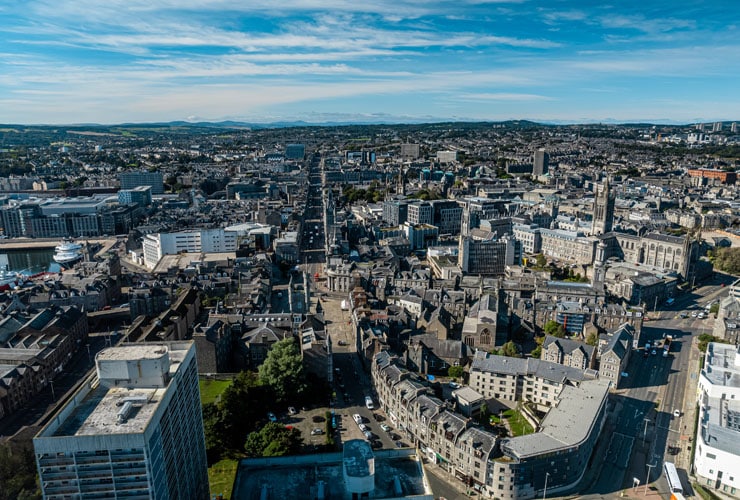
Why Invest in Aberdeen?
The City of Aberdeen grew its population just 0.6% between the 2011 and 2022 censuses, from 222,793 to 224,021 residents, around 1,200 more people in eleven years. That flat trajectory is itself a read on the city: the oil downturn that started in 2014 thinned the workforce as energy firms cut back, and the population has barely moved since. Aberdeen remains Scotland's third-largest city, and the University of Aberdeen and Robert Gordon University between them bring more than 25,000 students who keep tenant demand steady in the central postcodes year after year.
The median gross weekly salary in Aberdeen is £781.70, which is 0.8% above the Scotland median of £775.60 and 2.0% above the Great Britain median of £766.60. That works out at a median annual salary of £40,648. Aberdeen earns above the national average because of energy: oil and gas operators, their supply chains and a growing offshore-wind and hydrogen workforce pay wages most UK cities cannot match. The local employment rate is 76.6%. Higher wages against some of the lowest house prices in urban Britain are the foundation of the city's affordability story.
Aberdeen Economic Summary
- Population (City of Aberdeen): 224,021 (2022 Census). Growth of 0.6% from 2011.
- Median annual salary: £40,648 (local), £40,331 (Scotland), £39,863 (Great Britain)
- Employment rate: 76.6% (local)
- Key employment sectors: Oil and gas, offshore wind, hydrogen, higher education, healthcare, financial services
Source: Scotland's Census 2022, Nomis Labour Market Profile (ASHE 2025)
Regeneration and Investment in Aberdeen
More than £300 million of committed investment is reshaping Aberdeen's beachfront, its industrial base and its city centre, most of it tied to the energy transition. The three schemes below have confirmed funding and the most direct bearing on where new activity, and new tenant demand, will land.
- City Centre and Beach Masterplan (Under construction, £150 million): A 20-year council programme reworking the public realm across the city centre and the seafront, including a beachfront redevelopment with a new beach park and events amphitheatre in the AB24 postcode. Phase A of the beachfront is targeted for completion in late summer 2026, with works following the 2025 Tall Ships visit. Updates at Project Scot.
- Energy Transition Zone (Under construction): A 250-hectare energy hub beside the £420 million Aberdeen South Harbour in AB11, built around innovation, hydrogen, wind and skills campuses, including the world's first National Floating Wind Innovation Centre and a dedicated Advanced Manufacturing Skills Hub. It is the centrepiece of the city's pivot from oil and gas to renewables. Updates at Invest Aberdeen.
- Aberdeen Market / Flint (Under construction, £40 million): A new market and food hall on Union Street in AB10, converting the former British Home Stores building, delivered by Hub North Scotland for Aberdeen City Council with Morrison Construction. The UK Government contributed £20 million, and the market is due to open in 2027. Updates at Project Scot.
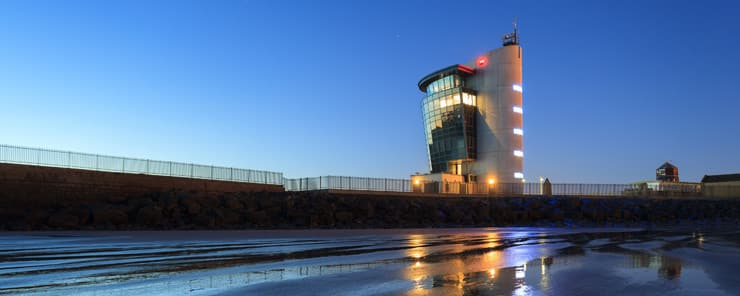
Aberdeen Property Market Analysis
Average property prices across the City of Aberdeen are 65.6% higher than they were in January 2004, but 37.7% below their September 2014 peak, the only major Scottish city still trading well below its all-time high. The Registers of Scotland series that feeds the UK House Price Index begins in January 2004 for Scottish council areas, so the cycle below runs from 2004 onward. Aberdeen's story is unlike anywhere else in the UK: a normal 2008 dip, then an oil-driven boom and a decade-long oil-driven decline that no recovery has reversed. The sections after it drill into current postcode-level data for sold prices, price per square foot, asking prices, growth and transaction volumes.
When was the last house price crash in Aberdeen?
Aberdeen is recorded as the City of Aberdeen council area in the UK House Price Index, and the monthly series starts in January 2004. It captures the 2000s boom, the financial crisis, a strong oil-fuelled recovery, and then the long decline that followed the 2014 oil price collapse, which is the set of cycles a buyer needs to read this market.
The 2004 to 2008 boom: Aberdeen opened the series at £80,868 in January 2004 and climbed hard as oil ran above $100 a barrel. By December 2005 the average was £109,672, and by December 2007 it had reached £179,550, a year of 25.7% growth. Prices peaked at £184,720 in July 2008, a rise of 128% in four and a half years, with the energy economy pulling demand and prices up faster than almost any UK city.
2008 to 2009, the financial crisis: From the July 2008 peak of £184,720, prices fell to a trough of £158,157 in April 2009, a decline of 14.4% over nine months. Aberdeen's fall was shallower than England's because oil-sector employment held up better than financial services, and the correction was over quickly compared with what came later.
2010 to 2013, recovery and the oil surge: Prices steadied around £170,000 to £177,000 through 2010 and 2011, then climbed again as North Sea investment ran hot. The average cleared its July 2008 peak by August 2013 at £186,780, fully recovered within five years, and kept rising into 2014.
2014, the oil peak: Aberdeen reached its all-time high of £214,999 in September 2014, with detached houses peaking at £466,504 the same month. At that point the city was among the most expensive places to buy in Scotland, carried entirely by an oil price near $115 a barrel.
2015 to 2020, the oil crash: The oil price collapsed from around $115 to below $30 a barrel, and Aberdeen's property market fell with it. Prices declined every year for six years, the longest sustained fall of any major UK city. The worst annual reading was -11.0% in March 2016. By the second half of 2020 the average had dropped to roughly £147,000, around 31% below the 2014 peak, as energy firms cut jobs and a glut of ex-worker flats hit the market.
2021 to 2022, a weak bounce: The pandemic-era stamp duty holiday and reopening demand lifted the average back above £155,000 by mid-2022. The recovery was modest set against the rest of the UK, where most cities were setting fresh highs, and it ran out of road quickly.
2023 to present: Higher mortgage rates pushed prices down again from late 2022. The average eased to £143,693 by December 2024 and £138,345 by September 2025, before reaching £133,906 by the latest reading in March 2026. That leaves the current average 37.7% below the September 2014 peak of £214,999 and still drifting lower, the clearest case in the UK of a local economic shock outlasting the national cycle.
Long-term growth summary:
- 5 years (March 2021 to March 2026): -11.5% (£151,363 to £133,906)
- 10 years (March 2016 to March 2026): -28.6% (£187,657 to £133,906)
- 15 years (March 2011 to March 2026): -22.7% (£173,203 to £133,906)
- 20 years (March 2006 to March 2026): +18.6% (£112,866 to £133,906)
- Full series (January 2004 to March 2026): +65.6% (£80,868 to £133,906)
Aberdeen is the rare UK market where five, ten and fifteen-year growth are all negative. An investor who bought at the September 2014 oil peak would be 37.7% down on the Land Registry average, and even a fifteen-year hold from 2011 shows a loss. The positive twenty-year and full-series figures only hold because the 2004 starting point predates the oil boom. The open question for a buyer is whether the energy transition stabilises prices near today's levels, and whether the yields on offer compensate for a market that has not yet found its floor.
- All property types
- Detached
- Semi-detached
- Terraced
- Flats
- All property types
- Detached
- Semi-detached
- Terraced
- Flats
Sold House Prices in Aberdeen
The average sold price across all property types in the City of Aberdeen is £133,906, which is 28.2% below the Scotland average of £186,582 as of March 2026. Every type sits below the national figure, and the gap is widest on flats, the type that makes up the bulk of what changes hands in the city. The decade of oil-driven decline shows up clearly: where most UK markets price above their national average, Aberdeen prices below it on every measure.
| Property Type | Aberdeen Average | Scotland Average | Difference |
|---|---|---|---|
| Detached houses | £301,583 | £338,748 | -11.0% |
| Semi-detached houses | £184,386 | £214,637 | -14.1% |
| Terraced houses | £148,432 | £175,465 | -15.4% |
| Flats and maisonettes | £95,787 | £130,560 | -26.6% |
| All property types | £133,906 | £186,582 | -28.2% |
Detached houses at £301,583 carry the smallest discount, 11.0% below Scotland's £338,748. Aberdeen's detached stock concentrates in the western suburbs of AB15 (Cults, Bieldside, Kingswells) and the commuter belt of AB21 (Dyce, Bucksburn) and AB23 (Balmedie), where granite family homes hold their value better than the inner-city flats. Annual change of -1.2% shows detached prices close to flat after the long fall.
Semi-detached houses at £184,386 sit 14.1% below Scotland's £214,637. These are the inter-war and post-war family homes spread across AB12 (Portlethen, Cove Bay) and AB16 (Northfield, Mastrick), and at the latest reading their annual change was a touch positive at +0.5%, one of the first signs of any type steadying.
Terraced houses at £148,432 are 15.4% below Scotland's £175,465. In Aberdeen the terraced label covers much of the granite stock in the inner postcodes of AB10, AB11 and AB24, a significant slice of the buy-to-let market, and annual change of +0.1% leaves terraces broadly flat year on year.
Flats and maisonettes at £95,787 carry the largest discount, 26.6% below Scotland's £130,560, and this is where the oil downturn cut deepest. The glut of one- and two-bed flats left behind when energy firms shed staff pushed values down further than any other type, and annual change of -3.0% shows flats still easing while houses level out. For an income investor that is the paradox of Aberdeen: the cheapest type is also the one still falling, and the one that yields the most.
Price Per Square Foot in Aberdeen
Aberdeen's price per square foot ranges from £136 in AB24 (Old Aberdeen, Seaton) to £223 in AB13 (Milltimber, Westhill), a £87 spread across all twelve postcodes. Price per square foot strips out the effect of property size and gives a cleaner read on where built space is most expensive. The inner, flat-heavy postcodes around the university and the city centre sit at the bottom, while the western suburbs of larger detached homes top the table. Eight of the twelve postcodes price below £200 per square foot, low by the standard of any UK city.
| Rank | Area | Price Per Sq Ft |
|---|---|---|
| 1 | AB24 (Old Aberdeen, Seaton) | £136 |
| 2 | AB11 (Torry, Ferryhill) | £141 |
| 3 | AB16 (Northfield, Mastrick) | £143 |
| 4 | AB25 (Rosemount, Kittybrewster) | £150 |
| 5 | AB10 (City Centre, Bridge of Dee) | £164 |
| 6 | AB21 (Dyce, Bucksburn) | £179 |
| 7 | AB12 (Portlethen, Cove Bay) | £191 |
| 8 | AB14 (Peterculter) | £191 |
| 9 | AB23 (Balmedie, Bridge of Don) | £207 |
| 10 | AB22 (Bridge of Don, Danestone) | £211 |
| 11 | AB15 (Cults, Bieldside, Kingswells) | £214 |
| 12 | AB13 (Milltimber, Westhill) | £223 |
AB24 (Old Aberdeen, Seaton) at £136 per square foot is the cheapest built space in the city, drawn from the granite tenements around the University of Aberdeen campus. AB11 (Torry, Ferryhill) at £141 and AB16 (Northfield, Mastrick) at £143 follow close behind, so the lowest per-foot rates all sit in the inner postcodes where tenant demand from students and energy workers concentrates.
AB13 (Milltimber, Westhill) at £223 per square foot tops the table, 64% above AB24, on the strength of its large detached homes on the western edge of the city. AB15 (Cults, Bieldside, Kingswells) at £214 and AB22 (Bridge of Don, Danestone) at £211 sit just behind. When a buyer pays this much per foot in Aberdeen they are paying for a suburban family house, not a city-centre flat.
For Sale Asking Prices in Aberdeen
Asking prices in Aberdeen run from £84,125 in AB11 (Torry, Ferryhill) to £325,402 in AB15 (Cults, Bieldside, Kingswells), a gap of 287% across the ten postcodes with data. The mean asking price across those postcodes is £165,622. There is no gentle price curve here: five postcodes sit near or below £100,000 and three sit above £200,000, with only AB12 (Portlethen) bridging the middle. The table below ranks them from the cheapest entry to the most expensive.
| Rank | Area | Asking Price |
|---|---|---|
| 1 | AB11 (Torry, Ferryhill) | £84,125 |
| 2 | AB25 (Rosemount, Kittybrewster) | £92,567 |
| 3 | AB24 (Old Aberdeen, Seaton) | £98,596 |
| 4 | AB16 (Northfield, Mastrick) | £101,385 |
| 5 | AB10 (City Centre, Bridge of Dee) | £105,941 |
| 6 | AB12 (Portlethen, Cove Bay) | £145,164 |
| 7 | AB22 (Bridge of Don, Danestone) | £207,064 |
| 8 | AB21 (Dyce, Bucksburn) | £236,747 |
| 9 | AB23 (Balmedie, Bridge of Don) | £259,232 |
| 10 | AB15 (Cults, Bieldside, Kingswells) | £325,402 |
| — | AB13 (Milltimber, Westhill) | Not enough data |
| — | AB14 (Peterculter) | Not enough data |
AB11 (Torry, Ferryhill) at £84,125 is the cheapest way into Aberdeen, and four more postcodes follow below £106,000: AB25, AB24, AB16 and AB10. Five sub-£106,000 postcodes in a UK city is unusual, and it is the direct legacy of a decade of falling prices in the inner, flat-heavy areas south and north of the centre. These are the granite tenements and ex-worker flats that suit a first buy-to-let on a small deposit.
At the top end, AB15 (Cults, Bieldside, Kingswells) at £325,402 asks nearly four times AB11. The western suburbs are a different market: larger granite family homes, lower density and owner-occupier demand. AB23 (Balmedie) at £259,232 and AB21 (Dyce) at £236,747 fill the commuter belt between the city and the airport corridor. AB13 (Milltimber, Westhill) and AB14 (Peterculter) have too few listings to publish a reliable asking figure.

House Price Growth in Aberdeen
Only AB23 (Balmedie, Bridge of Don) shows positive five-year growth at 1.8%; every other Aberdeen postcode has lost value over the period, and the highest-yielding inner postcodes have fallen the furthest. The table shows growth over one, three and five years for every postcode with data, sorted by the five-year figure. This is the inverse of almost every other UK city, where the five-year column is a wall of green; in Aberdeen the oil downturn runs straight through it.
| Area | 1 Year | 3 Years | 5 Years |
|---|---|---|---|
| AB23 (Balmedie, Bridge of Don) | 0.3% | -3.6% | 1.8% |
| AB12 (Portlethen, Cove Bay) | -1.5% | -1.6% | -2.9% |
| AB22 (Bridge of Don, Danestone) | -6.8% | -4.3% | -5.8% |
| AB15 (Cults, Bieldside, Kingswells) | -1.0% | 0.7% | -6.3% |
| AB21 (Dyce, Bucksburn) | -9.2% | -8.4% | -9.4% |
| AB16 (Northfield, Mastrick) | -7.1% | -6.9% | -10.7% |
| AB24 (Old Aberdeen, Seaton) | -5.5% | -6.8% | -14.0% |
| AB10 (City Centre, Bridge of Dee) | -5.4% | -10.7% | -18.9% |
| AB13 (Milltimber, Westhill) | -20.5% | -14.6% | -22.5% |
| AB25 (Rosemount, Kittybrewster) | -2.1% | -16.0% | -22.7% |
| AB11 (Torry, Ferryhill) | -16.1% | -19.7% | -27.0% |
| AB14 (Peterculter) | Not enough data | Not enough data | Not enough data |
AB23 (Balmedie, Bridge of Don) at 1.8% over five years is the only postcode in positive territory, helped by newer family housing on the northern edge of the city that sits outside the inner-city flat glut. AB12 (Portlethen, Cove Bay) at -2.9% and AB15 (Cults, Bieldside, Kingswells) at -6.3% have held up best of the rest, all of them suburban, house-led postcodes rather than flatlands.
At the other end, AB11 (Torry, Ferryhill) has fallen 27.0% over five years, the steepest decline in the city, with AB25 (Rosemount, Kittybrewster) at -22.7% and AB10 (City Centre) at -18.9% close behind. These are the inner postcodes that produce the highest yields, and the same flats that rent at 8% to 9% have been losing capital value the fastest. For a buyer that is the central trade-off in Aberdeen, laid out in two columns.
Monthly Property Sales in Aberdeen
Aberdeen's busiest postcodes turn over 42 to 49 sales a month, with AB15 (Cults, Bieldside, Kingswells) the most active at 49, while turnover rates climb as high as 140% in AB16 (Northfield, Mastrick). Monthly sales show the depth of the market in each postcode, and turnover shows how often the existing stock changes hands. In Aberdeen the inner flat postcodes trade actively despite falling prices, which matters for a landlord who needs to be able to sell as well as buy.
| Area | Sales Per Month | Turnover | Asking Price |
|---|---|---|---|
| AB15 (Cults, Bieldside, Kingswells) | 49 | 67% | £325,402 |
| AB24 (Old Aberdeen, Seaton) | 46 | 70% | £98,596 |
| AB10 (City Centre, Bridge of Dee) | 42 | 105% | £105,941 |
| AB11 (Torry, Ferryhill) | 41 | 115% | £84,125 |
| AB21 (Dyce, Bucksburn) | 33 | 42% | £236,747 |
| AB25 (Rosemount, Kittybrewster) | 28 | 62% | £92,567 |
| AB12 (Portlethen, Cove Bay) | 26 | 132% | £145,164 |
| AB22 (Bridge of Don, Danestone) | 22 | 100% | £207,064 |
| AB16 (Northfield, Mastrick) | 20 | 140% | £101,385 |
| AB23 (Balmedie, Bridge of Don) | 15 | 75% | £259,232 |
| AB13 (Milltimber, Westhill) | 4 | 33% | Not enough data |
| AB14 (Peterculter) | Not enough data | Not enough data | Not enough data |
AB15 (Cults, Bieldside, Kingswells) at 49 sales a month is the deepest market in the city, with AB24 (Old Aberdeen, Seaton) at 46, AB10 (City Centre) at 42 and AB11 (Torry, Ferryhill) at 41 close behind. The inner flat postcodes that yield best are also among the most active, so a landlord buying in AB10 or AB11 is not buying into a thin market that would be hard to exit later.
AB16 (Northfield, Mastrick) shows the highest turnover at 140%, with AB12 (Portlethen) at 132% and AB11 at 115%, all signs of stock changing hands quickly relative to the number on the market. The quieter end is the suburban belt: AB21 (Dyce) at 42% turnover and AB23 (Balmedie) at 15 sales a month trade more slowly, in keeping with their family-housing, owner-occupier profile.
How Long Properties Take to Sell in Aberdeen
Despite the long price decline, Aberdeen still sells quickly: all twelve measured postcodes read as seller's markets, with AB16 (Northfield, Mastrick) clearing fastest at around 19 days and AB13 (Milltimber, Westhill) the slowest at 66. Days on market is the typical time a home is listed before it sells, and months of unsold stock shows how much supply is sitting there at the current rate of sales. A short figure on both points to a market where homes still find buyers, which an investor needs to factor in when buying and, later, when selling.
| Area | Avg Days to Sell | Months of Unsold Stock | Market |
|---|---|---|---|
| AB16 (Northfield, Mastrick) | 19 | 0.6 | Seller's market |
| AB12 (Portlethen, Cove Bay) | 28 | 0.9 | Seller's market |
| AB11 (Torry, Ferryhill) | 29 | 0.9 | Seller's market |
| AB22 (Bridge of Don, Danestone) | 32 | 1.0 | Seller's market |
| AB10 (City Centre, Bridge of Dee) | 40 | 1.3 | Seller's market |
| AB15 (Cults, Bieldside, Kingswells) | 42 | 1.4 | Seller's market |
| AB23 (Balmedie, Bridge of Don) | 45 | 1.5 | Seller's market |
| AB24 (Old Aberdeen, Seaton) | 48 | 1.6 | Seller's market |
| AB14 (Peterculter) | 50 | 1.6 | Seller's market |
| AB25 (Rosemount, Kittybrewster) | 50 | 1.6 | Seller's market |
| AB21 (Dyce, Bucksburn) | 61 | 2.0 | Seller's market |
| AB13 (Milltimber, Westhill) | 66 | 2.2 | Seller's market |
AB16 (Northfield, Mastrick) clears in about 19 days with only 0.6 months of unsold stock, the tightest market in the city. The cheaper inner postcodes are right behind it, with AB11 (Torry, Ferryhill) at 29 days and AB12 (Portlethen) at 28, so the flats that yield best are also among the quickest to move.
For a market that has lost value for a decade, Aberdeen turns its stock over surprisingly fast, and that matters for the exit as much as the entry. A 19-day sale in AB16 or a 29-day sale in AB11 means a landlord can move a flat on without it sitting unsold while the price keeps drifting. The slower postcodes are the suburban ones, AB21 (Dyce) at 61 days and AB13 (Milltimber, Westhill) at 66, where larger family homes take longer to find a buyer.

Aberdeen Rental Market Analysis
Monthly rents in Aberdeen run from £637 in AB25 (Rosemount, Kittybrewster) to £1,174 in AB15 (Cults, Bieldside, Kingswells), with gross yields from 4.1% to 9.3% across the seven postcodes with rental data. For investors asking is buy to let worth it in Aberdeen, the sections below break down rents, yields and tenant affordability postcode by postcode. The combination of sub-£100,000 asking prices in the inner postcodes and rents that have held while prices fell is what produces yields near 9%, the income end of the case across the best buy-to-let areas in Scotland. Browse current buy-to-let homes for sale across the country.
Average Rent & Gross Rental Yields in Aberdeen
Gross rental yields in Aberdeen range from 4.1% in AB21 (Dyce, Bucksburn) to 9.3% in AB11 (Torry, Ferryhill). In a city where prices have fallen but rents have not, the cheapest postcodes now throw off the strongest income. AB15 (Cults, Bieldside, Kingswells) charges the highest rent at £1,174 a month but returns only 4.3%, because its £325,402 asking price is nearly four times AB11's.
| Area | Average Monthly Rent | Asking Price | Gross Yield |
|---|---|---|---|
| AB11 (Torry, Ferryhill) | £654 | £84,125 | 9.3% |
| AB24 (Old Aberdeen, Seaton) | £694 | £98,596 | 8.4% |
| AB25 (Rosemount, Kittybrewster) | £637 | £92,567 | 8.3% |
| AB10 (City Centre, Bridge of Dee) | £655 | £105,941 | 7.4% |
| AB12 (Portlethen, Cove Bay) | £845 | £145,164 | 7.0% |
| AB15 (Cults, Bieldside, Kingswells) | £1,174 | £325,402 | 4.3% |
| AB21 (Dyce, Bucksburn) | £817 | £236,747 | 4.1% |
| AB16 (Northfield, Mastrick) | Not enough data | £101,385 | Not enough data |
| AB22 (Bridge of Don, Danestone) | Not enough data | £207,064 | Not enough data |
| AB23 (Balmedie, Bridge of Don) | Not enough data | £259,232 | Not enough data |
| AB13 (Milltimber, Westhill) | Not enough data | Not enough data | Not enough data |
| AB14 (Peterculter) | Not enough data | Not enough data | Not enough data |
AB11 (Torry, Ferryhill) at 9.3% pairs the lowest asking price in the city with a £654 rent to give the top yield, the highest of any Scottish city in our data. A 30% deposit of £25,237 buys into it, the cheapest entry in Aberdeen, and the tenant base in Torry and Ferryhill is a mix of energy-sector workers and students within reach of the harbour and the city centre.
The inner postcodes back it up: AB24 (Old Aberdeen) at 8.4% and AB25 (Rosemount) at 8.3% sit just behind, both on asking prices below £100,000, so the north and centre of the city is where the income case is strongest. At the other end, AB21 (Dyce) at 4.1% and AB15 (Cults) at 4.3% are the suburban, house-led postcodes where the higher asking price does more for tenant quality than for the yield.
Gross Rental Yield by Postcode
The yield map is simple to read in Aberdeen: the four postcodes under £106,000, AB11, AB24, AB25 and AB10, all return 7.4% or more, while the suburban postcodes above £200,000 sit near 4%. The spread is driven almost entirely by price rather than rent, since inner-city rents cluster tightly between £637 and £694 a month.
Is Aberdeen Rent High?
Aberdeen rents take between 18.8% and 34.7% of the local median gross monthly salary, depending on the postcode. The widely used affordability threshold is 30% of gross income. Only AB15 (Cults, Bieldside, Kingswells) sits above it; every other measured postcode is comfortably below, which makes Aberdeen one of the more affordable rental markets in urban Britain relative to local wages.
The median gross weekly salary in Aberdeen is £781.70, which works out at about £3,387 per month or £40,648 per year. That sits above both the Scotland median of £775.60 a week and the Great Britain median of £766.60. Data from the Nomis Labour Market Profile (ASHE 2025).
| Rank | Area | Rent as % of Income |
|---|---|---|
| 1 | AB15 (Cults, Bieldside, Kingswells) | 34.7% |
| 2 | AB12 (Portlethen, Cove Bay) | 24.9% |
| 3 | AB21 (Dyce, Bucksburn) | 24.1% |
| 4 | AB24 (Old Aberdeen, Seaton) | 20.5% |
| 5 | AB10 (City Centre, Bridge of Dee) | 19.3% |
| 6 | AB11 (Torry, Ferryhill) | 19.3% |
| 7 | AB25 (Rosemount, Kittybrewster) | 18.8% |
| — | AB13 (Milltimber, Westhill) | Not enough data |
| — | AB14 (Peterculter) | Not enough data |
| — | AB16 (Northfield, Mastrick) | Not enough data |
| — | AB22 (Bridge of Don, Danestone) | Not enough data |
| — | AB23 (Balmedie, Bridge of Don) | Not enough data |
AB25 (Rosemount, Kittybrewster) at 18.8% is the most affordable for tenants, with AB11 (Torry, Ferryhill) and AB10 (City Centre) both at 19.3% just behind. A £654 rent against a £3,387 monthly salary leaves plenty of room, which tends to mean fewer arrears and longer tenancies, and it sits alongside the highest yields in the city.
AB15 (Cults, Bieldside, Kingswells) at 34.7% is the only postcode above the 30% line, but the figure flatters the picture: tenants paying £1,174 a month for a family home in Cults are typically dual-income households earning well above the city median, not single earners stretched by the rent.
Buy-to-Let Considerations
Are House Prices High in Aberdeen? Price-to-Earnings Ratios
Buying a property in Aberdeen takes between 2.1 and 8.0 times the local median annual salary. This is based on the Nomis Labour Market Profile for Aberdeen, which puts the median gross annual income for Aberdeen residents at £40,648.
The Scotland benchmark for price-to-earnings is 4.7x (Scotland's average sold price of £186,582 divided by the Great Britain median annual salary of £39,863). Five Aberdeen postcodes sit below that ratio against local earnings, and only AB15 sits above it, a reminder that against the city's above-average wages most of Aberdeen is exceptionally affordable on this measure. The lower-priced flat postcodes where the yields are highest are also the most affordable here.
| Rank | Area | Price-to-Earnings Ratio |
|---|---|---|
| 1 | AB11 (Torry, Ferryhill) | 2.1x |
| 2 | AB25 (Rosemount, Kittybrewster) | 2.3x |
| 3 | AB24 (Old Aberdeen, Seaton) | 2.4x |
| 4 | AB16 (Northfield, Mastrick) | 2.5x |
| 5 | AB10 (City Centre, Bridge of Dee) | 2.6x |
| 6 | AB12 (Portlethen, Cove Bay) | 3.6x |
| 7 | AB22 (Bridge of Don, Danestone) | 5.1x |
| 8 | AB21 (Dyce, Bucksburn) | 5.8x |
| 9 | AB23 (Balmedie, Bridge of Don) | 6.4x |
| 10 | AB15 (Cults, Bieldside, Kingswells) | 8.0x |
| — | AB13 (Milltimber, Westhill) | Not enough data |
| — | AB14 (Peterculter) | Not enough data |
AB11 (Torry, Ferryhill) at 2.1x is the most affordable postcode against local wages, less than half the 4.7x Scotland benchmark. A flat at just over twice Aberdeen's median salary, in a city earning above the Great Britain average, is the kind of ratio that almost never comes with strong rental demand attached, yet here it does. The cluster of AB25, AB24, AB16 and AB10 all sit between 2.3x and 2.6x.
AB15 (Cults, Bieldside, Kingswells) at 8.0x is the only postcode above the benchmark, the western suburbs of larger family homes bought by dual-income households trading space for the address. For an investor the high ratio compresses the yield, which is why AB15 sits near the bottom of the yield table at 4.3%.
Deposit Requirements in Aberdeen
A 30% deposit on a buy-to-let in Aberdeen ranges from £25,237 in AB11 (Torry, Ferryhill) to £97,621 in AB15 (Cults, Bieldside, Kingswells). Five postcodes need a deposit under £32,000, lower up-front capital than almost any UK city can offer. The gap between the cheapest and most expensive deposit is £72,384, the difference between a single inner-city flat and a suburban family home.
On top of the deposit, Scottish buyers pay Land and Buildings Transaction Tax rather than stamp duty, plus the Additional Dwelling Supplement on a second property, which both add to the running costs of buy-to-let. The tax detail is set out below the table.
| Rank | Area | 30% Deposit Required |
|---|---|---|
| 1 | AB11 (Torry, Ferryhill) | £25,237 |
| 2 | AB25 (Rosemount, Kittybrewster) | £27,770 |
| 3 | AB24 (Old Aberdeen, Seaton) | £29,579 |
| 4 | AB16 (Northfield, Mastrick) | £30,415 |
| 5 | AB10 (City Centre, Bridge of Dee) | £31,782 |
| 6 | AB12 (Portlethen, Cove Bay) | £43,549 |
| 7 | AB22 (Bridge of Don, Danestone) | £62,119 |
| 8 | AB21 (Dyce, Bucksburn) | £71,024 |
| 9 | AB23 (Balmedie, Bridge of Don) | £77,770 |
| 10 | AB15 (Cults, Bieldside, Kingswells) | £97,621 |
| — | AB13 (Milltimber, Westhill) | Not enough data |
| — | AB14 (Peterculter) | Not enough data |
AB11 (Torry, Ferryhill) is the cheapest way into Aberdeen at a £25,237 deposit, and it happens to be the highest-yielding postcode too, so the lowest up-front cost and the best income line up in the same place. Stepping up to AB25, AB24, AB16 and AB10 costs only a few thousand pounds more and buys into the same flat-led, fast-trading inner-city market.
On the tax side, Land and Buildings Transaction Tax (Revenue Scotland's replacement for stamp duty since 2015) is charged in bands: nothing up to £145,000, 2% to £250,000, 5% to £325,000, 10% to £750,000 and 12% above that. A buy-to-let or second home also pays the Additional Dwelling Supplement, currently 8% of the whole price, on top. On an AB11 flat at £84,125 the supplement alone is around £6,700, and because so much of Aberdeen's stock sits under the £145,000 nil-rate band, many inner-city purchases attract no banded LBTT at all, only the supplement. Estimate your bill with our Scotland LBTT calculator, then verify the current rates with Revenue Scotland before you budget, as bands and the supplement change.
What the Aberdeen Data Tells Buy-to-Let Investors
In Aberdeen the cheapest postcode is also the highest-yielding, and the income on offer is the highest of any Scottish city. AB11 (Torry, Ferryhill) has the top yield at 9.3%, the lowest asking price for an investment property in Aberdeen at £84,125, and the most affordable prices against local earnings at 2.1 times income. A 30% deposit there is £25,237, the lowest in the city, for a flat renting at £654 a month.
The inner postcodes extend that case: AB24 (Old Aberdeen) at 8.4%, AB25 (Rosemount) at 8.3% and AB10 (City Centre) at 7.4% all sit on asking prices below £106,000, in the most active part of the market. AB24 and AB10 alone see 46 and 42 sales a month, so a landlord can buy and later sell without waiting on a thin market. These central, flat-heavy postcodes are where the income and the liquidity both sit.
The catch is capital growth, and the data does not hide it. AB11 has fallen 27.0% over five years, AB25 22.7% and AB10 18.9%, so the very postcodes that yield the most have lost the most value. Only AB23 (Balmedie) shows positive five-year growth, at 1.8%, and it sits at the lower-yield, higher-price end. Buyers chasing a below-asking entry into the inner postcodes often work through off-market property in Aberdeen rather than the open listings.
Aberdeen reads differently from the rest of Scotland. Edinburgh and Glasgow are recovery-and-growth markets; Aberdeen is an income market still working through an oil downturn that has not yet reached its floor. For an investor the question is whether the £300 million-plus reshaping the harbour and city centre, and the pivot to offshore wind and hydrogen, steadies prices near today's levels. If it does, today's yields come with a capital base that has already taken its correction.
How Aberdeen Compares
Aberdeen has the lowest mean asking price of the six Scottish cities compared here, at £165,622, and a 9.3% top yield beaten only by Glasgow's thin-market 10.8%. The table places Aberdeen alongside five other Scottish locations, each with a different investor profile. The mean asking price and mean monthly rent are simple averages across all postcodes with data; the top gross yield is the single highest postcode yield in each location.
| Location | Mean Asking Price | Mean Monthly Rent | Mean Gross Yield | Top Yield (postcode) |
|---|---|---|---|---|
| Aberdeen | £165,622 | £782 | 5.7% | 9.3% (AB11) |
| Glasgow | £183,315 | £1,078 | 7.1% | 10.8% (G2) |
| Dundee | £205,224 | £891 | 5.2% | 7.2% (DD1) |
| Perth | £246,979 | £777 | 3.8% | 5.0% (PH1) |
| Stirling | £316,532 | £1,004 | 3.8% | 5.2% (FK7) |
| Edinburgh | £337,923 | £1,394 | 5.0% | 6.9% (EH11) |
Aberdeen is the cheapest location in this comparison at £165,622 mean asking price, and it also carries a 9.3% top yield, second only to the 10.8% that Glasgow's thin G2 city-centre market posts. Its mean rent of £782 is the lowest of the six, similar to Perth at £777, so the yield advantage comes entirely from price rather than rent. Aberdeen's inner flats are cheaper than anywhere else in urban Scotland, which is what lets a modest rent produce a top-line yield this high.
For investors prioritising income, Aberdeen and Glasgow lead the country, though they get there differently: Glasgow on rising rents in a recovering market, Aberdeen on prices that have fallen for a decade. Dundee at 7.2% sits between them on a steadier price history. At the other end, Stirling at 5.2% and Edinburgh at 6.9% trade yield for capital-growth fundamentals and higher-value stock. For a data-driven comparison across the whole country, see our highest-yielding areas guide.
Frequently Asked Questions
Is Aberdeen a good place to live for buy-to-let tenants?
Aberdeen's wages support tenant demand. The median salary is £781.70 a week, above both the Scotland figure of £775.60 and the Great Britain figure of £766.60, on the back of the energy sector. Tenants earning a little more, in a city where inner-city rents take under 20% of the median income, are generally well placed to keep the rent paid.
The two universities anchor demand too. The University of Aberdeen and Robert Gordon University bring more than 25,000 students between them, concentrated in the central postcodes around AB24 (Old Aberdeen) and AB10, which keeps the inner-city flats that yield best in steady demand.
What are the best areas in Aberdeen for property investment?
The choice in Aberdeen is really between income and price stability, and the two pull in opposite directions. For income, the inner flat postcodes lead: AB11 (Torry, Ferryhill) is the cheapest way in at £84,125 and the highest-yielding at 9.3%, with AB24 (Old Aberdeen) at 8.4% and AB25 (Rosemount) at 8.3% close behind, all on asking prices below £100,000.
The same inner postcodes have lost the most value, though, so a buyer who wants a steadier capital base looks to the suburbs. AB23 (Balmedie) is the only postcode with positive five-year growth at 1.8%, and AB12 (Portlethen) at -2.9% has fallen least of the rest, both at lower yields of 4% to 7%. Torry and the inner city for the income; AB23 and AB12 for a market that has roughly stopped falling.
How does Aberdeen compare to Dundee for buy-to-let?
Aberdeen offers a higher top yield, 9.3% against Dundee's 7.2%, on a lower mean asking price of £165,622 versus £205,224, with similar rents of £782 against £891. The income case is stronger in Aberdeen on the numbers alone.
The difference is the price trajectory behind those numbers. Aberdeen's inner postcodes have fallen 14% to 27% over five years on the back of the oil downturn, while Dundee's prices have been steadier as its V&A waterfront regeneration reshaped the city. An income investor who can hold through the volatility may prefer Aberdeen's yield; one who wants a firmer capital base may prefer Dundee.
Can I buy a flat in Aberdeen under £100,000?
Yes, and that is where most buy-to-let buying happens here. Five of the city's postcodes have average asking prices at or near £100,000, led by AB11 (Torry, Ferryhill) at £84,125, then AB25 (Rosemount) at £92,567, AB24 (Old Aberdeen) at £98,596, AB16 (Northfield) at £101,385 and AB10 (City Centre) at £105,941. These are the granite tenement and ex-worker flats that a decade of falling prices has left cheaper than almost anywhere in urban Britain.
If a below-asking entry is the goal, it is worth looking through below market value properties as well as the open listings.
How has the oil industry affected Aberdeen property prices?
It explains the whole shape of the market. Prices peaked at £214,999 in September 2014, at the top of an oil boom, then fell for six straight years as the oil price collapsed from around $115 to below $30 a barrel and energy firms cut jobs. The average reached £133,906 by March 2026, some 37.7% below that 2014 peak, while most UK cities were setting new highs.
The city's response is the Energy Transition Zone and the wider pivot to offshore wind and hydrogen, alongside more than £300 million of city-centre and beachfront regeneration. Those projects are reshaping the harbour and the centre, but the property market has not yet reflected the shift in prices, which is part of why the inner-city yields are as high as they are.
Is there demand for student accommodation in Aberdeen?
Yes. The University of Aberdeen and Robert Gordon University bring more than 25,000 students to the city, with demand concentrated around AB24 (Old Aberdeen), which contains the University of Aberdeen's historic campus, and the central AB10 and AB25 postcodes within reach of Robert Gordon's sites. Those are also among the highest-yielding postcodes in the city.
Shared student lets come with summer voids and more hands-on management than a standard tenancy, so factor that in. For the purpose-built end of the market, see our guide to student property investment, and for how the numbers work on a shared house, our guide to HMO property.
How do property purchase taxes work in Aberdeen?
Scotland does not use stamp duty. The purchase tax is Land and Buildings Transaction Tax, run by Revenue Scotland, charged in bands: 0% up to £145,000, 2% to £250,000, 5% to £325,000, 10% to £750,000 and 12% above. A buy-to-let or any additional home also pays the Additional Dwelling Supplement, currently 8% of the full purchase price, on top of the banded tax. Because so much Aberdeen stock sells under £145,000, many inner-city purchases pay no banded LBTT at all, only the supplement.
The buying process differs too: sellers provide a Home Report up front, properties are often marketed at "offers over", and the deal becomes binding at the conclusion of missives through a solicitor rather than an English-style exchange. Always check the current rates with Revenue Scotland before budgeting.
What are average house prices in Aberdeen?
The average sold price across the City of Aberdeen is £133,906 on the UK House Price Index, 28.2% below the Scotland average of £186,582 as of March 2026. By type, detached homes average £301,583, semi-detached £184,386, terraced £148,432 and flats £95,787, so every type sits below the Scotland equivalent, with flats the widest discount at 26.6%. Asking prices by postcode run from £84,125 in AB11 (Torry, Ferryhill) up to £325,402 in AB15 (Cults, Bieldside, Kingswells), with a city-wide mean of £165,622.
Through a buy-to-let lens, AB11 is the cheapest entry and the highest-yielding at 9.3%, while the suburban AB15 and AB21 postcodes sit at the bottom of the yield table around 4%.
What type of property is most common in Aberdeen?
Flats, and they sit at the centre of the buy-to-let case. Aberdeen's inner postcodes are dominated by granite tenement flats and the one- and two-bed apartments built for the oil workforce, and flats are the cheapest type at an average sold price of £95,787, some 26.6% below the Scotland average. Detached houses average £301,583, semi-detached £184,386 and terraced £148,432, with every type priced below its Scotland equivalent.
For a buy-to-let buyer the mix matters: the flats that make up most of the inner-city market are the cheapest type and concentrate in the highest-yielding postcodes such as AB11 (Torry, Ferryhill), AB24 (Old Aberdeen) and AB25 (Rosemount). They are also the type that fell hardest after the oil downturn, which is exactly why the yields run as high as 9.3%.
How do I buy an investment property in Aberdeen?
Start by deciding whether you are buying for income or stability, because that points you at a different postcode. AB11 (Torry, Ferryhill) is the cheapest entry at £84,125 and the highest-yielding at 9.3%, while AB23 (Balmedie) is the only postcode with positive five-year growth at 1.8%. Budget for a 30% deposit, which runs from £25,237 in AB11 to £97,621 in AB15, plus Land and Buildings Transaction Tax and the 8% Additional Dwelling Supplement on top.
Beyond what is listed openly, experienced investors often buy below asking through off-market property in Aberdeen and BMV property. To see what is available now, browse investment property in Aberdeen or buy-to-let homes for sale.
Ready to buy property?
Access off-market investment properties with an average 8%+ annual gross yield (beating the UK's typical 3-5%).
Get property alerts