
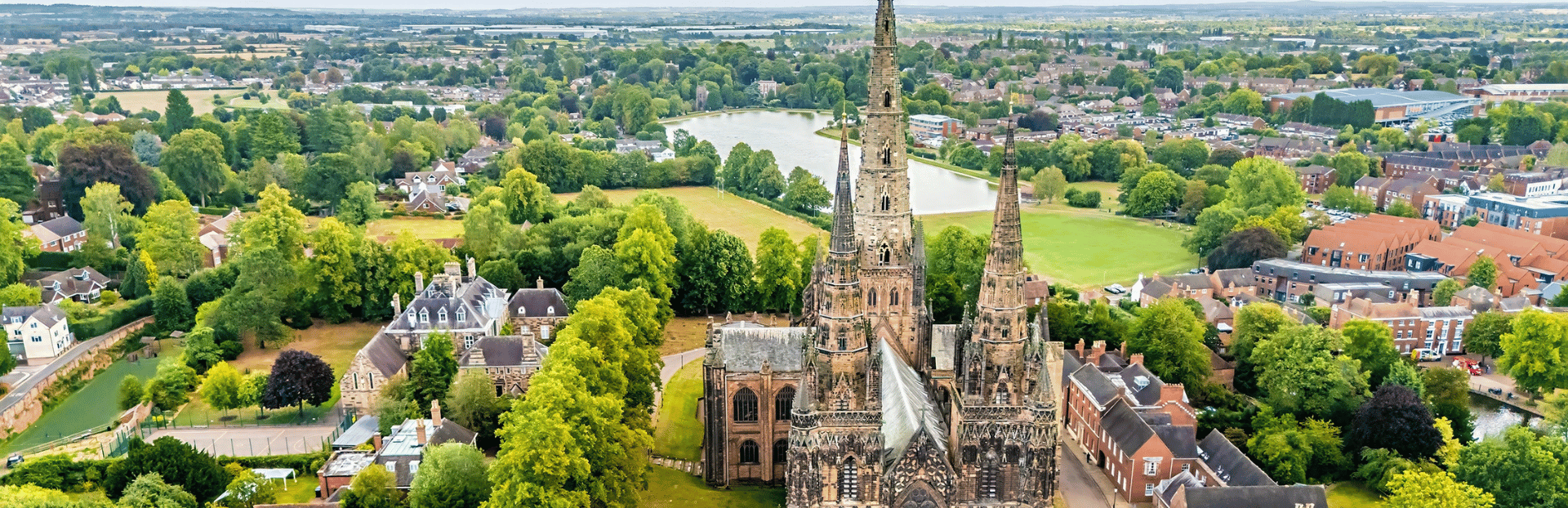
Lichfield is a cathedral city in Staffordshire, in the West Midlands. The average sold price across the Lichfield district is £335,962 on the HM Land Registry House Price Index, 15.9% above the England average of £289,946 and 44.3% above the West Midlands regional figure of £232,897. That premium is the defining feature of the market. Lichfield is a Birmingham commuter district where the price of getting into the area sits well above what its own wages would justify, and the yield numbers follow from that. The district's population grew 5.7% between the 2011 and 2021 censuses, from around 100,700 to 106,436.
Across the seven postcodes the split is stark. WS7 (Burntwood) is the cheapest way in at an asking price near £298,945 and the highest gross yield at 4.2%, while B74 (Four Oaks, Little Aston) lists at £516,097 and yields just 3.0%. The higher the price, the thinner the return, and every Lichfield postcode except WS7 needs more than seven times the local salary to buy in. This is a district where the entry cost, not the rent, decides the numbers.
This guide covers the Lichfield district local authority (ONS code E07000194) in Staffordshire, within the best places to invest in buy-to-let. Population, sold prices and earnings are reported at district level, since the Land Registry and ONS publish those figures for the whole local authority, while the asking-price, rent and growth tables are specific to each postcode. Lichfield sits 14 miles north of Birmingham, and investors weighing the wider region also look at Birmingham and Walsall.
Article updated: July 2026
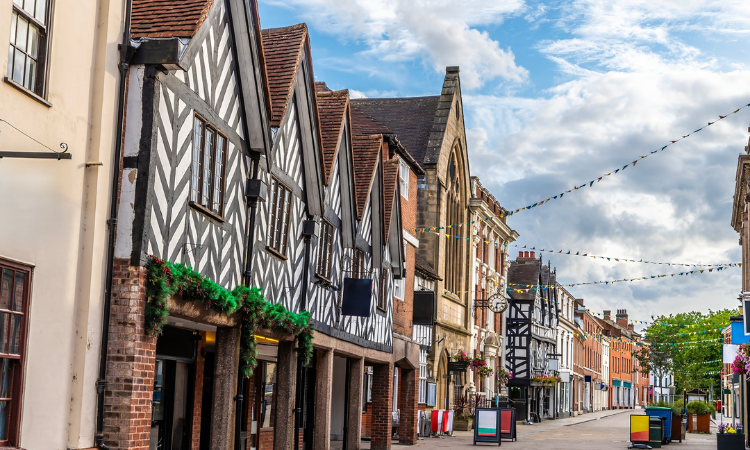
Why Invest in Lichfield?
Lichfield district residents earn a median £862.40 a week, well above both the West Midlands figure of £731.00 and the Great Britain median of £766.60. That income premium reflects who lives here. Lichfield is a commuter district, and its residents work across Birmingham, the wider West Midlands manufacturing corridor and the professional-services base of the region rather than in the district itself. The city sits on the Cross City rail line, with trains into Birmingham New Street taking around 40 minutes, and Lichfield Trent Valley station connects to the West Coast Main Line for longer-distance travel.
The employment rate across the district is 76.3%, above both the West Midlands figure of 73.6% and the Great Britain average of 75.5%, while the model-based unemployment rate of 4.4% sits below the regional 5.7%. The local authority holds around 49,000 employee jobs, spread fairly evenly across health and social work (12.2%), wholesale and retail (12.2%), administrative services (10.2%), manufacturing (9.2%) and professional and technical work (9.2%). No single sector dominates, which gives the rental base a broad footing rather than resting on one large employer.
The district's population rose from around 100,700 in 2011 to 106,436 in 2021, a 5.7% increase, slightly below the England and Wales average of 6.6%. Lichfield covers the cathedral city itself plus the market town of Burntwood (WS7), Rugeley and Armitage (WS15), and shares postcode territory with Tamworth (B79), Four Oaks and Little Aston (B74), and the villages of Alrewas and Barton-under-Needwood (DE13). The tenant demand that keeps the district rentable comes from professionals earning above the local median who want space and a commuter link without Birmingham prices.
Lichfield Economic Summary
- Population: 106,436 (2021 Census, Lichfield district). Growth of 5.7% from 2011.
- Median weekly salary: £862.40 (local), £731.00 (West Midlands), £766.60 (Great Britain)
- Employment rate: 76.3% (local), 73.6% (West Midlands), 75.5% (Great Britain)
- Unemployment rate: 4.4% (local), 5.7% (West Midlands), 4.5% (Great Britain)
- Key employment sectors: Health and social work, wholesale and retail, administrative services, manufacturing, professional and technical
Source: ONS Census 2021, Nomis Labour Market Profile (ASHE 2025, Employment Oct 2024-Sep 2025)
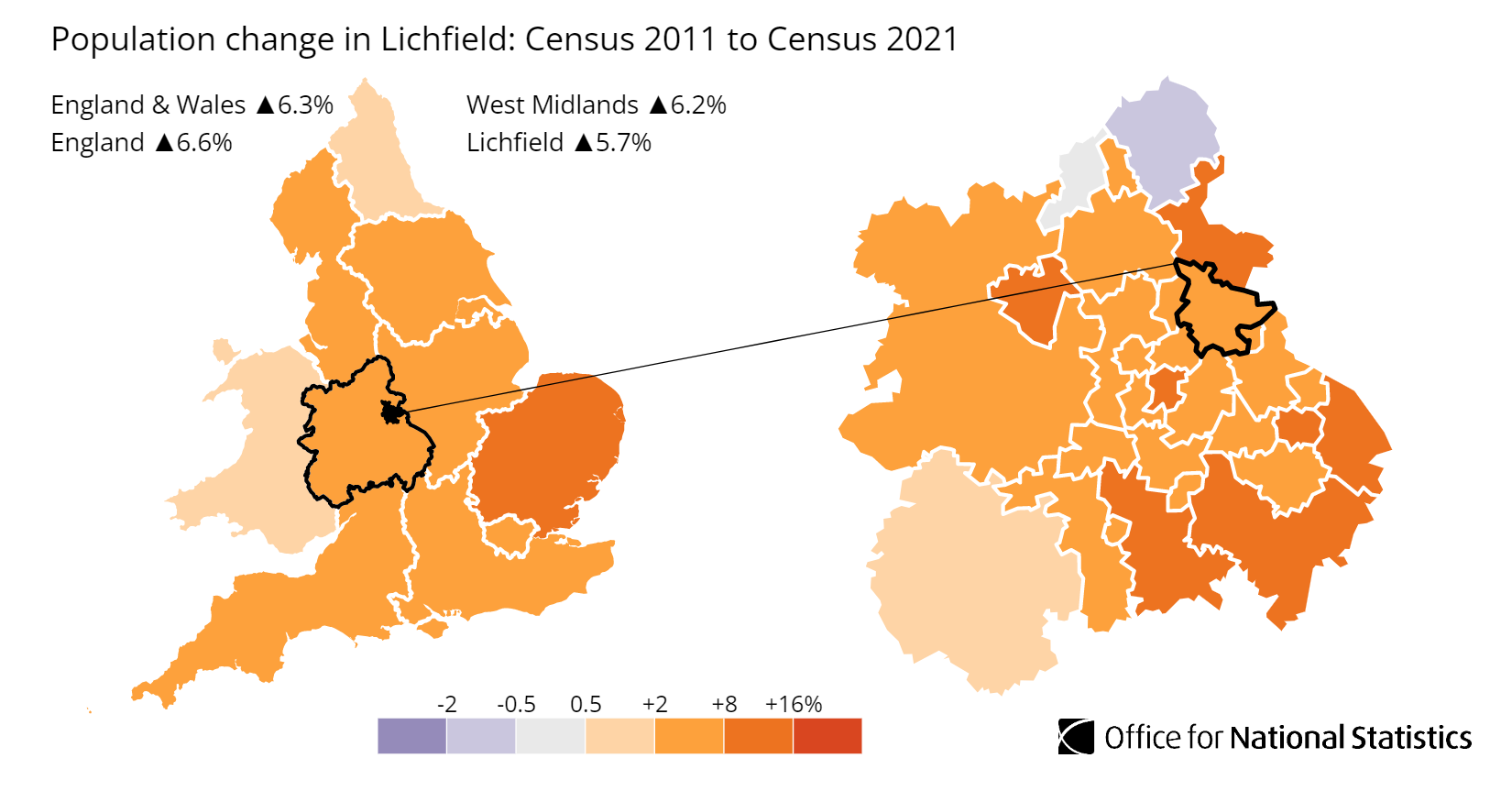
Source: Office for National Statistics - Population for Lichfield
Regeneration and Investment in Lichfield
Lichfield District Council is redeveloping the city centre through its City Centre Masterplan and Design Code, with the largest scheme focused on the Birmingham Road gateway site. For an investor, the point is that the district's regeneration reuses retail land for leisure and housing inside the existing centre, concentrated on WS13, rather than opening up a new area on the edge of the district.
- City Centre Gateway, Birmingham Road (in progress): The council's masterplan is guiding the redevelopment of the Birmingham Road frontage into a mix of housing, food and drink, and public space, replacing a site that had stalled as a retail-led scheme. The council frames it as the main entrance to the city centre and the anchor of the wider regeneration. Updates at Lichfield District Council.
- Everyman Cinema (in progress): A new Everyman cinema is planned for the city centre as a leisure anchor, part of the same masterplan effort to give residents and visitors a reason to stay in the centre beyond shopping hours. Updates at Lichfield District Council.
- City Centre Masterplan and Design Code (adopted): The council has adopted a design code that sets the framework for how the city centre develops, covering the gateway site, pedestrianisation proposals and heritage shopfront work. It is the document that ties the individual schemes together into a single plan for the centre. Updates at Lichfield District Council.
Lichfield Property Market Analysis
Average prices across the Lichfield district have risen 394.2% since January 1995, from £67,986 to £335,962, and the latest reading is a new all-time high. Lichfield sits within its own district local authority, so every sold-price figure from the Land Registry is reported at that level. The sections below trace the market cycle, then drill into current postcode data for sold prices, price per square foot, asking prices, growth and transaction volumes.
When Was the Last House Price Crash in Lichfield?
Lichfield's sharpest fall came out of the 2008 financial crisis. The HM Land Registry House Price Index runs from January 1995 to March 2026, and within it the district has been through one full boom-and-bust, a long stagnation, and a pandemic-era surge.
- 1995 to 2008, the long boom: Prices climbed from £67,986 in January 1995 to a pre-crash peak of £206,897 in January 2008, a rise of 204% over 13 years driven by cheap credit, expanding mortgage lending and Birmingham's growing employment base pulling commuter demand into the district.
- 2008 to 2009, the financial crisis: From the January 2008 peak of £206,897 to a trough of £163,949 in March 2009, Lichfield lost 20.8% in 14 months. The worst annual reading was -18.8% in January 2009. The fall was even across property types: detached houses dropped 19.9%, semi-detached 21.3%, terraced 21.0% and flats 21.0%. As a higher-value commuter market, Lichfield fell more steeply than lower-priced parts of the West Midlands.
- 2010 to 2013, stagnation: Prices bounced quickly off the 2009 trough but then stalled, moving sideways in a band roughly between £177,000 and £196,000 for close to four years. Annual readings flickered either side of zero without any sustained direction.
- 2014 to 2016, recovery: Sustained growth returned in 2014, and prices first passed the pre-crash peak of £206,897 in November 2014 at £210,719. That recovery took almost seven years from peak to peak, longer than the England average of roughly five years.
- 2017 to 2019, pre-pandemic growth: Steady single-digit growth continued, supported by commuter demand and constrained supply across the district, with prices reaching the mid-£240,000s by the end of 2019.
- 2020 to 2022, pandemic surge: The stamp duty holiday and the shift to remote working lifted demand for Lichfield's semi-rural housing stock. Prices surged to a then-record £318,222 by November 2022, an 12.3% annual reading at the peak of the run.
- 2023, rate shock: Higher mortgage rates paused the surge. The annual reading turned negative through the autumn, reaching -5.6% in November 2023 as prices eased from £311,290 in January to £300,479 in November. The dip was brief and shallow next to 2008.
- 2024 to 2026, new highs: Growth resumed through 2024 and 2025, and the latest Land Registry reading of £335,962 in March 2026 is a new all-time high, up 3.8% on the year.
Long-Term Property Value Growth in Lichfield
- 5 years (2021-2026): +24.0% (£270,851 to £335,962)
- 10 years (2016-2026): +59.0% (£211,312 to £335,962)
- 15 years (2011-2026): +88.1% (£178,659 to £335,962)
- 20 years (2006-2026): +82.8% (£183,777 to £335,962)
- 30 years (1995-2026): +394.2% (£67,986 to £335,962)
The 2008 crash is the reference point for Lichfield investors gauging downside. A 20.8% fall took close to seven years to recover from peak to peak, longer than the national average, because the district's higher-value commuter stock had further to climb back. The pandemic surge added most of the recent gain in a short burst, which is why the five-year figure of 24.0% is far stronger than the flatter decade that preceded it.
- All property types
- Detached
- Semi-detached
- Terraced
- Flats
- All property types
- Detached
- Semi-detached
- Terraced
- Flats
Sold House Prices in Lichfield
The average sold price across all property types in the Lichfield district is £335,962, which is 15.9% above the England average of £289,946. That headline hides a split by property type. Detached, semi-detached and terraced houses all sit above their England equivalents, while flats are the exception, averaging 24.5% below the national flat figure.
| Property Type | Lichfield Average | England Average | Difference |
|---|---|---|---|
| Detached houses | £521,596 | £470,492 | +10.9% |
| Semi-detached houses | £314,681 | £288,185 | +9.2% |
| Terraced houses | £250,757 | £243,788 | +2.9% |
| Flats and maisonettes | £162,003 | £214,563 | -24.5% |
| All property types | £335,962 | £289,946 | +15.9% |
Detached houses average £521,596, a 10.9% premium over the England figure of £470,492, and rose 4.1% over the year to March 2026. This is the dominant stock across the district. B74, WS14 and WS15 in particular are weighted towards detached homes on larger plots, which pulls the district-wide detached average above the national one.
Semi-detached houses average £314,681, 9.2% above the England equivalent, with the strongest annual growth of any type at 4.9%. Semis are the core buy-to-let stock in the more affordable postcodes such as WS7 (Burntwood) and WS13 (Lichfield city), where they attract commuting professionals and make up a large share of the housing.
Terraced houses at £250,757 sit only 2.9% above the England average and grew 3.9% over the year. Terraced stock is limited across the district. Lichfield does not carry the dense Victorian terracing found in the older industrial parts of the West Midlands, so this is the closest any local house type comes to the national benchmark.
Flats and maisonettes at £162,003 are 24.5% below the England flat average of £214,563, and edged down 0.7% over the year. The flat market here is small and concentrated in the city centre in WS13. The England flat average is inflated by London and the South East, so on flat prices the district offers entry points well under the national figure, though the choice is narrow.
Price Per Square Foot in Lichfield
How much floor space each pound buys varies widely across the district. Sold prices per square foot range from £265 in WS15 (Rugeley, Armitage) to £367 in WS14 (Lichfield, Shenstone). That £102 spread separates the affordable market towns from the premium commuter villages, and it tracks the asking-price order closely.
| Rank | Area | Price Per Sq Ft |
|---|---|---|
| 1 | WS15 (Rugeley, Armitage) | £265 |
| 2 | WS7 (Burntwood) | £280 |
| 3 | B79 (Tamworth) | £283 |
| 4 | DE13 (Alrewas, Barton-under-Needwood) | £289 |
| 5 | WS13 (Lichfield) | £328 |
| 6 | B74 (Four Oaks, Little Aston) | £351 |
| 7 | WS14 (Lichfield, Shenstone) | £367 |
WS15 (Rugeley) at £265 per square foot gives the most floor space for the money, with WS7 (Burntwood) and B79 (Tamworth) within £18 of it at £280 and £283. These three, together with DE13 at £289, make up the affordable tier where a buyer's money stretches furthest across the district.
The premium tier starts at WS13 (Lichfield city) at £328 per square foot, with B74 (Four Oaks) at £351 and WS14 (Shenstone) at £367. The gap between the cheapest and most expensive postcode is 38%, which is moderate for a district that spans both market towns and Birmingham's northern commuter villages.
For Sale Asking Prices in Lichfield
The gap between the top and bottom of this table sets the whole tone of the district. The cheapest postcode, WS7 (Burntwood), lists at an average asking price of £298,945, while the most expensive, B74 (Four Oaks, Little Aston), sits at £516,097. That is a 73% difference within one local authority. The mean asking price across all seven Lichfield postcodes is £380,175.
| Rank | Area | Asking Price |
|---|---|---|
| 1 | WS7 (Burntwood) | £298,945 |
| 2 | WS15 (Rugeley, Armitage) | £327,641 |
| 3 | B79 (Tamworth) | £339,436 |
| 4 | DE13 (Alrewas, Barton-under-Needwood) | £349,552 |
| 5 | WS13 (Lichfield) | £382,334 |
| 6 | WS14 (Lichfield, Shenstone) | £447,219 |
| 7 | B74 (Four Oaks, Little Aston) | £516,097 |
Four postcodes cluster between £298,945 and £349,552: WS7, WS15, B79 and DE13. The gap across this group is around £50,000, and it is the accessible end of the district, where asking prices come closest to the West Midlands regional figure. WS7 (Burntwood) is the clear entry point, almost £29,000 below the next cheapest.
WS13 (Lichfield city) at £382,334 sits in the middle, with WS14 (Shenstone) and B74 (Four Oaks) well above £440,000. B74 is the most expensive postcode in the district, reflecting Four Oaks and Little Aston as Birmingham's affluent northern edge. Investors looking to bring the entry cost down often target the lower-priced postcodes.
House Price Growth in Lichfield
Compare the top and bottom rows of this table. WS14 (Lichfield, Shenstone) has grown 23.1% over five years, while B79 (Tamworth) is down 6.9% over three. The growth data shows which postcodes have been building value and which have been treading water.
| Area | 1 Year | 3 Years | 5 Years |
|---|---|---|---|
| WS14 (Lichfield, Shenstone) | 7.2% | 17.6% | 23.1% |
| WS15 (Rugeley, Armitage) | 6.0% | 6.5% | 16.8% |
| WS7 (Burntwood) | 1.6% | 5.1% | 10.9% |
| B79 (Tamworth) | 0.0% | -6.9% | 5.8% |
| B74 (Four Oaks, Little Aston) | 6.6% | 4.0% | 5.4% |
| DE13 (Alrewas, Barton-under-Needwood) | -3.7% | -1.3% | 5.4% |
| WS13 (Lichfield) | -5.2% | 0.0% | 5.2% |
WS14 (Shenstone) leads on every timeframe: 7.2% over one year, 17.6% over three and 23.1% over five. This premium postcode has pulled away from the rest of the district. WS15 (Rugeley) is second over five years at 16.8%, pairing lower asking prices with solid appreciation, and WS7 (Burntwood) follows at 10.9% while carrying the district's lowest asking price.
WS13 (Lichfield city) is the softest recent performer, down 5.2% over the past year with flat three-year growth of 0.0%. The core city postcode has moved sideways where WS14 next door rose 17.6% over the same three years. B79 (Tamworth) shows a similar pattern in reverse: five-year growth of 5.8% but a 6.9% three-year fall, and a flat year, so the medium-term record is weaker than the longer view suggests.
Monthly Property Sales in Lichfield
Exit liquidity matters as much as the entry yield. Monthly sales across the district range from 17 transactions in WS14 to 38 in DE13, with turnover rates between 8% and 14%. A higher turnover means a larger share of the local stock changes hands each year, which points to an easier route out when the time comes to sell.
| Area | Sales Per Month | Turnover | Asking Price |
|---|---|---|---|
| DE13 (Alrewas, Barton-under-Needwood) | 38 | 9% | £349,552 |
| WS15 (Rugeley, Armitage) | 31 | 11% | £327,641 |
| B74 (Four Oaks, Little Aston) | 29 | 8% | £516,097 |
| WS13 (Lichfield) | 29 | 10% | £382,334 |
| B79 (Tamworth) | 20 | 10% | £339,436 |
| WS7 (Burntwood) | 20 | 14% | £298,945 |
| WS14 (Lichfield, Shenstone) | 17 | 10% | £447,219 |
WS7 (Burntwood) has the highest turnover at 14%, ahead of WS15 (Rugeley) at 11%. A higher turnover rate means more of the postcode's homes trade each year relative to the total stock, so an owner in WS7 has the widest pool of active buyers when selling. That the district's cheapest postcode is also its most liquid is a useful pairing for a buy-to-let investor.
DE13 (Alrewas, Barton-under-Needwood) records the highest raw volume at 38 sales a month, but on a 9% turnover. The postcode covers a large rural area with a big total housing stock, so a high transaction count still represents a small share of it. B74 (Four Oaks) sits at the other end with the lowest turnover at 8%: its premium detached stock sells less often. Across a district with this level of activity, off-market property can surface before it reaches the open market.
How Long Properties Take to Sell in Lichfield
Selling times run from about 217 days in WS7 (Burntwood) to 380 days in B74 (Four Oaks, Little Aston). Days on market is the typical number of days a home is up for sale before it sells, and the months of unsold stock shows how much for-sale supply is sitting there at the current rate of sales. The cheaper postcodes move faster, the premium ones slower.
| Area | Avg Days to Sell | Months of Unsold Stock | Market |
|---|---|---|---|
| WS7 (Burntwood) | 217 | 7.1 | Balanced market |
| WS15 (Rugeley, Armitage) | 277 | 9.1 | Balanced market |
| B79 (Tamworth) | 304 | 10.0 | Balanced market |
| WS13 (Lichfield) | 304 | 10.0 | Balanced market |
| WS14 (Lichfield, Shenstone) | 304 | 10.0 | Balanced market |
| DE13 (Alrewas, Barton-under-Needwood) | 338 | 11.1 | Balanced market |
| B74 (Four Oaks, Little Aston) | 380 | 12.5 | Buyer's market |
WS7 (Burntwood) clears fastest at around 217 days with 7.1 months of unsold stock, the only real outlier on speed. The rest of the district clusters between 277 and 338 days, a run of balanced markets where supply and demand sit roughly level.
B74 (Four Oaks) is the slowest at 380 days and the only postcode reading as a buyer's market, with 12.5 months of unsold stock. A yield figure says nothing about how quickly you can get back out, and B74 pairs the district's lowest yield with its longest sale times. For an investor, that is a postcode where capital sits tied up longer at both ends of the deal.
What Type of Property Can You Buy in Lichfield?
Detached houses are the single largest category in every Lichfield postcode, from 46.9% of stock in WS7 to 59.1% in WS15, while terraced houses and flats are a much smaller share. The mix of housing shapes which strategies fit where. The figures below are drawn from 2021 Census records for each postcode.
| Area | Detached | Semi-detached | Terraced | Flats |
|---|---|---|---|---|
| B74 (Four Oaks, Little Aston) | 47.0% | 22.2% | 3.5% | 27.3% |
| B79 (Tamworth) | 51.3% | 32.0% | 12.3% | 3.4% |
| DE13 (Alrewas, Barton-under-Needwood) | 53.8% | 26.7% | 10.4% | 6.1% |
| WS7 (Burntwood) | 46.9% | 32.4% | 11.7% | 8.4% |
| WS13 (Lichfield) | 51.1% | 27.6% | 11.6% | 7.1% |
| WS14 (Lichfield, Shenstone) | 51.5% | 32.9% | 10.7% | 4.4% |
| WS15 (Rugeley, Armitage) | 59.1% | 28.3% | 8.9% | 3.5% |
WS7 (Burntwood) holds the most balanced mix, with the lowest detached share at 46.9% and the highest combined terraced-and-flat share at 20.1%. That is the smaller-unit stock that usually forms the buy-to-let market, and it lines up with WS7 carrying the district's lowest asking price and highest yield. The semi-detached and terraced homes here suit standard family lets aimed at commuting tenants.
B74 (Four Oaks) is unusual, with the highest flat share at 27.3% alongside almost no terraced stock at 3.5%. The flats in Four Oaks and Little Aston are largely purpose-built blocks in an otherwise detached-heavy, high-value postcode, which is why B74's flat share does not translate into a cheaper entry point. WS15 (Rugeley) is the most detached-dominated at 59.1%, matching its weighting towards larger family homes.
Flats combine purpose-built and converted units. A small share of mobile and temporary dwellings is not shown, so rows may not total 100%.
Lichfield Rental Market Analysis
Monthly rents across the Lichfield district range from £954 in WS15 to £1,395 in WS14, with gross rental yields from 3.0% to 4.2% across all seven postcodes. For investors asking whether buy-to-let is worth it in Lichfield, the sections below break down rents, yields and tenant affordability postcode by postcode. If you are working out how to start a property business in the West Midlands, Lichfield's above-average tenant incomes support the rental base, though its high asking prices hold yields down. Browse current buy-to-let homes for sale across the region.
Average Rent & Gross Rental Yields in Lichfield
WS7 (Burntwood) delivers the highest gross yield in the district at 4.2%, pairing a monthly rent of £1,055 with the lowest asking price of £298,945. The yield spread is narrow at the top and widens at the bottom. Only 0.1 of a percentage point separates WS7 from DE13, but B74 (Four Oaks) trails the field at 3.0% because its £516,097 asking price swamps the rent it commands.
| Area | Average Monthly Rent | Asking Price | Gross Yield |
|---|---|---|---|
| WS7 (Burntwood) | £1,055 | £298,945 | 4.2% |
| DE13 (Alrewas, Barton-under-Needwood) | £1,201 | £349,552 | 4.1% |
| WS13 (Lichfield) | £1,181 | £382,334 | 3.7% |
| WS14 (Lichfield, Shenstone) | £1,395 | £447,219 | 3.7% |
| B79 (Tamworth) | £1,017 | £339,436 | 3.6% |
| WS15 (Rugeley, Armitage) | £954 | £327,641 | 3.5% |
| B74 (Four Oaks, Little Aston) | £1,286 | £516,097 | 3.0% |
The yield order here is set by the asking price, not the rent. WS7 leads because it is the cheapest to buy, not because it charges the most: at £1,055 a month its rent is mid-table. DE13 (Alrewas) sits just behind on 4.1% by pairing the district's second-highest rent of £1,201 with a mid-range price. WS14 (Shenstone) takes the highest rent at £1,395 but its £447,219 price pins the yield at 3.7%.
Compare B79 (Tamworth) and WS15 (Rugeley) at the lower end. WS15 charges the least rent in the district at £954 but on a slightly cheaper price still lands a 3.5% yield, marginally behind B79's 3.6%. Both are affordable market-town postcodes where the rent tracks local rather than commuter incomes, which is why the returns sit in the middle of the pack despite the lower asking prices.
Gross Rental Yield by Postcode
Is Lichfield Rent High?
Monthly rents across the district take between 25.5% and 37.3% of the local median gross monthly salary. The widely cited affordability threshold is 30% of gross income. Three postcodes sit above that line and four below it, so on the district-wide wage most Lichfield rents remain within reach.
The median gross weekly salary in the Lichfield district is £862.40, which equates to £3,737 per month or about £44,845 per year. This is above both the West Midlands median of £731.00 a week and the Great Britain median of £766.60 a week. Data from the Nomis Labour Market Profile (ASHE 2025).
| Rank | Area | Rent as % of Income |
|---|---|---|
| 1 | WS14 (Lichfield, Shenstone) | 37.3% |
| 2 | B74 (Four Oaks, Little Aston) | 34.4% |
| 3 | DE13 (Alrewas, Barton-under-Needwood) | 32.1% |
| 4 | WS13 (Lichfield) | 31.6% |
| 5 | WS7 (Burntwood) | 28.2% |
| 6 | B79 (Tamworth) | 27.2% |
| 7 | WS15 (Rugeley, Armitage) | 25.5% |
WS14 (Shenstone) is the least affordable at 37.3% of the district median income, with B74 (Four Oaks) next at 34.4%. Both are premium postcodes where tenants typically earn well above the local median, so the headline ratio reflects the standard of housing on offer rather than tenant stress. DE13 (32.1%) and WS13 (31.6%) sit just over the 30% mark.
The three most affordable postcodes are WS7 (28.2%), B79 (27.2%) and WS15 (25.5%). These are the market-town postcodes where rents track local wages more closely. Affordable rents tend to correlate with lower void periods and fewer arrears, because tenants who are not stretched stay put, and WS15 leaves the most headroom of any postcode in the district.
How Big Is Lichfield's Private Rented Sector?
The private rented sector is deepest in B74 and DE13, at 17.6% and 17.4% of households, and shallowest in WS15 and B79 at 13.3% and 13.4%. The share of homes already let privately signals how large the established tenant pool is and how active the local lettings market has become. Household tenure by postcode is set out below.
| Area | Owned Outright | Owned with Mortgage | Private Rented | Social Rented |
|---|---|---|---|---|
| B74 (Four Oaks, Little Aston) | 41.9% | 34.2% | 17.6% | 6.1% |
| DE13 (Alrewas, Barton-under-Needwood) | 46.3% | 31.8% | 17.4% | 4.0% |
| WS14 (Lichfield, Shenstone) | 45.2% | 32.1% | 17.0% | 5.1% |
| WS7 (Burntwood) | 43.0% | 33.5% | 15.9% | 7.1% |
| WS13 (Lichfield) | 42.7% | 34.4% | 15.9% | 6.0% |
| B79 (Tamworth) | 44.5% | 32.2% | 13.4% | 7.9% |
| WS15 (Rugeley, Armitage) | 49.5% | 32.2% | 13.3% | 4.2% |
B74, DE13 and WS14 have the largest private rented sectors at 17.0% to 17.6% of households. A wider rented sector points to an active local lettings market and a deeper pool of existing tenants, which is a different signal from yield. B74 pairs its rented share with the district's lowest gross yield at 3.0%, so the depth of the market there reflects the number of let flats and executive rentals rather than a strong income return.
WS15 (Rugeley) and B79 (Tamworth) have the smallest rented sectors and the highest outright ownership, with WS15 at 49.5% owned outright. These are settled market towns weighted towards owner-occupiers, so the pool of existing rental stock is thinner even though asking prices there are among the most affordable in the district.
Rental listings are thin across most of the district, and only B74 has enough homes advertised to rent to read the market with any confidence. There, around 41 homes were on the rental market, letting in roughly 51 days on average, which points to firm tenant demand for the higher-value stock. The other six postcodes carry too few live rental listings at any one time to read reliably.
Local Housing Allowance Rates in Lichfield
Lichfield's postcodes span three Broad Rental Market Areas, so Local Housing Allowance is not the same across the district. Local Housing Allowance sets the maximum housing support a tenant on benefits can receive, so it acts as a rent floor for landlords letting to that part of the market. Most of the district falls in the Mid Staffs area, while B74 sits in the higher Birmingham area and DE13 in the Eastern Staffordshire area. The rates below are weekly, for June 2026. To check the current rate for a specific address, use the government's official Local Housing Allowance calculator.
| Property Size | Mid Staffs (WS7, WS13, WS14, WS15, B79) | Birmingham (B74) | Eastern Staffs (DE13) |
|---|---|---|---|
| Shared accommodation | £81.10 | £78.61 | £73.95 |
| 1 bedroom | £115.07 | £159.95 | £113.92 |
| 2 bedrooms | £143.84 | £172.60 | £138.08 |
| 3 bedrooms | £170.30 | £189.86 | £166.85 |
| 4 bedrooms | £228.99 | £253.15 | £226.87 |
The Birmingham rates that cover B74 are the most generous in the district, with a one-bedroom allowance of £159.95 a week against £115.07 in the Mid Staffs area. That gap matters for anyone letting smaller units to benefit-supported tenants, because B74 falls under the Birmingham market area rather than the Staffordshire ones. The two-bedroom Mid Staffs rate of £143.84 a week works out at about £623 a month, well below the £954 to £1,395 open-market rents recorded across the district, so a benefit-backed tenancy at the LHA rate sits under Lichfield's market rents in every postcode.
Buy-to-Let Considerations
Are House Prices High in Lichfield? Price-to-Earnings Ratios
Buying in Lichfield takes between 6.7 and 11.5 times the median annual salary. This is based on the Nomis Labour Market Profile for Lichfield, which puts the median gross annual income for district residents at about £44,845.
As a yardstick, dividing England's average sold price of £289,946 by the Great Britain median salary of £39,125 gives a ratio of 7.4. Two of Lichfield's seven postcodes, WS7 and WS15, come in under that figure, so they are more affordable against local pay than the country as a whole is against national pay.
| Rank | Area | Price-to-Earnings Ratio |
|---|---|---|
| 1 | WS7 (Burntwood) | 6.7x |
| 2 | WS15 (Rugeley, Armitage) | 7.3x |
| 3 | B79 (Tamworth) | 7.6x |
| 4 | DE13 (Alrewas, Barton-under-Needwood) | 7.8x |
| 5 | WS13 (Lichfield) | 8.5x |
| 6 | WS14 (Lichfield, Shenstone) | 10.0x |
| 7 | B74 (Four Oaks, Little Aston) | 11.5x |
WS7 (Burntwood) at 6.7x and WS15 (Rugeley) at 7.3x both sit below the national benchmark of 7.4x. The district's above-average local earnings of £44,845 keep the ratios more moderate than the asking prices alone would suggest; without that wage premium, every ratio would read higher. B79 (7.6x) and DE13 (7.8x) sit just above the benchmark, rounding out the affordable band.
WS14 (10.0x) and B74 (11.5x) are stretched by any measure. These are premium postcodes where the stock is predominantly detached houses on larger plots, so the ratio reflects the housing mix rather than a market imbalance. At more than ten times local earnings, both sit firmly in owner-occupier territory rather than investor territory.
Deposit Requirements in Lichfield
A 30% deposit on a buy-to-let property in Lichfield ranges from £89,684 in WS7 (Burntwood) to £154,829 in B74 (Four Oaks, Little Aston). The gap between the cheapest and most expensive deposit is £65,145, enough to fund most of a second deposit in WS7. The district's high price base means deposits here sit above most of the West Midlands.
Beyond the deposit, the stamp duty calculator and other buy-to-let running costs affect the total capital required.
| Rank | Area | 30% Deposit Required |
|---|---|---|
| 1 | WS7 (Burntwood) | £89,684 |
| 2 | WS15 (Rugeley, Armitage) | £98,292 |
| 3 | B79 (Tamworth) | £101,831 |
| 4 | DE13 (Alrewas, Barton-under-Needwood) | £104,866 |
| 5 | WS13 (Lichfield) | £114,700 |
| 6 | WS14 (Lichfield, Shenstone) | £134,166 |
| 7 | B74 (Four Oaks, Little Aston) | £154,829 |
WS7 (Burntwood) is the cheapest way into the district at an £89,684 deposit, almost £9,000 below the next postcode. Three postcodes then cluster between £98,292 and £104,866: WS15, B79 and DE13. The deposit difference across that group is under £6,600, so a buyer choosing between them is comparing location character, tenant profile and growth record rather than capital outlay.
At the top, WS14 and B74 need deposits above £134,000. B74's £154,829 is £65,145 more than WS7's, and it buys into the district's lowest-yielding, slowest-selling postcode. For a buy-to-let investor, the extra capital works harder on rent and turnover in the cheaper postcodes.
What the Lichfield Data Tells Buy-to-Let Investors
In Lichfield the cheapest way in is also the highest-yielding and fastest-selling postcode. WS7 (Burntwood) carries the top yield at 4.2%, the lowest asking price for buying an investment property at £298,945, the lowest deposit at £89,684, and the quickest sale times at around 217 days. It is the only postcode with a price-to-earnings ratio below the national benchmark, at 6.7x, and it draws professional tenants commuting into Lichfield, Birmingham and along the A5.
WS14 (Shenstone) has grown fastest, up 23.1% over five years and 17.6% over three, with 7.2% in the past year. No other Lichfield postcode comes close on the growth tables. That has come with the district's second-highest rent at £1,395 a month, but a 3.7% yield and a £134,166 deposit, so the money in WS14 has done more on capital than on income.
WS13 (Lichfield city) is down 5.2% over the past year with flat three-year growth, and its 3.7% yield sits mid-table, so the core city postcode has moved sideways where WS14 next door rose. B79 (Tamworth) shows the reverse of WS14: a 6.9% three-year fall alongside five-year growth of 5.8%, so its medium-term record is softer than the longer view. Buyers who want to come in below asking often look through off-market property channels.
Lichfield District Council does not operate any council licensing areas for private rented homes, so most single lets need no local licence, though larger shared houses still require a mandatory HMO licence. Check Lichfield District Council's HMO licensing pages for the current position. With above-average wages, a 76.3% employment rate and a broad local economy, Lichfield reads as a higher-priced, lower-yielding commuter market with steadier fundamentals than the region's cheaper high-yield alternatives.
How Lichfield Compares
Lichfield's mean asking price of £380,175 is the second highest of five West Midlands locations compared here, behind only Solihull, yet its top yield of 4.2% is the lowest in the group. The comparison below places Lichfield alongside four nearby locations, each with a different investor profile. The mean asking price and mean monthly rent are simple averages across all postcodes with data. Top gross yield is the single highest postcode yield in each location.
| Location | Mean Asking Price | Mean Monthly Rent | Mean Gross Yield | Top Yield (postcode) |
|---|---|---|---|---|
| Wolverhampton | £255,437 | £986 | 4.6% | 5.5% (WV1) |
| Birmingham | £274,029 | £1,111 | 4.9% | 7.2% (B18) |
| Walsall | £284,303 | £1,017 | 4.3% | 6.2% (WS2) |
| Lichfield | £380,175 | £1,156 | 3.6% | 4.2% (WS7) |
| Solihull | £503,452 | £1,285 | 3.1% | 5.6% (B37) |
Lichfield occupies an unusual position in the West Midlands. Its mean asking price of £380,175 is 39% above Birmingham and 34% above Walsall, yet its top yield of 4.2% is the lowest of the five. Birmingham reaches 7.2% at a lower mean price, and Walsall delivers 6.2% with prices nearly £96,000 cheaper. Only Solihull is priced higher, and it still offers a stronger top yield at 5.6%.
Lichfield's rental incomes are competitive rather than weak. The mean monthly rent of £1,156 is higher than Wolverhampton (£986) and Walsall (£1,017), and close to Birmingham (£1,111). It is the high asking prices, not soft rents, that hold the yield down.
For a data-driven comparison across every UK location, see our highest-yielding areas guide. Investors chasing income will find stronger numbers in Birmingham or Walsall; those weighing a more affluent tenant base and a commuter-belt profile see Lichfield differently, with Solihull the nearest comparable on that footing.
Frequently Asked Questions
Is Lichfield a good place to live for buy-to-let tenants?
It works well on the fundamentals that keep tenancies stable. The district's employment rate is 76.3%, above the West Midlands 73.6% and the national 75.5%, and the typical resident earns £862.40 a week against roughly £731 across the region. Tenants in steadier work, earning above the regional average, are generally better placed to keep the rent paid.
It also suits renters who want a commuter link without Birmingham prices. Cross City Line trains reach Birmingham New Street in around 40 minutes, and the A38 and A5 open up the wider Midlands, which tends to draw professional tenants who stay put rather than move on each year.
What are the best areas in Lichfield for property investment?
The seven postcodes split fairly cleanly. WS7 (Burntwood) is the cheapest way in at £298,945 and carries the highest yield at 4.2%, so it leans towards income. WS14 (Shenstone) has grown 23.1% over five years and 17.6% over three, far ahead of any other postcode, so it leans towards capital growth, though on a 3.7% yield and a £134,166 deposit.
DE13 (Alrewas) sits just behind WS7 on yield at 4.1%, while B74 (Four Oaks, Little Aston) is the premium end at £516,097 and the lowest yield at 3.0%. So if income matters most, WS7 leads on yield, price and selling speed; if growth is the aim, WS14 is the one that has actually delivered it across every timeframe.
How does Lichfield compare to Birmingham for buy-to-let?
They sit at opposite ends of the same region. Birmingham reaches gross yields around 7.2% against Lichfield's 4.2%, on a mean asking price of £274,029, roughly 28% cheaper than Lichfield's £380,175. It also offers far more choice and a deeper student and city-centre rental market.
Lichfield trades that yield for a more affluent, commuter-belt tenant base, above-average local wages and a lower-density setting. Birmingham has historically been the stronger performer on cash flow, Lichfield on tenant profile and holding its value. Which matters more comes down to what you want the money to do.
What is the average rent in Lichfield?
Monthly rents across the seven postcodes range from £954 in WS15 (Rugeley) to £1,395 in WS14 (Shenstone), with a district mean of £1,156. WS7 (Burntwood) at £1,055 and WS13 (Lichfield city) at £1,181 sit in the middle. These figures reflect current asking rents by postcode, updated July 2026.
What are the average house prices in Lichfield?
The average sold price across the Lichfield district is £335,962 on the Land Registry index, about 15.9% above the England average of £289,946 as of March 2026. By type, detached homes average £521,596, semi-detached £314,681, terraced £250,757 and flats £162,003. Asking prices by postcode run from £298,945 in WS7 (Burntwood) up to £516,097 in B74 (Four Oaks, Little Aston), with a district mean of £380,175.
Can I find buy-to-let property under £300,000 in Lichfield?
It is tight. The cheapest postcode on average is WS7 (Burntwood) at £298,945, so the district as a whole sits just under £300,000 only in that one postcode. The way below that is by property type rather than by postcode: terraced houses across the district average £250,757 and flats £162,003 on the Land Registry index, both well under the postcode averages. If sub-£300,000 is the target, WS7 stock and terraced or flat units elsewhere are where to look, or explore below market value property.
What type of property is most common in Lichfield?
Detached houses, by a clear margin, and in every postcode. They run from 46.9% of the stock in WS7 (Burntwood) up to 59.1% in WS15 (Rugeley). The smaller homes that usually suit buy-to-let, terraces and flats, are most concentrated in WS7, where they make up around a fifth of the stock. B74 (Four Oaks) is unusual, holding a high flat share at 27.3% but almost no terraced housing at 3.5%.
How do I buy an investment property in Lichfield?
Start by deciding whether you are buying for income or for growth, because that points you at a different postcode. WS7 (Burntwood) is the cheapest entry at £298,945 and the highest-yielding at 4.2%. WS14 (Shenstone) pairs a 3.7% yield with the strongest five-year growth at 23.1%. Budget for a 30% deposit, which runs from £89,684 in WS7 to £154,829 in B74.
Beyond what is listed openly, plenty of experienced investors buy below asking through off market property and BMV property. To see what is available now, browse investment property or buy-to-let opportunities across the region.
Ready to buy property?
Access off-market investment properties with an average 8%+ annual gross yield (beating the UK's typical 3-5%).
Get property alerts