

This buy-to-let guide is built on the Isle of Man's own official data, not the UK sources we use everywhere else. Because the island is a Crown Dependency, it sits outside HM Land Registry, PropertyData and Nomis. The figures here come from the island's own Land Registry (38,878 transactions, to May 2026) plus its housing, earnings and census records, and they cover all 9 postcodes, IM1 to IM9, from central Douglas to the rural northern parishes.
For investors, the defining feature of this market is a long-running shortage of new homes. Just 150 were built in 2024, the second-lowest year on record, against a government estimate that the island needs 9,909 more by 2041. Private renting has climbed from one in seven households in 2001 to about one in five by 2021, while unemployment sits at just 0.6%. Demand keeps outrunning supply, and that is what underpins both prices and rents.
The sections below break the market down by postcode, track prices back to 2005, cover what is being built, and set out the practical risks. Investors weighing the island against mainland options can browse our best buy-to-let locations guide or view buy-to-let property for sale across the UK.
Article updated: July 2026

Why Invest on the Isle of Man?
The Isle of Man runs on a different economy to most UK locations. It is built around financial services, eGaming (online gaming companies) and technology. The island has near-full employment. In September 2025 just 273 people were registered as unemployed, a claimant rate of 0.6%, with 439 job vacancies open at the same time. When there are more jobs going than people looking for work, that points to strong, steady demand for places to live.
Median earnings reached £39,780 a year in 2024, which is 7.8% above the UK median. The best-paid sector is eGaming at £1,217 a week, followed by medical and health services at £1,074 a week, then finance and ICT, both above £1,000 a week. Higher earnings help support both house prices and rents.
The island recorded 84,975 residents in early 2025, a record high, up from 84,069 at the 2021 Census. More people die than are born on the island each year, so all of the growth comes from people moving in. Most new arrivals come from the UK, and most come for work. Around 44% of them settle in Douglas, the capital.
Isle of Man Economic Summary
- Population: 84,975 (2025 estimate, record high). Census 2021: 84,069
- Median annual earnings: £39,780 (2024). 7.8% above the UK median
- Mean annual earnings: £48,308 (2024)
- Unemployment: 0.6% claimant rate, 273 registered unemployed (September 2025)
- Job vacancies: 439 (September 2025)
- Top-paying sectors: eGaming (£1,217/week), medical and health (£1,074/week), finance and business (£1,031/week), ICT (£1,003/week)
Sources: Isle of Man Earnings Survey 2024, Isle of Man Labour Market Report, September 2025.
Isle of Man Property Price Snapshot
The Isle of Man has its own Land Registry, separate from the one that covers England and Wales. It publishes details of every sale going back to November 2000. Our analysis uses 38,878 of these official transactions, the most recent dated 29 May 2026. The island's headline measure is the weighted average sold price of £342,575 (December 2024), up 1.4% on the year.
The official Housing Market Review tracks houses and flats separately, using a trimmed average that leaves out the cheapest and most expensive sales. As at December 2024:
| Property type | Average (2024) | Median (2024) | Annual change |
|---|---|---|---|
| Houses | £379,601 | £350,000 | +0.5% |
| Flats and maisonettes | £200,567 | £185,000 | +4.2% |
| Weighted average (all homes) | £342,575 | - | +1.4% |
Flats grew faster than houses in 2024, up 4.2% against 0.5%. Houses are about 82% of all sales. The average house costs roughly 89% more than the average flat, a wider gap than in most UK cities.
Property Price History on the Isle of Man
The chart below shows the average sold price for every year from 2005 to 2025, taken from the island's own Land Registry transactions.
The island had a flat decade. The average sold price was £276,109 in 2008 and £277,667 in 2019, almost no change over eleven years. While prices on the mainland recovered after 2013, the Isle of Man stayed broadly level. You can see the same long, slow phase in the wider 18-year property cycle.
The picture changed after 2020. Prices jumped to £330,787 in 2021, then climbed again to £385,971 in 2025. Over the full 20 years from 2005 to 2025, the average sold price rose 76%, but most of that growth arrived in the last five years.
| Period | Start average | End average | Growth |
|---|---|---|---|
| 5 years (2020 to 2025) | £293,518 | £385,971 | +31.5% |
| 10 years (2015 to 2025) | £278,393 | £385,971 | +38.6% |
| 15 years (2010 to 2025) | £270,581 | £385,971 | +42.6% |
| 20 years (2005 to 2025) | £219,253 | £385,971 | +76.0% |
One note on the figures. The raw transaction averages in the chart include everything, from very cheap sales to a small number of multi-million-pound homes, so they bounce around. The official Housing Market Review uses a trimmed weighted average that leaves out those extremes, which is why its headline figure (£342,575 at December 2024) is the one we use in the Key Findings and the comparison table. Both measures tell the same story: a long flat spell, then a sharp rise from 2020.
Sales Transaction Volume on the Isle of Man
Prices are only half the picture. How many homes actually change hands tells you how liquid the market is, and island sales have cooled since their post-Covid peak. The official Housing Market Review counts completed house and flat sales each year:
| Year | Completed sales (houses and flats) |
|---|---|
| 2019 | 1,782 |
| 2020 | 1,629 |
| 2021 | 1,955 |
| 2022 | 1,965 |
| 2023 | 1,426 |
| 2024 | 1,377 |
Sales peaked at 1,965 in 2022, then fell to 1,377 in 2024, about 30% below the peak and below the pre-Covid level. So prices have risen while the number of buyers and sellers has thinned. For an investor that cuts both ways: fewer competing buyers can mean more room to negotiate on price, but a thinner market can also take longer to sell into when you come to exit.
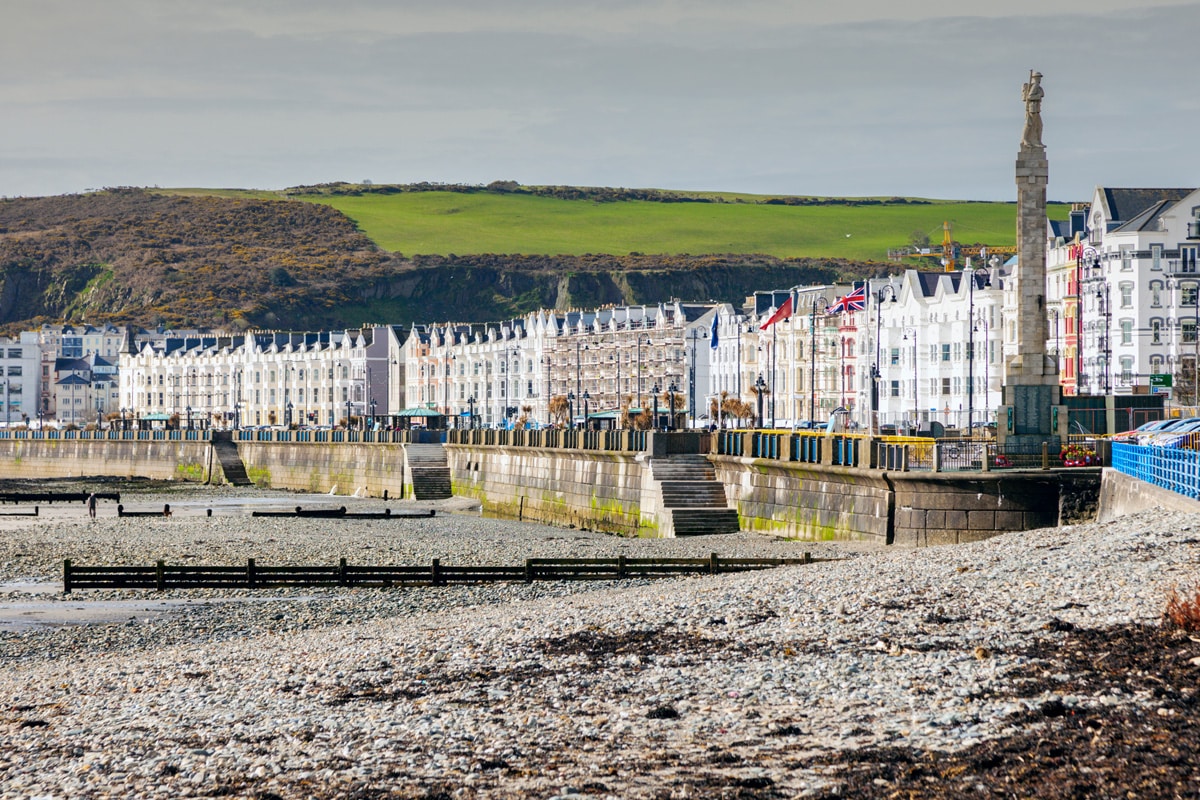
Isle of Man Sold Prices by Postcode (IM1 to IM9)
These are median sold prices for each IM postcode, taken from completed sales in the most recent 12 months of official Land Registry data and ranked cheapest to most expensive. They are actual prices paid, not asking prices. The "change" column compares the latest 12 months with the 12 months before.
| Area | Median price (12 months) | Change vs prior year | Sales (12 months) |
|---|---|---|---|
| IM8 (Ramsey) | £270,000 | +7.1% | 190 |
| IM1 (Douglas, central) | £289,000 | +8.6% | 139 |
| IM2 (Douglas & Onchan) | £290,000 | +3.6% | 392 |
| IM5 (Peel) | £300,000 | +1.7% | 146 |
| IM9 (Castletown & Port Erin) | £320,000 | -3.0% | 400 |
| IM3 (Onchan) | £342,500 | +5.4% | 150 |
| IM7 (Sulby & Northern Parishes) | £360,000 | -13.3% | 103 |
| IM6 (Kirk Michael) | £367,500 | +15.4% | 34 |
| IM4 (Laxey & Lonan) | £412,475 | +12.4% | 194 |
The cheapest place to buy is IM8 (Ramsey) at a median of £270,000, followed by central Douglas (IM1) and wider Douglas and Onchan (IM2), both around £290,000. Central Douglas has more flats, which pulls its median down. The most expensive areas are the rural eastern and northern postcodes. IM4 (Laxey and Lonan) has a median of £412,475 and is mostly larger detached houses.
Sales volumes vary a lot. IM9 (400 sales) and IM2 (392) are the busiest markets. IM6 (Kirk Michael) had just 34 sales in the year, so its numbers are based on a small sample and can swing sharply from one year to the next. The 13% fall in IM7 and the 15% rise in IM6 should both be read with that in mind.
Deposit Requirements on the Isle of Man
Based on a 30% deposit of the median sold price in each area over the last 12 months. 30% deposits range from £81,000 in IM8 (Ramsey) up to £123,743 in IM4 (Laxey and Lonan).
| Area | Median price | 30% deposit |
|---|---|---|
| IM8 (Ramsey) | £270,000 | £81,000 |
| IM1 (Douglas, central) | £289,000 | £86,700 |
| IM2 (Douglas & Onchan) | £290,000 | £87,000 |
| IM5 (Peel) | £300,000 | £90,000 |
| IM9 (Castletown & Port Erin) | £320,000 | £96,000 |
| IM3 (Onchan) | £342,500 | £102,750 |
| IM7 (Sulby & Northern Parishes) | £360,000 | £108,000 |
| IM6 (Kirk Michael) | £367,500 | £110,250 |
| IM4 (Laxey & Lonan) | £412,475 | £123,743 |
UK-based investors should note that the Isle of Man does not charge UK Stamp Duty Land Tax. It has its own, lower property transfer costs. Our stamp duty calculator covers the mainland UK rules for comparison.
New Housing Supply and Regeneration
The biggest single driver of this market is how little gets built. Only 150 new homes were finished in 2024 (117 private and 33 public), the second-lowest year on record. House-building has roughly halved over two decades, from about 395 homes a year in the mid-2000s to about 195 a year now. Against that, the government's own housing study says the island needs 9,909 more homes by 2041. Fewer new homes plus a growing population is the core reason rental demand stays firm.
A few larger schemes are now in the pipeline. These figures come from council planning records and local news rather than our monthly official data feed, so we treat them as background colour rather than hard statistics.
Braddan housing estate is the island's largest single residential scheme: 320 homes by Hartford Homes on land east of Braddan Road, just west of Douglas, with a quarter set aside as affordable two and three-bedroom housing. It also includes a neighbourhood centre, a nursery and outline approval for a possible primary school. Consent was first granted in May 2022 and upheld on appeal in July 2024.
Vollan Fields, Ramsey will add 153 homes on the edge of Ramsey, about 1.5km from the town centre, including 39 affordable two and three-bedroom units. The plans set aside 15,734 square metres of public open space with play areas and a sports pitch. The planning committee approved it unanimously in July 2024, with 37 conditions attached.
Lord Street, Douglas is a larger mixed-use regeneration of the former bus station, with an expected cost of £64m and a gross development value of £80m. The plan is for 85 apartments in a 12-storey tower, which would be the tallest building in Douglas, alongside a cinema, retail and leisure units, offices and new bus stands. In March 2026 the planning committee voted against refusing it, by 4 votes to 3, but a final decision was paused to settle conditions over affordable housing and public open space.
For investors, the point is less about any one scheme and more about the gap. Even with these projects built, planned supply still falls well short of the 9,909 homes the island says it needs, which keeps pressure on both prices and rents.
Rents and Rental Yields on the Isle of Man
The Isle of Man does not publish private rents the way the mainland does. There is no equivalent of PropertyData or the ONS rental index. The rent figures below come from the government's Objective Assessment of Housing Need (2024), which used crowd-sourced rent data and checked it against its own housing-cost figures. The government said the results matched its internal numbers.
| Area and type | Low rent pcm | Median rent pcm | High rent pcm |
|---|---|---|---|
| City centre, 1-bed flat | £650 | £845 | £1,000 |
| City centre, 3-bed house | £1,300 | £1,444 | £1,800 |
| Outside centre, 1-bed flat | £600 | £700 | £850 |
| Outside centre, 3-bed house | £900 | £1,183 | £1,500 |
Government-validated figures show gross rental yields range from 6.9% to 7.4% across the island. The 6.93% reading is for Douglas city centre and the 7.37% reading is for areas outside the centre. Yields are higher outside Douglas because homes there are cheaper to buy, while rents do not fall by as much. Our rental yield guide explains how the maths works.
One feature of this market matters for rental demand. People who move to the island from abroad usually cannot get an Isle of Man mortgage until they have the right to reside, which can take up to five years. That pushes a steady stream of new arrivals into renting. With people moving in every year, there is continuous demand for rental homes. You can read more about reading local demand in our guide to calculating rental demand.
Who Rents on the Isle of Man?
The island's census tracks how people live in more detail than most UK sources. Over 20 years, private renting has grown steadily while home ownership has slipped.
| Year | Owner-occupied | Private rented | Public rented |
|---|---|---|---|
| 2001 | 21,300 (68%) | 4,500 (14%) | 5,600 (18%) |
| 2011 | 23,500 (66%) | 6,200 (17%) | 5,839 (16%) |
| 2021 | 23,900 (64%) | 7,300 (20%) | 5,862 (16%) |
Private renting grew from 4,500 households (14%) in 2001 to 7,300 (about one in five) in 2021. That is 2,800 more renting households in 20 years. Public housing barely changed, with just 23 more homes added between 2011 and 2021. (The 2021 Census detailed tenure cut records private renting slightly lower, at 18.2%, because it counts a separate "rent free" group; both figures point to roughly one home in five being privately rented.)
Douglas has the highest share of private renters at about 26% of households. That fits the pattern: Douglas is where most jobs are, where most new arrivals settle, and where most flats are. The government's housing study projects a need for 1,568 more private rental homes by 2041.
Are Isle of Man House Prices High?
One way to judge this is to compare prices with local earnings. The table shows the average house price as a multiple of the average salary, and the median price against median earnings, for selected years.
| Year | Average price / average salary | Median price / median earnings | Young buyer (18 to 25) |
|---|---|---|---|
| 2000 | 7.0x | 5.4x | - |
| 2008 | 9.7x | 10.4x | - |
| 2015 | 7.5x | 8.9x | 11.0x |
| 2019 | 7.4x | 8.6x | 9.7x |
| 2022 | 8.6x | 10.0x | 11.4x |
| 2024 | 7.9x | 8.8x | 10.1x |
Affordability has improved a little since the 2022 peak, because earnings have grown faster than prices. The average house now costs about 7.9 times the average salary. By any longer view, though, island property is much less affordable than it was in 2000, when the median ratio was 5.4 times earnings.
What the Data Does and Does Not Tell Investors
The Isle of Man is not like the mainland UK areas we usually cover. Here is what the official data shows clearly, and where it has gaps.
Supply cannot keep up. Just 150 homes were built in 2024 against a stated need of 9,909 by 2041 (covered in full in the new housing supply section above). At the same time the government wants the population to keep growing. Fewer new homes plus more people is the core reason rental demand stays firm.
Renting is growing. Private renting rose from 14% of households in 2001 to about 20% in 2021, while public housing stood still. New arrivals who cannot yet get a mortgage add steady demand, most of it in and around Douglas.
Douglas is the rental heartland. The capital has the most jobs, the most new arrivals and the most flats, and the highest share of private renters at about 26%. IM1 and IM2 offer some of the lowest entry prices on the island alongside that demand.
The data also has real limits, and it is fair to be plain about them:
- There is no postcode-level rent data. The finest official split is "city centre" against "outside centre", so rental yields cannot be broken down by IM postcode.
- The yield figures come from crowd-sourced rent data that the government checked against its own numbers. They are a sound guide, not a transaction register.
- Planning and building-control records are published by the island but are not yet in our monthly data feed, so we do not list scheme-by-scheme planning numbers here.
- Raw transaction averages include a few very high-value sales, so the official trimmed weighted average is the more reliable headline figure.
Risks and Practical Considerations
Buy-to-let on the Isle of Man works differently from the mainland. These are the practical points worth weighing before you buy.
- It is a small, thinner market. The island sees roughly 1,400 to 1,900 sales a year in total. Some postcodes are very thin (IM6 had 34 sales in a year), so single sales can move the median. Treat small-sample figures with care.
- Selling on can take longer. A smaller market means fewer buyers, so exit times can be longer than in a busy mainland city.
- Mortgage access is restricted for new arrivals. People moving from abroad often cannot get an island mortgage until they have the right to reside, which can take up to five years. This supports rental demand, but it also limits the pool of buyers.
- It is a separate jurisdiction. The island has its own lending, letting and tax rules. It does not charge UK Stamp Duty Land Tax but has its own costs. Take island-specific legal and tax advice before committing.
- Recent growth arrived fast. Prices were flat from 2008 to 2019, then rose sharply after 2020. Buying after a fast rise carries different risk to buying into steady, gradual growth.
- Data is less granular. With no PropertyData and no postcode-level rents, you will need local agents and on-the-ground research to fill the gaps this guide cannot.
How the Isle of Man Compares
The Isle of Man sits in an unusual position, and a direct comparison has limits. Mainland prices below are average asking prices from PropertyData, while the Isle of Man figure is the official weighted average sold price. Mainland yields are from PropertyData and the island's yield is from the government housing study. With those caveats, here is how it lines up against five UK locations.
| Location | Average price | Top yield |
|---|---|---|
| Liverpool | £209,673 | 7.4% |
| Lancaster | £281,622 | 5.4% |
| Plymouth | £288,823 | 5.3% |
| Isle of Man | £342,575 | 7.4% |
| Bournemouth | £363,615 | 7.0% |
| Exeter | £398,677 | 5.0% |
On price, the Isle of Man sits between Plymouth and Bournemouth. On yield, its 7.4% matches Liverpool and beats Bournemouth, Exeter, Lancaster and Plymouth. The trade-off is the entry price: Liverpool reaches a similar yield from an average price under £210,000, while the island needs more capital to get in. The deeper difference is structural. The island is a separate jurisdiction, with its own economy, lending and housing policy, so investors are buying into a different market, not a region within the UK.
Frequently Asked Questions
How much does a house cost on the Isle of Man?
The weighted average property price was £342,575 at December 2024, according to the Isle of Man Housing Market Review. Houses averaged £379,601 and flats £200,567. By postcode, median sold prices over the last 12 months range from £270,000 in IM8 (Ramsey) to £412,475 in IM4 (Laxey and Lonan).
What are rental yields on the Isle of Man?
The government's Objective Assessment of Housing Need (2024) reported gross rental yields of 6.93% in Douglas city centre and 7.37% outside the centre. There is no postcode-level yield data for the island, because no body publishes private rents the way PropertyData does on the mainland.
What is the average rent on the Isle of Man?
Using government-validated figures from 2024, median monthly rents in Douglas city centre are about £845 for a 1-bed flat and £1,444 for a 3-bed house. Outside the centre, the medians are £700 and £1,183. The island does not publish regular official statistics on private rents.
Is the Isle of Man property market growing?
Yes, after a flat decade. Prices were broadly level from 2008 to 2019, then rose sharply from 2020. The official weighted average rose from £265,843 in 2019 to £342,575 in 2024, a 29% increase. Transaction volumes in 2024 were 1,377 sales (1,132 houses and 245 flats), down from a post-Covid peak of 1,965 in 2022.
How does the Isle of Man property market differ from the UK?
The island is a Crown Dependency, not part of the United Kingdom. It has its own Land Registry, census and earnings survey, so standard UK sources (HM Land Registry, PropertyData, Nomis) do not cover it. Earnings are 7.8% above the UK median, unemployment is just 0.6%, and housing supply is tight, with 150 homes built in 2024 against a need of 9,909 by 2041.
What percentage of Isle of Man households rent privately?
About one in five. The long-run tenure series puts private renting at 20% of households in 2021 (around 7,300 homes), up from 14% in 2001. The 2021 Census detailed cut records it at 18.2%. Douglas has the highest share at about 26%.
Ready to buy property?
Browse investment properties with prices and gross yields shown for each opportunity.
Get property alerts