
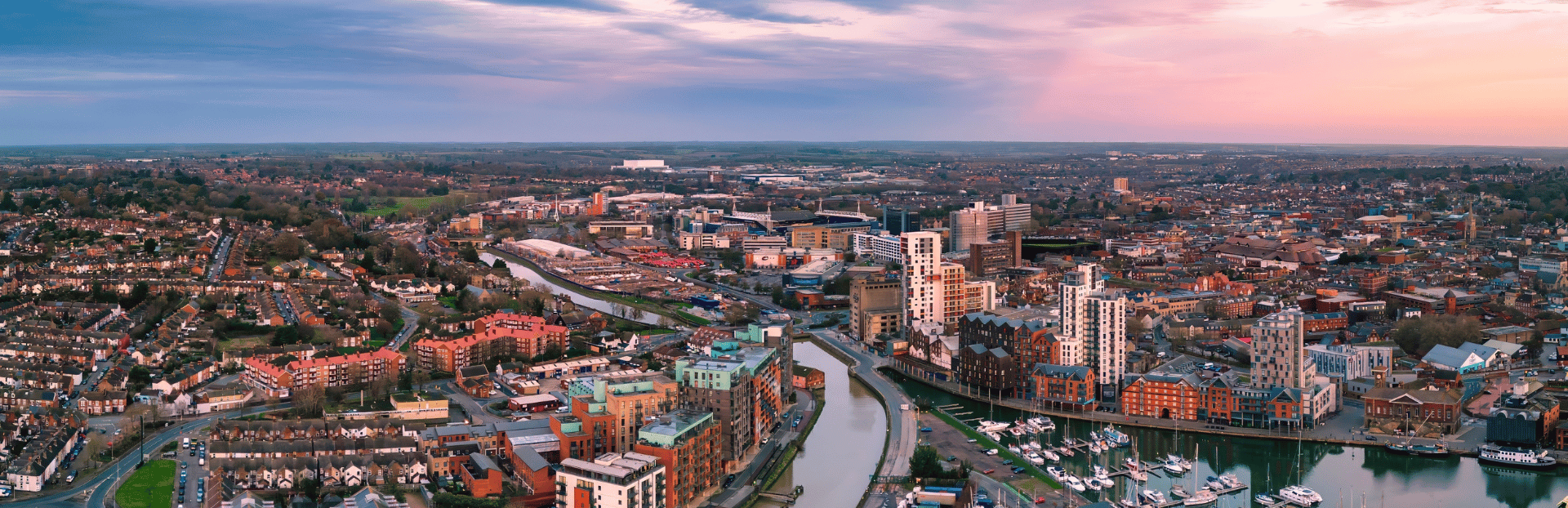
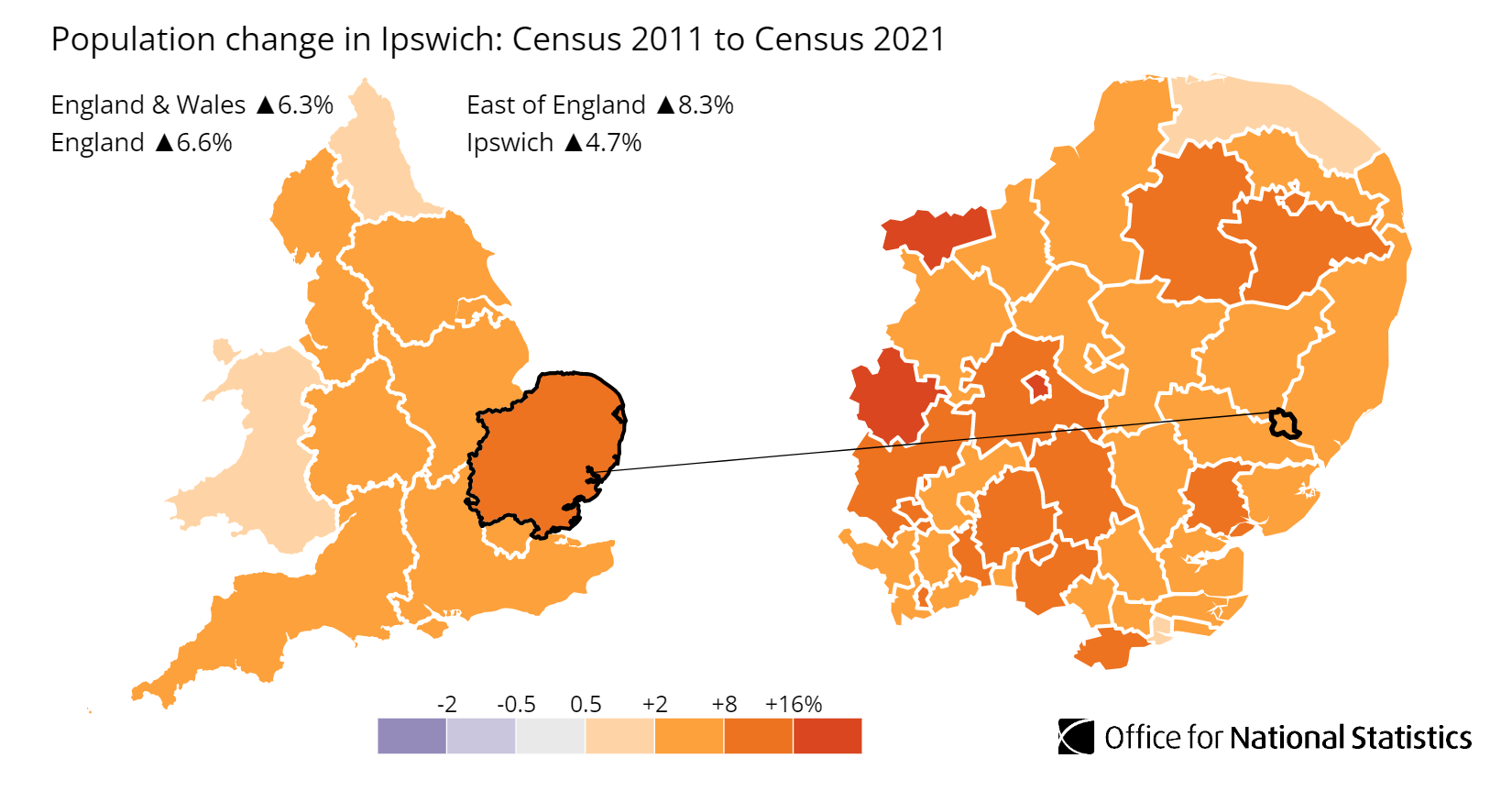
Ipswich is a town in Suffolk, in the East of England. Average sold prices in Ipswich sit at £213,736 on the HM Land Registry House Price Index, 26.3% below the England average of £289,946 and 36.6% below the East of England regional average of £337,182. That is a wide gap to its own region. Most of the East of England is priced up by the commuter towns ringing London, and Ipswich sits well outside that pull, at the eastern end of the line into Liverpool Street. The town grew its population 4.69% between the 2011 and 2021 censuses, from 133,384 to 139,642 residents, a touch below the England and Wales rate of 6.3%.
For an investor the more useful number is what that low pricing does to the income return. The two cheapest postcodes, IP2 at £224,265 and IP3 at £233,440, both still return a 5.1% gross yield. The spread runs from IP2 up to IP10 at £493,500, a two-tier market inside one Suffolk town, and as in most places the higher yields sit at the affordable end rather than the premium one.
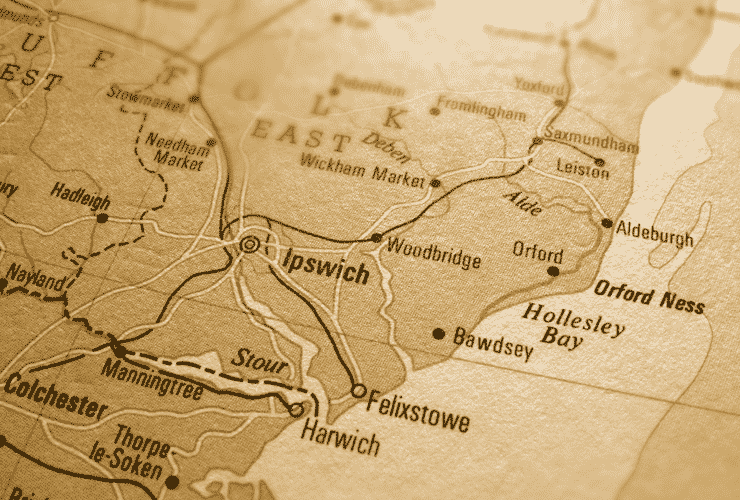
This guide covers the borough of Ipswich (ONS code E07000202) across postcodes IP1, IP2, IP3, IP4, IP5, IP8, and IP10. Ipswich sits in the East of England, about 70 miles north-east of London and 20 miles north of Colchester. The wider Suffolk buy-to-let region also includes Bury St Edmunds and the coastal towns to the east.
Article updated: July 2026
Why Invest in Ipswich?
Ipswich grew its population 4.69% between the 2011 and 2021 censuses, from 133,384 to 139,642 residents, a little below the England and Wales rate of 6.3%. It is steady growth rather than a boom, which fits a working county town that has not been swept up in the London commuter surge the way the western half of the region has. Ipswich is Suffolk's county town and largest urban centre, with a working port at the head of the Orwell estuary and a waterfront that has been the focus of two decades of regeneration.
The local employment rate of 74.4% sits just below Great Britain's 75.6%. Ipswich's economy leans on health and social work (18.1% of employee jobs), wholesale and retail (13.9%), administrative and support services (9.7%), and roughly equal shares of education and public administration at 8.3% each. The University of Suffolk, with its main campus on the waterfront and around 13,590 students, feeds the central rental market, while insurance and financial services have a long history in the town through firms based around the centre.
Median gross annual earnings in Ipswich are £36,660, which is 6.3% below the Great Britain median of £39,125 and below the East of England weekly median of £785.80. Wages below the national line, paired with prices well below it, is the combination that keeps the income return intact at the cheaper end. It also explains the affordability picture later in this guide, where rents take a larger slice of the local pay packet than the headline prices alone would suggest.
Ipswich Economic Summary
- Population (Borough of Ipswich): 139,642 (2021 Census). Growth of 4.69% from 2011.
- Median annual salary: £36,660 (local), £39,125 (Great Britain)
- Median weekly salary: £705.00 (local), £785.80 (East of England), £752.40 (Great Britain)
- Employment rate: 74.4% (local), 75.6% (Great Britain)
- Key employment sectors: Health and social work, wholesale and retail, administrative services, education, public administration and defence
Source: ONS Census 2021, Nomis Labour Market Profile (ASHE 2025)
Regeneration and Investment in Ipswich
Ipswich's regeneration is centred on the waterfront, where the council voted in 2025 to spend up to £8.8 million developing fresh plans for three long-empty landmark sites at the western gateway. The wider programme draws on a £25 million Towns Fund award secured in 2021, and the spending now landing on the ground is the signal that two decades of waterfront plans are still moving.
- Waterfront Western Gateway (Planning, up to £8.8 million): Ipswich Borough Council committed in 2025 to procuring a specialist development partner for three prominent waterfront sites that have sat undeveloped for years, the former Burtons building, Paul's Silo, and the St Peter's Dock car park. The council report sets out that any new scheme should provide much-needed housing alongside commercial, leisure, and small-scale retail, with improved pedestrian links between the waterfront and the town centre. Updates at Ipswich Borough Council.
- Town Centre Greening and Towns Fund (Active, £25 million programme): Ipswich was awarded £25 million through the Government's Towns Fund in 2021 to back urban regeneration, skills, and heritage projects. One strand now under way is a green route linking the town centre to the waterfront, with new trees, native planting, and public spaces across Princes Street, Queen Street, St Nicholas Street, and Wolsey Square. Updates at Ipswich Borough Council.
- Suffolk County Council Connectivity Schemes (Funded, £10.8 million): Suffolk County Council confirmed around £10.8 million for Ipswich regeneration, including £6 million towards the Prince Philip Lock pedestrian and cycle bridge at the Wet Dock, supported by £1.31 million of Town Deal funding, and £2.8 million towards the New Cut Bridge. The work improves walking and cycling links across the waterfront that the residential schemes depend on. Updates at Suffolk County Council.
Ipswich Property Market Analysis
Average property prices in Ipswich have risen 419.4% since January 1995, from £41,154 to £213,736. The sections below trace that path cycle by cycle, then drill into current postcode-level data for sold prices, price per square foot, asking prices, growth trends, and monthly transaction volumes.
When was the last house price crash in Ipswich?
All Ipswich sold prices come from HM Land Registry at borough level, ONS code E07000202. The House Price Index tracks the town's average from January 1995 to March 2026, covering 31 years of market cycles.
The 1995 to 2007 boom: Ipswich opened at £41,154 in January 1995. Prices reached £67,823 by December 2000, a 64.8% rise over six years, then climbed hard through the early 2000s to £128,610 by December 2005. The cycle peaked at £155,487 in December 2007.
2008 to 2009, the financial crisis: Prices fell from the December 2007 peak of £155,487 to a trough of £115,679 in April 2009. That is a 25.6% decline over sixteen months, and the worst year-on-year reading was -20.9% in March 2009. Ipswich's crash was deeper than England's 18.2% fall over the same downturn, a reminder that lower-priced markets without a strong commuter premium tend to give back more in a correction.
The 2010 to 2014 stagnation: Prices bounced off the April 2009 trough but then went sideways for years. The average stood at £132,782 by December 2010 and was still only £127,566 by March 2011, drifting in a narrow band well short of the pre-crash peak. Ipswich spent the early 2010s unable to make new ground.
Recovery, 2015: Prices finally cleared the old peak in July 2015, reaching £156,300 and edging past the December 2007 figure of £155,487 for the first time. The recovery took seven and a half years, a long climb that reflects how shallow the post-crash growth was in this part of the region.
The 2016 to 2019 pre-pandemic growth: Steady single-digit growth followed. The average moved from £164,180 in March 2016 to the high £170,000s and into the £180,000s by 2019, the kind of unremarkable rise a working town tends to produce when nothing dramatic is happening.
2020 to 2022, the pandemic surge: The stamp duty holiday and the move to space and home-working lifted Ipswich along with everywhere else. Prices ran from £206,762 in March 2021 to an all-time high of £234,277 in December 2022, the peak of the whole 31-year series.
2023 to present: Higher mortgage rates then unwound part of that surge. The average eased to £218,928 by December 2023 and £222,523 by December 2024, before slipping further to £213,736 by the latest reading in March 2026. That leaves the current price 8.8% below the December 2022 high, but still 37.5% above the December 2007 pre-crash peak.
Long-term growth summary:
- 5 years (March 2021 to March 2026): 3.4% growth (£206,762 to £213,736)
- 10 years (December 2015 to March 2026): 34.1% growth (£159,364 to £213,736)
- 15 years (December 2010 to March 2026): 61.0% growth (£132,782 to £213,736)
- 20 years (December 2005 to March 2026): 66.2% growth (£128,610 to £213,736)
- 30 years (January 1995 to March 2026): 419.4% growth (£41,154 to £213,736)
The 31-year return of 419.4% is strong, but the recent picture is softer than the long run suggests. The five-year figure of 3.4% is held down by the post-2022 easing, and the average is currently 8.8% off its all-time high. An investor who bought at the exact December 2007 peak would be sitting on a 37.5% gain on the Land Registry average, earned across seventeen years that included one of the deeper regional crashes and a long, slow recovery.
- All property types
- Detached
- Semi-detached
- Terraced
- Flats
- All property types
- Detached
- Semi-detached
- Terraced
- Flats
Sold House Prices in Ipswich
The average sold price across all property types in Ipswich is £213,736, which is 26.3% below the England average of £289,946 as of March 2026. That discount runs through every property type, but it is far from even. Flats sit 42.2% below England while detached houses are 19.1% below, and the gap reflects a town where the family stock holds up against the national line and the smaller-unit market trades a long way under it.
| Property Type | Ipswich Average | England Average | Difference |
|---|---|---|---|
| Detached houses | £380,737 | £470,492 | -19.1% |
| Semi-detached houses | £251,476 | £288,185 | -12.7% |
| Terraced houses | £198,887 | £243,788 | -18.4% |
| Flats and maisonettes | £124,028 | £214,563 | -42.2% |
| All property types | £213,736 | £289,946 | -26.3% |
Detached houses at £380,737 carry the smallest discount to England at 19.1%, but the gap is still wider than in the commuter towns nearer London. Detached stock concentrates in the outer postcodes, IP8, IP10, and IP5, where larger plots on the edge of town set the top of the market. Annual change of -4.4% shows the recent softening has reached even the family end.
Semi-detached houses at £251,476 sit 12.7% below England's £288,185, the narrowest discount of any type here. This is the core of Ipswich's housing, with semis the single largest category in IP1 and IP3. Annual change of -3.4% is the gentlest of the four types, which fits the steadiness of the mid-market family home.
Terraced houses at £198,887 are 18.4% below England's £243,788. Terraces are weighted towards the inner postcodes, with IP2 carrying the highest terraced share in the town. At under £200,000 on average they are the workhorse of the local buy-to-let market, and annual change of -4.2% places them alongside detached houses in the recent easing.
Flats and maisonettes at £124,028 show the deepest discount at 42.2% below England's £214,563. Ipswich is not a flat-heavy town outside the waterfront, and the smaller pool of apartment stock means flat prices track local demand rather than the institutional money that lifts flat values in larger cities. Annual change of -8.8% is the sharpest fall of any type, confirming a soft flat market.
Price Per Square Foot in Ipswich
£92 per square foot separates Ipswich's cheapest postcode from its dearest, with IP2 at £249 and IP5 at £341. Measuring by the square foot takes property size out of the comparison and shows what each location commands on its own. IP5 tops the table, reflecting the newer and larger homes in the Kesgrave and Rushmere St Andrew area on the eastern edge.
| Rank | Area | Price Per Sq Ft |
|---|---|---|
| 1 | IP2 (South West, Stoke) | £249 |
| 2 | IP1 (Town Centre, North West) | £253 |
| 3 | IP3 (South East, Gainsborough) | £267 |
| 4 | IP4 (East, California) | £277 |
| 5 | IP8 (Sproughton, Wherstead) | £331 |
| 6 | IP10 (Nacton, Bucklesham) | £339 |
| 7 | IP5 (Kesgrave, Rushmere) | £341 |
IP2 at £249 per square foot is the cheapest space in Ipswich, covering Stoke and the south-western neighbourhoods near the station and port. Based on 450 transactions analysed, IP2's rate sits 27% below IP5's, a meaningful gap for an investor buying on floor area rather than headline price.
IP5 at £341 per square foot tops the table, just ahead of IP10 at £339. The premium covers Kesgrave and Rushmere St Andrew, where newer detached and executive housing on the eastern fringe pushes the per-foot rate up. All 369 transactions analysed for IP5 show the consistent premium that comes with that newer stock.
For Sale Asking Prices in Ipswich
IP2 at £224,265 and IP10 at £493,500 sit 120% apart, the widest asking-price gap across Ipswich's seven postcodes. The hierarchy follows the sold-price picture, with the inner postcodes cheapest and the outer fringe dearest. The mean asking price across all seven postcodes is £314,699.
| Rank | Area | Asking Price |
|---|---|---|
| 1 | IP2 (South West, Stoke) | £224,265 |
| 2 | IP3 (South East, Gainsborough) | £233,440 |
| 3 | IP1 (Town Centre, North West) | £253,685 |
| 4 | IP4 (East, California) | £273,302 |
| 5 | IP8 (Sproughton, Wherstead) | £360,389 |
| 6 | IP5 (Kesgrave, Rushmere) | £364,314 |
| 7 | IP10 (Nacton, Bucklesham) | £493,500 |
IP2 at £224,265 is the lowest entry into Ipswich, with IP3 just above it at £233,440. These are the two postcodes where the most property turns up for a fixed budget, and they pair the lowest asking prices with the joint-highest yield in the town. The step from IP2 up to IP1 is roughly £30,000, the point where the central postcode adds price without adding yield.
IP10 at £493,500 is the outlier at the top, more than double IP2. It covers the villages of Nacton and Bucklesham on the south-eastern edge, where a small number of large detached homes set a high average on thin transaction volumes. With only around two sales a month recorded, IP10 is best read as a low-volume premium fringe rather than a working buy-to-let postcode.
House Price Growth in Ipswich
Every Ipswich postcode posted positive five-year growth, and two of them, IP4 and IP5, stayed positive across all three timeframes. IP4 grew 5.0% over a year, 1.6% over three years, and 9.1% over five, while IP5 returned 2.1%, 0.6%, and 11.3%. The inner postcodes tell the opposite story, with IP1, IP2, and IP3 all down over one and three years despite holding positive five-year figures.
| Area | 1 Year | 3 Years | 5 Years |
|---|---|---|---|
| IP10 (Nacton, Bucklesham) | 15.9% | -1.3% | 20.1% |
| IP8 (Sproughton, Wherstead) | 8.9% | 0.0% | 12.3% |
| IP5 (Kesgrave, Rushmere) | 2.1% | 0.6% | 11.3% |
| IP4 (East, California) | 5.0% | 1.6% | 9.1% |
| IP1 (Town Centre, North West) | -4.8% | -7.0% | 8.1% |
| IP3 (South East, Gainsborough) | -2.2% | -3.1% | 6.1% |
| IP2 (South West, Stoke) | -3.0% | -8.8% | 4.5% |
IP10 leads on five-year growth at 20.1% and on the one-year reading at 15.9%, but its three-year figure is negative and its transaction volume is tiny, so those percentages move sharply on a handful of sales. IP8 sits behind it with 12.3% over five years and a strong recent rebound, with both fringe postcodes carried by their detached stock.
IP5 at 11.3% over five years is the most consistent of the group, the one outer postcode that has grown across every timeframe alongside IP4. IP4 has done the same on a smaller scale, with 9.1% over five years and gentle gains across one and three years.
IP1's -7.0% three-year reading and IP2's -8.8% are the weakest in the town. The inner postcodes saw the sharpest of the post-2022 correction, though both kept a positive five-year figure, IP1 at 8.1% and IP2 at 4.5%.
Monthly Property Sales in Ipswich
Transaction volumes split Ipswich sharply, from 39 sales a month in IP4 down to just 2 in IP10. The inner postcodes account for most of the activity, while the outer fringe sees only a trickle of sales. Turnover rates are tighter, running from 7% in IP8 to 13% in IP3.
| Area | Sales Per Month | Turnover | Asking Price |
|---|---|---|---|
| IP4 (East, California) | 39 | 11% | £273,302 |
| IP1 (Town Centre, North West) | 34 | 9% | £253,685 |
| IP3 (South East, Gainsborough) | 32 | 13% | £233,440 |
| IP2 (South West, Stoke) | 24 | 11% | £224,265 |
| IP5 (Kesgrave, Rushmere) | 18 | 11% | £364,314 |
| IP8 (Sproughton, Wherstead) | 9 | 7% | £360,389 |
| IP10 (Nacton, Bucklesham) | 2 | 8% | £493,500 |
IP3 records the highest turnover at 13%, with 32 sales a month against its mid-range stock. For a buy-to-let investor, a higher turnover postcode means more comparable sales coming through and an easier exit when the time comes to sell. IP4 sees the most sales outright at 39 a month, the busiest market in the town.
IP8 and IP10 sit at the other end, with 9 and 2 sales a month and turnover of 7% and 8%. The premium fringe simply trades less often, partly because its larger detached homes are held longer and partly because there are fewer of them. An investor looking at those postcodes should expect a slower market in both directions.
How Long Properties Take to Sell in Ipswich
IP3 (South East, Gainsborough) clears fastest at about 234 days, while IP8 (Sproughton) and IP10 (Nacton) are slowest at roughly 380 days. Days on market is the typical time a home is listed before it sells, and the months of unsold stock shows how much for-sale supply is sitting there at the current rate of sales. The two figures together describe how quickly your money comes back out at the end.
| Area | Avg Days to Sell | Months of Unsold Stock | Market |
|---|---|---|---|
| IP3 (South East, Gainsborough) | 234 | 7.7 | Balanced market |
| IP2 (South West, Stoke) | 277 | 9.1 | Balanced market |
| IP4 (East, California) | 277 | 9.1 | Balanced market |
| IP5 (Kesgrave, Rushmere) | 277 | 9.1 | Balanced market |
| IP1 (Town Centre, North West) | 338 | 11.1 | Balanced market |
| IP8 (Sproughton, Wherstead) | 380 | 12.5 | Buyer's market |
| IP10 (Nacton, Bucklesham) | 380 | 12.5 | Buyer's market |
IP3 at roughly 234 days and 7.7 months of stock is the quickest postcode to sell out of, which lines up with its top turnover rate. A faster-moving market is worth weighing alongside yield: IP3 carries the joint-highest yield in the town and the shortest holding period at exit, a useful pairing for an investor who wants the option to move on without a long wait.
IP8 and IP10 sit at the slow end, around 380 days and 12.5 months of unsold stock, and both read as buyers' markets. Selling out of the premium fringe takes far longer than the inner postcodes, so an investor buying there is accepting a longer tail at the end as part of the deal.
What Type of Property Can You Buy in Ipswich?
The mix flips across Ipswich, from semi-detached-led inner postcodes to detached-dominated outer ones, with IP2 holding the largest share of both terraces and flats. What sits on the ground in each postcode shapes which strategy fits it. The figures below come from 2021 Census records for each postcode.
| Area | Detached | Semi-detached | Terraced | Flats |
|---|---|---|---|---|
| IP1 (Town Centre, North West) | 22.2% | 41.7% | 16.5% | 19.4% |
| IP2 (South West, Stoke) | 30.0% | 29.1% | 19.5% | 21.1% |
| IP3 (South East, Gainsborough) | 21.5% | 42.3% | 15.1% | 21.0% |
| IP4 (East, California) | 36.7% | 29.7% | 14.8% | 18.6% |
| IP5 (Kesgrave, Rushmere) | 48.5% | 28.4% | 11.0% | 10.6% |
| IP8 (Sproughton, Wherstead) | 50.6% | 31.8% | 9.5% | 6.2% |
| IP10 (Nacton, Bucklesham) | 50.8% | 28.5% | 6.2% | 6.4% |
IP2 holds the largest share of terraced houses at 19.5% and flats at 21.1%, the smaller-unit stock that usually forms the buy-to-let market. That lines up with IP2 carrying the lowest asking price and the joint-highest yield in the town. The terraces and flats around Stoke and the station suit single lets and sharers, while IP3 close behind on flats at 21.0% offers similar smaller-unit options on the south-eastern side.
IP8 and IP10 are the most detached-dominated postcodes at 50.6% and 50.8%, with terraces and flats together under 16% in each. The housing here is weighted towards owner-occupier family homes rather than the smaller units that drive rental income, which matches their premium prices and lowest yields. IP5 sits just behind at 48.5% detached, the executive end of the eastern fringe.
The flats figure covers both purpose-built blocks and conversions, and a small share of non-standard dwellings is left out, so rows may not total 100%.
Ipswich Rental Market Analysis
Monthly rents in Ipswich range from £960 in IP2 to £1,288 in IP5, with gross rental yields from 3.5% to 5.1% across the six postcodes with rental data. For investors asking is buy to let worth it in Ipswich, the sections below break down rents, yields, and tenant affordability postcode by postcode. If you are weighing how to build a property portfolio in the East of England, Ipswich offers lower asking prices than the commuter towns nearer London with the income return still intact at the cheaper end. Browse current buy-to-let property for sale across the region.
Average Rent & Gross Rental Yields in Ipswich
Gross rental yields in Ipswich range from 3.5% in IP8 to 5.1% in IP2 and IP3. The two cheapest postcodes share the top yield, and the most expensive postcode with rental data delivers the lowest. IP5 charges the highest monthly rent at £1,288 but yields 4.2%, because its £364,314 asking price is 62% higher than IP2's.
| Area | Average Monthly Rent | Asking Price | Gross Yield |
|---|---|---|---|
| IP2 (South West, Stoke) | £960 | £224,265 | 5.1% |
| IP3 (South East, Gainsborough) | £992 | £233,440 | 5.1% |
| IP1 (Town Centre, North West) | £971 | £253,685 | 4.6% |
| IP4 (East, California) | £1,001 | £273,302 | 4.4% |
| IP5 (Kesgrave, Rushmere) | £1,288 | £364,314 | 4.2% |
| IP8 (Sproughton, Wherstead) | £1,045 | £360,389 | 3.5% |
| IP10 (Nacton, Bucklesham) | Not enough data | £493,500 | Not enough data |
IP2 and IP3 share the 5.1% top yield, combining the two lowest asking prices with mid-range rents around £960 to £992. A 30% deposit of £67,280 gets an investor into IP2, the cheapest way into the highest-yielding pair. IP3 costs a little more at £70,032 down and lets faster, which gives it a slightly different appeal at the same yield.
IP8 at 3.5% sits at the bottom of the ranked yields. Its £1,045 rent is solid, but the £360,389 asking price for the larger detached stock around Sproughton compresses the income return. In IP8 the premium price does more for the size of the home than for the yield.
IP10 has too few homes advertised to let to read a reliable rent or yield, so it shows as not enough data. Its price and growth figures appear in the sections above, but the rental market in the Nacton villages is too thin to quote.
Gross Rental Yield by Postcode
Is Ipswich Rent High?
Monthly rents in Ipswich consume between 31.4% and 42.2% of the local median gross monthly salary. The widely cited affordability threshold is 30% of gross income, and every Ipswich postcode sits above it. That is a tighter picture than the low house prices suggest, and it comes straight from local wages, which run below both the regional and national medians.
The median gross weekly salary in Ipswich is £705.00, which equates to £3,055 per month or £36,660 per year. This is below the East of England regional median of £785.80 per week and the Great Britain median of £752.40 per week. Data from the Nomis Labour Market Profile (ASHE 2025).
| Rank | Area | Rent as % of Income |
|---|---|---|
| 1 | IP5 (Kesgrave, Rushmere) | 42.2% |
| 2 | IP8 (Sproughton, Wherstead) | 34.2% |
| 3 | IP4 (East, California) | 32.8% |
| 4 | IP3 (South East, Gainsborough) | 32.5% |
| 5 | IP1 (Town Centre, North West) | 31.8% |
| 6 | IP2 (South West, Stoke) | 31.4% |
| - | IP10 (Nacton, Bucklesham) | Not enough data |
IP2 at 31.4% is the most affordable for tenants, the postcode where a £960 rent takes the smallest slice of the median local wage. It still sits above the 30% line, but only just, and affordable rents tend to correlate with longer tenancies and fewer arrears. The cheaper end of Ipswich is where the rent-to-income balance works best for a tenant.
IP5 at 42.2% is the least affordable on the median wage, because its £1,288 rent is the highest in the town. Tenants paying at that level in Kesgrave and Rushmere St Andrew are typically dual-income or professional households rather than single earners on the median salary, so the headline percentage overstates the strain for the people actually renting there.
How Big Is Ipswich's Private Rented Sector?
The private rented sector is deepest in IP4 and IP1, where it accounts for 20.8% and 19.9% of households, and shallowest in IP8 and IP10 at 12.6% and 14.6%. How much of the local stock is already let privately is a read on how established the tenant market is, and the inner postcodes show the more proven rental base. The table below sets out household tenure by postcode.
| Area | Owned Outright | Owned with Mortgage | Private Rented | Social Rented |
|---|---|---|---|---|
| IP4 (East, California) | 38.6% | 30.7% | 20.8% | 9.2% |
| IP1 (Town Centre, North West) | 35.5% | 27.4% | 19.9% | 16.6% |
| IP3 (South East, Gainsborough) | 26.3% | 31.1% | 18.6% | 22.9% |
| IP2 (South West, Stoke) | 31.1% | 28.8% | 18.5% | 20.9% |
| IP5 (Kesgrave, Rushmere) | 44.5% | 30.4% | 16.1% | 8.5% |
| IP10 (Nacton, Bucklesham) | 51.0% | 24.8% | 14.6% | 9.0% |
| IP8 (Sproughton, Wherstead) | 43.7% | 32.2% | 12.6% | 10.2% |
IP4 and IP1 carry the largest private rented sectors at around a fifth of households, pointing to an active lettings market and a wider pool of existing tenants on the eastern and central sides of town. IP3 and IP2 sit close behind on private renting but pair it with the highest social-rented shares in Ipswich, at 22.9% and 20.9%, a reminder that the inner postcodes house a broad mix of tenures.
IP8 and IP10 have the smallest private rented sectors and the highest outright ownership, with IP10 at 51.0% owned outright. The premium fringe is owner-occupier territory, so an investor buying there is letting into a thinner local tenant base than the inner postcodes offer.
Among the postcodes with enough rental listings to read, the balance currently sits with landlords. In IP3 around 42 homes were on the rental market against roughly 39 lets a month, clearing in about 33 days on average, and IP1 and IP4 show the same fast-letting pattern. That points to firm tenant demand across central Ipswich rather than a glut of rental supply.
Local Housing Allowance Rates in Ipswich
All seven Ipswich postcodes fall within the Ipswich Broad Rental Market Area, where Local Housing Allowance runs from £84.35 a week for a shared room to £253.15 a week for a four-bedroom home. Local Housing Allowance is the maximum housing support a tenant on benefits can claim, so for that part of the market it sets an effective rent floor. The rates below apply across the whole of Ipswich. To check the current rate for a specific address, you can use the government's official Local Housing Allowance calculator.
| Property Size | Weekly LHA Rate | Monthly Equivalent |
|---|---|---|
| Shared accommodation | £84.35 | £366 |
| 1 bedroom | £136.93 | £593 |
| 2 bedrooms | £165.01 | £715 |
| 3 bedrooms | £184.11 | £798 |
| 4 bedrooms | £253.15 | £1,097 |
The two-bedroom LHA rate of £165.01 a week works out at about £715 a month, below the £960 to £1,288 open-market rents recorded across Ipswich's postcodes. A benefit-backed tenancy at the LHA rate therefore sits under the open market here, and the stock that fits within these rates is concentrated in IP2 and IP3, where asking prices and rents are both lowest. The rates are the same in every Ipswich postcode because they are set across one rental market area covering the whole town.
Buy-to-Let Considerations
Are House Prices High in Ipswich? Price-to-Earnings Ratios
Buying in Ipswich takes between 6.1 and 13.5 times the median annual salary. This is based on the Nomis Labour Market Profile for Ipswich showing the median gross annual income for Ipswich residents is £36,660.
The national benchmark for price-to-earnings is 7.4x (England's average sold price of £289,946 divided by the Great Britain median annual salary of £39,125). Three of Ipswich's seven postcodes (IP2, IP3, and IP1) sit below that national benchmark, meaning they are more affordable relative to local incomes than the England average is relative to national incomes.
| Rank | Area | Price-to-Earnings Ratio |
|---|---|---|
| 1 | IP2 (South West, Stoke) | 6.1x |
| 2 | IP3 (South East, Gainsborough) | 6.4x |
| 3 | IP1 (Town Centre, North West) | 6.9x |
| 4 | IP4 (East, California) | 7.5x |
| 5 | IP8 (Sproughton, Wherstead) | 9.8x |
| 6 | IP5 (Kesgrave, Rushmere) | 9.9x |
| 7 | IP10 (Nacton, Bucklesham) | 13.5x |
IP2 at 6.1x is the most affordable entry in Ipswich and sits well below the 7.4x national benchmark. A property at just over six times local earnings is competitive with much higher-yielding postcodes elsewhere, and it comes with the joint-highest yield in the town. IP3 at 6.4x and IP1 at 6.9x make up the affordable inner cluster, all three under the national line.
IP10 at 13.5x is more than double the cheapest postcode and well above the benchmark. At over thirteen times the local median salary, the south-eastern villages are firmly premium owner-occupier territory, and that ratio is what compresses the yields and stretches the payback period for any investor buying there.
Deposit Requirements in Ipswich
A 30% deposit on a buy-to-let property in Ipswich runs from £67,280 in IP2 to £148,050 in IP10. The gap between the cheapest and dearest deposit is £80,770, enough to fund a second deposit in IP2 with room to spare. For investors comparing Ipswich with other East of England towns, the IP2 figure sits below the entry deposits in Colchester and Chelmsford while keeping a similar yield.
Beyond the deposit, the stamp duty calculation and other buy to let costs affect the total capital required.
| Rank | Area | 30% Deposit Required |
|---|---|---|
| 1 | IP2 (South West, Stoke) | £67,280 |
| 2 | IP3 (South East, Gainsborough) | £70,032 |
| 3 | IP1 (Town Centre, North West) | £76,106 |
| 4 | IP4 (East, California) | £81,991 |
| 5 | IP8 (Sproughton, Wherstead) | £108,117 |
| 6 | IP5 (Kesgrave, Rushmere) | £109,294 |
| 7 | IP10 (Nacton, Bucklesham) | £148,050 |
IP2 is the cheapest way into Ipswich at a £67,280 deposit, for a postcode that also carries the joint-top yield. Stepping up to IP3 adds under £3,000 and buys the faster-selling of the two top-yield postcodes. The whole affordable inner cluster, IP2 through IP4, sits within £15,000 of each other on the deposit, so the choice between them is about tenant profile and exit speed rather than entry cost.
At the top, IP5 and IP8 are within £1,177 of each other on the deposit but earn their keep very differently. IP5 brings in higher rent, £1,288 a month against £1,045, while IP8 has grown faster over the past year, up 8.9% where IP5 managed 2.1%. Near-identical capital, two different profiles, with IP10 a long way clear at the premium end.
What the Ipswich Data Tells Buy-to-Let Investors
In Ipswich the cheapest way in is also the highest-yielding. IP2 carries the joint-top yield at 5.1%, the lowest asking price for buying an investment property at £224,265, and the lowest price against local earnings at 6.1 times income. A 30% deposit there is £67,280, the lowest in the town, for a home renting at £960 a month. IP3 matches the yield at a similar deposit and sells faster.
The growth picture splits along the same line. IP4 and IP5 are the two postcodes that stayed positive across one, three, and five years, so the eastern side has shown the steadier recent record. The inner postcodes, IP1, IP2, and IP3, all gave ground over one and three years before the five-year figure turned positive, which is where the higher yields now sit.
At the premium end, IP10 has grown fastest over five years at 20.1% but on barely two sales a month, so that figure rests on a thin market. IP8 carries the lowest yield at 3.5% against a £360,389 entry, where the larger detached stock does more for the size of the home than the income return. Buyers who want to come in under asking tend to look through off market properties rather than the open portals.
Ipswich has no selective licence for private landlords across the borough. With wages below the regional line, prices well below it, and an income return that holds up at the cheaper end, it reads as a value-priced county town rather than a commuter hotspot: lower headline prices, a deeper crash in its history, and yields that have survived where the pricier parts of the region traded theirs away.
How Ipswich Compares
Ipswich's mean asking price of £314,699 places it third of five East of England locations compared here, cheaper than its nearest neighbour Colchester yet with a lower top yield than three of the four. The comparison below sets Ipswich alongside four nearby towns, each with a different investor profile. The mean asking price and mean monthly rent are simple averages across all postcodes with data, and the top gross yield is the single highest postcode yield in each location.
| Location | Mean Asking Price | Mean Monthly Rent | Mean Gross Yield | Top Yield (postcode) |
|---|---|---|---|---|
| Peterborough | £283,870 | £1,084 | 4.6% | 5.5% (PE1, PE4) |
| Norwich | £311,315 | £1,355 | 5.2% | 8.0% (NR5) |
| Ipswich | £314,699 | £1,043 | 4.0% | 5.1% (IP2, IP3) |
| Colchester | £367,298 | £1,299 | 4.2% | 5.4% (CO1, CO2) |
| Southend-on-Sea | £375,500 | £1,313 | 4.2% | 4.9% (SS2) |
Ipswich sits in the middle of this group on asking price at £314,699, just above Norwich and a long way under Southend-on-Sea. Its 5.1% top yield is the lowest of the five, edged by Colchester's 5.4% and Peterborough's 5.5%, while Norwich stands apart at 8.0%.
For investors prioritising income, Norwich at 8.0% and Peterborough at 5.5% deliver the higher top-line yields, with Peterborough also the cheapest entry in the table. Ipswich's nearest neighbour, Colchester 20 miles to the south, asks roughly £50,000 more on average for a marginally higher top yield and a London commuter premium that Ipswich does not carry. For a data-driven comparison across all UK locations, see our best buy-to-let areas guide.
Frequently Asked Questions
Is Ipswich a good place to invest in property?
The case is built on price. Ipswich is one of the cheaper places to buy in the East of England, with an average sold price of £213,736, some 26.3% below the England average and 36.6% below its own region. The income return has held up better than that low pricing might suggest, with the two cheapest postcodes still yielding 5.1%.
The trade-off is growth. Prices are 8.8% off their December 2022 high, and the five-year return of 3.4% is modest. So Ipswich combines value-priced entry and higher yields with modest capital growth, on a working county-town economy rather than a London-commuter premium.
What are the best areas in Ipswich for property investment?
It comes down to whether you are after income or recent growth, and the town splits fairly cleanly. IP2 (South West and Stoke) is the cheapest way in at £224,265 and carries the joint-highest yield at 5.1%, with IP3 (South East and Gainsborough) matching the yield and selling faster, so the inner postcodes lean towards income.
For growth, IP4 (East and California) and IP5 (Kesgrave and Rushmere) are the two postcodes that stayed positive across one, three, and five years. At the premium end, IP8 and IP10 hold the largest detached stock and the lowest yields. So if yield matters most, IP2 and IP3 lead on price and income; if you want the steadier recent growth record, the eastern postcodes have it.
What are average house prices in Ipswich?
The average sold price across Ipswich is £213,736 on the Land Registry index, about 26.3% below the England average of £289,946 as of March 2026. Asking prices by postcode run from £224,265 in IP2 up to £493,500 in IP10, with a town-wide mean of £314,699. By type, detached homes average £380,737, semi-detached £251,476, terraced £198,887, and flats £124,028.
Through a buy-to-let lens, IP2 and IP3 are the cheapest entries and the joint-highest yielding at 5.1%, while IP8 is the dearest postcode with rental data and the lowest yielding at 3.5%.
Is there demand for student accommodation in Ipswich?
Yes, and it centres on the waterfront. The University of Suffolk's main campus sits on the Ipswich Waterfront with around 13,590 students, and its halls at Athena Hall house about 590 of them, so a good deal of student demand lands in the central IP1 and IP4 postcodes nearest the campus. Lower rents around £960 to £1,001 a month make shared lets workable there.
Student lets come with summer voids and more hands-on management than a standard tenancy, so factor that in. On the HMO side, a sample of IP4 room adverts puts a double with ensuite at around £162 a week and a double with a shared bathroom at around £130, which was the one postcode in Ipswich carrying enough live adverts to read a reliable figure. For how the numbers work on a shared house, see our complete guide to investing in HMOs.
How does Ipswich compare to Colchester for buy-to-let?
They are close neighbours with different price points. Colchester, 20 miles south, asks around £367,298 on average against Ipswich's £314,699, roughly £50,000 more, and it carries a top yield of 5.4% against Ipswich's 5.1%. Colchester's higher price comes with a faster mainline link to London and a stronger commuter premium.
Ipswich trades that premium for lower asking prices and a more locally-driven economy. Historically Colchester has held its value a little better as a commuter market, while Ipswich has offered the cheaper way in. The split is between Ipswich's lower entry cost and Colchester's commuter pull.
What type of property is most common in Ipswich?
It changes across the town. Semi-detached houses lead the inner postcodes, at 41.7% of stock in IP1 and 42.3% in IP3, while detached houses dominate the outer fringe, reaching 50.6% in IP8 and 50.8% in IP10. The smaller homes that usually suit buy-to-let, terraces and flats, are most concentrated in IP2, at 19.5% and 21.1%. So if you are after rental stock, the inner postcodes carry it; the outer ones are family-home territory.
When will the waterfront regeneration affect Ipswich property prices?
Not for a few years yet. The Waterfront Western Gateway scheme, covering the former Burtons building, Paul's Silo, and the St Peter's Dock car park, only reached the stage of hiring a development partner in 2025, so it is at the planning end rather than under construction. Any real effect on prices is several years out.
What is moving sooner is the connectivity work, including the Prince Philip Lock pedestrian and cycle bridge backed by Suffolk County Council and the town-centre green route funded through the £25 million Towns Fund. That infrastructure tends to support the waterfront market gradually rather than move prices overnight.
What are the Local Housing Allowance rates in Ipswich?
All seven Ipswich postcodes fall in the Ipswich Broad Rental Market Area, so they share one set of rates. As of June 2026, Local Housing Allowance runs at £84.35 a week for a shared room, £136.93 for a one-bed, £165.01 for two beds, £184.11 for three, and £253.15 for four. That figure is the most a tenant on housing support can claim towards rent, so for that part of the market it effectively sets a floor.
How do I buy an investment property in Ipswich?
Decide first whether you are buying for income or for growth, because that points you at a different part of town. IP2 and IP3 are the cheapest entries, at £224,265 and £233,440, and the joint-highest yielding at 5.1%. The eastern postcodes IP4 and IP5 have the steadier recent growth record. Budget for a 30% deposit, which runs from £67,280 in IP2 up to £148,050 in IP10.
Beyond what is listed openly, plenty of experienced investors buy under asking through off market properties and below market value properties. To see what is available now, browse buy-to-let property for sale.
Ready to buy property?
Access off-market investment properties with an average 8%+ annual gross yield (beating the UK's typical 3-5%).
Get property alerts