
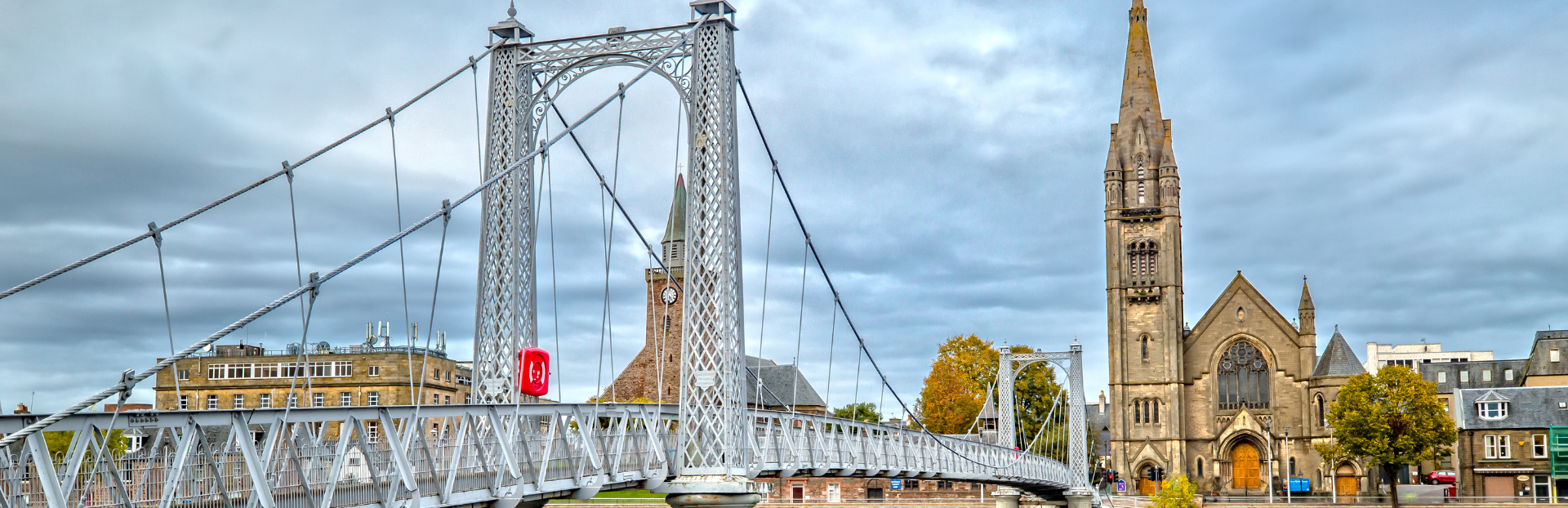
Inverness is a city in the Highland council area of northern Scotland. Sold prices across the Highland council area average £211,875 on the UK House Price Index, which is 13.6% above the Scotland average of £186,582. That is unusual for a rural area, and it comes from the mix of stock rather than a price premium: Highland holds a high share of detached houses, so its blended average runs ahead of Scotland even though every individual property type here is cheaper than the Scottish figure. For a buyer, Inverness reads as a growth and infrastructure story more than a yield one, with the Green Freeport and the City-Region Deal reshaping the economic base.
Inverness does not carry postcode-level rental or yield data. PropertyData returns no rent or gross yield for any of the city's five postcodes, which is what you tend to see in a Highland market where a large share of the lettable stock runs as holiday and short-term accommodation rather than year-round tenancies. So this guide gives you the full sold-price, price-per-square-foot, asking-price, growth, and transaction picture the data does support, and is straight about the rental gap where it matters.
One point to be clear on from the start. Inverness is a city within the very large Highland council area, so the area-level figures on this page, the sold prices, the growth history, the population, and the earnings, are reported at the Highland local-authority level and cover the whole council area, not the city alone. Highland stretches from Inverness across a vast rural and coastal hinterland, so its average blends the city with far cheaper and far pricier rural pockets. The postcode figures for IV1 to IV13 are specific to the Inverness area; the council-wide figures are the honest, verifiable backdrop around them.
Inverness sits at the northern end of the Great Glen, where the River Ness meets the Moray Firth, and is the administrative and commercial capital of the Scottish Highlands. Its economy leans on healthcare, public administration, higher education, tourism, and a fast-growing renewable-energy sector centred on the Cromarty Firth.
Article updated: July 2026
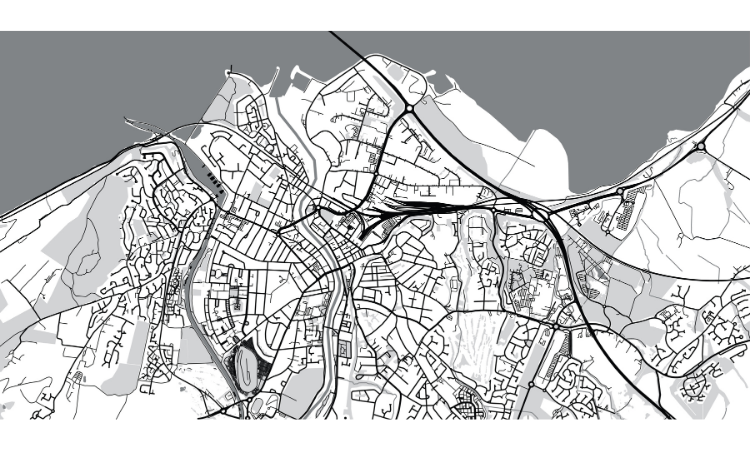
Why Invest in Inverness, Capital of the Highlands?
The Highland population grew 1.4% between the 2011 and 2022 censuses, from 232,132 to 235,351 residents, one of the few Scottish rural areas to add people rather than lose them. Inverness itself has grown faster than the wider council area, concentrating population and services in the city while much of the surrounding Highland countryside has thinned. For a buyer, a rising population in the capital is a demand signal that sits underneath the housing market, and the Green Freeport and campus expansion are set to push it further.
The economy runs on a broader base than the tourist-town label suggests, and it shows in the £39,740 median wage that sits above the Great Britain figure. Raigmore Hospital is the main acute hospital for the entire Highland region and one of the city's largest employers. UHI Inverness, the University of the Highlands and Islands campus in the city, brings students and academic staff into the local rental market. Highland Council is headquartered here, and the fast-growing renewable-energy sector centred on the Cromarty Firth is adding a new layer of skilled, well-paid work. That public and energy-sector employment gives Inverness a stability most Highland towns lack.
Tourism is still a major driver, and it shapes the rental market in a way the yield data cannot show. Loch Ness sits minutes from the city centre, the North Coast 500 route starts and finishes in Inverness, and Culloden Battlefield and the Cairngorms National Park draw visitors year-round, pulling much of the lettable stock across IV1 to IV13 into holiday accommodation rather than long-term lets. That visitor economy pulls a large share of the lettable stock into holiday and short-term accommodation, which is part of why PropertyData records no long-term rental yield for the city. Investors weighing the short-term route can read our guide to holiday let income in the Highlands and Scotland.
Median gross annual earnings across Highland are £39,740, above the Great Britain median of £39,125 and just below the Scotland median of £39,905. Higher local wages are unusual for an area outside the major cities, and they reflect the mix of skilled public-sector, healthcare, and energy employment in the region. For a landlord, wages above the national median generally support rental affordability and reduce arrears risk, even where the standard yield figures are missing.
Highland Economic Summary
- Population (Highland): 235,351 (Scotland's Census 2022). Change of +1.4% from 2011.
- Median annual salary: £39,740 (Highland), £39,905 (Scotland), £39,125 (Great Britain)
- Employment rate: 74.4% (Highland), 75.6% (Great Britain)
- Key employment sectors: Healthcare, public administration, higher education, tourism, renewable energy
Source: Scotland's Census 2022, Nomis Labour Market Profile (ASHE 2025, Employment Oct 2024-Sep 2025)
Highland's employment rate of 74.4% sits a little below the Great Britain average of 75.6%. This is a large rural council area, where lower workforce participation is driven partly by demographics, retirement, seasonal work, and self-employment that standard surveys capture unevenly, rather than by a shortage of jobs. Inverness itself, as the urban hub, runs a higher rate of economic activity than the Highland average, and the incoming Freeport and campus jobs are aimed squarely at the working-age base.
Regeneration and Investment in Inverness
Inverness sits at the centre of an investment cycle that runs from a castle on the hill to a freeport on the coast. The £315 million Inverness and Highland City-Region Deal has already delivered visible change to the city centre, and the Green Freeport designation adds a generational employment pipeline that did not exist during the last property cycle.
- Inverness Castle Experience (opening 2025, around £30 million): The 19th-century castle, a former courthouse, is being transformed into an immersive visitor attraction and cultural hub, with a new link building housing the Saltire Bistro and the restored Rose Window taking centre stage in the South Tower. Funded across the Scottish and UK governments, Highland Council, and Highlands and Islands Enterprise as part of the wider City-Region Deal. Updates at Highland Council.
- Inverness and Cromarty Firth Green Freeport (operational): Scotland's first Green Freeport, positioned as an international hub for offshore wind and renewable-energy manufacturing across the Port of Inverness, the Cromarty Firth ports, and the Inverness Campus. It is projected to create 11,300 long-term jobs and attract £6.5 billion of investment over 25 years, with Highland Council approving nine housing sites for over 7,900 new homes to support the growth. Updates at Inverness and Cromarty Firth Green Freeport.
- Inverness Campus Phase 2 (planning permission in principle, December 2025): The second and final phase of Highlands and Islands Enterprise's innovation park on the eastern edge of the city, covering part of the 116 undeveloped acres of the 215-acre campus, with 27 acres inside the Green Freeport zone. The campus already supports around 1,000 jobs and has leveraged more than £180 million of further investment from an initial £25 million outlay since 2007. Updates at Highlands and Islands Enterprise.
City Centre and Retail Investment
- Eastgate Shopping Centre transformation (complete, £8.5 million): A refurbishment of Inverness's main shopping centre, with new retailers, upgraded parking technology, and LED lighting, and recommitments from chains including HMV, Next, and Card Factory. Higher footfall through 2023 and 2024 points to renewed confidence in the city as a retail destination. Updates at STV News.
- City Centre Masterplan and streetscape transformation (proposed): Highland Council is developing a masterplan for the next phase of city-centre regeneration, building on the completed Castle Experience and Victorian Market renovation, with shopfront design standards, streetscape upgrades, greenspaces, and a pilot on the Lombard Street corridor. A cross-party stakeholder group is co-developing the options. Updates at Highland Council.
Inverness Property Market Analysis
Average property prices across the Highland council area have risen 157.9% since January 2004, from £82,166 to £211,875. The sections below trace that journey cycle by cycle, then drill into the postcode-level data the market does support: sold prices by type, price per square foot, asking prices, growth trends, and monthly transaction volumes for the Inverness postcodes.
When Was the Last House Price Crash in Inverness?
Inverness's sold prices are recorded by the UK House Price Index at the level of the Highland council area, which covers the whole of the Highlands rather than the city alone. Scotland's index begins in January 2004 at £82,166 for Highland, so the record here runs across 22 years of market cycles, and the pre-2004 boom that England's longer series captures is not shown.
2004 to 2007, the late boom: Highland's data begins at £82,166 in January 2004. Prices climbed hard through the mid-2000s and peaked at £152,264 in November 2007, close to double their 2004 starting point, as the Scottish market caught the tail of the UK-wide boom and second-home demand pushed into the Highlands.
2007 to 2009, the financial crisis: From the November 2007 peak of £152,264, Highland fell to a trough of £132,080 in March 2009, a decline of 13.3% over sixteen months. That 13.3% fall is milder than the sharpest UK markets recorded, as Highland's lower starting prices and less debt-stretched buyer base absorbed the shock better than overheated southern regions.
2009 to 2010, a false dawn: Highland bounced quickly, and by November 2010 the average had reached £154,870, briefly nudging past the pre-crash peak. Most English markets did not recover their peaks until 2014 or later, so on the surface Highland looked to have escaped lightly.
2010 to 2012, the double dip: This is where Highland diverges from the standard crash story. After that quick rebound, prices fell again, dropping to £134,909 by December 2012, a decline of 12.9% from the November 2010 post-recovery high. The second dip reflected the wider Scottish slowdown and austerity-era public-sector contraction, and it pushed the genuine, lasting recovery out several more years.
2013 to 2019, the long climb back: Growth returned slowly and steadily. Prices did not clear the November 2007 pre-crash peak on a sustained basis until 2015, with the average reaching £152,414 in July 2015, and by December 2019 they stood well into fresh ground. From the March 2009 trough, the durable round trip back above the old peak took around six years.
Post-Recovery: 2020 to Present
2020 to 2022, the pandemic surge: Highland was one of the pandemic's property winners, prices climbing from £170,583 in June 2020 to £204,712 by December 2022, a 20.0% rise in two and a half years. Remote working, the lifestyle-relocation trend, and Scotland's outdoor appeal drove the move, with the NC500 tourism boom adding fuel, and the Highlands outran much of Scotland through this period.
2023 to 2025, a record high then a gentle easing: The market reached an all-time high of £217,809 in November 2025 before edging back as higher mortgage rates cooled demand. The latest reading is £211,875 in March 2026, 2.7% off that November 2025 high and up 1.1% over the year. Highland now sits 39.1% above its November 2007 pre-crash peak.
Long-term growth summary:
- 5 years (March 2021 to March 2026): 18.4% growth (£178,976 to £211,875)
- 10 years (March 2016 to March 2026): 37.6% growth (£153,976 to £211,875)
- 15 years (March 2011 to March 2026): 47.3% growth (£143,846 to £211,875)
- 20 years (March 2006 to March 2026): 82.8% growth (£115,910 to £211,875)
- Since 2004 (January 2004 to March 2026): 157.9% growth (£82,166 to £211,875)
Highland's crash story is its own: a shallow 13.3% first fall, a false-dawn recovery, then a 12.9% double dip that stretched the real recovery to the mid-2010s. A buyer entering now does so just off the November 2025 high, in a market where the structural backdrop has shifted since the last downturn. The Green Freeport, the Inverness Campus, and the Castle Experience did not exist in 2007; the economic base is broader and the employment pipeline is longer than it was the last time prices turned.
- All property types
- Detached
- Semi-detached
- Terraced
- Flats
- All property types
- Detached
- Semi-detached
- Terraced
- Flats
Source: UK House Price Index for Highland, January 2004 to March 2026.
Sold House Prices in Inverness
The average sold price across all property types in the Highland council area is £211,875, which is 13.6% above the Scotland average of £186,582 as of March 2026. That premium over the national figure is a composition effect, not a genuine price premium: Highland holds a higher proportion of detached houses than urban Scotland, and detached stock pulls the blended average up. Compare like for like by property type and every category in Highland is cheaper than the Scottish average, with flats showing the widest gap.
| Property Type | Highland Average | Scotland Average | Difference |
|---|---|---|---|
| Detached houses | £325,434 | £338,748 | -3.9% |
| Semi-detached houses | £204,636 | £214,637 | -4.7% |
| Terraced houses | £166,221 | £175,465 | -5.3% |
| Flats and maisonettes | £120,474 | £130,560 | -7.7% |
| All property types | £211,875 | £186,582 | +13.6% |
Detached houses across Highland average £325,434, which is 3.9% below the Scotland average of £338,748, the narrowest discount of the four types. Detached stock dominates the housing outside Inverness itself, spread across the Highland countryside and coast, and the absence of a big-city premium keeps prices grounded even at the top of the market. Detached prices grew 1.2% over the year.
Semi-detached houses at £204,636 sit 4.7% below the Scotland average of £214,637. These are the everyday family homes of Inverness, concentrated in the IV2 suburbs around Inshes and Raigmore, and they posted the firmest annual growth of any type at 2.2%.
Terraced houses at £166,221 are 5.3% below the Scotland average of £175,465. The terraced stock is concentrated in the older central Inverness postcodes such as IV1 and IV3, where the traditional rental and first-buyer market sits, and it is the cheapest house type for a buyer on a fixed budget. Terraced prices grew 2.0% over the year.
Flats and maisonettes at £120,474 show the deepest discount at 7.7% below the Scotland average of £130,560, and are the single cheapest way into the market. Highland's flat stock is predominantly traditional tenement and conversion rather than the premium new-build apartments that inflate flat averages in Edinburgh or Glasgow, and annual change of -1.9% makes flats the one type to fall over the year, a reminder that they are a shallower, less liquid part of this market.
Price Per Square Foot in Inverness
Price per square foot in the Inverness postcodes runs from £214 in IV3 to £248 in IV1, a £34 spread across three districts. Measuring by the square foot strips out how big the homes are, so it compares the areas themselves rather than the house types, and here it separates central IV1 from the western IV3. IV2 and IV3 return the deepest price and growth data, while IV1 carries a square-foot reading but a thinner core dataset, and IV5 and IV13 return no figures.
| Rank | Area | Price Per Sq Ft |
|---|---|---|
| 1 | IV3 (Merkinch, Scorguie) | £214 |
| 2 | IV2 (Inshes, Raigmore) | £245 |
| 3 | IV1 (City Centre) | £248 |
| - | IV5 (Glenelg) | Not enough data |
| - | IV13 (Tomatin) | Not enough data |
IV1, the city centre, commands the highest rate at £248 per square foot. Central Inverness has limited stock relative to demand, and proximity to the river, the castle, and the Victorian Market lifts the per-foot cost above the suburbs. IV2 around Inshes and Raigmore sits just behind at £245, its suburban family stock keeping pace with the centre.
IV3 at £214 covers Merkinch and Scorguie on the western side of the city and is the cheapest space of the three. Merkinch has historically been one of Inverness's more affordable neighbourhoods, and the £31 per-square-foot gap to IV1 reflects that positioning, though regeneration and city-centre proximity have started to narrow it. For a buyer looking to add value through refurbishment, that gap is where the room to improve tends to sit, and you can search for properties to renovate across the Inverness area.
Figures reflect averages across all property types and ages. Individual values depend on condition, location within the postcode, and building age.
For Sale Asking Prices in Inverness
Asking prices across the two Inverness postcodes with data average £233,730, with IV3 at £211,019 sitting below IV2 at £256,441. IV1, IV5, and IV13 have too few current listings for a reliable average, so this is a partial picture. Read these asking figures alongside the sold-price record above, which covers the whole Highland council area and gives the fuller trend.
| Rank | Area | Asking Price |
|---|---|---|
| 1 | IV3 (Merkinch, Scorguie) | £211,019 |
| 2 | IV2 (Inshes, Raigmore) | £256,441 |
| - | IV1 (City Centre) | Not enough data |
| - | IV5 (Glenelg) | Not enough data |
| - | IV13 (Tomatin) | Not enough data |
IV3 at £211,019 is the lower entry point, covering Merkinch and Scorguie on the western side of the city. It is the cheaper of the two by some £45,000, drawing on the more affordable terraced and older stock in this part of Inverness, and its 13.7% three-year asking-price growth points to a district repricing upward from a lower base. Buyers chasing entry points below the open-market average often work the below market value property route in areas like this.
IV2 at £256,441 is the suburban market around Inshes and Raigmore, close to Raigmore Hospital and the Inverness Campus. It covers a mix of newer-build estates and established residential streets, and its higher asking price reflects the larger family stock and the pull of the two biggest local employment sites. At 67 sales a month it is also the deepest transaction market in the city.
House Price Growth in Inverness
Both data-available postcodes have grown across one, three, and five-year horizons, with IV2 stronger over five years at 17.6% and IV3 stronger over three at 13.7%. IV1, IV5, and IV13 do not return growth figures, so the postcode picture is limited to Inverness's two main residential markets. The interest is in the divergence between them.
| Area | 1 Year | 3 Years | 5 Years |
|---|---|---|---|
| IV2 (Inshes, Raigmore) | 2.2% | 8.7% | 17.6% |
| IV3 (Merkinch, Scorguie) | 2.3% | 13.7% | 13.4% |
| IV1 (City Centre) | Not enough data | Not enough data | Not enough data |
| IV5 (Glenelg) | Not enough data | Not enough data | Not enough data |
| IV13 (Tomatin) | Not enough data | Not enough data | Not enough data |
IV2 has grown 17.6% over five years, the stronger long-run performer, and its 8.7% three-year and 2.2% one-year readings show a steady, consistent climb rather than a recent spike. The IV2 suburban market around Inshes and Raigmore has held its value on the back of the family-housing demand tied to Raigmore Hospital and the Inverness Campus.
IV3's five-year figure of 13.4% is a little behind IV2, but over three years it leads at 13.7%, meaning most of its gain is recent. That pattern fits a district catching up from a lower base as Merkinch and Scorguie reprice, and its 2.3% one-year reading is marginally ahead of IV2. Over three years an investor who bought at IV3's £211,019 asking price would have entered at roughly £185,600, a gain of around £25,400 in asking-price terms.
At the council-area level, the UK House Price Index shows Highland up 1.1% over the year to March 2026. That is softer than either postcode's one-year figure, which points to the growth being concentrated in the Inverness postcodes rather than the wider rural Highland market, where thinner transaction volumes drag on the blended council-wide average.
Monthly Property Sales in Inverness
Transaction volumes run from 22 sales a month in IV3 to 67 in IV2, with turnover of 45% and 40% respectively. IV2, the larger suburban district, sees three times the monthly activity of IV3, and its deeper market is what matters most for exit planning: a landlord who later wants to sell finds the widest buyer pool here. The remaining three postcodes do not return transaction figures.
| Area | Sales Per Month | Turnover | Asking Price |
|---|---|---|---|
| IV2 (Inshes, Raigmore) | 67 | 40% | £256,441 |
| IV3 (Merkinch, Scorguie) | 22 | 45% | £211,019 |
| IV1 (City Centre) | Not enough data | Not enough data | Not enough data |
| IV5 (Glenelg) | Not enough data | Not enough data | Not enough data |
| IV13 (Tomatin) | Not enough data | Not enough data | Not enough data |
IV2 at 67 sales a month gives Inverness the liquidity that matters most when the time comes to sell. IV2's Inshes and Raigmore draw both owner-occupiers and investors, and that competition supports resale values and keeps a functioning market open through the cycle. For a landlord, a deep buyer pool is the difference between a clean exit and a property that sits.
IV3 at 22 sales a month is the thinner market, but its 45% turnover is marginally the higher of the two, so stock that comes up in Merkinch and Scorguie tends to move. Paired with the stronger three-year growth, that points to a district where demand has been outrunning supply and pushing prices up from a lower base.
How Long Properties Take to Sell in Inverness
Homes in Inverness are taking between 37 and 78 days to find a buyer depending on the postcode, and all four districts with data read as sellers' markets on months of unsold stock. The days-to-sell figure is how long a typical home sits on the market before it is agreed, while months of unsold stock shows how long current supply would take to clear at the present rate of sales. Inverness's central and suburban postcodes are moving faster than the rural fringe.
| Area | Avg Days to Sell | Months of Unsold Stock | Market |
|---|---|---|---|
| IV5 (Glenelg) | 37 | 1.2 | Seller's market |
| IV1 (City Centre) | 54 | 1.8 | Seller's market |
| IV3 (Merkinch, Scorguie) | 59 | 1.9 | Seller's market |
| IV2 (Inshes, Raigmore) | 78 | 2.6 | Seller's market |
IV5 shows the fastest turnaround at 37 days on just over a month of unsold stock, though on a very small number of listings, so read it as directional rather than definitive. IV1 in the city centre and IV3 to the west sit in the middle at 54 and 59 days, with under two months of supply each, which is genuine sellers'-market territory where a well-priced home moves quickly.
IV2 takes the longest at 78 days with 2.6 months of unsold stock, but that reflects the sheer volume of listings in the largest suburban market rather than weak demand, since it still clears well inside three months of supply. For a buyer, the practical read is that Inverness is a fast-moving market across the board, so getting finance and a solicitor lined up before offering matters more here than in a slower rural district.
Buy-to-Let Considerations
Average Rent and Gross Rental Yields in Inverness
PropertyData returns no average monthly rent or gross yield for any of Inverness's five postcodes, so the standard yield table cannot be populated. All five districts, IV1, IV2, IV3, IV5, and IV13, show no long-term rental figures, which is unusual across our guides and reflects how the Highland lettings market actually works rather than an absence of rental demand.
| Area | Average Monthly Rent | Asking Price | Gross Yield |
|---|---|---|---|
| IV1 (City Centre) | Not enough data | Not enough data | Not enough data |
| IV2 (Inshes, Raigmore) | Not enough data | £256,441 | Not enough data |
| IV3 (Merkinch, Scorguie) | Not enough data | £211,019 | Not enough data |
| IV5 (Glenelg) | Not enough data | Not enough data | Not enough data |
| IV13 (Tomatin) | Not enough data | Not enough data | Not enough data |
Inverness has an active rental market underneath the data gap, even though IV1, IV2, IV3, IV5, and IV13 all return no yield. Raigmore Hospital, UHI Inverness, Highland Council, and the renewable-energy sector all generate year-round tenant demand, and the Inverness Campus alone supports around 1,000 jobs that feed a steady flow of student and staff lets. The gap is in the aggregated data, not in the market itself: a large share of the lettable stock across IV1 to IV13 operates as holiday and short-term accommodation, driven by Loch Ness, the NC500, and the wider tourism economy, and that stock does not surface in the standard long-term yield measures. Local letting agents and portals carry current rental figures the national aggregation misses, and investors weighing whether buy-to-let rental property is worth it in Inverness can also compare against the Scottish cities where the yield data does exist.
Scotland's short-term let licensing regime is a real factor here. The Licensing Order 2022 requires every short-term let operator in Scotland to hold a licence from the local authority, which for Inverness is The Highland Council, through its short-term let licensing scheme. That adds a compliance cost for a holiday-let model but also caps supply, which can support pricing for licensed operators. Any investor drawn to Inverness for the tourism income needs to factor licensing and compliance in alongside the standard buy-to-let considerations, and can read our guide to the best areas for holiday lets in the UK for the sector context.
Is Inverness Rent High?
Highland's median gross weekly salary of £764.20 sits above the Great Britain median of £752.40, and marginally below Scotland's £767.40. Without postcode-level rents from PropertyData the standard rent-as-percentage-of-income calculation cannot be run for Inverness, so the table below shows the data gap across all five postcodes rather than a false precision.
| Rank | Area | Rent as % of Income |
|---|---|---|
| - | IV1 (City Centre) | Not enough data |
| - | IV2 (Inshes, Raigmore) | Not enough data |
| - | IV3 (Merkinch, Scorguie) | Not enough data |
| - | IV5 (Glenelg) | Not enough data |
| - | IV13 (Tomatin) | Not enough data |
The median gross weekly salary in Highland is £764.20, which works out at £3,311 per month or £39,740 per year, above the Great Britain median of £752.40 a week and just below Scotland's £767.40. Data from the Nomis Labour Market Profile (ASHE 2025). Local wages above the GB median mean tenants can generally absorb rents without the affordability pressure that compresses yields in lower-wage areas, which for a landlord reduces arrears risk, though these remain observations from the earnings data until postcode-level rents become available.
Are Inverness House Prices High? Price-to-Earnings Ratios
The price-to-earnings ratio in the Inverness postcodes runs at 5.3x in IV3 and 6.5x in IV2, measured against the Highland median salary of £39,740. The ratio divides the average asking price by local annual earnings, so it shows how many years of the typical local wage a home costs. Both districts sit at or below the UK benchmark, which is unusual for a market where prices have grown as much as Highland's have.
| Rank | Area | Price-to-Earnings Ratio |
|---|---|---|
| 1 | IV3 (Merkinch, Scorguie) | 5.3x |
| 2 | IV2 (Inshes, Raigmore) | 6.5x |
| - | IV1 (City Centre) | Not enough data |
| - | IV5 (Glenelg) | Not enough data |
| - | IV13 (Tomatin) | Not enough data |
At 5.3x, IV3 is the more affordable of the two on local wages, its lower asking price of £211,019 setting against the same Highland salary base to give a ratio well inside the UK benchmark of 6.9x, calculated from the UK average sold price against the Great Britain median salary. IV2 at 6.5x is dearer relative to earnings, a function of its higher £256,441 asking price, but still sits below the UK benchmark.
Highland's above-median £39,740 wage is what keeps the 5.3x and 6.5x ratios manageable even after a long run of price growth. Where a market with prices this size would usually stretch local affordability, Inverness's mix of skilled public-sector, healthcare, and energy employment lifts the earnings side of the calculation. Whether that balance holds as the Green Freeport drives new demand is the open question: the council has approved sites for over 7,900 new homes, which would add supply against it.
Deposit Requirements in Inverness
A 30% deposit on a buy-to-let in Inverness is around £63,306 in IV3 and £76,932 in IV2. A 30% deposit is the standard buy-to-let benchmark, unlocking better mortgage rates and a wider choice of products, and the rate secured feeds straight into monthly cash flow. The £13,600 gap between the two districts tracks the difference in their asking prices.
| Rank | Area | 30% Deposit Required |
|---|---|---|
| 1 | IV3 (Merkinch, Scorguie) | £63,306 |
| 2 | IV2 (Inshes, Raigmore) | £76,932 |
| - | IV1 (City Centre) | Not enough data |
| - | IV5 (Glenelg) | Not enough data |
| - | IV13 (Tomatin) | Not enough data |
IV3 needs the lower deposit at £63,306, for the western district with the cheaper stock and the stronger recent three-year growth. IV2 requires £76,932, for the larger suburban family homes around Inshes and Raigmore with the deeper transaction market. For a buyer comparing the two, IV3 is the lower-capital entry with the recent momentum, while IV2 offers the liquidity and the family-housing demand.
Beyond the deposit, buying in Scotland means Land and Buildings Transaction Tax rather than Stamp Duty, with an Additional Dwelling Supplement on second homes and buy-to-let purchases, so budget for that on top. You can work the figures through with our Scotland LBTT calculator, check the current bands and ADS rate on the Revenue Scotland site, and see the full picture of upfront and running costs in our guide to what a buy-to-let costs to run.
What the Inverness Data Tells Buy-to-Let Investors
The Inverness data covers sold prices, price growth, and an infrastructure pipeline; what it does not include is a reliable rental yield, because too few homes are advertised to let at any one time to calculate one. That is a gap in the aggregated data, not evidence of a low return. The two data-available postcodes read differently for a buyer. Highland sold prices have grown 157.9% since 2004 and 18.4% over the last five years, and the Green Freeport adds a structural catalyst, 11,300 projected jobs and £6.5 billion of investment over 25 years, that did not exist during the last growth cycle.
IV2 around Inshes and Raigmore is the deeper, more liquid market, turning over 67 sales a month against an asking price of £256,441. It has grown 17.6% over five years, and anchored by Raigmore Hospital and the Inverness Campus, its transaction depth is what matters for a clean exit later. IV3 covering Merkinch and Scorguie is the lower-capital route at £211,019, a 30% deposit of £63,306 against a price-to-earnings ratio of 5.3x. Its three-year growth leads at 13.7% as the district reprices from a lower base.
The honest limit on this guide is the rental data. PropertyData returns no rent or yield for any Inverness postcode, because so much of the Highland lettable stock runs as holiday and short-term accommodation rather than year-round tenancies. An investor drawn here on income is usually looking at the holiday let income the Loch Ness and Highland tourism economy can generate rather than a standard tenancy, which is a different model with seasonal voids, more management, and Scotland's short-term let licensing to comply with. Buyers who want to come in below the open-market price tend to work the off-market property in Inverness route, and can browse current stock in our investment properties in the Highlands listings.
Inverness has no England-style selective licensing scheme; Scotland has none. What every Highland landlord must do instead is register with the local authority under Scotland's Landlord Registration scheme, run by The Highland Council, before letting a property. The wider policy backdrop, from short-term let licensing to the Freeport-driven housing pipeline, carries more weight in Inverness than in most markets, and any investor weighing a holiday-let model should factor it in.
How Inverness Compares to Other Scottish Cities
Inverness's mean asking price of £233,730 places it mid-table among the Scottish cities compared here, above the Central Belt and Aberdeen but below Perth and Edinburgh, and unlike its peers it carries no measurable rental yield. The comparison below sets Inverness alongside five Scottish markets: the mean asking price is a simple average across all postcodes with data, and the mean monthly rent and top gross yield are the equivalent figures for the peers, shown as not available for Inverness because the rental data does not exist for its postcodes.
| Location | Mean Asking Price | Mean Monthly Rent | Mean Gross Yield | Top Yield (postcode) |
|---|---|---|---|---|
| Aberdeen | £165,622 | £782 | 5.7% | 9.3% (AB11) |
| Glasgow | £183,315 | £1,078 | 7.1% | 10.8% (G2) |
| Dundee | £205,224 | £891 | 5.2% | 7.2% (DD1) |
| Inverness | £233,730 | N/A | N/A | N/A |
| Perth | £246,979 | £777 | 3.8% | 5.0% (PH1) |
| Edinburgh | £337,923 | £1,394 | 5.0% | 6.9% (EH11) |
Inverness at £233,730 is the fourth-cheapest entry in this group of six, above Dundee at £205,224 and below Perth at £246,979. Its £233,730 asking prices run some £68,000 above Aberdeen at £165,622 and £50,000 above Glasgow at £183,315, reflecting the lifestyle and tourism demand the Central Belt cities do not carry. Where Inverness differs from all five is the absence of rental-yield data: Aberdeen, Glasgow, Dundee, Perth, and Edinburgh all have measurable rental markets, with top yields ranging from 5.0% to 10.8%, while Inverness's lettable stock leans to holiday accommodation the standard measures do not capture.
Aberdeen at £165,622 is the cheapest entry with a 9.3% top yield, the post-oil-downturn repricing having left low asking prices against recovered rental demand. Glasgow's thin G2 city-centre market posts the group's highest reading at 10.8%. Edinburgh is the premium market at £337,923 with a 6.9% top yield, while Perth sits closest to Inverness on price at £246,979 with a 5.0% yield. Inverness's case is different in kind: a growth and infrastructure play where the return sits in the sold-price record and the Green Freeport pipeline rather than a conventional yield. For a data-led view across every UK market, see our guide to the highest-yielding areas.
Frequently Asked Questions
Is Inverness a good place to buy an investment property?
Inverness works for a particular kind of investor. It is the commercial capital of the Highlands, with a broad employment base across Raigmore Hospital, UHI Inverness, Highland Council, and a fast-growing renewable-energy sector, and a population that grew 1.4% over the last census decade while much of rural Scotland shrank. Sold prices have risen 157.9% since 2004 and 18.4% over five years, and the Green Freeport adds a 25-year pipeline of 11,300 projected jobs and £6.5 billion of investment.
What it does not offer is measurable rental yield: PropertyData records no rent or yield for any Inverness postcode, because holiday and short-term lets dominate the Highland lettable stock. So the recorded case here is capital growth and infrastructure, with a holiday-let route for income buyers, rather than a conventional yield off a long-term tenancy. A buyer set on standard year-round letting figures would find a deeper data picture in the Central Belt cities or Aberdeen.
What type of property is most common in Inverness?
The Highlands are a house market rather than a flats one, and the sold-price-by-type data tells the story. Detached houses lead on value across the Highland council area at £325,434 on average, followed by semi-detached at £204,636 and terraced at £166,221, while flats at £120,474 are the cheapest and thinnest part of the market, concentrated in the city rather than the rural hinterland. The typical property here is a traditional Highland house, from town terraces in central Inverness to detached and rural stock across the wider council area.
For a buy-to-let or holiday-let buyer, that shapes the options. The cheaper terraced stock in and around central Inverness, in postcodes like IV1 and IV3, is the lowest-priced way in, while the detached and rural properties suit a larger holiday-home or lifestyle purchase at a higher cost. Flats are the single cheapest entry but a shallower, less liquid segment that fell 1.9% over the year.
How does Inverness compare to other Scottish cities for property investment?
Inverness sits mid-table on price at a £233,730 mean asking price, above Aberdeen (£165,622), Glasgow (£183,315), and Dundee (£205,224), below Perth (£246,979) and Edinburgh (£337,923). Highland's average sold price of £211,875 runs 13.6% above the Scotland average of £186,582, though that reflects a high share of detached stock rather than a genuine premium. The clearest difference is that Inverness has no postcode-level rental or yield data from PropertyData, while the other five cities all have measurable rental returns, with top yields from 5.0% to 9.3%. Inverness's recorded case is a capital-growth and infrastructure one, built on the Green Freeport and the tourism economy rather than a spreadsheet yield.
What are the best areas in Inverness for property investment?
The data splits between the two postcodes that carry figures. IV2, covering Inshes and Raigmore, is the deeper and more liquid market: 67 sales a month, 40% turnover, an asking price of £256,441, and the strongest five-year growth at 17.6%. IV2 holds the suburban family stock near Raigmore Hospital and the Inverness Campus, and its transaction depth is what supports a clean exit.
IV3, covering Merkinch and Scorguie on the western side of the city, is the lower-capital entry at £211,019 with a 30% deposit of £63,306. Its three-year growth leads at 13.7% as the district reprices from a lower base, and its price-to-earnings ratio of 5.3x is the more affordable of the two on local wages. If capital is the constraint, IV3 leads; if liquidity and market depth matter more, IV2 does.
Why is there no rental yield data for Inverness?
It comes down to what the Highland rental market actually is. PropertyData returns no rent or gross yield for any of Inverness's five postcodes, because a large share of the lettable stock across the Highlands operates as holiday and short-term accommodation rather than conventional long-term tenancies. With Loch Ness minutes away, the NC500 starting in the city, and a year-round visitor economy, seasonal lets and second homes dominate the stock that would otherwise show up as buy-to-let.
That does not mean there is no rental market, and it does not mean the yield is low. It means the national data cannot measure a yield here. The measurable record is in sold prices and growth (18.4% over five years across the Highlands), while much of the local lettable stock runs as holiday and short-term lets, which are seasonal, more management-intensive, and subject to Scotland's short-term let licensing. There is also genuine long-term tenant demand from Raigmore Hospital, UHI Inverness, and Highland Council that local agents can quote current rents for, even though the national aggregation does not carry it.
What are average house prices in Inverness?
The average sold price across the Highland council area, which is where Inverness's figures are reported, is £211,875 on the UK House Price Index, 13.6% above the Scotland average of £186,582 as of March 2026. That premium is a stock-mix effect: Highland's high share of detached houses lifts the blended average, while every individual property type is cheaper than the Scottish figure. By type, detached homes average £325,434, semi-detached £204,636, terraced £166,221, and flats £120,474. Asking prices in the two data-available postcodes are £256,441 in IV2 and £211,019 in IV3, for a city mean of £233,730.
Bear in mind the council-area figures cover the whole of the Highlands, from Inverness across a vast rural hinterland, so they blend the city with far cheaper and far pricier rural pockets. The postcode figures are specific to the Inverness area.
How much deposit do I need to buy in Inverness?
Budget for a 30% deposit, which works out at around £63,306 in IV3 and £76,932 in IV2 on current asking prices. On top of the deposit, a buy-to-let or second-home purchase in Scotland attracts Land and Buildings Transaction Tax with an Additional Dwelling Supplement, which you can work through with our Scotland LBTT calculator and check against the current bands on Revenue Scotland, alongside the usual buy-to-let running costs. For a holiday-let purchase in particular, factor in furnishing and seasonal management costs a standard let would not carry.
Do I need a licence to let property in Inverness?
Scotland does not run England-style selective licensing, but it has its own regime. Every private landlord in Scotland must register with their local authority, which for Inverness is The Highland Council, before letting a property. If you are considering a short-term or holiday let, you also need a licence under the Short-Term Let Licensing Order 2022, again through Highland Council, and should check the Scottish Government's rules on second homes and short-term lets, which carry particular weight in a tourism area like the Highlands.
How does the Green Freeport affect the Inverness housing market?
The Inverness and Cromarty Firth Green Freeport is projected to create 11,300 long-term jobs and attract £6.5 billion of investment over 25 years, positioned as an international hub for offshore wind and renewable-energy manufacturing across the Port of Inverness, the Cromarty Firth ports, and the Inverness Campus. To support that growth, Highland Council has approved nine housing sites for over 7,900 new homes. The employment impact is not yet visible in the property data, and it will build over the coming decade rather than arrive at once, but it is the structural change that separates this cycle from the last: the economic base underpinning Inverness housing demand is broader and the pipeline is longer than it was before.
How do I buy an investment property in Inverness?
Start by deciding what you are buying for, because Inverness records its strength in growth and its tourism economy rather than in conventional rental data. If the plan is capital growth on a long-term hold, IV2 has the deeper market and the stronger five-year record, while IV3 offers the lower £211,019 asking price and the recent momentum. If the plan is holiday-let income, the priority is location and visitor appeal near the river, the castle, or the Loch Ness road, and a different set of numbers around occupancy and seasonality. Budget for a 30% deposit plus Scottish Land and Buildings Transaction Tax with the Additional Dwelling Supplement.
Beyond what is listed openly, experienced investors often buy below asking through off-market property and BMV property channels. To see what is available now, browse buy-to-let homes for sale or wider investment property listings across the Highlands.
Ready to buy property?
Access off-market investment properties with an average 8%+ annual gross yield (beating the UK's typical 3-5%).
Get property alerts