
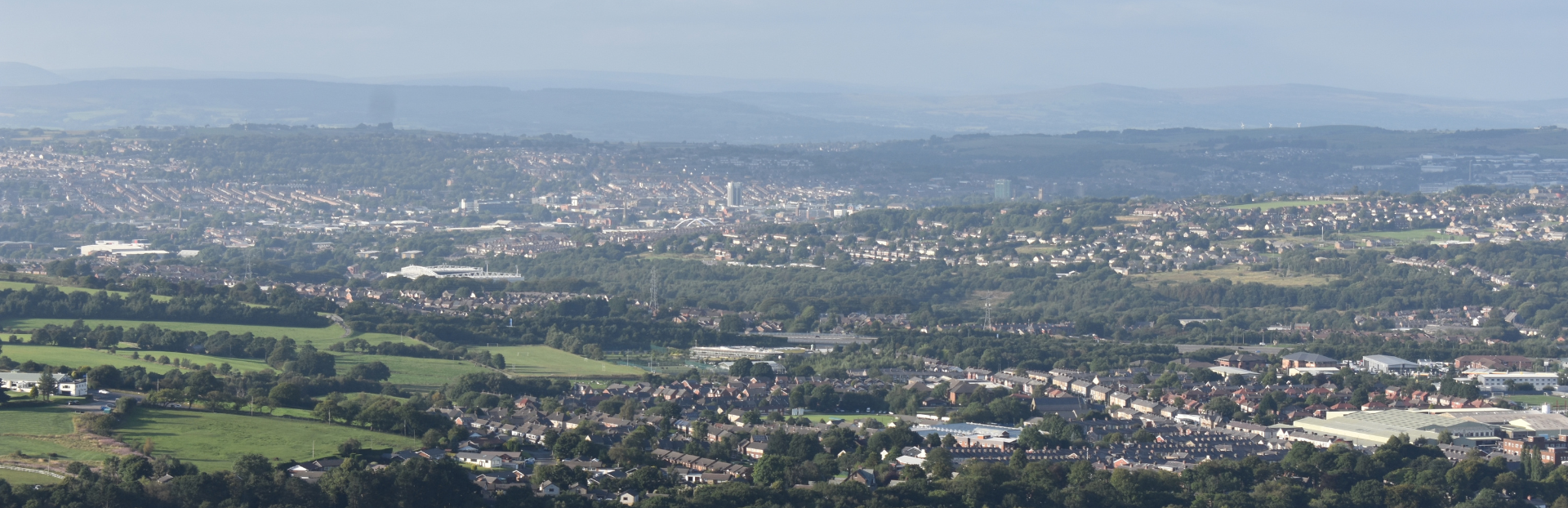
Blackburn is a town in east Lancashire, in north-west England. Average sold prices across Blackburn with Darwen sit at £155,272 on the HM Land Registry House Price Index, 27.7% below the North West regional average of £214,678 and 46.4% below England's £289,946. Very few places in England let an investor buy at that level, and it is the single fact that defines Blackburn as a buy-to-let market. A typical sold home here costs a little over half the national average, which keeps deposits low and turns a modest rent into a competitive yield. The local authority's population grew 4.91% between the 2011 and 2021 censuses, from 147,489 to 154,738 residents.
Low prices on their own do not make a market work, so the figures below test what they sit on. Median local earnings of £33,076 a year are below the regional and national averages, but because prices are lower still, every one of Blackburn's five postcodes buys in under the national price-to-earnings benchmark. The spread runs from BB1 at £210,899 to BB3 at £228,331, a far tighter band than most cities, with the highest yield (PR5 at 5.0%) and the lowest asking price (BB1) sitting in different postcodes rather than the same one.
This guide covers the unitary authority of Blackburn with Darwen (ONS code E06000008) across postcodes BB1, BB2, BB3, BB6, and PR5. Blackburn sits in east Lancashire, roughly between Preston to the west and Burnley to the east. The PR5 postcode reaches west towards Bamber Bridge on the Preston fringe, so investors weighing this market may also look at Preston buy-to-let next door. Browse all our North West location guides.
Article updated: July 2026
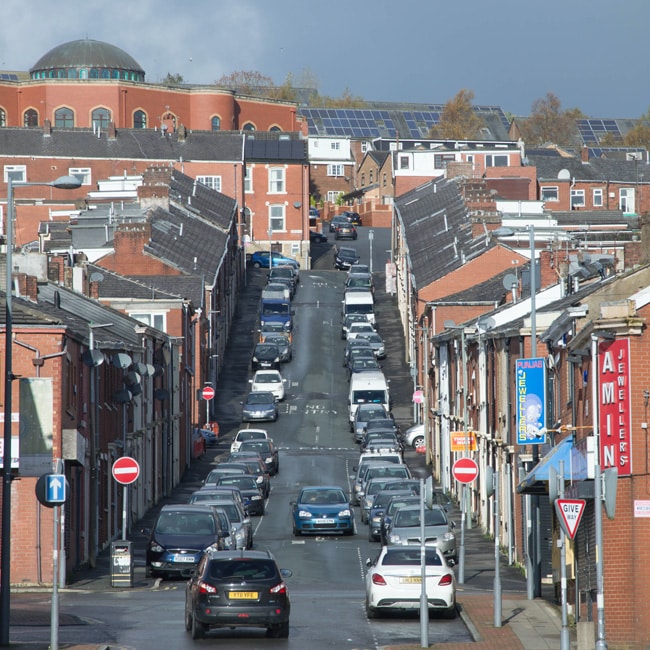
Why Invest in Blackburn?
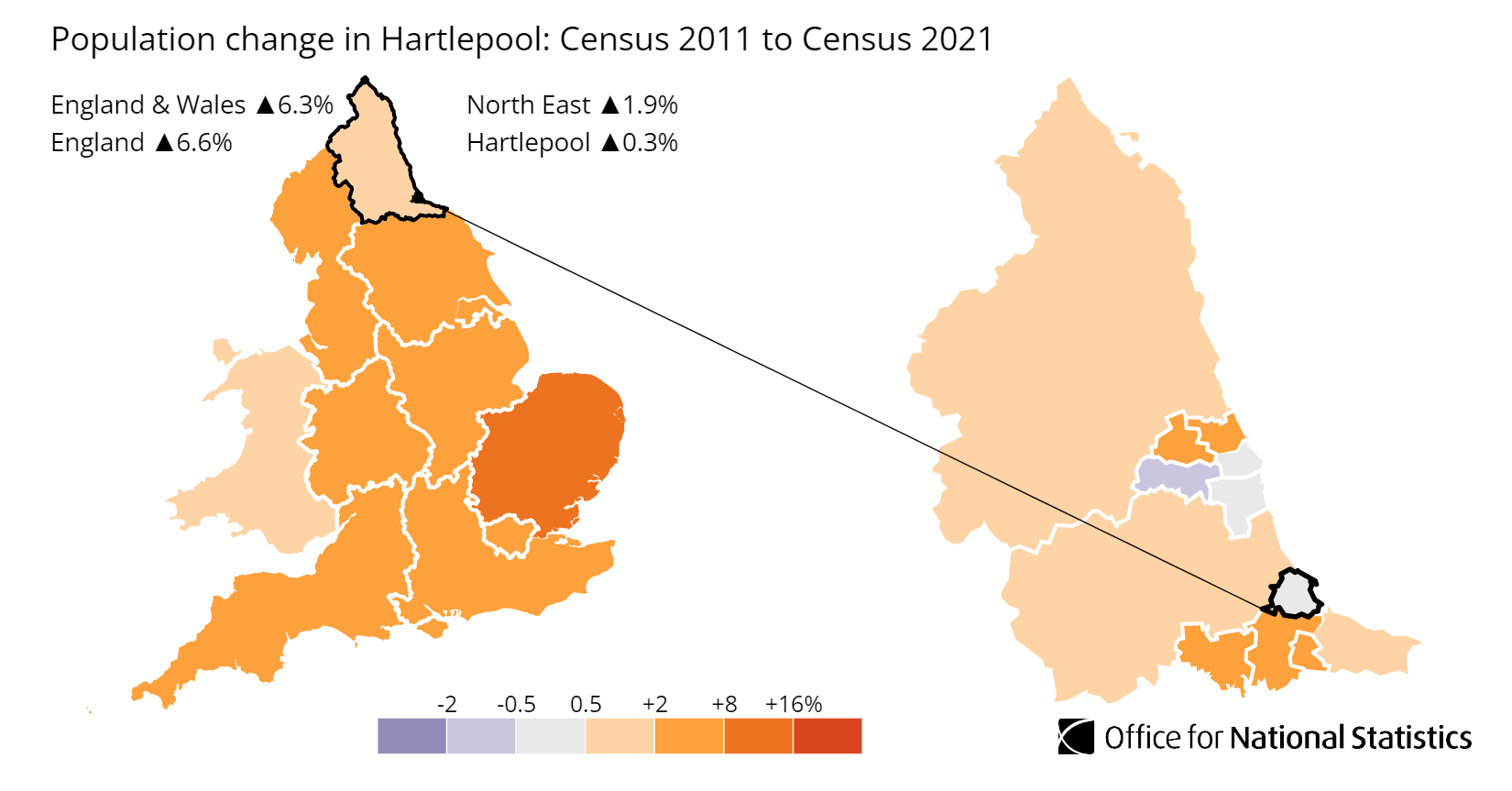
Blackburn with Darwen, the local authority Blackburn sits within, grew its population 4.91% between the 2011 and 2021 censuses, from 147,489 to 154,738 residents. That is below the England and Wales average of 6.3%, the picture of a settled industrial town rather than a fast-growing one. Blackburn grew on cotton, and the dense terraced streets that mills once housed are now the core of its rented stock. For an investor, a stable population matters less than what it can afford to pay, and that is where the case rests on jobs and wages.
The local employment rate is 64.7%, below both the North West average of 74.2% and Great Britain's 75.6%. The economy leans on manufacturing, health and social work, wholesale and retail, and education, with a long-standing aerospace and engineering base in the wider Lancashire cluster. The result is a working tenant market built more on affordability than on professional salaries, so the rents that hold up are the ones that stay within reach of local pay.
Median gross annual earnings across Blackburn with Darwen are £33,076, which is below the North West regional median of £37,445 and the Great Britain median of £39,125. Lower wages would be a problem in an expensive town, but Blackburn is not one. Because house prices are lower than earnings are, the affordability maths still works, and the rent a tenant can comfortably cover still lands the kind of yield that higher-priced markets struggle to reach.
Blackburn Economic Summary
- Population (Blackburn with Darwen): 154,738 (2021 Census). Growth of 4.91% from 2011.
- Median annual salary: £33,076 (local), £37,445 (North West), £39,125 (Great Britain)
- Employment rate: 64.7% (local), 74.2% (North West), 75.6% (Great Britain)
- Unemployment rate: 5.1% (local)
- Key employment sectors: Manufacturing, health and social work, wholesale and retail, education, administrative services
Source: ONS Census 2021, Nomis Labour Market Profile (ASHE 2025)
Regeneration and Investment in Blackburn
Blackburn's town centre is being reshaped by a £250 million masterplan, the largest investment in the centre in decades, with site starts targeted for 2026. The scheme is anchored on the former Thwaites brewery site and pairs new town-centre housing with a skills campus designed to bring thousands of students into the centre each day.
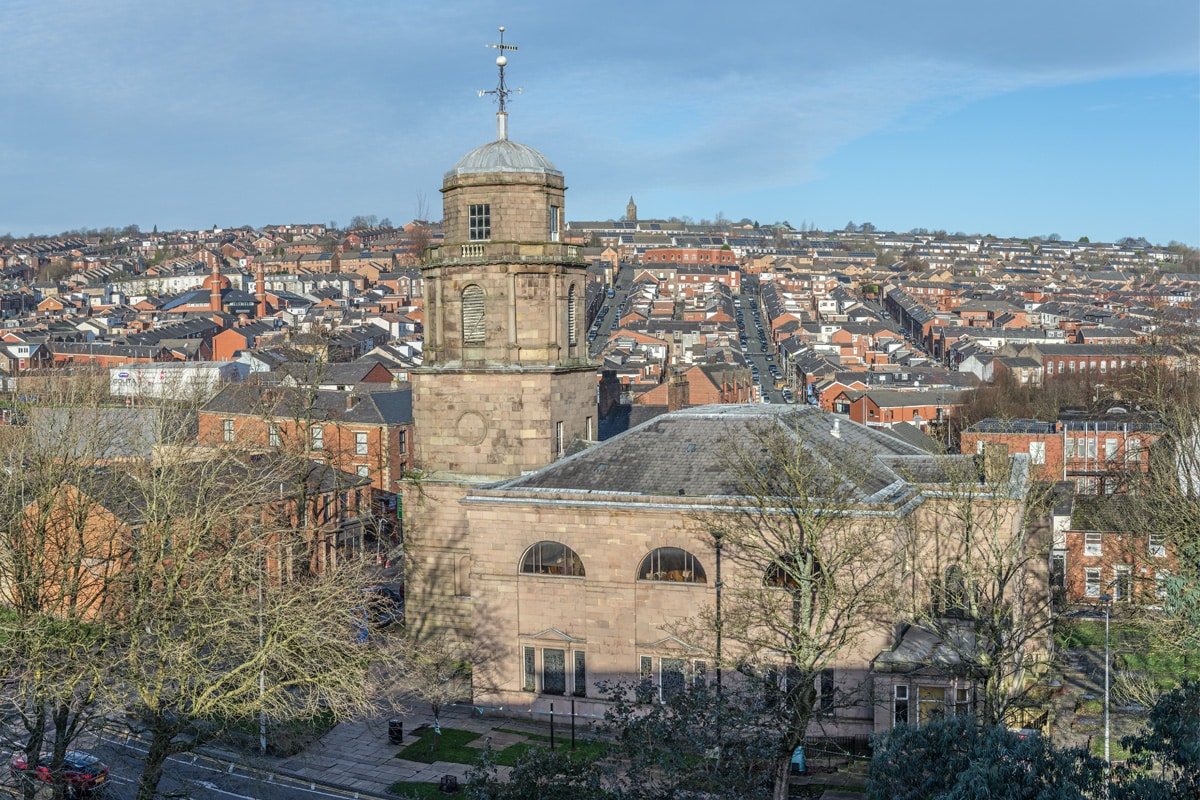
- Blackburn Town Centre Masterplan (Masterplanning, £250 million): A comprehensive transformation centred on the former Thwaites brewery site, relocating Morrisons to free land for residential development and adding a new hotel and a 700-space car park with EV charging. A multi-million-pound refurbishment of St John's Church creates flexible workspace. The council is aiming for a site start in 2026. Town-centre living is an undersupplied segment in Blackburn, so the residential component speaks directly to rental demand. Updates at Discover BWD.
- Blackburn Skills and Cyber Campus (Under development, £45 million): A skills and education campus of national significance within the wider Thwaites masterplan, with construction from 2026 and student occupation from 2029. The government granted an extended delivery deadline to March 2027, confirming the funding commitment. Thousands of students in the centre each day create direct demand for student and shared accommodation, the kind of smaller-unit lets that suit Blackburn's lower prices. Updates at Place North West.
- North East Blackburn Strategic Housing Site (Under development, 690+ homes): A major housing growth site north of Whalley Old Road, identified by the council to deliver 690 homes by 2037 with potential for around 810 more beyond that, the first 30 expected by the end of 2026. A separate £20 million Levelling Up Partnership is investing in heritage buildings including King George's Hall, Imperial Mill and the Cotton Exchange. The heritage spend lifts the look and feel of the centre, which tends to support values in the postcodes around it. Updates at Place North West.
Source: Office for National Statistics - Population for Blackburn with Darwen
Blackburn Property Market Analysis
Average property prices in Blackburn with Darwen have risen 363.1% since January 1995, from £33,529 to £155,272. The sections below trace that path cycle by cycle, then drill into postcode-level data for sold prices, price per square foot, asking prices, growth, and monthly transaction volumes.
When was the last house price crash in Blackburn?
Blackburn sits within the unitary authority of Blackburn with Darwen, so all sold property prices from HM Land Registry are recorded at this level. The index tracks average prices from January 1995 to the latest reading in March 2026, covering more than three decades of market cycles.
The 1995 to 2007 boom: Blackburn with Darwen started at £33,529 in January 1995. Prices climbed slowly at first, reaching £37,176 by December 2000, then accelerated through the mid-2000s credit boom to £94,191 by December 2005. The market peaked at £118,333 in December 2007, more than three times its 1995 level.
2008 to 2013, a long decline: Unlike markets that bounced quickly, Blackburn ground down for years. From the December 2007 peak of £118,333, prices fell to a trough of £91,404 in April 2013, a drop of 22.8% spread over more than five years. The worst single year-on-year reading was -14.7% in June 2009. The slide here was deeper and far more drawn-out than the national correction, which is the harder edge of a low-priced market: when demand thins, there is less of an earnings cushion underneath prices to stop the fall.
The long recovery, 2013 to 2020: From the April 2013 trough, prices recovered in stages rather than a straight line. By December 2015 the average was £99,078, by December 2019 £112,616. It was not until November 2020, at £119,964, that prices finally edged back above the December 2007 peak. That recovery took close to thirteen years, far longer than southern markets and a reminder that in a town like Blackburn capital growth has historically been the slow part of the return.
2020 to 2022, the pandemic surge: The stamp duty holiday and the race for space lifted the whole of the North West, and Blackburn moved with it. Prices rose from £121,337 in December 2020 to £127,079 by December 2021, then jumped to £142,351 by December 2022. After a decade of stagnation, two years of double-digit gains pulled the market clear of its pre-crash level for good.
The 2023 rate shock and recovery: Higher mortgage rates cooled the market, with prices easing to £140,423 by December 2023. They then resumed climbing, reaching £153,594 by December 2024 and an all-time high of £162,175 in November 2025.
2026, a gentle easing: Since the November 2025 high, prices have softened to £155,272 by March 2026, an annual change of -1.1%. Flats led the dip at -6.4% over the year, while detached homes were almost flat at -0.4%. The current average is 31.2% above the December 2007 pre-crash peak.
Long-term growth summary:
- 5 years (March 2021 to March 2026): 26.2% growth (£123,034 to £155,272)
- 10 years (March 2016 to March 2026): 62.5% growth (£95,555 to £155,272)
- 15 years (March 2011 to March 2026): 59.5% growth (£97,356 to £155,272)
- 20 years (March 2006 to March 2026): 65.4% growth (£93,876 to £155,272)
- 30 years (January 1995 to March 2026): 363.1% growth (£33,529 to £155,272)
Blackburn's 22.8% peak-to-trough fall was deeper than the national correction, and the recovery took nearly thirteen years, so the long-term record here rewards patience rather than quick gains. The 30-year return of 363.1% is real, but most of it arrived after 2020. An investor who bought at the exact peak in December 2007 waited until late 2020 just to break even on the Land Registry average, and would now be 31.2% ahead. The lesson the data carries is that Blackburn has tended to pay through rental income first and capital growth second.
- All property types
- Detached
- Semi-detached
- Terraced
- Flats
- All property types
- Detached
- Semi-detached
- Terraced
- Flats
Sold House Prices in Blackburn
The average sold price across all property types in Blackburn with Darwen is £155,272, which is 46.4% below the England average of £289,946 as of March 2026. That discount holds across every property type, but it widens as homes get smaller and cheaper. Detached houses sit 40.8% below England, while flats are 60.7% below, the deepest gap in the table. The pattern tells you what Blackburn is: a market of houses, not apartments, where the cheapest stock trades at a fraction of the national figure.
| Property Type | Blackburn with Darwen Average | England Average | Difference |
|---|---|---|---|
| Detached houses | £278,433 | £470,492 | -40.8% |
| Semi-detached houses | £171,755 | £288,185 | -40.4% |
| Terraced houses | £129,189 | £243,788 | -47.0% |
| Flats and maisonettes | £84,228 | £214,563 | -60.7% |
| All property types | £155,272 | £289,946 | -46.4% |
Detached houses at £278,433 carry the narrowest discount at 40.8% below England's £470,492. These are the larger family homes on the edges of the borough, in places like Wilpshire and the villages around BB6, and they hold their value closest to the national pattern. Annual change of -0.4% shows a stable top end rather than a falling one.
Semi-detached houses at £171,755 sit 40.4% below England's £288,185 and are the broad middle of Blackburn's housing stock. This is the type that suits a standard family let, spread across most of the borough's postcodes. Annual change here was -0.8%, a market holding roughly level.
Terraced houses at £129,189 offer a 47.0% discount to England's £243,788, and they are the engine of Blackburn's buy-to-let market. The dense Victorian terraced streets that grew up around the cotton mills are concentrated in BB1, BB2 and BB3, and at this price a terraced house lets on a yield that few markets can match. Annual change of -1.2% reflects a small recent easing off the highs.
Flats and maisonettes at £84,228 show the deepest discount at 60.7% below England's £214,563. Blackburn has very little purpose-built apartment stock, so the flat figure reflects a thin, local market rather than a city-centre one, and the -6.4% annual change confirms how quiet it is. For most investors here the houses, not the flats, are where the rental case lives.
Price Per Square Foot in Blackburn
Blackburn's price per square foot runs from £170 in BB3 to £227 in PR5, a £57 spread that maps the borough's western edge onto its Preston-fringe premium. Measuring by the square foot strips out how big the homes are, so it compares the value of the location itself rather than the size of the house. On that basis BB3, covering Darwen to the south, is the cheapest ground in the borough, while PR5 towards Bamber Bridge commands the most.
| Rank | Area | Price Per Sq Ft |
|---|---|---|
| 1 | BB3 (Darwen) | £170 |
| 2 | BB1 (Blackburn central, Little Harwood) | £185 |
| 3 | BB2 (Mill Hill, Ewood) | £187 |
| 4 | BB6 (Wilpshire, Great Harwood) | £194 |
| 5 | PR5 (Bamber Bridge, Lostock Hall) | £227 |
BB3 at £170 per square foot is the cheapest space in the borough. Darwen is a separate town to the south of Blackburn, with its own terraced and mill-town stock priced a notch below the rest, and across 884 transactions analysed that discount is consistent. For an investor buying on floor area, BB3 stretches a budget furthest.
PR5 at £227 per square foot tops the table, 33.5% above BB3. The postcode reaches towards Bamber Bridge and Lostock Hall on the Preston side of the borough, where commuter demand and newer housing pull the per-foot rate up. Drawn from 884 transactions, PR5's premium is the clearest sign that its market behaves more like Preston's fringe than Blackburn's core.
For Sale Asking Prices in Blackburn
Asking prices across Blackburn sit in an unusually tight band, from £210,899 in BB1 to £228,331 in BB3, just £17,432 apart. In a city you would expect a wide gap between the cheapest and dearest postcode. Blackburn does not have one, because there is no premium enclave pulling the top end away. The mean asking price across all five postcodes is £223,233.
| Rank | Area | Asking Price |
|---|---|---|
| 1 | BB1 (Blackburn central, Little Harwood) | £210,899 |
| 2 | BB6 (Wilpshire, Great Harwood) | £224,925 |
| 3 | PR5 (Bamber Bridge, Lostock Hall) | £225,597 |
| 4 | BB2 (Mill Hill, Ewood) | £226,413 |
| 5 | BB3 (Darwen) | £228,331 |
BB1 at £210,899 is the cheapest way into Blackburn. It covers the town centre and Little Harwood, where the terraced stock that drives the rental market is most plentiful, and the lower asking price feeds straight into a strong 4.6% yield. For an investor with a fixed budget, BB1 puts the most rentable stock within reach for the least capital.
BB3 at £228,331 is the highest asking price, but it is worth seeing why that sits oddly against its lowest price per square foot. Darwen's homes are not dear, they are larger on average, so a typical asking price covers more floor area for less per foot. The £17,432 gap between BB1 and BB3 is narrow enough that postcode choice in Blackburn turns on rent and stock type far more than on headline price.
House Price Growth in Blackburn
Every Blackburn postcode posted positive five-year growth, led by PR5 at 22.1%, but only PR5 stayed positive across one, three and five years. The five-year column reflects the post-pandemic surge that lifted the whole borough. The one and three-year columns show the recent easing biting unevenly, with the central postcodes giving back more than the Preston-fringe one.
| Area | 1 Year | 3 Years | 5 Years |
|---|---|---|---|
| PR5 (Bamber Bridge, Lostock Hall) | 1.7% | 3.1% | 22.1% |
| BB1 (Blackburn central, Little Harwood) | -2.9% | 2.4% | 21.6% |
| BB6 (Wilpshire, Great Harwood) | -2.4% | -4.3% | 21.0% |
| BB2 (Mill Hill, Ewood) | -8.9% | 8.2% | 17.2% |
| BB3 (Darwen) | -8.4% | -0.3% | 14.1% |
PR5 at 22.1% five-year growth tops the table and is the only postcode positive across all three timeframes (1.7%, 3.1% and 22.1%). Its Preston-fringe position around Bamber Bridge gives it a commuter demand base the rest of the borough lacks, and that has translated into steadier appreciation. PR5 is where Blackburn's price growth has been most consistent.
BB1 at 21.6% over five years sits just behind PR5 and held a positive three-year reading at 2.4%, though its one-year figure has turned to -2.9% in the recent easing. BB6 matches the strong five-year return at 21.0% but is negative over both one and three years, a sign that its smaller, lumpier market (Wilpshire and Great Harwood) swings more between readings.
BB2 shows the widest split: -8.9% over a year against +8.2% over three and +17.2% over five, so its recent dip sits on top of a much stronger medium-term record. BB3 (Darwen) has the softest five-year figure at 14.1% and is the only postcode negative over both one and three years, the weakest recent performer of the five.
Monthly Property Sales in Blackburn
Blackburn's postcodes sell briskly, with monthly transactions ranging from 17 in BB6 to 60 in BB2 and 229 across the borough. Turnover, the share of a postcode's stock that changes hands in a year, runs from 20% in BB6 to 29% in the busiest central postcodes. A market that turns over steadily is one an investor can sell back into without waiting on a thin trickle of buyers.
| Area | Sales Per Month | Turnover | Asking Price |
|---|---|---|---|
| BB2 (Mill Hill, Ewood) | 60 | 29% | £226,413 |
| BB3 (Darwen) | 59 | 24% | £228,331 |
| BB1 (Blackburn central, Little Harwood) | 48 | 29% | £210,899 |
| PR5 (Bamber Bridge, Lostock Hall) | 45 | 23% | £225,597 |
| BB6 (Wilpshire, Great Harwood) | 17 | 20% | £224,925 |
BB2 is the busiest postcode at 60 sales a month on 29% turnover, with BB3 close behind at 59. These are the large central and Darwen markets, deep in mid-priced terraced and semi-detached stock that trades often. For a buy-to-let investor, that depth means a property bought here can usually be sold without a long wait when the time comes.
BB6 records just 17 sales a month at 20% turnover, the thinnest market in the borough. Wilpshire and Great Harwood are smaller, more residential areas with fewer homes overall, so both the volume and the share that changes hands sit well below the central postcodes. A quieter market can mean a slower exit, which is worth weighing against BB6's strong five-year growth.
How Long Properties Take to Sell in Blackburn
BB1 and BB2 clear fastest at about 113 and 117 days, while BB3 (Darwen) is slowest at roughly 152 days with five months of unsold stock behind it. Days on market is the typical time a home is listed before it sells; months of unsold stock measures how much for-sale supply is queued up at the current rate of sales. Read together, they show how quickly capital can be freed when an investor wants out.
| Area | Avg Days to Sell | Months of Unsold Stock | Market |
|---|---|---|---|
| BB1 (Blackburn central, Little Harwood) | 113 | 3.7 | Seller's market |
| BB2 (Mill Hill, Ewood) | 117 | 3.8 | Seller's market |
| BB6 (Wilpshire, Great Harwood) | 132 | 4.3 | Seller's market |
| PR5 (Bamber Bridge, Lostock Hall) | 132 | 4.3 | Seller's market |
| BB3 (Darwen) | 152 | 5.0 | Seller's market |
A yield figure tells you nothing about how long your money is tied up at the end, and Blackburn spreads that exit risk by nearly 40 days. BB1 and BB2 turn a sale around in under four months with the least supply waiting in the wings, so the central postcodes are the easiest to leave. BB3 takes about five weeks longer and carries five months of unsold stock, the slowest exit in the borough, which is the quiet cost behind Darwen's cheaper price per square foot. Every postcode currently reads as a seller's market, so exits are achievable across the board, but the speed of them is not the same.
What Type of Property Can You Buy in Blackburn?
Houses dominate every Blackburn postcode, but the balance shifts from terraced-heavy BB3 to detached-leaning PR5, which shapes which strategy fits where. Terraced homes are the buy-to-let staple here, and they peak at 30.8% of stock in BB3 against just 14.4% in PR5. The figures below are drawn from 2021 Census records for each postcode.
| Area | Detached | Semi-detached | Terraced | Flats |
|---|---|---|---|---|
| BB1 (Blackburn central, Little Harwood) | 32.3% | 35.1% | 25.6% | 6.8% |
| BB2 (Mill Hill, Ewood) | 40.4% | 31.3% | 21.3% | 6.9% |
| BB3 (Darwen) | 38.2% | 26.8% | 30.8% | 3.8% |
| BB6 (Wilpshire, Great Harwood) | 42.4% | 33.6% | 17.1% | 6.7% |
| PR5 (Bamber Bridge, Lostock Hall) | 44.3% | 37.2% | 14.4% | 4.0% |
BB3 (Darwen) holds the largest share of terraced houses at 30.8%, the classic mill-town stock that lets cheaply and lets reliably. That heavy terraced weighting lines up with BB3 carrying the lowest price per square foot in the borough, and it is the postcode an investor chasing the lowest entry cost per rentable unit would look at first. BB1 follows at 25.6% terraced, paired with the borough's cheapest asking price.
PR5 sits at the other end, with the most detached stock at 44.3% and the fewest terraced homes at 14.4%. Together with its top price per square foot, that confirms PR5 as the borough's owner-occupier and family-home postcode rather than its rental engine, a Preston-fringe profile more than a Blackburn one.
The flats figure covers both purpose-built blocks and conversions, and a small share of non-standard dwellings is excluded, so rows may not total 100%.
Blackburn Rental Market Analysis
Monthly rents in Blackburn run from £725 in BB6 to £939 in PR5, with gross rental yields from 3.9% to 5.0% across all five postcodes. For investors asking is buy-to-let worth it in Blackburn, the sections below break down rents, yields and tenant affordability postcode by postcode. The case here rests on asking price rather than headline rents, so this is a market for investors looking at starting a property business on lower capital per unit. Browse current buy-to-let property for sale across the region.
Average Rent & Gross Rental Yields in Blackburn
Gross rental yields in Blackburn range from 3.9% in BB6 to 5.0% in PR5. What stands out is that the highest-yielding postcode is also the one with the highest rent, the reverse of the usual pattern. PR5 charges £939 a month and still returns 5.0% because its £225,597 asking price stays modest, while BB6's lower £725 rent on a similar price drags its yield to the bottom.
| Area | Average Monthly Rent | Asking Price | Gross Yield |
|---|---|---|---|
| PR5 (Bamber Bridge, Lostock Hall) | £939 | £225,597 | 5.0% |
| BB1 (Blackburn central, Little Harwood) | £802 | £210,899 | 4.6% |
| BB2 (Mill Hill, Ewood) | £847 | £226,413 | 4.5% |
| BB3 (Darwen) | £790 | £228,331 | 4.2% |
| BB6 (Wilpshire, Great Harwood) | £725 | £224,925 | 3.9% |
PR5 at 5.0% leads on yield because its strong commuter rents do the heavy lifting. A £939 monthly rent against a £225,597 asking price clears the borough's best return, and a 30% deposit of £67,679 buys into it. The Preston-fringe demand that lifts PR5's prices also lifts its rents, and here the rents win the race.
BB1 at 4.6% pairs the borough's lowest asking price with a solid £802 rent, so the cheapest entry still delivers the second-best yield. This is the central terraced market doing what it does best, turning low capital into competitive income. BB6 at 3.9% sits at the bottom: its £725 rent is the lowest in the borough while its asking price is mid-table, so the income return is squeezed despite strong recent capital growth.
Gross Rental Yield by Postcode
Is Blackburn Rent High?
Monthly rents in Blackburn take between 26.3% and 34.1% of the local median gross monthly salary. The widely cited threshold for rent affordability is 30% of gross income. Three of the five postcodes fall below that line, with only the higher-rent PR5 and BB2 sitting above it. For a town with below-average wages, rents that stay this close to the affordability mark are a sign the lettings market is built on what local tenants can actually pay.
The median gross weekly salary in Blackburn is £636.10, which works out at £2,756 per month or £33,076 per year. This is below the North West regional median of £720.10 per week and the Great Britain median of £752.40 per week. Data from the Nomis Labour Market Profile (ASHE 2025).
| Rank | Area | Rent as % of Income |
|---|---|---|
| 1 | PR5 (Bamber Bridge, Lostock Hall) | 34.1% |
| 2 | BB2 (Mill Hill, Ewood) | 30.7% |
| 3 | BB1 (Blackburn central, Little Harwood) | 29.1% |
| 4 | BB3 (Darwen) | 28.7% |
| 5 | BB6 (Wilpshire, Great Harwood) | 26.3% |
BB6 at 26.3% is the most affordable for tenants, and BB3 and BB1 also sit comfortably below the 30% mark. Rents that leave headroom against local pay tend to come with fewer arrears and longer tenancies, because the tenant is not stretched to cover them. For a landlord, that is what underpins steady income in a lower-wage town.
PR5 at 34.1% is the least affordable, which fits its profile: the rents reflect Preston-fringe commuters earning above the Blackburn median rather than the local average. Tenants at PR5's £939 rent are typically working households drawing on Preston salaries, not the Blackburn figure the percentage is measured against.
How Big Is Blackburn's Private Rented Sector?
The private rented sector is largest in BB2 at 15.0% of households and smallest in BB6 at 10.4%, a narrow band that reflects a town where owner-occupation still dominates. The share of homes already rented privately is a guide to how established the local tenant pool is. The table below shows household tenure by postcode.
| Area | Owned Outright | Owned with Mortgage | Private Rented | Social Rented |
|---|---|---|---|---|
| BB2 (Mill Hill, Ewood) | 46.3% | 31.3% | 15.0% | 6.8% |
| BB1 (Blackburn central, Little Harwood) | 43.3% | 32.2% | 13.5% | 10.6% |
| PR5 (Bamber Bridge, Lostock Hall) | 45.5% | 35.7% | 12.9% | 5.6% |
| BB3 (Darwen) | 43.4% | 39.3% | 12.1% | 4.8% |
| BB6 (Wilpshire, Great Harwood) | 50.2% | 31.2% | 10.4% | 7.1% |
BB2 has the deepest private rented sector at 15.0% of households, with BB1 close behind at 13.5%. These central postcodes hold the terraced stock that has long served renters, so they carry the most established lettings markets in the borough. BB1 also shows the highest social-rented share at 10.6%, a reminder that its housing serves a broad mix of tenures.
BB6 has the smallest rented sector at 10.4% and the highest outright ownership at 50.2%, the profile of a settled, owner-occupied area in Wilpshire and Great Harwood rather than a rental one. None of Blackburn's postcodes carries the deep rented share you see in a university city, so this is a market where a landlord is letting into steady local demand rather than a churning tenant pool.
Two postcodes have enough homes advertised to rent to read the lettings market with any confidence, and in both the balance sits with landlords. BB2 had around 50 homes on the rental market taking about 72 days to let, and BB3 around 38 taking roughly 53 days, both quick turnarounds that point to tenant demand outrunning supply. The other three postcodes have too few rental listings at any one time to read reliably.
Local Housing Allowance Rates in Blackburn
Blackburn straddles two Broad Rental Market Areas: BB1, BB2, BB3 and BB6 fall in East Lancs, where Local Housing Allowance runs from £67.08 a week for a shared room to £182.96 for a four-bedroom home, while PR5 sits in Central Lancs at higher rates. Local Housing Allowance is the most a tenant on housing support can claim towards rent, so for that part of the market it sets an effective floor. Because PR5 reaches towards Preston, it is covered by a different, more generous rate area than the rest of the borough. To check the current rate for a specific address, you can use the government's official Local Housing Allowance calculator.
| Property Size | East Lancs BRMA (BB postcodes) | Central Lancs BRMA (PR5) |
|---|---|---|
| Shared accommodation | £67.08 | £70.00 |
| 1 bedroom | £97.81 | £103.56 |
| 2 bedrooms | £109.32 | £132.33 |
| 3 bedrooms | £136.93 | £149.59 |
| 4 bedrooms | £182.96 | £212.88 |
In the East Lancs area that covers most of Blackburn, the two-bedroom rate of £109.32 a week works out at about £474 a month, well below the £725 to £847 open-market rents recorded across the BB postcodes. A benefit-backed tenancy therefore sits some way under market rent, and the stock that fits within these rates is the cheaper terraced housing in BB1 and BB3. PR5's Central Lancs rates run higher across every size, with a two-bed at £132.33 a week, so a lower-market let in Bamber Bridge has more housing-support headroom behind it than one in the town centre. The rates were last set in April 2026.
Buy-to-Let Considerations
Are House Prices High in Blackburn? Price-to-Earnings Ratios
Buying in Blackburn takes between 6.4 and 6.9 times the median annual salary, and every postcode sits below the national benchmark. The ratios use a median gross annual income of £33,076 for Blackburn residents, taken from the Nomis Labour Market Profile for Blackburn.
The national benchmark for price-to-earnings is 7.4x (England's average sold price of £289,946 divided by the Great Britain median annual salary of £39,125). All five of Blackburn's postcodes fall below that line, which is unusual and is the clearest statistical sign of how affordable the borough is relative to local incomes. Even on below-average wages, a Blackburn home costs less in earnings terms than the typical English home does nationally.
| Rank | Area | Price-to-Earnings Ratio |
|---|---|---|
| 1 | BB1 (Blackburn central, Little Harwood) | 6.4x |
| 2 | BB2 (Mill Hill, Ewood) | 6.8x |
| 3 | BB6 (Wilpshire, Great Harwood) | 6.8x |
| 4 | PR5 (Bamber Bridge, Lostock Hall) | 6.8x |
| 5 | BB3 (Darwen) | 6.9x |
BB1 at 6.4x is the most affordable entry in the borough and a full point below the national 7.4x benchmark. The cheapest asking price against the local median wage makes the town centre the easiest postcode to buy into on income terms. The other four postcodes cluster tightly between 6.8x and 6.9x, so affordability barely moves across Blackburn, a flat profile that follows from its narrow price band.
BB3 at 6.9x is the least affordable, but it is still comfortably below the national benchmark, so even Blackburn's top of the range is affordable by English standards. The tight spread means an investor is not trading affordability for postcode here in the way a wider market would force.
Deposit Requirements in Blackburn
A 30% deposit on a buy-to-let property in Blackburn ranges from £63,270 in BB1 to £68,499 in BB3. The gap between the cheapest and most expensive deposit is just £5,229, the narrowest spread of almost any market we cover. That flatness is the practical face of Blackburn's tight price band: the deposit barely changes wherever you buy, so the decision turns on rent and stock rather than capital.
Beyond the deposit, the SDLT calculator and other buy to let expenses affect the total capital required.
| Rank | Area | 30% Deposit Required |
|---|---|---|
| 1 | BB1 (Blackburn central, Little Harwood) | £63,270 |
| 2 | BB6 (Wilpshire, Great Harwood) | £67,477 |
| 3 | PR5 (Bamber Bridge, Lostock Hall) | £67,679 |
| 4 | BB2 (Mill Hill, Ewood) | £67,924 |
| 5 | BB3 (Darwen) | £68,499 |
BB1 is the cheapest way into Blackburn at a £63,270 deposit, and it buys the central terraced stock on the borough's second-best yield. With only £5,229 separating it from the dearest deposit, the extra capital needed for any other postcode is small. An investor's choice here is really about what kind of let they want rather than how much they can stretch to.
PR5 at a £67,679 deposit costs around £4,400 more than BB1, and that is the one step in Blackburn where the extra outlay clearly buys something different: the borough's top yield at 5.0%, its most consistent growth record, and a Preston-fringe tenant base. If income is the priority, PR5 is where the slightly larger deposit earns its keep.
What the Blackburn Data Tells Buy-to-Let Investors
Blackburn is an income market with a low price, where the postcode choice turns on rent and stock type rather than capital. A 30% deposit lands within a £5,229 band wherever you buy, from £63,270 in BB1 to £68,499 in BB3, so the question is less "what can I afford?" and more "what kind of let do I want?". For buying an investment property bought on lower capital per unit, that is a rare kind of flexibility.
PR5 (Bamber Bridge, Lostock Hall) is the standout for income and consistency. It carries the borough's top yield at 5.0%, its only growth record that stayed positive across one, three and five years, and a Preston-fringe tenant base earning above the local median. The trade-off is that its rents lean on commuter demand rather than Blackburn's own wages, so PR5 behaves like the edge of Preston's market more than the heart of Blackburn's.
BB1 (Blackburn central, Little Harwood) is where the affordability case is sharpest: the cheapest asking price, the lowest deposit, the most affordable price-to-earnings ratio at 6.4x, and a strong 4.6% yield on the central terraced stock that drives the rental market. BB6 has the strongest five-year growth alongside the lowest yield and the thinnest market, while BB3 (Darwen) offers the cheapest space per square foot and the most terraced stock, on a slower exit. Buyers who want to come in below asking often work the BMV properties for sale route, which matters more in a tight-priced market like this where there is little headroom in the listed price.
Blackburn has no selective licensing scheme covering the whole borough for private landlords, though landlords should always check the current designations and HMO licensing with Blackburn with Darwen Borough Council before letting. With below-average wages but lower prices still, it reads as a yield-and-affordability market rather than a growth one: modest rents that local tenants can actually cover, deposits that barely move across postcodes, and capital growth that has historically been the slow half of the return.
How Blackburn Compares
Blackburn's mean asking price of £223,233 is among the lowest of five Lancashire and Greater Manchester locations compared here, but its top yield of 5.0% is the lowest in the table. The comparison below places Blackburn alongside four nearby locations, each with a different investor profile. The mean asking price and mean monthly rent are simple averages across all postcodes with data. Top gross yield is the single highest postcode yield in each location.
| Location | Mean Asking Price | Mean Monthly Rent | Mean Gross Yield | Top Yield (postcode) |
|---|---|---|---|---|
| Blackpool | £204,149 | £755 | 4.4% | 6.6% (FY1) |
| Blackburn | £223,233 | £821 | 4.4% | 5.0% (PR5) |
| Wigan | £233,131 | £892 | 4.6% | 5.4% (M46) |
| Preston | £253,591 | £982 | 4.6% | 6.3% (PR1) |
| Bolton | £255,835 | £981 | 4.6% | 6.1% (M38) |
Blackburn sits near the bottom of this group on price, with only Blackpool cheaper, but it also posts the lowest top yield at 5.0%. That combination is the honest read on the borough: the low asking price is real, but the top-line returns here trail the higher-yielding markets nearby. Blackpool reaches 6.6% on a coastal market with its own seasonal and regulatory quirks, while Wigan at 5.4% offers a similar mid-Lancashire profile at a slightly higher asking price.
For investors chasing income, Preston at 6.3% and Bolton at 6.1% deliver higher top yields, though on noticeably larger deposits. Blackburn's pull is not the headline yield but the entry cost and the affordability against local incomes, which keep the rental case steady even where the return is modest. For a data-driven comparison across all UK locations, see our best buy-to-let areas guide.
Frequently Asked Questions
Is Blackburn a good place to live for buy-to-let tenants?
It is an affordable one, which is its main draw for tenants. Rents take between 26.3% and 34.1% of the local median wage, and three of the five postcodes sit below the 30% affordability mark, so a lot of renting here stays within comfortable reach of local pay. The flip side is the jobs picture: Blackburn's employment rate of 64.7% is below the regional 74.2% and national 75.6%, and median pay of £33,076 trails both.
For a landlord, that mix points towards letting where rents stay affordable rather than chasing the top of the range. The central terraced areas in BB1 and BB2 carry the deepest, most established tenant demand, and tenants who are not stretched on rent tend to stay put.
What are the best areas in Blackburn for property investment?
It splits cleanly between income and growth, with the postcodes barely £17,000 apart on price. PR5 (Bamber Bridge, Lostock Hall) leads on yield at 5.0% and is the only postcode that grew across one, three and five years, so it leans towards reliable income, though its rents draw on Preston-fringe commuters. BB1 (Blackburn central, Little Harwood) is the cheapest entry at £210,899 with a 4.6% yield, the affordability play.
BB6 (Wilpshire, Great Harwood) posted the strongest five-year growth at 21.0% but carries the lowest yield at 3.9% and the thinnest market, while BB3 (Darwen) gives the cheapest space per square foot. So if income matters most, PR5 leads; if entry cost matters most, BB1 does; and BB6 is the one where past capital growth has been strongest.
How does Blackburn compare to Preston for buy-to-let?
They are close neighbours with different price points. Preston's mean asking price is £253,591 against Blackburn's £223,233, so Preston costs roughly 14% more to buy into, and it returns a higher top yield at 6.3% versus Blackburn's 5.0%. Preston also has a deeper, more varied market with a university tenant base that Blackburn lacks.
Blackburn's case against Preston is the lower asking price and the smaller deposit, plus the overlap at PR5, which sits on the Preston fringe and behaves more like Preston's market than Blackburn's core. An investor weighing the two is really choosing between Blackburn's lower capital and Preston's higher yield and depth.
Can I find buy-to-let property under £150,000 in Blackburn?
By property type, yes, even though no whole postcode averages that low. The cheapest postcode is BB1 at a £210,899 asking price, but those are averages across all home types. By type, terraced houses across Blackburn with Darwen average £129,189 on the Land Registry index and flats £84,228, both comfortably under £150,000.
So the route below that figure is the terraced stock concentrated in BB1, BB2 and BB3, which is exactly the stock that drives the rental market here. For an investor working to a tight budget, those terraces are where to look, or explore below market value property for entry points beneath the listed price.
When will the town centre regeneration affect Blackburn property prices?
Not immediately, but the direction is set. The £250 million town centre masterplan on the former Thwaites site is at masterplanning stage with a site start targeted for 2026, and the skills and cyber campus alongside it is due to take students from 2029. Any real effect on values is therefore a late-2020s story rather than a current one.
The piece most relevant to landlords is the campus: thousands of students in the town centre each day would create direct demand for student and shared accommodation, the smaller-unit lets that suit Blackburn's lower prices. The heritage spend on King George's Hall and the Cotton Exchange should lift the feel of the centre in the meantime.
What are average house prices in Blackburn?
The average sold price across Blackburn with Darwen is £155,272 on the Land Registry index, about 46.4% below the England average of £289,946 as of March 2026. Asking prices by postcode run from £210,899 in BB1 up to £228,331 in BB3, with a borough-wide mean of £223,233. By type, detached homes average £278,433, semi-detached £171,755, terraced £129,189 and flats £84,228.
Through a buy-to-let lens, BB1 is the cheapest entry and PR5 is the highest-yielding at 5.0%, while BB6 carries the lowest yield at 3.9%.
What are the Local Housing Allowance rates in Blackburn?
Blackburn falls across two rate areas. BB1, BB2, BB3 and BB6 are in the East Lancs Broad Rental Market Area, where as of the April 2026 rates Local Housing Allowance runs at £67.08 a week for a shared room, £97.81 for a one-bed, £109.32 for two beds, £136.93 for three and £182.96 for four. PR5 sits in the Central Lancs area, where the rates are higher across every size, with a two-bed at £132.33 a week.
That figure is the most a tenant on housing support can claim towards rent, so for that part of the market it effectively sets a floor. You can check the rate for any specific address with the government's Local Housing Allowance calculator.
What type of property is most common in Blackburn?
Houses, with the balance shifting by postcode. Detached and semi-detached homes are the largest categories in most postcodes, peaking at 44.3% detached in PR5. The terraced stock that usually suits buy-to-let is most concentrated in BB3 (Darwen) at 30.8% and BB1 at 25.6%, the dense mill-town streets that let cheaply.
Flats are scarce everywhere, from 3.8% in BB3 and 4.0% in PR5 up to 6.9% in BB2, so this is firmly a market of houses rather than apartments. For an investor, that means the rental case here is built on terraced and semi-detached lets, not on flats.
How do I buy an investment property in Blackburn?
Decide first whether you are buying for income or growth, because in Blackburn that points you at a different postcode. PR5 (Bamber Bridge, Lostock Hall) is the highest-yielding at 5.0% and the most consistent grower, while BB1 (Blackburn central, Little Harwood) is the cheapest entry at £210,899 and the most affordable against local earnings. Budget for a 30% deposit, which in Blackburn runs in a tight band from £63,270 to £68,499 across the postcodes.
Beyond what is listed openly, experienced investors often buy below asking through off market property channels. To see what is available now, browse investment properties or buy-to-let homes for sale.
Ready to buy property?
Access off-market investment properties with an average 8%+ annual gross yield (beating the UK's typical 3-5%).
Get property alerts