
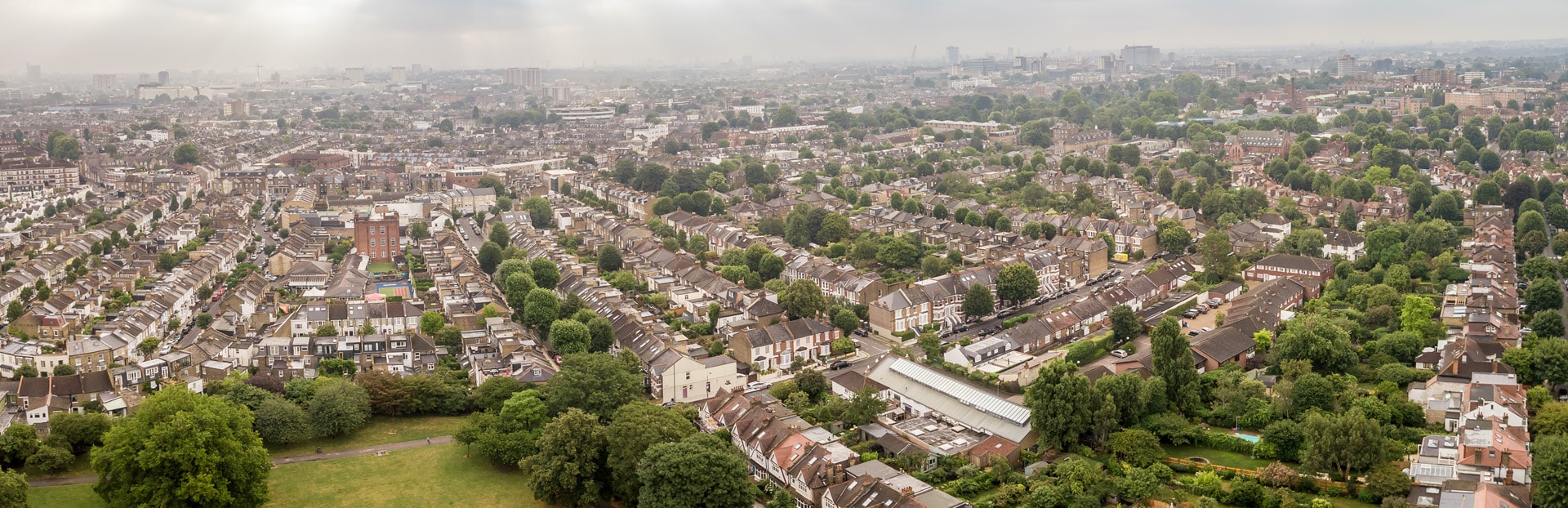
Sutton is a borough of south London. Average sold prices across Sutton sit at £452,352 on the HM Land Registry House Price Index, 56.0% above the England average of £289,946 but well below most of inner London, which makes it the most affordable of the south-London boroughs covered in these guides. That positioning is the whole case for Sutton: it carries genuine London demand and transport, yet its asking prices look modest next to neighbours like Merton or Kingston, and the gap between its cheapest and dearest postcode is narrow. SM6 in Wallington starts at a £411,935 asking price while SM3 in Cheam reaches £513,136, a far tighter spread than the inner boroughs. The local population grew 10.25% between the 2011 and 2021 censuses, from 190,146 to 209,639 residents, one of the faster growth rates in London.
What sets Sutton apart from much of London is that its prices have kept rising. The borough reached an all-time high of £456,273 in January 2023 and now sits at £452,352, barely off that peak, with five-year growth of 12.3% where many inner-London markets have stalled or corrected. For an investor that reframes it as an outer-suburban market still building value rather than one giving it back. Top gross yields reach 5.1% in SM1 and SM5, with the more affordable postcodes pairing solid rents against lower asking prices.
This guide covers the London Borough of Sutton (ONS code E09000029) across postcodes SM1, SM2, SM3, SM5, and SM6. Sutton runs across the southern edge of Greater London from the town centre at SM1 west through Cheam and out to Carshalton and Wallington, bordering Croydon to the east and Merton to the north.
Article updated: June 2026
Why Invest in Sutton?
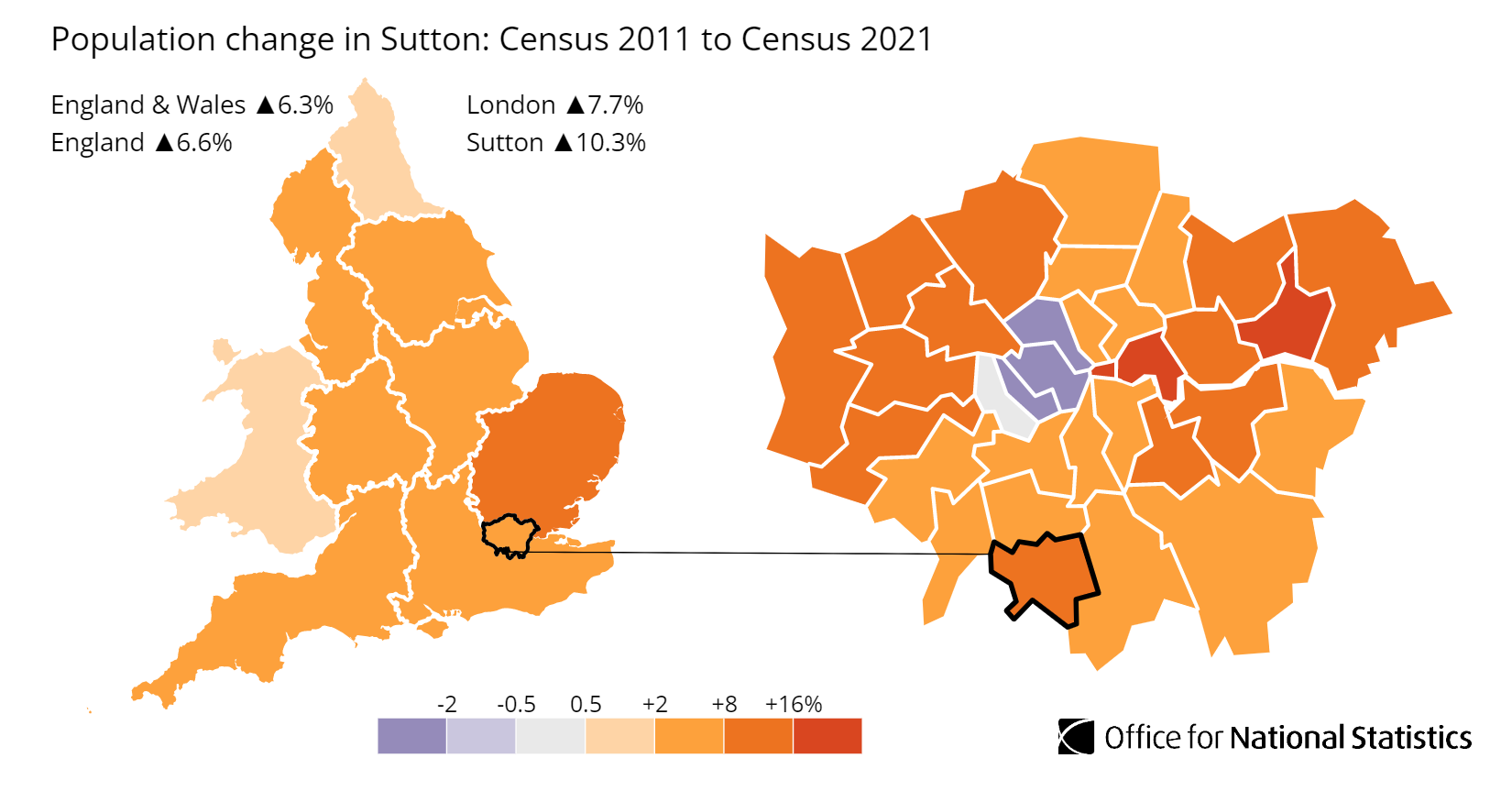
Sutton added 19,493 residents between the 2011 and 2021 censuses, a 10.25% rise from 190,146 to 209,639, well ahead of the 6.3% England and Wales average. That growth reflects what the borough sells: a green, low-rise, family-oriented corner of London with good schools and direct rail into the City and Victoria, at prices that undercut most of the capital. The character runs from the busier town centre and station at SM1, through the leafy semis of Cheam and Carshalton, to the Edwardian streets of Wallington, and it shows up in every table in this guide.
The local employment rate of 76.0% sits above both the London figure of 74.9% and the Great Britain figure of 75.6%, and unemployment runs at 5.0%, lower than most of inner London. Those numbers fit the borough's profile: a settled, largely owner-occupied population of commuters and families rather than the transient, professional-renter base of the central boroughs. For a landlord, the read is steady, lower-churn demand from working households and families rather than the high turnover of a city-centre flat market.
Median gross weekly earnings for Sutton residents are £853.70, which works out at £44,393 a year. That sits just below the London median of £892.60 a week but well clear of the Great Britain figure of £752.40, the pay profile of a commuter borough whose residents largely earn their money elsewhere in the capital. Those earnings support the rents the borough commands, which run from £1,538 a month in Wallington up to £2,110 in Carshalton, and underpin a deep base of would-be buyers competing for the same family stock.
Sutton Economic Summary
- Population: 209,639 (2021 Census). Growth of 10.25% from 2011.
- Median annual salary: £44,393 (local), £46,415 (London), £39,125 (Great Britain)
- Employment rate: 76.0% (local), 74.9% (London), 75.6% (Great Britain)
- Unemployment rate: 5.0% (local)
- Key employment sectors: Health and social care, education, retail, professional services, public administration
Source: ONS Census 2021, Nomis Labour Market Profile (ASHE 2025, residence-based earnings)
Regeneration and Investment in Sutton
Sutton's investment is concentrated on its town centre and the London Cancer Hub at Belmont, two programmes aimed at adding homes and high-skilled jobs to a borough that has long been mainly residential. The regeneration is more modest than the multi-thousand-home schemes of inner London, which fits a borough whose appeal is suburban rather than high-density, but the town-centre and life-sciences plans both sit behind the SM1 and SM2 postcodes where the rental case is strongest.
- Sutton Town Centre regeneration (Ongoing): Sutton Council and the Mayor of London have designated the town centre for renewal around the station, with new homes, public realm and a planned secondary school and library at the former Liberty Square and Sutton Gasworks sites, aimed at intensifying housing close to the rail link into Victoria and London Bridge. The work targets the SM1 postcode directly. Details at London City Hall.
- The London Cancer Hub, Belmont (Under development): A partnership between Sutton Council, The Institute of Cancer Research and The Royal Marsden is building one of the world's largest life-sciences districts at Belmont in SM2, planned to deliver around 13,000 high-skilled jobs alongside new research and commercial space over the coming decades. For the southern postcodes this is the single largest source of future employment and graduate-renter demand in the borough. Updates at Sutton Council.
- Sutton Link tram and transport proposals (Proposed): Transport for London has consulted on extending the tram or a bus rapid-transit link from Wimbledon and Colliers Wood through to Sutton, which would improve connections from the northern postcodes into the wider south-London network, though the scheme is not yet funded for delivery.
Sutton Property Market Analysis
Average property prices in Sutton have risen 525.5% since January 1995, from £72,321 to £452,352. The sections below trace that path through the borough's actual cycles, then break down current postcode-level data for sold prices, price per square foot, asking prices, growth trends, and monthly transaction volumes.
When was the last house price crash in Sutton?
Sutton's sold prices are recorded by HM Land Registry at borough level under ONS code E09000029, and the House Price Index runs from January 1995 to the latest reading in April 2026, covering 31 years of market cycles. The borough's path is the classic outer-London one: a 2008 crash, a fast recovery, and a long climb that, unlike much of inner London, has carried on into the mid-2020s rather than stalling.
The 1995 to 2008 climb: Sutton started at £72,321 in January 1995. Steady commuter-belt demand carried it to £133,401 by December 2000 and £208,093 by December 2005. The pre-crash market topped out at £261,412 in February 2008, more than three and a half times its 1995 level.
2008 to 2009, the financial crisis: Prices fell from the February 2008 peak of £261,412 to a trough of £206,764 in June 2009, a drop of 20.9% over 16 months, with the worst year-on-year reading at -19.6% in February 2009. Sutton's fall was a touch deeper than the national average, as the outer-London market that had run hard into 2008 gave back more on the way down.
Recovery, 2009 to 2013: The bounce was steady rather than instant. Prices climbed back through 2010 and 2011, paused mid-cycle, and passed the February 2008 pre-crash peak by October 2013, when the average reached £263,347. That recovery took about five and a half years, slower than inner London but well ahead of many regional markets.
2013 to 2016, the post-crisis surge: This was Sutton's strongest stretch. Prices ran from £268,138 in December 2013 to £373,922 by December 2016, a rise of nearly 40% in three years, as buyers priced out of inner London pushed demand and value out to the affordable outer boroughs.
2017 to 2019, the plateau: Growth flattened. The average barely moved from £373,922 at the end of 2016 to £377,326 by December 2019, as stamp duty changes and Brexit uncertainty cooled the whole London market for three years.
2020 to 2023, the post-pandemic high: The stamp duty holiday and the race for space lifted prices again, to £397,086 by December 2020 and on to an all-time high of £456,273 in January 2023. That January 2023 peak remains the highest reading in the borough's 31-year record, and it came years after inner London had already topped out.
2023 to present, holding near the top: Since that high the market has eased only slightly, slipping to £452,352 by April 2026, less than 1% below the peak. Where inner-London boroughs sit well down on their highs, Sutton has held within touching distance of its record, and its latest annual reading is back in positive territory at 2.0%.
Long-term growth summary:
- 5 years (April 2021 to April 2026): 12.3% growth (£402,746 to £452,352)
- 10 years (April 2016 to April 2026): 24.2% growth (£364,174 to £452,352)
- 15 years (April 2011 to April 2026): 91.6% growth (£236,139 to £452,352)
- 20 years (April 2006 to April 2026): 111.5% growth (£213,879 to £452,352)
- 30 years (January 1995 to April 2026): 525.5% growth (£72,321 to £452,352)
The shape of those numbers is the key to Sutton today. Every window is positive, including the five-year and ten-year readings that have turned flat or negative across much of inner London. An investor who bought five years ago is up 12.3% on the Land Registry average, and one who bought before 2016 holds a large gain. The case here rests on a market that has carried on climbing, paired with asking prices that remain the lowest of the south-London boroughs in these guides.
- All property types
- Detached
- Semi-detached
- Terraced
- Flats
- All property types
- Detached
- Semi-detached
- Terraced
- Flats
Sold House Prices in Sutton
The average sold price across all property types in Sutton is £452,352, which is 56.0% above the England average of £289,946 as of April 2026. The premium widens with the size of the home: detached houses cost 120.4% more than the England average, while flats, the cheapest way into the borough, cost 32.7% more. Sutton is a house borough first, with semis and terraces making up the bulk of what sells, and the all-property figure sits well above the flat price as a result.
| Property Type | Sutton Average | England Average | Difference |
|---|---|---|---|
| Detached houses | £1,037,129 | £470,492 | +120.4% |
| Semi-detached houses | £652,457 | £288,185 | +126.4% |
| Terraced houses | £464,525 | £243,788 | +90.5% |
| Flats and maisonettes | £284,774 | £214,563 | +32.7% |
| All property types | £452,352 | £289,946 | +56.0% |
Detached houses at £1,037,129 are 120.4% above the England average, the priciest stock in the borough and concentrated in Cheam and the Belmont end of SM2 where the large interwar plots sit. They are a small share of what trades, and detached values rose 2.5% over the year.
Semi-detached houses at £652,457 carry the widest premium of all four types at 126.4% above England, and they are the defining Sutton property. The borough is a borough of semis, from Carshalton and Wallington through to North Cheam, the three-bed family houses that fill its streets, and they posted 3.4% annual growth.
Terraced houses at £464,525 sit 90.5% above the England average and grew fastest of all four types over the year at 3.6%. Sutton's terraces cluster around the town centre in SM1 and the older parts of Wallington, the cheaper family-house end of the market and a common buy-to-let target.
Flats and maisonettes at £284,774 are 32.7% above England, by far the narrowest premium and the most affordable entry to the borough. Flats concentrate around the SM1 town centre and the station, and they were the only type to fall over the year, down 0.6%, which is why the headline all-types reading still came out positive at 2.0% on the strength of the houses.
Price Per Square Foot in Sutton
£68 per square foot separates Sutton's cheapest postcode from its dearest, with SM6 at £479 and SM3 at £547. Measuring by the square foot strips out how large the homes are and isolates what the location itself commands, and in Sutton it tracks the move from the busier eastern postcodes out to the leafier western ones. SM3 in Cheam tops the table, the most established family-house market in the borough.
| Rank | Area | Price Per Sq Ft |
|---|---|---|
| 1 | SM6 (Wallington) | £479 |
| 2 | SM2 (Sutton, Belmont) | £495 |
| 3 | SM1 (Sutton) | £513 |
| 4 | SM5 (Carshalton) | £531 |
| 5 | SM3 (Cheam, North Cheam) | £547 |
SM6 in Wallington at £479 per square foot is the most affordable space in the borough, drawn from 520 transactions analysed, with SM2 next at £495. Wallington offers the lowest rate per square foot alongside the lowest asking price, the practical value end of Sutton for a buyer focused on cost.
SM3 in Cheam at £547 per square foot tops the table from 325 transactions, with SM5 in Carshalton next at £531. These are the western family-house postcodes where buyers pay most for space, the leafy semis and detached stock that command the strongest per-square-foot rates in the borough.
For Sale Asking Prices in Sutton
SM6 at £411,935 and SM3 at £513,136 sit 24.6% apart, the full width of Sutton's asking-price range. The spread is narrow by London standards, splitting the borough into a cheaper eastern band around Wallington and the town centre and a dearer western band through Carshalton and Cheam. The mean asking price across all five postcodes is £464,404.
| Rank | Area | Asking Price |
|---|---|---|
| 1 | SM6 (Wallington) | £411,935 |
| 2 | SM1 (Sutton) | £416,415 |
| 3 | SM2 (Sutton, Belmont) | £488,281 |
| 4 | SM5 (Carshalton) | £492,256 |
| 5 | SM3 (Cheam, North Cheam) | £513,136 |
SM6 in Wallington at £411,935 is the cheapest way into the borough, sitting just below SM1 in the town centre at £416,415. The two are effectively the entry point for a buyer working to a budget, and both sit below the borough's Land Registry sold average of £452,352, which reflects the heavier weight of flats and smaller terraces in those postcodes.
SM3 in Cheam at £513,136 is the most expensive, the western family-house market of larger semis and detached stock. The £101,201 step from SM6 to SM3 buys more space and a leafier setting rather than a more central position, and the yield tables below show what that costs in income.
House Price Growth in Sutton
SM3 leads Sutton's recent growth with a five-year return of 14.9%, while SM2 sits at the other extreme down 9.4% over the same period. The growth table shows a borough that has mostly risen, with four of the five postcodes positive over five years, and only the Belmont end of SM2 going the other way. The table is ranked by five-year growth, strongest first.
| Area | 1 Year | 3 Years | 5 Years |
|---|---|---|---|
| SM3 (Cheam, North Cheam) | 6.1% | 2.8% | 14.9% |
| SM1 (Sutton) | 4.7% | 5.5% | 12.2% |
| SM5 (Carshalton) | -3.9% | -0.8% | 6.2% |
| SM6 (Wallington) | -1.9% | 2.4% | 3.5% |
| SM2 (Sutton, Belmont) | -11.8% | -8.1% | -9.4% |
SM3 (Cheam) posted a five-year return of 14.9% alongside a 6.1% gain over the past year, the strongest performer in the borough. The established Cheam family market held and built value, and SM1 in the town centre is close behind at 12.2% over five years and 4.7% over the year, lifted by the town-centre regeneration and its rail link.
SM2 (Sutton, Belmont) sits at the bottom, down 9.4% over five years and 11.8% over the past year. The Belmont end carries the borough's most expensive detached stock, which has corrected over the past year while the cheaper family postcodes have risen. It is a reminder that the dearest postcode is not the same as the best recent performer.
Monthly Property Sales in Sutton
Sutton records around 109 sales a month across its five postcodes, with SM1 the busiest at 29 and SM3 (Cheam) the quietest at 13. Transaction volumes and turnover vary across the borough, which shapes how easily an investor can buy now or sell later.
| Area | Sales Per Month | Turnover | Asking Price |
|---|---|---|---|
| SM1 (Sutton) | 29 | 11% | £416,415 |
| SM6 (Wallington) | 24 | 9% | £411,935 |
| SM5 (Carshalton) | 23 | 14% | £492,256 |
| SM2 (Sutton, Belmont) | 20 | 9% | £488,281 |
| SM3 (Cheam, North Cheam) | 13 | 10% | £513,136 |
SM1 is the busiest market at 29 sales a month on 11% turnover, the town-centre postcode where the smaller flats and terraces change hands most often. For a buyer, more transactions mean more choice and more comparable evidence on price; for a future seller they point to an easier exit. SM5 in Carshalton turns over fastest at 14%, the highest in the borough, a sign of an active family market even on slightly lower volume.
SM3 in Cheam is the quietest at 13 sales a month, a tightly held owner-occupier market of larger houses that come up less often. Low volume there cuts both ways: less choice for a buyer, but stock that has held its value, as the growth table shows. The selling-times section below sets out how those volumes translate into how long a sale actually takes.
How Long Properties Take to Sell in Sutton
SM5 (Carshalton) is the fastest market in Sutton, clearing in about 190 days, while SM2 (Belmont) takes around 380 days, twice as long. The first figure below counts the average days a home is listed before it sells; the second turns the for-sale backlog into months of supply at the current rate of sale. Carshalton's 6.3 months against Belmont's 12.5 is the difference between a quick resale and a year-long wait, a holding cost the yield table never shows. The table is ranked fastest first.
| Area | Avg Days to Sell | Months of Unsold Stock | Market |
|---|---|---|---|
| SM5 (Carshalton) | 190 | 6.3 | Balanced market |
| SM1 (Sutton) | 277 | 9.1 | Balanced market |
| SM3 (Cheam, North Cheam) | 304 | 10.0 | Balanced market |
| SM6 (Wallington) | 304 | 10.0 | Balanced market |
| SM2 (Sutton, Belmont) | 380 | 12.5 | Buyer's market |
SM5 in Carshalton clears fastest at about 190 days and 6.3 months of supply, the only postcode comfortably ahead of the rest, which fits its high turnover. Four of the five postcodes register as balanced markets rather than buyers' markets, an outer-London picture of steady, two-way demand quite unlike the long exit times of the inner boroughs.
At the other end, SM2 carries 12.5 months of unsold stock and takes around 380 days to sell, the only buyer's market in the borough and twice SM5's exit time. The expensive Belmont detached stock that sits behind SM2's high prices is also the slowest to move, so the premium there comes with a longer and costlier wait whenever the time comes to sell.
What Type of Property Can You Buy in Sutton?
Semi-detached houses are the backbone of Sutton's stock, from 40.2% in SM3 down to 13.4% in SM2, where detached homes make up the majority instead. The mix is the most important fact about Sutton for a buy-to-let investor: this is a house borough, with semis and terraces dominating most postcodes and flats a minority everywhere. The figures below are drawn from 2021 Census records for each postcode.
| Area | Detached | Semi-detached | Terraced | Flats |
|---|---|---|---|---|
| SM1 (Sutton) | 6.8% | 33.0% | 22.4% | 37.7% |
| SM2 (Sutton, Belmont) | 53.7% | 13.4% | 7.0% | 25.8% |
| SM3 (Cheam, North Cheam) | 6.5% | 40.2% | 27.2% | 26.0% |
| SM5 (Carshalton) | 26.5% | 36.0% | 18.4% | 18.6% |
| SM6 (Wallington) | 16.3% | 31.5% | 20.1% | 32.0% |
SM3 in Cheam and SM5 in Carshalton are the most house-heavy postcodes, with semi-detached homes at 40.2% and 36.0% and flats a minority. These are the classic Sutton family streets, the three-bed semi-detached market that defines the borough, with little for an investor chasing a cheap flat.
SM2 in Belmont is the outlier the other way, with detached houses at 53.7%, the only postcode where detached stock is the majority and the source of its high prices. The town-centre SM1 postcode is where flats reach their highest share at 37.7%, the smaller stock around the station that gives a buyer the cheapest entry to the borough.
Flats combine purpose-built blocks and converted units, and a small share of other dwelling types is left out, so rows may not total 100%.
Sutton Rental Market Analysis
Monthly rents in Sutton range from £1,538 in SM6 to £2,110 in SM5, with gross rental yields from 4.3% to 5.1% across the five postcodes. Because Sutton pairs steady family demand with prices that have kept climbing, an investor here gets a yield close to most of outer London alongside the capital growth inner boroughs have lost, and the sections below break down rents, yields and tenant affordability postcode by postcode. To weigh the income against the costs, see whether buy to let is worth it, or browse current available buy-to-let property across the capital.
Average Rent & Gross Rental Yields in Sutton
Gross rental yields in Sutton run from 4.3% in SM2 and SM3 to 5.1% in SM1 and SM5. The cheaper town-centre postcode and the higher-rent Carshalton market share the top of the table, while the dearer western family postcodes deliver less income. SM1 pairs the borough's second-lowest asking price with a solid rent to reach the joint-top yield.
| Area | Average Monthly Rent | Asking Price | Gross Yield |
|---|---|---|---|
| SM1 (Sutton) | £1,755 | £416,415 | 5.1% |
| SM5 (Carshalton) | £2,110 | £492,256 | 5.1% |
| SM6 (Wallington) | £1,538 | £411,935 | 4.5% |
| SM2 (Sutton, Belmont) | £1,763 | £488,281 | 4.3% |
| SM3 (Cheam, North Cheam) | £1,850 | £513,136 | 4.3% |
SM1 and SM5 share the top yield at 5.1%, reaching it by different routes. SM1 in the town centre pairs the borough's second-lowest asking price of £416,415 with a £1,755 rent and a 30% deposit of £124,924, while SM5 in Carshalton pairs the borough's highest rent of £2,110 with a higher £492,256 price. Both clear 5%, the income end of the borough.
SM2 in Belmont and SM3 in Cheam sit at the bottom of the yield table at 4.3%, where asking prices of £488,281 and £513,136 meet rents of £1,763 and £1,850 that have not climbed to match. These western and southern family postcodes are the ones that grow on capital value, so a buyer there is effectively trading a point of yield for the leafier streets and the stronger price record that come with them.
Gross Rental Yield by Postcode
Is Sutton Rent High?
Sutton rents consume between 41.6% and 57.0% of the local median individual salary, above the 30% affordability benchmark but lower than most of inner London. The common rule of thumb is that rent should take around 30% of gross income. No Sutton postcode meets that on a single median salary, though the gap is smaller here than in the central boroughs, which tells you who actually rents in the borough.
The median gross weekly salary in Sutton is £853.70, which works out at £3,699 per month or £44,393 per year. That sits just below the London median of £892.60 a week but well clear of the Great Britain median of £752.40. Data from the Nomis Labour Market Profile (ASHE 2025).
| Rank | Area | Rent as % of Income |
|---|---|---|
| 1 | SM5 (Carshalton) | 57.0% |
| 2 | SM3 (Cheam, North Cheam) | 50.0% |
| 3 | SM2 (Sutton, Belmont) | 47.7% |
| 4 | SM1 (Sutton) | 47.5% |
| 5 | SM6 (Wallington) | 41.6% |
These figures compare a one-bedroom-or-larger market rent against a single resident's median pay, so they read high by design. In practice Sutton's renters are mostly couples and families pooling two incomes, which is how a borough with rents above £1,500 a month sustains the demand it does. SM6 in Wallington at 41.6% is the most affordable on this measure, where the borough's lowest rent meets the same median salary.
How Big Is Sutton's Private Rented Sector?
The private rented sector is deepest in SM1, where it accounts for 23.4% of households, and shallowest in SM5 at 14.4%, all below the inner-London norm. The share of homes already rented privately is a guide to how large and established the local tenant pool is, and across Sutton it sits alongside high owner-occupation, the mark of a settled suburban borough rather than a churning rental market. The table below shows household tenure by postcode.
| Area | Owned Outright | Owned with Mortgage | Private Rented | Social Rented |
|---|---|---|---|---|
| SM1 (Sutton) | 28.9% | 37.0% | 23.4% | 9.4% |
| SM3 (Cheam, North Cheam) | 35.0% | 39.4% | 18.6% | 6.2% |
| SM2 (Sutton, Belmont) | 43.1% | 35.9% | 16.5% | 4.0% |
| SM6 (Wallington) | 31.4% | 37.2% | 15.2% | 14.8% |
| SM5 (Carshalton) | 33.1% | 39.6% | 14.4% | 12.1% |
SM1 holds the largest private rented sector at 23.4%, the town-centre postcode where renting is most common, drawn by the station and the smaller flats around it. A deeper rented sector points to a more tested, liquid lettings market, and SM1 is where that demand concentrates in Sutton.
Owner-occupation runs high across the rest of the borough, with outright ownership reaching 43.1% in SM2 and mortgaged ownership near 40% in SM3 and SM5. Social renting is modest, peaking at 14.8% in Wallington. That mix is why tenant demand in Sutton leans towards working families and couples buying time before they own, rather than the professional-renter base of the central boroughs, and it points a landlord towards family houses over flats outside the town centre.
Local Housing Allowance Rates in Sutton
All five Sutton postcodes fall in the single Outer South London Broad Rental Market Area, so the Local Housing Allowance rates are uniform across the borough, from £131.02 a week for a room to £448.77 for a four-bed. Local Housing Allowance is the most a tenant on housing support can claim towards rent, so for that part of the market it sets an effective floor. To check the figure for a specific address, use the government's official Local Housing Allowance calculator.
| Property Size | Outer South London (weekly) |
|---|---|
| Shared accommodation | £131.02 |
| 1 bedroom | £218.63 |
| 2 bedrooms | £276.16 |
| 3 bedrooms | £345.21 |
| 4 bedrooms | £448.77 |
The two-bedroom rate of £276.16 a week works out at about £1,197 a month, below Sutton's open-market rents of £1,538 to £2,110. A benefit-backed tenancy at the LHA rate therefore sits under the borough's market rents, though the gap is narrower in the cheaper Wallington and town-centre postcodes than in inner London. Given Sutton's relatively modest social-rented sector, the LHA floor matters less here than in the central boroughs, but it remains a useful minimum for a landlord letting at the lower end. These rates are the June 2026 figures and are reset each April.
Buy-to-Let Considerations
Are House Prices High in Sutton? Price-to-Earnings Ratios
Buying in Sutton takes between 9.3 and 11.6 times the local median salary, with every postcode above the national benchmark but below most of London. This is based on the Nomis Labour Market Profile for Sutton, which puts the median gross annual income for residents at £44,393.
The national benchmark for price-to-earnings is 7.4x (England's average sold price of £289,946 divided by the Great Britain median annual salary of £39,125). No Sutton postcode meets that, which places the borough in expensive territory relative to local incomes, though its ratios sit well below the 14x-plus of inner-London boroughs.
| Rank | Area | Price-to-Earnings Ratio |
|---|---|---|
| 1 | SM6 (Wallington) | 9.3x |
| 2 | SM1 (Sutton) | 9.4x |
| 3 | SM2 (Sutton, Belmont) | 11.0x |
| 4 | SM5 (Carshalton) | 11.1x |
| 5 | SM3 (Cheam, North Cheam) | 11.6x |
SM6 and SM1 are the most affordable on this measure at 9.3x and 9.4x, still above the national 7.4x but among the more reachable postcodes in London. Even the cheapest way into Wallington or the town centre takes more than nine years of the local median salary, a reminder that Sutton buyers, like most in the capital, rarely rely on a single local wage.
SM3 in Cheam at 11.6x is the least affordable, with SM5 in Carshalton just behind at 11.1x. The two reach that point through the value of the western family-house market, the larger semis and detached homes that cost most relative to local pay. Both sit at the bottom of the yield table for the same reason, a purchase price the rent struggles to keep up with.
Deposit Requirements in Sutton
A 30% deposit on a buy-to-let in Sutton ranges from £123,581 in SM6 to £153,941 in SM3. The £30,360 gap between the cheapest and dearest deposit is far narrower than in inner London, where it often runs to six figures. For investors comparing Sutton with the rest of London, these deposits sit below almost every other borough in the capital, which is the borough's central appeal.
Beyond the deposit, the stamp duty calculation and other buy-to-let running costs add materially to the capital required, particularly the surcharge on additional property, which at Sutton's price points runs into five figures on its own.
| Rank | Area | 30% Deposit Required |
|---|---|---|
| 1 | SM6 (Wallington) | £123,581 |
| 2 | SM1 (Sutton) | £124,924 |
| 3 | SM2 (Sutton, Belmont) | £146,484 |
| 4 | SM5 (Carshalton) | £147,677 |
| 5 | SM3 (Cheam, North Cheam) | £153,941 |
SM6 keeps the entry cost down at a £123,581 deposit, and SM1 is within about £1,300 of it. Wallington and the town centre are the practical starting point for an investor working to a budget, pairing the two lowest deposits with a 4.5% and a 5.1% yield respectively.
At the top, SM3 needs a £153,941 deposit, around £30,000 more than SM6, for a postcode that earns less per pound through the rent and has grown fastest on capital value. The extra deposit buys a leafier Cheam family home and stronger price growth rather than a stronger income return.
What the Sutton Data Tells Buy-to-Let Investors
In Sutton the cheapest postcodes are also among the highest-yielding. SM1 (Sutton town centre) carries a top yield of 5.1% and is the second-cheapest way in, at a £416,415 asking price for an investment property in Sutton, and the second most affordable against local earnings at 9.4 times income. A 30% deposit there is £124,924, for a home renting at £1,755 a month, with the town-centre regeneration adding new homes and amenity around the station.
The borough splits along an income-versus-growth line, and the data draws it. The town-centre and Carshalton postcodes, SM1 and SM5, run the joint-top yields at 5.1%, while the western family postcodes, SM3 and SM2, run lower yields of 4.3% but, in SM3's case, the strongest capital growth at 14.9% over five years. Income points to the town centre and Carshalton; the best recent growth has been in Cheam.
The house-dominated stock is the defining feature across most of the borough. Semi-detached and terraced homes make up the bulk of every postcode outside the town centre, and the all-property sold average of £452,352 sits well above the flat figure of £284,774 as a result. This is a family-house market, and the deepest tenant demand is for those houses rather than for flats.
Against the rest of London, Sutton is the affordable end of the capital that kept climbing: up 12.3% over five years and within 1% of its January 2023 high while many inner boroughs corrected. That is a growth-and-income borough, not a turnaround bet. Four of its five postcodes are balanced markets and only SM2 favours buyers, so headline discounts are harder to come by than in the slower inner boroughs, and the sharper Sutton prices tend to surface through below market value and off-market property deals before they ever reach the portals.
How Sutton Compares
Sutton's mean asking price of £464,404 makes it the cheapest of the south-London boroughs in this group, below near-neighbour Croydon and well under Kingston and Merton, while its top yield of 5.1% trails the others by a small margin. The comparison below sets Sutton alongside three nearby boroughs, each with a different balance of price and income return. Mean asking price and mean monthly rent are simple averages across all postcodes with data, and top gross yield is the single highest postcode yield in each borough.
| Location | Mean Asking Price | Mean Monthly Rent | Mean Gross Yield | Top Yield (postcode) |
|---|---|---|---|---|
| Sutton | £464,404 | £1,803 | 4.7% | 5.1% (SM1, SM5) |
| Croydon | £466,187 | £1,771 | 4.6% | 5.4% (SE20) |
| Kingston upon Thames | £590,531 | £1,931 | 3.9% | 4.2% (KT1, KT6) |
| Merton | £596,108 | £2,223 | 4.5% | 5.2% (CR4) |
Sutton and Croydon are near-identical on price, at £464,404 and £466,187, the two cheapest boroughs in this group and direct eastern neighbours. Croydon edges ahead on top yield at 5.4% against Sutton's 5.1%, on a marginally lower rent, but the two share a profile: affordable outer-south-London boroughs with strong rail links and deep family demand.
Merton and Kingston upon Thames are both well over £100,000 dearer than Sutton on average, at £596,108 and £590,531, the price of their more central south-west-London positions. Merton matches Sutton closely on yield at 5.2% but from a much higher base, while Kingston is the lowest-yielding of the four at 4.2%. For investors prioritising the lowest entry cost and deposit, Sutton and Croydon make the case; the premium over them buys Merton's and Kingston's location rather than a stronger income return. For a data-driven comparison across the whole country, see our best places to invest in buy-to-let guide.
Frequently Asked Questions
Is Sutton a good place to invest in buy-to-let?
The numbers point to a steady, affordable London borough that has kept growing. Sutton's asking prices are the lowest of the south-London boroughs in this guide, with a £464,404 mean asking price and deposits from £123,581, while resident earnings of £44,393 a year and a 76.0% employment rate underpin a deep base of working-family tenants. Gross yields reach 5.1% in SM1 and SM5. What separates Sutton from much of London is that its prices have held: the borough is within 1% of its January 2023 high and up 12.3% over five years, where many inner markets have corrected.
That makes the entry postcode the decision. SM1 (town centre) and SM6 (Wallington) pair the lowest prices and deposits with the joint-top or near-top yields, while Cheam and Carshalton cost more and yield less but have grown faster. The borough rewards a buyer who reads it postcode by postcode rather than as one market.
What are the best areas in Sutton for property investment?
The borough splits between income and growth, and the goal points to the postcode. For yield, SM1 (town centre) and SM5 (Carshalton) lead at 5.1%, with SM1 also offering the second-lowest asking price at £416,415 and a £124,924 deposit. For capital growth, SM3 (Cheam) leads the borough on five-year growth at 14.9%, with SM1 close behind at 12.2%, though SM3 yields just 4.3%.
SM6 (Wallington) sits in between as the cheapest entry at £411,935 and a respectable 4.5% yield. So income runs to the town centre and Carshalton, the strongest recent growth runs to Cheam and the town centre, and Wallington offers the lowest-cost way into the borough.
What are average house prices in Sutton?
The average sold price across Sutton is £452,352 on the Land Registry index, about 56.0% above the England average of £289,946 as of April 2026. Asking prices by postcode run from £411,935 in SM6 (Wallington) up to £513,136 in SM3 (Cheam), with a borough-wide mean of £464,404. By type, the index puts flats at £284,774, terraced houses at £464,525, semi-detached at £652,457 and detached at £1,037,129, with semis and terraces the bulk of what trades.
Through a buy-to-let lens, SM6 and SM1 are the cheapest entries and SM1 and SM5 the highest-yielding at 5.1%, while SM3 in Cheam is the dearest and among the lowest-yielding.
What type of property is most common in Sutton?
Semi-detached houses, across most of the borough. They run from 31.5% of the stock in SM6 (Wallington) up to 40.2% in SM3 (Cheam), and together with terraces they make up the bulk of every postcode outside the town centre. The exceptions are SM2 (Belmont), where detached houses reach 53.7% and dominate, and SM1 (town centre), where flats peak at 37.7%. For a buy-to-let investor, Sutton is a family-house market everywhere except the town centre around the station.
Why have Sutton house prices held up better than inner London?
Sutton reached an all-time high of £456,273 in January 2023 and has eased only to £452,352 by April 2026, less than 1% below that peak, while many inner-London boroughs sit well down on highs reached years earlier. The borough's affordability is the reason: as buyers were priced out of central London, demand and value moved out to the cheaper outer boroughs, which kept Sutton's family-house market climbing into the mid-2020s when the prime markets had already turned.
The longer view supports it too. The borough is up 24.2% over ten years and 525.5% over thirty, with every growth window positive, so the recent holding pattern follows a long and largely uninterrupted rise rather than a sharp correction.
Is there demand for student and shared accommodation in Sutton?
Sutton is more a family-rental borough than a student one, but shared-house demand exists and is growing. The borough has no large university campus of its own, though the London Cancer Hub at Belmont in SM2 is set to add around 13,000 high-skilled jobs over the coming decades. For now, the room-rental sample is thin, with the few recorded double rooms letting at around £183 to £186 a week in SM1, SM2 and SM6.
On the shared-house side, the borough's stock of larger semis suits house shares, and the rail links into central London keep a steady flow of working sharers. For how the numbers work on a shared house, see our guide to HMO property, and for the purpose-built end of the market, our guide to student property investment.
How does Sutton compare to Croydon for buy-to-let?
They are near-identical on price and direct neighbours, with Croydon slightly ahead on yield. Sutton's mean asking price is £464,404 against Croydon's £466,187, and its top yield is 5.1% against Croydon's 5.4%, on a marginally higher average rent of £1,803 versus £1,771. Both are affordable outer-south-London boroughs with strong rail links, deep family demand and high owner-occupation.
Sutton offers the greener, lower-density setting and the slightly more settled market, while Croydon adds a larger town centre and its own major regeneration pipeline. The choice between them tends to come down to which specific postcodes and price points fit the budget rather than a clear gap in the numbers.
What are the Local Housing Allowance rates in Sutton?
All five Sutton postcodes fall in the Outer South London Broad Rental Market Area, so the rate is the same across the borough. The June 2026 figures run from £131.02 a week for a shared room to £448.77 for a four-bed, with a one-bed at £218.63 and a two-bed at £276.16. Those figures are the most a tenant on housing support can claim, so for that part of the market they set a rent floor, and they sit below Sutton's open-market rents in every postcode.
How do I buy an investment property in Sutton?
Start by deciding whether you are buying for income or for growth, because the two point to different postcodes. For yield, SM1 (town centre) is the cheaper of the two top-yielding postcodes at £416,415 and 5.1%, with SM6 (Wallington) the lowest entry at £411,935 and 4.5%. For growth, SM3 (Cheam) has risen fastest at 14.9% over five years but yields less. Budget for a 30% deposit, which runs from £123,581 in SM6 to £153,941 in SM3.
Because most of the borough is a balanced rather than a buyer's market, there is less room to negotiate than in the slower inner boroughs, so finding value matters more. Plenty of experienced investors buy below asking through off market properties and BMV property. To see what is available now, browse investment properties or buy-to-let opportunities.
Ready to buy property?
Access off-market investment properties with an average 8%+ annual gross yield (beating the UK's typical 3-5%).
Get property alerts