

When, Why and How to Sell a Buy-to-Let Property
If you're thinking about selling your buy-to-let property or selling your whole property portfolio, then there are a lot of aspects to weigh first, to get the best possible price, in the most suitable timeline with the right buyer type.
Here's a step-by-step guide to the easiest way to sell your tenanted property successfully.
Article updated: July 2026
Should you Sell your Buy-to-Let Property Portfolio?
You may be thinking, 'should I sell my buy-to-let', but before asking 'HOW' to sell, let's look at 'IF' it is a good time to sell your tenanted investment property first.
Market timing
Selling an individual property is a whole different thought process than planning an exit of your entire portfolio. But both require asking a series of questions to see if NOW is the right time.
Consider, is the property cycle in a good place for sellers, or is it a buyers' market and is a UK house price crash coming?
If you are selling a whole property portfolio in one go, how large is the portfolio, and does it require specialist knowledge.
For example, 10 buy-to-let properties spread across the country would require a very different buyer than selling a portfolio of 100 properties that are all houses of multiple occupation, (HMOs) in Birmingham, which would of course require a very experienced landlord and not someone who is new and looking at how to become a student landlord for the first time.
Personal timing
Forgetting the 'market cycle', for most owners, it is simply about their 'personal cycle'.
Good personal reasons to sell are if you want to raise cash, are no longer making the money you aimed for, you have problem tenants, or simply you no longer want to be a landlord.
All are good, genuine reasons to sell, and the most common is retirement, when portfolio landlords have reached an age that selling instead of growing makes the most sense.
In a perfect world, the best time to sell your buy-to-let is when the market is on an upward trajectory, with house prices in your area increasing AND when your personal situation is aligned so that you are not forced into a trade-off of a quick sale and a lower price.

Should you Sell your Buy-to-Let Empty or with Tenants in Situ?
The next question to ask is whether it is better to sell your buy-to-let with tenants in situ, or without tenants .... assuming it is currently rented, of course.
Selling a buy-to-let with tenants is known as selling with tenants in situ or selling with sitting tenants.
Selling a buy-to-let without tenants is known as selling with vacant possession. There are of course pros and cons of both approaches.
Selling your Buy-to-Let Portfolio with Vacant Possession
The main advantage of selling an empty or vacant buy-to-let is that it can be marketed like another residential property, potentially opening it to landlords, development companies and homebuyers.
The main disadvantage of selling a tenanted buy to let without its tenants is that you will need to wait until the current tenancy expires, or until it can be ended legally. Depending on your tenants and the tenancy agreement this could take time, be complicated and be expensive.
Sitting tenants do not have to co-operate with the selling process. Tenants do not necessarily have to allow valuers, surveyors, estate agents or potential buyers into the property. Even if there is a clause in the tenancy which allows this they do not have to give access to your property at any time or without advance notice.
Of course another big disadvantage of selling an empty buy-to-let is that once it is empty your rental income will stop. You will still have to pay the mortgage and maintenance costs until the sale completes, which could take many months. So calculating the loss of rental income and the increase in costs is a useful exercise to do before you put it on the market.
For example, if your rental income is £800 a month and when empty you have extra costs of £200 a month in council tax (unless you apply for a short-term council tax exemption), insurance and utilities, until you find a buyer, this is a £1,000 net difference in your bottom line. This adds up quickly and if your sale is slow and it takes you a while to find the right buyer and complete, over 12 months this will add up to £12,000.
Understanding if therefore makes sense to sell quickly for a lower price, or selling with tenants in situ for a lower price is an important consideration.
In addition to this, you may have to spend time renovating or cleaning an empty buy-to-let before a sale. This can be costly on one property, let alone a whole portfolio.
These extra costs and hassle is why landlords often look at selling with tenants in situ rather than selling vacant possession.
Selling your Buy-to-Let Portfolio with Tenants in Situ
You can sell your buy-to-let with sitting tenants, and it does offer some advantages: You will keep earning rent right up until completion day. The buyer gets a ready-made investment property with rental income from day one. Your tenants may not have to move out, nor be affected at all.
Selling your buy-to-let with tenants may be more straightforward in some cases. Some landlords, investors and house-buying companies specialise in properties with tenants and may take over the existing tenancies, which since 1 May 2026 run as assured periodic tenancies under the Renters' Rights Act.
One disadvantage of selling your buy-to-let with tenants is that the total market size of potential buyers for your house or flat will be smaller. Owner-occupiers are unlikely to buy your property as they, of course, will want to move in, and so the market for it will be mainly limited to landlords browsing buy to let property for sale listings, investors hunting below market value properties, or a property investment company. This limited market could affect the value of your property, as demand is reduced.
Of course, selling your buy-to-let with tenants may be more difficult if you have problem tenants. If, for example, there are rent arrears, your tenants have damaged your property or are refusing to provide access to viewings, this can be off-putting to new buyers, and the only way to achieve a sale may be to offer it at a significant discount.
Do I Have to Tell My Tenants I am Selling?
Absolutely, it is good practice to do so.
Put yourself in your tenant's situation, would you wish to know if your landlord was selling and how that could impact you?
It is less a case of what is legally required and more what is morally correct, as a house sale could really impact how long-term your tenants stay at the property, as the uncertainty of a new owner can be unsettling.
It doesn't have to be hidden, and often we have found being open and honest with your tenants if you wish to sell is the best approach, as it can sometimes lead to positive outcomes like them offering to purchase the property from you, your tenants providing notice (this can be a good outcome for both parties if you already wished to sell vacant possession) or your tenants asking for a new tenancy agreement (which can provide them and the incoming buyer with more certainty).
If your tenants are kept fully informed, they are more likely to co-operate with the sales process which can make it much smoother for everyone.
Can I Evict my Tenants to Sell my Buy-to-Let?
Tenancy law changed on 1 May 2026. Under the Renters' Rights Act, landlords can no longer use Section 21 to seek possession (aside from a short transitional window for notices served before 1 May 2026, which runs until the earlier of the time left on the notice and 31 July 2026), and most existing assured shorthold tenancies became assured periodic tenancies, so there is no fixed end date to plan a sale around.
Repossession now runs through a Section 8 notice of possession, and selling is one of the recognised grounds. The government guidance states that grounds 1 and 1A (moving in or selling) cannot be used until 12 months after the tenancy started. The notice can be served earlier, provided the date in it falls after that 12-month point, and landlords need evidence of the intention to sell, such as proof an estate agent has been instructed. If your property was let on an assured shorthold tenancy (here you can check what is an ast), it now runs as a periodic tenancy, so the practical choice is between selling with the tenants in place and working to the Section 8 timelines in the guidance.
More Things to Check when Selling your Buy-to-Let
Check your mortgage. If you have a fixed-term mortgage there maybe a redemption penalty if you wish to sell your property before the fixed term expires. This can be significant and can be a percentage of the mortgage (like 2-5%), so sometimes delaying your sale might achieve a better result.
Check the tax implications. Selling a buy-to-let property will create a liability for Capital Gains Tax or CGT. CGT has to be declared and paid within 30 days of the completion date. Unless you have a property that is already in a limited company structure, in which case you may be able to consider selling the limited company shares instead of the asset.
Property investment limited company setup, however, requires pre-planning, so if you already own the property in your own name at this stage of the process, then simply accepting that you will have capital gains tax to pay is important, considering the timing of your sale and when this tax is payable.
Check the paperwork. If you're planning on selling your buy to let with tenants in situ make sure all your tenancy documentation is up to date, to show to prospective buyers. Make sure you have available:
- The tenancy agreement
- Right to rent documents
- Tenancy deposit documents
- Safety certificates, ie. gas and electrical safety
- Any legal notices you have served on the tenant.
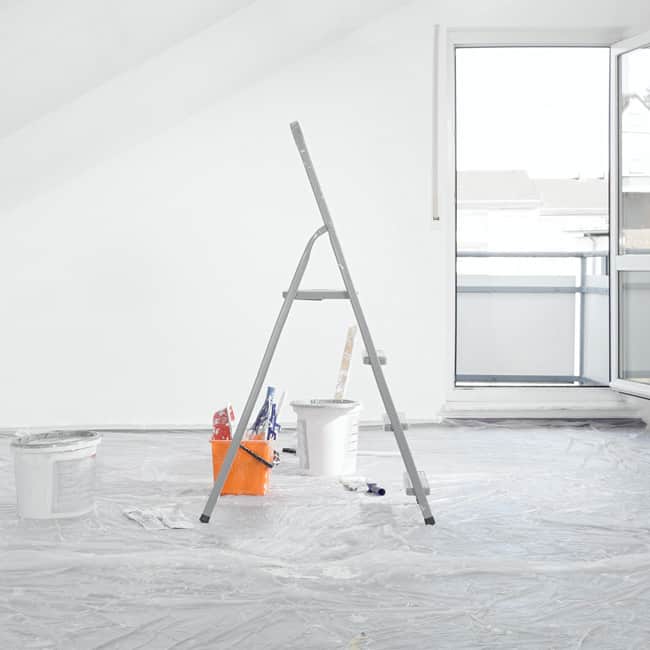
Should you refurbish your buy to let? If your buy to let property has not been refurbished for some time, has not been well looked after, or has even been damaged by your tenants then you may consider refurbishing it first.
Refurbishing your buy to let before selling, is likely to not only get you more viewings and more interested buyers, but it can also increase the price you can sell the property for. Often spending £1 on a refurbishment can get you back £2-3 per £1 spent, as long as you budget correctly and don't over do the refurbishment. Keeping it simple to new carpets and a fresh paint can make the world of difference to it's appeal.
If you are doing multiple properties at the same, there are discount clubs for portfolio landlords, where you can buy at scale paint, carpets, kitchens and bathrooms to help keep costs per item down.
How to Sell a Home with Tenants In It
Once you have decided to sell, here are the different options available:
Sell using an estate agent. You can sell your buy-to-let using an estate agent. However, few estate agents have experience selling investment properties and will be unsure exactly how to maximise your selling price for this specialist approach.
Estate agents are usually more comfortable selling your buy-to-let if it is already vacant, since most of their prospective buyers will be owner-occupiers.
One of the reasons why landlords choose this approach is it is often seen as the obvious route (even if doesn't achieve the best price) and the cost of selling is often the cheapest as you will pay the standard estate agents fees (often 1% to 1.5% + vat) rather than the higher fees that specialist agents typically charge.
Although the lower fee is appealing, a typical sale could take 6+ months from the point of listing to exchange of contracts, with no guarantee an accepted offer gets all the way to completion.
Sell using an auction. For quicker sales, you may decide to enter your buy-to-let into an auction.
Like estate agents, auctioneers typically prefer selling vacant possession properties, as it is easier to value and much easier to arrange viewings. Tenanted properties can be harder to get many 'potential property buyers' through the door, as tenants (and rightly so) can get frustrated with the constant interruptions and last-minute requests for access.
Selling fees are typically higher than estate agents, with fees averaging 2.5% + vat, yet the speed of sale is often worth it for most sellers, with typical sales taking 6 weeks from instruction to exchange and then a further 4 weeks to complete.
You will need to wait for the next suitable sale and there is no guarantee that your buy-to-let will sell at the auction.
Bear in mind that selling your buy-to-let at auction may not achieve the best price as many auction buyers are investors who are looking for a bargain.
Sell directly to a buy-to-let landlord or investor. There is nothing to stop you from trying to sell your buy-to-let directly to a buy-to-let landlord or investor, either with or without tenants. The difficulty here is often how to find these specialist buyers. When you are considering how to sell a property portfolio, there are investment agents that fill this need. The gap between direct house buyers (who often pay significantly lower than market value) and typical estate agents (who often don't have a national pool of potential property investors who are looking specifically to purchase a buy-to-let property). These investment agents can provide a discreet, UK-wide off-market property sale solution, direct to a landlord who is looking specifically for a tenanted house or apartment. This route can suit the seller, the tenant and the buyer, with everything continuing as normal after the sale.
Selling your buy-to-let directly to a cash property buying service. Another option you might consider is a quick-sale property buying company. Some advertise a faster cash purchase, usually at a discount to local market value, but actual timings depend on their checks and the legal work.
Some house-buying services may consider a property either empty or with tenants in situ, including cases involving problem tenants.
With this method of selling your buy-to-let, a faster sale and an agreed target completion date may be possible, but neither is guaranteed before contracts are exchanged.
You need to consider whether the proposed speed and reduced chain risk are worth accepting a potentially lower price for your property.
How to Sell Your Buy-to-Let Property: A Simple, Four-Step Guide
Step 1: Check tenancy details, financial and tax implications, and liaise with your tenants on whether they intend to stay in the property, as that will help you prepare for your new buyer.
Step 2: Once you know the above, you can make a decision on if you wish to sell one singular property, multiple properties from your portfolio or your whole portfolio in one go. You can then consider whether to sell your buy-to-lets empty (which may help you achieve a higher price selling to a homeowner) or with sitting tenants (which might be favourable for a sale without any void periods and lost rent).
Step 3: Consider how best to sell your buy-to-lets. Should you consider a specialist buy-to-let selling agent, use a local high street estate agent, sell via property auction or even directly to a quick cash house buying service?
Step 4: Prepare by getting your conveyancer, EPC and all your letting paperwork ready (including any leasehold information, tenancy information, deposit information and original inventory). This will help you answer any queries from prospective buyers when you go on the market.
Ready to buy property?
Access off-market investment properties with an average 8%+ annual gross yield (beating the UK's typical 3-5%).
Get property alerts