
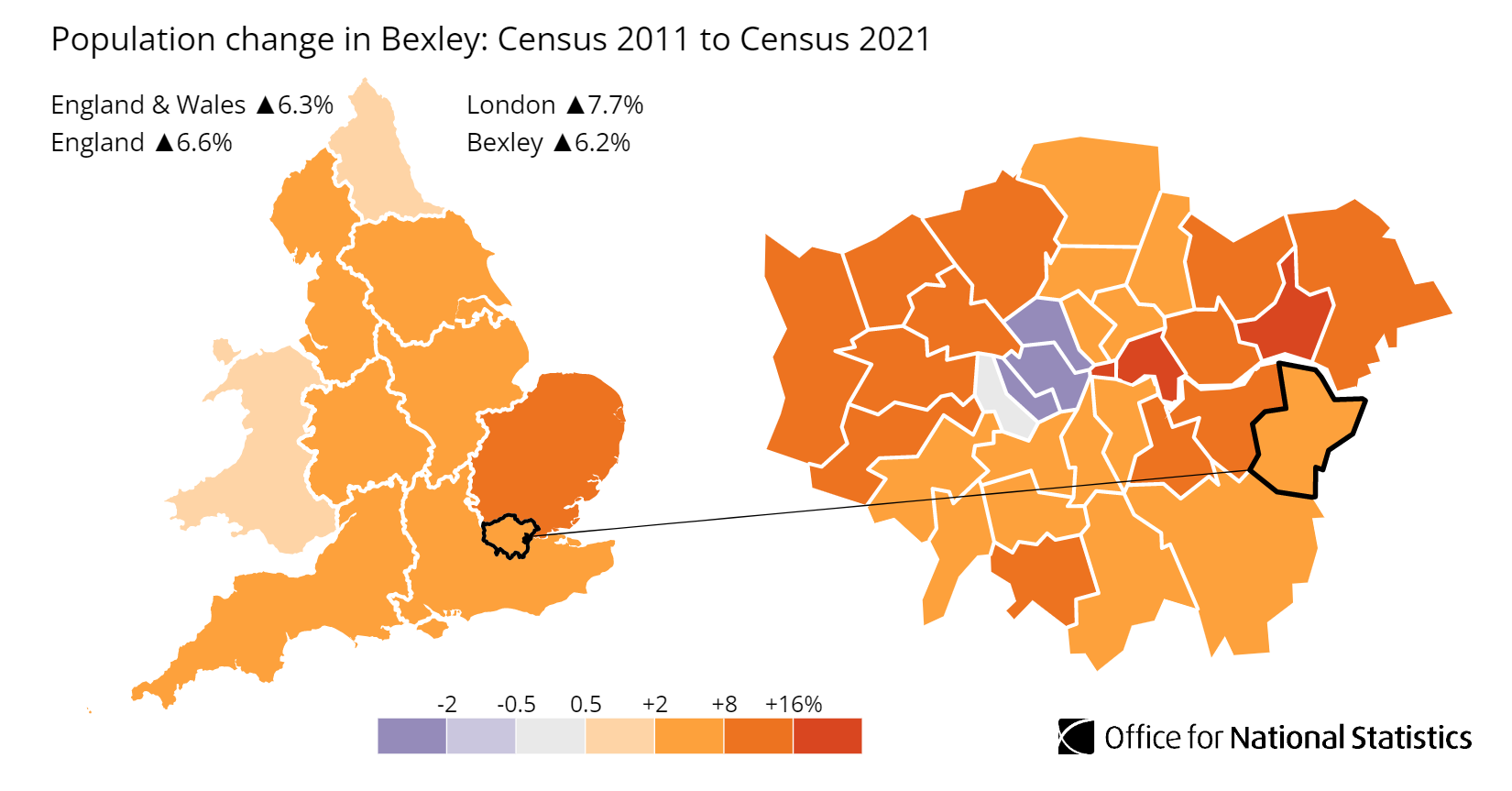
The average sold price in the London Borough of Bexley is £410,445 on the HM Land Registry House Price Index, 24.3% below the London average of £542,065 but 41.6% above England's £289,946. That places Bexley at the affordable end of the London market, where a borough property still costs four-tenths more than the typical English home. The borough's population grew 6.24% between the 2011 and 2021 censuses, from 231,997 to 246,472 residents.
Bexley spreads across 13 postcodes that split into two clear halves. The northern riverside corridor along the Thames carries the lower prices and the higher yields: SE28 (Thamesmead) tops the borough at a 6.3% gross yield on a £353,697 asking price, and four more northern postcodes clear 5.5%. The established southern belt runs the other way, with DA5 (Bexley Village) asking £551,410 for a 4.0% yield. For an investor, that £222,520 spread between DA17 at £328,890 and DA5 means two genuinely different markets sit inside one borough, and the cheaper northern end is where the income shows up.
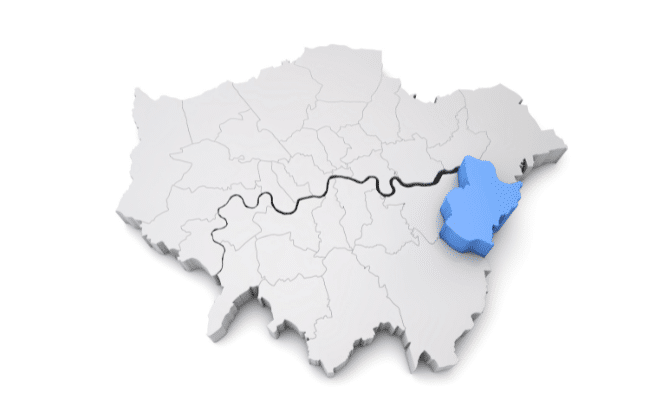
This guide covers the London Borough of Bexley (ONS code E09000004) across 13 postcodes: BR8, DA1, DA5, DA6, DA7, DA8, DA14, DA15, DA16, DA17, DA18, SE2 and SE28. Bexley sits in south-east London, bordered by Greenwich to the west and the Kent borough of Dartford to the east, and several of its postcodes straddle those boundaries. The wider south-east London market also includes Greenwich and Bromley to the south.
Article updated: July 2026
Why Invest in Bexley?
Bexley's population reached 246,472 in the 2021 Census, a 6.24% increase from 231,997 in 2011, an extra 14,475 residents. That growth sits a little below the England and Wales average of 6.3%, the steady spread of an outer-London suburb rather than a fast-densifying inner borough. Bexley is one of the few London boroughs with no Underground station, and for decades that kept it quieter and cheaper than the boroughs with a tube line. The Elizabeth line changed the northern edge of that picture when it opened at Abbey Wood in May 2022.
The borough runs on rail. Twelve National Rail stations operated by Southeastern spread across three lines, with the North Kent Line serving Abbey Wood, Belvedere and Erith, the Bexleyheath Line running through Welling, Bexleyheath and Barnehurst, and the Dartford Loop Line connecting Sidcup, Albany Park and Bexley. Abbey Wood and Slade Green also carry Thameslink services. For a commuting tenant, the choice of route into the City and Canary Wharf is what makes the northern postcodes lettable.
Median gross annual earnings for Bexley residents are £46,233, just below the London median of £46,940 (£902.70 a week) and well above the Great Britain median of £39,863 (£766.60 a week). The local employment rate is 79.2% with unemployment at 5.3%. Higher local wages than the national picture mean tenants can carry London-level rents, and the borough's mix of healthcare, education, retail and logistics jobs spreads that tenant demand rather than tying it to a single employer.
Bexley Economic Summary
- Population: 246,472 (2021 Census). Growth of 6.24% from 2011.
- Median annual salary: £46,233 (local), £46,940 (London), £39,863 (Great Britain)
- Employment rate: 79.2% (local)
- Unemployment rate: 5.3% (local)
- Key employment sectors: Healthcare, education, retail, logistics, public administration
Source: ONS Census 2021, Nomis Labour Market Profile (ASHE 2025, Employment Oct 2024-Sep 2025)
Regeneration and Investment in Bexley
Peabody's South Thamesmead masterplan will deliver 2,800 homes across seven phases close to Abbey Wood station, anchoring a development pipeline concentrated in Bexley's northern riverside corridor. The borough's regeneration money is going where its yields already are, the Thames-side north rather than the established south. Three programmes are active.
- Peabody South Thamesmead (Under construction, 2,800 homes): Peabody's seven-phase masterplan will deliver 2,800 homes close to Abbey Wood station. Phase 1 completed in 2022 with 534 homes, a public square and a new library. Phase 2, a joint venture with Lovell, is delivering 329 mixed-tenure homes, 42% of them affordable, with the first blocks completing in late 2025. The scheme sits in SE28, the borough's highest-yielding postcode, and straddles the Bexley and Greenwich boundary. Updates at Lovell Partnerships.
- Greater Erith Regeneration Programme (In progress, multi-year): Bexley Council's ten-year programme for Erith includes the Carnegie Building restoration, the Parkspring Court development on Pier Road, and the Erith Quarry scheme by L&Q and Anderson Group, which is delivering townhouses and apartments, a new primary school and public spaces on the former quarry site. Erith sits in DA8, one of the borough's higher-yielding postcodes at 5.7%. Updates at Greater Erith.
- Bexley Economic Growth Strategy (Approved February 2026): Bexley Council approved its Economic Growth Strategy in February 2026, a 15-year framework for housing, jobs, transport and skills across the borough. The strategy builds on the 2017 Growth Strategy that underpinned the Bexley Local Plan adopted in 2023. Details at Bexley Council.
Source: Office for National Statistics - Population for Bexley
Bexley Property Market Analysis
Average property prices in the London Borough of Bexley have risen 531.9% since January 1995, from £64,956 to £410,445. The sections below trace that journey cycle by cycle, then drill into current postcode-level data for sold prices, price per square foot, asking prices, growth trends, and monthly transaction volumes.
When was the last house price crash in Bexley?
Bexley is a London borough, so all sold property prices from HM Land Registry are recorded at this level. The Land Registry House Price Index tracks average prices from January 1995 to March 2026, covering 31 years of market cycles.
The 1995 to 2008 boom: Bexley started at £64,956 in January 1995. By December 2000, prices had reached £109,081, a 67.9% rise in six years as low interest rates and London's outward growth pushed buyers into the affordable outer boroughs. Growth ran hot through the early 2000s, hitting £153,735 by December 2002 and £187,075 by December 2005. The market peaked at £220,079 in January 2008, a 238.8% gain over the 13 years from 1995.
2008 to 2009, the financial crisis: Prices fell from the January 2008 peak of £220,079 to a trough of £181,648 in April 2009, a decline of 17.5% over 15 months. The worst year-on-year reading was -15.9% in April 2009. Bexley's correction was broadly in line with the London-wide fall and a touch shallower than England's 18.2% drop over the same period. As an affordable commuter borough, Bexley lacked the speculative debt exposure that hit pricier London markets hardest.
The 2009 to 2013 recovery to peak: Prices bounced off the April 2009 trough but took time to clear the old high. By December 2010 the average stood at £200,346, and it drifted around the £198,000 to £222,000 band for the next three years. Bexley did not regain its January 2008 pre-crash peak of £220,079 until December 2013, when prices reached £222,070, around four and a half years after the bottom.
2014 to 2016, the catch-up: Once Bexley cleared the pre-crash level, growth accelerated as London's housing squeeze pushed demand into the cheaper outer boroughs. Prices rose from £222,070 in December 2013 to £261,980 by December 2014, an 18.0% annual jump, and reached £314,132 by March 2016. That two-year run added more than £90,000 to the borough average.
2017 to 2019, the slowdown: Brexit uncertainty cooled London, and Bexley flattened with it. Prices edged from the mid-£300,000s to £338,416 by December 2019, with annual growth slipping to -1.6% by the end of 2019. The borough held its gains rather than adding to them.
2020 to 2022, the pandemic surge: The stamp duty holiday and the rush for suburban space with gardens lifted Bexley sharply. Prices climbed from £338,416 in December 2019 to £352,541 by December 2020 and £362,409 by March 2021. The borough reached its all-time high of £417,727 in December 2022, with annual growth of 9.1% that month.
The 2023 rate shock: Higher mortgage rates pulled the market back from its peak. Prices eased to £392,041 by December 2023, a -6.1% annual reading, the sharpest correction Bexley had seen since the financial crisis, though far milder.
2024 to present: Prices recovered to £404,910 by December 2024 and £412,851 by December 2025 before easing to £410,445 by the latest reading in March 2026. The current average sits 1.7% below the all-time high of £417,727 set in December 2022, and 86.5% above the pre-crash peak of £220,079.
Long-term growth summary:
- 5 years (March 2021 to March 2026): 13.3% growth (£362,409 to £410,445)
- 10 years (March 2016 to March 2026): 30.7% growth (£314,132 to £410,445)
- 15 years (March 2011 to March 2026): 107.0% growth (£198,328 to £410,445)
- 20 years (March 2006 to March 2026): 119.0% growth (£187,445 to £410,445)
- 30 years (January 1995 to March 2026): 531.9% growth (£64,956 to £410,445)
Bexley's 17.5% crash was close to the London average and took about four and a half years to recover, faster than many inner-London boroughs but slower than the national pace. The 30-year return of 531.9% reflects the long pull of London demand into an affordable borough, and the gentle easing since the December 2022 high has left prices broadly flat rather than falling. An investor who bought at the exact peak in January 2008 would now be sitting on a gain of 86.5% on the Land Registry average.
- All property types
- Detached
- Semi-detached
- Terraced
- Flats
- All property types
- Detached
- Semi-detached
- Terraced
- Flats
Sold House Prices in Bexley
The average sold price across all property types in the London Borough of Bexley is £410,445, which is 41.6% above the England average of £289,946 as of March 2026. The London premium is heaviest on the family-house stock that makes up most of the borough and lightest on flats, where Bexley prices sit close to the national figure. The table below breaks the gap down by property type.
| Property Type | Bexley Average | England Average | Difference |
|---|---|---|---|
| Detached houses | £729,310 | £470,492 | +55% |
| Semi-detached houses | £530,115 | £288,185 | +84% |
| Terraced houses | £414,217 | £243,788 | +70% |
| Flats and maisonettes | £243,261 | £214,563 | +13% |
| All property types | £410,445 | £289,946 | +42% |
Detached houses in Bexley average £729,310, a 55% premium over England's £470,492. These are the borough's scarcest and dearest stock, concentrated in the southern postcodes DA5 (Bexley Village) and DA15 (Sidcup, Blackfen) where detached homes make up a quarter or more of the housing. Detached annual growth of 2.4% shows steady rather than speculative demand at the top of the market.
Semi-detached houses carry Bexley's largest premium at 84% above England, averaging £530,115 against £288,185. This is the backbone of the borough, the three-bedroom interwar semi that dominates Welling, Bexleyheath and Sidcup. DA16 (Welling, Falconwood) and DA7 (Bexleyheath, Barnehurst) are around two-thirds semi-detached, and annual growth of 3.5% makes the semi the strongest-growing house type in the borough.
Terraced houses sit at £414,217, a 70% premium over England's £243,788. The Victorian and Edwardian terraces of Erith, Belvedere and Abbey Wood form the bulk of Bexley's lower-priced stock, and these are the property types that anchor the higher-yielding northern postcodes. Terraced annual growth of 2.4% matches the detached pace.
Flats and maisonettes show the narrowest gap at just 13% above England, averaging £243,261 against £214,563. Bexley has limited purpose-built flat stock outside the new riverside developments around Abbey Wood and Thamesmead, so flat values track local demand rather than the institutional-investor premium that lifts apartment prices in inner London. Annual change of -2.2% is the only negative reading across the four types, which is why flats are the most accessible entry into London pricing here.
Price Per Square Foot in Bexley
Price per square foot across Bexley runs from £275 in DA18 (Erith Marshes, Thamesmead) to £523 in DA15 (Sidcup, Blackfen), a spread of £248. Price per square foot strips out the effect of property size and gives a cleaner read on location value. The southern Sidcup postcodes sit at the top, while the Thames-side north is where the cheapest bricks-and-mortar value is.
| Rank | Area | Price Per Sq Ft |
|---|---|---|
| 1 | DA18 (Erith Marshes, Thamesmead) | £275 |
| 2 | DA8 (Erith, Northumberland Heath) | £412 |
| 3 | DA1 (Dartford Town Centre) | £434 |
| 4 | DA17 (Belvedere) | £436 |
| 5 | BR8 (Swanley) | £451 |
| 6 | SE28 (Thamesmead) | £453 |
| 7 | SE2 (Abbey Wood) | £473 |
| 8 | DA6 (Bexleyheath) | £479 |
| 9 | DA14 (Sidcup, Foots Cray) | £480 |
| 10 | DA7 (Bexleyheath, Barnehurst) | £491 |
| 11 | DA5 (Bexley Village, Albany Park) | £494 |
| 12 | DA16 (Welling, Falconwood) | £494 |
| 13 | DA15 (Sidcup, Blackfen) | £523 |
DA18 at £275 per square foot sits far below the rest of the borough, based on 20 transactions. The postcode covers Erith Marshes and part of Thamesmead, a mix of ex-council housing, new flats and industrial land, and the small sample pulls the figure down. Every other Bexley postcode falls between £412 and £523.
DA15 at £523 per square foot tops the table, with DA5 and DA16 close behind at £494. These are the established southern and central postcodes around Sidcup, Blackfen and Welling, where larger family homes on quieter streets command a per-foot premium that competes with neighbouring Bromley. The £248 gap between DA18 and DA15 means the same floor area costs nearly twice as much in Bexley's dearest postcode as in its cheapest.
For Sale Asking Prices in Bexley
Asking prices range from £328,890 in DA17 (Belvedere) to £551,410 in DA5 (Bexley Village, Albany Park), a spread of £222,520 across the borough. That hierarchy follows the north-south split: the four cheapest postcodes are all riverside or eastern-fringe, and the four dearest are all in the southern and central belt. The mean asking price across Bexley's 12 priced postcodes is £428,037. DA18 has too little listing activity to carry a reliable asking figure.
| Rank | Area | Asking Price |
|---|---|---|
| 1 | DA17 (Belvedere) | £328,890 |
| 2 | DA8 (Erith, Northumberland Heath) | £347,012 |
| 3 | DA1 (Dartford Town Centre) | £353,031 |
| 4 | SE28 (Thamesmead) | £353,697 |
| 5 | DA14 (Sidcup, Foots Cray) | £419,486 |
| 6 | SE2 (Abbey Wood) | £430,204 |
| 7 | DA6 (Bexleyheath) | £432,963 |
| 8 | BR8 (Swanley) | £437,590 |
| 9 | DA16 (Welling, Falconwood) | £467,976 |
| 10 | DA15 (Sidcup, Blackfen) | £504,934 |
| 11 | DA7 (Bexleyheath, Barnehurst) | £509,250 |
| 12 | DA5 (Bexley Village, Albany Park) | £551,410 |
DA17 (Belvedere) at £328,890 is the lowest entry point in Bexley, around £81,555 below the borough-wide Land Registry average of £410,445. Belvedere sits on the Thames in the north, with a terraced and ex-council housing stock and a price point that competes with Kent rather than London. The four cheapest postcodes, DA17, DA8, DA1 and SE28, all sit below £354,000, and all four are where investors searching for BMV property will find the widest selection.
DA5 (Bexley Village, Albany Park) at £551,410 is the most expensive postcode, 67.7% above DA17. Bexley Village sits in the south of the borough with larger period homes, tree-lined streets and the green space around Hall Place. For an investor on a fixed budget, the £222,520 gap between DA17 and DA5 is the difference between two genuinely separate markets inside one borough.
House Price Growth in Bexley
SE2 (Abbey Wood) leads Bexley's five-year house price growth at 24.9%, almost double the next postcode and well clear of the rest of the borough. The strongest growth is not in the dearest postcodes. SE2's £430,204 asking price sits in the middle of the table, but its five-year return is in a class of its own. The Elizabeth line, which reached Abbey Wood in May 2022, is the clearest line between SE2 and everywhere else.
| Area | 1 Year | 3 Years | 5 Years |
|---|---|---|---|
| SE2 (Abbey Wood) | 7.2% | 14.8% | 24.9% |
| DA1 (Dartford Town Centre) | 0.9% | 5.7% | 16.4% |
| BR8 (Swanley) | 1.7% | 5.3% | 15.7% |
| DA17 (Belvedere) | 3.1% | 6.7% | 14.5% |
| DA16 (Welling, Falconwood) | 1.1% | 3.7% | 13.6% |
| DA6 (Bexleyheath) | 0.7% | 6.2% | 12.8% |
| DA15 (Sidcup, Blackfen) | 1.8% | -0.7% | 12.0% |
| DA8 (Erith, Northumberland Heath) | -0.3% | -1.5% | 11.3% |
| DA7 (Bexleyheath, Barnehurst) | 1.9% | 1.1% | 11.0% |
| DA5 (Bexley Village, Albany Park) | -0.4% | 3.6% | 9.7% |
| SE28 (Thamesmead) | -11.0% | 5.4% | 9.0% |
| DA14 (Sidcup, Foots Cray) | -6.6% | -3.0% | 0.2% |
SE2 (Abbey Wood) at 24.9% over five years has the strongest growth in Bexley and the only positive reading across all three timeframes, at 7.2% over one year and 14.8% over three. This postcode holds Abbey Wood station, the eastern terminus of the Elizabeth line, and the one-year figure shows the demand is still building rather than fading after the 2022 opening.
DA14 (Sidcup, Foots Cray) at 0.2% over five years is the weakest in the borough, with -6.6% over one year and -3.0% over three. The softening is consistent across short and medium term rather than a one-off. SE28 (Thamesmead) is the more volatile case: it holds a positive five-year return of 9.0% but posted -11.0% over the past year, a sharp single-year swing on a postcode where new-build supply from the Peabody scheme is coming through alongside the transport gains.
Monthly Property Sales in Bexley
Exit liquidity varies widely across Bexley, with monthly sales running from 10 in DA6 to 53 in DA1. DA1 (Dartford Town Centre) is a shared postcode that extends into Kent, which lifts its volume. Within Bexley itself, DA7 (Bexleyheath, Barnehurst) is the busiest at 28 sales a month with a 19% turnover.
| Area | Sales Per Month | Turnover | Asking Price |
|---|---|---|---|
| DA1 (Dartford Town Centre) | 53 | 16% | £353,031 |
| DA7 (Bexleyheath, Barnehurst) | 28 | 19% | £509,250 |
| DA16 (Welling, Falconwood) | 23 | 21% | £467,976 |
| BR8 (Swanley) | 21 | 18% | £437,590 |
| DA8 (Erith, Northumberland Heath) | 19 | 11% | £347,012 |
| DA5 (Bexley Village, Albany Park) | 17 | 15% | £551,410 |
| DA15 (Sidcup, Blackfen) | 17 | 11% | £504,934 |
| SE28 (Thamesmead) | 17 | 12% | £353,697 |
| DA14 (Sidcup, Foots Cray) | 14 | 9% | £419,486 |
| DA17 (Belvedere) | 14 | 16% | £328,890 |
| SE2 (Abbey Wood) | 14 | 13% | £430,204 |
| DA6 (Bexleyheath) | 10 | 11% | £432,963 |
DA16's 21% turnover rate is the highest in Bexley, meaning around one home in five changes hands within a year of listing. Welling and Falconwood combine deep semi-detached stock with steady commuter demand, so properties move. For a buy-to-let investor, a higher turnover signals an easier exit when the time comes to sell.
DA6 (Bexleyheath) at 10 sales a month and 11% turnover sits at the quiet end of the borough, where a settled ownership pattern brings less stock to market. DA1's 53 monthly sales is the highest count, but the Kent overlap and the larger housing pool mean its 16% turnover is middling rather than fast.
How Long Properties Take to Sell in Bexley
Selling speed splits Bexley sharply: DA16 (Welling, Falconwood) clears fastest at about 127 days, while DA8 (Erith) and DA14 (Sidcup, Foots Cray) are slowest at roughly 304 days. Days on market is the typical number of days a home is up for sale before it sells; the months of unsold stock shows how much for-sale supply is sitting there at the current rate of sales.
| Area | Avg Days to Sell | Months of Unsold Stock | Market |
|---|---|---|---|
| DA16 (Welling, Falconwood) | 127 | 4.2 | Seller's market |
| DA7 (Bexleyheath, Barnehurst) | 160 | 5.3 | Seller's market |
| DA1 (Dartford Town Centre) | 203 | 6.7 | Balanced market |
| DA17 (Belvedere) | 203 | 6.7 | Balanced market |
| DA5 (Bexley Village, Albany Park) | 217 | 7.1 | Balanced market |
| SE2 (Abbey Wood) | 234 | 7.7 | Balanced market |
| SE28 (Thamesmead) | 254 | 8.3 | Balanced market |
| DA6 (Bexleyheath) | 277 | 9.1 | Balanced market |
| DA15 (Sidcup, Blackfen) | 277 | 9.1 | Balanced market |
| DA8 (Erith, Northumberland Heath) | 304 | 10.0 | Balanced market |
| DA14 (Sidcup, Foots Cray) | 304 | 10.0 | Balanced market |
Time-to-sell is the holding cost most yield comparisons skip, and in Bexley it separates otherwise-similar postcodes. DA16's 4.2 months of unsold stock means a far quicker exit than DA8's 10.0, even though both are mid-priced family postcodes. When you come to sell, a faster-moving postcode is less time carrying a property you are trying to move on. DA1 and BR8, the two Kent-border postcodes, take around 203 days to sell.
What Type of Property Can You Buy in Bexley?
The housing mix flips across the borough: semi-detached homes dominate the southern postcodes, reaching 65.9% of stock in DA16, while flats and terraces dominate the riverside north, with flats at 49.0% in DA18. The mix shapes which strategies fit each postcode. The figures below are drawn from 2021 Census records for each postcode.
| Area | Detached | Semi-detached | Terraced | Flats |
|---|---|---|---|---|
| BR8 (Swanley) | 28.4% | 39.7% | 21.2% | 9.4% |
| DA5 (Bexley Village, Albany Park) | 25.2% | 43.2% | 18.5% | 13.0% |
| DA16 (Welling, Falconwood) | 3.8% | 65.9% | 17.2% | 13.2% |
| DA7 (Bexleyheath, Barnehurst) | 6.8% | 65.3% | 13.8% | 14.1% |
| DA15 (Sidcup, Blackfen) | 10.0% | 48.5% | 24.6% | 16.8% |
| DA1 (Dartford Town Centre) | 10.5% | 35.3% | 32.9% | 21.1% |
| DA8 (Erith, Northumberland Heath) | 4.9% | 31.0% | 36.1% | 28.0% |
| DA6 (Bexleyheath) | 17.9% | 38.6% | 13.5% | 29.9% |
| DA14 (Sidcup, Foots Cray) | 14.0% | 41.5% | 13.8% | 30.7% |
| DA17 (Belvedere) | 6.3% | 32.9% | 29.6% | 30.8% |
| SE2 (Abbey Wood) | 6.7% | 23.1% | 36.8% | 33.2% |
| SE28 (Thamesmead) | 6.0% | 17.7% | 34.7% | 41.6% |
| DA18 (Erith Marshes, Thamesmead) | 3.3% | 16.9% | 30.6% | 49.0% |
The southern postcodes are house markets. DA16 (Welling, Falconwood) is 65.9% semi-detached and DA7 (Bexleyheath, Barnehurst) 65.3%, the highest semi-detached shares in the borough, while DA5 (Bexley Village) carries the most detached stock at 25.2%. These are family-home postcodes, which lines up with their higher asking prices and lower yields.
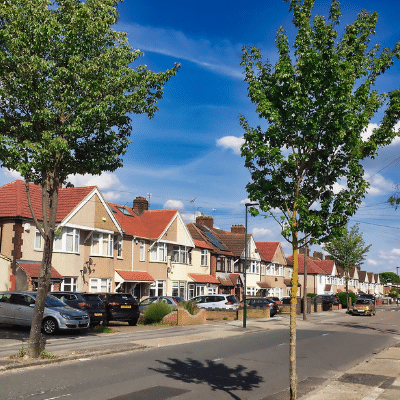
The riverside north is where the smaller-unit stock sits. SE28 (Thamesmead) is 41.6% flats and DA18 (Erith Marshes) 49.0%, with terraces adding another third in each. That is the stock that typically drives buy-to-let income, and it lines up with the north carrying the lowest asking prices and the highest gross yields in the borough. SE2 (Abbey Wood) follows the same pattern at 33.2% flats and 36.8% terraced.
Flats combine purpose-built and converted units. A small share of mobile and temporary dwellings is not shown, so rows may not total 100%.
Bexley Rental Market Analysis
Monthly rents in Bexley range from £1,538 in BR8 to £2,029 in SE2, with gross rental yields from 4.0% to 6.3% across the 12 priced postcodes. For investors asking is buy to let a good investment in Bexley, the sections below break down rents, yields and tenant affordability postcode by postcode. If you are looking at how to build property portfolio uk in London, Bexley's riverside north pairs sub-£354,000 asking prices with yields approaching 6.5%, a combination that is hard to find inside the M25. Browse current buy-to-let property for sale across the region.
Average Rent & Gross Rental Yields in Bexley
Gross rental yields in Bexley range from 4.0% in DA5 to 6.3% in SE28. The five highest-yielding postcodes, SE28, DA17, DA1, DA8 and SE2, all sit in the northern half of the borough, where lower asking prices lift the income return. The southern postcodes charge similar or higher rents but on much bigger purchase prices, so their yields compress.
| Area | Average Monthly Rent | Asking Price | Gross Yield |
|---|---|---|---|
| SE28 (Thamesmead) | £1,868 | £353,697 | 6.3% |
| DA17 (Belvedere) | £1,653 | £328,890 | 6.0% |
| DA1 (Dartford Town Centre) | £1,695 | £353,031 | 5.8% |
| DA8 (Erith, Northumberland Heath) | £1,639 | £347,012 | 5.7% |
| SE2 (Abbey Wood) | £2,029 | £430,204 | 5.7% |
| DA16 (Welling, Falconwood) | £2,018 | £467,976 | 5.2% |
| DA14 (Sidcup, Foots Cray) | £1,643 | £419,486 | 4.7% |
| DA6 (Bexleyheath) | £1,700 | £432,963 | 4.7% |
| BR8 (Swanley) | £1,538 | £437,590 | 4.2% |
| DA7 (Bexleyheath, Barnehurst) | £1,802 | £509,250 | 4.2% |
| DA15 (Sidcup, Blackfen) | £1,737 | £504,934 | 4.1% |
| DA5 (Bexley Village, Albany Park) | £1,819 | £551,410 | 4.0% |
SE28 (Thamesmead) at 6.3% leads the borough on a £353,697 asking price and a £1,868 monthly rent. The yield comes from the price as much as the rent: SE28's rent is mid-table, but its asking price sits among the four lowest in Bexley, so the income return rises to the top. On a £353,697 property, that 6.3% yield is about £22,290 in annual rent.
DA5 (Bexley Village) at 4.0% sits at the bottom. Its £1,819 rent is among the higher figures in the borough, but the £551,410 asking price is the dearest, so the return is compressed. The gap between SE28 and DA5 is 2.3 percentage points: in Bexley the premium southern price does more for the headline value than for the income.
Gross Rental Yield by Postcode
Is Bexley Rent High?
Monthly rents in Bexley consume between 39.9% and 52.7% of the local median gross monthly salary. The widely cited threshold for rent affordability is 30% of gross income, and every Bexley postcode sits well above it, reflecting London rents against a borough wage. The spread is narrow, so a tenant cannot do much to cut housing costs by moving within the borough.
The median gross weekly salary in Bexley is £889.10, which equates to £3,853 per month or £46,233 per year. This is just below the London regional median of £902.70 per week and well above the Great Britain median of £766.60 per week. Data from the Nomis Labour Market Profile (ASHE 2025).
| Rank | Area | Rent as % of Income |
|---|---|---|
| 1 | SE2 (Abbey Wood) | 52.7% |
| 2 | DA16 (Welling, Falconwood) | 52.4% |
| 3 | SE28 (Thamesmead) | 48.5% |
| 4 | DA5 (Bexley Village, Albany Park) | 47.2% |
| 5 | DA7 (Bexleyheath, Barnehurst) | 46.8% |
| 6 | DA15 (Sidcup, Blackfen) | 45.1% |
| 7 | DA6 (Bexleyheath) | 44.1% |
| 8 | DA1 (Dartford Town Centre) | 44.0% |
| 9 | DA17 (Belvedere) | 42.9% |
| 10 | DA14 (Sidcup, Foots Cray) | 42.6% |
| 11 | DA8 (Erith, Northumberland Heath) | 42.5% |
| 12 | BR8 (Swanley) | 39.9% |
BR8 (Swanley) at 39.9% is the most affordable for tenants, the only postcode where rent takes under 40% of the local median salary. SE2 (Abbey Wood) at 52.7% is the least affordable, where the Elizabeth line premium pushes the £2,029 rent past half of monthly income. For landlords, the narrow 12.8-point spread across the borough points to consistent rental demand rather than one postcode carrying all the pressure, and tenants in steadier work tend to absorb these rents and stay put.
How Big Is Bexley's Private Rented Sector?
The private rented sector is deepest in SE28 at 30.0% of households, then DA17 and SE2 at around 20%, and shallowest in the southern postcodes where DA7 sits at 11.3%. The share of homes already rented privately is a guide to the size of the established tenant pool and the local lettings market. The table below shows household tenure by postcode.
| Area | Owned Outright | Owned with Mortgage | Private Rented | Social Rented |
|---|---|---|---|---|
| SE28 (Thamesmead) | 9.3% | 23.6% | 30.0% | 33.2% |
| DA17 (Belvedere) | 23.4% | 30.3% | 20.7% | 23.8% |
| SE2 (Abbey Wood) | 22.8% | 24.4% | 20.1% | 31.9% |
| DA8 (Erith, Northumberland Heath) | 19.9% | 36.9% | 18.1% | 22.4% |
| DA6 (Bexleyheath) | 34.9% | 35.1% | 17.5% | 10.6% |
| DA1 (Dartford Town Centre) | 24.5% | 44.3% | 17.0% | 12.6% |
| DA14 (Sidcup, Foots Cray) | 35.5% | 33.4% | 15.6% | 12.9% |
| DA15 (Sidcup, Blackfen) | 40.0% | 40.9% | 13.4% | 4.7% |
| DA16 (Welling, Falconwood) | 37.9% | 41.0% | 13.3% | 6.8% |
| DA5 (Bexley Village, Albany Park) | 41.3% | 38.7% | 11.6% | 7.5% |
| BR8 (Swanley) | 41.3% | 36.2% | 11.4% | 10.1% |
| DA7 (Bexleyheath, Barnehurst) | 42.7% | 39.2% | 11.3% | 6.1% |
SE28 (Thamesmead) has the largest private rented sector in Bexley at 30.0%, paired with the borough's highest yield at 6.3% and the lowest owner-occupation. A deep rented sector plus a strong yield points to an active local lettings market, and SE28 is one of only two Bexley postcodes with enough rental listings to read the demand picture clearly. DA17 and SE2 follow at around 20%.
The southern house postcodes run the other way. DA7, BR8 and DA5 are all close to 80% owner-occupied, with private rented sectors around 11%. These are settled family areas where less stock comes to the rental market, which fits their lower yields and slower turnover. Across the borough, the lettings demand reads strongest in DA1, where around 144 homes were on the rental market taking about 58 days to let, and in SE28, where roughly 64 homes were advertised and let in about 51 days. Both point to landlords finding tenants quickly in the north of the borough.
Local Housing Allowance Rates in Bexley
Bexley spans two Broad Rental Market Areas: the 11 inner postcodes fall in Outer South East London, where the two-bedroom Local Housing Allowance is £299.18 a week, while the two Kent-border postcodes, DA1 and BR8, fall in North West Kent at a lower £228.99. Local Housing Allowance sets the maximum housing support a tenant on benefits can receive, so it acts as a rent floor for landlords letting to that part of the market. Because Bexley straddles the London and Kent boundary, the rate depends on which postcode the property is in.
| Property Size | Outer South East London (weekly) | North West Kent (weekly) |
|---|---|---|
| Shared accommodation | £138.08 | £103.87 |
| 1 bedroom | £241.64 | £172.60 |
| 2 bedrooms | £299.18 | £228.99 |
| 3 bedrooms | £356.71 | £276.16 |
| 4 bedrooms | £414.25 | £333.70 |
The Outer South East London area covers DA5, DA6, DA7, DA8, DA14, DA15, DA16, DA17, DA18, SE2 and SE28, and its two-bedroom rate of £299.18 a week works out at about £1,296 a month. North West Kent covers DA1 and BR8, where the same two-bedroom rate is £228.99 a week, or roughly £992 a month. Both sit below Bexley's open-market rents of £1,538 to £2,029, so a benefit-backed tenancy at the LHA rate falls under what the open market pays, and the stock that fits these rates is concentrated in the cheaper northern postcodes. The rates are reviewed each April, so to check the current rate for a specific address you can use the government's official Local Housing Allowance calculator.
Buy-to-Let Considerations
Are House Prices High in Bexley? Price-to-Earnings Ratios
Purchasing a property in Bexley requires between 7.1 and 11.9 times the median annual salary. This is based on the Nomis Labour Market Profile for Bexley showing the median gross annual income for Bexley residents is £46,233.
The national benchmark for price-to-earnings is 7.3x (England's average sold price of £289,946 divided by the Great Britain median annual salary of £39,863). None of Bexley's postcodes sits below that benchmark, which is what you would expect for a London borough: even the cheapest entry point asks slightly more relative to local income than the England average does relative to national income.
| Rank | Area | Price-to-Earnings Ratio |
|---|---|---|
| 1 | DA17 (Belvedere) | 7.1x |
| 2 | DA8 (Erith, Northumberland Heath) | 7.5x |
| 3 | DA1 (Dartford Town Centre) | 7.6x |
| 4 | SE28 (Thamesmead) | 7.7x |
| 5 | DA14 (Sidcup, Foots Cray) | 9.1x |
| 6 | SE2 (Abbey Wood) | 9.3x |
| 7 | DA6 (Bexleyheath) | 9.4x |
| 8 | BR8 (Swanley) | 9.5x |
| 9 | DA16 (Welling, Falconwood) | 10.1x |
| 10 | DA15 (Sidcup, Blackfen) | 10.9x |
| 11 | DA7 (Bexleyheath, Barnehurst) | 11.0x |
| 12 | DA5 (Bexley Village, Albany Park) | 11.9x |
DA17 at 7.1x is the closest Bexley gets to the national benchmark and the most affordable entry relative to local earnings. The four postcodes below 8x, DA17, DA8, DA1 and SE28, are the same four that lead the yield table and carry the lowest asking prices, which reinforces the north-south split: the riverside north is cheaper against income and higher-yielding, the south more stretched and lower-yielding.
DA5 at 11.9x sits at the top, where a property costs nearly twelve years of the local median salary. At that level the buyer pool is typically dual-income households or those trading in from pricier parts of London and the South East, and the elevated ratio is what compresses DA5's yield to the bottom of the borough at 4.0%.
Deposit Requirements in Bexley
A 30% deposit on a buy-to-let property in Bexley ranges from £98,667 in DA17 (Belvedere) to £165,423 in DA5 (Bexley Village, Albany Park). The gap between the cheapest and most expensive deposit is £66,756, enough to put down two-thirds of a second deposit in DA17. The four sub-£110,000 deposits all fall in the higher-yielding northern postcodes.
Beyond the deposit, the additional stamp duty calculator and other buy to let costs affect the total capital required.
| Rank | Area | 30% Deposit Required |
|---|---|---|
| 1 | DA17 (Belvedere) | £98,667 |
| 2 | DA8 (Erith, Northumberland Heath) | £104,104 |
| 3 | DA1 (Dartford Town Centre) | £105,909 |
| 4 | SE28 (Thamesmead) | £106,109 |
| 5 | DA14 (Sidcup, Foots Cray) | £125,846 |
| 6 | SE2 (Abbey Wood) | £129,061 |
| 7 | DA6 (Bexleyheath) | £129,889 |
| 8 | BR8 (Swanley) | £131,277 |
| 9 | DA16 (Welling, Falconwood) | £140,393 |
| 10 | DA15 (Sidcup, Blackfen) | £151,480 |
| 11 | DA7 (Bexleyheath, Barnehurst) | £152,775 |
| 12 | DA5 (Bexley Village, Albany Park) | £165,423 |
DA17 is the cheapest way into Bexley, at a £98,667 deposit for a home renting at £1,653 a month on a 6.0% yield. SE28 sits just £3,442 higher at £106,109 but buys the top yield in the borough at 6.3% and a higher rent of £1,868, so within the four cheapest postcodes the extra outlay for SE28 buys both more income and more rent.
At the other end, the £66,756 step up from DA17 to DA5 buys a very different investment. DA5 brings a £1,819 rent against DA17's £1,653, but on more than double the price-to-earnings ratio and the borough's lowest yield. The deposit gap is real money for a return that runs the other way, which is the core north-south choice in Bexley.
What the Bexley Data Tells Buy-to-Let Investors
In Bexley the income is in the north and the prices are in the south. SE28 (Thamesmead) leads on yield at 6.3% with the borough's deepest private rented sector at 30.0%, and the cheapest entry sits next door in DA17 (Belvedere) at a £328,890 asking price, a £98,667 deposit and a 6.0% yield. The four highest-yielding postcodes, SE28, DA17, DA1 and DA8, all ask below £354,000 and all sit along or near the Thames. That is where the income shows up for buyers of investment property UK in the borough.
SE2 (Abbey Wood) is the one postcode that pairs strong income with strong growth: a 5.7% yield, the borough's highest rent at £2,029 a month, and a five-year capital return of 24.9%, well clear of every other postcode. The Elizabeth line reached Abbey Wood in May 2022, and SE2 is the only Bexley postcode positive across one, three and five years. It is also the least affordable to rent in, at 52.7% of local income, which is the trade-off for the transport premium.
The southern belt runs the other way. DA5 (Bexley Village) asks £551,410 for a 4.0% yield and an 11.9x price-to-earnings ratio, the highest in the borough, while DA14 (Sidcup, Foots Cray) has the weakest five-year growth in the borough at 0.2%, with negative readings of -6.6% over one year and -3.0% over three. These are owner-occupier family postcodes where the premium price does more for the headline value than the rent. Buyers who want to come in below asking often look through off market properties channels.
Bexley operates selective licensing, so landlords should check the current designation areas and licence requirements on the council's property licensing pages before buying. With local wages just below the London median, an active rental market in the north and the Peabody regeneration adding supply around Thamesmead, Bexley reads as an affordable-London borough: lower asking prices than its neighbours, with the yields concentrated in the riverside postcodes.
How Bexley Compares
Bexley's mean asking price of £428,037 is the second-cheapest of five neighbouring south-east London boroughs, and its top yield of 6.3% matches Greenwich's on a purchase price £36,500 lower. The comparison below places Bexley alongside four nearby boroughs, each with a different investor profile. The mean asking price and mean monthly rent are simple averages across all postcodes with data. Top gross yield is the single highest postcode yield in each location.
| Location | Mean Asking Price | Mean Monthly Rent | Mean Gross Yield | Top Yield (postcode) |
|---|---|---|---|---|
| Barking & Dagenham | £402,635 | £1,824 | 5.4% | 6.8% (IG11) |
| Bexley | £428,037 | £1,762 | 4.9% | 6.3% (SE28) |
| Greenwich | £464,537 | £2,045 | 5.3% | 6.3% (SE28) |
| Lewisham | £490,640 | £1,965 | 4.8% | 6.0% (SE8) |
| Bromley | £544,449 | £1,830 | 4.0% | 5.4% (SE20) |
Bexley has the second-lowest mean asking price of the five boroughs at £428,037. Only Barking & Dagenham is cheaper at £402,635, and it carries a higher top yield at 6.8%, though it sits in east London with a different transport profile and tenant base. The £25,402 price gap between the two is modest.
Greenwich matches Bexley's 6.3% top yield but at a £464,537 mean asking price, £36,500 more than Bexley, and the two boroughs share the Elizabeth line at Abbey Wood, where the station entrance is in Bexley and the platforms in Greenwich. Lewisham at £490,640 and Bromley at £544,449 are progressively dearer, with Bromley's 5.4% top yield reflecting its position as a settled owner-occupier borough where higher prices compress the income return. For investors comparing the group, Bexley's profile sits closest to Barking and Greenwich on yield, on a price point distinctly below Greenwich, Lewisham and Bromley. For a data-driven comparison across all UK locations, see our best buy-to-let areas guide. We cover property investments across more than 160 UK areas on the same basis, so Bexley's figures compare like for like.
Frequently Asked Questions
Is Bexley a good place to live for buy-to-let tenants?
For a London borough, it works well for renters who want space and a commute. Bexley is one of outer London's lower-density boroughs, 246,472 residents across suburban streets, riverside developments and green space, with no Underground but twelve National Rail stations and the Elizabeth line at Abbey Wood since May 2022. Local wages sit just below the London median at £46,233, so tenants here are generally in steady work and can carry London-level rents.
It also suits tenants who would be priced out further into town. The borough's rents run from £1,538 to £2,029 a month, below much of inner south-east London, while the trains still reach the City and Canary Wharf. That tends to attract professional renters and families who stay put rather than move every year.
What are the best areas in Bexley for property investment?
It depends whether you are buying for income or growth, and the borough splits cleanly north and south. For yield, the Thames-side north leads: SE28 (Thamesmead) tops the borough at 6.3% on a £353,697 asking price, with DA17 (Belvedere) the cheapest entry at £328,890 and a 6.0% yield, then DA1 and DA8 at 5.8% and 5.7%. All four ask below £354,000.
For growth, SE2 (Abbey Wood) is the standout on the data, up 24.9% over five years and the only postcode positive across one, three and five years, helped by the Elizabeth line. The southern postcodes like DA5 (Bexley Village) and DA15 (Sidcup, Blackfen) are pricier family markets with yields around 4%, so they lean towards owner-occupier demand rather than rental income.
Which Bexley postcodes have the highest rental yields?
SE28 (Thamesmead) at 6.3%, then DA17 (Belvedere) at 6.0%, DA1 (Dartford Town Centre) at 5.8%, and DA8 (Erith) and SE2 (Abbey Wood) both at 5.7%. All five sit in the northern half of the borough, with asking prices between £328,890 and £430,204. The lowest-yielding postcode with data is DA5 (Bexley Village) at 4.0%, where a £551,410 asking price holds the income return down despite a £1,819 monthly rent. In short, the cheaper riverside north carries the yield and the dearer south carries the capital value.
How has the Elizabeth line affected Bexley property prices?
The clearest effect shows up in SE2 (Abbey Wood), the postcode holding the station. SE2 has the borough's strongest five-year house price growth at 24.9% and its highest monthly rent at £2,029, and it is the only Bexley postcode positive across one, three and five years. The Elizabeth line opened at Abbey Wood in May 2022, giving the northern fringe its first rapid link to the City, the West End and Heathrow.
Whether the line is the sole driver is hard to isolate, because the Peabody regeneration is delivering 2,800 homes nearby over the same period. But the pattern is consistent: the postcode with the new station has outperformed the rest of the borough on both rent and capital growth.
What are average house prices in Bexley?
The average sold price across the London Borough of Bexley is £410,445 on the Land Registry index, about 41.6% above the England average of £289,946 and 24.3% below the London average as of March 2026. Asking prices by postcode run from £328,890 in DA17 (Belvedere) up to £551,410 in DA5 (Bexley Village, Albany Park), with a mean across the 12 priced postcodes of £428,037. By type, detached homes average £729,310, semi-detached £530,115, terraced £414,217 and flats £243,261.
Through a buy-to-let lens, the cheapest postcodes are also the highest-yielding: DA17 is the lowest entry at £328,890, and SE28 carries the top yield at 6.3%, while the pricier southern postcodes yield around 4%.
What type of property is most common in Bexley?
It depends which half of the borough you are in. In the south, the semi-detached house dominates: DA16 (Welling, Falconwood) is 65.9% semi-detached and DA7 (Bexleyheath, Barnehurst) 65.3%, the typical interwar three-bed semi. DA5 (Bexley Village) holds the most detached stock at 25.2%.
In the riverside north, the smaller-unit stock takes over. DA18 (Erith Marshes) is 49.0% flats and SE28 (Thamesmead) 41.6%, with terraces adding roughly another third in each. That flat-and-terrace mix is the stock that usually suits buy-to-let, and it lines up with the north carrying the lowest asking prices and the highest yields in the borough.
What are the Local Housing Allowance rates in Bexley?
Bexley sits across two Broad Rental Market Areas, so the rate depends on the postcode. The 11 inner postcodes fall in Outer South East London, where as of June 2026 Local Housing Allowance runs at £138.08 a week for a shared room, £241.64 for a one-bed, £299.18 for two beds, £356.71 for three and £414.25 for four. The two Kent-border postcodes, DA1 and BR8, fall in North West Kent at lower rates: £103.87 shared, £172.60 one-bed, £228.99 two-bed, £276.16 three-bed and £333.70 four-bed.
That figure is the most a tenant on housing support can claim towards rent, so for that part of the market it effectively sets a floor. The rates update each April, and you can check the live figure for any address with the government's Local Housing Allowance calculator.
Is there demand for shared and HMO rooms in Bexley?
Yes, concentrated in the northern postcodes. A sample of current room adverts puts a double room with a shared bathroom at around £176 a week in DA1 (Dartford Town Centre), with most between £162 and £208, the widest live sample in the borough at 41 adverts. SE2 (Abbey Wood) and SE28 (Thamesmead) run a little higher at roughly £191 and £181 a week for the same room type. Ensuite and single-room rents are harder to pin down because too few are advertised at any one time. For how the numbers work on a shared house, see our complete guide to investing in HMOs.
How do I buy an investment property in Bexley?
Start by deciding whether you are buying for income or for growth, because that points you north or south. The riverside north leads on yield: DA17 (Belvedere) is the cheapest entry at £328,890 and a 6.0% yield, and SE28 (Thamesmead) carries the top yield at 6.3%. SE2 (Abbey Wood) is the growth case, up 24.9% over five years. Budget for a 30% deposit, which runs from £98,667 in DA17 to £165,423 in DA5.
Beyond what is listed openly, plenty of experienced investors buy below asking through BMV properties and off-market property sales channels. To see what is available now, browse investment properties or buy-to-let homes for sale.
Ready to buy property?
Access off-market investment properties with an average 8%+ annual gross yield (beating the UK's typical 3-5%).
Get property alerts