
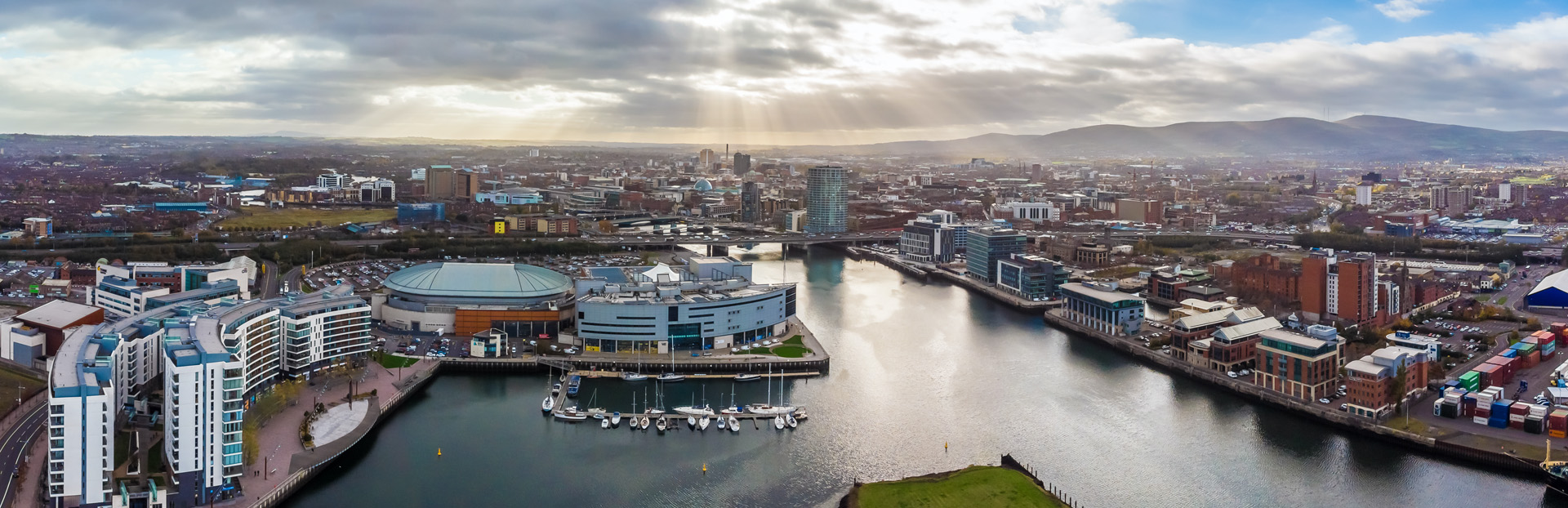
Belfast is the capital of Northern Ireland and its largest, busiest property market. It has more sales, higher rents and a bigger private rented sector than any other Northern Ireland district, which makes it the natural starting point for investors looking at the region.
This guide is built entirely from official Northern Ireland data: the Northern Ireland House Price Index, NISRA census and population figures, NIHE market rents and Department for Infrastructure planning records, refreshed for June 2026. Northern Ireland does not publish the postcode-level sold-price and yield data we use for cities in England, Scotland and Wales. So this guide gives you the official district-level picture rather than a postcode yield table. Where that data gap matters, we say so.
Article updated: July 2026
Belfast Property Market at a Glance
Belfast's average house price is £181,000 and the average private rent is £1,131 a month. Here is the headline picture, all from current official sources.
| Measure | Belfast | Source |
|---|---|---|
| Average house price (Jan–Mar 2026) | £181,000, up 6.5% on the year | ONS / NI House Price Index |
| Average private rent (Feb 2026) | £1,131 per month, up 5.1% on the year | ONS local housing data |
| Verified residential sales (2025) | 4,807 | NI House Price Index |
| Private rented sector | 20.5% of households | Census 2021 |
| Population (2024) | 352,390 | NISRA |
| Postcode areas | BT1 to BT17 | Royal Mail |
Why Investors Look at Belfast
Belfast is the seat of the Northern Ireland Assembly and the centre of the region's economy. Local services are run by Belfast City Council, and according to Invest in Belfast the city's stronger sectors today include financial and professional services, technology, creative and digital, life and health sciences, and tourism. Belfast Harbour is Northern Ireland's principal port and a major logistics hub.
For landlords, two things stand out. Belfast is a major student city, home to Queen's University Belfast and Ulster University, which underpins steady demand for shared and student housing close to the campuses south and north of the city centre. And the city has seen sustained regeneration over the last two decades across the Titanic Quarter, Cathedral Quarter and city-centre districts, with further regeneration plans in train.
House Prices in Belfast
The average Belfast house price was £181,000 in the first quarter of 2026, up 6.5% over the year. The standardised price from the Northern Ireland House Price Index was £181,033 for the same quarter, so the headline figure is a fair reflection of the underlying market rather than a quirk of which homes happened to sell.
Set against the other ten Northern Ireland districts, Belfast is one of the more affordable. Only Mid and East Antrim, at £174,000, is cheaper. That is the pattern that surprises buyers coming from Great Britain: a capital city that sits near the bottom of its own region for price. Figures are from the ONS local housing data and the Northern Ireland House Price Index.
Belfast's price history tells a clear story. The average peaked at £188,661 in 2007, then fell hard in the crash to a low of £86,710 in 2013, less than half the peak. The recovery since has been steady rather than spectacular, reaching £181,033 in early 2026. Even now, nineteen years on, the average price has not quite returned to its 2007 high.
How Belfast Compares Across Northern Ireland
Belfast does not have the cheapest homes in Northern Ireland, but it leads the region on the measures that matter most to a landlord: rent, sales volume, the size of the rental sector and population. The table below covers all eleven Northern Ireland districts, ordered by average house price.
| District | Avg house price | Avg rent (pcm) | Sales (2025) | Private rented | Population |
|---|---|---|---|---|---|
| Mid and East Antrim | £174,000 | £799 | 1,888 | 16.1% | 139,913 |
| Belfast | £181,000 | £1,131 | 4,807 | 20.5% | 352,390 |
| Derry City and Strabane | £185,000 | £798 | 1,480 | 17.9% | 152,383 |
| Armagh City, Banbridge and Craigavon | £185,000 | £767 | 2,767 | 18.6% | 222,511 |
| Mid Ulster | £190,000 | £799 | 1,260 | 18.9% | 152,718 |
| Fermanagh and Omagh | £193,000 | £671 | 972 | 18.5% | 117,687 |
| Antrim and Newtownabbey | £201,000 | £799 | 2,272 | 13.9% | 148,100 |
| Causeway Coast and Glens | £208,000 | £810 | 1,830 | 17.9% | 141,954 |
| Newry, Mourne and Down | £219,000 | £781 | 1,746 | 18.0% | 183,115 |
| Ards and North Down | £226,000 | £953 | 3,039 | 13.4% | 165,415 |
| Lisburn and Castlereagh | £233,000 | £953 | 2,431 | 11.2% | 151,669 |
Belfast records the highest average rent of any Northern Ireland district at £1,131, the most sales at 4,807, the largest private rented sector at 20.5% of households and by far the biggest population. For an investor, that means more homes changing hands and a deeper pool of renters than anywhere else in the region. If you are weighing Belfast against cities elsewhere in the UK, our guide to the best buy-to-let locations sets it in that wider context.
Sales Activity and Liquidity
Belfast recorded 4,807 verified residential sales in 2025, more than any other Northern Ireland district. The first quarter of 2026 added a further 1,103 sales. By property type, that quarter broke down as 479 terraced homes, 338 semi-detached, 179 apartments and 107 detached houses, which tells you the everyday Belfast market is weighted towards terraces and semis rather than flats or detached stock. Sales figures are from the Northern Ireland House Price Index.
Liquidity matters for buy-to-let because it affects how easily you can buy at the right price and, later, sell or refinance. Belfast's volume is the deepest in the region.
Rents in Belfast
The average private rent in Belfast was £1,131 a month in February 2026, up 5.1% over the year and the highest of any Northern Ireland district. By bedroom count the ONS figures were £834 for a one-bed, £958 for a two-bed, £1,099 for a three-bed and £1,585 for four or more bedrooms.
For a separate read on the market, the Housing Executive's weekly market rents for the Belfast area were £155.35 for a one-bed, £182.15 for a two-bed, £199.37 for a three-bed and £277.43 for a four-bed in 2026/27. Those come from NIHE market rent data.
One thing to know about these rent figures. They are based on advertised new lettings and reported by Broad Rental Market Area rather than by district, so they are not directly comparable with the rent measures published for England, Scotland and Wales. They are a sound guide to the Belfast market, not a like-for-like figure against a city across the water. If you are still working out whether the numbers stack up for you, our guide to whether buy-to-let is worth it walks through how to think about it.
Rental Demand Signals
Northern Ireland doesn't publish a postcode-level demand score. Instead, here are the official figures that show what tenant demand in Belfast looks like.
- The private rented sector houses 20.5% of households, the largest share of any Northern Ireland district. A bigger rental sector means a deeper tenant pool.
- The population is 352,390, comfortably the largest in the region, with the youngest median age at 36.4. Younger, larger populations tend to rent more.
- Two universities, Queen's University Belfast and Ulster University, add a sizeable and recurring student tenant market.
- 4,807 sales a year show a liquid market that landlords can move in and out of.
Tenure figures are from the Census 2021 housing tables and population from NISRA's 2024 estimates.
Housing Stock and Property Mix
Belfast has around 163,050 dwellings. The stock is led by terraced housing at 68,376 homes, then semi-detached at 43,479, purpose-built apartments at 29,039, detached houses at 15,548 and converted apartments at 6,608. The Census 2021 accommodation split is similar: 36.8% terraced, 31.2% semi-detached, 19.7% flats and 12.3% detached.
For investors that profile matters. Belfast is a terrace-and-semi city more than a flats city, so the typical buy-to-let here is a traditional house rather than a new-build apartment. Stock figures come from the Department of Finance housing stock statistics.
Planning and New Supply
Belfast received 1,296 planning applications in 2024/25, of which 581 were residential, with 791 applications still live at the end of March 2025. New housing supply in the first quarter of 2026 ran to 177 starts and 330 completions. The data is from the Department for Infrastructure planning statistics.
Areas and Postcodes in Belfast
Belfast is covered by the BT1 to BT17 postcodes. In broad terms, BT1 and BT2 are the city centre, BT3 is the harbour estate where many jobs sit, the south of the city around BT7 and BT9 holds the universities and the more established residential streets, and the east, north and west are largely traditional terraced and suburban housing.
We are not publishing a postcode-by-postcode yield table for Belfast. Northern Ireland does not yet have address-level sold-price and rental data at the quality we use elsewhere, and we would rather show you nothing than show you a yield figure we cannot stand behind. When robust Belfast postcode data becomes available, we will add it.
Buying Investment Property in Belfast
If you are looking to invest in Belfast, the practical route is to start with the deals rather than the data. We introduce investors to current, vetted opportunities through our buy-side partner. You can view buy-to-let property for sale, look at below market value properties, or register for off-market opportunities that never reach the portals. To talk through what suits your budget and goals, start with an investment property enquiry.
Two pieces of Northern Ireland regulation to be aware of as a landlord. A House in Multiple Occupation needs a licence, now issued by the local council rather than the Housing Executive, with guidance from Belfast City Council. And every private landlord in Northern Ireland must sign up to the Landlord Registration Scheme.
Frequently Asked Questions
What is the average house price in Belfast?
The average Belfast house price was £181,000 in the first quarter of 2026, up 6.5% over the year, according to ONS and the Northern Ireland House Price Index. That is the second lowest of Northern Ireland's eleven districts.
What is the average rent in Belfast?
The average private rent in Belfast was £1,131 a month in February 2026, up 5.1% on the year. That is the highest average rent of any Northern Ireland district. By bedroom count it ranged from £834 for a one-bed to £1,585 for four or more bedrooms.
Is Belfast a busy property market?
Belfast is the busiest market in Northern Ireland by sales volume, with 4,807 verified sales in 2025 and a further 1,103 in the first quarter of 2026. It also has the region's largest private rented sector at 20.5% of households.
How does Belfast compare with the rest of Northern Ireland?
Belfast is the second most affordable of the eleven districts on average price, behind Mid and East Antrim. At the same time it leads the region on rent, sales volume, rental-sector size and population, which is the combination most investors are looking for.
What types of property are most common in Belfast?
Belfast is a terrace-and-semi city. Terraced homes make up the largest part of the stock at around 68,000 dwellings, followed by semi-detached, then apartments. Detached houses are the smallest group. The typical buy-to-let here is a traditional house rather than a new-build flat.
Do I need a licence to let property in Belfast?
Under Belfast City Council's HMO rules, a House in Multiple Occupation needs a licence and all new HMOs also need planning permission. Separately, every private landlord in Northern Ireland must register under the Northern Ireland Landlord Registration Scheme.
Ready to buy property?
Browse investment properties with prices and gross yields shown for each opportunity.
Get property alerts